

miR-122 promotes hepatic lipogenesis via inhibiting the LKB1/AMPK pathway by targeting Sirt1 in non-alcoholic fatty liver disease
Open accessThe DOI matches its Crossref record; 48 of the 48 references it cites were found in a registry or an index.
Abstract
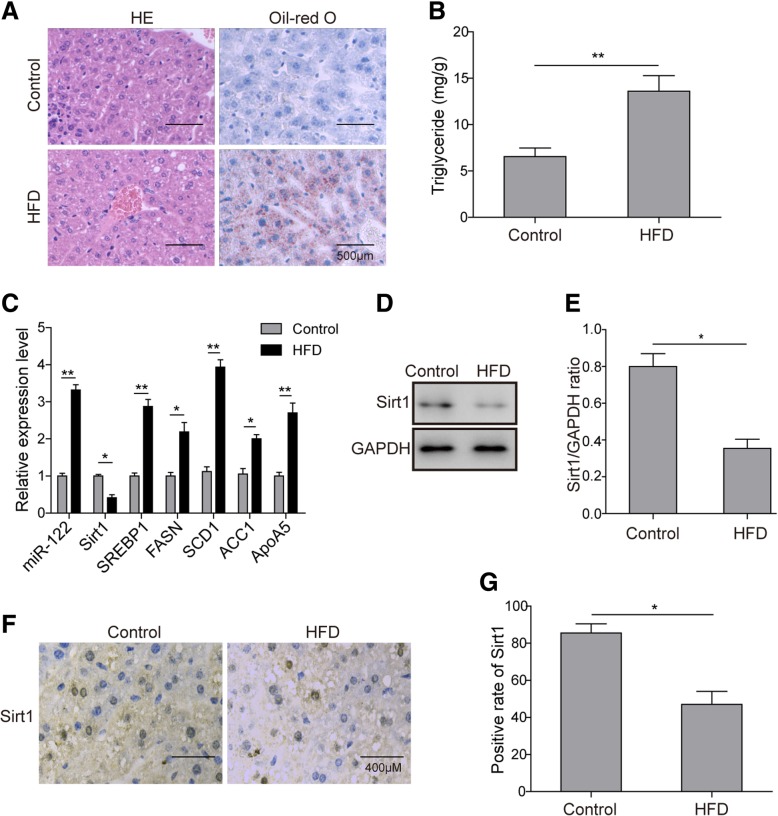
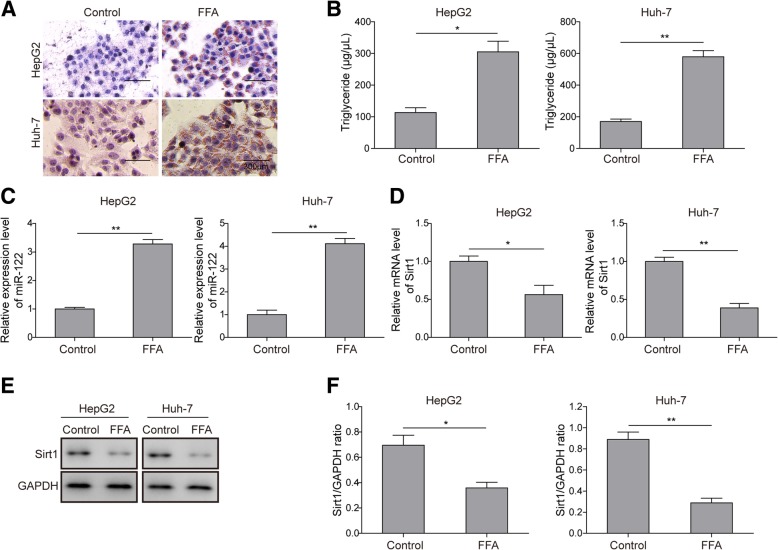
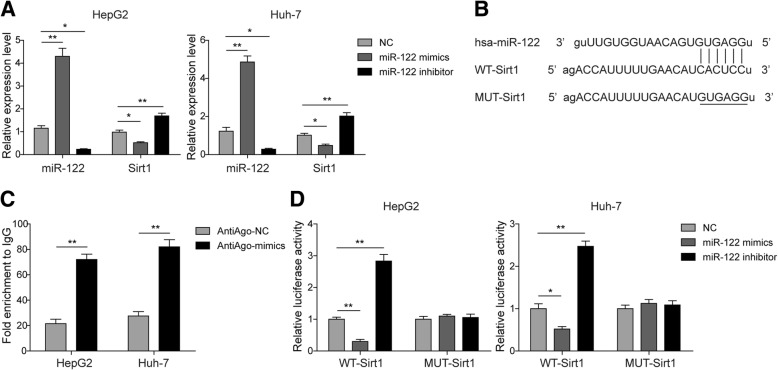
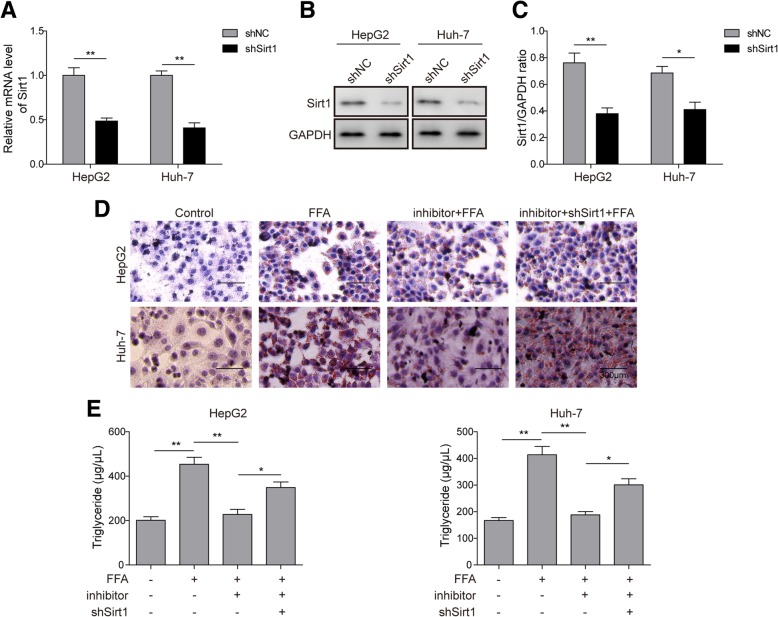
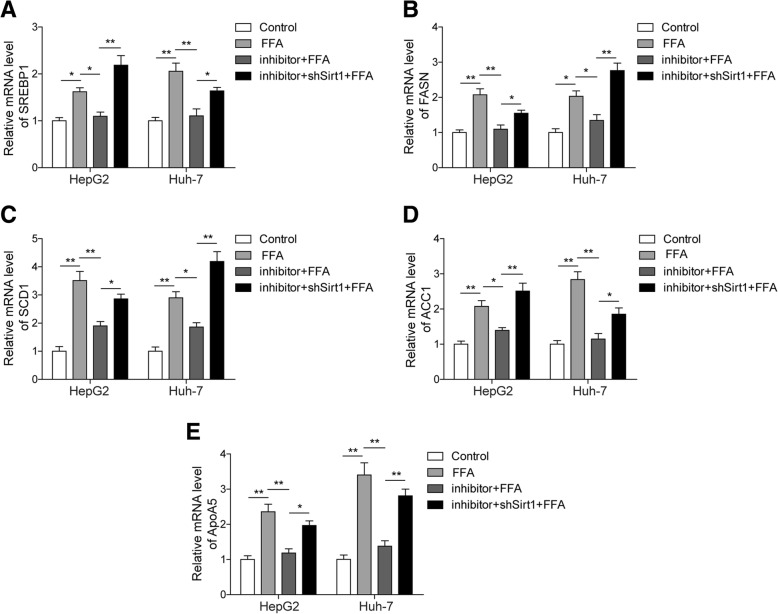
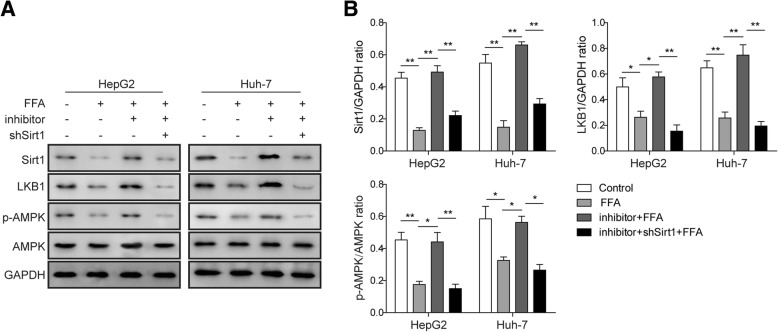
BACKGROUND: Non-alcoholic fatty liver disease (NAFLD) is a common hepatic disease with an increasing prevalence but an unclear aetiology. This study aimed to investigate the functional implications of microRNA-122 (miR-122) in the pathogenesis of NAFLD and the possible molecular mechanisms. METHODS: Both in vitro and in vivo models of NAFLD were generated by treating HepG2 and Huh-7 cells with free fatty acids (FFA) and by feeding mice a high-fat diet (HFD), respectively. HE and Oil Red O staining were used to examine liver tissue morphology and lipid deposition, respectively. Immunohistochemical (IHC) staining was used to examine Sirt1 expression in liver tissues. qRT-PCR and Western blotting were employed to measure the expression of miR-122, Sirt1, and proteins involved in lipogenesis and the AMPK pathway. Enzyme-linked immunosorbent assay (ELISA) was used to quantify triglyceride (TG) levels in HepG2 and Huh-7 cells and in liver tissues. The interaction between miR-122 and the Sirt1 gene was further examined by a dual luciferase reporter assay and RNA-immunoprecipitation (RIP). RESULTS: NAFLD hepatic tissues and FFA-treated HepG2 and Huh-7 cells presented excess lipid production and TG secretion, accompanied by miR-122 upregulation, Sirt1 downregulation, and potentiated lipogenesis-related genes. miR-122 suppressed Sirt1 expression via binding to its 3'-untranslated region (UTR). Knockdown of miR-122 effectively mitigated excessive lipid production and suppressed the expression of lipogenic genes in FFA-treated HepG2 and Huh-7 cells via upregulating Sirt1. Furthermore, miR-122 knockdown activated the LKB1/AMPK signalling pathway. CONCLUSION: The inhibition of miR-122 protects hepatocytes from lipid metabolic disorders such as NAFLD and suppresses lipogenesis via elevating Sirt1 and activating the AMPK pathway. These data support miR-122 as a promising biomarker and drug target for NAFLD.
Overview
The claims and statistics of this paper haven’t been checked yet.
Free: it reads the open-access text and checks the first 5 claims that cite a source we can check. Create a free account to check every claim.
Integrity signals
Registry
Cites
Statistics
Figures
Verification
Claims the paper makes
The claims and statistics of this paper haven’t been checked yet.
Free: it reads the open-access text and checks the first 5 claims that cite a source we can check. Create a free account to check every claim.
Claims other papers make about this one
Each is checked against this paper’s own text: does it say what the citing paper says it does?
The source backs part of the claim, not all of it — or backs it for a different population, condition or comparison.
In the citing paper
“GLP-1RAs reduce liver fat accumulation by activating AMPK, which inhibits fatty acid synthesis enzymes and promotes fatty acid β-oxidation, thus diminishing lipid droplet accumulation in hepatocytes.508–511”
From Glucagon-like peptide-1 receptor: mechanisms and advances in therapy (2024) · cites this paper as [509]
Experimental — accuracy not yet measured
Self-check
Percentages, sums and reported differences re-computed from the paper’s own numbers.
The self-check needs the paper’s full text.
Citations
Cites
Transcriptional silencing and longevity protein Sir2 is an NAD-dependent histone deacetylase
Imai, S.-I., Armstrong, C. M., Kaeberlein, M., & Guarente, L. (2000) · Nature · doi:10.1038/35001622 · Cited by 3,510
AMPK regulates energy expenditure by modulating NAD+ metabolism and SIRT1 activity
Cantó, C., Gerhart-Hines, Z., Feige, J. N., Lagouge, M., Noriega, L., Milne, J. C., Elliott, P. J., Puigserver, P., & Auwerx, J. (2009) · Nature · doi:10.1038/nature07813 · Cited by 3,300
MicroRNAs in metabolism and metabolic disorders
Rottiers, V., & Näär, A. M. (2012) · Nature Reviews Molecular Cell Biology · doi:10.1038/nrm3313 · Cited by 1,156
Purushotham, A., Schug, T. T., Xu, Q., Surapureddi, S., Guo, X., & Li, X. (2009) · Cell Metabolism · doi:10.1016/j.cmet.2009.02.006 · Cited by 1,003
SIRT1 Modulation of the Acetylation Status, Cytosolic Localization, and Activity of LKB1
Lan, F., Cacicedo, J. M., Ruderman, N., & Ido, Y. (2008) · Journal of Biological Chemistry · doi:10.1074/jbc.m805711200 · Cited by 825
Sirt1 improves healthy ageing and protects from metabolic syndrome-associated cancer
Herranz, D., Muñoz-Martin, M., Cañamero, M., Mulero, F., Martinez-Pastor, B., Fernandez-Capetillo, O., & Serrano, M. (2010) · Nature Communications · doi:10.1038/ncomms1001 · Cited by 612
Pirola, C. J., Fernández Gianotti, T., Castaño, G. O., Mallardi, P., San Martino, J., Mora Gonzalez Lopez Ledesma, M., Flichman, D., Mirshahi, F., Sanyal, A. J., & Sookoian, S. (2015) · Gut · doi:10.1136/gutjnl-2014-306996 · Cited by 564
Li, X. (2013) · Acta Biochimica et Biophysica Sinica · doi:10.1093/abbs/gms108 · Cited by 360 · cited 1×
“Sirt1 also modulates the expression of various genes involved in glucose and lipid metabolism (Li, 2013).”
BackgroundCastro, R. E., Ferreira, D. M. S., Afonso, M. B., Borralho, P. M., Machado, M. V., Cortez-Pinto, H., & Rodrigues, C. M. P. (2013) · Journal of Hepatology · doi:10.1016/j.jhep.2012.08.008 · Cited by 350
Lin, R., Elf, S., Shan, C., Kang, H.-B., Ji, Q., Zhou, L., Hitosugi, T., Zhang, L., Zhang, S., Seo, J. H., et al. (2015) · Nature Cell Biology · doi:10.1038/ncb3255 · Cited by 287
Cited by
Items 201–300 of 301
The role of liver kinase B1 in tumor progression through regulation of lipid metabolism
Geng, J., Zhang, Y., Meng, Q., Yan, H., & Wang, Y. (2022) · Clinical & Translational Oncology · doi:10.1007/s12094-022-02863-2 · Cited by 3
“Bouchardatine is an effective inhibitor of adipogenesis, which reprograms lipid metabolism by activating SIRT1-AMPKαACC in rectal cancer [45], further study revealed that LKB1 mediates this signal transduction process [46, 47].”
BackgroundChen, C., Chang, Y., Deng, Y., Cui, Q., Liu, Y., Li, H., Ren, H., Zhu, J., Liu, Q., & Peng, Y. (2022) · Animal Bioscience · doi:10.5713/ab.22.0165 · Cited by 3
“ANXA3 , the predicted target of miR-122-3p which plays important roles in cholesterol synthesis and lipogenesis [39,40], is downregulated at an early phase of adipocyte differentiation in 3T3-L1 cells, and suppression of ANXA3 causes elevation of the PPARγ2 mRNA level and lipid droplet accumulation.”
BackgroundKou, G., Luo, H., Huang, X., Bai, M., Cao, K., Ma, H., & Lv, X. (2024) · Advanced Chinese Medicine · doi:10.1002/acm4.1 · Cited by 3
Bakhtiarizadeh, M. R. (2024) · Scientific Reports · doi:10.1038/s41598-024-52855-1 · Cited by 3
Jiang, Z., Huang, B., Cui, Z., Lu, Z., & Ma, H. (2024) · Poultry Science · doi:10.1016/j.psj.2024.103734 · Cited by 3
“…studies indicating that SIRT1 acts downstream of AMPK to enhance lipolysis (Cant (cid:1) o et al., 2010; Casta ~ no et al., 2014); however, other researchers propose that SIRT1 activates AMPK and then suppresses lipid synthesis via phosphorylation of ACC (Liu et al., 2019; Long et al., 2019 ).”
BackgroundDown-regulation of miR-29 improves lipid metabolism in fatty liver of dairy cows
Wang, Y., Zhang, C., Li, R., Qiu, Y., Ma, Y., Wang, S., Li, Y., Guo, S., & Li, C. (2024) · Animal Biotechnology · doi:10.1080/10495398.2024.2396414 · Cited by 3
Xie, P., Jin, X., Li, C., Lv, K., & Deng, M. (2024) · Combinatorial Chemistry & High Throughput Screening · doi:10.2174/0113862073290372240603090844 · Cited by 3
miRNAs and Hematological Markers in Non-Alcoholic Fatty Liver Disease—A New Diagnostic Path?
Michalak, A., Guz, M., Kozicka, J., Cybulski, M., Jeleniewicz, W., Telejko, I., Szczygieł, K., Tywanek, E., & Cichoż‐Lach, H. (2025) · Biomedicines · doi:10.3390/biomedicines13010230 · Cited by 3
“Being one of the most frequent types of miRNAs in the liver, miR-122 was explored as a potential biomarker of NAFLD and its inhibition was related to the protection of hepatocytes from the disease [6].”
Coward‐Smith, M., Zhang, Y., Donovan, C., Kim, R., Wang, B., Zakarya, R., Chen, H., Li, J. J., & Oliver, B. G. G. (2025) · Extracellular Vesicle · doi:10.1016/j.vesic.2025.100079 · Cited by 5
Caturano, A., Galiero, R., Simeon, V., Acierno, C., Nilo, D., Marrone, A., Trotta, M. C., Vetrano, E., Sardu, C., Russo, V., et al. (2025) · Nutrition Metabolism and Cardiovascular Diseases · doi:10.1016/j.numecd.2025.104284 · Cited by 2
Huang, D., Shen, K., Gui, L., Cao, Q., Yu, F., & Lu, Y. (2025) · International Immunopharmacology · doi:10.1016/j.intimp.2025.115570 · Cited by 3
Ortaakarsu, A. B., Hosny, M., Sobeh, M., & Abdelfattah, M. A. O. (2025) · Digital Discovery · doi:10.1039/d5dd00146c · Cited by 3
Interorgan crosstalk in metabolic dysfunction-associated steatotic liver disease
Yang, R., Fang, Z., He, F., & Wang, L. (2025) · Chinese Medical Journal · doi:10.1097/cm9.0000000000003927 · Cited by 3
“[160] Additionally, miR-122 suppresses FGF21 expression by targeting FGFR1, functioning as a metabolic silencer that exacerbates steatosis.”
Thakur, S., Munshi, A., & Kaur, P. (2026) · Molecular Biotechnology · doi:10.1007/s12033-026-01576-z · Cited by 3
“[103, 104].”
Klisic, A. N., Tomašević, R., Đjurašković, S., Mercantepe, F., & Ninić, A. (2026) · Archives of Medical Science · doi:10.5114/aoms/219846 · Cited by 7
Zhu, G., Zhao, Q., Ran, J., Zhang, H., Yin, S., Issa, R., Shi, J., Wu, C., & Li, J. (2026) · Communications Medicine · doi:10.1038/s43856-026-01651-1 · Cited by 3
“On the one hand, miR-122 promotes hepatic lipogenesis by inhibiting the LKB1 / AMPK pathway by targeting SIRT1 in MASLD 94 .”
Chakraborty, S., Bandyopadhyay, D., Mukherjee, K., & Bhattacharyya, S. N. (2026) · The FASEB Journal · doi:10.1096/fj.202600907r · Cited by 2
Bartiromo, M., Nardolillo, M., Ferrara, S., Russo, G., del Giudice, E. M., & Sessa, A. D. (2023) · Expert Review of Gastroenterology & Hepatology · doi:10.1080/17474124.2023.2242245 · Cited by 3
“Indeed, strong evidence supported an increase of serum miRNA-122 concentrations according to NAFLD presence and severity in experimental models [56,57] as well as in adults [34,44,56] and children with obesity [25,29,37,45,50].”
BackgroundZhang, L., Huang, Q.-W., Pu, Y.-F., Xiao, X.-Q., Song, B.-J., Zhang, X., Yang, Y., Zhang, Y., & Gong, F. (2023) · Canadian Journal of Physiology and Pharmacology · doi:10.1139/cjpp-2022-0549 · Cited by 2
Identification of miRNA Associated with Trichomonas gallinae Resistance in Pigeon (Columba livia)
Li, X., Ni, A., Zhang, R., Li, Y., Yuan, J., Sun, Y., Chen, J., & Ma, H. (2023) · International Journal of Molecular Sciences · doi:10.3390/ijms242216453 · Cited by 2
“MiR-122 could inhibit the expression of the gene Sirt1 and regulate the LKB1/AMPK pathway, thereby promoting hepatic lipogenesis [24].”
Li, F., Xie, R., Li, T., & Ren, S. (2024) · Journal of Inflammation Research · doi:10.2147/jir.s491484 · Cited by 2
Zhao, S., Fang, W., Wei, Y., Meng, J., Jin, Q., & Fang, W. (2024) · Europe PMC (PubMed Central) · doi:10.11817/j.issn.1672-7347.2024.240474 · Cited by 4
“…、 γ 催化亚基 [15] 。 AMPK α 是一种丝氨酸 / 苏氨酸蛋白激 酶,根据其催化亚基的不同分为 AMPK α 1 和 AMPK α 2 [16] , 其中 α 2 亚型在肝中占主导地位 [17] 。 AMPK α 2 降低会 导致高血糖和胰岛素抵抗等代谢紊乱 [18] 。尽管研 究 [19-20] 认为降低 AMPK 表达及活性促进肝脂质堆积和 MAFLD ,但也有学者 [21] 发现过度激活 AMPK 使葡萄 糖分解代谢增强,消耗细胞能量储备,诱导肝细胞 焦亡,促进 MAFLD 进展;还有研究 [22] ©Journal of Central South University…”
Self-citationLi, Y. W., Cong, S., Chen, R., Tang, J., Zhai, L., & Liu, Y. (2025) · Annals of Medicine · doi:10.1080/07853890.2025.2479585 · Cited by 2
“Based on the meth-ods described in a previous study [21], the tissue sections were stained with hematoxylin and eosin (he) or oil red O. Finally, the slides were scanned and photo-graphed under a light microscope (Olympus corporation, tokyo, Japan).”
Cai, K., Chen, Z., Wu, J., Yu, J., Chen, J., Zhou, X., Pan, B., Xie, Z., Wang, Q., Li, P., et al. (2025) · Analytical and Bioanalytical Chemistry · doi:10.1007/s00216-025-05892-2 · Cited by 2
“Finally, the levels of TC and TG, which evaluate lipid metabolism levels in mice [20], increased in the model group compared with the control group, while these two indicators were significantly reduced after the administration of QKL and MET interventions (Fig.”
LincRNA-MSTRG.673.2 Promotes Chicken Intramuscular Adipocyte Differentiation by Sponging miR-128-3p
Zhu#, S., Zhang, B., He, Y., Liang, W., Zhu, T., Li, W., Han, R., Li, D., Yan, F., Tian, Y., et al. (2025) · Animals · doi:10.3390/ani15131879 · Cited by 2
“…knockdown of linc-ADAIN enhances the stability and translation of KLF5 and interleukin-8 (IL-8) mRNAs via interaction with IGF2BP2, leading to enhanced adipogenic programs and adipose tissue inflammation [20]; and LincRNA-ROFM has been shown to inhibit adipocyte proliferation and differentiation.”
You, X., Jiang, F., & Zhang, Y. (2023) · Biotechnology and Genetic Engineering Reviews · doi:10.1080/02648725.2023.2202531 · Cited by 2
“In recent years, studies have found that miRNA expression is different in HBV-related liver disease tissues, so it is proposed that detecting changes in the expression of specific miRNAs is helpful to the early diagnosis of HBV-related liver disease (Long et al., 2019).”
Chen, K., Lin, T., Yao, W., Chen, X., Xiong, X., & Huang, Z. (2023) · Gastroenterología y Hepatología (English Edition) · doi:10.1016/j.gastre.2022.12.002 · Cited by 2
MicroRNAs and Alcohol-Related Liver Disease
Perez, K., Ma, J., Huda, N., Yang, Z., & Liangpunsakul, S. (2023) · Springer eBooks · doi:10.1007/978-3-031-32483-3_60 · Cited by 2
Verma, A., Mittal, R., Navaneethakannan, M., Ahirwar, S. S., Mukherjee, S., & Kotnis, A. L. (2024) · Current Molecular Medicine · doi:10.2174/0115665240269082240213115711 · Cited by 3
Zhou, T., Meng, X., Liang, W., Xue, M., Yang, T., Jiang, Y., Bai, H., Chang, G., Chen, G., & Wang, Z. (2025) · Animal Bioscience · doi:10.5713/ab.25.0268 · Cited by 1
Demirel-Yalçıner, T., Cetinkaya, B., Arğa, K. Y., Sözen, E., & Özer, N. K. (2025) · IUBMB Life · doi:10.1002/iub.70063 · Cited by 1
“Upregulated in human/mouse hepatocyte cell, MAFLD and MASH patient (42,43,46). miR- 574-3p, miR-720) were expressed differently in the liver tissue during the progression of steatosis, MASH, and he-patic carcinoma [29].”
Integrated bioinformatics decoding of the MASLD ceRNA network reveals novel therapeutic targets
Yu, S., Jiang, X., Peng, L., Zeng, X., Wen, S., Xiong, H., Guo, S., Huang, F., Liu, H., & Luo, Q. (2025) · Clinical and Experimental Medicine · doi:10.1007/s10238-025-01890-x · Cited by 1
“After an extensive literature review, we selected specific miRNAs down and IncRNAs up for detailed analysis.hsa-miR-21-5p and hsa-miR-34a-5p were found to be down-regulated in patients with Metabolic dysfunction-associated steatotic liver disease [47, 48].”
Qiu, H., Chen, K., Qiu, Y., Yang, Y., Wang, T., Wang, W., & Jiang, L. (2026) · Clinical and Experimental Medicine · doi:10.1007/s10238-025-02029-8 · Cited by 1
“SIRT1, a well-known deacetylase, has been reported as a therapeutic target in NAFLD-related fibrosis [ 32 ].”
Sohn, E. J., & Oh, S.-O. (2026) · Analytical Cellular Pathology · doi:10.1155/ancp/2283163 · Cited by 1
“Among these, miRNA-122, accounting for approximately 70 % of total hepatic miRNAs, is a crucial regulator of lipid metabolism, in fl ammation, and hepatocarcinogenesis in HCC and other liver diseases, such as NAFLD [121, 125].”
Hepatic Steatosis Inhibits Hepatitis B Virus Replication by Promoting miR ‐122‐5p‐ SOX4
Ren, G., Jia, K., Yi, S., Shi, Y., Huang, G., & Zhu, Y. (2026) · Journal of Viral Hepatitis · doi:10.1111/jvh.70151 · Cited by 2
“It modulates critical liver functions, including circadian rhythm regulation, lipid metabolism and cellular differentiation [10], with its mature strand, miR- 122-5p and serving as the biologically active form.”
Huang, Y., Yang, R., Wang, Y., Lu, X., Wei, L., Cheng, R., Cheng, J., Qiu, Y., Wang, S., Li, B., et al. (2026) · Portal hypertension & cirrhosis · doi:10.1002/poh2.70035 · Cited by 1
El‐Sehrawy, A. A. M. A., Radhie, S. H., Baig, M. R., Mansurov, D., Rekha, M. M., Nayak, P. P., Bainsal, N., Singhal, D., Smerat, A., & Alnajar, M. J. (2026) · Molecular Biology Reports · doi:10.1007/s11033-026-12062-9 · Cited by 1
“…dysfunction-associated steatotic liver disease (MASLD), reduced SIRT1 activity, often mediated by upregulated lipogenic miRNAs like miR-34a [ 15], exacerbates lipid accumulation via sterol regulatory element-binding protein-1c (SREBP-1c) activation and suppresses fatty acid oxidation [16, 17].”
Li, S., Fu, L., 蔡大炎, Chen, X. W., Chen, L., Huang, Y., & Wang, X. (2026) · Sensors and Actuators B Chemical · doi:10.1016/j.snb.2026.140568 · Cited by 1
Cliff, K. L., Guanzon, D., Lai, A., Scholz‐Romero, K., Christiansen, G., Handberg, A., Salomón, C., & Mellergaard, M. (2026) · Journal of Extracellular Biology · doi:10.1002/jex2.70173 · Cited by 1
“…been proposed to play a protective role in NAFLD (Long et al. 2019 ; Nassir and Ibdah 2016 ). miR-122 repress the LKB1/AMPK pathway through downregulation of SIRT1, which leads to the upregulation of lipid droplets in hepatocytes and induces steatosis and lipogenesis in NAFLD (Long et al. 2019 ).”
InfluentialSitumorang, P. C., Helen, H., ILYAS, S., Tanjung, M., Berliani, K., Nugraha, A. P., & Rahman, N. M. A. N. A. (2026) · Fitoterapia · doi:10.1016/j.fitote.2026.107451 · Cited by 1
El‐Sehrawy, A. A. M. A., Radhie, S. H., Baig, M. R., Mansurov, D., M, R. M., Nayak, P. P., Bainsal, N., Singhal, D., Smerat, A., & Almajar, M. (2026) · Journal of Pharmacology and Experimental Therapeutics · doi:10.1016/j.jpet.2026.105031 · Cited by 1
Chen, M., Song, X., Jiang, J., Xing, L., & Wang, P. (2021) · European Journal of Inflammation · doi:10.1177/20587392211000896 · Cited by 1
Han, X., Qi, K., Song, C., Dou, Y., Liu, Y., Li, C., Wei, Y., Qiao, R., Li, X., Yang, F., et al. (2022) · Life · doi:10.3390/life12111814 · Cited by 1
“Thus, the present study enriched the differentially expressed miRNA target mRNAs to investigate miRNA functions, and the results showed that target mRNAs were mainly enriched in the AMPK signaling pathway [26], MAPK signaling pathway, PI3K-Akt signaling pathway, JakSTAT signaling pathway, insulin signaling pathway, an…”
BackgroundYu, Y., Sun, X., & Zhou, X. (2023) · Indian Journal of Pharmaceutical Sciences · doi:10.36468/pharmaceutical-sciences.spl.694 · Cited by 1
“Except for clinical research, two recently published reports revealed that miR122 and miR-34a regulate the development of NAFLD by inducing lipid absorption, adipogenesis, inflammation and apoptosis while inhibiting fatty acid oxidation in mice[73,74].”
BackgroundZhang, H., Li, J., Huang, H., Wang, H., Qiu, S., & Yang, G. (2023) · Journal of Analytical Science & Technology · doi:10.1186/s40543-023-00410-4 · Cited by 1
“Multiple studies indicate that miRNAs play a crucial role in the transfer of miRNAs, hence presenting promising clinical applications for the diagnosis, prognosis, and treatment of liver disorders (Long et al. 2019; Mahmoudi et al. 2022).”
BackgroundBi, Y., Zhao, X., Wang, Y., Wang, Z., & Sun, X. (2025) · Cardiovascular Endocrinology & Metabolism · doi:10.1097/xce.0000000000000340 · Cited by 1
Vastrad, B. M., & Vastrad, C. M. (2021) · bioRxiv (Cold Spring Harbor Laboratory) · doi:10.1101/2021.12.16.472893 · Cited by 1
miR-122 and miR-21 as clinical biomarkers in hepatocellular carcinoma: A review
Kumar, N., Choudhary, P., Sharma, N., Tripath, A., & Sharma, R. (2023) · Journal of Applied Biology & Biotechnology · doi:10.7324/jabb.2023.148309
“found that miR-122 suppression protects hepatic cells from lipid metabolic trouble such as non-alcoholic fatty liver disease (NAFLD) and suppresses lipogenesis [30].”
InfluentialGridnyev, O., & Chereliuk, N. I. (2023) · Modern Gastroenterology · doi:10.30978/mg-2023-4-21
“Other experimental studies have demonstrated changes in the expression of microRNA-122, which increased even in the early stages of NAFLD formation, potentially positioning microRNA-122 as a primary biomarker in the diagnosis of NAFLD [9, 10, 25].”
Decoding the Interplay of Genes and MicroRNAs in Cardiovascular Disease
Gholamzad, A., Moulaeian, M., Khatibi, M., Nourikhani, M., Gholamzad, M., & Goudarzi, Y. (2023) · Journal de Téhéran · doi:10.61186/jhgg.7.1.2
Comparison of Mir122 expression in children with biliary atresia and healthy group.
Motazedian, N., Azarpira, N., Falamarzi, K., Dehghani, S. M., Ataollahi, M., Esfandiari, E., Dara, M., Toobafard, R., Sayadi, M., Shekarforoush, S. A., et al. (2024) · PubMed Central · doi:10.22099/mbrc.2024.49649.1950
“Furthermore, miR-122 could serve as a potential biomarker in various liver conditions such as NAFLD, NASH, liver injury caused by drugs, drug-induced cholestatic liver disease, hepatic fibrosis, and cirrhosis [14-16].”
BackgroundSpecific functions and therapeutic applications of microRNAs in aging and age-related diseases
Kim, D., Lee, N., & Lee, H. (2024) · Journal of Applied Biological Chemistry · doi:10.3839/jabc.2024.062
MiR-128-3p mediates MRP2 internalization in estrogen-induced cholestasis through targeting PDZK1
Zu, Y. X., Gao, Q., He, Y., Deng, Q., Li, G., Li, X., Shang, T., Cheng, X., Zhu, C., Wang, J., et al. (2025) · Acta Materia Medica · doi:10.15212/amm-2024-0053
Xu, X., Yang, R., Liu, H., Wen-juan, K., Wu, M., Guo, X., & Qing-hua, M. (2025) · Journal of Translational Gastroenterology · doi:10.14218/jtg.2024.00047
Li, N., Liu, J., Zheng, T., Li, D., Zhang, L., Zhang, S., Xia, Q., Стойка, Р. С., Liu, K., & Zhang, Y. (2025) · Journal of Applied Toxicology · doi:10.1002/jat.4830
“…et al. 2022). miRNA-122 plays an essential role in regulating multiple physiological processes as well as liver pathology, such as hepatocyte growth and differentiation, lipid metabolism, and inhibition of the expression and replication of hepatitis virus (Faramin et al. 2023; Long et al. 2019).”
Yu, H., Wan, M., Li, H., & Liu, X. (2025) · Open Medicine · doi:10.1515/med-2025-1241
“Activation of the AMPK pathway inhibits lipogenesis in mice with NAFLD [23].”
D., S. J. J., & Selvi, A. P. (2025) · doi:10.38124/ijisrt/25aug1235
Gatti, C. R., Taylor, V. S., Schibert, F., Capobianco, E., Higa, R., & Jawerbaum, A. (2025) · The Journal of Nutritional Biochemistry · doi:10.1016/j.jnutbio.2025.110112
Zhao, J. T., Xu, L., Zhao, T., Zhang, H., Zhang, X., Di, D., Hai, J., & Pei, D. (2025) · Talanta · doi:10.1016/j.talanta.2025.129222
Han, L., Lin, T., Hu, Y., & Sun, X. (2025) · BMC Gastroenterology · doi:10.1186/s12876-025-04533-3
“For example, miR-122 enhances hepatic lipid production by inhibiting the LKB1/AMPK pathway through targeting Sirt1 in NAFLD [33].”
Zhou, J., Li, W., Chi, X., Li, D., Yang, C., & Duan, Z. (2025) · European journal of medical research · doi:10.1186/s40001-025-03620-1
“Primary hepatocytes and liver tissues were evaluated via Oil Red O staining for the formation of lipid droplets [16].”
Chen, J.-M., Zhao, S.-S., Tao, D.-L., Li, J.-Y., Yang, X., Fan, Y.-Y., Song, J., Liu, Q., & Zhao, G. (2024) · Figshare · doi:10.6084/m9.figshare.26563824
Self-citationChen, J.-M., Zhao, S.-S., Tao, D.-L., Li, J.-Y., Yang, X., Fan, Y.-Y., Song, J., Liu, Q., & Zhao, G. (2024) · Figshare · doi:10.6084/m9.figshare.26563836
Self-citationGleave, P. L. H. (2023) · Oxford University Research Archive (ORA) (University of Oxford) · doi:10.5287/ora-v0qyvqnye
Chen, J.-M., Zhao, S.-S., Tao, D.-L., Li, J.-Y., Yang, X., Fan, Y.-Y., Song, J., Liu, Q., & Zhao, G. (2024) · Figshare · doi:10.6084/m9.figshare.26563830
Self-citationChen, J.-M., Zhao, S.-S., Tao, D.-L., Li, J.-Y., Yang, X., Fan, Y.-Y., Song, J., Liu, Q., & Zhao, G. (2024) · Figshare · doi:10.6084/m9.figshare.26563842
Self-citationLiu, Y., Li, Y., Wang, J., Yang, L., Yu, X., Huang, P., Song, H., & Zheng, P. (2022) · Figshare · doi:10.6084/m9.figshare.20462164
Chen, J.-M., Zhao, S.-S., Tao, D.-L., Li, J.-Y., Yang, X., Fan, Y.-Y., Song, J., Liu, Q., & Zhao, G. (2024) · Figshare · doi:10.6084/m9.figshare.26563833
Self-citationZhang, H., Li, J., Huang, H., Wang, H., Qiu, S., & Yang, G. (2023) · Figshare · doi:10.6084/m9.figshare.24558129
Chen, J.-M., Zhao, S.-S., Tao, D.-L., Li, J.-Y., Yang, X., Fan, Y.-Y., Song, J., Liu, Q., & Zhao, G. (2024) · Figshare · doi:10.6084/m9.figshare.26563827
Self-citationChen, J.-M., Zhao, S.-S., Tao, D.-L., Li, J.-Y., Yang, X., Fan, Y.-Y., Song, J., Liu, Q., & Zhao, G. (2024) · Figshare · doi:10.6084/m9.figshare.26563839
Self-citationRomero Calvo, E. (2023) · Buleria (Universidad de León)
El-Nablaway, M., Adel, M., Fahmy, E. K., Abouhish, H., Dawood, A. F., & Eldesoqui, M. B. (2026) · Journal of Molecular Histology · doi:10.1007/s10735-025-10681-3
“* Significance versus the control group, # significance versus MASH group, and $ significance versus Met 100 mg group is known to target and suppress SIRT1 (Jopling 2012; Long et al. 2019 ).”
Predominant miRNAs in Animal-Source Foods and Bioinformatic Analysis
Ilori, O. A., Santis, G. D., Cannataro, R., Tucci, P., & Cione, E. (2026) · Current Issues in Molecular Biology · doi:10.3390/cimb48020237
“…role in epithelial regeneration and smooth muscle tonicity [48,49] and miR-122 (cid:48) s contribution to lipid and cholesterol metabolism [50,51] warrant their abundance in these components of offal. miRNA expression in the meat fat of livestock shows more disparity; nevertheless,…”
Nida, S., Khan, D. A., Pervez, M. A., Chaudhry, N., Khan, M. Q. A., & Younas, A. (2026) · Current Issues in Molecular Biology · doi:10.3390/cimb48030272
Chen, Q., Wu, M., Yu, J., Guo, Y., Chen, X., Chen, F., & Li, D. (2026) · European journal of medical research · doi:10.1186/s40001-026-04203-4
Chen, M., Tan, J., Huang, M., Zhan, T., Han, Z., Liu, M., Lu, Y., & Tian, X. (2026) · The Turkish Journal of Gastroenterology · doi:10.5152/tjg.2026.25649
Luo, N., Xu, Z., Zhao, D., Yang, X., Tian, Y., & Li, R. (2026) · Journal of Clinical and Translational Hepatology · doi:10.14218/jcth.2025.00570
Deficiency of GCN5 exacerbates pulmonary fibrosis by disrupting the LKB1–AMPK pathway
Byun, S., Kim, H., Lee, S.-H., Kwon, J.-H., Kim, H., Sohn, M. H., Shim, H. S., Park, M. S., Lee, C. G., Elias, J. A., et al. (2026) · Cell Communication and Signaling · doi:10.1186/s12964-026-02757-8
“LKB1–AMPK pathway disruption is implicated in various fibrotic diseases, including liver, kidney, and lung fibrosis [28, 67, 68].”
Mechanism of miR-140-3p reducing anesthesia induced neurotoxicity by downregulating BACE1 expression
Yang, G., Liu, L., Zhan, Z., Chen, H., Chen, J., Hu, S., & Yang, K. (2026) · Journal of NeuroVirology · doi:10.1007/s13365-026-01313-x
“RIP was performed using cell lysates prepared in RIP lysis buffer according to the protocol described in ref - erence (Long et al. 2019).”
Xu, M., Wang, L., Gu, Q., Zhou, W., Liu, G., Wang, C., Yang, J., Wang, J., Zhang, X., Tian, H., et al. (2026) · Naunyn-Schmiedeberg s Archives of Pharmacology · doi:10.1007/s00210-026-05339-0
“…indicated that AMPK activation may be associated with the adiponectin receptor axis and LKB1/Sirt1 signaling in HepG2 cells (Hong-Rui et al. 2011; Long et al. 2019; Zhang et al. 2026), may involve PP2A/PP1 and IIS/DAF-16 pathways in C. elegans (Franco-Juárez et al. 2018; Lee et al. 2009), and…”
Chen, J., Ding, Y., Zhang, K., Guo, Q., Qin, Z., Wang, J., Luo, H., & Zha, L. (2026) · Clinical Science · doi:10.1042/cs20261179
Fan, T.-Y., Hsu, Y.-M., Wu, G.-H., Hsiao, J., Wang, H., & Shiah, S. (2026) · Research Square · doi:10.21203/rs.3.rs-9919677/v1
Liu, X., Hou, M., Wei, W., Mao, R., Wang, X., Qiu, H., Lv, H., Wang, C., & Gao, J.-F. (2026) · Journal of Agricultural and Food Chemistry · doi:10.1021/acs.jafc.6c01083 · Cited by 1
Gawlik, A., Shmoish, M., Bereket, A., Wasniewska, M. G., Antosz, A., Szeliga, K., Kırkgöz, T., Turan, S., Güran, T., Aversa, T., et al. (2026) · Hormone Research in Paediatrics · doi:10.1159/000553090
Tian, Z., Diao, Y., Hu, J. B., Li, Y., Yu, X., & Wang, X. J. (2026) · Frontiers in Public Health · doi:10.3389/fpubh.2026.1831866
Shokri, B., Mohebbi, H., & Mehrabani, J. (2026) · Research Square · doi:10.21203/rs.3.rs-10120922/v1
Molecular Mechanisms Associated with Metabolic Dysfunction: Contributions of Nutritional Genomics
Delmicon, N. E., Franco, N. D. R., Corsi, G. C., Cho, R. M. K. K., Vidal, H. C., & Rogero, M. M. (2026) · Metabolites · doi:10.3390/metabo16070501
“Moreover, other findings suggest that this miRNA may impair AMPK activity by repressing sirtuin 1, which compromises the activation of liver kinase B1 ( LKB1 ) and, consequently, AMPK itself [122].”
MiR-339-5p promotes hepatic steatosis and inflammation in MASLD by targeting SORT1
Zhang, B., Zhang, Y., & Xie, X. (2026) · Archives of Physiology and Biochemistry · doi:10.1080/13813455.2026.2703192
Ding, J., Liu, T., Huang, P., Yang, L., Chen, Z., Xue, Y., Hua, Y., Song, H., & Zheng, P. (2026) · Pharmaceuticals · doi:10.3390/ph19081195
“Within this axis, AMPK activation enhances the deacetylase activity of SIRT1 by increasing intracellular NAD + levels [38], whereas SIRT1 further promotes AMPK phosphorylation through deacetylation of the upstream kinase LKB1 [39].”
Zhou, J., Xu, A., Miao, J., Xu, R.-B., Zhang, Z.-M., Fan, Y.-L., Yu, J.-M., Yu, J.-J., Yuan, H.-Y., Li, P.-P., et al. (2026) · Journal of Advanced Research · doi:10.1016/j.jare.2026.08.021
Qiu, D., Gao, Z., Zhang, L., Ma, T., Wei, X., Zhang, Z., Cao, W., Li, X., Wang, S., Deng, W., et al. (2026) · Frontiers in Pharmacology · doi:10.3389/fphar.2026.1890794 · Cited by 1
“…that oxidative stress and inflammatory stimuli can lead to decreased miR-122 expression in various liver injury models, whereas restoration of miR-122 levels contributes to the maintenance of hepatocellular homeostasis (Colaianni et al., 2024; Davoodian et al., 2014; Long et al., 2019).”
The LKB1-AMPK pathway in NAFLD: molecular mechanisms and therapeutic implications
Goleij, P., Tabari, M. A. K., Naser, Y., Alataa, R., Osman, M. A. M., Rezaee, A., Aschner, M., Ahmed, A. R. D., Safrah, M. A., & Khan, H. (2026) · Journal of Physiology and Biochemistry · doi:10.1007/s13105-026-01215-w
“Inhibition of these microRNAs restores SIRT1 expression and reactivates LKB1-AMPK signaling, alleviating lipid accumulation [49, 50 ].”
Li, K., Zubair, M., Yan, Y., & Xu, J. (2026) · International Journal of Molecular Medicine · doi:10.3892/ijmm.2026.5964
“In adipo‑ cyte‑derived exosomes from obese individuals, miR‑122 is consistently enriched and promotes MASLD development by silencing Sirtuin 1, thereby enhancing lipogenesis, apoptosis and hepatic inflammation (92,93).”
Yang, S., Huang, Z., Tan, S., Liang, F., & Chen, L. (2026) · Obesity Reviews · doi:10.1111/obr.70219
miR-582-5p promotes hepatic steatosis and inflammation via FAIM/PPARα axis in MASH
Liu, P., Cheng, D., Cheng, X., Wu, P., Gu, J., Fan, X., Zhang, X. D., Thorne, R. F., Wang, H., Liu, X., et al. (2026) · Experimental Cell Research · doi:10.1016/j.yexcr.2026.115171
MicroRNA-122 as a regulator and biomarker of liver disease
Ahmadova, S., Wicik, Z., Mucha, J., Palatini, J., Ziętal, K., Mirowska-Guzel, D. M., Przybyłkowski, A., & Eyileten, C. (2026) · Journal of Molecular Medicine · doi:10.1007/s00109-026-02718-1
Ng, R. R., Gao, Y., Xu, Y., & Lau, A. T. Y. (2026) · Advances in predictive, preventive and personalised medicine · doi:10.1007/978-3-032-32838-0_4
Zhang, T., Liu, Y., Du, S., & Zhang, L. (2026) · Journal of Hazardous Materials · doi:10.1016/j.jhazmat.2026.143981
Metadata
- Authors
- Long, J.-K., Dai, W., Zheng, Y.-W., & Zhao, S.-P.
- Affiliations
- Second Xiangya Hospital of Central South University (CN)
- Corresponding author
- Zhao, Shui-Ping
- Venue
- Molecular Medicine
- Published
- 2019-06-13
- Volume
- 25
- Issue
- 1
- Pages
- 26-26
- ISSN
- 1076-1551 (ISSN-L)
- 1528-3658
- PMC
- PMC6567918
- OpenAlex
- W2952409891
- Cited by
- 281
- References
- 48
- Citations by year
- 2026: 36 · 2025: 53 · 2024: 52 · 2023: 57 · 2022: 48 · 2021: 21 · 2020: 13 · 2019: 1
- FWCI
- 15.80
- Type
- journal article
- Language
- en
- Open access
- gold
- doi.org
- Licence
- cc-by
- creativecommons.org/licenses/by/4.0/ (tdm)
- creativecommons.org/licenses/by/4.0/ (vor)
- Locations
- Molecular Medicine (publishedVersion, cc-by)
- PubMed Central (publishedVersion, cc-by)
- PubMed (publishedVersion)
- DOAJ (DOAJ: Directory of Open Access Journals) (submittedVersion, cc-by-sa)
- Topics
- Health Sciences › Medicine › Hepatology › Liver Disease Diagnosis and Treatment
- Life Sciences › Biochemistry, Genetics and Molecular Biology › Cancer Research › MicroRNA in disease regulation
- Health Sciences › Medicine › Hepatology › Liver physiology and pathology
- Keywords
- miR-122, non-alcoholic fatty liver disease, hepatic lipogenesis, SIRT1, LKB1/AMPK pathway, microRNA, free fatty acids, triglyceride secretion, 3' untranslated region, lipid metabolism, hepatocytes, high-fat diet, biomarkers, therapeutic target
- MeSH terms
- Enzyme-Linked Immunosorbent Assay, Humans, Immunohistochemistry, Liver, Signal Transduction, MicroRNAs, Cell Line, Tumor, Lipogenesis, Lipid Metabolism, AMP-Activated Protein Kinases, Sirtuin 1, Hep G2 Cells, Non-alcoholic Fatty Liver Disease
About these checks
Registry, retraction, Cites and statistics results are computed, not judged, with one exception: a printed reference that no index lists is read once by a model before it counts as a citation error. Claims are extracted by a model and kept only when their quote appears verbatim in the text; each cited source is then checked, with a model’s help, for whether it says what the claim relies on. Those verdicts can be wrong — read the claim’s quote and the cited source before relying on one.
Statistics and arithmetic are recomputed, not judged.
Confidence bands are shown only for fields calibrated on our annotated test set. None is calibrated yet, so no band is shown.
What counts as a claim ›How we measure confidence ›How we check this ›
Are you an author, or do you see a problem with this page? Request a review
Data sources
Bibliographic data: Semantic Scholar, OpenAlex, Crossref.
Contains information from the Semantic Scholar Academic Graph Datasets, made available under the ODC Attribution License (ODC-BY 1.0).
Semantic Scholar’s data is described in: Kinney, R., et al. (2023). The Semantic Scholar Open Data Platform. arXiv:2301.10140.
