

miR-122 promotes hepatic lipogenesis via inhibiting the LKB1/AMPK pathway by targeting Sirt1 in non-alcoholic fatty liver disease
Open accessThe DOI matches its Crossref record; 48 of the 48 references it cites were found in a registry or an index.
Abstract
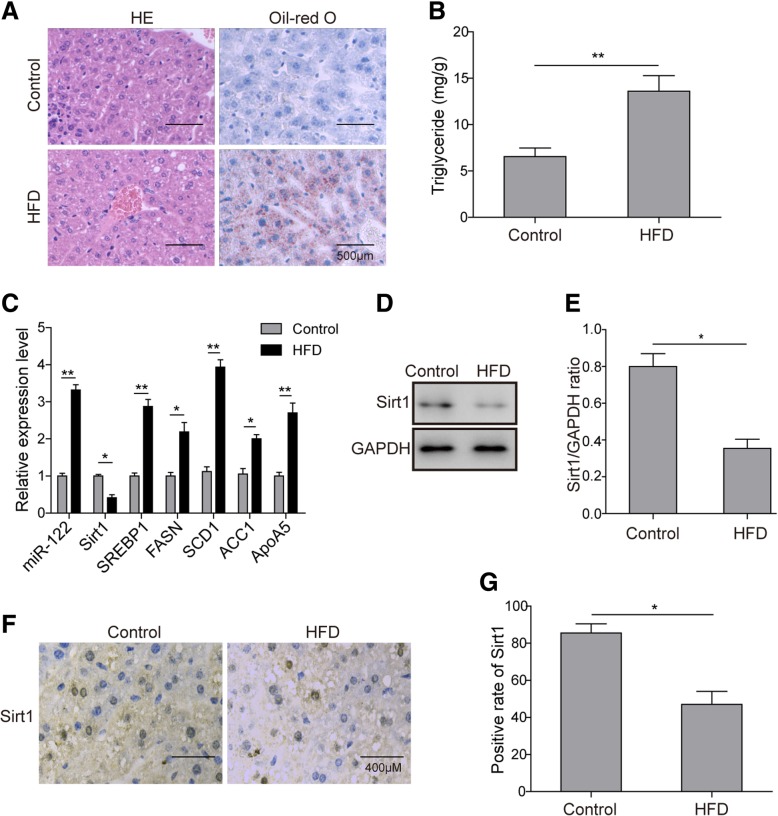
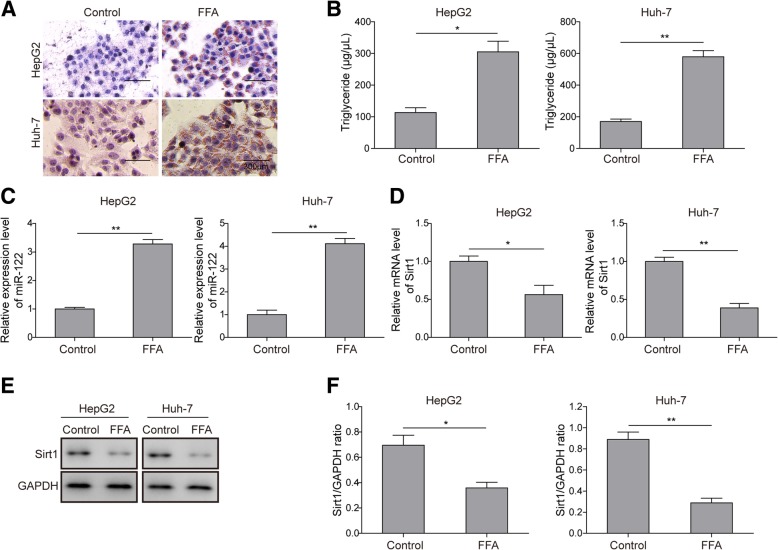
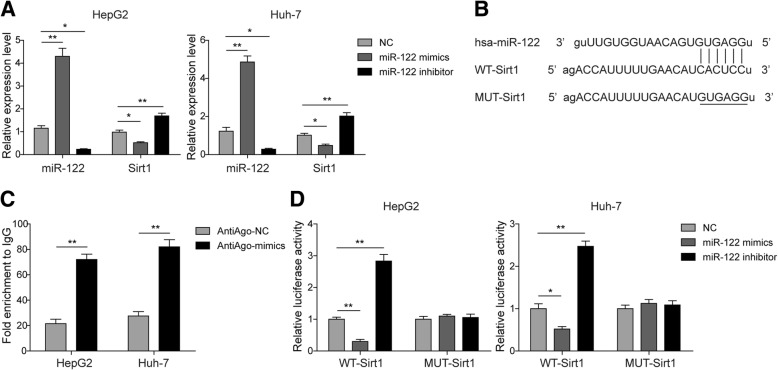
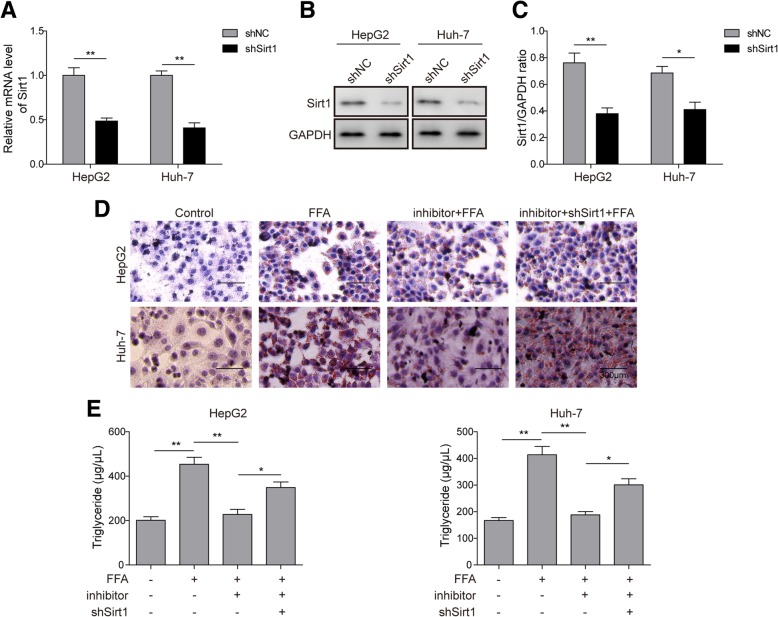
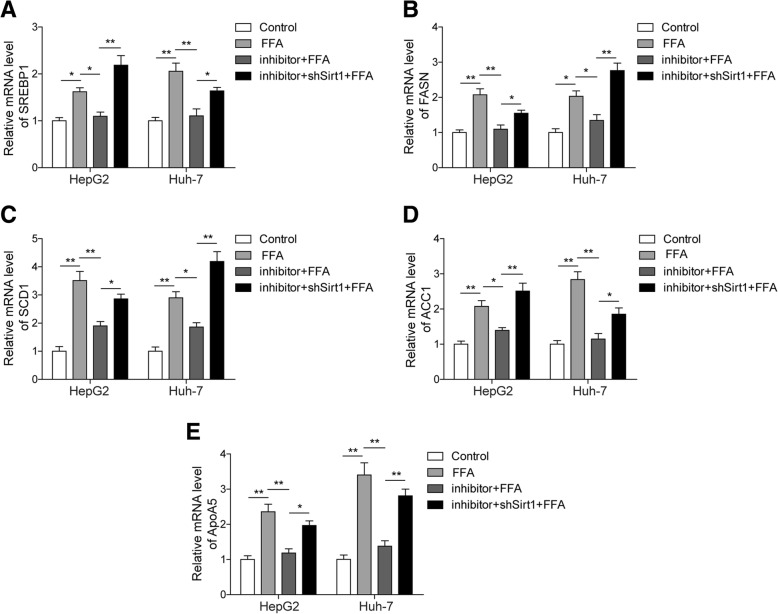
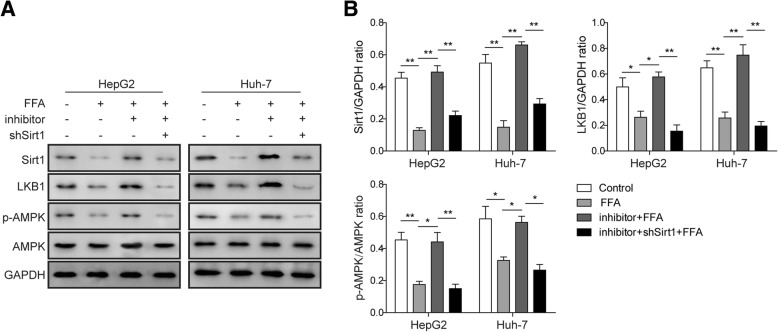
BACKGROUND: Non-alcoholic fatty liver disease (NAFLD) is a common hepatic disease with an increasing prevalence but an unclear aetiology. This study aimed to investigate the functional implications of microRNA-122 (miR-122) in the pathogenesis of NAFLD and the possible molecular mechanisms. METHODS: Both in vitro and in vivo models of NAFLD were generated by treating HepG2 and Huh-7 cells with free fatty acids (FFA) and by feeding mice a high-fat diet (HFD), respectively. HE and Oil Red O staining were used to examine liver tissue morphology and lipid deposition, respectively. Immunohistochemical (IHC) staining was used to examine Sirt1 expression in liver tissues. qRT-PCR and Western blotting were employed to measure the expression of miR-122, Sirt1, and proteins involved in lipogenesis and the AMPK pathway. Enzyme-linked immunosorbent assay (ELISA) was used to quantify triglyceride (TG) levels in HepG2 and Huh-7 cells and in liver tissues. The interaction between miR-122 and the Sirt1 gene was further examined by a dual luciferase reporter assay and RNA-immunoprecipitation (RIP). RESULTS: NAFLD hepatic tissues and FFA-treated HepG2 and Huh-7 cells presented excess lipid production and TG secretion, accompanied by miR-122 upregulation, Sirt1 downregulation, and potentiated lipogenesis-related genes. miR-122 suppressed Sirt1 expression via binding to its 3'-untranslated region (UTR). Knockdown of miR-122 effectively mitigated excessive lipid production and suppressed the expression of lipogenic genes in FFA-treated HepG2 and Huh-7 cells via upregulating Sirt1. Furthermore, miR-122 knockdown activated the LKB1/AMPK signalling pathway. CONCLUSION: The inhibition of miR-122 protects hepatocytes from lipid metabolic disorders such as NAFLD and suppresses lipogenesis via elevating Sirt1 and activating the AMPK pathway. These data support miR-122 as a promising biomarker and drug target for NAFLD.
Overview
The claims and statistics of this paper haven’t been checked yet.
Free: it reads the open-access text and checks the first 5 claims that cite a source we can check. Create a free account to check every claim.
Integrity signals
Registry
Cites
Statistics
Figures
Verification
Claims the paper makes
The claims and statistics of this paper haven’t been checked yet.
Free: it reads the open-access text and checks the first 5 claims that cite a source we can check. Create a free account to check every claim.
Claims other papers make about this one
Each is checked against this paper’s own text: does it say what the citing paper says it does?
The source backs part of the claim, not all of it — or backs it for a different population, condition or comparison.
In the citing paper
“GLP-1RAs reduce liver fat accumulation by activating AMPK, which inhibits fatty acid synthesis enzymes and promotes fatty acid β-oxidation, thus diminishing lipid droplet accumulation in hepatocytes.508–511”
From Glucagon-like peptide-1 receptor: mechanisms and advances in therapy (2024) · cites this paper as [509]
Experimental — accuracy not yet measured
Self-check
Percentages, sums and reported differences re-computed from the paper’s own numbers.
The self-check needs the paper’s full text.
Citations
Cites
Transcriptional silencing and longevity protein Sir2 is an NAD-dependent histone deacetylase
Imai, S.-I., Armstrong, C. M., Kaeberlein, M., & Guarente, L. (2000) · Nature · doi:10.1038/35001622 · Cited by 3,510
AMPK regulates energy expenditure by modulating NAD+ metabolism and SIRT1 activity
Cantó, C., Gerhart-Hines, Z., Feige, J. N., Lagouge, M., Noriega, L., Milne, J. C., Elliott, P. J., Puigserver, P., & Auwerx, J. (2009) · Nature · doi:10.1038/nature07813 · Cited by 3,300
MicroRNAs in metabolism and metabolic disorders
Rottiers, V., & Näär, A. M. (2012) · Nature Reviews Molecular Cell Biology · doi:10.1038/nrm3313 · Cited by 1,156
Purushotham, A., Schug, T. T., Xu, Q., Surapureddi, S., Guo, X., & Li, X. (2009) · Cell Metabolism · doi:10.1016/j.cmet.2009.02.006 · Cited by 1,003
SIRT1 Modulation of the Acetylation Status, Cytosolic Localization, and Activity of LKB1
Lan, F., Cacicedo, J. M., Ruderman, N., & Ido, Y. (2008) · Journal of Biological Chemistry · doi:10.1074/jbc.m805711200 · Cited by 825
Sirt1 improves healthy ageing and protects from metabolic syndrome-associated cancer
Herranz, D., Muñoz-Martin, M., Cañamero, M., Mulero, F., Martinez-Pastor, B., Fernandez-Capetillo, O., & Serrano, M. (2010) · Nature Communications · doi:10.1038/ncomms1001 · Cited by 612
Pirola, C. J., Fernández Gianotti, T., Castaño, G. O., Mallardi, P., San Martino, J., Mora Gonzalez Lopez Ledesma, M., Flichman, D., Mirshahi, F., Sanyal, A. J., & Sookoian, S. (2015) · Gut · doi:10.1136/gutjnl-2014-306996 · Cited by 564
Li, X. (2013) · Acta Biochimica et Biophysica Sinica · doi:10.1093/abbs/gms108 · Cited by 360 · cited 1×
“Sirt1 also modulates the expression of various genes involved in glucose and lipid metabolism (Li, 2013).”
BackgroundCastro, R. E., Ferreira, D. M. S., Afonso, M. B., Borralho, P. M., Machado, M. V., Cortez-Pinto, H., & Rodrigues, C. M. P. (2013) · Journal of Hepatology · doi:10.1016/j.jhep.2012.08.008 · Cited by 350
Lin, R., Elf, S., Shan, C., Kang, H.-B., Ji, Q., Zhou, L., Hitosugi, T., Zhang, L., Zhang, S., Seo, J. H., et al. (2015) · Nature Cell Biology · doi:10.1038/ncb3255 · Cited by 287
Cited by
Glucagon-like peptide-1 receptor: mechanisms and advances in therapy
Zheng, Z., Zong, Y., Ma, Y., Tian, Y., Pang, Y., Zhang, C., & Gao, J. (2024) · Signal Transduction and Targeted Therapy · doi:10.1038/s41392-024-01931-z · Cited by 1,036
Epigenetic regulation in metabolic diseases: mechanisms and advances in clinical study
Wu, Y.-L., Lin, Z.-J., Li, C.-C., Lin, X., Shan, S.-K., Guo, B., Zheng, M.-H., Li, F., Yuan, L.-Q., & Li, Z.-H. (2023) · Signal Transduction and Targeted Therapy · doi:10.1038/s41392-023-01333-7 · Cited by 476
“miR-122 aggravates hepatic lipogenesis by targeting SIRT1 and activating the LKB1-AMPK cascade.(246) Lee et al.”
BackgroundNAFLD: Mechanisms, Treatments, and Biomarkers
Nassir, F. (2022) · Biomolecules · doi:10.3390/biom12060824 · Cited by 405
The AMPK pathway in fatty liver disease
Fang, C., Pan, J., Qu, N., Lei, Y., Han, J., Zhang, J., & Han, D. (2022) · Frontiers in Physiology · doi:10.3389/fphys.2022.970292 · Cited by 364
“(2009) found that AMPK was located upstream of Sirt1 and could increase Sirt1 activity by increasing the intracellular AMP/ATP ratio, particularly the level of NAD/NADH (Long et al., 2019).”
BackgroundMechanisms of Non-Alcoholic Fatty Liver Disease in the Metabolic Syndrome. A Narrative Review
Rinaldi, L., Pafundi, P. C., Galiero, R., Caturano, A., Morone, M. V., Silvestri, C., Giordano, M., Salvatore, T., & Sasso, F. C. (2021) · Antioxidants · doi:10.3390/antiox10020270 · Cited by 171
“In particular, miR-122 appears upregulated in the presence of a high-fat diet, thus resulting in the promotion of lipogenesis in the liver [162].”
BackgroundMicroRNAs in non-alcoholic fatty liver disease: Progress and perspectives
Hochreuter, M. Y., Dall, M., Treebak, J. T., & Barrès, R. (2022) · Molecular Metabolism · doi:10.1016/j.molmet.2022.101581 · Cited by 168
“Other upstream controllers of lipid metabolism identified as direct miR122 targets are SIRT1 (upstream negative regulator of lipogenic genes via the Liver Kinase B1 (LKB1)/AMPK axis) [66] and Yin Yang 1 (YY1, transcriptional repressor of the FXR/SHP axis which inhibits lipogenesis) [67] (Figure 3).”
BackgroundResultFunctional Roles of Chemokine Receptor CCR2 and Its Ligands in Liver Disease
She, S., Ren, L., Chen, P., Wang, M., Chen, D., Wang, Y., & Chen, H. (2022) · Frontiers in Immunology · doi:10.3389/fimmu.2022.812431 · Cited by 122
“Studies have found that miR-122 is significantly upregulated in the serum of NAFLD/NASH and alcoholic liver disease (ALD) patients (71, 72).”
BackgroundNutrition and Genetics in NAFLD: The Perfect Binomium
Meroni, M., Longo, M., Rustichelli, A., & Dongiovanni, P. (2020) · International Journal of Molecular Sciences · doi:10.3390/ijms21082986 · Cited by 140
“knockdown mitigated hepatic steatosis via Sirt1-induced liver kinase B1/AMP-activated protein kinase (LKB1/AMPK) pathway [131].”
BackgroundShen, Y., Cheng, L., Xu, M., Wang, W., Wan, Z., Xiong, H., Guo, W., Cai, M., & Xu, F. (2023) · Metabolism · doi:10.1016/j.metabol.2023.155657 · Cited by 117
Palma, R., Pronio, A., Romeo, M., Scognamiglio, F., Ventriglia, L., Ormando, V. M., Lamazza, A., Pontone, S., Federico, A., & Dallio, M. (2022) · Journal of Clinical Medicine · doi:10.3390/jcm11133649 · Cited by 125
“↑ miR-122 ↑ FASN De novo lipogenesis [104] ↑ SREBP1c ↓ IGF-1R ↓ miR-499 ↓ Akt/GSK activation Liver fat accumulation [106] ↓ PTEN Hepatic glucose metabolism”
BackgroundLi, H., Gan, R., Shang, A., Mao, Q., Quan-cai, S., Wu, D., Geng, F., He, X.-Q., & Li, H. (2021) · Oxidative Medicine and Cellular Longevity · doi:10.1155/2021/6621644 · Cited by 123
Progress in Nonalcoholic Fatty Liver Disease: SIRT Family Regulates Mitochondrial Biogenesis
Zeng, C., & Chen, M. (2022) · Biomolecules · doi:10.3390/biom12081079 · Cited by 102
Mouse models of nonalcoholic fatty liver disease (NAFLD): pathomechanisms and pharmacotherapies
Fang, T., Wang, H., Pan, X., Little, P. J., Xu, S., & Weng, J. (2022) · International Journal of Biological Sciences · doi:10.7150/ijbs.65044 · Cited by 114
“[15] verified that the inhibition of miR-122 up-regulated Sirt1”
BackgroundPathophysiological underpinnings of metabolic dysfunction-associated steatotic liver disease
Kuchay, M. S., Choudhary, N. S., & Ramos‐Molina, B. (2025) · American Journal of Physiology-Cell Physiology · doi:10.1152/ajpcell.00951.2024 · Cited by 117
MicroRNA-122 in human cancers: from mechanistic to clinical perspectives
Faramin Lashkarian, M., Hashemipour, N., Niaraki, N., Soghala, S., Moradi, A., Sarhangi, S., Hatami, M., Aghaei-Zarch, F., Khosravifar, M., Mohammadzadeh, A., et al. (2023) · Cancer Cell International · doi:10.1186/s12935-023-02868-z · Cited by 105
Epigenetic regulation of energy metabolism in obesity
Gao, W., Liu, J.-L., Lu, X., & Yang, Q. (2021) · Journal of Molecular Cell Biology · doi:10.1093/jmcb/mjab043 · Cited by 92
“However, MRX 34 caused severe immune-mediated adverse effects leading to early termination of the phase I clinical trial for cancer treatment (Beg et al., 2017 ). miR-122 , the most abundant miRNA in the liver, promotes hepatic lipogenesis (Long et al., 2019 ).”
Current Options and Future Directions for NAFLD and NASH Treatment
Zhang, C., & Yang, M. J. (2021) · International Journal of Molecular Sciences · doi:10.3390/ijms22147571 · Cited by 106
Mitochondrial Dysfunction in Metabolic Dysfunction Fatty Liver Disease (MAFLD)
Zhao, Y., Zhou, Y., Wang, D., Huang, Z., Xiao, X., Zheng, Q., Li, S., Long, D., & Feng, L. (2023) · International Journal of Molecular Sciences · doi:10.3390/ijms242417514 · Cited by 100
“In addition, circRNA-002581 inhibits the expression of miRNA-122, which promotes fat oxidation and the activation and phosphorylation of mTOR to aggravate the development of inflammation [168].”
BackgroundLKB1 deficiency-induced metabolic reprogramming in tumorigenesis and non-neoplastic diseases
Zhang, Y., Meng, Q., Sun, Q., Xu, Z., Zhou, H., & Wang, Y. (2020) · Molecular Metabolism · doi:10.1016/j.molmet.2020.101131 · Cited by 97
“For example, microRNA-122 (mir-122) and elastin-derived peptides (EDPs) induce hepatic lipogenesis, inflammation, and fibrosis by inhibiting the LKB1-AMPK pathway [84,85].”
BackgroundMartinou, E., Pericleous, M., Stefanova, I., Kaur, V., & Angelidi, A. M. (2022) · Diagnostics · doi:10.3390/diagnostics12020407 · Cited by 107
MicroRNAs in the Pathogenesis of Nonalcoholic Fatty Liver Disease
Fang, Z., Dou, G., & Wang, L. (2021) · International Journal of Biological Sciences · doi:10.7150/ijbs.59588 · Cited by 111
“For instance, Sirt1 can be regulated by miR-34a, [30, 31, 36, 84–86] miR-122, [29] and miR-132 [47].”
BackgroundZhou, S., Xue, J., Shan, J., Hong, Y., Zhu, W., Nie, Z., Zhang, Y., Ji, N., Luo, X., Zhang, T., et al. (2022) · Nutrients · doi:10.3390/nu14163338 · Cited by 81
“AMPK and SIRT1 play important roles in a variety of physiological processes, including regulating energy expenditure [22], attenuating oxidative stress-induced apoptosis [57], regulating hyperglycemia-induced cell death [58], attenuating ethanol-induced liver injury [59], relieving non-alcoholic fatty liver disease [6…”
BackgroundLi, N., Yin, L., Shang, J., Liang, M., Liu, Z., Yang, H., Qiang, G., Du, G., & Yang, X. (2023) · Biomedicine & Pharmacotherapy · doi:10.1016/j.biopha.2023.115113 · Cited by 78
SIRT1 signaling pathways in sarcopenia: Novel mechanisms and potential therapeutic targets
Yang, L., Liu, D., Jiang, S., Li, H., Chen, L., Wu, Y., Essien, A. E., Opoku, M., Naranmandakh, S., Liu, S., et al. (2024) · Biomedicine & Pharmacotherapy · doi:10.1016/j.biopha.2024.116917 · Cited by 68
Gutiérrez‐Cuevas, J., Lucano‐Landeros, S., López-Cifuentes, D., Santos, A., & Armendáriz‐Borunda, J. (2022) · Cancers · doi:10.3390/cancers15010023 · Cited by 68
Extracellular miRNAs as mediators of obesity‐associated disease
Brandão, B. B., Lino, M., & Kahn, C. R. (2021) · The Journal of Physiology · doi:10.1113/jp280910 · Cited by 67
Pediatric Non-Alcoholic Fatty Liver Disease: Nutritional Origins and Potential Molecular Mechanisms
Mandala, A., Janssen, R. C., Palle, S. K., Short, K. R., & Friedman, J. E. (2020) · Nutrients · doi:10.3390/nu12103166 · Cited by 66
Ren, T., Liu, F., Wang, D., Li, B., Jiang, P., Li, J., Li, H., Chen, C., Wu, W. H., & Jiao, L. (2022) · Journal of Ethnopharmacology · doi:10.1016/j.jep.2022.115862 · Cited by 60
Yang, F., Wang, X., Yang, D., Lu, Y., Wei, G., Yu, W., Liu, X., Zheng, Q., Ying, J., & Hua, F. (2021) · Frontiers in Aging Neuroscience · doi:10.3389/fnagi.2021.738686 · Cited by 56
“, 2020), the high expression of miR-9, miR-93, miR-100, miR-122, miR132, miR-135a, miR-137, miR-155, miR-181a/b/c, miR-182-5p, miR-199b, miR-204, miR-221, and so on in other tissues can also directly inhibit the expression of SIRT1 (Ge et al., 2019; Guo et al., 2019; Long et al., 2019; Xie et al., 2019; Zhao et al., 2…”
BackgroundTherapeutic strategies targeting AMPK-dependent autophagy in cancer cells
Yuan, W., Fang, W., Zhang, R., Lyu, H., Xiao, S., Guo, D. S., Ali, D. W., Michalak, M., Chen, X., Zhou, C., et al. (2023) · Biochimica et Biophysica Acta (BBA) - Molecular Cell Research · doi:10.1016/j.bbamcr.2023.119537 · Cited by 57
Li, B., Xiao, Q., Zhao, H., Zhang, J., Yang, C., Zou, Y., Zhang, B., Liu, J., Sun, H., & Liu, H. (2024) · Acta Pharmaceutica Sinica B · doi:10.1016/j.apsb.2024.05.014 · Cited by 53
“Dysregulated miRNAs in NAFLD inhibit hepatic AMPK expression and activity 50 .”
BackgroundRole of Circulating microRNAs in Liver Disease and HCC: Focus on miR-122
Colaianni, F., Zelli, V., Compagnoni, C., Miscione, M. S., Rossi, M., Vecchiotti, D., Padova, M. D., Alesse, E., Zazzeroni, F., & Tessitore, A. (2024) · Genes · doi:10.3390/genes15101313 · Cited by 56
“According to Long et al., miR-122 modulates the lipogenesis by targeting Sirtuin-1 ( SIRT1 ), leading to the upregulation of lipogenic enzymes and increase in lipids droplets in hepatocytes [8].”
BackgroundMolecular Targets and Signaling Pathways of microRNA-122 in Hepatocellular Carcinoma
Chun, K. (2022) · Pharmaceutics · doi:10.3390/pharmaceutics14071380 · Cited by 50
Gao, S., Chen, X., Yu, Z., Du, R., Chen, B., Wang, Y., Cai, X.-T., Xu, J., Chen, J., Duan, H., et al. (2023) · Phytomedicine · doi:10.1016/j.phymed.2023.154836 · Cited by 48
Lombardi, R., Iuculano, F., Pallini, G., Fargion, S. R., & Fracanzani, A. L. (2020) · International Journal of Molecular Sciences · doi:10.3390/ijms21228761 · Cited by 53
An Update in Epigenetics in Metabolic-Associated Fatty Liver Disease
Rodríguez-Sanabria, J. S., Escutia-Gutiérrez, R., Rosas-Campos, R., Armendáriz‐Borunda, J., & Sandoval-Rodriguez, A. S. (2022) · Frontiers in Medicine · doi:10.3389/fmed.2021.770504 · Cited by 58
Hudson, D., Afzaal, T., Bualbanat, H., AlRamdan, R., Howarth, N., Parthasarathy, P., Al-Darwish, A., Stephenson, E., Almahanna, Y., Hussain, M., et al. (2024) · Therapeutic Advances in Gastroenterology · doi:10.1177/17562848241276334 · Cited by 50
“85,86 Digital pathology and AI in histopathology of MASLD/MASH Technological advances in pathology have revolutionized the field, particularly whole slide imaging, a technology that digitizes histopathological slides and provides the ability to analyze an entire tissue section.”
Roles of lipid metabolism and its regulatory mechanism in idiopathic pulmonary fibrosis: A review
Tian, Y., Duan, C., Feng, J., Liao, J., Yang, Y., & Sun, W. (2022) · The International Journal of Biochemistry & Cell Biology · doi:10.1016/j.biocel.2022.106361 · Cited by 43
Yuan, H., Jung, E.-S., Chae, S., Jung, S., Daily, J. W., & Park, S. (2024) · Nutrients · doi:10.3390/nu16183061 · Cited by 42
“For instance, miR-122 upregulation and sirtuin 1 ( SIRT1 ) downregulation inhibit the AMP-dependent protein kinase ( AMPK ) pathway, promoting lipogenesis [112].”
BackgroundWu, X., Du, X., Yang, Y., Liu, X., Liu, X., Zhang, N., Li, Y., Jiang, X., Jiang, Y., & Yang, Z. (2020) · Life Sciences · doi:10.1016/j.lfs.2020.118816 · Cited by 40
Zhu, Z., Zhang, X., Pan, Q., Zhang, L., & Chai, J. (2023) · Liver Research · doi:10.1016/j.livres.2023.11.003 · Cited by 38
“43 e 45 Furthermore, a study by Long et al ., 44 revealed that miRNA-122 directly targets silent information regulator 1 (SIRT1).”
Cui, J., Wang, Y., & Xue, H. (2022) · Bioengineered · doi:10.1080/21655979.2022.2026858 · Cited by 38
“LncRNA FLRL2 alleviates NAFLD via the Arntl/Sirt1 signaling [14].”
BackgroundMicroRNA regulation of AMPK in nonalcoholic fatty liver disease
Sun, H., & Kemper, J. K. (2023) · Experimental & Molecular Medicine · doi:10.1038/s12276-023-01072-3 · Cited by 37
New insight of obesity-associated NAFLD: Dysregulated “crosstalk” between multi-organ and the liver?
Wang, Y., Wu, L.-L., Qi, X.-Y., Wang, Y.-Y., Liao, Z., Liu, J., & Xiao, X. (2022) · Genes & Diseases · doi:10.1016/j.gendis.2021.12.013 · Cited by 40
“In the state of obesity, elevated EXO-miR-122 could inhibit hepatic fatty acid oxidation via the LKB1/AMPK/Sirt1 pathway.(135) Elevated EXO-miR-22 contributes to development of steatosis by simultaneously reducing hepatic FGF21.”
BackgroundLi, Y., Liu, Y., Chen, Z., Tang, K., Yang, L., Jiang, Y., Wang, J., Huang, P., Wang, J., Zheng, P., et al. (2023) · Biomedicine & Pharmacotherapy · doi:10.1016/j.biopha.2023.114319 · Cited by 37
Mao, X., Zhang, X., Lai, R., Cheung, K. S., Yuen, M., Cheung, R. C., Seto, W., & Nguyen, M. H. (2025) · Clinical and Molecular Hepatology · doi:10.3350/cmh.2024.1096 · Cited by 36
Pirfenidone modifies hepatic miRNAs expression in a model of MAFLD/NASH
Escutia-Gutiérrez, R., Rodríguez-Sanabria, J. S., Monraz-Méndez, C. A., Garcia-Bañuelos, J. J., Santos, A., Sandoval-Rodriguez, A. S., & Armendáriz‐Borunda, J. (2021) · Scientific Reports · doi:10.1038/s41598-021-91187-2 · Cited by 34
Establishment of a non‐alcoholic fatty liver disease model by high fat diet in adult zebrafish
Li, X., Zhou, L., Zheng, Y., He, T., Guo, H., Li, J., & Zhang, J. (2023) · Animal Models and Experimental Medicine · doi:10.1002/ame2.12309 · Cited by 33
“20,31,32,33 The genes associated with NAFLD in the GO analysis were networked and enriched with the STRING database, and then the cytoHubba app in Cytoscape software was used for module screening, and 20 core genes were obtained in order of score (Figure 4C ).”
Self-citationChen, J., Yang, S., Luo, H., Fu, X., Li, W., Li, B., Fu, C., Chen, F., Xu, D., & Cao, N. (2024) · International Immunopharmacology · doi:10.1016/j.intimp.2024.113014 · Cited by 32
Dallio, M., Romeo, M., Gravina, A. G., Masarone, M., Larussa, T., Abenavoli, L., Persico, M., Loguercio, C., & Federico, A. (2021) · Nutrients · doi:10.3390/nu13051679 · Cited by 33
“Recent scientific evidence demonstrated through in vitro and animal models the miRNA-122 suppressing role of SIRT1 expression via binding its 3’-untranslated region (UTR), enhancing lipogenesis, and contributing, thus, to lipid accumulation [94].”
BackgroundInfluentialSamy, A. M., Kandeil, M. A., Sabry, D., Abdel‐Ghany, A. A., & Mahmoud, M. O. (2024) · Archiv der Pharmazie · doi:10.1002/ardp.202300631 · Cited by 31
Pan, J. H., Cha, H., Tang, J., Lee, S., Lee, S. H., Le, B., Redding, M. C., Kim, S., Batish, M., Kong, B. C., et al. (2021) · Food & Function · doi:10.1039/d0fo02286a · Cited by 31
Dapagliflozin prevents kidney podocytes pyroptosis via miR-155-5p/HO-1/NLRP3 axis modulation
Zhang, Z.-W., Ming-qiu, T., Liu, W., Song, Y., Gao, M.-J., Ni, P., Zhang, D., Mo, Q., & Zhao, B. (2024) · International Immunopharmacology · doi:10.1016/j.intimp.2024.111785 · Cited by 31
Xu, J., Jia, W., Zhang, G., Liu, L., Wang, L., Wu, D., Tao, J., Yue, H., Zhang, D., & Zhao, X. (2024) · Journal of Ethnopharmacology · doi:10.1016/j.jep.2024.118054 · Cited by 30
Kong, F., Zhao, Y., Zhang, W., Wang, X., Wu, T., Zhou, Z., Xu, Y., Xia, L., & Sun, T. (2026) · Nature Communications · doi:10.1038/s41467-025-67701-9 · Cited by 29
MicroRNAs in the Diagnosis of Digestive Diseases: A Comprehensive Review
Popa, M. L., Ichim, C., Anderco, P., Todor, S. B., & Pop-Lodromanean, D. (2025) · Journal of Clinical Medicine · doi:10.3390/jcm14062054 · Cited by 29
“Silencing miR-122 in Huh-7 and HepG2 cells using a miR-122 inhibitor significantly reduced excessive lipid accumulation [88].”
InfluentialMolokhia leaf extract prevents gut inflammation and obesity
Lee, H., Oh, M., Do, M. H., Kim, Y., & Park, H. (2020) · Journal of Ethnopharmacology · doi:10.1016/j.jep.2020.112866 · Cited by 31
Targeting AMPK Signaling by Dietary Polyphenols in Cancer Prevention
Hu, Z., Li, M., Cao, Y., Akan, O. D., Guo, T., & Luo, F. (2021) · Molecular Nutrition & Food Research · doi:10.1002/mnfr.202100732 · Cited by 32
Chen, K., Lin, T., Yao, W., Chen, X., Xiong, X., & Huang, Z. (2022) · Gastroenterología y Hepatología · doi:10.1016/j.gastrohep.2022.12.003 · Cited by 31
Research Progress on Micro (Nano)Plastics Exposure-Induced miRNA-Mediated Biotoxicity
Chen, T., Lin, Q., Gong, C., Zhao, H., & Peng, R. (2024) · Toxics · doi:10.3390/toxics12070475 · Cited by 28
Innate Immune System in the Pathogenesis of Non-Alcoholic Fatty Liver Disease
Ma, D. W., Ha, J., Yoon, K., Kang, I., Choi, T. G., & Kim, S. S. (2023) · Nutrients · doi:10.3390/nu15092068 · Cited by 27
“Studies have identified several miRNAs that are dysregulated in NAFLD, including miR-122, miR-34a, miR-21, and miR-155 [29,30].”
BackgroundTian, Y., Hong, X., Xie, Y., Guo, Z., & Yu, Q. (2023) · Antioxidants · doi:10.3390/antiox12122100 · Cited by 30
“Elevating Sirt1 levels and activating the AMPK pathway protect hepatocytes from lipid metabolic disorders such as NAFLD and suppress lipogenesis [46].”
Gao, Y., Zhang, S., Li, J., Zhao, J., Xiao, Q., Zhu, Y., Zhang, J., & Huang, W. (2020) · Bioscience Biotechnology and Biochemistry · doi:10.1080/09168451.2020.1793293 · Cited by 27
Song, L., Zeng, R., Yang, K., Liu, W., Xu, Z., & Kang, F. (2023) · Discover Oncology · doi:10.1007/s12672-023-00738-8 · Cited by 27
“The human liver LIHC cells HepG2 and Huh7 were gift from Xiangya Cancer Center, Xiangya Hospital, Central South University [23].”
MethodThe emerging role of miRNA-122 in infectious diseases: Mechanisms and potential biomarkers
Mirzaei, R., Karampoor, S., & Korotkova, N. L. (2023) · Pathology - Research and Practice · doi:10.1016/j.prp.2023.154725 · Cited by 27
Deng, Q., Li, H., Yue, X., Guo, C., Sun, Y., Ma, C., Gao, J., Wu, Y., Du, B., Yang, J., et al. (2023) · Cell Death and Disease · doi:10.1038/s41419-023-06054-x · Cited by 25
“Adenovirus expressing LKB1, LOX-1 or GFP and adenovirus vector containing no transgene expression cassette (Null) was purchased from”
Ma, Y., Li, Y., Wu, T., Li, Y., & Wang, Q. (2023) · Cancers · doi:10.3390/cancers15205048 · Cited by 25
“The specific method of cell culture was carried out according to the method of Long et al. [36].”
MethodTranscriptome reveals key microRNAs involved in fat deposition between different tail sheep breeds
Fei, X., Jin, M., Wang, Y., Li, T., Lu, Z., Yuan, Z., Wang, H., Lü, J., Quan, K., Di, R., et al. (2022) · PLoS ONE · doi:10.1371/journal.pone.0264804 · Cited by 29
“Investigations revealed the Wnt pathway had key function in regulating body mass, glucose metabolism, de-novo lipogenesis, low density lipoprotein clearance, vascular smooth muscle plasticity, liver fat and liver inflammation [54].”
BackgroundMicroRNAs in metabolic dysfunction‐associated diseases: Pathogenesis and therapeutic opportunities
Ma, N., Tan, J., Chen, Y., Liu, Y., Li, M., & He, Y. (2024) · The FASEB Journal · doi:10.1096/fj.202401464r · Cited by 25
“24 Macrophages constitute nearly 15% of liver cells and its activation has been well established as a hallmark of MASH development.”
The SIRT1/Nrf2 signaling pathway mediates the anti-pulmonary fibrosis effect of liquiritigenin
Hua, Q., & Ren, L. (2024) · Chinese Medicine · doi:10.1186/s13020-024-00886-1 · Cited by 24
“Previous research indicates that the absence of SIRT1 in organs results in elevated levels of ROS [37, 38].”
BackgroundChen, Y., Lei, K., Liu, Y., Liu, J., Wei, K., Guo, J., & Su, Z. (2025) · Biomolecules · doi:10.3390/biom15070990 · Cited by 27
“Recently, several miRNAs, including miR-33, miR-122, miR-132, and miR-30c-5p, have been studied in lipid metabolism and have been shown to interact with key regulators of lipid synthesis [146–149].”
Liver Steatosis: A Marker of Metabolic Risk in Children
Neri, C. R., Scapaticci, S., Chiarelli, F., & Giannini, C. (2022) · International Journal of Molecular Sciences · doi:10.3390/ijms23094822 · Cited by 25
Li, Y., Baumert, B. O., Stratakis, N., Goodrich, J. A., Wu, H., He, J., Zhao, Y., Aung, M. T., Wang, H., Eckel, S. P., et al. (2024) · World Journal of Gastroenterology · doi:10.3748/wjg.v30.i4.332 · Cited by 23
Shu, G., Wang, C., Song, A., Zheng, Z., Zheng, S., Song, Y., Wang, X., Yu, H., Yin, S., & Deng, X. (2024) · Journal of Ethnopharmacology · doi:10.1016/j.jep.2024.118648 · Cited by 23
NUSAP1 Could be a Potential Target for Preventing NAFLD Progression to Liver Cancer
Zeng, T., Chen, G., Qiao, X., Chen, H., Sun, L., Ma, Q., Li, N., Wang, J., Dai, C., & Xu, F. (2022) · Frontiers in Pharmacology · doi:10.3389/fphar.2022.823140 · Cited by 27
“To establish the in vitro NAFLD cell model, HL7702 and MHCC-97H cells were cultured in the presence or absence of 1 mmol/L free fatty acids (FFA, containing oleic acid and palmitic acid at a 2:1 volume ratio) for 24 h and then used for the indicated assays (Long et al., 2019).”
MethodWang, M., Xue, Q., Li, X., Krohn, K., Ziesche, S., Ceglarek, U., Blüher, M., Keller, M., Meir, A. Y., Heianza, Y., et al. (2022) · The Journal of Clinical Endocrinology & Metabolism · doi:10.1210/clinem/dgac023 · Cited by 22
Treatment with EV-miRNAs Alleviates Obesity-Associated Metabolic Dysfunction in Mice
Castaño, C., Meza‐Ramos, A., Batlle, M., Guasch, E., Novials, A., & Párrizas, M. (2022) · International Journal of Molecular Sciences · doi:10.3390/ijms232314920 · Cited by 22
“Recent data show that miR-122 promotes hepatic lipogenesis by targeting Sirt1 [56], whereas its inhibition in vitro in 3T3-L1 cells decreased Srebf1 [57].”
BackgroundInfluentialCorrelation analysis of hepatic steatosis and hepatitis B virus: a cross-sectional study
Yi, S., Ren, G., Zhu, Y., & Cong, Q. (2024) · Virology Journal · doi:10.1186/s12985-023-02277-8 · Cited by 24
“…addition, it has been confirmed that miR-122 inhibits HBV transcription by reducing the expression of cyclin G1 [19], while the expression level of miR-122 was increased in patients with MAFLD [20], which ultimately leads to the reduction of HBV expression in patients with CHB combined with MAFLD.”
BackgroundMahmoudi, A. A., Butler, A. E., Jamialahmadi, T., & Sahebkar, A. (2021) · BioMed Research International · doi:10.1155/2021/3654660 · Cited by 23
Li, Q., Wu, J., Sun, X., Huang, X., Huang, W., Weng, C., & Cai, J. (2023) · Frontiers in Cardiovascular Medicine · doi:10.3389/fcvm.2023.1119005 · Cited by 23
“Wang et al. pointed out that inhibition of NAMPT activity aggravated high diet-induced hepatic steatosis in mice by regulating the Sirt1/ AMPKα/SREBP1 signaling pathway (44).”
BackgroundZhu, Y., Tan, J. K., Wong, S. K., & Goon, J. A. (2023) · International Journal of Molecular Sciences · doi:10.3390/ijms24119168 · Cited by 21
“Long et al. [72] found elevated miRNA-122 expression in both the hepatic cells of HFD-fed NAFLD mice and FFA-induced HepG2 and Huh-7 liver cells. miRNA-122 action on the direct target SIRT1 was verified by dual luciferase assay. miRNA-122 inhibitor action on the NAFLD cell model inhibited…”
BackgroundYang, N., Sun, R., Zhang, X., Wang, J., Wang, L., Zhu, H., Yuan, M., Xu, Y., Ge, C., He, J. B., et al. (2023) · Biomedicine & Pharmacotherapy · doi:10.1016/j.biopha.2023.114987 · Cited by 22
The emerging significance of mitochondrial targeted strategies in NAFLD treatment
Zhang, T., Nie, Y., & Wang, J. (2023) · Life Sciences · doi:10.1016/j.lfs.2023.121943 · Cited by 23
Zhang, S., Xie, H., Pan, P., Wang, Q., Yang, B. F., Li, Y., Wei, Y., Sun, Y., Wei, Y., Jiang, Q., et al. (2024) · Biochemical Pharmacology · doi:10.1016/j.bcp.2024.116250 · Cited by 21
Sun, X., Wang, X., Fu, L., Wang, X., Chen, L., & Huang, Y. (2024) · Analytical Chemistry · doi:10.1021/acs.analchem.4c03298 · Cited by 21
MiR-34a-5p/Sirt1 axis: A novel pathway for puerarin-mediated hepatoprotection against benzo( )pyrene
Hao, R., Ge, J., Li, F., Jiang, Y., Sun‐Waterhouse, D., & Li, D. (2022) · Free Radical Biology and Medicine · doi:10.1016/j.freeradbiomed.2022.05.006 · Cited by 21
Kakiyama, G., Minowa, K., Rodríguez‐Agudo, D., Martin, R., Takei, H., Mitamura, K., Ikegawa, S., Suzuki, M., Nittono, H., Fuchs, M. A., et al. (2022) · American Journal of Physiology-Gastrointestinal and Liver Physiology · doi:10.1152/ajpgi.00179.2022 · Cited by 20
Xiu, M.-X., Zhao, Y., Wang, X., Yuan, S., Qin, B.-F., Sun, J., Cui, L., & Song, J. (2022) · Acta Histochemica · doi:10.1016/j.acthis.2022.151989 · Cited by 20
The Role of Non-Coding RNAs in Liver Disease, Injury, and Regeneration
Rowe, M. M., & Kaestner, K. H. (2023) · Cells · doi:10.3390/cells12030359 · Cited by 21
Yang, M., Song, J., Yang, X., Zhong, G., & Zhong, J. (2022) · In Vitro Cellular & Developmental Biology - Animal · doi:10.1007/s11626-022-00651-4 · Cited by 19
Lee, C., Han, J., & Jung, Y. (2022) · Biology · doi:10.3390/biology11050637 · Cited by 20
“Hepatocytes Serum miR-122 Hepatocytes Dysregulated lipid metabolism [138]”
BackgroundInfluentialLiu, Y., Li, Y., Wang, J., Yang, L., Yu, X., Huang, P., Song, H., & Zheng, P. (2022) · BMC Complementary Medicine and Therapies · doi:10.1186/s12906-022-03697-9 · Cited by 20
Zhao, Y., Sun, N., Song, X., Zhu, J., Wang, T., Wang, Z., Yu, Y., Ren, J. L., Chen, H., Zhan, T., et al. (2023) · Free Radical Biology and Medicine · doi:10.1016/j.freeradbiomed.2023.04.001 · Cited by 19
Liu, H., Guan, H., He, F., Song, Y., Li, F., Sun‐Waterhouse, D., & Li, D. (2023) · Critical Reviews in Food Science and Nutrition · doi:10.1080/10408398.2023.2202762 · Cited by 21
“Quite a few miRNAs are closely related to the occurrence and progression of liver steatosis, including miR-122, miR-223 and miR-21 (He et al. 2019; Long et al. 2019; Zhang et al. 2021).”
Signal Transduction and Molecular Regulation in Fatty Liver Disease
Dong, X. C., Chowdhury, K., Huang, M., & Kim, H.-G. (2021) · Antioxidants and Redox Signaling · doi:10.1089/ars.2021.0076 · Cited by 23
“…for * 70% of all hepatic microRNAs. miR-122 knockout mice develop hepatic steatohepatitis, fibrosis, and hepatocellular carcinoma (66, 195). miR-122 negatively regulates both lipogenic and FAO genes, including 1-acylglycerol-3-phosphate O -acyltransferase 1 (AGPAT1), SIRT1, and SIRT6 (47, 66, 119).”
Cai, Y., Wang, S., Wang, S., Gu, Q., Huang, Y., Li, J., Wang, R., & Liu, X. (2023) · Experimental Gerontology · doi:10.1016/j.exger.2023.112250 · Cited by 19
Jiang, Z., Yang, L., Liu, Q., Qiu, M., Chen, Y., Qu, F., Crabbe, M. J. C., Wang, H., Andersen, M. E., Zheng, Y., et al. (2024) · Water Research · doi:10.1016/j.watres.2024.122008 · Cited by 18
Self-citationFrom fatty liver to fibrosis: the impact of miRNAs on NAFLD and NASH
Mansour, R. M., Mageed, S. S. A., Abulsoud, A. I., Sayed, G. A., Lutfy, R. H., Awad, F. A., Sadek, M. M., Shaker, A. A. S., Mohammed, O. A., Abdel‐Reheim, M. A., et al. (2025) · Functional & Integrative Genomics · doi:10.1007/s10142-025-01544-x · Cited by 19
“On the other hand, it was hypothesized that blocking miR-122 might protect hepatocytes by promoting sirtuin (SIRT)1 and triggering the AMPK pathway during lipogenesis (Long et al. 2019a).”
Guha, S., Sesili, S., Mir, I. H., & Thirunavukkarasu, C. (2022) · Cell Biochemistry and Function · doi:10.1002/cbf.3763 · Cited by 18
Wang, C., Li, L., Jiang, J., Li, L., Li, J., Xu, C., Jin, S., Zhu, L., & Yan, G. (2020) · Journal of Agricultural and Food Chemistry · doi:10.1021/acs.jafc.9b07126 · Cited by 18
Metadata
- Authors
- Long, J.-K., Dai, W., Zheng, Y.-W., & Zhao, S.-P.
- Affiliations
- Second Xiangya Hospital of Central South University (CN)
- Corresponding author
- Zhao, Shui-Ping
- Venue
- Molecular Medicine
- Published
- 2019-06-13
- Volume
- 25
- Issue
- 1
- Pages
- 26-26
- ISSN
- 1076-1551 (ISSN-L)
- 1528-3658
- PMC
- PMC6567918
- OpenAlex
- W2952409891
- Cited by
- 281
- References
- 48
- Citations by year
- 2026: 36 · 2025: 53 · 2024: 52 · 2023: 57 · 2022: 48 · 2021: 21 · 2020: 13 · 2019: 1
- FWCI
- 15.80
- Type
- journal article
- Language
- en
- Open access
- gold
- doi.org
- Licence
- cc-by
- creativecommons.org/licenses/by/4.0/ (tdm)
- creativecommons.org/licenses/by/4.0/ (vor)
- Locations
- Molecular Medicine (publishedVersion, cc-by)
- PubMed Central (publishedVersion, cc-by)
- PubMed (publishedVersion)
- DOAJ (DOAJ: Directory of Open Access Journals) (submittedVersion, cc-by-sa)
- Topics
- Health Sciences › Medicine › Hepatology › Liver Disease Diagnosis and Treatment
- Life Sciences › Biochemistry, Genetics and Molecular Biology › Cancer Research › MicroRNA in disease regulation
- Health Sciences › Medicine › Hepatology › Liver physiology and pathology
- Keywords
- miR-122, non-alcoholic fatty liver disease, hepatic lipogenesis, SIRT1, LKB1/AMPK pathway, microRNA, free fatty acids, triglyceride secretion, 3' untranslated region, lipid metabolism, hepatocytes, high-fat diet, biomarkers, therapeutic target
- MeSH terms
- Enzyme-Linked Immunosorbent Assay, Humans, Immunohistochemistry, Liver, Signal Transduction, MicroRNAs, Cell Line, Tumor, Lipogenesis, Lipid Metabolism, AMP-Activated Protein Kinases, Sirtuin 1, Hep G2 Cells, Non-alcoholic Fatty Liver Disease
About these checks
Registry, retraction, Cites and statistics results are computed, not judged, with one exception: a printed reference that no index lists is read once by a model before it counts as a citation error. Claims are extracted by a model and kept only when their quote appears verbatim in the text; each cited source is then checked, with a model’s help, for whether it says what the claim relies on. Those verdicts can be wrong — read the claim’s quote and the cited source before relying on one.
Statistics and arithmetic are recomputed, not judged.
Confidence bands are shown only for fields calibrated on our annotated test set. None is calibrated yet, so no band is shown.
What counts as a claim ›How we measure confidence ›How we check this ›
Are you an author, or do you see a problem with this page? Request a review
Data sources
Bibliographic data: Semantic Scholar, OpenAlex, Crossref.
Contains information from the Semantic Scholar Academic Graph Datasets, made available under the ODC Attribution License (ODC-BY 1.0).
Semantic Scholar’s data is described in: Kinney, R., et al. (2023). The Semantic Scholar Open Data Platform. arXiv:2301.10140.
