

miR-122 promotes hepatic lipogenesis via inhibiting the LKB1/AMPK pathway by targeting Sirt1 in non-alcoholic fatty liver disease
Open accessThe DOI matches its Crossref record; 48 of the 48 references it cites were found in a registry or an index.
Abstract
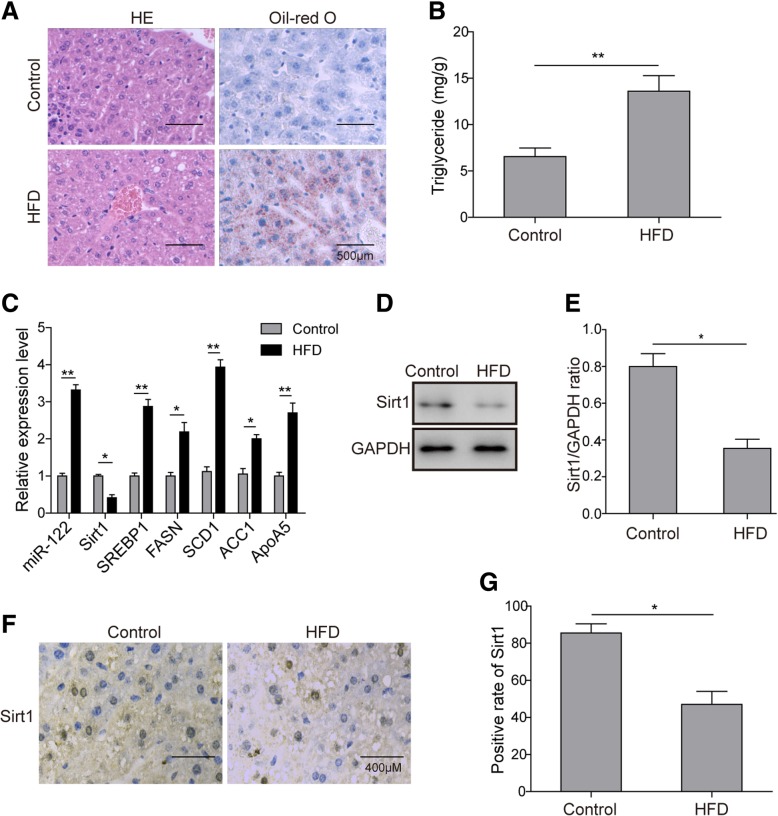
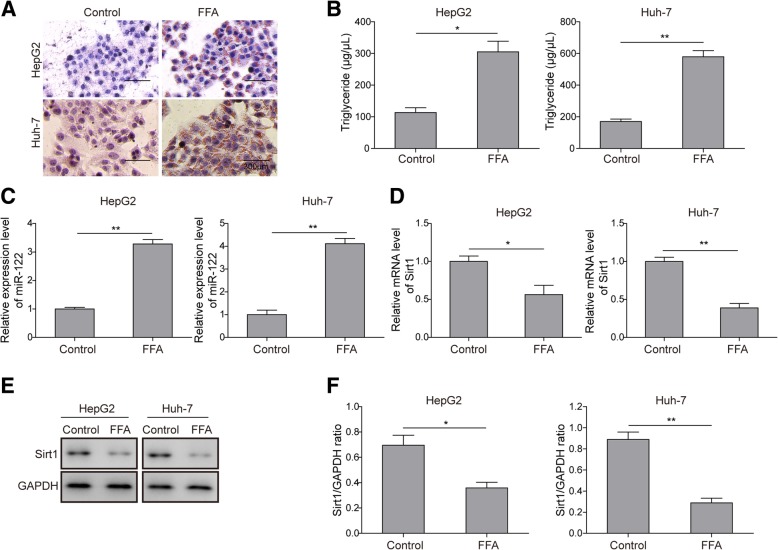
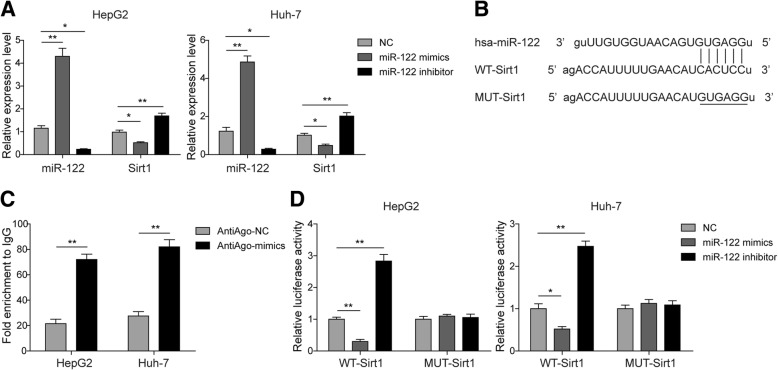
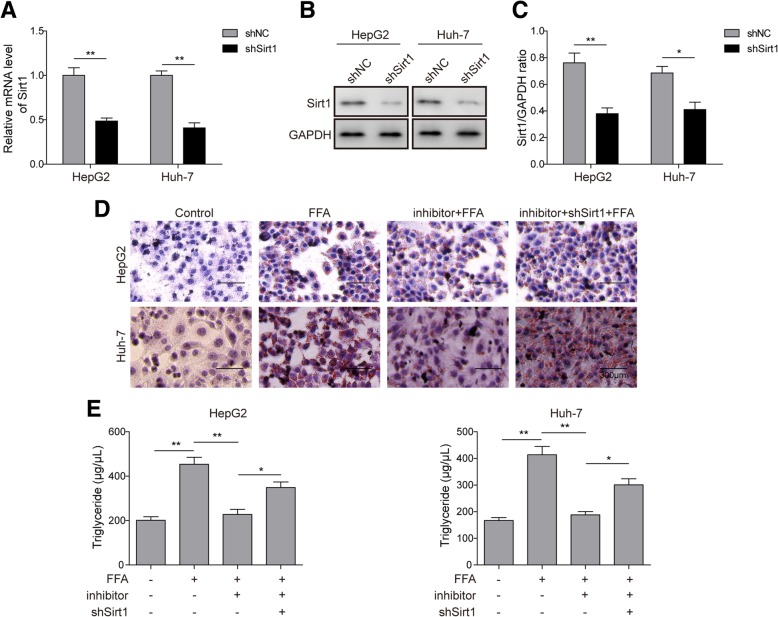
BACKGROUND: Non-alcoholic fatty liver disease (NAFLD) is a common hepatic disease with an increasing prevalence but an unclear aetiology. This study aimed to investigate the functional implications of microRNA-122 (miR-122) in the pathogenesis of NAFLD and the possible molecular mechanisms. METHODS: Both in vitro and in vivo models of NAFLD were generated by treating HepG2 and Huh-7 cells with free fatty acids (FFA) and by feeding mice a high-fat diet (HFD), respectively. HE and Oil Red O staining were used to examine liver tissue morphology and lipid deposition, respectively. Immunohistochemical (IHC) staining was used to examine Sirt1 expression in liver tissues. qRT-PCR and Western blotting were employed to measure the expression of miR-122, Sirt1, and proteins involved in lipogenesis and the AMPK pathway. Enzyme-linked immunosorbent assay (ELISA) was used to quantify triglyceride (TG) levels in HepG2 and Huh-7 cells and in liver tissues. The interaction between miR-122 and the Sirt1 gene was further examined by a dual luciferase reporter assay and RNA-immunoprecipitation (RIP). RESULTS: NAFLD hepatic tissues and FFA-treated HepG2 and Huh-7 cells presented excess lipid production and TG secretion, accompanied by miR-122 upregulation, Sirt1 downregulation, and potentiated lipogenesis-related genes. miR-122 suppressed Sirt1 expression via binding to its 3'-untranslated region (UTR). Knockdown of miR-122 effectively mitigated excessive lipid production and suppressed the expression of lipogenic genes in FFA-treated HepG2 and Huh-7 cells via upregulating Sirt1. Furthermore, miR-122 knockdown activated the LKB1/AMPK signalling pathway. CONCLUSION: The inhibition of miR-122 protects hepatocytes from lipid metabolic disorders such as NAFLD and suppresses lipogenesis via elevating Sirt1 and activating the AMPK pathway. These data support miR-122 as a promising biomarker and drug target for NAFLD.
Overview
The claims and statistics of this paper haven’t been checked yet.
Free: it reads the open-access text and checks the first 5 claims that cite a source we can check. Create a free account to check every claim.
Integrity signals
Registry
Cites
Statistics
Figures
Verification
Claims the paper makes
The claims and statistics of this paper haven’t been checked yet.
Free: it reads the open-access text and checks the first 5 claims that cite a source we can check. Create a free account to check every claim.
Claims other papers make about this one
Each is checked against this paper’s own text: does it say what the citing paper says it does?
The source backs part of the claim, not all of it — or backs it for a different population, condition or comparison.
In the citing paper
“GLP-1RAs reduce liver fat accumulation by activating AMPK, which inhibits fatty acid synthesis enzymes and promotes fatty acid β-oxidation, thus diminishing lipid droplet accumulation in hepatocytes.508–511”
From Glucagon-like peptide-1 receptor: mechanisms and advances in therapy (2024) · cites this paper as [509]
Experimental — accuracy not yet measured
Self-check
Percentages, sums and reported differences re-computed from the paper’s own numbers.
The self-check needs the paper’s full text.
Citations
Cites
Transcriptional silencing and longevity protein Sir2 is an NAD-dependent histone deacetylase
Imai, S.-I., Armstrong, C. M., Kaeberlein, M., & Guarente, L. (2000) · Nature · doi:10.1038/35001622 · Cited by 3,510
AMPK regulates energy expenditure by modulating NAD+ metabolism and SIRT1 activity
Cantó, C., Gerhart-Hines, Z., Feige, J. N., Lagouge, M., Noriega, L., Milne, J. C., Elliott, P. J., Puigserver, P., & Auwerx, J. (2009) · Nature · doi:10.1038/nature07813 · Cited by 3,300
MicroRNAs in metabolism and metabolic disorders
Rottiers, V., & Näär, A. M. (2012) · Nature Reviews Molecular Cell Biology · doi:10.1038/nrm3313 · Cited by 1,156
Purushotham, A., Schug, T. T., Xu, Q., Surapureddi, S., Guo, X., & Li, X. (2009) · Cell Metabolism · doi:10.1016/j.cmet.2009.02.006 · Cited by 1,003
SIRT1 Modulation of the Acetylation Status, Cytosolic Localization, and Activity of LKB1
Lan, F., Cacicedo, J. M., Ruderman, N., & Ido, Y. (2008) · Journal of Biological Chemistry · doi:10.1074/jbc.m805711200 · Cited by 825
Sirt1 improves healthy ageing and protects from metabolic syndrome-associated cancer
Herranz, D., Muñoz-Martin, M., Cañamero, M., Mulero, F., Martinez-Pastor, B., Fernandez-Capetillo, O., & Serrano, M. (2010) · Nature Communications · doi:10.1038/ncomms1001 · Cited by 612
Pirola, C. J., Fernández Gianotti, T., Castaño, G. O., Mallardi, P., San Martino, J., Mora Gonzalez Lopez Ledesma, M., Flichman, D., Mirshahi, F., Sanyal, A. J., & Sookoian, S. (2015) · Gut · doi:10.1136/gutjnl-2014-306996 · Cited by 564
Li, X. (2013) · Acta Biochimica et Biophysica Sinica · doi:10.1093/abbs/gms108 · Cited by 360 · cited 1×
“Sirt1 also modulates the expression of various genes involved in glucose and lipid metabolism (Li, 2013).”
BackgroundCastro, R. E., Ferreira, D. M. S., Afonso, M. B., Borralho, P. M., Machado, M. V., Cortez-Pinto, H., & Rodrigues, C. M. P. (2013) · Journal of Hepatology · doi:10.1016/j.jhep.2012.08.008 · Cited by 350
Lin, R., Elf, S., Shan, C., Kang, H.-B., Ji, Q., Zhou, L., Hitosugi, T., Zhang, L., Zhang, S., Seo, J. H., et al. (2015) · Nature Cell Biology · doi:10.1038/ncb3255 · Cited by 287
Cited by
Items 101–200 of 301
Extracellular vesicle therapy for obesity-induced NAFLD: a comprehensive review of current evidence
Zhang, J., Ma, B., Wang, Z., Chen, Y., Li, C., & Dong, Y. (2024) · Cell Communication and Signaling · doi:10.1186/s12964-023-01292-0 · Cited by 17
“Research has demonstrated that knocking down miR-122 by the transfection of miR-122 inhibitor can re-activate the LKB1/AMPK axis to inhibit lipid overproduction, thereby alleviating NAFLD [82].”
BackgroundSirtuin deficiency and the adverse effects of fructose and uric acid synthesis
Rodríguez‐Iturbe, B., Johnson, R. J., Lanaspa, M. A., Nakagawa, T., García‐Arroyo, F. E., & Sánchez‐Lozada, L. G. (2022) · American Journal of Physiology-Regulatory, Integrative and Comparative Physiology · doi:10.1152/ajpregu.00238.2021 · Cited by 18
Caviglia, G. P., Casalone, E., Rosso, C., Aneli, S., Allione, A., Carli, F., Grange, C., Armandi, A., Catalano, C., Birolo, G., et al. (2025) · Alimentary Pharmacology & Therapeutics · doi:10.1111/apt.70150 · Cited by 16
“…(DNL) through two distinct pathways: miR- 122-5p via inhibiting the liver kinase B1 (LKB1)/AMP-activated protein kinase (AMPK) pathway by targeting Sirt1 [21], while miR- 375-3p via inhibiting adiponectin receptor 2 (AdipoR2)/peroxisome proliferator-activated receptor (PPAR)- α pathway [20, 22].”
Exploring the Regulatory Role of ncRNA in NAFLD: A Particular Focus on PPARs
Mukherjee, A. G., Wanjari, U. R., Gopalakrishnan, A. V., Katturajan, R., Kannampuzha, S., Murali, R., Namachivayam, A., Ganesan, R., Renu, K., Dey, A., et al. (2022) · Cells · doi:10.3390/cells11243959 · Cited by 17
Wu, J., Huang, H., Gong, L., Tian, X., Peng, Z. J., Zhu, Y. Z., & Wang, W. (2024) · Biomolecules · doi:10.3390/biom14040450 · Cited by 16
“The formation of lipid droplets in HepG2 cells was assessed using Oil Red O staining according to methods described in the literature [24].”
miR-383 Regulates Hepatic Lipid Homeostasis and Response to Dengue Virus Infection
Ahmed, N., Ahmed, N. T., & Pezacki, J. P. (2022) · ACS Infectious Diseases · doi:10.1021/acsinfecdis.1c00470 · Cited by 16
Exosome prospects in the diagnosis and treatment of non-alcoholic fatty liver disease
Tamimi, A., Javid, M., Sedighi-Pirsaraei, N., & Mirdamadi, A. (2024) · Frontiers in Medicine · doi:10.3389/fmed.2024.1420281 · Cited by 15
Exploring the therapeutic potential of HAPC in COVID-19-induced acute lung injury
Pu, Z., Li, L., Zhang, Y., Shui, Y., Liu, J., Wang, X., Jiang, X., Zhang, L., & Yang, H. (2025) · Phytomedicine · doi:10.1016/j.phymed.2025.156563 · Cited by 15
Therapeutic applications of miRNA in the management of obesity and osteoporosis
Abolhasani, S., Ahmadi, Y., Rostami, Y., Zendeh, M. B., & Fattahi, D. (2025) · Journal of Diabetes & Metabolic Disorders · doi:10.1007/s40200-025-01589-6 · Cited by 15
Vladimirov, S. S., Tomasevic, M., Popov, N., Munjas, J., de Gonzalo‐Calvo, D., & Sopić, M. (2025) · Seminars in Cancer Biology · doi:10.1016/j.semcancer.2025.06.005 · Cited by 15
Xie, Y., Liu, Z., Guo, J., Su, X., Zhao, C., Zhang, C., Qin, Q., Dai, D., Zhao, Y., Wang, Z., et al. (2021) · Frontiers in Genetics · doi:10.3389/fgene.2021.649015 · Cited by 19
“…that microRNAs (miRNAs), once considered genomic “noise,” can mediate the epigenetic, transcriptional, and posttranscriptional regulation of genes involved in fatty acid metabolism by participating in the fatty acid regulatory network (Xu et al., 2010; Long et al., 2019; Zhang et al., 2019).”
BackgroundTang, F., Wang, Z., Zhou, J., & Yao, J. (2023) · Antioxidants · doi:10.3390/antiox12040870 · Cited by 15
“In a recent study, microRNAs (miRNAs) effectively modulated SIRT1 expression [10].”
BackgroundBioinformatic Analysis of Crosstalk Between circRNA, miRNA, and Target Gene Network in NAFLD
Du, C., Shen, L., Ma, Z., Du, J., & Jin, S. (2021) · Frontiers in Genetics · doi:10.3389/fgene.2021.671523 · Cited by 15
Zhang, H., Wu, D., Wu, Q., Wu, Y., Guo, Z., Wang, L., Wang, Y., Zeng, Q., Shi, L., Shi, B., et al. (2025) · Journal of Clinical and Translational Hepatology · doi:10.14218/jcth.2025.00259 · Cited by 24
“104 It facilitates glucose uptake and suppresses hepatic gluconeogenesis.”
Targeting Metabolism: Innovative Therapies for MASLD Unveiled
Wang, W., Gao, X., Niu, W., Yin, J., & He, K. (2025) · International Journal of Molecular Sciences · doi:10.3390/ijms26094077 · Cited by 15
Zhu, L., Liao, R., Huang, J., Yan, H., Xiao, C., Yang, Y., Wang, H., & Yang, C. (2022) · Frontiers in Veterinary Science · doi:10.3389/fvets.2022.913841 · Cited by 14
López-Sánchez, G. N., Montalvo-Jave, E. E., Domínguez‐Pérez, M., Antuna-Puente, B., Beltrán‐Anaya, F. O., Hidalgo‐Miranda, A., Chávez-Tapia, N. C., Uribe, M., & Nuño‐Lámbarri, N. (2022) · Annals of Hepatology · doi:10.1016/j.aohep.2022.100756 · Cited by 14
Kaitsuka, T., Matsushita, M., & Matsushita, N. (2021) · Cells · doi:10.3390/cells10123316 · Cited by 16
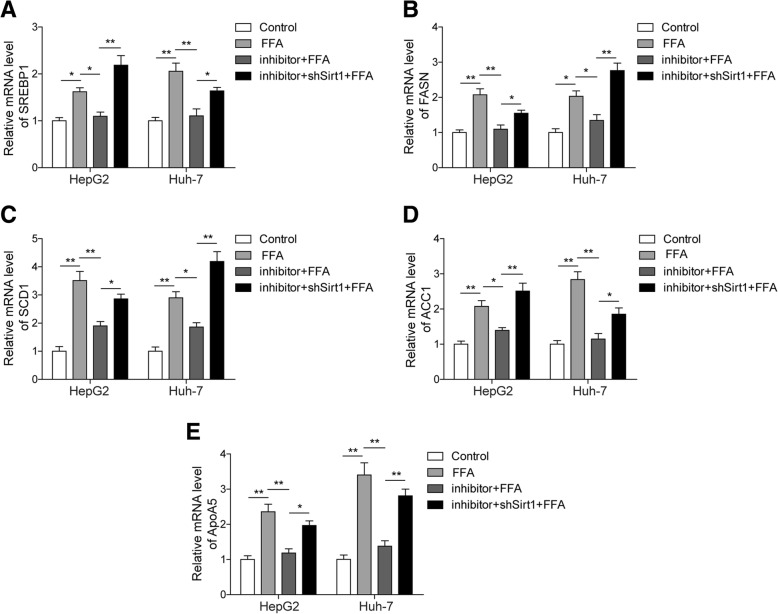
“Long et al. reported that miR-122 is upregulated in NAFLD liver tissue, and free fatty acid-treated HepG2 and Huh-7 cells showed downregulation of SIRT1 and potentiated lipogenesis-related genes, such as SREBP1, FASN, SCD1, ACC1, and APOA5 [54].”
BackgroundCDKN1A and EGR1 are key genes for endoplasmic reticulum stress-induced ferroptosis in MASH
Xu, Q., Chen, Y., Zhang, H., Zhou, K., Zhao, Y., Deng, W., Wang, Z., Guo, L., Liu, H., Ren, Z., et al. (2025) · Free Radical Biology and Medicine · doi:10.1016/j.freeradbiomed.2025.05.413 · Cited by 13
Yuan, X., Li, Y., Wen, S., Xu, C., Wang, C., He, Y., & Zhou, L. (2022) · Lipids in Health and Disease · doi:10.1186/s12944-022-01740-9 · Cited by 13
Lee, Y. H., Lee, J., Jeong, J., Park, K., Baik, B., Kwon, Y., Kim, K., Khim, K. W., Ji, H., Lee, J. Y., et al. (2025) · Metabolism · doi:10.1016/j.metabol.2025.156266 · Cited by 14
Bhattacharya, I., Maity, D. K., Kumar, A., Sarkar, S., Bhattacharya, T., Sahu, A., Sreedhar, R., & Arumugam, S. (2025) · Naunyn-Schmiedeberg s Archives of Pharmacology · doi:10.1007/s00210-025-04257-x · Cited by 13
“MiR-122 exhibits high expression levels in the human liver and also accelerates the progression of MASH (Long et al. 2019).”
Calorie restriction mimetics against aging and inflammation
Chaudhary, S., Chaudhary, M. R., Jena, M. K., Rath, P. K., Mishra, B. P., Paital, B., Vyas, A., Sahoo, D. K., Singh, P., & Mehdi, M. M. (2025) · Biogerontology · doi:10.1007/s10522-025-10269-0 · Cited by 15
Zhou, W., & Qiu, K. (2022) · PubMed · Cited by 20
Non-coding RNAs: The link between maternal malnutrition and offspring metabolism
Zeng, Y., Wu, Y., Zhang, Q., & Xiao, X. (2022) · Frontiers in Nutrition · doi:10.3389/fnut.2022.1022784 · Cited by 15
Multi-Omics Nutritional Approaches Targeting Metabolic-Associated Fatty Liver Disease
Ramos-López, O. (2022) · Genes · doi:10.3390/genes13112142 · Cited by 14
Ravaut, G., Carneiro, A., & Mounier, C. (2024) · Frontiers in Nutrition · doi:10.3389/fnut.2024.1290540 · Cited by 14
Targeting epigenetics and lncRNAs in liver disease: From mechanisms to therapeutics
Peng, X., Huang, S.-F., Chen, L., Xu, L., & Ye, W.-C. (2021) · Pharmacological Research · doi:10.1016/j.phrs.2021.105846 · Cited by 13
Hu, H., Li, Y., Shi, Z., Zhao, X., Lan, X., Wu, M., Tao, B., Zhang, Y., Huang, X., Bu, P., et al. (2023) · Bioorganic Chemistry · doi:10.1016/j.bioorg.2023.106530 · Cited by 12
Xi, J., Lei, S.-Y., Chen, J., Liu, J., Shan, C., Sun, X., Zheng, Q., & Shi, X. (2025) · Cell Death Discovery · doi:10.1038/s41420-025-02558-x · Cited by 15
“It plays a pivotal role in maintaining hepatic homeostasis and lipid metabolism [32].”
Common Pathogenetic Pathways of Non-Alcoholic Fatty Liver Disease and Type 2 Diabetes Mellitus
Giannopoulos, C., Tzima, I. G., Tentolouris, N., & Vasileiadis, I. (2023) · Current Diabetes Reviews · doi:10.2174/1573399819666230216112032 · Cited by 14
Zhang, Q., Liu, Y., Tang, R., Kong, S., Lv, D., Li, H., Yang, H., & Lin, L. (2024) · Carbohydrate Polymer Technologies and Applications · doi:10.1016/j.carpta.2024.100567 · Cited by 14
Liu, L., Xing, Y., Cao, M., Xu, J., & Chen, J. (2021) · Molecular and Cellular Biochemistry · doi:10.1007/s11010-020-04032-x · Cited by 12
Chen, Y., Bian, S., & Le, J. (2025) · Genes · doi:10.3390/genes16040399 · Cited by 13
“MiR-122 is highly enriched in the liver and is consistently downregulated in MASH, and its downregulation may promote lipogenesis and accumulation by upregulating genes involved in fatty acid synthesis ( FASN and SREBP1c ) [51–53].”
Opstad, T. B., Alexander, J., Aaseth, J., Larsson, A. O., Seljeflot, I., & Alehagen, U. (2023) · Antioxidants · doi:10.3390/antiox12030759 · Cited by 12
Paluschinski, M., Kordes, C., Vucur, M., Büttner, V., Roderburg, C., Xu, H., Shinte, P. V., Lang, P. A., Luedde, T., & Castoldi, M. (2023) · Cells · doi:10.3390/cells12151955 · Cited by 11
“, miR-122; [4]), alcoholic liver disease (ALD, e.”
Epigenetic Regulation in Lean Nonalcoholic Fatty Liver Disease
Aggeletopoulou, I., Kalafateli, M., Tsounis, E. P., & Triantos, C. K. (2023) · International Journal of Molecular Sciences · doi:10.3390/ijms241612864 · Cited by 11
“miRNA miR-122, which exhibits high expression levels in the human liver, has been found to accelerate the progression of NAFLD [97].”
BackgroundIMF deposition ceRNA network analysis and functional study of HIF1a in yak
Luo, M., Wang, H., Zhang, J., Kangzhu, Y., Shu, S., Fu, C., Zhong, J., & Peng, W. (2023) · Frontiers in Veterinary Science · doi:10.3389/fvets.2023.1272238 · Cited by 11
Lysine tRNA fragments and miR-194-5p co-regulate hepatic steatosis via β-Klotho and perilipin 2
Tzur, Y., Winek, K., Madrer, N., Dubnov, S., Bennett, E. R., Greenberg, D., Hanin, G., Gammal, A., Tam, J., Arkin, I. T., et al. (2023) · Molecular Metabolism · doi:10.1016/j.molmet.2023.101856 · Cited by 12
“Notably, several of these miRs, including miR-122-5p, miR-21a-5p, and miR-192-5p, are known to be NAFLD-related [24,33].”
BackgroundBahramirad, Z., Moloudi, M. R., Moradzad, M., Abdolahi, A., & Vahabzadeh, Z. (2024) · Biochemical Genetics · doi:10.1007/s10528-024-10754-0 · Cited by 11
“Therefore, the contradictory reduction in miR-122 expression shown in some studies could be explained by this effect (Long et al. 2019; Liu et al. 2021).”
Santos, F., Correia, B. R. O., Marinho, T. D. S., Barbosa‐da‐Silva, S., Mandarim‐de‐Lacerda, C. A., & Souza‐Mello, V. (2020) · Molecular and Cellular Endocrinology · doi:10.1016/j.mce.2020.110804 · Cited by 12
Chen, Q., & Lou, Y. (2022) · Journal of Bioenergetics and Biomembranes · doi:10.1007/s10863-022-09953-4 · Cited by 11
“To date, the pathogenesis of NAFLD has not been fully elucidated (Long et al. 2019).”
BackgroundRevealing VNN1: An Emerging and Promising Target for Inflammation and Redox Balance
Lv, L., Wang, T., Xie, W., Wei, J., Zhou, L., Qiu, X., Feng, H., & Gu, W. (2025) · Immunity Inflammation and Disease · doi:10.1002/iid3.70274 · Cited by 10
“…are required to comprehensively elucidate the efficacy, safety, and mechanisms of action of these inhibitors, encompassing pharmacokinetics, pharmacodynamics, and potential interactions with other drugs. miRNA ‐ 122 plays a crucial role in liver development, diseases, and lipid metabolism [78, 79].”
Nonalcoholic Fatty Liver Disease and MicroRNAs: A Weighty Consideration
Mishra, S., Sarangi, R., Das, S., & Mishra, A. (2023) · Biomedical and Biotechnology Research Journal (BBRJ) · doi:10.4103/bbrj.bbrj_319_22 · Cited by 10
miRNA as potential biomarkers after liver transplantation: A systematic review
Koch, P. F., Ludwig, K., Krenzien, F., Hillebrandt, K. H., Schöning, W., Pratschke, J., Raschzok, N., Sauer, I. M., & Moosburner, S. (2024) · Transplantation Reviews · doi:10.1016/j.trre.2024.100831 · Cited by 11
Free Fatty Acid Impairs Myogenic Differentiation through the AMPK α -MicroRNA 206 Pathway
Jiang, A., Guo, H., Zhang, L., Jiang, X., Zhang, X., Wu, W., & Liu, H. (2021) · Molecular and Cellular Biology · doi:10.1128/mcb.00327-21 · Cited by 10
Liu, T., Feng, H., Yousuf, S., Xie, L., & Miao, X. (2022) · Frontiers in Veterinary Science · doi:10.3389/fvets.2022.938311 · Cited by 11
Yang, J., Xiaolei, T., Chen, L., Hu, J., Li, S., Yuan, M., Tian, X., & Qiu, Z. (2024) · Current Medicinal Chemistry · doi:10.2174/0109298673276581231210170332 · Cited by 10
Aroca-Esteban, J., Souza‐Neto, F. V., Aguilar-Latorre, C., Tribaldo-Torralbo, A., González‐López, P., Ruiz‐Simón, R., Álvarez‐Villarreal, M., Ballesteros, S., de Céniga, M. V., Landete, P., et al. (2024) · Biochimica et Biophysica Acta (BBA) - Molecular Basis of Disease · doi:10.1016/j.bbadis.2024.167327 · Cited by 9
The interaction between non-coding RNAs and SGLT2: A review
Jarosz-Popek, J., Eyileten, C., Gager, G. M., Nowak, A., Szwed, P., Wicik, Z., Palatini, J., von Lewinski, D., Sourij, H., Siller-Matula, J. M., et al. (2023) · International Journal of Cardiology · doi:10.1016/j.ijcard.2023.131419 · Cited by 9
Wu, G., Zhang, Y., Liang, B., Yin, L., Gao, M., Zhang, H., Xu, Y., Han, X., Qi, Y., Liu, F., et al. (2024) · Biochemical Pharmacology · doi:10.1016/j.bcp.2024.116411 · Cited by 9
Wang, P., Lan, Q., Huang, Q., Zhang, R., Zhang, S., Yang, L., Song, Y., Wang, T., Ma, G., Liu, X., et al. (2024) · Biology · doi:10.3390/biology13080597 · Cited by 9
“H&E staining reveals the pathological structure of the kidney, and picrosirius red staining shows the degree of renal fi brosis [20].”
BackgroundDietary Pattern’s Role in Hepatic Epigenetic and Dietary Recommendations for the Prevention of NAFLD
Martin, J., & Bars‐Cortina, D. (2024) · Nutrients · doi:10.3390/nu16172956 · Cited by 11
“Functionally, miR-122 has been shown to enhance lipid production and triglycerides (TG) secretion by inhibiting the expression of SIRT1 [32].”
BackgroundZhao, T., Zheng, H., Xu, J., Xu, Y.-C., Liu, L.-L., & Luo, Z. (2023) · Environmental Pollution · doi:10.1016/j.envpol.2023.122416 · Cited by 10
Chen, D., Lu, P., Sun, T., & Ding, A. (2023) · Cell and Tissue Research · doi:10.1007/s00441-023-03835-w · Cited by 9
“The samples and Input were digested by Proteinase K, and RNA was extracted for qPCR assays, respectively (Long et al. 2019).”
MethodPulling the trigger: Noncoding RNAs in white adipose tissue browning
Liang, D., & Li, G. (2023) · Reviews in Endocrine and Metabolic Disorders · doi:10.1007/s11154-023-09866-6 · Cited by 9
“They have been found to participate in the regulatory networks governing adipocyte differentiation [9], lipid metabolism [10], and energy homeostasis [11].”
Advances in the Regulation of Lipid Metabolism by Non-Coding RNAs
Peng, Y., Liu, A., Zhu, Q., Liu, X., Cai, B., Yan, Z., Gao, J., Zhu, R., & Wang, C. (2025) · Animals · doi:10.3390/ani15172621 · Cited by 9
miRNAs, lncRNAs, circRNAs and piRNAs in Nonalcoholic Fatty Liver Disease: Past, Present and Future
Lucaciu, R. L., Orasan, O. H., Hangan, A. C., Iancu, M., Cozma, A., Coste, S. C., Gog-Bogdan, S., Sevastre, B., & Procopciuc, L. M. (2025) · International Journal of Molecular Sciences · doi:10.3390/ijms262110402 · Cited by 9
Das, O., Kundu, J., Ghosh, A., Gautam, A., Ghosh, S., Chakraborty, M., Masid, A., Gauri, S. S., Mitra, D., Dutta, M., et al. (2022) · Frontiers in Cellular and Infection Microbiology · doi:10.3389/fcimb.2022.1011386 · Cited by 9
“Reports show that silencing of mir-122 in African green monkeys and chimpanzees has resulted in substantial reduction in total plasma cholesterol (Zhou et al., 2019), while in the Huh7 cell line, it rescues excess lipid deposition (Long et al., 2019).”
BackgroundInfluentialWang, X., Dong, L., Gai, Q., Ai, W., Wu, Y. S., Xiao, W., Zhang, J., & An, W. (2020) · Hepatology Communications · doi:10.1002/hep4.1532 · Cited by 8
“The following PCR primers were used: human LDLR-SRE forward, 5′-GGGACCCAAATA CAACAAATCAAGT-3′; reverse, 5′-TG AGGTTT CTAGCAGGGGGAGG-3′; mouse LDLR-SRE forward, 5′-TCAGGGGTT AAAAGAGACGATG-3′; reverse, 5′-CCAGTACTAGGGGCGAGGTTT-3′.”
BackgroundInfluentialKhalifa, O., Ouararhni, K., Errafii, K., Alajez, N. M., & Arredouani, A. (2023) · International Journal of Molecular Sciences · doi:10.3390/ijms241411606 · Cited by 8
“For instance, miR-122 promotes hepatic lipogenesis by inhibiting the LKB1/AMPK pathway by targeting Sirt1 in NAFLD [47].”
BackgroundYang, Z., Yang, Y., Zhou, G. Q., Luo, Y., Yang, W., Zhou, Y., & Yang, J. (2020) · Journal of Cancer · doi:10.7150/jca.40621 · Cited by 8
“found to be involved in liver diseases or liver cancer [45-47].”
BackgroundLocatelli, C., & Creczynski-Pasa, T. B. (2025) · Hepatology forum/Hepatology forum (Online) · doi:10.14744/hf.2025.17142 · Cited by 9
NOD1 activation in 3T3-L1 adipocytes confers lipid accumulation in HepG2 cells
Gulzar, F., Ahmad, S., Singh, S., Kumar, P., Sharma, A., & Tamrakar, A. K. (2023) · Life Sciences · doi:10.1016/j.lfs.2023.121400 · Cited by 7
Shokri, B., Mohebbi, H., & Mehrabani, J. (2024) · Lipids in Health and Disease · doi:10.1186/s12944-024-02347-y · Cited by 7
“After rinsing with PBS, the tissue sections were stained with oil red O for 30 min and subsequently counterstained with hematoxylin for 1 min to assess lipid droplet formation in liver tissues [36].”
MethodDeciphering the role of dietary modifications and gut dysbiosis in Non-Alcoholic Fatty Liver Disease
Vachher, M., Kaur, K., Marothia, M., Burman, A., Deepanjana, & Bansal, S. (2025) · Human Nutrition & Metabolism · doi:10.1016/j.hnm.2025.200305 · Cited by 9
Lei, K., Chen, Y., Wu, J., Lin, Y., Bai, Y., Cao, H., Che, Q., Guo, J., & Su, Z. (2025) · International Journal of Biological Macromolecules · doi:10.1016/j.ijbiomac.2025.142275 · Cited by 10
Erfan, R., Shaker, O. G., Khalil, M. A. F., AlOrbani, A. M., Abu-El-Azayem, A. K., Samy, A., Zaki, O. M., Abdelhamid, H., Fares, R., & Mohammed, A. (2023) · Non-coding RNA Research · doi:10.1016/j.ncrna.2023.04.002 · Cited by 7
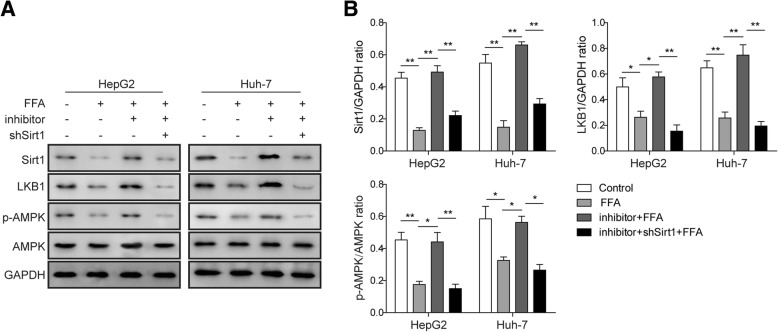
“MiR-122 knockdown resulted in a reduction in the expression of lipogenic genes and activation of the AMPK signaling pathway, both of which acted to reduce lipid synthesis and TG release in hepatocytes [48].”
BackgroundMASLD Under the Microscope: How microRNAs and Microbiota Shape Hepatic Metabolic Disease Progression
Asero, C., Franzè, M. S., Cacciola, I., & Gangemi, S. (2025) · International Journal of Molecular Sciences · doi:10.3390/ijms26178633 · Cited by 9
“Some authors suggest that miR-122 levels are increased in MASLD subjects compared to healthy controls [46], but these levels gradually decrease from MASLD to MASH to liver fibrosis [47].”
Tao, Q., Xie, J., Zhou, Y., Wu, Y., Xia, H., Wang, J., Zhang, C., Wei, C., & Jin, Y. J. (2025) · The Journal of Nutritional Biochemistry · doi:10.1016/j.jnutbio.2025.110174 · Cited by 6
Characterization and biological health implications of microRNAs from human milk and infant formulas
Ali, A. H., Najjar, Z., & Ayyash, M. M. (2025) · npj Science of Food · doi:10.1038/s41538-025-00661-y · Cited by 6
Locatelli, C., Karine, L. U. Z., de Andrade, S. F., Bellaver, E. H., Ogoshi, R. C. S., Centa, A., Assolini, J. P., Pont, G. C. D., & Creczynski‐Pasa, T. B. (2026) · Biomedicines · doi:10.3390/biomedicines14010120 · Cited by 7
“Furthermore, miR-122 contributes to hepatic lipogenesis by repressing the LKB1/AMPK pathway through SIRT1 modulation, thereby promoting lipid deposition in the liver [33,34].”
Lipid metabolism-MAFLD crosstalk: mechanisms and therapy
Li, B., Piao, S., Fu, Y., Fu, Q., Qin, P., Kong, W. K., Ma, Y., Zhang, Z., Fang, X., & Hu, X. (2026) · Frontiers in Endocrinology · doi:10.3389/fendo.2026.1785178 · Cited by 15
Ding, Z., Zhang, J., & Choudhury, M. (2024) · Life · doi:10.3390/life14060729 · Cited by 9
“Many studies have shown decreased expression of Sirt1 in fatty liver [53,54].”
BackgroundMiR-26a Inhibits Porcine Adipogenesis by Regulating ACADM and ACSL1 Genes and Cell Cycle Progression
Zhang, D., Hao, W., Zhu, R., Wang, L., Wu, X., Tian, M., Liu, D., & Yang, X. (2024) · Animals · doi:10.3390/ani14233491 · Cited by 6
Luo, X., Fang, Y., Wang, W., Tong, M., Qin, B., Cao, J., & Yang, Y. (2025) · 3 Biotech · doi:10.1007/s13205-024-04204-2 · Cited by 7
“Studies have shown that activation of AMP protein kinase (AMPK) leads to decreased lipogenesis and increased fatty acid oxidation and lipolysis in adipocytes in vitro and in vivo (Long et al. 2019; Zhou et al. 2022).”
Chen, J., Zhao, S., Tao, D.-L., Li, J., Yang, X., Fan, Y.-Y., Song, J.-K., Liu, Q., & Zhao, G. (2023) · Parasites & Vectors · doi:10.1186/s13071-023-05665-9 · Cited by 6
“A previous study showed that SIRT1 could suppress lipogenesis through the AMPK signaling pathway [70], and our group found that SIRT1 promoted cell autophagy and intracellular proliferation of N.”
BackgroundSelf-citationWang, Y., Sanghvi, G. V., Ballal, S., Sharma, R., Pathak, P. K., Shankhyan, A., Sun, J., Chen, Q., Ma, Y., Huang, L., et al. (2025) · Pathology - Research and Practice · doi:10.1016/j.prp.2025.155867 · Cited by 5
The epigenetic impact of lifestyle factors on metabolic syndrome: A systematic review
Adedeji, T. G. (2025) · Journal of Clinical Sciences · doi:10.4103/jcls.jcls_28_25 · Cited by 5
Li, C., Fang, B., Wei, Y., Mo, R., Lin, X., & Huang, Q. (2024) · Journal of Oleo Science · doi:10.5650/jos.ess23167 · Cited by 5
“The sections were stained with hematoxylin-eosin ( H&E ) and Oil red O staining to observe the pathological changes and lipid droplets as previously described 14 ) , respectively.”
Mahdizadeh, F., Sobhi, P., & Banaei, S. (2025) · Clinics and Research in Hepatology and Gastroenterology · doi:10.1016/j.clinre.2025.102547 · Cited by 5
Xu, A., Wang, L., Luo, M., Zhang, H., Ning, M., Pan, J., Duan, X., Wang, Y., & Liu, X. (2023) · Molecular Medicine Reports · doi:10.3892/mmr.2023.13141 · Cited by 5
“Conversely, reduced AMPK phosphoryla‑ tion is associated with lipid accumulation in liver cells (33,34).”
Li, X., Shang, Y., Zhao, X., Kong, M., & An, H. (2024) · Cellular and Molecular Biology · doi:10.14715/cmb/2024.70.8.20 · Cited by 5
Maternal dietary olive oil protects diabetic rat offspring from impaired uterine decidualization
Gatti, C. R., Schibert, F., Taylor, V. S., Capobianco, E., Montero, V., Higa, R., & Jawerbaum, A. (2024) · Placenta · doi:10.1016/j.placenta.2024.11.010 · Cited by 5
Micro RNAs as Emerging Therapeutic Targets in Liver Diseases
Jain, S. K., Latief, U., Tung, G. K., Per, T. S., Kaur, M., Thakur, S., & Singh, H. (2022) · Current Protein and Peptide Science · doi:10.2174/1389203723666220721122240 · Cited by 5
Zambrano-Vásquez, O. R., Cortés-Camacho, F., Cabrera-Angeles, J. C., Hernández-Alba, A. L., García‐Arroyo, F. E., Castañeda‐Sánchez, J. I., Aréchaga-Ocampo, E., Aparicio‐Trejo, O. E., del Valle‐Mondragón, L., Martínez-Olivares, C. E., et al. (2025) · International Journal of Molecular Sciences · doi:10.3390/ijms26189010 · Cited by 4
“Oil Red O staining was performed to assess lipid droplet formation in liver tissues following a previously described method [69].”
Abrego-Guandique, D. M., Galmés, S., García-Rodríguez, A., Cannataro, R., Caroleo, M. C., Ribot, J., Bonet, M. L., & Cione, E. (2024) · International Journal of Molecular Sciences · doi:10.3390/ijms252312899 · Cited by 5
“The liver triacylglycerol (TAG) content was quantified using the QCA colorimetric kit (Qu í mica Cl í nica Aplicada S.A., Tarragona, Spain).”
Tie, F., Gao, Y., Ren, L., Wu, Y., Hu, N., Dong, Q. Z., & Wang, H. (2025) · Plant Foods for Human Nutrition · doi:10.1007/s11130-024-01262-y · Cited by 4
“Additionally, the PI3K-Akt [ 25], PPAR [26], FoxO [27], AMPK [28] and AGE-RAGE signaling pathway [29] have been demonstrated to be closely associated with NAFLD development.”
Non-coding RNAs in alcohol-associated liver disease
Zeng, G., Gao, H., Jiang, Y., Huda, N., Thoudam, T., Yang, Z., Ma, J., Sun, J., & Liangpunsakul, S. (2025) · Liver Research · doi:10.1016/j.livres.2025.04.007 · Cited by 5
Mei, Y., Sun, X., Huang, S., Wu, X., Ho, K.-T., Lu, L., Chen, C., Li, J., Liu, J., & Li, G. (2024) · Polish Journal of Food and Nutrition Sciences · doi:10.31883/pjfns/182927 · Cited by 4
Zhang, J., Jia, J.-P., Shao, Q., Wang, M., & Wang, J. (2020) · Journal of Fluorescence · doi:10.1007/s10895-020-02636-6 · Cited by 4
Xie, C., Liu, K., Xie, Y., Liu, S., & Ji, B. (2023) · Clinics and Research in Hepatology and Gastroenterology · doi:10.1016/j.clinre.2023.102264 · Cited by 4
da Silva, L. L., Leon, L. A. A., Moreira, O. C., Coelho, W. L. D. C. N. P., da Costa, V. D., Ivantes, C. A. P., Pollo‐Flores, P., Lewis‐Ximenez, L. L., de Paula, V. S., & Villar, L. M. (2024) · Viruses · doi:10.3390/v16111734 · Cited by 3
“A study evaluating patients with COVID-19 in relation to pulmonary diseases demonstrated a low miR-223 expression in patients with pulmonary fibrosis-like lesions, with low expression in this group [42].”
Circulating microRNAs and physical activity: Impact in diabetes
Li, X., & Hallajzadeh, J. (2025) · Clinica Chimica Acta · doi:10.1016/j.cca.2025.120178 · Cited by 4
Role of miRNA signalling in the pathogenesis of MASLD
Cheng, S., Hao, J., & Qin, H.-Y. (2026) · Frontiers in Pharmacology · doi:10.3389/fphar.2026.1756805 · Cited by 3
“In a murine MASLD model fed a high-fat diet (HFD) for 8 weeks, upregulation of miR-122 in hepatocytes was shown to target Sirt1 and further promote the expression of lipogenic genes such as SREBP1, FASN, SCD1, ACC1 , and apolipoprotein A5 ( ApoA5 ) (Long et al., 2019).”
Targeting the cytokine-epigenetic axis: a new paradigm and prospects for disease treatment
Luo, Y., Zheng, Y., Qin, J., Liu, J. L., Ma, Y., Li, J., Li, J., Sun, W., Zhang, Q., & Li, M. (2026) · European Cytokine Network · doi:10.32604/ecn.2026.082885 · Cited by 3
Self-citationLi, J., Ge, Y., Chai, Y., Kou, C., Sun, T., Liu, J., & Zhang, H. (2024) · Hepatic Medicine Evidence and Research · doi:10.2147/hmer.s481687 · Cited by 3
Zhang, J., Mou, W., Chen, S., Wu, Z., Zhang, S.-H., Liu, P., Sun, H., Zhou, H., & Liu, Y. (2025) · The American Journal of Drug and Alcohol Abuse · doi:10.1080/00952990.2025.2506529 · Cited by 3
“…in some tissues or cells and regulates the expression of target genes at the post-transcriptional level (19). miRNA in circulation is highly stable, and miRNA is stably expressed in other body fluids such as urine, sweat and saliva and is an alternative clinical diagnostic marker of ALD (20, 21).”
The Role of microRNA in the Development of Ischemic Heart Disease
Kukava, N. G., Shkhnovich, R. M., Осьмак, Г. Ж., Baulina, N., Matveeva, N. A., & Favorova, O. O. (2019) · Kardiologiia · doi:10.18087/cardio.2019.10.n558 · Cited by 3
“В ряде исследований показана важная роль микроРНК в липидном обмене [21].”
Xu, P., Wang, S., & Pang, D. (2021) · Evidence-based Complementary and Alternative Medicine · doi:10.1155/2021/8386848 · Cited by 3
“Oil Red O staining is a gold standard for quantifying steatosis in the liver, which has been confirmed in a variety of studies [31, 32].”
BackgroundRetracted
Metadata
- Authors
- Long, J.-K., Dai, W., Zheng, Y.-W., & Zhao, S.-P.
- Affiliations
- Second Xiangya Hospital of Central South University (CN)
- Corresponding author
- Zhao, Shui-Ping
- Venue
- Molecular Medicine
- Published
- 2019-06-13
- Volume
- 25
- Issue
- 1
- Pages
- 26-26
- ISSN
- 1076-1551 (ISSN-L)
- 1528-3658
- PMC
- PMC6567918
- OpenAlex
- W2952409891
- Cited by
- 281
- References
- 48
- Citations by year
- 2026: 36 · 2025: 53 · 2024: 52 · 2023: 57 · 2022: 48 · 2021: 21 · 2020: 13 · 2019: 1
- FWCI
- 15.80
- Type
- journal article
- Language
- en
- Open access
- gold
- doi.org
- Licence
- cc-by
- creativecommons.org/licenses/by/4.0/ (tdm)
- creativecommons.org/licenses/by/4.0/ (vor)
- Locations
- Molecular Medicine (publishedVersion, cc-by)
- PubMed Central (publishedVersion, cc-by)
- PubMed (publishedVersion)
- DOAJ (DOAJ: Directory of Open Access Journals) (submittedVersion, cc-by-sa)
- Topics
- Health Sciences › Medicine › Hepatology › Liver Disease Diagnosis and Treatment
- Life Sciences › Biochemistry, Genetics and Molecular Biology › Cancer Research › MicroRNA in disease regulation
- Health Sciences › Medicine › Hepatology › Liver physiology and pathology
- Keywords
- miR-122, non-alcoholic fatty liver disease, hepatic lipogenesis, SIRT1, LKB1/AMPK pathway, microRNA, free fatty acids, triglyceride secretion, 3' untranslated region, lipid metabolism, hepatocytes, high-fat diet, biomarkers, therapeutic target
- MeSH terms
- Enzyme-Linked Immunosorbent Assay, Humans, Immunohistochemistry, Liver, Signal Transduction, MicroRNAs, Cell Line, Tumor, Lipogenesis, Lipid Metabolism, AMP-Activated Protein Kinases, Sirtuin 1, Hep G2 Cells, Non-alcoholic Fatty Liver Disease
About these checks
Registry, retraction, Cites and statistics results are computed, not judged, with one exception: a printed reference that no index lists is read once by a model before it counts as a citation error. Claims are extracted by a model and kept only when their quote appears verbatim in the text; each cited source is then checked, with a model’s help, for whether it says what the claim relies on. Those verdicts can be wrong — read the claim’s quote and the cited source before relying on one.
Statistics and arithmetic are recomputed, not judged.
Confidence bands are shown only for fields calibrated on our annotated test set. None is calibrated yet, so no band is shown.
What counts as a claim ›How we measure confidence ›How we check this ›
Are you an author, or do you see a problem with this page? Request a review
Data sources
Bibliographic data: Semantic Scholar, OpenAlex, Crossref.
Contains information from the Semantic Scholar Academic Graph Datasets, made available under the ODC Attribution License (ODC-BY 1.0).
Semantic Scholar’s data is described in: Kinney, R., et al. (2023). The Semantic Scholar Open Data Platform. arXiv:2301.10140.
