

My Migraine Voice survey: a global study of disease burden among individuals with migraine for whom preventive treatments have failed
Open accessThe DOI matches its Crossref record; 11 of the 11 references it cites were found in a registry or an index; 11 of the 22 sources its claims cite were checked for support.
Abstract
BACKGROUND: Migraine is associated with many debilitating symptoms that affect daily functioning. My Migraine Voice is a large global cross-sectional study aimed at understanding the full burden and impact of migraine directly from patients suffering from ≥4 monthly migraine days (MMDs) with a history of prophylactic treatment failure. METHODS: This study was conducted worldwide (31 countries across North and South Americas, Europe, the Middle East and Northern Africa, and the Asia-Pacific region) using an online survey administered to adults with migraine who reported ≥4 MMDs in the 3 months preceding survey administration, with pre-specified criteria of 90% having used preventive migraine treatment (80% with history of ≥1 treatment failure). Prophylactic treatment failure was defined as a reported change in preventive medication by individuals with migraine for any reason, at least once. RESULTS: In total, 11,266 individuals participated in the survey. Seventy-four percent of the participants reported spending time in darkness/isolation due to migraine (average: 19 h/month). While 85% of all respondents reported negative aspects of living with migraine (feeling helpless, depressed, not understood), sleeping difficulties (83%), and fear of the next attack (55%), 57% shared ≥1 positive aspect (learning to cope, becoming a stronger person). Forty-nine percent reported feeling limited in daily activities throughout all migraine phases. Migraine impact on professional, private, or social domains was reported by 87% of respondents (51% in all domains). In the previous 12 months, 38% of respondents had visited the emergency department (average: 3.3 visits), whereas 23% stayed in hospital overnight (average: 3.2 nights) due to migraine. CONCLUSIONS: The burden of migraine is substantial among this cohort of individuals with at least 4 migraine days per month and for whom at least 1 preventive migraine treatment had failed. Interestingly, respondents reported some positive aspects in their migraine journey; the greater resilience and strength brought on by coping with migraine suggests that if future treatments could address existing unmet needs, these individuals with migraine will be able to maximize their contribution to society.
Overview
CoChat Summary
## TL;DR
My Migraine Voice was a 31-country online cross-sectional survey of 11,266 adults with migraine and at least 4 monthly migraine days, designed to measure the burden of migraine, especially among people with prior preventive treatment failure. The study found substantial personal, social, work, and healthcare burden, including 74% spending time in darkness/isolation, 87% reporting impact on professional/private/social domains, and 38% visiting the emergency department in the prior 12 months.
## Key findings
- Among 11,266 participants, 74% reported spending time in darkness/isolation due to migraine, averaging 19 h/month; 83% reported sleeping difficulties and 55% feared the next attack.
- Migraine affected professional, private, or social domains in 87% of respondents, and 51% reported impact in all three domains.
- In the previous 12 months, 38% visited the emergency department for migraine (average 3.3 visits) and 23% stayed in hospital overnight (average 3.2 nights).
- Work burden was substantial: among employed respondents, migraine led to 13% reduction in working time and 48% impairment while working; 52% reported impairment in overall work productivity and daily activities.
## Methods
- Large cross-sectional, multi-country online survey of adults (≥18 years) with migraine in 31 countries across the Americas, Europe, the Middle East and Northern Africa, and Asia-Pacific.
- Eligibility required self-reported migraine with ≥4 monthly migraine days in the prior 3 months; prespecified quotas targeted prior preventive treatment exposure, with 90% reporting current or previous preventive use and 80% of those having switched preventive treatment; 11,266 people participated.
- The survey contained 88 questions and assessed sociodemographics, migraine characteristics, quality of life, daily activities, treatment experience, healthcare use, and work productivity; analyses were descriptive with subgroup comparisons by treatment-failure history using frequencies, means/medians, SDs, t-tests, and chi-square tests.
## Limitations
- The paper states that the sample does not fully mirror the general migraine population; recruitment bias may affect estimates, and people with 1–3 monthly migraine days, those without internet access, and those outside the recruitment catchment were not included.
- The study relied on self-reported diagnoses, healthcare use, and other variables, so these could not be clinically confirmed.
- The text indicates that pooling data across countries may introduce variability, and the cross-sectional design means no longitudinal follow-up; these are evident from the text.
Model-written summary. Check it against the paper before relying on it.
Integrity signals
Registry
Cites
Statistics
Figures
Verification
Claims the paper makes
3 Valid · 0 Not valid · 4 Not checked · 71 Own results and interpretations
The cited sources support only part of this claim — read each source’s verdict below.
In the paper
“Specifically, no detailed assessment of the current treatment pathway, impact on work productivity, or burden associated with premonitory and postdromal phases of migraine is available in individuals experiencing ≥4 MMDs who have had previous prophylactic treatments that failed and continue to experience frequent migraines.”
§ My Migraine Voice survey: a global study of disease burden among individuals with migraine for whom preventive treatments have failed > Background
What the sources say
- Not checked yetcites [4] Buse DC Manack AN Fanning KM Chronic migraine prevalence, disability, and sociodemographic factors: results from the American migraine prevalence and prevention study Headache 2012 52 10 1456 1470 10.1111/j.1526-4610.2012.02223.x 22830411 source
- Could not verifycites [5] Payne KA Varon SF Kawata AK The international burden of migraine study (IBMS): study design, methodology, and baseline cohort characteristics Cephalalgia 2011 31 10 1116 1130 10.1177/0333102411410610 21690175 sourceExperimental — accuracy not yet measured
The Introduction (page unavailable) discusses lost work and treatment costs in migraine generally, and the Methods (page unavailable) describe collecting medication-use and healthcare-utilization data. Neither section establishes that detailed assessments are unavailable for people with ≥4 monthly migraine days after failed prophylactic treatments. Searches for treatment failure and premonitory or postdromal burden found no passage addressing that specific evidence gap. (LLM, conf=0.76)
- Could not verifycites [6] Bloudek LM Stokes M Buse DC Cost of healthcare for patients with migraine in five European countries: results from the international burden of migraine study (IBMS) J Headache Pain. 2012 13 361 378 10.1007/s10194-012-0460-7 22644214 PMC3381065 sourceExperimental — accuracy not yet measured
The Introduction and Methods (pages unavailable) discuss migraine prophylaxis and record healthcare use and medications, while the Discussion addresses economic burden in chronic versus episodic migraine. Searches for premonitory and postdromal phases, work productivity, treatment pathways, and failed prophylactic treatments found no passage assessing—or asserting the absence of assessments for—the specified ≥4-MMD population. (LLM, conf=0.75)
- Not checked yetcites [7] Blumenfeld A Varon SF Wilcox TK 2011. Disability, HRQoL and resource use among chronic and episodic migraineurs: results from the international burden of migraine study Cephalalgia 2011 31 3 301 305 10.1177/0333102410381145 20813784 source
- Partly supportedcites [8] Adams AM Serrano D Buse DC The impact of chronic migraine: the chronic migraine epidemiology and outcomes (CaMEO) study methods and baseline results Cephalalgia 2015 35 7 563 578 10.1177/0333102414552532 25304766 PMC4430584 sourceExperimental — accuracy not yet measured
The Background (page unavailable) describes barriers to effective migraine diagnosis and treatment as largely uninvestigated, supporting a general gap in knowledge about care. It does not establish the claimed absence of detailed assessments of work productivity or premonitory and postdromal burden specifically among people with ≥4 monthly migraine days and failed prophylactic treatments. (LLM, conf=0.76)
- Could not verifycites [9] Andrée C Stovner LJ Steiner TJ The Eurolight project: the impact of primary headache disorders in Europe. Description of methods J Headache Pain 2011 12 541 549 10.1007/s10194-011-0356-y 21660430 PMC3173626 sourceExperimental — accuracy not yet measured
The Introduction and Discussion describe a broad European headache survey, including its plans to assess work and productivity, but do not say whether detailed assessments were unavailable for the subgroup in the claim. A search for failed prophylactic treatment, ≥4 monthly migraine days, and premonitory or postdromal burden found no passage addressing that gap. (LLM, conf=0.72)
- Could not verifycites [10] GBD 2015 Disease and Injury Incidence and Prevalence Collaborators Global, regional, and national incidence, prevalence, and years lived with disability for 310 diseases and injuries, 1990–2015: a systematic analysis for the Global Burden of Disease Study 2015 Lancet 2016 388 1545 1602 10.1016/S0140-6736(16)31678-6 27733282 PMC5055577 sourceExperimental — accuracy not yet measured
Split into 2 atoms — 0 confirmed, 0 partially supported, 0 disputed, 0 misattributed, 2 unverifiable. Expand the claim to see per-atom verdicts.
plain- Asserted: passes — The authors put it forward as true.
- Checkable: passes — It can be checked against evidence.
- Load-bearing: passes — The paper’s conclusions depend on it.
- Based: passes — The paper gives a reason why it holds.
The cited sources support only part of this claim — read each source’s verdict below.
In the paper
“However, the current understanding of migraine burden among individuals with the highest unmet needs, specifically those experiencing ≥4 monthly migraine days (MMDs) and prior prophylaxis failure, is limited.”
§ My Migraine Voice survey: a global study of disease burden among individuals with migraine for whom preventive treatments have failed > Background
What the sources say
- Not checked yetcites [4] Buse DC Manack AN Fanning KM Chronic migraine prevalence, disability, and sociodemographic factors: results from the American migraine prevalence and prevention study Headache 2012 52 10 1456 1470 10.1111/j.1526-4610.2012.02223.x 22830411 source
- Partly supportedcites [5] Payne KA Varon SF Kawata AK The international burden of migraine study (IBMS): study design, methodology, and baseline cohort characteristics Cephalalgia 2011 31 10 1116 1130 10.1177/0333102411410610 21690175 sourceExperimental — accuracy not yet measured
The Introduction (page unavailable) says studies comprehensively assessing the burden of chronic migraine are lacking, supporting a general knowledge gap. It does not identify people with ≥4 monthly migraine days and prior prophylaxis failure as the group with limited evidence; its Methods instead classify participants by a threshold of 15 headache days per month. (LLM, conf=0.84)
- Could not verifycites [6] Bloudek LM Stokes M Buse DC Cost of healthcare for patients with migraine in five European countries: results from the international burden of migraine study (IBMS) J Headache Pain. 2012 13 361 378 10.1007/s10194-012-0460-7 22644214 PMC3381065 sourceExperimental — accuracy not yet measured
The Methods classify participants as episodic or chronic by headache frequency, and the Discussion describes the greater burden of chronic migraine. Neither passage addresses whether understanding is limited for people with ≥4 monthly migraine days and prior prophylaxis failure; searches for that subgroup, treatment failure, and an evidence gap found no such statement in our copy. (LLM, conf=0.73)
- Not checked yetcites [7] Blumenfeld A Varon SF Wilcox TK 2011. Disability, HRQoL and resource use among chronic and episodic migraineurs: results from the international burden of migraine study Cephalalgia 2011 31 3 301 305 10.1177/0333102410381145 20813784 source
- Could not verifycites [8] Adams AM Serrano D Buse DC The impact of chronic migraine: the chronic migraine epidemiology and outcomes (CaMEO) study methods and baseline results Cephalalgia 2015 35 7 563 578 10.1177/0333102414552532 25304766 PMC4430584 sourceExperimental — accuracy not yet measured
The Background distinguishes episodic from chronic migraine at 15 headache days per month and says their burden has been well characterized. The Discussion identifies gaps in particular aspects of migraine care, but our copy does not address whether understanding of burden is limited specifically for people with ≥4 monthly migraine days and prior prophylaxis failure (searched those terms and preventive-treatment failure). (LLM, conf=0.72)
- Partly supportedcites [9] Andrée C Stovner LJ Steiner TJ The Eurolight project: the impact of primary headache disorders in Europe. Description of methods J Headache Pain 2011 12 541 549 10.1007/s10194-011-0356-y 21660430 PMC3173626 sourceExperimental — accuracy not yet measured
The Introduction (page unavailable) says knowledge of the scope and scale of headache burden in Europe is incomplete, which supports the general claim of limited understanding. It does not identify people with ≥4 monthly migraine days and prior prophylaxis failure as a group with particularly limited evidence; searches for those criteria found no supporting passage. (LLM, conf=0.85)
- Could not verifycites [10] GBD 2015 Disease and Injury Incidence and Prevalence Collaborators Global, regional, and national incidence, prevalence, and years lived with disability for 310 diseases and injuries, 1990–2015: a systematic analysis for the Global Burden of Disease Study 2015 Lancet 2016 388 1545 1602 10.1016/S0140-6736(16)31678-6 27733282 PMC5055577 sourceExperimental — accuracy not yet measured
The Results section on global causes of disability reports migraine’s overall YLD ranking, while the Discussion’s data-gaps section addresses gaps across diseases generally; neither assesses knowledge of burden in the specified migraine subgroup (page numbers unavailable). Searches for monthly migraine days and prior prophylaxis failure found no passage addressing that subgroup or the claimed limitation. (LLM, conf=0.76)
plain- Asserted: passes — The authors put it forward as true.
- Checkable: passes — It can be checked against evidence.
- Load-bearing: passes — The paper’s conclusions depend on it.
- Based: passes — The paper gives a reason why it holds.
The cited sources support only part of this claim — read each source’s verdict below.
In the paper
“These findings are consistent with the results of the IBMS study, which found that for each of the five European countries studied, chronic migraine (per ICHD-2 criteria, persons with ≥15 MMDs) was associated with additional healthcare costs attributable to an increased use of medical services and associated cost [6].”
§ My Migraine Voice survey: a global study of disease burden among individuals with migraine for whom preventive treatments have failed > Discussion
What the sources say
- Partly supportedcites [6] Bloudek LM Stokes M Buse DC Cost of healthcare for patients with migraine in five European countries: results from the international burden of migraine study (IBMS) J Headache Pain. 2012 13 361 378 10.1007/s10194-012-0460-7 22644214 PMC3381065 sourceExperimental — accuracy not yet measured
Split into 2 atoms — 1 confirmed, 1 partially supported, 0 disputed, 0 misattributed, 0 unverifiable. Expand the claim to see per-atom verdicts.
plainstates an association- Asserted: passes — The authors put it forward as true.
- Checkable: passes — It can be checked against evidence.
- Load-bearing: unclear — It is unclear whether the paper’s conclusions depend on it.
- Based: passes — The paper gives a reason why it holds.
- Partly supported
A result the paper reports from its own data — it cites no other source for it, so there is none to check. The quote shows it is in the paper.
In the paper
“When asked how they felt about living with migraine, overall 85% of respondents (88% of those with ≥2 TFs) reported at least 1 negative aspect of living with migraine.”
§ My Migraine Voice survey: a global study of disease burden among individuals with migraine for whom preventive treatments have failed > Results > Living with migraine
plain- Asserted: passes — The authors put it forward as true.
- Checkable: passes — It can be checked against evidence.
- Load-bearing: unclear — It is unclear whether the paper’s conclusions depend on it.
- Based: passes — The paper gives a reason why it holds.
A result the paper reports from its own data — it cites no other source for it, so there is none to check. The quote shows it is in the paper.
In the paper
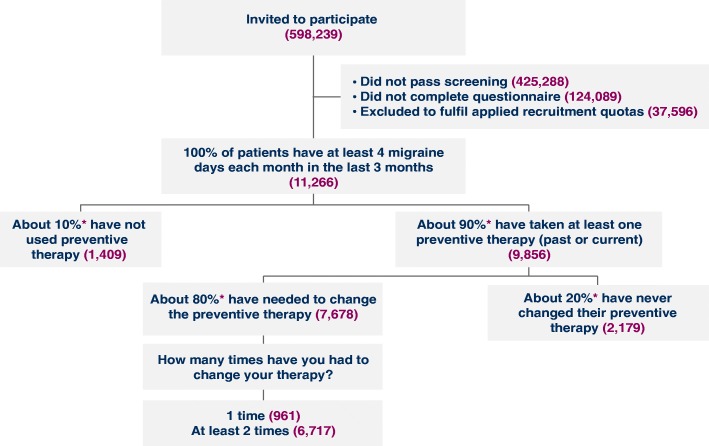
“Per the predefined inclusion criteria, approximately 90% of participants (n = 9856) had taken preventive medication (past or present) for migraine, and ≥ 80% of these (n = 7678) had experienced at least 1 or more TF, which represents 68% of the total survey population (Fig. 1).”
§ My Migraine Voice survey: a global study of disease burden among individuals with migraine for whom preventive treatments have failed > Results
plainn = 7,678- Asserted: passes — The authors put it forward as true.
- Checkable: passes — It can be checked against evidence.
- Load-bearing: unclear — It is unclear whether the paper’s conclusions depend on it.
- Based: passes — The paper gives a reason why it holds.
23 more claims
Create a free account to see all 78 claims and to verify the 11 references still open.
- It may state two separate claims as one. 42
- Probably not a substantial claim. 16
Self-check
Percentages, sums and reported differences re-computed from the paper’s own numbers.
Rated major: it would touch a result — a value a result rests on, reported and recomputed p-values on opposite sides of the significance level, two passages that conflict with no sign which is right, or a cited work retracted before this paper was published.
In the paper
“Per the predefined inclusion criteria, approximately 90% of participants (n = 9856) had taken preventive medication (past or present) for migraine, and ≥ 80% of these (n = 7678) had experienced at least 1 or more TF, which represents 68% of the total survey population (Fig. 1).”
§ My Migraine Voice survey: a global study of disease burden among individuals with migraine for whom preventive treatments have failed > Results
Reported 7678 · recomputed 7884.8
Citations
Cites
Vos, T., Abajobir, A. A., Abate, K. H., Abbafati, C., Abbas, K. M., Abd-Allah, F., Abdulkader, R. S., Abdulle, A. M., Abebo, T. A., Abera, S. F., et al. (2017) · The Lancet · doi:10.1016/s0140-6736(17)32154-2 · Cited by 13,220
Vos, T., Allen, C., Arora, M., Barber, R. M., Bhutta, Z. A., Brown, A., Carter, A., Casey, D. C., Charlson, F. J., Chen, A. Z., et al. (2016) · The Lancet · doi:10.1016/s0140-6736(16)31678-6 · Cited by 7,253
Migraine is first cause of disability in under 50s: will health politicians now take notice?
Steiner, T. J., Stovner, L. J., Vos, T., Jensen, R., & Katsarava, Z. (2018) · The Journal of Headache and Pain · doi:10.1186/s10194-018-0846-2 · Cited by 642
Blumenfeld, A., Varon, S., Wilcox, T., Buse, D., Kawata, A., Manack, A., Goadsby, P., & Lipton, R. (2011) · Cephalalgia · doi:10.1177/0333102410381145 · Cited by 627
Buse, D. C., Manack, A. N., Fanning, K. M., Serrano, D., Reed, M. L., Turkel, C. C., & Lipton, R. B. (2012) · Headache: The Journal of Head and Face Pain · doi:10.1111/j.1526-4610.2012.02223.x · Cited by 549
Blumenfeld, A. M., Bloudek, L. M., Becker, W. J., Buse, D. C., Varon, S. F., Maglinte, G. A., Wilcox, T. K., Kawata, A. K., & Lipton, R. B. (2013) · Headache: The Journal of Head and Face Pain · doi:10.1111/head.12055 · Cited by 380
Sackett, D. L., & Wennberg, J. E. (1997) · BMJ · doi:10.1136/bmj.315.7123.1636 · Cited by 368
Bloudek, L. M., Stokes, M., Buse, D. C., Wilcox, T. K., Lipton, R. B., Goadsby, P. J., Varon, S. F., Blumenfeld, A. M., Katsarava, Z., Pascual, J., et al. (2012) · The Journal of Headache and Pain · doi:10.1007/s10194-012-0460-7 · Cited by 339
Self-citationAdams, A. M., Serrano, D., Buse, D. C., Reed, M. L., Marske, V., Fanning, K. M., & Lipton, R. B. (2015) · Cephalalgia · doi:10.1177/0333102414552532 · Cited by 305
Payne, K. A., Varon, S. F., Kawata, A. K., Yeomans, K., Wilcox, T. K., Manack, A., Buse, D. C., Lipton, R. B., Goadsby, P. J., & Blumenfeld, A. M. (2011) · Cephalalgia · doi:10.1177/0333102411410610 · Cited by 74
Research works printed but not linked: 3
- World Health Organization Headache disorders. Fact sheet N°277 2016
- Ruiz de la Torre E Martelletti P Craven A Real-world patient perspective on the burden and impact of migraine 2017 Vancouver Presented at: Congress of the International Headache Society
- Ruiz de la Torre E Martelletti P Craven A Burden and impact of migraine: a caregiver’s perspective 2017 Vancouver Presented at: Congress of the International Headache Society
Cited by
Buse, D. C., Fanning, K. M., Reed, M. L., Murray, S., Dumas, P. K., Adams, A. M., & Lipton, R. B. (2019) · Headache: The Journal of Head and Face Pain · doi:10.1111/head.13613 · Cited by 311
“Similarly, the global My Migraine Voice survey assessed the real-world burden and impact of migraine among people with at least 4 migraine days per month in the previous 3 months for whom preventive treatments had failed, and found positive correlations between the number of medication failures and disease burden.(16)…”
BackgroundInfluentialSelf-citationMulleners, W. M., Kim, B.-K., Láinez, M. J. A., Lanteri-Minet, M., Pozo-Rosich, P., Wang, S., Tockhorn-Heidenreich, A., Aurora, S. K., Nichols, R. M., Yunes-Medina, L., et al. (2020) · The Lancet Neurology · doi:10.1016/s1474-4422(20)30279-9 · Cited by 270
Self-citationSacco, S., Braschinsky, M., Ducros, A., Lampl, C., Little, P., van den Brink, A. M., Pozo-Rosich, P., Reuter, U., de la Torre, E. R., Sanchez Del Rio, M., et al. (2020) · The Journal of Headache and Pain · doi:10.1186/s10194-020-01130-5 · Cited by 266
Self-citationGoadsby, P. J., Dodick, D. W., Ailani, J., Trugman, J. M., Finnegan, M., Lu, K., & Szegedi, A. (2020) · The Lancet Neurology · doi:10.1016/s1474-4422(20)30234-9 · Cited by 230
Disability, quality of life, productivity impairment and employer costs of migraine in the workplace
Shimizu, T., Sakai, F., Miyake, H., Sone, T., Sato, M., Tanabe, S., Azuma, Y., & Dodick, D. W. (2021) · The Journal of Headache and Pain · doi:10.1186/s10194-021-01243-5 · Cited by 188
Osunkwo, I., Andemariam, B., Minniti, C. P., Inusa, B. P. D., El Rassi, F., Francis‐Gibson, B., Nero, A., Trimnell, C., Abboud, M. R., Arlet, J., et al. (2021) · American Journal of Hematology · doi:10.1002/ajh.26063 · Cited by 194
Takeshima, T., Wan, Q., Zhang, Y., Komori, M., Stretton, S., Rajan, N., Treuer, T., & Ueda, K. (2019) · The Journal of Headache and Pain · doi:10.1186/s10194-019-1062-4 · Cited by 165
“The impact of inadequate treatment on migraine burden and health care utilization was assessed in a global survey of 11,266 individuals with migraine experiencing ≥4 migraine headaches per month, in which ≥80% of respondents had failed preventive treatment at least once [7].”
BackgroundBuse, D. C., Reed, M. L., Fanning, K. M., Bostic, R. C., & Lipton, R. B. (2020) · Headache The Journal of Head and Face Pain · doi:10.1111/head.13966 · Cited by 120
Silberstein, S. D., Diamond, M. L., Hindiyeh, N. A., Biondi, D. M., Cady, R. K., Hirman, J., Allan, B., Pederson, S. M., Schaeffler, B. A., & Smith, J. (2020) · The Journal of Headache and Pain · doi:10.1186/s10194-020-01186-3 · Cited by 104
Negro, A., Sciattella, P., Rossi, D., Guglielmetti, M., Martelletti, P., & Mennini, F. S. (2019) · The Journal of Headache and Pain · doi:10.1186/s10194-019-1068-y · Cited by 95
“The full burden and the impact of migraine emerge from the recent results of “My Migraine Voice”, a survey conducted on 11,266 adults with migraine for whom preventive treatments have failed [9].”
ResultSelf-citationPrevalence and burden of migraine in the United States: A systematic review
Cohen, F., Brooks, C. V., Sun, D. C., Buse, D. C., Reed, M. L., Fanning, K. M., & Lipton, R. B. (2024) · Headache The Journal of Head and Face Pain · doi:10.1111/head.14709 · Cited by 111
“6,7,36 Pediatric populations Most of the included studies focused on adults, generally aged ≥18 years, though some studies included pediatric and adolescent populations.”
BackgroundDodick, D. W., Shewale, A. R., Lipton, R. B., Baum, S. J., Marcus, S. C., Silberstein, S. D., Pavlovic, J. M., Bennett, N. L., Young, W. B., Viswanathan, H. N., et al. (2020) · Journal of Primary Care & Community Health · doi:10.1177/2150132720963680 · Cited by 79
Learning the full impact of migraine through patient voices: A qualitative study.
Estave, P. M., Beeghly, S., Anderson, R., Margol, C., Shakir, M., George, G., Berger, A., O’Connell, N., Burch, R., Haas, N., et al. (2021) · Headache The Journal of Head and Face Pain · doi:10.1111/head.14151 · Cited by 81
“For the larger RCT, additional areas of focus were added to include questions about (1) heat pain training; (2) questionnaires; (3) headache logs; and (4) estimated headache frequency change for life value.”
BackgroundInfluentialAcute headache management in emergency department. A narrative review
Giamberardino, M. A., Affaitati, G., Costantini, R., Guglielmetti, M., & Martelletti, P. (2020) · Internal and Emergency Medicine · doi:10.1007/s11739-019-02266-2 · Cited by 64
Self-citationKhanal, S., Underwood, M. R., Naghdi, S., Brown, A., Duncan, C. W., Matharu, M. S., & Mistry, H. (2022) · The Journal of Headache and Pain · doi:10.1186/s10194-022-01492-y · Cited by 65
Delussi, M. D., Gentile, E., Coppola, G., Prudenzano, M. P., Rainero, I., Sances, G., Abagnale, C., Caponnetto, V., Cesaris, F. D., Frattale, I., et al. (2020) · Frontiers in Neurology · doi:10.3389/fneur.2020.597881 · Cited by 63
“Effects of Migraine Severity, Lifestyle Habits, Emotions, and Severity of Pandemic Diffusion on Headache Frequency In a previous large global cross-sectional study, patients with frequent migraine showed greater resilience in response to negative events, such as treatment failures (22).”
BackgroundWaliszewska‐Prosół, M., Straburzyński, M., Czapińska-Ciepiela, E., Nowaczewska, M., Gryglas‐Dworak, A., & Budrewicz, S. P. (2023) · The Journal of Headache and Pain · doi:10.1186/s10194-023-01575-4 · Cited by 54
Smith, T. R., Janelidze, M., Chakhava, G., Cady, R. K., Hirman, J., Allan, B., Pederson, S. M., Smith, J., & Schaeffler, B. A. (2020) · Clinical Therapeutics · doi:10.1016/j.clinthera.2020.11.007 · Cited by 60
Wang, X., Wen, D., He, Q., You, C., & Ma, L. (2022) · The Journal of Headache and Pain · doi:10.1186/s10194-022-01472-2 · Cited by 46
“The burden is even higher for patients who have failed previous migraine preventive treatment [6, 7].”
BackgroundVancouver Declaration on Global Headache Patient Advocacy 2018
Dodick, D. W., Edvinsson, L. I., Makino, T., Grisold, W., Sakai, F., Jensen, R., Balch, A. J., de la Torre, E. R., Lorenz, D. H., Craven, A., et al. (2018) · Cephalalgia · doi:10.1177/0333102418781644 · Cited by 90
Self-citationBuse, D. C., Yugrakh, M. S., Lee, L. K., Bell, J., Cohen, J. M., & Lipton, R. B. (2020) · Journal of Managed Care & Specialty Pharmacy · doi:10.18553/jmcp.2020.20100 · Cited by 50
“Furthermore, HRU was greater among the subset of individuals who had failed to respond to ≥ 2 migraine preventive therapies.(10,41) Although HCP visits overall were significantly greater for migraine patients than for nonmigraine controls, the number of general practitioner and neurologist visits did not differ signif…”
BackgroundResultGibbs, S. N., Shah, S., Deshpande, C. G., Bensink, M. E., Broder, M. S., Dumas, P. K., Buse, D. C., Vo, P., & Schwedt, T. J. (2020) · Headache: The Journal of Head and Face Pain · doi:10.1111/head.13829 · Cited by 50
“respondents were similar to all “My Migraine Voice” survey respondents.(14) Thus, it is possible that there is a structural difference in the U.”
BackgroundResultInfluentialSelf-citationOrnello, R., Baraldi, C., Guérzoni, S., et al. (2022) · The Journal of Headache and Pain · doi:10.1186/s10194-022-01408-w · Cited by 50
“Those patients represent a population with a high burden of migraine-related disability [25].”
BackgroundPozo‐Rosich, P., Lucas, C., Watson, D. P. B., Gaul, C., Ramsden, E., Ritter, S., Martelletti, P., & Snellman, J. (2021) · Pain and Therapy · doi:10.1007/s40122-021-00331-3 · Cited by 50
“These findings are in line with the results from the My Migraine Voice survey, and add to the evidence on burden of disease among patients with migraine, and importantly, provide additional information on the burden associated with prior preventive treatment failures [16].”
ResultSelf-citationIgarashi, H., Ueda, K., Jung, S.-E., Cai, Z., Chen, Y., & Nakamura, T. (2020) · BMJ Open · doi:10.1136/bmjopen-2020-038987 · Cited by 40
Korolainen, M. A., Kurki, S. H., Lassenius, M. I., Toppila, I., Costa‐Scharplatz, M., Purmonen, T. T., & Nissilä, M. (2019) · The Journal of Headache and Pain · doi:10.1186/s10194-019-0964-5 · Cited by 56
“The attention has recently thus turned into revealing the true impact of migraine disease burden also for patients in the need or failing prophylactic treatments [5, 23].”
BackgroundAshina, M., Cohen, J. M., Galić, M., Campos, V. R., Barash, S., Ning, X., Kessler, Y., Janka, L., & Diener, H. (2021) · The Journal of Headache and Pain · doi:10.1186/s10194-021-01279-7 · Cited by 50
“Furthermore, estimates suggest that a large proportion of patients with migraine have failed ≥1 prior migraine preventive treatment [3].”
BackgroundSelf-citationEconomic burden of migraine in Latvia and Lithuania: direct and indirect costs
Lublóy, Á. (2019) · BMC Public Health · doi:10.1186/s12889-019-7461-2 · Cited by 41
“[32] is comparable to that of Vo et al.”
BackgroundResultInfluentialRuff, D. D., Ford, J. H., Tockhorn‐Heidenreich, A., Stauffer, V. L., Govindan, S., Aurora, S. K., Terwindt, G. M., & Goadsby, P. J. (2019) · European Journal of Neurology · doi:10.1111/ene.14114 · Cited by 39
“Patients who have failed prior preventives for efficacy and/or safety/tolerability reasons form an important subgroup with unmet need for prevention [3] and for whom it is important to assess the efficacy of new preventives.”
BackgroundPozo‐Rosich, P., Doležil, D., Paemeleire, K., Stępień, A., Stude, P., Snellman, J., Arkuszewski, M., Stites, T. E., Ritter, S., López, C. L., et al. (2024) · JAMA Neurology · doi:10.1001/jamaneurol.2024.0368 · Cited by 51
Unmet Needs in Preventive Treatment of Migraine
Bentivegna, E., Onan, D., & Martelletti, P. (2023) · Neurology and Therapy · doi:10.1007/s40120-023-00438-z · Cited by 35
Self-citationTroy, E., Shrukalla, A. A., Buture, A., Conaty, K., Macken, E., Lonergan, R., Melling, J., Long, N., Shaikh, E., Birrane, K., et al. (2023) · The Journal of Headache and Pain · doi:10.1186/s10194-022-01536-3 · Cited by 28
“It is well documented that loss in work productivity and activity impairment due to migraine is higher in individuals with previously failed preventive treatments, further establishing the need for more effective treatment options in this subpopulation to ensure that they can fully contribute to the workforce and to s…”
BackgroundInfluentialBamalan, B., Khojah, A. B., Alkhateeb, L. M., Gasm, I., Alahmari, A. A., Alafari, S. A., Sindi, M. A., & Yaghmour, K. A. (2021) · Saudi Medical Journal · doi:10.15537/smj.2021.42.10.20210575 · Cited by 35
Mahon, R., Lang, A., Vo, P. G., Huels, J., Cooney, P., Danyliv, A., Vudumula, U., Vadapalle, S., Maniyar, F., & Goadsby, P. J. (2021) · PharmacoEconomics · doi:10.1007/s40273-020-00996-2 · Cited by 31
Self-citationVives‐Mestres, M., Casanova, A., Buse, D. C., Donoghue, S., Houle, T. T., Lipton, R. B., Mian, A., Shulman, K. J., & Orr, S. L. (2020) · Headache The Journal of Head and Face Pain · doi:10.1111/head.13943 · Cited by 38
Delussi, M. D., Vecchio, E., Libro, G., Quitadamo, S. G., & de Tommaso, M. (2020) · BMC Neurology · doi:10.1186/s12883-020-01839-5 · Cited by 35
“preventive attempt was also confirmed in 80% of patients in a large population with migraine (9856 patients) interviewed about the burden of the disease [26].”
BackgroundNahas, S. J., Naegel, S., Cohen, J. M., Ning, X., Janka, L., Campos, V. R., Krasenbaum, L. J., Holle, D., Kudrow, D., & Lampl, C. (2021) · The Journal of Headache and Pain · doi:10.1186/s10194-021-01351-2 · Cited by 36
Renner, T., Sollmann, N., Heinen, F., Albers, L. E., Trepte-Freisleder, F., Klose, B., König, H., Krieg, S. M., Bonfert, M., & Landgraf, M. N. (2020) · Scientific Reports · doi:10.1038/s41598-020-62701-9 · Cited by 41
Goadsby, P. J., Barbanti, P., Lambru, G., Ettrup, A., Christoffersen, C. L., Josiassen, M. K., Phul, R., & Sperling, B. (2022) · European Journal of Neurology · doi:10.1111/ene.15670 · Cited by 31
Spierings, E. L. H., Ning, X., Campos, V. R., Cohen, J. M., Barash, S., & Buse, D. C. (2021) · Headache The Journal of Head and Face Pain · doi:10.1111/head.14196 · Cited by 28
Tepper, S. J., Fang, J., Vo, P. G., Shen, Y. H., Zhou, L., Abdrabboh, A., Glassberg, M. B., & Ferraris, M. L. (2021) · The Journal of Headache and Pain · doi:10.1186/s10194-021-01238-2 · Cited by 28
“Further real-world evidence on the impact of erenumab on patients with migraine is growing [24, 25].”
BackgroundSelf-citationAnnual indirect costs secondary to headache disability in Brazil
Oliveira, A. B., Queiroz, L. P., Rocha‐Filho, P. A. S., Sarmento, E. M., & Peres, M. F. P. (2019) · Cephalalgia · doi:10.1177/0333102419889357 · Cited by 34
“Yet, our estimates are lower than those from US (around US$ 371–941) (8,9,26) and Europe (E1222) (12), which may reflect the lower mean income and high Gini index in Brazil (0.528 in 2007) (25).”
BackgroundInfluentialStraube, A., Stude, P., Gaul, C., et al. (2021) · The Journal of Headache and Pain · doi:10.1186/s10194-021-01344-1 · Cited by 27
Buse, D. C., Pozo‐Rosich, P., Benjamin, L., Balkaran, B. L., Lee, L., Jauregui, A., Gandhi, P., Parikh, M., & Reuter, U. (2023) · The Journal of Headache and Pain · doi:10.1186/s10194-023-01655-5 · Cited by 33
Lipton, R. B., Buse, D. C., Sandoe, C. H., Ford, J. H., Hand, A. L., Jedynak, J., Port, M. D., & Detke, H. C. (2023) · Headache The Journal of Head and Face Pain · doi:10.1111/head.14460 · Cited by 32
“Met PHQ9 depression criteria, n (%) 30 (13) 36 (16) 8 (6) 15 (11) 22 (23) 21 (21)”
Sumelahti, M., Sumanen, M. P. T., Sumanen, M. S., Tuominen, S., Vikkula, J., Honkala, S. M., Rosqvist, S., & Korolainen, M. A. (2020) · The Journal of Headache and Pain · doi:10.1186/s10194-020-01185-4 · Cited by 32
Real-world evidence on the economic implications of CGRP-mAbs as preventive treatment of migraine
Siersbæk, N., Kilsdal, L., Jervelund, C., Antić, S., & Bendtsen, L. (2023) · BMC Neurology · doi:10.1186/s12883-023-03302-7 · Cited by 26
“Background Migraine is a serious condition with debilitating symptoms [1, 2].”
BackgroundUnravelling Migraine Stigma: A Comprehensive Review of Its Impact and Strategies for Change
Casas‐Limón, J., Quintas, S., López-Bravo, A., Alpuente, A., López, A. A., Castro-Sánchez, M. V., Membrilla, J. A., Hernández, C. M., González-García, N., & Irimia, P. (2024) · Journal of Clinical Medicine · doi:10.3390/jcm13175222 · Cited by 35
“…subspecialty within neurology, but the advent of new treatments grounded in physiological mechanisms, such as the discovery of calcitonin gene-related peptide (CGRP) and neuroimaging studies showing brain alterations during migraine attacks, are helping to elevate interest in this field [139–142].”
BackgroundÖzge, A., Baykan, B. B., Bıçakçı, Ş., Ertaş, M., Atalar, A. Ç., Gümrü, S., & Karlı, N. (2024) · Frontiers in Neurology · doi:10.3389/fneur.2024.1402569 · Cited by 34
Moore, E. L., Bell, I. M., Fraley, M. E., Burgey, C. S., White, R. B., Li, C., Regan, C. P., Danziger, A., McGaraughty, S., Kouzehgarani, G. N., et al. (2024) · Cephalalgia · doi:10.1177/03331024231226186 · Cited by 25
Barbanti, P., Goadsby, P. J., Lambru, G., Ettrup, A., Christoffersen, C. L., Josiassen, M. K., Phul, R., & Sperling, B. (2022) · The Journal of Headache and Pain · doi:10.1186/s10194-022-01521-w · Cited by 23
“As would be expected, reductions in productivity increase with increasing headache frequency [7], and work productivity loss commonly persists despite acute and/or preventive treatment [1, 2, 8].”
BackgroundBuse, D. C., Gandhi, S. K., Cohen, J. M., Ramirez-Campos, V., Cloud, B., Yang, R., & Cowan, R. P. (2020) · The Journal of Headache and Pain · doi:10.1186/s10194-020-01177-4 · Cited by 23
Who cares about migraine? Pathways and hurdles in the European region - access to care III
Vaghi, G., Icco, R. D., Tassorelli, C., Goadsby, P. J., Vicente-Herrero, T., & de la Torre, E. R. (2023) · The Journal of Headache and Pain · doi:10.1186/s10194-023-01652-8 · Cited by 26
“Through channeling patient voices, it has contributed to increase awareness among stakeholders and society through multiple activities [20–22].”
BackgroundSelf-citationDevelopment and validation of a web-based headache diagnosis questionnaire
Kim, K. M., Kim, A. R., Lee, W., Jang, B. H., Heo, K., & Chu, M. K. (2022) · Scientific Reports · doi:10.1038/s41598-022-11008-y · Cited by 23
Martelletti, P., Schwedt, T. J., Vo, P. G., Ritrovato, D., Reilly, M. C., Naclerio, M., Ranjan, P., Kleebach, J., & Joshi, P. (2021) · Journal of Medical Economics · doi:10.1080/13696998.2021.1925557 · Cited by 28
Self-citationAilani, J., Andrews, J. S., Rettiganti, M. R., & Nicholson, R. A. (2020) · The Journal of Headache and Pain · doi:10.1186/s10194-020-01190-7 · Cited by 29
Biochemical Modulation and Pathophysiology of Migraine
Chan, C., Wei, D. Y., & Goadsby, P. J. (2019) · Journal of Neuro-Ophthalmology · doi:10.1097/wno.0000000000000875 · Cited by 22
Groth, M., Katsarava, Z., & Ehrlich, M. (2022) · Scientific Reports · doi:10.1038/s41598-022-08716-w · Cited by 20
Economic evaluations in migraine: systematic literature review and a novel approach
Mahon, R., Huels, J., Hacking, V., Cooney, P., Danyliv, A., Vudumula, U., Vadapalle, S., Vo, P. G., Maniyar, F., Palmer, S., et al. (2020) · Journal of Medical Economics · doi:10.1080/13696998.2020.1754840 · Cited by 17
Self-citationNewman, L. C., Vo, P. G., Zhou, L., López, C. L., Cheadle, A., Olson, M. S., & Fang, J. (2021) · Neurology Clinical Practice · doi:10.1212/cpj.0000000000001076 · Cited by 20
“The index date for patients with 1 TF was the date of initiation of the second PT.”
BackgroundResultInfluentialSelf-citationLasmiditan: Acute Migraine Treatment Without Vasoconstriction. A Review
Beauchene, J. K., & Levien, T. L. (2021) · Journal of Pharmacy Technology · doi:10.1177/87551225211024630 · Cited by 18
Navigating migraine care through the COVID-19 pandemic: an update
Angus‐Leppan, H., Guiloff, A. E., Benson, K., & Guiloff, R. J. (2021) · Journal of Neurology · doi:10.1007/s00415-021-10610-w · Cited by 19
“Pro-active management of long-term conditions, such as migraine and epilepsy [4], is essential to prevent suffering, secondary morbidity, particularly mental health problems, and avoidable emergency attendances [1, 2, 4, 5].”
BackgroundNovel synthetic treatment options for migraine
Negro, A., & Martelletti, P. (2020) · Expert Opinion on Pharmacotherapy · doi:10.1080/14656566.2020.1862793 · Cited by 17
“More than 85% of those affected report that migraine restricts their daily activities and adversely affects their professional, private, and social lives [2].”
BackgroundSelf-citationMatharu, M. S., Katsarava, Z., Buse, D. C., Sommer, K., Reed, M. L., Fanning, K. M., & Lipton, R. B. (2024) · Headache The Journal of Head and Face Pain · doi:10.1111/head.14753 · Cited by 20
Goadsby, P. J., de la Torre, E. R., Constantin, L., & Amand, C. (2023) · Journal of Medical Internet Research · doi:10.2196/40461 · Cited by 18
Self-citationStarling, A. J., Cowan, R. P., Buse, D. C., Diener, H., Marmura, M. J., Hirman, J., Brevig, T., & Cady, R. K. (2023) · Headache The Journal of Head and Face Pain · doi:10.1111/head.14434 · Cited by 19
Self-citationFord, J. H., Nichols, R., Ye, W., Tockhorn‐Heidenreich, A., Cotton, S. E., & Jackson, J. (2021) · ClinicoEconomics and Outcomes Research · doi:10.2147/ceor.s304158 · Cited by 15
Evaluating and managing severe headache in the emergency department
Luciani, M., Negro, A., Spuntarelli, V., Bentivegna, E., & Martelletti, P. (2020) · Expert Review of Neurotherapeutics · doi:10.1080/14737175.2021.1863148 · Cited by 18
“2 nights) due to migraine in the previous 12 months [51].”
BackgroundSelf-citationGhasemi, H., Khaledi‐Paveh, B., Abdi, A., et al. (2020) · Pain Research and Management · doi:10.1155/2020/2763808 · Cited by 17
Liu, J., Quan, S., Zhao, L., Yuan, K., Wang, Y., Zhang, Y., Wang, Z., Sun, M., & Hu, L. (2023) · Neurology · doi:10.1212/wnl.0000000000207484 · Cited by 19
“28 This situation could be improved if migraine can be more e ff ectively diagnosed and treated, and a more targeted treatment to disease would improve the treatment outcomes for individuals.”
BackgroundKlan, T., Bräscher, A., Klein, S., Diezemann, A., Guth, A., Gaul, C., & Witthöft, M. (2022) · Headache The Journal of Head and Face Pain · doi:10.1111/head.14272 · Cited by 18
Christensen, R. H., Eigenbrodt, A. K., Ashina, H., Steiner, T. J., & Ashina, M. (2023) · Cephalalgia · doi:10.1177/03331024231206376 · Cited by 16
“…in this definition is that postdromal symptoms occur “following headache resolution”, yet several studies allowed residual, “non-migraine” head pain (6,10,11,13), introducing the risk of identifying symptoms associated with the head-ache phase (photophobia, phonophobia, nausea) as postdromal.”
BackgroundAyurveda for management of migraine: A narrative review of clinical evidence
Soman, A., Venkatram, S., Chikkanna, U., et al. (2022) · Journal of Family Medicine and Primary Care · doi:10.4103/jfmpc.jfmpc_2109_21 · Cited by 15
“Ranked third most prevalent and seventh highest specific cause of disability worldwide (GBD 2012),[2] migraine is currently the leading cause of Years Lived with Disability/Disease (YLD) among individuals under 50 years with a male, female ratio of 1:3.[3] Migraine therapy involves the use of non‐specific and specific…”
BackgroundPazdera, L., Cohen, J. M., Ning, X., Campos, V. R., Yang, R., & Pozo‐Rosich, P. (2021) · Cephalalgia · doi:10.1177/03331024211008401 · Cited by 16
Katsarava, Z., Buse, D. C., Leroux, É., Lantéri‐Minet, M., Sakai, F., Matharu, M. S., Adams, A. M., Carr, K., Fanning, K. M., & Lipton, R. B. (2024) · Cephalalgia · doi:10.1177/03331024241274343 · Cited by 17
Self-citationAlkahtani, R. F., Alrumaih, S. S., Algezlan, S. S., Almutairi, R. R., Alturki, B. A., Alanazi, R. M., & Alateeq, F. A. (2022) · Cureus · doi:10.7759/cureus.27733 · Cited by 24
“Multiple studies found an inverse relationship between the frequency of the attacks and the low QOL score [19,22,23].”
BackgroundAmbrosini, A., Estemalik, E., Pascual, J., Rettiganti, M. R., Stroud, C., Day, K. A., & Ford, J. H. (2022) · Journal of Managed Care & Specialty Pharmacy · doi:10.18553/jmcp.2022.21375 · Cited by 18
McAllister, P., Winner, P. K., Ailani, J., Buse, D. C., Lipton, R. B., Chakhava, G., Josiassen, M. K., Lindstén, A., Mehta, L. R., Ettrup, A., et al. (2022) · The Journal of Headache and Pain · doi:10.1186/s10194-021-01376-7 · Cited by 15
“In addition, migraine has negative impact relating to missing important events, commitment avoidance, and feelings of guilt regarding the effect on family [6, 7].”
BackgroundAutio, H., Purmonen, T. T., Kurki, S. H., Mocevic, E., Korolainen, M. A., Tuominen, S., Lassenius, M. I., & Nissilä, M. (2021) · Neurology and Therapy · doi:10.1007/s40120-021-00303-x · Cited by 12
“One half of the responders reported overall work impairment in the previous week due to migraine and, notably, one in four patients with chronic migraine reported to have lost their jobs due to migraine [3, 9].”
BackgroundSevere migraine and its control: A proposal for definitions and consequences for care
Donnet, A., Ducros, A., Radat, F., Allaf, B., Chouette, I., & Lantéri‐Minet, M. (2021) · Revue Neurologique · doi:10.1016/j.neurol.2020.11.012 · Cited by 19
Self-citationVancouver Declaration II on Global Headache Patient Advocacy 2019
Dodick, D. W., Ashina, M., Sakai, F., Grisold, W., Miyake, H., Lorenz, D. H., Craven, A., de la Torre, E. R., Koh, R., Reznik, N., et al. (2020) · Cephalalgia · doi:10.1177/0333102420921162 · Cited by 14
Self-citationInterictal burden in migraine patients at the outset of CGRP monoclonal antibody prevention
Lampl, C., Seng, E. K., Vincent, M. B., Lenderking, W. R., Hoyt, M. L., Hetherington, L., Ladd, M. K., Malley, K. G., Chen, J., & Viktrup, L. (2024) · The Journal of Headache and Pain · doi:10.1186/s10194-024-01927-8 · Cited by 16
Dodick, D. W., Reed, M. L., Lee, L., Balkaran, B. L., Umashankar, K., Parikh, M., Gandhi, P., & Buse, D. C. (2024) · Headache The Journal of Head and Face Pain · doi:10.1111/head.14684 · Cited by 15
“19 In addition, individuals with migraine who cycle through multiple oral migraine preventive medication classes have higher HCRU compared with those remaining on treatment; those with more than one switch or discontinuation annually experience the greatest impact.”
BackgroundHans, A., Stonnington, C. M., Zhang, N., Butterfield, R. J., & Friedman, D. I. (2023) · Headache The Journal of Head and Face Pain · doi:10.1111/head.14518 · Cited by 18
“Median (IQR) 8 (3, 11) 6 (3, 12) 7 (3, 11)”
BackgroundSocietal and personal impact of migraine
Leonardi, M., Guastafierro, E., Toppo, C., & D’Amico, D. (2023) · Handbook of clinical neurology · doi:10.1016/b978-0-12-823356-6.00015-9 · Cited by 18
Prevalence of Migraine in General Spanish Population; Factors Related and Use of Health Resources
Salazar, A., Berrocal, L., & Failde, I. (2021) · International Journal of Environmental Research and Public Health · doi:10.3390/ijerph182111145 · Cited by 11
“The results on the differences in the use of health resources found in the study are consistent with those described by Badia et al. many years ago in Spain [20] and with results from other countries [34].”
ResultMartelletti, P., & Curto, M. (2021) · Current Medical Research and Opinion · doi:10.1080/03007995.2021.1976738 · Cited by 12
Self-citationFord, J. H., Schroeder, K. M., Buse, D. C., Joshi, S., Gelwicks, S., Foster, S. A., & Aurora, S. K. (2019) · Current Medical Research and Opinion · doi:10.1080/03007995.2019.1657716 · Cited by 13
Burden of migraine among Egyptian people: prevalence and comorbidities
Samir, A. A., Hageen, A. W., Elgammal, A., Meshref, M. M., El-Refaay, M. A., Taalap, M. M., Nassef, A. E., Bedewe, R. A., Almeldein, A., & Kabbash, I. (2025) · The Journal of Headache and Pain · doi:10.1186/s10194-025-02016-0 · Cited by 15
“Moreover, migraine is significantly accompanied by high financial requirements, particularly due to indirect determinants including wastage of occupational time and reduced productivity [12].”
Treatment of migraine with monoclonal antibodies
López-Matencio, J. M. S., Gago‐Veiga, A. B., Gómez, M., Plaza, E. A., Mejía-Abril, G. P., González-Gay, M. Á., & Castañeda, S. (2022) · Expert Opinion on Biological Therapy · doi:10.1080/14712598.2022.2072207 · Cited by 10
“People affected by migraine report that this condition restricts their daily activities and their professional lives [4].”
BackgroundMoore, C., Leaver, A. M., Sibbritt, D. W., & Adams, J. (2019) · Complementary Therapies in Medicine · doi:10.1016/j.ctim.2019.102276 · Cited by 14
Duburcq, A., Molins, M., Debremaeker, S., Joie, J., Lopes, L., Nevoret, C., & de Dhaem, O. B. (2025) · The Journal of Headache and Pain · doi:10.1186/s10194-025-02018-y · Cited by 16
“[23].”
Lipton, R. B., Gendolla, A., Abraham, L., Jenkins, A. K., Telfort, J., Blakeman, K. H., Saccone, P. A., Pustułka, I., Fotheringham, I., & Engh, A. M. (2024) · Headache The Journal of Head and Face Pain · doi:10.1111/head.14854 · Cited by 12
Postdromal symptoms in migraine: a REFORM study
Thuraiaiyah, J., Ashina, H., Christensen, R. H., Al‐Khazali, H. M., & Ashina, M. (2024) · The Journal of Headache and Pain · doi:10.1186/s10194-024-01716-3 · Cited by 17
“However, it is pertinent to note that existing literature suggests that the actual duration of premonitory and postdromal symptoms typically does not reach the 48-h maximum outlined in the ICHD-3 criteria [7, 9, 13–15].”
BackgroundInfluentialMartins, R., Large, S., Russell, R. J., Surmay, G., & Connolly, M. P. (2023) · Journal of health economics and outcomes research · doi:10.36469/jheor.2023.87790 · Cited by 14
Attackenangst bei Migräne: Diagnostik und Behandlung
Klan, T., Diezemann, A., Guth, A., Gaul, C., & Witthöft, M. (2023) · Der Schmerz · doi:10.1007/s00482-023-00711-y · Cited by 10
Papakonstantinou, D., & Tomos, C. (2021) · International Journal of Workplace Health Management · doi:10.1108/ijwhm-05-2021-0123 · Cited by 15
Okonkwo, R. I., Tockhorn‐Heidenreich, A., Stroud, C., Paget, M.-A., Matharu, M. S., & Tassorelli, C. (2021) · The Journal of Headache and Pain · doi:10.1186/s10194-021-01322-7 · Cited by 14
Pozo‐Rosich, P., Poveda, J. L., Crespo, C., Martínez, M., Rodríguez, J. M., & Irimia, P. (2024) · The Journal of Headache and Pain · doi:10.1186/s10194-024-01747-w · Cited by 13
“Migraine reduces physical and emotional health-related quality of life (HRQoL) among individuals suffering from the condition [1, 2], and serious or very serious disability is consequently reported in 51% and 89% of patients with EM or CM, respectively [3].”
BackgroundTepper, S. J., Ailani, J., Ford, J. H., Nichols, R., Li, L. Q., Kemmer, P., Hand, A. L., & Tockhorn‐Heidenreich, A. (2022) · Clinical Drug Investigation · doi:10.1007/s40261-021-01115-5 · Cited by 9
“The majority of patients (78%) reported spending an average of 21 h/ month in isolation/darkness, a third (32%) of patients were fearful of having another migraine episode, and more than half (64%) required external support to carry out daily tasks [1].”
BackgroundMethodInfluential
Metadata
- Authors
- Martelletti, P., Schwedt, T. J., Lanteri-Minet, M., Quintana, R., Carboni, V., Diener, H.-C., Ruiz de la Torre, E., Craven, A., Rasmussen, A. V., Evans, S., Laflamme, A. K., Fink, R., Walsh, D., Dumas, P., & Vo, P.
- Affiliations
- Sapienza University of Rome (IT)
- Mayo Clinic (US)
- University of Duisburg-Essen (DE)
- Glostrup Hospital (DK)
- Novartis (Switzerland) (CH)
- Corresponding author
- Schwedt, Todd J.
- Venue
- The Journal of Headache and Pain
- Published
- 2018-11-27
- Volume
- 19
- Issue
- 1
- Pages
- 115-115
- ISSN
- 1129-2369 (ISSN-L)
- 1129-2377
- PMC
- PMC6755592
- OpenAlex
- W2902418797
- Cited by
- 217
- References
- 11
- Citations by year
- 2026: 12 · 2025: 17 · 2024: 38 · 2023: 26 · 2022: 32 · 2021: 35 · 2020: 43 · 2019: 13 · 2018: 1
- FWCI
- 18.05
- Type
- journal article
- Language
- en
- Open access
- gold
- doi.org
- Licence
- cc-by
- creativecommons.org/licenses/by/4.0 (tdm)
- Locations
- The Journal of Headache and Pain (publishedVersion, cc-by)
- PubMed Central (publishedVersion, cc-by)
- PubMed (publishedVersion)
- IRIS Research product catalog (Sapienza University of Rome) (submittedVersion, other-oa)
- DOAJ (DOAJ: Directory of Open Access Journals) (submittedVersion, cc-by-sa)
- Funders
- Novartis Pharma AG (N/A)
- Topics
- Health Sciences › Medicine › Clinical Neurology › Migraine and Headache Studies
- Health Sciences › Medicine › Clinical Neurology › Traumatic Brain Injury Research
- Health Sciences › Medicine › Clinical Neurology › Intracranial Aneurysms: Treatment and Complications
- Keywords
- migraine, disease burden, sleep disorders, emergency department visits, coping and resilience, patient experience, unmet needs
- MeSH terms
- Adult, Analgesics, Cross-Sectional Studies, Europe, Female, Humans, Male, Middle Aged, Migraine Disorders, Preventive Medicine, Surveys and Questionnaires, Global Health, Cohort Studies, Treatment Failure, Cost of Illness
About these checks
Registry, retraction, Cites and statistics results are computed, not judged, with one exception: a printed reference that no index lists is read once by a model before it counts as a citation error. Claims are extracted by a model and kept only when their quote appears verbatim in the text; each cited source is then checked, with a model’s help, for whether it says what the claim relies on. Those verdicts can be wrong — read the claim’s quote and the cited source before relying on one.
The claim verdicts this report counts are experimental: their accuracy is not yet measured.
A language model drew the claims from the paper on 2026-10-11, under version 3 of the claim definition (model deepseek-v4.1-flash, prompt extract-v3).
A second model labelled each claim on 2026-10-11 (model jev-1.13-20260917, definition revision gold-guideline-v0.2).
Cited sources are checked with a language model’s help (gpt-6-sol and qwen3.8-omni-flash).
Statistics and arithmetic are recomputed, not judged.
Confidence bands are shown only for fields calibrated on our annotated test set. None is calibrated yet, so no band is shown.
What counts as a claim ›How we measure confidence ›How we check this ›
Are you an author, or do you see a problem with this page? Request a review
Data sources
Bibliographic data: Semantic Scholar, OpenAlex, Crossref.
Contains information from the Semantic Scholar Academic Graph Datasets, made available under the ODC Attribution License (ODC-BY 1.0).
Semantic Scholar’s data is described in: Kinney, R., et al. (2023). The Semantic Scholar Open Data Platform. arXiv:2301.10140.
