

Air pollution and children’s health—a review of adverse effects associated with prenatal exposure from fine to ultrafine particulate matter
Open accessThe DOI matches its Crossref record; 223 of the 224 references it cites were found in a registry or an index; 210 of the 276 sources its claims cite were checked for support.
Abstract
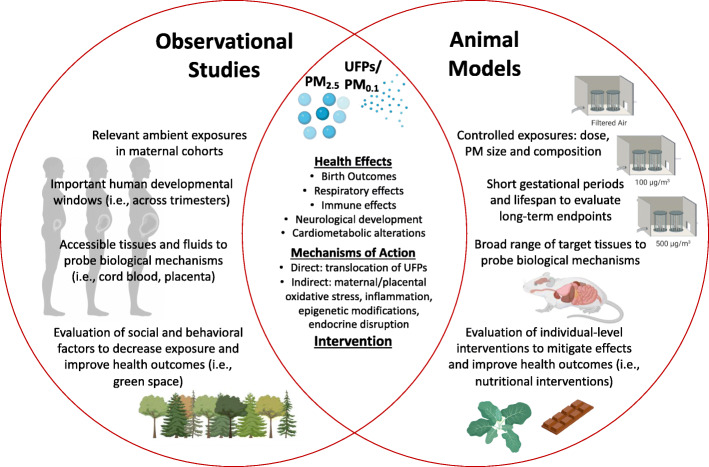
Background Particulate matter (PM), a major component of ambient air pollution, accounts for a substantial burden of diseases and fatality worldwide. Maternal exposure to PM during pregnancy is particularly harmful to children’s health since this is a phase of rapid human growth and development. Method In this review, we synthesize the scientific evidence on adverse health outcomes in children following prenatal exposure to the smallest toxic components, fine (PM 2.5 ) and ultrafine (PM 0.1 ) PM. We highlight the established and emerging findings from epidemiologic studies and experimental models. Results Maternal exposure to fine and ultrafine PM directly and indirectly yields numerous adverse birth outcomes and impacts on children’s respiratory systems, immune status, brain development, and cardiometabolic health. The biological mechanisms underlying adverse effects include direct placental translocation of ultrafine particles, placental and systemic maternal oxidative stress and inflammation elicited by both fine and ultrafine PM, epigenetic changes, and potential endocrine effects that influence long-term health. Conclusion Policies to reduce maternal exposure and health consequences in children should be a high priority. PM 2.5 levels are regulated, yet it is recognized that minority and low socioeconomic status groups experience disproportionate exposures. Moreover, PM 0.1 levels are not routinely measured or currently regulated. Consequently, preventive strategies that…
Overview
CoChat Summary
## TL;DR
This review synthesizes evidence that prenatal exposure to fine (PM2.5) and ultrafine (PM0.1) particulate matter is associated with adverse outcomes in children, especially birth, respiratory, neurodevelopmental, immune, and cardiometabolic effects. It also argues that placental translocation, oxidative stress/inflammation, epigenetic changes, and endocrine disruption are key mechanisms, and that reducing maternal exposure should be a public health priority.
## Key findings
- Human epidemiologic evidence summarized in the paper links prenatal PM2.5 exposure with adverse birth outcomes, including low birth weight and preterm birth; effect estimates for every 10 μg/m³ increase in PM2.5 were reported as birth-weight reductions ranging from −15.9 to −23.4 g.
- For stillbirth, one Ohio cohort found that third-trimester “high” PM2.5 exposure was associated with a 42% increased stillbirth risk, while PM2.5 was not significant in the cited meta-analyses.
- In respiratory/immune outcomes, a review of 18 studies found increased risk of wheeze and asthma with prenatal exposure to multiple air pollutants, but only a weak association in the 5 studies specifically evaluating prenatal PM2.5.
- The paper reports that a meta-analysis of European birth cohorts found consistent evidence for an association between air pollution and pneumonia in early childhood, and that prenatal UFP exposure was independently associated with childhood asthma in emerging epidemiologic studies.
- In the cardiometabolic section, the paper cites human studies linking developmental air pollution exposure with higher adipokines, altered β-cell function and insulin sensitivity, higher BMI at 18 years, insulin resistance at 10 years, and increased blood pressure risk; animal studies similarly showed offspring cardiac dysfunction, altered glucose homeostasis, and increased blood pressure.
## Methods
- Narrative review of epidemiologic and experimental literature on prenatal exposure to fine (PM2.5) and ultrafine (PM0.1) particulate matter and child health outcomes.
- Study selection used five PubMed literature searches plus four additional searches on oxidative stress, inflammation, epigenetics, and endocrine disruption; two independent reviewers screened titles/abstracts and full texts.
- Included original studies on ambient PM2.5 or PM0.1, categorized by endpoint (birth outcomes, respiratory/immune, brain, cardiometabolic) and by human versus nonhuman evidence.
## Limitations
- The paper states that human evidence on the specific effects of prenatal UFP (PM0.1) exposure is limited, in part because of lack of monitoring and exposure models.
- It notes that animal studies vary by species, strain, timing, exposure route, and dose, which can limit comparability and translational interpretation; this is stated in the paper.
- Evident from the text: much of the review relies on a small number of studies for some endpoints, and several sections explicitly say that additional research is needed to confirm findings and clarify mechanisms.
Model-written summary of a shortened version of the paper’s full text (it is longer than we read). Check it against the paper before relying on it.
Integrity signals
Registry
Cites
Statistics
Figures
Verification
Claims the paper makes
181 Valid · 7 Not valid · 53 Not checked · 53 Own results and interpretations
Some cited sources support this claim and some don’t — read each source’s verdict below.
In the paper
“In a cohort study, exposure to PM2.5 during the first trimester was significantly associated with decreased (2.2%) global DNA methylation in placenta tissue [178] and was also significantly correlated with gene expression of S-adenosylmethionine (SAM), a key substrate involved in methyl group transfers [184].”
§ Air pollution and children’s health—a review of adverse effects associated with prenatal exposure from fine to ultrafine particulate matter > Biological mechanisms underlying adverse effects > Epigenetic alterations
What the sources say
- Partly supportedcites [178] Janssen BG Godderis L Pieters N Poels K Kiciński M Cuypers A Fierens F Penders J Plusquin M Gyselaers W Placental DNA hypomethylation in association with particulate air pollution in early life Part Fibre Toxicol 2013 10 1 22 10.1186/1743-8977-10-22 23742113 PMC3686623 sourceExperimental — accuracy not yet measured
The Results section reports a significant association between first-trimester PM2.5 exposure and lower global DNA methylation in placental tissue. The stated 2.2% decrease corresponds to the whole-pregnancy estimate (2.19%), however; the first-trimester estimate was 2.13% per 5 μg/m3 increase in the multi-lag model, or 2.41% in the trimester-specific analysis. (LLM, conf=0.87)
- Disputedcites [184] Maghbooli Z, Hossein-nezhad A, Adabi E, Asadollah-pour E, Sadeghi M, Mohammad-nabi S, Rad LZ, Hosseini A-aM, Radmehr M, Faghihi F: Air pollution during pregnancy and placental adaptation in the levels of global DNA methylation. Plos One 2018, 13(7):e0199772. PMC6034814 29979694 sourceExperimental — accuracy not yet measured
The Results (Table 3; page not available) report a significant positive correlation between first-trimester PM2.5 and placental global DNA methylation (rho = 0.26, p = 0.01), contrary to the claimed decrease. The Discussion also describes the correlation as positive, and the cited results do not report a 2.2% decrease. (LLM, conf=0.90)
Checked by a reasoning model — may be wrong.
plainstates an association- Asserted: passes — The authors put it forward as true.
- Checkable: passes — It can be checked against evidence.
- Load-bearing: unclear — It is unclear whether the paper’s conclusions depend on it.
- Based: passes — The paper gives a reason why it holds.
- Partly supported
The cited sources support only part of this claim — read each source’s verdict below.
In the paper
“DeFranco et al. [14] also observed the greatest risk for preterm birth (19% increased risk) in the third trimester.”
§ Air pollution and children’s health—a review of adverse effects associated with prenatal exposure from fine to ultrafine particulate matter > Human evidence from epidemiologic studies > Adverse birth outcomes There is a strong body of human evidence from epidemiological studies associating PM, in particular PM2.5, with adverse birth outcomes. Systematic reviews with meta-analyses [10–13], summarized in Table 1, demonstrate positive, and often significant, associations between PM2.5 exposure across the entire pregnancy and increased risk of preterm birth and infant low birth weight. Effect estimates for every 10 μg/m3 increase in PM2.5 exhibit similar ranges across analyses for reductions in birth weight from −15.9 to −23.4 g. Studies have also interrogated the impact of exposure during specific trimesters to identify critical windows of susceptibility. Overall, the results are mixed; however, a common theme of increased impact appears for exposure later in pregnancy. DeFranco et al. [14] also observed the greatest risk for preterm birth (19% increased risk) in the third trimester. Percy et al. [15] demonstrated increasing exposure to PM2.5 during the third trimester, in particular between 30 and 35 weeks of gestation, was associated with an increased risk for small for gestational age babies. In an observational natural experiment, infants whose 8th month of gestation occurred during the 2008 Beijing Olympics, when air pollution levels drastically deceased, were born 23 g heavier on average compared to infants whose 8th month occurred over the same dates the year prior (2007) or after (2009) [16]. It is plausible exposure later in pregnancy, during periods of rapid fetal weight gain, has a larger impact on infant birth weight. Likewise, stressors closer to delivery could affect preterm birth. However, for other adverse outcomes, such as cognitive effects, earlier exposure during neurogenesis may be considered the critical window. Continued research incorporating smaller windows, such as weeks, may help further illuminate critical windows of susceptibility. The risk of stillbirth has also been investigated in association with prenatal exposure to PM2.5. A meta-analysis including 13 studies cited exposure to ambient air pollution increases the risk of stillbirth; however, PM2.5 alone was neither found to be statistically significant [17], nor was it significant in the meta-analysis performed by Zhu et al. [11]. Similarly, in an Ohio cohort, “high” PM2.5 exposure, defined as greater than or equal to the mean PM2.5 level during the study period (13.3 μg/m3) plus the IQR for the specific time period measured for each birth) was not associated with increase in stillbirth risk through pregnancy, first or second trimester; however, high PM2.5 exposure during the third trimester was associated with 42% increased stillbirth risk [18]. Further epidemiological and mechanistic studies are needed to validate the causal linkage between PM2.5 exposure and stillbirth risk.
What the sources say
- Partly supportedcites [14] DeFranco E Moravec W Xu F Hall E Hossain M Haynes EN Muglia L Chen A Exposure to airborne particulate matter during pregnancy is associated with preterm birth: a population-based cohort study Environ Health 2016 15 6 10.1186/s12940-016-0094-3 26768419 PMC4714531 sourceExperimental — accuracy not yet measured
The Results (Table 4) and Abstract Results identify high third-trimester PM2.5 exposure as having the greatest trimester-specific association with preterm birth. But its adjusted odds ratio is 1.28 (28% higher odds), not 1.19; the 1.19 estimate applies to exposure averaged over the entire pregnancy. The paper reports odds ratios rather than a direct measure of risk. (LLM, conf=0.90)
plainstates an association- Asserted: passes — The authors put it forward as true.
- Checkable: passes — It can be checked against evidence.
- Load-bearing: unclear — It is unclear whether the paper’s conclusions depend on it.
- Based: passes — The paper gives a reason why it holds.
- Partly supported
Every source the paper cites for this claim was checked and supports it.
In the paper
“In a meta-analysis of multiple European birth cohorts, MacIntyre et al. [19] concluded there was consistent evidence for an association between air pollution and pneumonia in early childhood.”
§ Air pollution and children’s health—a review of adverse effects associated with prenatal exposure from fine to ultrafine particulate matter > Human evidence from epidemiologic studies > Respiratory effects and impact on the immune system
What the sources say
- Supportedcites [19] EA MI Gehring U Molter A Fuertes E Klumper C Kramer U Quass U Hoffmann B Gascon M Brunekreef B Air pollution and respiratory infections during early childhood: an analysis of 10 European birth cohorts within the ESCAPE Project Environ Health Perspect 2014 122 1 107 113 10.1289/ehp.1306755 24149084 PMC3888562 source
The Conclusion states that the meta-analysis of 10 European birth cohorts found consistent evidence for an association between traffic-related air pollution and pneumonia. The Discussion specifies that this finding concerned the first two years of life, matching the claim's early-childhood scope. (LLM, conf=0.95)
plainstates an association- Asserted: passes — The authors put it forward as true.
- Checkable: passes — It can be checked against evidence.
- Load-bearing: unclear — It is unclear whether the paper’s conclusions depend on it.
- Based: passes — The paper gives a reason why it holds.
- Supported
Every source the paper cites for this claim was checked and supports it.
In the paper
“Percy et al. [15] demonstrated increasing exposure to PM2.5 during the third trimester, in particular between 30 and 35 weeks of gestation, was associated with an increased risk for small for gestational age babies.”
§ Air pollution and children’s health—a review of adverse effects associated with prenatal exposure from fine to ultrafine particulate matter > Human evidence from epidemiologic studies > Adverse birth outcomes There is a strong body of human evidence from epidemiological studies associating PM, in particular PM2.5, with adverse birth outcomes. Systematic reviews with meta-analyses [10–13], summarized in Table 1, demonstrate positive, and often significant, associations between PM2.5 exposure across the entire pregnancy and increased risk of preterm birth and infant low birth weight. Effect estimates for every 10 μg/m3 increase in PM2.5 exhibit similar ranges across analyses for reductions in birth weight from −15.9 to −23.4 g. Studies have also interrogated the impact of exposure during specific trimesters to identify critical windows of susceptibility. Overall, the results are mixed; however, a common theme of increased impact appears for exposure later in pregnancy. DeFranco et al. [14] also observed the greatest risk for preterm birth (19% increased risk) in the third trimester. Percy et al. [15] demonstrated increasing exposure to PM2.5 during the third trimester, in particular between 30 and 35 weeks of gestation, was associated with an increased risk for small for gestational age babies. In an observational natural experiment, infants whose 8th month of gestation occurred during the 2008 Beijing Olympics, when air pollution levels drastically deceased, were born 23 g heavier on average compared to infants whose 8th month occurred over the same dates the year prior (2007) or after (2009) [16]. It is plausible exposure later in pregnancy, during periods of rapid fetal weight gain, has a larger impact on infant birth weight. Likewise, stressors closer to delivery could affect preterm birth. However, for other adverse outcomes, such as cognitive effects, earlier exposure during neurogenesis may be considered the critical window. Continued research incorporating smaller windows, such as weeks, may help further illuminate critical windows of susceptibility. The risk of stillbirth has also been investigated in association with prenatal exposure to PM2.5. A meta-analysis including 13 studies cited exposure to ambient air pollution increases the risk of stillbirth; however, PM2.5 alone was neither found to be statistically significant [17], nor was it significant in the meta-analysis performed by Zhu et al. [11]. Similarly, in an Ohio cohort, “high” PM2.5 exposure, defined as greater than or equal to the mean PM2.5 level during the study period (13.3 μg/m3) plus the IQR for the specific time period measured for each birth) was not associated with increase in stillbirth risk through pregnancy, first or second trimester; however, high PM2.5 exposure during the third trimester was associated with 42% increased stillbirth risk [18]. Further epidemiological and mechanistic studies are needed to validate the causal linkage between PM2.5 exposure and stillbirth risk.
What the sources say
- Supportedcites [15] Percy Z DeFranco E Xu F Hall ES Haynes EN Jones D Muglia LJ Chen A Trimester specific PM2.5 exposure and fetal growth in Ohio, 2007-2010 Environ Res 2019 171 111 118 10.1016/j.envres.2019.01.031 30660917 PMC6382528 source
The Conclusions report a modestly increased risk of delivering small-for-gestational-age babies with increasing third-trimester PM2.5 exposure, and identify weeks 30–35 as a particular window of vulnerability. The Discussion’s General Findings likewise identifies weeks 30–35 based on distributed lag models. (LLM, conf=0.94)
boostedstates an association- Asserted: passes — The authors put it forward as true.
- Checkable: passes — It can be checked against evidence.
- Load-bearing: unclear — It is unclear whether the paper’s conclusions depend on it.
- Based: passes — The paper gives a reason why it holds.
- Supported
The cited sources support only part of this claim — read each source’s verdict below.
In the paper
“Prenatal PM2.5 exposure has also been correlated with reduced fundamental cognitive abilities, including working memory and conflict attentional network [29].”
§ Air pollution and children’s health—a review of adverse effects associated with prenatal exposure from fine to ultrafine particulate matter > Human evidence from epidemiologic studies > Effects on neurological development The importance of cognitive function and increasing prevalence of neurodevelopment disorders, including developmental delay, attention deficit hyperactivity disorder (ADHD), and autism spectrum disorders (ASD) has spurred a large amount of research examining early life exposure to ambient air pollution [7, 25, 26]. In general, epidemiological studies have investigated the impact of prenatal exposure to PM2.5 on structural alterations, cognitive function, and risk of clinically defined disorders. In a study examining prenatal PM2.5 exposure, children presented with thin cortex in many regions of the brain and an impaired inhibitory control. Impaired inhibitory control is related to other mental health problems, including addictive behavior and ADHD [27]. Mortamais et al. [28] estimated prenatal PM2.5 levels at maternal residential addresses during the 3rd trimester of pregnancy and observed an increase of 7 μg/m3 was significantly associated with a decreased corpus collosum (the bridge connecting the two hemispheres) body volume. This decreased volume was linked with higher hyperactivity scores, indicative of behavioral issues. Prenatal PM2.5 exposure has also been correlated with reduced fundamental cognitive abilities, including working memory and conflict attentional network [29]. In a systematic review of multiple airborne pollutants and ASD risk, Lam et al. [26] concluded the strongest evidence was between prenatal exposure to PM2.5. However, the small number of studies (n = 3) in the meta-analysis and unexplained heterogeneity signified that the effect could be larger or smaller than those studies estimate, supporting the need for additional research on PM2.5 exposure and ASD risk. Overall, the mounting human evidence suggests developmental PM2.5 exposure effects neurobehavioral function and contributes to cognitive impairment. Advancing air pollution policy for the protection of children’s health and promotion of healthy brains, similar to prevention of lead poisoning and mitigation of cognitive deficits, is warranted on the basis of this burgeoning epidemiological evidence [9].
What the sources say
- Partly supportedcites [29] Rivas I Basagana X Cirach M Lopez-Vicente M Suades-Gonzalez E Garcia-Esteban R Alvarez-Pedrerol M Dadvand P Sunyer J Association between early life exposure to air pollution and working memory and attention Environ Health Perspect 2019 127 5 57002 10.1289/EHP3169 31070940 PMC6791117 sourceExperimental — accuracy not yet measured
The Abstract Results associate prenatal PM2.5 exposure with poorer conflict-network performance, but identify the fifth and sixth postnatal years—not prenatal exposure—as the windows associated with reduced working memory. The Discussion also links cumulative prenatal-plus-childhood exposure to working memory, which does not establish an association for prenatal exposure alone. (LLM, conf=0.90)
plainstates an association- Asserted: passes — The authors put it forward as true.
- Checkable: passes — It can be checked against evidence.
- Load-bearing: passes — The paper’s conclusions depend on it.
- Based: passes — The paper gives a reason why it holds.
- Partly supported
146 more claims · 90 with their cited sources checked
Create a free account to see all 294 claims and to verify the 3 references still open.
- Probably not a substantial claim. 28
- It may state two separate claims as one. 128
- The quote only partly states this claim. 3
Citations
Cites
Central nervous system control of food intake
Schwartz, M. W., Woods, S. C., Porte, D., Seeley, R. J., & Baskin, D. G. (2000) · Nature · doi:10.1038/35007534 · Cited by 6,451
Prevalence of Obesity Among Adults and Youth: United States, 2015-2016.
Hales, C. M., Carroll, M. D., Fryar, C. D., & Ogden, C. L. (2017) · PubMed · Cited by 4,554
Cell Survival Responses to Environmental Stresses Via the Keap1-Nrf2-ARE Pathway
Kensler, T. W., Wakabayashi, N., & Biswal, S. (2007) · Annual Review of Pharmacology and Toxicology · doi:10.1146/annurev.pharmtox.46.120604.141046 · Cited by 3,630
Fetal origins of coronary heart disease
Barker, D. J. P. (1995) · BMJ · doi:10.1136/bmj.311.6998.171 · Cited by 3,570
Rice, D., & Barone, S. (2000) · Environmental Health Perspectives · doi:10.1289/ehp.00108s3511 · Cited by 2,944 · cited 2×
“, the neonatal period) mimic human 3rd trimester exposures for several organs, including the lung [50] and brain [51].”
BackgroundWhat Is the Male-to-Female Ratio in Autism Spectrum Disorder? A Systematic Review and Meta-Analysis
Loomes, R., Hull, L., & Mandy, W. P. L. (2017) · Journal of the American Academy of Child & Adolescent Psychiatry · doi:10.1016/j.jaac.2017.03.013 · Cited by 2,804 · cited 1×
“Boys are approximately three times more likely to be diagnosed than girls [119].”
BackgroundEnvironmental epigenomics and disease susceptibility
Jirtle, R. L., & Skinner, M. K. (2007) · Nature Reviews Genetics · doi:10.1038/nrg2045 · Cited by 2,492
Ultrafine particulate pollutants induce oxidative stress and mitochondrial damage
Li, N., Sioutas, C., Cho, A., Schmitz, D., Misra, C., Sempf, J., Wang, M., Oberley, T., Froines, J., & Nel, A. (2003) · Environmental Health Perspectives · doi:10.1289/ehp.6000 · Cited by 2,097 · cited 1×
“1 have high oxidative potential and ability to generate mitochondrial damage [141, 142].”
BackgroundJones, D. P. (2006) · Antioxidants & Redox Signaling · doi:10.1089/ars.2006.8.1865 · Cited by 1,726 · cited 2×
“[137] demonstrated the size-dependent transport of fluorescent polystyrene particles with diameters of 50, 80, and 240 nm (but not 500 nm) across human placental explants into the fetal circuit.”
BackgroundElucidating severe urban haze formation in China
Guo, S., Hu, M., Zamora, M. L., Peng, J., Shang, D., Zheng, J., Du, Z., Wu, Z., Shao, M., Zeng, L., et al. (2014) · Proceedings of the National Academy of Sciences · doi:10.1073/pnas.1419604111 · Cited by 1,711 · cited 1×
“composition, size, hygroscopicity, and acidity [70].”
Self-citation
Research works printed but not linked: 1
- The impact of green space on heat and air pollution in urban communities: a meta-narrative systematic review. https://davidsuzuki.org/wp-content/uploads/2017/09/impact-green-space-heat-air-pollution-urban-communities.pdf. Accessed 10 Feb 2020.
Cited by
Outdoor Air Pollution and Childhood Respiratory Disease: The Role of Oxidative Stress
Dondi, A., Carbone, C., Manieri, E., Zama, D., Bono, C. D., Betti, L., Biagi, C., & Lanari, M. (2023) · International Journal of Molecular Sciences · doi:10.3390/ijms24054345 · Cited by 152
“Furthermore, pollutant damage probably starts with prenatal exposure, as much research shows that exposure to pollutants during pregnancy can affect fetal development and babies’ long-term respiratory health [15].”
BackgroundAir Quality, Pollution and Sustainability Trends in South Asia: A Population-Based Study
Jabbar, S. A., Qadar, L. T., Ghafoor, S., Rasheed, L., Sarfraz, Z., Sarfraz, A., Sarfraz, M., Félix, M., & Chérrez-Ojeda, I. (2022) · International Journal of Environmental Research and Public Health · doi:10.3390/ijerph19127534 · Cited by 143
The impacts of nature connectedness on children's well-being: Systematic literature review
Arola, T., Aulake, M., Ott, A., Lindholm, M., Kouvonen, P., Virtanen, P., & Paloniemi, R. (2022) · Journal of Environmental Psychology · doi:10.1016/j.jenvp.2022.101913 · Cited by 145
Advanced human developmental toxicity and teratogenicity assessment using human organoid models
Li, M., Gong, J., Gao, L., Zou, T., Kang, J., & Xu, H. (2022) · Ecotoxicology and Environmental Safety · doi:10.1016/j.ecoenv.2022.113429 · Cited by 84
Dusza, H. M., van Boxel, J., van Duursen, M. B. M., Forsberg, M., Legler, J., & Vähäkangas, K. (2022) · The Science of The Total Environment · doi:10.1016/j.scitotenv.2022.160403 · Cited by 101
Impact of air pollution on asthma: a scoping review
Bronte-Moreno, O., González-Barcala, F.-J., Muñoz-Gall, X., Pueyo-Bastida, A., Ramos-González, J., & Urrutia-Landa, I. (2023) · Open Respiratory Archives · doi:10.1016/j.opresp.2022.100229 · Cited by 67
Updates in Air Pollution: Current Research and Future Challenges
Vilcins, D., Christofferson, R. C., Yoon, J.-H., Nazli, S. N., Sly, P. D., Cormier, S. A., & Shen, G. (2024) · Annals of Global Health · doi:10.5334/aogh.4363 · Cited by 87
“…air pollution is associated with adverse birth outcomes and pregnancy complications [48–50], and both maternal and child exposure to fine and ultrafine particulate matter can impact the development of children’s respiratory system, immune status, brain development, and cardiometabolic health [51].”
BackgroundPrenatal exposure to ambient air pollution is associated with early life immune perturbations
Pedersen, C. T., Eliasen, A. U., Ketzel, M., Brandt, J. G., Loft, S. H., Frohn, L. M., Khan, J., Brix, S., Rasmussen, M. A., Stokholm, J., et al. (2022) · Journal of Allergy and Clinical Immunology · doi:10.1016/j.jaci.2022.08.020 · Cited by 71
Cotter, D. L., Campbell, C. E., Sukumaran, K., McConnell, R., Berhane, K., Schwartz, J. D., Hackman, D. A., Ahmadi, H., Chen, J.-C., & Herting, M. (2023) · Environment International · doi:10.1016/j.envint.2023.108001 · Cited by 56
Self-citationOutdoor air pollution and brain development in childhood and adolescence
Herting, M. M., Bottenhorn, K. L., & Cotter, D. L. (2024) · Trends in Neurosciences · doi:10.1016/j.tins.2024.06.008 · Cited by 69
Grossklaus, R., Liesenkötter, K., Doubek, K. J., Völzke, H., & Gaertner, R. (2023) · Nutrients · doi:10.3390/nu15102249 · Cited by 68
Epigenetic mechanisms of particulate matter exposure: air pollution and hazards on human health
Covarrubias, D. G., Ramírez‐Díaz, I., Guzmán-Linares, J., Limón, I. D., Manuel-Sánchez, D. M., Molina-Herrera, A., Coral-García, M. Á., Anastasio, E., Anaya‐Hernández, A., López‐Salazar, P., et al. (2024) · Frontiers in Genetics · doi:10.3389/fgene.2023.1306600 · Cited by 73
Mitigating the impact of air pollution on dementia and brain health: Setting the policy agenda
Castellani, B. C., Bartington, S., Wistow, J., Heckels, N., Ellison, A., van Tongeren, M., Arnold, S. R., Barbrook-Johnson, P., Bicket, M., Pope, F. D., et al. (2022) · Environmental Research · doi:10.1016/j.envres.2022.114362 · Cited by 57
Air pollution and mental health: associations, mechanisms and methods
King, J. D., Zhang, S., & Cohen, A. (2021) · Current Opinion in Psychiatry · doi:10.1097/yco.0000000000000771 · Cited by 64
Bailey, M. J., Holzhausen, E. A., Morgan, Z. E. M., Naik, N. C., Shaffer, J. P., Liang, D., Chang, H. H., Sarnat, J. A., Sun, S., Berger, P. K., et al. (2022) · Gut Microbes · doi:10.1080/19490976.2022.2105096 · Cited by 50
Blanc, N. K., Liao, J., Gilliland, F. D., Zhang, J. J., Berhane, K. T., Huang, G., Yan, W., & Chen, Z. (2022) · Environmental Pollution · doi:10.1016/j.envpol.2022.120850 · Cited by 54
Joshi, D. C., Negi, P., Devi, S., Lohani, H., Kumar, R., Gupta, M., & Ming, L. C. (2025) · Environmental Challenges · doi:10.1016/j.envc.2025.101215 · Cited by 54
Lu, C., Yang, W., Wang, F., Li, B., Liu, Z., & Liao, H. (2023) · Journal of Hazardous Materials · doi:10.1016/j.jhazmat.2023.131837 · Cited by 41
Air Pollution: Possible Interaction between the Immune and Nervous System?
Serafini, M. M., Maddalon, A., Iulini, M., & Galbiati, V. (2022) · International Journal of Environmental Research and Public Health · doi:10.3390/ijerph192316037 · Cited by 46
“Air pollution influences CNS development, and young individuals seem to be particularly susceptible to air pollution-induced neuronal damage starting from the prenatal period, when air pollution exposure might cause, or contribute to the development of disabilities and behavioral deficits [84] by disturbing postnatal…”
BackgroundHu, A., Li, R., Chen, G., & Chen, S. (2024) · International Journal of Molecular Sciences · doi:10.3390/ijms25147654 · Cited by 47
“5 may reach the placenta, resulting in placental damage with effects on the fetal respiratory system, immune status, brain development, and cardiometabolic health [57].”
BackgroundAmbient fine particulate matter exposures and human early placental inflammation
Gong, C., Chu, M., Yang, J., Gong, X., Han, B., Chen, L., Bai, Z., Wang, J., & Zhang, Y. (2022) · Environmental Pollution · doi:10.1016/j.envpol.2022.120446 · Cited by 37
Bessa, M. J., Brandão, F., Rosário, F., Moreira, L., Reis, A. T., Valdiglesias, V., Laffón, B., Fraga, S., & Teixeira, J. P. (2023) · Journal of Toxicology and Environmental Health Part B · doi:10.1080/10937404.2023.2166638 · Cited by 40
“…several investigators demonstrated an association between adverse human health effects following exposure to airborne particulate matter (PM), where ultrafine particles (UFP) seem to play an important role in some responses (Delfino, Sioutas, and Malik 2005; Johnson et al. 2021; Li et al. 2016).”
BackgroundInfluentialPagalan, L., Oberlander, T. F., Hanley, G. E., Rosella, L. C., Bickford, C., Weikum, W., Lanphear, N. E., Lanphear, B. P., Brauer, M. D., & van den Bosch, M. A. (2022) · Environment International · doi:10.1016/j.envint.2022.107445 · Cited by 36
“Although some previous studies have analyzed prenatal environmental exposures with mental and cognitive health outcomes in later life, (Xu et al., 1987; Essers et al., 2021; Johnson et al., 2021; Carter et al., 2022) similar research on greenspace exposure is scarce.”
Lei, X., Zhang, Y., Wang, Z., Lu, Z., Pan, C., Zhang, S., Chen, Q., Yuan, T., Zhang, J., Gao, Y., et al. (2022) · Environment International · doi:10.1016/j.envint.2022.107597 · Cited by 33
Self-citationThe intersection of renewable energy and environmental health: Advancements in sustainable solutions
Ekechukwu, D. E., & Simpa, P. (2024) · International Journal of Applied Research in Social Sciences · doi:10.51594/ijarss.v6i6.1175 · Cited by 71
Dalla, M. D. B., Ayala, C. O., Castro, F. C. D. A. Q., Neto, F. K., Zanirati, G., Cañón-Montañéz, W., & Mattiello, R. (2022) · Environmental Pollution · doi:10.1016/j.envpol.2022.120351 · Cited by 37
Particulate Matter Induces Oxidative Stress and Ferroptosis in Human Lung Epithelial Cells
Ahn, Y., Yim, Y., & Yoo, H. M. (2024) · Toxics · doi:10.3390/toxics12020161 · Cited by 32
“The results of current studies on ferroptosis after exposure to PM are relatively poorly known, and current prevention strategies are also inadequate [55].”
BackgroundBehlen, J. C., Lau, C. H., Li, Y., Dhagat, P., Stanley, J. A., Hoffmann, A. R., Golding, M. C., Zhang, R., & Johnson, N. M. (2021) · Toxicological Sciences · doi:10.1093/toxsci/kfab118 · Cited by 32
Self-citationSafe in the womb? Effects of air pollution to the unborn child and neonates
Veras, M. M., Waked, D., & Saldiva, P. H. N. (2021) · Jornal de Pediatria · doi:10.1016/j.jped.2021.09.004 · Cited by 31
“Studies conducted using animal models give support to the epidemiological findings.(5)”
ResultDeMarini, D. M., & Linak, W. P. (2022) · Environmental and Molecular Mutagenesis · doi:10.1002/em.22475 · Cited by 29
A comprehensive review on endocrine toxicity of gaseous components and particulate matter in smog
Saleem, A., Awan, T., & Akhtar, M. F. (2024) · Frontiers in Endocrinology · doi:10.3389/fendo.2024.1294205 · Cited by 39
Sun, J., Liu, H., Zhang, C., Liu, X., Sun, X., Chen, X., Yang, G., & Wang, N. (2022) · Life Sciences · doi:10.1016/j.lfs.2022.121054 · Cited by 28
Maternal electronic cigarette use during pregnancy affects long-term arterial function in offspring
Aboaziza, E. A., Feaster, K., Hare, L., Chantler, P. D., & Olfert, I. M. (2022) · Journal of Applied Physiology · doi:10.1152/japplphysiol.00582.2022 · Cited by 30
Mallick, R., & Duttaroy, A. K. (2023) · Neurochemistry International · doi:10.1016/j.neuint.2023.105627 · Cited by 28
“Prenatal smoking increases children ’ s risk of attention deficit hyperactivity disorder due to DAT1 , DRD4 , and CHRNA4 gene variations (Becker et al., 2008; Kahn et al., 2003; Todd and Neuman, 2007).”
BackgroundMaltare, N. N., Vahora, S., & Jani, K. (2023) · Journal of Cleaner Production · doi:10.1016/j.jclepro.2023.140514 · Cited by 28
Luo, M., Liu, T., Ma, C., Fang, J., Zhao, Z., Wen, Y., Xia, Y., Zhao, Y., & Ji, C. (2023) · Frontiers in Public Health · doi:10.3389/fpubh.2023.978556 · Cited by 21
“Exposure to PM induces maternal systemic and placental oxidative stress and inflammation (82), which could result in suboptimal placentation, and subsequent fetal growth restriction (83).”
BackgroundCaumo, S. E. D. S., Yera, A. B., Alves, C. A., Rienda, I. C., Kováts, N., Hubai, K., & Vasconcellos, P. D. C. (2023) · Environmental Toxicology and Pharmacology · doi:10.1016/j.etap.2023.104170 · Cited by 24
Mandal, S., Rajiva, A., Kloog, I., Menon, J. S., Lane, K., Amini, H., Walia, G. K., Dixit, S., Nori‐Sarma, A., Dutta, A., et al. (2024) · PNAS Nexus · doi:10.1093/pnasnexus/pgae088 · Cited by 34
“Mechanistic studies indicate that PM 2.5 affects health through multiple pathways, such as inflammation, oxidative stress, imbalance of the autonomic nervous system, direct translocation, and DNA methylation (7, 8).”
BackgroundInfluentialSrivastava, D., Saksakulkrai, S., Acton, W. J. F., Rooney, D. J., Hall, J. A., Hou, S., Wolstencroft, M., Bartington, S., Harrison, R. M., Shi, Z., et al. (2024) · Atmospheric Environment · doi:10.1016/j.atmosenv.2024.120963 · Cited by 23
Rahman, F., Coull, B. A., Carroll, K. N., Wilson, A., Just, A. C., Kloog, I., Zhang, X., Wright, R. J., & Chiu, Y.-H. M. (2021) · Environmental Research · doi:10.1016/j.envres.2021.112583 · Cited by 20
Environment and child well-being: A scoping review of reviews to guide policies
Wallerich, L., Fillol, A., Rivadeneyra, A., Vandentorren, S., Wittwer, J., & Cambon, L. (2023) · Health Promotion Perspectives · doi:10.34172/hpp.2023.20 · Cited by 21
Assessing AQI of air pollution crisis 2024 in Delhi: its health risks and nationwide impact
Bhuyan, A., Bordoloi, T., Debnath, R., Ikbal, A. M. A., Debnath, B., & Singh, W. S. (2025) · Discover Atmosphere · doi:10.1007/s44292-025-00041-x · Cited by 37
“In addition to harming respiratory health, extended exposure to contaminated air can cause systemic problems such as cardiovascular disorders and delays in children’s development [84].”
The Developmental Origins of Asthma and COPD
Polverino, F., & Sin, D. D. (2025) · Annual Review of Physiology · doi:10.1146/annurev-physiol-042924-084007 · Cited by 27
LASSO and attention-TCN: a concurrent method for indoor particulate matter prediction
Shi, T., Wu, Y. Q., Qi, A., et al. (2023) · Applied Intelligence · doi:10.1007/s10489-023-04507-6 · Cited by 18
“It is worth noting that children and elderly people are especially susceptible to environmental particulate pollutants, due to the greater fragility of their organs [9, 10].”
BackgroundKhanh, H. N. T., Rigau-Sabadell, M., Khomenko, S., Barboza, E. P., Cirach, M., Duarte‐Salles, T., Nieuwenhuijsen, M. J., Vrijheid, M., Mueller, N., & de Bont, J. (2024) · Environmental Research · doi:10.1016/j.envres.2024.120306 · Cited by 23
Nimo, J., Borketey, M. A., Appoh, E., Morrison, A. K., Ibrahim-Anyass, Y., Tawiah, A. O., Arku, R. E., Amoah, S., Nerquaye-Tetteh, E. N., Brown, T., et al. (2025) · Environmental Science & Technology · doi:10.1021/acs.est.4c09752 · Cited by 18
Lake, E. A., Karras, J., Marks, G. B., & Cowie, C. T. (2025) · PLoS ONE · doi:10.1371/journal.pone.0320048 · Cited by 25
“The potential mechanisms for adverse effects of air pollution on children’s health have proposed in recent studies [88–90].”
Prenatal microplastic exposure and umbilical cord blood androgenic and glucocorticoid hormones
Liu, B., Zheng, D., Wang, J., Wang, D., Zhang, S., & Chu, D. (2025) · Ecotoxicology and Environmental Safety · doi:10.1016/j.ecoenv.2025.118827 · Cited by 22
Establishing the exposure–outcome relation between airborne particulate matter and children’s health
Zhang, R., Johnson, N. M., & Li, Y. (2021) · Thorax · doi:10.1136/thoraxjnl-2021-217915 · Cited by 17
Self-citationFormation, radiative forcing, and climatic effects of severe regional haze
Lin, Y., Wang, Y., Pan, B., Hu, J., Guo, S., Zamora, M. L., Tian, P., Su, Q., Ji, Y., Zhao, J., et al. (2022) · Atmospheric chemistry and physics · doi:10.5194/acp-22-4951-2022 · Cited by 20
Self-citationGender-specific effects of prenatal polystyrene nanoparticle exposure on offspring lung development
Bu, W., Yu, M., Ma, X., Shen, Z., Ruan, J., Qu, Y., Huang, R., Xue, P., Ma, Y., Tang, J., et al. (2025) · Toxicology Letters · doi:10.1016/j.toxlet.2025.03.001 · Cited by 20
Coiffier, O., Lyon-Caen, S., Boudier, A., Quentin, J., Gioria, Y., Pin, I., Bayat, S., Thomsen, C., Sakhi, A. K., Sabaredzovic, A., et al. (2023) · Environmental Pollution · doi:10.1016/j.envpol.2023.121794 · Cited by 17
Climate change as a threat multiplier to environmental reproductive justice
Weaver, E. B., Gad, L., & Zota, A. R. (2023) · Seminars in Perinatology · doi:10.1016/j.semperi.2023.151843 · Cited by 17
Smarr, M. M., Avakian, M., Lopez, A. R., Onyango, B., Amolegbe, S. M., Boyles, A. L., Fenton, S. E., Harmon, Q. E., Jirles, B., Lasko, D., et al. (2024) · Environmental Health Perspectives · doi:10.1289/ehp12996 · Cited by 17
“6 – 8 Chemical exposures during pregnancy when the fetus is still developing, such as exposure to air pollution, can result in adverse birth outcomes, including preterm birth and low birth weight 9 and set the stage for those children to have poor health later in life.”
BackgroundJohnson, M., Mazur, L. E., Fisher, M. M., Fraser, W. D., Sun, L., Hystad, P., & Gandhi, C. K. (2024) · Environmental Health Perspectives · doi:10.1289/ehp12880 · Cited by 24
Association of Fetal Lung Development Disorders with Adult Diseases: A Comprehensive Review
Yaremenko, A. V., Печникова, Н. А., Porpodis, Κ., Damdoumis, S., Aggeli, A., Theodora, P., & Domvri, K. (2024) · Journal of Personalized Medicine · doi:10.3390/jpm14040368 · Cited by 27
“Advocacy for healthy choices, such as abstinence from smoking and minimization of exposure to environmental pollutants, can be significantly beneficial, especially for individuals predisposed due to fetal lung development disorders [66,186,189,190,214].”
BackgroundAir pollution-induced proteomic alterations increase the risk of child respiratory infections
Brustad, N., Wang, T., He, S., Pedersen, C. T., Gruzieva, O., Chen, L., Pershagen, G., Ali, M., Kyvsgaard, J. N., Pedersen, M., et al. (2025) · Nature Communications · doi:10.1038/s41467-025-61392-y · Cited by 19
Yang, J., Duan, J., Niu, X., Hu, T., Huang, Y. H., Sun, J., & Cao, J. (2025) · Air Quality Atmosphere & Health · doi:10.1007/s11869-025-01750-3 · Cited by 18
“Exposure to air pollutants during pregnancy can result in greater brain damage to the developing fetus (Yi et al. 2022), and fine particles can cause persistent brain damage and neurological disorders in fetuses and newborns (Johnson et al. 2021).”
Guo, Y., Wu, Y. Y., Ye, T., Zhang, L., Johnson, A. L., & Li, S. (2022) · Environment International · doi:10.1016/j.envint.2022.107688 · Cited by 17
Bongaerts, E., Nawrot, T. S., Wang, C., Ameloot, M. M., Bové, H., Roeffaers, M. B. J., Chavatte‐Palmer, P., Couturier‐Tarrade, A., & Cassee, F. R. (2023) · Particle and Fibre Toxicology · doi:10.1186/s12989-023-00531-z · Cited by 16
“Moreover, we did not observe a significant difference in terms of the number of fetuses present and alive per litter (median [Q1; Q3]) in the DE exposed group (10 [9; 10]) compared to the control group (8 [7; 9.”
BackgroundResultLong-term exposure to air pollution and precocious puberty in South Korea
Oh, J., Choi, J. E., Lee, R., Mun, E., Kim, K., Lee, J., Lee, J., Kim, S., Kim, H. S., & Ha, E. (2024) · Environmental Research · doi:10.1016/j.envres.2024.118916 · Cited by 20
Frazenburg, C., Sepadi, M. M., & Chitakira, M. (2025) · Atmosphere · doi:10.3390/atmos16010049 · Cited by 18
de Prado-Bert, P., Warembourg, C., Dėdelė, A., Heude, B., Borràs, E., Sabidó, E., Aasvang, G. M., Lepeule, J., Wright, J., Urquiza, J., et al. (2022) · Environmental Research · doi:10.1016/j.envres.2022.113109 · Cited by 15
“Different underlying biological mechanisms have been proposed to mediate the effect of air pollution and adverse health outcomes such as oxidative stress and systemic inflammation (Clemente et al., 2017; Johnson et al., 2021; Z. Li et al., 2019b).”
BackgroundTsai, S., Chen, C., & Yang, C. (2022) · Journal of Toxicology and Environmental Health · doi:10.1080/15287394.2022.2110343 · Cited by 16
Ji, N., Eckel, S. P., Foley, H., Yang, T., Lurmann, F., Grubbs, B. H., Habre, R., Bastain, T. M., Farzan, S. F., & Breton, C. V. (2024) · Environmental Research · doi:10.1016/j.envres.2024.118797 · Cited by 14
Li, J., Zeng, H.-X., Wei, J., Wu, Q.-Z., Qin, S.-J., Zeng, Q.-G., Zhao, B., Dong, G., Shen, J.-C., & Zeng, X. (2025) · Environment International · doi:10.1016/j.envint.2025.109270 · Cited by 17
Wan, S., Zhao, X., Niu, Z., Dong, L., Wu, Y., Gu, S., Feng, Y., & Hua, X. (2022) · Ecotoxicology and Environmental Safety · doi:10.1016/j.ecoenv.2022.113444 · Cited by 13
Climate and Environmental Change: A Generation at Risk
Chalupka, S. M., Latter, A., & Trombley, J. (2023) · MCN The American Journal of Maternal/Child Nursing · doi:10.1097/nmc.0000000000000924 · Cited by 15
Yang, K., Lu, C., Chen, K., Shan, Z., Teng, W., Li, Y., & on behalf of the Thyroid Disorders, I. S. A. D. E. S. G. (2024) · Thyroid · doi:10.1089/thy.2024.0286 · Cited by 13
Self-citationJohnson, D. P., Ravi, N., Filippelli, G. M., & Heintzelman, A. (2024) · Sustainability · doi:10.3390/su162310206 · Cited by 16
The utility of alternative models in particulate matter air pollution toxicology
Smoot, J., Padilla, S., & Farraj, A. K. (2022) · Current Research in Toxicology · doi:10.1016/j.crtox.2022.100077 · Cited by 16
Prenatal Urban Environment and Blood Pressure Trajectories From Childhood to Early Adulthood
Soares, A. G., Santos, S., Seyve, E., Nedelec, R., Puhakka, S., Eloranta, A., Mikkonen, S. J., Yuan, W. L., Lawlor, D. A., Heron, J. E., et al. (2024) · JACC Advances · doi:10.1016/j.jacadv.2023.100808 · Cited by 14
Chronic maternal exposure to low-dose PM2.5 impacts cognitive outcomes in a sex-dependent manner
Oliver, B. G. G., Huang, X., Yarak, R. A., Bai, X., Wang, Q., Zakarya, R., Reddy, K. V. V. S. N., Donovan, C., Kim, R., Morkaya, J., et al. (2024) · Environment International · doi:10.1016/j.envint.2024.108971 · Cited by 15
Künstle, N., Gorlanova, O., Rüttimann, C., Kryuchkova-Mostacci, N., Röösli, M., de Hoogh, K., Flückiger, B., Sena, C. R. D. S., Steinberg, R., Korten, I., et al. (2024) · Environmental Research · doi:10.1016/j.envres.2024.120694 · Cited by 13
Strong, J., Barrett, R., Surtee, Z., O’Hare, M., Conway, F., & Portela, A. G. (2025) · Journal of Global Health · doi:10.7189/jogh.15.04035 · Cited by 15
“Studies highlight how exposure to ambient air pollution among pregnant women and infants increases associated respiratory conditions and is associated with adverse immune, neurological, and cardiometabolic outcomes [ 12 ].”
Willis, M. D., Hill, E., Ncube, C. N., Campbell, E. J., Harris, L., Harleman, M., Ritz, B. R., & Hystad, P. (2023) · JAMA Network Open · doi:10.1001/jamanetworkopen.2023.28012 · Cited by 16
Chiu, Y.-H. M., Carroll, K. N., Coull, B. A., Kannan, S., Wilson, A., & Wright, R. J. (2022) · Antioxidants · doi:10.3390/antiox11020366 · Cited by 13
“Studies examining sex differences in associations between prenatal air pollution exposure and children’s health including respiratory outcomes generally suggest that boys might be more vulnerable [13,20,21,43].”
BackgroundJiang, S., Chen, L., Shen, J., Zhang, D., Wu, H. Y., Wang, R., Zhang, S., Jiang, N., & Li, W. (2023) · Toxics · doi:10.3390/toxics11070556 · Cited by 11
Saddiki, H., Zhang, X., Colicino, E., Wilson, A., Kloog, I., Wright, R. O., Wright, R. J., & Lesseur, C. (2023) · Clinical Epigenetics · doi:10.1186/s13148-023-01601-x · Cited by 18
“Gestational exposure to fine ambient particulate matter (PM 2.5 ) has been linked to adverse pregnancy outcomes, particularly increased risk of preterm birth and infant low birth weight [1, 2].”
BackgroundInfluentialLi, Y., Zhu, L., Wei, J., Wu, C., Zhao, Z., Norbäck, D., Zhang, X., Lu, C., Yu, W., Wang, T., et al. (2024) · Environmental Research · doi:10.1016/j.envres.2024.118165 · Cited by 14
Self-citationAssociations between community green view index and fine particulate matter from Airboxes
Tang, J., Huang, Y.-J., Lee, P.-H., Lee, Y.-T., Wang, Y.-C., & Chan, T. (2024) · The Science of The Total Environment · doi:10.1016/j.scitotenv.2024.171213 · Cited by 14
Hsu, Y., Su, T.-Y., Wu, T.-N., Wu, W., Liou, S., Lai, C., & Huang, S.-K. (2024) · International Journal of Hygiene and Environmental Health · doi:10.1016/j.ijheh.2024.114348 · Cited by 14
Air pollution (PM 2.5 ) and its meteorology predictors in Kampala and Jinja cities, in Uganda
Alaran, A. J., O'Sullivan, N., Tatah, L., Sserunjogi, R., & Okello, G. (2024) · Environmental Science Atmospheres · doi:10.1039/d4ea00074a · Cited by 23
Siewert, B., Kozajda, A., Jaskulak, M., & Zorena, K. (2024) · Journal of Clinical Medicine · doi:10.3390/jcm13185605 · Cited by 15
Dwivedi, S., Tewari‐Singh, N., Masih, J., Taushiba, A., & Lawrence, A. J. (2022) · Journal of Hazardous Materials Advances · doi:10.1016/j.hazadv.2022.100195 · Cited by 14
Christensen, G. M., Marcus, M., Naudé, P. J. W., Vanker, A., Eick, S. M., Caudle, W. M., Malcolm‐Smith, S., Suglia, S. F., Chang, H. H., Zar, H. J., et al. (2024) · Environmental Research · doi:10.1016/j.envres.2024.118822 · Cited by 9
“Air pollution particles have also been shown to cross the placenta and directly reach the developing fetal body (Johnson et al., 2021).”
BackgroundYan, R., Ma, D., Liu, Y., Wang, R., Fan, L., Yan, Q., Chen, C., Wang, W., Ren, Z., Ku, T., et al. (2024) · Toxics · doi:10.3390/toxics12040274 · Cited by 14
“…of studies have associated PM 2.5 exposure with children’s respiratory health, with findings revealing that developmental exposure can disrupt alveolarization, compromise lung function, and alter pulmonary immune differentiation, potentially impacting short-and long-term health conditions [48,49].”
BackgroundInfluentialChen, L., Yuan, W., Geng, M., Xu, R., Xing, Y., Wen, B., Wu, Y., Ren, X., Shi, Y., Zhang, Y., et al. (2024) · The Science of The Total Environment · doi:10.1016/j.scitotenv.2024.172299 · Cited by 10
Jin, S., Yoon, S. Z., Choi, Y. J., Kang, G., & Choi, S. U. (2024) · Scientific Reports · doi:10.1038/s41598-024-63150-4 · Cited by 20
“Maternal exposure to air pollution has been shown to have adverse effects on fetal outcomes, including low birth weight, premature birth, stillbirth, spontaneous abortion, and malformations 30–33 .”
BackgroundHolme, J. A., Myhre, O., & Øvrevik, J. (2024) · Reproductive Toxicology · doi:10.1016/j.reprotox.2024.108718 · Cited by 12
Airway pollution and smoking in reproductive health
Gutvirtz, G., & Sheiner, E. (2022) · Best Practice & Research Clinical Obstetrics & Gynaecology · doi:10.1016/j.bpobgyn.2022.09.005 · Cited by 13
Wang, Q., Huo, J., Chen, H., Duan, Y., Fu, Q., Sun, Y., Zhang, K., Huang, L., Wang, Y., Tan, J., et al. (2023) · Environmental Science Atmospheres · doi:10.1039/d3ea00096f · Cited by 17
Self-citationBehlen, J. C., Lau, C. H., Pendleton, D., Li, Y., Hoffmann, A. R., Golding, M. C., Zhang, R., & Johnson, N. M. (2022) · Antioxidants · doi:10.3390/antiox11020352 · Cited by 12
“the airways in comparison with coarse particles, leading to numerous adverse health effects, particularly when exposure occurs during periods of rapid growth and development, such as the prenatal period [5].”
BackgroundSelf-citationThe effects of fine particulate matter on the blood-testis barrier and its potential mechanisms
Zheng, S., Jiang, L., & Qiu, L. (2022) · Reviews on Environmental Health · doi:10.1515/reveh-2022-0204 · Cited by 10
Negative environmental influences on the developing brain mediated by epigenetic modifications
Komar-Fletcher, M., Wojas, J., Rutkowska, M., Raczyńska, G., Nowacka, A., & Jurek, J. M. (2023) · Exploration of neuroscience · doi:10.37349/en.2023.00021 · Cited by 15
Mitchell, H. K., Seaton, S. E., Leahy, C., Mustafa, K., Buckley, H., Davis, P., Feltbower, R. G., & Ramnarayan, P. (2024) · EClinicalMedicine · doi:10.1016/j.eclinm.2024.102776 · Cited by 12
Life-course exposure to air pollution and the risk of dementia in the Lothian Birth Cohort 1936
Jutila, O. I., Mullin, D. S., Vieno, M., Tomlinson, S., Taylor, A. M., Corley, J., Deary, I. J., Cox, S. R., Baranyi, G., Pearce, J. R., et al. (2024) · Environmental Epidemiology · doi:10.1097/ee9.0000000000000355 · Cited by 15
Li, X., Guo, X., Chen, J., & Yi, C. (2025) · Atmosphere · doi:10.3390/atmos16040430 · Cited by 9
Self-citationPalmore, M., Thompson, E. E., Fang, F., Bastain, T. M., Breton, C. V., Collingwood, S. C., Gilliland, F. D., Gold, D. R., Habre, R., Hartert, T. V., et al. (2025) · Environmental Epigenetics · doi:10.1093/eep/dvaf013 · Cited by 11
Lee, J., Lee, Y. S., Kim, J.-A., & Jeong, S. (2025) · Engineering Applications of Artificial Intelligence · doi:10.1016/j.engappai.2025.111170 · Cited by 10
Metadata
- Authors
- Johnson, N. M., Hoffmann, A. R., Behlen, J. C., Lau, C., Pendleton, D., Harvey, N., Shore, R., Li, Y., Chen, J., Tian, Y., & Zhang, R.
- Affiliations
- Texas A&M University (US)
- Corresponding author
- Johnson, Natalie M.
- ORCID
- Venue
- Environmental Health and Preventive Medicine
- Published
- 2021-07-12
- Volume
- 26
- Issue
- 1
- Pages
- 72-72
- ISSN
- 1342-078X (ISSN-L)
- 1347-4715
- PMC
- PMC8274666
- OpenAlex
- W3182113876
- Cited by
- 339
- References
- 224
- Citations by year
- 2026: 52 · 2025: 93 · 2024: 90 · 2023: 49 · 2022: 47 · 2021: 8
- FWCI
- 4.63
- Type
- journal article
- Language
- en
- Open access
- gold
- doi.org
- Licence
- cc-by
- creativecommons.org/licenses/by/4.0 (tdm)
- creativecommons.org/licenses/by/4.0 (vor)
- Locations
- Environmental Health and Preventive Medicine (publishedVersion, cc-by)
- PubMed Central (publishedVersion, cc-by)
- PubMed (publishedVersion)
- Funders
- National Institute of Environmental Health Sciences (ES028866)
- Topics
- Physical Sciences › Environmental Science › Health, Toxicology and Mutagenesis › Air Quality and Health Impacts
- Social Sciences › Sociology and Political Science › Environmental Justice and Health Disparities
- Physical Sciences › Environmental Science › Health, Toxicology and Mutagenesis › Indoor Air Quality and Microbial Exposure
- Keywords
- particulate matter, ultrafine particles, PM2.5, prenatal air pollution exposure, maternal exposure, child health, birth outcomes, respiratory health, immune system development, brain development, cardiometabolic health, oxidative stress, inflammation, epigenetic modifications, endocrine effects, health disparities, air pollution regulation
- MeSH terms
- Child Health, Adult, Air Pollutants, Air Pollution, Animals, Cardiovascular Diseases, Child, Preschool, Disease Models, Animal, Endocrine System Diseases, Female, Humans, Immune System Diseases, Infant, Infant, Newborn, Male, Nervous System Diseases, Particle Size, Placenta, Pregnancy, Pregnancy Outcome, Prenatal Exposure Delayed Effects, Respiratory Tract Diseases, Oxidative Stress, Maternal Exposure, Particulate Matter, Young Adult, Epigenomics
About these checks
Registry, retraction, Cites and statistics results are computed, not judged, with one exception: a printed reference that no index lists is read once by a model before it counts as a citation error. Claims are extracted by a model and kept only when their quote appears verbatim in the text; each cited source is then checked, with a model’s help, for whether it says what the claim relies on. Those verdicts can be wrong — read the claim’s quote and the cited source before relying on one.
The claim verdicts this report counts are experimental: their accuracy is not yet measured.
A language model drew the claims from the paper on 2026-10-10, under version 3 of the claim definition (model deepseek-v4.1-flash, prompt extract-v3).
A second model labelled each claim on 2026-10-10 (model jev-1.13-20260917, definition revision gold-guideline-v0.2).
Cited sources are checked with a language model’s help (gpt-6-sol).
Statistics and arithmetic are recomputed, not judged.
Confidence bands are shown only for fields calibrated on our annotated test set. None is calibrated yet, so no band is shown.
What counts as a claim ›How we measure confidence ›How we check this ›
Are you an author, or do you see a problem with this page? Request a review
Data sources
Bibliographic data: Semantic Scholar, OpenAlex, Crossref.
Contains information from the Semantic Scholar Academic Graph Datasets, made available under the ODC Attribution License (ODC-BY 1.0).
Semantic Scholar’s data is described in: Kinney, R., et al. (2023). The Semantic Scholar Open Data Platform. arXiv:2301.10140.
