

The truth about metagenomics: quantifying and counteracting bias in 16S rRNA studies
Open accessThe DOI matches its Crossref record; 50 of the 52 references it cites were found in a registry or an index.
Abstract
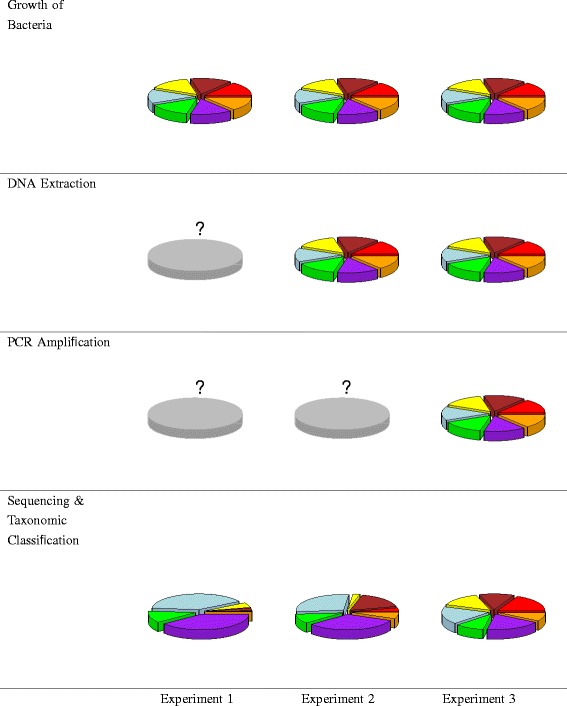
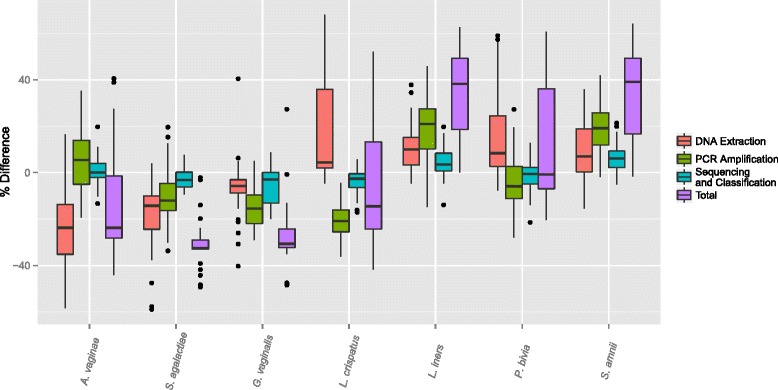
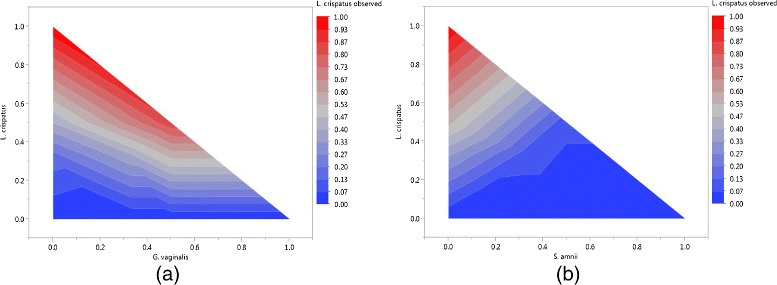
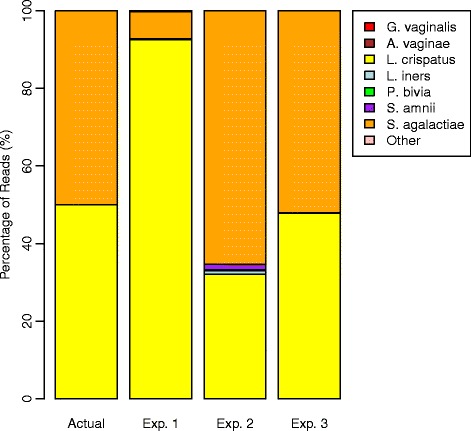
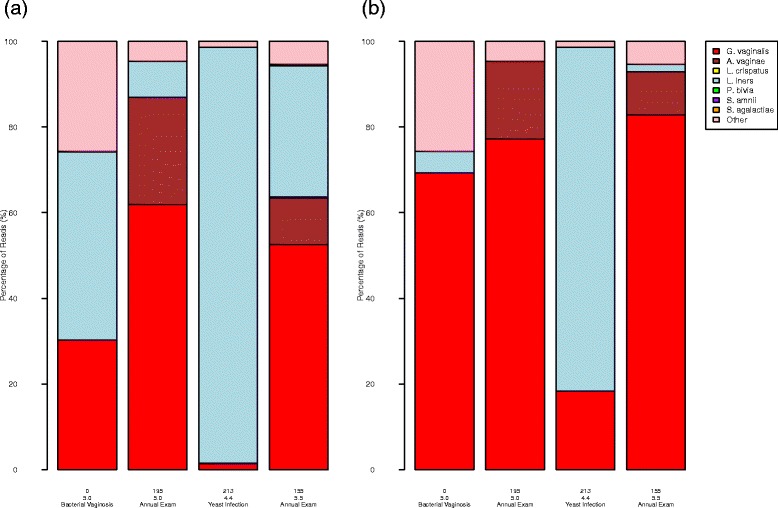
BACKGROUND: Characterizing microbial communities via next-generation sequencing is subject to a number of pitfalls involving sample processing. The observed community composition can be a severe distortion of the quantities of bacteria actually present in the microbiome, hampering analysis and threatening the validity of conclusions from metagenomic studies. We introduce an experimental protocol using mock communities for quantifying and characterizing bias introduced in the sample processing pipeline. We used 80 bacterial mock communities comprised of prescribed proportions of cells from seven vaginally-relevant bacterial strains to assess the bias introduced in the sample processing pipeline. We created two additional sets of 80 mock communities by mixing prescribed quantities of DNA and PCR product to quantify the relative contribution to bias of (1) DNA extraction, (2) PCR amplification, and (3) sequencing and taxonomic classification for particular choices of protocols for each step. We developed models to predict the "true" composition of environmental samples based on the observed proportions, and applied them to a set of clinical vaginal samples from a single subject during four visits. RESULTS: We observed that using different DNA extraction kits can produce dramatically different results but bias is introduced regardless of the choice of kit. We observed error rates from bias of over 85% in some samples, while technical variation was very low at less than 5% for most bacteria. The effects of DNA extraction and PCR amplification for our protocols were much larger than those due to sequencing and classification. The processing steps affected different bacteria in different ways, resulting in amplified and suppressed observed proportions of a community. When predictive models were applied to clinical samples from a subject, the predicted microbiome profiles were better reflections of the physiology and diagnosis of the subject at the visits than the observed community compositions. CONCLUSIONS: Bias in 16S studies due to DNA extraction and PCR amplification will continue to require attention despite further advances in sequencing technology. Analysis of mock communities can help assess bias and facilitate the interpretation of results from environmental samples.
Overview
The claims and statistics of this paper haven’t been checked yet.
Free: it reads the open-access text and checks the first 5 claims that cite a source we can check. Create a free account to check every claim.
Integrity signals
Registry
Cites
Statistics
Figures
Verification
Claims the paper makes
The claims and statistics of this paper haven’t been checked yet.
Free: it reads the open-access text and checks the first 5 claims that cite a source we can check. Create a free account to check every claim.
Claims other papers make about this one
Each is checked against this paper’s own text: does it say what the citing paper says it does?
The source backs part of the claim, not all of it — or backs it for a different population, condition or comparison.
In the citing paper
“Inter-study technical variability in microbiome measurements can sometimes, for example, outweigh biological effects6–9.”
From Assessment of variation in microbial community amplicon sequencing by the Microbiome Quality Control (MBQC) project consortium (2017) · cites this paper as [9]
Experimental — accuracy not yet measuredThe source backs part of the claim, not all of it — or backs it for a different population, condition or comparison.
In the citing paper
“Previous detailed investigations of specific variables in microbiome experiments such as DNA extraction method have, in common with the results we report, enriched for broad classes of Gram-negative rather than Gram-positive bacteria due to technical rather than biological variables9, 24, 27, 28.”
From Assessment of variation in microbial community amplicon sequencing by the Microbiome Quality Control (MBQC) project consortium (2017) · cites this paper as [9]
Experimental — accuracy not yet measuredThe cited source says what the claim attributes to it.
In the citing paper
“our results suggest that microbial physiology, nucleotide composition, protocol biochemistry, and computational assumptions can all interact to induce variation in microbiome assay results9.”
From Assessment of variation in microbial community amplicon sequencing by the Microbiome Quality Control (MBQC) project consortium (2017) · cites this paper as [9]
The cited source says what the claim attributes to it.
In the citing paper
“DNA extraction protocols are a known source of variation between microbial community characterization experiments7–9.”
From Assessment of variation in microbial community amplicon sequencing by the Microbiome Quality Control (MBQC) project consortium (2017) · cites this paper as [9]
In the citing paper
“High-quality evidence that clinical metagenomic assays are effective in guiding patient management will require protocols that minimize potential assay and patient selection bias and compare relevant health outcomes using data sets generated from large patient cohorts119,120.”
From Clinical metagenomics (2019) · cites this paper as [120]
Self-check
Percentages, sums and reported differences re-computed from the paper’s own numbers.
The self-check needs the paper’s full text.
Citations
Cites
An Introduction to the Bootstrap
Efron, B., & Tibshirani, R. J. (1994) · doi:10.1201/9780429246593 · Cited by 40,500
Naïve Bayesian Classifier for Rapid Assignment of rRNA Sequences into the New Bacterial Taxonomy
Wang, Q., Garrity, G. M., Tiedje, J. M., & Cole, J. R. (2007) · Applied and Environmental Microbiology · doi:10.1128/aem.00062-07 · Cited by 19,885 · cited 2×
“Taxonomic classification was performed using the RDP classifier [32] (see Methods).”
MethodSchloss, P. D., Westcott, S. L., Ryabin, T., Hall, J. R., Hartmann, M., Hollister, E. B., Lesniewski, R. A., Oakley, B. B., Parks, D. H., Robinson, C. J., et al. (2009) · Applied and Environmental Microbiology · doi:10.1128/aem.01541-09 · Cited by 19,549 · cited 1×
“Many sources of bias have been identified in 16S rRNA studies using NGS including PCR amplification [4-11], DNA extraction protocol [5,12,13], sequencing artifacts [8,14-18], DNA copy number [19], sampling depth [7,20,21], and primer design [22-25].”
BackgroundClassification and Regression by randomForest
Liaw, A. I., & Wiener, M. C. (2007) · Cited by 18,594
ggplot2: Elegant Graphics for Data Analysis
Wickham, H. (2009) · doi:10.1007/978-0-387-98141-3 · Cited by 14,447
Structure, function and diversity of the healthy human microbiome
The Human Microbiome Project Consortium (2012) · Nature · doi:10.1038/nature11234 · Cited by 11,726
Vaginal microbiome of reproductive-age women
Ravel, J., Gajer, P., Abdo, Z., Schneider, G. M., Koenig, S. S. K., McCulle, S. L., Karlebach, S., Gorle, R., Russell, J., Tacket, C. O., et al. (2011) · Proceedings of the National Academy of Sciences · doi:10.1073/pnas.1002611107 · Cited by 4,254 · cited 1×
“Because of the low diversity, vaginal samples are often classified by the predominant bacterium into community states or types [40].”
BackgroundLauber, C. L., Hamady, M., Knight, R., & Fierer, N. (2009) · Applied and Environmental Microbiology · doi:10.1128/aem.00335-09 · Cited by 4,063 · cited 1×
“Many sources of bias have been identified in 16S rRNA studies using NGS including PCR amplification [4-11], DNA extraction protocol [5,12,13], sequencing artifacts [8,14-18], DNA copy number [19], sampling depth [7,20,21], and primer design [22-25].”
BackgroundThe interaction of TIGIT with PVR and PVRL2 inhibits human NK cell cytotoxicity
Stanietsky, N., Simic, H., Arapovic, J., Toporik, A., Levy, O., Novik, A., Levine, Z., Beiman, M., Dassa, L., Achdout, H., et al. (2009) · Proceedings of the National Academy of Sciences · doi:10.1073/pnas.0903474106 · Cited by 3,524
Chimeric 16S rRNA sequence formation and detection in Sanger and 454-pyrosequenced PCR amplicons
Haas, B. J., Gevers, D., Earl, A. M., Feldgarden, M., Ward, D. V., Giannoukos, G., Ciulla, D., Tabbaa, D., Highlander, S. K., Sodergren, E., et al. (2011) · Genome Research · doi:10.1101/gr.112730.110 · Cited by 3,473 · cited 2×
“Many sources of bias have been identified in 16S rRNA studies using NGS including PCR amplification [4-11], DNA extraction protocol [5,12,13], sequencing artifacts [8,14-18], DNA copy number [19], sampling depth [7,20,21], and primer design [22-25].”
BackgroundMethod
Cited by
Items 301–400 of 555
Priluck, A., Ramulu, P. Y., Dosto, N., Quigley, H. A., & Abraham, A. G. (2023) · Translational Vision Science & Technology · doi:10.1167/tvst.12.2.32 · Cited by 11
Guidelines for microbiome studies in renal physiology
Muralitharan, R. R., Snelson, M., Méric, G., Coughlan, M. T., & Marques, F. Z. (2023) · American Journal of Physiology-Renal Physiology · doi:10.1152/ajprenal.00072.2023 · Cited by 12
Kim, H. H., Basak, B., Lee, D.-Y., Chung, W. J., Chang, S. W., Kwak, M., Kim, S. H., Hwang, J. K., Keum, J., Park, H., et al. (2023) · Renewable and Sustainable Energy Reviews · doi:10.1016/j.rser.2023.113685 · Cited by 12
Mancabelli, L., Milani, C., Anzalone, R., Alessandri, G., Lugli, G. A., Tarracchini, C., Fontana, F., Turroni, F., & Ventura, M. (2021) · Frontiers in Microbiology · doi:10.3389/fmicb.2021.749373 · Cited by 12
Metagenomic Analysis of Low-Temperature Environments
Aliyu, H., Maayer, P. D., Sjöling, S., & Cowan, D. A. (2017) · Springer eBooks · doi:10.1007/978-3-319-57057-0_16 · Cited by 11
A Metataxonomic Tool to Investigate the Diversity of Treponema
Hallmaier–Wacker, L. K., Lüert, S., Gronow, S., Spröer, C., Overmann, J., Buller, N., Vaughan‐Higgins, R., & Knauf, S. (2019) · Frontiers in Microbiology · doi:10.3389/fmicb.2019.02094 · Cited by 12
Development of a robust protocol for the characterization of the pulmonary microbiota
Dumont-Leblond, N., Veillette, M., Racine, C., Joubert, P., & Duchaine, C. (2021) · Communications Biology · doi:10.1038/s42003-021-01690-5 · Cited by 11
Williams, A. L. (2024) · FEMS Microbiology Ecology · doi:10.1093/femsec/fiae058 · Cited by 12
Group B Streptococcus and the vaginal microbiome among pregnant women: a systematic review
Lim, S., Rajagopal, S., Jeong, Y. R., Nzegwu, D., & Wright, M. L. (2021) · PeerJ · doi:10.7717/peerj.11437 · Cited by 10
Shu, H., Zhao, L., Jia, Y., Liu, F., Chen, J., Chang, C., Jin, T., Yang, J., & Shu, W. (2024) · Environmental Science & Technology · doi:10.1021/acs.est.3c11096 · Cited by 10
Mengis, T., Zajac, N., Bernhard, L., Heggli, I., Herger, N., Deván, J., Marcus, R. P., Brunner, F., Laux, C. J., Farshad, M., et al. (2024) · JOR Spine · doi:10.1002/jsp2.1330 · Cited by 10
“25,26 Therefore, we suggest that a harmonized protocol for disc microbiome analysis should encompass bioinformatic analysis and protocols to isolate bacterial DNA from disc tissue.”
BackgroundChapter 1 Molecular Community Ecology of Arbuscular Mycorrhizal Fungi
Taylor, J. D., Helgason, T., & Öpik, M. (2017) · Mycology · doi:10.1201/9781315119496-2 · Cited by 15
Vaz, A. B. M., Fonseca, P. L. C., Silva, F. F., Quintanilha‐Peixoto, G., Sampedro, I., Siles, J. A., do Carmo, A. O., Kato, R. B., Azevedo, V., Badotti, F., et al. (2020) · PeerJ · doi:10.7717/peerj.10487 · Cited by 10
“Although amplicon metagenomics is a large-scale, rapid, and independent of culturing and/or direct observation, as any method, there may also be biases, such as in the initial amplicon library preparation, differential primer annealing, PCR and sequencing artifacts, and contig assembly (Brooks et al., 2015; Nilsson et…”
Evaluation of 96‐well high‐throughput DNA extraction methods for 16S rRNA gene metabarcoding
Chapuis, M., Benoit, L., & Galan, M. (2023) · Molecular Ecology Resources · doi:10.1111/1755-0998.13812 · Cited by 10
“The efficiency of the cell lysis step in the DNA extraction protocol is known to have among the largest impact on the apparent abundance of taxa in bacterial communities (Brooks et al., 2015; Sinha et al., 2017).”
BackgroundOlmstead, A. D., Montoya, V., Chui, C. K. S., Dong, W. W. Y., Joy, J. B., Tai, V., Poon, A. F. Y., Nguyen, T., Brumme, C. J., Martinello, M., et al. (2019) · Infection Genetics and Evolution · doi:10.1016/j.meegid.2019.01.016 · Cited by 12
Molecular techniques and their limitations shape our view of the holobiont
Cooke, I., Mead, O., Whalen, C., Boote, C., Moya, A., Ying, H., Robbins, S. J., Strugnell, J. M., Darling, A. E., Miller, D. J., et al. (2019) · Zoology · doi:10.1016/j.zool.2019.125695 · Cited by 11
“, 2013), target region, GC content, and input DNA concentration (Kennedy et al., 2014; Brooks et al., 2015; Laursen et al., 2017; Rintala et al., 2017).”
BackgroundOgai, K., Shibata, K., Takahashi, N., Ogura, K., Okamoto, S., & Sugama, J. (2021) · BMC Microbiology · doi:10.1186/s12866-021-02122-4 · Cited by 13
“reported that the number of PCR cycles could slightly affect the results of the 16S rRNA gene sequence data [27].”
Sé, A., Abramova, N. D., Gogoleva, N. E., Gusev, O., Mitichkina, T. S., Novikov, I. A., Суббот, А. М., & Shagimardanova, E. I. (2020) · Russian Annals of Ophthalmology · doi:10.17116/oftalma20201360313 · Cited by 10
Informed development of a multi‐species biofilm in chronic obstructive pulmonary disease
Short, B., Delaney, C., Johnston, W., Litherland, G. J., Lockhart, J. C., Williams, C., Mackay, W. G., & Ramage, G. (2024) · Apmis · doi:10.1111/apm.13386 · Cited by 9
“Although this alleviated some study-specific effects, some biases would still remain such as the use of different DNA extraction methods can select for different organisms due to different cell lysis methods [43] and the targeting of different 16S regions can influence the outcomes of sequencing runs [44].”
BackgroundManter, D. K., Reardon, C. L., Ashworth, A. J., Ibekwe, A. M., Lehman, R. M., Maul, J. E., Miller, D. N., Creed, T., Ewing, P. M., Park, S., et al. (2024) · Communications Biology · doi:10.1038/s42003-024-06594-8 · Cited by 9
“Early steps in DNA extraction and lysis procedures affect the downstream results such as recovered DNA concentrations 8 – 10 , composition 7,8,11 – 13 , and diversity 7,14 .”
BackgroundInfluentialGeurkink, B., Doddema, S., de Vries, H., Euverink, G. J. W., & Croese, E. (2016) · NACE CORROSION Conference · doi:10.5006/c2016-07764 · Cited by 9
Gaur, M., Vasudeva, A., Singh, A., Sharma, V., Khurana, H., Negi, R. K., Lee, J.-K., Kalia, V. C., Misra, R., & Singh, Y. P. (2019) · Indian Journal of Microbiology · doi:10.1007/s12088-019-00832-y · Cited by 10
Clausen, D. S., & Willis, A. D. (2026) · Biostatistics · doi:10.1093/biostatistics/kxag036 · Cited by 10
“Finally, we acknowledge that despite the excellent performance of our model on the data of Brooks et al. (2015), our model does not fully capture sample cross-contamination known as index-hopping (Hornung et al., 2019), which likely affects this data.”
InfluentialWang, Y., Li, X., & Gao, F. (2025) · Frontiers in Immunology · doi:10.3389/fimmu.2025.1549865 · Cited by 9
Microbial consortia in mine water bioremediation: principles, design and practical applications
Matu, A., Valverde, Á., Cason, E. D., Gómez-Árias, A., Maleke, M., & Castillo, J. (2025) · Water Research · doi:10.1016/j.watres.2025.124956 · Cited by 8
Marine Microbial Communities of North and South Shelves of Iceland
Jégousse, C., Vannier, P., Groben, R., Guðmundsson, K., & Marteinsson, V. (2022) · Frontiers in Marine Science · doi:10.3389/fmars.2022.795835 · Cited by 9
The impact of cefuroxime prophylaxis on human intestinal microbiota in surgical oncological patients
Văcărean-Trandafir, I.-C., Amărandi, R.-M., Ivanov, I. C., Iacob, Ș., Mușină, A.-M., Bărgăoanu, E.-R., & Dimofte, M. (2023) · Frontiers in Microbiomes · doi:10.3389/frmbi.2022.1092771 · Cited by 9
“The adequate lysis of heterogeneous communities of microbial cells (both gram-positive and gramnegative) without inducing genome damage is another major challenge (Virgin and Todd, 2011; Human Microbiome Project, 2012; Brooks et al., 2015).”
BackgroundUmbach, A. K., Fernando, C., Hill, J. E., & Neufeld, J. D. (2023) · ISME Communications · doi:10.1038/s43705-023-00276-y · Cited by 8
“Although different genemarkers will be subject to various biases such as gene copy number [43, 44], nucleotide GC content [45, 46], the region targeted and primers used for amplification [47, 48] and certain bacterial proportions [49], the primary cause for dissimilarity in taxonomic profiles is the separate reference…”
BackgroundImpact of DNA extraction methods on 16S rRNA-based profiling of bacterial communities in cheese
Markusková, B., Minarovičová, J., Véghová, A., Drahovská, H., & Kaclíková, E. (2021) · Journal of Microbiological Methods · doi:10.1016/j.mimet.2021.106210 · Cited by 8
Heil, J. A., Wolock, C. J., Pierce, N. E., Pringle, A., & Bittleston, L. S. (2022) · Environmental Microbiology · doi:10.1111/1462-2920.15993 · Cited by 8
Memili, A., Lulla, A., Liu, H., Shikany, J. M., Jacobs, D. R., Langsetmo, L., North, K. E., Jones, C. D., Launer, L. J., & Meyer, K. A. (2022) · Journal of Nutrition · doi:10.1016/j.tjnut.2022.12.019 · Cited by 9
Culturomics in Unraveling the Upper Female Reproductive Tract Microbiota
Vanstokstraeten, R., Demuyser, T., Piérard, D., Wybo, I., Blockeel, C., & Mackens, S. (2023) · Seminars in Reproductive Medicine · doi:10.1055/s-0043-1777758 · Cited by 8
“16,17 Salter et al illustrated this sequencing bias in a study where they diluted a pure Salmonella bongori culture and subjected it to sequencing.”
BackgroundA Log-Linear Model for Inference on Bias in Microbiome Studies
Zhao, N., & Satten, G. A. (2021) · Frontiers in probability and the statistical sciences · doi:10.1007/978-3-030-73351-3_9 · Cited by 10
Wang, X., Yu, Z., Shen, G., Cheng, H., & Tao, S. (2022) · Environmental Science and Pollution Research · doi:10.1007/s11356-022-22283-7 · Cited by 8
Staebe, K., Meiklejohn, I., Singh, S. M., & Matcher, G. F. (2019) · Polar Biology · doi:10.1007/s00300-019-02532-1 · Cited by 8
Wiedmann, M., & Carroll, L. M. (2018) · Elsevier eBooks · doi:10.1016/b978-0-08-100596-5.21792-7 · Cited by 10
Zhang, B., Brock, M., Arana, C., Dende, C., Hooper, L. V., & Raj, P. (2020) · bioRxiv (Cold Spring Harbor Laboratory) · doi:10.1101/2020.06.15.151753 · Cited by 11
Toto, F., Scanu, M., Gramegna, M., Putignani, L., & CHIERICO, F. D. (2025) · International Journal of Molecular Sciences · doi:10.3390/ijms26115226 · Cited by 7
“These factors, together with the use of different wet-lab protocols (e.g., DNA extraction methods and library preparation protocols), can then differently capture and represent microbial content, introducing bias into gut microbiota profiling [24–26].”
Choudhary, G., Kumari, S., Kumari, A., & Devi, S. (2024) · Brazilian Journal of Microbiology · doi:10.1007/s42770-024-01346-6 · Cited by 7
“The Qiagen DNeasy kits used are universal kits for the DNA extractions and used to avoid any potential biases [27 ].”
Yahara, H., Yanamoto, S., Takahashi, M., Hamada, Y., Asaka, T., Kitagawa, Y., Moridera, K., Noguchi, K., Maruoka, Y., & Yahara, K. (2024) · PLoS ONE · doi:10.1371/journal.pone.0302569 · Cited by 7
“Although 16S rRNA gene sequencing is widely used, it also has limitations, such as the introduction of biases from several sources, including PCR amplification, primer design, and sequencing artifacts [16].”
Butler, J. A., Morgan, S., Jones, L., Upton, M., & Besinis, A. (2024) · Nanotoxicology · doi:10.1080/17435390.2024.2379809 · Cited by 7
“…bias) leading to differences in the contribution of bacteria from different genera to the ‘pool’ of DNa available for sequencing (salonen et al. 2010; Brooks et al. 2015; gill et al. 2016). it is important for researchers to define the optimal gene regions to amplify and sequence, as this…”
Development of a clinical metagenomics workflow for the diagnosis of wound infections
Halford, C., Le-Viet, T., Edge, K., Russell, P., Moore, N. A., Trim, F., Moragues-Solanas, L., Lukaszewski, R. A., Weller, S. A., & Gilmour, M. W. (2024) · BMC Medical Genomics · doi:10.1186/s12920-024-02044-w · Cited by 8
Pyakurel, S., Caddey, B., Dias, A., Buck, J. D., Morck, D. W., & Orsel, K. (2025) · BMC Microbiology · doi:10.1186/s12866-025-03869-w · Cited by 7
Perspectives for Consideration in the Development of Microbial Cell Reference Materials
Allen‐Vercoe, E., Carmical, J. R., Forry, S. P., Gail, M. H., & Sinha, R. (2019) · Cancer Epidemiology Biomarkers & Prevention · doi:10.1158/1055-9965.epi-19-0557 · Cited by 7
“Some studies of mock communities with known composition have been used to demonstrate biases in observed relative abundances that can occur at any stage in the process from DNA extraction, toPCRamplification, tobioinformatics (9, 10).”
BackgroundVera-Wolf, P., Cárdenas, J. P., Morton, A., Norambuena, T., Torres, R., León, L. E., Bik, E. M., Ugalde, J. A., Almonacid, D. E., Richman, J., et al. (2018) · bioRxiv (Cold Spring Harbor Laboratory) · doi:10.1101/322677 · Cited by 9
“…K, and other additives vary widely between suppliers and laboratories and have all been shown to have an influence on the microbiome analysis (Kennedy et al. 2014; Brooks et al. 2015; de la Cuesta-Zuluaga and Escobar 2016; Gerasimidis et al. 2016; Hiergeist et al. 2016; Knudsen et al. 2016).”
BackgroundInfluentialChau, K., Matlock, W., Constantinides, B., Lipworth, S., Newbold, L. K., Tipper, H. J., Goodall, T., Brett, H., Hughes, J., Crook, D., et al. (2022) · bioRxiv (Cold Spring Harbor Laboratory) · doi:10.1101/2022.05.12.491637 · Cited by 8
Fungi of the human eye: Culture to mycobiome
Shivaji, S., Jayasudha, R., Prashanthi, G. S., Arunasri, K., & Das, T. (2022) · Experimental Eye Research · doi:10.1016/j.exer.2022.108968 · Cited by 7
Amorín, R., Conesa, A., & Foster, J. S. (2023) · Frontiers in Microbiology · doi:10.3389/fmicb.2023.1174685 · Cited by 6
GroEL-Proteotyping of Bacterial Communities Using Tandem Mass Spectrometry
Klaes, S., Madan, S., Deobald, D., Cooper, M., & Adrian, L. (2023) · International Journal of Molecular Sciences · doi:10.3390/ijms242115692 · Cited by 6
Phylogenetic Heatmaps Highlight Composition Biases in Sequenced Reads
Choudhari, S., & Grigoriev, A. (2017) · Microorganisms · doi:10.3390/microorganisms5010004 · Cited by 6
“and PCR amplification protocols impose more bias than sequencing and taxonomic classification in 16S analysis [6].”
MethodKatzinger, J. J. (2020) · Elsevier eBooks · doi:10.1016/b978-0-323-43044-9.00028-5 · Cited by 9
O’Dea, C., Huerlimann, R., Masters, N. M., Kuballa, A., Veal, C. J., Fisher, P. L., Stratton, H. M., & Katouli, M. (2021) · Microorganisms · doi:10.3390/microorganisms9081721 · Cited by 7
“PCR based confirmation steps would hamper the effectiveness and affordability of attempts to confirm HTS analysis accuracy [56].”
BackgroundNew techniques to characterise the vaginal microbiome in pregnancy
Mendz, G. L., Kaakoush, N. O., & Quinlivan, J. A. (2016) · AIMS Microbiology · doi:10.3934/microbiol.2016.1.55 · Cited by 7
“The work concluded that due attention should be given to sample processing notwithstanding advances in sequencing technology [33].”
The influence of primer choice on archaeal phylogenetic analyses based on 16S rRNA gene PCR
Belmok, A., Rodrigues-Oliveira, T., Lopes, F. Á. C., Krüger, R. H., & Kyaw, C. M. (2023) · Brazilian Journal of Biology · doi:10.1590/1519-6984.247529 · Cited by 7
“Furthermore, despite the great advances in DNA sequencing techniques, biases on 16S rRNA gene-based studies is a topic that still requires attention (Klindworth et al., 2013; Kennedy et al., 2014; Brooks et al., 2015).”
BackgroundRamírez‐Delgado, D., Cicala, F., González-Sánchez, R., Ávalos‐Téllez, R., Solana‐Arellano, E., & Licea-Navarro, A. F. (2022) · PeerJ · doi:10.7717/peerj.13235 · Cited by 7
“The detection of certain bacteria may also be biased due to the use of different primer pairs (Brooks et al., 2015).”
BackgroundInfluentialGraham, A. S., Patel, F., Little, F., van der Kouwe, A. J. W., Kaba, M., & Holmes, M. (2025) · Frontiers in Bioinformatics · doi:10.3389/fbinf.2025.1484113 · Cited by 5
Graeber, E., Tysha, A., Nisar, A., Wind, D., Mendling, W., Finzer, P., & Dilthey, A. (2025) · BMC Microbiology · doi:10.1186/s12866-025-04236-5 · Cited by 5
“It is well-known, however, that the choice of target variable regions can impact measured community compositions [25–27]; in general, amplification-based measures of community composition cannot be assumed to represent true biological abundances of different organisms [28, 29].”
Weber, C., Wind, D., Petzsch, P., Supprian, T., Dilthey, A., Christl, J., & Finzer, P. (2026) · Alzheimer s Research & Therapy · doi:10.1186/s13195-025-01941-1 · Cited by 5
“…16S full-length and metagenomic sequencing, these methods theoretically complement each other: The amplification-based meth-ods are prone to overrepresentation [41, 42, 81, 82] while the metagenomic sequencing could reflect the exact ratios yet is at risk of losing less abundant taxa [43, 44].”
McGovern, C. A., Norwich, A. R., Thomas, A. L., Hamsher, S. E., Biddanda, B. A., Weinke, A. D., & Casamatta, D. A. (2023) · Journal of Phycology · doi:10.1111/jpy.13337 · Cited by 5
“The bias we are describing occurs when researchers select which ITS rDNA region structures to fold and compare based on the trees generated via 16S rDNA gene data (Brooks et al., 2015).”
MethodDíaz-García, L., Chuvochina, M. S., Feuerriegel, G., Bunk, B., Spröer, C., Streit, W. R., Rodriguez‐R, L. M., Overmann, J., & Jiménez, D. J. (2023) · Systematic and Applied Microbiology · doi:10.1016/j.syapm.2023.126485 · Cited by 5
Stepping towards pollen DNA metabarcoding: A breakthrough in forensic sciences
Wasti, Q. Z., Sabar, M. F., Farooq, A., & Khan, M. U. (2023) · Forensic Science Medicine and Pathology · doi:10.1007/s12024-023-00770-8 · Cited by 5
“Quantitative investigations of metabarcoding of microbiome DNA have revealed a bias towards taxon specificity, depending on the DNA isolation technology used [72], and similar biases may occur with pollen.”
Role of Human Microbiome in Non-Communicable Diseases: A Public Health Perspective
Tufael, & Ullah, M. S. (2024) · Clinical Epidemiology & Public Health · doi:10.25163/health.2110279 · Cited by 5
Ma, Z. S. (2020) · Frontiers in Bioengineering and Biotechnology · doi:10.3389/fbioe.2020.00372 · Cited by 5
“Remedies include mock microbial communities (Brooks et al., 2015), GCbias adjustment and filtration and normalization techniques (Chouvarine et al.”
MethodAn -omics Perspective on Marine Invertebrate Larvae
(2017) · Oxford University Press eBooks · doi:10.1093/oso/9780198786962.003.0019 · Cited by 6
Gnanasekaran, T., Sarathi, A., Fang, Q., Azarm, A., Geraldo, J. A., Nigro, E., & Arumugam, M. (2023) · mSystems · doi:10.1128/msystems.01249-22 · Cited by 5
“They also highlighted the well-known issue of contaminants in 16S rRNA profiling (29, 30).”
BackgroundBenčič, A., Toplak, N., Koren, S., Košir, A. B., Milavec, M., Tomič, V., Lužnik, D., & Dreo, T. (2024) · mSystems · doi:10.1128/msystems.00735-24 · Cited by 5
“These include sample collection, storage, DNA extraction, PCR amplification, library preparation, sequencing, and bioinformatic analysis (11, 12).”
16S rRNA-based taxonomy profiling in the metagenomics era
Bacci, G., Casbarra, L., & Ramazzotti, M. (2024) · Elsevier eBooks · doi:10.1016/b978-0-323-91631-8.00013-5 · Cited by 5
MSPminer: abundance-based reconstitution of microbial pan-genomes from shotgun meta-genomic dataPreprint
Oñate, F. P., Chatelier, E. L., Almeida, M., Cervino, A.-S. C. L., Gauthier, F., Magoulès, F., Ehrlich, S. D., & Pichaud, M. (2017) · bioRxiv (Cold Spring Harbor Laboratory) · doi:10.1101/173203 · Cited by 5
A Meta-Analysis of the 16S-rRNA Gut Microbiome Data in Honeybees ( Apis Mellifera )Preprint
Gkantiragas, A., & Gabrielli, J. (2021) · bioRxiv (Cold Spring Harbor Laboratory) · doi:10.1101/2021.12.18.473299 · Cited by 8
Ghosh, S., Smadi, M., & Bivins, A. W. (2025) · Water Research · doi:10.1016/j.watres.2025.124605 · Cited by 5
The role of the gut microbiome in antibiotic-driven antimicrobial resistance
Joshi, G., Rani, S., Bharti, D., Panda, N., Chavan, P., Mathpal, S., Ramaiah, S., & Anbarasu, A. (2026) · Frontiers in Microbiology · doi:10.3389/fmicb.2026.1856738 · Cited by 5
“For example, different DNA extraction protocols may produce markedly different microbial compositions, while amplification-associated biases exceeding 85% have been reported in certain samples (Brooks et al., 2015).”
Akile, C., Claas, E. C. J., & Boers, S. A. (2025) · Clinical Microbiology and Infection · doi:10.1016/j.cmi.2025.01.001 · Cited by 4
Scale reliant mixed effects models enhance microbiome data analysis
McGovern, K. C., & Silverman, J. D. (2026) · Microbiome · doi:10.1186/s40168-026-02377-x · Cited by 4
Santana-Pereira, A. L. R., & Liles, M. R. (2017) · Springer eBooks · doi:10.1007/978-3-319-61510-3_7 · Cited by 5
Zhu, D., Wu, F. C., Li, H., Wang, T., Bao, L., Ge, J., & Wang, H. (2022) · Molecular Ecology Resources · doi:10.1111/1755-0998.13700 · Cited by 4
“…of the 16S rRNA in microbes can correct bias of some HTS data well (Angly et al., 2014), the gene copy number differences between microbial species are still limited (range: 0.5– 10.5), which is not sufficient to describe the bias during metabarcoding (Angly et al., 2014; Brooks et al., 2015).”
BackgroundInfluentialGoudarzi, S. M., Arani, Y. S., Ali, A. A., Mohammadı, P., Ghorbanmehr, N., Modaresi, M., Movahed, M. G., & Ghazanfari, T. (2023) · Iranian Journal of Microbiology · doi:10.18502/ijm.v15i6.14135 · Cited by 4
“This result is probably due to the improper DNA extraction method in the lysis of bacteria having a thick cell wall such as staphylococci, which leads to the underestimation of their population in molecular techniques (32).”
MethodSymbiotic symphony: Understanding host-microbiota dialogues in a spatial context
Chatterjee, S., Leach, S. T., Lui, K., & Mishra, A. (2024) · Seminars in Cell and Developmental Biology · doi:10.1016/j.semcdb.2024.03.001 · Cited by 6
Jourdain, L., Rossi, P., Charpagne, A., Chevalier, E., Praz, V., Marquis, J., Weber, J., & Gu, W. (2026) · Molecular Ecology Resources · doi:10.1111/1755-0998.70138 · Cited by 3
What Can We Learn about the Bias of Microbiome Studies from Analyzing Data from Mock Communities?
Li, M., Tyx, R. E., Rivera, A. J., Zhao, N., & Satten, G. A. (2022) · Genes · doi:10.3390/genes13101758 · Cited by 3
“There is growing appreciation that biases can be introduced into analyses of metagenomic data [1], and that these biases can be introduced in every step of the experiment [2].”
BackgroundEffects of multi-resistant ScALDH21 transgenic cotton on soil microbial communities
Yang, Q., Wang, J., Zhang, D., Feng, H., Bozorov, T. A., Yang, H., & Zhang, D. (2023) · Frontiers in Microbiomes · doi:10.3389/frmbi.2023.1248384 · Cited by 3
The Gastric Microbiome of Four Malaysian Gastroduodenal Disease Patients
Khosravi, Y. (2017) · doi:10.36959/998/781 · Cited by 3
Poultry gut microbiota – composition and its role in health, immunity and production performance
SHIVAJYOTHI, J., & KRISHNA, S. V. (2020) · Indian Journal of Animal Health · doi:10.36062/ijah.59.2spl.2020.164-180 · Cited by 4
An Update on the Ocular Surface Bacterial Microbiota in Small Animals
Leis, M. L. (2023) · Veterinary Clinics of North America Small Animal Practice · doi:10.1016/j.cvsm.2022.10.004 · Cited by 3
Role of Computational Biology in Microbiome Research
Noor, F., Khurshid, M., Aslam, B., & Ashfaq, U. A. (2024) · Springer eBooks · doi:10.1007/978-981-97-3790-1_4 · Cited by 3
Method for quantitative assesment of gut microbiota: a comparative analysis of 16S NGS and qPCR
Zlobovskaya, O. A., Курносов, А. С., Ф., Ш. А., & Glazunova, E. (2024) · Bulletin of Russian State Medical University · doi:10.24075/brsmu.2024.047 · Cited by 3
Short Read Lengths Recover Ecological Patterns in 16S rRNA Gene Amplicon Data
Jurburg, S. D. (2025) · Molecular Ecology Resources · doi:10.1111/1755-0998.14102 · Cited by 3
“Each step of the sequencing data production process, from the sampling design in situ through choices made during amplification (Brooks et al. 2015; Schloss et al. 2011) and bioinformatics processing (Kang et al. 2021; Marizzoni et al. 2020; Prodan et al. 2020) affects the resulting microbial…”
Intelligent Caching in Dense Small-Cell Networks with Limited External Resources
Hu, B., Tanha, M., Sajjadi, D., & Pan, J. (2018) · Conference on Local Computer Networks · doi:10.1109/lcn.2018.8638236 · Cited by 3
Zhou, Z., Hu, S., Zhang, R., Ma, Y., Du, K., Sun, M., Zhang, H., Jiang, X., Tu, H., Wang, X., et al. (2021) · Food Bioscience · doi:10.1016/j.fbio.2021.101188 · Cited by 3
Markey, L., Qu, E. B., Mendall, C., Finzel, A., Materna, A. C., & Lieberman, T. D. (2025) · bioRxiv (Cold Spring Harbor Laboratory) · doi:10.1101/2025.06.24.661265 · Cited by 3
Fundamentals of soil characterization
Weindorf, D. C., & Martinez, V. A. (2025) · Elsevier eBooks · doi:10.1016/b978-0-443-29879-0.00009-5 · Cited by 4
Gut Mucosal Microbiome of Patients With Low-Grade Adenomatous Bowel Polyps
Welham, Z., Li, J., Tse, B. C. Y., Engel, A. F., & Molloy, M. P. (2025) · Gastro Hep Advances · doi:10.1016/j.gastha.2025.100687 · Cited by 2
Role of Human Microbiome in Development and Management of Head and Neck Squamous Cell Carcinoma
Palkovský, M., Modráčková, N., Bunešová, V., Liberko, M., Hlodáková, A., & Soumarová, R. (2025) · Cancers · doi:10.3390/cancers17132238 · Cited by 2
“Particularly, a large amount of evidence has proved that F. nucleatum is closely related to tumor development [191].”
Effects of Vacuum‐Heat‐Assisted Sample Desiccation on Microbiome Surveys
Louca, S., & Mullin, C. E. (2025) · Molecular Ecology Resources · doi:10.1111/1755-0998.70020 · Cited by 2
“Indeed, the latter is hard to determine, given the many other biases involved, notably at the DNA extraction and PCR stages (Brooks et al. 2015) and due to variable 16S rRNA gene copy numbers (Louca et al. 2018).”
A novel two-step metabarcoding approach improves soil microbiome biodiversity assessment
Musiałowski, M., Mierzwa–Hersztek, M., Gondek, K., & Dębiec-Andrzejewska, K. (2025) · Scientific Reports · doi:10.1038/s41598-025-18936-5 · Cited by 3
Microbiomes: Exploring their Potentials and Developing Strategies for Sustainable Legume Production
Nysanth, N. S., Haniya, K., Senthilkumar, M., Ramakrishnan, B., & Swarnalakshmi, K. (2025) · Springer eBooks · doi:10.1007/978-981-95-2294-1_10 · Cited by 3
A mathematical framework to correct for compositionality in microbiome data sets
Forry, S. P., Servetas, S. L., Kralj, J. G., Hunter, M. E., Dootz, J. N., & Jackson, S. A. (2026) · Applied and Environmental Microbiology · doi:10.1128/aem.01126-25 · Cited by 2
“In 2015, Brooks et al. systematically generated a series of 80 combinations of seven specific bacterial strains commonly associated with the vaginal microbiome (26).”
InfluentialMason, C. J., Weaver, M. L., Kissinger, K. R., Johnson, M. A., Copeland, D. C., Anderson, K. E., & Geib, S. M. (2026) · mSphere · doi:10.1128/msphere.00295-26 · Cited by 2
Cicala, F., Ramírez‐Delgado, D., Gómez-Reyes, R., Martínez‐Porchas, M., Rojas-Vargas, J., Pardo‐López, L., & Licea-Navarro, A. F. (2022) · Scientific Reports · doi:10.1038/s41598-022-18903-4 · Cited by 2
Impact of Experimental Bias on Compositional Analysis of Microbiome Data
Hu, Y., Satten, G. A., & Hu, Y.-J. (2023) · Genes · doi:10.3390/genes14091777 · Cited by 2
“In fact, Zhao and Satten [6] investigated the existence of interaction biases by expanding the MWC model to include interaction terms and then fitting this generalized model to mock community samples [7].”
BackgroundThe Cellular Microbiome of Visceral Organs: An Inherent Inhabitant of Parenchymal Cells
Sun, X., Zhang, H., Zhang, X., gao, W., Zhou, C., Kou, X. X., Deng, J.-X., & Zhang, J. G. (2024) · Microorganisms · doi:10.3390/microorganisms12071333 · Cited by 2
Metadata
- Authors
- Vaginal Microbiome Consortium (additional members), Brooks, J. P., Edwards, D. J., Harwich, M. D., Rivera, M. C., Fettweis, J. M., Serrano, M. G., Reris, R. A., Sheth, N. U., Huang, B., Girerd, P., Strauss, J. F., Jefferson, K. K., & Buck, G. A.
- Affiliations
- Virginia Commonwealth University (US)
- Corresponding author
- Brooks, J Paul
- ORCID
- Venue
- BMC Microbiology
- Published
- 2015-03-21
- Volume
- 15
- Issue
- 1
- Pages
- 66-66
- ISSN
- 1471-2180 (ISSN-L)
- PMC
- PMC4433096
- OpenAlex
- W2113925621
- Cited by
- 528
- References
- 52
- Citations by year
- 2026: 27 · 2025: 39 · 2024: 28 · 2023: 47 · 2022: 51 · 2021: 73 · 2020: 66 · 2019: 51 · 2018: 57 · 2017: 49 · 2016: 37 · 2015: 3
- FWCI
- 21.14
- Type
- journal article
- Language
- en
- Open access
- gold
- doi.org
- Licence
- cc-by
- creativecommons.org/licenses/by/2.0 (tdm)
- Locations
- BMC Microbiology (publishedVersion, cc-by)
- PubMed Central (publishedVersion, cc-by)
- PubMed (publishedVersion)
- VCU Scholars Compass (Virginia Commonwealth University) (submittedVersion)
- Funders
- National Science Foundation (1127914)
- Thomas F. and Kate Miller Jeffress Memorial Trust
- National Institutes of Health
- National Institute of Allergy and Infectious Diseases (UH3AI08326-01)
- Division of Mathematical Sciences (1127914, DMS 1127914)
- National Institute on Minority Health and Health Disparities (P60MD002256)
- Eunice Kennedy Shriver National Institute of Child Health and Human Development (U54HD080784)
- Topics
- Life Sciences › Biochemistry, Genetics and Molecular Biology › Molecular Biology › Genomics and Phylogenetic Studies
- Life Sciences › Biochemistry, Genetics and Molecular Biology › Molecular Biology › Gut microbiota and health
- Physical Sciences › Environmental Science › Ecology › Microbial Community Ecology and Physiology
- Keywords
- 16S rRNA gene sequencing, mock microbial community, DNA extraction bias, PCR bias, vaginal microbiota, bias quantification, DNA extraction kit comparison
- MeSH terms
- Bacteria, DNA, Bacterial, Female, Humans, Models, Biological, Phylogeny, RNA, Ribosomal, 16S, Specimen Handling, Vagina, Bias, Polymerase Chain Reaction, Artifacts, Genes, rRNA, Metagenomics, Microbial Consortia, High-Throughput Nucleotide Sequencing, Microbiota
About these checks
Registry, retraction, Cites and statistics results are computed, not judged, with one exception: a printed reference that no index lists is read once by a model before it counts as a citation error. Claims are extracted by a model and kept only when their quote appears verbatim in the text; each cited source is then checked, with a model’s help, for whether it says what the claim relies on. Those verdicts can be wrong — read the claim’s quote and the cited source before relying on one.
Statistics and arithmetic are recomputed, not judged.
Confidence bands are shown only for fields calibrated on our annotated test set. None is calibrated yet, so no band is shown.
What counts as a claim ›How we measure confidence ›How we check this ›
Are you an author, or do you see a problem with this page? Request a review
Data sources
Bibliographic data: Semantic Scholar, OpenAlex, Crossref.
Contains information from the Semantic Scholar Academic Graph Datasets, made available under the ODC Attribution License (ODC-BY 1.0).
Semantic Scholar’s data is described in: Kinney, R., et al. (2023). The Semantic Scholar Open Data Platform. arXiv:2301.10140.
