

The truth about metagenomics: quantifying and counteracting bias in 16S rRNA studies
Open accessThe DOI matches its Crossref record; 50 of the 52 references it cites were found in a registry or an index.
Abstract
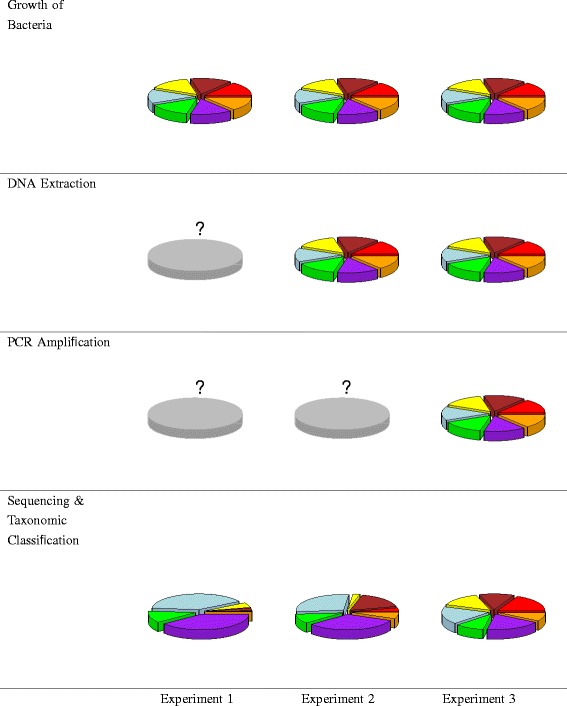
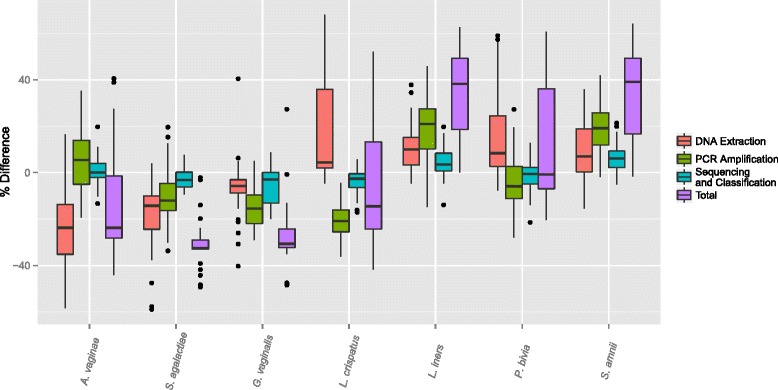
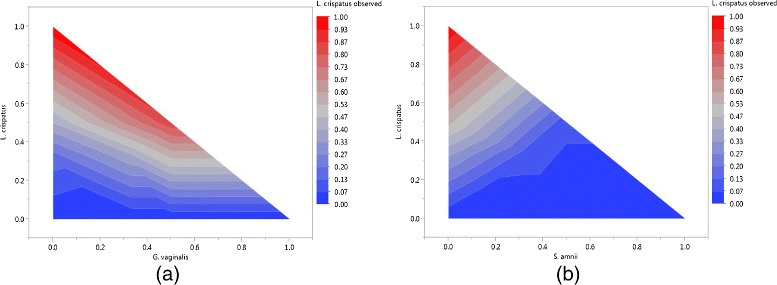
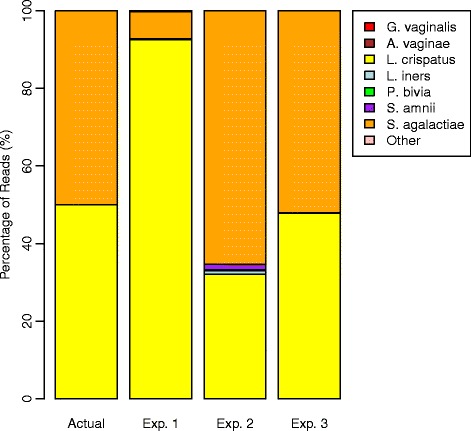
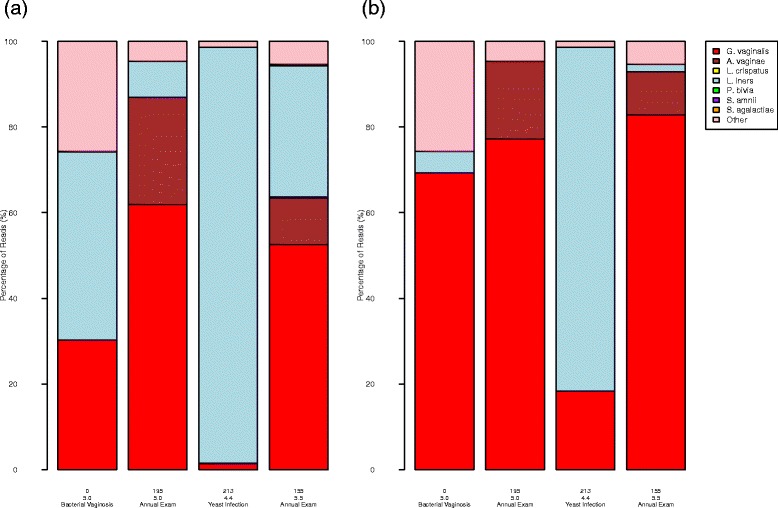
BACKGROUND: Characterizing microbial communities via next-generation sequencing is subject to a number of pitfalls involving sample processing. The observed community composition can be a severe distortion of the quantities of bacteria actually present in the microbiome, hampering analysis and threatening the validity of conclusions from metagenomic studies. We introduce an experimental protocol using mock communities for quantifying and characterizing bias introduced in the sample processing pipeline. We used 80 bacterial mock communities comprised of prescribed proportions of cells from seven vaginally-relevant bacterial strains to assess the bias introduced in the sample processing pipeline. We created two additional sets of 80 mock communities by mixing prescribed quantities of DNA and PCR product to quantify the relative contribution to bias of (1) DNA extraction, (2) PCR amplification, and (3) sequencing and taxonomic classification for particular choices of protocols for each step. We developed models to predict the "true" composition of environmental samples based on the observed proportions, and applied them to a set of clinical vaginal samples from a single subject during four visits. RESULTS: We observed that using different DNA extraction kits can produce dramatically different results but bias is introduced regardless of the choice of kit. We observed error rates from bias of over 85% in some samples, while technical variation was very low at less than 5% for most bacteria. The effects of DNA extraction and PCR amplification for our protocols were much larger than those due to sequencing and classification. The processing steps affected different bacteria in different ways, resulting in amplified and suppressed observed proportions of a community. When predictive models were applied to clinical samples from a subject, the predicted microbiome profiles were better reflections of the physiology and diagnosis of the subject at the visits than the observed community compositions. CONCLUSIONS: Bias in 16S studies due to DNA extraction and PCR amplification will continue to require attention despite further advances in sequencing technology. Analysis of mock communities can help assess bias and facilitate the interpretation of results from environmental samples.
Overview
The claims and statistics of this paper haven’t been checked yet.
Free: it reads the open-access text and checks the first 5 claims that cite a source we can check. Create a free account to check every claim.
Integrity signals
Registry
Cites
Statistics
Figures
Verification
Claims the paper makes
The claims and statistics of this paper haven’t been checked yet.
Free: it reads the open-access text and checks the first 5 claims that cite a source we can check. Create a free account to check every claim.
Claims other papers make about this one
Each is checked against this paper’s own text: does it say what the citing paper says it does?
The source backs part of the claim, not all of it — or backs it for a different population, condition or comparison.
In the citing paper
“Inter-study technical variability in microbiome measurements can sometimes, for example, outweigh biological effects6–9.”
From Assessment of variation in microbial community amplicon sequencing by the Microbiome Quality Control (MBQC) project consortium (2017) · cites this paper as [9]
Experimental — accuracy not yet measuredThe source backs part of the claim, not all of it — or backs it for a different population, condition or comparison.
In the citing paper
“Previous detailed investigations of specific variables in microbiome experiments such as DNA extraction method have, in common with the results we report, enriched for broad classes of Gram-negative rather than Gram-positive bacteria due to technical rather than biological variables9, 24, 27, 28.”
From Assessment of variation in microbial community amplicon sequencing by the Microbiome Quality Control (MBQC) project consortium (2017) · cites this paper as [9]
Experimental — accuracy not yet measuredThe cited source says what the claim attributes to it.
In the citing paper
“our results suggest that microbial physiology, nucleotide composition, protocol biochemistry, and computational assumptions can all interact to induce variation in microbiome assay results9.”
From Assessment of variation in microbial community amplicon sequencing by the Microbiome Quality Control (MBQC) project consortium (2017) · cites this paper as [9]
The cited source says what the claim attributes to it.
In the citing paper
“DNA extraction protocols are a known source of variation between microbial community characterization experiments7–9.”
From Assessment of variation in microbial community amplicon sequencing by the Microbiome Quality Control (MBQC) project consortium (2017) · cites this paper as [9]
In the citing paper
“High-quality evidence that clinical metagenomic assays are effective in guiding patient management will require protocols that minimize potential assay and patient selection bias and compare relevant health outcomes using data sets generated from large patient cohorts119,120.”
From Clinical metagenomics (2019) · cites this paper as [120]
Self-check
Percentages, sums and reported differences re-computed from the paper’s own numbers.
The self-check needs the paper’s full text.
Citations
Cites
An Introduction to the Bootstrap
Efron, B., & Tibshirani, R. J. (1994) · doi:10.1201/9780429246593 · Cited by 40,500
Naïve Bayesian Classifier for Rapid Assignment of rRNA Sequences into the New Bacterial Taxonomy
Wang, Q., Garrity, G. M., Tiedje, J. M., & Cole, J. R. (2007) · Applied and Environmental Microbiology · doi:10.1128/aem.00062-07 · Cited by 19,885 · cited 2×
“Taxonomic classification was performed using the RDP classifier [32] (see Methods).”
MethodSchloss, P. D., Westcott, S. L., Ryabin, T., Hall, J. R., Hartmann, M., Hollister, E. B., Lesniewski, R. A., Oakley, B. B., Parks, D. H., Robinson, C. J., et al. (2009) · Applied and Environmental Microbiology · doi:10.1128/aem.01541-09 · Cited by 19,549 · cited 1×
“Many sources of bias have been identified in 16S rRNA studies using NGS including PCR amplification [4-11], DNA extraction protocol [5,12,13], sequencing artifacts [8,14-18], DNA copy number [19], sampling depth [7,20,21], and primer design [22-25].”
BackgroundClassification and Regression by randomForest
Liaw, A. I., & Wiener, M. C. (2007) · Cited by 18,594
ggplot2: Elegant Graphics for Data Analysis
Wickham, H. (2009) · doi:10.1007/978-0-387-98141-3 · Cited by 14,447
Structure, function and diversity of the healthy human microbiome
The Human Microbiome Project Consortium (2012) · Nature · doi:10.1038/nature11234 · Cited by 11,726
Vaginal microbiome of reproductive-age women
Ravel, J., Gajer, P., Abdo, Z., Schneider, G. M., Koenig, S. S. K., McCulle, S. L., Karlebach, S., Gorle, R., Russell, J., Tacket, C. O., et al. (2011) · Proceedings of the National Academy of Sciences · doi:10.1073/pnas.1002611107 · Cited by 4,254 · cited 1×
“Because of the low diversity, vaginal samples are often classified by the predominant bacterium into community states or types [40].”
BackgroundLauber, C. L., Hamady, M., Knight, R., & Fierer, N. (2009) · Applied and Environmental Microbiology · doi:10.1128/aem.00335-09 · Cited by 4,063 · cited 1×
“Many sources of bias have been identified in 16S rRNA studies using NGS including PCR amplification [4-11], DNA extraction protocol [5,12,13], sequencing artifacts [8,14-18], DNA copy number [19], sampling depth [7,20,21], and primer design [22-25].”
BackgroundThe interaction of TIGIT with PVR and PVRL2 inhibits human NK cell cytotoxicity
Stanietsky, N., Simic, H., Arapovic, J., Toporik, A., Levy, O., Novik, A., Levine, Z., Beiman, M., Dassa, L., Achdout, H., et al. (2009) · Proceedings of the National Academy of Sciences · doi:10.1073/pnas.0903474106 · Cited by 3,524
Chimeric 16S rRNA sequence formation and detection in Sanger and 454-pyrosequenced PCR amplicons
Haas, B. J., Gevers, D., Earl, A. M., Feldgarden, M., Ward, D. V., Giannoukos, G., Ciulla, D., Tabbaa, D., Highlander, S. K., Sodergren, E., et al. (2011) · Genome Research · doi:10.1101/gr.112730.110 · Cited by 3,473 · cited 2×
“Many sources of bias have been identified in 16S rRNA studies using NGS including PCR amplification [4-11], DNA extraction protocol [5,12,13], sequencing artifacts [8,14-18], DNA copy number [19], sampling depth [7,20,21], and primer design [22-25].”
BackgroundMethod
Cited by
Byrd, A. L., Belkaid, Y., & Segre, J. A. (2018) · Nature Reviews Microbiology · doi:10.1038/nrmicro.2017.157 · Cited by 2,806
Large-scale association analyses identify host factors influencing human gut microbiome composition
Kurilshikov, A., Medina-Gomez, C., Bacigalupe, R., Radjabzadeh, D., Wang, J., Demirkan, A., Le Roy, C. I., Raygoza Garay, J. A., Finnicum, C. T., Liu, X., et al. (2021) · Nature Genetics · doi:10.1038/s41588-020-00763-1 · Cited by 1,786
Chiu, C. Y., & Miller, S. A. (2019) · Nature Reviews Genetics · doi:10.1038/s41576-019-0113-7 · Cited by 1,620
Gupta, V. K., Paul, S., & Dutta, C. (2017) · Frontiers in Microbiology · doi:10.3389/fmicb.2017.01162 · Cited by 1,019
“Some recent studies attributed variations in microbiome profiles to methodological biases (DNA extraction, primer choice and amplification methods) (Brooks et al., 2015; Walker et al., 2015; Gerasimidis et al., 2016; Vebo et al., 2016).”
BackgroundSystematic improvement of amplicon marker gene methods for increased accuracy in microbiome studies
Gohl, D. M., Vangay, P., Garbe, J., MacLean, A., Hauge, A., Becker, A., Gould, T. J., Clayton, J. B., Johnson, T. J., Hunter, R., et al. (2016) · Nature Biotechnology · doi:10.1038/nbt.3601 · Cited by 819
Disease Suppressive Soils: New Insights from the Soil Microbiome
Schlatter, D., Kinkel, L., Thomashow, L., Weller, D., & Paulitz, T. (2017) · Phytopathology® · doi:10.1094/phyto-03-17-0111-rvw · Cited by 609
“For example, 11 sampling strategy, DNA extraction, and PCR amplification can introduce significant bias in 12 observed communities (Brooks et al. 2015; Kennedy et al. 2014; Song et al. 2015).”
BackgroundA review of methods and databases for metagenomic classification and assembly
Breitwieser, F. P., Lu, J., & Salzberg, S. L. (2019) · Briefings in Bioinformatics · doi:10.1093/bib/bbx120 · Cited by 566
The Microbiome Quality Control Project Consortium, Sinha, R., Abu-Ali, G., Vogtmann, E., Fodor, A. A., Ren, B., Amir, A., Schwager, E., Crabtree, J., Ma, S., et al. (2017) · Nature Biotechnology · doi:10.1038/nbt.3981 · Cited by 587
The Madness of Microbiome: Attempting To Find Consensus “Best Practice” for 16S Microbiome Studies
Pollock, J., Glendinning, L., Wisedchanwet, T., & Watson, M. (2018) · Applied and Environmental Microbiology · doi:10.1128/aem.02627-17 · Cited by 575
Host and Environmental Factors Affecting the Intestinal Microbiota in Chickens
Kers, J. G., Velkers, F. C., Fischer, E. A. J., Hermes, G. D. A., Stegeman, J. A., & Smidt, H. (2018) · Frontiers in Microbiology · doi:10.3389/fmicb.2018.00235 · Cited by 516
“Comparison of the outcomes of microbiota studies might be hampered by differences in technical aspects, biological variation within and between hosts, and environmental factors (Lozupone et al., 2013; Brooks et al., 2015; Laukens et al., 2016).”
BackgroundBeckers, B., Op De Beeck, M., Weyens, N., Boerjan, W., & Vangronsveld, J. (2017) · Microbiome · doi:10.1186/s40168-017-0241-2 · Cited by 525
“Nonetheless, a certain amount of bias may have been introduced in the results as a consequence of differences in the lysis efficiency of different DNA extraction kits [72, 73].”
BackgroundConsistent and correctable bias in metagenomic sequencing experiments
McLaren, M. R., Willis, A. D., & Callahan, B. J. (2019) · eLife · doi:10.7554/elife.46923 · Cited by 429
Curry, K. D., Wang, Q., Nute, M. G., Tyshaieva, A., Reeves, E., Soriano, S., Wu, Q., Graeber, E., Finzer, P., Mendling, W., et al. (2022) · Nature Methods · doi:10.1038/s41592-022-01520-4 · Cited by 380
“…even when sequencing libraries are prepared from the same nucleic acid preparation; bias introduced during amplification and sequencing in marker gene sequencing may differ from the bias produced in WGS sequencing, which ultimately influences the bioinformatic analysis in each approach 42 .”
MethodHeterogeneity of the gut microbiome in mice: guidelines for optimizing experimental design
Laukens, D., Brinkman, B. M., Raes, J., De Vos, M., & Vandenabeele, P. (2016) · FEMS Microbiology Reviews · doi:10.1093/femsre/fuv036 · Cited by 379
“Next, the DNA extraction protocol largely creates bias, aswell as the choice of PCR primers, number of PCR cycles and specific sequencing platform used (Brooks et al. 2015).”
MethodAvramenko, R. W., Redman, E. M., Lewis, R., Yazwinski, T. A., Wasmuth, J. D., & Gilleard, J. S. (2015) · PLOS ONE · doi:10.1371/journal.pone.0143559 · Cited by 308
“This is rarely undertaken in microbiome studies due to the high complexity of bacterial communities and the inability to culture many of the species that are present [28,29].”
BackgroundRacioethnic diversity in the dynamics of the vaginal microbiome during pregnancy
Serrano, M. G., Parikh, H. I., Brooks, J. P., Edwards, D. J., Arodz, T. J., Edupuganti, L., Huang, B., Girerd, P. H., Bokhari, Y. A., Bradley, S. P., et al. (2019) · Nature Medicine · doi:10.1038/s41591-019-0465-8 · Cited by 300
Self-citationDietary Fiber, Gut Microbiota, and Metabolic Regulation—Current Status in Human Randomized Trials
Myhrstad, M. C. W., Tunsjø, H., Charnock, C., & Telle-Hansen, V. H. (2020) · Nutrients · doi:10.3390/nu12030859 · Cited by 275
“Furthermore, previous studies have reported that both DNA extraction and PCR amplification contribute to the variability observed in studies using 16S rRNA amplicons [58].”
BackgroundPollen DNA barcoding: current applications and future prospects
Bell, K. L., de Vere, N., Keller, A., Richardson, R. T., Gous, A., Burgess, K. S., & Brosi, B. J. (2016) · Genome · doi:10.1139/gen-2015-0200 · Cited by 269
Theis, K. R., Romero, R., Winters, A. D., Greenberg, J. M., Gomez-Lopez, N., Alhousseini, A., Bieda, J., Maymon, E., Pacora, P., Fettweis, J. M., et al. (2019) · American Journal of Obstetrics and Gynecology · doi:10.1016/j.ajog.2018.10.018 · Cited by 258
Self-citationPaucibacterial Microbiome and Resident DNA Virome of the Healthy Conjunctiva
Doan, T., Akileswaran, L., Andersen, D., Johnson, B., Ko, N., Shrestha, A., Shestopalov, V., Lee, C. S., Lee, A. Y., & Van Gelder, R. N. (2016) · Investigative Opthalmology & Visual Science · doi:10.1167/iovs.16-19803 · Cited by 246
Defining the normal core microbiome of conjunctival microbial communities
Huang, Y., Yang, B., & Li, W. (2016) · Clinical Microbiology and Infection · doi:10.1016/j.cmi.2016.04.008 · Cited by 232
Identifying biases and their potential solutions in human microbiome studies
Nearing, J. T., Comeau, A. M., & Langille, M. G. I. (2021) · Microbiome · doi:10.1186/s40168-021-01059-0 · Cited by 240
“Due to these issues, DNA extraction is one of the most biased steps in sequenced-based human microbiome studies [6, 45].”
BackgroundMethodInfluentialCurrent and emerging trends in techniques for plant pathogen detection
Venbrux, M., Crauwels, S., & Rediers, H. (2023) · Frontiers in Plant Science · doi:10.3389/fpls.2023.1120968 · Cited by 204
“Other factors such as DNA extraction methods, as well as copy numbers of the target genes can have an influence (Brooks et al., 2015).”
BackgroundCytotoxicity of Nanoparticles Contained in Food on Intestinal Cells and the Gut Microbiota
Fröhlich, E., & Fröhlich, E. (2016) · International Journal of Molecular Sciences · doi:10.3390/ijms17040509 · Cited by 223
Performing Skin Microbiome Research: A Method to the Madness
Kong, H. H., Andersson, B., Clavel, T., Common, J. E., Jackson, S. A., Olson, N. D., Segre, J. A., & Traidl-Hoffmann, C. (2017) · Journal of Investigative Dermatology · doi:10.1016/j.jid.2016.10.033 · Cited by 227
“During early steps of sample preparation, bias can easily be introduced (Brooks et al., 2015; Yuan et al., 2012), especially during the lysis of microbial cells (Yuan et al.”
BackgroundModulation of the human gut microbiota by phenolics and phenolic fiber‐rich foods
Loo, Y. T., Howell, K., Chan, M., Zhang, P., & Ng, K. (2020) · Comprehensive Reviews in Food Science and Food Safety · doi:10.1111/1541-4337.12563 · Cited by 210
Berry, M. A., Davis, T. W., Cory, R. M., Duhaime, M. B., Johengen, T. H., Kling, G. W., Marino, J. A., Den Uyl, P. A., Gossiaux, D., Dick, G. J., et al. (2017) · Environmental Microbiology · doi:10.1111/1462-2920.13640 · Cited by 211
“…y One major caveat to the observations described above, as well as correlations made between taxa in the rest of this paper, is that these associations are biased in several ways by extraction protocol, primers, and the compositional nature of sequence data (Aitchison, 1982; Brooks et al. , 2015).”
BackgroundEffects of Rare Microbiome Taxa Filtering on Statistical Analysis
Cao, Q., Sun, X., Rajesh, K., Chalasani, N., Gelow, K., Katz, B., Shah, V. H., Sanyal, A. J., & Smirnova, E. (2021) · Frontiers in Microbiology · doi:10.3389/fmicb.2020.607325 · Cited by 198
“…the PERFect approach proposed by Smirnova et al. (2019) and tested on two datasets acquired from mock community experiments carried out at Virginia Commonwealth University (VCU) (Fettweis et al., 2012; Brooks et al., 2015) and a reagent and laboratory contamination dataset ( Salter et al., 2014).”
MethodThe Skin Microbiome: Current Landscape and Future Opportunities
Smythe, P., & Wilkinson, H. N. (2023) · International Journal of Molecular Sciences · doi:10.3390/ijms24043950 · Cited by 187
Jones, M. B., Highlander, S. K., Anderson, E. L., Li, W., Dayrit, M., Klitgord, N., Fabani, M. M., Seguritan, V., Green, J., Pride, D. T., et al. (2015) · Proceedings of the National Academy of Sciences · doi:10.1073/pnas.1519288112 · Cited by 204
Synthetic spike-in standards for high-throughput 16S rRNA gene amplicon sequencing
Tourlousse, D. M., Yoshiike, S., Ohashi, A., Matsukura, S., Noda, N., & Sekiguchi, Y. (2016) · Nucleic Acids Research · doi:10.1093/nar/gkw984 · Cited by 194
“This may be attributed to subtle variations in amplification efficiency across the Sb samples due to their varying initial template proportions and complex interplay among the different templates/amplicons (9,25).”
BackgroundAn Improved Method for High Quality Metagenomics DNA Extraction from Human and Environmental Samples
Bag, S., Saha, B., Mehta, O., Anbumani, D., Kumar, N., Dayal, M., Pant, A., Kumar, P., Saxena, S., Allin, K. H., et al. (2016) · Scientific Reports · doi:10.1038/srep26775 · Cited by 195
Jusino, M. A., Banik, M. T., Palmer, J. M., Wray, A. K., Xiao, L., Pelton, E., Barber, J. R., Kawahara, A. Y., Gratton, C., Peery, M. Z., et al. (2019) · Molecular Ecology Resources · doi:10.1111/1755-0998.12951 · Cited by 192
“…while DNA metabarcoding is a powerful tool for studying trophic interactions, conclusions should take into account the shortcomings and parameters of the techniques (e.g., Brooks et al., 2015; D'Amore et al., 2016; Lindahl et al., 2013; Nguyen, Smith, Peay, & Kennedy, 2015; Pompanon et al., 2012).”
MethodTeng, F., Darveekaran Nair, S. S., Zhu, P., Li, S., Huang, S., Li, X., Xu, J., & Yang, F. (2018) · Scientific Reports · doi:10.1038/s41598-018-34294-x · Cited by 197
Li, R., Tun, H. M., Jahan, M., Zhang, Z., Kumar, A., Dilantha Fernando, W. G., Farenhorst, A., & Khafipour, E. (2017) · Scientific Reports · doi:10.1038/s41598-017-02516-3 · Cited by 203
High-Throughput Single-Cell Cultivation on Microfluidic Streak Plates
Jiang, C.-Y., Dong, L., Zhao, J.-K., Hu, X., Shen, C., Qiao, Y., Zhang, X., Wang, Y., Ismagilov, R. F., Liu, S.-J., et al. (2016) · Applied and Environmental Microbiology · doi:10.1128/aem.03588-15 · Cited by 184
Experimental design and quantitative analysis of microbial community multiomics
Mallick, H., Ma, S., Franzosa, E. A., Vatanen, T., Morgan, X. C., & Huttenhower, C. (2017) · Genome Biology · doi:10.1186/s13059-017-1359-z · Cited by 192
“Although highly sensitive, these technologies also suffer from contamination, amplification, and extraction biases [23].”
BackgroundQuantifying and Understanding Well-to-Well Contamination in Microbiome Research
Minich, J. J., Sanders, J. G., Amir, A., Humphrey, G., Gilbert, J. A., & Knight, R. (2019) · mSystems · doi:10.1128/msystems.00186-19 · Cited by 182
“ing the impacts of sequence similarity clustering (7), diversity estimation (7), and data”
BackgroundComparative analysis of gut microbiota associated with body mass index in a large Korean cohort
Yun, Y., Kim, H.-N., Kim, S. E., Heo, S. G., Chang, Y., Ryu, S., Shin, H., & Kim, H.-L. (2017) · BMC Microbiology · doi:10.1186/s12866-017-1052-0 · Cited by 175
“We have several limitations from 16S amplicon-based sequencing data which can introduce biases through PCR amplification steps, and resolute only genus level as a maximum [43].”
GC bias affects genomic and metagenomic reconstructions, underrepresenting GC-poor organisms
Browne, P. D., Nielsen, T. K., Kot, W., Aggerholm, A., Gilbert, M. T. P., Puetz, L., Rasmussen, M., Zervas, A., & Hansen, L. H. (2020) · GigaScience · doi:10.1093/gigascience/giaa008 · Cited by 178
“PCR is known to be a major contributor to biases in HTS datasets [3].”
Breton, J., Galmiche, M., & Déchelotte, P. (2022) · Microorganisms · doi:10.3390/microorganisms10020452 · Cited by 165
“In addition, the techniqu s used f r studying the microbiota (qPCR, 16s rRNA sequencing, shotgun metagenomics) have gr atly volved and may c n titute extrinsic factors that contribute to the heteroge eity of the results observed [23].”
Methoddos Santos, H. R. M., Argolo, C. S., Argôlo-Filho, R. C., & Loguercio, L. L. (2019) · BMC Microbiology · doi:10.1186/s12866-019-1446-2 · Cited by 160
“…the differences (delta) in OTUs ’ richness between the ‘ theoretical ’ in silico [47] and in vitro maximums, and the ‘ actual ’ values obtained in vitro, based on mock bacterial communities (MBCs) [24, 31, 32, 48, 49] assembled both with database sequences, and with DNA from culturable isolates.”
BackgroundInfluentialBell, K. L., Burgess, K. S., Botsch, J. C., Dobbs, E. K., Read, T. D., & Brosi, B. J. (2019) · Molecular Ecology · doi:10.1111/mec.14840 · Cited by 160
“Some potential quantitative biases in DNA metabarcoding include isolation bias, preservation bias, amplification bias and copy number bias (Brooks et al., 2015; Bell, Burgess, et al., 2016; Pornon et al., 2016; Moorhouse‐Gann et al. 2018).”
BackgroundMa, S., Shungin, D., Mallick, H., Schirmer, M., Nguyen, L. H., Kolde, R., Franzosa, E., Vlamakis, H., Xavier, R., & Huttenhower, C. (2022) · Genome biology · doi:10.1186/s13059-022-02753-4 · Cited by 164
A meta-analysis of the bovine gastrointestinal tract microbiota
Holman, D. B., & Gzyl, K. E. (2019) · FEMS Microbiology Ecology · doi:10.1093/femsec/fiz072 · Cited by 166
Elucidation of complexity and prediction of interactions in microbial communities
Zúñiga, C., Zaramela, L. S., & Zengler, K. (2017) · Microbial Biotechnology · doi:10.1111/1751-7915.12855 · Cited by 175
“Although the gene amplicon sequencing has provided unprecedented insight into microbiome composition, this technique can only provide community member pro fi ling and indirect insights into functionality through comparison with reference genomes (Brooks et al. , 2015).”
BackgroundHong, X., Chen, J., Liu, L., Wu, H. G., Tan, H.-Q., Xie, G., Xu, Q., Zou, H., Yu, W., Wang, L., et al. (2016) · Scientific Reports · doi:10.1038/srep26621 · Cited by 158
Jonsson, V., Österlund, T., Nerman, O., & Kristiansson, E. (2016) · BMC Genomics · doi:10.1186/s12864-016-2386-y · Cited by 139
“Metagenomic data is also plagued by high levels of biological and technical variability and the number of samples is often low ( 10) [11 – 14].”
BackgroundSze, M. A., & Schloss, P. D. (2019) · mSphere · doi:10.1128/msphere.00163-19 · Cited by 138
“In cases where there has been 51 success it has been with relatively small communities with consistent composition (29).”
BackgroundMethodJoos, L., Beirinckx, S., Haegeman, A., Debode, J., Vandecasteele, B., Baeyen, S., Goormachtig, S., Clement, L., & Tender, C. A. D. (2020) · BMC Genomics · doi:10.1186/s12864-020-07126-4 · Cited by 166
“Metabarcoding communities and thus also mock communities suffer from biases introduced by sample handling and preservation, technical DNA extraction issues [47], and sequencing technology artefacts [48].”
BackgroundHost–microbe interactions: Malassezia and human skin
Grice, E. A., & Dawson, T. L. (2017) · Current Opinion in Microbiology · doi:10.1016/j.mib.2017.10.024 · Cited by 157
Large-scale association analyses identify host factors influencing human gut microbiome composition
Kurilshikov, A., Medina-Gomez, C., Bacigalupe, R., Radjabzadeh, D., Wang, J., Demirkan, A., Roy, C. I. L., Raygoza Garay, J. A., Finnicum, C. T., Liu, X., et al. (2020) · bioRxiv (Cold Spring Harbor Laboratory) · doi:10.1101/2020.06.26.173724 · Cited by 145
MSPminer: abundance-based reconstitution of microbial pan-genomes from shotgun metagenomic data
Plaza Oñate, F., Le Chatelier, E., Almeida, M., Cervino, A. C. L., Gauthier, F., Magoulès, F., Ehrlich, S. D., & Pichaud, M. (2019) · Bioinformatics · doi:10.1093/bioinformatics/bty830 · Cited by 135
Tedersoo, L., Drenkhan, R., Anslan, S., Morales‐Rodríguez, C., & Cleary, M. (2018) · Molecular Ecology Resources · doi:10.1111/1755-0998.12959 · Cited by 145
“Because extraction procedures may affect the recovered community composition (Lin- dahl et al., 2013), optimal protocols should be selected considering the mass, substrate and target organism (Brooks et al., 2015).”
BackgroundMethodManaging batch effects in microbiome data
Wang, Y., & Cao, K. L. (2019) · Briefings in Bioinformatics · doi:10.1093/bib/bbz105 · Cited by 150
Almeida, A., Mitchell, A., Tarkowska, A., & Finn, R. D. (2018) · GigaScience · doi:10.1093/gigascience/giy054 · Cited by 146
Li, Y., Bruni, L., Jaramillo-Torres, A., Gajardo, K., Kortner, T. M., & Krogdahl, Å. (2021) · Animal Microbiome · doi:10.1186/s42523-020-00071-3 · Cited by 146
Compendium of 530 metagenome-assembled bacterial and archaeal genomes from the polar Arctic Ocean
Royo‐Llonch, M., Sánchez, P., Ruiz‐González, C., Salazar, G., Pedrós‐Alió, C., Sebastián, M., Labadie, K., Paoli, L., Ibarbalz, F. M., Zinger, L., et al. (2021) · Nature Microbiology · doi:10.1038/s41564-021-00979-9 · Cited by 137
Gut microbiome studies in CKD: opportunities, pitfalls and therapeutic potential
Krukowski, H., Valkenburg, S., Madella, A. M., Garssen, J., van Bergenhenegouwen, J., Overbeek, S. A., Huys, G. R. B., Raes, J., & Glorieux, G. (2022) · Nature Reviews Nephrology · doi:10.1038/s41581-022-00647-z · Cited by 140
Analysis and correction of compositional bias in sparse sequencing count data
Kumar, M. S., Slud, E. V., Okrah, K., Hicks, S. C., Hannenhalli, S., & Corrada Bravo, H. (2018) · BMC Genomics · doi:10.1186/s12864-018-5160-5 · Cited by 120
“For instance, in metagenomic 16s rRNA surveys, taxonomy specific biases in the count data can arise by variation in rRNA extraction effeciencies [31, 32], PCR primer binding preferences and the target rRNA GC content [33], all which cause differential amplification across the surveyed taxa.”
BackgroundMeasuring and mitigating PCR bias in microbiota datasets
Silverman, J. D., Bloom, R. J., Jiang, S., Durand, H. K., Dallow, E. P., Mukherjee, S., & David, L. A. (2021) · PLoS Computational Biology · doi:10.1371/journal.pcbi.1009113 · Cited by 133
García-Mauriño, C., Paes, V. M., Shao, Y., Oeser, C., Miltz, A. R., Lawley, T. D., Brocklehurst, P., Rodger, A., & Field, N. M. (2022) · The Lancet Microbe · doi:10.1016/s2666-5247(22)00184-7 · Cited by 127
TAYLOR‐ROBINSON, D. (2017) · Research in Microbiology · doi:10.1016/j.resmic.2017.02.009 · Cited by 125
Quantifying bias introduced by sample collection in relative and absolute microbiome measurements
Maghini, D. G., Dvorak, M., Dahlen, A., Roos, M., Doyle, B., Kuersten, S., & Bhatt, A. S. (2024) · Nature Biotechnology · doi:10.1038/s41587-023-01754-3 · Cited by 116
Hou, Q., Kwok, L. Y., Zheng, Y., Wang, L., Guo, Z., Zhang, J., Huang, W., Wang, Y., Leng, L., Li, H., et al. (2016) · Scientific Reports · doi:10.1038/srep37376 · Cited by 123
López‐Contreras, B. E., Morán‐Ramos, S., Villarruel‐Vázquez, R., Macías‐Kauffer, L., Villamil‐Ramírez, H., León‐Mimila, P., Vega‐Badillo, J., Sánchez‐Muñoz, F., Llanos‐Moreno, L. E., Canizalez‐Román, A., et al. (2018) · Pediatric Obesity · doi:10.1111/ijpo.12262 · Cited by 104
“However, the V4 region used here shows the greatest similarity to community profiles determined by shotgun sequencing (30).”
BackgroundEscobar‐Zepeda, A., Godoy-Lozano, E. E., Raggi, L., Segovia, L., Merino, E., Gutiérrez-Ríos, R.-M., Juárez, K., Licea-Navarro, A. F., Pardo‐López, L., & Sánchez‐Flores, A. (2018) · Scientific Reports · doi:10.1038/s41598-018-30515-5 · Cited by 130
Freitas, A. C., & Hill, J. E. (2017) · Anaerobe · doi:10.1016/j.anaerobe.2017.05.012 · Cited by 112
High-throughput automated microfluidic sample preparation for accurate microbial genomics
Kim, S., Jonghe, J. D., Kulesa, A. B., Feldman, D., Vatanen, T., Bhattacharyya, R. P., Berdy, B. M., Gomez, J. E., Nolan, J., Epstein, S. S., et al. (2017) · Nature Communications · doi:10.1038/ncomms13919 · Cited by 119
Dormontt, E. E., van Dijk, K., Bell, K. L., Biffin, E., Breed, M. F., Byrne, M. M., Caddy‐Retalic, S., Encinas‐Viso, F., Nevill, P., Shapcott, A., et al. (2018) · Frontiers in Ecology and Evolution · doi:10.3389/fevo.2018.00134 · Cited by 113
“…the genome, Angly et al., 2014; primer mismatches, Elbrecht and Leese, 2015; Piñol et al., 2015; Deiner et al., 2017) and some independent of loci choice (e.g., DNA isolation methods, Brooks et al., 2015; polymerase sequence affinity, Nichols et al., 2018; sampling approaches, Deiner et al., 2017).”
Changes in vaginal community state types reflect major shifts in the microbiome
Brooks, J. P., Buck, G. A., Chen, G., Diao, L., Edwards, D., Fettweis, J. M., Huzurbazar, S. V., Rakitin, A., Satten, G. A., Smirnova, E., et al. (2017) · Microbial Ecology in Health and Disease · doi:10.1080/16512235.2017.1303265 · Cited by 112
Self-citationA cross-systems primer for synthetic microbial communities
Mehlferber, E. C., Arnault, G., Joshi, B., Partida‐Martínez, L. P., Patras, K. A., Simonin, M., & Koskella, B. (2024) · Nature Microbiology · doi:10.1038/s41564-024-01827-2 · Cited by 106
“Further corrections for copy number can be employed if the SynCom member genomes have been sequenced 41 , and primer bias can be addressed through comparisons to known mock communities 42 , Box 1”
A microbial survey of the International Space Station (ISS)
Lang, J., Coil, D. A., NECHES, R. Y., Brown, W. E., Cavalier, D., Severance, M., Hampton‐Marcell, J., Gilbert, J. A., & Eisen, J. A. (2017) · PeerJ · doi:10.7717/peerj.4029 · Cited by 122
“These differences are potentially due to differences in PCR primers and/or DNA extraction method, both of which have known taxonomic biases (Brooks et al., 2015).”
BackgroundJones, J. C., Reinke, S. N., Alishum, A., Palmer, D. J., & Christophersen, C. T. (2021) · Scientific Reports · doi:10.1038/s41598-021-93031-z · Cited by 104
Fischer, M. A., Güllert, S., Neulinger, S. C., Streit, W. R., & Schmitz, R. A. (2016) · Frontiers in Microbiology · doi:10.3389/fmicb.2016.01297 · Cited by 103
“…nucleic acid extraction (LaMontagne et al., 2002; Brooks et al., 2015), the kits applied (Adams et al., 2015), PCR artifacts (Schloss et al., 2011; Brooks et al., 2015), and database bias (Werner et al., 2012), as well as bias introduced by selected hypervariable region (Chakravorty et al., 2007;…”
BackgroundMethodInfluentialLow-Abundant Microorganisms: The Human Microbiome’s Dark Matter, a Scoping Review
Cena, J. A. D., Zhang, J., Deng, D., Damé-Teixeira, N., & Do, T. (2021) · Frontiers in Cellular and Infection Microbiology · doi:10.3389/fcimb.2021.689197 · Cited by 87
Han, D., Gao, P., Li, R., Tan, P., Xie, J., Zhang, R., & Li, J. (2020) · Journal of Advanced Research · doi:10.1016/j.jare.2020.07.010 · Cited by 93
The impact of storage buffer, DNA extraction method, and polymerase on microbial analysis
Hallmaier–Wacker, L. K., Lueert, S., Roos, C., & Knauf, S. (2018) · Scientific Reports · doi:10.1038/s41598-018-24573-y · Cited by 100
Gill, A. C., van de Wijgert, J. H. H. M., Blow, F., & Darby, A. C. (2016) · PLoS ONE · doi:10.1371/journal.pone.0163148 · Cited by 97
“However, all of the steps involved in DNA extraction and amplification may potentially bias the results of microbiota analysis [11,12].”
ResultDNA extraction approaches substantially influence the assessment of the human breast milk microbiome
Douglas, C. A., Ivey, K. L., Papanicolas, L. E., Best, K. P., Mühlhäusler, B. S., & Rogers, G. B. (2020) · Scientific Reports · doi:10.1038/s41598-019-55568-y · Cited by 96
Wiseschart, A., Mhuantong, W., Tangphatsornruang, S., Chantasingh, D., & Pootanakit, K. (2019) · BMC Microbiology · doi:10.1186/s12866-019-1521-8 · Cited by 94
Parulekar, N. N., Kolekar, P. S., Jenkins, A., Kleiven, S., Utkilen, H., Johansen, A., Sawant, S., Kulkarni‐Kale, U., Kale, M. M., & Sæbø, M. (2017) · PLoS ONE · doi:10.1371/journal.pone.0173408 · Cited by 90
Lung inflammation and disease: A perspective on microbial homeostasis and metabolism
Méndez, R., Banerjee, S., Bhattacharya, S. K., & Banerjee, S. (2018) · IUBMB Life · doi:10.1002/iub.1969 · Cited by 95
“Both 16s and shotgun metagenomics accord high level of resolution and throughput to the investigators, however, sampling and procedural bias for both methods have been reported (38, 43).”
MethodThe Human Ocular Surface Fungal Microbiome
Shivaji, S., Jayasudha, R., Prashanthi, G. S., Chakravarthy, S. K., & Sharma, S. (2019) · Investigative Ophthalmology & Visual Science · doi:10.1167/iovs.18-26076 · Cited by 92
Sui, H., Weil, A. A., Nuwagira, E., Qadri, F., Ryan, E. T., Mezzari, M. P., Phipatanakul, W., & Lai, P. S. (2020) · Frontiers in Microbiology · doi:10.3389/fmicb.2020.00953 · Cited by 93
“Shotgun sequencing provides advantages over amplicon sequencing including species or strain-level taxonomic resolution and the ability to infer microbial community function, and is less influenced by amplification bias (Brooks et al., 2015).”
BackgroundBiomimetic cell-derived nanocarriers in cancer research
Soprano, E., Polo, E., Pelaz, B., & del Pino, P. (2022) · Journal of Nanobiotechnology · doi:10.1186/s12951-022-01748-4 · Cited by 91
“Recent studies have also demonstrated the role of bacteria in the tumor microbe microenvironment [158, 159].”
BackgroundPorter, T. M., & Hajibabaei, M. (2020) · Frontiers in Ecology and Evolution · doi:10.3389/fevo.2020.00248 · Cited by 96
Hosseini, H., Saadaoui, I., Moheimani, N. R., Al‐Saidi, M., Al-Jamali, F., Jabri, H. M. S. J. A., & Ben‐Hamadou, R. (2021) · Marine Pollution Bulletin · doi:10.1016/j.marpolbul.2021.112085 · Cited by 93
Jin, C., Xia, J., Wu, S., Tu, W., Pan, Z., Fu, Z., Wang, Y., & Jin, Y. (2017) · Toxicological Sciences · doi:10.1093/toxsci/kfx227 · Cited by 89
Detection and Enumeration of Spore-Forming Bacteria in Powdered Dairy Products
McHugh, A. J., Feehily, C., Hill, C., & Cotter, P. D. (2017) · Frontiers in Microbiology · doi:10.3389/fmicb.2017.00109 · Cited by 85
“Shotgun sequencing also reduces the bias of amplicon sequencing that can arise due to need for an initial PCR amplification and, where relevant, variable gene copy numbers (Sharpton, 2014; Brooks et al., 2015).”
STROBE-metagenomics: a STROBE extension statement to guide the reporting of metagenomics studies
Bharucha, T., Oeser, C., Balloux, F., Brown, J. R., Carbo, E. C., Charlett, A., Chiu, C. Y., Claas, E. C. J., de Goffau, M. C., de Vries, J. J. C., et al. (2020) · The Lancet Infectious Diseases · doi:10.1016/s1473-3099(20)30199-7 · Cited by 95
Composition of gut microbiota in infants in China and global comparison
Kuang, Y., Li, S., Guo, Y. G., Lu, J., He, J., Luo, B.-J., Jiang, F.-J., Shen, H., Papasian, C. J., Pang, H., et al. (2016) · Scientific Reports · doi:10.1038/srep36666 · Cited by 85
Forbes, J. D., Knox, N., Peterson, C.-L., & Reimer, A. R. (2018) · Computational and Structural Biotechnology Journal · doi:10.1016/j.csbj.2018.02.006 · Cited by 92
“[30] reported that both the amount of DNA extracted and microbial community profile were affected by the type of commercial DNA kit used and the type of”
High-resolution characterization of the human microbiome
Noecker, C., McNally, C. P., Eng, A., & Borenstein, E. (2017) · Translational Research · doi:10.1016/j.trsl.2016.07.012 · Cited by 79
“One recent study set out to comprehensively characterize the joint impact of the various factors influencing this relationship by using synthetic mock communities of vaginal microbiome taxa and fitting regression models that predict true abundance of a given taxon as a function of both 16S rRNA read count and several…”
BackgroundComparison of bacterial 16S rRNA variable regions for microbiome surveys of ticks
Sperling, J. L. H., Silva‐Brandão, K. L., Brandão, M. M., Lloyd, V. K., Dang, S., Davis, C. S., Sperling, F. A. H., & Magor, K. E. (2017) · Ticks and Tick-borne Diseases · doi:10.1016/j.ttbdis.2017.02.002 · Cited by 90
Identification of new microbial functional standards for soil quality assessment
Thiele‐Bruhn, S., Schloter, M., Wilke, B., Beaudette, L. A., Martin-Laurent, F. A., Cheviron, N., Mougin, C., & Römbke, J. (2020) · SOIL · doi:10.5194/soil-6-17-2020 · Cited by 90
“This is typically performed using commercial extraction kits; however, simply changing the commercial supplier of a kit can substantially change the results (Brooks et al., 2015; Feinstein et al., 2009).”
BackgroundLewe, N., Hermans, S. M., Lear, G., Kelly, L. T., Thomson‐Laing, G., Weisbrod, B., Wood, S. A., Keyzers, R. A., & Deslippe, J. R. (2021) · Journal of Microbiological Methods · doi:10.1016/j.mimet.2021.106271 · Cited by 82
“For example, the presence of humic substances (Brooks et al., 2015; Harper et al., 2019) and the type and size of particles (Probandt et al.”
BackgroundNext-Generation Metagenomics: Methodological Challenges and Opportunities
Laudadio, I., Fulci, V., Stronati, L., & Carissimi, C. (2019) · OMICS A Journal of Integrative Biology · doi:10.1089/omi.2019.0073 · Cited by 92
“Of note, contamination-free collection, homogenization, storage, and a subsequent efficient DNA extraction method have been shown to significantly affect the taxonomic profile yielded (Brooks et al., 2015; Wesolowska-Andersen et al., 2014).”
Arizza, V., Vecchioni, L., CARACAPPA, S., Sciurba, G., Berlinghieri, F., Gentile, A., Persichetti, M. F., Arculeo, M., & Alduina, R. (2019) · PLoS ONE · doi:10.1371/journal.pone.0220329 · Cited by 77
Dormancy dampens the microbial distance–decay relationship
Locey, K. J., Muscarella, M. E., Larsen, M. L., Bray, S. R., Jones, S. E., & Lennon, J. T. (2020) · Philosophical Transactions of the Royal Society B Biological Sciences · doi:10.1098/rstb.2019.0243 · Cited by 77
“For example, studies that characterize microbial communities using high-throughput DNA sequencing implicitly assume that primer coverage, extraction efficiency and amplification bias do not prevent molecular surveys from reflecting actual community structure [48].”
Background
Metadata
- Authors
- Vaginal Microbiome Consortium (additional members), Brooks, J. P., Edwards, D. J., Harwich, M. D., Rivera, M. C., Fettweis, J. M., Serrano, M. G., Reris, R. A., Sheth, N. U., Huang, B., Girerd, P., Strauss, J. F., Jefferson, K. K., & Buck, G. A.
- Affiliations
- Virginia Commonwealth University (US)
- Corresponding author
- Brooks, J Paul
- ORCID
- Venue
- BMC Microbiology
- Published
- 2015-03-21
- Volume
- 15
- Issue
- 1
- Pages
- 66-66
- ISSN
- 1471-2180 (ISSN-L)
- PMC
- PMC4433096
- OpenAlex
- W2113925621
- Cited by
- 528
- References
- 52
- Citations by year
- 2026: 27 · 2025: 39 · 2024: 28 · 2023: 47 · 2022: 51 · 2021: 73 · 2020: 66 · 2019: 51 · 2018: 57 · 2017: 49 · 2016: 37 · 2015: 3
- FWCI
- 21.14
- Type
- journal article
- Language
- en
- Open access
- gold
- doi.org
- Licence
- cc-by
- creativecommons.org/licenses/by/2.0 (tdm)
- Locations
- BMC Microbiology (publishedVersion, cc-by)
- PubMed Central (publishedVersion, cc-by)
- PubMed (publishedVersion)
- VCU Scholars Compass (Virginia Commonwealth University) (submittedVersion)
- Funders
- National Science Foundation (1127914)
- Thomas F. and Kate Miller Jeffress Memorial Trust
- National Institutes of Health
- National Institute of Allergy and Infectious Diseases (UH3AI08326-01)
- Division of Mathematical Sciences (1127914, DMS 1127914)
- National Institute on Minority Health and Health Disparities (P60MD002256)
- Eunice Kennedy Shriver National Institute of Child Health and Human Development (U54HD080784)
- Topics
- Life Sciences › Biochemistry, Genetics and Molecular Biology › Molecular Biology › Genomics and Phylogenetic Studies
- Life Sciences › Biochemistry, Genetics and Molecular Biology › Molecular Biology › Gut microbiota and health
- Physical Sciences › Environmental Science › Ecology › Microbial Community Ecology and Physiology
- Keywords
- 16S rRNA gene sequencing, mock microbial community, DNA extraction bias, PCR bias, vaginal microbiota, bias quantification, DNA extraction kit comparison
- MeSH terms
- Bacteria, DNA, Bacterial, Female, Humans, Models, Biological, Phylogeny, RNA, Ribosomal, 16S, Specimen Handling, Vagina, Bias, Polymerase Chain Reaction, Artifacts, Genes, rRNA, Metagenomics, Microbial Consortia, High-Throughput Nucleotide Sequencing, Microbiota
About these checks
Registry, retraction, Cites and statistics results are computed, not judged, with one exception: a printed reference that no index lists is read once by a model before it counts as a citation error. Claims are extracted by a model and kept only when their quote appears verbatim in the text; each cited source is then checked, with a model’s help, for whether it says what the claim relies on. Those verdicts can be wrong — read the claim’s quote and the cited source before relying on one.
Statistics and arithmetic are recomputed, not judged.
Confidence bands are shown only for fields calibrated on our annotated test set. None is calibrated yet, so no band is shown.
What counts as a claim ›How we measure confidence ›How we check this ›
Are you an author, or do you see a problem with this page? Request a review
Data sources
Bibliographic data: Semantic Scholar, OpenAlex, Crossref.
Contains information from the Semantic Scholar Academic Graph Datasets, made available under the ODC Attribution License (ODC-BY 1.0).
Semantic Scholar’s data is described in: Kinney, R., et al. (2023). The Semantic Scholar Open Data Platform. arXiv:2301.10140.
