

The truth about metagenomics: quantifying and counteracting bias in 16S rRNA studies
Open accessThe DOI matches its Crossref record; 50 of the 52 references it cites were found in a registry or an index.
Abstract
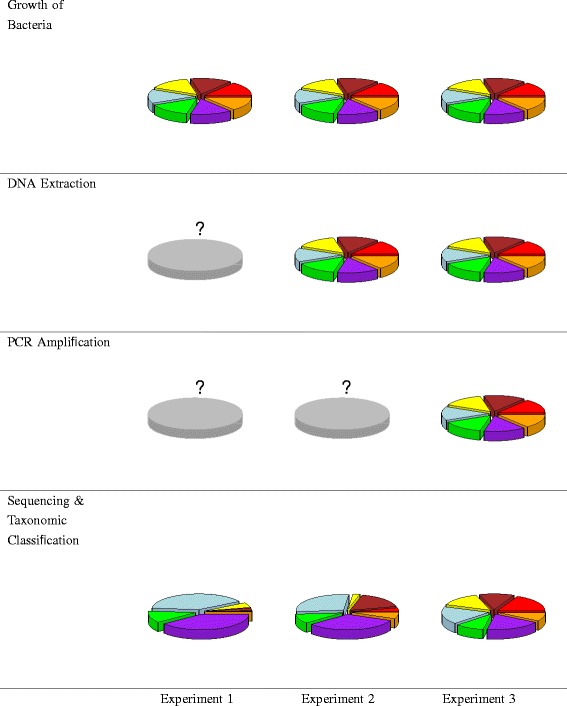
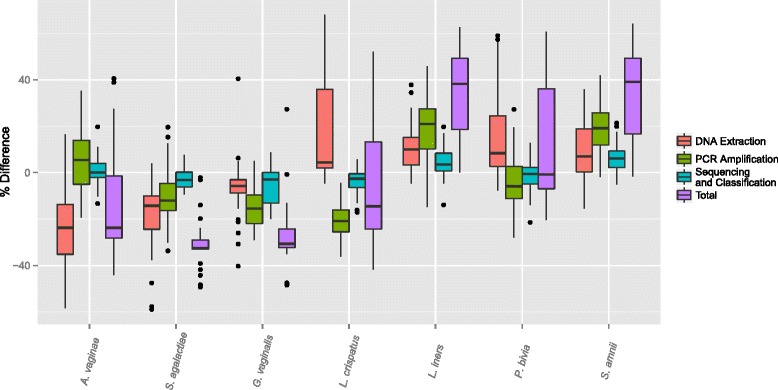
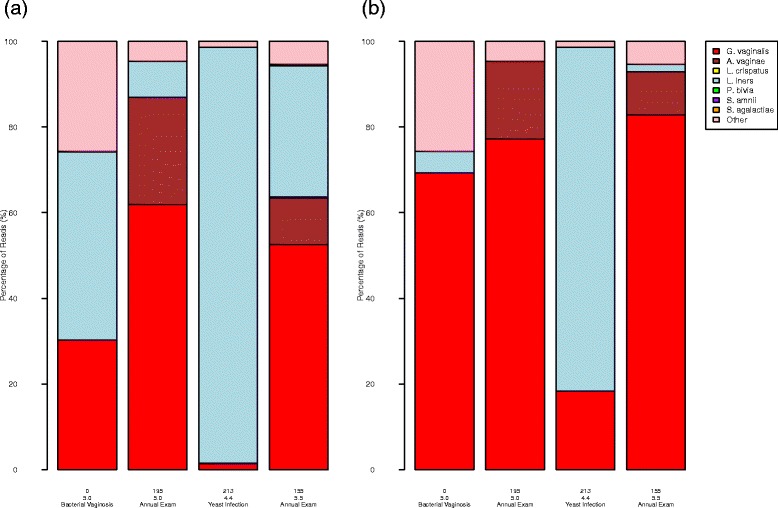
BACKGROUND: Characterizing microbial communities via next-generation sequencing is subject to a number of pitfalls involving sample processing. The observed community composition can be a severe distortion of the quantities of bacteria actually present in the microbiome, hampering analysis and threatening the validity of conclusions from metagenomic studies. We introduce an experimental protocol using mock communities for quantifying and characterizing bias introduced in the sample processing pipeline. We used 80 bacterial mock communities comprised of prescribed proportions of cells from seven vaginally-relevant bacterial strains to assess the bias introduced in the sample processing pipeline. We created two additional sets of 80 mock communities by mixing prescribed quantities of DNA and PCR product to quantify the relative contribution to bias of (1) DNA extraction, (2) PCR amplification, and (3) sequencing and taxonomic classification for particular choices of protocols for each step. We developed models to predict the "true" composition of environmental samples based on the observed proportions, and applied them to a set of clinical vaginal samples from a single subject during four visits. RESULTS: We observed that using different DNA extraction kits can produce dramatically different results but bias is introduced regardless of the choice of kit. We observed error rates from bias of over 85% in some samples, while technical variation was very low at less than 5% for most bacteria. The effects of DNA extraction and PCR amplification for our protocols were much larger than those due to sequencing and classification. The processing steps affected different bacteria in different ways, resulting in amplified and suppressed observed proportions of a community. When predictive models were applied to clinical samples from a subject, the predicted microbiome profiles were better reflections of the physiology and diagnosis of the subject at the visits than the observed community compositions. CONCLUSIONS: Bias in 16S studies due to DNA extraction and PCR amplification will continue to require attention despite further advances in sequencing technology. Analysis of mock communities can help assess bias and facilitate the interpretation of results from environmental samples.
Overview
The claims and statistics of this paper haven’t been checked yet.
Free: it reads the open-access text and checks the first 5 claims that cite a source we can check. Create a free account to check every claim.
Integrity signals
Registry
Cites
Statistics
Figures
Verification
Claims the paper makes
The claims and statistics of this paper haven’t been checked yet.
Free: it reads the open-access text and checks the first 5 claims that cite a source we can check. Create a free account to check every claim.
Claims other papers make about this one
Each is checked against this paper’s own text: does it say what the citing paper says it does?
The source backs part of the claim, not all of it — or backs it for a different population, condition or comparison.
In the citing paper
“Inter-study technical variability in microbiome measurements can sometimes, for example, outweigh biological effects6–9.”
From Assessment of variation in microbial community amplicon sequencing by the Microbiome Quality Control (MBQC) project consortium (2017) · cites this paper as [9]
Experimental — accuracy not yet measuredThe source backs part of the claim, not all of it — or backs it for a different population, condition or comparison.
In the citing paper
“Previous detailed investigations of specific variables in microbiome experiments such as DNA extraction method have, in common with the results we report, enriched for broad classes of Gram-negative rather than Gram-positive bacteria due to technical rather than biological variables9, 24, 27, 28.”
From Assessment of variation in microbial community amplicon sequencing by the Microbiome Quality Control (MBQC) project consortium (2017) · cites this paper as [9]
Experimental — accuracy not yet measuredThe cited source says what the claim attributes to it.
In the citing paper
“our results suggest that microbial physiology, nucleotide composition, protocol biochemistry, and computational assumptions can all interact to induce variation in microbiome assay results9.”
From Assessment of variation in microbial community amplicon sequencing by the Microbiome Quality Control (MBQC) project consortium (2017) · cites this paper as [9]
The cited source says what the claim attributes to it.
In the citing paper
“DNA extraction protocols are a known source of variation between microbial community characterization experiments7–9.”
From Assessment of variation in microbial community amplicon sequencing by the Microbiome Quality Control (MBQC) project consortium (2017) · cites this paper as [9]
In the citing paper
“High-quality evidence that clinical metagenomic assays are effective in guiding patient management will require protocols that minimize potential assay and patient selection bias and compare relevant health outcomes using data sets generated from large patient cohorts119,120.”
From Clinical metagenomics (2019) · cites this paper as [120]
Self-check
Percentages, sums and reported differences re-computed from the paper’s own numbers.
The self-check needs the paper’s full text.
Citations
Cites
An Introduction to the Bootstrap
Efron, B., & Tibshirani, R. J. (1994) · doi:10.1201/9780429246593 · Cited by 40,500
Naïve Bayesian Classifier for Rapid Assignment of rRNA Sequences into the New Bacterial Taxonomy
Wang, Q., Garrity, G. M., Tiedje, J. M., & Cole, J. R. (2007) · Applied and Environmental Microbiology · doi:10.1128/aem.00062-07 · Cited by 19,885 · cited 2×
“Taxonomic classification was performed using the RDP classifier [32] (see Methods).”
MethodSchloss, P. D., Westcott, S. L., Ryabin, T., Hall, J. R., Hartmann, M., Hollister, E. B., Lesniewski, R. A., Oakley, B. B., Parks, D. H., Robinson, C. J., et al. (2009) · Applied and Environmental Microbiology · doi:10.1128/aem.01541-09 · Cited by 19,549 · cited 1×
“Many sources of bias have been identified in 16S rRNA studies using NGS including PCR amplification [4-11], DNA extraction protocol [5,12,13], sequencing artifacts [8,14-18], DNA copy number [19], sampling depth [7,20,21], and primer design [22-25].”
BackgroundClassification and Regression by randomForest
Liaw, A. I., & Wiener, M. C. (2007) · Cited by 18,594
ggplot2: Elegant Graphics for Data Analysis
Wickham, H. (2009) · doi:10.1007/978-0-387-98141-3 · Cited by 14,447
Structure, function and diversity of the healthy human microbiome
The Human Microbiome Project Consortium (2012) · Nature · doi:10.1038/nature11234 · Cited by 11,726
Vaginal microbiome of reproductive-age women
Ravel, J., Gajer, P., Abdo, Z., Schneider, G. M., Koenig, S. S. K., McCulle, S. L., Karlebach, S., Gorle, R., Russell, J., Tacket, C. O., et al. (2011) · Proceedings of the National Academy of Sciences · doi:10.1073/pnas.1002611107 · Cited by 4,254 · cited 1×
“Because of the low diversity, vaginal samples are often classified by the predominant bacterium into community states or types [40].”
BackgroundLauber, C. L., Hamady, M., Knight, R., & Fierer, N. (2009) · Applied and Environmental Microbiology · doi:10.1128/aem.00335-09 · Cited by 4,063 · cited 1×
“Many sources of bias have been identified in 16S rRNA studies using NGS including PCR amplification [4-11], DNA extraction protocol [5,12,13], sequencing artifacts [8,14-18], DNA copy number [19], sampling depth [7,20,21], and primer design [22-25].”
BackgroundThe interaction of TIGIT with PVR and PVRL2 inhibits human NK cell cytotoxicity
Stanietsky, N., Simic, H., Arapovic, J., Toporik, A., Levy, O., Novik, A., Levine, Z., Beiman, M., Dassa, L., Achdout, H., et al. (2009) · Proceedings of the National Academy of Sciences · doi:10.1073/pnas.0903474106 · Cited by 3,524
Chimeric 16S rRNA sequence formation and detection in Sanger and 454-pyrosequenced PCR amplicons
Haas, B. J., Gevers, D., Earl, A. M., Feldgarden, M., Ward, D. V., Giannoukos, G., Ciulla, D., Tabbaa, D., Highlander, S. K., Sodergren, E., et al. (2011) · Genome Research · doi:10.1101/gr.112730.110 · Cited by 3,473 · cited 2×
“Many sources of bias have been identified in 16S rRNA studies using NGS including PCR amplification [4-11], DNA extraction protocol [5,12,13], sequencing artifacts [8,14-18], DNA copy number [19], sampling depth [7,20,21], and primer design [22-25].”
BackgroundMethod
Cited by
Items 401–500 of 555
Biomass thermal decomposition induced hydrogen sulfide blooming in thermal recovery reservoirs
Zhu, Y.-J., Wan, Y., Tian, Y., Mu, H.-M., & Zhang, T. (2025) · Petroleum Science · doi:10.1016/j.petsci.2025.03.044 · Cited by 2
The Gut Check: On Stability and Homogeneity Methods for Reference Materials
Gierz, K. (2025) · Journal of Statistical Theory and Practice · doi:10.1007/s42519-025-00490-y · Cited by 2
“Despitecarefulprotocolformulationtominimize biasinendmeasurements,challengespersistinmetagenomicmeasurements,resulting in precise within-sample measurements but discrepancies between measurements [23, 24].”
Zhang, P., West, N. P., Chen, P.-Y., Cripps, A. W., & Cox, A. J. (2018) · IEEE International Conference on Bioinformatics and Biomedicine (BIBM) · doi:10.1109/bibm.2018.8621413 · Cited by 2
“It is important to recognise that due to some possible pitfalls in sample processing, the abundance of specific bacterial species and overall community composition can be distorted, thus hampering the analysis and threatening the validity of the research findings [14].”
BackgroundMolecular Tools and Techniques for Understanding the Microbial Community Dynamics of Vermicomposting
Meghvansi, M. K., Chaudhary, K., Khan, M. H., Siddiqui, S., & Varma, A. K. (2020) · Soil biology · doi:10.1007/978-3-030-39173-7_7 · Cited by 2
Therapeutic Opportunities in the Vaginal Microbiome
Reid, G. (2018) · ASM Press eBooks · doi:10.1128/9781555819705.ch6 · Cited by 2
Reconstructing the landscape of gut microbial species across 29,000 diverse individuals
Šegota, I., Watrous, J. D., Kantz, E. D., Nallamshetty, S., Tiwari, S., Cheng, S. C., Jain, M., & Long, T. (2023) · Nucleic Acids Research · doi:10.1093/nar/gkad249 · Cited by 2
“Approaches have been developed to address experimental biases in vaginal microbiome studies (45,46), and while it is not clear how to scale such approaches to the complex microbial communities present in the human gut, representative mock communities of the human gut microbiome may allow for evaluation of sequencing b…”
BackgroundMethodBacterial Communities in Drinking Water Biofilms
Lührig, K. (2016) · Lund University Publications (Lund University) · Cited by 2
Molecular characterization of the penile microbiome of Dorper rams (Ovis aries)
Courchay, A. M. M. (2017) · SUNScholar (Stellenbosch University) · Cited by 5
Metabolic blueprints of monocultures enable prediction and design of synthetic microbial consortiaPreprint
Bald, S., Nelson, R., Zhang, J., de Raad, M., Scott, D., Hughes, K., Osborne, M. L., Dukovski, I., Northen, T. R., & Segrè, D. (2026) · bioRxiv (Cold Spring Harbor Laboratory) · doi:10.64898/2026.01.11.698878 · Cited by 2
Sánchez, M. C., Hernández, P., Velapatiño, Á., Cuba, E., Ciudad, M. J., & Yurrita, L. C. (2024) · Antibiotics · doi:10.3390/antibiotics13111000 · Cited by 1
Quantification of Metagenomic DNA
Joshi, A. (2024) · Methods and protocols in food science · doi:10.1007/978-1-0716-4180-4_29 · Cited by 1
Abakumov, S., Ruppeka‐Rupeika, E., Chen, X., Bouwens, A., Leen, V., Dedecker, P., & Hofkens, J. (2025) · ACS Omega · doi:10.1021/acsomega.4c09485 · Cited by 2
Collection, Storing, and Processing of Other Samples
Triller, S., Beasy, G., Hughes, S., Serghiou, I. R., & Ahn‐Jarvis, J. H. (2025) · Springer protocols handbooks/Springer protocols · doi:10.1007/978-1-0716-5009-7_4 · Cited by 1
Alishum, A., Keelan, J. A., Penova‐Veselinovic, B., Christophersen, C. T., Bunce, M., & Allentoft, M. E. (2026) · Microorganisms · doi:10.3390/microorganisms14010128 · Cited by 1
“…is partly due to the cost and technical complexities associated with microbiome sequencing, as well as the challenges of standardisation and minimising bias at various stages of the workflow, from sample collection and storage to DNA extraction, PCR amplification, and bioinformatics analysis [28].”
InfluentialBuragohain, T., Osborne, W. J., & Deepankumar, K. (2026) · Bioresource Technology Reports · doi:10.1016/j.biteb.2026.102662 · Cited by 2
Kwiatkowska, M. A., Trębińska-Stryjewska, A., Andrejuk, K., Jurkiewicz, D., Trafny, E. A., & Guzek, A. (2026) · International Journal of Molecular Sciences · doi:10.3390/ijms27094010 · Cited by 1
Single-cell detection and quantification of the microbiota by MicFLY
Tin, C. M., Vargas, B. C., Abbott, D. A., Lohar, A. R., Taylor, T. C., Valishev, I., Weinshel, S. N., Lian, V., Sullinger, K. J., Butoryak, M., et al. (2026) · Cell Host & Microbe · doi:10.1016/j.chom.2026.05.029 · Cited by 1
Characterization of Microbial Diversity in Food Chain: A Molecular Review
Xu, W. (2016) · Springer eBooks · doi:10.1007/978-981-10-1618-9_16 · Cited by 2
Nastasijević, I. (2019) · Elsevier eBooks · doi:10.1016/b978-0-08-100596-5.22682-6 · Cited by 1
The Cultivable Fungi of the Human Eye
Shivaji, S. (2022) · Springer eBooks · doi:10.1007/978-981-19-1754-7_5 · Cited by 1
Mukhopadhyay, S., & Aich, P. (2022) · BIO-PROTOCOL · doi:10.21769/bioprotoc.4484 · Cited by 1
Metagenomics or Metataxonomics: Best Practice Methods to Uncover the Sinus Microbiome
Burdon, I. A., Bouras, G. S., Fenix, K. A., Yeo, K. K. L., Connell, J. T., Cooksley, C. M., Barry, E. F., Vreugde, S., Wormald, P. J., & Psaltis, A. J. (2025) · International Forum of Allergy & Rhinology · doi:10.1002/alr.23617 · Cited by 1
Cattonaro, F., Spadotto, A., Radović, S., & Marroni, F. (2019) · F1000Research · doi:10.12688/f1000research.16804.2 · Cited by 1
Bioinformatics support for the Tubiom community gut microbiome projectPreprint
Beier, S., Górska, A., Grupp, P., Harbig, T. A., Flade, I., & Huson, D. H. (2016) · doi:10.7287/peerj.preprints.2382v1 · Cited by 1
“Scientists are testing various DNA extraction kits (Brooks et al., 2015) and sequencing platforms.”
BackgroundMarinò, P. (2017) · ORCA Online Research @Cardiff (Cardiff University) · Cited by 1
Petit, P. C. M. (2018) · theses.fr (ABES) · doi:10.70675/5ced838fz2677z4b47z9d04zb09bef9576ea · Cited by 2
McHugh, A. J. (2020) · Arrow@dit (Dublin Institute of Technology) · Cited by 2
Novel methane- and ammonia-oxidizing microorganisms from acidic environments
Picone, N. (2020) · Radboud Repository (Radboud University) · Cited by 1
The 16S rRNA Gene Is Not a Precise Classifier for Luteibacter SpeciesPreprint
Baltrus, D. A., & Carter, M. (2022) · bioRxiv (Cold Spring Harbor Laboratory) · doi:10.1101/2022.07.18.500475 · Cited by 1
“…primer set that works in an unbiased way across all bacterial types and lineages; thus, every study has the potential for either missing the identification of lineages completely or miscalculating the frequencies of bacterial types (Hong et al., 2009; Pinto & Raskin, 2012; Brooks et al., 2015).”
BackgroundEcology of ticks and microbes in Australian wildlife
Egan, S. L. (2022) · Murdoch University Research Portal · Cited by 2
Deciphering the microbial architecture of pesticide and antibiotics biodegradationPreprint
Thieffry, S., Aubert, J., Beguet, J., Devers‐Lamrani, M., Martin-Laurent, F. A., Pesce, S., Romdhane, S., Rouard, N., Siol, M., & Spor, A. (2026) · bioRxiv (Cold Spring Harbor Laboratory) · doi:10.64898/2026.02.21.707176 · Cited by 1
“The cause can lie in the technical effect of the imprecision of OTU quantification when based on 16S rRNA gene (Brooks et al., 2015; Louca et al., 2018).”
François, D. (2021) · theses.fr (ABES) · doi:10.70675/190dfcaez1a58z4592z8996zfe84822b493e · Cited by 4
The Airway Microbiome After Burn and Inhalation Injury
Walsh, D. M. (2016) · Carolina Digital Repository (University of North Carolina at Chapel Hill) · doi:10.17615/f013-s169
Nutrient dynamics in the Jordan River and Great Salt Lake wetlands
Abedin, S. B. (2016) · J. Willard Marriott Library · doi:10.26053/0h-swke-z2g0
Community structure of arbuscular mycorrhizal fungi along an altitudinal gradient
Egan, C. (2017) · cIRcle (University of British Columbia) · doi:10.14288/1.0353177 · Cited by 3
Xu, Z., Yadav, P., Zhang, Z., Roy, S., & Zhang, H. (2017) · IEEE International Conference on Bioinformatics and Biomedicine (BIBM) · doi:10.1109/bibm.2017.8217781
“In principle, these methods may also be used to quantify microbial compositions in complex communities, but they suffer bias caused by many factors, including primer design and PCR amplification, which could severely distort the quantities of bacteria actually present in a sample [14]–[16].”
BackgroundAvramenko, R. W. (2018) · Libraries and Cultural Resources (University of Calgary) · doi:10.11575/prism/5420
Lyalina, S. (2018) · eScholarship (California Digital Library)
Exploring host-microbiome interactions in Norwegian Salmon via weighted network analysis
Strand, M. A. (2019) · NVA (Nasjonalt vitenarkiv)
Metagenomics in One Health — from standardization to targeted application
Hallmaier–Wacker, L. K. (2020) · eDiss (Georg-August-Universität Göttingen) · doi:10.53846/goediss-7952
Intestinal microbiota and broiler health: hype or hope?
Kers, A. (2020) · Utrecht University Repository (Utrecht University) · doi:10.33540/295 · Cited by 1
Structuring factors of microbial communities in the atmospheric boundary layer
Tignat‐Perrier, R. (2019) · theses.fr (ABES) · doi:10.70675/661fb862zb148z4e49z9155z0490bfc6ea44 · Cited by 1
Assessment Of Presumed Sterility Of The Human Placenta And Maternal Bladder
Alhousseini, A. (2019) · Human Biology
Boddu, R. S., & Divakar, K. (2021) · Elsevier eBooks · doi:10.1016/b978-0-12-822956-9.00004-0
Profiling skin-associated archaea and bacteria with 16S rRNA and cpn60 genes
Umbach, A. K. (2021) · UWSpace (University of Waterloo)
Kolte, A. P., Dhali, A., Trivedi, S., Malik, P., & Bhatta, R. (2021) · Animal Nutrition and Feed Technology · doi:10.5958/0974-181x.2021.00015.9
Characterizing Bacterial Communities Across a Nutrient Gradient Over Winter Months
Stone, E. J. S. (2021)
Martín, I. (2021) · RiuNet (Universitat Politècnica de València) · doi:10.4995/thesis/10251/178942
Bias of the Mock Community Composed of Common Strains Isolated from Clinical SpecimensPreprint
Shin, J. H., Kim, E., Kim, S., & Yang, J. W. (2022) · Research Square · doi:10.21203/rs.3.rs-1304839/v1
Research Progress on the Correlation between Skin Microbiome and Pathogenesis of Psoriasis
边, 慧. (2022) · Advances in Clinical Medicine · doi:10.12677/acm.2022.122182
Cattonaro, F., Spadotto, A., Radović, S., & Marroni, F. (2019) · F1000Research · doi:10.12688/f1000research.16804.3
Piel, J., & Rust, M. (2019) · Elsevier eBooks · doi:10.1016/b978-0-12-409547-2.14722-5
(2021) · Biogeosciences · doi:10.5194/bg-2021-96-rc1
(2020) · PeerJ · doi:10.7287/peerj.10487v0.4/reviews/4
“…rapid, 362 and independent of culturing and/or direct observation, as any method, there may also be biases, 363 such as in the initial amplicon library preparation, differential primer annealing, PCR and 364 sequencing artifacts, and contig assembly (Brooks et al, 2015; Nilsson et al., 2015).”
(2021) · Biogeosciences · doi:10.5194/bg-2021-96-rc2
Neto, G. M. N. (2018) · Digital Library of Theses and Dissertations (Universidade de São Paulo) · doi:10.11606/t.42.2018.tde-26032018-164037 · Cited by 1
Impacts of age on the gut microbiota in captive giant pandasPreprint
Li, H., Lu, K., Li, G., Li, T., Zhang, L., Li, C., Xie, Q., Liu, H., Zhang, X., Gong, M., et al. (2023) · Research Square · doi:10.1101/2023.02.02.526921
KATSUMATA, E., Tsuruta, T., Sonoyama, K., Yoshida, T., Sasaki, M., Teraoka, M., Wang, T., & Nishino, N. (2024) · Molecular Nutrition & Food Research · doi:10.1002/mnfr.202400078
Highly multiplexed community profiling of sub-nanoliter droplet-based co-culturesPreprint
Tan, J., Li, J. D., Bahr, A., & Lin, X. N. (2025) · bioRxiv (Cold Spring Harbor Laboratory) · doi:10.1101/2025.01.14.633022
Probabilistic Modeling for Whole Metagenome Profiling
Burks, D. J. (2021) · University of North Texas Digital Library (University of North Texas) · doi:10.12794/metadc1808381
Chang, J., & Nielsen, R. (2025) · bioRxiv (Cold Spring Harbor Laboratory) · doi:10.1101/2025.03.25.645285
Tools to Explore Human Skin Microbiota
Oláh, P., & Riskumäki, M. (2025) · Springer eBooks · doi:10.1007/978-3-031-82689-4_3
Lee, S. H., Lee, H., Kim, J. W., Kim, H., & Lee, K. J. (2026) · Scientific Reports · doi:10.1038/s41598-026-53382-x
Wenderlein, J., Burkhardt, W., Dietrich, S., Trefflich, I., Penczynski, K. J., Thomas, K., Salzinger, C., Abraham, K., Malorny, B., Weikert, C., et al. (2025) · Clinical Nutrition ESPEN · doi:10.1016/j.clnesp.2025.08.008
Correa, J. D. S., Sáyer, S.-M. G., Sepulveda, L. K. D., Cortés, J. S. A., Cuestas, C. I. C., Aristizábal, F., & Romero, I. A. G. (2025) · Cogent Food & Agriculture · doi:10.1080/23311932.2025.2548928
“Chimeric reads can significantly confound downstream analyses (Brooks et al., 2015; haas et al., 2011; Sze & Schloss, 2019), this issue was addressed using only the forward strand sequences for the bioinformatic analysis (estaki et al., 2020; Werner et al., 2012), and the results were validated…”
Characterization of Microbial Diversity in Food Chain: A Molecular Review
Xu, W. (2025) · Springer eBooks · doi:10.1007/978-981-96-9603-1_21
Liver microbiome diversity and sex selection in male and female ratsPreprint
Hao, Y.-M., Li, Z., Deng, J.-X., Sun, X., & Zhang, J. G. (2025) · Research Square · doi:10.21203/rs.3.rs-7751900/v1
(2023) · CSIRO Publishing eBooks · doi:10.1071/9781486314935.bk08025_part5
Bioinformatics Processing of 16S Datasets
Ponsero, A. J., Duncan, A., Tálas, J., Sidorczuk, K., Koon, W., Hildebrand, F., & Telatin, A. (2025) · Springer protocols handbooks/Springer protocols · doi:10.1007/978-1-0716-5009-7_10
Arfken, A. M., Mercante, J. W., & Mattioli, M. C. M. (2025) · MicrobiologyOpen · doi:10.1002/mbo3.70194
“…analyses; these may include potential polymerase inhibitors (Tsai and Olson 1992; Wilson 1997) present in the environmental matrix of interest and genome recovery biases in DNA extraction, such as preferential lysis of Gram–taxa (Brooks et al. 2015; Guo and Zhang 2013; Shehadul Islam et al. 2017).”
Chen, J. C.-Y., & Tyler, A. D. (2020) · Figshare · doi:10.6084/m9.figshare.13364267
González-de-Salceda, L., & García‐Pichel, F. (2021) · Figshare · doi:10.6084/m9.figshare.15184509
Ma, S., Shungin, D., Mallick, H., Schirmer, M., Nguyen, L. H., Kolde, R., Franzosa, E. A., Vlamakis, H. C., Xavier, R. J., & Huttenhower, C. (2022) · Figshare · doi:10.6084/m9.figshare.21268891
Ogai, K., Shibata, K., Takahashi, N., Ogura, K., Okamoto, S., & Sugama, J. (2021) · Figshare · doi:10.6084/m9.figshare.14060121
Chau, K. K. (2022) · Oxford University Research Archive (ORA) (University of Oxford) · doi:10.5287/ora-nbaa25zp8 · Cited by 2
Chen, J. C.-Y., & Tyler, A. D. (2020) · Figshare · doi:10.6084/m9.figshare.13364273
Metadata
- Authors
- Vaginal Microbiome Consortium (additional members), Brooks, J. P., Edwards, D. J., Harwich, M. D., Rivera, M. C., Fettweis, J. M., Serrano, M. G., Reris, R. A., Sheth, N. U., Huang, B., Girerd, P., Strauss, J. F., Jefferson, K. K., & Buck, G. A.
- Affiliations
- Virginia Commonwealth University (US)
- Corresponding author
- Brooks, J Paul
- ORCID
- Venue
- BMC Microbiology
- Published
- 2015-03-21
- Volume
- 15
- Issue
- 1
- Pages
- 66-66
- ISSN
- 1471-2180 (ISSN-L)
- PMC
- PMC4433096
- OpenAlex
- W2113925621
- Cited by
- 528
- References
- 52
- Citations by year
- 2026: 27 · 2025: 39 · 2024: 28 · 2023: 47 · 2022: 51 · 2021: 73 · 2020: 66 · 2019: 51 · 2018: 57 · 2017: 49 · 2016: 37 · 2015: 3
- FWCI
- 21.14
- Type
- journal article
- Language
- en
- Open access
- gold
- doi.org
- Licence
- cc-by
- creativecommons.org/licenses/by/2.0 (tdm)
- Locations
- BMC Microbiology (publishedVersion, cc-by)
- PubMed Central (publishedVersion, cc-by)
- PubMed (publishedVersion)
- VCU Scholars Compass (Virginia Commonwealth University) (submittedVersion)
- Funders
- National Science Foundation (1127914)
- Thomas F. and Kate Miller Jeffress Memorial Trust
- National Institutes of Health
- National Institute of Allergy and Infectious Diseases (UH3AI08326-01)
- Division of Mathematical Sciences (1127914, DMS 1127914)
- National Institute on Minority Health and Health Disparities (P60MD002256)
- Eunice Kennedy Shriver National Institute of Child Health and Human Development (U54HD080784)
- Topics
- Life Sciences › Biochemistry, Genetics and Molecular Biology › Molecular Biology › Genomics and Phylogenetic Studies
- Life Sciences › Biochemistry, Genetics and Molecular Biology › Molecular Biology › Gut microbiota and health
- Physical Sciences › Environmental Science › Ecology › Microbial Community Ecology and Physiology
- Keywords
- 16S rRNA gene sequencing, mock microbial community, DNA extraction bias, PCR bias, vaginal microbiota, bias quantification, DNA extraction kit comparison
- MeSH terms
- Bacteria, DNA, Bacterial, Female, Humans, Models, Biological, Phylogeny, RNA, Ribosomal, 16S, Specimen Handling, Vagina, Bias, Polymerase Chain Reaction, Artifacts, Genes, rRNA, Metagenomics, Microbial Consortia, High-Throughput Nucleotide Sequencing, Microbiota
About these checks
Registry, retraction, Cites and statistics results are computed, not judged, with one exception: a printed reference that no index lists is read once by a model before it counts as a citation error. Claims are extracted by a model and kept only when their quote appears verbatim in the text; each cited source is then checked, with a model’s help, for whether it says what the claim relies on. Those verdicts can be wrong — read the claim’s quote and the cited source before relying on one.
Statistics and arithmetic are recomputed, not judged.
Confidence bands are shown only for fields calibrated on our annotated test set. None is calibrated yet, so no band is shown.
What counts as a claim ›How we measure confidence ›How we check this ›
Are you an author, or do you see a problem with this page? Request a review
Data sources
Bibliographic data: Semantic Scholar, OpenAlex, Crossref.
Contains information from the Semantic Scholar Academic Graph Datasets, made available under the ODC Attribution License (ODC-BY 1.0).
Semantic Scholar’s data is described in: Kinney, R., et al. (2023). The Semantic Scholar Open Data Platform. arXiv:2301.10140.
