

The truth about metagenomics: quantifying and counteracting bias in 16S rRNA studies
Open accessThe DOI matches its Crossref record; 50 of the 52 references it cites were found in a registry or an index.
Abstract
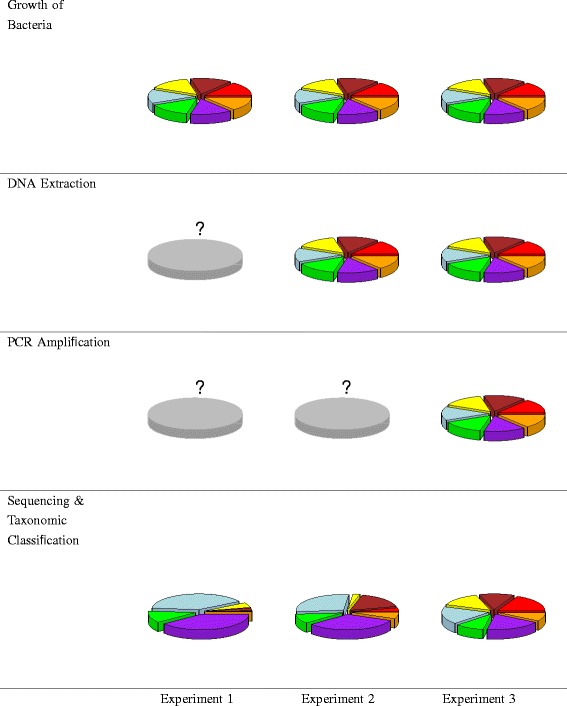
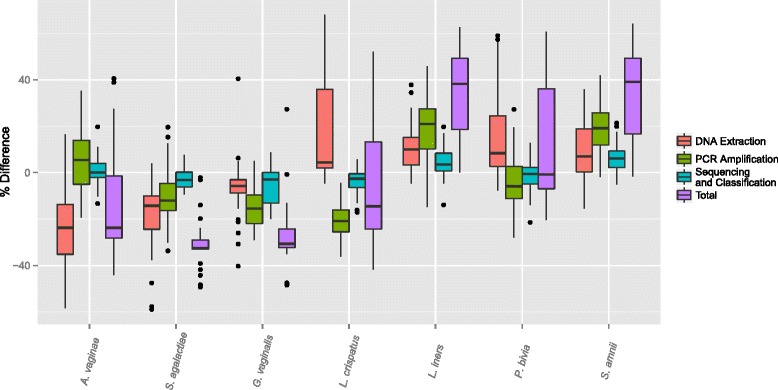
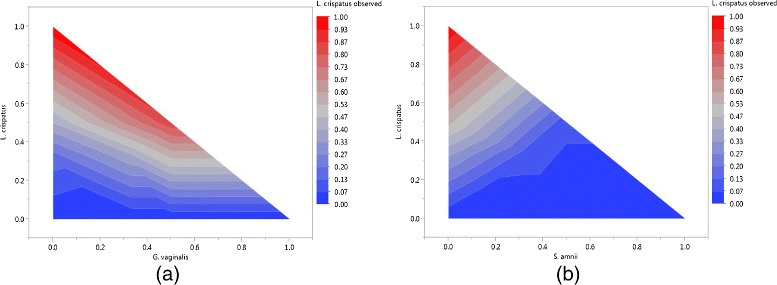
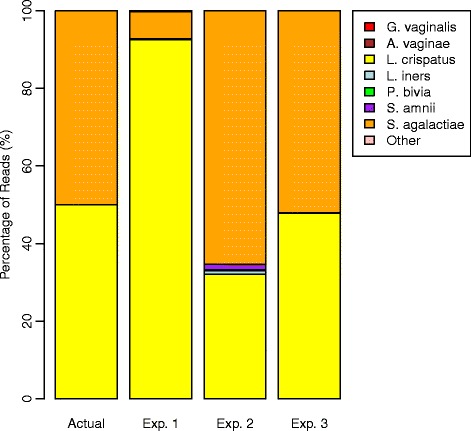
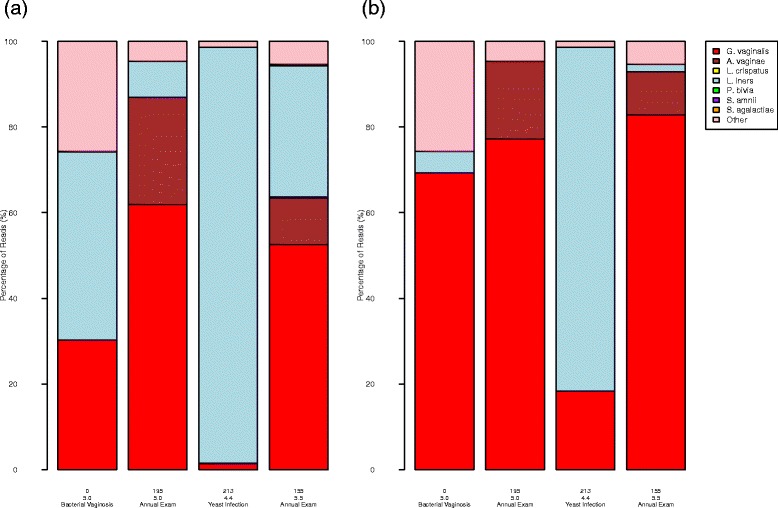
BACKGROUND: Characterizing microbial communities via next-generation sequencing is subject to a number of pitfalls involving sample processing. The observed community composition can be a severe distortion of the quantities of bacteria actually present in the microbiome, hampering analysis and threatening the validity of conclusions from metagenomic studies. We introduce an experimental protocol using mock communities for quantifying and characterizing bias introduced in the sample processing pipeline. We used 80 bacterial mock communities comprised of prescribed proportions of cells from seven vaginally-relevant bacterial strains to assess the bias introduced in the sample processing pipeline. We created two additional sets of 80 mock communities by mixing prescribed quantities of DNA and PCR product to quantify the relative contribution to bias of (1) DNA extraction, (2) PCR amplification, and (3) sequencing and taxonomic classification for particular choices of protocols for each step. We developed models to predict the "true" composition of environmental samples based on the observed proportions, and applied them to a set of clinical vaginal samples from a single subject during four visits. RESULTS: We observed that using different DNA extraction kits can produce dramatically different results but bias is introduced regardless of the choice of kit. We observed error rates from bias of over 85% in some samples, while technical variation was very low at less than 5% for most bacteria. The effects of DNA extraction and PCR amplification for our protocols were much larger than those due to sequencing and classification. The processing steps affected different bacteria in different ways, resulting in amplified and suppressed observed proportions of a community. When predictive models were applied to clinical samples from a subject, the predicted microbiome profiles were better reflections of the physiology and diagnosis of the subject at the visits than the observed community compositions. CONCLUSIONS: Bias in 16S studies due to DNA extraction and PCR amplification will continue to require attention despite further advances in sequencing technology. Analysis of mock communities can help assess bias and facilitate the interpretation of results from environmental samples.
Overview
The claims and statistics of this paper haven’t been checked yet.
Free: it reads the open-access text and checks the first 5 claims that cite a source we can check. Create a free account to check every claim.
Integrity signals
Registry
Cites
Statistics
Figures
Verification
Claims the paper makes
The claims and statistics of this paper haven’t been checked yet.
Free: it reads the open-access text and checks the first 5 claims that cite a source we can check. Create a free account to check every claim.
Claims other papers make about this one
Each is checked against this paper’s own text: does it say what the citing paper says it does?
The source backs part of the claim, not all of it — or backs it for a different population, condition or comparison.
In the citing paper
“Inter-study technical variability in microbiome measurements can sometimes, for example, outweigh biological effects6–9.”
From Assessment of variation in microbial community amplicon sequencing by the Microbiome Quality Control (MBQC) project consortium (2017) · cites this paper as [9]
Experimental — accuracy not yet measuredThe source backs part of the claim, not all of it — or backs it for a different population, condition or comparison.
In the citing paper
“Previous detailed investigations of specific variables in microbiome experiments such as DNA extraction method have, in common with the results we report, enriched for broad classes of Gram-negative rather than Gram-positive bacteria due to technical rather than biological variables9, 24, 27, 28.”
From Assessment of variation in microbial community amplicon sequencing by the Microbiome Quality Control (MBQC) project consortium (2017) · cites this paper as [9]
Experimental — accuracy not yet measuredThe cited source says what the claim attributes to it.
In the citing paper
“our results suggest that microbial physiology, nucleotide composition, protocol biochemistry, and computational assumptions can all interact to induce variation in microbiome assay results9.”
From Assessment of variation in microbial community amplicon sequencing by the Microbiome Quality Control (MBQC) project consortium (2017) · cites this paper as [9]
The cited source says what the claim attributes to it.
In the citing paper
“DNA extraction protocols are a known source of variation between microbial community characterization experiments7–9.”
From Assessment of variation in microbial community amplicon sequencing by the Microbiome Quality Control (MBQC) project consortium (2017) · cites this paper as [9]
In the citing paper
“High-quality evidence that clinical metagenomic assays are effective in guiding patient management will require protocols that minimize potential assay and patient selection bias and compare relevant health outcomes using data sets generated from large patient cohorts119,120.”
From Clinical metagenomics (2019) · cites this paper as [120]
Self-check
Percentages, sums and reported differences re-computed from the paper’s own numbers.
The self-check needs the paper’s full text.
Citations
Cites
An Introduction to the Bootstrap
Efron, B., & Tibshirani, R. J. (1994) · doi:10.1201/9780429246593 · Cited by 40,500
Naïve Bayesian Classifier for Rapid Assignment of rRNA Sequences into the New Bacterial Taxonomy
Wang, Q., Garrity, G. M., Tiedje, J. M., & Cole, J. R. (2007) · Applied and Environmental Microbiology · doi:10.1128/aem.00062-07 · Cited by 19,885 · cited 2×
“Taxonomic classification was performed using the RDP classifier [32] (see Methods).”
MethodSchloss, P. D., Westcott, S. L., Ryabin, T., Hall, J. R., Hartmann, M., Hollister, E. B., Lesniewski, R. A., Oakley, B. B., Parks, D. H., Robinson, C. J., et al. (2009) · Applied and Environmental Microbiology · doi:10.1128/aem.01541-09 · Cited by 19,549 · cited 1×
“Many sources of bias have been identified in 16S rRNA studies using NGS including PCR amplification [4-11], DNA extraction protocol [5,12,13], sequencing artifacts [8,14-18], DNA copy number [19], sampling depth [7,20,21], and primer design [22-25].”
BackgroundClassification and Regression by randomForest
Liaw, A. I., & Wiener, M. C. (2007) · Cited by 18,594
ggplot2: Elegant Graphics for Data Analysis
Wickham, H. (2009) · doi:10.1007/978-0-387-98141-3 · Cited by 14,447
Structure, function and diversity of the healthy human microbiome
The Human Microbiome Project Consortium (2012) · Nature · doi:10.1038/nature11234 · Cited by 11,726
Vaginal microbiome of reproductive-age women
Ravel, J., Gajer, P., Abdo, Z., Schneider, G. M., Koenig, S. S. K., McCulle, S. L., Karlebach, S., Gorle, R., Russell, J., Tacket, C. O., et al. (2011) · Proceedings of the National Academy of Sciences · doi:10.1073/pnas.1002611107 · Cited by 4,254 · cited 1×
“Because of the low diversity, vaginal samples are often classified by the predominant bacterium into community states or types [40].”
BackgroundLauber, C. L., Hamady, M., Knight, R., & Fierer, N. (2009) · Applied and Environmental Microbiology · doi:10.1128/aem.00335-09 · Cited by 4,063 · cited 1×
“Many sources of bias have been identified in 16S rRNA studies using NGS including PCR amplification [4-11], DNA extraction protocol [5,12,13], sequencing artifacts [8,14-18], DNA copy number [19], sampling depth [7,20,21], and primer design [22-25].”
BackgroundThe interaction of TIGIT with PVR and PVRL2 inhibits human NK cell cytotoxicity
Stanietsky, N., Simic, H., Arapovic, J., Toporik, A., Levy, O., Novik, A., Levine, Z., Beiman, M., Dassa, L., Achdout, H., et al. (2009) · Proceedings of the National Academy of Sciences · doi:10.1073/pnas.0903474106 · Cited by 3,524
Chimeric 16S rRNA sequence formation and detection in Sanger and 454-pyrosequenced PCR amplicons
Haas, B. J., Gevers, D., Earl, A. M., Feldgarden, M., Ward, D. V., Giannoukos, G., Ciulla, D., Tabbaa, D., Highlander, S. K., Sodergren, E., et al. (2011) · Genome Research · doi:10.1101/gr.112730.110 · Cited by 3,473 · cited 2×
“Many sources of bias have been identified in 16S rRNA studies using NGS including PCR amplification [4-11], DNA extraction protocol [5,12,13], sequencing artifacts [8,14-18], DNA copy number [19], sampling depth [7,20,21], and primer design [22-25].”
BackgroundMethod
Cited by
Items 501–555 of 555
González-de-Salceda, L., & García‐Pichel, F. (2021) · Figshare · doi:10.6084/m9.figshare.15184503
Ogai, K., Shibata, K., Takahashi, N., Ogura, K., Okamoto, S., & Sugama, J. (2021) · Figshare · doi:10.6084/m9.figshare.14060112
Chen, J. C.-Y., & Tyler, A. D. (2020) · Figshare · doi:10.6084/m9.figshare.13364264
Chen, J. C.-Y., & Tyler, A. D. (2020) · Figshare · doi:10.6084/m9.figshare.13364261
González-de-Salceda, L., & García‐Pichel, F. (2021) · Figshare · doi:10.6084/m9.figshare.15184515
Claassen-Weitz, S., Gardner‐Lubbe, S., Mwaikono, K. S., du Toit, E., Zar, H. J., & Nicol, M. P. (2020) · Figshare · doi:10.6084/m9.figshare.12292046
Chen, J. C.-Y., & Tyler, A. D. (2020) · Figshare · doi:10.6084/m9.figshare.13364270
Li, Y., Bruni, L., Jaramillo-Torres, A., Gajardo, K., Kortner, T. M., & Krogdahl, Å. (2021) · Figshare · doi:10.6084/m9.figshare.13545373
Ogai, K., Shibata, K., Takahashi, N., Ogura, K., Okamoto, S., & Sugama, J. (2021) · Figshare · doi:10.6084/m9.figshare.14060124
González-de-Salceda, L., & García‐Pichel, F. (2021) · Figshare · doi:10.6084/m9.figshare.15184512
Webster, J. A. (2024) · cIRcle (University of British Columbia) · doi:10.14288/1.0442095
Claassen-Weitz, S., Gardner‐Lubbe, S., Mwaikono, K. S., du Toit, E., Zar, H. J., & Nicol, M. P. (2020) · Figshare · doi:10.6084/m9.figshare.12292049
Ma, S., Shungin, D., Mallick, H., Schirmer, M., Nguyen, L. H., Kolde, R., Franzosa, E. A., Vlamakis, H. C., Xavier, R. J., & Huttenhower, C. (2022) · Figshare · doi:10.6084/m9.figshare.21268888
Ogai, K., Shibata, K., Takahashi, N., Ogura, K., Okamoto, S., & Sugama, J. (2021) · Figshare · doi:10.6084/m9.figshare.14060118
Chen, J. C.-Y., & Tyler, A. D. (2020) · Figshare · doi:10.6084/m9.figshare.13364258
Ma, S., Shungin, D., Mallick, H., Schirmer, M., Nguyen, L. H., Kolde, R., Franzosa, E. A., Vlamakis, H. C., Xavier, R. J., & Huttenhower, C. (2022) · Figshare · doi:10.6084/m9.figshare.21268894
Claassen-Weitz, S., Gardner‐Lubbe, S., Xia, Y., Mwaikono, K. S., Mounaud, S. H., Nierman, W. C., Workman, L., Zar, H. J., & Nicol, M. P. (2024) · UWA Profiles and Research Repository (UWA) · doi:10.6084/m9.figshare.26594033
Priprava modelnih mikrobnih združb za raziskave diverzitete z visokozmogljivim sekvenciranjem
Zaman, J. (2024) · Repository of the University of Ljubljana (University of Ljubljana)
Exploring sagebrush leaf microbial metagenomes from deep, host-derived sequencing
Arogundade, A. A., Dumaguit, C. D. C., Melton, A. E., Buerki, S., & Bittleston, L. S. (2026) · Microbiology Spectrum · doi:10.1128/spectrum.02198-25
“Samples 14, 15, 26, 29, 34, 35, and 36 drop their leaves early, while samples 2, 21, 24, 3, 32, 33, and 8 drop their leaves late.”
Bishop, H. V., Prendergast, P. J., Herbold, C. W., Dobson, R. C. J., & Ogilvie, O. J. (2026) · bioRxiv (Cold Spring Harbor Laboratory) · doi:10.64898/2026.03.28.715053
Solutions d'amélioration des études de métagénomique ciblée
Siegwald, L. (2017) · theses.fr (ABES) · doi:10.70675/74d37f87z77afz4530zac66z185ff9e8ce18 · Cited by 5
Développement et utilisation d'outils bioinformatiques appliqués à la métagénomique
Verneau, J. (2017) · theses.fr (ABES) · doi:10.70675/0e3d9398z2ff6z4329z8943zae0dac101812
Alonso, P. (2020) · theses.fr (ABES) · doi:10.70675/1aa6e6f9z709ez4848z92f1z783dac1083e6 · Cited by 1
Cougoul, A. (2019) · theses.fr (ABES) · doi:10.70675/838c1161zf826z44eaz885fz96dc69cdb923
Analyse de l'impact de Parvimonas micra sur les cellules coliques de l'hôte
Bergsten, E. (2020) · theses.fr (ABES) · doi:10.70675/c82d5d0ez084dz4ae6za044zfede1667bb46
Effects of heat-assisted sample desiccation on microbiome surveys
Mullin, C. E., & Louca, S. (2026) · Environmental Microbiome · doi:10.1186/s40793-026-00889-5
“Answering this latter question is hard, due to numerous other sources of bias and error, for example at the DNA extraction and PCR stages [11], as well as due to variable 16 S rRNA gene copy numbers [38].”
Impact of psychological stress on the remodeling of the host-microbiota interactome
Zoppi, J. (2021) · theses.fr (ABES) · doi:10.70675/99fe295fzda6cz4938z9de2zedddc5a8bbd8 · Cited by 1
The Great Microbiome Extraction Anomaly: How Extraction Bias Distorts Microbial Community Profiles
Browne, D. J. (2026) · Environmental DNA · doi:10.1002/edn3.70276 · Cited by 1
Arboleda-Baena, C. M., Corrêa, F. B., Saraiva, J. P., Castillo-Rivadeneira, S., Kasmanas, J. C., Chatzinotas, A., & Jurburg, S. D. (2026) · GigaScience · doi:10.1093/gigascience/giag040 · Cited by 1
Quantitative metabarcoding for invertebrate pest monitoring and management
Gretgrix, L. J., Scanlan, J. L., Martoni, F., Blacket, M. J., Rodoni, B., & Piper, A. M. (2026) · Journal of Economic Entomology · doi:10.1093/jee/toag264
Hu, J., Zhang, H., Miao, H., Chang, W., Zheng, J., Hu, F., Zhang, D., Guo, W., Hu, P., Han, R., et al. (2026) · Microbiology Spectrum · doi:10.1128/spectrum.03993-25
“…such as thick peptidoglycan in Gram-positive bacteria or chitin-rich fungal cell walls) and technical factors (e.g., DNA extraction efficiency, library preparation chemistry, amplification bias, and platform-specific error profiles), as well as details of the bioinformatics pipeline (29, 37–40).”
Reese, J.-O., Lund, I. M. C., Haugen, H. J., Saragliadis, A., Lyngstadaas, S. P., & Linke, D. (2026) · FEMS Microbiology Letters · doi:10.1093/femsle/fnag066 · Cited by 1
“Such discrepancies have been well documented for common analytical methods, including qPCR, Whole MetaGenome Shotgun Sequencing, and 16S rRNA sequencing (Wesolowska-Andersen et al. 2014 , Brooks et al. 2015 , Lima et al. 2022 ).”
Biliary tract microbes and common bile duct stones: current status and prospects
Mengjia, C., Wang, B. H., Chen, H., Hu, Q., & Song, H. (2026) · Frontiers in Microbiology · doi:10.3389/fmicb.2026.1818256
Wood, J. M., Tighe, S. W., Urbaniak, C., Parker, C. W., Singh, N. K., Wong, S., Peyton, B., & Venkateswaran, K. J. (2026) · bioRxiv (Cold Spring Harbor Laboratory) · doi:10.64898/2026.06.15.732322
Huang, S., Gao, X., Liang, H., Feng, Y., Huang, H., Li, Y., Cheng, P., Xie, J., Lu, C., He, G., et al. (2026) · BMC Microbiology · doi:10.1186/s12866-026-05339-3
“Methodological variations, including sample type, sequencing approach, and bioinformatic pipeline, also contribute to inconsistencies in taxonomic signals across studies [32–34].”
Metagenomika : Teori, Metode dan Aplikasinya
Putra, A. A. (. K., Sulistiyono, F. D. (., Dharma, B. (., Hafzari, R. (., Nashrulloh, M. M. (., Iftitah, D. (., Setiani, L. A. (., Ryadin, A. R., Rahmadani, S. Y. (., & Sipriyadi, S. (. (2024) · Neliti
Kanis, A. (2026) · Tuwhera (Auckland University of Technology)
Accelerating pathogen detection with nanopore sequencing in Kenya: a One health approach
Kabugu, J. W., Aboge, G., Muneri, C., Kanyari, E., & Nanyingi, M. O. (2026) · Frontiers in Tropical Diseases · doi:10.3389/fitd.2026.1865939
Importance of methods selected for microbiome studies: State of the science and challenges
Lyte, J. M., & Proszkowiec‐Weglarz, M. (2026) · Poultry Science · doi:10.1016/j.psj.2026.107417
“Likewise, the use of metagenomics can help to counteract bias used in amplicon-based 16S rRNA approaches (Brooks et al., 2015).”
Colobine gut microbiome vulnerability to captivity: a meta-analysis of herbivorous primates
Todó-Llorens, M., Rooney, N. J., & Peachey, L. (2026) · Animal Microbiome · doi:10.1186/s42523-026-00600-6
“Sampling, storage, DNA extraction, sequencing platforms, and analytical pipelines all varied widely, and such differences are known to influence microbiome profiles and diversity estimates [72, 73].”
Fundamentos e avanços na identificação de microrganismos: uma perspectiva histórica e tecnológica
Virginio-Pereira, G., de Oliveira, S. A. L., Cabral, L. C. A., do Nascimento, M. M. F., & Bittencourt, J. V. M. (2026) · doi:10.22533/at.ed.516152606015
Deans, F. (2022) · Otago University Research Archive (University of Otago) · Cited by 4
Sequencing-Based Microbiome Profiling
Camarinha‐Silva, A., Schirmer, M., & Fricke, W. F. (2026) · Springer eBooks · doi:10.1007/978-3-032-26410-7_4
Uemura, T., Papatriantafyllou, M., Jingushi, K., Motooka, D., Saito, T., Inoguchi, S., Sassi, N., Horibe, Y., Yamamoto, A., Kanaki, T., et al. (2026) · Scientific Reports · doi:10.1038/s41598-026-59896-8
The seminal microbiome/microbiota and implications for antibiotics in semen extenders
Morrell, J. M., Ntallaris, T., Hansson, I., & Cojkić, A. (2026) · Animal Reproduction Science · doi:10.1016/j.anireprosci.2026.108347
Removing sample-to-sample cross-contamination in high-throughput sequencing data
Shi, X. C., & Willis, A. D. (2026) · Journal of Applied Statistics · doi:10.1080/02664763.2026.2708838
Extreme copper tolerance and genomic adaptation in early-stage marine biofilms
Richard, K. N., Tuck, S., Colston, S. M., Beasley, M. A., Hervey, W. J., Le, K., Brown, S. M., Franz, K. J., & Fears, K. P. (2026) · Biointerphases · doi:10.1116/6.0005640
Plant microbiomes have a greater effect than plant size on flowering and growth in Asclepias syriacaPreprint
Puzey, J. R., Munkres, I., d'Orgeix, C., & Dalgleish, H. J. (2026) · bioRxiv (Cold Spring Harbor Laboratory) · doi:10.64898/2026.10.20.759379
“While each method has issues, calculating microbial composition using 16S is difficult with many well recognized sources of bias (Pollock et al. 2018; Brooks et al. 2015).”
A comparison of two culture and three sequencing methods for detection of the urobiomePreprint
Khemmani, M., Noronha, M. F., Pham, T., Ferneyhough, B., Roddis, M., Parkinson, N. J., & Wolfe, A. J. (2026) · bioRxiv (Cold Spring Harbor Laboratory) · doi:10.64898/2026.10.28.762191
Hale, B. M., Gajurel, G., Arnold, C., Priddle, C. T., Olson, E. G., & Ricke, S. C. (2026) · Poultry Science · doi:10.1016/j.psj.2026.108117
Metadata
- Authors
- Vaginal Microbiome Consortium (additional members), Brooks, J. P., Edwards, D. J., Harwich, M. D., Rivera, M. C., Fettweis, J. M., Serrano, M. G., Reris, R. A., Sheth, N. U., Huang, B., Girerd, P., Strauss, J. F., Jefferson, K. K., & Buck, G. A.
- Affiliations
- Virginia Commonwealth University (US)
- Corresponding author
- Brooks, J Paul
- ORCID
- Venue
- BMC Microbiology
- Published
- 2015-03-21
- Volume
- 15
- Issue
- 1
- Pages
- 66-66
- ISSN
- 1471-2180 (ISSN-L)
- PMC
- PMC4433096
- OpenAlex
- W2113925621
- Cited by
- 528
- References
- 52
- Citations by year
- 2026: 27 · 2025: 39 · 2024: 28 · 2023: 47 · 2022: 51 · 2021: 73 · 2020: 66 · 2019: 51 · 2018: 57 · 2017: 49 · 2016: 37 · 2015: 3
- FWCI
- 21.14
- Type
- journal article
- Language
- en
- Open access
- gold
- doi.org
- Licence
- cc-by
- creativecommons.org/licenses/by/2.0 (tdm)
- Locations
- BMC Microbiology (publishedVersion, cc-by)
- PubMed Central (publishedVersion, cc-by)
- PubMed (publishedVersion)
- VCU Scholars Compass (Virginia Commonwealth University) (submittedVersion)
- Funders
- National Science Foundation (1127914)
- Thomas F. and Kate Miller Jeffress Memorial Trust
- National Institutes of Health
- National Institute of Allergy and Infectious Diseases (UH3AI08326-01)
- Division of Mathematical Sciences (1127914, DMS 1127914)
- National Institute on Minority Health and Health Disparities (P60MD002256)
- Eunice Kennedy Shriver National Institute of Child Health and Human Development (U54HD080784)
- Topics
- Life Sciences › Biochemistry, Genetics and Molecular Biology › Molecular Biology › Genomics and Phylogenetic Studies
- Life Sciences › Biochemistry, Genetics and Molecular Biology › Molecular Biology › Gut microbiota and health
- Physical Sciences › Environmental Science › Ecology › Microbial Community Ecology and Physiology
- Keywords
- 16S rRNA gene sequencing, mock microbial community, DNA extraction bias, PCR bias, vaginal microbiota, bias quantification, DNA extraction kit comparison
- MeSH terms
- Bacteria, DNA, Bacterial, Female, Humans, Models, Biological, Phylogeny, RNA, Ribosomal, 16S, Specimen Handling, Vagina, Bias, Polymerase Chain Reaction, Artifacts, Genes, rRNA, Metagenomics, Microbial Consortia, High-Throughput Nucleotide Sequencing, Microbiota
About these checks
Registry, retraction, Cites and statistics results are computed, not judged, with one exception: a printed reference that no index lists is read once by a model before it counts as a citation error. Claims are extracted by a model and kept only when their quote appears verbatim in the text; each cited source is then checked, with a model’s help, for whether it says what the claim relies on. Those verdicts can be wrong — read the claim’s quote and the cited source before relying on one.
Statistics and arithmetic are recomputed, not judged.
Confidence bands are shown only for fields calibrated on our annotated test set. None is calibrated yet, so no band is shown.
What counts as a claim ›How we measure confidence ›How we check this ›
Are you an author, or do you see a problem with this page? Request a review
Data sources
Bibliographic data: Semantic Scholar, OpenAlex, Crossref.
Contains information from the Semantic Scholar Academic Graph Datasets, made available under the ODC Attribution License (ODC-BY 1.0).
Semantic Scholar’s data is described in: Kinney, R., et al. (2023). The Semantic Scholar Open Data Platform. arXiv:2301.10140.
