

The DOI matches its Crossref record; 35 of the 35 references it cites were found in a registry or an index.
Gut microbiota lipopolysaccharide accelerates inflamm-aging in mice
Open accessAbstract
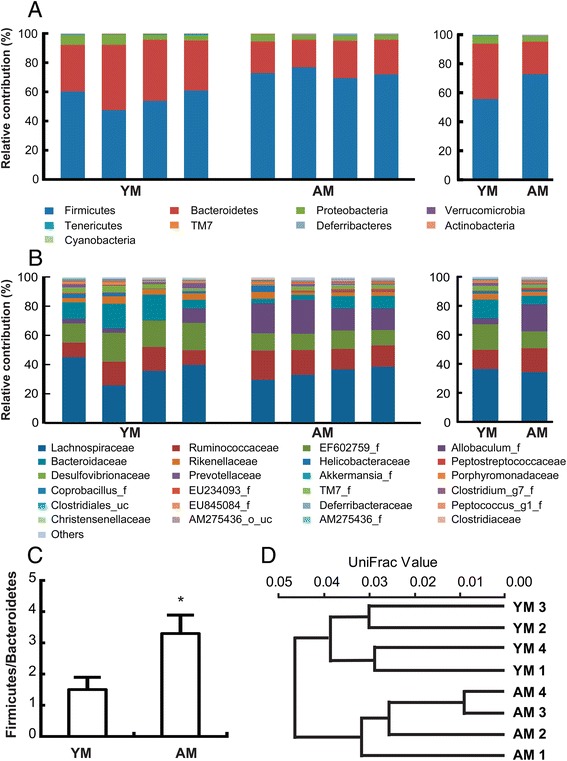
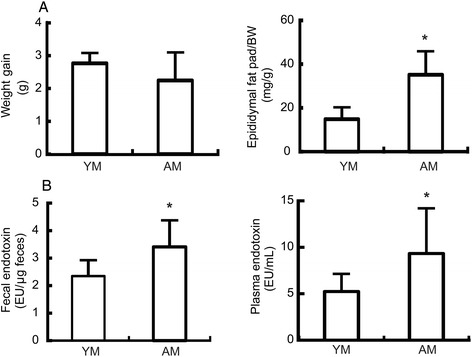
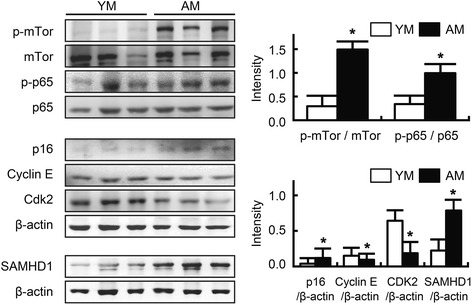
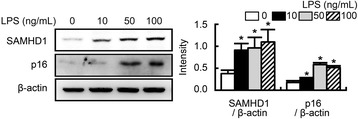
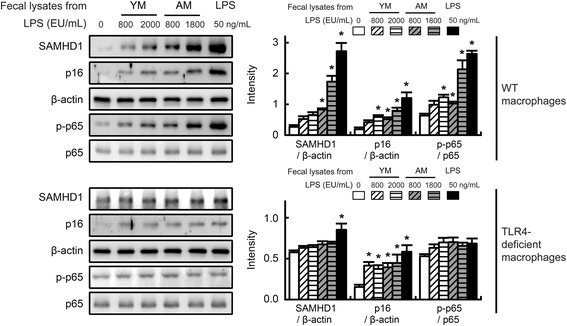
BACKGROUND: The constitutive inflammation that characterizes advanced age is termed inflamm-aging. This process is associated with age-related changes to immune homeostasis and gut microbiota. We investigated the relationship between aging and gut microbiota lipopolysaccharide (LPS)-inducible inflammation. RESULTS: A taxonomy-based analysis showed that aging resulted in increased prevalence of the phyla Firmicutes and Actinobacteria and a reduced prevalence of Bacteroidetes and Tenericutes, resulting in an increase in the Firmicutes to Bacteroidetes ratio. The levels of plasmatic and fecal lipopolysaccharides were higher in aged mice. Aging induced the expression of p16 and the activation of nuclear factor-kappa B (NF-κB) in the colon of aged mice. Interestingly, the expression level of sterile α-motif domain- and HD domain-containing protein 1 (SAMHD1) in the colon was higher in aged mice than in young mice, while cyclin-dependent kinase-2 and cyclin E levels were lower in aged mice than in young mice. The lipopolysaccharide fraction of fecal lysates (LFL) from young or aged mice increased p16 and SAMHD1 expression and NF-κB activation in peritoneal macrophages from wild-type mice, in a TLR4-dependent manner. However, LFLs did not induce NF-κB activation and SAMHD1 expression in peritoneal macrophages from TLR4-deificent mice, whereas they significantly induced p16 expression. Nevertheless, p16 expression was induced more potently in macrophages from WT mice than in macrophages from TLR4-deficient mice. CONCLUSION: Aging increased p16 and SAMHD1 expression, gut microbiota LPS production, and NF-κB activation; thereby, signifying that gut microbiota LPS may accelerate inflamm-aging and SAMHD1 may be an inflamm-aging marker.
Overview
The claims and statistics of this paper haven’t been checked yet.
Run the check — free, no account needed. It reads the open-access text and checks the sources it cites.
Integrity signals
Registry
Cites
Statistics
Figures
Verification
Claims the paper makes
The claims and statistics of this paper haven’t been checked yet.
Run the check — free, no account needed. It reads the open-access text and checks the sources it cites.
Claims other papers make about this one
Each is checked against this paper’s own text: does it say what the citing paper says it does?
In the citing paper
“Geriatric mice have been shown to have increased gut permeability which results in bacterial lipopolysaccharide (LPS) leakage into the blood stream and activation of mononuclear phagocytes via binding to Toll-like receptor (TLR)4 (28,29).”
From The impact of ageing on monocytes and macrophages (2021) · cites this paper as [29]
Self-check
Percentages, sums and reported differences re-computed from the paper’s own numbers.
The self-check needs the paper’s full text.
Citations
Cites
Inflamm‐aging: An Evolutionary Perspective on Immunosenescence
FRANCESCHI, C., BONAFÈ, M., VALENSIN, S., OLIVIERI, F., DE LUCA, M., OTTAVIANI, E., & DE BENEDICTIS, G. (2000) · Annals of the New York Academy of Sciences · doi:10.1111/j.1749-6632.2000.tb06651.x · Cited by 5,358
Kim, O.-S., Cho, Y., Lee, K., Yoon, S.-H., Kim, M., Na, H., Park, S., Jeon, Y. S., Lee, J., Yi, H., et al. (2011) · INTERNATIONAL JOURNAL OF SYSTEMATIC AND EVOLUTIONARY MICROBIOLOGY · doi:10.1099/ijs.0.038075-0 · Cited by 5,235
Gut microbiota composition correlates with diet and health in the elderly
Claesson, M. J., Jeffery, I. B., Conde, S., Power, S. E., O’Connor, E. M., Cusack, S., Harris, H. M. B., Coakley, M., Lakshminarayanan, B., O’Sullivan, O., et al. (2012) · Nature · doi:10.1038/nature11319 · Cited by 3,314
Role of the gut microbiota in immunity and inflammatory disease
Kamada, N., Seo, S.-U., Chen, G. Y., & Núñez, G. (2013) · Nature reviews. Immunology · doi:10.1038/nri3430 · Cited by 2,256
The Firmicutes/Bacteroidetes ratio of the human microbiota changes with age
Mariat, D., Firmesse, O., Levenez, F., Guimarăes, V., Sokol, H., Doré, J., Corthier, G., & Furet, J.-P. (2009) · BMC Microbiology · doi:10.1186/1471-2180-9-123 · Cited by 1,755
Composition, variability, and temporal stability of the intestinal microbiota of the elderly
Claesson, M. J., Cusack, S., O'Sullivan, O., Greene-Diniz, R., de Weerd, H., Flannery, E., Marchesi, J. R., Falush, D., Dinan, T., Fitzgerald, G., et al. (2011) · Proceedings of the National Academy of Sciences · doi:10.1073/pnas.1000097107 · Cited by 1,754
Ink4a/Arf expression is a biomarker of aging
Krishnamurthy, J., Torrice, C., Ramsey, M. R., Kovalev, G. I., Al-Regaiey, K., Su, L., & Sharpless, N. E. (2004) · Journal of Clinical Investigation · doi:10.1172/jci22475 · Cited by 1,486
Kim, K., Gu, W., Lee, I., Joh, E., & Kim, D. (2012) · PLoS ONE · doi:10.1371/journal.pone.0047713 · Cited by 1,228
Self-citationStem-cell ageing modified by the cyclin-dependent kinase inhibitor p16INK4a
Janzen, V., Forkert, R., Fleming, H. E., Saito, Y., Waring, M. T., Dombkowski, D. M., Cheng, T., DePinho, R. A., Sharpless, N. E., & Scadden, D. T. (2006) · Nature · doi:10.1038/nature05159 · Cited by 1,106
p16INK4a induces an age-dependent decline in islet regenerative potential
Krishnamurthy, J., Ramsey, M. R., Ligon, K. L., Torrice, C., Koh, A., Bonner-Weir, S., & Sharpless, N. E. (2006) · Nature · doi:10.1038/nature05092 · Cited by 1,003 · cited 1×
“Next, we measured the levels of p16, a senescence marker [6, 7], and cyclin E and CDK2, the G1/S-specific cell cycle regulators [18].”
Method
Cited by
Sorted by citations
Camacho-Pereira, J., Tarragó, M. G., Chini, C. C. S., Nin, V., Escande, C., Warner, G. M., Puranik, A. S., Schoon, R. A., Reid, J. M., Galina, A., et al. (2016) · Cell Metabolism · doi:10.1016/j.cmet.2016.05.006 · Cited by 901
Yoshida, N., Emoto, T., Yamashita, T., Watanabe, H., Hayashi, T., Tabata, T., Hoshi, N., Hatano, N., Ozawa, G., Sasaki, N., et al. (2018) · Circulation · doi:10.1161/circulationaha.118.033714 · Cited by 619
Immunomodulatory potential of gut microbiome-derived short-chain fatty acids (SCFAs)
Ratajczak, W., Rył, A., Mizerski, A., Walczakiewicz, K., Sipak‐Szmigiel, O., & Laszczyńska, M. (2019) · Acta Biochimica Polonica · doi:10.18388/abp.2018_2648 · Cited by 543
Age‐related changes in the gut microbiota influence systemic inflammation and stroke outcome
Spychala, M. S., Venna, V. R., Jandzinski, M., Doran, S. J., Durgan, D. J., Ganesh, B. P., Ajami, N. J., Putluri, N., Graf, J., Bryan, R. M., et al. (2018) · Annals of Neurology · doi:10.1002/ana.25250 · Cited by 445
Mou, Y., Du, Y., Zhou, L., Yue, J., Hu, X., Liu, Y., Chen, S., Lin, X., Zhang, G., Xiao, H., et al. (2022) · Frontiers in Immunology · doi:10.3389/fimmu.2022.796288 · Cited by 432
Differences in fecal microbial metabolites and microbiota of children with autism spectrum disorders
Kang, D.-W., Ilhan, Z. E., Isern, N. G., Hoyt, D. W., Howsmon, D. P., Shaffer, M., Lozupone, C. A., Hahn, J., Adams, J. B., & Krajmalnik-Brown, R. (2018) · Anaerobe · doi:10.1016/j.anaerobe.2017.12.007 · Cited by 381
Parker, A., Romano, S., Ansorge, R., Aboelnour, A., Le Gall, G., Savva, G. M., Pontifex, M. G., Telatin, A., Baker, D., Jones, E., et al. (2022) · Microbiome · doi:10.1186/s40168-022-01243-w · Cited by 368
Ling, Z., Liu, X., Cheng, Y., Yan, X., & Wu, S. (2020) · Critical Reviews in Food Science and Nutrition · doi:10.1080/10408398.2020.1867054 · Cited by 376
CD38 ecto-enzyme in immune cells is induced during aging and regulates NAD+ and NMN levels
Chini, C. C. S., Peclat, T. R., Warner, G. M., Kashyap, S., Espindola-Netto, J. M., de Oliveira, G. C., Gomez, L. S., Hogan, K. A., Tarragó, M. G., Puranik, A. S., et al. (2020) · Nature Metabolism · doi:10.1038/s42255-020-00298-z · Cited by 349
Recent developments in understanding the role of the gut microbiota in brain health and disease
Sherwin, E., Dinan, T. G., & Cryan, J. F. (2018) · Annals of the New York Academy of Sciences · doi:10.1111/nyas.13416 · Cited by 338
The impact of ageing on monocytes and macrophages
De Maeyer, R. P. H., & Chambers, E. S. (2021) · Immunology Letters · doi:10.1016/j.imlet.2020.12.003 · Cited by 275
Inflammageing and metaflammation: The yin and yang of type 2 diabetes
Prattichizzo, F., Nigris, V. D., Spiga, R., Mancuso, E., Sala, L. L., Antonicelli, R., Testa, R., Procopio, A. D., Olivieri, F., & Ceriello, A. (2017) · Ageing Research Reviews · doi:10.1016/j.arr.2017.10.003 · Cited by 255
NAD and the aging process: role in life, death and everything in between
Chini, C. C. S., Tarragó, M. G., & Chini, E. N. (2017) · Molecular and Cellular Endocrinology · doi:10.1016/j.mce.2016.11.003 · Cited by 208
Lee, K.-E., Kim, J.-K., Han, S., Lee, D.-Y., Lee, H.-J., Yim, S., & Kim, D. (2020) · Microbiome · doi:10.1186/s40168-020-00881-2 · Cited by 194
Self-citationGastrointestinal inflammation by gut microbiota disturbance induces memory impairment in mice
Jang, S.-E., Lim, S.-M., Jeong, J.-J., Jang, H.-M., Lee, H.-J., Han, M. J., & Kim, D.-H. (2018) · Mucosal Immunology · doi:10.1038/mi.2017.49 · Cited by 190
Self-citationThe Gut Microbial Bile Acid Modulation and Its Relevance to Digestive Health and Diseases
Fogelson, K. A., Dorrestein, P. C., Zarrinpar, A., & Knight, R. (2023) · Gastroenterology · doi:10.1053/j.gastro.2023.02.022 · Cited by 177
Lee, H.-J., Lee, K.-E., Kim, J.-K., & Kim, D.-H. (2019) · Scientific Reports · doi:10.1038/s41598-019-48342-7 · Cited by 164
Self-citationImmunosenescence: Aging and Immune System Decline
Goyani, P., Christodoulou, R. C., & Vassiliou, E. K. (2024) · Vaccines · doi:10.3390/vaccines12121314 · Cited by 195
Brandenberger, C., & Mühlfeld, C. (2017) · Cell and Tissue Research · doi:10.1007/s00441-016-2511-x · Cited by 152
Osteomacs and Bone Regeneration
Batoon, L., Millard, S. M., Raggatt, L. J., & Pettit, A. R. (2017) · Current Osteoporosis Reports · doi:10.1007/s11914-017-0384-x · Cited by 146
Microbiome evolution during host aging
Aleman, F., & Valenzano, D. R. (2019) · PLoS Pathogens · doi:10.1371/journal.ppat.1007727 · Cited by 139
Plasma cells are obligate effectors of enhanced myelopoiesis in aging bone marrow
Pioli, P. D., Casero, D., Montecino-Rodriguez, E., Morrison, S. L., & Dorshkind, K. (2019) · Immunity · doi:10.1016/j.immuni.2019.06.006 · Cited by 131
Probiotics for the Treatment of Overweight and Obesity in Humans—A Review of Clinical Trials
Wiciński, M., Gębalski, J., Gołębiewski, J., & Malinowski, B. (2020) · Microorganisms · doi:10.3390/microorganisms8081148 · Cited by 131
Microbiome-health interactions in older people
O’Toole, P. W., & Jeffery, I. B. (2018) · Cellular and Molecular Life Sciences · doi:10.1007/s00018-017-2673-z · Cited by 117
Hou, Y., Chen, M., Bian, Y., Hu, Y., Chuan, J., Zhong, L., Zhu, Y., & Tong, R. (2024) · npj Vaccines · doi:10.1038/s41541-024-00874-4 · Cited by 126
Effects of anti-aging interventions on intestinal microbiota
Du, Y., Gao, Y., Zeng, B., Fan, X., Yang, D., & Yang, M. (2021) · Gut Microbes · doi:10.1080/19490976.2021.1994835 · Cited by 118
Prattichizzo, F., Giuliani, A., Mensa’, E., Sabbatinelli, J., Nigris, V. D., Rippo, M. R., Sala, L. L., Procopio, A. D., Olivieri, F., & Ceriello, A. (2018) · Ageing Research Reviews · doi:10.1016/j.arr.2018.10.003 · Cited by 113
Moludi, J., Maleki, V., Vayghan, H. J., Vaghef‐Mehrabany, E., & Alizadeh, M. (2020) · Clinical and Experimental Pharmacology and Physiology · doi:10.1111/1440-1681.13250 · Cited by 115
Intestinal alkaline phosphatase targets the gut barrier to prevent aging
Kühn, F., Adiliaghdam, F., Cavallaro, P. M., Hamarneh, S. R., Tsurumi, A., Hoda, R. S., Munoz, A. R., Dhole, Y., Ramirez, J. M., Liu, E., et al. (2020) · JCI Insight · doi:10.1172/jci.insight.134049 · Cited by 107
Advanced Age Alters Monocyte and Macrophage Responses
Albright, J. M., Dunn, R. C., Shults, J. A., Boe, D. M., Afshar, M., & Kovacs, E. J. (2016) · Antioxidants and Redox Signaling · doi:10.1089/ars.2016.6691 · Cited by 107
Ma, X., Shin, Y.-J., Yoo, J.-W., Park, H.-S., & Kim, D. (2023) · Journal of Advanced Research · doi:10.1016/j.jare.2023.02.006 · Cited by 105
Self-citationWang, H., Fu, H., Zhu, R., Wu, X., Ji, X., Li, X., Jiang, H., Lin, Z., Tang, X., Sun, S., et al. (2020) · Aging · doi:10.18632/aging.103200 · Cited by 96
Chambers, E. S., Vukmanovic-Stejic, M., Shih, B. B., Trahair, H., Subramanian, P., Devine, O. P., Glanville, J., Gilroy, D., Rustin, M. H. A., Freeman, T. C., et al. (2021) · Nature Aging · doi:10.1038/s43587-020-00010-6 · Cited by 96
Can blocking inflammation enhance immunity during aging?
Chambers, E. S., & Akbar, A. N. (2020) · Journal of Allergy and Clinical Immunology · doi:10.1016/j.jaci.2020.03.016 · Cited by 92
Elzinga, S. E., Weese, J. S., & Adams, A. A. (2016) · Journal of Equine Veterinary Science · doi:10.1016/j.jevs.2016.05.010 · Cited by 85
The influence of gut microbiota alteration on age-related neuroinflammation and cognitive decline
Shah, Z., & Alsegiani, A. S. (2022) · Neural Regeneration Research · doi:10.4103/1673-5374.335837 · Cited by 89
Nutritional and health factors affecting the bioavailability of calcium: a narrative review
Wawrzyniak, N., & Suliburska, J. (2020) · Nutrition Reviews · doi:10.1093/nutrit/nuaa138 · Cited by 86
Age-related bone diseases: Role of inflammaging
Bi, J., Zhang, C., Lu, C., Mo, C., Zeng, J., Yao, M., Jia, B., Liu, Z., Yuan, P., & Xu, S. (2024) · Journal of Autoimmunity · doi:10.1016/j.jaut.2024.103169 · Cited by 84
Is inflammageing influenced by the microbiota in the aged gut? A systematic review
Shintouo, C. M., Mets, T. F., Beckwée, D., Bautmans, I., Ghogomu, S. M., Souopgui, J., Leemans, L., Meriki, H. D., & Njemini, R. (2020) · Experimental Gerontology · doi:10.1016/j.exger.2020.111079 · Cited by 80
NF-κB, a culprit of both inflamm-ageing and declining immunity?
Songkiatisak, P., Rahman, S. M. T., Aqdas, M., & Sung, M. (2022) · Immunity & Ageing · doi:10.1186/s12979-022-00277-w · Cited by 81
Luan, Z., Sun, G., Huang, Y., Yang, Y., Yang, R., Li, C., Wang, T., Tan, D., Qi, S., Chen, J., et al. (2020) · Frontiers in Microbiology · doi:10.3389/fmicb.2020.01474 · Cited by 74
Rasa, S. M. M., Annunziata, F., Křepelová, A., Nunna, S., Omrani, O., Gebert, N., Adam, L., Käppel, S., Hoehn, S., Donati, G., et al. (2022) · Cell Reports · doi:10.1016/j.celrep.2022.111017 · Cited by 71
Yoshida, N., Yamashita, T., Kishino, S., Watanabe, H., Sasaki, K., Sasaki, D., Tabata, T., Sugiyama, Y., Kitamura, N., Saito, Y., et al. (2020) · Scientific Reports · doi:10.1038/s41598-020-69983-z · Cited by 71
Immunosenescence, Inflammaging, and Lung Senescence in Asthma in the Elderly
Soma, T., & Nagata, M. (2022) · Biomolecules · doi:10.3390/biom12101456 · Cited by 75
Anti-inflammaging effects of Lactobacillus brevis OW38 in aged mice
Jeong, J.-J., Kim, K. A., Hwang, Y., Han, M. J., & Kim, D.-H. (2016) · Beneficial Microbes · doi:10.3920/bm2016.0016 · Cited by 69
Self-citationGut Microbiota Parameters Potentially Useful in Clinical Perspective
Pierro, F. D. (2021) · Microorganisms · doi:10.3390/microorganisms9112402 · Cited by 67
Metronidazole Causes Skeletal Muscle Atrophy and Modulates Muscle Chronometabolism
Manickam, R., Oh, H. Y. P., Tan, C. K., Paramalingam, E., & Wahli, W. (2018) · International Journal of Molecular Sciences · doi:10.3390/ijms19082418 · Cited by 66
Giron, L. B., Peluso, M. J., Ding, J., Kenny, G., Zilberstein, N., Koshy, J., Hong, K. Y., Rasmussen, H. E., Miller, G. E., Bishehsari, F., et al. (2022) · JCI Insight · doi:10.1172/jci.insight.160989 · Cited by 67
Poly(ADP-Ribose) Polymerases in Host-Pathogen Interactions, Inflammation, and Immunity
Brady, P. N., Goel, A., & Johnson, M. A. (2019) · Microbiology and Molecular Biology Reviews · doi:10.1128/mmbr.00038-18 · Cited by 58
Dietary Isoflavones Alter Gut Microbiota and Lipopolysaccharide Biosynthesis to Reduce Inflammation
Ghimire, S., Cady, N. M., Lehman, P., Peterson, S. R., Shahi, S. K., Rashid, F., Giri, S., & Mangalam, A. K. (2022) · Gut Microbes · doi:10.1080/19490976.2022.2127446 · Cited by 57
Effects of Oleuropein and Hydroxytyrosol on Inflammatory Mediators: Consequences on Inflammaging
Pojero, F., Aiello, A., Gervasi, F., Caruso, C., Ligotti, M. E., Calabrò, A., Procopio, A., Candore, G., Accardi, G., & Allegra, M. (2022) · International Journal of Molecular Sciences · doi:10.3390/ijms24010380 · Cited by 61
Aging amplifies a gut microbiota immunogenic signature linked to heightened inflammation
Caetano‐Silva, M. E., Shrestha, A., Duff, A. F., Kontic, D., Brewster, P. C., Kasperek, M. C., Lin, C., Wainwright, D. A., Hernández‐Saavedra, D., Woods, J. A., et al. (2024) · Aging Cell · doi:10.1111/acel.14190 · Cited by 58
Ma, X., Shin, Y.-J., Park, H.-S., Jeong, J.-W., Kim, J. Y., Shim, J.-J., Lee, J.-L., & Kim, D. (2023) · Nutrients · doi:10.3390/nu15112488 · Cited by 58
Self-citationBaek, J.-S., Shin, Y.-J., Ma, X., Park, H.-S., Hwang, Y.-H., & Kim, D. (2023) · Immunity & Ageing · doi:10.1186/s12979-023-00381-5 · Cited by 58
Self-citationIFNγ-Stat1 axis drives aging-associated loss of intestinal tissue homeostasis and regeneration
Omrani, O., Křepelová, A., Rasa, S. M. M., Širvinskas, D., Lu, J. N., Annunziata, F., Garside, G. B., Bajwa, S., Reinhardt, S., Adam, L., et al. (2023) · Nature Communications · doi:10.1038/s41467-023-41683-y · Cited by 54
Engineered bacterial extracellular vesicles for central nervous system diseases
Ji, N., Wang, F., Wang, M., Zhang, W. C., Liu, H., & Su, J. (2023) · Journal of Controlled Release · doi:10.1016/j.jconrel.2023.10.027 · Cited by 52
Poljšak, B., Kovač, V., Špalj, S., & Milisav, I. (2023) · International Journal of Molecular Sciences · doi:10.3390/ijms24032959 · Cited by 60
Kovacs, E. J., Boe, D. M., Boule, L. A., & Curtis, B. J. (2017) · Clinics in Geriatric Medicine · doi:10.1016/j.cger.2017.06.002 · Cited by 49
The Role of Pulmonary and Systemic Immunosenescence in Acute Lung Injury
Brandenberger, C., Kling, K. M., Vital, M., & Mühlfeld, C. (2018) · Aging and Disease · doi:10.14336/ad.2017.0902 · Cited by 50
Crosstalk between gut microbiota and cellular senescence: a vicious cycle leading to aging gut
Kawamoto, S., & Hara, E. (2024) · Trends in Cell Biology · doi:10.1016/j.tcb.2023.12.004 · Cited by 47
Qin, Z., Gu, X., Chen, Y., Liu, J., Hou, C.-X., Lin, S., Hao, N., Liang, Y., Chen, W., & Meng, H. (2020) · International Journal of Molecular Medicine · doi:10.3892/ijmm.2020.4787 · Cited by 46
Yan, H., Cao, S., Li, Y., Zhang, H., & Liu, J. (2019) · European Journal of Nutrition · doi:10.1007/s00394-019-01928-3 · Cited by 47
Yoshimoto, S., Mitsuyama, E., Yoshida, K., Odamaki, T., & Xiao, J. (2021) · Gut Microbes · doi:10.1080/19490976.2020.1865705 · Cited by 45
Gut microbiota and tumor-associated macrophages: potential in tumor diagnosis and treatment
Zhou, D., & Li, Y. (2023) · Gut Microbes · doi:10.1080/19490976.2023.2276314 · Cited by 48
Gut microbiome-mediated mechanisms in aging-related diseases: are probiotics ready for prime time?
Ren, J., Li, H., Zeng, G., Pang, B., Wang, Q., & Wei, J.-P. (2023) · Frontiers in Pharmacology · doi:10.3389/fphar.2023.1178596 · Cited by 46
The Possible Role of Probiotic Supplementation in Inflammation: A Narrative Review
Colletti, A., Pellizzato, M., & Cicero, A. F. G. (2023) · Microorganisms · doi:10.3390/microorganisms11092160 · Cited by 46
Zhang, L., Liu, Y., Xinzhou, W., & Zhang, X. (2023) · Nutrients · doi:10.3390/nu15061539 · Cited by 49
Monocyte mobilisation, microbiota & mental illness
van de Wouw, M., Boehme, M., Dinan, T. G., & Cryan, J. F. (2019) · Brain Behavior and Immunity · doi:10.1016/j.bbi.2019.07.019 · Cited by 41
Nighot, M., Liao, P.-L., Morris, N. M., McCarthy, D., Viszwapriya, D., Khan, I. U., Dalessio, S., Saha, K., Ganapathy, A. S., Wang, A., et al. (2022) · Journal of Crohn s and Colitis · doi:10.1093/ecco-jcc/jjac168 · Cited by 40
Marriage and Gut (Microbiome) Feelings: Tracing Novel Dyadic Pathways to Accelerated Aging
Kiecolt‐Glaser, J. K., Wilson, S. J., & Madison, A. A. (2018) · Psychosomatic Medicine · doi:10.1097/psy.0000000000000647 · Cited by 41
Periodontal disease as a model to study chronic inflammation in aging
Bertolini, M., & Clark, D. R. (2023) · GeroScience · doi:10.1007/s11357-023-00835-0 · Cited by 43
Wei, R., Su, Z., & Mackenzie, G. G. (2023) · Food & Function · doi:10.1039/d2fo03306b · Cited by 36
Inflammaging and fatty acid oxidation in monocytes and macrophages
Kruglov, V., Jang, I. H., & Camell, C. D. (2024) · Immunometabolism · doi:10.1097/in9.0000000000000038 · Cited by 39
Gaber, M. K., Wilson, A. S., Millen, A. E., Hovey, K. M., LaMonte, M. J., Wactawski‐Wende, J., Ochs‐Balcom, H. M., & Cook, K. L. (2024) · Microbiome · doi:10.1186/s40168-024-01901-1 · Cited by 39
Among older adults, age-related changes in the stool microbiome differ by HIV-1 serostatus
Liu, J., Johnson, R. L., Dillon, S. M., Kroehl, M., Frank, D. N., Tunçil, Y. E., Zhang, X., Ir, D., Robertson, C. E., Seifert, S. M., et al. (2019) · EBioMedicine · doi:10.1016/j.ebiom.2019.01.033 · Cited by 37
NF-κB Regulation by Gut Microbiota Decides Homeostasis or Disease Outcome During Ageing
Zhang, S., Paul, S., & Kundu, P. (2022) · Frontiers in Cell and Developmental Biology · doi:10.3389/fcell.2022.874940 · Cited by 40
You, X., Dadwal, U. C., Lenburg, M. E., Kacena, M. A., & Charles, J. F. (2022) · mSystems · doi:10.1128/msystems.01248-21 · Cited by 36
Ma, X., Kim, J.-K., Shin, Y.-J., Son, Y.-H., Lee, D.-Y., Park, H.-S., & Kim, D. (2023) · Nutrients · doi:10.3390/nu15153381 · Cited by 34
Self-citationMłynarska, E., Kowalik, A., Krajewska, A., Krupińska, N., Marcinkowska, W., Motor, J., Przybylak, A., Tłustochowicz, K., Rysz, J., & Franczyk, B. (2025) · Biomolecules · doi:10.3390/biom15101452 · Cited by 36
Murray, E., Smith, K. B., Stoby, K. S., Thomas, B. J., Swenson, M. J., Arber, L., Frenette, E., & Ismail, N. (2019) · Psychoneuroendocrinology · doi:10.1016/j.psyneuen.2019.104481 · Cited by 34
Ren, B., Wang, L., Mulati, A., Liu, Y., Liu, Z., & Liu, X. (2021) · Frontiers in Nutrition · doi:10.3389/fnut.2021.746592 · Cited by 34
Lifelong calorie restriction affects indicators of colonic health in aging C57Bl/6J mice
Kok, D. E. G., Rusli, F., van der Lugt, B., Lute, C., Laghi, L., Salvioli, S., Picone, G., Franceschi, C., Smidt, H., Vervoort, J. J. M., et al. (2018) · The Journal of Nutritional Biochemistry · doi:10.1016/j.jnutbio.2018.01.001 · Cited by 34
Metabolic Endotoxemia: From the Gut to Neurodegeneration
Chmielarz, M., Sobieszczańska, B., & Środa-Pomianek, K. (2024) · International Journal of Molecular Sciences · doi:10.3390/ijms25137006 · Cited by 37
Rapamycin restores brain vasculature, metabolism, and blood-brain barrier in an inflammaging model
Towner, R. A., Gulej, R., Zalles, M., Saunders, D., Smith, N., Lerner, M. R., Morton, K. A., & Richardson, A. G. (2021) · GeroScience · doi:10.1007/s11357-021-00363-9 · Cited by 31
Ali, Q., Ma, S., Farooq, U., Niu, J., Li, F., Li, D., Wang, Z., Sun, H., Cui, Y., & Shi, Y. (2022) · Frontiers in Immunology · doi:10.3389/fimmu.2022.1041070 · Cited by 33
Specific microbial ratio in the gut microbiome is associated with multiple sclerosis
Ghimire, S., Lehman, P., Meza, L. S. A., Shahi, S. K., Hoang, J., Olalde, H. M., Paullus, M., Cherwin, C. H., Wang, K., Gill, C. M., et al. (2025) · Proceedings of the National Academy of Sciences · doi:10.1073/pnas.2413953122 · Cited by 32
Lactobacillus plantarum C29 Alleviates TNBS-Induced Memory Impairment in Mice
Lee, H.-J., Jeong, J.-J., Han, M. J., & Kim, D. (2018) · Journal of Microbiology and Biotechnology · doi:10.4014/jmb.1709.09042 · Cited by 29
Self-citationLim, S.-M., Jang, H., Jeong, J.-J., Han, M. J., & Kim, D. (2017) · Journal of Functional Foods · doi:10.1016/j.jff.2017.05.016 · Cited by 32
Self-citationResveratrol modulates response against acute inflammatory stimuli in aged mouse brain
Palomera‐Ávalos, V., Griñán‐Ferré, C., de Izquierdo, V. S., Camins, A., Sanfeliu, C., Canudas, A. M., & Pallàs, M. (2017) · Experimental Gerontology · doi:10.1016/j.exger.2017.11.014 · Cited by 30
SARS-CoV-2 infection represents a high risk for the elderly: analysis of pathogenesis
Pedreáñez, A. B., Mosquera-Sulbarán, J., & Muñóz, N. (2021) · Archives of Virology · doi:10.1007/s00705-021-05042-w · Cited by 30
Nutritional strategies to reduce intestinal cell apoptosis by alleviating oxidative stress
Li, B., Zhang, X., Zhang, Q., Zheng, T., Li, Q., Yang, S., Shao, J., Guan, W., & Zhang, S. (2024) · Nutrition Reviews · doi:10.1093/nutrit/nuae023 · Cited by 29
Targeting gut microbiota in aging-related cardiovascular dysfunction: focus on the mechanisms
Liu, S., He, Y., Zhang, Y., Zhang, Z., Huang, K., Deng, L., Liao, B., Zhong, Y., & Feng, J. (2023) · Gut Microbes · doi:10.1080/19490976.2023.2290331 · Cited by 31
Aging and immunotherapies: New horizons for the golden ages
Hamilton, J. A. G., & Henry, C. J. (2020) · Aging and Cancer · doi:10.1002/aac2.12014 · Cited by 28
Two Gut Microbiota-Derived Toxins Are Closely Associated with Cardiovascular Diseases: A Review
Yamashita, T., Yoshida, N., Emoto, T., Saito, Y., & Hirata, K. (2021) · Toxins · doi:10.3390/toxins13050297 · Cited by 26
Nguyen, T. D., Prykhodko, O., Hållenius, F. F., & Nyman, M. (2018) · European Journal of Nutrition · doi:10.1007/s00394-018-1688-z · Cited by 25
Chittimalli, K., Jahan, J., Sakamuri, A., McAdams, Z. L., Ericsson, A. C., & Jarajapu, Y. P. R. (2023) · Clinical Science · doi:10.1042/cs20220904 · Cited by 25
Senesi, P., Ferrulli, A., Luzi, L., & Terruzzi, I. (2021) · International Journal of Molecular Sciences · doi:10.3390/ijms22157772 · Cited by 26
Crossland, N. A., Beck, S., Tan, W. Y., Lo, M., Mason, J. B., Zhang, C., Guo, W., & Crott, J. W. (2023) · Gut Microbes · doi:10.1080/19490976.2023.2288187 · Cited by 25
Potential importance of B cells in aging and aging-associated neurodegenerative diseases
Biragyn, A., Aliseychik, M., & Rogaev, E. (2017) · Seminars in Immunopathology · doi:10.1007/s00281-016-0615-8 · Cited by 25
Bacterial signatures of productivity decay in Penaeus monodon ponds infected with PirA toxin
Villamil, S. I., Huerlimann, R., Condon, K., Maes, G. E., & Jerry, D. R. (2019) · Aquaculture · doi:10.1016/j.aquaculture.2019.734202 · Cited by 25
Metadata
- Authors
- Kim, K.-A., Jeong, J.-J., Yoo, S.-Y., & Kim, D.-H.
- Affiliations
- Kyung Hee University (KR)
- Corresponding author
- Kim, Dong-Hyun
- Venue
- BMC Microbiology
- Published
- 2016-01-16
- Volume
- 16
- Issue
- 1
- Pages
- 9-9
- ISSN
- 1471-2180 (ISSN-L)
- PMC
- PMC4715324
- OpenAlex
- W2248565900
- Cited by
- 196
- References
- 35
- Citations by year
- 2026: 10 · 2025: 13 · 2024: 36 · 2023: 26 · 2022: 27 · 2021: 18 · 2020: 18 · 2019: 14 · 2018: 11 · 2017: 14 · 2016: 8
- FWCI
- 8.14
- Type
- journal article
- Language
- en
- Open access
- gold
- doi.org
- Licence
- cc-by
- Locations
- BMC Microbiology (publishedVersion, cc-by)
- PubMed Central (publishedVersion, cc-by)
- PubMed (publishedVersion)
- Funders
- National Research Foundation (2013M3A9B6076413)
- Ministry of Science, ICT and Future Planning (2013M3A9B6076413)
- Topics
- Life Sciences › Biochemistry, Genetics and Molecular Biology › Molecular Biology › Gut microbiota and health
- Life Sciences › Immunology and Microbiology › Immunology › Immune Response and Inflammation
- Life Sciences › Biochemistry, Genetics and Molecular Biology › Aging › Genetics, Aging, and Longevity in Model Organisms
- Keywords
- inflammaging, gut microbiota, lipopolysaccharide, aging, SAMHD1, p16, NF-κB activation, TLR4, peritoneal macrophages, Firmicutes/Bacteroidetes ratio, CDK2, cyclin E, age-related inflammation
- MeSH terms
- Gastrointestinal Microbiome, Aging, Animals, Bacteria, Humans, Inflammation, Lipopolysaccharides, Male, Mice, Inbred C57BL, Tumor Necrosis Factor-alpha, NF-kappa B, Gastrointestinal Tract, Toll-Like Receptor 4, Mice
About these checks
Registry, retraction, Cites and statistics results are computed, not judged, with one exception: a printed reference that no index lists is read once by a model before it counts as a citation error. Claims are extracted by a model and kept only when their quote appears verbatim in the text; each cited source is then checked, with a model’s help, for whether it says what the claim relies on. Those verdicts can be wrong — read the claim’s quote and the cited source before relying on one.
Statistics and arithmetic are recomputed, not judged.
Confidence bands are shown only for fields calibrated on our annotated test set. None is calibrated yet, so no band is shown.
What counts as a claim ›How we measure confidence ›How we check this ›
Are you an author, or do you see a problem with this page? Request a review
