

Understanding heart failure; explaining telehealth—a hermeneutic systematic review
Open accessThe DOI matches its Crossref record; 129 of the 131 references it cites were found in a registry or an index.
Abstract
BACKGROUND: Enthusiasts for telehealth extol its potential for supporting heart failure management. But randomised trials have been slow to recruit and produced conflicting findings; real-world roll-out has been slow. We sought to inform policy by making sense of a complex literature on heart failure and its remote management. METHODS: Through database searching and citation tracking, we identified 7 systematic reviews of systematic reviews, 32 systematic reviews (including 17 meta-analyses and 8 qualitative reviews); six mega-trials and over 60 additional relevant empirical studies and commentaries. We synthesised these using Boell's hermeneutic methodology for systematic review, which emphasises the quest for understanding. RESULTS: Heart failure is a complex and serious condition with frequent co-morbidity and diverse manifestations including severe tiredness. Patients are often frightened, bewildered, socially isolated and variably able to self-manage. Remote monitoring technologies are many and varied; they create new forms of knowledge and new possibilities for care but require fundamental changes to clinical roles and service models and place substantial burdens on patients, carers and staff. The policy innovation of remote biomarker monitoring enabling timely adjustment of medication, mediated by "activated" patients, is based on a modernist vision of efficient, rational, technology-mediated and guideline-driven ("cold") care. It contrasts with relationship-based ("warm") care valued by some clinicians and by patients who are older, sicker and less technically savvy. Limited uptake of telehealth can be analysed in terms of key tensions: between tidy, "textbook" heart failure and the reality of multiple comorbidities; between basic and intensive telehealth; between activated, well-supported patients and vulnerable, unsupported ones; between "cold" and "warm" telehealth; and between fixed and agile care programmes. CONCLUSION: The limited adoption of telehealth for heart failure has complex clinical, professional and institutional causes, which are unlikely to be elucidated by adding more randomised trials of technology-on versus technology-off to an already-crowded literature. An alternative approach is proposed, based on naturalistic study designs, application of social and organisational theory, and co-design of new service models based on socio-technical principles. Conventional systematic reviews (whose goal is synthesising data) can be usefully supplemented by hermeneutic reviews (whose goal is deepening understanding).
Overview
The claims and statistics of this paper haven’t been checked yet.
Free: it reads the open-access text and checks the first 5 claims that cite a source we can check. Create a free account to check every claim.
Integrity signals
Registry
Cites
Statistics
Figures
Verification
Claims the paper makes
The claims and statistics of this paper haven’t been checked yet.
Free: it reads the open-access text and checks the first 5 claims that cite a source we can check. Create a free account to check every claim.
Claims other papers make about this one
Each is checked against this paper’s own text: does it say what the citing paper says it does?
The source backs part of the claim, not all of it — or backs it for a different population, condition or comparison.
In the citing paper
“Technical factors that made telemedicine service likely unsustainable include unreliable or difficult technology and inadequate helpdesk support”
From Telemedicine in the OECD: An umbrella review of clinical and cost-effectiveness, patient experience and implementation (2020) · cites this paper as [90]
Experimental — accuracy not yet measuredThe cited source says what the claim attributes to it.
In the citing paper
“Staff factors associated with unsustainability included the absence of champions, dislike of new clinical routines or interactions, perception of no value or compromised clinical expertise.”
From Telemedicine in the OECD: An umbrella review of clinical and cost-effectiveness, patient experience and implementation (2020) · cites this paper as [90]
The cited source says what the claim attributes to it.
In the citing paper
“while service factors included a lack of clarity on who was responsible for interpreting or actioning remote monitoring data.”
From Telemedicine in the OECD: An umbrella review of clinical and cost-effectiveness, patient experience and implementation (2020) · cites this paper as [90]
The cited source says what the claim attributes to it.
In the citing paper
“Staff, technical and service factors also had an impact on the sustainability of remote monitoring interventions [90].”
From Telemedicine in the OECD: An umbrella review of clinical and cost-effectiveness, patient experience and implementation (2020) · cites this paper as [90]
The cited source says what the claim attributes to it.
In the citing paper
“In heart failure patients, low patient motivation, lack of confidence and a preference for face-to-face interventions were all barriers to the use of remote monitoring interventions, resulting in poor uptake of interventions [90].”
From Telemedicine in the OECD: An umbrella review of clinical and cost-effectiveness, patient experience and implementation (2020) · cites this paper as [90]
1 more claim about this paper
Create a free account to see every claim other papers make about this one.
Self-check
Percentages, sums and reported differences re-computed from the paper’s own numbers.
The self-check needs the paper’s full text.
Citations
Cites
McDonagh, T. A., Metra, M., Adamo, M., Gardner, R. S., Baumbach, A., Böhm, M., Burri, H., Butler, J., Čelutkienė, J., Chioncel, O., et al. (2021) · European Heart Journal · doi:10.1093/eurheartj/ehab670 · Cited by 19,442
2016 ESC Guidelines for the diagnosis and treatment of acute and chronic heart failure
Ponikowski, P., Voors, A. A., Anker, S. D., Bueno, H., Cleland, J. G. F., Coats, A. J. S., Falk, V., González-Juanatey, J. R., Harjola, V.-P., Jankowska, E. A., et al. (2016) · European Heart Journal · doi:10.1093/eurheartj/ehw128 · Cited by 11,429
The cochrane database of systematic reviews
Geddes, J. (1996) · Journal of Psychosomatic Research · doi:10.1016/s0022-3999(96)90063-x · Cited by 5,989
Cochrane Database of Systematic Reviews
(2011) · Progress in Neurology and Psychiatry · doi:10.1002/pnp.208 · Cited by 4,667
Trends in Prevalence and Outcome of Heart Failure with Preserved Ejection Fraction
Owan, T. E., Hodge, D. O., Herges, R. M., Jacobsen, S. J., Roger, V. L., & Redfield, M. M. (2006) · New England Journal of Medicine · doi:10.1056/nejmoa052256 · Cited by 4,191 · cited 9×
“As the above-referenced reviews have noted, different trials included widely differing patient samples in terms of demographic variables (especially age cut-offs), severity and stability of disease (especially the cut-off value for HFREF and whether patients with HFPEF are included), exclusion criteria (especially co-…”
BackgroundInfluentialGreenhalgh, T., & Peacock, R. (2005) · BMJ · doi:10.1136/bmj.38636.593461.68 · Cited by 2,045
Self-citationRoger, V. L. (2013) · Circulation Research · doi:10.1161/circresaha.113.300268 · Cited by 1,728 · cited 16×
“As the above-referenced reviews have noted, different trials included widely differing patient samples in terms of demographic variables (especially age cut-offs), severity and stability of disease (especially the cut-off value for HFREF and whether patients with HFPEF are included), exclusion criteria (especially co-…”
BackgroundInfluentialStudies in Health Technology and Informatics
Aphinyanaphongs, Y., & Aliferis, C. (2007) · Cited by 1,247
Telemonitoring in patients with heart failure
Chaudhry, S. I., Mattera, J. A., Curtis, J. P., Spertus, J. A., Herrin, J., Lin, Z., Phillips, C. O., Hodshon, B. V., Cooper, L. S., & Krumholz, H. M. (2010) · New England Journal of Medicine · doi:10.1056/nejmoa1010029 · Cited by 1,232
Predictors of mortality and morbidity in patients with chronic heart failure
Pocock, S. J., Wang, D., Pfeffer, M. A., Yusuf, S., McMurray, J. J. V., Swedberg, K. B., Östergren, J., Michelson, E. L., Pieper, K. S., & Granger, C. B. (2006) · European Heart Journal · doi:10.1093/eurheartj/ehi555 · Cited by 973 · cited 1×
“Overall mortality figures mask considerable heterogeneity of outcome, which varies with setting at diagnosis (primary versus secondary care), first or subsequent hospital admission, diagnostic criteria (particularly whether and to what extent ejection fraction is reduced), co-morbidities (particularly diabetes and cog…”
Background
Research works printed but not linked: 1
- 3. Di Lenarda A, Casolo G, Gulizia MM, Aspromonte N, Scalvini S, Mortara A, Alunni G, Ricci RP, Mantovan R, Russo G et al. ANMCO/SIC/SIT Consensus document: The future of telemedicine in heart failure. G Ital Cardiol. 2016; 17(6):491-507.
Cited by
Items 101–142 of 142
Hahn, F., Heller, J., Steger, A., Rattka, M., Federle, D., Gehrmann, J., Laugwitz, K., Barthel, P., Arens, M., Veith, S., et al. (2025) · Journal of Public Health · doi:10.1007/s10389-025-02547-5 · Cited by 3
Høiseth, M., & Nakrem, S. (2024) · Design for Health · doi:10.1080/24735132.2024.2449288 · Cited by 10
“…however, this was often dependent on the extent that social support was available for the older person, for example, informal caregivers (Greenhalgh and shaw 2017; Pettersson et al. 2021; Wherton et al. 2015). health professionals indicated resistance to use digital services for various…”
InfluentialMAZZONE, A. M., Esposito, A., Foffa, I., & Berti, S. L. (2025) · Journal of Clinical Medicine · doi:10.3390/jcm14155560 · Cited by 5
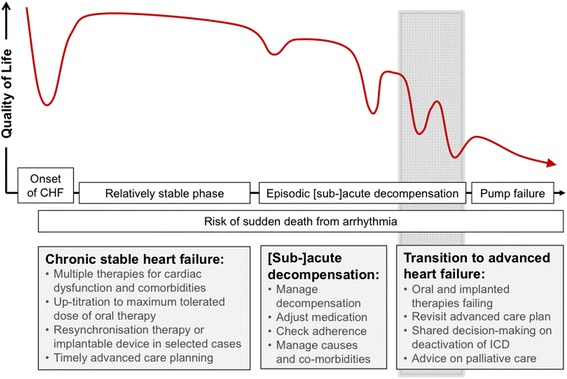
“Further, the continuum of HF is characterized by a progressive deterioration with bouts of (often unpredictable) acute or subacute decompensation from fluid overload, overdiuresis, non-adherence, infection or other intercurrent [18].”
Alternatives to Hospitalization: Adding the Patient Voice to Advanced Heart Failure Management
Bews, H. J., Pilkey, J. L., Malik, A., & Tam, J. W. (2023) · CJC Open · doi:10.1016/j.cjco.2023.03.014 · Cited by 5
Approaches to evidence synthesis in international development: a research agenda
Oliver, S. R., Gough, D., Copestake, J., & Thomas, J. (2018) · Journal of Development Effectiveness · doi:10.1080/19439342.2018.1478875 · Cited by 3
“…Spread, and Sustainability (NASSS) framework developed for health and care technologies, which takes into account non-adoption, abandonment, scale-up, spread and sustainability (Greenhalgh et al 2017b), would be a good starting point for exploring these challenges in international development.”
BackgroundMethodAllen, D. A., Lloyd, A., Edwards, D. L., Grant, A., Hood, K., Huang, C., Hughes, J., Jacob, N., Lacy, D., Moriarty, Y., et al. (2022) · Health and Social Care Delivery Research · doi:10.3310/chck4556 · Cited by 6
Development of the Huntington Support App (HD-eHelp study): a human-centered and co-design approach
van Lonkhuizen, P. J. C., Heemskerk, A., Meijer, E., van Duijn, E., de Bot, S. T., Klempíř, J., Landwehrmeyer, G. B., Mühlbäck, A., Hoblyn, J. C., Squitieri, F., et al. (2024) · Frontiers in Neurology · doi:10.3389/fneur.2024.1399126 · Cited by 2
“Although the underlying reasons for this limited uptake have not been investigated (25), poor uptake of telehealth services in general is often related to a lack of functionalities desired from users, and/or a poor usability and user experience (26–30).”
BackgroundInfluentialBajwa, M., LeMoine, J. E., Morris, M., & Bajwa, N. (2025) · Cureus Journal of Computer Science. · doi:10.7759/s44389-025-04125-y · Cited by 2
Hermeneutic Literature Review: A Methodological Possibility in Organizational Studies
Faganello, C. P., Hamerski, B., & Pinheiro, D. M. (2024) · Organizações & Sociedade · doi:10.1590/1984-92302024v31n0016en · Cited by 2
Exploring the Self-Care Experiences of Adults With Heart Failure in Australia: A Qualitative Study
Nourse, R. A., Kayser, L., & Maddison, R. (2025) · Qualitative Health Research · doi:10.1177/10497323251367936 · Cited by 3
Crump, C., Wernz, C., Schlachta-Fairchild, L., Steidle, E., Duncan, A., & Cathers, L. A. (2020) · Telemedicine Journal and e-Health · doi:10.1089/tmj.2020.0334 · Cited by 3
“50,51 The TIP score could assist by providing an empirical basis for tailoring treatment, including indicating resources and strategies needed to reduce health disparities.”
The Role of Exercise-based Cardiac Rehabilitation in Heart Failure
Ong, J. S. Y., Lin, W., & Yeo, T. J. (2023) · Current Pharmaceutical Design · doi:10.2174/1381612829666230217145100 · Cited by 3
Digital Patient Experience: Umbrella Systematic Review (Preprint)Preprint
Wang, T., Giunti, G., Melles, M., & Goossens, R. (2022) · doi:10.2196/preprints.37952 · Cited by 2
Mappangara, I., Yuianto, J. E., Muzakkir, A. F., Kabo, P., Tandean, P., Setiadji, R., & Qanitha, A. (2025) · Physical Activity Nutrition and Health Sciences Journal · doi:10.65280/panhsj.v2i3.4 · Cited by 1
Kühlein, T., Roos, M., Beier, M., Eggenwirth, P., Engel, B., & Scherer, M. (2023) · Zeitschrift für Allgemeinmedizin · doi:10.1007/s44266-023-00078-4 · Cited by 2
Farmer, H., Kreiner, K., Schuetz, T., Pölzl, G., Puelacher, C., & Schreier, G. (2024) · Studies in health technology and informatics · doi:10.3233/shti240042 · Cited by 5
Rural perinatal nursing in Canada: A hermeneutic literature review
Zimmer, L. V., MacLeod, M., Smit, A. D., & Jónatansdóttir, S. (2025) · International Journal of Nursing Studies Advances · doi:10.1016/j.ijnsa.2025.100300 · Cited by 1
“The hermeneutic review pursued interpretation of both the evidence provided, as well as what is hidden or not revealed in the results of the research and foci of the grey literature (Greenhalgh et al., 2017).”
Lazzarino, R., Borek, A., Brent, A., Welch, J., Honeyford, K., Daniels, R., Kinderlerer, A. R., Cooke, G., Patil, S., Gordon, A. C., et al. (2025) · Frontiers in Public Health · doi:10.3389/fpubh.2025.1521761 · Cited by 1
Investigating the effective factors on telemedicine in Iran of 2030: A futuristic approach
Ramezani, R., Sahebzadeh, M., & Ehteshami, A. (2025) · Journal of Education and Health Promotion · doi:10.4103/jehp.jehp_2024_23 · Cited by 3
Telemonitoring for Patients with Complex Chronic Conditions in Nurse-led Integrated Care
Gordon, K. (2021) · TSpace (University of Toronto) · Cited by 1
Krzesiński, P., Galas, A. A., Piotrowicz, K., Stańczyk, A., Siebert, J., Jankowska, E. A., Siwołowski, P., Gutknecht, P. G., Chrom, P., Szalewska, D., et al. (2021) · Kardiologia Polska · doi:10.33963/kp.a2021.0012
Fisk, M. J. (2021) · Springer eBooks · doi:10.1007/978-3-030-22009-9_455
Fisk, M. J. (2021) · Springer eBooks · doi:10.1007/978-3-319-69892-2_455-2
Fisk, M. J. (2019) · Springer eBooks · doi:10.1007/978-3-319-69892-2_455-1
Rise of the machines: will heart failure become the first cyber-specialty?
Sze, S. (2020) · British Journal of Cardiology · doi:10.5837/bjc.2020.006
HRM AND PUBLIC SERVANT’S HEALTH: EPISTEMOLOGICAL AND METHODOLOGICAL POSSIBILITIES
Nóbrega, P., & Rowe, D. E. O. (2023) · Revista Pensamento Contemporâneo em Administração · doi:10.12712/rpca.v17i2.58020
Masoudi, N., Baghaie, R., Alilu, L., & Mohammadi, F. (2024) · Middle East Journal of Rehabilitation and Health Studies · doi:10.5812/mejrh-142283
Navigating the Complexities of Scaling Remote Patient Management: A Scoping Review (Preprint)Preprint
Houwen, J., Pannunzio, V., van Os, H. J. A., Janssen, V. R., Raijmakers, J., Rietjens, J. A. C., Atsma, D. E., & Kleinsmann, M. S. (2024) · doi:10.2196/preprints.59534
Changes in heart failure healthcare in general practice during the COVID-19 pandemic: a survey
Rothenberger, R., Blakeman, T., Chew-Graham, C. A., Forsyth, F., Hossain, M. Z., Sowden, E., & Deaton, C. (2025) · BJGP Open · doi:10.3399/bjgpo.2024.0138
Faganello, C. P., Hamerski, B., & Pinheiro, D. M. (2024) · Organizações & Sociedade · doi:10.1590/1984-92302024v31n0016pt · Cited by 1
van Lonkhuizen, P. J. C., Slutter, L., Meijer, E., van Duijn, E., de Bot, S. T., Vegt, N., Chavannes, N. H., Heemskerk, A., Landwehrmeyer, G. B., Mühlbäck, A., et al. (2025) · BMC Digital Health · doi:10.1186/s44247-025-00180-6
“Participatory design is highly recommended for aligning eHealth solutions with end-users’ needs [5, 17–19] and has shown success in other neurodegenerative and neurological diseases (e.g., dementia, Parkinson’s disease, and multiple sclerosis) [12–14].”
Petrova, M., & Barclay, S. I. G. (2021) · OSF Preprints (OSF Preprints) · doi:10.31219/osf.io/cu6af
Butler, J., Petrie, M. C., Bains, M., Bawtinheimer, T., Code, J., Levitch, T., Malvolti, E., Monteleone, P., Stevens, P., Vafeiadou, J., et al. (2024) · Figshare · doi:10.6084/m9.figshare.26581565
Additional file 1 of Exploring the intersection of hermeneutics and implementation: a scoping review
MacLeod, M., McCaffrey, G., Wilson, E., Zimmer, L. V., Snadden, D., Zimmer, P., Jónatansdóttir, S., Fyfe, T., Koopmans, E., Ulrich, C., et al. (2024) · Figshare · doi:10.6084/m9.figshare.26572378
Butler, J., Petrie, M. C., Bains, M., Bawtinheimer, T., Code, J., Levitch, T., Malvolti, E., Monteleone, P., Stevens, P., Vafeiadou, J., et al. (2024) · Figshare · doi:10.6084/m9.figshare.26581568
Rodrigues, C. G., Façanha, L. O. S., Figueiredo, I. D. L., Lima, G. R., de Oliveira, C. T., & Rodrigues, P. V. F. (2026) · Journal of Public Health · doi:10.1007/s10389-026-02758-4
Braanaas, K. S., Dammen, T., Fagerland, M. W., Husebye, E., Leinaas, A., Schirmer, H., Sverre, E., Aune, E., Myhre, P. L., & Munkhaugen, J. (2026) · Heart Failure Reviews · doi:10.1007/s10741-026-10635-1
Living With Symptom Experiences in Patients With Heart Failure: A Scoping Review
Fukuda, T., Hosogya, J., Imai, Y., & Murakami, Y. (2026) · Cureus · doi:10.7759/cureus.107667
“Greenhalgh et al. [34] noted that although technologies such as remote monitoring could make symptom management more efficient, some patients perceive these systems as cold care, which undermines a sense of reassurance.”
MacLeod, M., Singh, A., Barker, E., Jónatansdóttir, S., Snadden, D., McCaffrey, G., Zimmer, L. V., Zimmer, P., Ulrich, C., & Graham, I. D. (2026) · Journal of Evaluation in Clinical Practice · doi:10.1111/jep.70524
“…implementation projects became differently attuned to their contexts and experiences [21], recognized nuances in patient behaviours [20], identified and articulated the overlooked objectification of patients [22], or fostered cultural humility and promoted cross‐cultural communication [23].”
A scoping review and systems thinking synthesis of scale-up frameworks
Hooley, C., Marçal, K. E., Barlow, K., & Vogel, M. T. (2026) · BMC Health Services Research · doi:10.1186/s12913-026-15107-8
“In addition to the explicit inclusion criteria, we included articles that meaningfully contributed to understanding scale-up determinants [36].”
Healthcare Workers’ Perceptions of eHealth Implementation: Evidence from Systematic Review Methods
Dery, J., Oladipo, G. S., Ugege, E. O., & Mariere, U. I. (2026) · International Journal of Health Sciences and Research · doi:10.52403/ijhsr.20260921
Metadata
- Authors
- Greenhalgh, T., A’Court, C., & Shaw, S.
- Affiliations
- University of Oxford (GB)
- Corresponding author
- Greenhalgh, Trisha
- Venue
- BMC Cardiovascular Disorders
- Published
- 2017-06-14
- Volume
- 17
- Issue
- 1
- Pages
- 156-156
- ISSN
- 1471-2261 (ISSN-L)
- PMC
- PMC5471857
- OpenAlex
- W2625313012
- Semantic Scholar
- 74e93217bf12a7bb9fecda5969b9abb05bf24c44
- Cited by
- 141
- References
- 131
- Citations by year
- 2026: 6 · 2025: 12 · 2024: 15 · 2023: 21 · 2022: 15 · 2021: 23 · 2020: 17 · 2019: 15 · 2018: 15 · 2017: 2
- FWCI
- 2.18
- Type
- journal article
- Language
- en
- Open access
- gold
- doi.org
- Licence
- cc-by
- Locations
- BMC Cardiovascular Disorders (publishedVersion, cc-by)
- Europe PMC (PubMed Central) (publishedVersion, other-oa)
- PubMed Central (publishedVersion, cc-by)
- PubMed (publishedVersion)
- DOAJ (DOAJ: Directory of Open Access Journals) (submittedVersion, cc-by-sa)
- Funders
- Wellcome Trust (WT104830MA)
- National Institute for Health Research (BRC-1215-20008)
- Topics
- Health Sciences › Medicine › Public Health, Environmental and Occupational Health › Telemedicine and Telehealth Implementation
- Health Sciences › Medicine › Cardiology and Cardiovascular Medicine › Heart Failure Treatment and Management
- Health Sciences › Health Professions › General Health Professions › Mobile Health and mHealth Applications
- Keywords
- heart failure, telemedicine, remote monitoring, relationship-centered care, comorbidities, patient self-management, co-design, service model, telehealth adoption
- MeSH terms
- Attitude of Health Personnel, Heart Failure, Humans, Health Knowledge, Attitudes, Practice, Patient Participation, Policy Making, Predictive Value of Tests, Risk Factors, Self Care, Comorbidity, Treatment Outcome, Process Assessment, Health Care, Telemedicine, Cost of Illness, Evidence-Based Medicine, Hermeneutics
About these checks
Registry, retraction, Cites and statistics results are computed, not judged, with one exception: a printed reference that no index lists is read once by a model before it counts as a citation error. Claims are extracted by a model and kept only when their quote appears verbatim in the text; each cited source is then checked, with a model’s help, for whether it says what the claim relies on. Those verdicts can be wrong — read the claim’s quote and the cited source before relying on one.
Statistics and arithmetic are recomputed, not judged.
Confidence bands are shown only for fields calibrated on our annotated test set. None is calibrated yet, so no band is shown.
What counts as a claim ›How we measure confidence ›How we check this ›
Are you an author, or do you see a problem with this page? Request a review
Data sources
Bibliographic data: Semantic Scholar, OpenAlex, Crossref.
Contains information from the Semantic Scholar Academic Graph Datasets, made available under the ODC Attribution License (ODC-BY 1.0).
Semantic Scholar’s data is described in: Kinney, R., et al. (2023). The Semantic Scholar Open Data Platform. arXiv:2301.10140.
