

The heterogeneity statistic I2 can be biased in small meta-analyses
Open accessThe DOI matches its Crossref record; 26 of the 26 references it cites were found in a registry or an index.
Abstract
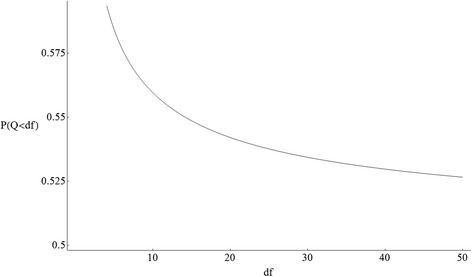
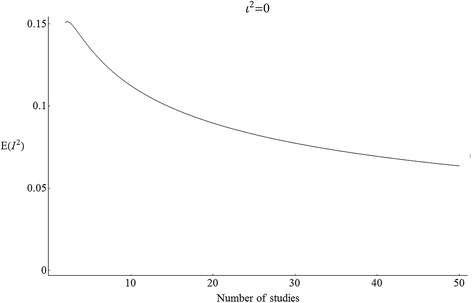
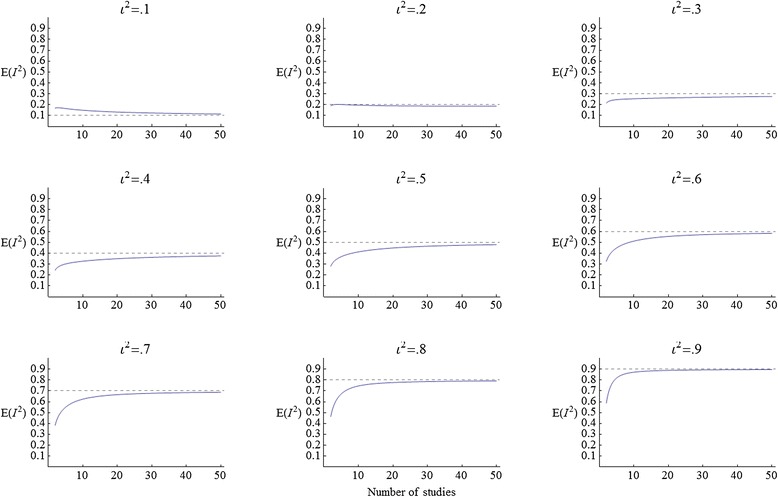
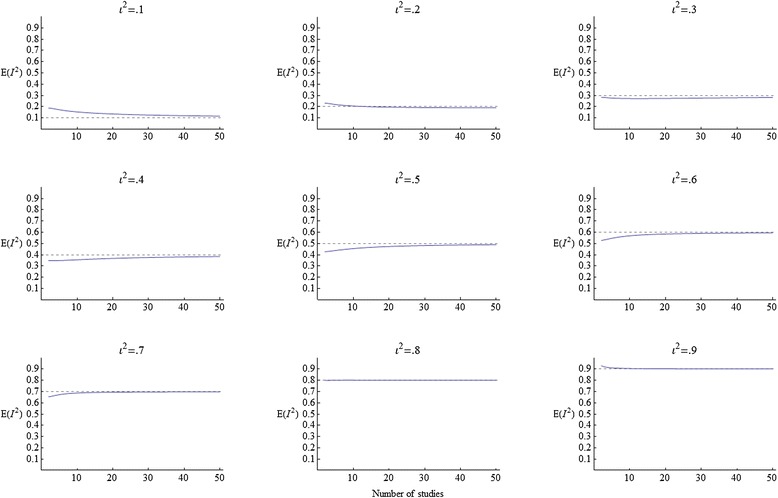
BACKGROUND: Estimated effects vary across studies, partly because of random sampling error and partly because of heterogeneity. In meta-analysis, the fraction of variance that is due to heterogeneity is estimated by the statistic I(2). We calculate the bias of I(2), focusing on the situation where the number of studies in the meta-analysis is small. Small meta-analyses are common; in the Cochrane Library, the median number of studies per meta-analysis is 7 or fewer. METHODS: We use Mathematica software to calculate the expectation and bias of I(2). RESULTS: I(2) has a substantial bias when the number of studies is small. The bias is positive when the true fraction of heterogeneity is small, but the bias is typically negative when the true fraction of heterogeneity is large. For example, with 7 studies and no true heterogeneity, I(2) will overestimate heterogeneity by an average of 12 percentage points, but with 7 studies and 80 percent true heterogeneity, I(2) can underestimate heterogeneity by an average of 28 percentage points. Biases of 12-28 percentage points are not trivial when one considers that, in the Cochrane Library, the median I(2) estimate is 21 percent. CONCLUSIONS: The point estimate I(2) should be interpreted cautiously when a meta-analysis has few studies. In small meta-analyses, confidence intervals should supplement or replace the biased point estimate I(2).
Overview
The claims and statistics of this paper haven’t been checked yet.
Free: it reads the open-access text and checks the first 5 claims that cite a source we can check. Create a free account to check every claim.
Integrity signals
Registry
Cites
Statistics
Figures
Verification
Claims the paper makes
The claims and statistics of this paper haven’t been checked yet.
Free: it reads the open-access text and checks the first 5 claims that cite a source we can check. Create a free account to check every claim.
Claims other papers make about this one
Each is checked against this paper’s own text: does it say what the citing paper says it does?
The source backs part of the claim, not all of it — or backs it for a different population, condition or comparison.
In the citing paper
“The I2 statistic in analyses of a few studies is considered to be uninformative90,91”
From Effects of Tea (Camellia sinensis) or its Bioactive Compounds l-Theanine or l-Theanine plus Caffeine on Cognition, Sleep, and Mood in Healthy Participants: A Systematic Review and Meta-Analysis of Randomized Controlled Trials (2025) · cites this paper as [91]
Experimental — accuracy not yet measuredThe cited source says what the claim attributes to it.
In the citing paper
“The heterogeneity estimates for professional burnout, somatisation, positive affect, negative affect, and resilience may not be reliable given the few comparisons contributing to the effect size (von Hippel, 2015).”
From Intervention Programs Targeting the Mental Health, Professional Burnout, and/or Wellbeing of School Teachers: Systematic Review and Meta-Analyses (2023) · cites this paper as von Hippel, 2015
In the citing paper
“Variation in effect sizes due to heterogeneity (rather than chance) was assessed with I2.54”
From Birth outcomes following intrauterine exposure to electronic nicotine delivery systems: a systematic review and meta-analysis (2026) · cites this paper as [54]
Self-check
Percentages, sums and reported differences re-computed from the paper’s own numbers.
The self-check needs the paper’s full text.
Citations
Cites
Quantifying heterogeneity in a meta‐analysis
Higgins, J. P. T., & Thompson, S. G. (2002) · Statistics in Medicine · doi:10.1002/sim.1186 · Cited by 36,763
The combination of estimates from different experiments
Cochran, W. G. (1954) · Biometrics · doi:10.2307/3001666 · Cited by 5,380
Fixed-and random-effects models in meta-analysis.
Hedges, L. V., & Vevea, J. L. (1998) · Psychological Methods · doi:10.1037/1082-989x.3.4.486 · Cited by 2,977 · cited 2×
“Any reasonable estimator of τ(2) will be limited to nonnegative values, and this will cause bias when the true value of τ(2) is close to zero [15,23].”
BackgroundA Re-Evaluation of Random-Effects Meta-Analysis
Higgins, J. P. T., Thompson, S. G., & Spiegelhalter, D. J. (2009) · Journal of the Royal Statistical Society Series A: Statistics in Society · doi:10.1111/j.1467-985x.2008.00552.x · Cited by 2,569
Bias and Efficiency of Meta-Analytic Variance Estimators in the Random-Effects Model
Viechtbauer, W. (2005) · Journal of Educational and Behavioral Statistics · doi:10.3102/10769986030003261 · Cited by 1,699
Undue reliance on I 2 in assessing heterogeneity may mislead
Rücker, G., Schwarzer, G., Carpenter, J. R., & Schumacher, M. (2008) · BMC Medical Research Methodology · doi:10.1186/1471-2288-8-79 · Cited by 1,287
Uncertainty in heterogeneity estimates in meta-analyses
Ioannidis, J. P. A., Patsopoulos, N. A., & Evangelou, E. (2007) · BMJ · doi:10.1136/bmj.39343.408449.80 · Cited by 1,254
Turner, R. M., Davey, J., Clarke, M. J., Thompson, S. G., & Higgins, J. P. (2012) · International Journal of Epidemiology · doi:10.1093/ije/dys041 · Cited by 837
Melsen, W. G., Bootsma, M. C. J., Rovers, M. M., & Bonten, M. J. M. (2014) · Clinical Microbiology and Infection · doi:10.1111/1469-0691.12494 · Cited by 776
The power of statistical tests in meta-analysis
Hedges, L. V., & Pigott, T. D. (2001) · Psychological Methods · doi:10.1037/1082-989x.6.3.203 · Cited by 716
Research works printed but not linked: 2
- von Hippel PT Osborne C Lincove A Bellows L Mills N The challenges of seeking exceptional teacher preparation programs among many noisy estimates 2014 Rochester, NY Social Science Research Network
- Cochrane Collaborative, “Cochrane Library”, 2015. [Online]. Available: http://www.cochranelibrary.com/. [Accessed: 25-Feb-2015].
Cited by
Items 901–999 of 999
Mickenautsch, S., & Yengopal, V. (2024) · Cureus · doi:10.7759/cureus.71668 · Cited by 4
Lien, K. M., Ellis, P. K., Scherer, N. J., & Lancaster, H. S. (2024) · International Journal of Speech-Language Pathology · doi:10.1080/17549507.2024.2412610 · Cited by 4
“(Von Hippel, 2015); (b) there is a moderating factor which was not accounted for in the analysis; (c) one or more of the studies was an outlier or an influential study.”
Jimenez, A. E., Geist, E. G., Connolly, E. S., McKhann, G. M., & Youngerman, B. E. (2024) · Journal of neurosurgery · doi:10.3171/2024.7.jns241003 · Cited by 3
Yu, K., Zeng, B., Zhou, Q., & Sun, F. (2024) · International Journal of Surgery · doi:10.1097/js9.0000000000002205 · Cited by 3
Kaso, A. W., Debela, B. G., Hareru, H. E., Ewune, H. A., Debisa, M. A., Sisay, D., & Hailu, A. (2025) · Cost Effectiveness and Resource Allocation · doi:10.1186/s12962-025-00620-0 · Cited by 4
“Cochran’s Q-statis-tic and I 2 statistics were used to assess the heterogeneity of the included papers; I 2 values of 25%, 50%, and 75%, respectively, indicate low, moderate, and high heterogeneity [53, 54].”
Jia, M., Ji, G., Wang, R., Yan, Z., Niu, W., Chen, J., & Yu, J. (2025) · BMC Surgery · doi:10.1186/s12893-025-02981-y · Cited by 3
“Additionally, there is a need to be vigilant about the potential for significant bias in the I 2 statistic that could arise from studies with limited sample sizes [23].”
Wen, Z., Peng, H., Tian, C.-L., Xia, P.-Y., Yi-Liu, & Meng, Q. (2025) · Journal of Robotic Surgery · doi:10.1007/s11701-025-02641-6 · Cited by 5
“The presence of high heterogeneity across studies was largely unavoidable, likely due to differences in sample sizes and patient characteristics [21].”
Gerber, L., Laher, A. E., Enyuma, C. O. A., McDowall, J., Aigbodion, S. J., Buchanan, S., & Adam, A. (2017) · Journal of Clinical Orthopaedics and Trauma · doi:10.1016/j.jcot.2017.10.008 · Cited by 3
Role of Self-Compassion on College Students’ Social Self-Evaluations and Affect Across Two Domains
Saeed, Z., & Sonnentag, T. L. (2018) · Psi Chi Journal of Psychological Research · doi:10.24839/2325-7342.jn23.2.132 · Cited by 10
da Silva, F. R. P., Leal, A. L. A. B., Koga, R. S., Alves, E. H. P., de Lira, J. A. S. P., da Silva, H. A., Ayala, K. N. R., Gomes, P. R. C., Pereira, A. C. T. D. C., & Vasconcelos, D. F. P. (2021) · International Journal of Statistics in Medical Research · doi:10.6000/1929-6029.2021.10.08 · Cited by 3
Maheshwari, A., Sah, R., Kumar, J., Padhi, B. K., Manna, S., Pallepogula, D. R., Joshi, B., & Aggarwal, A. K. (2022) · Newborn · doi:10.5005/jp-journals-11002-0051 · Cited by 3
Hidradenitis suppurativa and diabetes: big data bias masks a true association
Frew, J. W. (2019) · Clinical and Experimental Dermatology · doi:10.1111/ced.13954 · Cited by 3
Taylor, C., Ekert, J. O., Sefcikova, V., Fersht, N. L., & Samandouras, G. (2022) · Research Square · doi:10.21203/rs.3.rs-938779/v2 · Cited by 3
Publication Bias in Meta-Analyses from Psychology and Medicine: A Meta-Meta-AnalysisPreprint
van Aert, R. C. M., Wicherts, J. M., & van Assen, M. A. L. M. (2017) · MetArXiv (OSF Preprints) · doi:10.31222/osf.io/czdp3 · Cited by 4
Landscape drives zoonotic malaria prevalence in non-human primatesPreprint
Johnson, E., Sharma, R. S. K., Cuenca, P. R., Byrne, I., Salgado‐Lynn, M., Shahar, Z. S., Lin, L. C., Zulkifli, N., Saidi, N. D. M., DRAKELEY, C. J., et al. (2022) · bioRxiv (Cold Spring Harbor Laboratory) · doi:10.1101/2022.06.17.496284 · Cited by 3
“In most studies identified, study site was only geolocated to a geographic area or descriptive location.”
BackgroundGreen, R., Marjenberg, Z. R., Lip, G. Y. H., Banerjee, A., Wisnivesky, J. P., Delaney, B. C., Peluso, M. J., Wynberg, E., & Abdul-Jawad, S. (2024) · medRxiv · doi:10.1101/2024.11.19.24317487 · Cited by 3
Goeddel, L. A., Grant, M. C., Bandeen‐Roche, K., & Vetter, T. R. (2024) · Anesthesia & Analgesia · doi:10.1213/ane.0000000000007032 · Cited by 3
“21 When SRMA combine point estimates and 95% confidence intervals from multiple RCTs, inherent heterogeneity presents a significant potential threat to interpretability that may be known or unknown and have uncertain consequences.”
Okwor, V. C., Okwor, C. J., Ukwuoma, M., Mitha, S. B., & Nweke, M. (2025) · Medical Principles and Practice · doi:10.1159/000545264 · Cited by 3
“When a meta-analysis has few studies I 2 should be interpreted cautiously [68].”
Effectiveness of obesity interventions in sub-Saharan Africa: A systematic review and meta-analyses
Agyemang, K., Crankson, S., & Anokye, N. (2025) · PLoS ONE · doi:10.1371/journal.pone.0323717 · Cited by 2
“95% Confidence Intervals (CI) were also used to supplement I 2 and τ 2 statistics by demonstrating the range of the effect estimate [32].”
Jung, M., Li, M., Shin, J., Chung, B. I., & Langston, M. E. (2025) · BMC Cancer · doi:10.1186/s12885-025-14406-3 · Cited by 3
New and Emerging Pharmacotherapies for Pruritus: A Systematic Review and Network Meta-Analysis
Li, H., Arthur, A., Forouzandeh, M., Pomputius, A. F., Cuervo‐Pardo, L., & Montanez-Wiscovich, M. E. (2025) · Dermatitis · doi:10.1089/derm.2023.0419 · Cited by 3
Penubarthi, S., Reddy, M. V., Donthu, R. K., Guhan, N., Ravindra, A. G., & Bhongir, A. V. (2025) · Indian Journal of Psychological Medicine · doi:10.1177/02537176251363856 · Cited by 6
“Secondary outcomes: changes in psychological flexibility, rehabilitation participation, functional disability, and QOL in both physical and mental health following ACT intervention in patients with TBI.”
Loy, L. M., Acharyya, S., Low, H. M., Pua, U., & Tan, C. H. (2025) · Current Problems in Diagnostic Radiology · doi:10.1067/j.cpradiol.2025.08.006 · Cited by 2
Kuschel, L., Botzet, L. J., & Gerlach, T. M. (2025) · Journal of Social and Personal Relationships · doi:10.1177/02654075251359404 · Cited by 3
Rambabu, L., Edmiston, T., Smith, B. G., Kohler, K., Kolias, A. G., Bethlehem, R. A. I., Keane, P. A., Marcus, H. J., Hutchinson, P. J., & Bashford, T. (2025) · PLOS Digital Health · doi:10.1371/journal.pdig.0000783 · Cited by 6
“The I 2 value was calculated at 74%, indicating a large amount of heterogeneity between studies; however, it should be noted that in small meta-analyses the I 2 has been shown to be biased and should be interpreted with caution [67].”
Amare, F., Mirkazemi, C., Peterson, G. M., & Bezabhe, W. M. M. (2025) · GeroScience · doi:10.1007/s11357-025-01957-3 · Cited by 3
La, P., Korn, R. E., Cox, P. B., Goel, D., Jabbour, J.-F., Westgeest, A. C., Maskarinec, S. A., Monardo, R., Parsons, J. B., Ruffin, F., et al. (2025) · JAMA Network Open · doi:10.1001/jamanetworkopen.2025.43552 · Cited by 4
Valenzuela‐Fuenzalida, J. J., Cornejo-Peña, J., Martínez-Cid, J., Rojas-Acuña, C., Granite, G., Sanchis‐Gimeno, J. A., Bruna-Mejías, A., Nova-Baeza, P., Donoso, M. O., Oyanedel-Amaro, G., et al. (2025) · World Neurosurgery · doi:10.1016/j.wneu.2025.124652 · Cited by 9
Kannan, S., Somanathan, S., Suvarna, R., Weerasooriya, M. M., & Vakharia, V. N. (2025) · Child s Nervous System · doi:10.1007/s00381-025-07080-0 · Cited by 2
“I 2 values were interpreted as follows: 0–25%: Low heterogeneity, 26–50%: Moderate heterogeneity, > 50%: Substantial heterogeneity [12].”
Derhab, M., Ellabbad, M. M., Muhammad, S., Hamouda, A. M., Tawela, A., Okar, L., Smith, C. Y., Savica, R., & Rocca, W. A. (2025) · Movement Disorders Clinical Practice · doi:10.1002/mdc3.70490 · Cited by 2
“19 However, sensitivity analyses were performed after excluding two studies that were considered at high risk of bias.”
Oladghaffari, M., Bandehagh, H., Malekinejad, F., Fakhkhari, S., Koohi, N., Moghaddamziabari, S., Hamzehzadeh, S., Mohammadian, E., Talebi, M., Salehi-Pourmehr, H., et al. (2026) · European journal of medical research · doi:10.1186/s40001-025-03798-4 · Cited by 2
Gregersen, L., Moos, C. M., Hikmat, Z., Rasmussen, N. F., Petersen, S. R., Heitmann, B. L., Halldorsson, T. I., Andersen, V. C., & Christensen, R. (2026) · Advances in Nutrition · doi:10.1016/j.advnut.2026.100614 · Cited by 2
Wynkoop, K. S., Wissinger, D. R., & Horn, M. V. (2019) · Journal of the American Academy of Special Education Professionals · doi:10.64546/jaasep.402 · Cited by 6
“While this is considered a median 𝐼 (cid:2870) estimate of heterogeneity in the Cochrane Library (Von Hippel, 2015), the confidence intervals ranged broadly (95% CI: 0.55 to 0.83).”
InfluentialForest Plots in a Meta-Analysis
Patole, S. (2021) · Springer eBooks · doi:10.1007/978-3-030-71921-0_8 · Cited by 5
The Presence of Periodontitis in Patients with Von Willebrand Disease: A Systematic Review
Meşter, A., Mancini, L., Marchetti, E., Băciuț, M. F., Bran, S., LUCACIU, O. P., Băciuț, G., Tomuleasa, C., Paşca, S., Piciu, A., et al. (2021) · Applied Sciences · doi:10.3390/app11146408 · Cited by 2
Prognostic value of dysadherin in cancer: A systematic review and meta-analysis
Niinivirta, A., Salo, T. A., Åström, P., Juurikka, K., & Risteli, M. (2022) · Frontiers in Oncology · doi:10.3389/fonc.2022.945992 · Cited by 3
You’re heartless, I’m less: self-image and social norms in moral judgment
Trémolière, B., & Rateau, P. (2023) · The Journal of General Psychology · doi:10.1080/00221309.2023.2218637 · Cited by 3
Chioma, R., Ghirardello, S., Włodarczyk, K., Ulan-Drozdowska, J., Spagarino, A., Szumska, M., Krasuska, K., Seliga-Siwecka, J. P., Philip, R. K., Assaf, N. A., et al. (2023) · Frontiers in Pediatrics · doi:10.3389/fped.2023.1049014 · Cited by 4
“We chose our model a priori, as a formal test for homogeneity based on the Q and I(2) statistics may not always be fully appropriate for choosing the analysis method (26, 27).”
MethodAlshammari, A., Oates, A., Rigby, A. S., & Offiah, A. C. (2023) · Clinical Radiology · doi:10.1016/j.crad.2023.11.014 · Cited by 2
Chen, J., Hu, C., Chen, G., & Zhang, Y. (2024) · Nucleosides Nucleotides & Nucleic Acids · doi:10.1080/15257770.2024.2302525 · Cited by 2
Yarger, H. A., Sarkar, M., Harrington, E., & Redcay, E. (2024) · Review Journal of Autism and Developmental Disorders · doi:10.1007/s40489-024-00449-y · Cited by 3
Chen, C., Qin, J., Wang, C., Huang, H., Li, H., Wen, Z., Liu, Y., & Yang, X. (2024) · Medicine · doi:10.1097/md.0000000000037524 · Cited by 2
“[26]”
Mekonnen, B. D., & Tsega, S. S. (2024) · BMJ Open · doi:10.1136/bmjopen-2023-078299 · Cited by 6
Association between ABO blood groups and risk of COVID-19 infection: An umbrella review
Parv, D., & Shahnavazi, A. (2024) · Journal of Hematology and Allied Sciences · doi:10.25259/jhas_26_2023 · Cited by 2
RSV Infection in Refugees and Asylum Seekers: A Systematic Review and Meta-Analysis
Riccò, M., Corrado, S., Bottazzoli, M., Marchesi, F., Gili, R., Bianchi, F. P., Frisicale, E. M., Guicciardi, S., Fiacchini, D., & Tafuri, S. (2024) · Epidemiologia · doi:10.3390/epidemiologia5020016 · Cited by 2
Vychopen, M., Arlt, F., Güresir, E., & Wach, J. (2024) · Frontiers in Oncology · doi:10.3389/fonc.2024.1464671 · Cited by 2
Lisik, D., Milani, G., Salisu, M., Ermis, S. S. Ö., Goksör, E., Basna, R., Wennergren, G., Kankaanranta, H., & Nwaru, B. (2024) · BMJ Open · doi:10.1136/bmjopen-2023-080263 · Cited by 1
Wang, X., Zheng, E., Sun, H., Xu, B., Zheng, L., & Huang, Y. (2024) · Annals of Hepatology · doi:10.1016/j.aohep.2024.101571 · Cited by 2
Lauder, K., McDowall, A., & Tenenbaum, H. R. (2024) · Neurodiversity · doi:10.1177/27546330241292984 · Cited by 5
Moran, V. M. V., Nila, I. S., Madhuvilakku, R., Sumsuzzman, D. M., Khan, Z. A., & Hong, Y. (2024) · BMJ Open Sport & Exercise Medicine · doi:10.1136/bmjsem-2024-001906 · Cited by 2
“51 52 Heterogeneity levels were categorised as non-significant, low, moderated and high when I 2 value fell within the ranges of 0–25%, 26–50%, 51–75% and 75–100%, respectively.”
Bianco, R., Ferraroni, M., Speciani, M. C., Parpinel, M. T., & Edefonti, V. C. (2025) · Advances in Nutrition · doi:10.1016/j.advnut.2025.100397 · Cited by 2
Wang, K., Wang, L., Man, J., Yang, J., Wang, H., Zhang, Y., & Yang, L. (2025) · Journal of Robotic Surgery · doi:10.1007/s11701-025-02248-x · Cited by 2
“It is important to acknowledge the possible bias that small sample sizes may introduce in the I 2 statistic [23].”
Network meta-analysis made simple: A composite likelihood approach
Liu, Y., Zhang, B., Chu, H., & Chen, Y. (2025) · Research Synthesis Methods · doi:10.1017/rsm.2024.12 · Cited by 4
Papaodyssea, I., Lagiou, A., Tzoulaki, I., Valanou, E., & Naska, A. (2025) · Nutrients · doi:10.3390/nu17091408 · Cited by 4
Bernardi, L. P., Schlickmann, T. H., Carello‐Collar, G., Bastiani, M. A. D., Zimmer, E. R., Braganhol, E., Rohden, F., & Souza, D. O. (2025) · Molecular Neurobiology · doi:10.1007/s12035-025-05025-x · Cited by 2
Kazemi, M., Arshadi, M., & Soodejani, M. T. (2025) · Journal of Infection Prevention · doi:10.1177/17571774251366966 · Cited by 2
Rahman, M., Tuli, S. S., Saha, T., Raquib, O. I., Shimu, A. T., Ikram, S. M., & Ashworth, E. (2025) · PLoS ONE · doi:10.1371/journal.pone.0331033 · Cited by 3
“A random-effects model will be used for high heterogeneity, complemented by prediction intervals [44].”
Fu, J., van Unen, N., Sarlea, A., Nguyen, N., Jaeger, M., Botey-Bataller, J., Koeken, V. A. C. M., de Bree, L. C. J., Mourits, V. P., Moorlag, S. J. C. F. M., et al. (2025) · Molecular Systems Biology · doi:10.1038/s44320-025-00146-w · Cited by 3
“The imprecision and potential bias of the I ² statistic in small meta-analyses have been discussed in detail by von Hippel (von Hippel, 2015), who recommends that con fi dence intervals for I ² should always be reported and interpreted cautiously.”
Bandyopadhyay, N., Das, T., & Biswas, A. (2026) · Indian Journal of Community Medicine · doi:10.4103/ijcm.ijcm_929_24 · Cited by 7
“[37,38] The corresponding P values and 95% CI were also considered for I 2 .”
Fest, J., Pfalzgraf, D., Weiß, C., & Hetjens, S. (2017) · Journal of Clinical Urology · doi:10.1177/2051415817706045 · Cited by 2
Aho, S., Guilloteau, A., Astruc, K., Carré, Y., Chaize, P., Keïta-Perse, O., Lurton, Y., & Lepelletier, D. (2019) · American Journal of Infection Control · doi:10.1016/j.ajic.2019.06.030 · Cited by 3
Sarno, A., Daltro, C. B., Mendes, C. M. C., & Barbosa, T. (2021) · Revista da Sociedade Brasileira de Medicina Tropical · doi:10.1590/0037-8682-0017-2021 · Cited by 2
“However, the inclusion of an extensive number of studies is considered to reduce the impact of discrepant observations 29 .”
Droppelmann, G., Saavedra, A., Apablaza, F., & de Macedo, A. V. (2021) · Principles and Practice of Clinical Research Journal · doi:10.21801/ppcrj.2021.74.4 · Cited by 2
Pineda, M., & Ospina, J. P. Z. (2022) · Universitas Médica · doi:10.11144/javeriana.umed63-1.aphl · Cited by 4
Spooner, C., Spooner, S., & Tierney, S. (2022) · EMJ Neurology · doi:10.33590/emjneurol/22-00029 · Cited by 2
Risk of Gastric Cancer and Utility of Endoscopic Screening for Lynch Syndrome Patients
Bar-Mashiah, A., Ahsan, M. D., McGonigle, R., & Sharaf, R. (2023) · Foregut The Journal of the American Foregut Society · doi:10.1177/26345161221147744 · Cited by 2
Naher, S. (2023) · Journal of Sociology Psychology & Religious Studies · doi:10.53819/81018102t4218 · Cited by 1
Zhu, J., Xia, Y., Liu, X., & Zhang, C. (2024) · Journal of Gastroenterology and Hepatology · doi:10.1111/jgh.16489 · Cited by 2
“14 Therefore, we adopted a random effects model to reduce potential bias caused by heterogeneity.”
MethodParticipant Attentiveness to Consent Forms
Baker, D., & Chartier, C. R. (2018) · Psi Chi Journal of Psychological Research · doi:10.24839/2325-7342.jn23.2.141 · Cited by 4
Parental Attachment Predicting Emotions and Stress During Positive Life Events
Camden, A. A., & Hughes, J. L. (2018) · Psi Chi Journal of Psychological Research · doi:10.24839/2325-7342.jn23.2.119 · Cited by 4
Seeking Exceptional Teacher Preparation Programs Among Many Noisy EstimatesPreprint
von Hippel, P. T., Osborne, C., Lincove, J. A., Mills, N. L., & Bellows, L. (2014) · SSRN Electronic Journal · doi:10.2139/ssrn.2506935 · Cited by 4
Innocent, D. C., Innocent, R. C., Kumar, R., Rabaan, A. A., Emerole, C. O., Ayando, O. D., Dike, I. C., & Duruji, C. O. (2023) · medRxiv · doi:10.1101/2023.10.13.23297012 · Cited by 2
Landscape drives zoonotic malaria prevalence in non-human primatesPreprint
Johnson, E., Sharma, R. S. K., Cuenca, P. R., Byrne, I., Salgado‐Lynn, M., Shahar, Z. S., Lin, L. C., Zulkifli, N., Saidi, N. D. M., DRAKELEY, C. J., et al. (2024) · eLife · doi:10.7554/elife.88616.3 · Cited by 2
Lund, C., Orkin, K., Witte, M., Walker, J., Davies, T., Haushofer, J., Murray, S. M., Bass, J., Murray, L. K., Tol, W. A., et al. (2024) · SSRN Electronic Journal · doi:10.2139/ssrn.4826030 · Cited by 3
Johnstone, S., Schenkel, A., Canazzi, S., Eiden, R. D., & Hawk, Jr. (2026) · Nicotine & Tobacco Research · doi:10.1093/ntr/ntag118 · Cited by 2
“54 Trim-and-fill methods assessed publication bias and the potential effect of missing studies on confidence inter vals.”
Almarhabi, M. (2022) · Intensive and Critical Care Nursing · doi:10.1016/j.iccn.2022.103214 · Cited by 1
Sharma, S., Basu, S., Goyal, R. K., Sahoo, P. K., & Mathur, R. (2022) · Journal of Pharmacology and Pharmacotherapeutics · doi:10.1177/0976500x231154743 · Cited by 2
Entrepreneurial Mindset and MSME Performance: A Meta-Analysis
Zahreni, S., Handoyo, S., & Fajrianthi (2023) · Advances in economics, business and management research/Advances in Economics, Business and Management Research · doi:10.2991/978-94-6463-244-6_38 · Cited by 1
Fradera, A., McLaren, J., Gadon, L., Cullen, B., & Evans, J. J. (2024) · The Clinical Neuropsychologist · doi:10.1080/13854046.2024.2315739 · Cited by 2
Esfarjani, F., Abedi, A., Dehghani, A., Fadavi, G., & Mohammadi-Nasrabadi, F. (2024) · Environmental Science and Pollution Research · doi:10.1007/s11356-024-33211-2 · Cited by 1
Gohil, N. V., Fuentes-Gandara, F., Gohil, H., Gurajala, S., Innocent, D. C., Tesfaye, T., & Praticò, D. (2024) · Journal of Alzheimer s Disease Reports · doi:10.3233/adr-240057 · Cited by 2
Cho, M., & Kim, M. Y. (2024) · Journal of Korean Biological Nursing Science · doi:10.7586/jkbns.24.035 · Cited by 1
“A p -value of less than 0.05 in the Q-statistics or an I 2 value exceeding 50% was interpreted as indicating significant heterogeneity [17].”
InfluentialMoubchiri, C. E., Chahboune, M., Guennouni, M., & Hilali, A. (2024) · Osong Public Health and Research Perspectives · doi:10.24171/j.phrp.2024.0204 · Cited by 3
Clay, B., Sokhal, B. S., Zeriouh, S., Srinivasan, N. T., Gajendragadkar, P. R., & Martin, C. (2025) · Arrhythmia & Electrophysiology Review · doi:10.15420/aer.2024.41 · Cited by 1
Jones, M. L., Leonard, A. F. C., Bethel, A. C., Lamb, E., Gaze, W. H., Taylor, T., Singer, A. C., Ukoumunne, O. C., & Garside, R. (2025) · Environment International · doi:10.1016/j.envint.2025.109371 · Cited by 3
Yu, T., & Chuanwei, D. (2025) · Frontiers in Physiology · doi:10.3389/fphys.2025.1551645 · Cited by 2
Gomes, F. C., Larcipretti, A. L. L., Mariano, I. G. G. D. F., Freitas, B. C. B., & Gago, G. (2025) · Neurosurgical Review · doi:10.1007/s10143-025-03519-9 · Cited by 1
“Moreover, I 2 statistics is known to overestimate heterogeneity values in meta-anal - ysis including few studies [18].”
Comparison of Heterogeneity Measures in Meta-Analysis
Toluk, Ö., & Ercan, İ. (2025) · International Journal of Statistics in Medical Research · doi:10.6000/1929-6029.2025.14.30 · Cited by 1
Tsoukalas, L., Vassalos, C. M., Gkitsakis, N., Gkotzamani, P., Gkoumalatsou, E., Bakalianou, K., Palla, E., Baka, S. G., Skanavis, C., & Vassalou, E. (2025) · Acta Microbiologica Hellenica · doi:10.3390/amh70030029 · Cited by 1
Lindsley, K. B., Burroughs, M., LÓPEZ, C. H., Wang, Y., MARCINAK, J. F., Chiuve, S. E., Haber, B. A., Uyei, J., Navadeh, S., Marco, G. D., et al. (2025) · Infectious Diseases and Therapy · doi:10.1007/s40121-025-01180-9 · Cited by 1
“Of note, the I 2 statistic has a substantial bias when the number of studies analyzed is small, in the positive direc‑ tion when the true fraction of heterogeneity is small and the negative when the true fraction of heterogeneity is large [14].”
Rahman, M., Ghimire, R., Sultana, S., Alam, U. K., & Shimu, A. T. (2025) · BMJ Open · doi:10.1136/bmjopen-2025-103698 · Cited by 2
Ghanima, W., Pohjantähti, H., Lambrelli, D., Nordstrom, B. L., Booth, A., Graham, S., Mokgokong, R., Jenkins, A. K., Chaves, J., Dai, F., et al. (2025) · Journal of Comparative Effectiveness Research · doi:10.57264/cer-2024-0207 · Cited by 1
Ishaq, F. (2025) · Brain Hemorrhages · doi:10.1016/j.hest.2025.10.001 · Cited by 1
Kubíček, A. (2025) · Management Research Review · doi:10.1108/mrr-02-2025-0162 · Cited by 1
Alternative tests and measures for between-study inconsistency in meta-analysis
Yu, Z.-Y., Xiao, M.-L., Xing, X., & Lin, L.-F. (2025) · BMC Medical Research Methodology · doi:10.1186/s12874-025-02719-7 · Cited by 1
“In practice, many meta-analyses contain fewer studies [46, 47], and the statistical power of all tests, including the proposed ones, would be expected to decrease substantially in such cases.”
Psychometric Properties of the SarQoL Questionnaire: A Systematic Review and Meta‐Analysis
Demonceau, C., Christian, B., Emmanuel, S., Alokail, M., Al‐Daghri, N. M., Rolland, Y., Bautmans, I., Bauer, J. M., Cherubini, A., Cruz-Jentoft, A. J., et al. (2025) · Journal of Cachexia Sarcopenia and Muscle · doi:10.1002/jcsm.70122 · Cited by 2
Parish, A. J., Ioannidis, J. P. A., Zhang, K., Barardo, D., Swindell, W. R., & de Magalhães, J. P. (2025) · npj Aging · doi:10.1038/s41514-025-00287-0 · Cited by 2
“If a study contained experiments where the same compound was started at different points in the same organism ’ s lifespan, we included one experiment for the earliest and one experiment for the latest start time.”
de Moraes, F. C. A., Matheus, G. T. F. U., Rego, L. H. R. M., Sano, V. K. T., Gazabon, J., & Burbano, R. M. R. (2025) · Expert Review of Anticancer Therapy · doi:10.1080/14737140.2025.2602802 · Cited by 1
“A P-value less than 0.10 and an I 2 value greater than 25% were considered indicative of significant heterogeneity [26].”
Influential
Metadata
- Authors
- von Hippel, P. T.
- Venue
- BMC Medical Research Methodology
- Published
- 2015-04-14
- Volume
- 15
- Issue
- 1
- Pages
- 35-35
- ISSN
- 1471-2288 (ISSN-L)
- PMC
- PMC4410499
- OpenAlex
- W2021593215
- Cited by
- 1,229
- References
- 26
- Citations by year
- 2026: 106 · 2025: 185 · 2024: 216 · 2023: 195 · 2022: 173 · 2021: 131 · 2020: 71 · 2019: 63 · 2018: 51 · 2017: 24 · 2016: 9 · 2015: 3
- FWCI
- 26.46
- Type
- journal article
- Language
- en
- Open access
- gold
- doi.org
- Locations
- BMC Medical Research Methodology (publishedVersion, cc-by)
- PubMed Central (publishedVersion, cc-by)
- PubMed (publishedVersion)
- arXiv (Cornell University) (submittedVersion)
- Topics
- Social Sciences › Decision Sciences › Statistics, Probability and Uncertainty › Meta-analysis and systematic reviews
- Physical Sciences › Mathematics › Statistics and Probability › Statistical Methods in Epidemiology
- Social Sciences › Decision Sciences › Statistics, Probability and Uncertainty › Reliability and Agreement in Measurement
- Keywords
- I2 statistic, heterogeneity, estimation bias, between-study variance, confidence intervals, Cochrane Library
- MeSH terms
- Algorithms, Biometry, Humans, Mathematical Computing, Research, Research Design, Software, Meta-Analysis as Topic, Reproducibility of Results, Bias
About these checks
Registry, retraction, Cites and statistics results are computed, not judged, with one exception: a printed reference that no index lists is read once by a model before it counts as a citation error. Claims are extracted by a model and kept only when their quote appears verbatim in the text; each cited source is then checked, with a model’s help, for whether it says what the claim relies on. Those verdicts can be wrong — read the claim’s quote and the cited source before relying on one.
Statistics and arithmetic are recomputed, not judged.
Confidence bands are shown only for fields calibrated on our annotated test set. None is calibrated yet, so no band is shown.
What counts as a claim ›How we measure confidence ›How we check this ›
Are you an author, or do you see a problem with this page? Request a review
Data sources
Bibliographic data: Semantic Scholar, OpenAlex, Crossref.
Contains information from the Semantic Scholar Academic Graph Datasets, made available under the ODC Attribution License (ODC-BY 1.0).
Semantic Scholar’s data is described in: Kinney, R., et al. (2023). The Semantic Scholar Open Data Platform. arXiv:2301.10140.
