

The heterogeneity statistic I2 can be biased in small meta-analyses
Open accessThe DOI matches its Crossref record; 26 of the 26 references it cites were found in a registry or an index.
Abstract
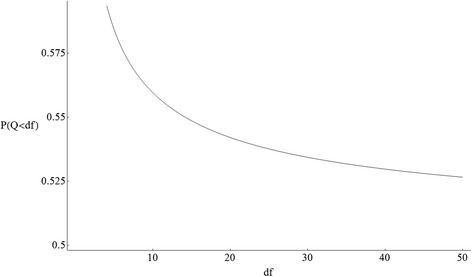
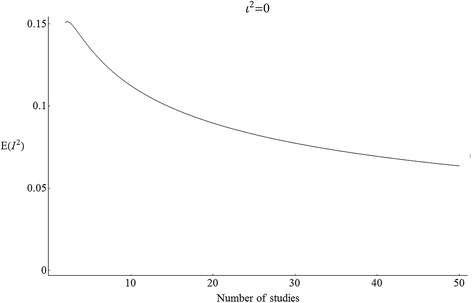
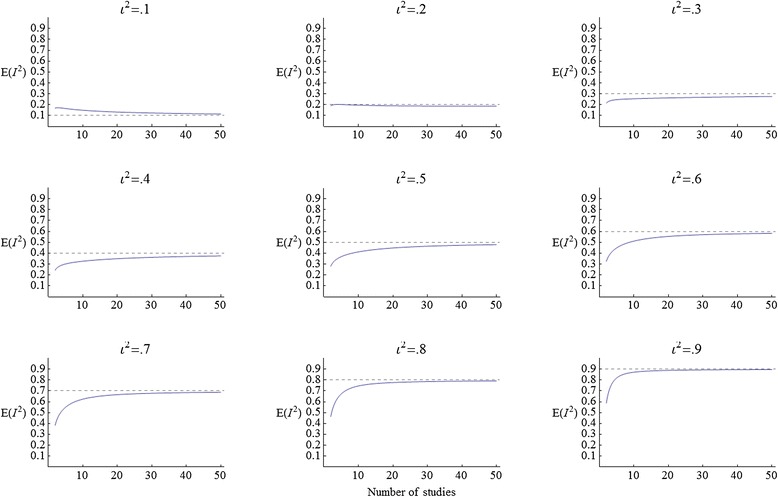
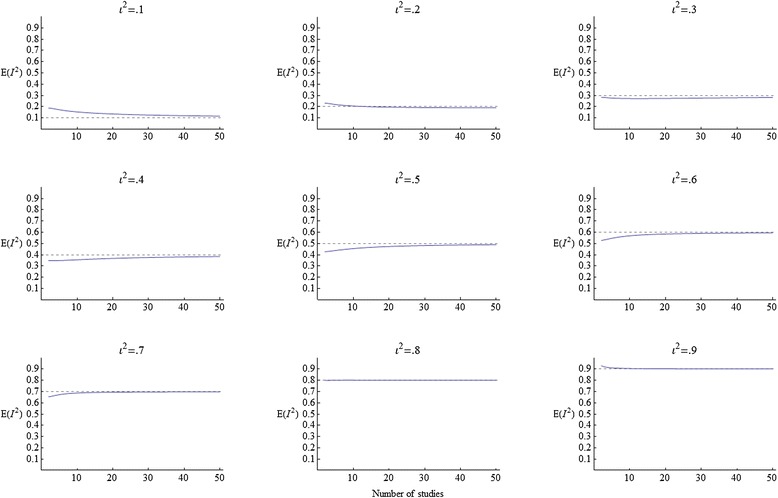
BACKGROUND: Estimated effects vary across studies, partly because of random sampling error and partly because of heterogeneity. In meta-analysis, the fraction of variance that is due to heterogeneity is estimated by the statistic I(2). We calculate the bias of I(2), focusing on the situation where the number of studies in the meta-analysis is small. Small meta-analyses are common; in the Cochrane Library, the median number of studies per meta-analysis is 7 or fewer. METHODS: We use Mathematica software to calculate the expectation and bias of I(2). RESULTS: I(2) has a substantial bias when the number of studies is small. The bias is positive when the true fraction of heterogeneity is small, but the bias is typically negative when the true fraction of heterogeneity is large. For example, with 7 studies and no true heterogeneity, I(2) will overestimate heterogeneity by an average of 12 percentage points, but with 7 studies and 80 percent true heterogeneity, I(2) can underestimate heterogeneity by an average of 28 percentage points. Biases of 12-28 percentage points are not trivial when one considers that, in the Cochrane Library, the median I(2) estimate is 21 percent. CONCLUSIONS: The point estimate I(2) should be interpreted cautiously when a meta-analysis has few studies. In small meta-analyses, confidence intervals should supplement or replace the biased point estimate I(2).
Overview
The claims and statistics of this paper haven’t been checked yet.
Free: it reads the open-access text and checks the first 5 claims that cite a source we can check. Create a free account to check every claim.
Integrity signals
Registry
Cites
Statistics
Figures
Verification
Claims the paper makes
The claims and statistics of this paper haven’t been checked yet.
Free: it reads the open-access text and checks the first 5 claims that cite a source we can check. Create a free account to check every claim.
Claims other papers make about this one
Each is checked against this paper’s own text: does it say what the citing paper says it does?
The source backs part of the claim, not all of it — or backs it for a different population, condition or comparison.
In the citing paper
“The I2 statistic in analyses of a few studies is considered to be uninformative90,91”
From Effects of Tea (Camellia sinensis) or its Bioactive Compounds l-Theanine or l-Theanine plus Caffeine on Cognition, Sleep, and Mood in Healthy Participants: A Systematic Review and Meta-Analysis of Randomized Controlled Trials (2025) · cites this paper as [91]
Experimental — accuracy not yet measuredThe cited source says what the claim attributes to it.
In the citing paper
“The heterogeneity estimates for professional burnout, somatisation, positive affect, negative affect, and resilience may not be reliable given the few comparisons contributing to the effect size (von Hippel, 2015).”
From Intervention Programs Targeting the Mental Health, Professional Burnout, and/or Wellbeing of School Teachers: Systematic Review and Meta-Analyses (2023) · cites this paper as von Hippel, 2015
In the citing paper
“Variation in effect sizes due to heterogeneity (rather than chance) was assessed with I2.54”
From Birth outcomes following intrauterine exposure to electronic nicotine delivery systems: a systematic review and meta-analysis (2026) · cites this paper as [54]
Self-check
Percentages, sums and reported differences re-computed from the paper’s own numbers.
The self-check needs the paper’s full text.
Citations
Cites
Quantifying heterogeneity in a meta‐analysis
Higgins, J. P. T., & Thompson, S. G. (2002) · Statistics in Medicine · doi:10.1002/sim.1186 · Cited by 36,763
The combination of estimates from different experiments
Cochran, W. G. (1954) · Biometrics · doi:10.2307/3001666 · Cited by 5,380
Fixed-and random-effects models in meta-analysis.
Hedges, L. V., & Vevea, J. L. (1998) · Psychological Methods · doi:10.1037/1082-989x.3.4.486 · Cited by 2,977 · cited 2×
“Any reasonable estimator of τ(2) will be limited to nonnegative values, and this will cause bias when the true value of τ(2) is close to zero [15,23].”
BackgroundA Re-Evaluation of Random-Effects Meta-Analysis
Higgins, J. P. T., Thompson, S. G., & Spiegelhalter, D. J. (2009) · Journal of the Royal Statistical Society Series A: Statistics in Society · doi:10.1111/j.1467-985x.2008.00552.x · Cited by 2,569
Bias and Efficiency of Meta-Analytic Variance Estimators in the Random-Effects Model
Viechtbauer, W. (2005) · Journal of Educational and Behavioral Statistics · doi:10.3102/10769986030003261 · Cited by 1,699
Undue reliance on I 2 in assessing heterogeneity may mislead
Rücker, G., Schwarzer, G., Carpenter, J. R., & Schumacher, M. (2008) · BMC Medical Research Methodology · doi:10.1186/1471-2288-8-79 · Cited by 1,287
Uncertainty in heterogeneity estimates in meta-analyses
Ioannidis, J. P. A., Patsopoulos, N. A., & Evangelou, E. (2007) · BMJ · doi:10.1136/bmj.39343.408449.80 · Cited by 1,254
Turner, R. M., Davey, J., Clarke, M. J., Thompson, S. G., & Higgins, J. P. (2012) · International Journal of Epidemiology · doi:10.1093/ije/dys041 · Cited by 837
Melsen, W. G., Bootsma, M. C. J., Rovers, M. M., & Bonten, M. J. M. (2014) · Clinical Microbiology and Infection · doi:10.1111/1469-0691.12494 · Cited by 776
The power of statistical tests in meta-analysis
Hedges, L. V., & Pigott, T. D. (2001) · Psychological Methods · doi:10.1037/1082-989x.6.3.203 · Cited by 716
Research works printed but not linked: 2
- von Hippel PT Osborne C Lincove A Bellows L Mills N The challenges of seeking exceptional teacher preparation programs among many noisy estimates 2014 Rochester, NY Social Science Research Network
- Cochrane Collaborative, “Cochrane Library”, 2015. [Online]. Available: http://www.cochranelibrary.com/. [Accessed: 25-Feb-2015].
Cited by
Items 501–600 of 999
Pervasive Inter-Individual Variation in Allele-Specific Expression in Monozygotic Twins
Francisco, R. D. S., Ferreira, C. D. S., Silva, J. C. S. E., Machado, D. T., Martins, Y., Ramos, V., Carnivali, G. S., Garcia, A. B., & Medina‐Acosta, E. (2019) · Frontiers in Genetics · doi:10.3389/fgene.2019.01178 · Cited by 17
“The negative I-square values were considered as 0% (Wang and Clark, 2014; Von Hippel, 2015).”
MethodTravis, H. S., Russell, R. V., & Kovaleva, J. (2023) · Journal of Infection Prevention · doi:10.1177/17571774231158203 · Cited by 18
Sicignano, D. J., Caroti, K. S., Hernández, A. V., & White, C. M. (2023) · American Journal of Clinical Oncology · doi:10.1097/coc.0000000000000998 · Cited by 21
Schäfer, S. K., Lüder, C. C., Porcheret, K., Hu, X., Margraf, J., Michael, T., Holmes, E. A., Werner, G. G., Wilhelm, I., Woud, M. L., et al. (2023) · Behaviour Research and Therapy · doi:10.1016/j.brat.2023.104359 · Cited by 18
Riccò, M., Baldassarre, A., Corrado, S., Bottazzoli, M., & Marchesi, F. (2023) · Tropical Medicine and Infectious Disease · doi:10.3390/tropicalmed8090452 · Cited by 22
Wójtowicz, K., Przepiórka, Ł., Maj, E., Kujawski, S., Marchel, A., & Kunert, P. (2023) · Neurosurgical Review · doi:10.1007/s10143-023-02242-7 · Cited by 16
“However, as I 2 can be biased in small meta-analyses, we have reported the results of both random and fixed models in all comparisons [10].”
Gabapentinoids for chemotherapy-induced peripheral neuropathy: systematic review and meta-analysis
Chang, T., Yang, F., Liu, Y., & Hung, C. (2024) · BMJ Supportive & Palliative Care · doi:10.1136/spcare-2023-004362 · Cited by 15
Kim, T. H., Son, Y., Lee, H., Lee, K., Lee, H., Park, J., Kim, S., Smith, L., Lee, S., Jeong, Y. D., et al. (2024) · Pediatric Cardiology · doi:10.1007/s00246-024-03563-0 · Cited by 19
“While we assessed the CE of the findings from these meta-analyses to identify the reliability of results, many meta-analyses were rated as having weak certainty of evidence due to high heterogeneity caused by small number of studies and participants included in the meta-analysis [39, 40].”
Zhao, Y., Jiang, Y., Wang, Y., Zhang, H., Zhu, J., Jiang, X., Shen, B., Chen, Y., Li, D., Pan, Y., et al. (2024) · SLEEP · doi:10.1093/sleep/zsae169 · Cited by 15
“For heterogeneity greater than 50% or p = .05, a random-effects model was used, while for lower heterogeneity, a fixed-effects model was used [41].”
Tan, E., Loubani, O. M., Kureshi, N., & Green, R. S. (2018) · Canadian Journal of Anesthesia/Journal canadien d anesthésie · doi:10.1007/s12630-018-1124-0 · Cited by 16
Pejtersen, J. H., Viinholt, B. C. A., & Hansen, H. (2020) · Journal of Counseling Psychology · doi:10.1037/cou0000420 · Cited by 16
Cao, L., Hou, M., Zhou, W., Sun, L. V., Shen, J., Chen, Y., Tang, Y., Wang, B., Li, X., & Lv, H. (2021) · Angiology · doi:10.1177/00033197211010096 · Cited by 17
“Moreover, the sample size of some included trials was <60; small sample size studies can increase heterogeneity and bias.(52,53) Second, as the comparison group, the choice of healthy controls comes with challenges.”
BackgroundKim, S., Shin, I., & Park, Y.-J. (2022) · Frontiers in Endocrinology · doi:10.3389/fendo.2022.772478 · Cited by 21
Payne, E. R., Aceves-Martins, M., Dubost, J., Greyling, A., & de Roos, B. (2025) · Nutrition Reviews · doi:10.1093/nutrit/nuaf054 · Cited by 19
“The I 2 statistic in analyses of a few studies is considered to be uninformative 90,91 ; therefore, the I 2 CIs were factored in. Frequently encompassing a lower bound of zero and an upper bound greater than 75%, the proportion of variation that is attributable to variation in the true effects or…”
Veiga, E. C. D. A., Melo, B. L. D., Vieira, S. D. S., Simões, R. S., Valenti, V. E., Campos, M. F., Vale, J. E. T. M. R. D., Rica, R. L., Soares-Júnior, J. M., Baracat, E. C., et al. (2020) · Clinics · doi:10.6061/clinics/2020/e1293 · Cited by 14
Morio, K., Kurata, Y., Kawaguchi‐Sakita, N., Shiroshita, A., & Kataoka, Y. (2021) · Annals of Pharmacotherapy · doi:10.1177/10600280211025792 · Cited by 16
White, M., & Connor, K. L. (2020) · Nutrients · doi:10.3390/nu12113375 · Cited by 18
“Heterogeneity (I 2 ) was not calculated as it has shown to be highly biased in small sample sizes 33 .”
Diniz, P., Pacheco, J., Fernandes, R. M., Pereira, H., Ferreira, F. C., & Kerkhoffs, G. M. M. J. (2021) · Knee Surgery Sports Traumatology Arthroscopy · doi:10.1007/s00167-021-06613-9 · Cited by 16
Rabelo, B. S., de Alvarenga, K. A. F., Miranda, J. W. F. B., Fagundes, T. P., Cancela, C. S. P., Romanelli, R. M. D. C., & Rodrigues, K. E. D. S. (2022) · American Journal of Infection Control · doi:10.1016/j.ajic.2022.05.005 · Cited by 14
Li, K., Chen, S., & Yang, L. (2022) · Journal of Robotic Surgery · doi:10.1007/s11701-022-01460-3 · Cited by 15
“However, the low heterogeneity of these results may be misleading because I2 has a substantial bias in a small number of studies [25].”
BackgroundThe Influence of Teacher Efficacy on Education Quality: A Meta-Analysis
Hidayah, R., Wangid, M. N., Wuryandani, W., & Salimi, M. (2023) · International Journal of Educational Methodology · doi:10.12973/ijem.9.2.435 · Cited by 56
Shauly, O., Olson, B., Marxen, T., Menon, A., D, A. L. M., & Patel, K. M. (2023) · Journal of Plastic Reconstructive & Aesthetic Surgery · doi:10.1016/j.bjps.2023.05.029 · Cited by 14
Dhillon, J., Orozco, E. I., Keeter, C. L., Scillia, A. J., Harris, J. D., & Kraeutler, M. J. (2023) · Arthroscopy The Journal of Arthroscopic and Related Surgery · doi:10.1016/j.arthro.2023.05.034 · Cited by 14
Oxley, R. A., & Peart, D. J. (2023) · Nutrition and Health · doi:10.1177/02601060231186439 · Cited by 22
Núñez, N. A., Coombes, B. J., Beaupre, L. M., Romo‐Nava, F., Gardea‐Resendez, M., Özerdem, A., Veldić, M., Singh, B., Sánchez-Ruiz, J. A., Barboza, A. B. C., et al. (2023) · Journal of Clinical Psychopharmacology · doi:10.1097/jcp.0000000000001747 · Cited by 15
“examine publication bias and account for the I(2)-reported heterogeneity.(34,35) The heterogeneity (I(2) = 52%) may, in part, be related to the lack of addressing confounding variables in some studies and a universal standardized definition of TEM.”
BackgroundRoy, D. K., & Sheikh, R. (2024) · Avicenna Journal of Medicine · doi:10.1055/s-0043-1777710 · Cited by 14
“24 The minimal/low, moderate, and high heterogeneity levels were indicated by I-squared ranges of 0 to 50%, 51 to 80%, and 81 to 100%, respectively.”
Riccò, M., Parisi, S., Corrado, S., Marchesi, F., Bottazzoli, M., & Gori, D. (2024) · Infectious Disease Reports · doi:10.3390/idr16020026 · Cited by 19
Tartour, A. I., Chivese, T., Eltayeb, S., Elamin, F. M., Fthenou, E., Ahmed, M. S., & Babu, G. R. (2024) · Psychoneuroendocrinology · doi:10.1016/j.psyneuen.2024.107060 · Cited by 23
Wang, L., Yang, J.-W., Li, X., Li, K., Wan, S., Chen, S.-Y., & Yang, L. (2024) · Journal of Robotic Surgery · doi:10.1007/s11701-024-02146-8 · Cited by 14
“While, the high heterogeneity observed may stem from inherent biases related to sample size and variations in population characteristics [21].”
Osório, C., Talwar, S., Stevelink, S. A. M., Sihre, H. K., Lamb, D., & Billings, J. (2024) · Occupational Medicine · doi:10.1093/occmed/kqae104 · Cited by 20
de Almeida, A. M., Tamashiro, F. M., Souza, M. E. C., Silvério, I. I. L., Miranda, C. D. A. S., Andrade, Í. B., Kreuz, M., de Moraes, F. C. A., & Kelly, F. A. (2024) · Journal of Psychiatric Research · doi:10.1016/j.jpsychires.2024.11.047 · Cited by 17
Bykov, K., Schneeweiß, S., Glynn, R. J., Mittleman, M. A., Bates, D. W., & Gagne, J. J. (2017) · Drug Safety · doi:10.1007/s40264-017-0556-8 · Cited by 17
“The power of homogeneity tests is further reduced when one of the studies is much larger than the others [28].”
Perception of physical attractiveness when consuming and not consuming alcohol: a meta‐analysis
Bowdring, M., & Sayette, M. (2018) · Addiction · doi:10.1111/add.14227 · Cited by 12
Hoffmann, S. H., Bjørner, J. B., Xu, T., Mortensen, J., Török, E., Westerlund, H., Persson, V., Aust, B., Rod, N. H., & Clark, A. J. (2020) · Journal of Occupational and Environmental Medicine · doi:10.1097/jom.0000000000001975 · Cited by 15
“Baseline year 2000, n (%) 5,074 (34) 340 (7) 4,734 (93) 1,818 (39) 2,789 (61) 1,062 (23) 3,459 (77) 2005, n (%) 4,621 (31) 359 (8) 4,262 (92) 2,210 (51) 2,128 (49) 1,775 (40) 2,673 (60) 2010, n (%) 5,353 (36) 558 (11) 4,795 (90) 2,001 (41) 2,838 (59) 1,546 (32) 3,353 (68) Age, mean (interquartile range) 41 (32-51) 41…”
McAlpine, K., Breau, R., Werlang, P., Carrier, M., Gal, G. L., Fergusson, D., Shorr, R., Cagiannos, I., Morash, C., & Lavallée, L. (2021) · Journal of the American College of Surgeons · doi:10.1016/j.jamcollsurg.2021.07.687 · Cited by 4
Remembering Social Events: A Construal Level Approach
Wyer, N. A., Hollins, T. J., & Pahl, S. (2021) · Personality and Social Psychology Bulletin · doi:10.1177/01461672211038188 · Cited by 15
Zadeh, A. V., Wong, A., Crawford, A. C., Collado, E., & Larned, J. (2023) · The American Journal of Emergency Medicine · doi:10.1016/j.ajem.2023.08.006 · Cited by 14
Pooled parameter estimates for traits of economic importance in indigenous chicken in the tropics
Ndung’u, C. W., Okeno, T. O., & Muasya, T. K. (2020) · Livestock Science · doi:10.1016/j.livsci.2020.104102 · Cited by 14
Vaccination and the Risk of Childhood Cancer—A Systematic Review and Meta-Analysis
Marron, M., Brackmann, L. K., Kuhse, P., Christianson, L., Langner, I., Haug, U., & Ahrens, W. (2021) · Frontiers in Oncology · doi:10.3389/fonc.2020.610843 · Cited by 21
Putting Variation into Variance: Modeling Between-Study Heterogeneity in Meta-AnalysisPreprint
Williams, D. R., Rodriguez, J. E., & Bürkner, P. (2021) · PsyArXiv (OSF Preprints) · doi:10.31234/osf.io/9vkqy · Cited by 13
Sánchez‐Piedra, C., Rodriguez-Ortiz-de-Salazar, B., Roca, O., Prado-Galbarro, F. J., Perestelo‐Pérez, L., & Sánchez-Gómez, L. M. (2025) · Journal of Clinical Monitoring and Computing · doi:10.1007/s10877-025-01266-2 · Cited by 13
“This limitation should be considered when interpreting our findings [ 43 ].”
Wong, H. Y. C., Asim, S., Feng, Q., Fu, S. X.-H., Sahota, D. S., So, P. L., & Dong, D. (2023) · Journal of Medical Internet Research · doi:10.2196/37953 · Cited by 13
“The small number of studies makes the I 2 value more prone to bias and may not be meaningful [31].”
A systematic review and meta-analysis of the relationship between policing and collective efficacy
Yesberg, J. A., Costi, F., Chan, A., & Bradford, B. (2023) · Journal of Experimental Criminology · doi:10.1007/s11292-023-09580-y · Cited by 24
Yoo, S. D., & Lee, H. H. (2023) · Brain & Neurorehabilitation · doi:10.12786/bn.2023.16.e24 · Cited by 18
“We should also consider that I 2 , which indicates heterogeneity in the results of meta-analyses, has the risk of being a biased estimate in small meta-analyses [88].”
ResultMcCubbin, A. J., & Irwin, C. G. (2024) · Applied Physiology, Nutrition, and Metabolism · doi:10.1139/apnm-2023-0384 · Cited by 15
Dawood, Z. S., Brown, Z. J., Alaimo, L., Lima, H. A., Shaikh, C. F., Katayama, E., Munir, M. M., Moazzam, Z., Endo, Y., Woldesenbet, S., et al. (2024) · HPB · doi:10.1016/j.hpb.2024.02.003 · Cited by 19
Tham, K. M., Yek, J. J. L., & Liu, C. W. (2024) · Pharmacogenetics and Genomics · doi:10.1097/fpc.0000000000000531 · Cited by 19
“However, this result should be interpreted with caution as there were limited studies [87].”
ResultChen, G., Barlow, M., Down, L., Mounce, L. T. A., Merriel, S. W., Watson, J., Martins, T., & Bailey, S. E. R. (2024) · Family Practice · doi:10.1093/fampra/cmae021 · Cited by 15
Jia, H., Sheng, F., Yan, Y., Liu, X., & Zeng, B. (2024) · PLoS ONE · doi:10.1371/journal.pone.0303495 · Cited by 19
Xiao, X., Sun, Z., Ji, X., Lin, H., Jing, H., & Yu, Q. (2024) · The American Journal of the Medical Sciences · doi:10.1016/j.amjms.2024.07.005 · Cited by 17
Riccò, M., Ferraro, P., Zaffina, S., Camisa, V., Marchesi, F., Franzoso, F. F., Ligori, C., Fiacchini, D., Magnavita, N., & Tafuri, S. (2024) · Vaccines · doi:10.3390/vaccines12091021 · Cited by 19
Outcomes of liver transplant for colorectal liver metastasis: a systematic review and meta-analysis
Dawood, Z. S., Brown, Z. J., Munir, M. M., Waqar, U., Rawicz‐Pruszyński, K., Endo, Y., Gajjar, A., Schenk, A. D., & Pawlik, T. M. (2024) · Journal of Gastrointestinal Surgery · doi:10.1016/j.gassur.2024.09.006 · Cited by 18
Aparicio-Pascual, D., Clemente‐Suárez, V. J., Tornero-Aguilera, J. F., & Rubio-Zarapuz, A. (2025) · Sports Medicine - Open · doi:10.1186/s40798-025-00860-7 · Cited by 15
Carbonara, U., Crocerossa, F., MEHRAZIN, R., Campi, R., Marchioni, M., MORLACCO, A., PAGLAIRULO, V., Zhenjie, W. U., AUTORINO, R., STEIN, R. J., et al. (2022) · Minerva Urology and Nephrology · doi:10.23736/s2724-6051.21.04558-4 · Cited by 13
Meng, C. F., Rajesh, D. A., Jannat‐Khah, D., Jivanelli, B., & Bykerk, V. P. (2022) · The Journal of Rheumatology · doi:10.3899/jrheum.220152 · Cited by 13
“26 Additionally, forest plots were generated for each analysis.”
MethodArterial lactate in predicting mortality after paraquat poisoning
Li, S., Zhao, D., Li, Y., Gao, J., & Feng, S. (2018) · Medicine · doi:10.1097/md.0000000000011751 · Cited by 14
Li, K., Duan, X., Yang, X., Huang, J., & Wu, T. (2021) · Updates in Surgery · doi:10.1007/s13304-021-01116-1 · Cited by 15
“Low heterogeneity in the outcomes could be misleading since the I2 statistic has a substantial bias in a small number of studies [30].”
BackgroundBottini, I., Vecchi, S., Sario, M. D., Bauleo, L., Trentalange, A., Michelozzi, P., & Ancona, C. (2025) · BMC Public Health · doi:10.1186/s12889-025-23150-z · Cited by 18
de Moraes, F. C. A., Rego, L., de Paiva, F. A., Matheus, G. T. F. U., & Burbano, R. M. R. (2025) · Critical Reviews in Oncology/Hematology · doi:10.1016/j.critrevonc.2025.104975 · Cited by 13
Li, J., Li, Y., Cao, D., Xia, Z., Meng, C., Peng, L., & Wei, Q. (2021) · Journal of Endourology · doi:10.1089/end.2021.0643 · Cited by 12
“21”
Beis, G., & Papasotiriou, I. (2023) · In Vivo · doi:10.21873/invivo.13171 · Cited by 17
The height premium: A systematic review and meta-analysis
Thompson, K., Portrait, F. R. M., & Schoonmade, L. J. (2023) · Economics & Human Biology · doi:10.1016/j.ehb.2023.101273 · Cited by 15
Alves-Nogueira, A. C., Góis, A. C., Pereira, M., Canavarro, M. C., Melo, C., & Carona, C. (2023) · Health Communication · doi:10.1080/10410236.2023.2243043 · Cited by 17
“…the significant correlations, which could lead to a bias in the calculation of the averaged correlation coefficient); (iv) the inclusion of a reduced number of studies in the meta-analysis, which may increase heterogeneity (Von Hippel, 2015) and hinder subgroup analysis (Cuijpers et al., 2021).”
Steingrebe, H., Spancken, S., Sell, S., & Stein, T. (2023) · Frontiers in Sports and Active Living · doi:10.3389/fspor.2023.1197883 · Cited by 14
Epidemiology and clinical features of hypnic headache: A systematic review and meta-analysis
Melchior, A. G., Ayyoub, A., Christensen, R. H., Al‐Khazali, H. M., Amin, F. M., & Ashina, H. (2023) · Cephalalgia · doi:10.1177/03331024231218389 · Cited by 12
“It is worth noting that the meta-analyses were based on small sample sizes, which increases the risk of bias in the I 2 statistic (22).”
BackgroundFan, H., Wei, L., Zhao, X., Zhu, Z., Lu, W., Roshani, R., & Huang, K. (2023) · NeuroImage Clinical · doi:10.1016/j.nicl.2023.103549 · Cited by 16
“In the meta -analysis of WMH severity and clinical outcomes, a high risk of heterogeneity (I 2 ≥ 50% or wide 95% CIs) was only found in the outcomes of FR and HT, and no significant heterogeneity was found for other outcomes.”
MethodInfluentialBednarczyk, V., Proulx, F., & Páez, A. (2024) · Journal of Oral Rehabilitation · doi:10.1111/joor.13671 · Cited by 17
Meta-Analysis of Incidence and Mortality of Firefighter Cancer: An Update on Emerging Science
Jahnke, S. A., Jitnarin, N., Haddock, C. K., Kaipust, C. M., Poston, W. S. C., Hollerbach, B. S., Crisp, C. A., & Metoyer, B. N. (2024) · Asian Pacific Journal of Cancer Prevention · doi:10.31557/apjcp.2024.25.3.801 · Cited by 13
“Statisticians have cautioned against using heterogeneity statistics such as I2 for meta-analyses based on a small number of primary studies [19].”
BackgroundMickenautsch, S., & Yengopal, V. (2024) · Cureus · doi:10.7759/cureus.63581 · Cited by 16
Blunden, A. G., Henry, J. D., Pilkington, P. D., & Pizarro‐Campagna, E. (2024) · Journal of Affective Disorders · doi:10.1016/j.jad.2024.08.215 · Cited by 20
The role of neutrophils in pain: systematic review and meta-analysis of animal studies
Huerta, M. Á., Álvarez, M. M., Martínez-García, M. Á., Tejada, M. A., Goicoechea, C., Ghasemlou, N., Ruiz‐Cantero, M. C., & Cobos, E. J. (2024) · Pain · doi:10.1097/j.pain.0000000000003450 · Cited by 18
Nicholson, L., Axon, E., Daru, J., & Rogozińska, E. (2024) · Cochrane Database of Systematic Reviews · doi:10.1002/14651858.cd016136 · Cited by 34
Domnich, A., Trombetta, C.-S., Fallani, E., & Salvatore, M. (2024) · PLoS ONE · doi:10.1371/journal.pone.0310677 · Cited by 16
Wan, Y., McGuigan, P. M., Bilzon, J., & Wade, L. (2025) · Clinical Biomechanics · doi:10.1016/j.clinbiomech.2025.106433 · Cited by 14
Sousa‐Pinto, B., Neumann, I., Vieira, R. J., Bognanni, A., Marques‐Cruz, M., Gil‐Mata, S., Mordue, S., Nevill, C. R., Baio, G., Whaley, P., et al. (2025) · Journal of Clinical Epidemiology · doi:10.1016/j.jclinepi.2025.111725 · Cited by 14
Pascal, S. A., Podina, I. R., & Nedelcea, C. (2020) · Journal of Evidence-Based Psychotherapies · doi:10.24193/jebp.2020.2.10 · Cited by 13
Geng, H.-J., Zhang, L., Cui, X., Zhang, C., & Xie, Y. (2021) · Journal of Ethnopharmacology · doi:10.1016/j.jep.2021.114849 · Cited by 16
Roshdy, A., Elsayed, A. S., & Saleh, A. S. (2022) · Journal of Intensive Care Medicine · doi:10.1177/08850666221109779 · Cited by 13
“Statistical heterogeneity was low to moderate but this might be affected by the studies number.(41) Authors kindly supplied us with additional data which was never published nor peer reviewed.”
BackgroundLeighton, D. C., Legate, N., LePine, S., Anderson, S. F., & Grahe, J. E. (2018) · Psi Chi Journal of Psychological Research · doi:10.24839/2325-7342.jn23.2.98 · Cited by 18
Schöne, C., Sauter, M., Backé, E.-M., Prigge, M., Brendler, C., & Hegewald, J. (2025) · BMC Public Health · doi:10.1186/s12889-025-24960-x · Cited by 20
“Furthermore, the measure of heterogeneity via I 2 is challenging in meta-analyses with few studies [80].”
Reflections on the I-squared index for measuring inconsistency in meta-analysis
Higgins, J. P. T., & López-López, J. A. (2025) · Research Synthesis Methods · doi:10.1017/rsm.2025.10062 · Cited by 20
“Noting the broad interpretation of 𝐼 2 as the proportion of total variation in observed results that arises from between-study heterogeneity, 3,25 a further option to define 𝐼 2 is as follows: The denominator in (7) is just the sample variance of the study estimates.”
Liu, Y., Qin, J., Li, K., Wen, Z., Huang, J., Jiang, Y. Y., Chen, C., Wang, C., Wang, L., Wang, J., et al. (2023) · Journal of Robotic Surgery · doi:10.1007/s11701-023-01555-5 · Cited by 12
Zhu, P.-Y., Wang, L., Li, K., Yin, S., & Chen, X. (2023) · World Journal of Surgical Oncology · doi:10.1186/s12957-023-03046-1 · Cited by 11
“Certainly, the statistical bias caused by small sample size studies cannot be ignored [17].”
BackgroundKahale, F., Chanbour, W., Zein, L. E., Brenner, J. E., You, J. Y., & Melki, S. A. (2023) · Ophthalmic Research · doi:10.1159/000531077 · Cited by 11
“This can be attributed to both the low number of studies included, as well as the small sample size in these studies [27].”
ResultHegde, D., Rath, C. P., Amarasekara, S., Saraswati, C. M., Patole, S., & Rao, S. C. (2023) · European Journal of Pediatrics · doi:10.1007/s00431-023-05073-2 · Cited by 15
Shepherd, J., Hansjee, S., Divall, P., Raval, P., & Singh, H. (2023) · Shoulder & Elbow · doi:10.1177/17585732231195554 · Cited by 12
Shi, X., Feng, L., Li, Y., Qin, M., Li, T., Cheng, Z., Zhang, X., Zhou, C., Cheng, S., Zhang, C., et al. (2023) · Frontiers in Pharmacology · doi:10.3389/fphar.2023.1280559 · Cited by 11
Lawera, N. G., Madzia, J., Casey, L. C., Guyton, R. L., Brito, K. C. W. D., Kinzer, A. B., Ulma, R. M., Pan, B. S., Schwentker, A. R., & Barone, A. A. L. (2024) · Plastic & Reconstructive Surgery Global Open · doi:10.1097/gox.0000000000005652 · Cited by 13
“37 To account for potential bias in the I 2 calculation, we also report the 95% CI of I 2 .”
Weaver, A. C., Weaver, D. M., Adams, N., & Yiannikouris, A. (2024) · Toxins · doi:10.3390/toxins16040171 · Cited by 11
Atanassova, D. V., Madariaga, V. I., Oosterman, J. M., & Brazil, I. A. (2024) · Neuroscience & Biobehavioral Reviews · doi:10.1016/j.neubiorev.2024.105786 · Cited by 17
Photobiomodulation therapy on chemo- and radiotherapy induced oral conditions: an umbrella review
Rodrigues, I., Machado, V., Lopes, L. B., Trancoso, P., Azul, A. M., Mendes, J. J., Zagalo, C., & Botelho, J. (2024) · BMC Oral Health · doi:10.1186/s12903-024-04793-7 · Cited by 14
Herbst, S. R., Pitchika, V., Herbst, C. S., Kosan, E., & Schwendicke, F. (2025) · International Endodontic Journal · doi:10.1111/iej.14256 · Cited by 39
“Second, we assessed heterogeneity and found it to be limited, but given the small number of included studies the estimated I 2 may be erroneous (Von Hippel, 2015).”
COVID-19 Vaccine Booster Uptake and Effectiveness Among US Adults With Cancer
Skarbinski, J., Elkin, E. P., Ziemba, Y. C., Kazemian, E., Wilson, B. M., Siddiqui, H., Schleicher, C. B., Hsiao, C. A., Nugent, J. R., Reckamp, K. L., et al. (2025) · JAMA Oncology · doi:10.1001/jamaoncol.2025.2020 · Cited by 13
Tan, C., Wang, C., Huang, J., Liao, B., Deng, X., Hu, A., & Li, Y. (2025) · Journal of Robotic Surgery · doi:10.1007/s11701-025-02577-x · Cited by 11
Li, L., Qin, K., Chen, D., Lu, C., Chen, W., & Guo, V. Y. (2021) · Acta Paediatrica · doi:10.1111/apa.15971 · Cited by 13
Hosseini, E. S., Nikkhah, A., Sotudeh, A., Zarei, M. A., Izadpanah, F., Nikzad, H., & Kashani, H. H. (2021) · Cancer Cell International · doi:10.1186/s12935-021-02125-1 · Cited by 11
“Moreover, large degree of heterogeneities among included studies were observed inspiring us to search its main causes from different aspects [70].”
BackgroundZybert, A. (2022) · Animals · doi:10.3390/ani12141811 · Cited by 11
Sotiropoulos, J. X., Schmölzer, G. M., Oei, J. L., Libesman, S., Hunter, K. E., Williams, J. G., Webster, A. C., Tarnow-Mordi, W. O., Vento, M., Asztalos, E. V., et al. (2022) · Acta Paediatrica · doi:10.1111/apa.16622 · Cited by 12
Yang, C.-C., Tsai, S.-T., Ting, B., Cheng, Y., Wang, C., Chang, J. P., & Su, K. (2023) · Journal of Clinical Medicine · doi:10.3390/jcm12072750 · Cited by 12
Oliveira, C. M., Henderson, L. M., & Hayiou‐Thomas, M. E. (2023) · Cognitive Science · doi:10.1111/cogs.13310 · Cited by 15
Metadata
- Authors
- von Hippel, P. T.
- Venue
- BMC Medical Research Methodology
- Published
- 2015-04-14
- Volume
- 15
- Issue
- 1
- Pages
- 35-35
- ISSN
- 1471-2288 (ISSN-L)
- PMC
- PMC4410499
- OpenAlex
- W2021593215
- Cited by
- 1,229
- References
- 26
- Citations by year
- 2026: 106 · 2025: 185 · 2024: 216 · 2023: 195 · 2022: 173 · 2021: 131 · 2020: 71 · 2019: 63 · 2018: 51 · 2017: 24 · 2016: 9 · 2015: 3
- FWCI
- 26.46
- Type
- journal article
- Language
- en
- Open access
- gold
- doi.org
- Locations
- BMC Medical Research Methodology (publishedVersion, cc-by)
- PubMed Central (publishedVersion, cc-by)
- PubMed (publishedVersion)
- arXiv (Cornell University) (submittedVersion)
- Topics
- Social Sciences › Decision Sciences › Statistics, Probability and Uncertainty › Meta-analysis and systematic reviews
- Physical Sciences › Mathematics › Statistics and Probability › Statistical Methods in Epidemiology
- Social Sciences › Decision Sciences › Statistics, Probability and Uncertainty › Reliability and Agreement in Measurement
- Keywords
- I2 statistic, heterogeneity, estimation bias, between-study variance, confidence intervals, Cochrane Library
- MeSH terms
- Algorithms, Biometry, Humans, Mathematical Computing, Research, Research Design, Software, Meta-Analysis as Topic, Reproducibility of Results, Bias
About these checks
Registry, retraction, Cites and statistics results are computed, not judged, with one exception: a printed reference that no index lists is read once by a model before it counts as a citation error. Claims are extracted by a model and kept only when their quote appears verbatim in the text; each cited source is then checked, with a model’s help, for whether it says what the claim relies on. Those verdicts can be wrong — read the claim’s quote and the cited source before relying on one.
Statistics and arithmetic are recomputed, not judged.
Confidence bands are shown only for fields calibrated on our annotated test set. None is calibrated yet, so no band is shown.
What counts as a claim ›How we measure confidence ›How we check this ›
Are you an author, or do you see a problem with this page? Request a review
Data sources
Bibliographic data: Semantic Scholar, OpenAlex, Crossref.
Contains information from the Semantic Scholar Academic Graph Datasets, made available under the ODC Attribution License (ODC-BY 1.0).
Semantic Scholar’s data is described in: Kinney, R., et al. (2023). The Semantic Scholar Open Data Platform. arXiv:2301.10140.
