

The heterogeneity statistic I2 can be biased in small meta-analyses
Open accessThe DOI matches its Crossref record; 26 of the 26 references it cites were found in a registry or an index.
Abstract
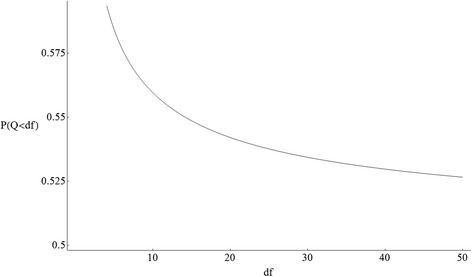
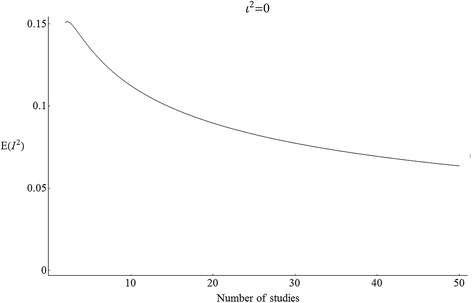
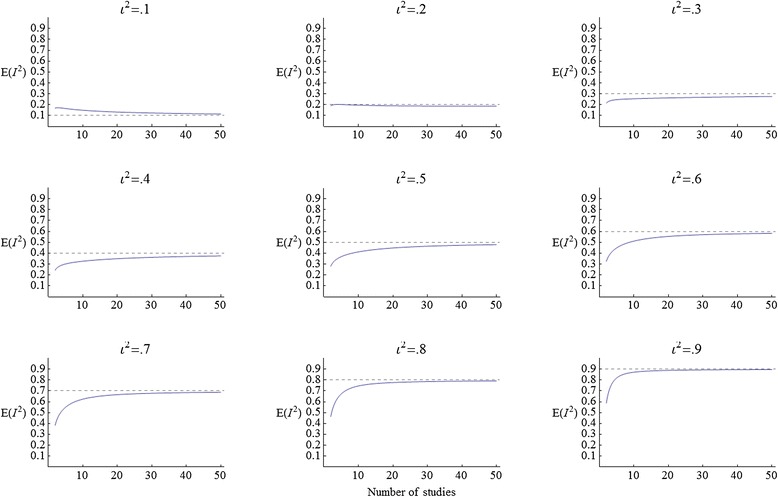
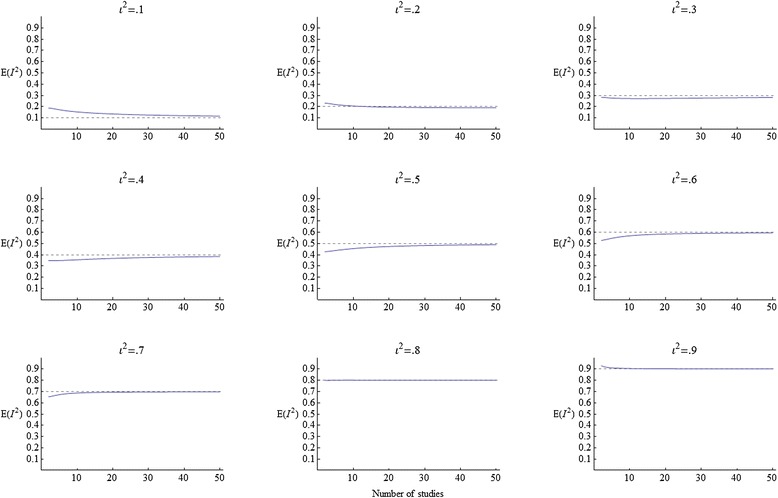
BACKGROUND: Estimated effects vary across studies, partly because of random sampling error and partly because of heterogeneity. In meta-analysis, the fraction of variance that is due to heterogeneity is estimated by the statistic I(2). We calculate the bias of I(2), focusing on the situation where the number of studies in the meta-analysis is small. Small meta-analyses are common; in the Cochrane Library, the median number of studies per meta-analysis is 7 or fewer. METHODS: We use Mathematica software to calculate the expectation and bias of I(2). RESULTS: I(2) has a substantial bias when the number of studies is small. The bias is positive when the true fraction of heterogeneity is small, but the bias is typically negative when the true fraction of heterogeneity is large. For example, with 7 studies and no true heterogeneity, I(2) will overestimate heterogeneity by an average of 12 percentage points, but with 7 studies and 80 percent true heterogeneity, I(2) can underestimate heterogeneity by an average of 28 percentage points. Biases of 12-28 percentage points are not trivial when one considers that, in the Cochrane Library, the median I(2) estimate is 21 percent. CONCLUSIONS: The point estimate I(2) should be interpreted cautiously when a meta-analysis has few studies. In small meta-analyses, confidence intervals should supplement or replace the biased point estimate I(2).
Overview
The claims and statistics of this paper haven’t been checked yet.
Free: it reads the open-access text and checks the first 5 claims that cite a source we can check. Create a free account to check every claim.
Integrity signals
Registry
Cites
Statistics
Figures
Verification
Claims the paper makes
The claims and statistics of this paper haven’t been checked yet.
Free: it reads the open-access text and checks the first 5 claims that cite a source we can check. Create a free account to check every claim.
Claims other papers make about this one
Each is checked against this paper’s own text: does it say what the citing paper says it does?
The source backs part of the claim, not all of it — or backs it for a different population, condition or comparison.
In the citing paper
“The I2 statistic in analyses of a few studies is considered to be uninformative90,91”
From Effects of Tea (Camellia sinensis) or its Bioactive Compounds l-Theanine or l-Theanine plus Caffeine on Cognition, Sleep, and Mood in Healthy Participants: A Systematic Review and Meta-Analysis of Randomized Controlled Trials (2025) · cites this paper as [91]
Experimental — accuracy not yet measuredThe cited source says what the claim attributes to it.
In the citing paper
“The heterogeneity estimates for professional burnout, somatisation, positive affect, negative affect, and resilience may not be reliable given the few comparisons contributing to the effect size (von Hippel, 2015).”
From Intervention Programs Targeting the Mental Health, Professional Burnout, and/or Wellbeing of School Teachers: Systematic Review and Meta-Analyses (2023) · cites this paper as von Hippel, 2015
In the citing paper
“Variation in effect sizes due to heterogeneity (rather than chance) was assessed with I2.54”
From Birth outcomes following intrauterine exposure to electronic nicotine delivery systems: a systematic review and meta-analysis (2026) · cites this paper as [54]
Self-check
Percentages, sums and reported differences re-computed from the paper’s own numbers.
The self-check needs the paper’s full text.
Citations
Cites
Quantifying heterogeneity in a meta‐analysis
Higgins, J. P. T., & Thompson, S. G. (2002) · Statistics in Medicine · doi:10.1002/sim.1186 · Cited by 36,763
The combination of estimates from different experiments
Cochran, W. G. (1954) · Biometrics · doi:10.2307/3001666 · Cited by 5,380
Fixed-and random-effects models in meta-analysis.
Hedges, L. V., & Vevea, J. L. (1998) · Psychological Methods · doi:10.1037/1082-989x.3.4.486 · Cited by 2,977 · cited 2×
“Any reasonable estimator of τ(2) will be limited to nonnegative values, and this will cause bias when the true value of τ(2) is close to zero [15,23].”
BackgroundA Re-Evaluation of Random-Effects Meta-Analysis
Higgins, J. P. T., Thompson, S. G., & Spiegelhalter, D. J. (2009) · Journal of the Royal Statistical Society Series A: Statistics in Society · doi:10.1111/j.1467-985x.2008.00552.x · Cited by 2,569
Bias and Efficiency of Meta-Analytic Variance Estimators in the Random-Effects Model
Viechtbauer, W. (2005) · Journal of Educational and Behavioral Statistics · doi:10.3102/10769986030003261 · Cited by 1,699
Undue reliance on I 2 in assessing heterogeneity may mislead
Rücker, G., Schwarzer, G., Carpenter, J. R., & Schumacher, M. (2008) · BMC Medical Research Methodology · doi:10.1186/1471-2288-8-79 · Cited by 1,287
Uncertainty in heterogeneity estimates in meta-analyses
Ioannidis, J. P. A., Patsopoulos, N. A., & Evangelou, E. (2007) · BMJ · doi:10.1136/bmj.39343.408449.80 · Cited by 1,254
Turner, R. M., Davey, J., Clarke, M. J., Thompson, S. G., & Higgins, J. P. (2012) · International Journal of Epidemiology · doi:10.1093/ije/dys041 · Cited by 837
Melsen, W. G., Bootsma, M. C. J., Rovers, M. M., & Bonten, M. J. M. (2014) · Clinical Microbiology and Infection · doi:10.1111/1469-0691.12494 · Cited by 776
The power of statistical tests in meta-analysis
Hedges, L. V., & Pigott, T. D. (2001) · Psychological Methods · doi:10.1037/1082-989x.6.3.203 · Cited by 716
Research works printed but not linked: 2
- von Hippel PT Osborne C Lincove A Bellows L Mills N The challenges of seeking exceptional teacher preparation programs among many noisy estimates 2014 Rochester, NY Social Science Research Network
- Cochrane Collaborative, “Cochrane Library”, 2015. [Online]. Available: http://www.cochranelibrary.com/. [Accessed: 25-Feb-2015].
Cited by
Items 401–500 of 999
Stanyer, E. C., Baniqued, P. D. E., Awais, M., Kouara, L., Davies, A. G., Killan, E. C., & Mushtaq, F. (2022) · Journal of Sleep Research · doi:10.1111/jsr.13385 · Cited by 21
RetractedNso, N., Emmanuel, K. E., Nassar, M., Bhangal, R., Enoru, S. T., Iluyomade, A., Marmur, J. D., Ilonze, O. J., Thambidorai, S. K., & Ayinde, H. O. (2022) · IJC Heart & Vasculature · doi:10.1016/j.ijcha.2021.100910 · Cited by 22
Silva, V. P. O. E., Silva, M. P. O. E., Silva, V. L. D. S., Mantovani, D. B. C., Mittelmann, J. V., Oliveira, J. V. V., Pessoa, J. P. D. L., Chaves, Y. L., Haddad, M. P., Andrielli, O., et al. (2022) · Journal of Ageing and Longevity · doi:10.3390/jal2020008 · Cited by 38
Abeyta, S., & Welsh, B. C. (2022) · Aggression and Violent Behavior · doi:10.1016/j.avb.2022.101747 · Cited by 24
Weaver, A. C., Weaver, D. M., Yiannikouris, A., & Adams, N. (2022) · Poultry Science · doi:10.1016/j.psj.2022.102043 · Cited by 21
“Finally, we evaluated between-study heterogeneity using the calculated heterogeneity statistic ( I 2 ) (Higgins et al., 2003; Von Hippel, 2015).”
Systematic Review and Meta-Analysis of Responsive Neurostimulation in Epilepsy
Kusyk, D. M., Meinert, J., Stabingas, K., Yin, Y., & Whiting, A. C. (2022) · World Neurosurgery · doi:10.1016/j.wneu.2022.07.147 · Cited by 28
Hopkins, J., Hill, K., Jacques, A., & Burton, E. (2022) · Clinical Rehabilitation · doi:10.1177/02692155221129832 · Cited by 25
Walker, D. L., Palermo, R., Callis, Z., & Gignac, G. E. (2022) · Intelligence · doi:10.1016/j.intell.2022.101718 · Cited by 27
Sattari, S. A., Guilbault, R., MacMahon, A., Salem, H. S., & Khanuja, H. S. (2022) · Journal of Orthopaedic Trauma · doi:10.1097/bot.0000000000002558 · Cited by 21
Tsang, T. K., Huang, X., Guo, Y., Lau, E. H. Y., Cowling, B. J., & Ip, D. (2023) · JMIR Public Health and Surveillance · doi:10.2196/41329 · Cited by 27
“However, it should be noted that as I 2 could be biased in small studies, we only quoted the I 2 estimate when the number of studies was at least 10 [32].”
Connell, C., Birken, M., Carver, H., Brown, T. J., & Greenhalgh, J. (2023) · Health & Justice · doi:10.1186/s40352-023-00217-w · Cited by 48
“Despite low levels of heterogeneity according to I 2 in several comparisons, most of these included a small number of studies and thus uncertainty around the I 2 estimates should be considered substantial (Deeks et al., 2019; von Hippel, 2015).”
Heterogeneity in Meta-Analytic Effect Sizes: An Assessment of the Current State of the Literature
Kepes, S., Wang, W., & Cortina, J. M. (2023) · Organizational Research Methods · doi:10.1177/10944281231169942 · Cited by 30
Cui, H., Cheong, J., McKenzie, D. P., Gould, D. J., Rele, S., & Patel, M. K. (2023) · Journal of Shoulder and Elbow Surgery · doi:10.1016/j.jse.2023.07.011 · Cited by 23
Tradeoffs between resources and risks shape the responses of a large carnivore to human disturbance
Mills, K. L., Belant, J. L., Beukes, M., Dröge, E., Everatt, K. T., Fyumagwa, R., Green, D. S., Hayward, M. W., Holekamp, K. E., Radloff, F. G. T., et al. (2023) · Communications Biology · doi:10.1038/s42003-023-05321-z · Cited by 28
Ebell, M. H., Walsh, M. E., Fahey, T. P., Kearney, M., & Marchello, C. S. (2019) · Journal of General Internal Medicine · doi:10.1007/s11606-019-04869-z · Cited by 21
Suppadungsuk, S., Krisanapan, P., Kazeminia, S., Nikravangolsefid, N., Singh, W., Prokop, L. J., KASHANI, K. B., & Garces, J. P. D. (2024) · Kidney Medicine · doi:10.1016/j.xkme.2024.100953 · Cited by 20
Dawood, Z. S., Khalil, M., Waqar, U., Banani, I., Alidina, Z., & Pawlik, T. M. (2025) · Journal of Gastrointestinal Surgery · doi:10.1016/j.gassur.2025.102005 · Cited by 22
Coagulation parameters in lung cancer patients: A systematic review and meta‐analysis
Bayleyegn, B., Adane, T., Getawa, S., Aynalem, M., & Kifle, Z. D. (2022) · Journal of Clinical Laboratory Analysis · doi:10.1002/jcla.24550 · Cited by 20
Tajerian, A., Sofian, M., Zarinfar, N., & Ramezani, A. (2022) · International Journal of Neuroscience · doi:10.1080/00207454.2022.2100776 · Cited by 29
Cirocchi, R., Marchetti, F., Mari, G. M., Bagolini, F., Cavaliere, D., Avenia, S., Anania, G., Tebala, G. D., Donini, A., Davies, R. J., et al. (2023) · Langenbeck s Archives of Surgery · doi:10.1007/s00423-023-03022-z · Cited by 20
“Moreover, it is not reliable when the number of included studies is small [68].”
BackgroundThe impact of neck pain on gait health: a systematic review and meta-analysis
Burton, W. M., Ma, Y., Manor, B. D., Hausdorff, J. M., Kowalski, M., Bain, P. A., & Wayne, P. M. (2023) · BMC Musculoskeletal Disorders · doi:10.1186/s12891-023-06721-2 · Cited by 26
Trivedi, R., Elshafie, S., Tackett, R. L., Young, H. N., & Sattler, E. L. P. (2024) · Journal of Medical Internet Research · doi:10.2196/49178 · Cited by 24
“These outcomes were deemed appropriate for further assessment because they involved more than 7 RCTs, ensuring that the I 2 estimate was reliable and unbiased by the small number of studies analyzed [30].”
Haq, A., Veerati, T., Walser-Kuntz, E. T., Aldujeli, A., Tang, M., & Miedema, M. D. (2023) · European Journal of Preventive Cardiology · doi:10.1093/eurjpc/zwad399 · Cited by 26
Roh, M. E., Gutman, J., Murphy, M., Hill, J., Madanitsa, M., Kakuru, A., Barsosio, H. C., Kariuki, S., Lusingu, J., Mosha, F. W., et al. (2025) · EClinicalMedicine · doi:10.1016/j.eclinm.2025.103202 · Cited by 21
“Moreover, the reported I 2 statistics, which can be biased with a small number of studies, 32 should be interpreted cautiously.”
Marchello, C. S., & Ebell, M. H. (2016) · The Annals of Family Medicine · doi:10.1370/afm.2005 · Cited by 20
Shah, R., Khan, B., Latham, S. B., Khan, S., & Rao, S. V. (2019) · The American Journal of Medicine · doi:10.1016/j.amjmed.2019.05.015 · Cited by 21
Nkrumah, I., North, M., Kothe, E. J., Chai, T. L., Pirotta, S., Lim, S. S., & Hill, B. (2020) · Journal of Midwifery & Women s Health · doi:10.1111/jmwh.13112 · Cited by 21
Genome‐wide association studies of exacerbations in children using long‐acting beta2‐agonists
Slob, E. M. A., Richards, L. B., Vijverberg, S. J. H., Longo, C., Koppelman, G. H., Pijnenburg, M. W. H., Bel, E. H., Neerincx, A. H., Luis, E. H., Pérez-García, J., et al. (2021) · Pediatric Allergy and Immunology · doi:10.1111/pai.13494 · Cited by 19
Whitham, M. D., El‐Nashar, S. A., Clark, S. L., & Tolcher, M. C. (2018) · American Journal of Perinatology · doi:10.1055/s-0038-1669907 · Cited by 20
Coyne, R., Ryan, L., Moustafa, M., Smeaton, A. F., Corcoran, P., & Walsh, J. C. (2023) · Accident Analysis & Prevention · doi:10.1177/20552076231174782 · Cited by 25
Thai, T. N., Wang, C., Chang, C., & Brown, J. D. (2019) · Journal of Clinical Medicine · doi:10.3390/jcm8020268 · Cited by 19
“, less than 10), I2 can be biased [14].”
BackgroundA systematic review and meta-analysis of the effect of emotion regulation on cortisol
Mikkelsen, M. B., Tramm, G., Zachariae, R. H., Gravholt, C. H., & O’Toole, M. S. (2020) · Comprehensive Psychoneuroendocrinology · doi:10.1016/j.cpnec.2020.100020 · Cited by 26
Dental Bulk-Fill Resin Composites Polymerization Efficiency: A Systematic Review and Meta-Analysis
Ajaj, R. A., Farsi, N. J., Alzain, L., Nuwaylati, N., Ghurab, R., & Nassar, H. M. (2021) · Journal of Composites Science · doi:10.3390/jcs5060149 · Cited by 19
Polesel, J., Menegaldo, A., Tirelli, G., Giacomarra, V., Guerrieri, R., Baboçi, L., Casarotto, M., Lupato, V., Fanetti, G., Boscolo‐Rizzo, P., et al. (2021) · Frontiers in Oncology · doi:10.3389/fonc.2021.787864 · Cited by 19
“Further, heterogeneity estimation was challenging in this context; in addition to imprecision, the I(2) statistic may also suffer of estimation bias (58), claiming for caution in its interpretation.”
BackgroundHeilbronn, B., Doma, K., Sinclair, W. H., Connor, J. D., Irvine-Brown, L., & Leicht, A. S. (2022) · Military Medicine · doi:10.1093/milmed/usac144 · Cited by 27
Kartikasari, A. E. R., Cassar, E., Razqan, M. A. M., Szydzik, C., Huertas, C. S., Mitchell, A., & Plebanski, M. (2022) · Frontiers in Immunology · doi:10.3389/fimmu.2022.918254 · Cited by 19
“11), however significant heterogeneity of 66% between studies was also observed, although bias in heterogeneity could result from such a small number of studies (98).”
BackgroundLv, Z., Chen, G., Chen, X., Li, Y., Bao, E., Hu, K., & Xiao-dong, Y. (2023) · Journal of Robotic Surgery · doi:10.1007/s11701-023-01652-5 · Cited by 21
Landscape drives zoonotic malaria prevalence in non-human primates
Johnson, E., Sharma, R. S. K., Cuenca, P. R., Byrne, I., Salgado‐Lynn, M., Shahar, Z. S., Lin, L. C., Zulkifli, N., Saidi, N. D. M., DRAKELEY, C. J., et al. (2024) · eLife · doi:10.7554/elife.88616 · Cited by 35
Zeng, B., Tang, C., Wang, J., Yang, Q., Ren, Q., & Liu, X. (2024) · Journal of Alzheimer s Disease · doi:10.3233/jad-240161 · Cited by 26
“I 2 values of 25%, 50%, and 75% have been suggested to be indicators of low, moderate, and high heterogeneity, respectively [21].”
BackgroundRana, P., Gupta, P. C., Kalage, D., Soundararajan, R., Kumar, P. M., & Dutta, U. (2021) · Expert Review of Gastroenterology & Hepatology · doi:10.1080/17474124.2021.2011210 · Cited by 20
“However, the bias associated with the use of I(2) to report heterogeneity must be recognized [112].”
BackgroundBessell, E., Maunder, A., Lauche, R., Adams, J., Sainsbury, A., & Fuller, N. R. (2021) · International Journal of Obesity · doi:10.1038/s41366-021-00839-w · Cited by 22
“These heterogeneity statistics are suggestive, given that they can be biased when the meta-analysis includes seven or fewer RCTs [34].”
BackgroundLund, C., Orkin, K., Witte, M., Walker, J., Davies, T., Haushofer, J., Murray, S. M., Bass, J., Murray, L. K., Tol, W. A., et al. (2024) · National Bureau of Economic Research · doi:10.3386/w32423 · Cited by 41
Association between WWOX/MAF variants and dementia-related neuropathologic endophenotypes
Dugan, A. J., Nelson, P. T., Katsumata, Y., Shade, L. M. P., Teylan, M. A., Boehme, K. L., Mukherjee, S., Kauwe, J. S. K., Hohman, T. J., Schneider, J. A., et al. (2022) · Neurobiology of Aging · doi:10.1016/j.neurobiolaging.2021.10.011 · Cited by 18
Denning, E. C., Brannan, D., Murphy, L. A., Losco, J. A., & Payne, D. (2018) · Psi Chi Journal of Psychological Research · doi:10.24839/2325-7342.jn23.2.166 · Cited by 26
Fernandes, C. S., Magalhães, B. M. B. D. S., Gomes, J. A., & Santos, C. (2021) · International Journal of Orthopaedic and Trauma Nursing · doi:10.1016/j.ijotn.2021.100917 · Cited by 18
de Koning, L., Crawford, S. G., Nohr, E., Chadha, R., Horn, C., Wright, J. R., & Chan, E. S. (2022) · Placenta · doi:10.1016/j.placenta.2022.02.006 · Cited by 18
Meta-analysis of effort–reward imbalance prevalence among physicians
Huu, P. L., Bellagamba, G., Bouhadfane, M., Villa, A. F., & Lehucher, M.-P. (2022) · International Archives of Occupational and Environmental Health · doi:10.1007/s00420-021-01784-x · Cited by 23
Markers of low energy availability in overreached athletes: a systematic review and meta-analysis
Kuikman, M. A., Coates, A. M., & Burr, J. F. (2022) · Sports Medicine · doi:10.1007/s40279-022-01723-x · Cited by 18
“Exploratory post hoc subgroup analyses were made in groups with more than seven studies to assess sources of heterogeneity while avoiding the bias of I2 in small meta-analyses [48].”
MethodO’Mara, M., Greene, D., Watson, H. J., Shafran, R., Kenworthy, I., Cresswell, C., & Egan, S. J. (2022) · Journal of Behavior Therapy and Experimental Psychiatry · doi:10.1016/j.jbtep.2022.101777 · Cited by 20
Shang, J., Dolikun, N., Tao, X., Zhang, P., Woodward, M., Hackett, M. L., & Henry, A. (2022) · BMC Pregnancy and Childbirth · doi:10.1186/s12884-022-05084-1 · Cited by 30
Krivicich, L. M., Rice, M. W., Sivasundaram, L., & Nho, S. (2022) · Journal of the American Academy of Orthopaedic Surgeons · doi:10.5435/jaaos-d-22-00302 · Cited by 14
Feelemyer, J. P., Richard, E., Khan, M. R., Scheidell, J. D., Caniglia, E. C., Manandhar-Sasaki, P., Ban, K. F., Charles, D. L., & Braithwaite, R. S. (2023) · AIDS and Behavior · doi:10.1007/s10461-023-04012-4 · Cited by 20
Smadi, M., Kaburis, M., Schnapper, Y., Reina, G., Molero, P., & Molendijk, M. L. (2023) · The British Journal of Psychiatry · doi:10.1192/bjp.2023.43 · Cited by 20
Barrington, M. J., D'Souza, R. S., Mascha, E. J., Narouze, S., & Kelley, G. A. (2023) · Anesthesia & Analgesia · doi:10.1213/ane.0000000000006573 · Cited by 24
“63 As an example, I 2 values <25% suggest that heterogeneity may be very low; however, a value of 0 does not exclude heterogeneity (failure to reject the null hypothesis may imply lack of statistical power).”
BackgroundKnoedler, S. A., Knoedler, L., Kauke‐Navarro, M., Alfertshofer, M. G., Obed, D., Broer, N., Kim, B.-S., Könneker, S., Panayi, A. C., Hundeshagen, G., et al. (2024) · Journal of Plastic Reconstructive & Aesthetic Surgery · doi:10.1016/j.bjps.2024.06.016 · Cited by 21
Zeng, B., Liu, X., Yang, Q., Wang, J., Ren, Q., & Sun, F. (2024) · International Journal of Infectious Diseases · doi:10.1016/j.ijid.2024.107118 · Cited by 18
Navigating heterogeneity in meta-analysis: methods for identification and management
Ilmawan, M. (2024) · Deka in Medicine · doi:10.69863/dim.2024.e269 · Cited by 34
“15 Additionally, the Q statistic does not provide information on the extent of heterogeneity; it simply indicates whether heterogeneity is present.”
BackgroundBijelic‐Donova, J., Bath, A., Rocca, G. T., di Bella, E., & Saratti, C. M. (2024) · Operative Dentistry · doi:10.2341/24-032-lit · Cited by 18
Scholten, B., Vlaanderen, J. J., Stierum, R. H., Portengen, L., Rothman, N., Qing Lan, B., Pronk, A., & Vermeulen, R. C. H. (2020) · Environmental Health Perspectives · doi:10.1289/ehp6404 · Cited by 18
“Note that it has been reported that I 2 has a substantial bias when the number of studies is small because an alternative con fi dence intervals could replace the I 2 estimates (von Hippel 2015).”
Xu, T., Wang, Y., Yuan, J., Chen, Y., & Luo, H. (2021) · BMJ Open · doi:10.1136/bmjopen-2020-044917 · Cited by 18
FADS1 and FADS2 as biomarkers of Zn status – a systematic review and meta-analysis
Knez, M., Pantović, A., Tako, E., & Boy, E. (2022) · Critical Reviews in Food Science and Nutrition · doi:10.1080/10408398.2022.2103790 · Cited by 18
Plant-Based Diets and Cognitive Outcomes: A Systematic Review and Meta-analysis
Bigras, C., Mazzoli, R., Laurin, D., Malavolti, M., Barbolini, G., Vinceti, M., Drouin‐Chartier, J., & Filippini, T. (2025) · Advances in Nutrition · doi:10.1016/j.advnut.2025.100537 · Cited by 19
“However, given the inclusion of only 2 studies, the I 2 statistic may not reliably estimate between-study variability and should be considered as an exploratory indicator of heterogeneity [53].”
Meta-analysis on the Association Between Thyroid Hormone Disorders and Arterial Stiffness
Bernardi, S., Grillo, A., Antonello, R. M., Cola, M. F., Dobrinja, C., Fabris, B., & Giudici, F. (2022) · Journal of the Endocrine Society · doi:10.1210/jendso/bvac016 · Cited by 22
“A Cochran’s Q test for heterogeneity was performed reporting the I2 statistic and its 95% CI [33], which indicates the percentage of variation across studies because of heterogeneity rather than chance [34].”
MethodLewis, H. C., Marcato, A. J., Meagher, N., Valenciano, M., Villanueva‐Cabezas, J. P., Spirkoska, V., Fielding, J., Karahalios, A., Subissi, L., Nardone, A., et al. (2022) · Influenza and Other Respiratory Viruses · doi:10.1111/irv.13002 · Cited by 16
Sattari, S. A., Shahbandi, A., Xu, R., Hung, A. L., Feghali, J., Yang, W., Lee, R. P., Bettegowda, C., & Huang, J. (2022) · Journal of neurosurgery · doi:10.3171/2022.5.jns22143 · Cited by 17
Image-Guided Biopsy in Acute Diskitis-Osteomyelitis: A Systematic Review and Meta-Analysis
Chang, C. Y., Pelzl, C. E., Jesse, M. K., Habibollahi, S., Habib, U., & Gyftopoulos, S. (2022) · American Journal of Roentgenology · doi:10.2214/ajr.22.28423 · Cited by 17
Ruszkowski, J., Majkutewicz, K., Heleniak, Z., Witkowski, J. M., & Dębska-Ślizień, A. M. (2022) · Journal of Clinical Medicine · doi:10.3390/jcm11216363 · Cited by 21
Wojciechowski, A., Seassau, C., Soerensen, L., Alletto, L., & Lamichhane, J. R. (2023) · Agriculture Ecosystems & Environment · doi:10.1016/j.agee.2023.108648 · Cited by 23
Matthews, R., Gavin, N., Marsh, N. M., Marquart, L., & Keogh, S. J. (2023) · Infection Disease & Health · doi:10.1016/j.idh.2023.05.005 · Cited by 18
“The risk of PIVC failure was 15% less when closed PIVC catheter systems used, compared to the open PIVC system.”
Wang, L., Deng, J.-Y., Liang, C., & Zhu, P.-Y. (2023) · Frontiers in Oncology · doi:10.3389/fonc.2023.1195910 · Cited by 17
“However, attention should be paid to the significance bias introduced by small-sample studies on I(2) statistic (21).”
BackgroundLi, J., Zhang, J., Kong, B., Chen, L., Yuan, J., He, M., Wang, Y., Wei, S., Chen, W., Tang, Y., et al. (2023) · Journal of Psychosomatic Research · doi:10.1016/j.jpsychores.2023.111474 · Cited by 19
Perspective: Systematic review and meta-analysis in obstructive sleep apnea – What is lacking?
Lisik, D., Pires, G. N., & Zou, D. (2023) · Sleep Medicine · doi:10.1016/j.sleep.2023.09.006 · Cited by 21
Parry, D. A. (2023) · Media Psychology · doi:10.1080/15213269.2023.2286647 · Cited by 32
Bandinelli, F., Martinelli-Consumi, B., Manetti, M., & Vallecoccia, M. S. (2024) · Journal of Personalized Medicine · doi:10.3390/jpm14010091 · Cited by 22
“Heterogeneity among studies was evaluated using the I 2 statistics (high heterogeneity if >60% and p 0.1) [62,63].”
MethodInfluentialYang, L., Dharmaratne, P., Zhu, C., Sapugahawatte, D. N., Rahman, N., Barua, N., Li, C., Kwok, K. O., Luo, M., Liyanapathirana, V. C., et al. (2024) · Archives of Disease in Childhood · doi:10.1136/archdischild-2023-326124 · Cited by 21
Zhao, T., Yi, J., Luo, D. L., Liu, J., Fan, X., Wu, Q., & Wang, W. (2024) · World Journal of Surgical Oncology · doi:10.1186/s12957-024-03326-4 · Cited by 17
“%) could be acceptable because I 2 results in small meta-analyses tend to be inaccurate [14, 15].”
BackgroundPatel, V., Mahmood, S., Bhatt, K., Khemkar, R. M., Jariwala, D., Harris, B., George, M. M., Kurudamannil, R. A., Anyagwa, O. E., Tak, R. S., et al. (2024) · Euroasian Journal of Hepato-Gastroenterology · doi:10.5005/jp-journals-10018-1434 · Cited by 21
“24 So, we decided to do a sensitivity analysis to overcome this constraint.”
BackgroundXiao, S., Liu, Y., Fu, X., Chen, T., & Xie, W. (2024) · The American Journal of Medicine · doi:10.1016/j.amjmed.2024.06.031 · Cited by 22
Agomelatine for the Treatment of Generalized Anxiety Disorder: A Meta-Analysis
Wang, S., Woo, Y. S., Kim, N.-Y., Na, H.-R., Lim, H. K., & Bahk, W. (2020) · Clinical Psychopharmacology and Neuroscience · doi:10.9758/cpn.2020.18.3.423 · Cited by 19
Kungwengwe, G., Clancy, R. M., Vass, J., Slade, R. R., Sandhar, S., Dobbs, T. D., & Bragg, T. W. H. (2021) · Journal of Plastic Reconstructive & Aesthetic Surgery · doi:10.1016/j.bjps.2021.05.043 · Cited by 20
Tang, C., Hao, J., Tao, F., Feng, Q., Song, Y., & Zeng, B. (2025) · Diabetes Obesity and Metabolism · doi:10.1111/dom.16192 · Cited by 22
Robinson, C. L., Christensen, R. H., Al‐Khazali, H. M., Amin, F. M., Yang, A. E., Lipton, R. B., & Ashina, S. (2025) · Cephalalgia · doi:10.1177/03331024251322446 · Cited by 23
“Though we did not identify any heterogeneity in the pooled relative frequency amongst individuals with head-ache, this was likely due to the low number of studies, which can bias the I 2 heterogeneity (27).”
Chai, T. Y., Rajaratnam, R. M., Deng, D., George, J., Pasupathy, D., & Cheung, N. W. (2021) · Journal of Diabetes and its Complications · doi:10.1016/j.jdiacomp.2021.107991 · Cited by 20
Wang, Y., Lei, H. C., Huo, Z., Liu, Y., Sun, Y., & Song, Z. (2021) · Chinese Herbal Medicines · doi:10.1016/j.chmed.2021.08.002 · Cited by 16
Lopez, B. A., Nicholson, J. S., Garcia, R. N., Johnson, H. R., Power, T. G., & Hughes, S. O. (2022) · Eating Behaviors · doi:10.1016/j.eatbeh.2022.101659 · Cited by 19
Lepesis, V., Marsden, J. F., Rickard, A., Latour, J. M., & Paton, J. S. (2023) · Diabetes/Metabolism Research and Reviews · doi:10.1002/dmrr.3692 · Cited by 25
Okpako, T., Woodward, A., Walters, K. R., Davies, N., Stevenson, F. A., Nimmons, D., Chew-Graham, C. A., Protheroe, J., & Armstrong, M. (2023) · Journal of Public Health · doi:10.1093/pubmed/fdad145 · Cited by 18
Christensen, R. H., Eigenbrodt, A. K., Ashina, H., Steiner, T. J., & Ashina, M. (2023) · Cephalalgia · doi:10.1177/03331024231206376 · Cited by 16
Romero-Calle, D. X., de Santana, V. P., Benevides, R. G., Aliaga, M. T. Á., Billington, C., & Goés‐Neto, A. (2023) · Systematic Reviews · doi:10.1186/s13643-023-02352-9 · Cited by 16
Tang, F.-Y., Guo, X.-T., Zhang, L., Yuan, L., Gan, T., Wang, M., Chen, X., Feng, C.-C., Qin, Y., Li, J., et al. (2023) · Diabetes Research and Clinical Practice · doi:10.1016/j.diabres.2023.110996 · Cited by 22
Assessment of suicidality in trials of psychological interventions for depression: a meta-analysis
Miguel, C., Cecconi, J., Harrer, M., van Ballegooijen, W., Bhattacharya, S., Karyotaki, E., Cuijpers, P. J., Gentili, C., & Cristea, I. A. (2024) · The Lancet Psychiatry · doi:10.1016/s2215-0366(24)00027-0 · Cited by 20
Natural History of Untreated Idiopathic Sudden Sensorineural Hearing Loss
Ying, Y. M., Tseng, C. C., Shin, J. J., & Rauch, S. D. (2024) · The Laryngoscope · doi:10.1002/lary.31474 · Cited by 19
“31 Instead, the 95% con fi dence interval (0.28 – 0.44) of the pooled effect size can be assessed for heterogeneity, where the width of the con fi dence intervals points to the degree of heterogeneity between studies.”
InfluentialZaki, J. G., Alnawawy, M., Yussif, N. M., & Elkhadem, A. (2017) · Journal of Evidence Based Dental Practice · doi:10.1016/j.jebdp.2017.11.001 · Cited by 16
Lygeros, S., Danielides, G., Grafanaki, K., & Riga, M. G. (2021) · Rhinology Journal · doi:10.4193/rhin20.578 · Cited by 21
“Heterogeneity was calculated for the molecules where the largest number of studies were performed, because heterogeneity statistics can be biased when meta-analysis is conducted on a small number of studies((63)).”
BackgroundUrréchaga, E. M., Kodadek, L. M., Bugaev, N., Bauman, Z. M., Shah, K. H., Aziz, H. A., Beckman, M. A., Reynolds, J. M., Soe-Lin, H., Crandall, M. L., et al. (2022) · The American Journal of Surgery · doi:10.1016/j.amjsurg.2022.06.018 · Cited by 27
Association between Anxiety and Vascular Dementia Risk: New Evidence and an Updated Meta-Analysis
Santabárbara, J., Lipnicki, D. M., Olaya, B., Villagrasa, B., Gracia‐García, P., Bueno‐Notivol, J., Lobo, A., & López‐Antón, R. (2020) · Journal of Clinical Medicine · doi:10.3390/jcm9051368 · Cited by 22
“I2 values between 25% and 50% are considered as low, moderate for 50−75%, and high for 75% [35].”
BackgroundMethodGenetic correlates of phenotypic heterogeneity in autism
(2020) · doi:10.1101/2020.07.21.20159228 · Cited by 14
“small number of studies included (36), so we assessed heterogeneity using sign tests 214”
MethodChen, L., Zhu, Z., Li, J., Zhao, R., Li-Fang, L., Wang, Z., & Wang, Z. (2023) · Skeletal Radiology · doi:10.1007/s00256-023-04459-5 · Cited by 20
Alzoubi, Z., & Loman, B. R. (2025) · Advances in Nutrition · doi:10.1016/j.advnut.2025.100485 · Cited by 19
A systematic review and meta-analysis of the impact of vaccination on prevention of long COVID
Green, R., Marjenberg, Z. R., Lip, G. Y. H., Banerjee, A., Wisnivesky, J. P., Delaney, B. C., Peluso, M. J., Wynberg, E., & Abdul-Jawad, S. (2025) · Nature Communications · doi:10.1038/s41467-025-65302-0 · Cited by 32
“Further, the statistical heterogeneity estimate (I 2 ) provided for the analyses should be interpreted with caution due to the limited number of studies 78 .”
Metadata
- Authors
- von Hippel, P. T.
- Venue
- BMC Medical Research Methodology
- Published
- 2015-04-14
- Volume
- 15
- Issue
- 1
- Pages
- 35-35
- ISSN
- 1471-2288 (ISSN-L)
- PMC
- PMC4410499
- OpenAlex
- W2021593215
- Cited by
- 1,229
- References
- 26
- Citations by year
- 2026: 106 · 2025: 185 · 2024: 216 · 2023: 195 · 2022: 173 · 2021: 131 · 2020: 71 · 2019: 63 · 2018: 51 · 2017: 24 · 2016: 9 · 2015: 3
- FWCI
- 26.46
- Type
- journal article
- Language
- en
- Open access
- gold
- doi.org
- Locations
- BMC Medical Research Methodology (publishedVersion, cc-by)
- PubMed Central (publishedVersion, cc-by)
- PubMed (publishedVersion)
- arXiv (Cornell University) (submittedVersion)
- Topics
- Social Sciences › Decision Sciences › Statistics, Probability and Uncertainty › Meta-analysis and systematic reviews
- Physical Sciences › Mathematics › Statistics and Probability › Statistical Methods in Epidemiology
- Social Sciences › Decision Sciences › Statistics, Probability and Uncertainty › Reliability and Agreement in Measurement
- Keywords
- I2 statistic, heterogeneity, estimation bias, between-study variance, confidence intervals, Cochrane Library
- MeSH terms
- Algorithms, Biometry, Humans, Mathematical Computing, Research, Research Design, Software, Meta-Analysis as Topic, Reproducibility of Results, Bias
About these checks
Registry, retraction, Cites and statistics results are computed, not judged, with one exception: a printed reference that no index lists is read once by a model before it counts as a citation error. Claims are extracted by a model and kept only when their quote appears verbatim in the text; each cited source is then checked, with a model’s help, for whether it says what the claim relies on. Those verdicts can be wrong — read the claim’s quote and the cited source before relying on one.
Statistics and arithmetic are recomputed, not judged.
Confidence bands are shown only for fields calibrated on our annotated test set. None is calibrated yet, so no band is shown.
What counts as a claim ›How we measure confidence ›How we check this ›
Are you an author, or do you see a problem with this page? Request a review
Data sources
Bibliographic data: Semantic Scholar, OpenAlex, Crossref.
Contains information from the Semantic Scholar Academic Graph Datasets, made available under the ODC Attribution License (ODC-BY 1.0).
Semantic Scholar’s data is described in: Kinney, R., et al. (2023). The Semantic Scholar Open Data Platform. arXiv:2301.10140.
