

The heterogeneity statistic I2 can be biased in small meta-analyses
Open accessThe DOI matches its Crossref record; 26 of the 26 references it cites were found in a registry or an index.
Abstract
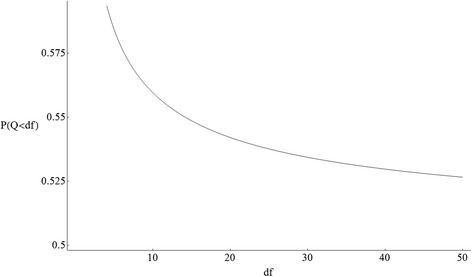
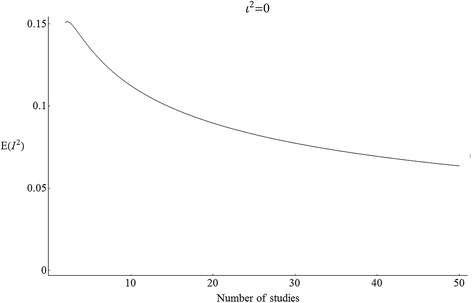
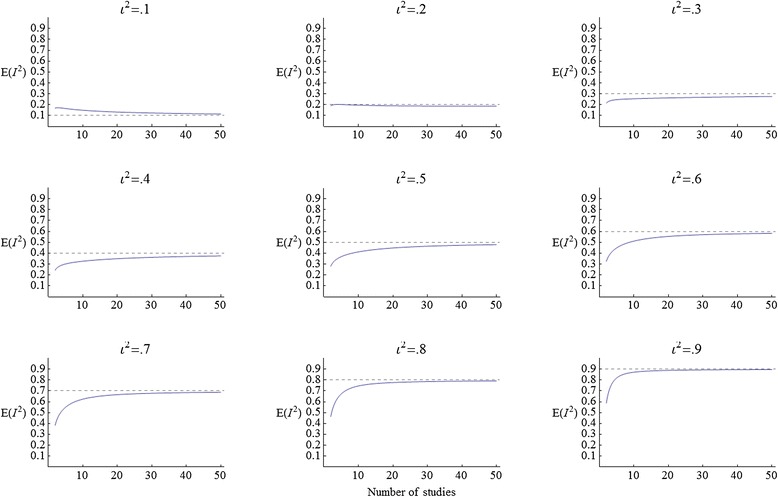
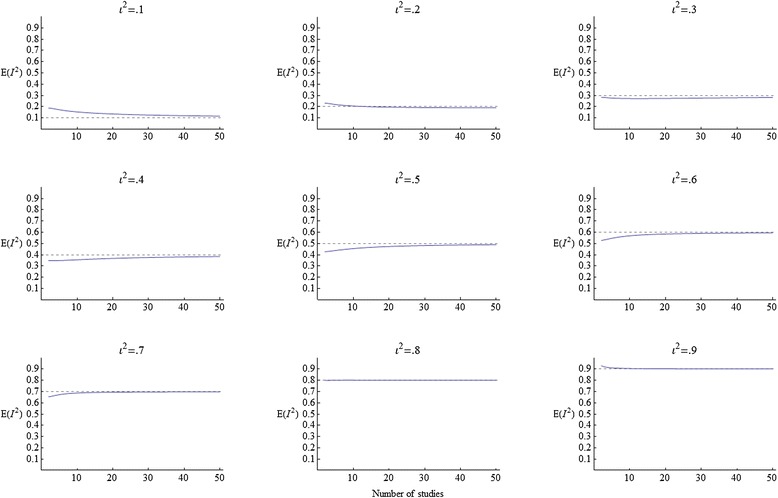
BACKGROUND: Estimated effects vary across studies, partly because of random sampling error and partly because of heterogeneity. In meta-analysis, the fraction of variance that is due to heterogeneity is estimated by the statistic I(2). We calculate the bias of I(2), focusing on the situation where the number of studies in the meta-analysis is small. Small meta-analyses are common; in the Cochrane Library, the median number of studies per meta-analysis is 7 or fewer. METHODS: We use Mathematica software to calculate the expectation and bias of I(2). RESULTS: I(2) has a substantial bias when the number of studies is small. The bias is positive when the true fraction of heterogeneity is small, but the bias is typically negative when the true fraction of heterogeneity is large. For example, with 7 studies and no true heterogeneity, I(2) will overestimate heterogeneity by an average of 12 percentage points, but with 7 studies and 80 percent true heterogeneity, I(2) can underestimate heterogeneity by an average of 28 percentage points. Biases of 12-28 percentage points are not trivial when one considers that, in the Cochrane Library, the median I(2) estimate is 21 percent. CONCLUSIONS: The point estimate I(2) should be interpreted cautiously when a meta-analysis has few studies. In small meta-analyses, confidence intervals should supplement or replace the biased point estimate I(2).
Overview
The claims and statistics of this paper haven’t been checked yet.
Free: it reads the open-access text and checks the first 5 claims that cite a source we can check. Create a free account to check every claim.
Integrity signals
Registry
Cites
Statistics
Figures
Verification
Claims the paper makes
The claims and statistics of this paper haven’t been checked yet.
Free: it reads the open-access text and checks the first 5 claims that cite a source we can check. Create a free account to check every claim.
Claims other papers make about this one
Each is checked against this paper’s own text: does it say what the citing paper says it does?
The source backs part of the claim, not all of it — or backs it for a different population, condition or comparison.
In the citing paper
“The I2 statistic in analyses of a few studies is considered to be uninformative90,91”
From Effects of Tea (Camellia sinensis) or its Bioactive Compounds l-Theanine or l-Theanine plus Caffeine on Cognition, Sleep, and Mood in Healthy Participants: A Systematic Review and Meta-Analysis of Randomized Controlled Trials (2025) · cites this paper as [91]
Experimental — accuracy not yet measuredThe cited source says what the claim attributes to it.
In the citing paper
“The heterogeneity estimates for professional burnout, somatisation, positive affect, negative affect, and resilience may not be reliable given the few comparisons contributing to the effect size (von Hippel, 2015).”
From Intervention Programs Targeting the Mental Health, Professional Burnout, and/or Wellbeing of School Teachers: Systematic Review and Meta-Analyses (2023) · cites this paper as von Hippel, 2015
In the citing paper
“Variation in effect sizes due to heterogeneity (rather than chance) was assessed with I2.54”
From Birth outcomes following intrauterine exposure to electronic nicotine delivery systems: a systematic review and meta-analysis (2026) · cites this paper as [54]
Self-check
Percentages, sums and reported differences re-computed from the paper’s own numbers.
The self-check needs the paper’s full text.
Citations
Cites
Quantifying heterogeneity in a meta‐analysis
Higgins, J. P. T., & Thompson, S. G. (2002) · Statistics in Medicine · doi:10.1002/sim.1186 · Cited by 36,763
The combination of estimates from different experiments
Cochran, W. G. (1954) · Biometrics · doi:10.2307/3001666 · Cited by 5,380
Fixed-and random-effects models in meta-analysis.
Hedges, L. V., & Vevea, J. L. (1998) · Psychological Methods · doi:10.1037/1082-989x.3.4.486 · Cited by 2,977 · cited 2×
“Any reasonable estimator of τ(2) will be limited to nonnegative values, and this will cause bias when the true value of τ(2) is close to zero [15,23].”
BackgroundA Re-Evaluation of Random-Effects Meta-Analysis
Higgins, J. P. T., Thompson, S. G., & Spiegelhalter, D. J. (2009) · Journal of the Royal Statistical Society Series A: Statistics in Society · doi:10.1111/j.1467-985x.2008.00552.x · Cited by 2,569
Bias and Efficiency of Meta-Analytic Variance Estimators in the Random-Effects Model
Viechtbauer, W. (2005) · Journal of Educational and Behavioral Statistics · doi:10.3102/10769986030003261 · Cited by 1,699
Undue reliance on I 2 in assessing heterogeneity may mislead
Rücker, G., Schwarzer, G., Carpenter, J. R., & Schumacher, M. (2008) · BMC Medical Research Methodology · doi:10.1186/1471-2288-8-79 · Cited by 1,287
Uncertainty in heterogeneity estimates in meta-analyses
Ioannidis, J. P. A., Patsopoulos, N. A., & Evangelou, E. (2007) · BMJ · doi:10.1136/bmj.39343.408449.80 · Cited by 1,254
Turner, R. M., Davey, J., Clarke, M. J., Thompson, S. G., & Higgins, J. P. (2012) · International Journal of Epidemiology · doi:10.1093/ije/dys041 · Cited by 837
Melsen, W. G., Bootsma, M. C. J., Rovers, M. M., & Bonten, M. J. M. (2014) · Clinical Microbiology and Infection · doi:10.1111/1469-0691.12494 · Cited by 776
The power of statistical tests in meta-analysis
Hedges, L. V., & Pigott, T. D. (2001) · Psychological Methods · doi:10.1037/1082-989x.6.3.203 · Cited by 716
Research works printed but not linked: 2
- von Hippel PT Osborne C Lincove A Bellows L Mills N The challenges of seeking exceptional teacher preparation programs among many noisy estimates 2014 Rochester, NY Social Science Research Network
- Cochrane Collaborative, “Cochrane Library”, 2015. [Online]. Available: http://www.cochranelibrary.com/. [Accessed: 25-Feb-2015].
Cited by
Items 601–700 of 999
Mickenautsch, S., & Yengopal, V. (2024) · Cureus · doi:10.7759/cureus.60346 · Cited by 11
Mohyuddin, G. R., Atieh, T., Ahmed, N., Sborov, D. W., McClune, B. L., Abdallah, A.-O. A., Goodman, A. M., Aziz, M., Allen, I. E., & Prasad, V. K. (2021) · European Journal of Cancer · doi:10.1016/j.ejca.2021.07.036 · Cited by 15
Salicylic Acid and Risk of Colorectal Cancer: A Two-Sample Mendelian Randomization Study
Nounu, A., Richmond, R. C., Stewart, I. D., Surendran, P., Wareham, N. J., Butterworth, A. S., Weinstein, S. J., Albanes, D., Baron, J. A., Hopper, J. L., et al. (2021) · Nutrients · doi:10.3390/nu13114164 · Cited by 12
Aho, S., Simon, E. G., Bouit, C., Serrand, M., Filipuzzi, L., Astruc, K., Kadhel, P., & Sagot, P. (2021) · Infectious Diseases Now · doi:10.1016/j.idnow.2022.02.009 · Cited by 13
Goh, C. X. Y., Tan, Y. K., Tan, C. H., Leow, A. S., Ho, J. S. Y., Tan, N. H. W., Goh, S., Ho, A. F. W., Sharma, V. K., Chan, B. P. L., et al. (2022) · Journal of Thrombosis and Thrombolysis · doi:10.1007/s11239-022-02659-9 · Cited by 11
“However, it is also worth noting that it is established that the heterogeneity statistic I2 can be biased in small meta-analysis [23].”
BackgroundLou, J., Xiang, Z., Zhu, X., Song, J., Huang, N., Li, J., Jin, G., Fan, Y., & Cui, S. (2025) · Frontiers in Medicine · doi:10.3389/fmed.2025.1485474 · Cited by 17
Semchishen, S. N., Højlund, M., Lemaire, D., Obeegadoo, I., Hammond, N. G., Frangione, B., Ogawa, H. F., Sunderland, R. J., Singh, A., Wafy, G., et al. (2026) · World Psychiatry · doi:10.1002/wps.70014 · Cited by 16
“I 2 was used to assess heterogeneity 30 .”
Jiang, L., Ouyang, J., & Du, X. (2021) · Medicine · doi:10.1097/md.0000000000027681 · Cited by 10
“1), a fixed-effects model will be adopted in the meta-analysis; otherwise, a random-effects model will be adopted.([26]) The STATA 14 software will be used to draw a network diagram to visually present the comparisons between all therapies.”
MethodSattari, S. A., Sattari, A. R., Hicks, C. W., Howard, J. F., Shoucair, S., Almanzar, A., Bannazadeh, M., & Arnold, M. W. (2022) · Annals of Vascular Surgery · doi:10.1016/j.avsg.2022.07.025 · Cited by 11
Deding, U., Jensen, S. S., Schelde‐Olesen, B., Kaalby, L., Bjørsum‐Meyer, T., & Koulaouzidis, A. (2022) · Diagnostics · doi:10.3390/diagnostics12112795 · Cited by 10
Zubach, V., Beirnes, J., Hayes, S., Severini, A., & Hiebert, J. (2024) · Journal of Clinical Microbiology · doi:10.1128/jcm.01339-23 · Cited by 17
“We also confirmed these results by visually inspecting the forest plots because I 2 should be interpreted cautiously when a meta-analysis has few studies (22).”
ResultZhang, X., Zheng, X., Gao, R., Wang, Y., Wei, T., Zang, Z., Zhu, L., Li, Q., Zhang, Y., & Liu, F. (2024) · European Journal of Nutrition · doi:10.1007/s00394-024-03393-z · Cited by 10
“We made this determination because the I 2 statistic can be biased in small meta-analyses and may not be useful in precisely evaluating heterogeneity in small studies [36].”
Shi, N. D. J., Marcato, A. J., Spirkoska, V., Meagher, N., Villanueva‐Cabezas, J. P., & Price, D. J. (2024) · Influenza and Other Respiratory Viruses · doi:10.1111/irv.13348 · Cited by 10
Riccò, M., Cascio, A., Corrado, S., Bottazzoli, M., Marchesi, F., Gili, R., Giuri, P. G., Gori, D., & Manzoni, P. (2024) · Epidemiologia · doi:10.3390/epidemiologia5030031 · Cited by 16
Most meta-analyses in oral health do not have conclusive and robust results
Tatas, Z., Kyriakou, E., Koutsiouroumpa, O., Seehra, J., Mavridis, D., & Pandis, N. (2024) · Journal of Dentistry · doi:10.1016/j.jdent.2024.105309 · Cited by 13
Davenport, R. A., Krug, I., Dang, P. L., Rickerby, N. C., & Kiropoulos, L. A. (2024) · Journal of Psychosomatic Research · doi:10.1016/j.jpsychores.2024.111906 · Cited by 16
Hu, A., Lv, Z., Chen, G., Lin, Y., Zhu, X., Li, J., & Yu, X. (2024) · Journal of Robotic Surgery · doi:10.1007/s11701-024-02107-1 · Cited by 10
“It is advisable to use caution when interpreting the results of the majority of the research in our evaluation, since there is a possibility of misleading conclusions based on the I 2 measurement from a small number of research [15].”
Assessing the validity of utaut among higher education instructors: a meta-analysis
Noureddine, R., Boote, D. N., & Campbell, L. O. (2025) · Education and Information Technologies · doi:10.1007/s10639-025-13449-0 · Cited by 18
“…the median number of studies per meta-analysis being seven or fewer, thus when conducted should be supplemented with confidence intervals to offset any bias in the I 2 statistic (Valentine et al., 2010; von Hippel, 2015) as was done for the correlation coefficients in this study, yielding narrow”
Fully automated insulin delivery systems in type 1 diabetes: A systematic review and meta‐analysis
Fan, W., Deng, C., Xu, R., Liu, Z., He, Y., Zhou, Z., & Li, X. (2025) · Diabetes Obesity and Metabolism · doi:10.1111/dom.16499 · Cited by 12
“26 We explored the sources of heterogeneity using meta-regression, considering factors such as age, type of hormone, follow-up time ( 1 month vs. ≥ 1 month), baseline HbA1c level, remote monitoring, diabetes duration ( 20 years vs. ≥ 20 years), type of control treatments, algo-rithm and…”
Artificial Intelligence in dentistry: an overview of systematic reviews and meta-analysis
Saikia, A., Kvist, T., Fawzy, A., & Anthonappa, R. P. (2025) · Evidence-Based Dentistry · doi:10.1038/s41432-025-01190-z · Cited by 19
“Among the 116 selected systematic reviews, 19 included meta-analyses, 12 selected for quantitative synthesis due to low RoB, and the remaining 104 were suitable for descriptive analysis.”
InfluentialEffect of intrapartum oxygen on the rate of cesarean delivery: a meta-analysis
Burd, J., Quist‐Nelson, J., Moors, S., Raghuraman, N., Aly, H. Z., & Berghella, V. (2021) · American Journal of Obstetrics & Gynecology MFM · doi:10.1016/j.ajogmf.2021.100374 · Cited by 11
Rouncivell, L., Takuva, S. G., Ledibane, N. R. T., Musekiwa, A., & Leong, T. D. D. (2021) · Tropical Medicine & International Health · doi:10.1111/tmi.13586 · Cited by 15
Rotational Atherectomy in Acute Coronary Syndrome: A Meta-Analysis
Qaqish, O., Sharma, S. P., Kumar, A., Patel, K., Mohammed, K. A. E., Venigalla, P., Ojha, A., Sareen, N., Goddla, V., Dabaja, A., et al. (2022) · Cardiovascular revascularization medicine · doi:10.1016/j.carrev.2022.02.020 · Cited by 10
Heywang-Köbrunner, S.-H., Jänsch, A., Hacker, A., Weinand, S., & Vogelmann, T. (2022) · European Journal of Radiology · doi:10.1016/j.ejrad.2022.110324 · Cited by 10
Ahmed, Z., Arif, S. F., Ong, S. L., Badal, J., Lee‐Smith, W., Renno, A. W., Alastal, Y., Nawras, A. T., & Aziz, M. (2022) · Digestive Diseases and Sciences · doi:10.1007/s10620-022-07741-z · Cited by 10
Batista, N. V. R., Valdez, R. M. A., Silva, E. M. V. D. M., Melo, T. S., Pereira, J. R. D., Warnakulasuriya, S., Santos‐Silva, A. R., Duarte, Â. L. B. P., Mariz, H. D. A., & Gueiros, L. A. (2022) · Journal of Oral Pathology and Medicine · doi:10.1111/jop.13396 · Cited by 10
Pooled analysis of epigenome-wide association studies of food consumption in KORA, TwinsUK and LLS
Hellbach, F., Sinke, L., Costeira, R., Baumeister, S., Beekman, M., Louca, P., Leeming, E. R., Mompeó, O., Berry, S. E., Wilson, R., et al. (2022) · European Journal of Nutrition · doi:10.1007/s00394-022-03074-9 · Cited by 19
Satpute, K. H., Bedekar, N., & Hall, T. M. (2023) · Physical Therapy Reviews · doi:10.1080/10833196.2023.2187996 · Cited by 10
Ozamiz-Etxebarria, N., Fernández, I. L., Mondragón, N. I., Olaya, B., Cornelius‐White, J. H. D., & Santabárbara, J. (2023) · Sustainability · doi:10.3390/su15065272 · Cited by 12
Antidepressant Use and Lung Cancer Risk and Survival: A Meta-analysis of Observational Studies
Lee, E., Park, Y., Li, D., Rodriguez-Fuguet, A., Wang, X., & Zhang, W. C. (2023) · Cancer Research Communications · doi:10.1158/2767-9764.crc-23-0003 · Cited by 14
Moretti, J.-B., Michael, R., Gervais, S., Alchourron, É., Stein, N., Farhat, Z., Lapierre, C., Dubois, J., & El-Jalbout, R. (2023) · European Radiology · doi:10.1007/s00330-023-09994-2 · Cited by 14
Chen, S., & Liu, Z. (2020) · Medicine · doi:10.1097/md.0000000000023307 · Cited by 12
Macura, B., Duca, L. D., Soto, A., Carrard, N., Gosling, L., Hannes, K., Thomas, J., Sara, L., Sommer, M., Waddington, H. S., et al. (2021) · Campbell Systematic Reviews · doi:10.1002/cl2.1164 · Cited by 12
In Bounds but Out of the Box: A Meta-Analysis Clarifying the Effect of Ethicality on Creativity
Winchester, C., & Medeiros, K. E. (2021) · Journal of Business Ethics · doi:10.1007/s10551-021-04990-2 · Cited by 12
Emerson, E., Aitken, Z., Totsika, V., King, T. L., Stancliffe, R. J., Hatton, C., Llewellyn, G. M., Hastings, R. P., & Kavanagh, A. M. (2022) · Health & Social Care in the Community · doi:10.1111/hsc.13882 · Cited by 13
“However, given the bias in I2 when the number of studies is small (as in the present case), I2 statistics should be treated with some caution (von Hippel, 2015).”
BackgroundMcPherson, S., & Senra, H. (2022) · Psychotherapy · doi:10.1037/pst0000448 · Cited by 13
Karimi‐Zarchi, M., Moghimi, M., Abbasi, H., Hadadan, A., Salimi, E., Morovati-Sharifabad, M., Akbarian-Bafghi, M. J., Zare-Shehneh, M., Mosavi-Jarrahi, A., & Neámatzadeh, H. (2019) · Asian Pacific Journal of Cancer Prevention · doi:10.31557/apjcp.2019.20.9.2569 · Cited by 11
“…quantified using I2 statistic (ranges from 0 to 100%), in which detected variations among studies due to heterogeneity rather than chance (I2= 0-25%, no heterogeneity; I2=25-50%, moderate heterogeneity; I2=50–75%, large heterogeneity; I2=75-100%, extreme heterogeneity) (Higgins 2003, Hippel 2015).”
BackgroundGenetic Studies of Metabolic Syndrome in Arab Populations: A Systematic Review and Meta-Analysis
Al-Homedi, Z., Afify, N., Memon, M., AlSafar, H. S., Tay, G. K., Jelinek, H. F., Mousa, M., Abu-Samra, N., & Osman, W. M. (2021) · Frontiers in Genetics · doi:10.3389/fgene.2021.733746 · Cited by 13
Rallis, D., Kapetaniou, K., Machas, P., Balomenou, F., Giapros, V. I., & Saliakellis, E. (2023) · Pediatric Radiology · doi:10.1007/s00247-023-05695-6 · Cited by 9
Vijayan, K., Schroder, H. J., Hameed, A. M., Hitos, K., Lo, W., Laurence, J. M., Yoon, P. D., Nahm, C. B., Lim, W. H., Lee, T., et al. (2024) · Transplantation · doi:10.1097/tp.0000000000004937 · Cited by 10
Iderdar, Y., Arraji, M., Wachami, N. A., Guennouni, M., Boumendil, K., Mourajid, Y., Elkhoudri, N., Saad, E., & Chahboune, M. (2024) · Osong Public Health and Research Perspectives · doi:10.24171/j.phrp.2023.0288 · Cited by 19
“I 2 represents the percentage of variability in results between studies due to heterogeneity rather than sampling error [21].”
Gao, H., Zhou, L., Zhang, J., Wang, Q., Luo, Z., Xu, Q., Tan, Y. C., Shuai, H., Zhou, J., Cai, X., et al. (2024) · BMC Cancer · doi:10.1186/s12885-024-12917-z · Cited by 9
“Regarding heterogeneity, caution is advised for low heterogeneity, as von Hippel PT demonstrated significant bias in I² when the number of included studies is small [47].”
Arntz, F., Markov, A., Schoenfeld, B. J., Behrens, M., Behm, D. G., Prieske, O., Negra, Y., & Chaabène, H. (2024) · Sports Medicine - Open · doi:10.1186/s40798-024-00772-y · Cited by 11
Kannan, S., Gillespie, C. S., Hanemaaijer, J., Eraifej, J., Alalade, A. F., & Green, A. L. (2025) · Pain Medicine · doi:10.1093/pm/pnaf001 · Cited by 12
Amaev, A., Song, J., Kambari, Y., Carmona-Torres, E., Abdolizadeh, A., Ueno, F., Koizumi, T., Strafella, A. P., Husain, M. I., Graff‐Guerrero, A., et al. (2025) · Journal of Psychiatric Research · doi:10.1016/j.jpsychires.2025.03.022 · Cited by 11
Liu, P., Zhou, Q., Bao, J., Chen, M., Xu, M., Bian, J., Wen, Y., & Yan, J. (2025) · Lasers in Medical Science · doi:10.1007/s10103-025-04398-8 · Cited by 9
Belachew, E. A., Peterson, G. M., & Bezabhe, W. M. M. (2025) · GeroScience · doi:10.1007/s11357-025-01600-1 · Cited by 13
Lv, Z., Huang, C., Lin, S., Tang, W., Peng, K., Zeng, L., Li, X., & Zhang, L. (2025) · Journal of Robotic Surgery · doi:10.1007/s11701-025-02357-7 · Cited by 9
“It is crucial to approach the interpretation of low heterogeneity cautiously, as the I 2 statistic can be significantly biased when derived from a small number of studies[19].”
García‐Patterson, A., Balsells, M., Solà, I., & Corcoy, R. (2025) · American Journal of Obstetrics and Gynecology · doi:10.1016/j.ajog.2025.04.059 · Cited by 18
Smart, S. E., Legge, S. E., Fenner, E., Pardiñas, A. F., Woolway, G., Lynham, A. J., Escott‐Price, V., Hall, J., Wilkinson, L. S., Holmans, P., et al. (2025) · American Journal of Medical Genetics Part B Neuropsychiatric Genetics · doi:10.1002/ajmg.b.33037 · Cited by 10
The impact of photovoice on mental health and stigma: A systematic review and meta-analysis
Adeboye, A. A., Aghalu, U., Onuorah, W. A., Samuel-Nwokeji, C. J., Nwanguma, C., Akerele, A., & Wasige, J. (2025) · PLOS Global Public Health · doi:10.1371/journal.pgph.0004272 · Cited by 12
“This is because while the “ I 2 ” provides an estimate, it does not eradicate the uncertainty that arises from having a limited number of studies in a meta-analysis [107].”
Effects of climate change on food security in Africa: Meta-analysis
Gebeyehu, L., Gemechu, A., & Bedemo, A. (2025) · Journal of Agriculture and Food Research · doi:10.1016/j.jafr.2025.102214 · Cited by 16
Atkin-Jones, T., Mc, S.-A., Rezk, A., Rizk, A. A., Lele, A. V., Englesakis, M. F., Zeiler, F. A., & Chowdhury, T. (2025) · Critical Care · doi:10.1186/s13054-025-05604-3 · Cited by 11
Suárez, I. R., Guerrero‐Jiménez, M., Cervilla, J. A., & Gutiérrez, B. (2025) · Journal of Affective Disorders · doi:10.1016/j.jad.2025.120482 · Cited by 20
Woodley of Menie, M. A., Fernandes, H. B. F., Kanazawa, S., & Dutton, E. (2018) · HOMO · doi:10.1016/j.jchb.2018.06.003 · Cited by 9
Yoneda, T. B., Marroig, A., Graham, E. K., Willroth, E. C., Watermeyer, T., Beck, E. D., Zelinski, E. M., Reynolds, C. A., Pedersen, N. L., Hofer, S. M., et al. (2021) · Neuropsychology · doi:10.1037/neu0000782 · Cited by 9
“We encourage follow-up investigation in this area, however, as I2 may be biased in meta-analyses based on a small number of independent effects (von Hippel, 2015).”
BackgroundLau, T., Cook, J., Archid, R., Stengel, A., Zipfel, S., & Mack, I. (2022) · Obesity Facts · doi:10.1159/000526945 · Cited by 12
Reliability Generalization Meta-Analysis of Internet Gaming Disorder Scale
Gisbert-Pérez, J., Vilar, M. M., Merino‐Soto, C., & Vallejos-Flores, M. A. (2022) · Healthcare · doi:10.3390/healthcare10101992 · Cited by 13
Predicting criminal and violent outcomes in psychiatry: a meta-analysis of diagnostic accuracy
Watts, D., Cardoso, T. D. A., Librenza‐Garcia, D., Ballester, P. L., Passos, I. C., Kessler, F. H. P., Reilly, J., Chaimowitz, G. A., & Kapczinski, F. P. (2022) · Translational Psychiatry · doi:10.1038/s41398-022-02214-3 · Cited by 18
“This metric was selected since the heterogeneity statistic I(2) can be biased in meta-analyses with small sample sizes [13].”
MethodPierce, Z. P., Johnson, E. R., Kim, I. A., Lear, B. E., Mast, A. M., & Black, J. M. (2023) · Frontiers in Psychology · doi:10.3389/fpsyg.2023.1074972 · Cited by 13
“Indeed, in smaller to medium sized meta-analyses I2 has the potential to overestimate heterogeneity in a review sample by 12–28%, indicating significant bias in the I2 statistic itself (Von Hippel, 2015).”
BackgroundRetractedLeft Upper Lobe Multi-Segmentectomy Versus Lobectomy for Early-Stage Lung Cancer: A Meta-Analysis
Bayfield, N. G. R., Bibo, L., Wang, E., & Edelman, J. J. (2023) · Heart Lung and Circulation · doi:10.1016/j.hlc.2023.02.006 · Cited by 9
Kakar, H., Groenland, F. T. W., Elscot, J. J., Rinaldi, R., Scoccia, A., Kardys, I., Nuis, R. J., Wilschut, J., den Dekker, W. K., Daemen, J., et al. (2023) · The American Journal of Cardiology · doi:10.1016/j.amjcard.2023.03.005 · Cited by 12
Wang, L., Li, K., Yin, S., Yang, L., & Zhu, P.-Y. (2023) · BMC Urology · doi:10.1186/s12894-023-01269-8 · Cited by 9
“Of course, the bias introduced by small-sample studies cannot be ignored [19].”
BackgroundRadithia, D., Subarnbhesaj, A., Ayuningtyas, N., Bakti, R. K., Mahdani, F. Y., Pratiwi, A. E., Ayunnisa, N., Putri, S., & Pramitha, S. R. (2023) · Journal of Clinical and Experimental Dentistry · doi:10.4317/jced.60195 · Cited by 9
Leslie, E., Luna, V., & Gibson, A. L. (2023) · International journal of exercise science · doi:10.70252/hsvd9987 · Cited by 19
Gougeon, A., Aribi, I., Guernouche, S., Lega, J., Wright, J. M., Verstuyft, C., Lajoinie, A., Gueyffier, F., & Grenet, G. (2024) · Atherosclerosis · doi:10.1016/j.atherosclerosis.2024.118624 · Cited by 10
Error monitoring and empathy: Explorations within a neurophysiological context
Amiruddin, A., Fueggle, S. N., Nguyen, A. T., Gignac, G. E., Clunies‐Ross, K. L., & Fox, A. M. (2017) · Psychophysiology · doi:10.1111/psyp.12846 · Cited by 15
Akbik, F., Waddel, H. B., Jaja, B. N. R., Macdonald, R. L., Moore, R. H., Samuels, O. B., & Sadan, O. (2021) · Journal of Stroke and Cerebrovascular Diseases · doi:10.1016/j.jstrokecerebrovasdis.2021.106020 · Cited by 9
Kim, J., Leon, M. E., Schinasi, L. H., Baldi, I., Lebailly, P., Freeman, L. E. B., Nordby, K.-C., Ferro, G., Monnereau, A., Brouwer, M., et al. (2023) · Cancer Causes & Control · doi:10.1007/s10552-023-01748-1 · Cited by 9
Minorities’ job satisfaction and organisational commitment in hospitality industry
Hsiao, A. (2017) · International Journal of Culture Tourism and Hospitality Research · doi:10.1108/ijcthr-01-2016-0010 · Cited by 11
Vo, T., Porcher, R., & Vansteelandt, S. (2020) · Research Methods in Medicine & Health Sciences · doi:10.1177/2632084320957207 · Cited by 18
Zhang, Y., Jiang, L., Ouyang, J., Du, X., & Jiang, L. (2021) · Medicine · doi:10.1097/md.0000000000027525 · Cited by 9
Zhang, S., Prykanowski, D. A., & Koppenhaver, D. A. (2022) · Reading Research Quarterly · doi:10.1002/rrq.483 · Cited by 14
Khambati, N., Song, R., MacLean, E. L.-H., Kohli, M., Olbrich, L., & Bijker, E. M. (2023) · BMC Global and Public Health · doi:10.1186/s44263-023-00018-1 · Cited by 8
“Differences in the reference standard likely contributed to heterogeneity, reflected in the lower I2 in the sensitivity analyses only including studies with a low ROB for the MRS and studies with two reference tests as opposed to one, although this should be interpreted with caution given the few studies and the wide…”
Grigio, T. R., Timmerman, H., Sousa, Â. M., & Wolff, A. P. (2024) · Clinics · doi:10.1016/j.clinsp.2024.100345 · Cited by 9
N‐acetylcysteine as a treatment for substance use cravings: A meta‐analysis
Winterlind, E. L., Malone, S. G., Setzer, M. R., Murphy, M. A., Saunders, D., & Gray, J. C. (2024) · Addiction Biology · doi:10.1111/adb.70001 · Cited by 11
Aslan, C. E., Souther, S., Thode, A. E., Youberg, A., & Evans, Z. (2024) · Journal of Environmental Management · doi:10.1016/j.jenvman.2024.123353 · Cited by 9
da Silva, J. V. M. B., Delgado, J. C. S., Hortúa, A. M. J., Veiga, A. C., Andrade, G. V., Rodrigues, M. R., & de Souza, H. C. D. (2025) · Brazilian Journal of Medical and Biological Research · doi:10.1590/1414-431x2025e14194 · Cited by 20
Cooper, J. T., Svoboda, E., Prochazka, A. V., & Ha, D. M. (2025) · BMC Cancer · doi:10.1186/s12885-025-14192-y · Cited by 11
“We interpreted heterogeneity ≥ 70%, particularly with ≤ 7 RCTs, as unreliable [39].”
Bruna-Mejías, A., Silva-Bravo, V., Valarezo, L. M., Delgado-Retamal, M. F., Nazar-Izquierdo, D., Aguilar-Aguirre, I., Nova-Baeza, P., Orellana‐Donoso, M., Suazo-Santibáñez, A., Gutiérrez‐Espinoza, H., et al. (2025) · Pharmaceuticals · doi:10.3390/ph18060795 · Cited by 8
Prates, R. A. C. S., Kaczmarska, M., Senger, D., Piña‐Escudero, S. D., Weiner‐Light, S., Pintado‐Caipa, M., Battista, P., Tahir, P., Pitsch, E. A., Allen, I. E., et al. (2025) · BMC Geriatrics · doi:10.1186/s12877-025-06483-7 · Cited by 12
Jung, C., Gillmann, H.-J., & Stueber, T. (2025) · Critical Care · doi:10.1186/s13054-025-05712-0 · Cited by 10
Zhuravleva, M. V., Gorodetskaya, G. I., Reznikova, T. S., Vasyukova, N. S., Arkhipov, V. V., & Serebrova, S. Y. (2022) · Antibiot Khimioter = Antibiotics and Chemotherapy · doi:10.37489/0235-2990-2021-66-9-10-39-53 · Cited by 8
Wang, L., Deng, J.-Y., Li, K., Yin, S., & Zhu, P.-Y. (2023) · Asian Journal of Surgery · doi:10.1016/j.asjsur.2023.08.048 · Cited by 8
Kabahweza, H. M., & Spencer, A. (2024) · Global Pediatric Health · doi:10.1177/2333794x231223266 · Cited by 8
Ahadinezhad, B., Maleki, A., Akhondi, A., Kazemi, M., Yousefy, S., Rezaei, F., & Khosravizadeh, O. (2024) · PLOS ONE · doi:10.1371/journal.pone.0290424 · Cited by 8
“This statistic calculates the variance ratio due to heterogeneity in the estimates of the studies [27].”
BackgroundStatistical heterogeneity in meta-analysis of hypertension and exercise training: A meta-review
Teixeira, J. M. M., Roever, L., Ramasamy, A., Pereira, R., Carneiro, I., Krustrup, P., & Póvoas, S. C. A. (2023) · Journal of Sports Sciences · doi:10.1080/02640414.2024.2309055 · Cited by 9
Slob, J., Gigengack, R. K., van Baar, M. E., Loer, S. A., Koopman, S., & van der Vlies, C. H. (2024) · BMC Anesthesiology · doi:10.1186/s12871-024-02471-3 · Cited by 10
“However, conducting a meta-analysis with a small number of studies results in unavoidable heterogeneity between studies, which can be seen in the I 2 statistic [23].”
BackgroundMethodInfluentialWebb, E. L., Gencarelli, B. L., Keaveney, G., & Morris, D. J. (2024) · Advances in Autism · doi:10.1108/aia-07-2023-0037 · Cited by 10
Mickenautsch, S., & Yengopal, V. (2024) · Cureus · doi:10.7759/cureus.58961 · Cited by 7
Wang, C., Chen, C., Liu, Y., Wen, Z., Li, H., Huang, H.-T., & Yang, X. (2024) · Journal of Robotic Surgery · doi:10.1007/s11701-024-02010-9 · Cited by 8
“Although most studies demonstrate low to moderate heterogeneity, caution is advised in interpreting the I 2 statistics, as they may not be reliable based on a limited number of studies [26].”
Moving Beyond the Brag Sheet: A Meta‐Analysis of Biodata Measures Predicting Student Outcomes
Zhang, C., & Kuncel, N. R. (2020) · Educational Measurement Issues and Practice · doi:10.1111/emip.12313 · Cited by 8
E-cigarette device type and combustible tobacco use: Results from a pooled analysis of 10,482 youth
Kong, G., Chaffee, B. W., Wu, R., Krishnan‐Sarin, S., Liu, F., Leventhal, A. M., McConnell, R., & Barrington‐Trimis, J. L. (2022) · Drug and Alcohol Dependence · doi:10.1016/j.drugalcdep.2022.109279 · Cited by 9
Do Empathetic People Have Strong Religious Beliefs? Survey Studies with Large Japanese Samples
Ishii, T., & Watanabe, K. (2022) · International Journal for the Psychology of Religion · doi:10.1080/10508619.2022.2057059 · Cited by 11
Meta-Analysis: A Convenient Tool for the Choice of Nose-to-Brain Nanocarriers
Hathout, R. M., & El-Marakby, E. M. (2022) · Bioengineering · doi:10.3390/bioengineering9110647 · Cited by 8
Diagnostic Test Accuracy of Lung Ultrasound for Acute Chest Syndrome in Sickle Cell Disease
Omar, M. M., Jabir, A. R., Khan, I., Novelli, E. M., & Xu, J. Z. (2022) · CHEST Journal · doi:10.1016/j.chest.2022.11.042 · Cited by 8
Wang, L., Li, K., Liu, Y., Yin, S., & Zhu, P.-Y. (2023) · World Journal of Surgical Oncology · doi:10.1186/s12957-023-02967-1 · Cited by 8
“Of course, we cannot ignore the bias introduced by small sample studies [25].”
BackgroundIs sibship composition a risk factor for childhood asthma? Systematic review and meta-analysis
Lisik, D., Ermis, S. S. Ö., Ioannidou, A., Milani, G., Nyassi, S., Spolidoro, G., Kankaanranta, H., Goksör, E., Wennergren, G., & Nwaru, B. (2023) · World Journal of Pediatrics · doi:10.1007/s12519-023-00706-w · Cited by 9
Systematic Reviews and Meta‐Analysis
Crombie, I. (2021) · Wiley eBooks · doi:10.1002/9781394322183.ch5 · Cited by 9
Malmberg, S., Petrén, S., Gunnarsson, R. K., Hedin, K., & Sundvall, P. (2021) · BMJ Open · doi:10.1136/bmjopen-2020-042816 · Cited by 8
Metadata
- Authors
- von Hippel, P. T.
- Venue
- BMC Medical Research Methodology
- Published
- 2015-04-14
- Volume
- 15
- Issue
- 1
- Pages
- 35-35
- ISSN
- 1471-2288 (ISSN-L)
- PMC
- PMC4410499
- OpenAlex
- W2021593215
- Cited by
- 1,229
- References
- 26
- Citations by year
- 2026: 106 · 2025: 185 · 2024: 216 · 2023: 195 · 2022: 173 · 2021: 131 · 2020: 71 · 2019: 63 · 2018: 51 · 2017: 24 · 2016: 9 · 2015: 3
- FWCI
- 26.46
- Type
- journal article
- Language
- en
- Open access
- gold
- doi.org
- Locations
- BMC Medical Research Methodology (publishedVersion, cc-by)
- PubMed Central (publishedVersion, cc-by)
- PubMed (publishedVersion)
- arXiv (Cornell University) (submittedVersion)
- Topics
- Social Sciences › Decision Sciences › Statistics, Probability and Uncertainty › Meta-analysis and systematic reviews
- Physical Sciences › Mathematics › Statistics and Probability › Statistical Methods in Epidemiology
- Social Sciences › Decision Sciences › Statistics, Probability and Uncertainty › Reliability and Agreement in Measurement
- Keywords
- I2 statistic, heterogeneity, estimation bias, between-study variance, confidence intervals, Cochrane Library
- MeSH terms
- Algorithms, Biometry, Humans, Mathematical Computing, Research, Research Design, Software, Meta-Analysis as Topic, Reproducibility of Results, Bias
About these checks
Registry, retraction, Cites and statistics results are computed, not judged, with one exception: a printed reference that no index lists is read once by a model before it counts as a citation error. Claims are extracted by a model and kept only when their quote appears verbatim in the text; each cited source is then checked, with a model’s help, for whether it says what the claim relies on. Those verdicts can be wrong — read the claim’s quote and the cited source before relying on one.
Statistics and arithmetic are recomputed, not judged.
Confidence bands are shown only for fields calibrated on our annotated test set. None is calibrated yet, so no band is shown.
What counts as a claim ›How we measure confidence ›How we check this ›
Are you an author, or do you see a problem with this page? Request a review
Data sources
Bibliographic data: Semantic Scholar, OpenAlex, Crossref.
Contains information from the Semantic Scholar Academic Graph Datasets, made available under the ODC Attribution License (ODC-BY 1.0).
Semantic Scholar’s data is described in: Kinney, R., et al. (2023). The Semantic Scholar Open Data Platform. arXiv:2301.10140.
