

The heterogeneity statistic I2 can be biased in small meta-analyses
Open accessThe DOI matches its Crossref record; 26 of the 26 references it cites were found in a registry or an index.
Abstract
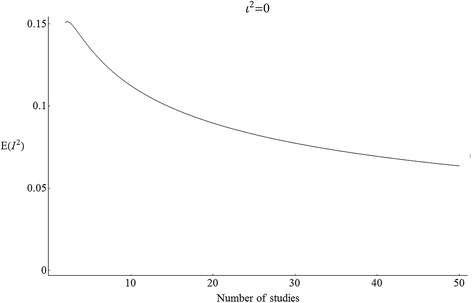
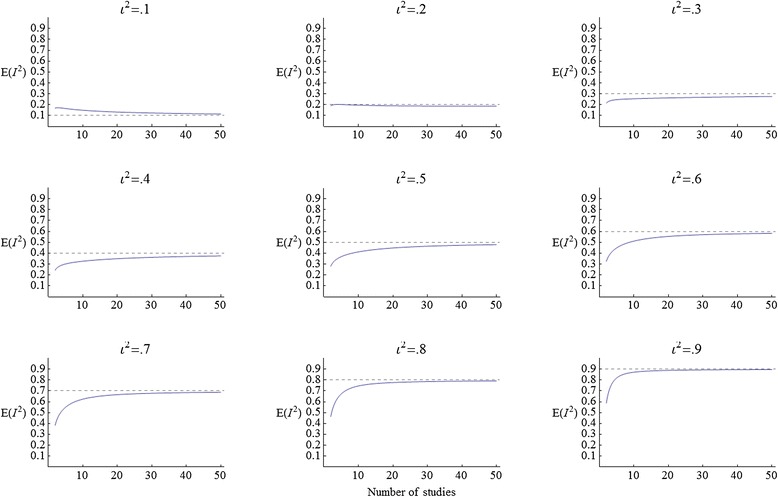
BACKGROUND: Estimated effects vary across studies, partly because of random sampling error and partly because of heterogeneity. In meta-analysis, the fraction of variance that is due to heterogeneity is estimated by the statistic I(2). We calculate the bias of I(2), focusing on the situation where the number of studies in the meta-analysis is small. Small meta-analyses are common; in the Cochrane Library, the median number of studies per meta-analysis is 7 or fewer. METHODS: We use Mathematica software to calculate the expectation and bias of I(2). RESULTS: I(2) has a substantial bias when the number of studies is small. The bias is positive when the true fraction of heterogeneity is small, but the bias is typically negative when the true fraction of heterogeneity is large. For example, with 7 studies and no true heterogeneity, I(2) will overestimate heterogeneity by an average of 12 percentage points, but with 7 studies and 80 percent true heterogeneity, I(2) can underestimate heterogeneity by an average of 28 percentage points. Biases of 12-28 percentage points are not trivial when one considers that, in the Cochrane Library, the median I(2) estimate is 21 percent. CONCLUSIONS: The point estimate I(2) should be interpreted cautiously when a meta-analysis has few studies. In small meta-analyses, confidence intervals should supplement or replace the biased point estimate I(2).
Overview
The claims and statistics of this paper haven’t been checked yet.
Free: it reads the open-access text and checks the first 5 claims that cite a source we can check. Create a free account to check every claim.
Integrity signals
Registry
Cites
Statistics
Figures
Verification
Claims the paper makes
The claims and statistics of this paper haven’t been checked yet.
Free: it reads the open-access text and checks the first 5 claims that cite a source we can check. Create a free account to check every claim.
Claims other papers make about this one
Each is checked against this paper’s own text: does it say what the citing paper says it does?
The source backs part of the claim, not all of it — or backs it for a different population, condition or comparison.
In the citing paper
“The I2 statistic in analyses of a few studies is considered to be uninformative90,91”
From Effects of Tea (Camellia sinensis) or its Bioactive Compounds l-Theanine or l-Theanine plus Caffeine on Cognition, Sleep, and Mood in Healthy Participants: A Systematic Review and Meta-Analysis of Randomized Controlled Trials (2025) · cites this paper as [91]
Experimental — accuracy not yet measuredThe cited source says what the claim attributes to it.
In the citing paper
“The heterogeneity estimates for professional burnout, somatisation, positive affect, negative affect, and resilience may not be reliable given the few comparisons contributing to the effect size (von Hippel, 2015).”
From Intervention Programs Targeting the Mental Health, Professional Burnout, and/or Wellbeing of School Teachers: Systematic Review and Meta-Analyses (2023) · cites this paper as von Hippel, 2015
In the citing paper
“Variation in effect sizes due to heterogeneity (rather than chance) was assessed with I2.54”
From Birth outcomes following intrauterine exposure to electronic nicotine delivery systems: a systematic review and meta-analysis (2026) · cites this paper as [54]
Self-check
Percentages, sums and reported differences re-computed from the paper’s own numbers.
The self-check needs the paper’s full text.
Citations
Cites
Quantifying heterogeneity in a meta‐analysis
Higgins, J. P. T., & Thompson, S. G. (2002) · Statistics in Medicine · doi:10.1002/sim.1186 · Cited by 36,763
The combination of estimates from different experiments
Cochran, W. G. (1954) · Biometrics · doi:10.2307/3001666 · Cited by 5,380
Fixed-and random-effects models in meta-analysis.
Hedges, L. V., & Vevea, J. L. (1998) · Psychological Methods · doi:10.1037/1082-989x.3.4.486 · Cited by 2,977 · cited 2×
“Any reasonable estimator of τ(2) will be limited to nonnegative values, and this will cause bias when the true value of τ(2) is close to zero [15,23].”
BackgroundA Re-Evaluation of Random-Effects Meta-Analysis
Higgins, J. P. T., Thompson, S. G., & Spiegelhalter, D. J. (2009) · Journal of the Royal Statistical Society Series A: Statistics in Society · doi:10.1111/j.1467-985x.2008.00552.x · Cited by 2,569
Bias and Efficiency of Meta-Analytic Variance Estimators in the Random-Effects Model
Viechtbauer, W. (2005) · Journal of Educational and Behavioral Statistics · doi:10.3102/10769986030003261 · Cited by 1,699
Undue reliance on I 2 in assessing heterogeneity may mislead
Rücker, G., Schwarzer, G., Carpenter, J. R., & Schumacher, M. (2008) · BMC Medical Research Methodology · doi:10.1186/1471-2288-8-79 · Cited by 1,287
Uncertainty in heterogeneity estimates in meta-analyses
Ioannidis, J. P. A., Patsopoulos, N. A., & Evangelou, E. (2007) · BMJ · doi:10.1136/bmj.39343.408449.80 · Cited by 1,254
Turner, R. M., Davey, J., Clarke, M. J., Thompson, S. G., & Higgins, J. P. (2012) · International Journal of Epidemiology · doi:10.1093/ije/dys041 · Cited by 837
Melsen, W. G., Bootsma, M. C. J., Rovers, M. M., & Bonten, M. J. M. (2014) · Clinical Microbiology and Infection · doi:10.1111/1469-0691.12494 · Cited by 776
The power of statistical tests in meta-analysis
Hedges, L. V., & Pigott, T. D. (2001) · Psychological Methods · doi:10.1037/1082-989x.6.3.203 · Cited by 716
Research works printed but not linked: 2
- von Hippel PT Osborne C Lincove A Bellows L Mills N The challenges of seeking exceptional teacher preparation programs among many noisy estimates 2014 Rochester, NY Social Science Research Network
- Cochrane Collaborative, “Cochrane Library”, 2015. [Online]. Available: http://www.cochranelibrary.com/. [Accessed: 25-Feb-2015].
Cited by
Prevalence of depression during the COVID-19 outbreak: A meta-analysis of community-based studies
Bueno-Notivol, J., Gracia-García, P., Olaya, B., Lasheras, I., López-Antón, R., & Santabárbara, J. (2021) · International Journal of Clinical and Health Psychology · doi:10.1016/j.ijchp.2020.07.007 · Cited by 820
Correll, C. U., Solmi, M., Croatto, G., Schneider, L. K., Rohani‐Montez, S. C., Fairley, L., Smith, N., Bitter, I., Gorwood, P., Taipale, H., et al. (2022) · World Psychiatry · doi:10.1002/wps.20994 · Cited by 686
Braithwaite, I., Zhang, S., Kirkbride, J. B., Osborn, D. P. J., & Hayes, J. F. (2019) · Environmental Health Perspectives · doi:10.1289/ehp4595 · Cited by 680
Meta‐analysis of prevalence: I 2 statistic and how to deal with heterogeneity
Migliavaca, C. B., Stein, C., Colpani, V., Barker, T. H., Ziegelmann, P. K., Munn, Z., Falavigna, M., & Prevalence Estimates Reviews—Systematic Review Methodology Group (PERSyst) (2022) · Research Synthesis Methods · doi:10.1002/jrsm.1547 · Cited by 577
Goldberg, S. B., Riordan, K. M., Sun, S., & Davidson, R. J. (2022) · Perspectives on Psychological Science · doi:10.1177/1745691620968771 · Cited by 520
“A third limitation was the moderate degree of heterogeneity within the included studies (compounded by uncertainty in the I 2 estimates themselves given the 126 Goldberg et al. small number of studies for some effect sizes; von Hippel, 2015).”
BackgroundRetention strategies in longitudinal cohort studies: a systematic review and meta-analysis
Theme, T. S. L. S., Teague, S., Youssef, G. J., Macdonald, J. A., Sciberras, E., Shatte, A., Fuller-Tyszkiewicz, M., Greenwood, C., McIntosh, J., Olsson, C. A., et al. (2018) · BMC Medical Research Methodology · doi:10.1186/s12874-018-0586-7 · Cited by 475
Prevalence of anxiety in the COVID-19 pandemic: An updated meta-analysis of community-based studies
Santabárbara, J., Lasheras, I., Lipnicki, D. M., Bueno-Notivol, J., Pérez-Moreno, M., López-Antón, R., De la Cámara, C., Lobo, A., & Gracia-García, P. (2021) · Progress in Neuro-Psychopharmacology and Biological Psychiatry · doi:10.1016/j.pnpbp.2020.110207 · Cited by 426
“A generic inverse variance method with a random effect model was used (DerSimonian and Laird, 1986) and the I2 statistic and 95% confidence interval were employed to quantify heterogeneity (von Hippel, 2015).”
Contemporary Outcomes for Infants with Necrotizing Enterocolitis—A Systematic Review
Jones, I. H., & Hall, N. J. (2020) · The Journal of Pediatrics · doi:10.1016/j.jpeds.2019.11.011 · Cited by 372
Lara, E., Martín-María, N., De la Torre-Luque, A., Koyanagi, A., Vancampfort, D., Izquierdo, A., & Miret, M. (2019) · Ageing Research Reviews · doi:10.1016/j.arr.2019.03.002 · Cited by 351
Freeman, T. P., Craft, S., Wilson, J., Stylianou, S., ElSohly, M., Di Forti, M., & Lynskey, M. T. (2021) · Addiction · doi:10.1111/add.15253 · Cited by 337
Publication bias examined in meta-analyses from psychology and medicine: A meta-meta-analysis
van Aert, R. C. M., Wicherts, J. M., & van Assen, M. A. L. M. (2019) · PLOS ONE · doi:10.1371/journal.pone.0215052 · Cited by 334
Misunderstandings about Q and ‘Cochran's Q test' in meta‐analysis
Hoaglin, D. C. (2016) · Statistics in Medicine · doi:10.1002/sim.6632 · Cited by 310
Ozamiz-Etxebarria, N., Idoiaga Mondragon, N., Bueno-Notivol, J., Pérez-Moreno, M., & Santabárbara, J. (2021) · Brain Sciences · doi:10.3390/brainsci11091172 · Cited by 255
“The I2 statistic and 95% confidence interval (95% CI) were also used to quantify heterogeneity [49].”
MethodSchierhout, G., McGregor, S., Gessain, A., Einsiedel, L., Martinello, M., & Kaldor, J. (2020) · The Lancet Infectious Diseases · doi:10.1016/s1473-3099(19)30402-5 · Cited by 250
Traumatic stress and accelerated DNA methylation age: a meta-analysis
Wolf, E. J., Maniates, H., Nugent, N., Maihofer, A. X., Armstrong, D., Ratanatharathorn, A., Ashley-Koch, A. E., Garrett, M., Kimbrel, N. A., Lori, A., et al. (2018) · Psychoneuroendocrinology · doi:10.1016/j.psyneuen.2017.12.007 · Cited by 245
Khazanov, G. K., & Ruscio, A. M. (2016) · Psychological Bulletin · doi:10.1037/bul0000059 · Cited by 240
“As the I2 index is influenced by sample size and can be biased in meta-analyses with small samples (von Hippel, 2015), we included confidence intervals for each effect size as well.”
BackgroundWijnands, A. M., de Jong, M. E., Lutgens, M. W. M. D., Hoentjen, F., Elias, S. G., & Oldenburg, B. (2021) · Gastroenterology · doi:10.1053/j.gastro.2020.12.036 · Cited by 240
Meta-Analytic Methodology for Basic Research: A Practical Guide
Mikolajewicz, N., & Komarova, S. V. (2019) · Frontiers in Physiology · doi:10.3389/fphys.2019.00203 · Cited by 234
Health effects associated with smoking: a Burden of Proof study
Dai, X., Gil, G. F., Reitsma, M. B., Ahmad, N. S., Anderson, J. A., Bisignano, C., Carr, S., Feldman, R., Hay, S. I., He, J., et al. (2022) · Nature Medicine · doi:10.1038/s41591-022-01978-x · Cited by 224
Multi-omics signatures of the human early life exposome
Maitre, L., Bustamante, M., Hernández-Ferrer, C., Thiel, D., Lau, C.-H. E., Siskos, A. P., Vives-Usano, M., Ruiz-Arenas, C., Pelegrí-Sisó, D., Robinson, O., et al. (2022) · Nature Communications · doi:10.1038/s41467-022-34422-2 · Cited by 217
When our hands help us understand: A meta-analysis into the effects of gesture on comprehension.
Dargue, N., Sweller, N., & Jones, M. P. (2019) · Psychological Bulletin · doi:10.1037/bul0000202 · Cited by 202
“Note that I 2 is influenced by the number of studies included within the analysis (von Hippel, 2015), with I 2 often over or underestimating the amount of systematic variance when less than seven studies are included.”
Blades, C. A., Stritzke, W. G. K., Page, A. C., & Brown, J. D. (2018) · Clinical Psychology Review · doi:10.1016/j.cpr.2018.07.001 · Cited by 203
Johnson, B. T., & Hennessy, E. A. (2019) · Social Science & Medicine · doi:10.1016/j.socscimed.2019.05.035 · Cited by 201
“Additionally, research has demonstrated that in meta-analyses with smaller k, I2 can have substantial bias (Von Hippel, 2015); for this reason, reporting of the random-effects variance, τ2, is also recommended (Schwarzer et al., 2017).”
BackgroundEffects of Prior Cognitive Exertion on Physical Performance: A Systematic Review and Meta-analysis
Brown, D. M. Y., Graham, J. D., Innes, K. I., Harris, S., Flemington, A., & Bray, S. R. (2020) · Sports Medicine · doi:10.1007/s40279-019-01204-8 · Cited by 194
“, Cochrane’s Q, tau-squared), which may otherwise be skewed by smaller samples [67, 71] as in the meta-analysis by McMorris et al.”
ResultA meta-analysis of the effect of organic and mineral fertilizers on soil microbial diversity
Bebber, D. P., & Richards, V. R. (2022) · Applied Soil Ecology · doi:10.1016/j.apsoil.2022.104450 · Cited by 194
Beaudry, G., Yu, R., Perry, A. E., & Fazel, S. (2021) · The Lancet Psychiatry · doi:10.1016/s2215-0366(21)00170-x · Cited by 196
AL Wachami, N., Guennouni, M., Iderdar, Y., Boumendil, K., Arraji, M., Mourajid, Y., Bouchachi, F. Z., Barkaoui, M., Louerdi, M. L., Hilali, A., et al. (2024) · BMC Public Health · doi:10.1186/s12889-024-17686-9 · Cited by 185
“Inter-study heterogeneity was measured by the I 2 test to estimate the percentage of variability between the included studies [25, 26].”
MethodComparison of four heterogeneity measures for meta‐analysis
Lin, L. (2020) · Journal of Evaluation in Clinical Practice · doi:10.1111/jep.13159 · Cited by 184
“Several studies have evaluated these heterogeneity measures regarding their biases and confidence interval coverages.(18,20,22,25,26) However, the concept of “the proportion of total variation caused by heterogeneity rather than within‐study sampling error” is not uniquely defined, because different measures use diffe…”
BackgroundPhillips, E. A., Gordeev, V. S., & Schreyögg, J. (2019) · Scandinavian Journal of Work, Environment & Health · doi:10.5271/sjweh.3839 · Cited by 148
Meta-analysis and systematic review for the treatment of perpetrators of intimate partner violence
Karakurt, G., Koç, E., Çetinsaya, E. E., Ayluçtarhan, Z., & Bolen, S. (2019) · Neuroscience & Biobehavioral Reviews · doi:10.1016/j.neubiorev.2019.08.006 · Cited by 172
“Heterogeneity can be due to the differences in treatments, sample populations or the study design (von Hippel, 2015).”
BackgroundSchmidt, C. B., van Loon, B. J. P., Vergouwen, A. C. M., Snoek, F. J., & Honig, A. (2018) · Diabetic Medicine · doi:10.1111/dme.13709 · Cited by 170
State-of-the-art of FAPI-PET imaging: a systematic review and meta-analysis
Sollini, M., Kirienko, M., Gelardi, F., Fiz, F., Gozzi, N., & Chiti, A. (2021) · European Journal of Nuclear Medicine and Molecular Imaging · doi:10.1007/s00259-021-05475-0 · Cited by 168
Kumarasamy, C., Sabarimurugan, S., Royam, M. M., Lakhotiya, K., Samiappan, S., Baxi, S., Nachimuthu, R., Muthukaliannan, G. K., & Jayaraj, R. (2019) · Medicine · doi:10.1097/md.0000000000014834 · Cited by 176
“However, I(2) is not an infallible metric of heterogeneity, as it can provide biased results in small meta-analysis.([36]) Therefore for redundancy, we will use the Cochran’ Q and Tau(2) parameters to assess heterogeneity alongside the I(2) statistic.”
MethodMaternal influenza and birth outcomes: systematic review of comparative studies
Fell, D. B., Savitz, D. A., Ms, K., Gessner, B. D., Katz, M., Knight, M., Luteijn, M., Marshall, H. S., Bhat, N., Gravett, M., et al. (2016) · BJOG An International Journal of Obstetrics & Gynaecology · doi:10.1111/1471-0528.14143 · Cited by 175
Meta-analysis of the relationship between problem gambling, excessive gaming and loot box spending
Garea, S. S., Drummond, A., Sauer, J. D., Hall, L. C., & Williams, M. N. (2021) · International Gambling Studies · doi:10.1080/14459795.2021.1914705 · Cited by 107
“…employed a Random Effects, rather than Fixed Effects Model which does not assume an identical effect/relationship across the data and distribution, and performs better at identifying the average effect size when heterogeneity is high (Hedges & Vevea, 1998; Higgins et al., 2019; Von Hippel, 2015).”
BackgroundMethodChrist, C., Schouten, M. J., Blankers, M., van Schaik, D. J., Beekman, A. T., Wisman, M. A., Stikkelbroek, Y. A., & Dekker, J. J. (2020) · Journal of Medical Internet Research · doi:10.2196/17831 · Cited by 148
“In addition, we calculated the 95% CIs around I(2) by using the noncentral chi-square approach in the “heterogi” module of STATA [54,55].”
Santabárbara, J., Bueno-Notivol, J., Lipnicki, D. M., Olaya, B., Pérez-Moreno, M., Gracia-García, P., Idoiaga-Mondragon, N., & Ozamiz-Etxebarria, N. (2021) · Progress in Neuro-Psychopharmacology and Biological Psychiatry · doi:10.1016/j.pnpbp.2021.110244 · Cited by 146
“The I2 statistic and 95% confidence interval was also used to quantify heterogeneity (von Hippel, 2015).”
Wang, D., Levine, J. L. S., Avila-Quintero, V., Bloch, M., & Kaffman, A. (2020) · Translational Psychiatry · doi:10.1038/s41398-020-0856-0 · Cited by 142
Abramson, L., Uzefovsky, F., Toccaceli, V., & Knafo‐Noam, A. (2020) · Neuroscience & Biobehavioral Reviews · doi:10.1016/j.neubiorev.2020.03.023 · Cited by 175
Beetham, K. S., Giles, C., Noetel, M., Clifton, V. L., Jones, J. C., & Naughton, G. A. (2019) · BMC Pregnancy and Childbirth · doi:10.1186/s12884-019-2441-1 · Cited by 161
“Finally, heterogeneity was assessed using a confidenceinterval for I(2) because point estimates of heterogeneity can be biased in small meta-analyses [53].”
MethodOn the Iatrogenic Risk of Assessing Suicidality: A Meta‐Analysis
DeCou, C. R., & Schumann, M. E. (2018) · Suicide and Life-Threatening Behavior · doi:10.1111/sltb.12368 · Cited by 140
Hussein, H., Abbas, E., Keshavarzi, S., Fazelzad, R., Bukhanov, K., Kulkarni, S. R., Au, F. W.-F., Ghai, S., Alabousi, A., & Freitas, V. (2023) · Radiology · doi:10.1148/radiol.221785 · Cited by 171
Liu, N., Bu, Z., Liu, W., Kan, H., Zhao, Z., Deng, F., Huang, C., Zhao, B., Zeng, X., Sun, Y., et al. (2022) · Indoor Air · doi:10.1111/ina.13038 · Cited by 170
Maternal periodontitis and preterm birth: Systematic review and meta‐analysis
Corredor, E. J. M., Orozco‐Beltrán, D., López‐Pineda, A., Quesada, J. A., Gil-Guillén, V. F., & Carratalá‐Munuera, C. (2019) · Community Dentistry And Oral Epidemiology · doi:10.1111/cdoe.12450 · Cited by 177
The Prevalence of Sarcopenia in Chinese Older Adults: Meta-Analysis and Meta-Regression
Chen, Z., Li, W., Ho, M. M., & Chau, P. H. (2021) · Nutrients · doi:10.3390/nu13051441 · Cited by 155
“For outpatients, considering that Cochran’s Q is not very informative and tends to be biased when the number of studies is small, we did not perform meta-analysis for this group [88].”
MethodLiu, L., Ni, S., Yan, W., Lu, Q.-D., Zhao, Y., Xu, Y. Y., Mei, H., Shi, L., Yuan, K., Han, Y., et al. (2021) · EClinicalMedicine · doi:10.1016/j.eclinm.2021.101111 · Cited by 153
“The extreme I 2 could also result from the small number of studies for each estimate [187].”
Twomey, C., & O’Reilly, G. (2017) · Australian & New Zealand Journal of Psychiatry · doi:10.1177/0004867416656258 · Cited by 133
“The high heterogeneity limits the validity of comparisons made but it is worth noting that I2 statistic is less precise in meta-analyses with relatively few studies (Von Hippel, 2015).”
Kazemi, A., Mohammadi, V., Aghababaee, S. K., Golzarand, M., Clark, C. C. T., & Babajafari, S. (2021) · Advances in Nutrition · doi:10.1093/advances/nmab012 · Cited by 147
“0% does not necessarily reflect perfect homogeneity (67).”
Holme, Ø., Schoen, R. E., Senore, C., Segnan, N., Hoff, G., Løberg, M., Bretthauer, M., Adami, H.-O., & Kalager, M. (2017) · BMJ · doi:10.1136/bmj.i6673 · Cited by 130
Complementary therapies for clinical depression: an overview of systematic reviews
Haller, H., Anheyer, D., Cramer, H., & Dobos, G. J. (2019) · BMJ Open · doi:10.1136/bmjopen-2018-028527 · Cited by 152
Robot-assisted Radical Nephrectomy: A Systematic Review and Meta-analysis of Comparative Studies
Crocerossa, F., Carbonara, U., Cantiello, F., Marchioni, M., Ditonno, P., Mir, M. C., Porpiglia, F., Derweesh, I., Hampton, L. J., Damiano, R., et al. (2020) · European Urology · doi:10.1016/j.eururo.2020.10.034 · Cited by 133
The Cerebellar Cognitive Affective Syndrome—a Meta-analysis
Ahmadian, N., van Baarsen, K., van Zandvoort, M. J. E., & Robe, P. A. J. T. (2019) · The Cerebellum · doi:10.1007/s12311-019-01060-2 · Cited by 139
“Further, this is a small meta-analysis including few studies, and although common in Medicine, results should always be interpreted with caution (40).”
BackgroundSystematic review of the influence of enhanced recovery pathways in elective lung resection
Fiore, J. F., Bejjani, J., Conrad, K., Niculiseanu, P., Landry, T., Lee, L., Ferri, L. E., & Feldman, L. S. (2015) · Journal of Thoracic and Cardiovascular Surgery · doi:10.1016/j.jtcvs.2015.09.112 · Cited by 126
Alruqi, W. M., & Hallowell, M. R. (2019) · Journal of Construction Engineering and Management · doi:10.1061/(asce)co.1943-7862.0001626 · Cited by 151
Tea Consumption and Risk of Cancer: An Umbrella Review and Meta-Analysis of Observational Studies
Kim, T. L., Jeong, G. H., Yang, J. W., Lee, K. H., Kronbichler, A., van der Vliet, H. J., Grosso, G., Galvano, F., Aune, D., Kim, J. Y., et al. (2020) · Advances in Nutrition · doi:10.1093/advances/nmaa077 · Cited by 129
Brain volume and intelligence: The moderating role of intelligence measurement quality
Gignac, G. E., & Bates, T. C. (2017) · Intelligence · doi:10.1016/j.intell.2017.06.004 · Cited by 156
Lopez-Gamundi, P., Yao, Y., Chong, T. T. ‐., Heekeren, H. R., Herrero, E. M., & Marco‐Pallarés, J. (2021) · Neuroscience & Biobehavioral Reviews · doi:10.1016/j.neubiorev.2021.10.024 · Cited by 136
Systematic review and meta-analysis of genetic risk factors for neuropathic pain
Veluchamy, A., Hébert, H. L., Meng, W., Palmer, C. N. A., & Smith, B. H. (2018) · Pain · doi:10.1097/j.pain.0000000000001164 · Cited by 112
Sun, C., Hon, C. K. H., Way, K. A., Jimmieson, N. L., & Xia, B. (2021) · Safety Science · doi:10.1016/j.ssci.2021.105485 · Cited by 135
Anticholinergic drugs and the risk of dementia: A systematic review and meta-analysis
Zheng, Y., Shi, L., Zhu, X.-M., Bao, Y., Bai, L., Li, J., Liu, J., Han, Y., Shi, J., & Lü, L. (2021) · Neuroscience & Biobehavioral Reviews · doi:10.1016/j.neubiorev.2021.04.031 · Cited by 140
Beames, J. R., Spanos, S., Roberts, A., McGillivray, L., Li, S., Newby, J. M., O’Dea, B., & Werner-Seidler, A. (2023) · Educational Psychology Review · doi:10.1007/s10648-023-09720-w · Cited by 109
“The heterogeneity estimates for burnout and somatisation may not be reliable given the few comparisons contributing to the effect size (von Hippel, 2015).”
BackgroundTime trajectories in the transcriptomic response to exercise - a meta-analysis
Amar, D., Lindholm, M. E., Norrbom, J., Wheeler, M. T., Rivas, M. A., & Ashley, E. A. (2021) · Nature Communications · doi:10.1038/s41467-021-23579-x · Cited by 108
Kumarasamy, C., Tiwary, V., Krishnan, S., Suresh, D., Shetty, S. S., Muthukaliannan, G. K., Baxi, S., & Jayaraj, R. (2021) · Cancers · doi:10.3390/cancers13164166 · Cited by 121
“However, as I2 is not an infallible metric of heterogeneity, and can provide biased results in small meta-analyses [41], we also used the Cochran’ Q and Tau2 parameters to assess heterogeneity alongside the I2 statistic [42,43].”
MethodHip Fractures in Elderly People: Surgery or No Surgery? A Systematic Review and Meta-Analysis
van de Ree, C. L. P., de Jongh, M. A. C., Peeters, C. M. M., de Munter, L., Roukema, J. A., & Gosens, T. (2017) · Geriatric Orthopaedic Surgery & Rehabilitation · doi:10.1177/2151458517713821 · Cited by 117
“von Hippel et al showed that I(2) should be presented and interpreted with caution in small meta-analyses.(23) Therefore, the heterogeneity we found may be considered as imprecise and biased.”
BackgroundZolio, L., Lim, K. Y., McKenzie, J. E., Yan, M. K., Estee, M. M., Hussain, S. M., Cicuttini, F., & Wluka, A. E. (2021) · Osteoarthritis and Cartilage · doi:10.1016/j.joca.2021.03.021 · Cited by 116
Olaya, B., Pérez-Moreno, M., Bueno-Notivol, J., Gracia-García, P., Lasheras, I., & Santabárbara, J. (2021) · Journal of Clinical Medicine · doi:10.3390/jcm10153406 · Cited by 102
“10 indicates statistical significance) and the I2 statistic and 95% confidence interval [19].”
BackgroundAdams, G. R., Gandhi, W., Harrison, R. N., van Reekum, C. M., Wood-Anderson, D., Gilron, I., & Salomons, T. V. (2022) · Pain · doi:10.1097/j.pain.0000000000002830 · Cited by 127
Huang, S., Ong, S., McKenzie, D. P., Mirabelli, A. G., Chen, D. C., Chengodu, T., Murphy, D. G., Hofman, M. S., Lawrentschuk, N., & Perera, M. (2023) · Prostate Cancer and Prostatic Diseases · doi:10.1038/s41391-023-00755-2 · Cited by 107
“Due to the limited number of studies (less than ten) available for meta-analysis, there was a strong possibility of bias in I 2 [37].”
BackgroundKasdan, A. V., Burgess, A. N., Pizzagalli, F., Scartozzi, A., Chern, A., Kotz, S. A., Wilson, S. M., & Gordon, R. L. (2022) · Neuroscience & Biobehavioral Reviews · doi:10.1016/j.neubiorev.2022.104588 · Cited by 123
“For all analyses, we report measures of effect size (Hedge ’ s g) and heterogeneity (I 2 , which should also be interpreted cautiously in small studies (Von Hippel, 2015)) in the Supplement.”
Zeng, B., Gao, L., Yang, Q., Jia, H., & Sun, F. (2023) · Diabetes Care · doi:10.2337/dc23-0504 · Cited by 100
Zhang, C., McMahon, J. M., Fiscella, K. A., Przybyla, S., Braksmajer, A., Leblanc, N. M., & Liu, Y. (2019) · AIDS Patient Care and STDs · doi:10.1089/apc.2019.0119 · Cited by 104
Meijer, A., Königs, M., Vermeulen, G. T., Visscher, C., Bosker, R. J., Hartman, E., & Oosterlaan, J. (2020) · Developmental Cognitive Neuroscience · doi:10.1016/j.dcn.2020.100828 · Cited by 93
“As the I2 statistic can be biased in meta-analyses with small samples, confidence intervals for each effect size were included (von Hippel, 2015).”
BackgroundPiscitelli, D., Ferrarello, F., Ugolini, A., Verola, S., & Pellicciari, L. (2021) · Developmental Medicine & Child Neurology · doi:10.1111/dmcn.14910 · Cited by 143
Kapoor, P., Tiwari, A., Sharma, S., Tiwari, V., Sheoran, B., Ali, U., & Garg, M. (2023) · Scientific Reports · doi:10.1038/s41598-023-28764-0 · Cited by 106
Family Meal Frequency, Diet, and Family Functioning: A Systematic Review With Meta-analyses
Robson, S. M., McCullough, M. B., Rex, S. M., Munafo, M. R., & Taylor, G. M. J. (2020) · Journal of Nutrition Education and Behavior · doi:10.1016/j.jneb.2019.12.012 · Cited by 120
Rognoni, C., & Tarricone, R. (2017) · BMC Urology · doi:10.1186/s12894-016-0191-1 · Cited by 86
“Although systematic reviews can be performed in practice with any number of studies, when few studies are used, the heterogeneity point estimate I(2) should be interpreted cautiously, even replaced with confidence intervals as reported by von Hippel [36].”
BackgroundInfluentialAllen, K., Higgins, S., & Adams, J. W. (2019) · Educational Psychology Review · doi:10.1007/s10648-019-09470-8 · Cited by 114
“Following findings by Von Hippel (2015), it is important to consider the I2 statistic in relation to the number of studies included in the meta-analysis; however, 35 studies should be sufficient to mitigate the potential for bias with a small number of studies.”
BackgroundPerfectionism interventions targeting disordered eating: A systematic review and meta-analysis
Robinson, K., & Wade, T. D. (2021) · International Journal of Eating Disorders · doi:10.1002/eat.23483 · Cited by 86
Berstein, F. M., McCartney, D. L., Lu, A. T., Tsilidis, K. K., Bouras, E., Haycock, P., Burrows, K., Phipps, A. I., Buchanan, D. D., Cheng, I. C., et al. (2022) · eLife · doi:10.7554/elife.75374 · Cited by 104
Najjar, R. S., Alamoudi, N., El‐Housseiny, A. A., Tuwirqi, A. A. A., & Sabbagh, H. J. (2019) · Clinical and Experimental Dental Research · doi:10.1002/cre2.173 · Cited by 106
Carbonara, U., Srinath, M., Crocerossa, F., Ferro, M., Cantiello, F., Lucarelli, G. T., Porpiglia, F., Battaglia, M., Ditonno, P., & Riccardo Autorino, B. (2021) · World Journal of Urology · doi:10.1007/s00345-021-03687-5 · Cited by 85
Cho‐Reyes, S., Celli, B. R., Dembek, C., Yeh, K., & Navaie, M. (2019) · Chronic Obstructive Pulmonary Diseases Journal of the COPD Foundation · doi:10.15326/jcopdf.6.3.2018.0168 · Cited by 83
Meta‐analysis prediction intervals are under reported in sport and exercise medicine
Borg, D. N., Impellizzeri, F. M., Borg, S. J., Hutchins, K. P., Stewart, I. B., Jones, T., Baguley, B. J., Orssatto, L. B. R., Bach, A. J. E., Osborne, J. O., et al. (2024) · Scandinavian Journal of Medicine and Science in Sports · doi:10.1111/sms.14603 · Cited by 99
A systematic review and meta-analysis of margins in transoral surgery for oropharyngeal carcinoma
Gorphe, P., & Simon, C. (2019) · Oral Oncology · doi:10.1016/j.oraloncology.2019.09.017 · Cited by 81
Devoe, D. J., Peterson, A., & Addington, J. (2018) · Schizophrenia Bulletin · doi:10.1093/schbul/sbx139 · Cited by 80
Baxter, G. C., Kaya, A., Mackay, J., Bond, S. J., Gray, E., & Gilbert, F. J. (2020) · Clinical Radiology · doi:10.1016/j.crad.2020.08.036 · Cited by 79
Deterioration rates in Virtual Reality Therapy: An individual patient data level meta-analysis
Fernández-Álvarez, J., Rozental, A., Carlbring, P., Colombo, D., Riva, G., Anderson, P. L., Baños, R. M., Benbow, A. A., Bouchard, S., Bretón-López, J. M., et al. (2019) · Journal of Anxiety Disorders · doi:10.1016/j.janxdis.2018.06.005 · Cited by 79
Cnossen, M. C., Scholten, A. C., Lingsma, H. F., Synnot, A., Haagsma, J., Steyerberg, P. E. W., & Polinder, S. (2017) · The Journal of Neuropsychiatry and Clinical Neurosciences · doi:10.1176/appi.neuropsych.16090165 · Cited by 79
Devoe, D. J., Farris, M. S., Townes, P., & Addington, J. (2019) · Early Intervention in Psychiatry · doi:10.1111/eip.12677 · Cited by 80
“Sixth, risperidone plus CBT and omega-3 pairwise meta-analyses exhibited significant amounts of heterogeneity, but in meta-analyses of very few studies, the I2 statistic may not be accurate (von Hippel, 2015).”
BackgroundAtakan, M. M., Guzel, Y., Shrestha, N., Kosar, S. N., Grgic, J., Astorino, T. A., Turnagol, H. H., & Pedisic, Z. (2022) · British Journal of Sports Medicine · doi:10.1136/bjsports-2021-105181 · Cited by 77
Kunutsor, S. K., Balasubramanian, V. G., Zaccardi, F., Gillies, C. L., Aroda, V. R., Seidu, S., & Khunti, K. (2024) · Diabetes, Obesity and Metabolism · doi:10.1111/dom.15511 · Cited by 76
The effects of psychotherapy for depression on anxiety symptoms: a meta-analysis
Weitz, E., Kleiboer, A., van Straten, A., & Cuijpers, P. (2018) · Psychological Medicine · doi:10.1017/s0033291717003622 · Cited by 77
“The 95% confidence interval (CI) around I2 is also calculated using the non-central chi-square approach in the heterogi module of STATA (Ioannidis et al. 2007; von Hippel, 2015).”
MethodHeterogeneity in direct replications in psychology and its association with effect size.
Olsson-Collentine, A., Wicherts, J. M., & van Assen, M. A. L. M. (2020) · Psychological Bulletin · doi:10.1037/bul0000294 · Cited by 75
Cronström, A., Tengman, E., & Häger, C. K. (2022) · Sports Medicine · doi:10.1007/s40279-022-01747-3 · Cited by 84
“It should also be noted that most analyses with high heterogeneity included a low number of studies, which may lead to bias of the I2 statistics [253].”
BackgroundGómez‐Ochoa, S. A., Pitton, M., Valente, L. G., Vesga, C. D. S., Largo, J., Centeno, A., Vargas, J. A. H., Trujillo-Cáceres, S. J., Muka, T., Cameron, D. R., et al. (2022) · The Lancet Microbe · doi:10.1016/s2666-5247(22)00288-9 · Cited by 90
Anxiety and risk of dementia: Systematic review and meta-analysis of prospective cohort studies
Santabárbara, J., Lipnicki, D. M., Villagrasa, B., Lobo, E., & López‐Antón, R. (2018) · Maturitas · doi:10.1016/j.maturitas.2018.10.014 · Cited by 90
Hiles, S. A., McDonald, V. M., Guilhermino, M. C., Brusselle, G., & Gibson, P. G. (2019) · European Respiratory Journal · doi:10.1183/13993003.01381-2019 · Cited by 83
Leonhardt, C.-S., Gustorff, C., Klaiber, U., Blanc, S. L., Stamm, T. A., Verbeke, C. S., Prager, G. W., & Strobel, O. (2024) · Gastroenterology · doi:10.1053/j.gastro.2024.05.028 · Cited by 93
Alves, V. P., Casemiro, F. G., de Araújo, B. G., Lima, M. A. D. S., de Oliveira, R. S., Fernandes, F. T. D. S., Gomes, A. V., & Gregori, D. (2021) · International Journal of Environmental Research and Public Health · doi:10.3390/ijerph18158008 · Cited by 80
Vieira, S., Liang, X., Guiomar, R. N. R. M., & Mechelli, A. (2022) · Clinical Psychology Review · doi:10.1016/j.cpr.2022.102193 · Cited by 94
Metadata
- Authors
- von Hippel, P. T.
- Venue
- BMC Medical Research Methodology
- Published
- 2015-04-14
- Volume
- 15
- Issue
- 1
- Pages
- 35-35
- ISSN
- 1471-2288 (ISSN-L)
- PMC
- PMC4410499
- OpenAlex
- W2021593215
- Cited by
- 1,229
- References
- 26
- Citations by year
- 2026: 106 · 2025: 185 · 2024: 216 · 2023: 195 · 2022: 173 · 2021: 131 · 2020: 71 · 2019: 63 · 2018: 51 · 2017: 24 · 2016: 9 · 2015: 3
- FWCI
- 26.46
- Type
- journal article
- Language
- en
- Open access
- gold
- doi.org
- Locations
- BMC Medical Research Methodology (publishedVersion, cc-by)
- PubMed Central (publishedVersion, cc-by)
- PubMed (publishedVersion)
- arXiv (Cornell University) (submittedVersion)
- Topics
- Social Sciences › Decision Sciences › Statistics, Probability and Uncertainty › Meta-analysis and systematic reviews
- Physical Sciences › Mathematics › Statistics and Probability › Statistical Methods in Epidemiology
- Social Sciences › Decision Sciences › Statistics, Probability and Uncertainty › Reliability and Agreement in Measurement
- Keywords
- I2 statistic, heterogeneity, estimation bias, between-study variance, confidence intervals, Cochrane Library
- MeSH terms
- Algorithms, Biometry, Humans, Mathematical Computing, Research, Research Design, Software, Meta-Analysis as Topic, Reproducibility of Results, Bias
About these checks
Registry, retraction, Cites and statistics results are computed, not judged, with one exception: a printed reference that no index lists is read once by a model before it counts as a citation error. Claims are extracted by a model and kept only when their quote appears verbatim in the text; each cited source is then checked, with a model’s help, for whether it says what the claim relies on. Those verdicts can be wrong — read the claim’s quote and the cited source before relying on one.
Statistics and arithmetic are recomputed, not judged.
Confidence bands are shown only for fields calibrated on our annotated test set. None is calibrated yet, so no band is shown.
What counts as a claim ›How we measure confidence ›How we check this ›
Are you an author, or do you see a problem with this page? Request a review
Data sources
Bibliographic data: Semantic Scholar, OpenAlex, Crossref.
Contains information from the Semantic Scholar Academic Graph Datasets, made available under the ODC Attribution License (ODC-BY 1.0).
Semantic Scholar’s data is described in: Kinney, R., et al. (2023). The Semantic Scholar Open Data Platform. arXiv:2301.10140.
