

Single screening versus conventional double screening for study selection in systematic reviews: a methodological systematic review
Open accessThe DOI matches its Crossref record; 18 of the 19 references it cites were found in a registry or an index.
Abstract
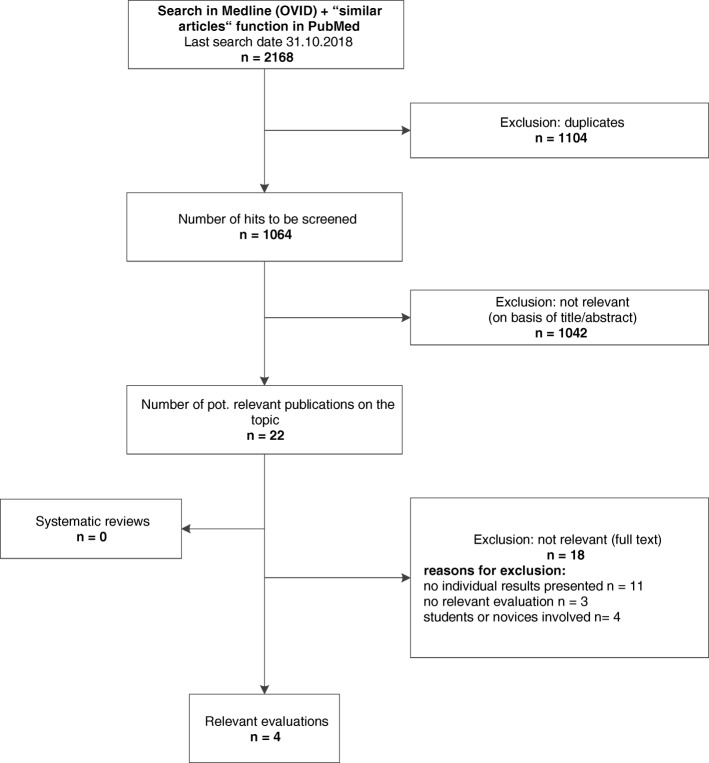
BACKGROUND: Stringent requirements exist regarding the transparency of the study selection process and the reliability of results. A 2-step selection process is generally recommended; this is conducted by 2 reviewers independently of each other (conventional double-screening). However, the approach is resource intensive, which can be a problem, as systematic reviews generally need to be completed within a defined period with a limited budget. The aim of the following methodological systematic review was to analyse the evidence available on whether single screening is equivalent to double screening in the screening process conducted in systematic reviews. METHODS: We searched Medline, PubMed and the Cochrane Methodology Register (last search 10/2018). We also used supplementary search techniques and sources ("similar articles" function in PubMed, conference abstracts and reference lists). We included all evaluations comparing single with double screening. Data were summarized in a structured, narrative way. RESULTS: The 4 evaluations included investigated a total of 23 single screenings (12 sets for screening involving 9 reviewers). The median proportion of missed studies was 5% (range 0 to 58%). The median proportion of missed studies was 3% for the 6 experienced reviewers (range: 0 to 21%) and 13% for the 3 reviewers with less experience (range: 0 to 58%). The impact of missing studies on the findings of meta-analyses had been reported in 2 evaluations for 7 single screenings including a total of 18,148 references. In 3 of these 7 single screenings - all conducted by the same reviewer (with less experience) - the findings would have changed substantially. The remaining 4 of these 7 screenings were conducted by experienced reviewers and the missing studies had no impact or a negligible on the findings of the meta-analyses. CONCLUSIONS: Single screening of the titles and abstracts of studies retrieved in bibliographic searches is not equivalent to double screening, as substantially more studies are missed. However, in our opinion such an approach could still represent an appropriate methodological shortcut in rapid reviews, as long as it is conducted by an experienced reviewer. Further research on single screening is required, for instance, regarding factors influencing the number of studies missed.
Overview
The claims and statistics of this paper haven’t been checked yet.
Free: it reads the open-access text and checks the first 5 claims that cite a source we can check. Create a free account to check every claim.
Integrity signals
Registry
Cites
Statistics
Figures
Verification
Claims the paper makes
The claims and statistics of this paper haven’t been checked yet.
Free: it reads the open-access text and checks the first 5 claims that cite a source we can check. Create a free account to check every claim.
Claims other papers make about this one
Each is checked against this paper’s own text: does it say what the citing paper says it does?
The source backs part of the claim, not all of it — or backs it for a different population, condition or comparison.
In the citing paper
“Previous research suggests that non-experienced reviewers can miss up to 13% of the records in a systematic review, which can significantly impact the results of a metaanalysis (Waffenschmidt et al., 2019).”
From Screening Smarter, Not Harder: A Comparative Analysis of Machine Learning Screening Algorithms and Heuristic Stopping Criteria for Systematic Reviews in Educational Research (2024) · cites this paper as Waffenschmidt et al., 2019
Experimental — accuracy not yet measuredThe cited source says what the claim attributes to it.
In the citing paper
“Single screening is an efficient use of time and resources, but there is a higher risk of missing relevant studies49 50 51”
From PRISMA 2020 explanation and elaboration: updated guidance and exemplars for reporting systematic reviews (2021) · cites this paper as [50]
The cited source says what the claim attributes to it.
In the citing paper
“This approach may be more reliable than single screening but at the expense of increased reviewer time, given the time needed to resolve discrepancies49 50 51”
From PRISMA 2020 explanation and elaboration: updated guidance and exemplars for reporting systematic reviews (2021) · cites this paper as [50]
The cited source says what the claim attributes to it.
In the citing paper
“Single screening is an efficient use of time and resources, but there is a higher risk of missing relevant studies49 50 51”
From PRISMA 2020 explanation and elaboration: updated guidance and exemplars for reporting systematic reviews (2021) · cites this paper as [50]
5 more claims about this paper
Create a free account to see every claim other papers make about this one.
Self-check
Percentages, sums and reported differences re-computed from the paper’s own numbers.
The self-check needs the paper’s full text.
Citations
Cites
Finding What Works in Health Care: Standards for Systematic Reviews
Eden, J., Levit, L. A., Berg, A. O., & Morton, S. C. (2013) · Cited by 948
O’Mara-Eves, A., Thomas, J., McNaught, J., Miwa, M., & Ananiadou, S. (2015) · Systematic Reviews · doi:10.1186/2046-4053-4-5 · Cited by 681
Haby, M. M., Chapman, E., Clark, R., Barreto, J., Reveiz, L., & Lavis, J. N. (2016) · Health Research Policy and Systems · doi:10.1186/s12961-016-0155-7 · Cited by 409
O’Mara-Eves, A., Thomas, J., McNaught, J., Miwa, M., & Ananiadou, S. (2015) · Systematic Reviews · doi:10.1186/s13643-015-0031-5 · Cited by 353
Edwards, P., Clarke, M., DiGuiseppi, C., Pratap, S., Roberts, I., & Wentz, R. (2002) · Statistics in Medicine · doi:10.1002/sim.1190 · Cited by 340 · cited 8×
“Edwards 2002 is the only evaluation with a comparable research question and their results are similar to ours.”
BackgroundMethodResultInfluentialFinding What Works in Health Care: Standards for Systematic Reviews
Committee on Standards for Systematic Reviews of Comparative Effectiveness Research, Board on Health Care Services, & Institute of Medicine (2011) · doi:10.17226/13059 · Cited by 289
Mathes, T., Klaßen, P., & Pieper, D. (2017) · BMC Medical Research Methodology · doi:10.1186/s12874-017-0431-4 · Cited by 240
Self-citationInstitut für Qualität und Wirtschaftlichkeit Im Gesundheitswesen
Culyer, A. J. (2014) · Cited by 189
Shemilt, I., Khan, N., Park, S., & Thomas, J. (2016) · Systematic Reviews · doi:10.1186/s13643-016-0315-4 · Cited by 168 · cited 7×
“Two re-ran the meta-analysis without the missed studies (Pham 2016, Shemilt 2016).”
BackgroundMethodInfluentialDoust, J. A., Pietrzak, E., Sanders, S., & Glasziou, P. P. (2005) · Journal of Clinical Epidemiology · doi:10.1016/j.jclinepi.2004.09.011 · Cited by 106 · cited 4×
“We ultimately included 4 evaluations (Edwards 2002 [12], Doust 2005 [13], Pham 2016 [11], Shemilt 2016 [10]).”
BackgroundMethodInfluential
Research works printed but not linked: 1
- McDonagh M, Peterson K, Raina P, Chang S, Shekelle P. Avoiding bias in selecting studies. Rockville, MD: Agency for Healthcare Research and Quality; 2013. https://effectivehealthcare.ahrq.gov/sites/default/files/pdf/methods-guidance-bias_methods.pdf. 23487864
Cited by
Items 201–300 of 714
O’Hearn, K., MacDonald, C., Tsampalieros, A. K., Kadota, L., Sandarage, R. V., Jayawarden, S. K., Datko, M., Reynolds, J. M., Bui, T., Sultan, S. A., et al. (2021) · BMC Medical Research Methodology · doi:10.1186/s12874-021-01335-5 · Cited by 13
“Single reviewer screening has been shown to miss substantially more studies than conventional double screening [42].”
BackgroundShelley, D., Davis, D. L., Bail, K. S., Heland, R., & Paterson, C. C. (2024) · Seminars in Oncology Nursing · doi:10.1016/j.soncn.2023.151579 · Cited by 13
Ito, N., Petrella, A. R., Sabiston, C. M., Fisher, A., & Pugh, G. (2021) · Journal of Adolescent and Young Adult Oncology · doi:10.1089/jayao.2020.0136 · Cited by 15
“60 All interventions were greatly heterogeneous, rendering it difficult to make comparisons between the interventions.”
Fanfan, D., Mulligan, C. J., Groer, M. E., Mai, V., Weaver, M. T., Huffman, F. G., & Lyon, D. (2023) · American Journal of Biological Anthropology · doi:10.1002/ajpa.24850 · Cited by 11
Implementation of Health IT for Cancer Screening in US Primary Care: Scoping Review
Owens-Jasey, C., Chen, J., Xu, R., Angier, H. E., Huebschmann, A. G., Fukunaga, M. I., Chaiyachati, K. H., Rendle, K. A. S., Robien, K., DiMartino, L., et al. (2024) · JMIR Cancer · doi:10.2196/49002 · Cited by 11
“Then, reviewers in eight 2-person teams were assigned studies to dual screen [36] (team 1: COJ and RG; team 2: AH and HA; team 3: LD and RX; team 4: KR and JMF; team 5: KHC and EB; team 6: KAR and JC; team 7: MMK and ATR; and team 8: MIF and DJA).”
BackgroundZeraatkar, D., Kohut, A., Bhasin, A. A., Morassut, R. E., Churchill, I. F., Gupta, A. A., Lawson, D. O., Miroshnychenko, A., Sirotich, E., Aryal, K., et al. (2021) · BMJ Nutrition Prevention & Health · doi:10.1136/bmjnph-2021-000248 · Cited by 17
Han, A. (2022) · Criminal Behaviour and Mental Health · doi:10.1002/cbm.2230 · Cited by 10
Kamgang, S., Lord, M., Mishra, A., & D’Angiulli, A. (2023) · Clinical and Translational Neuroscience · doi:10.3390/ctn7030024 · Cited by 10
“Compared to the conventional double-screening methods, individual screening has been associated with more errors, specifically a higher likelihood of missing studies [92].”
ResultGuntzburger, Y., & Hadengue, M. (2024) · Environmental Science & Policy · doi:10.1016/j.envsci.2024.103966 · Cited by 12
Huang, T., Maalsen, S., & Fredericks, J. (2025) · International Journal of Architectural Research Archnet-IJAR · doi:10.1108/arch-07-2024-0288 · Cited by 10
Maddigan, K., Davis, C., Saville, B., Nishimura, K., Bussel, J. V., Tawiah, A. K., Kowalski, K. L., & Rushton, A. (2025) · PLoS ONE · doi:10.1371/journal.pone.0322626 · Cited by 13
“Rigorous methods were employed at all stages, including a robust search strategy, a complete parallel review approach [136], the use of valid and reliable research tools [28], including assessment of the confidence in evidence supporting the review findings using the GRADE CERQual [137] and lastly…”
Vembye, M. H., Christensen, J., Bondebjerg, A., & Schytt, F. L. W. (2025) · Psychological Methods · doi:10.1037/met0000769 · Cited by 10
Bowhay, B., Latour, J. M., & Tomlinson, O. W. (2023) · PLOS Digital Health · doi:10.1371/journal.pdig.0000201 · Cited by 12
“[42].”
Adolescent Domestic Abuse and Its Consequences: A Rapid Systematic Review
Weir, R., Adisa, O., Blom, N., Hadjimatheou, K., Lamarre, F., Carlisle, S., & Barrow-Grint, K. (2025) · Journal of Family Violence · doi:10.1007/s10896-025-00813-4 · Cited by 14
“…from the recommendations outlined by Garrity et al. (2020), it is consistent both with previous rapid systematic reviews that needed to further streamline this process (King et al., 2022), and with evidence that for some topics a single reviewer may be sufficient (e.g. Waffenschmidt et al., 2019).”
Rapid evidence synthesis to enable innovation and adoption in health and social care
Norman, G., Wilson, P. M., Dumville, J. C., Bower, P., & Cullum, N. A. (2022) · Systematic Reviews · doi:10.1186/s13643-022-02106-z · Cited by 10
“The potential for error may be mitigated by the researcher being relatively experienced in evidence synthesis [71]; a possible adaption to the process would be to incorporate checks by a second researcher, with a concomitant cost in time and resources.”
BackgroundBellier, A., Fournier, J., Kaladzé, N., Dechosal, A., Chaffanjon, P. C., & Labarère, J. (2023) · Patient Education and Counseling · doi:10.1016/j.pec.2023.107708 · Cited by 12
Byrne, F., Hofstee, L., Teijema, J., De Bruin, J., & van de Schoot, R. (2024) · Systematic Reviews · doi:10.1186/s13643-024-02587-0 · Cited by 9
“Indeed, studies have demonstrated that systematic reviews that miss certain papers can alter the findings that are derived from a meta-analysis [31].”
BackgroundO'Connor, Ú., & Crilly, G. (2024) · Journal of Advanced Nursing · doi:10.1111/jan.16493 · Cited by 11
“To strengthen transparency, abstract screening was undertaken in two stages (Waffenschmidt et al. 2019).”
A web scraping app for smart literature search of the keywords
Mutlu, M. A., Ülkü, E. E., & Yıldız, K. (2024) · PeerJ Computer Science · doi:10.7717/peerj-cs.2384 · Cited by 9
“Numerous investigations are conducted with the aim of enhancing the methodical literature review procedure ( Waffenschmidt et al., 2019 ; Macura et al., 2019 ; Gusenbauer & Haddaway, 2020 ; Haddaway et al., 2018 ).”
Prevalence and disposal of unused medicines: a systematic review of cross-sectional studies
Wang, L. S., Aziz, Z., Wang, H., & Chik, Z. (2024) · Journal of Pharmaceutical Health Services Research · doi:10.1093/jphsr/rmae028 · Cited by 11
Muschialli, L., Ford, J. V., Gonsalves, L., & Pralat, R. (2025) · PLOS Global Public Health · doi:10.1371/journal.pgph.0004005 · Cited by 9
“However, our methodology aligns with recommendations to reduce the bias of single-screening, using a comprehensive secondary search strategy [56].”
Enablers and Barriers of Compassionate Care From a Nurses' Perspective: A Scoping Review
van den Berg, N. M., van der Wal‐Huisman, H., van Leeuwen, B. L., Paans, W., & Schroevers, M. J. (2025) · Scandinavian Journal of Caring Sciences · doi:10.1111/scs.13319 · Cited by 10
Tele-exercise in individuals with spinal cord injury: a systematic review
Costa, R. R. G., Ramos, B. L., Neto, F. R., & Winckler, C. (2025) · mHealth · doi:10.21037/mhealth-24-50 · Cited by 9
de la Rosa, M., Schmitz, F., Tekian, A. S., & Guttormsen, S. (2025) · Review of Education · doi:10.1002/rev3.70100 · Cited by 9
Müller, A., & Schaaf, J. (2025) · Digital Health · doi:10.1177/20552076251375835 · Cited by 10
Adam, T. J., Abosabie, S. A., Dittmer, M., Wolf, E., Abosabie, S. A., Behnke, C., Baier, F., Weickmann, A., Köser, L., Correll, C. U., et al. (2026) · Research Synthesis Methods · doi:10.1017/rsm.2026.10093 · Cited by 12
Belaid, L., Budgell, R., Sauvé, C., & Andersson, N. (2022) · BMJ Global Health · doi:10.1136/bmjgh-2021-008311 · Cited by 9
Walsh‐Bailey, C., Gilbert, A. S., Shato, T., Sandler, B., Baumann, A. A., Bradley, C., McLoughlin, G. M., McGuire, F. H., Fort, M. P., & Tabak, R. G. (2023) · Systematic Reviews · doi:10.1186/s13643-023-02240-2 · Cited by 11
“An evaluation of single screening approaches found loss of sensitivity is minimized when such approaches are employed by experienced reviewers using clear screening guidance [64].”
BackgroundMethodInfluentialThe Effectiveness of Savouring Interventions in Adult Clinical Populations: A Systematic Review
Cullen, K., Murphy, M. F., Blasi, Z. D., & Bryant, F. B. (2024) · International Journal of Applied Positive Psychology · doi:10.1007/s41042-024-00182-1 · Cited by 10
“Two independent reviewers (MM and ZDB) screened 10% of title and abstract and full text records independently, as recommended by the Cochrane Review Group to ensure screening efficiency (Edwards et al., 2022; Waffenschmidt et al., 2019).”
Sleep of Nurses: A Comprehensive Scoping Review
Matricciani, L., Clarke, J., Wiley, S., Williams, A., Baljak, G. R., Graham, K., Gum, L. F., Rogers, M., Howland, K., Stewart, K., et al. (2024) · Journal of Advanced Nursing · doi:10.1111/jan.16603 · Cited by 12
Amiri, M., Alavinia, M., Omidvar, M., Pakosh, M. T., & Craven, B. C. (2021) · Journal of Spinal Cord Medicine · doi:10.1080/10790268.2021.1923261 · Cited by 9
Heffernan, J., McDonald, E., Hughes, E. A., & Gray, R. J. (2021) · International Journal of Environmental Research and Public Health · doi:10.3390/ijerph18158230 · Cited by 9
“Using this double screening approach which offers the following advantages: assurance that the inclusion/exclusion criteria are consistently applied, identification of and correction of mistakes, and avoidance of systematic errors [22].”
PubMed Author-assigned Keyword Extraction (PubMedAKE) Benchmark
Sheng, J., Gero, Z., & Ho, J. C. (2022) · ACM International Conference on Information and Knowledge Management (CIKM) · doi:10.1145/3511808.3557675 · Cited by 9
“PMC is often used to retrieve articles for systematic reviews and is a crucial component for evidence-based medicine [42].”
BackgroundWalsh, L., Hyett, N., Juniper, N., Li, C., & Hill, S. (2022) · International Journal of Environmental Research and Public Health · doi:10.3390/ijerph192214851 · Cited by 10
Barrio, E. D., Álvarez, C., Thapa, R. K., Ramachandran, A. K., Singh, U., & Ramírez‐Campillo, R. (2023) · International Journal of Kinesiology and Sports Science · doi:10.7575/aiac.ijkss.v.11n.1p.27 · Cited by 10
Systematic Reviews and Meta‐Analysis
Crombie, I. (2021) · Wiley eBooks · doi:10.1002/9781394322183.ch5 · Cited by 9
Paier-Abuzahra, M., Posch, N. A. S., Spary-Kainz, U., Radl-Karimi, C., Semlitsch, T., Jeitler, K., & Siebenhofer, A. (2024) · BMJ Open · doi:10.1136/bmjopen-2023-078414 · Cited by 9
“29 As there is no external funding for this project, this approach is planned.”
BackgroundBrar, M., Ardle, R. M., Hagan, A. J., Al‐Oraibi, A., Hanjari, M., Stephan, B. C. M., Brayne, C., Lafortune, L., Bains, M., Qureshi, N., et al. (2024) · Journal of Alzheimer s Disease · doi:10.3233/jad-240315 · Cited by 8
“49 To mitigate against further risk of bias, two reviewers independently screened all abstracts and full texts, and a hand-search of the reference lists of all included texts was conducted.”
BackgroundMethodKearns, Á., Gallagher, A., Hayes, A., O'Gorman, A., O’Muiri, S., & O’Rourke, L. (2024) · The International Journal of Evidence & Proof · doi:10.1177/13657127241287322 · Cited by 8
The impacts of forum theatre in social work practice: A scoping review
Puvaneyshwaran, D., Liang, P., & Lee, J. (2025) · The British Journal of Social Work · doi:10.1093/bjsw/bcaf055 · Cited by 11
Martín, A. D. V., Salazar, A. D., Pérez, I. M. M., & Pérez, S. E. M. (2025) · International journal of exercise science · doi:10.70252/daya4589 · Cited by 9
“37,38 In this regard, two independent researchers (AVM and ADS) conducted the initial literature search and screened all retrieved articles based on their titles and abstracts.”
A SYSTEMATIC REVIEW OF HERITAGE TOURISM BRANDING STRATEGIES: TRENDS, CHALLENGES, AND OPPORTUNITIES
Kumar, D., & Swain, S. K. (2025) · International Journal of Professional Business Review · doi:10.26668/businessreview/2025.v10i5.5506 · Cited by 8
Raymond, L., Motulsky, A., Vial, G., Ringeval, M., & Paré, G. (2025) · Health Informatics Journal · doi:10.1177/14604582251347120 · Cited by 8
Musiwa, A. S., Mavhu, W. M., Nyamwanza, O., Nyambi, A., Stevens-Uninsky, M., Rehman, N., Anni, N. S., Dine, R. D., Chadambuka, E. M., Couban, R., et al. (2025) · PLOS Global Public Health · doi:10.1371/journal.pgph.0005227 · Cited by 9
“We implemented a complete dual review strategy where reviewer pairs independently screened articles to reduce bias and enhance the rigor of our findings [44,45].”
Okyere, E. Y., Danquah, J. A., Miyittah, M. K., & Amoah-Nuamah, J. (2025) · Waste Management Bulletin · doi:10.1016/j.wmb.2025.100253 · Cited by 10
Barclay, E. G. (2022) · The Open Review · doi:10.47967/tor2022col/vol8.02 · Cited by 8
Rapid review: A review of methods and recommendations based on current evidence
Guo, Q., Jiang, G., Zhao, Q., Long, Y., Feng, K., Gu, X., Xu, Y., Li, Z., Huang, J., & Du, L. (2024) · Journal of Evidence-Based Medicine · doi:10.1111/jebm.12594 · Cited by 8
Topical oxygen therapy and singlet oxygen in wound healing: A scoping review
Sýkorová, M., Moffatt, C. J., Stentiford, N., Burian, E. A., Katsuhiro, S., & Wei, Y. (2024) · International Wound Journal · doi:10.1111/iwj.14846 · Cited by 9
Hajimirzaei, P., Tabatabaei, F. S. A., Nasibi-Sis, H., Razavian, R. S., & Nasirinezhad, F. (2024) · Experimental Neurology · doi:10.1016/j.expneurol.2024.115062 · Cited by 8
Manipulation Checks in Focus of Attention Research: A Methodological Systematic Review
Kearney, P. E., Curran, N., & Nugent, F. J. (2025) · Journal of Motor Learning and Development · doi:10.1123/jmld.2024-0069 · Cited by 10
Lindquist, A., Al-Azzawi, R., Risør, T., & Raatiniemi, L. (2025) · Scandinavian Journal of Trauma Resuscitation and Emergency Medicine · doi:10.1186/s13049-025-01380-9 · Cited by 8
“A conventional double screening for inclusion was conducted (AL, ED) [34, 35].”
Scholl, L., Schmidt, A., & Alfuth, M. (2023) · Zeitschrift für Orthopädie und Unfallchirurgie · doi:10.1055/a-2188-3565 · Cited by 8
Asfahani, A. M., Dahlan, D. A., & Alnajem, M. (2024) · The Electronic Journal of Business Research Methods · doi:10.34190/ejbrm.22.2.3279 · Cited by 11
“To bolster the reliability of the review (Waffenschmidt et al. , 2019; Haby et al. , 2023), every fifth article was reevaluated by a separate reviewer, following consistent guidelines.”
Kyeremaa, E. A. A., Scott, S., Smith, C., Lawthom, C., Stewart, A., Alorabi, M., & Wright, D. J. (2025) · Seizure · doi:10.1016/j.seizure.2025.06.016 · Cited by 8
Environmentally sustainable leader ship : A systematic literature review and future research agenda
Yang, D., Crawford, J., Daugaard, D., & Jia, J. (2025) · Australian Journal of Management · doi:10.1177/03128962251350335 · Cited by 13
“For the systematic literature review, double screening has been proven to be more effective as it improves the inclusion accuracy of relevant studies (Waffenschmidt et al., 2019).”
Fayyaz, K., Saeeduddin, M., Bashir, H., Ahmad, F., Barrow, C. J., & Khalid, N. (2025) · Nutrients · doi:10.3390/nu17172804 · Cited by 7
“Following the PRISMA guidelines and the methodological recommendations of Zeng et al. [16], two independent reviewers screened the titles and abstracts of all identified studies.”
Asadi, A. R., Zhang, Y., & Said, H. (2025) · Journal of Ambient Intelligence and Humanized Computing · doi:10.1007/s12652-025-05007-w · Cited by 9
“Double screening of articles in systematic literature reviews is resource-intensive but crucial for ensuring review quality and reducing bias (Waffenschmidt et al. 2019).”
Liu, Y. (2025) · Humanities and Social Sciences Communications · doi:10.1057/s41599-025-05913-6 · Cited by 7
“As Waffenschmidt et al. (2019) observed, double-screening titles and abstracts can be resource-intensive, prompting the need for methodological shortcuts, such as rapid reviews.”
Bentegeac, R., Guellec, B. L., Leblanc, V., Lenain, R., Dauchet, L., Gauthier, V., Gerard, E., Chazard, E., Amouyel, P., Aymes, E., et al. (2026) · Research Synthesis Methods · doi:10.1017/rsm.2026.10079 · Cited by 8
“39,40 By combining BibliZap’s iterative citation searching with LLM-based classification, future systems could mitigate human error while accelerating throughput, particularly in rapid or living reviews, where screening steps must be repeated regularly.”
Roziqin, R., Samsudin, A., Saepuzaman, D., Sari, H. N., & Iryanti, M. (2026) · STEM Education · doi:10.3934/steme.2026023 · Cited by 7
Majid, U., & Weeks, L. (2020) · International Journal of Technology Assessment in Health Care · doi:10.1017/s0266462320000720 · Cited by 7
“Multiple reviewer screening is the most widely adopted practice in evidence syntheses because it reduces the risk of missing relevant papers (22).”
Potdukhe, S., Iyer, J., & Nadgere, J. B. (2024) · The Journal of Indian Prosthodontic Society · doi:10.4103/jips.jips_524_23 · Cited by 10
Musiwa, A. S., Mavhu, W. M., Nyamwanza, O., Chadambuka, E. M., Couban, R., & Mbuagbaw, L. C. E. (2024) · BMJ Open · doi:10.1136/bmjopen-2024-085901 · Cited by 7
“45 Using DistillerSR software and based on the inclusion criteria specified earlier, two independent reviewers (ASM and LM) will first pilot study selection on a random sample of studies identified per step 2.”
Lewis, R. A., Cooper, A., Jarrom, D., Mann, M. K., Law, R., Edwards, D. J., Carrier, J., Shaw, H., Winfield, T., Spencer, L. H., et al. (2025) · Health Research Policy and Systems · doi:10.1186/s12961-025-01297-w · Cited by 7
“However, the extent of this impact varies depending on reviewer experience and research topic [25, 33, 36–38].”
Rajabinasab, F., Tabatabaei, F. S. A., Kheirandish, A., Hajimirzaei, P., Abolfazli, S., Aromolaran, A. S., Jamialahmadi, T., & Sahebkar, A. (2025) · Ageing Research Reviews · doi:10.1016/j.arr.2025.102801 · Cited by 182
Borrelli, E. P., & McGladrigan, C. G. (2020) · Journal of Oncology Pharmacy Practice · doi:10.1177/1078155220940043 · Cited by 7
“completed for abstracts that met inclusion by two reviewers.(37) Conflicting results of inclusion/exclusion”
MethodHenry‐Blake, C., Marshall, M. B., Treadwell, K., Parmar, S., Higgs, J., Edwards, J., & Peat, G. (2022) · Musculoskeletal Care · doi:10.1002/msc.1718 · Cited by 7
One Health Lens for Antimicrobial Resistance Research and Funding: A Systematic Review
Alsamara, I., Ogilvie, L. A., Sudbrak, R., & Brand, A. M. (2023) · OMICS A Journal of Integrative Biology · doi:10.1089/omi.2023.0049 · Cited by 7
Reed, M., & Rees, R. W. (2024) · London Review of Education · doi:10.14324/lre.22.1.33 · Cited by 7
Ng, C. K. C. (2024) · Multimodal Technologies and Interaction · doi:10.3390/mti8120114 · Cited by 7
A Systematic Review of Maintenance Measurement in Early Childhood Autism Spectrum Disorder Research
Pokorski, E. A., & LeJeune, L. M. (2022) · American Journal on Intellectual and Developmental Disabilities · doi:10.1352/1944-7558-127.4.313 · Cited by 7
Chen, D., Li, P., Khoshkish, E., Lee, S., Ning, T., Tahir, U., Wong, H. C. Y., Lee, M. S. F., & Raman, S. (2026) · Journal of the American Medical Informatics Association · doi:10.1093/jamia/ocaf223 · Cited by 6
Defty, J., Wagland, R., Turnbull, J. C., & Richardson, A. (2025) · BMJ Supportive & Palliative Care · doi:10.1136/spcare-2025-005477 · Cited by 6
“77 No study included in this review explicitly enrolled the concept of symptom appraisal and, in line with a critique of help-seeking literature generally, 78 data included in our analysis were extracted from mostly atheoretical studies.”
Sutherland, C., Gebrye, T., Ademoyegun, A. B., Fatoye, F., & Mbada, C. E. (2025) · BMC Rheumatology · doi:10.1186/s41927-025-00540-9 · Cited by 6
“These limitations encompass various aspects, including the potential for bias and subjectivity in study selection and data extraction, and limited expertise and perspectives which may affect the comprehensiveness and accuracy of the review [85].”
Lockett, B., Willemse, J. J., & Modeste, R. R. M. (2025) · Health SA Gesondheid · doi:10.4102/hsag.v30i0.2864 · Cited by 8
“While systematic literature reviews are generally considered low-risk studies as they do not involve direct human participants or personal data collection, they still require careful ethical consideration to ensure the integrity and validity of the research process (Waffenschmidt et al. 2021:64).”
Christie, R., Sadler, E., Sait, M. I., Light, K., Cox, C., Michèle Board, Thomas, S., Walker, D., Allen-Pick, M., Bradbury, K. J., et al. (2024) · Digital Health · doi:10.1177/20552076241302230 · Cited by 8
Hawkins, T. E., Alder, D. B., Bennett, T. B., & Poolton, J. (2025) · Journal of Motor Learning and Development · doi:10.1123/jmld.2024-0065 · Cited by 6
Bodington, R., Reeve, J. L., Hepburn, D. A., Morgan, M., & Crampton, P. E. S. (2025) · Medical Education · doi:10.1111/medu.15727 · Cited by 6
Anxiety classification in virtual reality using biosensors: A mini scoping review
Mevlevioğlu, D., Tabirca, S., & Murphy, D. (2023) · PLoS ONE · doi:10.1371/journal.pone.0287984 · Cited by 6
Hildebrand, D., Rösl, S., Auer, T., & Schieder, C. (2024) · Communications in computer and information science · doi:10.1007/978-3-031-72041-3_18 · Cited by 8
Zhou, X., Sho, K., Qiu, H., Chang, S. E., & Cen, Q. (2024) · Environmental and Sustainability Indicators · doi:10.1016/j.indic.2024.100548 · Cited by 9
Pangandaman, H. K., Mukattil, N. P., Lambayong, J. H. C., Abdulhan, M., Hayudini, R., Salve, M. M., Matumadi, I. U., Macalaba, S. P., Kadil, R., & Mangontawar, A. M. (2024) · Payām-i naw. · doi:10.61186/jgbfnm.21.1.4 · Cited by 9
Granziera, H. (2022) · UNSWorks (UNSW Sydney) · Cited by 17
Multimedia Knowledge Translation Tools for Parents About Childhood Heart Failure: Environmental Scan
Cunningham, C., Sung, H., Benoit, J. R. A., Conway, J., & Scott, S. D. (2022) · JMIR Pediatrics and Parenting · doi:10.2196/34166 · Cited by 6
“To ensure minimal bias in the review process [20], CC and HS both independently SAM rated each relevant educational tool, and then scores were disclosed and discussed.”
MethodMajid, U., Gray, C. S., Saragosa, M., Kontos, P., & Kuluski, K. (2023) · PLoS ONE · doi:10.1371/journal.pone.0293013 · Cited by 6
“This screening process is consistent with current methodological discussion suggesting that single screening can be effective when completed by an experienced reviewer familiar with the research topic [26].”
BackgroundChaoyi, W. U., & Zhen, W. (2023) · Advances in Psychological Science · doi:10.3724/sp.j.1042.2024.00364 · Cited by 7
Rapid reviews: A critical perspective
Nordhausen, T., & Hirt, J. (2020) · Zeitschrift für Evidenz Fortbildung und Qualität im Gesundheitswesen · doi:10.1016/j.zefq.2020.09.005 · Cited by 6
Liddle, L. J., Dirks, C. A., Fedor, B. A., Almekhlafi, M., & Colbourne, F. (2021) · Frontiers in Neurology · doi:10.3389/fneur.2020.588479 · Cited by 7
van Oosterhout, W. P. J., Kanis, L., Wiendels, N. J., & Reijngoudt, J. W. (2024) · Journal of Sleep Research · doi:10.1111/jsr.14241 · Cited by 5
“Furthermore, the study selection and quality assessment were performed independently by two investigators, increasing reliability and limiting inclusion bias (Waffenschmidt et al., 2019).”
Tetkovic, I., Anderson, J., Brocklebank, D., O’Logbon, J., Burn, A., & Ford, T. J. (2025) · JCPP Advances · doi:10.1002/jcv2.12300 · Cited by 5
“At both stages, 40% of all records were double screened independently by two researchers (Waffenschmidt et al., 2019).”
Lukersmith, S., Woods, C., Sarma, H., de Miquel, C., & Salvador‐Carulla, L. (2025) · Public Health · doi:10.1016/j.puhe.2024.12.056 · Cited by 5
Hicks, B., Wheatley, K., Porter, E., Farina, N., & Banerjee, S. (2025) · BJPsych Open · doi:10.1192/bjo.2025.17 · Cited by 6
“Single reviewer screening can lead to missing studies when compared with double screening (median missed 5% of studies), 92 and therefore it is possible that our approach may have missed a small proportion of the literature.”
Trotman, H., Jelley, B., & Umla‐Runge, K. (2025) · Clinical Parkinsonism & Related Disorders · doi:10.1016/j.prdoa.2025.100355 · Cited by 5
“The screening process was performed by a single researcher [18].”
Jordan, C. Y., Romanò, N., & Menzies, J. R. W. (2025) · Experimental Physiology · doi:10.1113/ep092884 · Cited by 5
“…and thematic analyses were done manually by a single researcher, and this might introduce biases (Mackieson et al., 2019; Page et al., 2021; Waffenschmidt et al., 2019) In conclusion, we found that only a few CVS studies used a power analysis to determine sample sizes, and even fewer used…”
Cooke, F. L., Wang, J., & Wood, G. (2025) · Journal of Business Research · doi:10.1016/j.jbusres.2025.115631 · Cited by 6
Verdonschot, R. G., Dilles, T., Cahir, C., Graef, M. D., Holis, R. V., Frydenlund, J., Denig, P., Grimes, T., Karapinar‐Çarkit, F., & Schor, M. (2026) · Systematic Reviews · doi:10.1186/s13643-026-03185-y · Cited by 7
“As there can be significant mismatch between reviewers [4, 5, 40], it would be interesting to see how the differences between reviewers affect discovery of relevant records.”
Fracture Toughness of CAD/CAM Resin-Based Materials vs. Direct Composite Resins: A Scoping Review
Thomaidis, S., Pappa, E., & Αντωνιάδου, Μ. (2025) · Applied Sciences · doi:10.3390/app152212308 · Cited by 5
Fernandes‐Jesus, M., Cecconi, A., Esposito, F., Vargas-Moniz, M., & Albanesi, C. (2024) · Community psychology in global perspective · doi:10.1285/i24212113v10i2-2p156 · Cited by 5
Fostering well-being in Industry 5.0 through managerial behaviours and enabling technologies
Piccarozzi, M., Caboni, F., & Bruni, R. (2026) · Technological Forecasting and Social Change · doi:10.1016/j.techfore.2026.124600 · Cited by 5
Zourmpakis, A.-I. (2026) · Computers · doi:10.3390/computers15070464 · Cited by 6
“Any disagreements were resolved through discussion [74].”
Metadata
- Authors
- Waffenschmidt, S., Knelangen, M., Sieben, W., Bühn, S., & Pieper, D.
- Affiliations
- Institute for Quality and Efficiency in Health Care (DE)
- Witten/Herdecke University (DE)
- Corresponding author
- Waffenschmidt, Siw
- Venue
- BMC Medical Research Methodology
- Published
- 2019-06-28
- Volume
- 19
- Issue
- 1
- Pages
- 132-132
- ISSN
- 1471-2288 (ISSN-L)
- PMC
- PMC6599339
- OpenAlex
- W2955273711
- Semantic Scholar
- ffee5cf6b88f24a1bc583d308035058d1fee7eb1
- Cited by
- 626
- References
- 19
- Citations by year
- 2026: 111 · 2025: 106 · 2024: 117 · 2023: 93 · 2022: 88 · 2021: 74 · 2020: 34 · 2019: 3
- FWCI
- 10.08
- Type
- journal article
- Language
- en
- Open access
- gold
- doi.org
- Licence
- cc-by
- creativecommons.org/licenses/by/4.0/ (tdm)
- creativecommons.org/licenses/by/4.0/ (vor)
- Locations
- BMC Medical Research Methodology (publishedVersion, cc-by)
- PubMed Central (publishedVersion, cc-by)
- PubMed (publishedVersion)
- DOAJ (DOAJ: Directory of Open Access Journals) (submittedVersion, cc-by-sa)
- Topics
- Social Sciences › Decision Sciences › Statistics, Probability and Uncertainty › Meta-analysis and systematic reviews
- Social Sciences › Sociology and Political Science › Delphi Technique in Research
- Physical Sciences › Mathematics › Statistics and Probability › Statistical Methods in Epidemiology
- Keywords
- study selection, title and abstract screening, reviewer experience, rapid review
- MeSH terms
- Abstracting and Indexing, Systematic Reviews as Topic, Humans, Information Systems, Publications, Information Storage and Retrieval, PubMed
About these checks
Registry, retraction, Cites and statistics results are computed, not judged, with one exception: a printed reference that no index lists is read once by a model before it counts as a citation error. Claims are extracted by a model and kept only when their quote appears verbatim in the text; each cited source is then checked, with a model’s help, for whether it says what the claim relies on. Those verdicts can be wrong — read the claim’s quote and the cited source before relying on one.
Statistics and arithmetic are recomputed, not judged.
Confidence bands are shown only for fields calibrated on our annotated test set. None is calibrated yet, so no band is shown.
What counts as a claim ›How we measure confidence ›How we check this ›
Are you an author, or do you see a problem with this page? Request a review
Data sources
Bibliographic data: Semantic Scholar, OpenAlex, Crossref.
Contains information from the Semantic Scholar Academic Graph Datasets, made available under the ODC Attribution License (ODC-BY 1.0).
Semantic Scholar’s data is described in: Kinney, R., et al. (2023). The Semantic Scholar Open Data Platform. arXiv:2301.10140.
