

Single screening versus conventional double screening for study selection in systematic reviews: a methodological systematic review
Open accessThe DOI matches its Crossref record; 18 of the 19 references it cites were found in a registry or an index.
Abstract
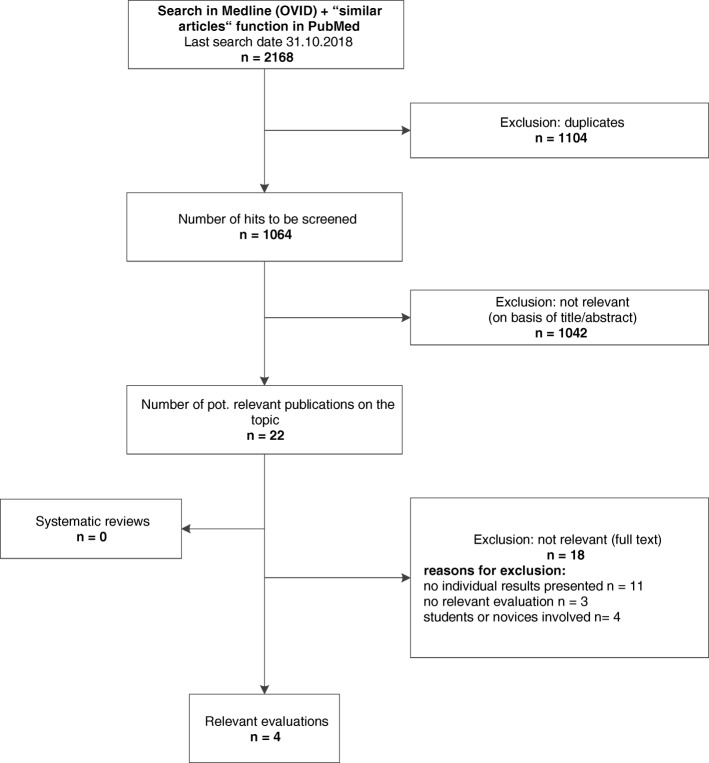
BACKGROUND: Stringent requirements exist regarding the transparency of the study selection process and the reliability of results. A 2-step selection process is generally recommended; this is conducted by 2 reviewers independently of each other (conventional double-screening). However, the approach is resource intensive, which can be a problem, as systematic reviews generally need to be completed within a defined period with a limited budget. The aim of the following methodological systematic review was to analyse the evidence available on whether single screening is equivalent to double screening in the screening process conducted in systematic reviews. METHODS: We searched Medline, PubMed and the Cochrane Methodology Register (last search 10/2018). We also used supplementary search techniques and sources ("similar articles" function in PubMed, conference abstracts and reference lists). We included all evaluations comparing single with double screening. Data were summarized in a structured, narrative way. RESULTS: The 4 evaluations included investigated a total of 23 single screenings (12 sets for screening involving 9 reviewers). The median proportion of missed studies was 5% (range 0 to 58%). The median proportion of missed studies was 3% for the 6 experienced reviewers (range: 0 to 21%) and 13% for the 3 reviewers with less experience (range: 0 to 58%). The impact of missing studies on the findings of meta-analyses had been reported in 2 evaluations for 7 single screenings including a total of 18,148 references. In 3 of these 7 single screenings - all conducted by the same reviewer (with less experience) - the findings would have changed substantially. The remaining 4 of these 7 screenings were conducted by experienced reviewers and the missing studies had no impact or a negligible on the findings of the meta-analyses. CONCLUSIONS: Single screening of the titles and abstracts of studies retrieved in bibliographic searches is not equivalent to double screening, as substantially more studies are missed. However, in our opinion such an approach could still represent an appropriate methodological shortcut in rapid reviews, as long as it is conducted by an experienced reviewer. Further research on single screening is required, for instance, regarding factors influencing the number of studies missed.
Overview
The claims and statistics of this paper haven’t been checked yet.
Free: it reads the open-access text and checks the first 5 claims that cite a source we can check. Create a free account to check every claim.
Integrity signals
Registry
Cites
Statistics
Figures
Verification
Claims the paper makes
The claims and statistics of this paper haven’t been checked yet.
Free: it reads the open-access text and checks the first 5 claims that cite a source we can check. Create a free account to check every claim.
Claims other papers make about this one
Each is checked against this paper’s own text: does it say what the citing paper says it does?
The source backs part of the claim, not all of it — or backs it for a different population, condition or comparison.
In the citing paper
“Previous research suggests that non-experienced reviewers can miss up to 13% of the records in a systematic review, which can significantly impact the results of a metaanalysis (Waffenschmidt et al., 2019).”
From Screening Smarter, Not Harder: A Comparative Analysis of Machine Learning Screening Algorithms and Heuristic Stopping Criteria for Systematic Reviews in Educational Research (2024) · cites this paper as Waffenschmidt et al., 2019
Experimental — accuracy not yet measuredThe cited source says what the claim attributes to it.
In the citing paper
“Single screening is an efficient use of time and resources, but there is a higher risk of missing relevant studies49 50 51”
From PRISMA 2020 explanation and elaboration: updated guidance and exemplars for reporting systematic reviews (2021) · cites this paper as [50]
The cited source says what the claim attributes to it.
In the citing paper
“This approach may be more reliable than single screening but at the expense of increased reviewer time, given the time needed to resolve discrepancies49 50 51”
From PRISMA 2020 explanation and elaboration: updated guidance and exemplars for reporting systematic reviews (2021) · cites this paper as [50]
The cited source says what the claim attributes to it.
In the citing paper
“Single screening is an efficient use of time and resources, but there is a higher risk of missing relevant studies49 50 51”
From PRISMA 2020 explanation and elaboration: updated guidance and exemplars for reporting systematic reviews (2021) · cites this paper as [50]
5 more claims about this paper
Create a free account to see every claim other papers make about this one.
Self-check
Percentages, sums and reported differences re-computed from the paper’s own numbers.
The self-check needs the paper’s full text.
Citations
Cites
Finding What Works in Health Care: Standards for Systematic Reviews
Eden, J., Levit, L. A., Berg, A. O., & Morton, S. C. (2013) · Cited by 948
O’Mara-Eves, A., Thomas, J., McNaught, J., Miwa, M., & Ananiadou, S. (2015) · Systematic Reviews · doi:10.1186/2046-4053-4-5 · Cited by 681
Haby, M. M., Chapman, E., Clark, R., Barreto, J., Reveiz, L., & Lavis, J. N. (2016) · Health Research Policy and Systems · doi:10.1186/s12961-016-0155-7 · Cited by 409
O’Mara-Eves, A., Thomas, J., McNaught, J., Miwa, M., & Ananiadou, S. (2015) · Systematic Reviews · doi:10.1186/s13643-015-0031-5 · Cited by 353
Edwards, P., Clarke, M., DiGuiseppi, C., Pratap, S., Roberts, I., & Wentz, R. (2002) · Statistics in Medicine · doi:10.1002/sim.1190 · Cited by 340 · cited 8×
“Edwards 2002 is the only evaluation with a comparable research question and their results are similar to ours.”
BackgroundMethodResultInfluentialFinding What Works in Health Care: Standards for Systematic Reviews
Committee on Standards for Systematic Reviews of Comparative Effectiveness Research, Board on Health Care Services, & Institute of Medicine (2011) · doi:10.17226/13059 · Cited by 289
Mathes, T., Klaßen, P., & Pieper, D. (2017) · BMC Medical Research Methodology · doi:10.1186/s12874-017-0431-4 · Cited by 240
Self-citationInstitut für Qualität und Wirtschaftlichkeit Im Gesundheitswesen
Culyer, A. J. (2014) · Cited by 189
Shemilt, I., Khan, N., Park, S., & Thomas, J. (2016) · Systematic Reviews · doi:10.1186/s13643-016-0315-4 · Cited by 168 · cited 7×
“Two re-ran the meta-analysis without the missed studies (Pham 2016, Shemilt 2016).”
BackgroundMethodInfluentialDoust, J. A., Pietrzak, E., Sanders, S., & Glasziou, P. P. (2005) · Journal of Clinical Epidemiology · doi:10.1016/j.jclinepi.2004.09.011 · Cited by 106 · cited 4×
“We ultimately included 4 evaluations (Edwards 2002 [12], Doust 2005 [13], Pham 2016 [11], Shemilt 2016 [10]).”
BackgroundMethodInfluential
Research works printed but not linked: 1
- McDonagh M, Peterson K, Raina P, Chang S, Shekelle P. Avoiding bias in selecting studies. Rockville, MD: Agency for Healthcare Research and Quality; 2013. https://effectivehealthcare.ahrq.gov/sites/default/files/pdf/methods-guidance-bias_methods.pdf. 23487864
Cited by
Items 101–200 of 713
Scherbakov, D., Hubig, N., Lenert, L. A., Alekseyenko, A. V., & Obeid, J. S. (2025) · JMIR Mental Health · doi:10.2196/67192 · Cited by 45
“…study used a single human reviewer assisted by LLMs. Studies generally recommend a single-reviewer approach in some cases, such as rapid reviews [54]; however, we believe that the LLM approach could automate many of the mundane aspects of literature reviews, allowing human authors to redirect…”
Jarvis, S. W., Roberts, D., Flemming, K., Richardson, G. A., & Fraser, L. (2021) · Pediatric Research · doi:10.1038/s41390-021-01396-8 · Cited by 32
Barker, T. G., O’Higgins, A., Fonagy, P., & Gardner, F. E. M. (2024) · Journal of Affective Disorders · doi:10.1016/j.jad.2023.12.080 · Cited by 32
Peterson, A. J., Silver, G. K., Bell, H. A., Guinosso, S. A., & Coyle, K. K. (2022) · American Journal of Sexuality Education · doi:10.1080/15546128.2022.2096163 · Cited by 33
“Though double screening is recommended to reduce selection bias (McDonagh et al., 2013), single extraction by trained reviewers may be acceptable when the screening criteria is specific (Waffenschmidt et al., 2019).”
BackgroundMcGrath, R. L., Shephard, S., Parnell, T., Verdon, S. E., & Pope, R. (2023) · Physiotherapy Theory and Practice · doi:10.1080/09593985.2023.2284823 · Cited by 28
“Consequently, the risk of eligible articles being incorrectly excluded during title and abstract screening higher is than with a double screening approach (Waffenschmidt et al., 2019).”
LAIGNELOT, F., Martin, G. L., OSSMAN, M., Pingeon, O., BOUBAKER, A., PICOVSCHI, E., Jia, K. I. M., Tannier, X., Cohen, J. F., & Dechartres, A. (2026) · Journal of Clinical Epidemiology · doi:10.1016/j.jclinepi.2026.112221 · Cited by 39
Hunter, J., Arentz, S., Goldenberg, J. Z., Yang, G., Beardsley, J., Mertz, D., & Leeder, S. (2020) · Integrative Medicine Research · doi:10.1016/j.imr.2020.100457 · Cited by 28
“…selected EBSCO host databases (Academic Search Complete, Allied and Complementary Medicine Database (AMED), Alt Health Watch, CINAHL Plus with Full Text, Health Source, and PsycINFO) and the China Knowledge Resource Integrated Database (CNKI), Embase and Cochrane CENTRAL will also be searched…”
Affengruber, L., Wagner, G., Waffenschmidt, S., Lhachimi, S. K., Nußbaumer-Streit, B., Thaler, K. J., Griebler, U., Klerings, I., & Gartlehner, G. (2020) · Systematic Reviews · doi:10.1186/s13643-020-01413-7 · Cited by 28
Self-citationA Rapid Review of Prescribing Education Interventions
Omer, U., Danopoulos, E., Veysey, M. J., Crampton, P. E. S., & Finn, G. M. (2020) · Medical Science Educator · doi:10.1007/s40670-020-01131-8 · Cited by 27
Measuring appropriateness of diagnostic imaging: a scoping review
Walther, F., Eberlein-Gonska, M., Hoffmann, R., Schmitt, J. M., & Blum, S. F. U. (2023) · Insights into Imaging · doi:10.1186/s13244-023-01409-6 · Cited by 30
Han, A., & Kim, T. H. (2022) · Journal of Psychiatric Research · doi:10.1016/j.jpsychires.2022.05.031 · Cited by 26
Koivu, A. M., Hunter, P., Näsänen-Gilmore, P. K., Muthiani, Y., Isojärvi, J., Pörtfors, P., Ashorn, U., & Ashorn, P. (2021) · BMC Medical Research Methodology · doi:10.1186/s12874-021-01463-y · Cited by 28
“We recognize that double-screening is generally recommended [31].”
BackgroundDean, S., Marshall, J. M., Whelan, E., Watson, J., Zorbas, C., & Cameron, A. J. (2021) · Current Nutrition Reports · doi:10.1007/s13668-021-00382-0 · Cited by 25
Burke, C., & Conway, Y. (2022) · Journal of Clinical Nursing · doi:10.1111/jocn.16233 · Cited by 30
Artificial intelligence to support out-of-hospital cardiac arrest care: A scoping review
Toy, J., Bosson, N., Schlesinger, S. A., Gausche‐Hill, M., & Stratton, S. J. (2023) · Resuscitation Plus · doi:10.1016/j.resplu.2023.100491 · Cited by 26
A step-by-step guide for conducting an umbrella review
Abdellatif, M., Dadam, M. N., Vu, N. T., Nam, N. H., Nguyen, Q. H., Taoube, Z., Tran, P., & Huy, N. T. (2025) · Tropical Medicine and Health · doi:10.1186/s41182-025-00764-y · Cited by 26
Nystrand, C., Gebreslassie, M., Ssegonja, R., Feldman, I., & Sampaio, F. (2020) · Health Policy · doi:10.1016/j.healthpol.2020.09.002 · Cited by 25
Work stress and oral conditions: a systematic review of observational studies
Sato, Y., Saijo, Y., & Yoshioka, E. (2021) · BMJ Open · doi:10.1136/bmjopen-2020-046532 · Cited by 28
Impact of Disasters on Older Adult Cancer Outcomes: A Scoping Review
Lynch, K. A., & Merdjanoff, A. A. (2023) · JCO Global Oncology · doi:10.1200/go.22.00374 · Cited by 27
“Rodriguez-Rabassa, et al,(54) 2020 Cohort Hurricane Maria Participants’ mean age = 56 years (25-75), matched with the cohort of noncancer participants.”
BackgroundSingh, H., Tang, T., Gray, C. S., Kokorelias, K. M., Thombs, R., Plett, D., Heffernan, M. G., Jarach, C. M., Armas, A., Law, S., et al. (2022) · JMIR Aging · doi:10.2196/35929 · Cited by 25
“80 (ie, sufficient interrater reliability) was achieved to reduce the risk of missing relevant articles [258].”
BackgroundIslam, S., Appleton, R., Hutchings-Hay, C., Lloyd‐Evans, B., & Johnson, S. (2023) · PLoS ONE · doi:10.1371/journal.pone.0282157 · Cited by 24
Zhou, X., Sho, K., Qiu, H., Chang, S. E., & Cen, Q. (2024) · Sustainable Cities and Society · doi:10.1016/j.scs.2024.105901 · Cited by 23
Morton, E. E., Murray, G., Yatham, L. N., Lam, R. W. M., & Michalak, E. E. (2020) · Journal of Affective Disorders · doi:10.1016/j.jad.2020.09.017 · Cited by 24
Krick, T. (2021) · BMC Nursing · doi:10.1186/s12912-021-00654-8 · Cited by 23
“Single studies with frameworks might have been overlooked [44] or specific biases in interpretation could have occurred in the analysis process [12].”
BackgroundEconomic evaluations and costing studies of lung transplantation: A scoping review
Peel, J. K., Keshavjee, S. H., Krahn, M. D., & Sander, B. (2021) · The Journal of Heart and Lung Transplantation · doi:10.1016/j.healun.2021.08.007 · Cited by 22
Leveraging Personas for Social Impact: A Review of Their Applications to Social Good in Design
Guan, K., Salminen, J. O., Jung, S., & Jansen, B. J. J. (2023) · International Journal of Human-Computer Interaction · doi:10.1080/10447318.2023.2247568 · Cited by 29
Systematic Literature Reviews: Why I Rejected Your Review
Crawford, J. (2025) · Journal of University Teaching and Learning Practice · doi:10.53761/10vb5076 · Cited by 21
“In a review of systematic literature review methods for screening, Waffenschmidt et al. (2019) finds that there is not equivalency between single-and double-screened reviews with the former missing substantially more papers (median proportion of missed papers ranged between 0.6% to 16.6%: median…”
InfluentialKoh, R. T. G., Thirumanickam, A., & Attrill, S. (2022) · BMC Geriatrics · doi:10.1186/s12877-022-03340-9 · Cited by 21
“The 34 articles that the authors did not agree on were screened and discussed against the inclusion criteria until a consensus was reached [42].”
BackgroundSearle, B., Barker, R., Stow, D., Spiers, G., Pearson, F., & Hanratty, B. (2023) · BMJ Open · doi:10.1136/bmjopen-2022-064914 · Cited by 24
Neumann, A., König, H., Bokermann, J., & Hajek, A. (2023) · JMIR Mental Health · doi:10.2196/46148 · Cited by 22
“A double-screening approach was used to screen 3 databases, which generally was found to be advanced in comparison with single screening and lead to fewer missed studies in the screening process [80].”
MethodBovine neosporosis in Iran: A systematic review and meta-analysis
Ansari‐Lari, M. (2020) · Preventive Veterinary Medicine · doi:10.1016/j.prevetmed.2020.104913 · Cited by 21
The F3 phenomenon: Early‐career training breaks in medical training. A scoping review
Church, H., & Agius, S. J. (2021) · Medical Education · doi:10.1111/medu.14543 · Cited by 21
Han, A., & Kim, T. H. (2022) · Journal of Medical Internet Research · doi:10.2196/39182 · Cited by 20
“A recent systematic review found that single screening for study selection in systematic reviews conducted by experienced reviewers had no impact on the findings of the meta-analysis [59].”
Bleicher, J., & Kumar, P. (2025) · Sustainable Cities and Society · doi:10.1016/j.scs.2025.106577 · Cited by 21
Aufa, B. A., Nurfikri, A., Mardiati, W., Sancoko, Yuliyanto, H., Nurmansyah, M. I., Arumsari, I., & Koire, I. I. (2023) · Digital Health · doi:10.1177/20552076231171236 · Cited by 20
“Double screening for each phase will be applied in order to avoid systematic (inconsistent in applying the study inclusion criteria) and random (careless mistakes) errors.(32) Screening of results will be managed using Rayyan”
MethodWang, Y., Ram, S., & Scahill, S. L. (2023) · International Journal for Quality in Health Care · doi:10.1093/intqhc/mzad114 · Cited by 20
“Nevertheless, given the extensive number of studies identified through the searching and screening processes, any missing studies are expected to have minimal impact on the overall summarizing and dissemination of these research findings [20, 21].”
BackgroundMoos, B., Williams, D. J., Bolon, I., Mupfasoni, D., Abela-Ridder, B., & de Castañeda, R. R. (2021) · Toxicon X · doi:10.1016/j.toxcx.2021.100073 · Cited by 20
Rutter, N. (2023) · International Journal of Environmental Research and Public Health · doi:10.3390/ijerph20054176 · Cited by 19
“Traditionally, systematic reviews require a team of reviewers to ensure consistency as well as reach, with a higher number of reviewers often reaching more papers and it has been recommended that multiple reviewers be involved in scoping reviews to increase their rigour and consistency [24,25].”
van den Brink, D. A., de Vries, I. S. A., Datema, M., Perot, L., Sommers, R., Daams, J. G., Calis, J. C. J., Brals, D., & Voskuijl, W. P. (2022) · The Journal of Pediatrics · doi:10.1016/j.jpeds.2023.113448 · Cited by 21
Affengruber, L., Dobrescu, A. I., Persad, E., Klerings, I., Wagner, G., Sommer, I., & Gartlehner, G. (2022) · Systematic Reviews · doi:10.1186/s13643-022-02109-w · Cited by 20
“on single- versus dual-reviewer screening, the median proportion of relevant but missed studies with single-reviewer screening was 5% (range 0 to 58%) [6].”
BackgroundKarki, A., Vandelanotte, C., Khalesi, S., Dahal, P. K., & Rawal, L. B. (2023) · PLoS ONE · doi:10.1371/journal.pone.0293028 · Cited by 22
“…description, control details, duration of intervention and follow up, QOL measurement tools, and primary and secondary intervention outcomes of interest were extracted using a template by one author (AK) and their accuracy were checked by the second author (PD) [25] from 23 July to 25 August 2022.”
MethodKøhler, E., Dalgas, U., Buhl, C. S., & Brincks, J. (2024) · Physiotherapy Theory and Practice · doi:10.1080/09593985.2024.2391823 · Cited by 19
“…for inclusion based on the PICO framework, only one reviewer screened for eligible studies on title-and abstract-level and conducted the quality assessment of included studies and data extraction, potentially hampering the study selection and quality assessment (Waffenschmidt et al., 2019).”
Wearable biosensors for pediatric hospitals: a scoping review
Hyun, A., Takashima, M., Hall, S., Lee, L., Dufficy, M., Ruppel, H., & Ullman, A. J. (2024) · Pediatric Research · doi:10.1038/s41390-024-03693-4 · Cited by 21
A new method for testing reproducibility in systematic reviews was developed, but needs more testing
Pieper, D., Heß, S., & Faggion, C. M. (2021) · BMC Medical Research Methodology · doi:10.1186/s12874-021-01342-6 · Cited by 21
Self-citationPéntek, M., Zrubka, Z., Gulàcsi, L., Weszl, M., Czere, J. T., & Haidegger, T. P. (2023) · Acta Polytechnica Hungarica · doi:10.12700/aph.20.8.2023.8.15 · Cited by 18
“In an SLR, the screening process is documented using the PRISMA flowchart, which should be included in the final report to ensure transparency [17] .”
Burnout as experienced by autistic people: A systematic review
Ali, D., Bougoure, M., Cooper, B., Quinton, A. M. G., Tan, D. W., Brett, J. D., Mandy, W., Maybery, M. T., Magiati, I., & Happe, F. G. E. (2025) · Clinical Psychology Review · doi:10.1016/j.cpr.2025.102669 · Cited by 22
Lai, R., Southam, J. A., Mageean, L., Roffey, S., & Allen, K. (2026) · Educational Psychology Review · doi:10.1007/s10648-025-10107-2 · Cited by 17
“Included results were then screened by full text in the same way (Waffenschmidt et al., 2019 ).”
Middleton, A. S., Watson, M., & Anderson, J. (2026) · Frontiers in Child and Adolescent Psychiatry · doi:10.3389/frcha.2025.1603680 · Cited by 19
“Full texts were screened using the same process: one reviewer screened all studies, and a second reviewer independently screened 10% to ensure accuracy and reduce the risk of missing relevant studies (47).”
Faria, C., Daneshi, K., Baser, A., Mauersberger, H., G-Medhin, A., Soneson, E., White, S. R., Anderson, J., & Ford, T. J. (2026) · European Child & Adolescent Psychiatry · doi:10.1007/s00787-025-02933-0 · Cited by 20
“Hence, we are confident that we have not missed key references [ 46].”
Pygott, N., Hartley, A., Seregni, F., Ford, T. J., Goodyer, I. M., Necula, A. I., Banu, A., & Anderson, J. (2023) · Journal of Child Psychology and Psychiatry · doi:10.1111/jcpp.13786 · Cited by 20
Joseph, N., Burn, A., & Anderson, J. (2023) · BMC Public Health · doi:10.1186/s12889-023-16668-7 · Cited by 20
“In addition, the team capacity, funding and time frame to conduct the search and screening is shorter than 12 months in comparison to other community engagement systematic review studies which may contribute to further omission and potential selection bias [63, 64].”
BackgroundReniewicz, J., Suryaprakash, V., Kowalczyk, J., Blacha, A., Kostello, G., Tan, H., Wang, Y., Reineke, P., & Manissero, D. (2023) · New Biotechnology · doi:10.1016/j.nbt.2023.11.005 · Cited by 17
Cullen, K., Murphy, M. F., Blasi, Z. D., & Bryant, F. B. (2024) · PLoS ONE · doi:10.1371/journal.pone.0302014 · Cited by 17
“Two independent reviewers (MM and ZD) will screen 10% of records independently, as recommended by the Cochrane Review Group to ensure screening efficiency [50,51].”
MethodPetit, P., & Vuillerme, N. (2025) · JMIR Public Health and Surveillance · doi:10.2196/62939 · Cited by 24
Zeraatkar, D., Ling, M., Kirsh, S., Jassal, T., Pitre, T., Chakraborty, S. P., Turner, T., Turkstra, L. S., McIntyre, R. S., Izcovich, A., et al. (2025) · BMJ Open · doi:10.1136/bmjopen-2024-086407 · Cited by 18
Singh, H., Armas, A., Law, S., Tang, T., Gray, C. S., Cunningham, H., Thombs, R., Ellen, M., Sritharan, J., Nie, J. X., et al. (2021) · BMJ Open · doi:10.1136/bmjopen-2020-045596 · Cited by 18
Wound fluid sampling methods for proteomic studies: A scoping review
Harvey, J., Mellody, K. T., Cullum, N. A., Watson, R. E. B., & Dumville, J. C. (2022) · Wound Repair and Regeneration · doi:10.1111/wrr.13009 · Cited by 19
Reining, N., & Kauffeld, S. (2022) · Education Sciences · doi:10.3390/educsci12110769 · Cited by 17
Anitua, E., Tierno, R., & Alkhraisat, M. H. (2025) · Dermatology and Therapy · doi:10.1007/s13555-025-01542-8 · Cited by 19
“As recommended by Waffenschmidt et al. [17], the list of studies was independently assessed by two reviewers (RT and MH) following a conventional double-screening process, with disa-greements resolved via discussion and on the basis of the feedback of a third reviewer (EA).”
Interventions for children with deafblindness—An integrative review
Sundqvist, A., Wahlqvist, M., Anderzén‐Carlsson, A., & Olsson, E. (2022) · Child Care Health and Development · doi:10.1111/cch.13060 · Cited by 16
Basic processes and clinical applications of mental imagery in worry: A systematic review
Stavropoulos, L., Cooper, D. D. J., Champion, S. M., Keevers, L. J., Newby, J. M., & Grisham, J. R. (2024) · Clinical Psychology Review · doi:10.1016/j.cpr.2024.102427 · Cited by 17
Menon, J. M. L., Ritskes-Hoitinga, M. J., Pound, P., & van Oort, E. (2021) · PLoS ONE · doi:10.1371/journal.pone.0260619 · Cited by 16
Rajkumar, V., McCausland, K., & Lobo, R. C. (2022) · International Journal of Environmental Research and Public Health · doi:10.3390/ijerph19105947 · Cited by 16
“ity, reducing the risk of bias and promoting the selection of the relevant literature [29].”
BackgroundNatterøy, C. S., Tveit, B., Hunskår, I., & Raustøl, A. (2023) · Journal of Clinical Nursing · doi:10.1111/jocn.16747 · Cited by 16
Guidance to undertaking systematic evidence maps
Khalil, H., Welsh, V., Grainger, M., & Campbell, F. (2025) · Environment International · doi:10.1016/j.envint.2025.109827 · Cited by 15
Fütterer, T., Campos, D., Gfrörer, T., Lavelle-Hill, R. E., Murayama, K., & Scherer, R. (2025) · Learning and Individual Differences · doi:10.1016/j.lindif.2025.102849 · Cited by 18
Hamilton, A. L., Layden, E., Storrar, N., Skinner, J., Harden, J., & Wood, M. (2023) · Academic Medicine · doi:10.1097/acm.0000000000005320 · Cited by 15
Hatzikiriakidis, K., Ayton, D., Skouteris, H., Patitsas, L., Smith, K., Dhulia, A., & Poon, P. (2023) · Palliative Medicine · doi:10.1177/02692163231183007 · Cited by 15
Li, J., Kabouji, J., Bouhadoun, S., Tanveer, S., Filion, K. B., Gore, G. C., Josephson, C. B., Kwon, C., Jetté, N., Bauer, P. R., et al. (2023) · Journal of Clinical Epidemiology · doi:10.1016/j.jclinepi.2023.07.010 · Cited by 15
The social return on investment of physical activity and nutrition interventions—a scoping review
Stielke, A., Ashton, K., Cotter-Roberts, A., & Dyakova, M. (2024) · Frontiers in Sports and Active Living · doi:10.3389/fspor.2023.1296407 · Cited by 15
Differential Treatment Effects of Subgroup Analyses in Phase 3 Oncology Trials From 2004 to 2020
Sherry, A. D., Hahn, A. W., McCaw, Z. R., Jaoude, J. A., Kouzy, R., Lin, T. A., Minsky, B. D., Fuller, C. D., Meirson, T., Msaouel, P., et al. (2024) · JAMA Network Open · doi:10.1001/jamanetworkopen.2024.3379 · Cited by 15
Pang, X., Saif‐Ur‐Rahman, K., Berhane, S., Yao, X., Kothari, K. U., Taneri, P. E., Thomas, J., & Devane, D. (2025) · Journal of Clinical Epidemiology · doi:10.1016/j.jclinepi.2025.111738 · Cited by 17
Smart Home Technology Solutions for Cardiovascular Diseases: A Systematic Review
Moses, J. C., Adibi, S., Angelova, M. N., & Islam, S. M. S. (2022) · Applied System Innovation · doi:10.3390/asi5030051 · Cited by 18
“…records identified in the initial database search; then, they reviewed the full text for eligibility according to the study’s inclusion criteria [44]. independently evaluated the titles and abstracts of all records identified database search; then, they reviewed We extracted data regarding study…”
Han, A. (2023) · Rehabilitation Counseling Bulletin · doi:10.1177/00343552211043257 · Cited by 14
“A recent methodological systematic review found that single screening for study selection in systematic reviews conducted by experienced reviewers had no impact on the findings of the meta-analyses (Waffenschmidt et al., 2019).”
BackgroundYarwood, B., Taylor, R., & Angelakis, I. (2024) · Community Mental Health Journal · doi:10.1007/s10597-023-01196-w · Cited by 14
“Two researchers independently screened papers for inclusion in the review to avoid systematic errors and mistakes, which is an international standard (Waffenschmidt et al., 2019).”
Howe, L., Husband, A., & Robinson, A. (2024) · Cancer Medicine · doi:10.1002/cam4.7063 · Cited by 17
Impact and Assessment of Research Integrity Teaching: A Systematic Literature Review
Crean, D., Gordijn, B., & Kearns, A. J. (2024) · Science and Engineering Ethics · doi:10.1007/s11948-024-00493-1 · Cited by 15
“Sixth limitation: Having more than one screening author can be useful in the systematic review search method, to reduce certain limitation such as studies being missed (Waffenschmidt et al., 2019).”
BackgroundSciurti, A., Migliara, G., Siena, L. M., Isonne, C., Blasiis, M. R. D., Sinopoli, A., Iera, J., Marzuillo, C., Vito, C. D., Villari, P., et al. (2025) · Research Synthesis Methods · doi:10.1017/rsm.2025.10044 · Cited by 14
“…grow, the workload associated with screening in systematic reviews is expected to rise significantly, 60 with title and abstract screening, already one of the most error-prone stages of the systematic review process 61 becoming increasingly susceptible to mistakes as the number of records expands.”
Karrington, B. (2021) · Transgender Health · doi:10.1089/trgh.2020.0047 · Cited by 14
“43 However, limited funds and resources made multiple reviewers unobtainable.”
Crowdsourcing citation-screening in a mixed-studies systematic review: a feasibility study
Noel-Storr, A. H., Redmond, P., Lamé, G., Liberati, E. G., Kelly, S., Miller, L., Dooley, G., Paterson, A., & Burt, J. (2021) · BMC Medical Research Methodology · doi:10.1186/s12874-021-01271-4 · Cited by 15
McCarron, L., Bindra, R. R., Coombes, B. K., & Bisset, L. (2021) · Journal of Hand Therapy · doi:10.1016/j.jht.2021.10.004 · Cited by 14
Longitudinal Sexting Research: A Systematic Review
Hu, Y., Clancy, E. M., & Klettke, B. (2023) · Psych · doi:10.3390/psych5020035 · Cited by 16
“[32], while second screening is typically recommended, it may result in minimal gains in comparison to the resources required for full double screening, particularly with an experienced reviewer.”
BackgroundHedges, J., Sazdov, R., & Johnston, A. (2023) · Immersive and 3D Audio: from Architecture to Automotive (I3DA) · doi:10.1109/i3da57090.2023.10289267 · Cited by 16
“Due to the scope of the present study, it was decided amongst the authors that this was the appropriate strategy, as it is not a necessary condition for PRISMA reviews [54, 169].”
BackgroundOffu, O. F., Visram, S., Rathbone, A. P., & Lindsey, L. (2023) · International Journal of Pharmacy Practice · doi:10.1093/ijpp/riad090 · Cited by 15
Interventions for adults with deafblindness - an integrative review
Warnicke, C., Wahlqvist, M., Anderzén‐Carlsson, A., & Sundqvist, A. (2022) · BMC Health Services Research · doi:10.1186/s12913-022-08958-4 · Cited by 13
“This, together with that the screening, quality appraisal and data extraction was performed independently by two researchers, ensures consistency in the conformity of inclusion criteria and reduce the risk for systematic errors [75].”
MethodThe occurrence of cervicogenic headache: A mapping review
Mingels, S., Granitzer, M., Jull, G. A., & Dankaerts, W. (2025) · Musculoskeletal Science and Practice · doi:10.1016/j.msksp.2025.103290 · Cited by 14
How to Write Effective Prompts for Screening Biomedical Literature Using Large Language Models
Colangelo, M. T., Guizzardi, S., Meleti, M., Calciolari, E., & Galli, C. (2025) · BioMedInformatics · doi:10.3390/biomedinformatics5010015 · Cited by 14
Fatigue in critical care survivors: multidisciplinary and self‐management strategies
Hosey, M. M., Needham, D. M., & Kudchadkar, S. R. (2021) · Anaesthesia · doi:10.1111/anae.15474 · Cited by 13
“This approach has a higher risk of accidentally omitting eligible studies [9].”
BackgroundPanickar, R., Aziz, Z., Sani, N. M., & Kamarulzaman, A. (2023) · Patient Education and Counseling · doi:10.1016/j.pec.2023.107707 · Cited by 13
Biehl, V., Gerlinger, T., & Wieber, F. (2021) · International Journal of Public Health · doi:10.3389/ijph.2021.1603993 · Cited by 13
Public Opinion Leadership in Nursing Practice: A Rogerian Concept Analysis
van Wijk, M., Lalleman, P., Cummings, G. G., & Engel, J. (2022) · Policy Politics & Nursing Practice · doi:10.1177/15271544211071099 · Cited by 13
“However, it could represent an appropriate methodological shortcut in reviews in order to reduce overall workload (Waffenschmidt et al., 2019).”
BackgroundRuan, M., Fan, J., Liu, M., Meng, Z., Zhang, X., & Zhang, C. (2025) · BMC Medical Research Methodology · doi:10.1186/s12874-025-02644-9 · Cited by 12
“Nevertheless, their performance remains inferior to that of humans [13, 16].”
Han, A., Wilroy, J. D., & Yuen, H. K. (2023) · Clinical Psychologist · doi:10.1080/13284207.2022.2163158 · Cited by 12
Therapeutic alliance in the treatment of adolescent substance misuse: a systematic review
Sulaman, I., Hartley, S., & Elvins, R. (2024) · Child and Adolescent Mental Health · doi:10.1111/camh.12671 · Cited by 12
von Schoenhueb, D. F., Boecking, B., & Mazurek, B. (2023) · Journal of Clinical Medicine · doi:10.3390/jcm12216828 · Cited by 15
Creativity research in medicine and nursing: A scoping review
Thabane, A., Saleh, S., Pallapothu, S., McKechnie, T., Staibano, P., Busse, J. W., Calic, G., Sonnadara, R., Parpia, S., & Bhandari, M. (2025) · PLoS ONE · doi:10.1371/journal.pone.0317209 · Cited by 12
Ng, C. K. C. (2025) · Information · doi:10.3390/info16030215 · Cited by 12
Dietary Polyphenols as Modulators of Bifidobacterium in the Human Gut Microbiota
Toderescu, C. D., Parveen, M., Trifunschi, S., Oancea, A., (Jurj), G. C. C., Cresneac, I. G., Munteanu, M. F., Ciopanoiu, I., Boru, C., Pogurschi, E. N., et al. (2026) · Nutrients · doi:10.3390/nu18050782 · Cited by 12
Lazor, T., Souza, C. M. D., Urquhart, R., Serhal, E., & Gagliardi, A. R. (2020) · Supportive Care in Cancer · doi:10.1007/s00520-020-05845-8 · Cited by 12
O’Hearn, K., MacDonald, C., Tsampalieros, A. K., Kadota, L., Sandarage, R. V., Jayawarden, S. K., Datko, M., Reynolds, J. M., Bui, T., Sultan, S. A., et al. (2021) · BMC Medical Research Methodology · doi:10.1186/s12874-021-01335-5 · Cited by 13
“Single reviewer screening has been shown to miss substantially more studies than conventional double screening [42].”
Background
Metadata
- Authors
- Waffenschmidt, S., Knelangen, M., Sieben, W., Bühn, S., & Pieper, D.
- Affiliations
- Institute for Quality and Efficiency in Health Care (DE)
- Witten/Herdecke University (DE)
- Corresponding author
- Waffenschmidt, Siw
- Venue
- BMC Medical Research Methodology
- Published
- 2019-06-28
- Volume
- 19
- Issue
- 1
- Pages
- 132-132
- ISSN
- 1471-2288 (ISSN-L)
- PMC
- PMC6599339
- OpenAlex
- W2955273711
- Semantic Scholar
- ffee5cf6b88f24a1bc583d308035058d1fee7eb1
- Cited by
- 626
- References
- 19
- Citations by year
- 2026: 111 · 2025: 106 · 2024: 117 · 2023: 93 · 2022: 88 · 2021: 74 · 2020: 34 · 2019: 3
- FWCI
- 10.08
- Type
- journal article
- Language
- en
- Open access
- gold
- doi.org
- Licence
- cc-by
- creativecommons.org/licenses/by/4.0/ (tdm)
- creativecommons.org/licenses/by/4.0/ (vor)
- Locations
- BMC Medical Research Methodology (publishedVersion, cc-by)
- PubMed Central (publishedVersion, cc-by)
- PubMed (publishedVersion)
- DOAJ (DOAJ: Directory of Open Access Journals) (submittedVersion, cc-by-sa)
- Topics
- Social Sciences › Decision Sciences › Statistics, Probability and Uncertainty › Meta-analysis and systematic reviews
- Social Sciences › Sociology and Political Science › Delphi Technique in Research
- Physical Sciences › Mathematics › Statistics and Probability › Statistical Methods in Epidemiology
- Keywords
- study selection, title and abstract screening, reviewer experience, rapid review
- MeSH terms
- Abstracting and Indexing, Systematic Reviews as Topic, Humans, Information Systems, Publications, Information Storage and Retrieval, PubMed
About these checks
Registry, retraction, Cites and statistics results are computed, not judged, with one exception: a printed reference that no index lists is read once by a model before it counts as a citation error. Claims are extracted by a model and kept only when their quote appears verbatim in the text; each cited source is then checked, with a model’s help, for whether it says what the claim relies on. Those verdicts can be wrong — read the claim’s quote and the cited source before relying on one.
Statistics and arithmetic are recomputed, not judged.
Confidence bands are shown only for fields calibrated on our annotated test set. None is calibrated yet, so no band is shown.
What counts as a claim ›How we measure confidence ›How we check this ›
Are you an author, or do you see a problem with this page? Request a review
Data sources
Bibliographic data: Semantic Scholar, OpenAlex, Crossref.
Contains information from the Semantic Scholar Academic Graph Datasets, made available under the ODC Attribution License (ODC-BY 1.0).
Semantic Scholar’s data is described in: Kinney, R., et al. (2023). The Semantic Scholar Open Data Platform. arXiv:2301.10140.
