

Single screening versus conventional double screening for study selection in systematic reviews: a methodological systematic review
Open accessThe DOI matches its Crossref record; 18 of the 19 references it cites were found in a registry or an index.
Abstract
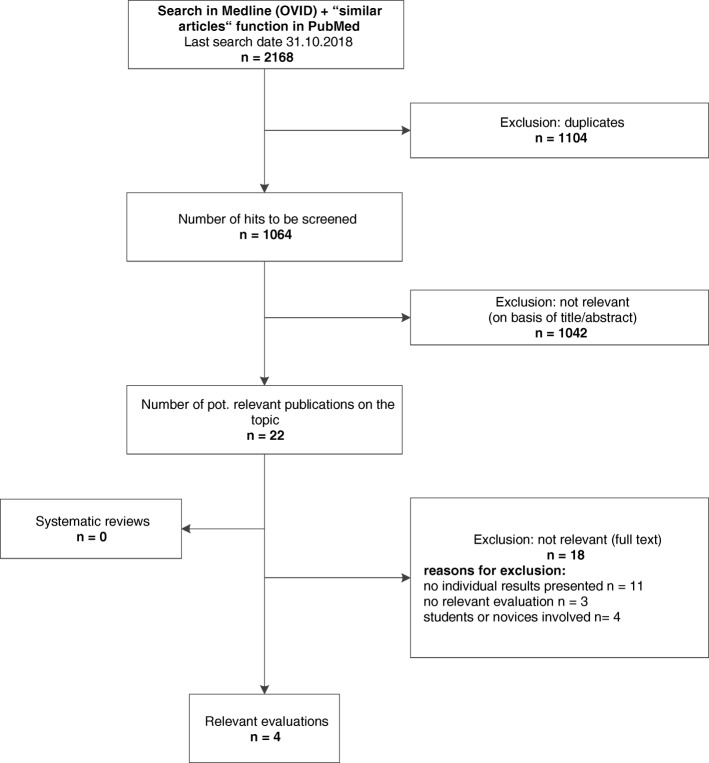
BACKGROUND: Stringent requirements exist regarding the transparency of the study selection process and the reliability of results. A 2-step selection process is generally recommended; this is conducted by 2 reviewers independently of each other (conventional double-screening). However, the approach is resource intensive, which can be a problem, as systematic reviews generally need to be completed within a defined period with a limited budget. The aim of the following methodological systematic review was to analyse the evidence available on whether single screening is equivalent to double screening in the screening process conducted in systematic reviews. METHODS: We searched Medline, PubMed and the Cochrane Methodology Register (last search 10/2018). We also used supplementary search techniques and sources ("similar articles" function in PubMed, conference abstracts and reference lists). We included all evaluations comparing single with double screening. Data were summarized in a structured, narrative way. RESULTS: The 4 evaluations included investigated a total of 23 single screenings (12 sets for screening involving 9 reviewers). The median proportion of missed studies was 5% (range 0 to 58%). The median proportion of missed studies was 3% for the 6 experienced reviewers (range: 0 to 21%) and 13% for the 3 reviewers with less experience (range: 0 to 58%). The impact of missing studies on the findings of meta-analyses had been reported in 2 evaluations for 7 single screenings including a total of 18,148 references. In 3 of these 7 single screenings - all conducted by the same reviewer (with less experience) - the findings would have changed substantially. The remaining 4 of these 7 screenings were conducted by experienced reviewers and the missing studies had no impact or a negligible on the findings of the meta-analyses. CONCLUSIONS: Single screening of the titles and abstracts of studies retrieved in bibliographic searches is not equivalent to double screening, as substantially more studies are missed. However, in our opinion such an approach could still represent an appropriate methodological shortcut in rapid reviews, as long as it is conducted by an experienced reviewer. Further research on single screening is required, for instance, regarding factors influencing the number of studies missed.
Overview
The claims and statistics of this paper haven’t been checked yet.
Free: it reads the open-access text and checks the first 5 claims that cite a source we can check. Create a free account to check every claim.
Integrity signals
Registry
Cites
Statistics
Figures
Verification
Claims the paper makes
The claims and statistics of this paper haven’t been checked yet.
Free: it reads the open-access text and checks the first 5 claims that cite a source we can check. Create a free account to check every claim.
Claims other papers make about this one
Each is checked against this paper’s own text: does it say what the citing paper says it does?
The source backs part of the claim, not all of it — or backs it for a different population, condition or comparison.
In the citing paper
“Previous research suggests that non-experienced reviewers can miss up to 13% of the records in a systematic review, which can significantly impact the results of a metaanalysis (Waffenschmidt et al., 2019).”
From Screening Smarter, Not Harder: A Comparative Analysis of Machine Learning Screening Algorithms and Heuristic Stopping Criteria for Systematic Reviews in Educational Research (2024) · cites this paper as Waffenschmidt et al., 2019
Experimental — accuracy not yet measuredThe cited source says what the claim attributes to it.
In the citing paper
“Single screening is an efficient use of time and resources, but there is a higher risk of missing relevant studies49 50 51”
From PRISMA 2020 explanation and elaboration: updated guidance and exemplars for reporting systematic reviews (2021) · cites this paper as [50]
The cited source says what the claim attributes to it.
In the citing paper
“This approach may be more reliable than single screening but at the expense of increased reviewer time, given the time needed to resolve discrepancies49 50 51”
From PRISMA 2020 explanation and elaboration: updated guidance and exemplars for reporting systematic reviews (2021) · cites this paper as [50]
The cited source says what the claim attributes to it.
In the citing paper
“Single screening is an efficient use of time and resources, but there is a higher risk of missing relevant studies49 50 51”
From PRISMA 2020 explanation and elaboration: updated guidance and exemplars for reporting systematic reviews (2021) · cites this paper as [50]
5 more claims about this paper
Create a free account to see every claim other papers make about this one.
Self-check
Percentages, sums and reported differences re-computed from the paper’s own numbers.
The self-check needs the paper’s full text.
Citations
Cites
Finding What Works in Health Care: Standards for Systematic Reviews
Eden, J., Levit, L. A., Berg, A. O., & Morton, S. C. (2013) · Cited by 948
O’Mara-Eves, A., Thomas, J., McNaught, J., Miwa, M., & Ananiadou, S. (2015) · Systematic Reviews · doi:10.1186/2046-4053-4-5 · Cited by 681
Haby, M. M., Chapman, E., Clark, R., Barreto, J., Reveiz, L., & Lavis, J. N. (2016) · Health Research Policy and Systems · doi:10.1186/s12961-016-0155-7 · Cited by 409
O’Mara-Eves, A., Thomas, J., McNaught, J., Miwa, M., & Ananiadou, S. (2015) · Systematic Reviews · doi:10.1186/s13643-015-0031-5 · Cited by 353
Edwards, P., Clarke, M., DiGuiseppi, C., Pratap, S., Roberts, I., & Wentz, R. (2002) · Statistics in Medicine · doi:10.1002/sim.1190 · Cited by 340 · cited 8×
“Edwards 2002 is the only evaluation with a comparable research question and their results are similar to ours.”
BackgroundMethodResultInfluentialFinding What Works in Health Care: Standards for Systematic Reviews
Committee on Standards for Systematic Reviews of Comparative Effectiveness Research, Board on Health Care Services, & Institute of Medicine (2011) · doi:10.17226/13059 · Cited by 289
Mathes, T., Klaßen, P., & Pieper, D. (2017) · BMC Medical Research Methodology · doi:10.1186/s12874-017-0431-4 · Cited by 240
Self-citationInstitut für Qualität und Wirtschaftlichkeit Im Gesundheitswesen
Culyer, A. J. (2014) · Cited by 189
Shemilt, I., Khan, N., Park, S., & Thomas, J. (2016) · Systematic Reviews · doi:10.1186/s13643-016-0315-4 · Cited by 168 · cited 7×
“Two re-ran the meta-analysis without the missed studies (Pham 2016, Shemilt 2016).”
BackgroundMethodInfluentialDoust, J. A., Pietrzak, E., Sanders, S., & Glasziou, P. P. (2005) · Journal of Clinical Epidemiology · doi:10.1016/j.jclinepi.2004.09.011 · Cited by 106 · cited 4×
“We ultimately included 4 evaluations (Edwards 2002 [12], Doust 2005 [13], Pham 2016 [11], Shemilt 2016 [10]).”
BackgroundMethodInfluential
Research works printed but not linked: 1
- McDonagh M, Peterson K, Raina P, Chang S, Shekelle P. Avoiding bias in selecting studies. Rockville, MD: Agency for Healthcare Research and Quality; 2013. https://effectivehealthcare.ahrq.gov/sites/default/files/pdf/methods-guidance-bias_methods.pdf. 23487864
Cited by
Page, M. J., Moher, D., Bossuyt, P. M., Boutron, I., Hoffmann, T. C., Mulrow, C. D., Shamseer, L., Tetzlaff, J. M., Akl, E. A., Brennan, S. E., et al. (2021) · BMJ · doi:10.1136/bmj.n160 · Cited by 13,262
Cochrane Rapid Reviews Methods Group offers evidence-informed guidance to conduct rapid reviews
Garritty, C., Gartlehner, G., Nussbaumer-Streit, B., King, V. J., Hamel, C., Kamel, C., Affengruber, L., & Stevens, A. (2021) · Journal of Clinical Epidemiology · doi:10.1016/j.jclinepi.2020.10.007 · Cited by 1,141
“Findings from two recent studies indicate that single screening of the titles and abstracts is not equivalent to dual screening, as more studies are missed [25,32].”
Page, M. J., Moher, D., Bossuyt, P., Boutron, I., Hoffmann, T., mulrow, C., Shamseer, L., Tetzlaff, J., Akl, E., Brennan, S. E., et al. (2020) · doi:10.31222/osf.io/gwdhk · Cited by 916
A scoping review on incentives for adoption of sustainable agricultural practices and their outcomes
Piñeiro, V., Arias, J., Dürr, J., Elverdin, P., Ibáñez, A. M., Kinengyere, A., Opazo, C. M., Owoo, N., Page, J. R., Prager, S. D., et al. (2020) · Nature Sustainability · doi:10.1038/s41893-020-00617-y · Cited by 747
Li, Y., Scherer, N., Felix, L., & Kuper, H. (2021) · PLOS ONE · doi:10.1371/journal.pone.0246454 · Cited by 536
“Not all studies were screened by two reviewers at title and abstract, and although evidence suggests that limited dual review processes remain an effective procedure, there may have been eligible studies missed [98, 99].”
BackgroundSharkiya, S. H. (2023) · BMC Health Services Research · doi:10.1186/s12913-023-09869-8 · Cited by 416
“A rapid review was suitable because a single reviewer was involved in the study selection process, whereas at least two independent reviewers are recommended in typical systematic reviews [16].”
MethodAlqenae, F. A., Steinke, D., & Keers, R. N. (2020) · Drug Safety · doi:10.1007/s40264-020-00918-3 · Cited by 287
Eight problems with literature reviews and how to fix them
Haddaway, N. R., Bethel, A., Dicks, L. V., Koricheva, J., Macura, B., Petrokofsky, G., Pullin, A. S., Savilaakso, S., & Stewart, G. B. (2020) · Nature Ecology & Evolution · doi:10.1038/s41559-020-01295-x · Cited by 256
Garritty, C., Hamel, C., Trivella, M., Gartlehner, G., Nussbaumer-Streit, B., Devane, D., Kamel, C., Griebler, U., & King, V. J. (2024) · BMJ · doi:10.1136/bmj-2023-076335 · Cited by 260
Hategeka, C., Ruton, H., Karamouzian, M., Lynd, L. D., & Law, M. R. (2020) · BMJ Global Health · doi:10.1136/bmjgh-2020-003567 · Cited by 237
“164 However, a validation on a random subsample consisting of 10% of eligible studies found a very high agreement, making the data extraction less of a concern.”
Gartlehner, G., Affengruber, L., Titscher, V., Noel-Storr, A., Dooley, G., Ballarini, N., & König, F. (2020) · Journal of Clinical Epidemiology · doi:10.1016/j.jclinepi.2020.01.005 · Cited by 206
Jones, D., Innerd, A., Giles, E. L., & Azevedo, L. B. (2020) · Journal of Sport and Health Science · doi:10.1016/j.jshs.2020.03.001 · Cited by 206
“Although this procedure has been used in many other systematic reviews(57) 59 in the field, future studies should consider double screening because, according to a recent methodologic systematic review, this could be a limitation.(60) Another limitation is the inclusion of studies that used varying methodologies to as…”
MethodMasso, M., Sim, J., Halcomb, E., & Thompson, C. (2022) · International Journal of Nursing Studies · doi:10.1016/j.ijnurstu.2022.104208 · Cited by 165
Anastasiou, K., Baker, P., Hadjikakou, M., Hendrie, G. A., & Lawrence, M. (2022) · Journal of Cleaner Production · doi:10.1016/j.jclepro.2022.133155 · Cited by 163
Climate change, mental health, and reproductive decision-making: A systematic review
Dillarstone, H., Brown, L. J., & Flores, E. C. (2023) · PLOS Climate · doi:10.1371/journal.pclm.0000236 · Cited by 162
Scherbakov, D., Hubig, N., Jansari, V., Bakumenko, A., & Lenert, L. A. (2024) · arXiv · doi:10.48550/arxiv.2409.04600 · Cited by 156
Scherbakov, D., Hubig, N., Jansari, V., Bakumenko, A., & Lenert, L. A. (2025) · Journal of the American Medical Informatics Association · doi:10.1093/jamia/ocaf063 · Cited by 154
“207 However, we believe that the LLM approach could substitute human reviewers, and human effort should be redirected to supervision of the review process.”
March, A., Stapley, E., Hayes, D., Town, R., & Deighton, J. (2022) · International Journal of Environmental Research and Public Health · doi:10.3390/ijerph19063587 · Cited by 215
“This mitigates the risk of systematic bias at the screening stages whilst also decreasing the total number of errors or missed studies [54].”
BackgroundHamel, C., Kelly, S. E., Thavorn, K., Rice, D. B., Wells, G. A., & Hutton, B. (2020) · BMC Medical Research Methodology · doi:10.1186/s12874-020-01129-1 · Cited by 140
Gates, A., Guitard, S., Pillay, J., Elliott, S. A., Dyson, M. P., Newton, A. S., & Hartling, L. (2019) · Systematic Reviews · doi:10.1186/s13643-019-1222-2 · Cited by 133
Tringale, M., Stephen, G., Boylan, A. R., & Heneghan, C. J. (2022) · BMJ Open · doi:10.1136/bmjopen-2022-067268 · Cited by 171
Kho, J. M., Gillespie, N. A., & Martin‐Khan, M. (2020) · BMC Health Services Research · doi:10.1186/s12913-020-05657-w · Cited by 180
Lee, B. E. C., Ling, M., Boyd, L., Olsson, C., & Sheen, J. (2023) · Journal of Affective Disorders · doi:10.1016/j.jad.2023.03.012 · Cited by 120
Parental Risk and Protective Factors in Child Maltreatment: A Systematic Review of the Evidence
Younas, F., & Gutman, L. M. (2022) · Trauma Violence & Abuse · doi:10.1177/15248380221134634 · Cited by 162
“A methodological systematic review assessing the usefulness of the single-screening approach in study selection concludes that results emanating from this approach are “. . . robust enough to establish this approach as a methodological shortcut” (Waffenschmidt et al., 2019, p. 8).”
BackgroundHan, A., & Kim, T. H. (2023) · Mindfulness · doi:10.1007/s12671-023-02148-x · Cited by 119
“However, a recent systematic review found that single screening by experienced reviewers had no impact on the findings of meta-analyses (Waffenschmidt et al., 2019).”
BackgroundSharpe, I., & Davison, C. M. (2021) · BMJ Open · doi:10.1136/bmjopen-2021-051908 · Cited by 118
Sui, Y., Ettema, D., & Helbich, M. (2022) · Health & Place · doi:10.1016/j.healthplace.2022.102893 · Cited by 124
Paper 2: Performing rapid reviews
King, V. J., Stevens, A., Nußbaumer-Streit, B., Kamel, C., & Garritty, C. (2022) · Systematic Reviews · doi:10.1186/s13643-022-02011-5 · Cited by 137
“However, there is some evidence that the use of a single experienced reviewer for particular topics may be sufficient [18, 46, 54].”
BackgroundInequalities of Suicide Mortality across Urban and Rural Areas: A Literature Review
Casant, J., & Helbich, M. (2022) · International Journal of Environmental Research and Public Health · doi:10.3390/ijerph19052669 · Cited by 125
“Another limitation is that only the first author reviewed the studies, which may have introduced a selection bias [69].”
BackgroundAitchison, B., Rushton, A., Martin, P., Barr, M., Soundy, A., & Heneghan, N. R. (2021) · Disability and health journal · doi:10.1016/j.dhjo.2021.101164 · Cited by 146
Buchan, M. C., Bhawra, J., & Katapally, T. R. (2024) · Smart Learning Environments · doi:10.1186/s40561-024-00293-x · Cited by 242
“A second reviewer (JB) validated included records for content, scope, and relevance (Waffenschmidt et al., 2019).”
BackgroundMethodNußbaumer-Streit, B., Sommer, I., Hamel, C., Devane, D., Noel-Storr, A. H., Puljak, L., Trivella, M., & Gartlehner, G. (2023) · BMJ Evidence-Based Medicine · doi:10.1136/bmjebm-2022-112185 · Cited by 134
Experiencing loneliness in parenthood: a scoping review
Nowland, R. A., Thomson, G., McNally, L., Smith, T. D. H., & Whittaker, K. A. (2021) · Perspectives in Public Health · doi:10.1177/17579139211018243 · Cited by 133
Ezzdine, L. B., Dhahbi, W., Dergaa, I., Ceylan, H. İ., Guelmami, N., Saad, H. B., Chamari, K., Ștefănică, V., & Omri, A. E. (2025) · Frontiers in Neuroscience · doi:10.3389/fnins.2025.1502417 · Cited by 119
Application of Smartphone Technologies in Disease Monitoring: A Systematic Review
Moses, J. C., Adibi, S., Islam, S. M. S., Wickramasinghe, N. S., & Nguyen, L. (2021) · Healthcare · doi:10.3390/healthcare9070889 · Cited by 98
“One reviewer independently evaluated the titles and abstracts of all records identified in the initial database search [43].”
BackgroundMethodInfluentialTransforming literature screening: The emerging role of large language models in systematic reviews
Delgado-Chaves, F. M., Jennings, M. J., Atalaia, A., Wolff, J., Horvath, R., Mamdouh, Z. M., Baumbach, J., & Baumbach, L. (2025) · Proceedings of the National Academy of Sciences · doi:10.1073/pnas.2411962122 · Cited by 86
Chong, E., Crowe, L., Mentor, K., Pandanaboyana, S., & Sharp, L. (2023) · Supportive Care in Cancer · doi:10.1007/s00520-022-07468-7 · Cited by 142
Searching clinical trials registers: guide for systematic reviewers
Hunter, K. E., Webster, A. C., Page, M. J., Willson, M., McDonald, S., Berber, S., Skeers, P., Tan-Koay, A. G., Parkhill, A., & Seidler, A. L. (2022) · BMJ · doi:10.1136/bmj-2021-068791 · Cited by 85
Corporate social responsibility and employee innovative behaviors: A meta-analysis
Paruzel, A., Schmidt, L., & Maier, G. W. (2023) · Journal of Cleaner Production · doi:10.1016/j.jclepro.2023.136189 · Cited by 112
Salvador‐Carulla, L., Woods, C., de Miquel, C., & Lukersmith, S. (2024) · Heliyon · doi:10.1016/j.heliyon.2024.e29930 · Cited by 118
“Single screening has been demonstrated to be a robust method for experienced reviewers [32,33] and is useful for scoping reviews aimed at establishing the knowledge base in a new area .”
MethodRobledo, S., Grisales Aguirre, A. M., Hughes, M., & Eggers, F. (2023) · Journal of Small Business Management · doi:10.1080/00472778.2021.1955125 · Cited by 80
“Following the methodology proposed by Waffenschmidt et al. (2019) and to reduce bias in manual review, the authors of this paper independently evaluated the records and afterward identified and discussed conflicts regarding the perceptions of relevant and nonrelevant documents.”
MethodGates, A., Gates, M., Sebastianski, M., Guitard, S., Elliott, S. A., & Hartling, L. (2020) · BMC Medical Research Methodology · doi:10.1186/s12874-020-01031-w · Cited by 80
“Compared with dual independent screening, the risk for missing relevant studies is increased when study selection is performed by a single reviewer; however, the approach is likely appropriate for rapid reviews [12].”
BackgroundRisk factors for severity of COVID-19: a rapid review to inform vaccine prioritisation in Canada
Wingert, A., Pillay, J., Gates, M., Guitard, S., Rahman, S., Beck, A., Vandermeer, B., & Hartling, L. (2021) · BMJ Open · doi:10.1136/bmjopen-2020-044684 · Cited by 90
The importance of health literacy on clinical cancer outcomes: a scoping review
Samoil, D., Kim, J., Fox, C. J., & Papadakos, J. (2021) · Annals of Cancer Epidemiology · doi:10.21037/ace-20-30 · Cited by 78
“The literature suggests that a single reviewer process has no impact or a negligible impact on findings when performed by an experienced reviewer, which was the case for the present review (10).”
BackgroundTerry, E., Cartledge, S., Damery, S. L., & Greenfield, S. (2022) · BMC Public Health · doi:10.1186/s12889-022-14029-4 · Cited by 86
“Limited database searching can introduce selection bias [28] and the absence of conventional double screening can result in the omission of key studies [29].”
BackgroundSteps in undertaking meta-analysis and addressing heterogeneity in meta-analysis
Gandhi, A. P., Shamim, M. A., & Padhi, B. K. (2023) · The Evidence · doi:10.61505/evidence.2023.1.1.7 · Cited by 114
“Finally, the studies eligible for the data extraction need to be short-listed [51,52].”
Campos, D. G., Fütterer, T., Gfrörer, T., Lavelle-Hill, R., Murayama, K., König, L., Hecht, M., Zitzmann, S., & Scherer, R. (2024) · Educational Psychology Review · doi:10.1007/s10648-024-09862-5 · Cited by 75
“Previous research suggests that non-experienced reviewers can miss up to 13% of the records in a systematic review, which can significantly impact the results of a meta-analysis (Waffenschmidt et al., 2019).”
Butterworth, H., Wood, L., & Rowe, S. L. (2022) · BJPsych Open · doi:10.1192/bjo.2022.574 · Cited by 104
Artificial Intelligence for Radiation Dose Optimization in Pediatric Radiology: A Systematic Review
Ng, C. K. C. (2022) · Children · doi:10.3390/children9071044 · Cited by 87
“According to a recent methodological systematic review [44], this is an appropriate arrangement provided that the single reviewer is experienced.”
BackgroundRay, D., Sniehotta, F. F., McColl, E., & Ells, L. J. (2022) · Obesity Reviews · doi:10.1111/obr.13417 · Cited by 82
“A single reviewer screening of abstracts may limit the methodological standard of a review.(82) However, the conduct of the review was closely supervised by DR's super-”
BackgroundDevelopment of Prompt Templates for Large Language Model–Driven Screening in Systematic Reviews
Cao, C., Sang, J., Arora, R., Chen, D., Kloosterman, R., Cecere, M., Gorla, J., Saleh, R., Drennan, I., Teja, B., et al. (2025) · Annals of Internal Medicine · doi:10.7326/annals-24-02189 · Cited by 91
Tran, V.-T., Gartlehner, G., Yaacoub, S., Boutron, I., Schwingshackl, L., Stadelmaier, J., Sommer, I., Alebouyeh, F., Afach, S., Meerpohl, J., et al. (2024) · Annals of Internal Medicine · doi:10.7326/m23-3389 · Cited by 66
Slattery, E. J., O’Callaghan, E., Ryan, P. H., Fortune, D. G., & McAvinue, L. P. (2022) · Neuroscience & Biobehavioral Reviews · doi:10.1016/j.neubiorev.2022.104633 · Cited by 104
“50 approach can miss more eligible studies than double screening (Waffenschmidt et al., 2019).”
The Clinical Definition of Children With Medical Complexity: A Modified Delphi Study
Millar, K., Rodd, C. J., Rempel, G. R., Cohen, E., Sibley, K. M., & Garland, A. (2024) · PEDIATRICS · doi:10.1542/peds.2023-064556 · Cited by 73
Sarma, K. M., Carthy, S. L., & Cox, K. M. (2022) · Campbell Systematic Reviews · doi:10.1002/cl2.1268 · Cited by 76
Gram, L., Fitchett, A., Ashraf, A., Daruwalla, N., & Osrin, D. (2019) · BMJ Global Health · doi:10.1136/bmjgh-2019-001972 · Cited by 66
Ricke, E., Dijkstra, A., & Bakker, E. W. P. (2023) · Frontiers in Sports and Active Living · doi:10.3389/fspor.2023.1035023 · Cited by 69
“, in at least 95% of cases, ER and AD came to the same conclusion regarding inclusion or exclusion), ER screened the remaining titles/abstracts [19].”
BackgroundMoe-Byrne, T., Shepherd, J., Merecz-Kot, D., Sinokki, M., Naumanen, P., Hakkaart-van Roijen, L., & Van Der Feltz-Cornelis, C. (2022) · PLOS Digital Health · doi:10.1371/journal.pdig.0000123 · Cited by 55
“Firstly, we only searched google scholar for grey literatures and there was a possibility that some studies could have been missed due to double screening for only 10% of title and abstract [67,68].”
MethodHui, T., Mohammed, B. I., Donyai, P., McCrindle, R., & Sherratt, R. S. (2020) · Pharmacy · doi:10.3390/pharmacy8020058 · Cited by 61
“A rapid scoping review approach based on the PRISMA (Preferred Reporting Items for Systematic reviews and Meta-Analyses) protocol was chosen for the literature survey using a single reviewer, but with awareness of the limitations of not conducting a full multiple-reviewer systematic review [36,37].”
MethodAffengruber, L., van der Maten, M. M., Spiero, I., Nussbaumer-Streit, B., Mahmić-Kaknjo, M., Ellen, M. E., Goossen, K., Kantorova, L., Hooft, L., Riva, N., et al. (2024) · BMC Medical Research Methodology · doi:10.1186/s12874-024-02320-4 · Cited by 52
Etim, E., Choedron, K. T., Ajai, O., Duke, O. O., & Jijingi, H. E. (2024) · Waste Management & Research The Journal for a Sustainable Circular Economy · doi:10.1177/0734242x241285423 · Cited by 89
“All authors retrieved the full text and screened the full text for inclusion (Waffenschmidt et al., 2019).”
Directing and Orienting ICT Healthcare Solutions to Address the Needs of the Aging Population
Fares, N., Sherratt, R. S., & Elhajj, I. H. (2021) · Healthcare · doi:10.3390/healthcare9020147 · Cited by 64
“A PRISMA (Preferred Reporting Items for Systematic reviews and Meta-Analysis) [19] Protocol-based scoping review was conducted using a full multiple reviewer [20].”
MethodHan, A., & Kim, T. H. (2022) · Journal of Medical Internet Research · doi:10.2196/39727 · Cited by 50
Programming Plyometric-Jump Training in Soccer: A Review
Ramírez‐Campillo, R., Moran, J., Oliver, J. L., Pedley, J. S., Lloyd, R. S., & Granacher, U. (2022) · Sports · doi:10.3390/sports10060094 · Cited by 88
“Additionally, only one author participated in the selection and coding of the articles, potentially reducing results reliability [145].”
BackgroundMethodFamily caregiver's experience of caring for an older adult with delirium: A systematic review
Shrestha, P., & Fick, D. M. (2020) · International Journal of Older People Nursing · doi:10.1111/opn.12321 · Cited by 58
Evans, J. T., Phan, H., Buscot, M., Gall, S., & Cleland, V. J. (2022) · BMC Public Health · doi:10.1186/s12889-022-13937-9 · Cited by 56
Cannabis dosing and administration for sleep: a systematic review
Velzeboer, R., Malas, A., Boerkoel, P., Cullen, K., Hawkins, M., Roesler, J., & Lai, W. W.-K. (2022) · SLEEP · doi:10.1093/sleep/zsac218 · Cited by 62
Han, A. (2022) · Research on Aging · doi:10.1177/01640275211043486 · Cited by 45
“A recent methodological systematic review found that single screening for study selection in systematic reviews conducted by experienced reviewers had no impact on the findings of the meta-analyses (Waffenschmidt et al., 2019).”
BackgroundNew assistive technologies in dementia and mild cognitive impairment care: A PubMed review
Lee-Cheong, S., Amanullah, S., & Jardine, M. (2022) · Asian Journal of Psychiatry · doi:10.1016/j.ajp.2022.103135 · Cited by 54
Haby, M. M., Barreto, J. O. M., Kim, J. Y. H., Peiris, S., Mansilla, C., Torres, M., Guerrero‐Magaña, D. E., & Revéiz, L. (2023) · Research Synthesis Methods · doi:10.1002/jrsm.1664 · Cited by 53
“The systematic reviews most commonly covered one particular review stage ( n = 12), including aspects of the inclusion criteria, 27,34,37 searching, 27,34,37 selection, 35,39 data extraction, 31,36 or RoB assessment.”
BackgroundNama, N., Hennawy, M., Barrowman, N., O’Hearn, K., Sampson, M., & McNally, J. D. (2021) · Systematic Reviews · doi:10.1186/s13643-021-01632-6 · Cited by 53
“This suggests that investigative teams should particularly focus on defining these criteria clearly [16].”
BackgroundResultInfluentialVirtual care with digital technologies for rural Canadians living with cardiovascular disease
Buyting, R., Melville, S., Chatur, H., White, C. W., Légaré, J.-F., Lutchmedial, S., & Brunt, K. R. (2022) · CJC Open · doi:10.1016/j.cjco.2021.09.027 · Cited by 42
“Furthermore, only a single reviewer screened the included studies, therefore unconscious selection bias might be at play, however, studies show that this approach still represents an appropriate methodological approach.(77) Strengths of this review include: a diverse writing group with multiple relevant disciplines re…”
BackgroundScoping review of the use of virtual reality in intensive care units
Hill, J. E., Twamley, J., Breed, H., Kenyon, R., Casey, R., Zhang, J., & Clegg, A. J. (2021) · Nursing in Critical Care · doi:10.1111/nicc.12732 · Cited by 44
Fuge, T. G., Tsourtos, G., & Miller, E. (2020) · PLoS ONE · doi:10.1371/journal.pone.0233355 · Cited by 33
Gates, M., Pillay, J., Nuspl, M., Wingert, A., Vandermeer, B., & Hartling, L. (2023) · Systematic Reviews · doi:10.1186/s13643-023-02181-w · Cited by 50
Wada, F. W., Mekonnen, M. F., Sawiso, E. D., Kolato, S., Woldegiorgis, L., Kera, G. K., El‐Khatib, Z., Ashuro, A. A., Biru, M., & Boltena, M. T. (2023) · Scientific Reports · doi:10.1038/s41598-023-41882-z · Cited by 60
“The frequency of typical microorganisms isolated from DFUs differs substantially across studies carried out in various locations throughout the world 9–12 .”
BackgroundCatchii: Empowering literature review screening in healthcare
Halman, A., & Oshlack, A. (2023) · Research Synthesis Methods · doi:10.1002/jrsm.1675 · Cited by 40
“All in all, a substantial cost can be incurred by researchers as a systematic review takes around 15 months on average to complete and publish [9], and the use of two reviewers for screening is the current standard to prevent missing papers [10].”
BackgroundZeraatkar, D., Bhasin, A. A., Morassut, R. E., Churchill, I. F., Gupta, A. A., Lawson, D. O., Miroshnychenko, A., Sirotich, E., Aryal, K., Mikhail, D., et al. (2021) · American Journal of Clinical Nutrition · doi:10.1093/ajcn/nqab002 · Cited by 45
Non-invasive blood glucose monitoring technology in diabetes management: review
Moses, J. C., Adibi, S., Wickramasinghe, N. S., Nguyen, L., Angelova, M. N., & Islam, S. M. S. (2024) · mHealth · doi:10.21037/mhealth-23-9 · Cited by 50
“A reviewer (J.C.M.) independently evaluated the titles and abstracts of all articles identified in the initial database search and were discussed with other authors (S.M.S.I. and S.A.); then, J.C.M. reviewed the full text for eligibility according to the study’s inclusion criteria (42).”
Han, A. (2022) · Clinical Gerontologist · doi:10.1080/07317115.2021.1995561 · Cited by 38
Hamel, C., Michaud, A., Thuku, M., Affengruber, L., Skidmore, B., Nussbaumer-Streit, B., Stevens, A., & Garritty, C. (2020) · Journal of Clinical Epidemiology · doi:10.1016/j.jclinepi.2020.06.027 · Cited by 36
Galli, C., Gavrilova, A. V., & Calciolari, E. (2025) · Information · doi:10.3390/info16050378 · Cited by 36
Self-stigma and bipolar disorder: A systematic review and best-evidence synthesis
Favre, S., & Richard-Lepouriel, H. (2023) · Journal of Affective Disorders · doi:10.1016/j.jad.2023.05.041 · Cited by 43
Miller, K., Morley, C., Fraser, B. J., Gall, S., & Cleland, V. J. (2024) · BMC Public Health · doi:10.1186/s12889-024-19050-3 · Cited by 56
“Study screening and data extraction were performed independently by two researchers, which has shown to be more reliable than single screening processes [50].”
MethodBöke, H., Aygün, Y., Tüfekçi, Ş., Yağın, F. H., Canpolat, B., Norman, G., Prieto-González, P., & Ardigò, L. P. (2025) · Frontiers in Psychology · doi:10.3389/fpsyg.2025.1508808 · Cited by 162
Peeters, R., Westra, D., van Raak, A., & Ruwaard, D. (2022) · Medical Care Research and Review · doi:10.1177/10775587221118156 · Cited by 37
“To ensure exclusion criteria were applied consistently, two researchers independently assessed the title, keywords, and abstract of 100 randomly chosen articles (Waffenschmidt et al., 2019).”
MethodWaffenschmidt, S., Sieben, W., Jakubeit, T., Knelangen, M., Overesch, I., Bühn, S., Pieper, D., Skoetz, N., & Hausner, E. (2023) · Systematic Reviews · doi:10.1186/s13643-023-02334-x · Cited by 43
“However, the few studies investigating this approach (published up to 10/2018 and included in a systematic review [11]) did not provide sufficiently robust evidence to recommend single instead of double screening as the standard approach for study selection.”
BackgroundMethodResultInfluentialSelf-citationPrimary amputation versus limb salvage in upper limb major trauma: a systematic review
Nayar, S. K., Alcock, H., & Edwards, D. (2021) · European Journal of Orthopaedic Surgery & Traumatology · doi:10.1007/s00590-021-03008-x · Cited by 33
Currie, J., Thompson, C., Grootemaat, P. E., Andersen, P., Finnegan, A. P., Carter, M. A., & Halcomb, E. (2022) · Journal of Clinical Nursing · doi:10.1111/jocn.16239 · Cited by 42
A systematic literature review of attribute based encryption in health services
Imam, R., Kumar, K., Raza, S. M., Sadaf, R., Anwer, F., Fatima, N. E., Nadeem, M., Abbas, M. A. E., & Rahman, O. (2022) · Journal of King Saud University - Computer and Information Sciences · doi:10.1016/j.jksuci.2022.06.018 · Cited by 43
“The double-screening strategy has the following benefits: first, it guarantees that the study inclusion criteria are implemented routinely, eliminating statistical anomalies; second, random discrepancies, such as thoughtless errors, can be recognized and remedied (Waffenschmidt et al., 2019).”
Free Sugar Intake and Periodontal Diseases: A Systematic Review
Kusama, T., Nakazawa, N., Takeuchi, K., Kiuchi, S., & Osaka, K. (2022) · Nutrients · doi:10.3390/nu14214444 · Cited by 34
“This review process ensured the comprehensiveness of this systematic review [49].”
BackgroundMasyhur, R. T., Alias, A. H., Haron, N. A., & Zulkafli, Z. (2024) · Energy and Buildings · doi:10.1016/j.enbuild.2024.114550 · Cited by 41
An overview of methodological approaches in systematic reviews
Veginadu, P., Calache, H., Gussy, M. G., Pandian, A., & Masood, M. (2022) · Journal of Evidence-Based Medicine · doi:10.1111/jebm.12468 · Cited by 72
Carvajal, B., Hancock, A., Lewney, K., Hagan, K., Jamieson, S., & Cooke, A. (2023) · Women and Birth · doi:10.1016/j.wombi.2023.08.007 · Cited by 43
Unused medicine take-back programmes: a systematic review
Wang, L. S., Aziz, Z., Wang, E. S., & Chik, Z. (2024) · Journal of Pharmaceutical Policy and Practice · doi:10.1080/20523211.2024.2395535 · Cited by 48
“However, we ensured that two reviewers independently screened, extracted data, and assessed the risk of bias to reduce bias and errors (Waffenschmidt et al., 2019).”
BackgroundMhungu, A., Sixsmith, J., & Burnett, E. (2022) · AIDS and Behavior · doi:10.1007/s10461-022-03872-6 · Cited by 39
Ng, C. K. C. (2023) · Children · doi:10.3390/children10081372 · Cited by 37
“Article selection was conducted by one reviewer with a literature review experience of more than 20 years [26,29,70].”
MethodInsufficient transparency of statistical reporting in preclinical research: a scoping review
Gosselin, R. (2021) · Scientific Reports · doi:10.1038/s41598-021-83006-5 · Cited by 43
Matlock, K. A., Broadley, M. M., Hendrieckx, C., Clowes, M., Sutton, A., Heller, S. R., de Galan, B. E., Pouwer, F., & Speight, J. (2021) · Diabetic Medicine · doi:10.1111/dme.14706 · Cited by 31
Essiet, I. A., Lander, N., Salmon, J., Duncan, M. J., Eyre, E. L. J., Ma, J., & Barnett, L. M. (2021) · International Journal of Behavioral Nutrition and Physical Activity · doi:10.1186/s12966-021-01162-3 · Cited by 39
“This triangulation approach reduces the risk of non-detection of relevant evidence, thus strengthening the validity of conclusions reached from available evidence [102].”
Background
Metadata
- Authors
- Waffenschmidt, S., Knelangen, M., Sieben, W., Bühn, S., & Pieper, D.
- Affiliations
- Institute for Quality and Efficiency in Health Care (DE)
- Witten/Herdecke University (DE)
- Corresponding author
- Waffenschmidt, Siw
- Venue
- BMC Medical Research Methodology
- Published
- 2019-06-28
- Volume
- 19
- Issue
- 1
- Pages
- 132-132
- ISSN
- 1471-2288 (ISSN-L)
- PMC
- PMC6599339
- OpenAlex
- W2955273711
- Semantic Scholar
- ffee5cf6b88f24a1bc583d308035058d1fee7eb1
- Cited by
- 626
- References
- 19
- Citations by year
- 2026: 111 · 2025: 106 · 2024: 117 · 2023: 93 · 2022: 88 · 2021: 74 · 2020: 34 · 2019: 3
- FWCI
- 10.08
- Type
- journal article
- Language
- en
- Open access
- gold
- doi.org
- Licence
- cc-by
- creativecommons.org/licenses/by/4.0/ (tdm)
- creativecommons.org/licenses/by/4.0/ (vor)
- Locations
- BMC Medical Research Methodology (publishedVersion, cc-by)
- PubMed Central (publishedVersion, cc-by)
- PubMed (publishedVersion)
- DOAJ (DOAJ: Directory of Open Access Journals) (submittedVersion, cc-by-sa)
- Topics
- Social Sciences › Decision Sciences › Statistics, Probability and Uncertainty › Meta-analysis and systematic reviews
- Social Sciences › Sociology and Political Science › Delphi Technique in Research
- Physical Sciences › Mathematics › Statistics and Probability › Statistical Methods in Epidemiology
- Keywords
- study selection, title and abstract screening, reviewer experience, rapid review
- MeSH terms
- Abstracting and Indexing, Systematic Reviews as Topic, Humans, Information Systems, Publications, Information Storage and Retrieval, PubMed
About these checks
Registry, retraction, Cites and statistics results are computed, not judged, with one exception: a printed reference that no index lists is read once by a model before it counts as a citation error. Claims are extracted by a model and kept only when their quote appears verbatim in the text; each cited source is then checked, with a model’s help, for whether it says what the claim relies on. Those verdicts can be wrong — read the claim’s quote and the cited source before relying on one.
Statistics and arithmetic are recomputed, not judged.
Confidence bands are shown only for fields calibrated on our annotated test set. None is calibrated yet, so no band is shown.
What counts as a claim ›How we measure confidence ›How we check this ›
Are you an author, or do you see a problem with this page? Request a review
Data sources
Bibliographic data: Semantic Scholar, OpenAlex, Crossref.
Contains information from the Semantic Scholar Academic Graph Datasets, made available under the ODC Attribution License (ODC-BY 1.0).
Semantic Scholar’s data is described in: Kinney, R., et al. (2023). The Semantic Scholar Open Data Platform. arXiv:2301.10140.
