

Single screening versus conventional double screening for study selection in systematic reviews: a methodological systematic review
Open accessThe DOI matches its Crossref record; 18 of the 19 references it cites were found in a registry or an index.
Abstract
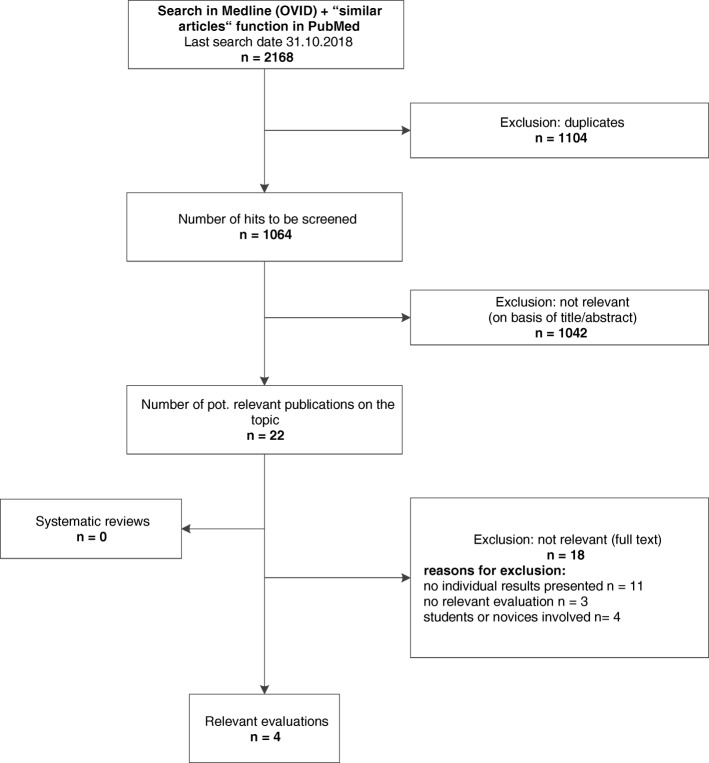
BACKGROUND: Stringent requirements exist regarding the transparency of the study selection process and the reliability of results. A 2-step selection process is generally recommended; this is conducted by 2 reviewers independently of each other (conventional double-screening). However, the approach is resource intensive, which can be a problem, as systematic reviews generally need to be completed within a defined period with a limited budget. The aim of the following methodological systematic review was to analyse the evidence available on whether single screening is equivalent to double screening in the screening process conducted in systematic reviews. METHODS: We searched Medline, PubMed and the Cochrane Methodology Register (last search 10/2018). We also used supplementary search techniques and sources ("similar articles" function in PubMed, conference abstracts and reference lists). We included all evaluations comparing single with double screening. Data were summarized in a structured, narrative way. RESULTS: The 4 evaluations included investigated a total of 23 single screenings (12 sets for screening involving 9 reviewers). The median proportion of missed studies was 5% (range 0 to 58%). The median proportion of missed studies was 3% for the 6 experienced reviewers (range: 0 to 21%) and 13% for the 3 reviewers with less experience (range: 0 to 58%). The impact of missing studies on the findings of meta-analyses had been reported in 2 evaluations for 7 single screenings including a total of 18,148 references. In 3 of these 7 single screenings - all conducted by the same reviewer (with less experience) - the findings would have changed substantially. The remaining 4 of these 7 screenings were conducted by experienced reviewers and the missing studies had no impact or a negligible on the findings of the meta-analyses. CONCLUSIONS: Single screening of the titles and abstracts of studies retrieved in bibliographic searches is not equivalent to double screening, as substantially more studies are missed. However, in our opinion such an approach could still represent an appropriate methodological shortcut in rapid reviews, as long as it is conducted by an experienced reviewer. Further research on single screening is required, for instance, regarding factors influencing the number of studies missed.
Overview
The claims and statistics of this paper haven’t been checked yet.
Free: it reads the open-access text and checks the first 5 claims that cite a source we can check. Create a free account to check every claim.
Integrity signals
Registry
Cites
Statistics
Figures
Verification
Claims the paper makes
The claims and statistics of this paper haven’t been checked yet.
Free: it reads the open-access text and checks the first 5 claims that cite a source we can check. Create a free account to check every claim.
Claims other papers make about this one
Each is checked against this paper’s own text: does it say what the citing paper says it does?
The source backs part of the claim, not all of it — or backs it for a different population, condition or comparison.
In the citing paper
“Previous research suggests that non-experienced reviewers can miss up to 13% of the records in a systematic review, which can significantly impact the results of a metaanalysis (Waffenschmidt et al., 2019).”
From Screening Smarter, Not Harder: A Comparative Analysis of Machine Learning Screening Algorithms and Heuristic Stopping Criteria for Systematic Reviews in Educational Research (2024) · cites this paper as Waffenschmidt et al., 2019
Experimental — accuracy not yet measuredThe cited source says what the claim attributes to it.
In the citing paper
“Single screening is an efficient use of time and resources, but there is a higher risk of missing relevant studies49 50 51”
From PRISMA 2020 explanation and elaboration: updated guidance and exemplars for reporting systematic reviews (2021) · cites this paper as [50]
The cited source says what the claim attributes to it.
In the citing paper
“This approach may be more reliable than single screening but at the expense of increased reviewer time, given the time needed to resolve discrepancies49 50 51”
From PRISMA 2020 explanation and elaboration: updated guidance and exemplars for reporting systematic reviews (2021) · cites this paper as [50]
The cited source says what the claim attributes to it.
In the citing paper
“Single screening is an efficient use of time and resources, but there is a higher risk of missing relevant studies49 50 51”
From PRISMA 2020 explanation and elaboration: updated guidance and exemplars for reporting systematic reviews (2021) · cites this paper as [50]
5 more claims about this paper
Create a free account to see every claim other papers make about this one.
Self-check
Percentages, sums and reported differences re-computed from the paper’s own numbers.
The self-check needs the paper’s full text.
Citations
Cites
Finding What Works in Health Care: Standards for Systematic Reviews
Eden, J., Levit, L. A., Berg, A. O., & Morton, S. C. (2013) · Cited by 948
O’Mara-Eves, A., Thomas, J., McNaught, J., Miwa, M., & Ananiadou, S. (2015) · Systematic Reviews · doi:10.1186/2046-4053-4-5 · Cited by 681
Haby, M. M., Chapman, E., Clark, R., Barreto, J., Reveiz, L., & Lavis, J. N. (2016) · Health Research Policy and Systems · doi:10.1186/s12961-016-0155-7 · Cited by 409
O’Mara-Eves, A., Thomas, J., McNaught, J., Miwa, M., & Ananiadou, S. (2015) · Systematic Reviews · doi:10.1186/s13643-015-0031-5 · Cited by 353
Edwards, P., Clarke, M., DiGuiseppi, C., Pratap, S., Roberts, I., & Wentz, R. (2002) · Statistics in Medicine · doi:10.1002/sim.1190 · Cited by 340 · cited 8×
“Edwards 2002 is the only evaluation with a comparable research question and their results are similar to ours.”
BackgroundMethodResultInfluentialFinding What Works in Health Care: Standards for Systematic Reviews
Committee on Standards for Systematic Reviews of Comparative Effectiveness Research, Board on Health Care Services, & Institute of Medicine (2011) · doi:10.17226/13059 · Cited by 289
Mathes, T., Klaßen, P., & Pieper, D. (2017) · BMC Medical Research Methodology · doi:10.1186/s12874-017-0431-4 · Cited by 240
Self-citationInstitut für Qualität und Wirtschaftlichkeit Im Gesundheitswesen
Culyer, A. J. (2014) · Cited by 189
Shemilt, I., Khan, N., Park, S., & Thomas, J. (2016) · Systematic Reviews · doi:10.1186/s13643-016-0315-4 · Cited by 168 · cited 7×
“Two re-ran the meta-analysis without the missed studies (Pham 2016, Shemilt 2016).”
BackgroundMethodInfluentialDoust, J. A., Pietrzak, E., Sanders, S., & Glasziou, P. P. (2005) · Journal of Clinical Epidemiology · doi:10.1016/j.jclinepi.2004.09.011 · Cited by 106 · cited 4×
“We ultimately included 4 evaluations (Edwards 2002 [12], Doust 2005 [13], Pham 2016 [11], Shemilt 2016 [10]).”
BackgroundMethodInfluential
Research works printed but not linked: 1
- McDonagh M, Peterson K, Raina P, Chang S, Shekelle P. Avoiding bias in selecting studies. Rockville, MD: Agency for Healthcare Research and Quality; 2013. https://effectivehealthcare.ahrq.gov/sites/default/files/pdf/methods-guidance-bias_methods.pdf. 23487864
Cited by
Items 301–400 of 713
Hamdoni K. Pangandaman, N. T. D. (2024) · Cuestiones de Fisioterapia · doi:10.48047/h73pj182 · Cited by 5
Samuel-Nwokeji, C. J., Wasige, J., & Adeboye, A. A. (2023) · Journal of Advances in Medicine and Medical Research · doi:10.9734/jammr/2023/v35i175113 · Cited by 6
“identified to be an appropriate and effective method in short term review with scarce resources [45,46].”
MethodRitual Child Homicide in Contemporary Africa: A Systematic Review of the Empirical Literature
Owusu, E. S. (2024) · International Criminal Justice Review · doi:10.1177/10575677241282014 · Cited by 5
“Dual or multiple screening is generally recommended in systematic reviews as it reduces systematic errors and facilitates the detection of random or careless mistakes (Edwards et al., 2002; Waffenschmidt et al., 2019).”
Market access regulations for mHealth applications in Germany, Austria and Switzerland: A Review
Jürgens, K., Raddatz, A., Tausendfreund, F., & Clemens, T. (2024) · Health Policy and Technology · doi:10.1016/j.hlpt.2024.100934 · Cited by 5
Treatment options for Achilles tendinopathy: a scoping review of preclinical studies
Agyeman-Prempeh, N. O., Maas, H., Burchell, G. L., Millar, N. L., Moen, M. H., & Smit, T. H. (2025) · PeerJ · doi:10.7717/peerj.18143 · Cited by 6
“This may lead to more uniformity of baseline characteristics and a lower risk of bias allowing for comparisons across studies, enhancing their quality, and better understanding of the reported outcomes.”
Central bank and climate risk: A bibliometric analysis of evolving research frontiers
Gafoor, C. P. A., Perumbalath, S., Fousiya, P. N., Subeesh, V. K., & Dinesh, P. K. (2025) · Global Economics Research · doi:10.1016/j.ecores.2025.100012 · Cited by 5
Monocusp Valves Do Not Improve Early Operative Mortality in Tetralogy of Fallot: A Meta-Analysis
Awori, M. N., Awori, J., Mehta, N. P., & Makori, O. (2020) · World Journal for Pediatric and Congenital Heart Surgery · doi:10.1177/2150135120934763 · Cited by 5
“Finally, the decision on what studies to include in the metaanalysis was made by a single reviewer as opposed to two independent reviewers as this optimizes human resource.(23) Recent work has shown that this does not significantly affect study inclusion as long as an experienced single reviewer makes the choice.”
BackgroundStevens, P., Hunter, J., & Molodysky, E. (2022) · Diabetes & Metabolic Syndrome Clinical Research & Reviews · doi:10.1016/j.dsx.2022.102445 · Cited by 5
Palermo, M. B., Policarpo, L. M., da Costa, C. A., & Righi, R. D. R. (2022) · Network Modeling Analysis in Health Informatics and Bioinformatics · doi:10.1007/s13721-022-00384-0 · Cited by 5
“We combined two approaches to ensure accuracy during the selection process: assessment of records by more than one reviewer (Gartlehner et al. 2020; Waffenschmidt et al. 2019; Wang et al. 2020), and crowdsourcing (Noel-Storr 2019; Nama et al.”
MethodAnnamalai, C., Kute, V. B., Sheridan, C., & Halawa, A. M. (2023) · Transplantation Reviews · doi:10.1016/j.trre.2023.100792 · Cited by 6
Nedelcu, A., Oerther, B., Engel, H., Sigle, A., Schmucker, C. M., Schoots, I. G., Eisenblätter, M., & Benndorf, M. (2023) · European Urology Open Science · doi:10.1016/j.euros.2023.07.005 · Cited by 7
“A systematic review of meta-analyses finds only a negligible effect on the overall results when a small percentage of relevant studies are missing [10], which in our view contributes to consideration of WSS@95% as a reasonable outcome.”
BackgroundA scoping review of empirical research on dance imagery
Muir, I. L., & Munroe‐Chandler, K. J. (2023) · International Review of Sport and Exercise Psychology · doi:10.1080/1750984x.2023.2266814 · Cited by 6
Shiao, Y.-C., Lu, Z. J., Fu, C.-P., Lin, J.-Y., Chang, Y., Chen, W., & Wang, C. (2023) · BMC Medical Education · doi:10.1186/s12909-023-04076-9 · Cited by 5
“The idea of double screening, normally used to create systematic-review articles with less bias and lower amounts of missing relevant data inspired the technique of using two assistants to screen eligible samples rather than just one [9].”
MethodMorsi, R. Z., Zhang, Y., Carrión‐Penagos, J., Desai, H., Tannous, E., Kothari, S. A., Khamis, A. M., Darzi, A., Tarabichi, A., Bastin, R., et al. (2023) · BMJ Open · doi:10.1136/bmjopen-2022-064322 · Cited by 5
Building a solid foundation: advancing evidence synthesis in agri-food systems science
Ellssel, P., Küstner, G., Kaczorowska-Dolowy, M., Vázquez, E., Bene, C. D., Li, H., Brizuela‐Torres, D., Vennila, E. E., Vicente‐Vicente, J. L., & Avila-Ortega, D. I. (2024) · Frontiers in Sustainable Food Systems · doi:10.3389/fsufs.2024.1410205 · Cited by 4
Kirwan, L., Apriyanti, E., Sheaf, G., DeVries, J., & Coyne, I. (2025) · Journal of Clinical Nursing · doi:10.1111/jocn.17861 · Cited by 5
“Each critical appraisal score was cross-checked by one of the other authors (E.A.) for quality assurance (Waffenschmidt et al. 2019).”
Use of Socially Assistive Robots in Physiotherapy: Scoping Review
He, J., Farlie, M. K., & Carreno‐Medrano, P. (2025) · JMIR Rehabilitation and Assistive Technologies · doi:10.2196/69908 · Cited by 4
Cieślik, B. (2025) · Journal of Clinical Medicine · doi:10.3390/jcm14207227 · Cited by 4
“This approach may increase the risk of misclassification and of omitting eligible studies; although calibrated single-reviewer screening conducted by experienced researchers can have low omission rates, it remains a limitation [122].”
Khobo, I. L., Robertson, F. C., Laughton, B., & Meintjes, E. M. (2025) · Current HIV/AIDS Reports · doi:10.1007/s11904-025-00760-1 · Cited by 4
“Our assessment criterion included their full text, since partial screening, especially that conducted by single reviewers, has been found to be problematic [62–64].”
Carter, E., Douglas, C. C., & Saxton, J. (2025) · Health Psychology Review · doi:10.1080/17437199.2025.2597312 · Cited by 5
“Although single author screening may result in more studies being missed (Mahtani et al., 2020; Waffenschmidt et al., 2019), the second and third authors were involved in a ‘critical friend’ approach (Smith & McGannon, 2018) to enhance the rigour of the review.”
Key targets for activating anaesthesia shared decision‐making: a mixed methods systematic review
Madhani, A., Suarez, N., & Finlay, K. A. (2026) · Anaesthesia · doi:10.1111/anae.70164 · Cited by 4
“The fi rst author (AM) screened all records using Rayyan [42], with 20% screened independently by a second reviewer (KF), to balance rigour and feasibility [43 – 46].”
Anitua, E., Padilla, S., do Prado, R. C. P., Tierno, R., & Alkhraisat, M. H. (2026) · Knee Surgery and Related Research · doi:10.1186/s43019-026-00318-4 · Cited by 5
“Two reviewers [blind for review] independently assessed the study list following a conventional double-screening approach, with disagreements resolved via discussion and third-reviewer arbitration by MHA if required [26].”
A Scoping Review of Mixed Methods Research About Physical Activity for Children With Disabilities
Michaud, M., Harvey, W. J., & Bloom, G. A. (2022) · Adapted Physical Activity Quarterly · doi:10.1123/apaq.2022-0025 · Cited by 4
Gava, V., de Araujo, F. X., Sharma, S., Abbott, J. H., Lamb, S. E., & Ribeiro, D. C. (2024) · Journal of Clinical Epidemiology · doi:10.1016/j.jclinepi.2024.111637 · Cited by 5
A scoping review on reporting of methods in DSS colitis mouse models
Thallmair, M., & Jirkof, P. (2025) · Laboratory Animals · doi:10.1177/00236772251331677 · Cited by 4
“This was changed during the study based on publications emphasizing the importance of having two reviewers, 43,44 and on our own experiences during the review process.”
Multidose Drug Dispensing in Primary Care: A Review of the Literature
Jøsendal, A. V., Bergmo, T. S., & Granås, A. G. (2022) · doi:10.23865/noasp.172.ch15 · Cited by 6
Infographics and/or Pictograms and Medication Adherence: A Scoping Review
Chanzu, A., Wells, M., Vitkin, N., & Nersesian, S. (2023) · Healthy Populations Journal · doi:10.15273/hpj.v3i2.11553 · Cited by 4
“was conducted by a single reviewer (the first author)—dual independent reviewers are suggested for systematic reviews (Waffenschmidt et al., 2019), though the current body of literature does not make this suggestion specifically for scoping reviews.”
MethodBateman, S. P., Meléndez‐Torres, G. J., Harris, D., Buckingham, G., Wilson, M., & Vine, S. J. (2026) · Educational Research Review · doi:10.1016/j.edurev.2026.100824 · Cited by 4
Finigan‐Carr, N., & Graham, L. M. (2024) · Children and Youth Services Review · doi:10.1016/j.childyouth.2024.107450 · Cited by 5
Methods for conducting a living evidence profile on mpox: An evidence map of the literature
Pussegoda, K., Corrin, T., Baumeister, A., Ayache, D., & Waddell, L. A. (2024) · Cochrane Evidence Synthesis and Methods · doi:10.1002/cesm.12044 · Cited by 5
“We suspect the bias to be minimal as the LEP underwent rigorous peer ‐ review and experienced reviewers have been shown to accurately screen articles with negligible impact on the overall findings of a rapid review [30].”
PGB: A PubMed Graph Benchmark for Heterogeneous Network Representation Learning
Lee, E. W., & Ho, J. C. (2023) · ACM International Conference on Information and Knowledge Management (CIKM) · doi:10.1145/3583780.3615128 · Cited by 4
“PubMed articles have been used to perform numerous systematic reviews (SR) [16, 24, 43], evaluate biological processes [28], identify protein-protein interactions [25], curate genes [47], and extract biological networks [50].”
Sýkorová, M., Nolte, E., Martineau, F., Miller, M. A., Eriksson, S., Smith, I. E., & Strongman, H. (2025) · medRxiv · doi:10.1101/2025.01.20.25320835 · Cited by 4
Utami, R. A., & Kurniawati, F. (2024) · Konselor · doi:10.24036/02024134104-0-86 · Cited by 4
The Impact of Culinary Education on Adolescents' Psychosocial Wellbeing: A Systematic Review
Wong, P. T., Barnes, K. A., Kirkegaard, A., Lepre, B., Bartrim, K., Wright, O. R. L., Crowley, J., Sullivan, V., & Ball, L. (2025) · Journal of Community & Applied Social Psychology · doi:10.1002/casp.70186 · Cited by 3
Shaw, N., Abbott, R. A., & Pettinger, C. (2025) · Women s Health · doi:10.1177/17455057251387470 · Cited by 4
Socratous, G., Haussler, S. M., Finning, K., Howard, D. M., Hayes, R. D., Downs, J. M., & Wickersham, A. (2025) · Journal of Anxiety Disorders · doi:10.1016/j.janxdis.2025.103091 · Cited by 3
Facilitating Physical Activity Participation Among Autistic Children and Youth: A Scoping Review
Michaud, M., & Harvey, W. J. (2025) · Journal of Autism and Developmental Disorders · doi:10.1007/s10803-025-07141-y · Cited by 3
Affengruber, L., Kleijnen, J., & Gartlehner, G. (2026) · Systematic Reviews · doi:10.1186/s13643-025-03031-7 · Cited by 3
“Similarly, a systematic review by Waffenschmidt et al. (2019) found that the median proportion of missed studies was 5% (range 0 to 58”
Potentials and pitfalls of design-based research on lesson study: A systematic review
Kager, K., Vrikki, M., Tan, S., Choy, B. H., & Suzuki, Y. (2026) · Teaching and Teacher Education · doi:10.1016/j.tate.2026.105513 · Cited by 3
Mao, Y., Soh, K. G., Siswantoyo, & Wang, X. (2026) · Frontiers in Sports and Active Living · doi:10.3389/fspor.2026.1800110 · Cited by 3
“If the discussion did not result in agreement, the discussion was handled with the assistance of a third researcher, who provided input to ensure accuracy and fairness in the screening process (36).”
Tüfekçi, Ş., Aygün, Y., Böke, H., Yagin, B., TÜFEKÇİ, S., Turhan, F. H., & Berktaş, H. (2026) · Scientific Reports · doi:10.1038/s41598-026-59931-8 · Cited by 9
“Full texts of the selected reports were then independently assessed for inclusion by the same authors 64,65 .”
Kayano, T., Pulford, J., & Thomas, L. F. (2023) · Zoonotic Diseases · doi:10.3390/zoonoticdis3020011 · Cited by 3
Effectiveness of home-based end-of-life care
Mansoor, M., Hebatalla, A., & Hill, J. E. (2023) · British Journal of Community Nursing · doi:10.12968/bjcn.2023.28.5.254 · Cited by 3
“Spirit child” and concomitant paedicides in Africa: a systematic review of the empirical literature
Owusu, E. S. (2024) · International Journal of Comparative and Applied Criminal Justice · doi:10.1080/01924036.2024.2388238 · Cited by 3
“Dual or multiple screening has become a standard practice in systematic reviews as it facilitates the avoidance of systematic errors and the detection of random or careless mistakes (Edwards et al., 2002; Waffenschmidt et al., 2019).”
Woods, S., Doherty, A. J., & Hill, J. E. (2024) · British Journal of Neuroscience Nursing · doi:10.12968/bjnn.2024.0035 · Cited by 3
Combining large language models enhances screening sensitivity in systematic reviews
CASSAI, A. D., Dost, B., Karapınar, Y. E., Turunç, E., Boscolo, A., & Navalesi, P. (2025) · Journal of Clinical Anesthesia · doi:10.1016/j.jclinane.2025.112030 · Cited by 4
Teperikidis, E., Trampoukis, C., & Polymenakos, K. (2025) · Journal of Cardiovascular Pharmacology · doi:10.1097/fjc.0000000000001768 · Cited by 3
Alavi, M., Hunt, G. E., Thapa, D. K., & Cleary, M. L. (2021) · Issues in Mental Health Nursing · doi:10.1080/01612840.2021.1978599 · Cited by 3
“Study selection and screening process Ideally, both title/abstract and full text screening is performed against the inclusion criteria independently by two or more independent reviewers (Waffenschmidt et al., 2019).”
MethodFarrugia, D. M., Vilches, S., & Gerber, A. (2022) · Open Research Europe · doi:10.12688/openreseurope.13796.2 · Cited by 3
“To mini-mise the risk of excluding relevant literature, two reviewers (Danielle Martine Farrugia and Louisa Grabner) conducted our filtering approach in two parts (cf. Waffenschmidt et al ., 2019).”
Procedure‐Related Complications in Sham Surgeries for Parkinson's Clinical Trials: A Meta‐analysis
Mamaril‐Davis, J., Gelb, A. W., & Larson, P. (2023) · Movement Disorders · doi:10.1002/mds.29406 · Cited by 4
Smela, B., Toumi, M., Swierk, K., Mazurkiewicz, A., Klimończyk, K., Clay, E., & Boyer, L. (2024) · Journal of Epidemiology and Population Health · doi:10.1016/j.jeph.2024.202526 · Cited by 5
Fagerberg, P., Sallander, O., Patil, K. V., Berg, A., Nyman, A., Borg, N., & Lindén, T. (2025) · medRxiv · doi:10.1101/2025.11.03.25339455 · Cited by 3
Comparing supervised machine learning and large language models in title-abstract screening
Aigner, M. F., Ganzinger, M., Probst, P., Rinckens, M., & Pausch, T. M. (2026) · Systematic Reviews · doi:10.1186/s13643-026-03199-6 · Cited by 2
“The common practice of employing at least two reviewers [11], as individual reviewers have been found to miss up to 13% of relevant articles [12, 13], effectively doubles the required work.”
Patel, R., Jong, J., Worthington, E. L., & Lycett, D. (2022) · Translational Behavioral Medicine · doi:10.1093/tbm/ibac054 · Cited by 2
“We only had one reviewer to screen and extract data, however, given this was an experienced reviewer, this is considered acceptable within the tight schedule of the project [39].”
MethodNitelikli Bilimsel Araştırma Makalesi Nasıl Yazılır?
Şenel, A., Çalgi, B., Boz, C., Mutlu, E. K., Tarakçı, E., Doğan, E. N. K., Türkmen, E., Çavdar, F. A., Gülüstan, F., Güzeldere, H. K. B., et al. (2024) · doi:10.5152/6900 · Cited by 2
Chowdhury, A., Tian, R., McIlhiney, P., & Jayakody, D. M. P. (2024) · Clinical Otolaryngology · doi:10.1111/coa.14254 · Cited by 2
“Double screening of titles, abstracts and full texts was conducted independently by two reviewers (AC and RT) to avoid errors and investigator bias [23].”
Hashmi, M. U. H., Khurana, M., Qadri, S. F., Ahmed, F. K., Iqbal, F., Mehmood, T., Farhan, W., Kumar, S., & Kumari, A. (2025) · Psychiatric Quarterly · doi:10.1007/s11126-025-10152-8 · Cited by 4
“We employed a detailed and systematic data extraction approach to ensure the reliability and validity of our results, which was executed in two distinct stages by two independent reviewers [32].”
Hong, Q. N., & Brunton, G. (2025) · Education for Information · doi:10.1177/01678329251323445 · Cited by 2
“…fl uenced by the level of experience of reviewers; the impact of missed studies on the fi ndings of meta-analysis changed substantially from the screening conducted by reviewers with less experience while the impact was negligible for screening from experienced reviewers (Waffenschmidt et al., 2019).”
Definitions and operationalizations of pediatric chronic patients: a scoping review
van der Perk, C., van Klaveren, L., Timmer, K. S., Haspels, H. N., van Etten‐Jamaludin, F. S., Haverman, L., de Vries, W. B., Eskes, A. M., & Maaskant, J. M. (2025) · European Journal of Pediatrics · doi:10.1007/s00431-025-06556-0 · Cited by 2
“Second, the independent verification of both the study screening and data charting phases minimized inconsistencies and ensured objective data evaluation [55, 56].”
Huang, C., Xu, Y., Wu, X., & Tang, S. (2025) · ANZ Journal of Surgery · doi:10.1111/ans.70454 · Cited by 3
“Following detailed evaluation, 34 studies comprising 1046 patients met the inclusion criteria and were incorporated into the quantitative synthesis (Figure 1) [50].”
Morrison, K., Ricolfi, L., Yang, Y., Mizuno, A., Pollo, P., Lagisz, M., & Nakagawa, S. (2026) · Journal of Hazardous Materials · doi:10.1016/j.jhazmat.2026.141794 · Cited by 2
Eudaimonia: Concept, review and research agenda
Perannagari, K. T. (2026) · Acta Psychologica · doi:10.1016/j.actpsy.2026.106771 · Cited by 2
Twente, L. R., & Marx, N. (2026) · Research Synthesis in Applied Linguistics · doi:10.1080/29984475.2026.2635486 · Cited by 2
Psychological flexibility-based interventions for teacher well-being: A systematic review
Kämper, E., Lampinen, V. S., Katajavuori, N., Carvalho, T. D. S., & Asikainen, H. (2026) · Teaching and Teacher Education · doi:10.1016/j.tate.2026.105591 · Cited by 2
Joung, E. G. (2026) · Social Science Computer Review · doi:10.1177/08944393261457540 · Cited by 2
Grigoriou, M., Varianou-Mikellidou, C., Vogazianos, P., & Boustras, G. (2026) · International Journal of Occupational Safety and Ergonomics · doi:10.1080/10803548.2026.2678743 · Cited by 2
Sathish, S., & Lau, S. (2026) · Educational Research Review · doi:10.1016/j.edurev.2026.100820 · Cited by 2
ChatGPT in EFL academic writing instruction in Asian higher education: A scoping review
Heng, B., & Nawas, A. (2026) · Review of Education · doi:10.1002/rev3.70213 · Cited by 2
Critical reading of systematic review articles
Laursen, D. R. T., Brorson, S., Lundh, A., Møller, A. M., Nejstgaard, C. H., Rosenberg, J., & Hróbjartsson, A. (2024) · Ugeskrift for Læger · doi:10.61409/v09230616 · Cited by 2
Bilimsel Araştırma Makalesinde Giriş Bölümü Yazımı
Yeldan, İ., & Türkmen, E. (2024) · doi:10.5152/6905 · Cited by 2
Developing a core outcome set for acetabular fractures: a systematic review protocol
Schulz, D., Deichsel, A., Jordan, M. C., Windolf, J., Raschke, M. J., & Neubert, A. (2024) · Systematic Reviews · doi:10.1186/s13643-024-02571-8 · Cited by 2
“After deduplication, the studies will be independently assessed for eligibility by two authors (D. S. & A. D.) [18].”
MethodColombi, A., Vedani, S., Viceconti, A., & Stapleton, C. H. (2024) · Musculoskeletal Science and Practice · doi:10.1016/j.msksp.2024.103145 · Cited by 2
Harst, L., Walther, F., Rüthrich, L., Keßler, L., Lindemann, C., Härter, M. C., Farin‐Glattacker, E., Geraedts, M., & Schmitt, J. M. (2024) · Das Gesundheitswesen · doi:10.1055/a-2309-8968 · Cited by 2
“Nach gängigen Standards für systematische und Scoping Re-views [7, 9] erfolgten die Extraktion von Studiencharakteristika, Er - gebnissen und den Beschlüssen des Innovationsausschusses zu jedem Projekt sowie die Qualitätsbewertung (Critical Appraisal) jeweils doppelt unabhängig.”
BackgroundWoliansky, M., Lee, K. H., & Tadakamadla, S. K. (2024) · Emergency Medicine Australasia · doi:10.1111/1742-6723.14506 · Cited by 2
Low prevalence of spin in conclusions of interventional pediatric orthopedic studies
Amen, J., Kamel, S. A., & EL-Sobky, T. A. (2024) · Journal of Musculoskeletal Surgery and Research · doi:10.25259/jmsr_249_2024 · Cited by 2
Giacomini, A., Waret‐Szkuta, A., Sieng, T., Raboisson, D., Lhermie, G., Peyre, M., & Guis, H. (2025) · One Health · doi:10.1016/j.onehlt.2025.101086 · Cited by 4
“Although this scoping review was carried out as a single-operator screening for practical reasons, it provides a strong basis for a systematic review and elicitation of expert opinion to assess the relative importance and priority of the various factors identified here in each dimension [14,215].”
Owoeye, A. B. (2024) · International Journal For Multidisciplinary Research · doi:10.36948/ijfmr.2024.v06i01.13084 · Cited by 2
Nashwan, A. J., Azzam, A. Y., Chaabna, N., Joy, G. V., & Kunjavara, J. (2024) · Journal of Clinical Epidemiology · doi:10.1016/j.jclinepi.2024.111463 · Cited by 2
Harrison, J., Timoroksa, A.-M., Gregary, B., & Hill, J. E. (2020) · British Journal of Neuroscience Nursing · doi:10.12968/bjnn.2020.16.1.8 · Cited by 2
Vembye, M. H., Christensen, J., Bondebjerg, A., & Schytt, F. L. W. (2024) · OSF Preprints (OSF Preprints) · doi:10.31219/osf.io/yrhzm · Cited by 2
Methodology for Systematic Reviews in EducationPreprint
Huang, R., & Yin, Y. (2025) · OSF Preprints (OSF Preprints) · doi:10.31219/osf.io/az5xm_v1 · Cited by 2
Yeboah, S. (2023) · RePEc: Research Papers in Economics · Cited by 3
Moore, A. (2023) · UCL Discovery (University College London) · Cited by 2
Operationalising LLM-assisted screening of literature to support systematic reviewsPreprint
Spillias, S., Avila-Turriago, L., Brown, C. J., Easton, A., Roberts, J., Sievers, M., Swearer, S. E., Taylor, A., Wright, B. R., & Komyakova, V. (2026) · bioRxiv (Cold Spring Harbor Laboratory) · doi:10.64898/2026.07.29.741127 · Cited by 2
“The value of multiple screeners is well established in human-only reviews (Stoll et al., 2019; Waffenschmidt et al., 2019), and recent work has extended this to multi-LLM screening strategies (Akinseloyin et al., 2026; Zhang et al., 2025; Sanghera et al., 2025; Thode et al., 2025; Song et al.,…”
Systematic Reviews on Human–Animal Interaction Topics: A Look at Reporting Practices
Weigand, K. A., & Yatcilla, J. (2024) · Anthrozoös · doi:10.1080/08927936.2024.2339630 · Cited by 1
“…but inherent bias of any single reviewer, and thus minimize the risk of individual articles being erroneously included or excluded, best practice suggests that more than one individual examines at least a portion of the manuscripts (Gartlehner et al., 2020; Wa ff enschmidt et al., 2019).”
Bilimsel Araştırma Makalesinde Metot Bölümü Yazımı
Mutlu, E. K., & Şenel, A. (2024) · doi:10.5152/6906 · Cited by 1
Design Thinking Approach for Better User Experience: A Systematic Review
Swasty, W., Soedewi, S., & Mustikawan, A. (2025) · KnE Social Sciences · doi:10.18502/kss.v10i1.17852 · Cited by 1
Qin, X., Yao, M., Luo, X., Liu, J., Ma, Y., Liu, Y., Li, H., Deng, K., Zou, K., Li, L., et al. (2025) · Research Synthesis Methods · doi:10.1017/rsm.2025.3 · Cited by 1
“SRs typically require at least two reviewers during abstract screening to ensure comprehensiveness 27–29 ; however, this process is time-consuming and labour-intensive.”
A Review on Lipopeptide Production, Structural Characterization, and Its Applications
Yaraguppi, D. A., Prasanth, D., & Halkavatagi, S. G. (2025) · Industrial Biotechnology · doi:10.1089/ind.2024.0055 · Cited by 1
“48 Drop collapse, microplate assays, PCR, and mass spectrometry (MS) provide the ability to screen isolates on a large scale.”
Modulation of intracellular calcium signaling by American pit viper venoms: A systematic review
Bourke, L. A., Campbell, S. I. D., & Cardoso, F. C. (2025) · Toxin Reviews · doi:10.1080/15569543.2025.2510255 · Cited by 1
“…process, l.A.B. confirmed no papers were missed by reassessing the papers excluded at the abstract screening phase. the use of two screeners in the present study is time-intensive, yet important as fewer studies are missed in a dual screen compared to a single screening (waffenschmidt et al. 2019).”
Yang, D., Zhou, Y., Tang, X., Zhang, T., Li, Y., Zhang, J., Tian, J., & Yang, L. (2025) · Systematic Reviews · doi:10.1186/s13643-025-02870-8 · Cited by 1
“Additionally, while systematic reviews (SRs) typically require two independent reviewers to screen literature, for RRs, the use of standardized screening forms for titles, abstracts, and full texts is arguably more crucial than independent dual screening [18, 19].”
The TRAIN Framework for AI-Assisted Development of Novice Accounting Instructors
Son-Turan, S. (2025) · World sustainability series · doi:10.1007/978-3-031-86985-3_27 · Cited by 1
Engaging vulnerable communities in urban health: A systematic review of participation strategies
Tollmann, P., Leimann, J., Köckler, H., Schönfeld, I., & Quilling, E. (2025) · Public Health · doi:10.1016/j.puhe.2025.105837 · Cited by 1
Taylor, K. S., Petkiewicz, D., Tesfai, Y., Crews, D. C., & Han, H. (2025) · International Journal of Environmental Research and Public Health · doi:10.3390/ijerph22091330 · Cited by 1
Lee, Z. L., Li, J. J., Siew, S. K. H., Billaud, C. H. A., & Yu, J. (2025) · GeroScience · doi:10.1007/s11357-025-01850-z · Cited by 1
The role of community pharmacists in medicines optimisation for housebound people: A scoping review
Blease, J., Bhonsle, Y., Ireson, R., Farroha, A., Westley, G., Cooper, R., & Hind, D. (2025) · PLoS ONE · doi:10.1371/journal.pone.0331294 · Cited by 1
“Meta-epidemiological research shows that single screening is suboptimal [25], especially with inexperienced reviewers [26].”
Myles, L. A. M., Hotton, M., Madden, F., & Salkovskis, P. M. (2025) · Clinical Psychology Review · doi:10.1016/j.cpr.2025.102661 · Cited by 1
Karen S. Sagun, M., & Aguila, M. E. R. (2025) · Acta Medica Philippina · doi:10.47895/amp.v59i14.9559 · Cited by 1
“32 The full-text screening was performed by seven reviewers, again working independently before comparing results.”
Mercer, F., McIntyre, K., Lawson, M., & O’Rourke, S. J. (2025) · Child & Family Social Work · doi:10.1111/cfs.70096 · Cited by 1
Resan, R. K., & Majeed, H. M. (2025) · Journal of Nature and Science of Medicine · doi:10.4103/jnsm.jnsm_199_25 · Cited by 1
Metadata
- Authors
- Waffenschmidt, S., Knelangen, M., Sieben, W., Bühn, S., & Pieper, D.
- Affiliations
- Institute for Quality and Efficiency in Health Care (DE)
- Witten/Herdecke University (DE)
- Corresponding author
- Waffenschmidt, Siw
- Venue
- BMC Medical Research Methodology
- Published
- 2019-06-28
- Volume
- 19
- Issue
- 1
- Pages
- 132-132
- ISSN
- 1471-2288 (ISSN-L)
- PMC
- PMC6599339
- OpenAlex
- W2955273711
- Semantic Scholar
- ffee5cf6b88f24a1bc583d308035058d1fee7eb1
- Cited by
- 626
- References
- 19
- Citations by year
- 2026: 111 · 2025: 106 · 2024: 117 · 2023: 93 · 2022: 88 · 2021: 74 · 2020: 34 · 2019: 3
- FWCI
- 10.08
- Type
- journal article
- Language
- en
- Open access
- gold
- doi.org
- Licence
- cc-by
- creativecommons.org/licenses/by/4.0/ (tdm)
- creativecommons.org/licenses/by/4.0/ (vor)
- Locations
- BMC Medical Research Methodology (publishedVersion, cc-by)
- PubMed Central (publishedVersion, cc-by)
- PubMed (publishedVersion)
- DOAJ (DOAJ: Directory of Open Access Journals) (submittedVersion, cc-by-sa)
- Topics
- Social Sciences › Decision Sciences › Statistics, Probability and Uncertainty › Meta-analysis and systematic reviews
- Social Sciences › Sociology and Political Science › Delphi Technique in Research
- Physical Sciences › Mathematics › Statistics and Probability › Statistical Methods in Epidemiology
- Keywords
- study selection, title and abstract screening, reviewer experience, rapid review
- MeSH terms
- Abstracting and Indexing, Systematic Reviews as Topic, Humans, Information Systems, Publications, Information Storage and Retrieval, PubMed
About these checks
Registry, retraction, Cites and statistics results are computed, not judged, with one exception: a printed reference that no index lists is read once by a model before it counts as a citation error. Claims are extracted by a model and kept only when their quote appears verbatim in the text; each cited source is then checked, with a model’s help, for whether it says what the claim relies on. Those verdicts can be wrong — read the claim’s quote and the cited source before relying on one.
Statistics and arithmetic are recomputed, not judged.
Confidence bands are shown only for fields calibrated on our annotated test set. None is calibrated yet, so no band is shown.
What counts as a claim ›How we measure confidence ›How we check this ›
Are you an author, or do you see a problem with this page? Request a review
Data sources
Bibliographic data: Semantic Scholar, OpenAlex, Crossref.
Contains information from the Semantic Scholar Academic Graph Datasets, made available under the ODC Attribution License (ODC-BY 1.0).
Semantic Scholar’s data is described in: Kinney, R., et al. (2023). The Semantic Scholar Open Data Platform. arXiv:2301.10140.
