

An evaluation of DistillerSR’s machine learning-based prioritization tool for title/abstract screening – impact on reviewer-relevant outcomes
Open accessThe DOI matches its Crossref record; 44 of the 44 references it cites were found in a registry or an index; 9 of the 28 sources its claims cite were checked for support.
Abstract
Background: Systematic reviews often require substantial resources, partially due to the large number of records identified during searching. Although artificial intelligence may not be ready to fully replace human reviewers, it may accelerate and reduce the screening burden. Using DistillerSR (May 2020 release), we evaluated the performance of the prioritization simulation tool to determine the reduction in screening burden and time savings. Methods: Using a true recall @ 95%, response sets from 10 completed systematic reviews were used to evaluate: (i) the reduction of screening burden; (ii) the accuracy of the prioritization algorithm; and (iii) the hours saved when a modified screening approach was implemented. To account for variation in the simulations, and to introduce randomness (through shuffling the references), 10 simulations were run for each review. Means, standard deviations, medians and interquartile ranges (IQR) are presented. Results: Among the 10 systematic reviews, using true recall @ 95% there was a median reduction in screening burden of 47.1% (IQR: 37.5 to 58.0%). A median of 41.2% (IQR: 33.4 to 46.9%) of the excluded records needed to be screened to achieve true recall @ 95%. The median title/abstract screening hours saved using a modified screening approach at a true recall @ 95% was 29.8 h (IQR: 28.1 to 74.7 h). This was increased to a median of 36 h (IQR: 32.2 to 79.7 h) when considering the time saved not retrieving and screening full texts of the remaining 5% of records not yet identified as included at title/abstract. Among the 100 simulations (10 simulations per review), none of these 5% of records were a final included study in the systematic review. The reduction in screening burden to achieve true recall @ 95% compared to @ 100% resulted in a reduced screening burden median of 40.6% (IQR: 38.3 to 54.2%). Conclusions: The prioritization tool in DistillerSR can reduce screening burden. A modified or stop screening approach once a true recall @ 95% is achieved appears to be a valid method for rapid reviews, and perhaps systematic reviews. This needs to be further evaluated in prospective reviews using the estimated recall.
Overview
CoChat Summary
TL;DR
In a retrospective simulation using DistillerSR’s prioritization tool across 10 completed systematic reviews (69,663 records), screening to true recall @95% reduced title/abstract screening burden by a median 47.1% and saved a median 29.8 h. No final included studies were missed among the 100 simulations, though prospective validation is needed.
Key findings
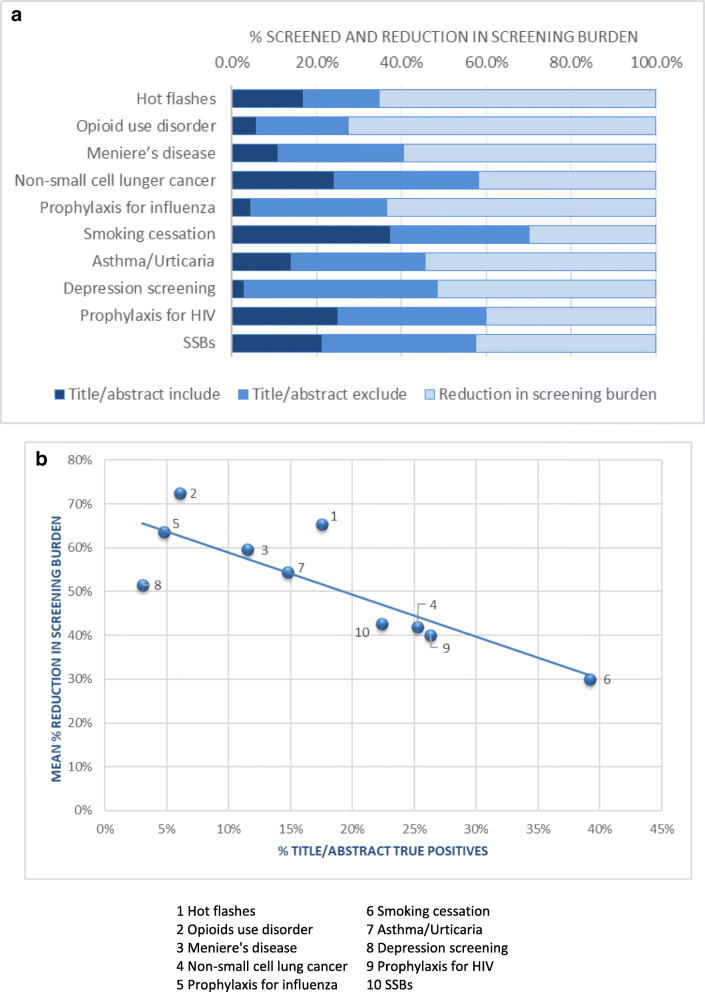
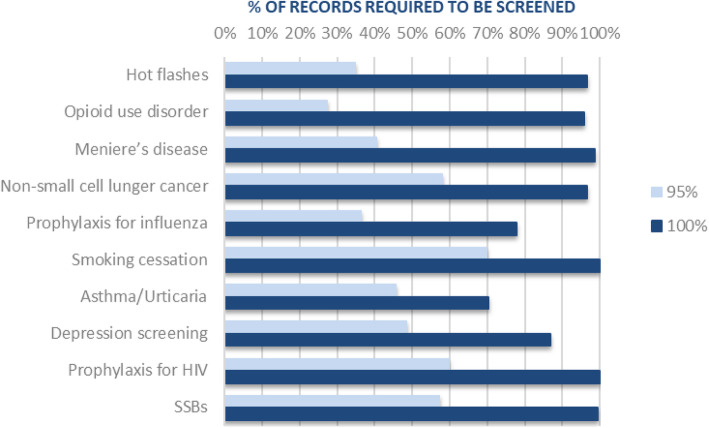
- Median reduction in screening burden to achieve true recall @95% was 47.1% (IQR 37.5–58.0%); median excluded records needed to be screened was 41.2% (IQR 33.4–46.9%).
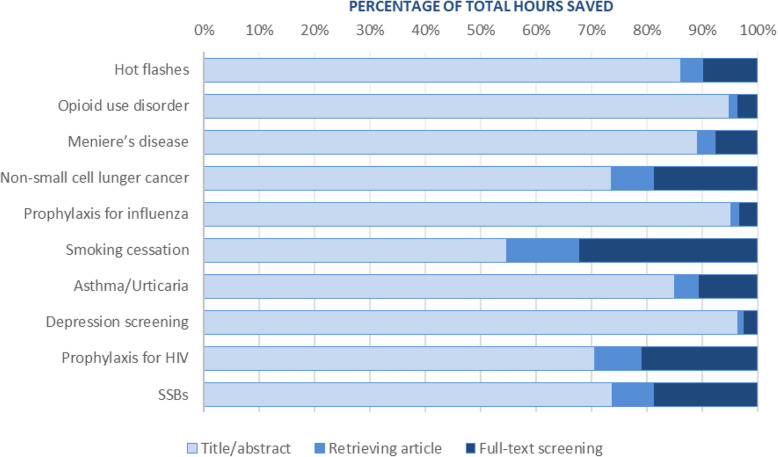
- Median title/abstract screening hours saved was 29.8 h (IQR 28.1–74.7 h), rising to a median of 36 h (IQR 32.2–79.7 h) when including time saved not retrieving and screening full texts of the remaining 5%.
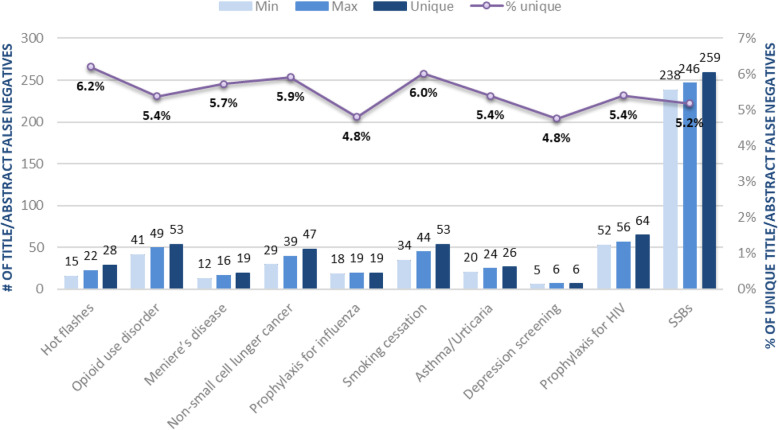
- Across 100 simulations (10 per review), none of the 5% of records not yet identified at true recall @95% were final included studies; reduction in screening burden for true recall @95% vs @100% was a median 40.6% (IQR 38.3–54.2%).
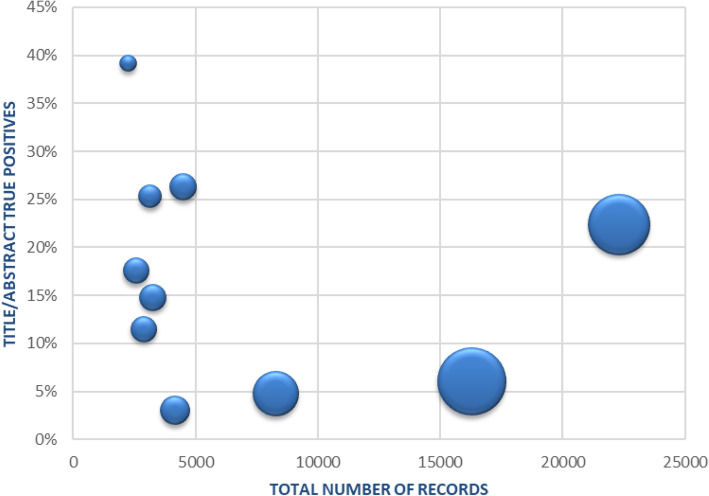
- Screening burden reduction ranged from 30.0% (smoking cessation) to 72.5% (opioid use disorder); reviews with fewer title/abstract includes passed to full text generally had larger reductions.
Methods
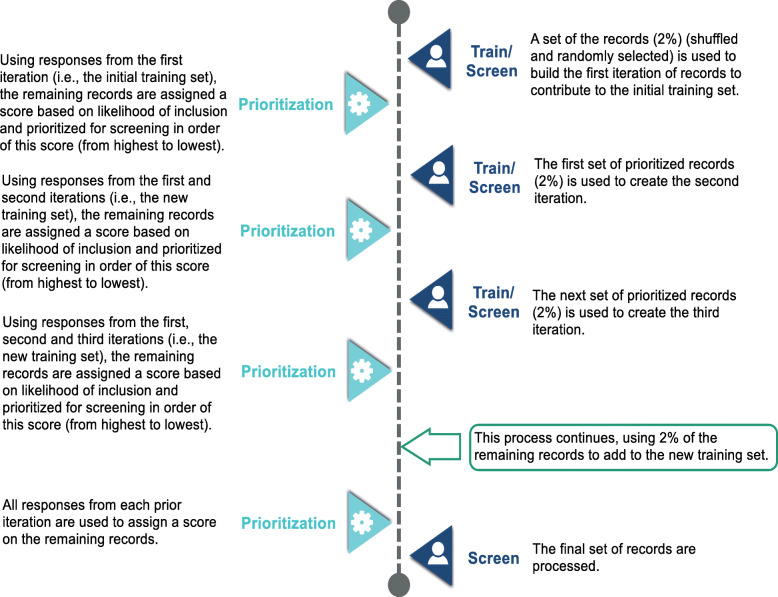
- Retrospective evaluation using DistillerSR’s AI simulation tool (May 2020 release, v2.31.0) on 10 completed systematic reviews (69,663 records) from the Ottawa Hospital Research Institute and University of Ottawa Heart Institute; 10 simulations were run per review with reference shuffling.
- Outcomes were reduction in screening burden, accuracy (title/abstract false negatives and final includes missed), and hours saved at true recall @95%; results were summarized as means, SDs, medians, and IQRs.
- Hours saved were estimated using one record per minute for title/abstract screening and Shemilt et al. estimates of 4 min per person to retrieve full text and 5 min per person to screen full text in duplicate.
Limitations
- Stated: title/abstract screening used the liberal accelerated method (two reviewers to exclude, one to include) with unresolved conflicts, likely causing over-inclusiveness and poorer AI performance; only DistillerSR was tested, limiting generalizability; the retrospective design assumed clean datasets and did not check duplicates; hours saved are estimates because true recall cannot be known prospectively.
- Evident from the text: this was a small pilot sample of 10 reviews selected by co-authors, with no prospective validation; the authors call for prospective reviews and further evaluation of estimated recall.
Model-written summary. Check it against the paper before relying on it.
Integrity signals
Registry
Cites
Statistics
Figures
Verification
Claims the paper makes
6 Valid · 1 Not valid · 15 Not checked · 56 Own results and interpretations
Every source the paper cites for this claim was checked and supports it.
In the paper
“It is not uncommon for a systematic search to yield a large number of records, many of which are irrelevant (i.e., low precision) [2, 3].”
§ An evaluation of DistillerSR’s machine learning-based prioritization tool for title/abstract screening – impact on reviewer-relevant outcomes > Background
What the sources say
- Supportedcites [2] Borah R Brown A Capers P Kaiser K Analysis of the time and workers needed to conduct systematic reviews of medical interventions using data from the PROSPERO registry BMJ Open 2017 7 e012545 10.1136/bmjopen-2016-012545 PMC5337708 28242767 source
The Discussion (page not supplied) says that existing indexing and search methods can return a vast number of irrelevant articles. It also describes PubMed searches as potentially having low precision, supporting the citing sentence’s paraphrase. (LLM, conf=0.91)
- Supportedcites [3] Wang Z, Nayfeh T, Tetzlaff J, O’Blenis P, Murad MH. Error rates of human reviewers during abstract screening in systematic reviews. PLoS One 2020;15:e0227742. doi: 10.1371/journal.pone.0227742. PMC6959565 31935267 source
The Results (page not specified in our copy) report 139,467 citations from literature searches across 25 systematic reviews. The Abstract Results report that only 5.48% of potential references identified through database searches were ultimately included, supporting the claim that searches yield many records that are not relevant for inclusion. (LLM, conf=0.88)
hedged- Asserted: passes — The authors put it forward as true.
- Checkable: passes — It can be checked against evidence.
- Load-bearing: passes — The paper’s conclusions depend on it.
- Based: passes — The paper gives a reason why it holds.
- Supported
Every source the paper cites for this claim was checked and supports it.
In the paper
“While screening of titles and abstracts represents only one step in the series of tasks involved in the conduct of SRs, due to the high screening burden, the resources for this step can be a large proportion of the total human resource time spent on the review [6].”
§ An evaluation of DistillerSR’s machine learning-based prioritization tool for title/abstract screening – impact on reviewer-relevant outcomes > Background
What the sources say
- Supportedcites [6] Mateen FJ Oh J Tergas AI Bhayani NH Kamdar BB Titles versus titles and abstracts for initial screening of articles for systematic reviews Clin Epidemiol 2013 5 89 95 10.2147/CLEP.S43118 23526335 PMC3604876 source
The Introduction of Mateen et al. (2013) states directly that among the steps of a systematic review, 'screening and selection of citations for inclusion in the review accounts for a large proportion of the time investment, making it an obvious target for time reduction strategies', which is what the citing sentence attributes to reference [6]. The same paper frames the driver as screening volume/burden (it defines 'burden' in the Methods and reports 2965 unique citations screened by five reviewer pairs, ~1186 per reviewer), so the 'high screening burden' element is consistent with how our copy treats it. The only looseness is scope: the source speaks of screening and selection broadly rather than the title/abstract step in isolation, and the paper itself did not record timing ('Timing of the process of review was not performed in either method', Discussion). (LLM, conf=0.80)
plainstates a cause- Asserted: passes — The authors put it forward as true.
- Checkable: passes — It can be checked against evidence.
- Load-bearing: passes — The paper’s conclusions depend on it.
- Based: passes — The paper gives a reason why it holds.
- Supported
The cited sources support only part of this claim — read each source’s verdict below.
In the paper
“This number (95%) was selected as it is a common recall number used when measuring the reduction in workload; it also approximates the level of human error in screening [3, 16, 26].”
§ An evaluation of DistillerSR’s machine learning-based prioritization tool for title/abstract screening – impact on reviewer-relevant outcomes > Background > Objectives
What the sources say
- Partly supportedcites [3] Wang Z, Nayfeh T, Tetzlaff J, O’Blenis P, Murad MH. Error rates of human reviewers during abstract screening in systematic reviews. PLoS One 2020;15:e0227742. doi: 10.1371/journal.pone.0227742. PMC6959565 31935267 sourceExperimental — accuracy not yet measured
The Discussion reports human screening errors and suggests that automation tools with similar error rates may be adequate. But it reports an overall error rate of 10.76% (false inclusions and false exclusions combined), not a 95% human recall rate or a 5% missed-study rate. The claimed numerical approximation is therefore not established by this paper. (LLM, conf=0.84)
- Could not verifycites [16] Howard BE Phillips J Miller K Tandon A Mav D Shah MR SWIFT-review: a text-mining workbench for systematic review Syst Rev 2016 5 87 10.1186/s13643-016-0263-z 27216467 PMC4877757 sourceExperimental — accuracy not yet measured
The Methods section, under “Assessing document prioritization performance” (page unavailable), uses 95% recall to measure workload reduction. Neither that passage nor the retrieved Discussion passages give a human screening error rate or say that 95% recall approximates it. I searched for human screening error and missed studies. (LLM, conf=0.73)
- Partly supportedcites [26] Cohen AM Hersh WR Peterson K Yen P-Y Reducing workload in systematic review preparation using automated citation classification J Am Med Inform Assoc 2006 13 206 219 10.1197/jamia.M1929 16357352 PMC1447545 sourceExperimental — accuracy not yet measured
In “Evaluating the Classifier” (page unavailable), the paper fixes recall at 0.95 to measure work saved and assumes that level identifies an adequate fraction of relevant papers. “Building the Text Collections” says reviewers may miss a small percentage of articles, but it does not quantify human screening error or say that 95% recall approximates it. (LLM, conf=0.87)
plainstates an association- Asserted: passes — The authors put it forward as true.
- Checkable: passes — It can be checked against evidence.
- Load-bearing: passes — The paper’s conclusions depend on it.
- Based: passes — The paper gives a reason why it holds.
- Partly supported
The cited sources support only part of this claim — read each source’s verdict below.
In the paper
“this would increase the total hours saved by not having to access and screen the 5% of title/abstract false negatives”
§ An evaluation of DistillerSR’s machine learning-based prioritization tool for title/abstract screening – impact on reviewer-relevant outcomes > Results > Findings: amount of time saved
What the sources say
- Partly supportedcites [11] Shemilt I Khan N Park S Thomas J Use of cost-effectiveness analysis to compare the efficiency of study identification methods in systematic reviews Syst Rev 2016 5 140 10.1186/s13643-016-0315-4 27535658 PMC4989498 sourceExperimental — accuracy not yet measured
Our copy supports the underlying mechanics: the 'single screening with text mining' model truncates title-abstract screening with remaining records automatically excluded, giving a 64%/61% workload reduction 'and corollary reductions in full-text screening workload' set against reduced recall of 95% (Results, 'Overall impacts on workflows'), with unit times of 4 minutes to retrieve and 5 minutes to screen a full-text report (Results, 'Impacts on resource use, costs and cost-effectiveness', Table 2), and 8 eligible studies inappropriately excluded (Results, 'Impact of reduced recall on the case study review'). But the paper never expresses savings as 'total hours saved' — its outcomes are modelled costs in £ and percentage workload reductions, with the missed 5% treated as lost recall counted in the ICER denominator ('incremental cost per citation saved from inappropriate exclusion'), not as an addition that increases the hours saved. It also does not describe '5% of title/abstract false negatives' as a proportion of records screened; the 5% is the recall shortfall among eligible studies. The specific arithmetic claim in the citing sentence is not stated in our copy. (LLM, conf=0.68)
hedgedstates a cause- Asserted: passes — The authors put it forward as true.
- Checkable: passes — It can be checked against evidence.
- Load-bearing: passes — The paper’s conclusions depend on it.
- Based: passes — The paper gives a reason why it holds.
- Rests on an assumption not shown here.
- Partly supported
Every source the paper cites for this claim was checked and supports it.
In the paper
“A survey of stakeholders (e.g., policy-makers, healthcare providers) reported that the median acceptable incremental risk of getting an incorrect answer from a rapid review is 10% (interquartile range of 5–15%) [35].”
§ An evaluation of DistillerSR’s machine learning-based prioritization tool for title/abstract screening – impact on reviewer-relevant outcomes > Discussion > Implications for future research
What the sources say
- Supportedcites [35] Wagner G Nussbaumer-Streit B Greimel J Ciapponi A Gartlehner G Trading certainty for speed - how much uncertainty are decisionmakers and guideline developers willing to accept when using rapid reviews: an international survey BMC Med Res Methodol 2017 17 121 10.1186/s12874-017-0406-5 28806999 PMC5557322 source
The Results report that, across all three survey scenarios, the median acceptable incremental risk of an incorrect answer from a rapid review was 10% (IQR 5.0–15.0). The Methods identify the respondents as decisionmakers and guideline developers. (LLM, conf=0.95)
plain- Asserted: passes — The authors put it forward as true.
- Checkable: passes — It can be checked against evidence.
- Load-bearing: unclear — It is unclear whether the paper’s conclusions depend on it.
- Based: passes — The paper gives a reason why it holds.
- Supported
42 more claims · 1 with their cited sources checked
Create a free account to see all 78 claims and to verify the 19 references still open.
- It may state two separate claims as one. 16
- Probably not a substantial claim. 21
- The quote only partly states this claim. 1
Claims other papers make about this one
Each is checked against this paper’s own text: does it say what the citing paper says it does?
The source backs part of the claim, not all of it — or backs it for a different population, condition or comparison.
In the citing paper
“Around 160 tools assist the reviewer in either one specific step (during record search [43], screening [39, 44, 45], data extraction [45], risk of bias assessment/ critical appraisal, etc.), or guide the user through several steps or the whole SR process [46–48].”
From Machine learning computational tools to assist the performance of systematic reviews: A mapping review. (2022) · cites this paper as [46]
Experimental — accuracy not yet measuredThe source backs part of the claim, not all of it — or backs it for a different population, condition or comparison.
In the citing paper
“However, developing automatic screening tools based on combined ML techniques seems feasible; plenty of research and developments have been done in this field in recent years [26, 39, 41, 46, 52].”
From Machine learning computational tools to assist the performance of systematic reviews: A mapping review. (2022) · cites this paper as [46]
Experimental — accuracy not yet measuredThe source backs part of the claim, not all of it — or backs it for a different population, condition or comparison.
In the citing paper
“Additionally, a validated AI-based prioritization tool embedded in DistillerSR was used to support the single screening of titles and abstracts to modify or stop the screening approach once a true recall at 95% was achieved [18].”
From Considering Clinician Competencies for the Implementation of Artificial Intelligence–Based Tools in Health Care: Findings From a Scoping Review (2022) · cites this paper as [18]
Experimental — accuracy not yet measuredThe cited source says what the claim attributes to it.
In the citing paper
“The most advanced technology in this respect is the use of machine learning (ML) to prioritize studies for screening, which has been found to be accurate and efficient in a number of methodological studies [12e14], and is available at the time of writing in several systematic review authoring tools [15,16].”
From In a pilot study, automated real-time systematic review updates were feasible, accurate, and work-saving (2023) · cites this paper as [15]
The check wasn’t confident either way, so it gives no verdict — never disputed.
In the citing paper
“While some software allows for limited simulation capabilities [21], most of the code used in the 48 simulation studies reviewed was custom-made.”
From Large-scale simulation study of active learning models for systematic reviews (2025) · cites this paper as [21]
Experimental — accuracy not yet measured
Self-check
Percentages, sums and reported differences re-computed from the paper’s own numbers.
Each contradiction between two passages listed here was confirmed by an independent check.
Rated major: it would touch a result — a value a result rests on, reported and recomputed p-values on opposite sides of the significance level, two passages that conflict with no sign which is right, or a cited work retracted before this paper was published.
In the paper
§ An evaluation of DistillerSR’s machine learning-based prioritization tool for title/abstract screening – impact on reviewer-relevant outcomes > Abstract > Results
“there was a median reduction in screening burden of 47.1% (IQR: 37.5 to 58.0%).”
§ An evaluation of DistillerSR’s machine learning-based prioritization tool for title/abstract screening – impact on reviewer-relevant outcomes > Results > Findings: reduction in screening burden
“the median percentage of studies required to be screened to achieve a true recall @ 95% was 47.1% (IQR: 37.5 to 58.0%)”
Rated minor: it would not touch a result — a value no result rests on, a p-value that stays on the same side of the significance level, or a conflict that is clerical, resolved elsewhere in the paper, or outside its own findings.
In the paper
§ An evaluation of DistillerSR’s machine learning-based prioritization tool for title/abstract screening – impact on reviewer-relevant outcomes > Results > Findings: reduction in screening burden
“200 records; 23 or 23 iterations”
§ An evaluation of DistillerSR’s machine learning-based prioritization tool for title/abstract screening – impact on reviewer-relevant outcomes > Results > Findings: reduction in screening burden
“4480 (27.5%) [103.3]; 4400 (4400–4600)”
Rated minor: it would not touch a result — a value no result rests on, a p-value that stays on the same side of the significance level, or a conflict that is clerical, resolved elsewhere in the paper, or outside its own findings.
In the paper
§ An evaluation of DistillerSR’s machine learning-based prioritization tool for title/abstract screening – impact on reviewer-relevant outcomes > Background > Objectives
“approximately 5% of the title/abstract records that were included but not yet identified (i.e., title/abstract FP)”
§ An evaluation of DistillerSR’s machine learning-based prioritization tool for title/abstract screening – impact on reviewer-relevant outcomes > Background > Objectives
“Record not yet identified [i.e., title/abstract false negative (FN)]”
Rated minor: it would not touch a result — a value no result rests on, a p-value that stays on the same side of the significance level, or a conflict that is clerical, resolved elsewhere in the paper, or outside its own findings.
In the paper
§ An evaluation of DistillerSR’s machine learning-based prioritization tool for title/abstract screening – impact on reviewer-relevant outcomes > Background > Outcomes
“Calculation: [(title/abstract TP – title/abstract FN) / title/abstract TP].”
§ An evaluation of DistillerSR’s machine learning-based prioritization tool for title/abstract screening – impact on reviewer-relevant outcomes > Background > Outcomes
“As we are using a true recall @ 95%, this should approximate 5%.”
Rated minor: it would not touch a result — a value no result rests on, a p-value that stays on the same side of the significance level, or a conflict that is clerical, resolved elsewhere in the paper, or outside its own findings.
In the paper
§ An evaluation of DistillerSR’s machine learning-based prioritization tool for title/abstract screening – impact on reviewer-relevant outcomes > Results > Findings: reduction in screening burden
“1829 (58.2%) [0.01]”
§ An evaluation of DistillerSR’s machine learning-based prioritization tool for title/abstract screening – impact on reviewer-relevant outcomes > Results > Findings: reduction in screening burden
“1829 (1798–1860)”
Citations
Cites
A typology of reviews: an analysis of 14 review types and associated methodologies
Grant, M. J., & Booth, A. (2009) · Health Information & Libraries Journal · doi:10.1111/j.1471-1842.2009.00848.x · Cited by 10,817
Evidence summaries: the evolution of a rapid review approach
Khangura, S., Konnyu, K., Cushman, R., Grimshaw, J., & Moher, D. (2012) · Systematic Reviews · doi:10.1186/2046-4053-1-10 · Cited by 1,232
Munn, Z., Stern, C., Aromataris, E., Lockwood, C., & Jordan, Z. (2018) · BMC Medical Research Methodology · doi:10.1186/s12874-017-0468-4 · Cited by 1,164
A scoping review of rapid review methods
Tricco, A. C., Antony, J., Zarin, W., Strifler, L., Ghassemi, M., Ivory, J., Perrier, L., Hutton, B., Moher, D., & Straus, S. E. (2015) · BMC Medicine · doi:10.1186/s12916-015-0465-6 · Cited by 1,146
Self-citationExpediting systematic reviews: methods and implications of rapid reviews
Ganann, R., Ciliska, D., & Thomas, H. (2010) · Implementation Science · doi:10.1186/1748-5908-5-56 · Cited by 752
Borah, R., Brown, A. W., Capers, P. L., & Kaiser, K. A. (2017) · BMJ Open · doi:10.1136/bmjopen-2016-012545 · Cited by 737
O’Mara-Eves, A., Thomas, J., McNaught, J., Miwa, M., & Ananiadou, S. (2015) · Systematic Reviews · doi:10.1186/2046-4053-4-5 · Cited by 681
Living systematic review: 1. Introduction-the why, what, when, and how
Elliott, J. H., Synnot, A., Turner, T., Simmonds, M., Akl, E. A., McDonald, S., Salanti, G., Meerpohl, J., MacLehose, H., Hilton, J., et al. (2017) · Journal of Clinical Epidemiology · doi:10.1016/j.jclinepi.2017.08.010 · Cited by 655
Self-citationMarshall, I. J., & Wallace, B. C. (2019) · Systematic Reviews · doi:10.1186/s13643-019-1074-9 · Cited by 638
Waffenschmidt, S., Knelangen, M., Sieben, W., Bühn, S., & Pieper, D. (2019) · BMC Medical Research Methodology · doi:10.1186/s12874-019-0782-0 · Cited by 626
Research works printed but not linked: 1
- About Cochrane reviews 2020. https://www.cochranelibrary.com/about/about-cochrane-reviews. Accessed 16 Jan 2020.
Cited by
Automated Paper Screening for Clinical Reviews Using Large Language Models
Guo, E., Gupta, M., Deng, J., Park, Y.-J., Paget, M., & Naugler, C. (2023) · arXiv · doi:10.48550/arxiv.2305.00844 · Cited by 230
Automated paper screening for clinical reviews using large language models: Data analysis study
Guo, E., Gupta, M., Deng, J., Park, Y.-J., Paget, M., & Naugler, C. (2024) · Journal of Medical Internet Research · doi:10.2196/48996 · Cited by 205
“The comparison of our proposed machine learning method to other tools, such as Abstrackr [18], DistillerSR [17], and RobotAnalyst [36], provides evidence of its efficacy and reliability in the context of systematic review processes.”
Tools to support the automation of systematic reviews: a scoping review.
Khalil, H., Ameen, D., & Zarnegar, A. (2022) · Journal of Clinical Epidemiology · doi:10.1016/j.jclinepi.2021.12.005 · Cited by 190
Pillay, J., Bialy, L., Gaudet, L., Wingert, A., Mackie, A. S., Paterson, D. I., & Hartling, L. (2022) · BMJ · doi:10.1136/bmj-2021-069445 · Cited by 168
(2023) · doi:10.21203/rs.3.rs-2856011/v1 · Cited by 145
Boetje, J., & van de Schoot, R. (2024) · Systematic Reviews · doi:10.1186/s13643-024-02502-7 · Cited by 146
“Priority screening via active learning has been successfully implemented in various software tools such as Abstrackr [49], ASReview [45], Colandr [12], EPPI-Reviewer [41], FASTREAD [54], Rayyan [28], RobotA-nalyst [32], Research Screener [10], DistillerSR [20], and robotreviewer [25].”
MethodBlack, R. E., Perin, J., Yeung, D., Rajeev, T., Miller, J. H., Elwood, S., & Platts-Mills, J. A. (2024) · The Lancet Global Health · doi:10.1016/s2214-109x(24)00078-0 · Cited by 177
How to optimize the systematic review process using AI tools
Fabiano, N., Gupta, A., Bhambra, N., Luu, B., Wong, S., Maaz, M., Fiedorowicz, J. G., Smith, A. L., & Solmi, M. (2024) · JCPP Advances · doi:10.1002/jcv2.12234 · Cited by 130
“Another tool using AI ‐ based screening is Distiller SR. Distiller SR, a pay ‐ per ‐ use service, offers a validated AI screening that needs to be trained with a small proportion of the hits to be screened (Hamel et al., 2020).”
MethodHamel, C., Hersi, M., Kelly, S. E., Tricco, A. C., Straus, S., Wells, G., Pham, B., & Hutton, B. (2021) · BMC Medical Research Methodology · doi:10.1186/s12874-021-01451-2 · Cited by 104
“…a software tool for systematic review management, to measure its performance in terms of accuracy (to identify potentially relevant citations) and potential for time savings, and also to develop empirical experience in its use to further guide our work flow for future systematic reviews [34].”
BackgroundMethodInfluentialSelf-citationA systematic review of socio-technical gender bias in AI algorithms
Hall, P., & Ellis, D. (2023) · Online Information Review · doi:10.1108/oir-08-2021-0452 · Cited by 94
Nußbaumer-Streit, B., Sommer, I., Hamel, C., Devane, D., Noel-Storr, A. H., Puljak, L., Trivella, M., & Gartlehner, G. (2023) · BMJ Evidence-Based Medicine · doi:10.1136/bmjebm-2022-112185 · Cited by 134
Self-citationGe, L., Agrawal, R., Singer, M., Kannapiran, P., De Castro Molina, J. A., Teow, K. L., Yap, C. W., & Abisheganaden, J. A. (2024) · Systematic Reviews · doi:10.1186/s13643-024-02682-2 · Cited by 92
“Several software tools support titles and abstract screening, with Abstrackr and Rayyan being the most validated [5, 6].”
MethodSeewoo, B. J., Goodes, L. M., Mofflin, L., Mulders, Y. R., Wong, E. V. S., Toshniwal, P., Brunner, M., Alex, J., Johnston, B., Elagali, A. E. M., et al. (2023) · Environment International · doi:10.1016/j.envint.2023.108225 · Cited by 104
Cierco Jimenez, R., Lee, T., Rosillo, N., Cordova, R., Cree, I. A., Gonzalez, A., & Indave Ruiz, B. I. (2022) · BMC Medical Research Methodology · doi:10.1186/s12874-022-01805-4 · Cited by 85
“Especially promising are ML techniques [49–51] for the automation of systematic reviews steps [41, 46, 52].”
BackgroundMethodInfluentialRobledo, S., Grisales Aguirre, A. M., Hughes, M., & Eggers, F. (2023) · Journal of Small Business Management · doi:10.1080/00472778.2021.1955125 · Cited by 80
“These technologies are already in use in some areas, particularly the medical field (Hamel et al., 2020; De Souza et al., 2020), but scarce in general management and entrepreneurship research.”
BackgroundOlawade, D. B., Plabon, S. B., Ojo, A., Ogunbona, M. A., Makanjuola, B. D., & Olasilola, R. (2026) · International Journal of Medical Informatics · doi:10.1016/j.ijmedinf.2026.106362 · Cited by 110
Campos, D. G., Fütterer, T., Gfrörer, T., Lavelle-Hill, R., Murayama, K., König, L., Hecht, M., Zitzmann, S., & Scherer, R. (2024) · Educational Psychology Review · doi:10.1007/s10648-024-09862-5 · Cited by 75
“…the potential of ML-based tools to alleviate reviewer workload and save time in the screening process (Chai et al., 2021; Gates et al., 2019; Hamel et al., 2020; Howard et al., 2020; van de Schoot et al., 2021), there is a noticeable lack of research comparing the performance of different…”
Santos, Á. O. D., da Silva, E. S., Couto, L. M., Reis, G. V. L., & Belo, V. S. (2023) · Journal of Biomedical Informatics · doi:10.1016/j.jbi.2023.104389 · Cited by 64
Garvey, K. V., Thomas Craig, K. J., Russell, R., Novak, L. L., Moore, D., & Miller, B. M. (2022) · JMIR Medical Informatics · doi:10.2196/37478 · Cited by 62
“Additionally, a validated AI-based prioritization tool embedded in DistillerSR was used to support the single screening of titles and abstracts to modify or stop the screening approach once a true recall at 95% was achieved [18].”
MethodPuri, V., Mondal, S. R., Das, S., & Vrana, V. G. (2023) · Informatics · doi:10.3390/informatics10010009 · Cited by 72
Affengruber, L., van der Maten, M. M., Spiero, I., Nussbaumer-Streit, B., Mahmić-Kaknjo, M., Ellen, M. E., Goossen, K., Kantorova, L., Hooft, L., Riva, N., et al. (2024) · BMC Medical Research Methodology · doi:10.1186/s12874-024-02320-4 · Cited by 52
Matsui, K., Utsumi, T., Aoki, Y., Maruki, T., Takeshima, M., & Takaesu, Y. (2024) · Journal of Medical Internet Research · doi:10.2196/52758 · Cited by 50
Silver, M., Giri, J. S., Duffy, Á., Jaber, W. A., Khandhar, S., Ouriel, K., Toma, C., Tu, T. M., & Horowitz, J. M. (2023) · Journal of the Society for Cardiovascular Angiography & Interventions · doi:10.1016/j.jscai.2022.100548 · Cited by 92
Tóth, B., Berek, L., Gulácsi, L., Péntek, M., & Zrubka, Z. (2024) · Systematic Reviews · doi:10.1186/s13643-024-02592-3 · Cited by 48
Haby, M. M., Barreto, J. O. M., Kim, J. Y. H., Peiris, S., Mansilla, C., Torres, M., Guerrero‐Magaña, D. E., & Revéiz, L. (2023) · Research Synthesis Methods · doi:10.1002/jrsm.1664 · Cited by 53
Automation tools to support undertaking scoping reviews
Khalil, H., Pollock, D., McInerney, P., Evans, C., Moraes, E. B., Godfrey, C. M., Alexander, L., Tricco, A., Peters, M. D. J., Pieper, D., et al. (2024) · Research Synthesis Methods · doi:10.1002/jrsm.1731 · Cited by 43
Trad, F. S., Yammine, R., Charafeddine, J., Chakhtoura, M., Rahme, M., Fuleihan, G. E., & Chehab, A. (2025) · BMC Medical Research Methodology · doi:10.1186/s12874-025-02583-5 · Cited by 63
Lopez-Olivo, M. A., Kachira, J. J., Abdel‐Wahab, N., Pundole, X., Aldrich, J. D., Carey, P., Khan, M. A., Geng, Y., Pratt, G. F., & Suarez-Almazor, M. E. (2024) · European Journal of Cancer · doi:10.1016/j.ejca.2024.114148 · Cited by 46
Guidance for the reporting of bibliometric analyses: A scoping review
Ng, J. Y., Liu, H., Masood, M., Syed, N., Stephen, D. M., Ayala, A. P., Sabé, M., Solmi, M., Waltman, L., Haustein, S., et al. (2025) · Quantitative Science Studies · doi:10.1162/qss.a.12 · Cited by 61
Gunnell, K. E., Belcourt, V. J., Tomasone, J. R., & Weeks, L. C. (2022) · International Review of Sport and Exercise Psychology · doi:10.1080/1750984x.2021.1966823 · Cited by 58
Yao, X., Kumar, M. V., Su, E., Flores Miranda, A., Saha, A., & Sussman, J. (2024) · Cancer Epidemiology · doi:10.1016/j.canep.2023.102511 · Cited by 37
Methodological guidance for rapid reviews in healthcare: A scoping review
Speckemeier, C., Niemann, A., Wasem, J., Buchberger, B., & Neusser, S. (2022) · Research Synthesis Methods · doi:10.1002/jrsm.1555 · Cited by 49
Large language models in clinical trials: applications, technical advances, and future directions
Lin, A., Wang, Z., Jiang, A., Chen, L., Qi, C., Zhu, L., Mou, W., Gan, W., Zeng, D., Xiao, M., et al. (2025) · BMC Medicine · doi:10.1186/s12916-025-04348-9 · Cited by 48
Perlman‐Arrow, S., Loo, N., Bobrovitz, N., Yan, T., & Arora, R. K. (2023) · Research Synthesis Methods · doi:10.1002/jrsm.1636 · Cited by 30
Burgard, T., & Bittermann, A. (2023) · Zeitschrift für Psychologie · doi:10.1027/2151-2604/a000509 · Cited by 29
ASReview LAB v.2: Open-source text screening with multiple agents and a crowd of experts
de Bruin, J., Lombaers, P., Kaandorp, C., Teijema, J., van der Kuil, T., Yazan, B., Dong, A., & van de Schoot, R. (2025) · Patterns · doi:10.1016/j.patter.2025.101318 · Cited by 27
“Numerous other machine learning-assisted tools have emerged to aid systematic reviews, including Abstrackr, 15 Co-landr, 16 Rayyan, 17 RobotAnalyst, 18 Research Screener, 19 DistillerSR, 20 and RobotReviewer.”
Bowman, C. L., Gorter, R. D., Zaslow, J., Fortier, J. H., & Garber, G. E. (2023) · BMJ Open Quality · doi:10.1136/bmjoq-2023-002264 · Cited by 34
Marshall, I. J., Trikalinos, T. A., Soboczenski, F., Yun, H. S., Kell, G., Marshall, R., & Wallace, B. C. (2023) · Journal of Clinical Epidemiology · doi:10.1016/j.jclinepi.2022.08.013 · Cited by 23
“[10,11] The most advanced technology in this respect is the use of machine learning (ML) to prioritise studies for screening, which has found to be accurate and efficient in a number of methodological studies,[12–14] and is available at the time of writing in several systematic review authoring tools.[15,16]”
BackgroundDigital Tools to Support the Systematic Review Process: An Introduction
Schmidt, L., Cree, I. A., Campbell, F., & WCT EVI MAP group (2025) · Journal of Evaluation in Clinical Practice · doi:10.1111/jep.70100 · Cited by 30
Blümmel, T., Rehn, J., Mereu, C., Graf, F., Bazing, F., Kneuer, C., Sonnenburg, A., Wittkowski, P., Padberg, F., Bech, K., et al. (2024) · EFSA Supporting Publications · doi:10.2903/sp.efsa.2024.en-8567 · Cited by 25
Reproducibility and Data Storage for Active Learning-Aided Systematic Reviews
Lombaers, P., de Bruin, J., & van de Schoot, R. (2024) · Applied Sciences · doi:10.3390/app14093842 · Cited by 20
Machine learning for accelerating screening in evidence reviews
Chappell, M., Edwards, M., Watkins, D., Marshall, C., & Graziadio, S. (2023) · Cochrane Evidence Synthesis and Methods · doi:10.1002/cesm.12021 · Cited by 20
Simulation-based Active Learning for Systematic Reviews: A Scoping Review of Literature
Teijema, J. J., Ribeiro, G., Seuren, S., Anadria, D., Bagheri, A., & van de Schoot, R. (2023) · doi:10.31234/osf.io/67zmt · Cited by 10
Scotti, K. L., Young, S. M. N., Gainey, M. A., & Lan, H. (2025) · Cochrane Evidence Synthesis and Methods · doi:10.1002/cesm.70046 · Cited by 37
A step-by-step guide for conducting an umbrella review
Abdellatif, M., Dadam, M. N., Vu, N. T., Nam, N. H., Nguyen, Q. H., Taoube, Z., Tran, P., & Huy, N. T. (2025) · Tropical Medicine and Health · doi:10.1186/s41182-025-00764-y · Cited by 26
Schneider, J., Hoang, L., Kansara, Y., Cohen, A. M., & Smalheiser, N. R. (2022) · JAMIA Open · doi:10.1093/jamiaopen/ooac015 · Cited by 18
Hamel, C., Margau, R., Pageau, P., Venturi, M., Esmaeilisaraji, L., Avard, B., Campbell, S. G., Corser, N., Dea, N., Kwok, E. S. H., et al. (2023) · CMAJ Open · doi:10.9778/cmajo.20220098 · Cited by 16
Self-citationHealth, safety, and socioeconomic impacts of cannabis liberalization laws: An evidence and gap map
Sevigny, E. L., Greathouse, J., & Medhin, D. N. (2023) · Campbell Systematic Reviews · doi:10.1002/cl2.1362 · Cited by 28
Haas, Q., Alvarez, D. V., Borissov, N., Ferdowsi, S., von Meyenn, L., Trelle, S., Teodoro, D., & Amini, P. (2021) · Pharmacology · doi:10.1159/000515908 · Cited by 17
Hester, K., Kirrane, E. F., Anderson, T., Kulikowski, N., Simmons, J. E., & Lehmann, D. M. (2022) · Environment International · doi:10.1016/j.envint.2022.107528 · Cited by 15
O’Hearn, K., MacDonald, C., Tsampalieros, A. K., Kadota, L., Sandarage, R. V., Jayawarden, S. K., Datko, M., Reynolds, J. M., Bui, T., Sultan, S. A., et al. (2021) · BMC Medical Research Methodology · doi:10.1186/s12874-021-01335-5 · Cited by 13
Rapid review methods series: Guidance on the use of supportive software
Affengruber, L., Nußbaumer-Streit, B., Hamel, C., van der Maten, M. M., Thomas, J., Mavergames, C., Spijker, R., & Gartlehner, G. (2024) · BMJ Evidence-Based Medicine · doi:10.1136/bmjebm-2023-112530 · Cited by 17
Self-citationPang, X., Saif‐Ur‐Rahman, K., Berhane, S., Yao, X., Kothari, K. U., Taneri, P. E., Thomas, J., & Devane, D. (2025) · Journal of Clinical Epidemiology · doi:10.1016/j.jclinepi.2025.111738 · Cited by 17
Large-scale simulation study of active learning models for systematic reviews
Teijema, J. J., de Bruin, J., Bagheri, A., & van de Schoot, R. (2025) · International Journal of Data Science and Analytics · doi:10.1007/s41060-025-00777-0 · Cited by 13
“While some software allows for limited simulation capabilities [21], most of the code used in the 48 simulation studies reviewed was custom-made.”
Living evidence and adaptive policy: perfect partners?
Turner, T., Lavis, J. N., Grimshaw, J., Green, S., & Elliott, J. H. (2023) · Health Research Policy and Systems · doi:10.1186/s12961-023-01085-4 · Cited by 18
Systematic review using a spiral approach with machine learning
Saeidmehr, A., Steel, P., & Samavati, F. F. (2024) · Systematic Reviews · doi:10.1186/s13643-023-02421-z · Cited by 19
Verret, M., Lam, N. H., Fergusson, D. A., Nicholls, S. G., Turgeon, A. F., McIsaac, D. I., Gilron, I., Hamtiaux, M., Srichandramohan, S., Al-Mazidi, A., et al. (2023) · BMJ Open · doi:10.1136/bmjopen-2022-070748 · Cited by 12
Self-citationCampos, D., Fütterer, T., Gfrörer, T., Lavelle-Hill, R. E., Murayama, K., König, L., Hecht, M., Zitzmann, S., & Scherer, R. (2023) · doi:10.31234/osf.io/fpwc2 · Cited by 11
Sousa, M. S. A., Peiris, S., Figueiró, M. F., Haby, M. M., Baraldi, A. C., Revéiz, L., & Souza, J. P. (2026) · Systematic Reviews · doi:10.1186/s13643-025-02842-y · Cited by 14
van Mossel, S., Wolcherink, M. J. O., Cardet, R. E. D. F., de Geus‐Oei, L., Vriens, D., Koffijberg, H., & Saing, S. (2025) · PharmacoEconomics · doi:10.1007/s40273-025-01481-4 · Cited by 15
Boetje, J., & van de Schoot, R. (2023) · doi:10.31234/osf.io/c93gq · Cited by 10
The hunt for the last relevant paper: blending the best of humans and AI
van de Schoot, R., Messina Coimbra, B., Evenhuis, T., Lombaers, P., Weijdema, F., de Bruin, L., Neeleman, R., Grandfield, E., Sijbrandij, M., Teijema, J. J., et al. (2025) · European Journal of Psychotraumatology · doi:10.1080/20008066.2025.2546214 · Cited by 6
Large language models for the screening step in systematic reviews in dentistry
Rokhshad, R., Bagherianlemraski, M., Ehsani, S., Haghighat, S., & Schwendicke, F. (2025) · Journal of Dentistry · doi:10.1016/j.jdent.2025.105877 · Cited by 13
Health effects associated with alcohol consumption: a Burden of Proof study
Dai, X., Nicholson, S. I., Lawlor, H. R., Carr, S., Steinmetz, J. D., Chen, N. M., McLaughlin, S. A., Hay, S. I., Ong, S. K., Aravkin, A. Y., et al. (2026) · Nature Health · doi:10.1038/s44360-026-00139-5 · Cited by 15
Onabola, C. O., Andrews, N., Gislason, M., Harder, H. G., & Parkes, M. W. (2022) · Public health reviews · doi:10.3389/phrs.2022.1604362 · Cited by 14
Verret, M., Lam, N. H., Lalu, M. M., Nicholls, S. G., Turgeon, A. F., McIsaac, D. I., Hamtiaux, M., Le, J. B. P., Gilron, I., Yang, L., et al. (2024) · British Journal of Anaesthesia · doi:10.1016/j.bja.2024.01.006 · Cited by 10
Self-citationRapid review: A review of methods and recommendations based on current evidence
Guo, Q., Jiang, G., Zhao, Q., Long, Y., Feng, K., Gu, X., Xu, Y., Li, Z., Huang, J., & Du, L. (2024) · Journal of Evidence-Based Medicine · doi:10.1111/jebm.12594 · Cited by 8
Seewoo, B. J., Wong, E. V. S., Mulders, Y. R., Gozt, A., Elagali, A. E. M., Symeonides, C., & Dunlop, S. A. (2024) · Environment International · doi:10.1016/j.envint.2024.109091 · Cited by 8
Machine Learning Methods for Systematic Reviews:: A Rapid Scoping Review.
Roth, S. C., & Wermer‐Colan, A. (2023) · PubMed Central · doi:10.32481/djph.2023.11.008 · Cited by 41
Yao, X., Saha, A., Saravanan, S., Low, A., & SUSSMAN, J. S. (2025) · Cancer Innovation · doi:10.1002/cai2.70021 · Cited by 8
Romanov, S., Siqueira, A. S., de Bruin, J., Teijema, J., Hofstee, L., & van de Schoot, R. (2024) · Data Intelligence · doi:10.1162/dint_a_00244 · Cited by 7
Matsui, K., Utsumi, T., Aoki, Y., Maruki, T., Takeshima, M., & Takaesu, Y. (2023) · SSRN Electronic Journal · doi:10.2139/ssrn.4520426 · Cited by 7
Nieto González, D. M. (2022) · doi:10.11144/javeriana.10554.58492 · Cited by 6
“También es capaz de generar informes y resultados automáticos [58].”
BackgroundSemi-automated title-abstract screening using natural language processing and machine learning
Pilz, M., Zimmermann, S., Friedrichs, J., Wördehoff, E., Ronellenfitsch, U., Kieser, M., & Vey, J. A. (2024) · Systematic Reviews · doi:10.1186/s13643-024-02688-w · Cited by 14
Pan, C., Lu, W., Chen, B., Zhang, G., Yang, Z., & Hao, J. (2025) · JMIR Medical Informatics · doi:10.2196/76252 · Cited by 12
Aguirre, A. M. G., & Figueroa-Vallejo, C. J. (2022) · Revista de Investigación Desarrollo e Innovación · doi:10.19053/20278306.v12.n2.2022.15271 · Cited by 9
Reproducibility and Data storage Checklist for Active Learning-Aided Systematic ReviewsPreprint
Lombaers, P., Bruin, J. D., & van de Schoot, R. (2023) · doi:10.31234/osf.io/g93zf · Cited by 6
Sugiura, A., Saegusa, S., Jin, Y., Yoshimoto, R., Smith, N. D., Dohi, K., Higuchi, T., & Kozu, T. (2024) · JMIR Formative Research · doi:10.2196/55827 · Cited by 5
Ramchandani, R., Guo, E., Rakab, E., Rathod, J., Strain, J., Klement, W., Shorr, R., Williams, E., Jones, D., & Gilbert, S. (2025) · PeerJ Computer Science · doi:10.7717/peerj-cs.2822 · Cited by 8
Pillay, J., Guitard, S., Rahman, S., Saba, S., Rahman, A., Bialy, L. M., Gehring, N., Tan, M. C., Melton, A., & Hartling, L. (2024) · Systematic Reviews · doi:10.1186/s13643-024-02539-8 · Cited by 10
Navigating the complexities of artificial intelligence in scientific writing: a dual perspective
Levin, G., Piedimonte, S., & Zand, B. (2024) · International Journal of Gynecological Cancer · doi:10.1136/ijgc-2024-005691 · Cited by 8
Mudd, A., Conroy, T., Voldbjerg, S. L., Goldschmied, A. Z., Feo, R., & Schuwirth, L. (2025) · Journal of Clinical Nursing · doi:10.1111/jocn.17818 · Cited by 11
Patel, D. M., Wilson, L. M., Wilson, R. F., Yang, X., Gharibani, T., & Robinson, K. A. (2024) · Clinical Journal of the American Society of Nephrology · doi:10.2215/cjn.0000000000000549 · Cited by 5
Artificial Intelligence in Evidence-Based Medicine: On the Verge of Breakthrough
Nowak, A. J. (2021) · Springer eBooks · doi:10.1007/978-3-030-58080-3_43-1 · Cited by 5
Napoleão, B. M., Petrillo, F. D. S., & Hallé, S. (2021) · Euromicro Conference on Software Engineering and Advanced Applications (SEAA) · doi:10.1109/seaa53835.2021.00015 · Cited by 7
Testing a filtering strategy for systematic reviews: evaluating work savings and recall.
Proescholdt, R., Hsiao, T., Schneider, J., Cohen, A. M., McDonagh, M. S., & Smalheiser, N. R. (2022) · PubMed · Cited by 8
Połomska, K., Rybicka, M., Jażdżewska, A., Prud, M., Jackowska, S., Kobiela, J., & Spychalski, P. (2025) · Cancers · doi:10.3390/cancers17243995 · Cited by 4
Yao, X., Low, A., Sivajohanathan, D., Vella, E. T., Wang, P., Kaur, G., Saha, A., & SUSSMAN, J. S. (2025) · Intelligent Medicine · doi:10.1016/j.imed.2025.12.006 · Cited by 8
Artificial Intelligence in Evidence-Based Medicine: On the Verge of Breakthrough
Nowak, A. J. (2022) · Springer eBooks · doi:10.1007/978-3-030-64573-1_43 · Cited by 6
Shereefdeen, H., Thaivalappil, A., Young, I., & MacKay, M. (2025) · INQUIRY The Journal of Health Care Organization Provision and Financing · doi:10.1177/00469580251399374 · Cited by 3
Connecting patients with clinical trials using patient navigation: a scoping review protocol
Hilal, O., Gupta, P., Luginaah, A., Moshref, L. H., Askin, N., Epp, C., Nassar, R., Hirmiz, R., Paunic, M., Hossami, M., et al. (2025) · BMJ Open · doi:10.1136/bmjopen-2024-088828 · Cited by 2
Zheng, J., Pathak, J. L., Li, S., Li, A., Fang, J., Li, Z., Bi, Z., Xiao, Y., & Zhang, Q. (2025) · Journal of Biomedical Informatics · doi:10.1016/j.jbi.2025.104911 · Cited by 2
Yao, X., Saha, A., Low, A., Ahmed, S., Ali, S., Misra, A., Abdelmalek, M., Saravanan, S., & SUSSMAN, J. S. (2025) · Intelligent Medicine · doi:10.1016/j.imed.2025.12.008 · Cited by 3
Screenathon 2.0: human–AI collaborative screening applied to patient-generated health data
Bergmann, J. G., Azzi, T. D. S., Neeleman, R. C., Monschau, K., Yazan, B., Jalsovec, E., Westerbeek, E., Weijdema, F., Bruin, J. D., Fang, Q., et al. (2026) · Scientific Reports · doi:10.1038/s41598-026-45385-5 · Cited by 1
Tóth, B., Berek, L., Gulàcsi, L., Péntek, M., & Zrubka, Z. (2023) · Research Square · doi:10.21203/rs.3.rs-3425312/v1 · Cited by 2
Al-Naesan, I., Krepper, D., Sparano, F., Sztankay, M. J., Efficace, F., & Giesinger, J. M. (2024) · Melanoma Research · doi:10.1097/cmr.0000000000001014 · Cited by 1
Human-AI Collaboration in Moderating AI-Generated Harmful Content
Saharan, S., Sharma, M., Khiria, M., & Gupta, A. (2025) · Advances in computational intelligence and robotics book series · doi:10.4018/979-8-3373-0335-2.ch006 · Cited by 3
Tata, A., Marzoli, F., Ocagli, H., Baldi, I., Gregori, D., & Belluco, S. (2025) · EFSA Supporting Publications · doi:10.2903/sp.efsa.2025.en-9589 · Cited by 2
Using Artificial Intelligence for Text Screening in a Systematic Review of Cardiotoxicity
Canfield, S. E., Aziz, M. K., Omar, M. I., N'Dow, J. M., Schijvenaars, B. J. A., Ghith, J., Ahmed, K. R., Molony, D. A., & Stenzl, A. (2025) · European Urology Open Science · doi:10.1016/j.euros.2025.09.005 · Cited by 2
Doolan, M., Cox, K. M., & Sarma, K. M. (2025) · Campbell Systematic Reviews · doi:10.1002/cl2.70076 · Cited by 1
Metadata
- Authors
- Hamel, C., Kelly, S. E., Thavorn, K., Rice, D. B., Wells, G. A., & Hutton, B.
- Affiliations
- Ottawa Hospital Research Institute (CA)
- University of Ottawa (CA)
- Corresponding author
- Hamel, C.
- Venue
- BMC Medical Research Methodology
- Published
- 2020-10-15
- Volume
- 20
- Issue
- 1
- Pages
- 256-256
- ISSN
- 1471-2288 (ISSN-L)
- PMC
- PMC7559198
- OpenAlex
- W3093336514
- Semantic Scholar
- f107248324e09a3abee45e31199e5c9b69c85bdc
- Cited by
- 140
- References
- 44
- Citations by year
- 2026: 28 · 2025: 32 · 2024: 30 · 2023: 26 · 2022: 14 · 2021: 10
- FWCI
- 7.59
- Type
- journal article
- Language
- en
- Open access
- gold
- doi.org
- Licence
- cc-by
- creativecommons.org/licenses/by/4.0 (tdm)
- creativecommons.org/licenses/by/4.0 (vor)
- Locations
- BMC Medical Research Methodology (publishedVersion, cc-by)
- PubMed Central (publishedVersion, cc-by)
- PubMed (publishedVersion)
- uO Research (University of Ottawa) (submittedVersion, public-domain)
- DOAJ (DOAJ: Directory of Open Access Journals) (submittedVersion, cc-by-sa)
- Funders
- CIHR
- Topics
- Social Sciences › Decision Sciences › Statistics, Probability and Uncertainty › Meta-analysis and systematic reviews
- Physical Sciences › Computer Science › Information Systems › Information Retrieval and Search Behavior
- Social Sciences › Library and Information Sciences › scientometrics and bibliometrics research
- Keywords
- title and abstract screening, rapid review, time savings
- MeSH terms
- Machine Learning, Algorithms, Artificial Intelligence, Humans, Mass Screening, Prospective Studies
About these checks
Registry, retraction, Cites and statistics results are computed, not judged, with one exception: a printed reference that no index lists is read once by a model before it counts as a citation error. Claims are extracted by a model and kept only when their quote appears verbatim in the text; each cited source is then checked, with a model’s help, for whether it says what the claim relies on. Those verdicts can be wrong — read the claim’s quote and the cited source before relying on one.
The claim verdicts this report counts are experimental: their accuracy is not yet measured.
A language model drew the claims from the paper on 2026-10-04, under version 3 of the claim definition (model deepseek-v4.1-flash, prompt extract-v3).
A second model labelled each claim on 2026-10-04 (model jev-1.13-20260917, definition revision gold-guideline-v0.2).
Cited sources are checked with a language model’s help (gpt-6-sol and qwen3.8-omni-flash).
Statistics and arithmetic are recomputed, not judged.
Confidence bands are shown only for fields calibrated on our annotated test set. None is calibrated yet, so no band is shown.
What counts as a claim ›How we measure confidence ›How we check this ›
Are you an author, or do you see a problem with this page? Request a review
Data sources
Bibliographic data: Semantic Scholar, OpenAlex, Crossref.
Contains information from the Semantic Scholar Academic Graph Datasets, made available under the ODC Attribution License (ODC-BY 1.0).
Semantic Scholar’s data is described in: Kinney, R., et al. (2023). The Semantic Scholar Open Data Platform. arXiv:2301.10140.
