

Association of sarcopenic obesity with the risk of all-cause mortality among adults over a broad range of different settings: a updated meta-analysis
Open accessThe DOI matches its Crossref record; 58 of the 58 references it cites were found in a registry or an index.
Abstract
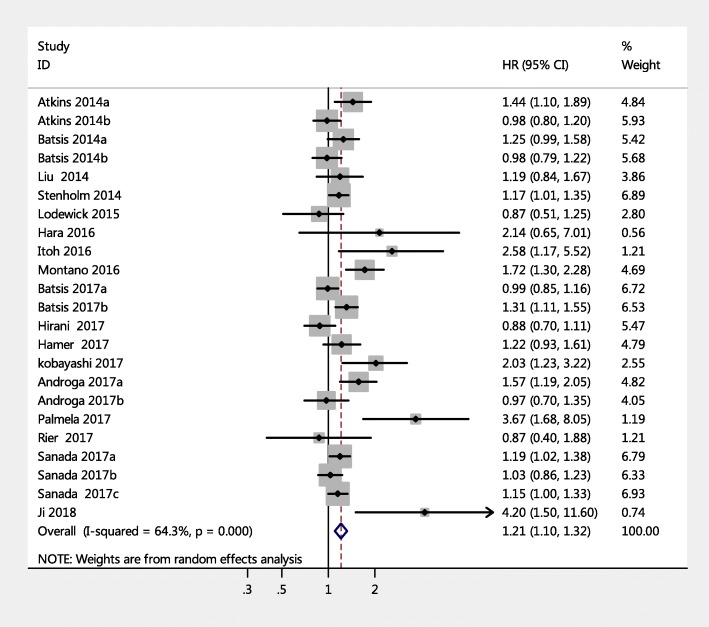
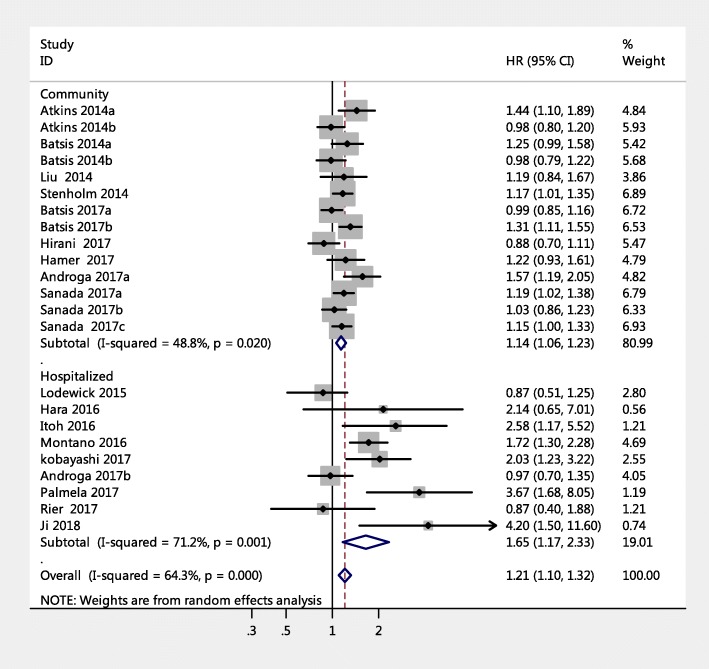
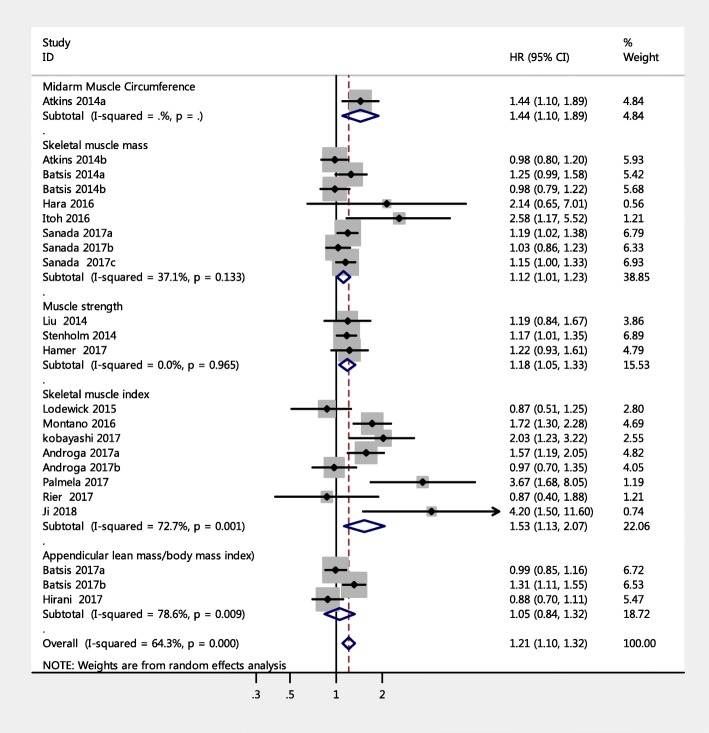
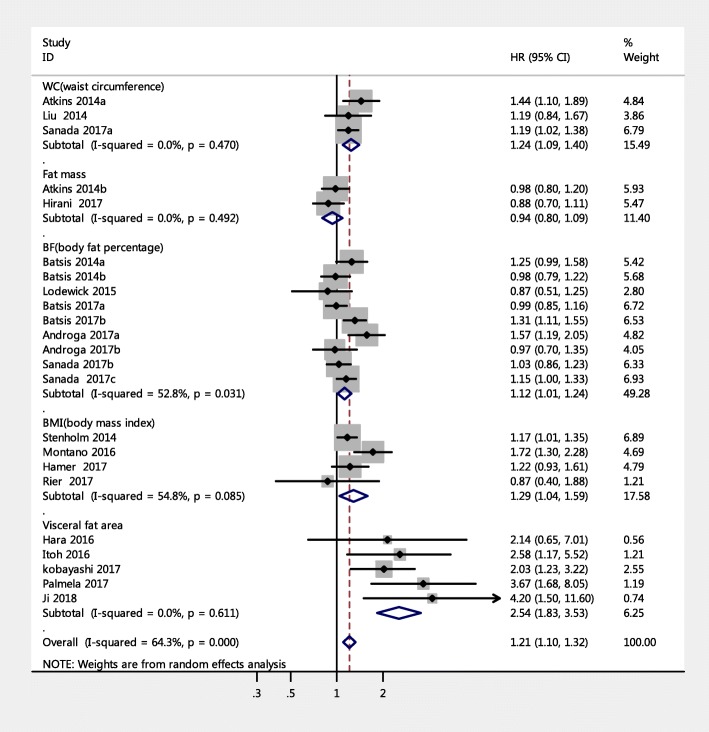
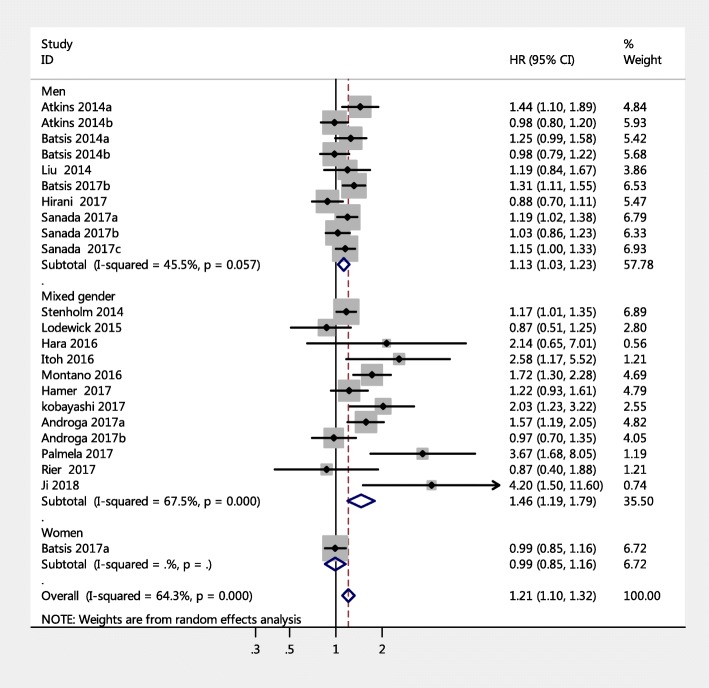
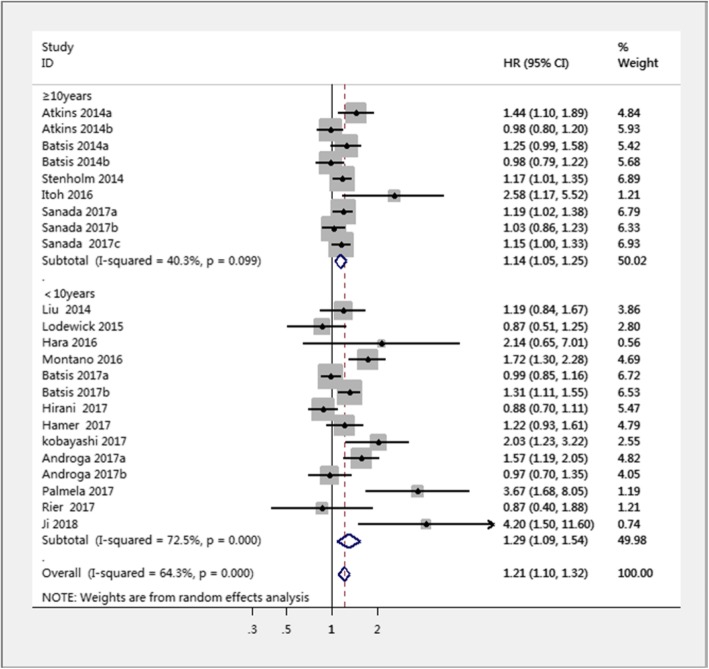
BACKGROUND: Previous cohort studies investigating the association between sarcopenic obesity (SO) and all-cause mortality among adult people have been inconsistent. We performed a meta-analysis to determine if SO is a predictor of all-cause mortality. METHODS: Prospective cohort studies that evaluated the association between SO and mortality in older people were identified via a systematic search of three electronic databases (PubMed, EMBASE, and the Cochrane Library). A random-effects model was applied to combine the results. We considered the methods recommeded by consensuses (dual X-ray absorptiometry,bio-impedancemetry, anthropometric measures or CT scan) to assess sarcopenic obesity. RESULTS: = 64.3%). Furthermore, the subgroup analysis of participants showed that SO was associated with all-cause mortality (pooled HR = 1.14, 95% CI: 1.06-1.23) among community-dwelling adult people; similarly, this association was found in hospitalized patients (pooled HR = 1.65, 95% CI: 1.17-2.33). Moreover, the subgroup analysis demonstrated that SO was associated with all-cause mortality when using skeletal muscle mass (SMM) criteria, muscle strength criteria, and skeletal muscle index (SMI) criteria (HR = 1.12, 95% CI: 1.01-1.23; HR = 1.18, 95% CI: 1.05-1.33; and HR = 1.53, 95% CI: 1.13-2.07, respectively). In addition, we analyzed SO on the basis of obesity definition and demonstrated that participants with a SO diagnosis based on waist circumference (WC) (HR = 1.24, 95% CI: 1.09-1.40), body mass index (BMI) (HR = 1.29, 95% CI: 1.04-1.59), or visceral fat area (HR = 2.54, 95% CI: 1.83-3.53) have a significantly increase mortality risk compared with those without SO. CONCLUSION: Based on our update of existing scientific researches, SO is a significant predictor of all-cause mortality among older people, particularly hospitalized patients. Therefore, it is important to diagnose SO and to treat the condition to reduce mortality rates among older people.
Overview
The claims and statistics of this paper haven’t been checked yet.
Free: it reads the open-access text and checks the first 5 claims that cite a source we can check. Create a free account to check every claim.
Integrity signals
Registry
Cites
Statistics
Figures
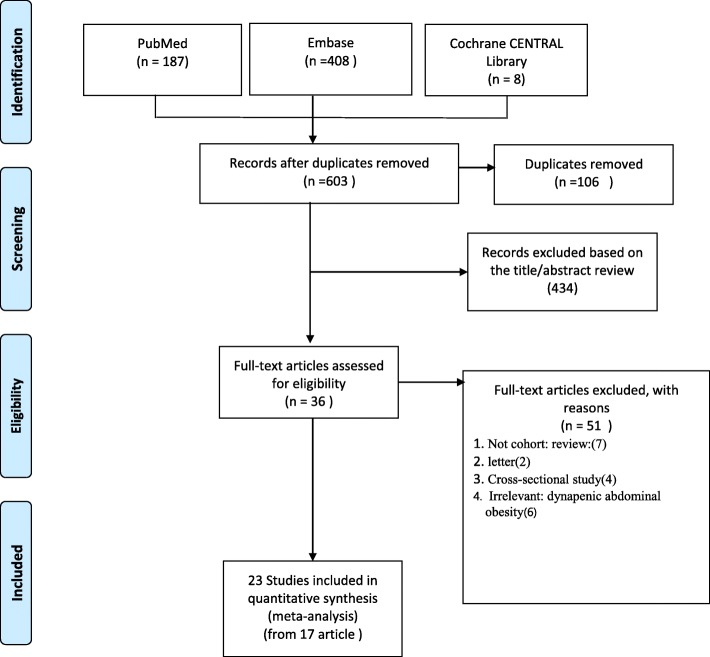
Verification
Claims the paper makes
The claims and statistics of this paper haven’t been checked yet.
Free: it reads the open-access text and checks the first 5 claims that cite a source we can check. Create a free account to check every claim.
Claims other papers make about this one
Each is checked against this paper’s own text: does it say what the citing paper says it does?
The source backs part of the claim, not all of it — or backs it for a different population, condition or comparison.
In the citing paper
“In addition, this significance persisted in studies that used different criteria to define obesity and sarcopenia (18).”
From Sarcopenic obesity: epidemiology, pathophysiology, cardiovascular disease, mortality, and management (2023) · cites this paper as [18]
Experimental — accuracy not yet measuredIn the citing paper
“Compared to obesity alone, sarcopenic obesity is associated with a heightened risk of adverse health outcomes, such as disability or impairment, cardiometabolic diseases, other comorbidities, and mortality [4,5,6,7].”
From Sarcopenic obesity, insulin resistance, and their implications in cardiovascular and metabolic consequences (2020) · cites this paper as [7]
In the citing paper
“This condition is currently a major concern as it is associated with frailty and disabilities such as cardiovascular disease, fractures, dementia, cancer, and increased all-cause mortality.”
From Sarcopenic obesity: epidemiology, pathophysiology, cardiovascular disease, mortality, and management (2023) · cites this paper as [18]
In the citing paper
“Sarcopenic obesity appears to be a more severe condition than obesity alone, as it is associated with a higher risk of several disorders such as cardiovascular disease, reduced bone mineral density, and all-cause mortality (16–18).”
From Sarcopenic obesity: epidemiology, pathophysiology, cardiovascular disease, mortality, and management (2023) · cites this paper as [18]
In the citing paper
“a meta-analysis of 23 studies including 50 866 individuals showed that sarcopenic obesity was significantly associated with a higher risk of all-cause mortality.”
From Sarcopenic obesity: epidemiology, pathophysiology, cardiovascular disease, mortality, and management (2023) · cites this paper as [18]
2 more claims about this paper
Create a free account to see every claim other papers make about this one.
Self-check
Percentages, sums and reported differences re-computed from the paper’s own numbers.
The self-check needs the paper’s full text.
Citations
Cites
Dermyshi, E., Wang, Y., Yan, C., Hong, W., Qiu, G., Gong, X., & Zhang, T. (2017) · Neonatology · doi:10.1159/000454668 · Cited by 24,451
Meta-analysis of Observational Studies in Epidemiology<SUBTITLE>A Proposal for Reporting</SUBTITLE>
Stroup, D. F. (2000) · JAMA · doi:10.1001/jama.283.15.2008 · Cited by 20,623
Sarcopenia: revised European consensus on definition and diagnosis
Cruz-Jentoft, A. J., Bahat, G., Bauer, J., Boirie, Y., Bruyère, O., Cederholm, T., Cooper, C., Landi, F., Rolland, Y., Sayer, A. A., et al. (2019) · Age and Ageing · doi:10.1093/ageing/afy169 · Cited by 13,818 · cited 1×
“In addition, preserving better muscles can help maintain major functional status and reduce the negative effects of falls, fractures, and sedentary lifestyles [50].”
BackgroundObesity: global epidemiology and pathogenesis
Blüher, M. (2019) · Nature Reviews Endocrinology · doi:10.1038/s41574-019-0176-8 · Cited by 5,126 · cited 1×
“The prevalence of obesity in the adult people of the world is rising alarmingly [8], potentially augmenting supplemental conditions and increasing the risk of adverse health outcomes.”
BackgroundProspective Studies Collaboration (2009) · The Lancet · doi:10.1016/s0140-6736(09)60318-4 · Cited by 4,807
Sarcopenia: revised European consensus on definition and diagnosis
Cruz-Jentoft, A. J., Bahat, G., Bauer, J., Boirie, Y., Bruyère, O., Cederholm, T., Cooper, C., Landi, F., Rolland, Y., Sayer, A. A., et al. (2019) · Age and Ageing · doi:10.1093/ageing/afz046 · Cited by 3,803
Prado, C. M., Lieffers, J. R., McCargar, L. J., Reiman, T., Sawyer, M. B., Martin, L., & Baracos, V. E. (2008) · The Lancet Oncology · doi:10.1016/s1470-2045(08)70153-0 · Cited by 3,238 · cited 1×
“There is a big difference between community-dwelling people and disease-specific populations [36].”
BackgroundThe underappreciated role of muscle in health and disease
Wolfe, R. R. (2006) · The American Journal of Clinical Nutrition · doi:10.1093/ajcn/84.3.475 · Cited by 1,537 · cited 1×
“Stronger skeletal muscle mass can improve metabolism, enhance peripheral glucose treatment, and increase energy reserves, thereby decreasing the risk of mortality [51].”
BackgroundSarcopenic obesity: A new category of obesity in the elderly
Zamboni, M., Mazzali, G., Fantin, F., Rossi, A., & Di Francesco, V. (2008) · Nutrition, Metabolism and Cardiovascular Diseases · doi:10.1016/j.numecd.2007.10.002 · Cited by 953 · cited 1×
“In addition, research found that sarcopenia and obesity may have common inflammatory pathways [12].”
BackgroundKalinkovich, A., & Livshits, G. (2017) · Ageing Research Reviews · doi:10.1016/j.arr.2016.09.008 · Cited by 882 · cited 2×
“It was indicated that sarcopenia increases the risk of mortality among adults through symptoms such as low muscle mass [46], inflammation [47], insulin resistance, and myokines [11].”
Background
Cited by
Exercise for sarcopenia in older people: A systematic review and network meta‐analysis
Shen, Y., Shi, Q., Nong, K., Li, S., Yue, J., Huang, J., Dong, B., Beauchamp, M., & Hao, Q. (2023) · Journal of Cachexia, Sarcopenia and Muscle · doi:10.1002/jcsm.13225 · Cited by 464
“Older adults with sarcopenia are at a higher risk of many adverse outcomes, including falls,(7,8) fractures,(8) disability,(7) hospitalization(9) and death.(10,11) There are no specific drugs approved to treat sarcopenia, and physical exercise is the most effective intervention for sarcopenia.”
Hong, S.-H., & Choi, K. M. (2020) · International Journal of Molecular Sciences · doi:10.3390/ijms21020494 · Cited by 390
Global prevalence of sarcopenic obesity in older adults: A systematic review and meta-analysis
Gao, Q., Mei, F., Shang, Y., Hu, K., Chen, F., Zhao, L., & Ma, B. (2021) · Clinical Nutrition · doi:10.1016/j.clnu.2021.06.009 · Cited by 376
Sarcopenia during COVID-19 lockdown restrictions: long-term health effects of short-term muscle loss
Kirwan, R., McCullough, D., Butler, T., Perez de Heredia, F., Davies, I. G., & Stewart, C. (2020) · GeroScience · doi:10.1007/s11357-020-00272-3 · Cited by 324
Sarcopenic obesity: epidemiology, pathophysiology, cardiovascular disease, mortality, and management
Wei, S., Nguyen, T. T., Zhang, Y., Ryu, D., & Gariani, K. (2023) · Frontiers in Endocrinology · doi:10.3389/fendo.2023.1185221 · Cited by 291
Sarcopenia and Sarcopenic Obesity and Mortality Among Older People
Benz, E., Pinel, A., Guillet, C., Capel, F., Pereira, B., De Antonio, M., Pouget, M., Cruz-Jentoft, A. J., Eglseer, D., Topinkova, E., et al. (2024) · JAMA Network Open · doi:10.1001/jamanetworkopen.2024.3604 · Cited by 261
Liu, C., Wong, P. Y., Chung, Y. L., Chow, S. K., Cheung, W. H., Law, S. W., Chan, J. C. N., & Wong, R. M. Y. (2023) · Obesity Reviews · doi:10.1111/obr.13534 · Cited by 247
“Patients with SO had poor physical performance(21) and higher rates of mortality than their healthy peers.(22) In elderly, obesity as measured by high body mass index (BMI) was associated with lower death rate than those with low BMI.”
BackgroundSelf-citationSarcopenic obesity in ageing: cardiovascular outcomes and mortality
Atkins, J. L., & Wannamathee, S. G. (2020) · British Journal of Nutrition · doi:10.1017/s0007114520002172 · Cited by 187
“The pooled HR showed that sarcopenic obesity was associated with a 24 % increase in risk of all-cause mortality compared with the non-sarcopenic, non-obese group Zhang et al. (92) Meta-analysis n 50 866 Twenty-three prospective cohort studies Men and women 50 – 82 years”
InfluentialTolonen, A., Pakarinen, T., Sassi, A., Kyttä, J., Cancino, W., Rinta-Kiikka, I., Pertuz, S., & Arponen, O. (2021) · European Journal of Radiology · doi:10.1016/j.ejrad.2021.109943 · Cited by 161
Kim, K.-K., Haam, J.-H., Kim, B. T., Kim, E. M., Park, J. H., Rhee, S. Y., Jeon, E., Kang, E., Nam, G. E., Koo, H. Y., et al. (2023) · Journal of Obesity & Metabolic Syndrome · doi:10.7570/jomes23016 · Cited by 158
Stefanakis, K., Kokkorakis, M., & Mantzoros, C. S. (2024) · Metabolism · doi:10.1016/j.metabol.2024.156057 · Cited by 142
Merchant, R. A., Seetharaman, S. K., Au, L. S. Y., Wong, M. W. K., Wong, B., Tan, L. F., Chen, M. Z., Ng, S. E., Soong, J. T. Y., Hui, R. J. Y., et al. (2021) · Frontiers in Endocrinology · doi:10.3389/fendo.2021.765415 · Cited by 175
Double burden of malnutrition in persons with obesity
Barazzoni, R., & Gortan Cappellari, G. (2020) · Reviews in Endocrine and Metabolic Disorders · doi:10.1007/s11154-020-09578-1 · Cited by 120
Zhang, X., Chen, D., Xie, X., Zhang, J., Zeng, Y., & Cheng, A. S. K. (2021) · BMC Geriatrics · doi:10.1186/s12877-021-02276-w · Cited by 149
Self-citationGLP-1RA Liraglutide and Semaglutide Improves Obesity-Induced Muscle Atrophy via SIRT1 Pathway
Xiang, J., Qin, L., Zhong, J., Xia, N., & Liang, Y. (2023) · Diabetes, Metabolic Syndrome and Obesity · doi:10.2147/dmso.s425642 · Cited by 100
“Compared to obesity alone, SO is associated with an increased risk of adverse health consequences, such as disability, cardiovascular metabolic diseases, other comorbidities and mortality.(4) The deposition of”
BackgroundLiu, C., Cheng, K. Y.-K., Tong, X., Cheung, W.-H., Chow, S. K.-H., Law, S. W., & Wong, R. M. Y. (2023) · Frontiers in Endocrinology · doi:10.3389/fendo.2023.1077255 · Cited by 88
Self-citationSaito, H., Matsue, Y., Kamiya, K., Kagiyama, N., Maeda, D., Endo, Y., Ueno, H., Yoshioka, K., Mizukami, A., Saito, K., et al. (2022) · BMC Geriatrics · doi:10.1186/s12877-022-03168-3 · Cited by 78
“A recent meta-analysis reported that sarcopenic obesity is associated with significantly higher all-cause mortality for older people [6]; moreover, the prevalence was found to be 18.”
BackgroundResultde Souza, A. C. D. A. H., Rosenthal, M. H., Moura, F. A., Divakaran, S., Osborne, M. T., Hainer, J. M., Dorbala, S., Blankstein, R., Carli, M. F. D., & Taqueti, V. R. (2023) · JACC. Cardiovascular imaging · doi:10.1016/j.jcmg.2023.07.014 · Cited by 79
Gérard, M., Mahmutovic, M., Malgras, A., Michot, N., Scheyer, N., Jaussaud, R., Nguyen‐Thi, P., & Quilliot, D. (2021) · Nutrients · doi:10.3390/nu13113964 · Cited by 72
“Secondly, accelerated muscle loss is a major factor of morbidity and mortality in obese COVID-19 patients [33].”
BackgroundSarcopenic Obesity and Cardiovascular Disease: An Overlooked but High-Risk Syndrome
Mirzai, S., Carbone, S., Batsis, J. A., Kritchevsky, S. B., Kitzman, D. W., & Shapiro, M. D. (2024) · Current Obesity Reports · doi:10.1007/s13679-024-00571-2 · Cited by 77
“%) compared to the reference [74].”
Silveira, É. A., Filho, R. R. D. S., Spexoto, M. C. B., Haghighatdoost, F., Sarrafzadegan, N., & de Oliveira, C. M. (2021) · International Journal of Molecular Sciences · doi:10.3390/ijms22094339 · Cited by 63
“The identification of this health condition, however, is important and can support the implementation of interventions, which can minimize the chances of several negative outcomes on healthy adults and older adults [10], such as functional losses [14], metabolic syndrome [36], respiratory diseases [37], and ultimately…”
BackgroundMethodBarazzoni, R., Bischoff, S. C., Busetto, L., Cederholm, T., Chourdakis, M., Cuerda, C., Delzenne, N. M., Genton, L., Schneider, S. M., Singer, P., et al. (2021) · Clinical Nutrition · doi:10.1016/j.clnu.2021.05.006 · Cited by 71
Effect of Sarcopenia and Body Shape on Cardiovascular Disease According to Obesity Phenotypes
Cho, H.-W., Chung, W., Moon, S., Ryu, O., Kim, M. K., & Kang, J. G. (2020) · Diabetes & Metabolism Journal · doi:10.4093/dmj.2019.0223 · Cited by 57
“A recent meta-analysis found that sarcopenic obesity increased the risk of all-cause mortality by 21% [29].”
BackgroundObesity paradox in older sarcopenic adults ― a delay in aging: A systematic review and meta-analysis
Eitmann, S., Mátrai, P., Hegyi, P. J., Balaskó, M., Erőss, B. M., Dorogi, K., & Pétervári, E. (2023) · Ageing Research Reviews · doi:10.1016/j.arr.2023.102164 · Cited by 66
Sarcopenic obesity and health outcomes: An umbrella review of systematic reviews with meta‐analysis
Veronese, N., Ragusa, F. S., Pegreffi, F., Dominguez, L. J., Barbagallo, M., Zanetti, M., & Cereda, E. (2024) · Journal of Cachexia, Sarcopenia and Muscle · doi:10.1002/jcsm.13502 · Cited by 56
Hwang, J., & Park, S. (2023) · International Journal of Environmental Research and Public Health · doi:10.3390/ijerph20021140 · Cited by 52
Wannamethee, S. G., & Atkins, J. L. (2023) · Current Diabetes Reports · doi:10.1007/s11892-023-01522-2 · Cited by 49
MicroRNAs in obesity, sarcopenia, and commonalities for sarcopenic obesity: a systematic review
Dowling, L., Duseja, A., Vilaça, T., Walsh, J., & Goljanek‐Whysall, K. (2022) · Journal of Cachexia Sarcopenia and Muscle · doi:10.1002/jcsm.12878 · Cited by 56
Purcell, S. A., Mackenzie, M., Barbosa-Silva, T. G., Dionne, I. J., Ghosh, S., Siervo, M., Ye, M., & Prado, C. M. (2021) · Frontiers in Physiology · doi:10.3389/fphys.2020.583825 · Cited by 48
Acute Sarcopenia: Mechanisms and Management
Damanti, S., Senini, E., LORENZO, R. D., Merolla, A., Santoro, S., Festorazzi, C., Messina, M., Vitali, G., Sciorati, C., & Rovere, P. Q. (2024) · Nutrients · doi:10.3390/nu16203428 · Cited by 61
Molwitz, I., Leiderer, M., McDonough, R. V., Fischer, R., Ozga, A., Ozden, C., Tahir, E., Koehler, D., Adam, G., & Yamamura, J. (2021) · European Radiology · doi:10.1007/s00330-021-07820-1 · Cited by 49
Nutrition for the older adult – Current concepts. Report from an ESPEN symposium
Volkert, D., Delzenne, N. M., Demirkan, K., Schneider, S., Abbasoğlu, O., Bahat, G., Barazzoni, R., Bauer, J. M., Cuerda, C., de van der Schueren, M. A. E., et al. (2024) · Clinical Nutrition · doi:10.1016/j.clnu.2024.06.020 · Cited by 57
Inflammation and metabolism: the role of adiposity in sarcopenic obesity
Lynch, G. M., Murphy, C. H., Castro, E. D. M., & Roche, H. M. (2020) · Proceedings of the Nutrition Society · doi:10.1017/s0029665120007119 · Cited by 41
“Indeed, sarcopenic obesity has additional comorbidities also associated with obesity, namely CVD, T2D((2,13)), as well as all-cause mortality((11,14)).”
BackgroundBouzas, C., Bibiloni, M. D. M., Julibert, A., Ruiz‐Canela, M., Salas‐Salvadó, J., Corella, D., Zomeño, M. D., Romaguera, D., Vioqué, J., Alonso‐Gómez, Á. M., et al. (2020) · Nutrients · doi:10.3390/nu12072114 · Cited by 44
“On the other hand, sarcopenic obesity increased risk for all-cause mortality [3].”
BackgroundMethodAnsaripour, A., Rad, A. A., Koulouroudias, M., Angouras, D. C., Athanasiou, T., & Kourliouros, A. (2023) · Journal of Clinical Medicine · doi:10.3390/jcm12175573 · Cited by 48
“Indeed, a sarcopenic patient can exhibit a normal or even elevated BMI that would qualify them as having sarcopenic obesity, a condition disregarded in previous studies only concentrating on BMI on cardiac surgical outcomes [11].”
BackgroundKatano, S., Yano, T., Kouzu, H., Ohori, K., Shimomura, K., Honma, S., Nagaoka, R., Inoue, T., Takamura, Y., Ishigo, T., et al. (2021) · Clinical Research in Cardiology · doi:10.1007/s00392-020-01774-y · Cited by 37
Gortan Cappellari, G., Semolic, A., Zanetti, M., Vinci, P., Ius, M., Guarnieri, G., Busetto, L., Donini, L. M., & Barazzoni, R. (2023) · Metabolism · doi:10.1016/j.metabol.2023.155595 · Cited by 36
The Asia–Oceania consensus: Definitions and diagnostic criteria for sarcopenic obesity
Chen, T., Kao, H., Ogawa, W., Arai, H., Tahapary, D. L., Assantachai, P., Tham, K. W., Chan, D., Yuen, M. M. A., Appannah, G., et al. (2025) · Obesity Research & Clinical Practice · doi:10.1016/j.orcp.2025.05.001 · Cited by 47
Nutritional status related to poor health outcomes in older people: Which is better, obese or lean?
Kuzuya, M. (2020) · Geriatrics and gerontology international/Geriatrics & gerontology international · doi:10.1111/ggi.14088 · Cited by 38
Association between sarcopenia and prediabetes among non-elderly US adults
Xu, J., Han, X., Chen, Q., Cai, M., Tian, J., Yan, Z., Guo, Q., Xu, J., & Lü, H. (2023) · Journal of Endocrinological Investigation · doi:10.1007/s40618-023-02038-y · Cited by 35
Chalermsri, C., Aekplakorn, W., & Srinonprasert, V. (2022) · Frontiers in Nutrition · doi:10.3389/fnut.2022.881121 · Cited by 30
“The combination of BMI and sarcopenia, however, has been focused mostly on sarcopenia and obesity, namely sarcopenic obesity, as a condition of increased mortality risk (35).”
BackgroundHigh visceral fat attenuation and long‐term mortality in a health check‐up population
Lee, J. H., Choi, S. H., Jung, K. J., Goo, J. M., & Yoon, S. H. (2023) · Journal of Cachexia Sarcopenia and Muscle · doi:10.1002/jcsm.13226 · Cited by 33
Barazzoni, R., Breda, J., Cuerda, C., Schneider, S. M., Deutz, N. E. P., Wickramasinghe, K. K., Abbasoglu, O., Meijerink, J. B., Bischoff, S., Burgos, R., et al. (2022) · Clinical Nutrition · doi:10.1016/j.clnu.2022.07.033 · Cited by 31
Association of Sarcopenia and A Body Shape Index With Overall and Cause-Specific Mortality
Qiao, Y.-S., Tang, X., Chai, Y.-H., Gong, H., Zhang, X., Stehouwer, C. D. A., & Zhou, J.-B. (2022) · Frontiers in Endocrinology · doi:10.3389/fendo.2022.839074 · Cited by 29
Self-citationCho, Y. K., Jung, H. N., Kim, E. H., Lee, M. J., Park, J., Lee, W. J., Kim, H., & Jung, C. H. (2023) · Obesity · doi:10.1002/oby.23733 · Cited by 28
“Furthermore, most clinical studies have revealed that sarcopenic obesity is associated with metabolic syndrome [28], type 2 diabetes mellitus [29], nonalcoholic fatty liver disease [30, 31], heart failure [32], cardiovascular disease [33], and, finally, mortality [34].”
BackgroundFemale obesity: clinical and psychological assessment toward the best treatment
Guglielmi, V., Grave, R. D., Leonetti, F., & Solini, A. (2024) · Frontiers in Endocrinology · doi:10.3389/fendo.2024.1349794 · Cited by 45
“…as a major determinant of the increased cardiovascular risk pro fi le of individuals with obesity, as well as of several other clinical complications such as frailty, reduced bone mineral density and fractures, cancer, and an increased risk of hospitalization and all-cause mortality (129, 130).”
BackgroundWan, X., Ji, Y., Wang, R., Yang, H., Cao, X., & Lu, S. (2024) · Lipids in Health and Disease · doi:10.1186/s12944-024-02215-9 · Cited by 27
“A meta-analysis of 23 prospective studies showed that SO increases the risk of all-cause mortality in adults (pooled HR = 1.21, 95% CI: 1.01 ~ 1.32), particularly in hospitalized older adults [37].”
BackgroundInfluentialPossible Rehabilitation Procedures to Treat Sarcopenic Dysphagia
Kagaya, H., & Inamoto, Y. (2022) · Nutrients · doi:10.3390/nu14040778 · Cited by 26
“In addition, sarcopenic obesity is a significant predictor of all-cause mortality among older people, particularly in hospitalized patients [8].”
BackgroundObesity, Body Composition, and Sex Hormones: Implications for Cardiovascular Risk
Singh, P., Covassin, N., Marlatt, K. L., Gadde, K. M., & Heymsfield, S. B. (2021) · Comprehensive physiology · doi:10.1002/cphy.c210014 · Cited by 56
Association between dynapenic obesity and risk of cardiovascular disease: The Hisayama study
Setoyama, Y., Honda, T., Tajimi, T., Sakata, S., Oishi, E., Furuta, Y., Shibata, M., Hata, J., Kitazono, T., Nakashima, Y., et al. (2024) · Journal of Cachexia Sarcopenia and Muscle · doi:10.1002/jcsm.13564 · Cited by 24
França, G. D. O., Frantz, E. D. C., Magliano, D. C., Bargut, T. C. L., Sepúlveda-Fragoso, V., Silvares, R. R., Daliry, A., do Nascimento, A. R., & Borges, J. P. (2020) · Life Sciences · doi:10.1016/j.lfs.2020.117920 · Cited by 25
Jendricke, P., Kohl, J., Centner, C., Gollhofer, A., & König, D. (2020) · Frontiers in Nutrition · doi:10.3389/fnut.2020.580918 · Cited by 27
Ishimura, E., Okuno, S., Nakatani, S., Mori, K., Miyawaki, J., Okazaki, H., Sugie, N., Norimine, K., Yamakawa, K., Tsujimoto, Y., et al. (2021) · Journal of Renal Nutrition · doi:10.1053/j.jrn.2021.07.003 · Cited by 24
Sääksjärvi, K., Härkänen, T., Stenholm, S., Schaap, L. S., Lundqvist, A., Koskinen, S. V. P., Borodulin, K., & Visser, M. (2023) · Gerontology · doi:10.1159/000527804 · Cited by 23
Chang, S., & Chiu, S. (2020) · Journal of Clinical Nursing · doi:10.1111/jocn.15277 · Cited by 27
Danielewicz, A. L., Marra, A., Tringali, G., Micheli, R. D., Abbruzzese, L., Fanari, P., Codecasa, F., Lazzer, S., Mendonça, V. A., Lacerda, A. C. R., et al. (2024) · Frontiers in Endocrinology · doi:10.3389/fendo.2024.1366229 · Cited by 24
“Although different, both sarcopenia and obesity can coexist and share pathophysiological aspects and unfavorable outcomes, including multimorbidities (6), frailty (7), and higher risk of mortality (8).”
BackgroundZhao, Z., Cai, R., Tao, L., Sun, Y., & Sun, K. (2025) · Frontiers in Nutrition · doi:10.3389/fnut.2025.1452512 · Cited by 22
Krakauer, N. Y., & Krakauer, J. C. (2021) · International Journal of Environmental Research and Public Health · doi:10.3390/ijerph18157927 · Cited by 21
The impact of sarcopenia and obesity on mortality of older adults: five years results
Avcı, G. U., Kanat, B. B., Can, G., Suzan, V., Unal, D., Degirmenci, P., Avcı, S., Yavuzer, H., Erdinçler, D. S., & Döventaş, A. (2023) · Irish Journal of Medical Science (1971 -) · doi:10.1007/s11845-023-03392-9 · Cited by 21
Takahashi, F., Hashimoto, Y., Kaji, A., Sakai, R., Okamura, T., Hamaguchi, M., & Fukui, M. (2021) · Endocrine Journal · doi:10.1507/endocrj.ej20-0655 · Cited by 21
“Sarcopenic obesity, which more likely causes lifestyle-related morbidities than obe‐ sity without sarcopenia, may lead to a further reduction in mobility and is associated with higher mortality rates than sarcopenia alone [6, 7].”
BackgroundKhorolskii, D., KLIMENKO, A. A., Pershina, E. S., Павловна, М. Е., Бабадаева, Н. М., Александрович, К. А., Shostak, N. A., & Валерьевич, Ж. Е. (2024) · The Bulletin of Contemporary Clinical Medicine · doi:10.20969/vskm.2024.17(2).79-84 · Cited by 18
HIV- AND TUBERCULOSIS-ASSOCIATED PERICARDITIS
Бородулина, Е. А., Zhilinskaya, K., TALAGAEV, D. A., & SHERSTNEV, A. V. (2024) · The Bulletin of Contemporary Clinical Medicine · doi:10.20969/vskm.2024.17(2).91-97 · Cited by 17
Ortiz, G. U., da Silva, L. S. L., Gonçalves, L. D. S., Abud, G. F., Venturini, A. C. R., da Silva, A. S. R., & de Freitas, E. C. (2025) · Clinical Nutrition ESPEN · doi:10.1016/j.clnesp.2025.03.051 · Cited by 24
Association between physical activity patterns and sarcopenia in Arab men
Alkahtani, S. A., Aljuhani, O. E., Alhussain, M. H., & Habib, S. S. (2020) · Journal of International Medical Research · doi:10.1177/0300060520918694 · Cited by 19
“Obesity was determined using fat percentage 25% of body weight, and abdominal obesity was determined as a WC of 102 cm.(21) The fat mass index (FMI) is the total body fat mass divided by Ht(2) in meters, and the fat-free mass index (FFMI) is the total lean mass divided by Ht(2) in meters.”
MethodMontalva-Valenzuela, F., Castillo-Paredes, A., Farías‐Valenzuela, C., Andrades-Ramírez, O., Concha‐Cisternas, Y., & Guzmán-Muñoz, E. (2024) · AIMS Public Health · doi:10.3934/publichealth.2024029 · Cited by 31
“Likewise, this population has a predisposition to premature sarcopenia [18] and a higher percentage of adiposity [19], both high-risk factors and mortality in adults [20].”
BackgroundTakahashi, F., Hashimoto, Y., Kaji, A., Sakai, R., Kawate, Y., Okamura, T., Okada, H., Kitagawa, N., Nakanishi, N., Majima, S., et al. (2022) · Frontiers in Nutrition · doi:10.3389/fnut.2022.881877 · Cited by 16
Kumari, M., & Khanna, A. (2022) · Annals of Geriatric Medicine and Research · doi:10.4235/agmr.22.0081 · Cited by 20
Lee, H., Chung, H. S., Kim, Y. J., Choi, M. K., Roh, Y. K., Yu, J. M., Oh, C., Kim, J. M., & Moon, S. (2023) · Frontiers in Endocrinology · doi:10.3389/fendo.2023.1257902 · Cited by 22
Katano, S., Yamano, K., Yano, T., Numazawa, R., Nagaoka, R., Honma, S., Fujisawa, Y., Miki, Y., Takamura, Y., Kunihara, H., et al. (2024) · The journal of nutrition health & aging · doi:10.1016/j.jnha.2024.100434 · Cited by 16
Roh, Y. H., Kang, B.-K., Song, S.-Y., Lee, C., Jung, Y. K., & Kim, M. (2020) · PLoS ONE · doi:10.1371/journal.pone.0243515 · Cited by 17
Lai, T., Park, J., Jang, M., Chen, J., Shin, M., Moon, E., Kang, J. M., Lee, J. W., Cho, Y. J., Liao, Y., et al. (2025) · Journal of the International Society of Sports Nutrition · doi:10.1080/15502783.2025.2536693 · Cited by 18
“Our study population, adults aged 50 and above, represents a demographic at increased risk for age-related declines in muscle mass, strength, and physical function [32,33].”
“Bioelectrical impedance analysis in managing sarcopenic obesity in NAFLD”
Hanna, D. J., Jamieson, S. T., Lee, C. S., Pluskota, C. A., Bressler, N., Benotti, P. N., Khurana, S., Rolston, D. D. K., & Still, C. D. (2021) · Obesity Science & Practice · doi:10.1002/osp4.509 · Cited by 14
Tabara, Y., Setoh, K., Kawaguchi, T., & Matsuda, F. (2022) · Geriatrics and gerontology international/Geriatrics & gerontology international · doi:10.1111/ggi.14491 · Cited by 15
Kaur, I., Das, S., Chandel, S., & Chandel, S. (2025) · Diabetes & Metabolic Syndrome: Clinical Research & Reviews · doi:10.1016/j.dsx.2025.103185 · Cited by 13
Obesity, weight change, and mortality in older adults with metabolic abnormalities
Dong, S.-Y., Wang, M.-L., Li, Z.-B., Dong, Z., Liu, Y.-Q., Lu, R.-J., Li, J.-M., & Tang, R. (2018) · Nutrition Metabolism and Cardiovascular Diseases · doi:10.1016/j.numecd.2018.04.011 · Cited by 13
Influência da obesidade nos critérios de classificação de sarcopenia em idosos
Pillatt, A. P., Berlezi, E. M., de Jesus, L. B., Schneider, R. H., & Franz, L. B. B. (2020) · Revista Brasileira de Geriatria e Gerontologia · doi:10.1590/1981-22562020023.200083 · Cited by 30
“Sabe-se que a obesidade sarcopênica aumenta em 1,21 vezes o risco de mortalidade em comparação aos idosos robustos 6 .”
BackgroundMeyer, H., Wienke, A., Pech, M., & Surov, A. (2022) · Digestive Diseases · doi:10.1159/000527532 · Cited by 16
Effects of Whey Peptide Supplementation on Sarcopenic Obesity in High-Fat Diet-Fed Mice
Lim, G., & Lim, Y. (2022) · Nutrients · doi:10.3390/nu14204402 · Cited by 13
“Sarcopenic obesity is a coexistence of sarcopenia and obesity, which is characterized by obesity with low muscle mass and muscle strength [1].”
BackgroundA novel rat model of sarcopenic obesity based on aging and high-fat diet consumption
Zhu, H., Sun, Q., Tang, H., Chen, Y., Tan, K., Xu, X., & Wang, S. (2023) · Biogerontology · doi:10.1007/s10522-022-10010-1 · Cited by 13
Hwang, J., & Park, S. (2024) · Healthcare · doi:10.3390/healthcare12060700 · Cited by 11
“Several studies have demonstrated that individuals with sarcopenic obesity experience greater morbidity, disability, and mortality than those with low muscle mass or obesity alone [3,4].”
BackgroundYang, J., Wang, Y., Shi, X., Liu, Y., Ge, S., Li, S., Wang, Y., Li, F., Suryawanshi, P., & Chen, W. (2024) · Nutrition in Clinical Practice · doi:10.1002/ncp.11214 · Cited by 13
Yu, X., Chao, J., Wang, X., Dun, S., Song, H., Guo, Y., Zhang, H., Yao, Y., Liu, Z., Wang, J., et al. (2025) · Clinical Nutrition · doi:10.1016/j.clnu.2025.03.001 · Cited by 12
Yang, M., Zhang, Y., Zhao, W., Ge, M., Sun, X., Jia, S.-L., & Dong, B. (2022) · BMC Geriatrics · doi:10.1186/s12877-022-03543-0 · Cited by 12
Hwang, J. (2023) · Journal of the Korean Society of Physical Medicine · doi:10.13066/kspm.2023.18.3.1 · Cited by 10
Hwang, J., & Moon, I.-Y. (2023) · Journal of the Korean Society of Physical Medicine · doi:10.13066/kspm.2023.18.3.11 · Cited by 9
Sarcopenic Obesity: A Comprehensive Approach for Postmenopausal Women
Park, J. Y., Chung, Y., Song, J., Kil, K., Lee, H. Y., Chae, J., & Kim, J.-H. (2024) · Journal of Menopausal Medicine · doi:10.6118/jmm.24004 · Cited by 13
Cui, F., Dang, X., Peng, D., She, Y., Wang, Y., Yang, R., Han, Z., Liu, Y., & Yang, H. (2025) · BMC Cancer · doi:10.1186/s12885-025-14303-9 · Cited by 13
“This result is more convincing than previous studies [35, 36].”
Minnetti, M., Pierantozzi, G., Aubertin‐Leheudre, M., Ballesteros-Pomar, M. D., Batsis, J. A., Boirie, Y., Busetto, L., Cederholm, T., Cruz-Jentoft, A. J., Genton, L., et al. (2026) · Clinical Nutrition · doi:10.1016/j.clnu.2026.106675 · Cited by 10
Sarcopenic obesity and function in women with subacute hip fracture: a short-term prospective study
MONACO, M. D., CASTIGLIONI, C., BARDESONO, F., MILANO, E., & MASSAZZA, G. (2021) · European Journal of Physical and Rehabilitation Medicine · doi:10.23736/s1973-9087.21.06720-4 · Cited by 9
Mukai, T., Kobayashi, K., Yamamura, K., Fukuoka, O., Kondo, K., & Saito, Y. (2024) · International Journal of Clinical Oncology · doi:10.1007/s10147-024-02591-3 · Cited by 7
Chen, S., Chen, M.-C., Hou, W., & Lin, P. (2025) · Journal of Nursing Research · doi:10.1097/jnr.0000000000000685 · Cited by 11
“SO has been associated with a 24% increase in all-cause mortality risk (Tian & Xu, 2016; Zhang et al., 2019).”
Hong, S., Kim, K. W., Ko, Y., Kim, Y., Huh, J. W., Hong, S., & Kim, W. Y. (2021) · Frontiers in Physiology · doi:10.3389/fphys.2021.692757 · Cited by 7
“Sarcopenic obesity results in poor outcomes in various diseases and operations (Montano-Loza et al., 2016; Zhang et al., 2019).”
BackgroundExome-Wide Sequencing Study Identified Genetic Variants Associated With Sarcopenic Obesity
Xu, Q., Zhao, Q., Ma, X.-L., Yan, S., Han, B., Song, Z.-T., Bu, F., Li, K., Zhang, L., & Pei, Y. (2024) · The Journals of Gerontology Series A · doi:10.1093/gerona/glae025 · Cited by 8
Association between Body Composition Contents and Hepatic Fibrosis in Sarcopenic Obesity
Kim, T., Jeong, C., Lee, C., Noh, S.-H., Lim, D. W., Kim, J. W., Kim, H. J., & Kim, Y. R. (2023) · Journal of Clinical Medicine · doi:10.3390/jcm12134279 · Cited by 7
“Several studies have reported that SO is observationally associated with elevated BMI [23,24], functional impairment, physical disorders (skeletal weakness and fragility), metabolic complications, a reduction in quality of life [25], disease incidence [26,27], and increased mortality [28,29].”
BackgroundBaena, B. M., Álvarez‐Bustos, A., Carnicero, J. A. C., García-García, F. J., & Rodríguez‐Mañas, L. (2024) · Nutrients · doi:10.3390/nu16193315 · Cited by 7
“In a systematic review published by Zhang and colleagues [45], they observed that the risk of death attributable to sarcopenic obesity in adults living in the community was HR (95%CI): 1.14 (1.06–1.23).”
BackgroundInfluentialHiguchi, S., Matsumoto, H., Masaki, R., Hirano, T., Fuse, S., Tanisawa, H., Masuda, T., Mochizuki, Y., Maruta, K., Kondo, S., et al. (2023) · European Geriatric Medicine · doi:10.1007/s41999-023-00855-1 · Cited by 7
“[7, 8] BMI should be used on a population level and may not be suitable for individual assessment.”
Computed Tomography-Defined Body Composition as Prognostic Parameter in Acute Mesenteric Ischemia
Schwartner, C., Mehdorn, M., Gockel, I., Struck, M. F., Leonhardi, J., Rositzka, M., Ebel, S., Denecke, T., & Meyer, H. (2023) · Digestive Surgery · doi:10.1159/000534093 · Cited by 8
Katsarou, A., Kouvari, M., Hill, M. A., & Mantzoros, C. S. (2023) · Metabolism · doi:10.1016/j.metabol.2023.155714 · Cited by 8
Cancello, R., Vigna, L., Maggio, A. D., Capodaglio, P., Bertoli, S., & Brunani, A. (2024) · Minerva Endocrinology · doi:10.23736/s2724-6507.24.04077-6 · Cited by 8
Xu, Q., Bu, F., Song, Z., Li, K., Chen, F., Luo, Y., Zhang, L., & Pei, Y. (2025) · Obesity · doi:10.1002/oby.24286 · Cited by 7
Metadata
- Authors
- Zhang, X., Xie, X., Dou, Q., Liu, C., Zhang, W., Yang, Y., Deng, R., & Cheng, A. S. K.
- Affiliations
- Shenzhen Bao'an District People's Hospital (CN)
- Shenzhen University (CN)
- Zunyi Medical University (CN)
- Hong Kong Polytechnic University (HK)
- Corresponding author
- Deng, Renli
- Venue
- BMC Geriatrics
- Published
- 2019-07-03
- Volume
- 19
- Issue
- 1
- Pages
- 183-183
- ISSN
- 1471-2318 (ISSN-L)
- PMC
- PMC6610788
- OpenAlex
- W2954520897
- Cited by
- 209
- References
- 57
- Citations by year
- 2026: 20 · 2025: 28 · 2024: 51 · 2023: 43 · 2022: 25 · 2021: 24 · 2020: 16 · 2019: 1
- FWCI
- 11.32
- Type
- journal article
- Language
- en
- Open access
- gold
- doi.org
- Licence
- cc-by
- creativecommons.org/licenses/by/4.0/ (tdm)
- creativecommons.org/licenses/by/4.0/ (vor)
- Locations
- BMC Geriatrics (publishedVersion, cc-by)
- PubMed Central (publishedVersion, cc-by)
- PubMed (publishedVersion)
- PolyU Institutional Research Archive (Hong Kong Polytechnic University) (submittedVersion, cc-by)
- DOAJ (DOAJ: Directory of Open Access Journals) (submittedVersion, cc-by-sa)
- Funders
- the Hospital Fund of the People’s Hospital of Baoan ShenZhen ((2018H006))
- Topics
- Health Sciences › Medicine › Physiology (medical) › Nutrition and Health in Aging
- Health Sciences › Medicine › Physiology (medical) › Body Composition Measurement Techniques
- Health Sciences › Medicine › Geriatrics and Gerontology › Frailty in Older Adults
- Keywords
- sarcopenic obesity, all-cause mortality, sarcopenia, obesity, skeletal muscle mass, muscle strength, skeletal muscle index, hospitalized patients, community-dwelling adults, visceral fat, body mass index, waist circumference, older adults, mortality prediction
- MeSH terms
- Aged, Aged, 80 and over, Female, Humans, Male, Middle Aged, Mortality, Obesity, Prospective Studies, Risk Factors, Cohort Studies, Absorptiometry, Photon, Body Mass Index, Muscle Strength, Waist Circumference, Sarcopenia, Independent Living
About these checks
Registry, retraction, Cites and statistics results are computed, not judged, with one exception: a printed reference that no index lists is read once by a model before it counts as a citation error. Claims are extracted by a model and kept only when their quote appears verbatim in the text; each cited source is then checked, with a model’s help, for whether it says what the claim relies on. Those verdicts can be wrong — read the claim’s quote and the cited source before relying on one.
Statistics and arithmetic are recomputed, not judged.
Confidence bands are shown only for fields calibrated on our annotated test set. None is calibrated yet, so no band is shown.
What counts as a claim ›How we measure confidence ›How we check this ›
Are you an author, or do you see a problem with this page? Request a review
Data sources
Bibliographic data: Semantic Scholar, OpenAlex, Crossref.
Contains information from the Semantic Scholar Academic Graph Datasets, made available under the ODC Attribution License (ODC-BY 1.0).
Semantic Scholar’s data is described in: Kinney, R., et al. (2023). The Semantic Scholar Open Data Platform. arXiv:2301.10140.
