

Association of sarcopenic obesity with the risk of all-cause mortality among adults over a broad range of different settings: a updated meta-analysis
Open accessThe DOI matches its Crossref record; 58 of the 58 references it cites were found in a registry or an index.
Abstract
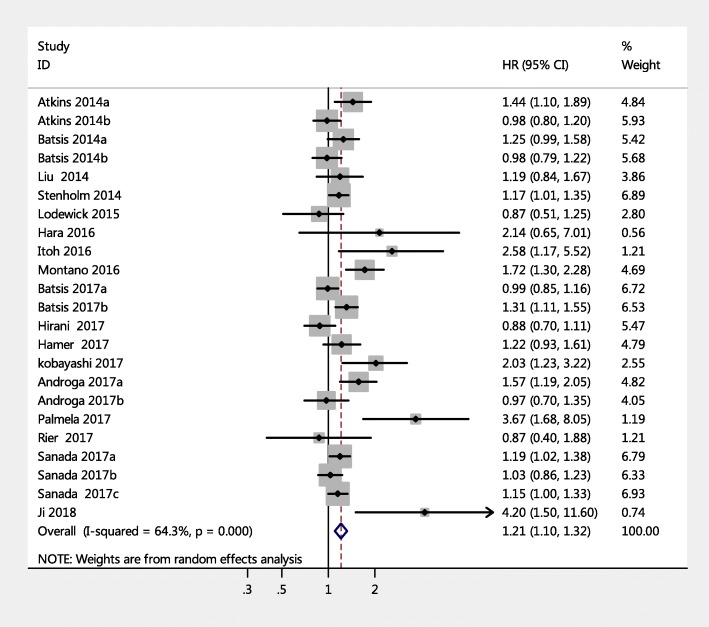
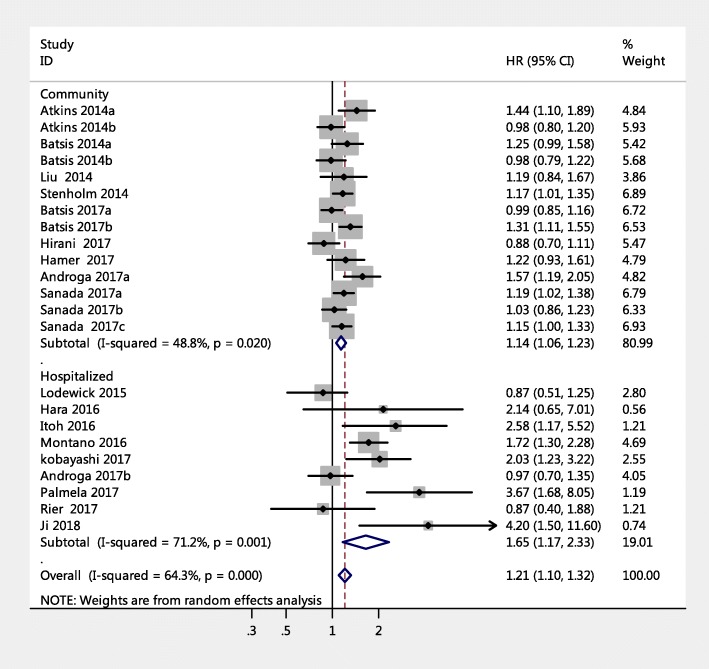
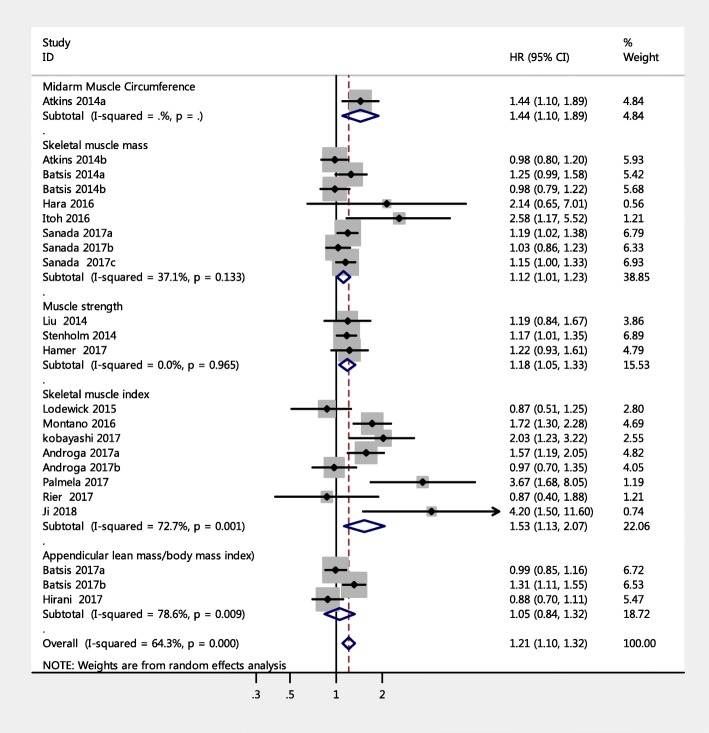
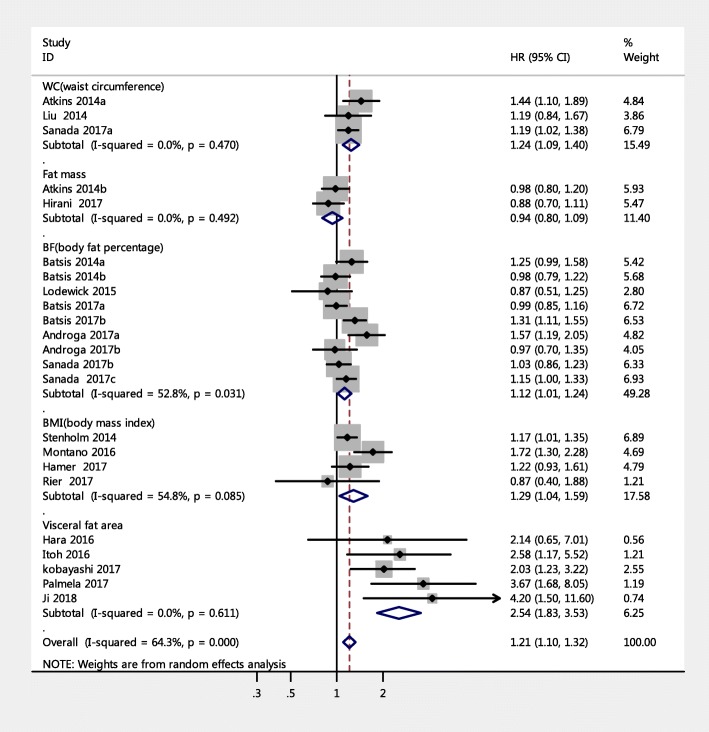
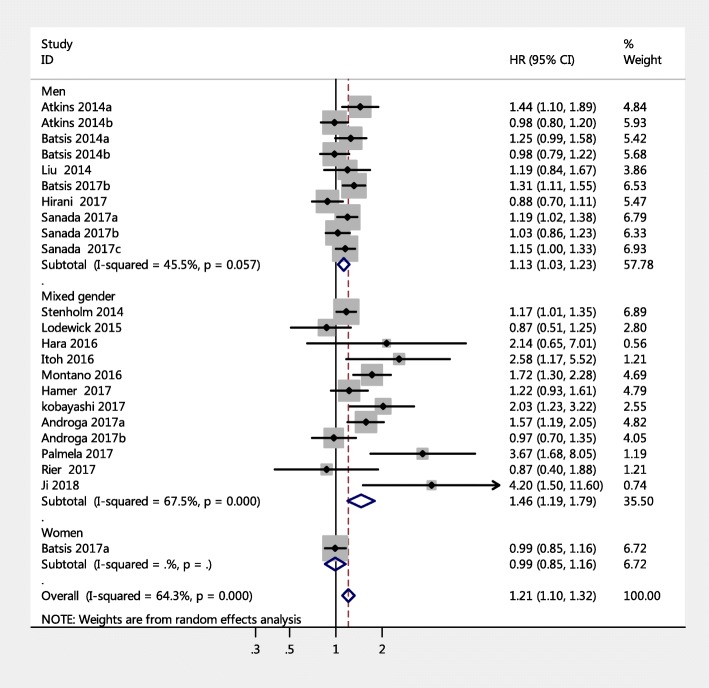
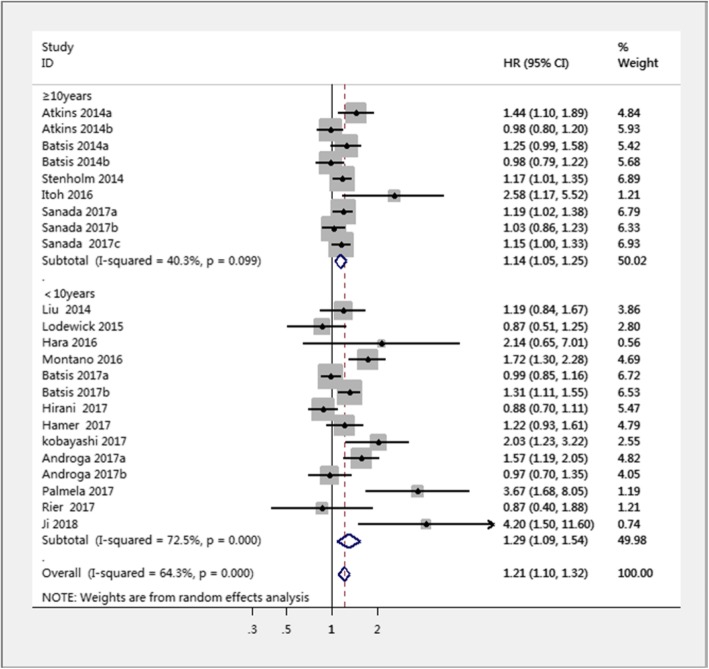
BACKGROUND: Previous cohort studies investigating the association between sarcopenic obesity (SO) and all-cause mortality among adult people have been inconsistent. We performed a meta-analysis to determine if SO is a predictor of all-cause mortality. METHODS: Prospective cohort studies that evaluated the association between SO and mortality in older people were identified via a systematic search of three electronic databases (PubMed, EMBASE, and the Cochrane Library). A random-effects model was applied to combine the results. We considered the methods recommeded by consensuses (dual X-ray absorptiometry,bio-impedancemetry, anthropometric measures or CT scan) to assess sarcopenic obesity. RESULTS: = 64.3%). Furthermore, the subgroup analysis of participants showed that SO was associated with all-cause mortality (pooled HR = 1.14, 95% CI: 1.06-1.23) among community-dwelling adult people; similarly, this association was found in hospitalized patients (pooled HR = 1.65, 95% CI: 1.17-2.33). Moreover, the subgroup analysis demonstrated that SO was associated with all-cause mortality when using skeletal muscle mass (SMM) criteria, muscle strength criteria, and skeletal muscle index (SMI) criteria (HR = 1.12, 95% CI: 1.01-1.23; HR = 1.18, 95% CI: 1.05-1.33; and HR = 1.53, 95% CI: 1.13-2.07, respectively). In addition, we analyzed SO on the basis of obesity definition and demonstrated that participants with a SO diagnosis based on waist circumference (WC) (HR = 1.24, 95% CI: 1.09-1.40), body mass index (BMI) (HR = 1.29, 95% CI: 1.04-1.59), or visceral fat area (HR = 2.54, 95% CI: 1.83-3.53) have a significantly increase mortality risk compared with those without SO. CONCLUSION: Based on our update of existing scientific researches, SO is a significant predictor of all-cause mortality among older people, particularly hospitalized patients. Therefore, it is important to diagnose SO and to treat the condition to reduce mortality rates among older people.
Overview
The claims and statistics of this paper haven’t been checked yet.
Free: it reads the open-access text and checks the first 5 claims that cite a source we can check. Create a free account to check every claim.
Integrity signals
Registry
Cites
Statistics
Figures
Verification
Claims the paper makes
The claims and statistics of this paper haven’t been checked yet.
Free: it reads the open-access text and checks the first 5 claims that cite a source we can check. Create a free account to check every claim.
Claims other papers make about this one
Each is checked against this paper’s own text: does it say what the citing paper says it does?
The source backs part of the claim, not all of it — or backs it for a different population, condition or comparison.
In the citing paper
“In addition, this significance persisted in studies that used different criteria to define obesity and sarcopenia (18).”
From Sarcopenic obesity: epidemiology, pathophysiology, cardiovascular disease, mortality, and management (2023) · cites this paper as [18]
Experimental — accuracy not yet measuredIn the citing paper
“Compared to obesity alone, sarcopenic obesity is associated with a heightened risk of adverse health outcomes, such as disability or impairment, cardiometabolic diseases, other comorbidities, and mortality [4,5,6,7].”
From Sarcopenic obesity, insulin resistance, and their implications in cardiovascular and metabolic consequences (2020) · cites this paper as [7]
In the citing paper
“This condition is currently a major concern as it is associated with frailty and disabilities such as cardiovascular disease, fractures, dementia, cancer, and increased all-cause mortality.”
From Sarcopenic obesity: epidemiology, pathophysiology, cardiovascular disease, mortality, and management (2023) · cites this paper as [18]
In the citing paper
“Sarcopenic obesity appears to be a more severe condition than obesity alone, as it is associated with a higher risk of several disorders such as cardiovascular disease, reduced bone mineral density, and all-cause mortality (16–18).”
From Sarcopenic obesity: epidemiology, pathophysiology, cardiovascular disease, mortality, and management (2023) · cites this paper as [18]
In the citing paper
“a meta-analysis of 23 studies including 50 866 individuals showed that sarcopenic obesity was significantly associated with a higher risk of all-cause mortality.”
From Sarcopenic obesity: epidemiology, pathophysiology, cardiovascular disease, mortality, and management (2023) · cites this paper as [18]
2 more claims about this paper
Create a free account to see every claim other papers make about this one.
Self-check
Percentages, sums and reported differences re-computed from the paper’s own numbers.
The self-check needs the paper’s full text.
Citations
Cites
Dermyshi, E., Wang, Y., Yan, C., Hong, W., Qiu, G., Gong, X., & Zhang, T. (2017) · Neonatology · doi:10.1159/000454668 · Cited by 24,451
Meta-analysis of Observational Studies in Epidemiology<SUBTITLE>A Proposal for Reporting</SUBTITLE>
Stroup, D. F. (2000) · JAMA · doi:10.1001/jama.283.15.2008 · Cited by 20,623
Sarcopenia: revised European consensus on definition and diagnosis
Cruz-Jentoft, A. J., Bahat, G., Bauer, J., Boirie, Y., Bruyère, O., Cederholm, T., Cooper, C., Landi, F., Rolland, Y., Sayer, A. A., et al. (2019) · Age and Ageing · doi:10.1093/ageing/afy169 · Cited by 13,818 · cited 1×
“In addition, preserving better muscles can help maintain major functional status and reduce the negative effects of falls, fractures, and sedentary lifestyles [50].”
BackgroundObesity: global epidemiology and pathogenesis
Blüher, M. (2019) · Nature Reviews Endocrinology · doi:10.1038/s41574-019-0176-8 · Cited by 5,126 · cited 1×
“The prevalence of obesity in the adult people of the world is rising alarmingly [8], potentially augmenting supplemental conditions and increasing the risk of adverse health outcomes.”
BackgroundProspective Studies Collaboration (2009) · The Lancet · doi:10.1016/s0140-6736(09)60318-4 · Cited by 4,807
Sarcopenia: revised European consensus on definition and diagnosis
Cruz-Jentoft, A. J., Bahat, G., Bauer, J., Boirie, Y., Bruyère, O., Cederholm, T., Cooper, C., Landi, F., Rolland, Y., Sayer, A. A., et al. (2019) · Age and Ageing · doi:10.1093/ageing/afz046 · Cited by 3,803
Prado, C. M., Lieffers, J. R., McCargar, L. J., Reiman, T., Sawyer, M. B., Martin, L., & Baracos, V. E. (2008) · The Lancet Oncology · doi:10.1016/s1470-2045(08)70153-0 · Cited by 3,238 · cited 1×
“There is a big difference between community-dwelling people and disease-specific populations [36].”
BackgroundThe underappreciated role of muscle in health and disease
Wolfe, R. R. (2006) · The American Journal of Clinical Nutrition · doi:10.1093/ajcn/84.3.475 · Cited by 1,537 · cited 1×
“Stronger skeletal muscle mass can improve metabolism, enhance peripheral glucose treatment, and increase energy reserves, thereby decreasing the risk of mortality [51].”
BackgroundSarcopenic obesity: A new category of obesity in the elderly
Zamboni, M., Mazzali, G., Fantin, F., Rossi, A., & Di Francesco, V. (2008) · Nutrition, Metabolism and Cardiovascular Diseases · doi:10.1016/j.numecd.2007.10.002 · Cited by 953 · cited 1×
“In addition, research found that sarcopenia and obesity may have common inflammatory pathways [12].”
BackgroundKalinkovich, A., & Livshits, G. (2017) · Ageing Research Reviews · doi:10.1016/j.arr.2016.09.008 · Cited by 882 · cited 2×
“It was indicated that sarcopenia increases the risk of mortality among adults through symptoms such as low muscle mass [46], inflammation [47], insulin resistance, and myokines [11].”
BackgroundInflammation and sarcopenia: A systematic review and meta-analysis
Bano, G., Trevisan, C., Carraro, S., Solmi, M., Luchini, C., Stubbs, B., Manzato, E., Sergi, G., & Veronese, N. (2017) · Maturitas · doi:10.1016/j.maturitas.2016.11.006 · Cited by 801 · cited 1×
“Furthermore, according to a previous study, participants with sarcopenia have an increased level of serum inflammatory parameters,especially for CRP levels [43].”
BackgroundSrikanthan, P., Hevener, A. L., & Karlamangla, A. S. (2010) · PLoS ONE · doi:10.1371/journal.pone.0010805 · Cited by 600
Montano-Loza, A. J., Angulo, P., Meza-Junco, J., Prado, C. M. M., Sawyer, M. B., Beaumont, C., Esfandiari, N., Ma, M., & Baracos, V. E. (2016) · Journal of Cachexia Sarcopenia and Muscle · doi:10.1002/jcsm.12039 · Cited by 512 · cited 2×
“Meanwhile, four studies used body mass index (BMI) to define obesity [18, 22, 32, 34], three used waist circumference (WC) [15, 17, 24], nine used body composition body fat (BF) [15, 16, 25, 26, 31], and five used visceral fat area [27–30, 33].”
BackgroundAtkins, J. L., Whincup, P. H., Morris, R. W., Lennon, L. T., Papacosta, O., & Wannamethee, S. G. (2014) · Journal of the American Geriatrics Society · doi:10.1111/jgs.12652 · Cited by 509 · cited 3×
“One study used the midarm muscle circumference (MAMC)-based definition of SO [24], eight used the SMM-based definition [15, 24, 25, 27, 28], three used the muscle strength (MS)-based definition [17, 18, 22], three used the appendicular lean mass (ALM)/BMI-based definition [16, 23], and eight used the SMI-based definit…”
BackgroundMethodBatsis, J. A., Mackenzie, T. A., Barre, L. K., Lopez-Jimenez, F., & Bartels, S. J. (2014) · European Journal of Clinical Nutrition · doi:10.1038/ejcn.2014.117 · Cited by 479 · cited 2×
“One study used the midarm muscle circumference (MAMC)-based definition of SO [24], eight used the SMM-based definition [15, 24, 25, 27, 28], three used the muscle strength (MS)-based definition [17, 18, 22], three used the appendicular lean mass (ALM)/BMI-based definition [16, 23], and eight used the SMI-based definit…”
BackgroundMethodAssociations of Muscle Mass and Strength with All-Cause Mortality among US Older Adults
LI, R., XIA, J., ZHANG, X., GATHIRUA-MWANGI, W. G., GUO, J., LI, Y., MCKENZIE, S., & SONG, Y. (2018) · Medicine & Science in Sports & Exercise · doi:10.1249/mss.0000000000001448 · Cited by 398 · cited 1×
“It was indicated that sarcopenia increases the risk of mortality among adults through symptoms such as low muscle mass [46], inflammation [47], insulin resistance, and myokines [11].”
BackgroundSelf-citationAn evidence-based comparison of operational criteria for the presence of sarcopenia
Dam, T.-T., Peters, K. W., Fragala, M., Cawthon, P. M., Harris, T. B., McLean, R., Shardell, M., Alley, D. E., Kenny, A., Ferrucci, L., et al. (2014) · The Journals of Gerontology Series A: Biological Sciences and Medical Sciences · doi:10.1093/gerona/glu013 · Cited by 363 · cited 4×
“In a cohort study in Switzerland including 913 participants after a 3-year follow-up, Melany Hars [41] found that the prevalence of sarcopenia was 11.2% using the European Working Group on Sarcopenia in Older People (EWGSOP) definition, whereas the prevalence of sarcopenia was 3.5% when the FNIH was used to define sar…”
BackgroundInfluentialSkeletal muscle and mortality results from the InCHIANTI study
Cesari, M., Pahor, M., Lauretani, F., Zamboni, V., Bandinelli, S., Bernabei, R., Guralnik, J. M., & Ferrucci, L. (2009) · The Journals of Gerontology Series A: Biological Sciences and Medical Sciences · doi:10.1093/gerona/gln031 · Cited by 346 · cited 1×
“Previous studies indicated low muscle mass may possible increasingly the risk of mortality [48, 49].”
BackgroundLutz, C. T., & Quinn, L. S. (2012) · Aging · doi:10.18632/aging.100482 · Cited by 333 · cited 1×
“Previous studies have shown that as obesity increases, skeletal muscle loss leads to an increase in inflammatory adipocytes, such as leptin, tumor necrosis factor alpha (TNF-α), and interleukin (IL-6), and reduces concentrations of adiponectin or IL-15 [52].”
BackgroundLiu, P., Hao, Q., Hai, S., Wang, H., Cao, L., & Dong, B. (2017) · Maturitas · doi:10.1016/j.maturitas.2017.04.007 · Cited by 331
Sarcopenia: Prevalence and prognostic significance in hospitalized patients
Gariballa, S., & Alessa, A. (2013) · Clinical Nutrition · doi:10.1016/j.clnu.2013.01.010 · Cited by 297 · cited 1×
“Another reason may be that hospitalized patients often have Coexistence state of activated inflammatory conditions and multiple comorbidities [42], which can give rise to higher levels of inflammatory factors, for instance, C-reactive proteins (CRP) and cytokines.”
BackgroundChang, K.-V., Hsu, T.-H., Wu, W.-T., Huang, K.-C., & Han, D.-S. (2017) · Age and Ageing · doi:10.1093/ageing/afx094 · Cited by 276 · cited 1×
“Background Sarcopenia is defined as a condition of age-related loss of muscle mass and muscle strength with functional impairment in terms of physical performance, and it has been associated with a series of adverse health consequences among older adults [1], including falls [1] and fractures [2], decreased mobility […”
BackgroundTian, S., & Xu, Y. (2016) · Geriatrics & Gerontology International · doi:10.1111/ggi.12579 · Cited by 274 · cited 3×
“89) was relatively higher when using the MAMC-based definition of SO, which suggests that this definition of SO can provide relevant diagnosis criteria for sarcopenia to assess the mortality risk of community-dwelling adults; this result is in line with a previous study [19].”
BackgroundResultInfluentialPecorelli, N., Carrara, G., De Cobelli, F., Cristel, G., Damascelli, A., Balzano, G., Beretta, L., & Braga, M. (2016) · British Journal of Surgery · doi:10.1002/bjs.10063 · Cited by 250 · cited 1×
“It has been reported that fat mass cannot detect regional body fat, such as visceral fat, and that aging is related to an increase in visceral fat and a gradual decrease in muscle mass [44], which has an adverse effect on mortality [45].”
BackgroundHirani, V., Naganathan, V., Blyth, F., Le Couteur, D. G., Seibel, M. J., Waite, L. M., Handelsman, D. J., & Cumming, R. G. (2017) · Age and Ageing · doi:10.1093/ageing/afw214 · Cited by 246 · cited 2×
“One study used the midarm muscle circumference (MAMC)-based definition of SO [24], eight used the SMM-based definition [15, 24, 25, 27, 28], three used the muscle strength (MS)-based definition [17, 18, 22], three used the appendicular lean mass (ALM)/BMI-based definition [16, 23], and eight used the SMI-based definit…”
BackgroundMethodVandewoude, M. F. J., Alish, C. J., Sauer, A. C., & Hegazi, R. A. (2012) · Journal of Aging Research · doi:10.1155/2012/651570 · Cited by 214 · cited 1×
“Sarcopenia may influence important lifestyle habits, for instance poor dietary nutrient intake [55],declined physical activity [56], which cause SO in a vicious circle that deteriorate the situation of sarcopenia.”
BackgroundTanimoto, Y., Watanabe, M., Sun, W., Sugiura, Y., Hayashida, I., Kusabiraki, T., & Tamaki, J. (2014) · Archives of Gerontology and Geriatrics · doi:10.1016/j.archger.2014.04.016 · Cited by 197 · cited 1×
“Background Sarcopenia is defined as a condition of age-related loss of muscle mass and muscle strength with functional impairment in terms of physical performance, and it has been associated with a series of adverse health consequences among older adults [1], including falls [1] and fractures [2], decreased mobility […”
BackgroundGiglio, J., Kamimura, M. A., Lamarca, F., Rodrigues, J., Santin, F., & Avesani, C. M. (2018) · Journal of Renal Nutrition · doi:10.1053/j.jrn.2017.12.003 · Cited by 184 · cited 1×
“Background Sarcopenia is defined as a condition of age-related loss of muscle mass and muscle strength with functional impairment in terms of physical performance, and it has been associated with a series of adverse health consequences among older adults [1], including falls [1] and fractures [2], decreased mobility […”
BackgroundLandi, F., Russo, A., Liperoti, R., Pahor, M., Tosato, M., Capoluongo, E., Bernabei, R., & Onder, G. (2010) · Clinical Nutrition · doi:10.1016/j.clnu.2009.12.006 · Cited by 177
Sarcopenia: An Independent Predictor of Mortality in Community-Dwelling Older Korean Men
Kim, J. H., Lim, S., Choi, S. H., Kim, K. M., Yoon, J. W., Kim, K. W., Lim, J.-Y., Park, K. S., Jang, H. C., & Kritchevsky, S. (2014) · The Journals of Gerontology: Series A · doi:10.1093/gerona/glu050 · Cited by 176 · cited 1×
“Given the fact that both sarcopenia and obesity would increase the risk of all-cause mortality [13, 14], it is hypothesized that the coexistence of sarcopenia and obesity may synergistically aggravate the risk of mortality.”
BackgroundKobayashi, A., Kaido, T., Hamaguchi, Y., Okumura, S., Shirai, H., Yao, S., Kamo, N., Yagi, S., Taura, K., Okajima, H., et al. (2019) · Annals of Surgery · doi:10.1097/sla.0000000000002555 · Cited by 168 · cited 3×
“Yamada M, Moriguch Y, Mitani T, Aoyama T, Arai H. Age-dependent changes in skeletal muscle mass and visceral fat area in Japanese adults from 40 to 79 years-of-age.”
BackgroundRier, H. N., Jager, A., Sleijfer, S., van Rosmalen, J., Kock, M. C. J. M., & Levin, M.-D. (2017) · The Breast · doi:10.1016/j.breast.2016.10.014 · Cited by 149
Zhang, X., Zhang, W., Wang, C., Tao, W., Dou, Q., & Yang, Y. (2018) · BMC Geriatrics · doi:10.1186/s12877-018-0878-0 · Cited by 147 · cited 1×
“People with SO in disease-specific populations [35] may have an increased risk of death compared to relatively healthy communitydwelling seniors, which may overestimate or underestimate the results.”
BackgroundSelf-citationPalmela, C., Velho, S., Agostinho, L., Branco, F., Santos, M., Santos, M. P. C., Oliveira, M. H., Strecht, J., Maio, R., Cravo, M., et al. (2017) · Journal of Gastric Cancer · doi:10.5230/jgc.2017.17.e8 · Cited by 141 · cited 1×
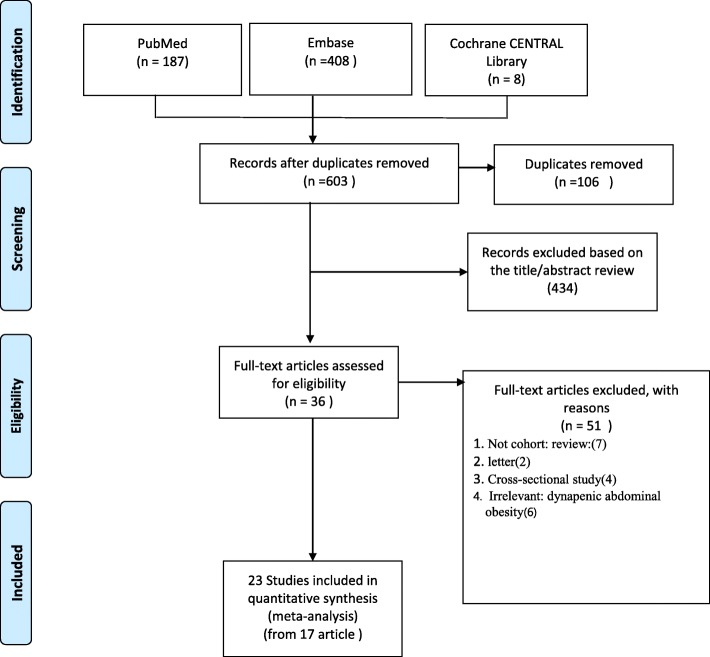
“Of these 23 studies, five were conducted in the USA [16, 26], one in Portugal [33], one in Australia [23], four in Japan [15, 27, 28, 30], two in the UK [18, 24], one in Finland [22], and two in China [29].”
BackgroundLodewick, T. M., van Nijnatten, T. J. A., van Dam, R. M., van Mierlo, K., Dello, S. A. W. G., Neumann, U. P., Olde Damink, S. W. M., & Dejong, C. H. C. (2015) · HPB · doi:10.1111/hpb.12373 · Cited by 129 · cited 1×
“Meanwhile, four studies used body mass index (BMI) to define obesity [18, 22, 32, 34], three used waist circumference (WC) [15, 17, 24], nine used body composition body fat (BF) [15, 16, 25, 26, 31], and five used visceral fat area [27–30, 33].”
BackgroundMiller, M. D., Crotty, M., Giles, L. C., Bannerman, E., Whitehead, C., Cobiac, L., Daniels, L. A., & Andrews, G. (2002) · Journal of the American Geriatrics Society · doi:10.1046/j.1532-5415.2002.50316.x · Cited by 127
Cawthon, P. M., Lui, L.-Y., Taylor, B. C., McCulloch, C. E., Cauley, J. A., Lapidus, J., Orwoll, E., & Ensrud, K. E. (2017) · The Journals of Gerontology: Series A · doi:10.1093/gerona/glw327 · Cited by 124 · cited 1×
“Background Sarcopenia is defined as a condition of age-related loss of muscle mass and muscle strength with functional impairment in terms of physical performance, and it has been associated with a series of adverse health consequences among older adults [1], including falls [1] and fractures [2], decreased mobility […”
BackgroundYamada, M., Moriguch, Y., Mitani, T., Aoyama, T., & Arai, H. (2014) · Geriatrics & Gerontology International · doi:10.1111/ggi.12209 · Cited by 117 · cited 1×
“It has been reported that fat mass cannot detect regional body fat, such as visceral fat, and that aging is related to an increase in visceral fat and a gradual decrease in muscle mass [44], which has an adverse effect on mortality [45].”
BackgroundBatsis, J. A., Mackenzie, T. A., Emeny, R. T., Lopez-Jimenez, F., & Bartels, S. J. (2017) · The Journals of Gerontology: Series A · doi:10.1093/gerona/glx002 · Cited by 116 · cited 5×
“Recently, multiple studies have found that SO is a predictor of all-cause mortality among community-dwelling older people [15, 16].”
BackgroundMethodInfluentialHara, N., Iwasa, M., Sugimoto, R., Mifuji-Moroka, R., Yoshikawa, K., Terasaka, E., Hattori, A., Ishidome, M., Kobayashi, Y., Hasegawa, H., et al. (2016) · Internal Medicine · doi:10.2169/internalmedicine.55.5676 · Cited by 113 · cited 4×
“One study used the midarm muscle circumference (MAMC)-based definition of SO [24], eight used the SMM-based definition [15, 24, 25, 27, 28], three used the muscle strength (MS)-based definition [17, 18, 22], three used the appendicular lean mass (ALM)/BMI-based definition [16, 23], and eight used the SMI-based definit…”
BackgroundMethodInfluentialThe Prognostic Significance of Protein-energy Malnutrition in Geriatric Patients
MÜHLETHALER, R., STUCK, A. E., MINDER, C. E., & FREY, B. M. (1995) · Age and Ageing · doi:10.1093/ageing/24.3.193 · Cited by 112
Stenholm, S., Mehta, N. K., Elo, I. T., Heliövaara, M., Koskinen, S., & Aromaa, A. (2014) · International Journal of Obesity · doi:10.1038/ijo.2013.214 · Cited by 111 · cited 5×
“Stenholm S, Mehta NK, Elo IT, Heliovaara M, Koskinen S, Aromaa A. Obesity and muscle strength as long-term determinants of all-cause mortality--a 33- year follow-up of the Mini-Finland Health Examination Survey.”
BackgroundMethodInfluentialSarcopenic obesity, weight loss, and mortality: the english longitudinal study of ageing
Hamer, M., & O’Donovan, G. (2017) · The American Journal of Clinical Nutrition · doi:10.3945/ajcn.117.152488 · Cited by 110 · cited 5×
“Furthermore, more prospective studies about this issue have been published since 2015 given that this is a rapidly progressing research field [15, 18, 20].”
BackgroundMethodResultInfluentialSarcopenia, Obesity, and Mortality in US Adults With and Without Chronic Kidney Disease
Androga, L., Sharma, D., Amodu, A., & Abramowitz, M. K. (2017) · Kidney International Reports · doi:10.1016/j.ekir.2016.10.008 · Cited by 109 · cited 3×
“Meanwhile, four studies used body mass index (BMI) to define obesity [18, 22, 32, 34], three used waist circumference (WC) [15, 17, 24], nine used body composition body fat (BF) [15, 16, 25, 26, 31], and five used visceral fat area [27–30, 33].”
BackgroundInfluentialHars, M., Biver, E., Chevalley, T., Herrmann, F., Rizzoli, R., Ferrari, S., & Trombetti, A. (2016) · Journal of Bone and Mineral Research · doi:10.1002/jbmr.2878 · Cited by 104 · cited 2×
“In a cohort study in Switzerland including 913 participants after a 3-year follow-up, Melany Hars [41] found that the prevalence of sarcopenia was 11.2% using the European Working Group on Sarcopenia in Older People (EWGSOP) definition, whereas the prevalence of sarcopenia was 3.5% when the FNIH was used to define sar…”
BackgroundInfluentialSarcopenia in patients with hip fracture: A multicenter cross-sectional study
Steihaug, O. M., Gjesdal, C. G., Bogen, B. E., Kristoffersen, M. H., Lien, G., & Ranhoff, A. H. (2017) · PLoS ONE · doi:10.1371/journal.pone.0184780 · Cited by 103 · cited 1×
“Background Sarcopenia is defined as a condition of age-related loss of muscle mass and muscle strength with functional impairment in terms of physical performance, and it has been associated with a series of adverse health consequences among older adults [1], including falls [1] and fractures [2], decreased mobility […”
BackgroundSerum level of adiponectin and the risk of liver cancer development in chronic hepatitis C patients
Arano, T., Nakagawa, H., Tateishi, R., Ikeda, H., Uchino, K., Enooku, K., Goto, E., Masuzaki, R., Asaoka, Y., Kondo, Y., et al. (2010) · International Journal of Cancer · doi:10.1002/ijc.25861 · Cited by 96 · cited 2×
“In addition, the accumulation of visceral adipose tissue increases the amount of TNF-α and IL-6 [53].”
BackgroundWestbury, L. D., Fuggle, N. R., Syddall, H. E., Duggal, N. A., Shaw, S. C., Maslin, K., Dennison, E. M., Lord, J. M., & Cooper, C. (2018) · Calcified Tissue International · doi:10.1007/s00223-017-0354-4 · Cited by 92 · cited 1×
“It was indicated that sarcopenia increases the risk of mortality among adults through symptoms such as low muscle mass [46], inflammation [47], insulin resistance, and myokines [11].”
BackgroundJi, Y. S., Cheng, B., Xu, Z., Ye, H., Lu, W., Luo, X., Fu, S., & Fang, X. (2018) · Journal of Critical Care · doi:10.1016/j.jcrc.2018.03.019 · Cited by 91 · cited 7×
“4Department of Nursing, The Fifth Affiliated Hospital of Zunyi Medical University, Zhuhai, China.”
BackgroundInfluentialSanada, K., Chen, R., Willcox, B., Ohara, T., Wen, A., Takenaka, C., & Masaki, K. (2018) · Nutrition · doi:10.1016/j.nut.2017.09.003 · Cited by 65 · cited 7×
“Furthermore, more prospective studies about this issue have been published since 2015 given that this is a rapidly progressing research field [15, 18, 20].”
BackgroundMethodInfluentialVan Aller, C., Lara, J., Stephan, B. C. M., Donini, L. M., Heymsfield, S., Katzmarzyk, P. T., Wells, J. C. K., Prado, C. M., & Siervo, M. (2019) · Clinical Nutrition · doi:10.1016/j.clnu.2018.01.022 · Cited by 56 · cited 1×
“Furthermore, more prospective studies about this issue have been published since 2015 given that this is a rapidly progressing research field [15, 18, 20].”
BackgroundLv, Y., Liu, S., Yin, Z., Gao, X., Kraus, V. B., Mao, C., Yuan, J.-Q., Zhang, J., Luo, J., Chen, H.-S., et al. (2018) · Journal of the American Medical Directors Association · doi:10.1016/j.jamda.2018.03.015 · Cited by 49 · cited 1×
“According to some studies, obesity increases the chance of multiple chronic health conditions and is also related to increased risk of death [9, 10].”
BackgroundItoh, S., Yoshizumi, T., Kimura, K., Okabe, H., Harimoto, N., Ikegami, T., Uchiyama, H., Shirabe, K., Nishie, A., & Maehara, Y. (2016) · PubMed · Cited by 48
Benjumea, A.-M., Curcio, C.-L., Duque, G., & Gomez, F. (2018) · Open Access Macedonian Journal of Medical Sciences · doi:10.3889/oamjms.2018.087 · Cited by 48 · cited 1×
“Background Sarcopenia is defined as a condition of age-related loss of muscle mass and muscle strength with functional impairment in terms of physical performance, and it has been associated with a series of adverse health consequences among older adults [1], including falls [1] and fractures [2], decreased mobility […”
BackgroundAppendicular lean mass and mortality among prefrail and frail older adults
Brown, J. C., Harhay, M. O., & Harhay, M. N. (2017) · The Journal of nutrition, health and aging · doi:10.1007/s12603-016-0753-7 · Cited by 39 · cited 1×
“Previous studies indicated low muscle mass may possible increasingly the risk of mortality [48, 49].”
BackgroundYang, C., Li, C.-I., Li, T., Liu, C.-S., Lin, C., Lin, C., & Lin, C. (2017) · Experimental Gerontology · doi:10.1016/j.exger.2017.05.006 · Cited by 28 · cited 1×
“Sarcopenia may influence important lifestyle habits, for instance poor dietary nutrient intake [55],declined physical activity [56], which cause SO in a vicious circle that deteriorate the situation of sarcopenia.”
BackgroundSelf-citationLiu, L.-K., Chen, L.-Y., Yeh, K.-P., Lin, M.-H., Hwang, A.-C., Peng, L.-N., & Chen, L.-K. (2014) · Journal of Clinical Gerontology and Geriatrics · doi:10.1016/j.jcgg.2014.01.002 · Cited by 26 · cited 3×
“One study used the midarm muscle circumference (MAMC)-based definition of SO [24], eight used the SMM-based definition [15, 24, 25, 27, 28], three used the muscle strength (MS)-based definition [17, 18, 22], three used the appendicular lean mass (ALM)/BMI-based definition [16, 23], and eight used the SMI-based definit…”
BackgroundMethodResultObesity, weight change, and mortality in older adults with metabolic abnormalities
Dong, S.-Y., Wang, M.-L., Li, Z.-B., Dong, Z., Liu, Y.-Q., Lu, R.-J., Li, J.-M., & Tang, R. (2018) · Nutrition Metabolism and Cardiovascular Diseases · doi:10.1016/j.numecd.2018.04.011 · Cited by 13 · cited 1×
“According to some studies, obesity increases the chance of multiple chronic health conditions and is also related to increased risk of death [9, 10].”
Background
Cited by
Exercise for sarcopenia in older people: A systematic review and network meta‐analysis
Shen, Y., Shi, Q., Nong, K., Li, S., Yue, J., Huang, J., Dong, B., Beauchamp, M., & Hao, Q. (2023) · Journal of Cachexia, Sarcopenia and Muscle · doi:10.1002/jcsm.13225 · Cited by 464
“Older adults with sarcopenia are at a higher risk of many adverse outcomes, including falls,(7,8) fractures,(8) disability,(7) hospitalization(9) and death.(10,11) There are no specific drugs approved to treat sarcopenia, and physical exercise is the most effective intervention for sarcopenia.”
Hong, S.-H., & Choi, K. M. (2020) · International Journal of Molecular Sciences · doi:10.3390/ijms21020494 · Cited by 390
Global prevalence of sarcopenic obesity in older adults: A systematic review and meta-analysis
Gao, Q., Mei, F., Shang, Y., Hu, K., Chen, F., Zhao, L., & Ma, B. (2021) · Clinical Nutrition · doi:10.1016/j.clnu.2021.06.009 · Cited by 376
Sarcopenia during COVID-19 lockdown restrictions: long-term health effects of short-term muscle loss
Kirwan, R., McCullough, D., Butler, T., Perez de Heredia, F., Davies, I. G., & Stewart, C. (2020) · GeroScience · doi:10.1007/s11357-020-00272-3 · Cited by 324
Sarcopenic obesity: epidemiology, pathophysiology, cardiovascular disease, mortality, and management
Wei, S., Nguyen, T. T., Zhang, Y., Ryu, D., & Gariani, K. (2023) · Frontiers in Endocrinology · doi:10.3389/fendo.2023.1185221 · Cited by 291
Metadata
- Authors
- Zhang, X., Xie, X., Dou, Q., Liu, C., Zhang, W., Yang, Y., Deng, R., & Cheng, A. S. K.
- Affiliations
- Shenzhen Bao'an District People's Hospital (CN)
- Shenzhen University (CN)
- Zunyi Medical University (CN)
- Hong Kong Polytechnic University (HK)
- Corresponding author
- Deng, Renli
- Venue
- BMC Geriatrics
- Published
- 2019-07-03
- Volume
- 19
- Issue
- 1
- Pages
- 183-183
- ISSN
- 1471-2318 (ISSN-L)
- PMC
- PMC6610788
- OpenAlex
- W2954520897
- Cited by
- 209
- References
- 57
- Citations by year
- 2026: 20 · 2025: 28 · 2024: 51 · 2023: 43 · 2022: 25 · 2021: 24 · 2020: 16 · 2019: 1
- FWCI
- 11.32
- Type
- journal article
- Language
- en
- Open access
- gold
- doi.org
- Licence
- cc-by
- creativecommons.org/licenses/by/4.0/ (tdm)
- creativecommons.org/licenses/by/4.0/ (vor)
- Locations
- BMC Geriatrics (publishedVersion, cc-by)
- PubMed Central (publishedVersion, cc-by)
- PubMed (publishedVersion)
- PolyU Institutional Research Archive (Hong Kong Polytechnic University) (submittedVersion, cc-by)
- DOAJ (DOAJ: Directory of Open Access Journals) (submittedVersion, cc-by-sa)
- Funders
- the Hospital Fund of the People’s Hospital of Baoan ShenZhen ((2018H006))
- Topics
- Health Sciences › Medicine › Physiology (medical) › Nutrition and Health in Aging
- Health Sciences › Medicine › Physiology (medical) › Body Composition Measurement Techniques
- Health Sciences › Medicine › Geriatrics and Gerontology › Frailty in Older Adults
- Keywords
- sarcopenic obesity, all-cause mortality, sarcopenia, obesity, skeletal muscle mass, muscle strength, skeletal muscle index, hospitalized patients, community-dwelling adults, visceral fat, body mass index, waist circumference, older adults, mortality prediction
- MeSH terms
- Aged, Aged, 80 and over, Female, Humans, Male, Middle Aged, Mortality, Obesity, Prospective Studies, Risk Factors, Cohort Studies, Absorptiometry, Photon, Body Mass Index, Muscle Strength, Waist Circumference, Sarcopenia, Independent Living
About these checks
Registry, retraction, Cites and statistics results are computed, not judged, with one exception: a printed reference that no index lists is read once by a model before it counts as a citation error. Claims are extracted by a model and kept only when their quote appears verbatim in the text; each cited source is then checked, with a model’s help, for whether it says what the claim relies on. Those verdicts can be wrong — read the claim’s quote and the cited source before relying on one.
Statistics and arithmetic are recomputed, not judged.
Confidence bands are shown only for fields calibrated on our annotated test set. None is calibrated yet, so no band is shown.
What counts as a claim ›How we measure confidence ›How we check this ›
Are you an author, or do you see a problem with this page? Request a review
Data sources
Bibliographic data: Semantic Scholar, OpenAlex, Crossref.
Contains information from the Semantic Scholar Academic Graph Datasets, made available under the ODC Attribution License (ODC-BY 1.0).
Semantic Scholar’s data is described in: Kinney, R., et al. (2023). The Semantic Scholar Open Data Platform. arXiv:2301.10140.
