

Alterations in hematologic indices during long-duration spaceflight
Open accessThe DOI matches its Crossref record; 24 of the 25 references it cites were found in a registry or an index.
Abstract
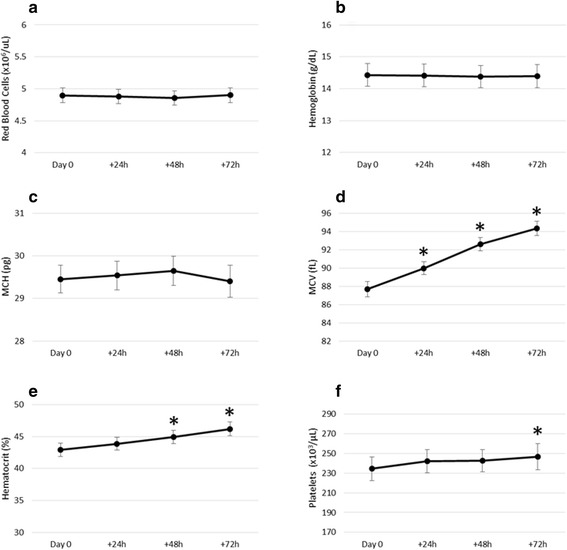
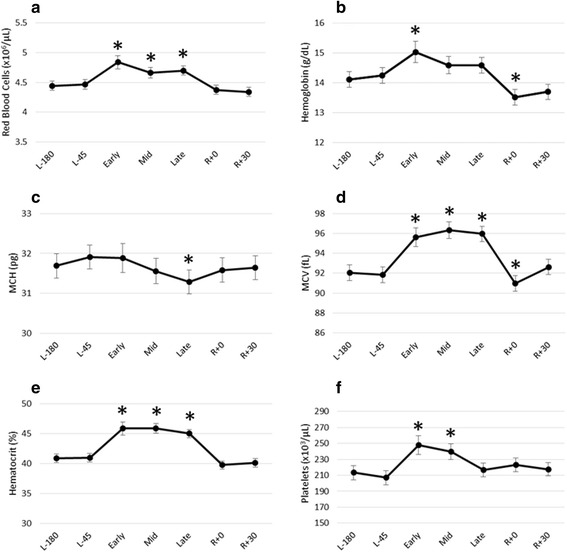
BACKGROUND: Although a state of anemia is perceived to be associated with spaceflight, to date a peripheral blood hematologic assessment of red blood cell (RBC) indices has not been performed during long-duration space missions. METHODS: This investigation collected whole blood samples from astronauts participating in up to 6-months orbital spaceflight, and returned those samples (ambient storage) to Earth for analysis. As samples were always collected near undock of a returning vehicle, the delay from collection to analysis never exceeded 48 h. As a subset of a larger immunologic investigation, a complete blood count was performed. A parallel stability study of the effect of a 48 h delay on these parameters assisted interpretation of the in-flight data. RESULTS: We report that the RBC and hemoglobin were significantly elevated during flight, both parameters deemed stable through the delay of sample return. Although the stability data showed hematocrit to be mildly elevated at +48 h, there was an in-flight increase in hematocrit that was ~3-fold higher in magnitude than the anticipated increase due to the delay in processing. CONCLUSIONS: While susceptible to the possible influence of dehydration or plasma volume alterations, these results suggest astronauts do not develop persistent anemia during spaceflight.
Overview
The claims and statistics of this paper haven’t been checked yet.
Free: it reads the open-access text and checks the first 5 claims that cite a source we can check. Create a free account to check every claim.
Integrity signals
Registry
Cites
Statistics
Figures
Verification
Claims the paper makes
The claims and statistics of this paper haven’t been checked yet.
Free: it reads the open-access text and checks the first 5 claims that cite a source we can check. Create a free account to check every claim.
Claims other papers make about this one
Each is checked against this paper’s own text: does it say what the citing paper says it does?
The check wasn’t confident either way, so it gives no verdict — never disputed.
In the citing paper
“mitochondrial dysfunction attenuates platelet survival and increased risk for thrombovascular events (Kunz et al., 2017; Melchinger et al., 2019), increasing stroke risk (Behrouzi and Punter, 2018).”
From Comprehensive Multi-omics Analysis Reveals Mitochondrial Stress as a Central Biological Hub for Spaceflight Impact (2020) · cites this paper as Kunz et al., 2017
Experimental — accuracy not yet measured
Self-check
Percentages, sums and reported differences re-computed from the paper’s own numbers.
The self-check needs the paper’s full text.
Citations
Cites
Equivalence Tests: A Practical Primer for t Tests, Correlations, and Meta-Analyses
Lakens, D. (2017) · Social Psychological and Personality Science · doi:10.1177/1948550617697177 · Cited by 3,001 · cited 2×
“Lakens D. Equivalence tests: a practical primer for t tests, correlations, and meta-analyses.”
MethodBiomedical Results from Skylab. NASA SP-377
Johnston, R. S., & Dietlein, L. F. (1977) · NASA Technical Reports Server (NASA) · Cited by 773
Acclimation during space flight: effects on human physiology
Williams, D., Kuipers, A., Mukai, C., & Thirsk, R. (2009) · Canadian Medical Association Journal · doi:10.1503/cmaj.090628 · Cited by 378 · cited 2×
“These summary alterations result in an approximate 10% decrease in total blood volume [1] following short”
BackgroundControl of red blood cell mass in spaceflight
Alfrey, C. P., Udden, M. M., Leach-Huntoon, C., Driscoll, T., & Pickett, M. H. (1996) · Journal of Applied Physiology · doi:10.1152/jappl.1996.81.1.98 · Cited by 267 · cited 4×
“Indeed, plasma volume has been shown to decrease by approximately 17% within the first 24 h of spaceflight [2]; however, like changes in RBC mass, the alterations in plasma volume have been primarily observed during short-duration flight or postflight, and little evidence exists describing changes in plasma volume dur…”
BackgroundInfluentialAlterations in adaptive immunity persist during long-duration spaceflight
Crucian, B., Stowe, R. P., Mehta, S., Quiriarte, H., Pierson, D., & Sams, C. (2015) · npj Microgravity · doi:10.1038/npjmgrav.2015.13 · Cited by 252 · cited 2×
“Here we report RBC and platelet indices on blood collected before, during, and after long-duration spaceflight as a subset of a two parent investigations of the effects of long-duration spaceflight on the immune system [8].”
BackgroundSelf-citationCrucian, B. E., Zwart, S. R., Mehta, S., Uchakin, P., Quiriarte, H. D., Pierson, D., Sams, C. F., & Smith, S. M. (2014) · Journal of Interferon & Cytokine Research · doi:10.1089/jir.2013.0129 · Cited by 195 · cited 3×
“Crucian BE, Zwart SR, Mehta S, Uchakin P, Quiriarte HD, Pierson D, Sams CF, Smith SM. Plasma cytokine concentrations indicate that in vivo hormonal regulation of immunity is altered during long-duration spaceflight.”
BackgroundSelf-citationNeocytolysis: physiological down-regulator of red-cell mass
Alfrey, C. P., Rice, L., Udden, M. M., & Driscoll, T. B. (1997) · The Lancet · doi:10.1016/s0140-6736(96)09208-2 · Cited by 166 · cited 1×
“EPO controls RBC mass by regulating the rate of division of RBC progenitors in the bone marrow, and it has also been postulated to play a role in the neocytolysis process by which newly released RBCs are selectively destroyed upon entering into microgravity [12, 15, 22].”
BackgroundMeck, J. V., Reyes, C. J., Perez, S. A., Goldberger, A. L., & Ziegler, M. G. (2001) · Psychosomatic Medicine · doi:10.1097/00006842-200111000-00003 · Cited by 146
Hematology and immunology studies
KIMZEY, S. L., Fischer, C., Johnson, P. C., Ritzmann, S. E., & Mengel, C. E. (1975) · NASA Technical Reports Server (NASA) · Cited by 105
Davis, T. A., Wiesmann, W., Kidwell, W., Cannon, T., Kerns, L., Serke, C., Delaplaine, T., Pranger, A., & Lee, K. P. (1996) · Journal of Leukocyte Biology · doi:10.1002/jlb.60.1.69 · Cited by 96 · cited 4×
“tions [3]; however, the reports that do exist suggest that microgravity and simulated microgravity actually induce a state of thrombocytopenia [16, 17].”
BackgroundInfluential
Research works printed but not linked: 1
- Alfrey CP The influence of space flight on erythrokinetics in man 1995 Washington, D.C. NASA
Cited by
da Silveira, W. A., Fazelinia, H., Rosenthal, S. B., Laiakis, E. C., Kim, M. S., Meydan, C., Kidane, Y., Rathi, K. S., Smith, S. M., Stear, B., et al. (2020) · Cell · doi:10.1016/j.cell.2020.11.002 · Cited by 402
“However, mitochondrial dysfunction attenuates platelet survival and increased risk for thrombovascular events (Kunz et al., 2017; Melchinger et al., 2019), increasing stroke risk (Behrouzi and Punter, 2018).”
Self-citationHuman Health during Space Travel: State-of-the-Art Review
Krittanawong, C., Singh, N. K., Scheuring, R. A., Urquieta, E., Bershad, E. M., Macaulay, T. R., Kaplin, S., Dunn, C., Kry, S. F., Russomano, T., et al. (2022) · Cells · doi:10.3390/cells12010040 · Cited by 170
“An additional study collected whole blood sample from astronauts during and after up to 6 months of orbital spaceflight [168].”
BackgroundSelf-citationHow does spaceflight affect the acquired immune system?
Akiyama, T., Horie, K., Hinoi, E., Hiraiwa, M., Kato, A., Maekawa, Y., Takahashi, A., & Furukawa, S. (2020) · npj Microgravity · doi:10.1038/s41526-020-0104-1 · Cited by 132
Long-term spaceflight and the cardiovascular system
Vernice, N. A., Meydan, C., Afshinnekoo, E., & Mason, C. E. (2020) · Precision Clinical Medicine · doi:10.1093/pcmedi/pbaa022 · Cited by 136
Hemolysis contributes to anemia during long-duration space flight
Trudel, G., Shahin, N., Ramsay, T., Laneuville, O., & Louati, H. (2022) · Nature Medicine · doi:10.1038/s41591-021-01637-7 · Cited by 127
The Cardiovascular System in Space: Focus on In Vivo and In Vitro Studies
Baran, R., Marchal, S., Campos, S. G., Rehnberg, E., Tabury, K., Baselet, B., Wehland, M., Grimm, D. G., & Baatout, S. (2021) · Biomedicines · doi:10.3390/biomedicines10010059 · Cited by 117
“[16] showed an increase in RBC concentrations during long-duration spaceflight, suggesting that the body acclimates to μg conditions and spaceflight anaemia might be less of a problem than initially thought.”
BackgroundRecent Progress in Space Physiology and Aging
Strollo, F., Gentile, S., Strollo, G., Mambro, A., & Vernikos, J. (2018) · Frontiers in Physiology · doi:10.3389/fphys.2018.01551 · Cited by 85
The effect of microgravity on the human venous system and blood coagulation: a systematic review
Kim, D., Vaquer, S., Mazzolai, L., Roberts, L. N., Pavela, J., Watanabe, M., Weerts, G., & Green, D. A. (2021) · Experimental Physiology · doi:10.1113/ep089409 · Cited by 67
Effects of Microgravity on Human Physiology
Iwase, S., Nishimura, N., Tanaka, K., & Mano, T. (2020) · IntechOpen eBooks · doi:10.5772/intechopen.90700 · Cited by 74
Remote Controlled Autonomous Microgravity Lab Platforms for Drug Research in Space
Amselem, S. (2019) · Pharmaceutical Research · doi:10.1007/s11095-019-2703-7 · Cited by 64
Overbey, E. G., Ryon, K. A., Kim, J., Tierney, B. T., Klotz, R. V., Ortiz, V., Mullane, S., Schmidt, J. C., MacKay, M. J., Damle, N., et al. (2024) · Nature Communications · doi:10.1038/s41467-024-48806-z · Cited by 64
“It will allow comparative studies to prior RNA-sequencing performed on astronauts, particularly snoRNA & lncRNA biomarkers analyzed from Space Shuttle era blood 25,26 , mRNA & miRNA measured during the NASA Twin Study 17,18 , and whole blood RNA arrays from the ISS 27,28 .”
BackgroundCharacterizing the effect of exposure to microgravity on anemia: more space is worse
Trudel, G., Shafer, J. L., Laneuville, O., & Ramsay, T. (2019) · American Journal of Hematology · doi:10.1002/ajh.25699 · Cited by 55
“This would explain the paradox that astronauts are not anemic while on a long duration mission in space but present low nadir Hb, while undergoing reverse plasma volume shift after landing.(5) In other words, the RBCs decrement in space is masked by a corresponding plasma volume loss.”
BackgroundRusso, C. D., Bandiera, T., Monici, M., Surdo, L., Yip, V. L. M., Wotring, V. E., & Morbidelli, L. (2022) · British Journal of Pharmacology · doi:10.1111/bph.15822 · Cited by 57
“On the contrary, red blood cells and haemoglobin were reported to be elevated during long-term spaceflights (Kunz et al., 2017).”
BackgroundLong‐duration spaceflight alters estimated intracranial pressure and cerebral blood velocity
Iwasaki, K., Ogawa, Y., Kurazumi, T., Imaduddin, S. M., Mukai, C. N., Furukawa, S., Yanagida, R., Kato, T., Konishi, T., Shinojima, A., et al. (2020) · The Journal of Physiology · doi:10.1113/jp280318 · Cited by 48
“However, following a long-duration spaceflight aboard ISS, haemoglobin concentrations significantly decreased below preflight levels (Smith et al. 2005; Kunz et al. 2017), and the decreases were most apparent 4–8 days after spaceflight at the nadir of haemoglobin concentration (Trudel et al. 2020).”
BackgroundResultInfluentialLimper, U., Tank, J., Ahnert, T., Maegele, M., Grottke, O., Hein, M., & Jordan, J. (2020) · European Heart Journal · doi:10.1093/eurheartj/ehaa359 · Cited by 45
“European Heart Journal (2020) 0, 1–5 CURRENT OPINION doi:10.1093/eurheartj/ehaa359 Thrombosis and antithrombotic therapy D ow nloaded from https://academ ic.oup.com /eurheartj/advance-article/doi/10.1093/eurheartj/ehaa359/5840773 by D eutsches Zentrum fuer Luft- und R aum fahrt (D LR ); Bibliotheks- und Inform ationsw…”
BackgroundInfluentialCao, D., Song, J., Ling, S., Niu, S., Lu, L., Cui, Z., Li, Y., Hao, S., Zhong, G., Qi, Z., et al. (2019) · The FASEB Journal · doi:10.1096/fj.201802421rr · Cited by 36
“Spaceflight anemia has been consistently reported, both postflight and during short-duration flights, as have significant elevations in red blood cell (RBC) numbers andhemoglobin levels during flight (10).”
BackgroundWaisberg, E., Ong, J., Zaman, N., Kamran, S. A., Lee, A. G., & Tavakkoli, A. (2022) · Life Sciences in Space Research · doi:10.1016/j.lssr.2022.04.004 · Cited by 33
Culliton, K. N., Louati, H., Laneuville, O., Ramsay, T., & Trudel, G. (2021) · npj Microgravity · doi:10.1038/s41526-021-00132-0 · Cited by 28
Gravity, Microgravity and Artificial Gravity: Physiological Effects, Implementation and Applications
Goswami, N., Blaber, A. P., Valenti, G., Hinghofer-Szalkay, H., Evans, J., Bailey, D. M., Vernikos, J., Choukér, A., Green, D. A., White, O., et al. (2026) · Physiological Reviews · doi:10.1152/physrev.00055.2024 · Cited by 25
Horie, K., Sasanuma, H., Kudo, T., Fujita, S.-I., Miyauchi, M., Miyao, T., Seki, T., Akiyama, N., Takakura, Y., Shimbo, M., et al. (2019) · Scientific Reports · doi:10.1038/s41598-019-44067-9 · Cited by 26
Bonnefoy, J., Baselet, B., Moser, D., Ghislin, S., Miranda, S., Riant, É., Vermeesen, R., Keiler, A. M., Baatout, S., Choukèr, A., et al. (2022) · Frontiers in Immunology · doi:10.3389/fimmu.2022.830662 · Cited by 26
“Concerning platelets, a recent study indicated, contrary to what was thought before (54), that long-duration spaceflight does not induce thrombocytopenia (50).”
ResultPaul, A. M., Overbey, E. G., da Silveira, W. A., Szewczyk, N. J., Nishiyama, N. C., Pecaut, M. J., Anand, S., Galazka, J. M., & Mao, X. W. (2021) · Scientific Reports · doi:10.1038/s41598-021-90439-5 · Cited by 25
Crucian, B. E., Valentine, R. W., Calaway, K. M., Miller, R., Rubins, K., Hopkins, M., Salas, Z., Krieger, S., Makedonas, G., Nelman-Gonzalez, M. A., et al. (2021) · Life Sciences in Space Research · doi:10.1016/j.lssr.2021.07.003 · Cited by 26
Self-citationLansiaux, É., Jain, N., Chodnekar, S. Y., Siddiq, A., Ibrahim, M., Yèche, M., & Kantāne, I. (2024) · Frontiers in Physiology · doi:10.3389/fphys.2024.1321468 · Cited by 21
Blood transfusion for deep space exploration
Nowak, E. S., Reyes, D. P., Bryant, B. J., Cap, A. P., Kerstman, E. L., & Antonsen, E. (2019) · Transfusion · doi:10.1111/trf.15493 · Cited by 20
“Circulatory physiology in microgravity Spaceflight is associated with reduction in red blood cell mass concerning for relative anemia, though this effect diminishes with increased flight duration.(18,19) Long duration flights (up to 6 months) are also associated with increases in red blood cell count, platelets, and h…”
BackgroundWomen in space: A review of known physiological adaptations and health perspectives
Hughes‐Fulford, M., Carroll, D. J., Allaway, H. C. M., Dunbar, B. J., & Sawyer, A. (2024) · Experimental Physiology · doi:10.1113/ep091527 · Cited by 20
Facing Trauma and Surgical Emergency in Space: Hemorrhagic Shock
Pantalone, D., Chiara, O., Henry, S. M., Cimbanassi, S., Gupta, S. K. S., & Scalea, T. M. (2022) · Frontiers in Bioengineering and Biotechnology · doi:10.3389/fbioe.2022.780553 · Cited by 18
“However, increased levels of red blood cell platelets and higher hemoglobin concentration are reported in long duration flights, but these effects are probably linked to the plasma volume decrease occurring in space (Smith 2002; Kunz et al., 2017).”
BackgroundThe Correlation Between Body Weight and Intraocular Pressure
Khan, S., Kirubarajan, A., Lee, M., Pitha, I., & Buckey, J. C. (2021) · Aerospace Medicine and Human Performance · doi:10.3357/amhp.5769.2021 · Cited by 18
White, N. J., & Wenthe, A. (2023) · Arteriosclerosis Thrombosis and Vascular Biology · doi:10.1161/atvbaha.123.318783 · Cited by 17
Manis, C., Manca, A., Murgia, A., Uras, G., Caboni, P., Congiu, T., Faa, G., Pantaleo, A., & Cao, G. (2022) · International Journal of Molecular Sciences · doi:10.3390/ijms23126876 · Cited by 15
“During the early days of low gravity conditions, astronauts show a reduction in plasma volume and therefore an increase in erythrocytes relative volume [22,23].”
BackgroundAcute radiation risk assessment and mitigation strategies in near future exploration spaceflights
Hu, S., Barzilla, J., & Semones, E. (2019) · Life Sciences in Space Research · doi:10.1016/j.lssr.2019.10.006 · Cited by 15
The Trends in Global Gene Expression in Mouse Embryonic Stem Cells During Spaceflight
An, L., Li, Y., Fan, Y., He, N., Ran, F., Qu, H., Wang, Y., Zhao, X., Ye, C., Jiang, Y., et al. (2019) · Frontiers in Genetics · doi:10.3389/fgene.2019.00768 · Cited by 13
“, 2009; Brian and Clarence, 2009) as well as changes in cellular morphology, locomotion, trans-membrane signalling, metabolism, and cell–cell association (Harris et al., 2000; Kunz et al., 2017).”
BackgroundThrombotic triad in microgravity
Elahi, M. M., Witt, A. N., Pryzdial, E. L. G., & McBeth, P. B. (2023) · Thrombosis Research · doi:10.1016/j.thromres.2023.11.020 · Cited by 12
Li, Y., Lv, X., Geng, L., Yang, C., Sun, W., & Deng, Y. (2020) · Acta Astronautica · doi:10.1016/j.actaastro.2020.02.037 · Cited by 12
Countermeasures for Maintaining Cardiovascular Health in Space Missions
Kumar, A., Pramanik, J., Panchal, L., & Prajapati, B. G. (2023) · Current Cardiology Reviews · doi:10.2174/1573403x19666230330083225 · Cited by 17
“Individuals lost ten to fifteen percent of their hematocrit as measured shortly after landing at the end of short-duration space journeys lasting ten to fourteen days, which is equivalent to a loss of 1% RBC mass each day [21, 22].”
BackgroundKoschate, J., Hoffmann, U., Lysova, N. Y., Thieschäfer, L., Drescher, U., & Fomina, E. V. (2021) · Acta Astronautica · doi:10.1016/j.actaastro.2021.05.030 · Cited by 10
Mechanistic Clues to Overcome Spaceflight-Induced Immune Dysregulation
Makedonas, G., Choukèr, A., Mehta, S. K., Simpson, R. J., Stowe, R., Sams, C. F., Pierson, D. L., & Crucian, B. E. (2018) · Current Pathobiology Reports · doi:10.1007/s40139-018-0178-6 · Cited by 10
Self-citationLiu, X., Zhang, H., Yan, J., Ye, P., Wang, Y., Zhang, N., Tian, Z., Liu, B., & Yang, H. (2025) · Stem Cell Research & Therapy · doi:10.1186/s13287-025-04213-9 · Cited by 9
Extreme environments and human health: From the immune microenvironments to immune cells
Pan, C., Zhang, Y., Yan, J., Zhou, Y., Wang, S., Liu, X., Zhang, P., & Yang, H. (2023) · Environmental Research · doi:10.1016/j.envres.2023.116800 · Cited by 11
Venous Thromboembolism in Exploration Class Human Spaceflight
Levasseur, S., Purvis, N., Trozzo, S., Chung, S. H., Ades, M., & Drudi, L. M. (2023) · Aerospace Medicine and Human Performance · doi:10.3357/amhp.6290.2024 · Cited by 10
Menstrual management considerations in the space environment
Steller, J. G., Blue, R. S., Zahner, C. J., Frisch, E. H., Bayuse, T., Auñón-Chancellor, S. M., & Jennings, R. T. (2021) · REACH · doi:10.1016/j.reach.2021.100044 · Cited by 12
Post-Transcriptional Dynamics is Involved in Rapid Adaptation to Hypergravity in Jurkat T Cells
Vahlensieck, C., Thiel, C. S., Pöschl, D., Bradley, T. J., Krammer, S., Lauber, B. A., Polzer, J., & Ullrich, O. (2022) · Frontiers in Cell and Developmental Biology · doi:10.3389/fcell.2022.933984 · Cited by 9
“There are several known cases of immune system-associated health problems during ISS missions (Mehta et al., 2013; Crucian et al., 2016a; Crucian et al., 2016b; Kunz et al., 2017), an effect that could potentially limit humankind’s Edited by:”
BackgroundRehydration outcomes for freeze-dried red blood cells in reduced gravity
Elder, C. A., Moore, J. T., Janis, B. R., Shacklette, S., Jones, C., Cantrell, R., Grimm, D. F., Pantalos, G. M., Kopechek, J. A., & Menze, M. A. (2023) · Acta Astronautica · doi:10.1016/j.actaastro.2023.10.006 · Cited by 8
Cao, G., Concas, A., Orrù, R., Licheri, R., Sani, E., Dell’Oro, A., Fais, G., Manis, C., Manca, A., Uras, G., et al. (2023) · Frontiers in Space Technologies · doi:10.3389/frspt.2023.1146461 · Cited by 9
“Astronauts exhibit a diminution in plasma volume and thus a rise in erythrocyte relative volume during the early days of low gravity conditions (Kunz et al., 2017; Trudel et al., 2022).”
Changes in the astronaut serum proteome during prolonged spaceflight
Kimura, Y., Nakai, Y., Ino, Y., Akiyama, T. H., Moriyama, K., Aiba, T., Ohira, T., Egashira, K., Yamamoto, Y., Takeda, Y., et al. (2024) · PROTEOMICS · doi:10.1002/pmic.202300328 · Cited by 7
“A recent study also suggests that astronauts increase their compensatory production of RBCs and partially restore RBC volume throughout prolonged spaceflight missions due to the body’s adaptation to the microgravity environment [24].”
BackgroundGoto, M. (2025) · Circulation Reports · doi:10.1253/circrep.cr-25-0096 · Cited by 6
“However, some reports show that long stays in space (i.e., >180 days) result in higher red blood cell, hematocrit and hemoglobin densities than before the flight, 27 and the mechanism is still unclear.”
Trudel, G., Stratis, D., Rocheleau, L., Pelchat, M., & Laneuville, O. (2024) · npj Microgravity · doi:10.1038/s41526-024-00400-9 · Cited by 8
Sex-specific cardiovascular adaptations to simulated microgravity in Sprague-Dawley rats
Elsangeedy, E., Yamaleyeva, D. N., Edenhoffer, N. P., Deak, A., Soloshenko, A., Ray, J., Sun, X., Shaltout, O. H., Cruz‐Diaz, N., Westwood, B. M., et al. (2024) · npj Microgravity · doi:10.1038/s41526-024-00450-z · Cited by 5
Pulmonary and systemic immune alterations in rats exposed to airborne lunar dust
Crucian, B. E., Quiriarte, H. D., Lam, C., Nelman, M., Colorado, A. A., Diak, D. M., & James, J. T. (2025) · Frontiers in Immunology · doi:10.3389/fimmu.2025.1538421 · Cited by 6
“B-cell function and general hematologic indices appear unaltered in astronauts during space fl ight (4, 5).”
Self-citationGorgori-González, A., Poch, A. P., González, D. V., Salvia, R., Rico, L. G., Ward, M. D., Bradford, J. A., Pétriz, J., & Viscor, G. (2023) · Acta Astronautica · doi:10.1016/j.actaastro.2023.02.012 · Cited by 4
“When human subjects are orbiting the Earth, there is a reduction in the plasma volume due to dehydration along with a corporal fluid redistribution [15].”
Kowalske, Z., Pantalos, G. M., Oleiwi, A., & Williams, G. A. (2024) · Forensic Science International Reports · doi:10.1016/j.fsir.2024.100358 · Cited by 4
Mayor, I., Lindgaard, K., Harandi, B., Stensballe, J., & Mølgaard, J. (2025) · Life Sciences in Space Research · doi:10.1016/j.lssr.2025.06.008 · Cited by 5
Ferraro, S., Sengupta, S., Shaw, J. L. V., Dave, A., Cheli, M., Colon, R. A., Zuccotti, G., Mason, C. E., & Marcovina, S. M. (2025) · Clinical Chemistry and Laboratory Medicine (CCLM) · doi:10.1515/cclm-2025-0526 · Cited by 3
“Some studies have also reported increases in red and white blood cell counts, and hemoglobin, during missions longer than six months [50, 51].”
Health impacts of radiation in space and countermeasures
Tasoula, A., Poignant, F., Guarnieri, J. W., Schwertz, H., & Nelson, G. A. (2025) · Elsevier eBooks · doi:10.1016/b978-0-443-32904-3.00034-0 · Cited by 8
Fullstone, T. L., Fischer, L. F. J., Bohmeier, M., Frings‐Meuthen, P., Crucian, B. E., & Rathert, P. (2025) · Scientific Reports · doi:10.1038/s41598-025-17930-1 · Cited by 3
“Anaemia is a long-known effect of spaceflight on the human body and was shown to be caused by increased haemolysis in space 47 and a subsequent increase in leukocytes and erythrocytes 35,48 , which is most likely a compensatory mechanism to counterbalance the haemolysis induced by spaceflight.”
Self-citationEkman, R., Green, D. A., Scott, J. P. R., Lluch, R. H., Weber, T., & Herssens, N. (2022) · Frontiers in Physiology · doi:10.3389/fphys.2022.898430 · Cited by 3
“Body mass decrements may be precipitated by changes in blood volume (Tavassoli, 1982; Kunz et al., 2017), muscle atrophy (LeBlanc et al.”
BackgroundKhoshvaghti, A. (2019) · IntechOpen eBooks · doi:10.5772/intechopen.82314 · Cited by 3
Impact of Space Pharmaceuticals on Cardiovascular System
Sharma, R., Trivedi, M., & Trivedi, A. (2022) · Springer eBooks · doi:10.1007/978-3-030-05526-4_63 · Cited by 2
Immune System in Space: General Introduction and Observations on Stress-Sensitive Regulations
Crucian, B. E., & Choukèr, A. (2019) · Springer eBooks · doi:10.1007/978-3-030-16996-1_11 · Cited by 2
Self-citationCarotid wall structure during and after 6 months of spaceflight
Arbeille, P., Zuj, K. A., Greaves, D., & Hughson, R. L. (2025) · Frontiers in Physiology · doi:10.3389/fphys.2025.1638531 · Cited by 1
“Additionally, the lack of change in lumen IR at postflight day 4 might be in relation to the blood content (hemoglobin and hematocrit and density) changes or plasma volume alterations (Kunz et al., 2017).”
Abolyazed, A. A. M., Elbehery, W. A., Elsayed, H. M., ElSheeta, Y. H., & Elnemr, A. Y. (2026) · Bulletin of the National Research Centre/Bulletin of the National Research Center · doi:10.1186/s42269-026-01407-w · Cited by 1
“…during spaceflights have reported results that align with the current analysis, like the reductions in hemoglobin concentration, hematocrit levels, and red blood cell mass (RBCM), which have all been documented and are consistent with the results of our study (Kunz et al. 2017; Trudel et al. 2020).”
Jugular venous flow dynamics during acute weightlessness and partial gravity in parabolic flight
Lytle, J. R., Miller, A. E., Martin, D. S., Miller, C. A., Young, M., Laurie, S. S., Macias, B. R., & Lee, S. M. C. (2026) · Journal of Applied Physiology · doi:10.1152/japplphysiol.00032.2025 · Cited by 1
Sex-Specific Effect of Blood Oxygen-Carrying Capacity on Orthostatic Tolerance in Older Individuals
Díaz-Cañestro, C., & Montero, D. (2021) · The Journals of Gerontology Series A · doi:10.1093/gerona/glab385 · Cited by 1
Impact of Space Pharmaceuticals on Cardiovascular System
Sharma, R., Trivedi, M., & Trivedi, A. (2022) · Springer eBooks · doi:10.1007/978-3-319-50909-9_63-1 · Cited by 1
Liu, T., & Trudel, G. (2024) · Elsevier eBooks · doi:10.1016/b978-0-443-22259-7.00005-9 · Cited by 1
Basic Principles of Biopharmaceutics and Pharmacokinetics During Spaceflight
Yu, Y., Seubert, C. N., & Derendorf, H. (2018) · Springer eBooks · doi:10.1007/978-3-319-50909-9_19-1
Uzayda Gıdalar ve Gıdaların Muhafazası
TÜLÜCE, G., & Hızlısoy, H. (2022) · Erciyes Üniversitesi Veteriner Fakültesi Dergisi · doi:10.32707/ercivet.1084961
Basic Principles of Biopharmaceutics and Pharmacokinetics During Spaceflight
Yu, Y., Seubert, C. N., & Derendorf, H. (2022) · Springer eBooks · doi:10.1007/978-3-030-05526-4_19
Basic Principles of Biopharmaceutics and Pharmacokinetics During Spaceflight
Yu, Y., Seubert, C. N., & Derendorf, H. (2018) · Springer eBooks · doi:10.1007/978-3-319-50909-9_19-2
MICROGRAVIDADE COMO PROMOTORA DA ANEMIA ESPACIAL: UMA REVISÃO DA LITERATURA
da Cruz, E. M. T., da Rocha, B. H., & de Almeida, F. R. (2023) · Revista Ibero-Americana de Humanidades, Ciências e Educação · doi:10.51891/rease.v9i6.8662
Space Countermeasures and Medicine - Implementation into Earth medicine and Rehabilitation
Tomilovskaya, E. S., Petersen, N., McPhee, J., Iwase, S., Goswani, N., & Platts, S. (2023) · Frontiers research topics · doi:10.3389/978-2-8325-2592-0 · Cited by 1
The lymphatic system in spaceflight: The known, unknown, and theoretical
Babocs, D., Barnhart, H., Fife, C. E., & Melin, M. M. (2024) · Elsevier eBooks · doi:10.1016/b978-0-443-22259-7.00029-1
Cardiovascular diseases in spaceflight
Baselet, B., Miranda, S., Rehnberg, E., Rompay, C. V., Baatout, S., & Tabury, K. (2024) · Elsevier eBooks · doi:10.1016/b978-0-443-22259-7.00028-x
Prospective directions in human health monitoring during long-term spaceflights
Ivanov, V. A., Shansky, Y. D., Prusakov, K. A., Bespyatykh, J., & Basmanov, D. (2024) · Extreme Medicine · doi:10.47183/mes.2024-26-4-114-122
Fomina, E. V., Senatorova, N. A., Romanov, P. V., & Babich, D. R. (2025) · Human Physiology · doi:10.1134/s0362119725700525
“About half of cosmonauts and astronauts are anemic, with the decrease in hemoglobin levels proportional to the time spent in space [6, 25, 26].”
Herrera, R. J., & Garcia‐Bertrand, R. (2025) · Elsevier eBooks · doi:10.1016/b978-0-443-28919-4.00014-3
Os efeitos da hipogravidade simulada no sistema cardiovascular
Palhau, A. D. C. (2023) · Portuguese National Funding Agency for Science, Research and Technology (RCAAP Project by FCT)
John, L. K. S., Nagar, R., Uthamacumaran, A., & Zenil, H. (2025) · arXiv (Cornell University) · doi:10.48550/arxiv.2511.14816
“Physiological stressors such as spaceflight can transiently disturb CBC, causing spaceflight anaemia, leukopenia, and thrombocytopenia [13, 14], yet values typically return to homeostatic setpoints [11, 15].”
Serova, A. V., Zhuravleva, O. A., Рыкова, М. П., Антропова, Е. Н., & Маркин, А. А. (2025) · Human Physiology · doi:10.1134/s0362119726700192
“Given that automatic hematology analyzers directly measure only RBC, Hb, and MCV, while the remaining parameters are calculated, MCV values inevitably influence not only hematocrit but also those erythrocyte indices in which they are involved [16].”
Serova, A. V., Zhuravleva, O. A., Воронцов, А. Л., & Маркин, А. А. (2026) · Extreme Medicine · doi:10.47183/mes.2026-498
Sedation and general anesthesia
Formanek, A. R., Goettel, N., Girgla, T., Ahmed, Y., Berenson, D. F., Hunt, M., & El-Tayeb, K. (2026) · Elsevier eBooks · doi:10.1016/b978-0-443-27552-4.00036-1
Alexandrov, P., & Prine, A. N. (2026) · Elsevier eBooks · doi:10.1016/b978-0-443-27552-4.00010-5
Mampre, D. M., Guttendorf, R. J., Zimmer, J. S. D., Whitson, B., Huggins, J., Christianson, C., Burns, E., Heft, N., Rosenberg, M., Asadi, A., et al. (2026) · The Journal of Clinical Pharmacology · doi:10.1002/jcph.70240 · Cited by 2
Metadata
- Authors
- Kunz, H., Quiriarte, H., Simpson, R. J., Ploutz-Snyder, R., McMonigal, K., Sams, C., & Crucian, B.
- Affiliations
- Wyle (United States) (US)
- Louisiana State University (US)
- University of Houston (US)
- University of Michigan (US)
- Johnson Space Center (US)
- Corresponding author
- Crucian, Brian
- Venue
- BMC Hematology
- Published
- 2017-09-08
- Volume
- 17
- Issue
- 1
- Pages
- 12-12
- ISSN
- 2052-1839 (ISSN-L)
- PMC
- PMC5590186
- OpenAlex
- W2746657538
- Semantic Scholar
- 2550f8fe2729df6e0d672f9314068072ee5f5b5a
- Cited by
- 80
- References
- 25
- Citations by year
- 2026: 6 · 2025: 12 · 2024: 11 · 2023: 9 · 2022: 13 · 2021: 9 · 2020: 7 · 2019: 9 · 2018: 4
- FWCI
- 4.05
- Type
- journal article
- Language
- en
- Open access
- hybrid
- doi.org
- Licence
- cc-by
- creativecommons.org/licenses/by/4.0/ (tdm)
- creativecommons.org/licenses/by/4.0/ (vor)
- Locations
- BMC Hematology (publishedVersion, cc-by)
- PubMed Central (publishedVersion, cc-by)
- PubMed (publishedVersion)
- Funders
- National Aeronautics and Space Administration (SMO-015, NNJ10ZSA003N)
- Topics
- Health Sciences › Medicine › Physiology (medical) › Spaceflight effects on biology
- Health Sciences › Medicine › Physiology (medical) › High Altitude and Hypoxia
- Physical Sciences › Engineering › Aerospace Engineering › Space Exploration and Technology
- Keywords
- long-duration spaceflight, astronauts, anemia, red blood cell indices, hematocrit, hemoglobin, hematological changes, sample storage stability, dehydration, plasma volume
About these checks
Registry, retraction, Cites and statistics results are computed, not judged, with one exception: a printed reference that no index lists is read once by a model before it counts as a citation error. Claims are extracted by a model and kept only when their quote appears verbatim in the text; each cited source is then checked, with a model’s help, for whether it says what the claim relies on. Those verdicts can be wrong — read the claim’s quote and the cited source before relying on one.
Statistics and arithmetic are recomputed, not judged.
Confidence bands are shown only for fields calibrated on our annotated test set. None is calibrated yet, so no band is shown.
What counts as a claim ›How we measure confidence ›How we check this ›
Are you an author, or do you see a problem with this page? Request a review
Data sources
Bibliographic data: Semantic Scholar, OpenAlex, Crossref.
Contains information from the Semantic Scholar Academic Graph Datasets, made available under the ODC Attribution License (ODC-BY 1.0).
Semantic Scholar’s data is described in: Kinney, R., et al. (2023). The Semantic Scholar Open Data Platform. arXiv:2301.10140.
