

Alterations in hematologic indices during long-duration spaceflight
Open accessThe DOI matches its Crossref record; 24 of the 25 references it cites were found in a registry or an index.
Abstract
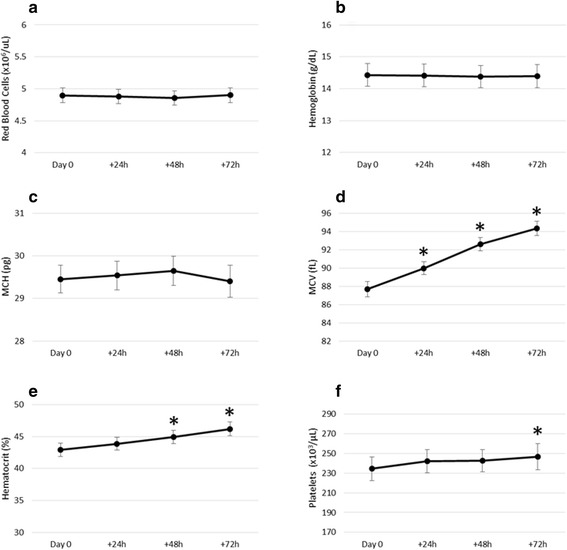
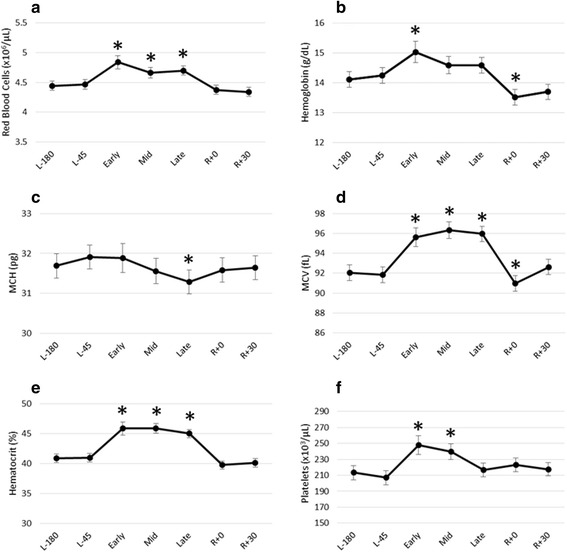
BACKGROUND: Although a state of anemia is perceived to be associated with spaceflight, to date a peripheral blood hematologic assessment of red blood cell (RBC) indices has not been performed during long-duration space missions. METHODS: This investigation collected whole blood samples from astronauts participating in up to 6-months orbital spaceflight, and returned those samples (ambient storage) to Earth for analysis. As samples were always collected near undock of a returning vehicle, the delay from collection to analysis never exceeded 48 h. As a subset of a larger immunologic investigation, a complete blood count was performed. A parallel stability study of the effect of a 48 h delay on these parameters assisted interpretation of the in-flight data. RESULTS: We report that the RBC and hemoglobin were significantly elevated during flight, both parameters deemed stable through the delay of sample return. Although the stability data showed hematocrit to be mildly elevated at +48 h, there was an in-flight increase in hematocrit that was ~3-fold higher in magnitude than the anticipated increase due to the delay in processing. CONCLUSIONS: While susceptible to the possible influence of dehydration or plasma volume alterations, these results suggest astronauts do not develop persistent anemia during spaceflight.
Overview
The claims and statistics of this paper haven’t been checked yet.
Free: it reads the open-access text and checks the first 5 claims that cite a source we can check. Create a free account to check every claim.
Integrity signals
Registry
Cites
Statistics
Figures
Verification
Claims the paper makes
The claims and statistics of this paper haven’t been checked yet.
Free: it reads the open-access text and checks the first 5 claims that cite a source we can check. Create a free account to check every claim.
Claims other papers make about this one
Each is checked against this paper’s own text: does it say what the citing paper says it does?
The check wasn’t confident either way, so it gives no verdict — never disputed.
In the citing paper
“mitochondrial dysfunction attenuates platelet survival and increased risk for thrombovascular events (Kunz et al., 2017; Melchinger et al., 2019), increasing stroke risk (Behrouzi and Punter, 2018).”
From Comprehensive Multi-omics Analysis Reveals Mitochondrial Stress as a Central Biological Hub for Spaceflight Impact (2020) · cites this paper as Kunz et al., 2017
Experimental — accuracy not yet measured
Self-check
Percentages, sums and reported differences re-computed from the paper’s own numbers.
The self-check needs the paper’s full text.
Citations
Cites
Equivalence Tests: A Practical Primer for t Tests, Correlations, and Meta-Analyses
Lakens, D. (2017) · Social Psychological and Personality Science · doi:10.1177/1948550617697177 · Cited by 3,001 · cited 2×
“Lakens D. Equivalence tests: a practical primer for t tests, correlations, and meta-analyses.”
MethodBiomedical Results from Skylab. NASA SP-377
Johnston, R. S., & Dietlein, L. F. (1977) · NASA Technical Reports Server (NASA) · Cited by 773
Acclimation during space flight: effects on human physiology
Williams, D., Kuipers, A., Mukai, C., & Thirsk, R. (2009) · Canadian Medical Association Journal · doi:10.1503/cmaj.090628 · Cited by 378 · cited 2×
“These summary alterations result in an approximate 10% decrease in total blood volume [1] following short”
BackgroundControl of red blood cell mass in spaceflight
Alfrey, C. P., Udden, M. M., Leach-Huntoon, C., Driscoll, T., & Pickett, M. H. (1996) · Journal of Applied Physiology · doi:10.1152/jappl.1996.81.1.98 · Cited by 267 · cited 4×
“Indeed, plasma volume has been shown to decrease by approximately 17% within the first 24 h of spaceflight [2]; however, like changes in RBC mass, the alterations in plasma volume have been primarily observed during short-duration flight or postflight, and little evidence exists describing changes in plasma volume dur…”
BackgroundInfluentialAlterations in adaptive immunity persist during long-duration spaceflight
Crucian, B., Stowe, R. P., Mehta, S., Quiriarte, H., Pierson, D., & Sams, C. (2015) · npj Microgravity · doi:10.1038/npjmgrav.2015.13 · Cited by 252 · cited 2×
“Here we report RBC and platelet indices on blood collected before, during, and after long-duration spaceflight as a subset of a two parent investigations of the effects of long-duration spaceflight on the immune system [8].”
BackgroundSelf-citationCrucian, B. E., Zwart, S. R., Mehta, S., Uchakin, P., Quiriarte, H. D., Pierson, D., Sams, C. F., & Smith, S. M. (2014) · Journal of Interferon & Cytokine Research · doi:10.1089/jir.2013.0129 · Cited by 195 · cited 3×
“Crucian BE, Zwart SR, Mehta S, Uchakin P, Quiriarte HD, Pierson D, Sams CF, Smith SM. Plasma cytokine concentrations indicate that in vivo hormonal regulation of immunity is altered during long-duration spaceflight.”
BackgroundSelf-citationNeocytolysis: physiological down-regulator of red-cell mass
Alfrey, C. P., Rice, L., Udden, M. M., & Driscoll, T. B. (1997) · The Lancet · doi:10.1016/s0140-6736(96)09208-2 · Cited by 166 · cited 1×
“EPO controls RBC mass by regulating the rate of division of RBC progenitors in the bone marrow, and it has also been postulated to play a role in the neocytolysis process by which newly released RBCs are selectively destroyed upon entering into microgravity [12, 15, 22].”
BackgroundMeck, J. V., Reyes, C. J., Perez, S. A., Goldberger, A. L., & Ziegler, M. G. (2001) · Psychosomatic Medicine · doi:10.1097/00006842-200111000-00003 · Cited by 146
Hematology and immunology studies
KIMZEY, S. L., Fischer, C., Johnson, P. C., Ritzmann, S. E., & Mengel, C. E. (1975) · NASA Technical Reports Server (NASA) · Cited by 105
Davis, T. A., Wiesmann, W., Kidwell, W., Cannon, T., Kerns, L., Serke, C., Delaplaine, T., Pranger, A., & Lee, K. P. (1996) · Journal of Leukocyte Biology · doi:10.1002/jlb.60.1.69 · Cited by 96 · cited 4×
“tions [3]; however, the reports that do exist suggest that microgravity and simulated microgravity actually induce a state of thrombocytopenia [16, 17].”
BackgroundInfluentialInfluence of Spaceflight on Erythrokinetics in Man
Leach, C. S., & Johnson, P. C. (1984) · Science · doi:10.1126/science.6729477 · Cited by 86 · cited 3×
“Previous post-flight findings are varied, as both elevations [7, 13] and depressions [7, 11] in RBC count, hemoglobin, and hematocrit have been reported.”
BackgroundRed blood cell and iron metabolism during space flight
Smith, S. M. (2002) · Nutrition · doi:10.1016/s0899-9007(02)00912-7 · Cited by 83
Decreased production of red blood cells in human subjects exposed to microgravity.
Udden, M. M., Driscoll, T. B., Pickett, M. H., Leach-Huntoon, C., & Alfrey, C. P. (1995) · PubMed · Cited by 79
Zini, G. (2013) · International Journal of Laboratory Hematology · doi:10.1111/ijlh.12181 · Cited by 78 · cited 2×
“MCV begins to increase within 6– 12 h of blood collection, which, in turn, causes an elevation in hematocrit without any alterations in RBC concentration or plasma volume, even in refrigerated samples [23].”
BackgroundDestruction of newly released red blood cells in space flight
ALFREY, C. P., UDDEN, M. M., HUNTOON, C. L., & DRISCOLL, T. (1996) · Medicine & Science in Sports & Exercise · doi:10.1097/00005768-199610000-00032 · Cited by 62 · cited 2×
“EPO controls RBC mass by regulating the rate of division of RBC progenitors in the bone marrow, and it has also been postulated to play a role in the neocytolysis process by which newly released RBCs are selectively destroyed upon entering into microgravity [12, 15, 22].”
BackgroundAnemia and Erythropoietin in Space Flights
Santo, N. G. D., Círillo, M., Kirsch, K. A., Correale, G., Drummer, C., Frassl, W., Perna, A. F., Stazio, E. D., Bellini, L., & Gunga, H. (2005) · Seminars in Nephrology · doi:10.1016/j.semnephrol.2005.05.006 · Cited by 57 · cited 1×
“A reduced requirement for oxygen-carrying capabilities and easier delivery of oxygen to tissues while in microgravity may drive some of these changes [5, 6].”
BackgroundNeocytolysis: none, one or many? A reappraisal and future perspectives
Risso, A., Ciana, A., Achilli, C., Antonutto, G., & Minetti, G. (2014) · Frontiers in Physiology · doi:10.3389/fphys.2014.00054 · Cited by 55 · cited 2×
“EPO controls RBC mass by regulating the rate of division of RBC progenitors in the bone marrow, and it has also been postulated to play a role in the neocytolysis process by which newly released RBCs are selectively destroyed upon entering into microgravity [12, 15, 22].”
BackgroundTavassoli, M. (1982) · Blood · doi:10.1182/blood.v60.5.1059.1059 · Cited by 51 · cited 6×
“accepted phenomenon and appears to be a normal adaptation to microgravity [3, 5].”
BackgroundInfluentialFeng, X., Scheinberg, P., Samsel, L., Rios, O. J., Chen, J., McCoy, J. P., Ghanima, W., Bussel, J., & Young, N. S. (2012) · Journal of Thrombosis and Haemostasis · doi:10.1111/j.1538-7836.2012.04757.x · Cited by 46 · cited 1×
“Interestingly, BE Crucian, SR Zwart, S Mehta, P Uchakin, HD Quiriarte, D Pierson, CF Sams and SM Smith [18] recently reported that plasma thrombopoietin, which stimulates platelet production and is generally elevated when platelet levels are low, was elevated throughout 6-months of orbital spaceflight; however, vascul…”
BackgroundLacher, D. A., Barletta, J. M., & Hughes, J. P. (2012) · PubMed · Cited by 46
Biochemical and hematologic changes after short-term space flight.
Leach, C. S. (1992) · PubMed · Cited by 42
Space flight and growth factors
Gunsilius, E., Petzer, A. L., & Gastl, G. A. (1999) · The Lancet · doi:10.1016/s0140-6736(05)75142-4 · Cited by 8 · cited 1×
“Interestingly, BE Crucian, SR Zwart, S Mehta, P Uchakin, HD Quiriarte, D Pierson, CF Sams and SM Smith [18] recently reported that plasma thrombopoietin, which stimulates platelet production and is generally elevated when platelet levels are low, was elevated throughout 6-months of orbital spaceflight; however, vascul…”
BackgroundMp, K. (1991) · PubMed · Cited by 7
Alfrey, C. P. (1995) · NASA STI Repository (National Aeronautics and Space Administration) · Cited by 1
Research works printed but not linked: 1
- Alfrey CP The influence of space flight on erythrokinetics in man 1995 Washington, D.C. NASA
Cited by
da Silveira, W. A., Fazelinia, H., Rosenthal, S. B., Laiakis, E. C., Kim, M. S., Meydan, C., Kidane, Y., Rathi, K. S., Smith, S. M., Stear, B., et al. (2020) · Cell · doi:10.1016/j.cell.2020.11.002 · Cited by 402
“However, mitochondrial dysfunction attenuates platelet survival and increased risk for thrombovascular events (Kunz et al., 2017; Melchinger et al., 2019), increasing stroke risk (Behrouzi and Punter, 2018).”
Self-citationHuman Health during Space Travel: State-of-the-Art Review
Krittanawong, C., Singh, N. K., Scheuring, R. A., Urquieta, E., Bershad, E. M., Macaulay, T. R., Kaplin, S., Dunn, C., Kry, S. F., Russomano, T., et al. (2022) · Cells · doi:10.3390/cells12010040 · Cited by 170
“An additional study collected whole blood sample from astronauts during and after up to 6 months of orbital spaceflight [168].”
BackgroundSelf-citationHow does spaceflight affect the acquired immune system?
Akiyama, T., Horie, K., Hinoi, E., Hiraiwa, M., Kato, A., Maekawa, Y., Takahashi, A., & Furukawa, S. (2020) · npj Microgravity · doi:10.1038/s41526-020-0104-1 · Cited by 132
Long-term spaceflight and the cardiovascular system
Vernice, N. A., Meydan, C., Afshinnekoo, E., & Mason, C. E. (2020) · Precision Clinical Medicine · doi:10.1093/pcmedi/pbaa022 · Cited by 136
Hemolysis contributes to anemia during long-duration space flight
Trudel, G., Shahin, N., Ramsay, T., Laneuville, O., & Louati, H. (2022) · Nature Medicine · doi:10.1038/s41591-021-01637-7 · Cited by 127
Metadata
- Authors
- Kunz, H., Quiriarte, H., Simpson, R. J., Ploutz-Snyder, R., McMonigal, K., Sams, C., & Crucian, B.
- Affiliations
- Wyle (United States) (US)
- Louisiana State University (US)
- University of Houston (US)
- University of Michigan (US)
- Johnson Space Center (US)
- Corresponding author
- Crucian, Brian
- Venue
- BMC Hematology
- Published
- 2017-09-08
- Volume
- 17
- Issue
- 1
- Pages
- 12-12
- ISSN
- 2052-1839 (ISSN-L)
- PMC
- PMC5590186
- OpenAlex
- W2746657538
- Cited by
- 80
- References
- 25
- Citations by year
- 2026: 6 · 2025: 12 · 2024: 11 · 2023: 9 · 2022: 13 · 2021: 9 · 2020: 7 · 2019: 9 · 2018: 4
- FWCI
- 4.05
- Type
- journal article
- Language
- en
- Open access
- hybrid
- doi.org
- Licence
- cc-by
- creativecommons.org/licenses/by/4.0/ (tdm)
- creativecommons.org/licenses/by/4.0/ (vor)
- Locations
- BMC Hematology (publishedVersion, cc-by)
- PubMed Central (publishedVersion, cc-by)
- PubMed (publishedVersion)
- Funders
- National Aeronautics and Space Administration (SMO-015, NNJ10ZSA003N)
- Topics
- Health Sciences › Medicine › Physiology (medical) › Spaceflight effects on biology
- Health Sciences › Medicine › Physiology (medical) › High Altitude and Hypoxia
- Physical Sciences › Engineering › Aerospace Engineering › Space Exploration and Technology
- Keywords
- long-duration spaceflight, astronauts, anemia, red blood cell indices, hematocrit, hemoglobin, hematological changes, sample storage stability, dehydration, plasma volume
About these checks
Registry, retraction, Cites and statistics results are computed, not judged, with one exception: a printed reference that no index lists is read once by a model before it counts as a citation error. Claims are extracted by a model and kept only when their quote appears verbatim in the text; each cited source is then checked, with a model’s help, for whether it says what the claim relies on. Those verdicts can be wrong — read the claim’s quote and the cited source before relying on one.
Statistics and arithmetic are recomputed, not judged.
Confidence bands are shown only for fields calibrated on our annotated test set. None is calibrated yet, so no band is shown.
What counts as a claim ›How we measure confidence ›How we check this ›
Are you an author, or do you see a problem with this page? Request a review
Data sources
Bibliographic data: Semantic Scholar, OpenAlex, Crossref.
Contains information from the Semantic Scholar Academic Graph Datasets, made available under the ODC Attribution License (ODC-BY 1.0).
Semantic Scholar’s data is described in: Kinney, R., et al. (2023). The Semantic Scholar Open Data Platform. arXiv:2301.10140.
