

The DOI matches its Crossref record; 34 of the 34 references it cites were found in a registry or an index; 10 of the 17 sources its claims cite were checked for support.
Exercise therapy improves eGFR, and reduces blood pressure and BMI in non-dialysis CKD patients: evidence from a meta-analysis
Open accessAbstract
Background: Patients with chronic kidney disease (CKD) have a high prevalence of cardiovascular diseases, which often lead to physical inactivity that correlates with CKD exacerbation. The benefits of regular exercise to cardiovascular health have been well established in healthy population and highly suggestive in patients with CKD. To further strengthen the evidence base for the management of CKD, this meta-analysis was performed to systematically evaluate the effects of exercise therapy on renal function, blood pressure, blood lipid and body mass index (BMI) in non-dialysis CKD patients. Methods: This meta-analysis was conducted following a previous protocol. Randomized controlled trials (RCTs) examining the effects of exercise therapy in non-dialysis CKD patients were searched in Pubmed, Embase, Cochrane Library, and three major Chinese biomedical databases (CNKI, WANGFANG and VIP) from their start date to October 30th, 2018. The Cochrane systematic review methods were applied for quality assessment and data extraction, and Revman version 5.3 was used for systematic review and meta-analysis. Results: 13 RCTs, representing 421 patients with non-dialysis CKD, were included in this meta-analysis. Compared to the controls, exercise therapy brought an increase in eGFR (MD = 2.62, 95% CI:0.42 to 4.82, P = 0.02, I 2 = 22%), and decreases in systolic blood pressure (SBP) (MD = -5.61, 95% CI:-8.99 to − 2.23, P = 0.001, I 2 = 44%), diastolic blood pressure (DBP) (MD = -2.87, 95% CI:-3.65 to − 2.08, P < 0.00001, I 2 = 16%) and BMI (MD = -1.32, 95% CI:-2.39 to − 0.25, P = 0.02, I 2 = 0%) in non-dialysis CKD patients. Exercise therapy of short-term (< 3 months) decreased triglyceride (TG) level ( P = 0.0006). However, exercise therapy did not significantly affect serum creatinine (SCr), total cholesterol (TC), high density lipoprotein (HDL) or low density lipoprotein (LDL) in non-dialysis CKD patients. Conclusion: Exercise therapy could benefit non-dialysis CKD patients by increasing eGFR while reducing SBP, DBP and BMI. Additionally, short-term intervention of exercise could decrease TG.
Overview
AI snapshot
Written from the paper’s full text.
TL;DR
This meta-analysis of 13 RCTs in non-dialysis CKD patients found that exercise therapy increased eGFR and reduced systolic blood pressure, diastolic blood pressure, and BMI. It did not significantly affect serum creatinine, total cholesterol, HDL, or LDL overall, though short-term exercise reduced triglycerides.
Key findings
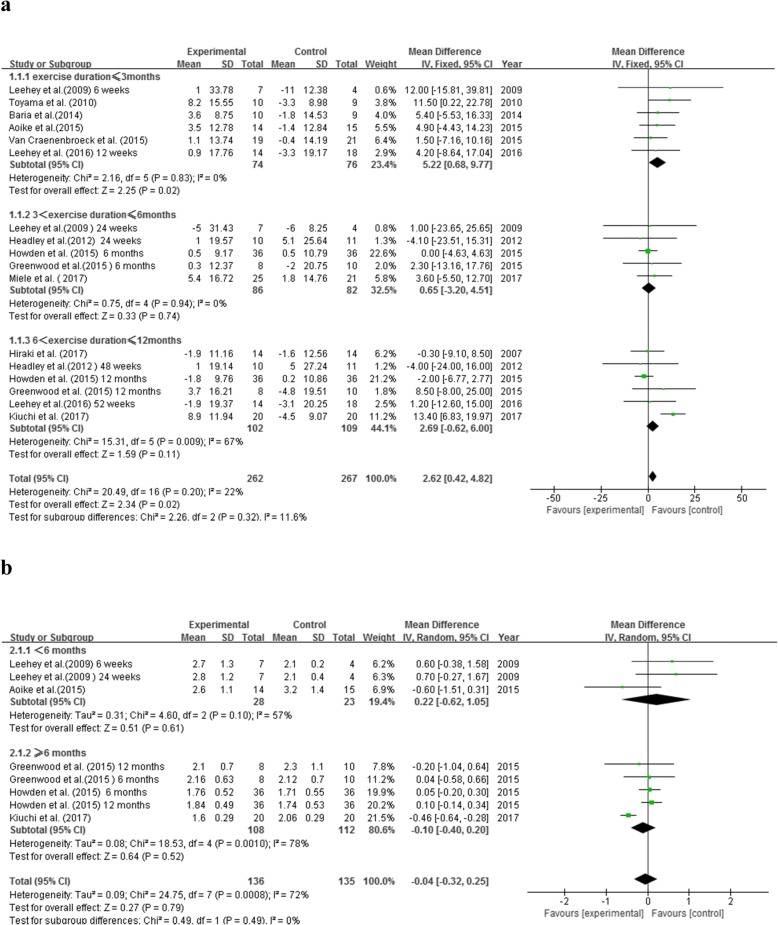
- In 13 RCTs representing 421 non-dialysis CKD patients (experimental/control 212/209), exercise therapy increased eGFR (MD = 2.62, 95% CI 0.42–4.82, P = 0.02, I² = 22%); short-term exercise (<3 months) increased eGFR by 5.22 ml/min/1.73m² (MD = 5.22, 95% CI 0.68–9.77, P = 0.02), but 3–6 months and 6–12 months did not.
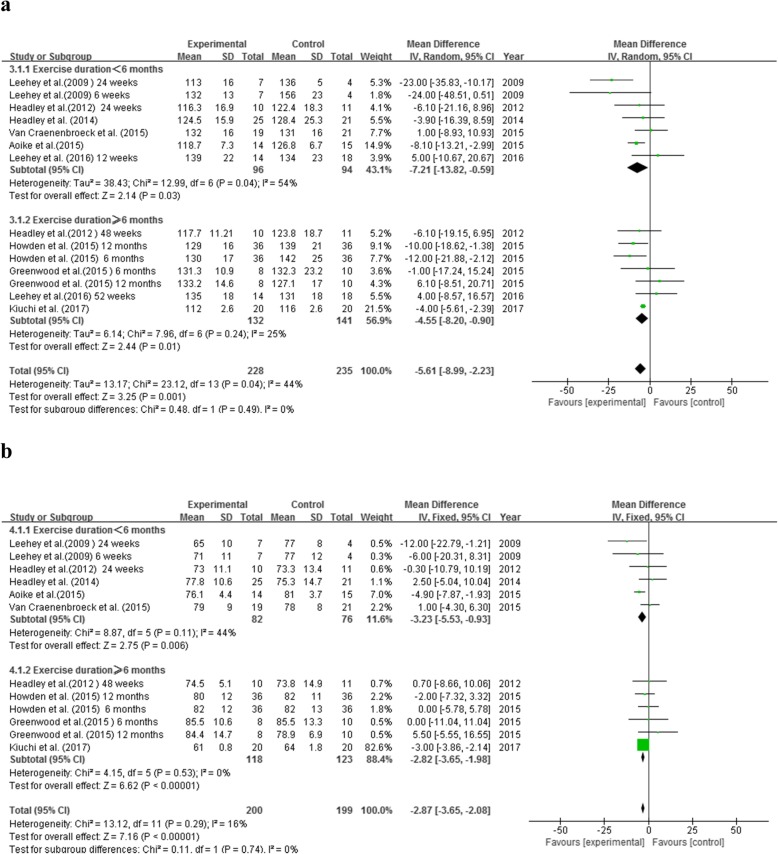
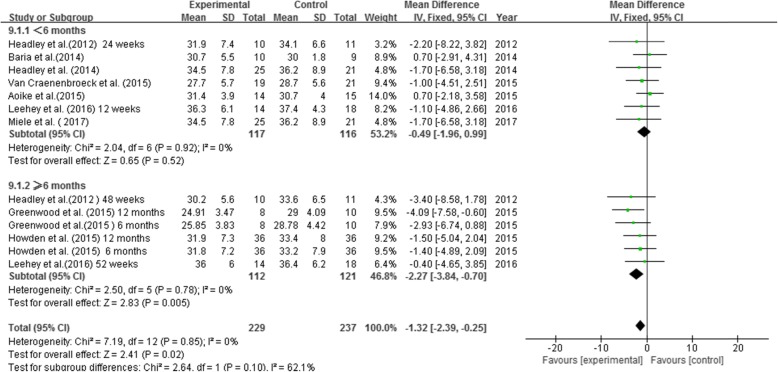
- Exercise reduced SBP by 5.61 mmHg (MD = -5.61, 95% CI -8.99 to -2.23, P = 0.001, I² = 44%), DBP by 2.87 mmHg (MD = -2.87, 95% CI -3.65 to -2.08, P < 0.00001, I² = 16%), and BMI (MD = -1.32, 95% CI -2.39 to -0.25, P = 0.02, I² = 0%); BMI reduction was significant with 6–12 months of exercise (MD = -2.27, 95% CI -3.84 to -0.70, P = 0.005) but not <6 months.
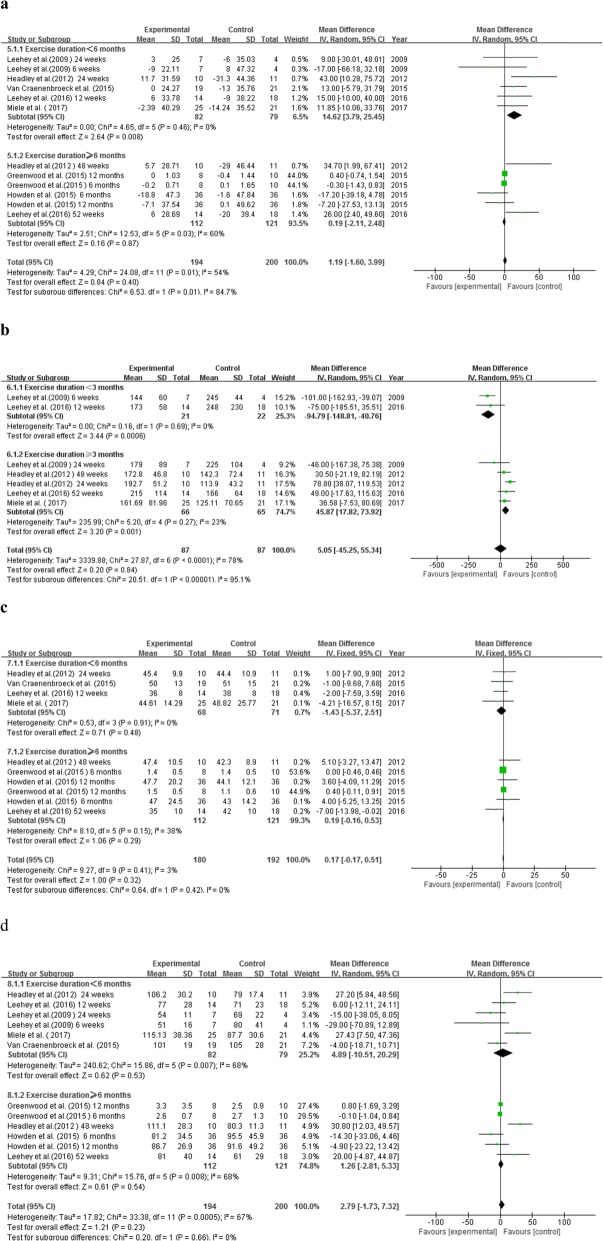
- Exercise did not significantly affect SCr (MD = -0.04, 95% CI -0.32 to 0.25, P = 0.79), TC (MD = 1.19, 95% CI -1.60 to 3.99, P = 0.40), HDL (MD = 0.17, 95% CI -0.17 to 0.51, P = 0.32), or LDL (MD = 2.79, 95% CI -1.73 to 7.32, P = 0.23).
- Short-term exercise (<3 months) decreased TG (MD = -94.79, 95% CI -148.81 to -40.76, P = 0.0006), while 3–12 months increased TG (MD = 45.87, 95% CI 17.82 to 73.92, P = 0.001).
Methods
- Systematic review and meta-analysis of RCTs; searched PubMed, Embase, Cochrane Library, CNKI, WANGFANG, and VIP from database start to October 30, 2018, for English or Chinese studies, following PRISMA and Cochrane methods; RevMan 5.3 used for analysis.
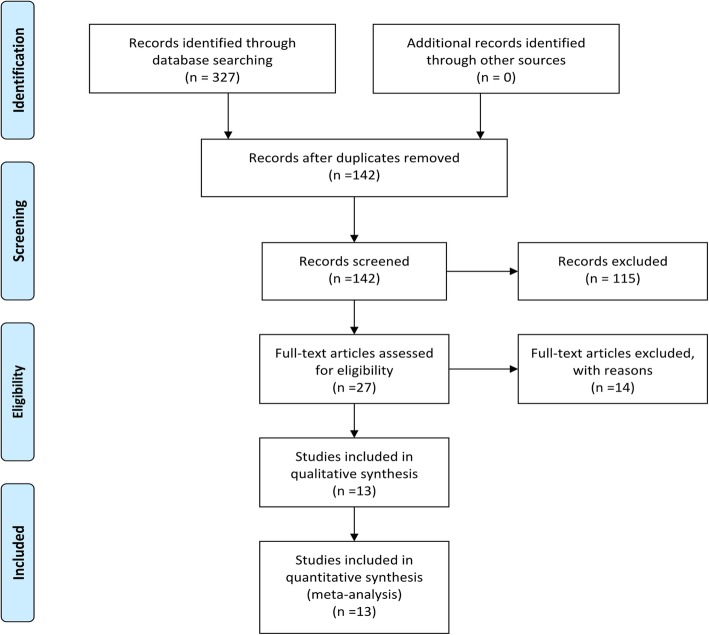
- Included adults >18 years with non-dialysis CKD stage 2–5 receiving aerobic and/or resistance exercise at least once weekly for more than one month, with outcomes including eGFR, blood pressure, or blood lipids; 13 RCTs with 421 participants were included.
- Continuous outcomes pooled as mean difference with 95% CI; heterogeneity assessed by χ² test and I²; fixed- or random-effects models used according to heterogeneity; subgroup analyses by exercise duration; sensitivity analysis by leave-one-out; publication bias assessed via funnel plots.
Limitations
- Stated by the authors: included RCT designs were not entirely uniform; randomization and methods were not clearly described; sample size was relatively small; exercise mode, intensity, and frequency were not completely consistent; studies could not be accurately classified by exercise therapy type, so such subgroup analysis was not performed.
- Evident from the text: participant counts are inconsistent across analyses (abstract reports 421 patients, while eGFR analysis reports 529 participants, SBP 463, DBP 399, and BMI 466), and high heterogeneity was present for SCr (I² = 72%), TG (I² = 78%), LDL (I² = 67%), and TC (I² = 54%).
- Evident from the text: performance bias was high in more than 75% of included RCTs because blinding participants and personnel is challenging in exercise trials, and publication bias was assessed only through funnel plot symmetry.
Model-written summary. Check it against the paper before relying on it.
Integrity signals
Registry
Cites
Statistics
Figures
Verification
Claims the paper makes
24 Own result · 16 Own method · 3 Own interpretation · 1 Supported · 1 Supported so far · 1 Partly supported · 1 Couldn’t confirm · accuracy not yet measured
The cited sources support only part of this claim — read each source’s verdict below.
In the paper
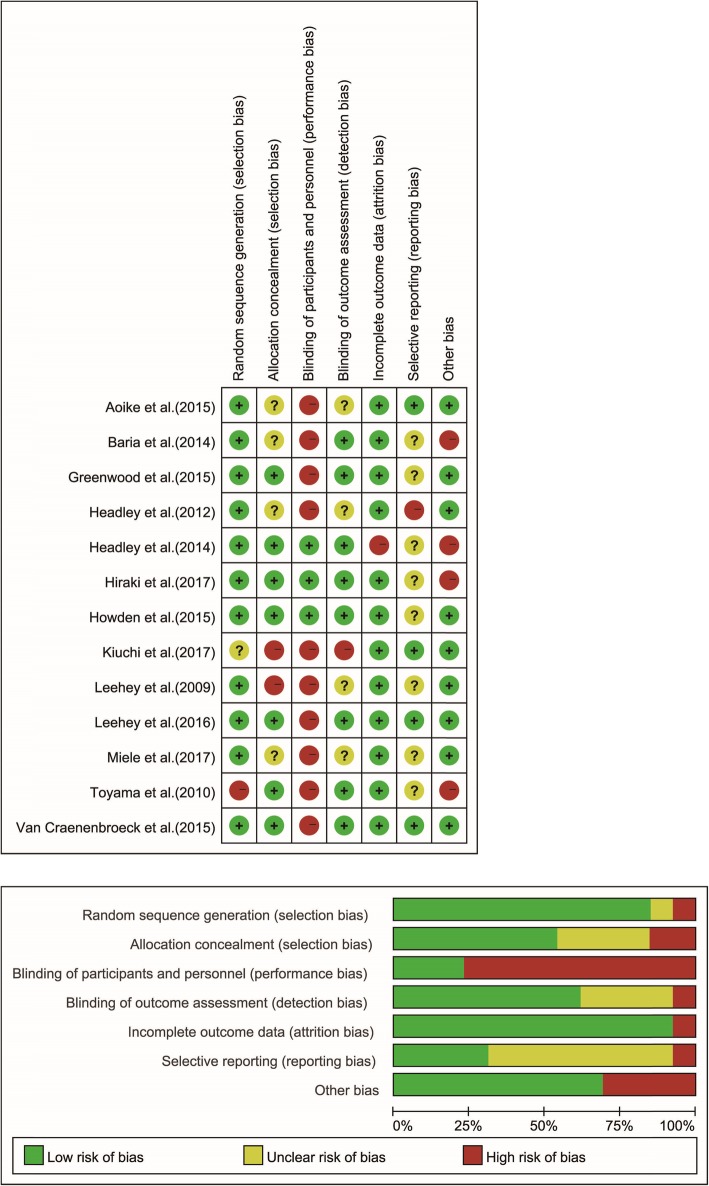
“high risk of performance bias was granted to more than 75% of the studies [7, 9, 10, 13, 15–18, 20, 21].”
§ Exercise therapy improves eGFR, and reduces blood pressure and BMI in non-dialysis CKD patients: evidence from a meta-analysis > Results > Quality assessment
What the sources say
- Not checked — no full text of the sourcecites [7] Aoike DT, Baria F, Kamimura MA, Ammirati A, de Mello MT, Cuppari L. Impact of home-based aerobic exercise on the physical capacity of overweight patients with chronic kidney disease. Int Urol Nephrol. 2015;47(2):359–67. source
- Partly supportedcites [9] Toyama K, Sugiyama S, Oka H, Sumida H, Ogawa H. Exercise therapy correlates with improving renal function through modifying lipid metabolism in patients with cardiovascular disease and chronic kidney disease. J Cardiol. 2010;56(2):142–6. sourceExperimental — accuracy not yet measured
The Methods section (page not provided) describes this study as an open-labeled clinical trial, which supports a concern about performance bias in this study. The paper does not assess performance bias across the citing document’s included studies or establish that more than 75% were rated high risk. (LLM, conf=0.84)
- Not checked — no full text of the sourcecites [10] Greenwood SA, Koufaki P, Mercer TH, MacLaughlin HL, Rush R, Lindup H, et al. Effect of exercise training on estimated GFR, vascular health, and cardiorespiratory fitness in patients with CKD: a pilot randomized controlled trial. Am J Kidney Dis. 2015;65(3):425–34. source
- Could not verifycites [13] Miele EM, Headley SAE, Germain M, Joubert J, Herrick S, Milch C, et al. High-density lipoprotein particle pattern and overall lipid responses to a short-term moderate-intensity aerobic exercise training intervention in patients with chronic kidney disease. Clin Kidney J. 2017;10(4):524–31. sourceExperimental — accuracy not yet measured
The Results describe one randomized exercise intervention, and the Materials and methods describe its procedures. Neither section assesses performance bias across the citing paper’s included studies or reports that more than 75% were rated high risk. Searches for performance bias, blinding, and the 75% figure found no such assessment in our copy. (LLM, conf=0.76)
- Supportedcites [15] Kiuchi MG, Chen S. The effect of the physical activity on polymorphic premature ventricular complexes in chronic kidney disease. Kidney Res Clin Pract. 2017;36(2):167–74. source
The citation identifies one of the studies the citing authors assessed, rather than attributing their aggregate performance-bias calculation to this paper. The Methods describe this prospective study of 40 patients, with 20 in an exercise group and 20 sedentary controls; the cited work is therefore a study of the kind being identified. (LLM, conf=0.86)
- Not checked — no full text of the sourcecites [16] Leehey DJ, Collins E, Kramer HJ, Cooper C, Butler J, McBurney C, et al. Structured exercise in obese diabetic patients with chronic kidney disease: a randomized controlled trial. Am J Nephrol. 2016;44(1):54–62. source
- Not checked — no full text of the sourcecites [17] Van Craenenbroeck AH, Van Craenenbroeck EM, Van Ackeren K, Vrints CJ, Conraads VM, Verpooten GA, et al. Effect of moderate aerobic exercise training on endothelial function and arterial stiffness in CKD stages 3-4: a randomized controlled trial. Am J Kidney Dis. 2015;66(2):285–96. source
- Supportedcites [18] Baria F, Kamimura MA, Aoike DT, Ammirati A, Rocha ML, de Mello MT, et al. Randomized controlled trial to evaluate the impact of aerobic exercise on visceral fat in overweight chronic kidney disease patients. Nephrol Dial Transplant. 2014;29(4):857–64. source
The Study protocol describes a prospective randomized controlled exercise trial. In this sentence, the citation identifies one of the studies the citing authors assessed; the high-risk rating and the figure of more than 75% are the citing authors’ appraisal across studies, not findings attributed to this individual trial. (LLM, conf=0.85)
- Not checked — no full text of the sourcecites [20] Headley S, Germain M, Milch C, Pescatello L, Coughlin MA, Nindl BC, et al. Exercise training improves HR responses and V O2peak in predialysis kidney patients. Med Sci Sports Exerc. 2012;44(12):2392–9. source
- Supportedcites [21] Leehey DJ, Moinuddin I, Bast JP, Qureshi S, Jelinek CS, Cooper C, et al. Aerobic exercise in obese diabetic patients with chronic kidney disease: a randomized and controlled pilot study. Cardiovasc Diabetol. 2009;8:62. source
The citation identifies this paper as one of the studies assessed by the citing authors, rather than attributing their aggregate performance-bias judgment to the trial authors. The Methods > Study Design section describes it as a randomized controlled pilot study with exercise and control groups (page unavailable). (LLM, conf=0.84)
plain- Asserted: passes — The authors put it forward as true.
- Checkable: passes — It can be checked against evidence.
- Load-bearing: unclear — It is unclear whether the paper’s conclusions depend on it.
- Based: passes — The paper gives a reason why it holds.
A result the paper reports from its own data — it cites no other source for it, so there is none to check. The quote shows it is in the paper.
In the paper
“and MD = 0.19, 95% CI: − 0.16 to 0.53, P = 0.29 for those receiving 6–12 months of exercise therapy, respectively”
§ Exercise therapy improves eGFR, and reduces blood pressure and BMI in non-dialysis CKD patients: evidence from a meta-analysis > Results > The impact of exercise therapy on indexes of blood lipids
plainn = 372- Asserted: passes — The authors put it forward as true.
- Checkable: passes — It can be checked against evidence.
- Load-bearing: unclear — It is unclear whether the paper’s conclusions depend on it.
- Based: passes — The paper gives a reason why it holds.
A result the paper reports from its own data — it cites no other source for it, so there is none to check. The quote shows it is in the paper.
In the paper
“DBP was decreased by 3.23 mmHg in subjects receiving less than 6 months of exercise therapy (MD = -3.23, 95% CI: − 5.53 to − 0.93, P = 0.006)”
§ Exercise therapy improves eGFR, and reduces blood pressure and BMI in non-dialysis CKD patients: evidence from a meta-analysis > Results > The impact of exercise therapy on indexes of blood pressure
plaindirect- Asserted: passes — The authors put it forward as true.
- Checkable: passes — It can be checked against evidence.
- Load-bearing: passes — The paper’s conclusions depend on it.
- Based: passes — The paper gives a reason why it holds.
A result the paper reports from its own data — it cites no other source for it, so there is none to check. The quote shows it is in the paper.
In the paper
“and by 2.82 mmHg (MD = -2.82, 95% CI: − 3.65 to − 1.98, P < 0.00001) in subjects receiving 6–12 months of exercise therapy”
§ Exercise therapy improves eGFR, and reduces blood pressure and BMI in non-dialysis CKD patients: evidence from a meta-analysis > Results > The impact of exercise therapy on indexes of blood pressure
plaindirectn = 399 ·- Asserted: passes — The authors put it forward as true.
- Checkable: passes — It can be checked against evidence.
- Load-bearing: passes — The paper’s conclusions depend on it.
- Based: passes — The paper gives a reason why it holds.
A result the paper reports from its own data — it cites no other source for it, so there is none to check. The quote shows it is in the paper.
In the paper
“or 6–12 months of exercise (MD = 2.69, 95% CI: − 0.62 to 6.00, P = 0.11).”
§ Exercise therapy improves eGFR, and reduces blood pressure and BMI in non-dialysis CKD patients: evidence from a meta-analysis > Results > The impact of exercise therapy on indexes of renal function
plain- Asserted: passes — The authors put it forward as true.
- Checkable: passes — It can be checked against evidence.
- Load-bearing: unclear — It is unclear whether the paper’s conclusions depend on it.
- Based: passes — The paper gives a reason why it holds.
A result the paper reports from its own data — it cites no other source for it, so there is none to check. The quote shows it is in the paper.
In the paper
“However, exercise therapy did not significantly affect serum creatinine (SCr), total cholesterol (TC), high density lipoprotein (HDL) or low density lipoprotein (LDL) in non-dialysis CKD patients.”
- Also stated in: § The impact of exercise therapy on indexes of blood lipids · plain
“no significant difference was found in LDL level between the experimental and the control groups (MD = 2.79, 95% CI: − 1.73 to 7.32, P = 0.23)”
§ Exercise therapy improves eGFR, and reduces blood pressure and BMI in non-dialysis CKD patients: evidence from a meta-analysis > Abstract > Results
plainn = 394- Asserted: passes — The authors put it forward as true.
- Checkable: passes — It can be checked against evidence.
- Load-bearing: unclear — It is unclear whether the paper’s conclusions depend on it.
- Based: passes — The paper gives a reason why it holds.
- Also stated in: § The impact of exercise therapy on indexes of blood lipids · plain
A result the paper reports from its own data — it cites no other source for it, so there is none to check. The quote shows it is in the paper.
In the paper
“decreases in systolic blood pressure (SBP) (MD = -5.61, 95% CI:-8.99 to − 2.23, P = 0.001, I2 = 44%)”
- Also stated in: § The impact of exercise therapy on indexes of blood pressure · hedged
“Meta-analysis using the random effect model showed that exercise therapy could markedly reduce SBP by 5.61 mmHg (MD = -5.61, 95% CI: − 8.99 to − 2.23, P = 0.001) in non-dialysis CKD patients.”
- Also stated in: § Discussion · boosted
“Our meta-analysis confirms that exercise therapy reduces SBP by 5.61 mmHg and DBP by 2.87 mmHg in stage 2–5 non-dialysis CKD patients.”
§ Exercise therapy improves eGFR, and reduces blood pressure and BMI in non-dialysis CKD patients: evidence from a meta-analysis > Abstract > Results
boosteddirectn = 463 ·- Asserted: passes — The authors put it forward as true.
- Checkable: passes — It can be checked against evidence.
- Load-bearing: passes — The paper’s conclusions depend on it.
- Based: passes — The paper gives a reason why it holds.
- Also stated in: § The impact of exercise therapy on indexes of blood pressure · hedged
A result the paper reports from its own data — it cites no other source for it, so there is none to check. The quote shows it is in the paper.
In the paper
“but not with 3–6 months of exercise (MD = 0.65, 95% CI: − 3.20 to 4.51, P = 0.74)”
§ Exercise therapy improves eGFR, and reduces blood pressure and BMI in non-dialysis CKD patients: evidence from a meta-analysis > Results > The impact of exercise therapy on indexes of renal function
plain- Asserted: passes — The authors put it forward as true.
- Checkable: passes — It can be checked against evidence.
- Load-bearing: unclear — It is unclear whether the paper’s conclusions depend on it.
- Based: passes — The paper gives a reason why it holds.
A result the paper reports from its own data — it cites no other source for it, so there is none to check. The quote shows it is in the paper.
In the paper
“However, exercise therapy did not significantly affect serum creatinine (SCr), total cholesterol (TC), high density lipoprotein (HDL) or low density lipoprotein (LDL) in non-dialysis CKD patients.”
- Also stated in: § The impact of exercise therapy on indexes of renal function · plain
“we found that there was no significant difference in Scr between the intervention and the control groups (MD = -0.04, 95% CI: − 0.32 to 0.25, P = 0.79).”
§ Exercise therapy improves eGFR, and reduces blood pressure and BMI in non-dialysis CKD patients: evidence from a meta-analysis > Abstract > Results
plainn = 271- Asserted: passes — The authors put it forward as true.
- Checkable: passes — It can be checked against evidence.
- Load-bearing: unclear — It is unclear whether the paper’s conclusions depend on it.
- Based: passes — The paper gives a reason why it holds.
- Also stated in: § The impact of exercise therapy on indexes of renal function · plain
A result the paper reports from its own data — it cites no other source for it, so there is none to check. The quote shows it is in the paper.
In the paper
“Compared to the controls, exercise therapy brought an increase in eGFR (MD = 2.62, 95% CI:0.42 to 4.82, P = 0.02, I2 = 22%)”
- Also stated in: § The impact of exercise therapy on indexes of renal function · hedged
“Our results showed that exercise intervention could bring an average increase of 2.62 ml/min/1.73m2 in eGFR in non-dialysis CKD patients, and the difference was statistically significant (MD = 2.62, 95% CI:0.42 to 4.82, P = 0.02).”
- Also stated in: § Discussion · hedged
“Furthermore, our meta-analysis showed that exercise therapy could increase eGFR by 2.62 ml/min/1.73m2 in non-dialysis CKD patients.”
§ Exercise therapy improves eGFR, and reduces blood pressure and BMI in non-dialysis CKD patients: evidence from a meta-analysis > Abstract > Results
plaindirectn = 529 ·- Asserted: passes — The authors put it forward as true.
- Checkable: passes — It can be checked against evidence.
- Load-bearing: passes — The paper’s conclusions depend on it.
- Based: passes — The paper gives a reason why it holds.
- Also stated in: § The impact of exercise therapy on indexes of renal function · hedged
- Probably not a substantial claim. 11
- It may state two separate claims as one. 2
The sources with a verdict support this claim; the rest weren’t checked yet, have no full text we could read, or their verdicts aren’t rated yet.
In the paper
“Risk for detection bias was unclear in 4 RCTs [7, 13, 20, 21], and was scored as high in Kiuchi study only [15].”
§ Exercise therapy improves eGFR, and reduces blood pressure and BMI in non-dialysis CKD patients: evidence from a meta-analysis > Results > Quality assessment
What the sources say
- Not checked — no full text of the sourcecites [7] Aoike DT, Baria F, Kamimura MA, Ammirati A, de Mello MT, Cuppari L. Impact of home-based aerobic exercise on the physical capacity of overweight patients with chronic kidney disease. Int Urol Nephrol. 2015;47(2):359–67. source
- Supportedcites [13] Miele EM, Headley SAE, Germain M, Joubert J, Herrick S, Milch C, et al. High-density lipoprotein particle pattern and overall lipid responses to a short-term moderate-intensity aerobic exercise training intervention in patients with chronic kidney disease. Clin Kidney J. 2017;10(4):524–31. source
The Materials and methods (Procedures; page unavailable) identifies this study as a randomized exercise-versus-control comparison. Its Procedures and Biochemical analyses describe outcome measurement without stating whether outcome assessors were blinded, consistent with an unclear detection-bias rating for this study. The other three RCTs and the Kiuchi rating are attributed to other citations in the sentence, not to this paper. (LLM, conf=0.82)
- Not checked — no full text of the sourcecites [20] Headley S, Germain M, Milch C, Pescatello L, Coughlin MA, Nindl BC, et al. Exercise training improves HR responses and V O2peak in predialysis kidney patients. Med Sci Sports Exerc. 2012;44(12):2392–9. source
- Supportedcites [21] Leehey DJ, Moinuddin I, Bast JP, Qureshi S, Jelinek CS, Cooper C, et al. Aerobic exercise in obese diabetic patients with chronic kidney disease: a randomized and controlled pilot study. Cardiovasc Diabetol. 2009;8:62. source
The citation identifies one of the RCTs assessed by the citing authors, rather than attributing their detection-bias rating to the trial authors. The Methods > Study Design passage identifies this paper as a randomized controlled pilot study. The four-study count and the rating of the Kiuchi study are not claims made by this source. (LLM, conf=0.86)
- Supportedcites [15] Kiuchi MG, Chen S. The effect of the physical activity on polymorphic premature ventricular complexes in chronic kidney disease. Kidney Res Clin Pract. 2017;36(2):167–74. source
The citation identifies the Kiuchi study being assessed, not a risk-of-bias rating made by Kiuchi and Chen. The Methods section describes that study and its comparison of exercise plus β blocker with β blocker alone; the high-risk score is the citing authors’ own assessment. (LLM, conf=0.85)
plain- Asserted: passes — The authors put it forward as true.
- Checkable: passes — It can be checked against evidence.
- Load-bearing: fails — The paper’s conclusions may not depend on it.
- Based: passes — The paper gives a reason why it holds.
Probably not a substantial claim. The paper’s conclusions may not depend on it. It may state two separate claims as one.
The cited sources that could be checked couldn’t confirm or dispute this claim.
In the paper
“This meta-analysis was conducted following a previous protocol.”
- Also stated in: § Quality assessment · plain
“Following our previously published protocol [12]”
- Also stated in: § Statistical analysis · plain
“Statistical analyses were carried out according to a previous published plan [12].”
§ Exercise therapy improves eGFR, and reduces blood pressure and BMI in non-dialysis CKD patients: evidence from a meta-analysis > Abstract > Methods
What the sources say
- Could not verifycites [12] Wang Y, Yang S, Zhou Q, Zhang H, Yi B. Effects of vitamin D supplementation on renal function, inflammation and glycemic control in patients with diabetic nephropathy: a systematic review and Meta-analysis. Kidney Blood Press Res. 2019;44(1):72–87. sourceExperimental — accuracy not yet measured
The Literature search strategy and Quality assessment sections describe how the meta-analysis was conducted, but neither says it followed a previously published protocol. Searches for “previous protocol,” “published protocol,” and “PROSPERO” found no passage establishing that point in our copy. (LLM, conf=0.72)
plain- Asserted: passes — The authors put it forward as true.
- Checkable: passes — It can be checked against evidence.
- Load-bearing: fails — The paper’s conclusions may not depend on it.
- Based: passes — The paper gives a reason why it holds.
Probably not a substantial claim. The paper’s conclusions may not depend on it.
- Also stated in: § Quality assessment · plain
Every source the paper cites for this claim was checked and supports it.
In the paper
“This systematic search and meta-analysis was performed and reported according to the Preferred Reporting Items for Systematic Reviews and Meta-Analyses (PRISMA) guidelines [11] and checklist (Additional file 1: Checklist).”
§ Exercise therapy improves eGFR, and reduces blood pressure and BMI in non-dialysis CKD patients: evidence from a meta-analysis > Materials and methods > Inclusion criteria
What the sources say
- Supportedcites [11] Moher D, Liberati A, Tetzlaff J. Altman DG; PRISMA group. Preferred reporting items for systematic reviews and Meta-analyses: the PRISMA statement. Open Med 2009;3(3):123-30 . source
The PRISMA Statement section identifies the source as the PRISMA reporting guidance for systematic reviews and meta-analyses and describes its checklist and flow diagram. The citation supports identification of the guidelines; it does not independently verify the citing authors’ claim that they followed them. (LLM, conf=0.92)
plain- Asserted: passes — The authors put it forward as true.
- Checkable: passes — It can be checked against evidence.
- Load-bearing: fails — The paper’s conclusions may not depend on it.
- Based: passes — The paper gives a reason why it holds.
Probably not a substantial claim. The paper’s conclusions may not depend on it.
- Supported
What the paper did — it cites no source for this, so there is none to check. The quote shows it is in the paper.
In the paper
“our literature collection was comprehensive”
§ Exercise therapy improves eGFR, and reduces blood pressure and BMI in non-dialysis CKD patients: evidence from a meta-analysis > Discussion
plain- Asserted: passes — The authors put it forward as true.
- Checkable: passes — It can be checked against evidence.
- Load-bearing: passes — The paper’s conclusions depend on it.
- Based: fails — The paper may give no reason why it holds.
Probably not a substantial claim. The paper may give no reason why it holds.
What the paper did — it cites no source for this, so there is none to check. The quote shows it is in the paper.
In the paper
“Some experimental designs and methods, such as randomization, were not clearly described.”
§ Exercise therapy improves eGFR, and reduces blood pressure and BMI in non-dialysis CKD patients: evidence from a meta-analysis > Discussion
plain- Asserted: passes — The authors put it forward as true.
- Checkable: passes — It can be checked against evidence.
- Load-bearing: fails — The paper’s conclusions may not depend on it.
- Based: passes — The paper gives a reason why it holds.
Probably not a substantial claim. The paper’s conclusions may not depend on it.
What the paper did — it cites no source for this, so there is none to check. The quote shows it is in the paper.
In the paper
“The literature search was conducted by two of the authors (L.Z. and Y.W.) independently.”
§ Exercise therapy improves eGFR, and reduces blood pressure and BMI in non-dialysis CKD patients: evidence from a meta-analysis > Materials and methods > Literature search strategy
plain- Asserted: passes — The authors put it forward as true.
- Checkable: passes — It can be checked against evidence.
- Load-bearing: fails — The paper’s conclusions may not depend on it.
- Based: passes — The paper gives a reason why it holds.
Probably not a substantial claim. The paper’s conclusions may not depend on it.
What the paper did — it cites no source for this, so there is none to check. The quote shows it is in the paper.
In the paper
“Only randomized controlled trials (RCTs) were included.”
§ Exercise therapy improves eGFR, and reduces blood pressure and BMI in non-dialysis CKD patients: evidence from a meta-analysis > Materials and methods > Inclusion criteria
plain- Asserted: passes — The authors put it forward as true.
- Checkable: passes — It can be checked against evidence.
- Load-bearing: passes — The paper’s conclusions depend on it.
- Based: passes — The paper gives a reason why it holds.
Probably not a substantial claim.
What the paper did — it cites no source for this, so there is none to check. The quote shows it is in the paper.
In the paper
“The literatures included in this meta-analysis could not be accurately classified according to the types of exercise therapy and such subgroup analysis was not performed.”
§ Exercise therapy improves eGFR, and reduces blood pressure and BMI in non-dialysis CKD patients: evidence from a meta-analysis > Discussion
plain- Asserted: passes — The authors put it forward as true.
- Checkable: passes — It can be checked against evidence.
- Load-bearing: unclear — It is unclear whether the paper’s conclusions depend on it.
- Based: passes — The paper gives a reason why it holds.
It may state two separate claims as one.
What the paper did — it cites no source for this, so there is none to check. The quote shows it is in the paper.
In the paper
“The Cochrane systematic review methods were applied for quality assessment and data extraction”
- Also stated in: § Quality assessment · plain
“According to the Cochrane Collaboration for Systematic Reviews of Interventions, the following guidelines were applied to assess all included RCTs”
§ Exercise therapy improves eGFR, and reduces blood pressure and BMI in non-dialysis CKD patients: evidence from a meta-analysis > Abstract > Methods
plain- Asserted: passes — The authors put it forward as true.
- Checkable: passes — It can be checked against evidence.
- Load-bearing: fails — The paper’s conclusions may not depend on it.
- Based: passes — The paper gives a reason why it holds.
Probably not a substantial claim. The paper’s conclusions may not depend on it.
- Also stated in: § Quality assessment · plain
What the paper did — it cites no source for this, so there is none to check. The quote shows it is in the paper.
In the paper
“two researchers (L.Z. and Y.W.) performed quality assessment of the selected RCTs independently.”
§ Exercise therapy improves eGFR, and reduces blood pressure and BMI in non-dialysis CKD patients: evidence from a meta-analysis > Materials and methods > Quality assessment
plain- Asserted: passes — The authors put it forward as true.
- Checkable: passes — It can be checked against evidence.
- Load-bearing: fails — The paper’s conclusions may not depend on it.
- Based: passes — The paper gives a reason why it holds.
Probably not a substantial claim. The paper’s conclusions may not depend on it.
What the paper did — it cites no source for this, so there is none to check. The quote shows it is in the paper.
In the paper
“Quantitative data were extracted from the included articles independently by two authors (L.Z. and Y.W.)”
§ Exercise therapy improves eGFR, and reduces blood pressure and BMI in non-dialysis CKD patients: evidence from a meta-analysis > Materials and methods > Data extraction
plain- Asserted: passes — The authors put it forward as true.
- Checkable: passes — It can be checked against evidence.
- Load-bearing: fails — The paper’s conclusions may not depend on it.
- Based: passes — The paper gives a reason why it holds.
Probably not a substantial claim. The paper’s conclusions may not depend on it.
What the paper did — it cites no source for this, so there is none to check. The quote shows it is in the paper.
In the paper
“subgroup analysis was carried out based on the duration of exercise intervention to ensure the reliability of the research results.”
§ Exercise therapy improves eGFR, and reduces blood pressure and BMI in non-dialysis CKD patients: evidence from a meta-analysis > Discussion
plain- Asserted: passes — The authors put it forward as true.
- Checkable: passes — It can be checked against evidence.
- Load-bearing: fails — The paper’s conclusions may not depend on it.
- Based: passes — The paper gives a reason why it holds.
Probably not a substantial claim. The paper’s conclusions may not depend on it.
The paper relies on this without support.
The included RCTs are representative of the broader non-dialysis CKD patient population, so the pooled effects can be generalized to all non-dialysis CKD patients.
“Exercise therapy could benefit non-dialysis CKD patients by increasing eGFR while reducing SBP, DBP and BMI.”
“exercise therapy may be a potential strategy to improve eGFR, reduce SBP, DBP and BMI in non-dialysis CKD patients.”
The paper relies on this without support.
Improvements in eGFR, SBP, DBP, and BMI from exercise therapy translate into clinical benefit for non-dialysis CKD patients.
“Exercise therapy could benefit non-dialysis CKD patients by increasing eGFR while reducing SBP, DBP and BMI.”
“exercise therapy may be a potential strategy to improve eGFR, reduce SBP, DBP and BMI in non-dialysis CKD patients.”
Self-check
Percentages, sums and reported differences re-computed from the paper’s own numbers.
Each contradiction between two passages listed here was confirmed by an independent check.
Rated minor: it would not touch a result — a value no result rests on, a p-value that stays on the same side of the significance level, or a conflict that is clerical, resolved elsewhere in the paper, or outside its own findings.
In the paper
§ Exercise therapy improves eGFR, and reduces blood pressure and BMI in non-dialysis CKD patients: evidence from a meta-analysis > Results > Summary of literature search and study selection
“eGFR estimated glomerular filtration rate (According to MDRD formula).”
§ Exercise therapy improves eGFR, and reduces blood pressure and BMI in non-dialysis CKD patients: evidence from a meta-analysis > Results > The impact of exercise therapy on indexes of renal function
“eGFR was calculated using the CKD-EPI creatinine equation [7, 10, 15, 18] or the MDRD formula [8, 9, 13, 14, 16, 17, 20, 21].”
Rated minor: it would not touch a result — a value no result rests on, a p-value that stays on the same side of the significance level, or a conflict that is clerical, resolved elsewhere in the paper, or outside its own findings.
In the paper
§ Exercise therapy improves eGFR, and reduces blood pressure and BMI in non-dialysis CKD patients: evidence from a meta-analysis > Discussion
“This anti-hypertensive effect is specifically significant in participants who received exercise therapy of less than 6 months.”
§ Exercise therapy improves eGFR, and reduces blood pressure and BMI in non-dialysis CKD patients: evidence from a meta-analysis > Results > The impact of exercise therapy on indexes of blood pressure
“by 4.55 mmHg (MD = -4.55, 95% CI: − 8.20 to − 0.90, P = 0.01) in those who received exercise therapy of 6–12 months”
Rated minor: it would not touch a result — a value no result rests on, a p-value that stays on the same side of the significance level, or a conflict that is clerical, resolved elsewhere in the paper, or outside its own findings.
In the paper
§ Exercise therapy improves eGFR, and reduces blood pressure and BMI in non-dialysis CKD patients: evidence from a meta-analysis > Background
“Aoike et al. evaluated the effects of aerobic training on overweight non-dialysis-dependent CKD patients, and found that exercise improved blood pressure (BP), but not renal function or body mass index (BMI) in these patients [7].”
§ Exercise therapy improves eGFR, and reduces blood pressure and BMI in non-dialysis CKD patients: evidence from a meta-analysis > Results > Summary of literature search and study selection
“Decreased blood pressure and improved renal function”
Citations
Cites
Preferred Reporting Items for Systematic Reviews and Meta-Analyses: the PRISMA statement
Moher, D., Liberati, A., Tetzlaff, J., Altman, D. G., & for the PRISMA Group (2009) · BMJ · doi:10.1136/bmj.b2535 · Cited by 83,823
Preferred Reporting Items for Systematic Reviews and Meta-Analyses: The PRISMA Statement
Moher, D., Liberati, A., Tetzlaff, J., Altman, D. G., & The PRISMA Group (2009) · PLoS Medicine · doi:10.1371/journal.pmed.1000097 · Cited by 64,042
Preferred reporting items for systematic reviews and meta-analyses: the PRISMA Statement.
(2009) · PubMed Central · Cited by 44,859
Preferred reporting items for systematic reviews and meta-analyses: The PRISMA statement
Moher, D., Liberati, A., Tetzlaff, J., Altman, D. G., & the PRISMA Group* (2009) · Annals of Internal Medicine · doi:10.7326/0003-4819-151-4-200908180-00135 · Cited by 37,554
Prevalence of chronic kidney disease in China: a cross-sectional survey
Zhang, L., Wang, F., Wang, L., Wang, W., Liu, B., Liu, J., Chen, M., He, Q., Liao, Y., Yu, X., et al. (2012) · The Lancet · doi:10.1016/s0140-6736(12)60033-6 · Cited by 2,104
Self-citationPescatello, L. S., Franklin, B. A., Fagard, R. H., Farquhar, W. B., Kelley, G. A., & Ray, C. A. (2004) · Medicine & Science in Sports & Exercise · doi:10.1249/01.mss.0000115224.88514.3a · Cited by 1,943
Frey, S., Mir, A. R., & Lucas, M. (1999) · Journal of Renal Nutrition · doi:10.1016/s1051-2276(99)90003-1 · Cited by 835
Exercise Training in Adults With CKD: A Systematic Review and Meta-analysis
Heiwe, S., & Jacobson, S. H. (2014) · American Journal of Kidney Diseases · doi:10.1053/j.ajkd.2014.03.020 · Cited by 519
Association between Physical Performance and All-Cause Mortality in CKD
Roshanravan, B., Robinson‐Cohen, C., Patel, K. V., Ayers, E., Littman, A. J., de Boer, I. H., Ikizler, T. A., Himmelfarb, J., Katzel, L. I., Kestenbaum, B. R., et al. (2013) · Journal of the American Society of Nephrology · doi:10.1681/asn.2012070702 · Cited by 472
Review of muscle wasting associated with chronic kidney disease
Workeneh, B., & Mitch, W. E. (2010) · American Journal of Clinical Nutrition · doi:10.3945/ajcn.2010.28608b · Cited by 285
Research works printed but not linked: 1
- Xiong XY, Bai SJ, Wang YK, Ji TT, Du HX, Li XY, et al. The effect of physical exercise on the physiological function of adult renal transplant recipients:a meta analysis. Zhonghua Shen Zang Bing Za Zhi. 2018;34(6):424–31.
Cited by
Sorted by citations
Kalantar‐Zadeh, K., Jafar, T. H., Nitsch, D., Neuen, B. L., & Perkovic, V. (2021) · The Lancet · doi:10.1016/s0140-6736(21)00519-5 · Cited by 1,696
Clinical practice guideline exercise and lifestyle in chronic kidney disease
Baker, L. A., March, D. S., Wilkinson, T. J., Billany, R. E., BISHOP, N. C., Castle, E. M., Chilcot, J., Davies, M. D., Graham-Brown, M. P. M., Greenwood, S. A., et al. (2022) · BMC Nephrology · doi:10.1186/s12882-021-02618-1 · Cited by 289
Green nephrology and eco-dialysis: A position statement by the Italian Society of Nephrology
On the Behalf of Conservative treatment, P. A. A. P. D. P. G. O. T. I. S. O. N., Piccoli, G. B., Cupisti, A., Aucella, F., Regolisti, G., Lomonte, C., Ferraresi, M., Claudia, D., Ferraresi, C., Russo, R., et al. (2020) · Journal of Nephrology · doi:10.1007/s40620-020-00734-z · Cited by 133
Prevention of cardiorenal damage: importance of albuminuria
Ruilope, L. M., Ortíz, A., Lucía, A., Miranda, B., Álvarez‐Llamas, G., Barderas, M. G., Volpe, M., Ruiz‐Hurtado, G., & Pitt, B. (2022) · European Heart Journal · doi:10.1093/eurheartj/ehac683 · Cited by 116
Strategies to Treat Obesity in Patients With CKD
Chintam, K., & Chang, A. R. (2020) · American Journal of Kidney Diseases · doi:10.1053/j.ajkd.2020.08.016 · Cited by 113
Physical activity in chronic kidney disease and the EXerCise Introduction To Enhance trial
Mallamaci, F., Pisano, A., & Tripepi, G. L. (2020) · Nephrology Dialysis Transplantation · doi:10.1093/ndt/gfaa012 · Cited by 98
Renal Rehabilitation: Exercise Intervention and Nutritional Support in Dialysis Patients
Hoshino, J. (2021) · Nutrients · doi:10.3390/nu13051444 · Cited by 107
Nakamura, K., Sasaki, T., Yamamoto, S., Hayashi, H., Ako, S., & Tanaka, Y. (2020) · Scientific Reports · doi:10.1038/s41598-020-75405-x · Cited by 97
Exercise training in chronic kidney disease—effects, expectations and adherence
Clyne, N., & Anding‐Rost, K. (2021) · Clinical Kidney Journal · doi:10.1093/ckj/sfab012 · Cited by 87
Beetham, K. S., Krishnasamy, R., Stanton, T., Sacre, J. W., Douglas, B., Isbel, N. M., Coombes, J. S., & Howden, E. J. (2022) · Journal of the American Society of Nephrology · doi:10.1681/asn.2021050668 · Cited by 60
Sarnak, M. J., Auguste, B. L., Brown, E. A., Chang, A. R., Chertow, G. M., Hannan, M. F., Herzog, C. A., Nadeau‐Fredette, A., Tang, W. H. W., Wang, A. Y.-M., et al. (2022) · Circulation · doi:10.1161/cir.0000000000001088 · Cited by 63
Lin, C., Hsu, Y., Hsu, P., Lee, Y.-L., Lin, C., Lee, M.-S., & Chiang, S. (2021) · International Journal of Environmental Research and Public Health · doi:10.3390/ijerph18179205 · Cited by 69
Effects of Different Types of Exercise on Kidney Diseases
Arazi, H., Mohabbat, M., Saidie, P., Falahati, A., & Suzuki, K. (2022) · Sports · doi:10.3390/sports10030042 · Cited by 52
Wu, X., Yang, L., Wang, Y., Wang, C., Hu, R., & Wu, Y. (2020) · Clinical Rehabilitation · doi:10.1177/0269215520924459 · Cited by 50
Self-citationZhang, F., Bai, Y., Zhao, X., Huang, L., Wang, W., Zhou, W., & Zhang, H. (2022) · BMJ Open · doi:10.1136/bmjopen-2021-054887 · Cited by 46
Ma, Q., Gao, Y., Lu, J., et al. (2022) · Frontiers in Physiology · doi:10.3389/fphys.2022.901164 · Cited by 41
Yamamoto, R., Ito, T., Nagasawa, Y., Matsui, K., Egawa, M., Nanami, M., Isaka, Y., & Okada, H. (2021) · Journal of Nephrology · doi:10.1007/s40620-020-00865-3 · Cited by 47
The Fatty Kidney and Beyond: A Silent Epidemic
Seng, N. S. H. L., Lohana, P. J. D., Chandra, S., & Jim, B. (2023) · The American Journal of Medicine · doi:10.1016/j.amjmed.2023.06.025 · Cited by 35
Otobe, Y., Rhee, C. M., Nguyen, M. D. T. L., Kalantar‐Zadeh, K., & Kopple, J. D. (2021) · Current Opinion in Nephrology & Hypertension · doi:10.1097/mnh.0000000000000763 · Cited by 42
Williams, K., Carrasquilla, G. D., Ingerslev, L. R., Hochreuter, M. Y., Hansson, S., Pillon, N. J., Donkin, I., Versteyhe, S., Zierath, J. R., Kilpeläinen, T. O., et al. (2021) · Molecular Metabolism · doi:10.1016/j.molmet.2021.101290 · Cited by 36
Healthy aging and chronic kidney disease
Merchant, R. A., & Vathsala, A. (2022) · Kidney Research and Clinical Practice · doi:10.23876/j.krcp.22.112 · Cited by 39
Narrative Review: Clinical Implications and Assessment of Frailty in Patients With Advanced CKD
Kennard, A. L., Glasgow, N., Rainsford, S., & Talaulikar, G. S. (2023) · Kidney International Reports · doi:10.1016/j.ekir.2023.12.022 · Cited by 38
Kouidi, E. J., Hanssen, H., Anding‐Rost, K., Cupisti, A., Deligiannis, A. P., Grupp, C., Koufaki, P., Leeson, P., Segura‐Ortí, E., Craenenbroeck, A. H. V., et al. (2024) · European Journal of Preventive Cardiology · doi:10.1093/eurjpc/zwae130 · Cited by 38
Physical exercise: a polypill against chronic kidney disease
Valenzuela, P. L., Castillo‐García, A., Saco‐Ledo, G., Santos‐Lozano, A., & Lucía, A. (2024) · Nephrology Dialysis Transplantation · doi:10.1093/ndt/gfae062 · Cited by 32
Xu, W., Zhu, Y., Wang, S., Liu, J., & Li, H. (2024) · Antioxidants · doi:10.3390/antiox13121540 · Cited by 34
Otobe, Y., Rhee, C. M., Nguyen, M. D. T. L., Kalantar‐Zadeh, K., & Kopple, J. D. (2022) · eScholarship (California Digital Library) · Cited by 28
Hara, M., Nishida, Y., Tanaka, K., Shimanoe, C., Koga, K., Furukawa, T., Higaki, Y., Shinchi, K., Ikezaki, H., Murata, M., et al. (2021) · Journal of Epidemiology · doi:10.2188/jea.je20210155 · Cited by 29
Traise, A., Dieberg, G., Pearson, M. J., & Smart, N. A. (2024) · Journal of Nephrology · doi:10.1007/s40620-024-02081-9 · Cited by 29
1,3-Butanediol attenuates hypertension and suppresses kidney injury in female rats
Ishimwe, J., Garrett, M. R., & Sasser, J. M. (2020) · American Journal of Physiology-Renal Physiology · doi:10.1152/ajprenal.00141.2020 · Cited by 24
Stepanova, N. (2023) · Biomedicines · doi:10.3390/biomedicines11061654 · Cited by 24
Wilkinson, T. J., BISHOP, N. C., Billany, R. E., Lightfoot, C. J., Castle, E. M., Smith, A. C., & Greenwood, S. A. (2021) · Physical Therapy Reviews · doi:10.1080/10833196.2021.2002641 · Cited by 29
Azouz, A. A., Omar, H. A., Hersi, F., et al. (2021) · Life Sciences · doi:10.1016/j.lfs.2021.120154 · Cited by 22
Sibley, D., Chen, M. S., West, M. A., Matthew, A., Mina, D. S., & Randall, I. M. (2023) · Applied Physiology, Nutrition, and Metabolism · doi:10.1139/apnm-2022-0272 · Cited by 26
Obesity and CKD in Sub-Saharan Africa: A Narrative Review
Oluyombo, R., Oguntade, H. B., Soje, M., Obajolowo, O., & Karim, M. (2021) · Kidney Medicine · doi:10.1016/j.xkme.2021.11.001 · Cited by 21
Review of Exercise Interventions to Improve Clinical Outcomes in Nondialysis CKD
Hayden, C., Begue, G., Gamboa, J. L., Baar, K., & Roshanravan, B. (2024) · Kidney International Reports · doi:10.1016/j.ekir.2024.07.032 · Cited by 21
Exercise for patients with chronic kidney disease: from cells to systems to function
Gollie, J. M., Ryan, A. S., Sen, S., Patel, S. S., Kokkinos, P. F., Harris‐Love, M. O., Scholten, J. D., & Blackman, M. R. (2024) · American Journal of Physiology-Renal Physiology · doi:10.1152/ajprenal.00302.2023 · Cited by 21
Liu, C., Yang, J., Li, H., Deng, Y., He, P., Zhang, J., Chen, S., Chen, S., Wang, X., & Zhang, M. (2024) · Renal Failure · doi:10.1080/0886022x.2024.2373272 · Cited by 19
Oh, W., Cho, M., Jung, S. W., Moon, J., Lee, S. H., Hwang, Y., & Kim, Y. (2022) · Journal of Cachexia Sarcopenia and Muscle · doi:10.1002/jcsm.13167 · Cited by 18
Corrêa, H. D. L., Rosa, T. D. S., dos Santos, R. L., Mestrinho, V. M. D. M. V., Aquino, T. S., Santos, W. O., Neves, R. P., Deus, L. A., Reis, A. L., Barbosa, J. M. D. S., et al. (2025) · Frontiers in Physiology · doi:10.3389/fphys.2024.1444976 · Cited by 19
Resistance exercise training ameliorates chronic kidney disease outcomes in a 5/6 nephrectomy model
Saud, A. R., Luiz, R. S., Leite, A. P. D. O., Muller, C. R., Visoná, I., Reinecke, N. L., da Silva, W. H., da Glória, M. A., Razvickas, C. V., Casarini, D. E., et al. (2021) · Life Sciences · doi:10.1016/j.lfs.2021.119362 · Cited by 17
Billany, R. E., BISHOP, N. C., Castle, E. M., Graham-Brown, M. P. M., Greenwood, S. A., Lightfoot, C. J., & Wilkinson, T. J. (2025) · Renal Failure · doi:10.1080/0886022x.2025.2480246 · Cited by 17
Organ Crosstalk Contributes to Muscle Wasting in Chronic Kidney Disease
Wang, X. H., & Price, S. R. (2023) · Seminars in Nephrology · doi:10.1016/j.semnephrol.2023.151409 · Cited by 18
Neurocirculatory regulation and adaptations to exercise in chronic kidney disease
Sprick, J. D., Jeong, J., Sabino‐Carvalho, J. L., Li, S., & Park, J. (2023) · American Journal of Physiology-Heart and Circulatory Physiology · doi:10.1152/ajpheart.00115.2023 · Cited by 15
Sato, T., Kohzuki, M., Ono, M., et al. (2021) · Journal of Cardiology · doi:10.1016/j.jjcc.2021.03.007 · Cited by 12
Intensive management of obesity in people with severe chronic kidney disease: A review
Song, R., Nolan, B. J., Harb, H., & Sumithran, P. (2021) · Diabetes Obesity and Metabolism · doi:10.1111/dom.14409 · Cited by 12
Yu, Y., Zhao, Q., Jiang, Y., Wang, N., Liu, X., Qiu, Y., Zhu, J., Tong, X., Cui, S., Zaid, M., et al. (2021) · International Journal of Environmental Research and Public Health · doi:10.3390/ijerph181910451 · Cited by 11
Effect of exercise on renal function in diabetic nephropathy—a systematic review and meta-analysis
Nataraj, M., Maiya, A. G., Nagaraju, S. P., Shastry, B. A., & Shivashankara, K. N. (2022) · Journal of Taibah University Medical Sciences · doi:10.1016/j.jtumed.2022.11.002 · Cited by 13
Kaiser, B. W., Comrada, L. N., Gibson, B. M., Reed, E. L., Abbotts, K. S. S., Larson, E. A., Serrano, M. I., Needham, K. W., Chapman, C. L., Halliwill, J. R., et al. (2025) · Journal of Applied Physiology · doi:10.1152/japplphysiol.00959.2024 · Cited by 12
Physical activity, chronic kidney disease, and cardiovascular risk: A study in half a million adults
Castillo‐García, A., Valenzuela, P. L., Saco‐Ledo, G., Morales, J. S., Ruilope, L. M., Santos‐Lozano, A., & Lucía, A. (2024) · Scandinavian Journal of Medicine and Science in Sports · doi:10.1111/sms.14557 · Cited by 10
Davies, M. D., Sandoo, A., & Macdonald, J. H. (2022) · Kidney and Dialysis · doi:10.3390/kidneydial2020026 · Cited by 12
Hoshino, J., Ohigashi, T., Tsunoda, R., et al. (2024) · Scientific Reports · doi:10.1038/s41598-024-77497-1 · Cited by 9
Obesity and Chronic Kidney Disease: The Dual Epidemic in Cardiovascular Health
Grant, C. H., & Bell, S. (2025) · European Cardiology Review · doi:10.15420/ecr.2025.33 · Cited by 11
Cao, R. Y., Zheng, H., Mi, Q., Li, Q., Yuan, W., Ding, Y., & Yang, J. (2018) · Trials · doi:10.1186/s13063-018-2771-8 · Cited by 9
Kogon, A. J., Roem, J., Schneider, M. F., Mitsnefes, M. M., Zemel, B. S., Warady, B. A., Furth, S. L., & Rodig, N. (2022) · Pediatric Nephrology · doi:10.1007/s00467-022-05655-6 · Cited by 9
Mroué, A., Roueff, S., Vanorio-Vega, I., Lazareth, H., Kovalska, O., Flahault, A., Tuppin, P., Thervet, É., & Iliou, M. (2023) · Journal of Cardiopulmonary Rehabilitation and Prevention · doi:10.1097/hcr.0000000000000781 · Cited by 8
Qian, C., Zhou, F., Lu, D., Huang, J., & Sun, M. (2024) · BMC Public Health · doi:10.1186/s12889-024-20498-6 · Cited by 7
Wang, H., Fan, K., Ning, Y., Li, Y., Qi, X., Wang, Z., Xu, K., Zhang, R., Zhou, Y., Dong, H., et al. (2025) · Diabetes Metabolic Syndrome and Obesity · doi:10.2147/dmso.s538554 · Cited by 10
Tracking Biomarker Responses to Exercise in Hypertension
Trillaud, E., Klemmer, P. J., Malin, S. K., & Erdbrügger, U. (2023) · Current Hypertension Reports · doi:10.1007/s11906-023-01252-6 · Cited by 9
Gollie, J. M., & Mahalwar, G. (2024) · Reviews in Cardiovascular Medicine · doi:10.31083/j.rcm2510365 · Cited by 8
Sriperumbuduri, S., Saravanan, P. B., Gupta, G., & Sanyal, A. J. (2025) · Kidney International Reports · doi:10.1016/j.ekir.2025.103757 · Cited by 7
Wilkinson, T. J., MacRae, J. M., Thompson, S., & Bohm, C. J. (2023) · Kidney and Dialysis · doi:10.3390/kidneydial3020020 · Cited by 6
Bhat, P. R., Urooj, A., & Nalloor, S. (2022) · Chronic Diseases and Translational Medicine · doi:10.1002/cdt3.45 · Cited by 6
Kujala, U. M. (2021) · medRxiv · doi:10.1101/2021.02.11.21251608 · Cited by 9
Hypertension management in patients with advanced chronic kidney disease with and without dialysis
Suarez, M. L. G., Arriola‐Montenegro, J., & Rolón, L. (2025) · Current Opinion in Cardiology · doi:10.1097/hco.0000000000001221 · Cited by 6
Physical Activity and Exercise for Cardiometabolic Health and Fitness in CKD
Kistler, B. M., Kirkman, D. L., Kusni, D., Alemañy, G. M., Ribeiro, H. S., Tarca, B. D., Thompson, S., Viana, J. L., Wilkinson, T. J., & Wilund, K. (2025) · Clinical Journal of the American Society of Nephrology · doi:10.2215/cjn.0000000784 · Cited by 5
Hiraki, K., Otobe, Y., Izawa, K. P., et al. (2021) · Clinical and Experimental Nephrology · doi:10.1007/s10157-021-02033-8 · Cited by 5
Home-Based Exercise for People With Chronic Kidney Disease: A Systematic Review and Meta-Analysis
Pedroso, R. V., Sánchez-Lastra, M. A., Iglesias, L., & Pérez, C. A. (2021) · Journal of Physical Activity and Health · doi:10.1123/jpah.2020-0652 · Cited by 7
Kuo, H., Huang, Y., Wu, S.-W., Chang, F.-H., Tsuei, Y.-W., Fan, H.-C., Chiang, W., & Hsiao, P.-J. (2022) · Medicina · doi:10.3390/medicina58050577 · Cited by 6
Jeong, H. Y., An, H., Sung, M. J., Ha, M. H., Lee, Y. H., Yang, D. H., Yang, T. Y., Han, D., & Lee, S. (2023) · BMC Nephrology · doi:10.1186/s12882-023-03146-w · Cited by 5
Exercise, Dialysis, and Environment: A Narrative Review in an Ecological Perspective
Piva, G., Storari, A., Battaglia, Y., Manfredini, F., & Lamberti, N. (2024) · Kidney & Blood Pressure Research · doi:10.1159/000540910 · Cited by 6
Piva, G., Crepaldi, A., Lamberti, N., Caruso, L., Rinaldo, N., Manfredini, R., López‐Soto, P. J., Gasbarro, V., Manfredini, F., & Storari, A. (2022) · Metabolites · doi:10.3390/metabo13010056 · Cited by 4
Chen, S., Hsu, C.-P., Chang, H., et al. (2024) · Journal of the Chinese Medical Association · doi:10.1097/jcma.0000000000001106 · Cited by 4
Ohata, T., Kishikawa, H., Tamaki, A., Matsuzawa, R., Katsuno, T., & Miyamoto, T. (2023) · Journal of Renal Nutrition · doi:10.1053/j.jrn.2023.05.008 · Cited by 4
Wang, X., Zhao, Y., Luo, G., et al. (2025) · Public Health · doi:10.1016/j.puhe.2025.105776 · Cited by 3
Wang, M., Yan, R., Xia, W., Gao, Y.-C., Liu, Y., Li, B., Luo, H., Jing, E., Wang, H., Li, B., et al. (2025) · Frontiers in Endocrinology · doi:10.3389/fendo.2025.1625973 · Cited by 4
Caetano, A. F. P., Alves, F. A. N., França, K. M. D. S., et al. (2023) · Revista Contexto & Saúde · doi:10.21527/2176-7114.2023.47.12984 · Cited by 3
Raesi, R., Kalbasi, S., Gaeini, A. A., Kashani, M. H. G., & Tajik, K. (2024) · Current Diabetes Reviews · doi:10.2174/0115733998320832240805113238 · Cited by 3
Ten tips on how to manage obesity in the presence of CKD
Kaesler, N., & Fleig, S. V. (2024) · Clinical Kidney Journal · doi:10.1093/ckj/sfae317 · Cited by 7
Han, Y., Choi, Y., & Kim, Y. S. (2024) · Clinical Hypertension · doi:10.1186/s40885-024-00291-8 · Cited by 3
Obesity and Metabolic Syndrome
Ikizler, T. A., & Sahinoz, M. (2022) · Springer eBooks · doi:10.1007/978-3-030-86020-2_12 · Cited by 4
Febles, R. M., Miranda, D. M., Perera, C. C., Martin, L. D., Rodríguez‐Rodríguez, A. E., Martín, A. R. G., Báez, D. J. S., & Porrini, E. (2023) · The Nephron journals/Nephron journals · doi:10.1159/000531921 · Cited by 3
Combined sedentarism and high-fat diet induce early signs of kidney injury in C57BL/6J mice
Opurum, P. C., Decker, S. T., Stuart, D., Peterlin, A. D., Paula, V. L., Siripoksup, P., Drummond, M. J., Sánchez, A., Ramkumar, N., & Funai, K. (2025) · American Journal of Physiology-Renal Physiology · doi:10.1152/ajprenal.00259.2024 · Cited by 3
Wang, P., Wu, Y.-F., Lin, M., et al. (2022) · International Journal of Environmental Research and Public Health · doi:10.3390/ijerph19063558 · Cited by 3
Fukuma, S., Ikenoue, T., Bragg‐Gresham, J. L., Norton, E. C., Yamada, Y., Kohmoto, D., & Saran, R. (2020) · BMJ Open · doi:10.1136/bmjopen-2020-037247 · Cited by 3
Moecke, D. P., Martins, G. H. C., Garlet, T. C., Bonorino, K. C., Luciani, M. G., Bion, M. C., dos Santos, B., Gevaerd, M. D. S., Filho, J. A., Santos, A. R. S., et al. (2022) · Inflammation · doi:10.1007/s10753-022-01643-y · Cited by 3
Manfredini, F., Panuccio, V. A., Battaglia, Y., et al. (2025) · BMJ Open Sport & Exercise Medicine · doi:10.1136/bmjsem-2025-002740 · Cited by 2
Physical activity of patients with chronic kidney disease
MARCZYK, K., Berner, A., Stencel, K., et al. (2023) · Journal of Education Health and Sport · doi:10.12775/jehs.2023.21.01.015 · Cited by 2
Chakrabarti, A. K., Drexler, Y. R., Swift, S. L., Lash, J. P., Kaplan, R. C., Perreira, K. M., Mendoza, J. M., Daviglus, M. L., Pirzada, A., Sotres‐Alvarez, D., et al. (2025) · Clinical Journal of the American Society of Nephrology · doi:10.2215/cjn.0000000656 · Cited by 3
Multidisciplinary Experiences in Renal Replacement Therapy
Nunes, A. C. F. (2021) · IntechOpen eBooks · doi:10.5772/intechopen.90960 · Cited by 2
Six months of physical inactivity is insufficient to cause chronic kidney disease in C57BL/6J micePreprint
Opurum, P. C., Decker, S. T., Stuart, D., Peterlin, A. D., Paula, V. L., Siripoksup, P., Drummond, M. J., Sánchez, A., Ramkumar, N., & Funai, K. (2024) · bioRxiv (Cold Spring Harbor Laboratory) · doi:10.1101/2024.08.29.610415 · Cited by 2
Physical activity and cardiorenal health—from associations to interventional studies
Billany, R. E., Smith, A. C., & Graham-Brown, M. P. M. (2024) · Nephrology Dialysis Transplantation · doi:10.1093/ndt/gfae251 · Cited by 1
Vishnevskii, K. A., Gerasimchuk, R. P., Zemchenkov, A. Y., Tikhovskaya, U. A., & Ryasnyansky, V. Y. R. (2025) · Nephrology and Dialysis · doi:10.28996/2618-9801-2025-4-433-442 · Cited by 1
Management of hypertension in chronic kidney disease
Doulton, T., Swift, P. A., & Hiremath, S. S. (2026) · Clinical Medicine · doi:10.1016/j.clinme.2026.100583 · Cited by 1
Effect of Exercise on Health-Related Quality of Life in Patients with End-Stage Renal Disease
Michael, D., Fidelis, J. S., & Pakalomattom, S. J. (2021) · IntechOpen eBooks · doi:10.5772/intechopen.101133 · Cited by 1
Renale relaxatie ter preventie van renale burn-out: een praktische gids
Moor, B. D., & Stas, K. (2020) · Tijdschrift voor Geneeskunde · doi:10.47671/tvg.76.22.20.062
Az elhízás kezelésének főbb irányai a VIII. Magyar Kardiovaszkuláris Konszenzus Konferencia tükrében
Simonyi, G., & Bedros, R. J. (2021) · Hypertonia és Nephrologia · doi:10.33668/hn.25.011
Traise, A., Dieberg, G., Smart, N. A., & Pearson, M. J. (2022) · Research Square · doi:10.21203/rs.3.rs-1440606/v1
Extension of Healthy Life Span of Dialysis Patients in the Era of a 100-Year Life
Inaba, M., & Mori, K. (2021) · MDPI eBooks · doi:10.3390/books978-3-0365-2345-3
Chen, M., Wang, P., Lin, M., et al. (2021) · Research Square · doi:10.21203/rs.3.rs-684455/v1
Goraya, N., & Moran, J. D. (2022) · Nephrology Self-Assessment Program · doi:10.1681/nsap.00032022
Metadata
- Authors
- Zhang, L., Wang, Y., Xiong, L., Luo, Y., Huang, Z., & Yi, B.
- Affiliations
- Central South University (CN)
- Corresponding author
- Yi, Bin
- Venue
- BMC Nephrology
- Published
- 2019-10-29
- Volume
- 20
- Issue
- 1
- Pages
- 398-398
- ISSN
- 1471-2369 (ISSN-L)
- PMC
- PMC6821004
- OpenAlex
- W2982354070
- Cited by
- 132
- References
- 34
- Citations by year
- 2026: 15 · 2025: 18 · 2024: 27 · 2023: 18 · 2022: 21 · 2021: 24 · 2020: 8
- FWCI
- 2.66
- Type
- journal article
- Language
- en
- Open access
- gold
- doi.org
- Locations
- BMC Nephrology (publishedVersion, cc-by)
- PubMed (publishedVersion)
- Europe PMC (PubMed Central) (submittedVersion, cc-by)
- PubMed Central (submittedVersion, cc-by)
- DOAJ (DOAJ: Directory of Open Access Journals) (submittedVersion, cc-by-sa)
- Funders
- the New Xiangya Talent of Third Xiangya Hospital of Central South University (20160309)
- the Scientific Research Project of Health and Family Planning Commission of Hunan Province (B20180194)
- Topics
- Health Sciences › Medicine › Nephrology › Chronic Kidney Disease and Diabetes
- Health Sciences › Medicine › Physiology (medical) › Cardiovascular and exercise physiology
- Health Sciences › Medicine › Public Health, Environmental and Occupational Health › Physical Activity and Health
- Keywords
- exercise therapy, chronic kidney disease, predialysis, estimated glomerular filtration rate, blood pressure, body mass index, serum lipids, triglycerides, serum creatinine, total cholesterol, HDL cholesterol, physical inactivity, cardiovascular risk, renal function, exercise intensity, exercise frequency, exercise mode
- MeSH terms
- Blood Pressure, Cholesterol, Creatinine, Exercise Therapy, Glomerular Filtration Rate, Humans, Kidney, Lipoproteins, HDL, Lipoproteins, LDL, Triglycerides, Body Mass Index, Randomized Controlled Trials as Topic, Uncertainty, Renal Insufficiency, Chronic
About these checks
Registry, retraction, Cites and statistics results are computed, not judged, with one exception: a printed reference that no index lists is read once by a model before it counts as a citation error. Claims are extracted by a model and kept only when their quote appears verbatim in the text; each cited source is then checked, with a model’s help, for whether it says what the claim relies on. Those verdicts can be wrong — read the claim’s quote and the cited source before relying on one.
A language model drew the claims from the paper on 2026-10-25, under version 3 of the claim definition (model deepseek-v4.1-flash, prompt extract-v3).
A second model labelled each claim on 2026-10-25 (model jev-1.13-20260917, definition revision gold-guideline-v0.2).
Cited sources are checked with a language model’s help (gpt-6-sol).
Statistics and arithmetic are recomputed, not judged.
Confidence bands are shown only for fields calibrated on our annotated test set. None is calibrated yet, so no band is shown.
What counts as a claim ›How we measure confidence ›How we check this ›
Are you an author, or do you see a problem with this page? Request a review
