

Clinical features, treatment and outcome in neurosarcoidosis: systematic review and meta-analysis
Open accessThe DOI matches its Crossref record; 42 of the 42 references it cites were found in a registry or an index; none of the 7 sources its claims cite is checked for support yet.
Abstract
BACKGROUND: Neurosarcoidosis is a rare variant of sarcoidosis and is only described in small cohort studies. We define clinical features, treatment and outcome of patients with neurosarcoidosis over the last 35 years. METHODS: We performed a systematic review and meta-analysis of studies on neurosarcoidosis published between 1980 and 2016. Studies were included if they reported at least 5 cases. Studies describing one specific neurological presentation were excluded. RESULTS: We identified 29 articles describing 1088 patients diagnosed between 1965 and 2015. Neurosarcoidosis occurred in 5% of patients with systemic sarcoidosis. Mean age at presentation was 43 years and neurological symptoms were the first clinical manifestation of sarcoidosis in 52%. The most commonly reported feature of neurosarcoidosis was cranial neuropathy in 55%, with the facial and optic nerve most commonly affected, followed by headache in 32%. Pleiocytosis and elevated CSF protein were found in 58 and 63%. MRI of the brain showed abnormalities in 70%. Chest X-ray, chest CT, or gallium-67-scintigraphy showed findings consistent with sarcoidosis in 60%, 70% and 69%, respectively. First line therapy with corticosteroids was initiated in 434 of 539 patients (81%). Second and third line therapy was started in 27 and 9%. Outcome consisted of complete remission in 27%, incomplete remission in 32%, stable disease in 24%, deterioration in 6% and death in 5%. CONCLUSION: Neurosarcoidosis has a heterogeneous clinical presentation and the diagnosis can be difficult because of low sensitivity of ancillary investigations. New treatments have emerged, but nevertheless one third of patients do not respond to treatment. Prospective cohort studies and RCTs on treatment are urgently needed.
Overview
CoChat Summary
TL;DR
This systematic review and meta-analysis pooled 29 studies of 1,088 patients with neurosarcoidosis diagnosed between 1965 and 2015, finding heterogeneous clinical features, limited sensitivity of ancillary tests, and substantial treatment nonresponse. Neurosarcoidosis occurred in 5% of systemic sarcoidosis patients, and about one third did not substantially improve despite treatment.
Key findings
- Neurosarcoidosis occurred in 246 of 5,263 reported systemic sarcoidosis cases (5%, range 2–26%); mean age at presentation was 43 years, and neurological symptoms were the first manifestation of sarcoidosis in 344 of 662 patients (52%).
- The most common feature was cranial neuropathy in 572 of 1,047 patients (55%), most often facial nerve palsy (24%) and optic nerve palsy (21%); headache occurred in 271 of 860 patients (32%).
- CSF pleiocytosis was found in 424 of 730 patients (58%) and elevated CSF protein in 457 of 729 patients (63%); brain MRI abnormalities were reported in 70% in the abstract and 78–79% in the results/table (283/362).
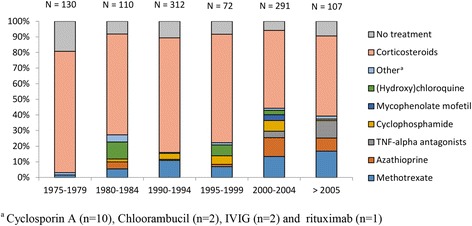
- First-line corticosteroids were initiated in 434 of 539 patients (81%), second-line therapy in 144 of 539 (27%), and third-line therapy in 49 of 539 (9%); outcome was complete remission in 27%, incomplete remission in 32%, stable disease in 24%, deterioration in 6%, and death in 5%.
Methods
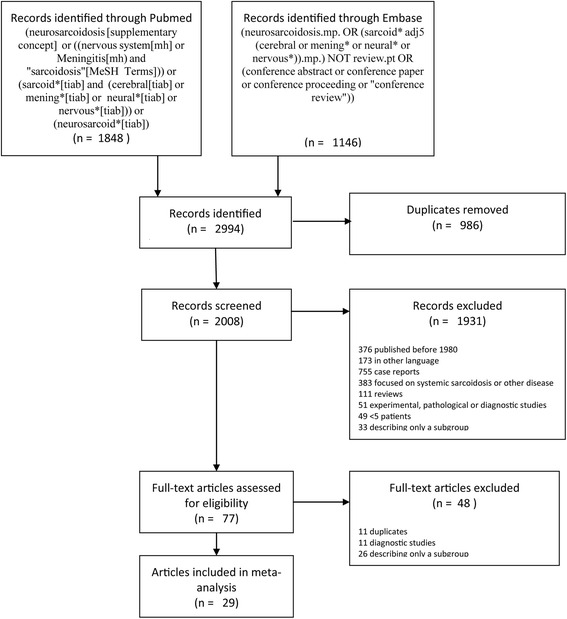
- Systematic review and meta-analysis of PubMed and Embase studies published between 1980 and March 2016 in Dutch, English, French, German, or Spanish.
- Studies were included if they reported at least 5 neurosarcoidosis cases involving at least intracranial manifestations other than isolated hypothalamo-pituitary neurosarcoidosis; studies of one specific neurological presentation and duplicate publications were excluded.
- Pooled reanalysis of published data presented as n/N (%) with 95% confidence intervals; heterogeneity was assessed with Cochrane Q and I² tests.
Limitations
- Stated: all but one study were retrospective, introducing selection bias; most studies were from tertiary referral centres in Europe or the USA; inclusion criteria were heterogeneous and not all items were reported for all patients; patients were included over 30 years, during which mimics such as IgG4-related disease or POEMS syndrome were increasingly recognized; significant heterogeneity was frequent.
- Evident from the text: only 1 of 29 studies was prospective (3%), 24 of 29 (83%) were single-centre, and significant heterogeneity (I² > 50%) occurred for 48 of 110 studied parameters.
Model-written summary. Check it against the paper before relying on it.
Integrity signals
Registry
Cites
Statistics
Figures
Verification
Claims the paper makes
0 Valid · 0 Not valid · 5 Not checked · 39 Own results and interpretations
A result the paper reports from its own data — it cites no other source for it, so there is none to check. The quote shows it is in the paper.
In the paper
“Chest X-ray, chest CT, or gallium-67-scintigraphy showed findings consistent with sarcoidosis in 60%, 70% and 69%, respectively.”
- Also stated in: § Ancillary investigations · plain
“Chest X-ray showed findings consistent with pulmonary or lymph node sarcoidosis in 277 of 461 patients (60%, 95% CI 56–65%) and chest CT in 93 of 132 patients (70%, 95% CI 63–78%).”
§ Clinical features, treatment and outcome in neurosarcoidosis: systematic review and meta-analysis > Abstract > Results
plainn = 461- Asserted: passes — The authors put it forward as true.
- Checkable: passes — It can be checked against evidence.
- Load-bearing: unclear — It is unclear whether the paper’s conclusions depend on it.
- Based: passes — The paper gives a reason why it holds.
- Also stated in: § Ancillary investigations · plain
A result the paper reports from its own data — it cites no other source for it, so there is none to check. The quote shows it is in the paper.
In the paper
“Pleiocytosis and elevated CSF protein were found in 58 and 63%.”
- Also stated in: § Ancillary investigations · plain
“CSF total protein was elevated in 457 of 729 patients (63%, 95% CI 59–66%).”
§ Clinical features, treatment and outcome in neurosarcoidosis: systematic review and meta-analysis > Abstract > Results
plainn = 729- Asserted: passes — The authors put it forward as true.
- Checkable: passes — It can be checked against evidence.
- Load-bearing: unclear — It is unclear whether the paper’s conclusions depend on it.
- Based: passes — The paper gives a reason why it holds.
- Also stated in: § Ancillary investigations · plain
A result the paper reports from its own data — it cites no other source for it, so there is none to check. The quote shows it is in the paper.
In the paper
“New treatments have emerged, but nevertheless one third of patients do not respond to treatment.”
- Also stated in: § Discussion · plain
“Over time, second and third line therapy emerged into the treatment of neurosarcoidosis, most recently TNF-alpha antagonists.”
§ Clinical features, treatment and outcome in neurosarcoidosis: systematic review and meta-analysis > Abstract > Conclusion
plain- Asserted: passes — The authors put it forward as true.
- Checkable: passes — It can be checked against evidence.
- Load-bearing: unclear — It is unclear whether the paper’s conclusions depend on it.
- Based: passes — The paper gives a reason why it holds.
- Also stated in: § Discussion · plain
A result the paper reports from its own data — it cites no other source for it, so there is none to check. The quote shows it is in the paper.
In the paper
“Seven out of 18 patients (39%; 95% CI 16–62%) who received third line therapy had a favourable outcome.”
§ Clinical features, treatment and outcome in neurosarcoidosis: systematic review and meta-analysis > Results > Outcome
plainn = 18- Asserted: passes — The authors put it forward as true.
- Checkable: passes — It can be checked against evidence.
- Load-bearing: unclear — It is unclear whether the paper’s conclusions depend on it.
- Based: passes — The paper gives a reason why it holds.
A result the paper reports from its own data — it cites no other source for it, so there is none to check. The quote shows it is in the paper.
In the paper
“First line therapy with corticosteroids was initiated in 434 of 539 patients (81%).”
- Also stated in: § Treatment · plain
“First line therapy, consisting of corticosteroids, was initiated in 434 of 539 patients (81%, 95% CI 77–84%); subsequently, 24% of these patients were switched from first line to second or third line therapy.”
§ Clinical features, treatment and outcome in neurosarcoidosis: systematic review and meta-analysis > Abstract > Results
plainn = 539- Asserted: passes — The authors put it forward as true.
- Checkable: passes — It can be checked against evidence.
- Load-bearing: unclear — It is unclear whether the paper’s conclusions depend on it.
- Based: passes — The paper gives a reason why it holds.
- Also stated in: § Treatment · plain
32 more claims
Create a free account to see all 44 claims and to verify the 7 references still open.
- Probably not a substantial claim. 2
- It may state two separate claims as one. 5
Claims other papers make about this one
Each is checked against this paper’s own text: does it say what the citing paper says it does?
In the citing paper
“a meta-analysis of 1,088 patients with NS found that only 31% had systemic disease at presentation, whereas 84% eventually developed systemic manifestations.5”
From Neurosarcoidosis: Pathophysiology, Diagnosis, and Treatment (2021) · cites this paper as [5]
In the citing paper
“A meta-analysis from 2016 noted a favorable outcome with glucocorticoids in 71% of patients with NS.5”
From Neurosarcoidosis: Pathophysiology, Diagnosis, and Treatment (2021) · cites this paper as [5]
In the citing paper
“Combined whole-body FDG-PET/CT scan documented abnormalities consistent with sarcoidosis in 15/19 (78%) patients in 1 series5”
From Neurosarcoidosis: Pathophysiology, Diagnosis, and Treatment (2021) · cites this paper as [5]
In the citing paper
“The most frequent presentations of neurosarcoidosis are headache, cranial nerve dysfunction, ataxia, meningitis, sensory, or motor abnormalities (Table 1) [5,14].”
In the citing paper
“Hypothalamic-pituitary (HP) involvement in neurosarcoidosis is often asymptomatic; however, it can present clinically in the form of endocrine dysfunction (Figure 1).”
8 more claims about this paper
Create a free account to see every claim other papers make about this one.
Self-check
Percentages, sums and reported differences re-computed from the paper’s own numbers.
Each contradiction between two passages listed here was confirmed by an independent check.
Rated major: it would touch a result — a value a result rests on, reported and recomputed p-values on opposite sides of the significance level, two passages that conflict with no sign which is right, or a cited work retracted before this paper was published.
In the paper
§ Clinical features, treatment and outcome in neurosarcoidosis: systematic review and meta-analysis > Results > Treatment
“Deterioration | 19/415 (4)”
§ Clinical features, treatment and outcome in neurosarcoidosis: systematic review and meta-analysis > Results > Outcome
“deterioration in 28 of 465 patients (6%; 95% CI 4–8%).”
Rated minor: it would not touch a result — a value no result rests on, a p-value that stays on the same side of the significance level, or a conflict that is clerical, resolved elsewhere in the paper, or outside its own findings.
In the paper
§ Clinical features, treatment and outcome in neurosarcoidosis: systematic review and meta-analysis > Results > Ancillary investigations
“Gallium-67 scintigraphy | 81/123 (66)”
§ Clinical features, treatment and outcome in neurosarcoidosis: systematic review and meta-analysis > Results > Ancillary investigations
“Gallium-67-scintigraphy findings were consistent with sarcoidosis in 96 of 140 patients (69%, 95% CI 61–76%).”
Rated minor: it would not touch a result — a value no result rests on, a p-value that stays on the same side of the significance level, or a conflict that is clerical, resolved elsewhere in the paper, or outside its own findings.
In the paper
“Stable disease | 100/415 (22)”
§ Clinical features, treatment and outcome in neurosarcoidosis: systematic review and meta-analysis > Results > Treatment
Reported 22 · recomputed 24.096386
Rated minor: it would not touch a result — a value no result rests on, a p-value that stays on the same side of the significance level, or a conflict that is clerical, resolved elsewhere in the paper, or outside its own findings.
In the paper
“In total 652 patients were diagnosed according to Zajicek diagnostic criteria: [8, 9] 159 patients (25%) were classified as having definite neurosarcoidosis, 371 (59%) as probable neurosarcoidosis and 95 (15%) as possible neurosarcoidosis.”
§ Clinical features, treatment and outcome in neurosarcoidosis: systematic review and meta-analysis > Results > Patient characteristics
Reported 652 · recomputed 625
Rated minor: it would not touch a result — a value no result rests on, a p-value that stays on the same side of the significance level, or a conflict that is clerical, resolved elsewhere in the paper, or outside its own findings.
In the paper
“Remission | 126/415 (27)”
§ Clinical features, treatment and outcome in neurosarcoidosis: systematic review and meta-analysis > Results > Treatment
Reported 27 · recomputed 30.361446
4 more findings
Create a free account to see every finding of this check.
Citations
Cites
Stone, J. H., Zen, Y., & Deshpande, V. (2012) · New England Journal of Medicine · doi:10.1056/nejmra1104650 · Cited by 2,616
Iannuzzi, M. C., Rybicki, B. A., & Teirstein, A. S. (2007) · New England Journal of Medicine · doi:10.1056/nejmra071714 · Cited by 1,968
Kamisawa, T., Zen, Y., Pillai, S., & Stone, J. H. (2015) · The Lancet · doi:10.1016/s0140-6736(14)60720-0 · Cited by 1,212
Central nervous system sarcoidosisdiagnosis and management
Zajicek, J. P. (1999) · QJM · doi:10.1093/qjmed/92.2.103 · Cited by 742 · cited 2×
“In addition, corticosteroidassociated side effects occur frequently and can be severe [8, 20].”
BackgroundMethodSarcoidosis and Its Neurological Manifestations
Stern, B. J., Krumholz, A., Johns, C., Scott, P., & Nissim, J. (1985) · Archives of Neurology · doi:10.1001/archneur.1985.04060080095022 · Cited by 714 · cited 1×
“Five studies included patients with the diagnosis based on either histological evidence of non-caseating granulomas or clinical and radiologic findings consistent with the diagnosis sarcoidosis [13, 15, 17, 19, 24].”
MethodInfliximab Therapy in Patients with Chronic Sarcoidosis and Pulmonary Involvement
Baughman, R. P., Drent, M., Kavuru, M., Judson, M. A., Costabel, U., du Bois, R., Albera, C., Brutsche, M., Davis, G., Donohue, J. F., et al. (2006) · American Journal of Respiratory and Critical Care Medicine · doi:10.1164/rccm.200603-402oc · Cited by 714 · cited 1×
“Value of TNF-alpha antagonists has been suggested only in a phase II randomised controlled trial (RCT) in pulmonary sarcoidosis [41].”
BackgroundNeurosarcoidosis: a clinical dilemma
Hoitsma, E., Faber, C. G., Drent, M., & Sharma, O. P. (2004) · The Lancet Neurology · doi:10.1016/s1474-4422(04)00805-1 · Cited by 382 · cited 1×
“Neurologic manifestations described are cranial nerve palsy, aseptic meningitis, peripheral neuropathy and myopathy [5].”
BackgroundDiagnosis and Management of Neurological Sarcoidosis
Lower, E. E. (1997) · Archives of Internal Medicine · doi:10.1001/archinte.157.16.1864 · Cited by 330 · cited 1×
“Five studies included patients with the diagnosis based on either histological evidence of non-caseating granulomas or clinical and radiologic findings consistent with the diagnosis sarcoidosis [13, 15, 17, 19, 24].”
MethodNeurosarcoidosis: Signs, Course and Treatment in 35 Confirmed Cases
Chapelon-Abric, C., Ziza, J. M., Piette, J. C., Lévy, Y., Raguin, G., Wechsler, B., Bitker, M. O., Blétry, O., Laplane, D., Bousser, M., et al. (1990) · Medicine · doi:10.1097/00005792-199009000-00001 · Cited by 324
Presentations and outcomes of neurosarcoidosis: a study of 54 cases
Pawate, S., Moses, H., & Sriram, S. (2009) · QJM: An International Journal of Medicine · doi:10.1093/qjmed/hcp042 · Cited by 267
Cited by
Items 101–200 of 384
Solis, J. G., Olascoaga Lugo, A., Rodríguez Florido, M. A., Sandoval Bonilla, B. A., & Malagón Rangel, J. (2020) · Case Reports in Neurological Medicine · doi:10.1155/2020/7956350 · Cited by 7
“An elevated angiotensin converting enzyme is relatively rare, only observed in 35% of the patients, which is the reason we did not consider its normal value relevant in our case [18].”
BackgroundThe use of 67Ga scintigraphy in patients with sarcoidosis
Malinowska, E., Doboszyńska, A., Śliwińska, A., Buscombe, J. R., Kulesza, G., Moczulska, B., & Ćwikła, J. B. (2018) · Nuclear Medicine Review · doi:10.5603/nmr.a2018.0007 · Cited by 9
Grygiel‐Górniak, B. (2021) · Clinical Rheumatology · doi:10.1007/s10067-021-05805-5 · Cited by 8
Diagnostic challenges of neurosarcoidosis in non-endemic areas
Shrestha, K., Kleinschmidt-DeMasters, B. K., & Ormond, D. R. (2024) · Frontiers in Neurology · doi:10.3389/fneur.2023.1220635 · Cited by 8
Common Clinical and Molecular Pathways between Migraine and Sarcoidosis
Tana, C., García‐Azorín, D., Cinetto, F., Mantini, C., Tana, M., Caulo, M., Ricci, F., Martelletti, P., Cipollone, F., & Giamberardino, M. A. (2023) · International Journal of Molecular Sciences · doi:10.3390/ijms24098304 · Cited by 8
Relevance of Medullary Vein Sign in Neurosarcoidosis
Liberio, R. N., Kramer, E., Memon, A. B., Reinbeau, R., Feizi, P., Joseph, J. T., Wu, J., & Sriwastava, S. (2022) · Neurology International · doi:10.3390/neurolint14030052 · Cited by 8
Neurosarcoidosis and Neurologic Complications of Sarcoidosis Treatment
Voortman, M., Drent, M., & Stern, B. J. (2023) · Clinics in Chest Medicine · doi:10.1016/j.ccm.2023.08.005 · Cited by 8
Not everything is as it seems: neurosarcoidosis presenting as leptomeningitis
Galnares‐Olalde, J. A., Berebichez‐Fridman, R., Gómez-Garza, G., Mercado, M., Moreno‐Sánchez, F., & Alegría‐Loyola, M. A. (2018) · Clinical Case Reports · doi:10.1002/ccr3.1418 · Cited by 8
“; therefore, the diagnosis should be complemented with clinical findings and histopathology [14].”
BackgroundOsseous Sarcoidosis with a Solitary Lytic Skull Lesion: A Case Report
Thirunavukarasu, V., Thirunavukarasu, C., Willis, T., & Tsahtsarlis, A. (2019) · Journal of Neurological Surgery Reports · doi:10.1055/s-0039-1687845 · Cited by 8
ter Horst, L., van Zeggeren, I. E., Olie, S. E., I-PACE Study Group, Brenner, J., Citroen, J., van Geel, B. M., Heckenberg, S. G. B., Jellema, K., Kester, M. I., et al. (2023) · Scientific Reports · doi:10.1038/s41598-023-48472-z · Cited by 7
Self-citationCerebral vasculitis as a clinical manifestation of neurosarcoidosis: A scoping review
Winter, Y., Groppa, S., Uphaus, T., Ellwardt, E., Fuest, S., Meuth, S. G., Bittner, S., & Hayani, E. (2024) · Autoimmunity Reviews · doi:10.1016/j.autrev.2024.103528 · Cited by 7
Zannese, T., Viallard, J., Sridi, S., Prot-Leurent, C., Dupuy, H., Léonard, C., Duffau, P., Lazaro, E., Greib, C., & Rivière, É. (2025) · BMC Pulmonary Medicine · doi:10.1186/s12890-024-03428-5 · Cited by 7
“Sarcoidosis can be severe, leading to death in approximately 7% of cases with lung and heart involvement [1, 2], or to severe disability when the central nervous system is damaged (~ 5% of patients) [3, 4].”
Santos, A. D., Courtin, E., Ruet, A., Duffau, P., Mathey, G., Bekkour, I., Ciron, J., Michel, L., Blanc, F. –., Aguilar, J., et al. (2024) · Brain and Behavior · doi:10.1002/brb3.3443 · Cited by 7
“(Fritz et al., 2016).”
BackgroundCerebral vasculitis related to neurosarcoidosis: a case series and systematic literature review
Focke, J. K., Brokbals, M., Becker, J., Veltkamp, R. C., van de Beek, D., Brouwer, M. C., Westendorp, W. F., & Kraemer, M. (2025) · Journal of Neurology · doi:10.1007/s00415-024-12868-2 · Cited by 7
Self-citationClinical Manifestations of Neurosarcoidosis in the Netherlands
Voortman, M., Fritz, D., Vogels, O. J. M., van de Beek, D., Vries, J. D., Brouwer, M. C., & Drent, M. (2019) · Journal of Neurology and Neuroscience · doi:10.36648/2171-6625.10.2.292 · Cited by 7
Self-citationCatatonia as a Presenting Symptom of Isolated Neurosarcoidosis in a Woman With Schizophrenia
Posada, J., Mahan, N., & Meguid, A. S. A. (2021) · Journal of the Academy of Consultation-Liaison Psychiatry · doi:10.1016/j.jaclp.2020.11.003 · Cited by 7
Anadure, R. K., Goel, J., Gupta, S. K., Wilson, V., Saxena, R., Sahu, S., & Mutreja, D. (2020) · Neurology India · doi:10.4103/0028-3886.288976 · Cited by 7
Bilateral Facial Palsy as the Onset of Neurosarcoidosis: A Case Report and a Revision of Literature
Gallo, C., Mazzini, L., Varrasi, C., Vecchio, D., Virgilio, E., & Cantello, R. M. (2022) · NeuroSci · doi:10.3390/neurosci3020023 · Cited by 7
Sudden Vision Loss Due to Optic Neuritis—An Uncommon Presentation of Neurosarcoidosis
Zimna, K., Szturmowicz, M., Sobiecka, M., Błasińska, K., Bartosiewicz, M., & Tomkowski, W. Z. (2023) · Diagnostics · doi:10.3390/diagnostics13152579 · Cited by 7
Neurosarcoidosis: leptomeninigeal, cavernous sinus and pituitary involvement
Bicart-See, L., Roriz, M., Chabriat, H., Buffon, F., & Cognat, E. (2017) · QJM · doi:10.1093/qjmed/hcx037 · Cited by 7
Blume, C., Tuleta, I., Nolte, K. W., Eichhorn, K. W., Jakob, M., Clusmann, H., & Send, T. (2018) · British Journal of Neurosurgery · doi:10.1080/02688697.2018.1506094 · Cited by 7
Neurosarcoidosis: clinical characteristics, diagnosis, and treatment in eight Chinese patients
Wang, F., Guo, D., Liu, Z., Zhou, A., Wei, C., & Jia, J. (2018) · Neurological Sciences · doi:10.1007/s10072-018-3491-2 · Cited by 6
Granulomatous and nongranulomatous neurological sarcoidosis
Tavee, J. O., & Voortman, M. (2022) · European Respiratory Society eBooks · doi:10.1183/2312508x.10032020 · Cited by 6
Bekkour, I., Courtin, E., Dulau, C., Duffau, P., Kremer, L., & Mathey, G. (2023) · Therapeutic Advances in Neurological Disorders · doi:10.1177/17562864231205954 · Cited by 6
“Corticosteroids are usually used as first-line treat-ment for NS, 4,11 and unselective immunosuppressive treatments such as methotrexate, azathioprine, or mycophenolate mofetil are used as steroid-sparing treatment or for second-line treat-ment.”
BackgroundInfluentialThe Role of Neurosurgery in the Treatment of Intracranial Tumor–Like Inflammatory Lesions
Al–Afif, S., Majernik, G. H., Krinawe, Y. A., Esmaeilzadeh, M., Hartmann, C. J., & Krauss, J. K. (2018) · World Neurosurgery · doi:10.1016/j.wneu.2018.12.003 · Cited by 6
Atteinte neurologique de la Sarcoïdose : stratégies diagnostiques et thérapeutiques actuelles
Desbois, A. C., Shor, N., Chapelon-Abric, C., Maillart, É., Touitou, V., Cacoub, P., & Saadoun, D. (2023) · La Revue de Médecine Interne · doi:10.1016/j.revmed.2023.01.013 · Cited by 6
A confusing manifestation: a case report of neurosarcoidosis presenting with confusion
Mubarik, A., Hassan, S. M., Felix, M., Muddassir, S. M., & Haq, F. U. (2018) · Journal of Community Hospital Internal Medicine Perspectives · doi:10.1080/20009666.2018.1536239 · Cited by 6
“Chest X-ray showed 60% of the patients and chest CT showed 70% of the patients had findings consistent with pulmonary or lymph node sarcoidosis [4,5].”
BackgroundMiguel-Ibáñez, R. D., Espinosa-Cárdenas, E., García-Sáenz, M. R., & Sandoval-Bonilla, B. A. (2025) · JCEM Case Reports · doi:10.1210/jcemcr/luaf014 · Cited by 6
Maekawa, T., Goto, Y., Aoki, T., Hino, A., Oka, H., Yokoya, S., & Fujii, A. (2020) · Radiology Case Reports · doi:10.1016/j.radcr.2020.11.047 · Cited by 6
Single Center Experience with Isolated Spinal Cord Neurosarcoidosis
Park, B. J., Ray, E. J., Bathla, G., Bruch, L. A., Streit, J. A., Cho, T. A., & Hitchon, P. W. (2021) · World Neurosurgery · doi:10.1016/j.wneu.2021.09.089 · Cited by 6
Ertürk, A., & Balcı, A. (2023) · Journal of Surgery and Medicine · doi:10.28982/josam.7823 · Cited by 5
Epidemiology, Clinical Features and Treatment of Neurosarcoidosis in Northern Spain
Herrero-Morant, A., Fernández-Ramón, R., Prieto-Pena, D., Martín-Varillas, J. L., Castañeda, S., & Blanco, R. (2025) · Biomedicines · doi:10.3390/biomedicines13061360 · Cited by 5
“%) in our study falls within the previously documented ranges of 32%, 11–55% and 17%, respectively [7,13,14].”
InfluentialApplication of the modified Zajicek criteria to diagnose probable spinal cord neurosarcoidosis
Owen, C. I., Jabeen, F., & Bhattacharjee, A. (2018) · Clinical Case Reports · doi:10.1002/ccr3.1712 · Cited by 5
Neurosarcoidosis causing hydrocephalus: A case series
Lackey, E., Shen, J. Z., Veal, K., Shah, S., & Eckstein, C. P. (2023) · Journal of Neuroimmunology · doi:10.1016/j.jneuroim.2023.578120 · Cited by 5
Borawski, B., Kuca, P., Zieliński, G., Maksymowicz, M., & Witek, P. (2022) · Acta Endocrinologica (Bucharest) · doi:10.4183/aeb.2022.244 · Cited by 5
Herman, M., Russell, K. L., Shi, H., Greene, J. G., & Hutto, S. K. (2026) · Journal of the Neurological Sciences · doi:10.1016/j.jns.2026.125807 · Cited by 5
Collins, M. P., Hadden, R. D. M., & Shahnoor, N. (2023) · Muscle & Nerve · doi:10.1002/mus.27949 · Cited by 5
Longitudinally Extensive Transverse Myelitis as a First Manifestation of Sarcoidosis
Rodrigues, R. A., Alves, T., Sousa, J. A., Jorge, A., & Geraldo, A. (2023) · Cureus · doi:10.7759/cureus.44037 · Cited by 5
“Cerebrospinal fluid analysis usually shows increased protein levels and cell count, with some cases reporting hypoglycorrhachia [7].”
BackgroundEndoscopic Management for Recurrent Hydrocephalus Associated with Neurosarcoidosis
Togashi, S., Maruya, J., Abe, H., Nishimaki, K., Ouchi, H., Hara, K., Tokairin, T., Nishiyama, K., & Shimizu, H. (2020) · World Neurosurgery · doi:10.1016/j.wneu.2020.08.177 · Cited by 5
Sarkoidose als Paradebeispiel einer granulomatösen Erkrankung
Oqueka, T., Galow, S., Simon, M., Weidmann, A., Stübiger, N., Zengin‐Sahm, E., Sinning, C., Krusche, M., Ruffer, N., Steurer, S. A., et al. (2022) · Zeitschrift für Rheumatologie · doi:10.1007/s00393-022-01245-x · Cited by 5
Neurosarcoidosis manifesting as panhypopituitarism
Oye, M., Chahin, M., Krishnan, N., & Reddy, P. (2019) · Clinical Case Reports · doi:10.1002/ccr3.2521 · Cited by 4
Anti-inflammatory Therapy for Sarcoidosis
Obi, O. N. (2023) · Clinics in Chest Medicine · doi:10.1016/j.ccm.2023.08.010 · Cited by 4
The molecular basis of hypoprolactinaemia
Finn, B. P., & Dattani, M. (2024) · Reviews in Endocrine and Metabolic Disorders · doi:10.1007/s11154-024-09906-9 · Cited by 4
Ueno, T., Desaki, R., Kon, T., Haga, R., Nunomura, J., Murakami, K., & Tomiyama, M. (2018) · Clinical Neurology and Neurosurgery · doi:10.1016/j.clineuro.2018.08.006 · Cited by 4
Factors Associated With Relapse in Patients With Neurosarcoidosis
Nitsch, L., Skowasch, D., Courtin, E., Duffau, P., Otto, C., Ruprecht, K., Dambietz, C. A., Heming, M., zu Hörste, G. M., Byg, K., et al. (2025) · Neurology · doi:10.1212/wnl.0000000000213705 · Cited by 4
Jacquot, R., Jamilloux, Y., Bert, A., Gerfaud‐Valentin, M., Richard-Colmant, G., Kodjikian, L., & Sève, P. (2023) · Ocular Immunology and Inflammation · doi:10.1080/09273948.2023.2276304 · Cited by 4
“40 Similarly, 18% of patients had ENT involvement, rather estimated at 10–15% in the literature.”
The challenge of etiologic diagnosis of subacute and chronic meningitis: an analysis of 183 patients
Haddad, M., Sheybani, F., Shirazinia, M., Khoroushi, F., & Baghestani, Z. (2024) · Epidemiology and Infection · doi:10.1017/s0950268824001225 · Cited by 4
“A meta-analysis of 1,088 patients with neurosarcoidosis found that only 31% had systemic disease at the time of presentation, while 84% developed systemic manifestations over time [19].”
BackgroundSarcoïdose médullaire mimant une myélopathie cervico-arthrosique : mauvais pronostic après chirurgie
Urbain, F., Labeyrie, C., Herbrecht, A., Nasser, G., Cauquil, C. A., Adam, C., Lambotte, O., Goujard, C., Adams, D., & Noël, N. (2019) · La Revue de Médecine Interne · doi:10.1016/j.revmed.2019.11.006 · Cited by 4
Mathew, V., Mani, A., Prabhakar, A., Mannam, P., Benjamin, R., Shaikh, A. A., Mathew, D., Singh, P., Nair, A. V., Alexander, P., et al. (2020) · Annals of Indian Academy of Neurology · doi:10.4103/aian.aian_638_19 · Cited by 4
“[18] In our cohort, 3 patients presented with granulomatous mass lesions; however, all of them had other features of NS.”
BackgroundResultInfluentialSarcoidosis of the nervous system: a rare but serious manifestation
Ungprasert, P., & Moss, B. P. (2025) · Current Opinion in Immunology · doi:10.1016/j.coi.2025.102704 · Cited by 4
Tofacitinib as maintenance therapy for refractory Neurosarcoidosis
Bandeira, M., Pesch, V. V., Onofrj, V., Lawson, T. M., & Yıldız, H. (2024) · Acta Neurologica Belgica · doi:10.1007/s13760-024-02680-0 · Cited by 4
“Commonly, corticosteroid pulse therapy is used as first-line, azathioprine and methotrexate as second-line and inflix - imab as third-line treatment [4].”
Granulomatous CNS inflammation associated with seminoma
Massey, J. C., Walker, S., Galloway, M., Fernando, S. L., Parratt, J., Quigley, A., & Kidd, D. P. (2019) · Journal of Neurology · doi:10.1007/s00415-019-09270-8 · Cited by 4
Minor Salivary Gland Biopsy for the Diagnosis of Neurosarcoidosis
Fournier, N., Jamilloux, Y., Gerfaud‐Valentin, M., Streichenberger, N., Vukusic, S., Marignier, R., Androdias, G., & Sève, P. (2023) · European Neurology · doi:10.1159/000529920 · Cited by 4
Predictors of visual outcome in optic neuropathy of sarcoidosis
Nakirikanti, A., Sammak, S. E., Tyor, W. R., & Hutto, S. K. (2025) · Journal of Neuroimmunology · doi:10.1016/j.jneuroim.2025.578529 · Cited by 4
Neurosarcoidosis and infliximab therapy monitored by 18FDG PET/CT
Rivière, É., Schwartz, P., Machelart, I., Greib, C., Pellegrin, J., Viallard, J. F., & Lazaro, E. (2019) · QJM · doi:10.1093/qjmed/hcz148 · Cited by 4
Inflammatory Disorders of the Skull Base: a Review
Anand, P., & Chwalisz, B. K. (2019) · Current Neurology and Neuroscience Reports · doi:10.1007/s11910-019-1016-x · Cited by 4
Neurosarcoidosis presenting as isolated VI nerve palsy
Kimmitt, C. M., Kennedy, W. D. M., Roshankar, G., Burrowes, L. M., & Camara-Lemarroy, C. R. (2020) · Neurological Sciences · doi:10.1007/s10072-020-04848-x · Cited by 4
Contralateral lumbosacral plexopathy following lumbar microdiscectomy
Tulloch, I., Ali, R., & Papadopoulos, M. C. (2018) · British Journal of Neurosurgery · doi:10.1080/02688697.2018.1429568 · Cited by 4
Bui, P. V. (2018) · Case Reports in Medicine · doi:10.1155/2018/3162403 · Cited by 4
Approaching Headaches—A Guide to Differential-Diagnostic Considerations and Causal Claims
Pohl, H. (2023) · Clinical and Translational Neuroscience · doi:10.3390/ctn7030017 · Cited by 3
Quality-of-life assessment in patients with sarcoidosis
Tully, T., Judson, M. A., Patel, A. S., & Birring, S. S. (2022) · European Respiratory Society eBooks · doi:10.1183/2312508x.10033720 · Cited by 3
Positionspapier der ÖGR und ÖGP zur Diagnose und Therapie der Sarkoidose 2024
Sterniste, G., Hackner, K., Moazedi‐Fürst, F., Grasl, M. T., Idzko, M., Shao, G., Guttmann-Ducke, C., Talakić, E., Prosch, H., Lohfink-Schumm, S., et al. (2024) · Wiener klinische Wochenschrift · doi:10.1007/s00508-024-02444-z · Cited by 3
“Diese Fälle stellen eine besondere diagnostische Herausforderung dar, da die Abgrenzung zu anderen neurologischen Erkrankungen schwierig ist [115].”
Focal inflammatory neuropathies
Campo, R. V. D., & Dyck, P. J. (2024) · Handbook of clinical neurology · doi:10.1016/b978-0-323-90108-6.00009-0 · Cited by 3
Pediatric Meningeal Diseases: What Radiologists Need to Know
Patel, D. D., Fenton, L. Z., Lamture, S., & Kandula, V. V. R. (2024) · Tomography · doi:10.3390/tomography10120143 · Cited by 3
Acute Neurologic Manifestations of Systemic Immune-Mediated Diseases
Galetta, K. M., & Bhattacharyya, S. (2021) · Seminars in Neurology · doi:10.1055/s-0041-1733790 · Cited by 3
Immune-Mediated CNS Diseases: a Review
DeSena, A. D. (2017) · Current Physical Medicine and Rehabilitation Reports · doi:10.1007/s40141-017-0160-y · Cited by 3
Lana–Peixoto, M. A., Talim, N. C., & Christo, P. P. (2026) · Biomedicines · doi:10.3390/biomedicines14020334 · Cited by 3
Neurosarcoidosis: The Pan-Neurology Disease
Agarwal, A., Garg, D., Garg, A. K., Shamim, S. A., Sharma, M. C., Jain, D., & Srivastava, A. K. (2023) · Annals of Indian Academy of Neurology · doi:10.4103/aian.aian_305_23 · Cited by 3
Corticosteroids as adjunctive therapy in acute meningitis: a narrative review
Ullah, N., Khan, K., Haseeb, A., Ahmad, Z., Abbas, S. H., Samad, M., Safdar, S., Qayyum, S. N., Khan, R., & Noori, S. (2026) · Annals of Medicine and Surgery · doi:10.1097/ms9.0000000000004620 · Cited by 3
“For instance, neuro-sarcoidosis frequently causes chronic meningitis, and high-dose corticosteroids (e.g., prednisone 40–60 mg daily or IV methylprednisolone 1 g for 3 days in severe flares) are the first-line therapy to induce remission [ 39 ] .”
Neurosarcoidosis presenting as CRVO combined CRAO: a biopsy-proven case report of a Chinese patient
Feng, C., Chen, Q., Liu, W., Bi, Y., Jiang, Q., Wang, M., Sun, X., & Tian, G. (2020) · BMC Ophthalmology · doi:10.1186/s12886-020-01624-5 · Cited by 3
Neurosarcoidosis – A diagnostic challenge?
Gupta, P., Saxena, S., Sharma, V., Thirunavukkarasu, B., Tiwari, S., & Goyal, A. (2023) · Indian Journal of Otolaryngology and Head & Neck Surgery · doi:10.1007/s12070-023-03801-6 · Cited by 3
“The mortality rate among such patients is estimated to be around 5% and up to one-third of affected patients don’t show any clinical improvement on treatment even with newer modalities such as TNF alpha antagonists [5].”
BackgroundInfluentialPearls & Oy-sters: Vocal Cord Palsy as the Presenting Manifestation of Neurosarcoidosis
Iyer, S., Palegar, T., & Ojha, A. (2024) · Neurology · doi:10.1212/wnl.0000000000209955 · Cited by 3
Cyclophosphamide for the treatment of central neurosarcoidosis: Retrospective study in 32 patients
Bigot, W., Chapelon-Abric, C., Mangin, O., Champion, K., Mouly, S. J., Cacoub, P., & Sène, D. (2022) · Joint Bone Spine · doi:10.1016/j.jbspin.2022.105513 · Cited by 3
Joy, S., Agarwal, A., Garg, D., Garg, A. K., Radhakrishnan, D. M., Pandit, A. K., & Srivastava, A. K. (2023) · Journal of Neuroimmunology · doi:10.1016/j.jneuroim.2023.578201 · Cited by 3
Stroke associated with sarcoidosis: A systematic review of reported cases
Pua, D. K., Anand, P., & Bhattacharyya, S. (2024) · Journal of the Neurological Sciences · doi:10.1016/j.jns.2024.123080 · Cited by 3
Hutto, S. K., Gandh, A. S., & Tyor, W. R. (2024) · Neurological Sciences · doi:10.1007/s10072-024-07745-9 · Cited by 3
Isolated Bulbar Palsy: A Rare Presentation of Neurosarcoidosis
Chaudhry, H. S., Ata, F., Abdelghani, M., Kazman, R., & Rahil, A. (2020) · Cureus · doi:10.7759/cureus.7010 · Cited by 3
“Sarcoidosis may present with a wide array of presentations such peripheral neuropathy, myopathy, mono neuritis multiplex, Guillain barre like syndrome, bilateral facial nerve palsy, and last but not least as leptomeningitis while the parenchymal spread of the sarcoidosis involves the base of the brain making cranial n…”
BackgroundInfluentialIntracranial necrotising sarcoid granulomatosis mimicking petroclival meningioma
Valappil, A. V., Shyam Sundar, S., Johny, M., & Javed Ahamed, T. P. (2022) · BMJ Case Reports · doi:10.1136/bcr-2021-247792 · Cited by 3
Kimura, H., Takeuchi, J., Tsutada, T., Ohata, K., Osawa, M., & Itoh, Y. (2018) · Rinsho Shinkeigaku · doi:10.5692/clinicalneurol.cn-001155 · Cited by 3
Ohno, T., Ishihara, M., Shibuya, E., & Mizuki, N. (2018) · Journal of Medical Case Reports · doi:10.1186/s13256-018-1842-5 · Cited by 3
Neurologic Manifestations of Rheumatologic Disorders
McCombe, J. A. (2024) · CONTINUUM Lifelong Learning in Neurology · doi:10.1212/con.0000000000001459 · Cited by 2
Enzephalopathie, Delir und autoimmune Enzephalitis
Piel, J., Leypoldt, F., & Wandinger, K. (2022) · DNP - Der Neurologe und Psychiater · doi:10.1007/s15202-022-4867-y · Cited by 2
Lymphoproliferative Disorders Mimicking Rheumatologic Disease: A Clinical Reasoning Perspective
Shen, J. Z., Carlsen, E. D., Carrillo, L. F., Cintrón-López, D., Kellogg, B., Lim, J. L., Nicholas, M. W., Lackey, E., & Dasher, J. (2025) · Current Allergy and Asthma Reports · doi:10.1007/s11882-025-01220-x · Cited by 2
“Clinicians should be aware that initial steroid responsiveness in lymphoma overlaps significantly in clinical presentation, neuroimaging, and even histopathology with neurosarcoid-osis and CNS vasculitis [172–175].”
Multiple sclerosis in sarcoidosis patients: Two case reports
Etemadifar, M., Mehri, A., Sedaghat, N., Salari, M., & Naini, P. T. (2022) · Clinical Case Reports · doi:10.1002/ccr3.6332 · Cited by 2
Clinical and Laboratory Characteristics of Patients with Neurosarcoidosis
Kürtüncü, M., Emekli, A. S., Gündüz, T., & Samancı, B. (2024) · Nöro Psikiyatri Arşivi · doi:10.29399/npa.28649 · Cited by 2
Takeshima, S., Furuya, T., Yamamoto, M., Noma, M., & Kawate, N. (2023) · Medicine · doi:10.1097/md.0000000000034519 · Cited by 2
“In addition, biopsies of nerve tissue are generally tricky, making the diagnosis very difficult.[3,6] Therefore, it is important to diagnose patients with systemic sarcoidosis that present with neurological symptoms comprehensively, including laboratory findings.”
BackgroundInfluentialNeurosarcoidosis in Critical Care, Internal, and Pulmonary Medicine: A Practical Approach
Queisi, M. M., & Pardo, C. A. (2025) · Seminars in Respiratory and Critical Care Medicine · doi:10.1055/a-2768-3052 · Cited by 2
Konstantinidis, C., Sakakibara, R., Vrijens, D., Werneburg, G. T., Welk, B. K., Kotes, S., Drake, M. J., Rapidi, C., Gomes, C. M., Monteiro, L. A., et al. (2025) · Continence · doi:10.1016/j.cont.2025.102274 · Cited by 2
Journal of Neurology and Neuroscience
(2016) · Journal of Neurology and Neuroscience · doi:10.3823/336 · Cited by 2
Central Nervous System Sarcoidosis: A National-Based registry study.
Al-Zamer, Y. S., Al-Horani, S., Akhdar, M., Majali, G., Alzghoul, H., Younis, M., Ameli, P. A., & Alzghoul, B. N. (2024) · Sarcoidosis vasculitis and diffuse lung diseases · doi:10.36141/svdld.v41i3.15103 · Cited by 2
“A similar representation was observed in cohorts of the aforementioned meta-analysis which revealed Caucasian female predominance (24).”
BackgroundResultInfluentialAloizou, A., Gabriel, T. A., Lukas, C., Gold, R., & Motte, J. (2024) · BMC Neurology · doi:10.1186/s12883-024-03794-x · Cited by 2
“However, the available information on neurosarcoidosis is limited, as the available single-center studies carry a significant degree of variability [2].”
BackgroundInfluentialCochleovestibular nerve involvement in sarcoidosis: a case series and a literature review
Dietrich, T., Renaud, A., Danic, G., Mineur, G., Michel, G., Lavigne, C., & Agard, C. (2025) · QJM · doi:10.1093/qjmed/hcaf153 · Cited by 2
The Neuroimaging Spectrum of Neurosarcoidosis
Hutto, S. K., & Bou, G. (2025) · Clinical neuroimaging. · doi:10.1002/neo2.70030 · Cited by 2
Manzano, G. S., Balaban, D. T., Zhang, Y., Healy, B. C., Chwalisz, B. K., Levy, M., Venna, N., Stern, B. J., Pardo, C. A., Barreras, P., et al. (2025) · Annals of Clinical and Translational Neurology · doi:10.1002/acn3.70200 · Cited by 2
Bilateral Lumbosacral Plexopathy As the Initial Manifestation of Systemic Sarcoidosis: A Case Report
Cardona-Cardona, A. F., Mumtaz, S., Balistreri, L., Stanbourough, R., Butendieck, R. R., Wang, B., Abril, A., Majithia, V., & Berianu, F. (2024) · Cureus · doi:10.7759/cureus.54086 · Cited by 2
Tohme, R., Tanase, A., Dumaine, C., Dusser, P., Adle‐Biassette, H., Despert, V., Faye, A., Mannes, I., Melki, I., Koné‐Paut, I., et al. (2024) · Pediatric Neurology · doi:10.1016/j.pediatrneurol.2024.10.007 · Cited by 2
“11,12,14,19,20 Prolonged treatment with corticosteroids is associated with numerous side effects and can be especially deleterious in growing children, prompting many pediatricians to consider the early use of corticosteroid-sparing additional treatments.”
Neuro-Ophthalmic Manifestations of Neurosarcoidosis
Patel, J. N. (2025) · International Ophthalmology Clinics · doi:10.1097/iio.0000000000000599 · Cited by 2
Bradshaw, M. J., Pawate, S., & Sparks, J. A. (2019) · Springer eBooks · doi:10.1007/978-3-030-16928-2_8 · Cited by 2
Neurosarcoidosis: Analysis of a series of 20 patients
Barrios, L. C., Costalago, M. A., Conde, A. H., Ríos, R. A. D. D. L., García-Portales, R., & Martín, G. G. (2020) · Medicina Clínica (English Edition) · doi:10.1016/j.medcle.2020.04.023 · Cited by 2
Cauda Equina Syndrome in Neurosarcoidosis
Topiwala, K. K., Rath, S., Daniel, A., & Prasad, A. (2020) · Cureus · doi:10.7759/cureus.10069 · Cited by 2
“The most common presenting features of NS are cranial neuropathies in 55% (VII [24%] > II [21%] > V [12%] > VIII [11%]), headache in 32%, sensory symptoms in 29%, and motor weakness in 19% (hemiparesis [9%], paraparesis [11%]) [3].”
BackgroundMethodInfluential
Metadata
- Authors
- Fritz, D., van de Beek, D., & Brouwer, M. C.
- Affiliations
- Amsterdam UMC Location University of Amsterdam (NL)
- Corresponding author
- Brouwer, Matthijs C.
- Venue
- BMC Neurology
- Published
- 2016-11-15
- Volume
- 16
- Issue
- 1
- Pages
- 220-220
- ISSN
- 1471-2377 (ISSN-L)
- PMC
- PMC5109654
- OpenAlex
- W2554532091
- Cited by
- 385
- References
- 42
- Citations by year
- 2026: 43 · 2025: 47 · 2024: 54 · 2023: 54 · 2022: 43 · 2021: 40 · 2020: 37 · 2019: 24 · 2018: 31 · 2017: 10 · 2016: 2
- FWCI
- 3.39
- Type
- journal article
- Language
- en
- Open access
- gold
- doi.org
- Licence
- Locations
- BMC Neurology (publishedVersion, cc-by)
- Pure Amsterdam UMC (publishedVersion, other-oa)
- PubMed Central (publishedVersion, cc-by)
- PubMed (publishedVersion)
- Data Archiving and Networked Services (DANS) (submittedVersion)
- Funders
- ZonMw (916.13.078, 016.116.358)
- European Research Council (281156)
- Topics
- Health Sciences › Medicine › Pulmonary and Respiratory Medicine › Sarcoidosis and Beryllium Toxicity Research
- Health Sciences › Medicine › Hematology › Histiocytic Disorders and Treatments
- Health Sciences › Medicine › Infectious Diseases › Fungal Infections and Studies
- Keywords
- neurosarcoidosis, sarcoidosis, cranial neuropathy, facial nerve, optic nerve, headache, pleocytosis, cerebrospinal fluid protein, brain MRI abnormalities, corticosteroid therapy, treatment outcomes, remission, gallium-67 scintigraphy
- MeSH terms
- Adult, Central Nervous System Diseases, Humans, Sarcoidosis
About these checks
Registry, retraction, Cites and statistics results are computed, not judged, with one exception: a printed reference that no index lists is read once by a model before it counts as a citation error. Claims are extracted by a model and kept only when their quote appears verbatim in the text; each cited source is then checked, with a model’s help, for whether it says what the claim relies on. Those verdicts can be wrong — read the claim’s quote and the cited source before relying on one.
A language model drew the claims from the paper on 2026-11-27, under version 3 of the claim definition (model deepseek-v4.1-flash, prompt extract-v3).
A second model labelled each claim on 2026-11-27 (model jev-1.13-20260917, definition revision gold-guideline-v0.2).
Statistics and arithmetic are recomputed, not judged.
Confidence bands are shown only for fields calibrated on our annotated test set. None is calibrated yet, so no band is shown.
What counts as a claim ›How we measure confidence ›How we check this ›
Are you an author, or do you see a problem with this page? Request a review
Data sources
Bibliographic data: Semantic Scholar, OpenAlex, Crossref.
Contains information from the Semantic Scholar Academic Graph Datasets, made available under the ODC Attribution License (ODC-BY 1.0).
Semantic Scholar’s data is described in: Kinney, R., et al. (2023). The Semantic Scholar Open Data Platform. arXiv:2301.10140.
