

Clinical features, treatment and outcome in neurosarcoidosis: systematic review and meta-analysis
Open accessThe DOI matches its Crossref record; 42 of the 42 references it cites were found in a registry or an index; none of the 7 sources its claims cite is checked for support yet.
Abstract
BACKGROUND: Neurosarcoidosis is a rare variant of sarcoidosis and is only described in small cohort studies. We define clinical features, treatment and outcome of patients with neurosarcoidosis over the last 35 years. METHODS: We performed a systematic review and meta-analysis of studies on neurosarcoidosis published between 1980 and 2016. Studies were included if they reported at least 5 cases. Studies describing one specific neurological presentation were excluded. RESULTS: We identified 29 articles describing 1088 patients diagnosed between 1965 and 2015. Neurosarcoidosis occurred in 5% of patients with systemic sarcoidosis. Mean age at presentation was 43 years and neurological symptoms were the first clinical manifestation of sarcoidosis in 52%. The most commonly reported feature of neurosarcoidosis was cranial neuropathy in 55%, with the facial and optic nerve most commonly affected, followed by headache in 32%. Pleiocytosis and elevated CSF protein were found in 58 and 63%. MRI of the brain showed abnormalities in 70%. Chest X-ray, chest CT, or gallium-67-scintigraphy showed findings consistent with sarcoidosis in 60%, 70% and 69%, respectively. First line therapy with corticosteroids was initiated in 434 of 539 patients (81%). Second and third line therapy was started in 27 and 9%. Outcome consisted of complete remission in 27%, incomplete remission in 32%, stable disease in 24%, deterioration in 6% and death in 5%. CONCLUSION: Neurosarcoidosis has a heterogeneous clinical presentation and the diagnosis can be difficult because of low sensitivity of ancillary investigations. New treatments have emerged, but nevertheless one third of patients do not respond to treatment. Prospective cohort studies and RCTs on treatment are urgently needed.
Overview
CoChat Summary
TL;DR
This systematic review and meta-analysis pooled 29 studies of 1,088 patients with neurosarcoidosis diagnosed between 1965 and 2015, finding heterogeneous clinical features, limited sensitivity of ancillary tests, and substantial treatment nonresponse. Neurosarcoidosis occurred in 5% of systemic sarcoidosis patients, and about one third did not substantially improve despite treatment.
Key findings
- Neurosarcoidosis occurred in 246 of 5,263 reported systemic sarcoidosis cases (5%, range 2–26%); mean age at presentation was 43 years, and neurological symptoms were the first manifestation of sarcoidosis in 344 of 662 patients (52%).
- The most common feature was cranial neuropathy in 572 of 1,047 patients (55%), most often facial nerve palsy (24%) and optic nerve palsy (21%); headache occurred in 271 of 860 patients (32%).
- CSF pleiocytosis was found in 424 of 730 patients (58%) and elevated CSF protein in 457 of 729 patients (63%); brain MRI abnormalities were reported in 70% in the abstract and 78–79% in the results/table (283/362).
- First-line corticosteroids were initiated in 434 of 539 patients (81%), second-line therapy in 144 of 539 (27%), and third-line therapy in 49 of 539 (9%); outcome was complete remission in 27%, incomplete remission in 32%, stable disease in 24%, deterioration in 6%, and death in 5%.
Methods
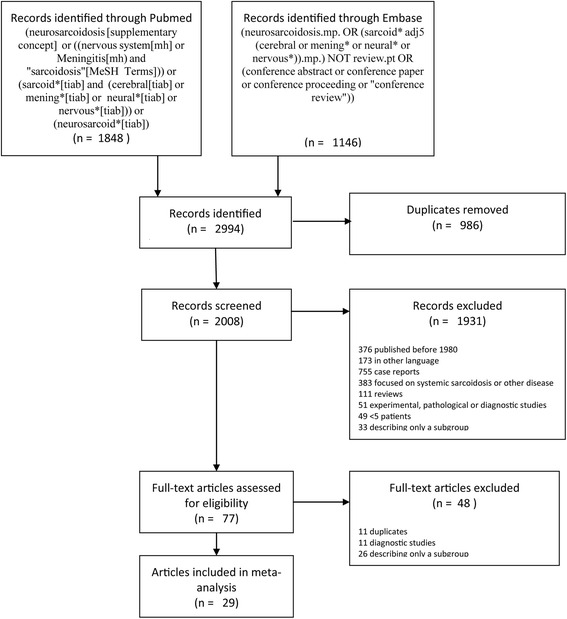
- Systematic review and meta-analysis of PubMed and Embase studies published between 1980 and March 2016 in Dutch, English, French, German, or Spanish.
- Studies were included if they reported at least 5 neurosarcoidosis cases involving at least intracranial manifestations other than isolated hypothalamo-pituitary neurosarcoidosis; studies of one specific neurological presentation and duplicate publications were excluded.
- Pooled reanalysis of published data presented as n/N (%) with 95% confidence intervals; heterogeneity was assessed with Cochrane Q and I² tests.
Limitations
- Stated: all but one study were retrospective, introducing selection bias; most studies were from tertiary referral centres in Europe or the USA; inclusion criteria were heterogeneous and not all items were reported for all patients; patients were included over 30 years, during which mimics such as IgG4-related disease or POEMS syndrome were increasingly recognized; significant heterogeneity was frequent.
- Evident from the text: only 1 of 29 studies was prospective (3%), 24 of 29 (83%) were single-centre, and significant heterogeneity (I² > 50%) occurred for 48 of 110 studied parameters.
Model-written summary. Check it against the paper before relying on it.
Integrity signals
Registry
Cites
Statistics
Figures
Verification
Claims the paper makes
0 Valid · 0 Not valid · 5 Not checked · 39 Own results and interpretations
A result the paper reports from its own data — it cites no other source for it, so there is none to check. The quote shows it is in the paper.
In the paper
“Chest X-ray, chest CT, or gallium-67-scintigraphy showed findings consistent with sarcoidosis in 60%, 70% and 69%, respectively.”
- Also stated in: § Ancillary investigations · plain
“Chest X-ray showed findings consistent with pulmonary or lymph node sarcoidosis in 277 of 461 patients (60%, 95% CI 56–65%) and chest CT in 93 of 132 patients (70%, 95% CI 63–78%).”
§ Clinical features, treatment and outcome in neurosarcoidosis: systematic review and meta-analysis > Abstract > Results
plainn = 461- Asserted: passes — The authors put it forward as true.
- Checkable: passes — It can be checked against evidence.
- Load-bearing: unclear — It is unclear whether the paper’s conclusions depend on it.
- Based: passes — The paper gives a reason why it holds.
- Also stated in: § Ancillary investigations · plain
A result the paper reports from its own data — it cites no other source for it, so there is none to check. The quote shows it is in the paper.
In the paper
“Pleiocytosis and elevated CSF protein were found in 58 and 63%.”
- Also stated in: § Ancillary investigations · plain
“CSF total protein was elevated in 457 of 729 patients (63%, 95% CI 59–66%).”
§ Clinical features, treatment and outcome in neurosarcoidosis: systematic review and meta-analysis > Abstract > Results
plainn = 729- Asserted: passes — The authors put it forward as true.
- Checkable: passes — It can be checked against evidence.
- Load-bearing: unclear — It is unclear whether the paper’s conclusions depend on it.
- Based: passes — The paper gives a reason why it holds.
- Also stated in: § Ancillary investigations · plain
A result the paper reports from its own data — it cites no other source for it, so there is none to check. The quote shows it is in the paper.
In the paper
“New treatments have emerged, but nevertheless one third of patients do not respond to treatment.”
- Also stated in: § Discussion · plain
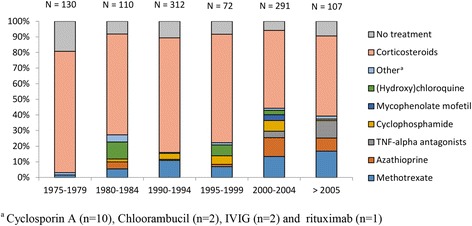
“Over time, second and third line therapy emerged into the treatment of neurosarcoidosis, most recently TNF-alpha antagonists.”
§ Clinical features, treatment and outcome in neurosarcoidosis: systematic review and meta-analysis > Abstract > Conclusion
plain- Asserted: passes — The authors put it forward as true.
- Checkable: passes — It can be checked against evidence.
- Load-bearing: unclear — It is unclear whether the paper’s conclusions depend on it.
- Based: passes — The paper gives a reason why it holds.
- Also stated in: § Discussion · plain
A result the paper reports from its own data — it cites no other source for it, so there is none to check. The quote shows it is in the paper.
In the paper
“Seven out of 18 patients (39%; 95% CI 16–62%) who received third line therapy had a favourable outcome.”
§ Clinical features, treatment and outcome in neurosarcoidosis: systematic review and meta-analysis > Results > Outcome
plainn = 18- Asserted: passes — The authors put it forward as true.
- Checkable: passes — It can be checked against evidence.
- Load-bearing: unclear — It is unclear whether the paper’s conclusions depend on it.
- Based: passes — The paper gives a reason why it holds.
A result the paper reports from its own data — it cites no other source for it, so there is none to check. The quote shows it is in the paper.
In the paper
“First line therapy with corticosteroids was initiated in 434 of 539 patients (81%).”
- Also stated in: § Treatment · plain
“First line therapy, consisting of corticosteroids, was initiated in 434 of 539 patients (81%, 95% CI 77–84%); subsequently, 24% of these patients were switched from first line to second or third line therapy.”
§ Clinical features, treatment and outcome in neurosarcoidosis: systematic review and meta-analysis > Abstract > Results
plainn = 539- Asserted: passes — The authors put it forward as true.
- Checkable: passes — It can be checked against evidence.
- Load-bearing: unclear — It is unclear whether the paper’s conclusions depend on it.
- Based: passes — The paper gives a reason why it holds.
- Also stated in: § Treatment · plain
32 more claims
Create a free account to see all 44 claims and to verify the 7 references still open.
- Probably not a substantial claim. 2
- It may state two separate claims as one. 5
Claims other papers make about this one
Each is checked against this paper’s own text: does it say what the citing paper says it does?
In the citing paper
“a meta-analysis of 1,088 patients with NS found that only 31% had systemic disease at presentation, whereas 84% eventually developed systemic manifestations.5”
From Neurosarcoidosis: Pathophysiology, Diagnosis, and Treatment (2021) · cites this paper as [5]
In the citing paper
“A meta-analysis from 2016 noted a favorable outcome with glucocorticoids in 71% of patients with NS.5”
From Neurosarcoidosis: Pathophysiology, Diagnosis, and Treatment (2021) · cites this paper as [5]
In the citing paper
“Combined whole-body FDG-PET/CT scan documented abnormalities consistent with sarcoidosis in 15/19 (78%) patients in 1 series5”
From Neurosarcoidosis: Pathophysiology, Diagnosis, and Treatment (2021) · cites this paper as [5]
In the citing paper
“The most frequent presentations of neurosarcoidosis are headache, cranial nerve dysfunction, ataxia, meningitis, sensory, or motor abnormalities (Table 1) [5,14].”
In the citing paper
“Hypothalamic-pituitary (HP) involvement in neurosarcoidosis is often asymptomatic; however, it can present clinically in the form of endocrine dysfunction (Figure 1).”
8 more claims about this paper
Create a free account to see every claim other papers make about this one.
Self-check
Percentages, sums and reported differences re-computed from the paper’s own numbers.
Each contradiction between two passages listed here was confirmed by an independent check.
Rated major: it would touch a result — a value a result rests on, reported and recomputed p-values on opposite sides of the significance level, two passages that conflict with no sign which is right, or a cited work retracted before this paper was published.
In the paper
§ Clinical features, treatment and outcome in neurosarcoidosis: systematic review and meta-analysis > Results > Treatment
“Deterioration | 19/415 (4)”
§ Clinical features, treatment and outcome in neurosarcoidosis: systematic review and meta-analysis > Results > Outcome
“deterioration in 28 of 465 patients (6%; 95% CI 4–8%).”
Rated minor: it would not touch a result — a value no result rests on, a p-value that stays on the same side of the significance level, or a conflict that is clerical, resolved elsewhere in the paper, or outside its own findings.
In the paper
§ Clinical features, treatment and outcome in neurosarcoidosis: systematic review and meta-analysis > Results > Ancillary investigations
“Gallium-67 scintigraphy | 81/123 (66)”
§ Clinical features, treatment and outcome in neurosarcoidosis: systematic review and meta-analysis > Results > Ancillary investigations
“Gallium-67-scintigraphy findings were consistent with sarcoidosis in 96 of 140 patients (69%, 95% CI 61–76%).”
Rated minor: it would not touch a result — a value no result rests on, a p-value that stays on the same side of the significance level, or a conflict that is clerical, resolved elsewhere in the paper, or outside its own findings.
In the paper
“Stable disease | 100/415 (22)”
§ Clinical features, treatment and outcome in neurosarcoidosis: systematic review and meta-analysis > Results > Treatment
Reported 22 · recomputed 24.096386
Rated minor: it would not touch a result — a value no result rests on, a p-value that stays on the same side of the significance level, or a conflict that is clerical, resolved elsewhere in the paper, or outside its own findings.
In the paper
“In total 652 patients were diagnosed according to Zajicek diagnostic criteria: [8, 9] 159 patients (25%) were classified as having definite neurosarcoidosis, 371 (59%) as probable neurosarcoidosis and 95 (15%) as possible neurosarcoidosis.”
§ Clinical features, treatment and outcome in neurosarcoidosis: systematic review and meta-analysis > Results > Patient characteristics
Reported 652 · recomputed 625
Rated minor: it would not touch a result — a value no result rests on, a p-value that stays on the same side of the significance level, or a conflict that is clerical, resolved elsewhere in the paper, or outside its own findings.
In the paper
“Remission | 126/415 (27)”
§ Clinical features, treatment and outcome in neurosarcoidosis: systematic review and meta-analysis > Results > Treatment
Reported 27 · recomputed 30.361446
4 more findings
Create a free account to see every finding of this check.
Citations
Cites
Stone, J. H., Zen, Y., & Deshpande, V. (2012) · New England Journal of Medicine · doi:10.1056/nejmra1104650 · Cited by 2,616
Iannuzzi, M. C., Rybicki, B. A., & Teirstein, A. S. (2007) · New England Journal of Medicine · doi:10.1056/nejmra071714 · Cited by 1,968
Kamisawa, T., Zen, Y., Pillai, S., & Stone, J. H. (2015) · The Lancet · doi:10.1016/s0140-6736(14)60720-0 · Cited by 1,212
Central nervous system sarcoidosisdiagnosis and management
Zajicek, J. P. (1999) · QJM · doi:10.1093/qjmed/92.2.103 · Cited by 742 · cited 2×
“In addition, corticosteroidassociated side effects occur frequently and can be severe [8, 20].”
BackgroundMethodSarcoidosis and Its Neurological Manifestations
Stern, B. J., Krumholz, A., Johns, C., Scott, P., & Nissim, J. (1985) · Archives of Neurology · doi:10.1001/archneur.1985.04060080095022 · Cited by 714 · cited 1×
“Five studies included patients with the diagnosis based on either histological evidence of non-caseating granulomas or clinical and radiologic findings consistent with the diagnosis sarcoidosis [13, 15, 17, 19, 24].”
MethodInfliximab Therapy in Patients with Chronic Sarcoidosis and Pulmonary Involvement
Baughman, R. P., Drent, M., Kavuru, M., Judson, M. A., Costabel, U., du Bois, R., Albera, C., Brutsche, M., Davis, G., Donohue, J. F., et al. (2006) · American Journal of Respiratory and Critical Care Medicine · doi:10.1164/rccm.200603-402oc · Cited by 714 · cited 1×
“Value of TNF-alpha antagonists has been suggested only in a phase II randomised controlled trial (RCT) in pulmonary sarcoidosis [41].”
BackgroundNeurosarcoidosis: a clinical dilemma
Hoitsma, E., Faber, C. G., Drent, M., & Sharma, O. P. (2004) · The Lancet Neurology · doi:10.1016/s1474-4422(04)00805-1 · Cited by 382 · cited 1×
“Neurologic manifestations described are cranial nerve palsy, aseptic meningitis, peripheral neuropathy and myopathy [5].”
BackgroundDiagnosis and Management of Neurological Sarcoidosis
Lower, E. E. (1997) · Archives of Internal Medicine · doi:10.1001/archinte.157.16.1864 · Cited by 330 · cited 1×
“Five studies included patients with the diagnosis based on either histological evidence of non-caseating granulomas or clinical and radiologic findings consistent with the diagnosis sarcoidosis [13, 15, 17, 19, 24].”
MethodNeurosarcoidosis: Signs, Course and Treatment in 35 Confirmed Cases
Chapelon-Abric, C., Ziza, J. M., Piette, J. C., Lévy, Y., Raguin, G., Wechsler, B., Bitker, M. O., Blétry, O., Laplane, D., Bousser, M., et al. (1990) · Medicine · doi:10.1097/00005792-199009000-00001 · Cited by 324
Presentations and outcomes of neurosarcoidosis: a study of 54 cases
Pawate, S., Moses, H., & Sriram, S. (2009) · QJM: An International Journal of Medicine · doi:10.1093/qjmed/hcp042 · Cited by 267
Cited by
ERS clinical practice guidelines on treatment of sarcoidosis
Baughman, R. P., Valeyre, D., Korsten, P., Mathioudakis, A. G., Wuyts, W. A., Wells, A., Rottoli, P., Nunes, H., Lower, E. E., Judson, M. A., et al. (2021) · European Respiratory Journal · doi:10.1183/13993003.04079-2020 · Cited by 629
Sarcoidosis: A Clinical Overview from Symptoms to Diagnosis
Sève, P., Pacheco, Y., Durupt, F., Jamilloux, Y., Gerfaud-Valentin, M., Isaac, S., Boussel, L., Calender, A., Androdias, G., Valeyre, D., et al. (2021) · Cells · doi:10.3390/cells10040766 · Cited by 487
Stern, B. J., Royal, W., Gelfand, J. M., Clifford, D. B., Tavee, J., Pawate, S., Berger, J. R., Aksamit, A. J., Krumholz, A., Pardo, C. A., et al. (2018) · JAMA Neurology · doi:10.1001/jamaneurol.2018.2295 · Cited by 398
Neurosarcoidosis: Pathophysiology, Diagnosis, and Treatment
Bradshaw, M. J., Pawate, S., Koth, L. L., Cho, T. A., & Gelfand, J. M. (2021) · Neurology Neuroimmunology & Neuroinflammation · doi:10.1212/nxi.0000000000001084 · Cited by 282
Role of tumor necrosis factor-alpha in the central nervous system: a focus on autoimmune disorders
Gonzalez Caldito, N. (2023) · Frontiers in Immunology · doi:10.3389/fimmu.2023.1213448 · Cited by 222
Management of neurosarcoidosis: a clinical challenge
Voortman, M., Drent, M., & Baughman, R. P. (2019) · Current Opinion in Neurology · doi:10.1097/wco.0000000000000684 · Cited by 82
Refractory Sarcoidosis: A Review
Jammal, T. E., Jamilloux, Y., Gerfaud‐Valentin, M., Valeyre, D., & Sève, P. (2020) · Therapeutics and Clinical Risk Management · doi:10.2147/tcrm.s192922 · Cited by 89
Distinguishing neurosarcoidosis from multiple sclerosis based on CSF analysis: A retrospective study
Arun, T., Pattison, L., & Palace, J. A. (2020) · Neurology · doi:10.1212/wnl.0000000000009491 · Cited by 65
“Cord 18/78 (23) 0/17 (0) 3/17 (18) 16/18 (89) 15/18 (83)”
Infliximab treatment in pathology-confirmed neurosarcoidosis
Fritz, D., Timmermans, W. M. C., van Laar, J. A. M., van Hagen, P. M., Siepman, T. A. M., van de Beek, D., & Brouwer, M. C. (2020) · Neurology Neuroimmunology & Neuroinflammation · doi:10.1212/nxi.0000000000000847 · Cited by 62
Self-citationCurrent Updates on the Diagnosis and Management of Multiple Sclerosis for the General Neurologist
Baskaran, A. B., Grebenciucova, E., Shoemaker, T., & Graham, E. L. (2023) · Journal of Clinical Neurology · doi:10.3988/jcn.2022.0208 · Cited by 58
Imaging findings in spinal sarcoidosis: a report of 18 cases and review of the current literature
Soni, N., Bathla, G., & Maheshwarappa, R. P. (2018) · The Neuroradiology Journal · doi:10.1177/1971400918806634 · Cited by 56
Joubert, B., Rostasy, K. M., & Honnorat, J. (2018) · Handbook of clinical neurology · doi:10.1016/b978-0-444-64189-2.00021-4 · Cited by 55
Sambon, P., Sellimi, A., Kozyreff, A., Gheysens, O. S., Pothen, L., Yıldız, H., & Pesch, V. V. (2022) · Frontiers in Neurology · doi:10.3389/fneur.2022.970168 · Cited by 55
Neurosarcoidosis: Diagnostic Challenges and Mimics A Review
Shen, J. Z., Lackey, E., & Shah, S. (2023) · Current Allergy and Asthma Reports · doi:10.1007/s11882-023-01092-z · Cited by 53
Successful therapy with rituximab in three patients with probable neurosarcoidosis
Zella, S. M. A., Kneiphof, J., Haghikia, A., Gold, R., Woitalla, D., & Thöne, J. (2018) · Therapeutic Advances in Neurological Disorders · doi:10.1177/1756286418805732 · Cited by 52
Many faces of neurosarcoidosis: from chronic meningitis to myelopathy
Fritz, D., Voortman, M., van de Beek, D., Drent, M., & Brouwer, M. C. (2017) · Current Opinion in Pulmonary Medicine · doi:10.1097/mcp.0000000000000401 · Cited by 38
Self-citationClinical features and diagnosis of neurosarcoidosis – review article
Barreras, P., & Stern, B. J. (2022) · Journal of Neuroimmunology · doi:10.1016/j.jneuroim.2022.577871 · Cited by 51
Neto, M. L. R., Moss, B. P., Willis, M. A., & Culver, D. A. (2017) · Seminars in Respiratory and Critical Care Medicine · doi:10.1055/s-0037-1604165 · Cited by 51
Leukocyte profiles in blood and CSF distinguish neurosarcoidosis from multiple sclerosis
Heming, M., Lohmann, L., Schulte‐Mecklenbeck, A., Brix, T. J., Groß, C. C., Wiendl, H., Klotz, L., & zu Hörste, G. M. (2020) · Journal of Neuroimmunology · doi:10.1016/j.jneuroim.2020.577171 · Cited by 48
“13 50% of NS patients (Fritz et al., 2016; Oksanen et al., 1985) and is used in the original version of the Zajicek criteria (Zajicek et al.”
Ocular Involvement in Sarcoidosis
Rothová, A., & Groen, F. (2017) · Seminars in Respiratory and Critical Care Medicine · doi:10.1055/s-0037-1602382 · Cited by 47
Sarcoidosis and the Nervous System
Pawate, S. (2020) · CONTINUUM Lifelong Learning in Neurology · doi:10.1212/con.0000000000000855 · Cited by 47
Clinical characterization and outcomes of 85 patients with neurosarcoidosis
Ramos‐Casals, M., Pérez-Álvarez, R., Kostov, B., Gómez-de-la-Torre, R., Feijoo-Massó, C., Chara-Cervantes, J., Pinilla, B., García, A. G., Morillo, J. S. G., López-Dupla, M., et al. (2021) · Scientific Reports · doi:10.1038/s41598-021-92967-6 · Cited by 47
Immune-Mediated Hypertrophic Pachymeningitis and its Mimickers: Magnetic Resonance Imaging Findings
Matias, T. B., Cordeiro, R. A., Duarte, J. Á., Jarry, V. D. M., Appenzeller, S., Villarinho, L. D. L., & Reis, F. (2023) · Academic Radiology · doi:10.1016/j.acra.2023.01.017 · Cited by 47
Peripheral neuropathy in sarcoidosis
Tavee, J. O. (2022) · Journal of Neuroimmunology · doi:10.1016/j.jneuroim.2022.577864 · Cited by 46
Neurosarcoidosis: Longitudinal experience in a single-center, academic healthcare system
Lord, J., Soldán, M. M. P., Galli, J. R., Salzman, K. L., Kresser, J., Bacharach, R., DeWitt, L. D., Klein, J., Rose, J. W., Greenlee, J., et al. (2020) · Neurology Neuroimmunology & Neuroinflammation · doi:10.1212/nxi.0000000000000743 · Cited by 46
Current management of sarcoidosis I: pulmonary, cardiac, and neurologic manifestations
West, S. G. (2018) · Current Opinion in Rheumatology · doi:10.1097/bor.0000000000000489 · Cited by 45
Neurosarcoidosis: Phenotypes, Approach to Diagnosis and Treatment
Gosselin, J., Roy-Hewitson, C., Bullis, S. S. M., DeWitt, J. C., Soares, B. P., Dasari, S., & Nevares, A. (2022) · Current Rheumatology Reports · doi:10.1007/s11926-022-01089-z · Cited by 24
Clinical, imaging, and histological presentations and outcomes of stroke related to sarcoidosis
Jachiet, V., Lhote, R., Rufat, P., Pha, M., Haroche, J., Crozier, S., Dupel-Potier, C., Psimaras, D., Amoura, Z., & Aubart, F. C. (2018) · Journal of Neurology · doi:10.1007/s00415-018-9001-x · Cited by 41
Sarcoidosis: a state-of-the-art review
Miedema, J., Bonella, F., Buschulte, K., Culver, D. A., Jeny, F., Obi, O. N., Rivera, N. V., Spagnolo, P., Veltkamp, M., & Wijsenbeek, M. S. (2025) · European Respiratory Journal · doi:10.1183/13993003.01324-2025 · Cited by 39
Knowing when to use steroids, immunosuppressants or biologics for the treatment of sarcoidosis
Pande, A., & Culver, D. A. (2020) · Expert Review of Respiratory Medicine · doi:10.1080/17476348.2020.1707672 · Cited by 38
“We worry most about patients presenting with cardiac and neurologic involvement, both of which manifest clinically in about 5–10% of cases of systemic sarcoidosis in the US and Europe [22,25], but which are present at a frequency of about 25% using autopsy data [26–30].”
BackgroundInfluentialDiagnostic Approach to Chronic Meningitis
Baldwin, K., & Avila, J. D. (2018) · Neurologic Clinics · doi:10.1016/j.ncl.2018.06.004 · Cited by 37
Reach and grasp deficits following damage to the dorsal pulvinar
Wilke, M., Schneider, L., Dominguez‐Vargas, A., Schmidt‐Samoa, C., Miloserdov, K., Nazzal, A. M., Dechent, P., Cabral‐Calderín, Y., Scherberger, H., Kagan, I., et al. (2017) · Cortex · doi:10.1016/j.cortex.2017.10.011 · Cited by 36
“The diagnosis of Sarcoidosis was secured by thoracic biopsies together withpathological CD4/CD8 ratio in the bronchoalveolar-lavage and histopathological documentation of epithelioid-cell granulomas that followed the detection of suspicious lymph nodes in the abdominal-CT and FDG-PET-CT (Fritz et al., 2016).”
BackgroundSystemic phenotype of sarcoidosis associated with radiological stages. Analysis of 1230 patients
Pérez-Álvarez, R., Brito‐Zerón, P., Kostov, B., Feijoo-Massó, C., Fraile, G., Gómez-de-la-Torre, R., de Escalante, B., López-Dupla, M., Alguacil, A., Chara-Cervantes, J., et al. (2019) · European Journal of Internal Medicine · doi:10.1016/j.ejim.2019.08.025 · Cited by 35
A comprehensive diagnostic approach in suspected neurosarcoidosis
Berntsson, S. G., Elmgren, A., Gudjonsson, O., Grabowska, A., Landtblom, A., & Moraes‐Fontes, M. F. (2023) · Scientific Reports · doi:10.1038/s41598-023-33631-z · Cited by 34
Murphy, O. C., Barreras, P., Villabona-Rueda, A. F., Mealy, M. A., & Pardo, C. A. (2022) · Journal of the Neurological Sciences · doi:10.1016/j.jns.2022.120425 · Cited by 34
How to Tackle the Diagnosis and Treatment in the Diverse Scenarios of Extrapulmonary Sarcoidosis
Valeyre, D., Jeny, F., Rotenberg, C., Bouvry, D., Uzunhan, Y., Sève, P., Nunès, H., & Bernaudin, J. (2021) · Advances in Therapy · doi:10.1007/s12325-021-01832-5 · Cited by 33
“Nervous System Sarcoidosis Circumstances of Discovery and Diagnosis Neurological manifestations occur in 3–5% of patients and even 10% of cases in some series [42].”
BackgroundState-of-the-Art Treatments for Sarcoidosis
Papanikolaou, I. C., Antonakis, E., & Pandi, A. (2022) · Methodist DeBakey Cardiovascular Journal · doi:10.14797/mdcvj.1068 · Cited by 33
Effects of immunotherapies and clinical outcomes in neurosarcoidosis: a retrospective cohort study
Arun, T., & Palace, J. A. (2021) · Journal of Neurology · doi:10.1007/s00415-021-10421-z · Cited by 33
Current perspectives on the diagnosis and management of acute transverse myelitis
Tisavipat, N., & Flanagan, E. P. (2023) · Expert Review of Neurotherapeutics · doi:10.1080/14737175.2023.2195095 · Cited by 32
Infliximab in neurosarcoidosis: a systematic review and meta‐analysis
Chaiyanarm, S., Satiraphan, P., Apiraksattaykul, N., Jitprapaikulsan, J., Owattanapanich, W., Rungjirajittranon, T., & Nanthasi, W. (2023) · Annals of Clinical and Translational Neurology · doi:10.1002/acn3.51968 · Cited by 30
Clinical Presentation and Treatment of High-Risk Sarcoidosis
Perlman, D., Sudheendra, M. T., Furuya, Y., Shenoy, C., Kalra, R., Roukoz, H., Markowitz, J., Maier, L. A., & Bhargava, M. (2021) · Annals of the American Thoracic Society · doi:10.1513/annalsats.202102-212cme · Cited by 28
Bathla, G., Watal, P., Gupta, S., Soni, N., Capizzano, A. A., Derdeyn, C. P., & Moritani, T. (2018) · Clinical Radiology · doi:10.1016/j.crad.2018.05.018 · Cited by 28
Bathla, G., Freeman, C. W., Moritani, T., Song, J. W., Srivastava, S., Soni, N., Derdeyn, C. P., & Mohan, S. (2020) · Clinical Radiology · doi:10.1016/j.crad.2020.05.008 · Cited by 28
Vascular Involvement in Neurosarcoidosis: Early Experiences From Intracranial Vessel Wall Imaging
Bathla, G., Abdel-Wahed, L., Agarwal, A. K., Cho, T. A., Gupta, S., Jones, K. A., Priya, S., Soni, N., & Wasserman, B. A. (2021) · Neurology Neuroimmunology & Neuroinflammation · doi:10.1212/nxi.0000000000001063 · Cited by 28
Chakales, P. A., Herman, M. C., Chien, L.-C., & Hutto, S. K. (2022) · Neurology Neuroimmunology & Neuroinflammation · doi:10.1212/nxi.0000000000200028 · Cited by 27
Manzano, G. S., Eaton, J. E., Levy, M., Abbatemarco, J., Aksamit, A. J., Anand, P., Balaban, D. T., Barreras, P., Baughman, R. P., Bhattacharyya, S., et al. (2025) · Neurology Clinical Practice · doi:10.1212/cpj.0000000000200429 · Cited by 26
Granata, G., Tomasello, F., Sciarrone, M. A., Stifano, V., Lauretti, L., & Luigetti, M. (2024) · Brain Sciences · doi:10.3390/brainsci14010067 · Cited by 26
“Sarcoidosis is a chronic multisystem inflammatory granulomatosis, which in 5–10% of cases can affect the nervous system and in 1% the peripheral nervous system [43,44].”
BackgroundNwebube, C., Bou, G., Castilho, A. J., & Hutto, S. K. (2022) · Journal of Neurology · doi:10.1007/s00415-022-11189-6 · Cited by 24
“These findings reinforce the concepts that systemic sarcoidosis is oftentimes unknown at the time of neurologic onset and a high degree of clinical suspicion for it must be maintained as guided by associated neurologic exam deficits and accompanying non-neurologic symptoms [5].”
BackgroundSpagnolo, P., Kouranos, V., Singh‐Curry, V., Jammal, T. E., & Rosenbach, M. A. (2024) · Journal of Autoimmunity · doi:10.1016/j.jaut.2024.103323 · Cited by 23
Blazin, T., Prajapati, D., Mohammed, L. (. M., Dhavale, M., Abdelaal, M. K., Alam, A. B. M. N., Ballestas, N. P., & Mostafa, J. A. (2020) · Cureus · doi:10.7759/cureus.11481 · Cited by 22
“The most frequent presentations of neurosarcoidosis are headache, cranial nerve dysfunction, ataxia, meningitis, sensory, or motor abnormalities (Table 1) [5,14].”
BackgroundResultInfluentialClinicopathology conference: 41‐year‐old woman with chronic relapsing meningitis
Beck, E., Ramachandran, P., Khan, L. M., Sample, H. A., Zorn, K. C., O’Connell, E. M., Nash, T. E., Reich, D. S., Venkatesan, A., DeRisi, J. L., et al. (2019) · Annals of Neurology · doi:10.1002/ana.25400 · Cited by 22
“Neurological symptoms can be the initial presentation of neurosarcoidosis in 50% of patients, with 85% ultimately developing systemic disease but with a significant percentage continuing to have isolated CNS involvement.(41) Features that prompt the consideration of neurosarcoidosis in our patient were her presentatio…”
BackgroundNolte, J. Y. C., ten Dam, L., van de Beek, D., & Brouwer, M. C. (2022) · European Journal of Neurology · doi:10.1111/ene.15295 · Cited by 22
“Neurosarcoidosis is a clinically heterogeneous disorder, as it can involve all parts of the central and peripheral nervous system [2].”
BackgroundInfluentialSelf-citationten Dam, L., van de Beek, D., & Brouwer, M. C. (2021) · Journal of Neurology · doi:10.1007/s00415-021-10882-2 · Cited by 22
“Hydrocephalus due to neurosarcoidosis was found to occur in 9% of patients with neurosarcoidosis in a meta-analysis [2, 4, 5].”
BackgroundSelf-citationKrebs von den Lungen-6 (KL-6) in cerebrospinal fluid from neurosarcoidosis patients.
Bocci, S., d’Alessandro, M., Bergantini, L., Cerase, A., Ulivelli, M., Rottoli, P., Cavallaro, D., Gangi, S., Bargagli, E., & Giannini, F. (2023) · Sarcoidosis vasculitis and diffuse lung diseases · doi:10.36141/svdld.v40i2.12900 · Cited by 22
“Clinical presentation varies, including cranial neuropathies, chronic meningitis, brain parenchyma or spinal cord inflammation, vascular involvement, peripheral neuropathies and granulomatous myopathies (2).”
BackgroundInfluentialTNF-α inhibitors used as steroid-sparing maintenance monotherapy in parenchymal CNS sarcoidosis
Hilézian, F., Maarouf, A., Boutière, C., Rico, A., Demortière, S., Kerschen, P., Sené, T., Bensa, C., Giannesini, C., Capron, J., et al. (2021) · Journal of Neurology Neurosurgery & Psychiatry · doi:10.1136/jnnp-2020-325665 · Cited by 21
Comorbid autoimmune disorders in people with multiple sclerosis: A retrospective cohort study
Rato, M. L., Santos, M. L. P. D. L., de Sá, J., & Ferreira, J. (2023) · Journal of Neuroimmunology · doi:10.1016/j.jneuroim.2023.578226 · Cited by 20
Neurologic Manifestations of Systemic Rheumatologic Diseases
Bradshaw, M. J., Bhattacharyya, S., Venna, N., & Cahill, J. F. X. (2019) · Current clinical neurology · doi:10.1007/978-3-030-24436-1_17 · Cited by 19
Neuroimaging findings in rheumatologic disorders
Kandemirli, S. G., & Bathla, G. (2021) · Journal of the Neurological Sciences · doi:10.1016/j.jns.2021.117531 · Cited by 19
Headache as a Neurologic Manifestation of Systemic Disease
Cocores, A. N., & Monteith, T. (2022) · Current Treatment Options in Neurology · doi:10.1007/s11940-022-00704-9 · Cited by 18
“In neurosarcoidosis, headache was the second most commonly reported feature (32%) after cranial neuropathy (55%) [54].”
BackgroundBou, G. A., Garcia-Santibanez, R., Castilho, A. J., & Hutto, S. K. (2022) · Neurology Neuroimmunology & Neuroinflammation · doi:10.1212/nxi.0000000000001170 · Cited by 18
Ischemic stroke in neurosarcoidosis: A retrospective cohort analysis
Hutto, S. K., Kyle, K., Balaban, D. T., Martinez‐Lage, M., & Venna, N. (2022) · Multiple Sclerosis and Related Disorders · doi:10.1016/j.msard.2022.104227 · Cited by 18
Challenging Mimickers in the Diagnosis of Sarcoidosis: A Case Study
Jammal, T. E., Jamilloux, Y., Gerfaud‐Valentin, M., Richard-Colmant, G., Weber, E., Bert, A., Androdias, G., & Sève, P. (2021) · Diagnostics · doi:10.3390/diagnostics11071240 · Cited by 17
Vlad, B., Neidhart, S., Hilty, M., Ziegler, M., & Jelčić, I. (2023) · Frontiers in Neurology · doi:10.3389/fneur.2023.1135392 · Cited by 17
Neurosarcoidosis in children: A systematic review and summary of cases, imaging and management
Young, M., Goldman-Yassen, A. E., Anderson, M., Thakral, A., Dutt, M., Wolf, D. S., Morris, M., & Gombolay, G. Y. (2022) · Journal of Neuroimmunology · doi:10.1016/j.jneuroim.2022.577938 · Cited by 17
Orbitopalpebral and ocular sarcoidosis: what does the ophthalmologist need to know
de Conti, M. L., Osaki, M. H., Sant’Anna, A. E., & Osaki, T. H. (2021) · British Journal of Ophthalmology · doi:10.1136/bjophthalmol-2020-317423 · Cited by 17
Gavoille, A., Desbois, A. C., Joubert, B., Durel, C., Auvens, C., Berthoux, E., Delboy, T., Dufour, J., Turcu, A., Bonnotte, B., et al. (2022) · Neurology · doi:10.1212/wnl.0000000000200020 · Cited by 17
Radiographic and Histopathologic Features in Sarcoidosis: A Pictorial Display
Shaikh, F., Abtin, F. G., Lau, R. P., Saggar, R., Belperio, J. A., & Lynch, J. P. (2020) · Seminars in Respiratory and Critical Care Medicine · doi:10.1055/s-0040-1712534 · Cited by 17
A framework for exclusion of alternative diagnoses in sarcoidosis
Harper, L. J., Farver, C. F., Yadav, R., & Culver, D. A. (2024) · Journal of Autoimmunity · doi:10.1016/j.jaut.2024.103288 · Cited by 16
The Role of MRI in Differentiating Demyelinating and Inflammatory (not Infectious) Myelopathies
Tamanini, J. V. G., Sabino, J. V., Cordeiro, R. A., Mizubuti, V., Villarinho, L. D. L., Duarte, J. Á., Pereira, F. V., Appenzeller, S., Damasceno, A., & Reis, F. (2023) · Seminars in Ultrasound CT and MRI · doi:10.1053/j.sult.2023.03.017 · Cited by 16
Bineshfar, N., Rezaei, A., Mirahmadi, A., Shokouhi, S., Gharehbagh, F. J., Haghighi, M., Harandi, A. A., Shojaei, M., Ramezani, M., Zoghi, A., et al. (2022) · BMC Neurology · doi:10.1186/s12883-022-02873-1 · Cited by 16
Tumefactive brain parenchymal neurosarcoidosis
Bou, G., Sammak, S. E., Chien, L.-C., Cavanagh, J. J., & Hutto, S. K. (2023) · Journal of Neurology · doi:10.1007/s00415-023-11782-3 · Cited by 16
“Local or widespread lymphadenopathy and constitutional symptoms are common associates of sarcoidosis and metastatic cancer [4, 6, 7].”
BackgroundNeurosarcoidosis: Current Perspectives on Diagnosis, Management, and Future Directions
Sinha, T., Tahir, S., Namal, F., Vineesha, F., Warsha, F., Ahmed, Z., Bokhari, S. F. H., Haris, M., & Khan, M. M. (2024) · Cureus · doi:10.7759/cureus.69208 · Cited by 16
Neuro-Ophthalmic Manifestations of Sarcoidosis
Henderson, A. D., Tian, J., & Carey, A. R. (2020) · Journal of Neuro-Ophthalmology · doi:10.1097/wno.0000000000001108 · Cited by 16
“In this case, if CT chest is unremarkable, but suspicion for sarcoidosis remains high, then full body PET may be used to evaluate for sarcoidosis involvement elsewhere in the body and potentially locate an area in which biopsy may be pursued (31).”
BackgroundNeurosarcoidosis: a review from diagnosis and future perspectives
Westendorp, W. F., van de Beek, D., & Brouwer, M. C. (2025) · EClinicalMedicine · doi:10.1016/j.eclinm.2025.103653 · Cited by 15
“1,42 In a diagnostic study on sIL-2r in 11 neuro-sarcoidosis patients levels in CSF above 150 pg/ml identified untreated NS patients with an overall accuracy of 93%, but only in comparison with non-infectious CNS-diseases and not with infectious CNS disease.”
Self-citationSpagnolo, P., & Bernardinello, N. (2023) · Immunology and Allergy Clinics of North America · doi:10.1016/j.iac.2023.01.008 · Cited by 15
The Burden of Neurosarcoidosis: Essential Approaches to Early Diagnosis and Treatment
Voortman, M., Stern, B. J., Saketkoo, L. A., & Drent, M. (2020) · Seminars in Respiratory and Critical Care Medicine · doi:10.1055/s-0040-1710576 · Cited by 15
Shi, L., Ghezzi, L., Fenoglio, C., Pietroboni, A. M., Galimberti, D., Pace, F., Hardy, T. A., Piccio, L. M., & Don, A. S. (2024) · Journal of Neurology Neurosurgery & Psychiatry · doi:10.1136/jnnp-2024-333774 · Cited by 14
“31 Compared with MS, NMOSD features larger spinal cord and periventricular lesions that could result in greater release of myelin lipids into the CSF. Similarly, cranial and spinal cord lesions on MRI are common in neurosarcoidosis, 32 while CIDP is characterised by peripheral nerve demyelination.”
Fritz, D., Ferwerda, B., Brouwer, M. C., & van de Beek, D. (2021) · Clinical Rheumatology · doi:10.1007/s10067-021-05684-w · Cited by 14
“We previously described that one-third of patients with neurosarcoidosis do not respond to treatment [2].”
BackgroundSelf-citationA prospective, one-year follow-up study of patients newly diagnosed with neurosarcoidosis
Byg, K., Illés, Z., Sejbæk, T., Nguyen, N., Möller, S., Lambertsen, K. L., Nielsen, H. H., & Ellingsen, T. (2022) · Journal of Neuroimmunology · doi:10.1016/j.jneuroim.2022.577913 · Cited by 14
“, 2021) is in part based on randomized controlled trials of treatment of sarcoidosis and cohort studies of NS patients (Bitoun et al., 2016; Fritz et al., 2020; Fritz et al., 2016; Joubert et al., 2017; Kidd, 2020a; Lower et al., 1997).”
BackgroundResultInfluentialNeurosarcoidosis: an update on diagnosis and therapy
Ungprasert, P., Sukpornchairak, P., Moss, B. P., Neto, M. L. R., & Culver, D. A. (2022) · Expert Review of Neurotherapeutics · doi:10.1080/14737175.2022.2108705 · Cited by 14
“guidelines also consider azathioprine as the second-line steroid-sparing agent although evidence is relatively limited [4,52,61,62].”
BackgroundMiquel, L., Testud, B., Albarel, F., Sahakian, N., Cuny, T., Graillon, T., Brue, T. C., Dufour, H., SCHLEINITZ, N., Kaplanski, G., et al. (2024) · The Journal of Clinical Endocrinology & Metabolism · doi:10.1210/clinem/dgae664 · Cited by 13
Buso, H., Discardi, C., Bez, P., Muscianisi, F., Ceccato, J., Milito, C., Firinu, D., Landini, N., Jones, M. G., Felice, C., et al. (2024) · Biomedicines · doi:10.3390/biomedicines12071503 · Cited by 12
“Neurological, cardiac, ocular, and renal involvement (including abnormalities of calcium metabolism) are possible extra-thoracic manifestations in sarcoidosis; all together occurring in almost 50% of patients [16–18].”
BackgroundBathla, G., Soni, N., Endozo, R., & Ganeshan, B. (2019) · The Neuroradiology Journal · doi:10.1177/1971400919830173 · Cited by 12
Overcoming the Elusiveness of Neurosarcoidosis: Learning from Five Complex Cases
Feizi, P., Tandon, M., Khan, E. I., Subedi, R., Prasad, A., Chowdhary, A., & Sriwastava, S. (2021) · Neurology International · doi:10.3390/neurolint13020013 · Cited by 12
Systemic autoimmune diseases complicated with hydrocephalus: pathogenesis and management
Wei, J., Yin, H., Wang, L., Cui, L., & Wang, R. (2017) · Neurosurgical Review · doi:10.1007/s10143-017-0917-x · Cited by 11
Neurosarcoidosis: The Presentation, Diagnosis and Treatment Review of Two Cases
Basheer, M., Waked, H., Jeries, H., Azrilin, O., Paz, D., Assy, N., Naffaa, M. E., & Badarny, S. (2023) · Life · doi:10.3390/life14010069 · Cited by 11
“A systematic review showed that the mortality seen in the majority of the studies ranges from 0 to 33% [23].”
BackgroundThe landscape of brain tumor mimics in neuro-oncology practice
Yogendran, L. V., Kalelioğlu, T., Donahue, J., Ahmad, H., Phillips, K. A., Calautti, N. M., Lopes, M. B. S., Asthagiri, A. R., Purow, B. W., Schiff, D., et al. (2022) · Journal of Neuro-Oncology · doi:10.1007/s11060-022-04087-4 · Cited by 11
“In the same study, 70% with chest CT scan at presentation had abnormalities suggestive of sarcoidosis [49], similar to the 85% in our small series of cases.”
ResultDistinguishing CNS neurosarcoidosis from multiple sclerosis and an approach to “overlap” cases
Chan, F., Riminton, S., Ramanathan, S., Reddel, S., & Hardy, T. A. (2022) · Journal of Neuroimmunology · doi:10.1016/j.jneuroim.2022.577904 · Cited by 10
Role of soluble biomarkers in treating multiple sclerosis and neuroinflammatory conditions
Bose, G., Thebault, S., Fadda, G., Brooks, J., & Freedman, M. S. (2025) · Neurotherapeutics · doi:10.1016/j.neurot.2025.e00588 · Cited by 10
“Sarcoidosis can affect the peripheral and central nervous system in 5 – 10 % of cases [107], and is found at autopsy in as high as 25 % of patients who may have had occult neurological involvement [108].”
Uncommon inflammatory/immune-related myelopathies
Valencia-Sánchez, C., & Flanagan, E. P. (2021) · Journal of Neuroimmunology · doi:10.1016/j.jneuroim.2021.577750 · Cited by 10
The effect of race on clinical presentation and outcomes in neurosarcoidosis
Affan, M., Mahajan, A., Rehman, T., Kananeh, M. F., Schultz, L. R., & Cerghet, M. (2020) · Journal of the Neurological Sciences · doi:10.1016/j.jns.2020.117073 · Cited by 10
Insights into neurosarcoidosis: an imaging perspective
Cicilet, S., Kankara, S. R., & Kancharla, M. (2023) · Polish Journal of Radiology · doi:10.5114/pjr.2023.134021 · Cited by 10
“About 31% of cases have the systemic disease at the time of presentation, with 84% of cases eventually developing systemic manifestations [6].”
BackgroundNeuropsychiatric manifestations of sarcoidosis
Tana, C., Bernardinello, N., Raffaelli, B., García‐Azorín, D., Waliszewska‐Prosół, M., Tana, M., Albano, G., Cipollone, F., Giamberardino, M. A., & Spagnolo, P. (2024) · Annals of Medicine · doi:10.1080/07853890.2024.2445191 · Cited by 10
Neurosarcoidosis presenting with hypopituitarism
Liu, E., Rohr, A., & Almehthel, M. S. (2020) · BMJ Case Reports · doi:10.1136/bcr-2020-235077 · Cited by 10
Neurosarcoidosis Mimics High-Grade Glioma in Dynamic 18F-FET PET Due to LAT Expression
Unterrainer, M., Diekmann, C., Dorostkar, M. M., Vettermann, F. J., Kümpfel, T., Tonn, J., Bartenstein, P., & Albert, N. L. (2018) · Clinical Nuclear Medicine · doi:10.1097/rlu.0000000000002266 · Cited by 10
Ghozy, S. A., Revels, J. W., Sriwastwa, A., Wang, L., Weaver, J. S., & Wang, S. S. (2025) · Best Practice & Research Clinical Rheumatology · doi:10.1016/j.berh.2025.102054 · Cited by 9
Cicia, A., Nociti, V., Bianco, A. D., Fino, C. D., Carlomagno, V., Mirabella, M., & Lucchini, M. (2022) · Translational Neuroscience · doi:10.1515/tnsci-2022-0231 · Cited by 9
“There are no specific laboratory findings and CSF analysis shows in most cases an increase in cell count and protein levels (58–63% of cases of NS in one meta-analysis), while hypoglycorrhachia is infrequently seen (14% of cases) [6].”
BackgroundPituitary Sarcoidosis in a Pediatric Patient Successfully Treated With Adalimumab and Methotrexate
Villacis-Nunez, D. S., & Thakral, A. (2021) · Journal of Investigative Medicine High Impact Case Reports · doi:10.1177/23247096211012191 · Cited by 9
Sammak, S. E., Lec, B. M., Bou, G., Wagstaff, W., Lawson, E. C., & Hutto, S. K. (2023) · Multiple Sclerosis and Related Disorders · doi:10.1016/j.msard.2023.105040 · Cited by 9
Sarcoidosis Manifestion Centered on the Thalamic Pulvinar Leading to Persistent Astasia
Wilke, M., Dechent, P., & Bähr, M. (2017) · Movement Disorders Clinical Practice · doi:10.1002/mdc3.12544 · Cited by 9
“Pathological serum ACE, pathological CD4/CD8 ratio in the bronchoalveolar-lavage, suspicious lymph nodes in FDG-PET-CT, and follow up thoracic biopsies, together with histopathological documentation of non-caseating epithelioid-cell granulomas in thoracic biopsies, revealed a neurosarcoidosis.(1) High-dose cortisone t…”
BackgroundInfluential
Metadata
- Authors
- Fritz, D., van de Beek, D., & Brouwer, M. C.
- Affiliations
- Amsterdam UMC Location University of Amsterdam (NL)
- Corresponding author
- Brouwer, Matthijs C.
- Venue
- BMC Neurology
- Published
- 2016-11-15
- Volume
- 16
- Issue
- 1
- Pages
- 220-220
- ISSN
- 1471-2377 (ISSN-L)
- PMC
- PMC5109654
- OpenAlex
- W2554532091
- Cited by
- 385
- References
- 42
- Citations by year
- 2026: 43 · 2025: 47 · 2024: 54 · 2023: 54 · 2022: 43 · 2021: 40 · 2020: 37 · 2019: 24 · 2018: 31 · 2017: 10 · 2016: 2
- FWCI
- 3.39
- Type
- journal article
- Language
- en
- Open access
- gold
- doi.org
- Licence
- Locations
- BMC Neurology (publishedVersion, cc-by)
- Pure Amsterdam UMC (publishedVersion, other-oa)
- PubMed Central (publishedVersion, cc-by)
- PubMed (publishedVersion)
- Data Archiving and Networked Services (DANS) (submittedVersion)
- Funders
- ZonMw (916.13.078, 016.116.358)
- European Research Council (281156)
- Topics
- Health Sciences › Medicine › Pulmonary and Respiratory Medicine › Sarcoidosis and Beryllium Toxicity Research
- Health Sciences › Medicine › Hematology › Histiocytic Disorders and Treatments
- Health Sciences › Medicine › Infectious Diseases › Fungal Infections and Studies
- Keywords
- neurosarcoidosis, sarcoidosis, cranial neuropathy, facial nerve, optic nerve, headache, pleocytosis, cerebrospinal fluid protein, brain MRI abnormalities, corticosteroid therapy, treatment outcomes, remission, gallium-67 scintigraphy
- MeSH terms
- Adult, Central Nervous System Diseases, Humans, Sarcoidosis
About these checks
Registry, retraction, Cites and statistics results are computed, not judged, with one exception: a printed reference that no index lists is read once by a model before it counts as a citation error. Claims are extracted by a model and kept only when their quote appears verbatim in the text; each cited source is then checked, with a model’s help, for whether it says what the claim relies on. Those verdicts can be wrong — read the claim’s quote and the cited source before relying on one.
A language model drew the claims from the paper on 2026-11-27, under version 3 of the claim definition (model deepseek-v4.1-flash, prompt extract-v3).
A second model labelled each claim on 2026-11-27 (model jev-1.13-20260917, definition revision gold-guideline-v0.2).
Statistics and arithmetic are recomputed, not judged.
Confidence bands are shown only for fields calibrated on our annotated test set. None is calibrated yet, so no band is shown.
What counts as a claim ›How we measure confidence ›How we check this ›
Are you an author, or do you see a problem with this page? Request a review
Data sources
Bibliographic data: Semantic Scholar, OpenAlex, Crossref.
Contains information from the Semantic Scholar Academic Graph Datasets, made available under the ODC Attribution License (ODC-BY 1.0).
Semantic Scholar’s data is described in: Kinney, R., et al. (2023). The Semantic Scholar Open Data Platform. arXiv:2301.10140.
