

Enablers and barriers to physical activity in overweight and obese pregnant women: an analysis informed by the theoretical domains framework and COM-B model
Open accessThe DOI matches its Crossref record; 71 of the 71 references it cites were found in a registry or an index.
Abstract
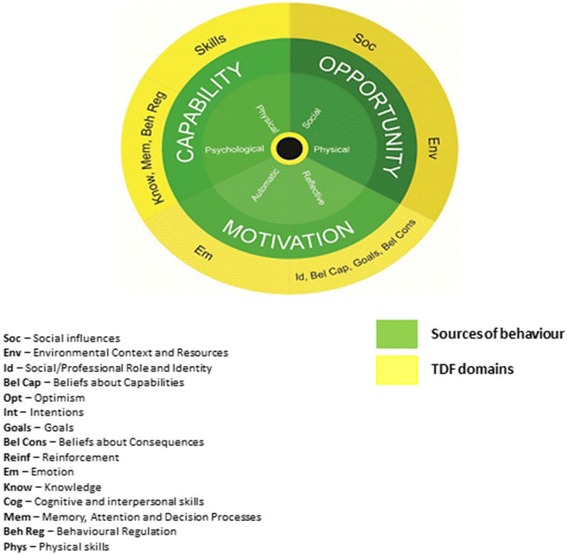
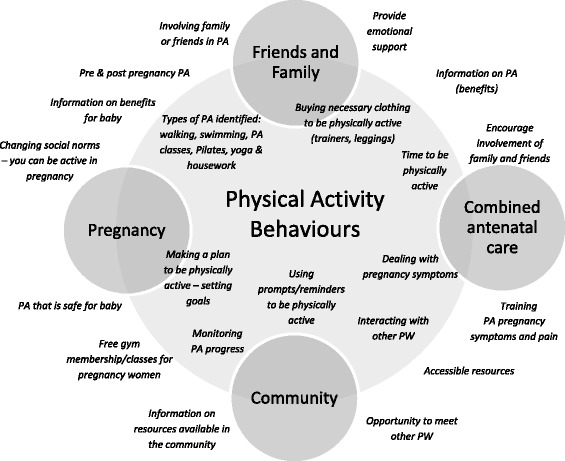
BACKGROUND: Obesity during pregnancy is associated with increased risk of gestational diabetes mellitus (GDM) and other complications. Physical activity is a modifiable lifestyle factor that may help to prevent these complications but many women reduce their physical activity levels during pregnancy. Interventions targeting physical activity in pregnancy are on-going but few identify the underlying behaviour change mechanisms by which the intervention is expected to work. To enhance intervention effectiveness, recent tools in behavioural science such as the Theoretical Domains Framework (TDF) and COM-B model (capability, opportunity, motivation and behaviour) have been employed to understand behaviours for intervention development. Using these behaviour change methods, this study aimed to identify the enablers and barriers to physical activity in overweight and obese pregnant women. METHODS: Semi-structured interviews were conducted with a purposive sample of overweight and obese women at different stages of pregnancy attending a public antenatal clinic in a large academic maternity hospital in Cork, Ireland. Interviews were recorded and transcribed into NVivo V.10 software. Data analysis followed the framework approach, drawing on the TDF and the COM-B model. RESULTS: Twenty one themes were identified and these mapped directly on to the COM-B model of behaviour change and ten of the TDF domains. Having the social opportunity to engage in physical activity was identified as an enabler; pregnant women suggested being active was easier when supported by their partners. Knowledge was a commonly reported barrier with women lacking information on safe activities during pregnancy and describing the information received from their midwife as 'limited'. Having the physical capability and physical opportunity to carry out physical activity were also identified as barriers; experiencing pain, a lack of time, having other children, and working prevented women from being active. CONCLUSION: A wide range of barriers and enablers were identified which influenced women's capability, motivation and opportunity to engage in physical activity with "knowledge" as the most commonly reported barrier. This study is a theoretical starting point in making a 'behavioural diagnoses' and the results will be used to inform the development of an intervention to increase physical activity levels among overweight and obese pregnant women.
Overview
The claims and statistics of this paper haven’t been checked yet.
Free: it reads the open-access text and checks the first 5 claims that cite a source we can check. Create a free account to check every claim.
Integrity signals
Registry
Cites
Statistics
Figures
Verification
Claims the paper makes
The claims and statistics of this paper haven’t been checked yet.
Free: it reads the open-access text and checks the first 5 claims that cite a source we can check. Create a free account to check every claim.
Claims other papers make about this one
Each is checked against this paper’s own text: does it say what the citing paper says it does?
The source backs part of the claim, not all of it — or backs it for a different population, condition or comparison.
In the citing paper
“the use of goal setting [18, 24, 28, 32, 34]”
From Identifying the factors affecting ‘patient engagement’ in exercise rehabilitation (2022) · cites this paper as [28]
Experimental — accuracy not yet measuredThe source backs part of the claim, not all of it — or backs it for a different population, condition or comparison.
In the citing paper
“it is apparent that simply prescribing the exercise is unlikely to result in high levels of adherence by the majority of patients.”
From Identifying the factors affecting ‘patient engagement’ in exercise rehabilitation (2022) · cites this paper as [28]
Experimental — accuracy not yet measuredThe source backs part of the claim, not all of it — or backs it for a different population, condition or comparison.
In the citing paper
“Since, unlike participants involved in clinical research trials who may receive enabling access to optimal resources and services, members of the general population commonly face multiple environmental barriers to their engagement in rehabilitation, such as: a lack of access to resources and services as an opportunity barrier [20, 21, 28, 30], high costs of resources and service [21, 26, 28, 30, 3”
From Identifying the factors affecting ‘patient engagement’ in exercise rehabilitation (2022) · cites this paper as [28]
Experimental — accuracy not yet measuredThe source backs part of the claim, not all of it — or backs it for a different population, condition or comparison.
In the citing paper
“In addition, twelve studies [15, 18, 20, 21, 24–28, 30–32, 34] found high perceived personal relevance to be associated with increased determination to engage in exercise behaviour.”
From Identifying the factors affecting ‘patient engagement’ in exercise rehabilitation (2022) · cites this paper as [28]
Experimental — accuracy not yet measuredThe cited source says what the claim attributes to it.
In the citing paper
“Multiple studies involving patients and clinicians identified a lack of access to resources and services as an opportunity barrier [20, 21, 28, 30, 34].”
From Identifying the factors affecting ‘patient engagement’ in exercise rehabilitation (2022) · cites this paper as [28]
10 more claims about this paper
Create a free account to see every claim other papers make about this one.
Self-check
Percentages, sums and reported differences re-computed from the paper’s own numbers.
The self-check needs the paper’s full text.
Citations
Cites
Michie, S., van Stralen, M. M., & West, R. (2011) · Implementation Science · doi:10.1186/1748-5908-6-42 · Cited by 13,697 · cited 2×
“The COM-B model forms the hub of the Behaviour Change Wheel (BCW) which provides a systematic and transparent way to conduct a behavioural assessment, identify the target behaviour, select intervention functions and to develop theory based intervention strategies [45].”
MethodDeveloping and evaluating complex interventions: the new Medical Research Council guidance
Craig, P., Dieppe, P., Macintyre, S., Michie, S., Nazareth, I., & Petticrew, M. (2008) · BMJ · doi:10.1136/bmj.a1655 · Cited by 10,995 · cited 1×
“Using theory to identify the determinants of behaviour can increase the likelihood that an intervention will be effective [40, 41].”
BackgroundGale, N. K., Heath, G., Cameron, E., Rashid, S., & Redwood, S. (2013) · BMC Medical Research Methodology · doi:10.1186/1471-2288-13-117 · Cited by 10,865 · cited 1×
“analysis followed a framework approach [57].”
‘Small Changes' to Diet and Physical Activity Behaviors for Weight Management
Hills, A. P., Byrne, N. M., Lindstrom, R., & Hill, J. O. (2013) · Obesity Facts · doi:10.1159/000345030 · Cited by 9,493
Health benefits of physical activity: the evidence
Warburton, D. E. R. (2006) · Canadian Medical Association Journal · doi:10.1503/cmaj.051351 · Cited by 8,007 · cited 2×
“However, research has shown that being physical active in early pregnancy can reduce these symptoms [11, 12].”
Background(2014) · Cited by 2,276
Using Pedometers to Increase Physical Activity and Improve Health: A Systematic Review
Bravata, D. M., Smith-Spangler, C., Sundaram, V., Gienger, A. L., Lin, N., Lewis, R., Stave, C. D., Olkin, I., & Sirard, J. R. (2007) · JAMA · doi:10.1001/jama.298.19.2296 · Cited by 2,064
Michie, S., Johnston, M., Francis, J., Hardeman, W., & Eccles, M. (2008) · Applied Psychology · doi:10.1111/j.1464-0597.2008.00341.x · Cited by 1,789 · cited 1×
“Using theory to identify the determinants of behaviour can increase the likelihood that an intervention will be effective [40, 41].”
BackgroundFrench, S. D., Green, S. E., O’Connor, D. A., McKenzie, J. E., Francis, J. J., Michie, S., Buchbinder, R., Schattner, P., Spike, N., & Grimshaw, J. M. (2012) · Implementation Science · doi:10.1186/1748-5908-7-38 · Cited by 1,338
Reducing and meta-analysing estimates from distributed lag non-linear models
Gasparrini, A., & Armstrong, B. (2013) · BMC Medical Research Methodology · doi:10.1186/1471-2288-13-1 · Cited by 1,081
Cited by
McGowan, L. J., Powell, R., & French, D. P. (2020) · British Journal of Health Psychology · doi:10.1111/bjhp.12437 · Cited by 280
“For example, Cronin-de-Chavez et al. (2019) and Flannery et al. (2018) developed overarching visual”
BackgroundYuill, C., McCourt, C., Cheyne, H., & Leister, N. (2020) · BMC Pregnancy and Childbirth · doi:10.1186/s12884-020-03023-6 · Cited by 217
Physical activity and pregnancy outcomes: an expert review
Gascoigne, E. L., Webster, C., Honart, A. W., Wang, P., Smith‐Ryan, A. E., & Manuck, T. A. (2022) · American Journal of Obstetrics & Gynecology MFM · doi:10.1016/j.ajogmf.2022.100758 · Cited by 169
Maternal Lifestyle Interventions: Targeting Preconception Health
Moholdt, T. T., & Hawley, J. A. (2020) · Trends in Endocrinology and Metabolism · doi:10.1016/j.tem.2020.03.002 · Cited by 122
“Given that a lack of time is one of the most commonly cited barriers to regular physical participation at both the population level and for pregnant women [43], these findings are important.”
BackgroundIdentifying the factors affecting ‘patient engagement’ in exercise rehabilitation
Teo, J. L., Zheng, Z., & Bird, S. R. (2022) · BMC Sports Science, Medicine and Rehabilitation · doi:10.1186/s13102-022-00407-3 · Cited by 96
“[28] Pregnancy Overweight and obese pregnant women Qualitative Patient interviews PF, PB PF, PB PF, PB”
BackgroundInfluentialNagtegaal, R., de Boer, N., van Berkel, R., Derks, B., & Tummers, L. G. (2023) · Journal of Occupational Rehabilitation · doi:10.1007/s10926-022-10076-1 · Cited by 140
“This model has been widely applied to understand behavior and pinpoint interventions that can change behavior [10, 11].”
MethodBentley, M. R. N., Mitchell, N., Sutton, L., & Backhouse, S. H. (2019) · Journal of Sports Sciences · doi:10.1080/02640414.2019.1620989 · Cited by 103
“In a healthcare setting, studies that examine behaviour typically frame the behavioural diagnosis from the perspectives and experience of the patient (Flannery et al., 2018; Govender, Smith, Taylor, Barratt, & Gardner, 2017).”
Leo, A. D., Bayes, S. J., Bloxsome, D., & Butt, J. (2021) · Implementation Science Communications · doi:10.1186/s43058-020-00100-x · Cited by 85
McKeough, R., Blanchard, C., & Piccinini‐Vallis, H. (2022) · Journal of Midwifery & Women s Health · doi:10.1111/jmwh.13375 · Cited by 80
Flannery, C., Fredrix, M., Olander, E. K., McAuliffe, F. M., Byrne, M., & Kearney, P. M. (2019) · International Journal of Behavioral Nutrition and Physical Activity · doi:10.1186/s12966-019-0859-5 · Cited by 78
Self-citationPhysical activity and exercise during pregnancy in Africa: a review of the literature
Okafor, U. B., & Goon, D. T. (2020) · BMC Pregnancy and Childbirth · doi:10.1186/s12884-020-03439-0 · Cited by 78
Thøgersen‐Ntoumani, C., Kritz, M., Grunseit, A. C., Chau, J. Y., Ahmadi, M., Holtermann, A., Koster, A., Tudor-Locke, C. E., Johnson, N. A., Sherrington, C., et al. (2023) · International Journal of Behavioral Nutrition and Physical Activity · doi:10.1186/s12966-023-01480-8 · Cited by 63
“The COM-B framework has previously been used to examine barriers and enablers of physical activity in a number of life contexts, such as in pregnant women with overweight and obesity [18], women with gestational diabetes [19], and adolescents with intellectual disabilities [20].”
MethodRockliffe, L., Peters, S., Heazell, A. E. P., & Smith, D. M. (2021) · Health Psychology and Behavioral Medicine · doi:10.1080/21642850.2021.2014851 · Cited by 67
“This mapping approach was unique to this study, although similar approaches have been reported elsewhere in the literature (e.g. Flannery et al., 2018; Gould, 2014; Rahman et al., 2021).”
ResultLiu, S., & Liu, J. (2021) · Journal of Medical Internet Research · doi:10.2196/28118 · Cited by 56
Figueroa, C. A., Deliu, N., Chakraborty, B., Modiri, A., Xu, J., Aggarwal, J., Williams, J. J., Lyles, C. R., & Aguilera, A. (2021) · Annals of Behavioral Medicine · doi:10.1093/abm/kaab028 · Cited by 56
“Researchers have used COM-B to identify PA barriers [18] and design PA interventions [19, 20].”
MethodOkafor, U. B., & Goon, D. T. (2022) · Frontiers in Public Health · doi:10.3389/fpubh.2022.697386 · Cited by 51
McQuinn, S., Belton, S., Staines, A., & Sweeney, M. R. (2022) · BMC Public Health · doi:10.1186/s12889-022-12635-w · Cited by 43
O'Donovan, B., Mooney, T., Rimmer, B., Fitzpatrick, P., Flannelly, G., Doherty, L., Martin, C., O'Leary, J., O'Connor, M., & Sharp, L. (2021) · Health Expectations · doi:10.1111/hex.13346 · Cited by 42
Pirotta, S., Joham, A. J., Moran, L. J., Skouteris, H., & Lim, S. S. (2021) · Patient Education and Counseling · doi:10.1016/j.pec.2021.01.036 · Cited by 41
Murphy, K., Berk, J., Muhwava, L. S., Booley, S., Harbron, J., Ware, L. J., Norris, S. A., Zarowsky, C., Lambert, E. V., & Levitt, N. S. (2023) · BMC Public Health · doi:10.1186/s12889-023-15586-y · Cited by 55
Sun, J., Piernicka, M., Worska, A., & Szumilewicz, A. (2023) · Frontiers in Public Health · doi:10.3389/fpubh.2023.1232625 · Cited by 61
Abebe, H., Beyene, G. A., & Mulat, B. S. (2021) · PLoS ONE · doi:10.1371/journal.pone.0254095 · Cited by 39
Okafor, U. B., & Goon, D. T. (2021) · Journal of Multidisciplinary Healthcare · doi:10.2147/jmdh.s287109 · Cited by 46
Clark, E., Burnett, T., Blair, R., Traynor, R. L., Hagerman, L., & Dobbins, M. (2024) · BMC Health Services Research · doi:10.1186/s12913-024-10841-3 · Cited by 58
Dietary behaviours and weight management: A thematic analysis of pregnant women's perceptions
Flannery, C., Mtshede, M. N., McHugh, S., Anaba, A. E., Clifford, E., O’Riordan, M., Kenny, L. C., McAuliffe, F. M., Kearney, P. M., & Matvienko‐Sikar, K. (2020) · Maternal and Child Nutrition · doi:10.1111/mcn.13011 · Cited by 41
“A semi-structured interview schedule was developed and was used to facilitate the discussion (Flannery et al., 2018.).”
MethodSelf-citationMorris, T., Strömmer, S., Vogel, C., Harvey, N. C., Cooper, C. C., Inskip, H. M., Woods‐Townsend, K., Baird, J., Barker, M. E., & Lawrence, W. T. (2020) · BMC Pregnancy and Childbirth · doi:10.1186/s12884-020-02913-z · Cited by 40
Reducing intergenerational obesity and diabetes risk
Sauder, K. A., & Ritchie, N. D. (2021) · Diabetologia · doi:10.1007/s00125-020-05341-y · Cited by 39
Sánchez, T. E., Meaney, S., O’Connor, C. D., Linehan, L. A., O’Donoghue, K., Byrne, M., & Matvienko‐Sikar, K. (2022) · BMC Pregnancy and Childbirth · doi:10.1186/s12884-022-04929-z · Cited by 41
“Whereas others perceived the pregnancy period as an excuse to have a treat [42] or overeat [28, 29, 31, 33, 35, 39, 40, 42, 44] as there was a perceived decrease in the pressure to lose weight and social perceptions such as the idea that women are “eating for two”.”
BackgroundInfluentialSelf-citationTiruneh, S. A., Lakew, A. M., Yigizaw, S. T., Sisay, M. M., & Tessema, Z. T. (2020) · BMJ Open · doi:10.1136/bmjopen-2019-034786 · Cited by 31
Encouraging Physical Activity during and after Pregnancy in the COVID-19 Era, and beyond
Atkinson, L., VIVO, M. D., Hayes, L., Hesketh, K. R., Mills, H., Newham, J. J., Olander, E. K., & Smith, D. M. (2020) · International Journal of Environmental Research and Public Health · doi:10.3390/ijerph17197304 · Cited by 41
Garnweidner-Holme, L. M., Henriksen, L., Bjerkan, K. K., Lium, J., & Lukasse, M. (2022) · BMC Pregnancy and Childbirth · doi:10.1186/s12884-021-04335-x · Cited by 33
Smith, R., Michalopoulou, M., Reid, H. A. B., Payne, S., Wango, Y. N., Kenworthy, Y., Román, C., Santos, M., Hirst, J. E., & Mackillop, L. H. (2022) · BMC Pregnancy and Childbirth · doi:10.1186/s12884-022-04539-9 · Cited by 41
Carstairs, S. A., Rogowsky, R., Cunningham, K. B., Sullivan, F., & Özakinci, G. (2020) · BJGP Open · doi:10.3399/bjgpopen20x101100 · Cited by 38
“49 This study targeted a more general primary care population with few restrictions in terms of recruitment, and also had the advantage of investigating the views of patients and HPs.”
BackgroundResultBrown, M. C., Podmore, M., Araújo‐Soares, V., Skinner, R., & Sharp, L. (2022) · Health Psychology Review · doi:10.1080/17437199.2022.2032795 · Cited by 39
“…skills, beliefs about capabilities) and has been used to inform intervention design in various healthcare settings and target populations (Cheung et al., 2019; Flannery et al., 2018; Kolehmainen et al., 2011; Nicholson et al., 2014), but as yet has not been used to explore PA behaviours in CCSs.”
Behavior Change Techniques in Digital Health Interventions for Midlife Women: Systematic Review
Sediva, H., Cartwright, T., Robertson, C. E., & Deb, S. K. (2022) · JMIR mhealth and uhealth · doi:10.2196/37234 · Cited by 41
“…to develop and evaluate the implementation of interventions in health care settings [34-36] and lifestyle (eg, smoking cessation [37], alcohol use prevention [38], sedentary behavior [39], PA [40], and dietary patterns [41]) but also in other areas such as personal transportation habits [42].”
Whittal, A., Atkins, L., & Herber, O. R. (2020) · Translational Behavioral Medicine · doi:10.1093/tbm/ibaa116 · Cited by 41
Ndupu, L. B., Staples, V., Lipka, S., Faghy, M. A., Bessadet, N., & Bussell, C. (2023) · BMC Public Health · doi:10.1186/s12889-023-15588-w · Cited by 46
Wu, F., Laza‐Cagigas, R., & Rampal, T. (2022) · Clinics and Practice · doi:10.3390/clinpract12040067 · Cited by 33
“The COM-B model has been successfully applied to a variety of health behaviours [20,21].”
MethodMcKeon, G., Mastrogiovanni, C., Teychenne, M. J., & Rosenbaum, S. (2022) · International Journal of Environmental Research and Public Health · doi:10.3390/ijerph191912312 · Cited by 30
“The COM-B model of behaviour [35] has been widely used in physical activity research to identify what needs to change in order for behaviour change to be effective [36,37].”
MethodIdentifying patients who access musculoskeletal physical therapy: a retrospective cohort analysis
Sharpe, J. A., Martin, B. I., Fritz, J. M., Newman, M. G., Magel, J. S., Vanneman, M. E., & Thackeray, A. (2020) · Family Practice · doi:10.1093/fampra/cmaa104 · Cited by 27
“Patients who are obese or of Hispanic/Latino ethnicity may experience greater barriers to using physical therapy compared with non-Hispanic and non-obese patients, including limited resources, anxiety/depression, social support and documentation status (33,34).”
MethodJerebine, A., Heering, T., & Barnett, L. M. (2023) · Research Quarterly for Exercise and Sport · doi:10.1080/02701367.2023.2193243 · Cited by 38
“The COM-B model and TDF have been used to synthesize barriers and facilitators to behavioral interventions in other health contexts and settings (Alexander et al., 2014; McDonagh et al., 2018) including PA (Flannery et al., 2018; McKeon et al., 2022).”
MethodLeese, C. J., Gupte, D., Christogianni, A., Higgins, C., Adair, P., Dall, P., Cameron, P. A., Smith, B. H., & Colvin, L. (2024) · Pain · doi:10.1097/j.pain.0000000000003314 · Cited by 30
Krahe, M. A., Wolski, M., Mickan, S. M., Toohey, J., Scuffham, P., & Reilly, S. (2020) · Health Information Management Journal · doi:10.1177/1833358320917207 · Cited by 28
“…sugar-free intake in adults (Rawahi et al., 2018), implementing telemedicine consultations for paediatric care (Bele et al., 2019), refining injury management in hospitals (Curtis et al., 2017) and understanding physical activity in overweight and obese pregnant women (Flannery et al., 2018).”
BackgroundFear as a barrier to physical activity in young adults with obesity: a qualitative study
Hamer, O., Larkin, D., Relph, N., & Dey, P. (2021) · Qualitative Research in Sport Exercise and Health · doi:10.1080/2159676x.2021.2012243 · Cited by 35
“The study findings reinforce the importance of psychologically addressing mental health concerns as a means to increase physical activity in younger adults with obesity (Sallinen et al. 2009; Flannery et al. 2018).”
BackgroundPearse, B. L., Keogh, S. J., Rickard, C. M., & Fung, Y. L. (2021) · BMC Health Services Research · doi:10.1186/s12913-021-06269-8 · Cited by 29
Bidwell, P., Thakar, R., Gurol‐Urganci, I., Harris, J. M., Silverton, L. I., Hellyer, A., Freeman, R. M., Morris, E., Novis, V., & Sevdalis, N. (2020) · BMJ Open · doi:10.1136/bmjopen-2019-035674 · Cited by 27
Oliwa, J. N., Nzinga, J., Masini, E., van Hensbroek, M. B., Jones, C. O. H., English, M., & Hoog, A. H. V. (2020) · Implementation Science · doi:10.1186/s13012-020-01061-4 · Cited by 27
Makaruk, B., Grantham, W., Organista, N., & Płaszewski, M. (2022) · International Journal of Environmental Research and Public Health · doi:10.3390/ijerph191811605 · Cited by 22
“According to current research, there may be various reasons for women not to be able to take part in such programmes, including but not limited to transport difficulties, lack of time, lack of childcare, or lack of social support [3,10,11,13,15,21,27].”
Background“Sit Yourself Down”: Women’s Experiences of Negotiating Physical Activity During Pregnancy
Wagnild, J. M., & Pollard, T. M. (2020) · Qualitative Health Research · doi:10.1177/1049732320909103 · Cited by 25
Frick, M., Neu, L., Liebhaber, N., Sperner‐Unterweger, B., Stötter, J., Keller, L., & Hüfner, K. (2021) · Sustainability · doi:10.3390/su132313361 · Cited by 26
Coates, E. J., Zarotti, N., Williams, I. A., White, S., Halliday, V., Beever, D., Hackney, G., Stavroulakis, T., White, D. A., Norman, P. E., et al. (2021) · Chronic Illness · doi:10.1177/17423953211069090 · Cited by 25
Zhang, W., Zhao, R., Zhang, L., Xie, F. X., Xu, P., Guo, P., Mao, M., & Feng, S. (2024) · International Journal of Nursing Studies · doi:10.1016/j.ijnurstu.2024.104761 · Cited by 23
Atakora, L., Poston, L., Hayes, L., Flynn, A. C., & White, S. L. (2020) · Nutrients · doi:10.3390/nu12020359 · Cited by 23
Ogrodnik, M., Karsan, S., Malamis, B., KWAN, M. Y. W., Fenesi, B., & Heisz, J. J. (2023) · Journal of Developmental and Physical Disabilities · doi:10.1007/s10882-023-09908-6 · Cited by 30
“…into prominent themes and categorized using the Theoretical Domains Framework (TDF), which has been previously used to organize and conceptualize barriers and facilitators to PA in qualitative work (Flannery et al., 2018; Nicholson et al., 2014; Spiteri et al., 2019; Weatherson et al., 2017).”
Furtado, T., Perkins, E., Pinchbeck, G. L., McGowan, C. M., Watkins, F., & Christley, R. (2022) · Frontiers in Veterinary Science · doi:10.3389/fvets.2022.961537 · Cited by 22
Chao, G. F., Lindquist, K. M., Vitous, C. A., Tolentino, D. A., Delaney, L. D., Alimi, Y., Jafri, S. M., & Telem, D. A. (2023) · Surgical Endoscopy · doi:10.1007/s00464-023-10030-z · Cited by 18
Zhu, L., Ni, Z., Zhang, Y., Zhan, Y., Lan, M., & Zhao, R. (2023) · BMC Pulmonary Medicine · doi:10.1186/s12890-023-02561-x · Cited by 17
“Similar studies in other settings have been applied this model to understand behaviors, such as medication adherence [24] and physical activity [25] among patients.”
ResultMadden, S. K., Blewitt, C., Ahuja, K., Skouteris, H., Bailey, C., Hills, A. P., & Hill, B. (2021) · International Journal of Environmental Research and Public Health · doi:10.3390/ijerph18084154 · Cited by 17
“The relative importance of ‘opportunity’ is somewhat contrary to other qualitative studies conducted with preconception and pregnant women, which often focus on individual capacity, for example knowledge, rather than setting-specific opportunities [15,16].”
BackgroundResultGrailey, K., Hussain, R., Wylleman, E., Ezzat, A., Huf, S. W., & Franklin, B. D. (2023) · BMC Nursing · doi:10.1186/s12912-023-01382-x · Cited by 21
“The 14 domains within the TDF were mapped to the COM-B framework in line with previous published guidance [20– 22].”
ResultThandar, M. M., Kiriya, J., Shibanuma, A., Ong, K. I. C., Tin, K. N., Win, H. H., & Jimba, M. (2019) · Tropical Medicine and Health · doi:10.1186/s41182-019-0137-x · Cited by 19
Creative beyond TikToks: Investigating Adolescents' Social Privacy Management on TikTok
Ebert, N., Geppert, T., Strycharz, J., Knieps, M., Honig, M. L., & Brucker-Kley, E. (2023) · Proceedings on Privacy Enhancing Technologies · doi:10.56553/popets-2023-0049 · Cited by 36
Sparks, J. R., Flanagan, E. W., Kebbe, M., & Redman, L. M. (2022) · American Journal of Lifestyle Medicine · doi:10.1177/15598276221108669 · Cited by 28
The law and problematic marketing by private umbilical cord blood banks
Murdoch, B., Marcon, A. R., & Caulfield, T. (2020) · BMC Medical Ethics · doi:10.1186/s12910-020-00494-2 · Cited by 16
Hsiung, Y., Lee, C.-F., Chi, L.-K., & Huang, J.-P. (2021) · International Journal of Environmental Research and Public Health · doi:10.3390/ijerph18105275 · Cited by 16
“intrapersonal that the potential harm from PA to their unborn baby is commonly brought up), including experiencing discomfort, fatigue, a lack of time, having other children priorities, and burdens from work that prevent our participants from being active [15].”
BackgroundResultInfluentialTristani, L., Sweet, S. N., Tomasone, J. R., & Bassett-Gunter, R. L. (2021) · Research Quarterly for Exercise and Sport · doi:10.1080/02701367.2021.1877605 · Cited by 20
Scannell, N., Moran, L., Mantzioris, E., Cowan, S., & Villani, A. M. (2022) · Metabolites · doi:10.3390/metabo12040311 · Cited by 18
Ma, N., Chau, J. P. C., Liang, W., & Choi, K. C. (2022) · Midwifery · doi:10.1016/j.midw.2022.103574 · Cited by 18
Exploring the predictors of physical inactivity in a university setting
Ndupu, L. B., Faghy, M. A., Staples, V., Lipka, S., & Bussell, C. (2023) · BMC Public Health · doi:10.1186/s12889-022-14953-5 · Cited by 27
Correlates of Physical Activity Engagement among Pregnant Women with Overweight and Obesity
Donofry, S. D., Germeroth, L. J., Kolko, R. P., Venditti, E. M., & Levine, M. D. (2020) · Women s Health Issues · doi:10.1016/j.whi.2020.06.001 · Cited by 14
Strategies to Increase Professional Interpreting in Clinical Settings: A Systematic Review
Gutman, C. K., Rojas, C. R., Waidner, L., Zamor, R. L., Hartford, E. A., Yeboah, D., Portillo, E. N., Lion, K. C., Nylander, E. M., & Garcia, M. E. (2025) · JAMA Network Open · doi:10.1001/jamanetworkopen.2025.21492 · Cited by 16
Banafshe, E., Javadifar, N., Abbaspoor, Z., Karandish, M., & Ghanbari, S. (2024) · Journal of the Academy of Nutrition and Dietetics · doi:10.1016/j.jand.2024.04.011 · Cited by 16
Wu, H., Xu, X., Ma, C., Zhou, Y., Pei, S., Geng, H., He, Y., Xu, Q., Xu, Y., He, X., et al. (2021) · Reproductive Biology and Endocrinology · doi:10.1186/s12958-021-00732-1 · Cited by 15
Hanley, S. J., Varley, I., Sale, C., & Elliott-Sale, K. J. (2023) · Maternal and Child Health Journal · doi:10.1007/s10995-023-03684-7 · Cited by 16
“(Flannery et al., 2018; Harrison et al., 2018; Sui et al., 2013) Sui et al. (2013) conducted semi-structured interviews with 26 overweight pregnant women with the aim of understanding barriers to and enablers of initiating healthy behaviour change during pregnancy.”
BackgroundChen, S., Yang, K., Ko, A., Giovannucci, E. L., Stults‐Kolehmainen, M., & Yang, L. (2025) · BMC Public Health · doi:10.1186/s12889-025-23613-3 · Cited by 16
“Based on previous studies [32, 33], when facilitators that support behavior change are already present among participants, emphasizing them further in the intervention may lead to ceiling effects.”
van den Burg, E. L., Schoonakker, M. P., Korpershoek, B., Sommeling, L. E., Sturm, C. A., Lamb, H. J., Pijl, H., Numans, M. E., Adriaanse, M. A., & van Peet, P. G. (2024) · BMC Family Practice · doi:10.1186/s12875-024-02405-5 · Cited by 17
“While the TDF was originally developed to analyse the behaviour of healthcare professionals [38], it is currently also used to analyse changing patient behaviour, including lifestyle changes [40–42].”
MethodBarriers and enablers in maintaining healthy gestational weight gain: A qualitative study
White, C., & Davis, D. L. (2020) · Women and Birth · doi:10.1016/j.wombi.2020.09.009 · Cited by 13
Christie, L., Rendell, R., McCluskey, A., Fearn, N., Hunter, A., & Lovarini, M. (2022) · Brain Impairment · doi:10.1017/brimp.2022.18 · Cited by 15
“The COM-B system has been used to evaluate barriers and enablers influencing both patient and clinician adherence to evidence-based interventions (Alexander, Brijnath & Mazza, 2014), physical activity (Flannery et al., 2018) and adherence to upper limb rehabilitation post-stroke (Levy et al., 2021).”
MethodDiamond‐Smith, N., Walker, D. M., Afulani, P. A., Donnay, F. A., Lin, S., Peca, E., & Stanton, M. E. (2023) · Global Health Science and Practice · doi:10.9745/ghsp-d-22-00278 · Cited by 11
“The COM-B model and BCW have been used to provide a structure for framing barriers and facilitators of various practices in both high- and low- and middle-income countries, from chlamydia testing among young people to increasing physical activity in pregnantwomen to integrating mental health care into primary practice…”
MethodOkafor, U. B., & Goon, D. T. (2020) · International Journal of Environmental Research and Public Health · doi:10.3390/ijerph17186694 · Cited by 14
“Interpersonal or social factors affecting PA during pregnancy are cultural and religious beliefs [69,70], lack of social support [71,72], having child care responsibilities [59,71,73] and work and family responsibilities [49,59,62,63].”
BackgroundCurran, F., Brennan, C., Matthews, J. J., & O’Donoghue, G. (2023) · Obesity Science & Practice · doi:10.1002/osp4.721 · Cited by 11
“20,21 Evidence for the effectiveness of SB interventions is also mixed or lacking, particularly outside the workplace, 22 and although some non ‐ workplace interventions show promise, few target adults with obesity or explicitly report theoretical constructs 23 which would enhance replicability.”
BackgroundImproving Care Beyond Birth: A Qualitative Study of Postpartum Care After High-Risk Pregnancy
Phillips, S. E., Celi, A. C., Margo, J. N., Wehbe, A., Karlage, A., & Zera, C. (2024) · Journal of Women s Health · doi:10.1089/jwh.2024.0108 · Cited by 16
Chen, L., Han, R., Chen, X., Fu, B., Nogueira, B. O. C. L., & Gao, L. (2024) · BMC Pregnancy and Childbirth · doi:10.1186/s12884-024-07068-9 · Cited by 12
Chen, S., Wang, R., Xu, N., Zhang, J., Liu, Y., Cong, S., Sun, X., Zhou, H. J., Zhou, H. J., Gu, P., et al. (2023) · Nurse Education in Practice · doi:10.1016/j.nepr.2023.103619 · Cited by 12
Dieberger, A. M., van Poppel, M. N. M., & Watson, E. D. (2021) · International Journal of Environmental Research and Public Health · doi:10.3390/ijerph18115869 · Cited by 13
“Pregnant women often receive no PA advice or advice that is limited, conservative, incorrect, or lacking in specificity [45,48,55–57], leading them to perceive their midwife’s knowledge on the topic as limited [58].”
BackgroundZheng, W., Wan, A. K. Y., Zhan, C., Clark, A., Court, C., Gu, Y., Park, T., Reynolds, J., Zhang, X., Li, L., et al. (2024) · Conservation Biology · doi:10.1111/cobi.14352 · Cited by 10
“…increasingly adopted to change behavior (e.g., to reduce drug use among students, decrease alcohol consumption, and encourage obese people to participate in sports [Flannery et al., 2018; Stevely et al., 2018; Vasiliou et al., 2021]), its application in the wildlife conservation sector is lacking.”
Yang, X. M., Zhang, J., Wang, X., Xu, Y., Li, S., Song, Y., Bai, R., Huang, H., Zhang, J., Zhang, R., et al. (2022) · Trials · doi:10.1186/s13063-022-06379-6 · Cited by 11
Lee, C., Hsiung, Y., Chi, L., Huang, J., & Chen, H. (2022) · Midwifery · doi:10.1016/j.midw.2022.103552 · Cited by 11
Minh, D. V., Hong, Y. N. T., Nagraj, S., Do, N. T. T., Lan, H. V. T., Nguyen, N. V., Nguyen, T. T. C., Hai, Y. N. T., Cai, H. T. N., Thi, H. T., et al. (2024) · Antimicrobial Resistance and Infection Control · doi:10.1186/s13756-024-01471-9 · Cited by 12
“The framework has been applied in a number of health promotion initiatives, serving various purposes such as behavioral diagnosis, intervention design, and process evaluation [26–29].”
BackgroundChamberlain, S. A. E., McLeod, L. J., & Hine, D. W. (2024) · PLoS ONE · doi:10.1371/journal.pone.0296805 · Cited by 8
Malmström, N., Lydell, M., & Carlsson, I. (2022) · International Journal of Qualitative Studies on Health and Well-Being · doi:10.1080/17482631.2022.2043527 · Cited by 13
“However, barriers to physical activities during pregnancy are described, for example, a lack of information about safe activities and not having the physical opportunity to carry out physical activity (Flannery et al., 2018; Warren et al., 2017).”
BackgroundHan, R., Zeng, L., Lin, J., Xu, Q., Ma, J., Chen, X., Yu, D., Cheng, L. T., & Gao, L. (2025) · Journal of Clinical Nursing · doi:10.1111/jocn.70112 · Cited by 9
Pelletier, C., Ward, K., Aird, C., Jung, M. E., Fox, G., Pousette, A., & Faulkner, G. (2025) · BMC Public Health · doi:10.1186/s12889-025-24672-2 · Cited by 8
A Call for the Implementation of Physical Activity as a Vital Sign (PAVS) During Pregnancy
Sparks, J. R., Ruiz‐Ramie, J. J., Kishman, E. E., & Wang, X. (2024) · American Journal of Lifestyle Medicine · doi:10.1177/15598276241295993 · Cited by 7
Oliwa, J. N., Odero, S. A., Nzinga, J., van Hensbroek, M. B., Jones, C. H. D., English, M., & Hoog, A. H. V. (2020) · BMC Health Services Research · doi:10.1186/s12913-020-05588-6 · Cited by 23
Pajka, S. E., Kushel, M., Handley, M. A., Olsen, P., Li, B., Enriquez, C., Kaplan, L. M., & Sudore, R. L. (2023) · Journal of the American Geriatrics Society · doi:10.1111/jgs.18314 · Cited by 7
Okafor, U. B., & Goon, D. T. (2020) · Medicine · doi:10.1097/md.0000000000023431 · Cited by 10
“The finding is consistent with other previous studies,([15,16,19,20,38]) in which pregnant women also did not engage in PA because of their perceived feeling of tiredness and their low energy levels.”
BackgroundResultWang, J., Wu, L., Fan, G., & Ji, Y. (2025) · European Journal of Obstetrics & Gynecology and Reproductive Biology · doi:10.1016/j.ejogrb.2025.114514 · Cited by 6
Hatzikiriakidis, K., Hillman, C., Soh, S., Savaglio, M., O’Donnell, R., & Ayton, D. (2021) · International Journal of Adolescence and Youth · doi:10.1080/02673843.2021.1911816 · Cited by 7
“This model aims to examine and describe the capabilities, opportunities and motivations to engaging in behaviour (i.e. participation in YMPs) and has been used extensively in research to identify barriers and enablers in programme implementation (Flannery et al., 2018; L. M. Thompson et al., 2018).”
MethodScannell, N., Villani, A. M., Moran, L., Mantzioris, E., & Cowan, S. (2025) · Nutrients · doi:10.3390/nu17071105 · Cited by 22
“The COM-B model has been widely applied to identify barriers and facilitators to lifestyle modifications, including dietary and physical activity changes in women with PCOS [53–55].”
Chathurika, S. N., Rathnayake, C., Nanayakkara, D. I., Thennakoon, S. U. B., & Rathnayake, A. (2024) · BMJ Open · doi:10.1136/bmjopen-2024-086105 · Cited by 8
Metadata
- Authors
- Flannery, C., McHugh, S., Anaba, A. E., Clifford, E., O’Riordan, M., Kenny, L. C., McAuliffe, F. M., Kearney, P. M., & Byrne, M.
- Affiliations
- Ollscoil na Gaillimhe – University of Galway (IE)
- University College Cork (IE)
- South Infirmary Victoria University Hospital (IE)
- University of Liverpool (GB)
- University College Dublin (IE)
- Corresponding author
- Flannery, C.
- Venue
- BMC Pregnancy and Childbirth
- Published
- 2018-05-21
- Volume
- 18
- Issue
- 1
- Pages
- 178-178
- ISSN
- 1471-2393 (ISSN-L)
- PMC
- PMC5963099
- OpenAlex
- W2806148862
- Cited by
- 218
- References
- 71
- Citations by year
- 2026: 26 · 2025: 24 · 2024: 39 · 2023: 27 · 2022: 38 · 2021: 26 · 2020: 31 · 2019: 6
- FWCI
- 10.80
- Type
- journal article
- Language
- en
- Open access
- gold
- doi.org
- Licence
- cc-by
- creativecommons.org/licenses/by/4.0/ (tdm)
- Locations
- BMC Pregnancy and Childbirth (publishedVersion, cc-by)
- Europe PMC (PubMed Central) (publishedVersion, other-oa)
- PubMed Central (publishedVersion, cc-by)
- PubMed (publishedVersion)
- Arrow@dit (Dublin Institute of Technology) (acceptedVersion)
- Arrow@dit (Dublin Institute of Technology) (submittedVersion)
- ARAN (University of Galway Research Repository) (Ollscoil na Gaillimhe – University of Galway) (submittedVersion, cc-by-nc-nd)
- Cork Open Research Archive (University College Cork, Ireland) (submittedVersion, cc-by)
- DOAJ (DOAJ: Directory of Open Access Journals) (submittedVersion, cc-by-sa)
- Lenus, The Irish Health Repository (Dr Steevens Hospital Library) (submittedVersion, cc-by)
- Funders
- Health Research Board (SPHeRE/2013/1)
- Topics
- Health Sciences › Medicine › Public Health, Environmental and Occupational Health › Physical Activity and Health
- Social Sciences › Psychology › Applied Psychology › Behavioral Health and Interventions
- Health Sciences › Medicine › Obstetrics and Gynecology › Gestational Diabetes Research and Management
- Keywords
- exercise during pregnancy, maternal obesity, overweight in pregnancy, barriers and facilitators, behavior change, Theoretical Domains Framework, COM-B model, gestational diabetes prevention, prenatal care, partner support, physical abilities, motivation, intervention development
- MeSH terms
- Adult, Attitude to Health, Female, Humans, Ireland, Models, Theoretical, Motivation, Obesity, Pregnancy, Pregnancy Complications, Health Behavior, Exercise, Qualitative Research, Pregnant People, Overweight, Young Adult
About these checks
Registry, retraction, Cites and statistics results are computed, not judged, with one exception: a printed reference that no index lists is read once by a model before it counts as a citation error. Claims are extracted by a model and kept only when their quote appears verbatim in the text; each cited source is then checked, with a model’s help, for whether it says what the claim relies on. Those verdicts can be wrong — read the claim’s quote and the cited source before relying on one.
Statistics and arithmetic are recomputed, not judged.
Confidence bands are shown only for fields calibrated on our annotated test set. None is calibrated yet, so no band is shown.
What counts as a claim ›How we measure confidence ›How we check this ›
Are you an author, or do you see a problem with this page? Request a review
Data sources
Bibliographic data: Semantic Scholar, OpenAlex, Crossref.
Contains information from the Semantic Scholar Academic Graph Datasets, made available under the ODC Attribution License (ODC-BY 1.0).
Semantic Scholar’s data is described in: Kinney, R., et al. (2023). The Semantic Scholar Open Data Platform. arXiv:2301.10140.
