

Combined application of anti-VEGF and anti-EGFR attenuates the growth and angiogenesis of colorectal cancer mainly through suppressing AKT and ERK signaling in mice model
Open accessThe DOI matches its Crossref record; 59 of the 59 references it cites were found in a registry or an index.
Abstract
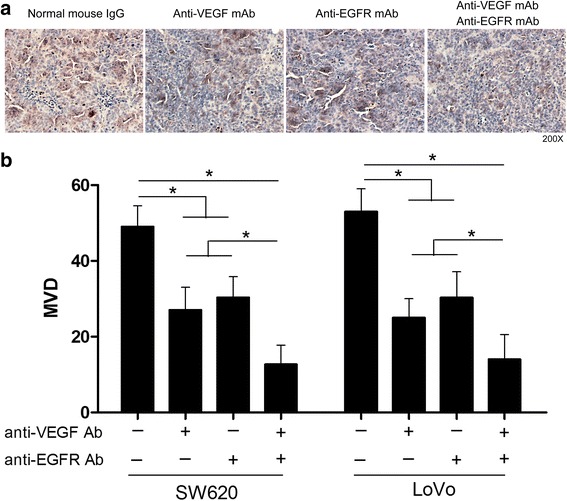
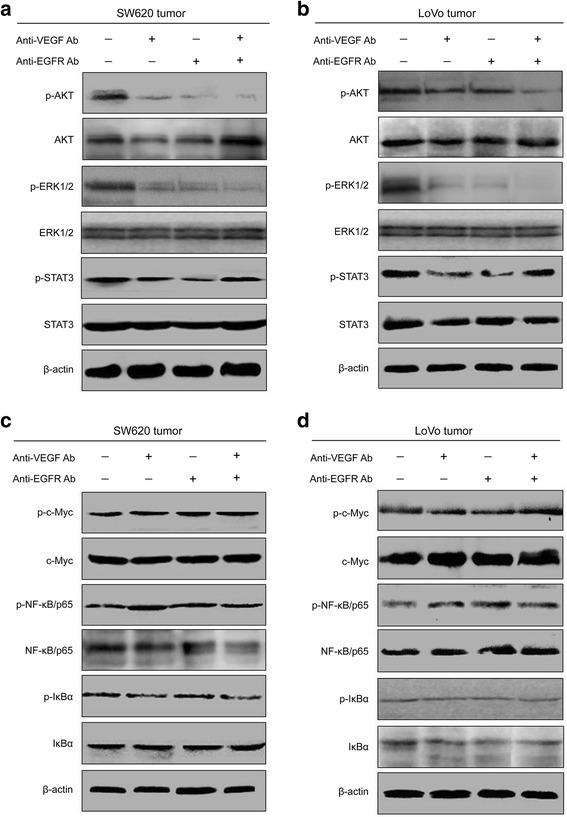
BACKGROUND: Angiogenesis is generally involved during the cancer development and hematogenous metastasis. Vascular endothelial growth factor (VEGF) and epidermal growth factor receptor (EGFR) are considered to have an important role in tumor-associated angiogenesis. However, the effects of simultaneously targeting on VEGF and EGFR on the growth and angiogenesis of colorectal cancer (CRC), and its underlying mechanisms remain unknown. METHODS: Immunohistochemical staining was used to detect the VEGF and EGFR expression in different CRC tissue specimens, and the correlation between VEGF/EGFR expression with the clinicopathologic features was analyzed. Cell counting kit‑8 (CCK-8) and transwell assays were used to assess the cellular proliferation and invasion of CRC cells after treated with anti-VEGF antibody and/or anti-EGFR antibody in vitro, respectively. Moreover, in vivo tumor formation was performed on nude mice model, and the tumor microvessel density (MVD) was determined by anti-CD34 staining in different groups. Finally, we evaluated the impact of anti-VEGF antibody and/or anti-EGFR antibody on the activation of downstream signaling effectors using western blot. RESULTS: VEGF and EGFR were upregulated in CRC tissues, and their expression levels were correlated with hepatic metastasis. Blockage on VEGF or EGFR alone could inhibit the cellular proliferation and metastasis while their combination could reach a good synergism in vitro. In addition, in vivo xenograft mice model demonstrated that the tumor formation and angiogenesis were strongly suppressed by combination treatment of anti-VEGF and anti-EGFR antibodies. Besides, the combination treatment significantly reduced the activation of AKT and ERK1/2, but barely affected the activation of c-Myc, NF-κB/p65 and IκBα in CRC cells tumors. Interestingly, anti-VEGF antibody or anti-EGFR antibody alone could attenuate the phosphorylation of STAT3 as compared with negative control group, whereas the combined application not further suppressed but at least partially restored the activation of STAT3 in vivo. CONCLUSIONS: Simultaneous targeting on VEGF and EGFR does show significant inhibition on CRC tumor growth and angiogenesis in mice model, and these effects are mainly attributed to suppression of the AKT and ERK signaling pathways.
Overview
The claims and statistics of this paper haven’t been checked yet.
Free: it reads the open-access text and checks the first 5 claims that cite a source we can check. Create a free account to check every claim.
Integrity signals
Registry
Cites
Statistics
Figures
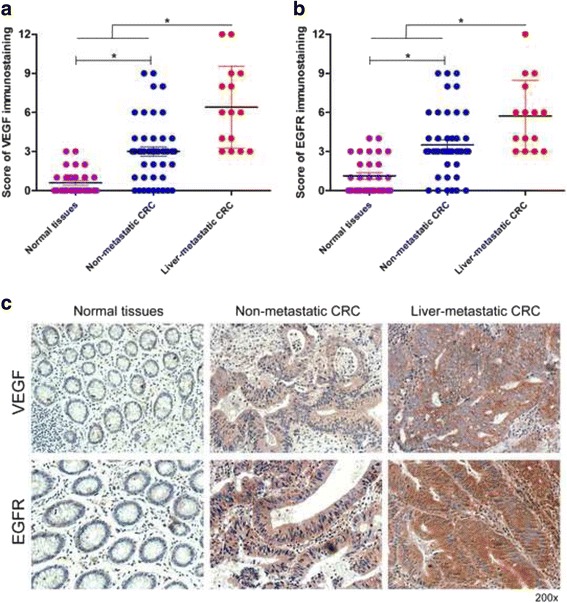
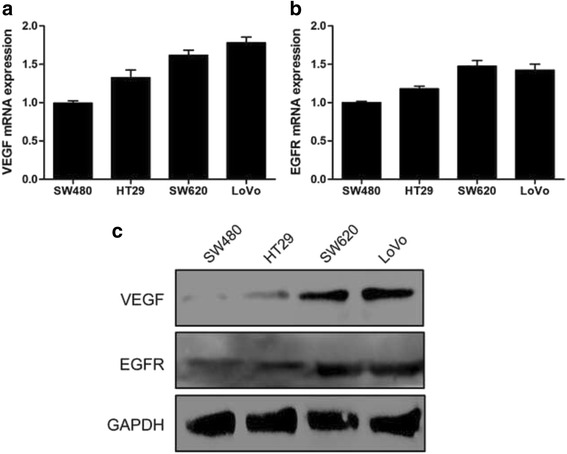
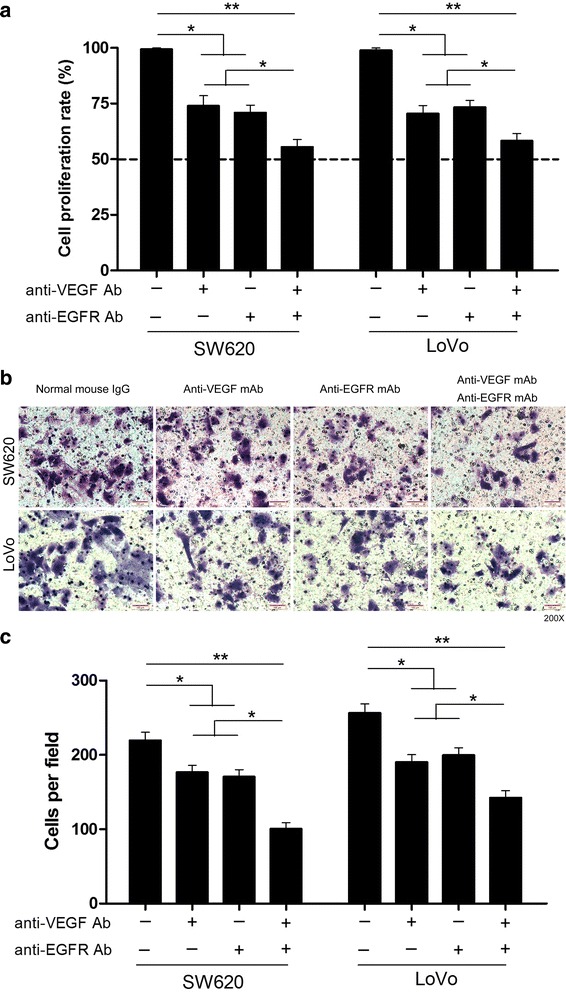
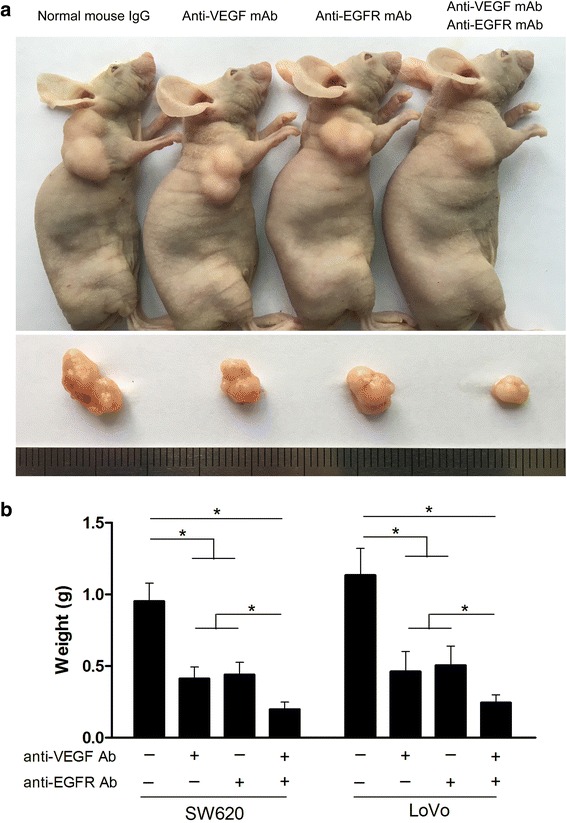
Verification
Claims the paper makes
The claims and statistics of this paper haven’t been checked yet.
Free: it reads the open-access text and checks the first 5 claims that cite a source we can check. Create a free account to check every claim.
Claims other papers make about this one
Each is checked against this paper’s own text: does it say what the citing paper says it does?
In the citing paper
“In a mouse CRC xenograft model, combined blocking of VEGF and EGFR significantly inhibited tumor growth and angiogenesis [61].”
From Drug Resistance in Colorectal Cancer: From Mechanism to Clinic (2022) · cites this paper as [61]
In the citing paper
“Combination treatment with anti-VEGF and anti-EGFR antibodies demonstrated synergistic activity in vitro, and tumour growth and angiogenesis were strongly suppressed in an in vivo xenograft mouse model [151].”
From Resistance to anti-EGFR therapies in metastatic colorectal cancer: underlying mechanisms and reversal strategies (2021) · cites this paper as [151]
Self-check
Percentages, sums and reported differences re-computed from the paper’s own numbers.
The self-check needs the paper’s full text.
Citations
Cites
1 retracted
Wu, J., Zhang, J., Shen, B., Yin, K., Xu, J., Gao, W., & Zhang, L. (2015) · Journal of Experimental & Clinical Cancer Research · doi:10.1186/s13046-015-0229-3 · Cited by 117 · cited 1×
“In addition, STAT3 is persistently activated in many human cancers during cancer development and progression [48].”
RetractedJemal, A., Bray, F., Center, M. M., Ferlay, J., Ward, E., & Forman, D. (2011) · CA: A Cancer Journal for Clinicians · doi:10.3322/caac.20107 · Cited by 54,679
Global cancer statistics, 2012
Torre, L. A., Bray, F., Siegel, R. L., Ferlay, J., Lortet‐Tieulent, J., & Jemal, A. (2015) · CA: A Cancer Journal for Clinicians · doi:10.3322/caac.21262 · Cited by 26,850
Cancer statistics in China, 2015
Chen, W., Zheng, R., Baade, P. D., Zhang, S., Zeng, H., Bray, F., Jemal, A., Yu, X. Q., & He, J. (2016) · CA: A Cancer Journal for Clinicians · doi:10.3322/caac.21338 · Cited by 17,038
Bevacizumab plus Irinotecan, Fluorouracil, and Leucovorin for Metastatic Colorectal Cancer
Hurwitz, H., Fehrenbacher, L., Novotny, W., Cartwright, T., Hainsworth, J., Heim, W., Berlin, J., Baron, A., Griffing, S., Holmgren, E., et al. (2004) · New England Journal of Medicine · doi:10.1056/nejmoa032691 · Cited by 10,968 · cited 1×
“Inhibition of VEGF activity has been reported to suppress the proliferation of cancer cells and improve the prognosis for unresectable CRC patients [13].”
The biology of VEGF and its receptors
Ferrara, N., Gerber, H.-P., & LeCouter, J. (2003) · Nature Medicine · doi:10.1038/nm0603-669 · Cited by 9,591
Angiogenesis in cancer, vascular, rheumatoid and other disease
Folkman, J. (1995) · Nature Medicine · doi:10.1038/nm0195-27 · Cited by 7,627 · cited 1×
“Angiogenesis, the process leading to the formation of new blood vessels, plays an important role in tumor development and distant metastasis [8], and its induction is mediated by numerous angiogenic factors [9].”
Tumor Angiogenesis and Metastasis — Correlation in Invasive Breast Carcinoma
Weidner, N., Semple, J. P., Welch, W. R., & Folkman, J. (1991) · New England Journal of Medicine · doi:10.1056/nejm199101033240101 · Cited by 5,627 · cited 1×
“Tumor MVD was determined as described [22].”
Missing Pieces in the NF-κB Puzzle
Ghosh, S., & Karin, M. (2002) · Cell · doi:10.1016/s0092-8674(02)00703-1 · Cited by 3,638
Kim, K. J., Li, B., Winer, J., Armanini, M., Gillett, N., Phillips, H. S., & Ferrara, N. (1993) · Nature · doi:10.1038/362841a0 · Cited by 3,605 · cited 1×
“Animal studies have manifested that inhibition of VEGF suppresses both tumor angiogenesis and tumor growth in vivo [37, 38].”
Angiogenesis as a therapeutic target
Ferrara, N., & Kerbel, R. S. (2005) · Nature · doi:10.1038/nature04483 · Cited by 2,653
Colorectal cancer statistics, 2014
Siegel, R., DeSantis, C., & Jemal, A. (2014) · CA: A Cancer Journal for Clinicians · doi:10.3322/caac.21220 · Cited by 2,562
Iliopoulos, D., Hirsch, H. A., & Struhl, K. (2009) · Cell · doi:10.1016/j.cell.2009.10.014 · Cited by 1,374 · cited 1×
“It has been widely recognized that STAT3 signaling pathway links inflammation to cell transformation, and STAT3 activation is dependent on IL6 levels [27].”
The discovery of receptor tyrosine kinases: targets for cancer therapy
Gschwind, A., Fischer, O. M., & Ullrich, A. (2004) · Nature Reviews Cancer · doi:10.1038/nrc1360 · Cited by 1,227 · cited 1×
“In addition, epidermal growth factor receptor (EGFR), which plays an important role in tumorigenesis, is overexpressed in many types of cancers, especially in CRC [14, 15].”
Angiogenesis and Tumor Metastasis
Zetter, B. R. (1998) · Annual Review of Medicine · doi:10.1146/annurev.med.49.1.407 · Cited by 1,015 · cited 1×
“Angiogenesis, the process leading to the formation of new blood vessels, plays an important role in tumor development and distant metastasis [8], and its induction is mediated by numerous angiogenic factors [9].”
Naito, S., von Eschenbach, A. C., Giavazzi, R., & Fidler, I. J. (1986) · PubMed · Cited by 538
NF-κB addiction and its role in cancer: ‘one size does not fit all’
Chaturvedi, M. M., Sung, B., Yadav, V. R., Kannappan, R., & Aggarwal, B. B. (2011) · Oncogene · doi:10.1038/onc.2010.566 · Cited by 473 · cited 1×
“In addition, constitutive and persistent NF-κB activation in cancer cells is partly dependent on STAT3 status [54].”
The Role of VEGF and EGFR Inhibition: Implications for Combining Anti–VEGF and Anti–EGFR Agents
Tabernero, J. (2007) · Molecular Cancer Research · doi:10.1158/1541-7786.mcr-06-0404 · Cited by 437 · cited 1×
“trials have also produced promising data: combining the anti-VEGF monoclonal antibody bevacizumab with the anti-EGFR antibody cetuximab or the EGFR tyrosine kinase inhibitor erlotinib increases benefit compared with either of these anti-EGFR agents alone or combined with chemotherapy [44].”
Nordlinger, B., Van Cutsem, E., Gruenberger, T., Glimelius, B., Poston, G., Rougier, P., Sobrero, A., & Ychou, M. (2009) · Annals of Oncology · doi:10.1093/annonc/mdn735 · Cited by 359
Lichtenberger, B. M., Tan, P. K., Niederleithner, H., Ferrara, N., Petzelbauer, P., & Sibilia, M. (2010) · Cell · doi:10.1016/j.cell.2009.12.046 · Cited by 358 · cited 1×
“Resistance to anti-EGFR therapies is mediated, at least partly, through activating VEGFmediated intracellular cascade [17, 18].”
The IL-6/JAK/STAT3 pathway: Potential therapeutic strategies in treating colorectal cancer
WANG, S.-W., & SUN, Y.-M. (2014) · International Journal of Oncology · doi:10.3892/ijo.2014.2259 · Cited by 320 · cited 1×
“Of note, it has been widely recognized that inhibition of JAK/STAT3 signaling is participated in chemotherapeutic sensitivity of CRC patients [49, 50].”
Manfredi, S., Bouvier, A. M., Lepage, C., Hatem, C., Dancourt, V, & Faivre, J. (2006) · British Journal of Surgery · doi:10.1002/bjs.5349 · Cited by 320
STAT proteins as novel targets for cancer drug discovery
Turkson, J. (2004) · Expert Opinion on Therapeutic Targets · doi:10.1517/14728222.8.5.409 · Cited by 295 · cited 1×
“Of note, persistent activation of STAT3 signaling promotes uncontrolled growth and survival through dysregulation of gene expression including c-Myc, and thereby contributes to oncogenesis [53].”
Shaheen, R. M., Ahmad, S. A., Liu, W., Reinmuth, N., Jung, Y. D., Tseng, W. W., Drazan, K. E., Bucana, C. D., Hicklin, D. J., & Ellis, L. M. (2001) · British Journal of Cancer · doi:10.1054/bjoc.2001.1936 · Cited by 235 · cited 1×
“Of note, many studies have indicated that EGFR has a potent effect on tumor-associated angiogenesis and combined treatment with anti-EGFR and anti-VEGF antibodies have at least additive antitumor activity [42, 43].”
Epidermal growth factor receptor in tumor angiogenesis
Ellis, L. M. (2004) · Hematology/Oncology Clinics of North America · doi:10.1016/j.hoc.2004.06.002 · Cited by 173 · cited 1×
“Of note, many studies have indicated that EGFR has a potent effect on tumor-associated angiogenesis and combined treatment with anti-EGFR and anti-VEGF antibodies have at least additive antitumor activity [42, 43].”
Dahabreh, I. J., Terasawa, T., Castaldi, P. J., & Trikalinos, T. A. (2011) · Annals of Internal Medicine · doi:10.7326/0003-4819-154-1-201101040-00006 · Cited by 172 · cited 1×
“However, not all patients have a good response to antiEGFR treatment, and there is important clinical value for identifying predictors of treatment benefit or lack thereof [16].”
Ye, Q., Cai, W., Zheng, Y., Evers, B. M., & She, Q.-B. (2014) · Oncogene · doi:10.1038/onc.2013.122 · Cited by 163
The role of the PI3K pathway in colorectal cancer
Papadatos-Pastos, D., Rabbie, R., Ross, P., & Sarker, D. (2015) · Critical Reviews in Oncology/Hematology · doi:10.1016/j.critrevonc.2014.12.006 · Cited by 126
Smith, M., & McCall, J. L. (2009) · British journal of surgery · doi:10.1002/bjs.6735 · Cited by 121
Tortora, G., Ciardiello, F., & Gasparini, G. (2008) · Nature Clinical Practice Oncology · doi:10.1038/ncponc1161 · Cited by 116 · cited 1×
“Resistance to anti-EGFR therapies is mediated, at least partly, through activating VEGFmediated intracellular cascade [17, 18].”
Troiani, T., Napolitano, S., Vitagliano, D., Morgillo, F., Capasso, A., Sforza, V., Nappi, A., Ciardiello, D., Ciardiello, F., & Martinelli, E. (2014) · Clinical Cancer Research · doi:10.1158/1078-0432.ccr-13-2181 · Cited by 104
Giordano, G., Febbraro, A., Tomaselli, E., Sarnicola, M. L., Parcesepe, P., Parente, D., Forte, N. R., Fabozzi, A., Remo, A., Bonetti, A. V., et al. (2015) · Journal of Experimental & Clinical Cancer Research · doi:10.1186/s13046-015-0225-7 · Cited by 96 · cited 1×
“VEGF and EGFR are known to function as two upstream effectors of the PI3K and MAPK pathways [23, 24].”
Metastatic colorectal cancer-past, progress and future
Field, K. M., & Lipton, L. (2007) · World Journal of Gastroenterology · doi:10.3748/wjg.v13.i28.3806 · Cited by 86
Attacking c-Myc: Targeted and Combined Therapies for Cancer
Huang, H., Weng, H., Zhou, H., & Qu, L. (2014) · Current Pharmaceutical Design · doi:10.2174/1381612820666140826153203 · Cited by 84 · cited 1×
“Notably, other signaling effectors, such as c-Myc oncogene [28] and nuclear factor kappa B (NF-κB) [29] are frequently reported to involve in the development of many types of tumors.”
Ding, C., Luo, J., Li, L., Li, S., Yang, L., Pan, H., Liu, Q., Qin, H., Chen, C., & Feng, J. (2016) · Journal of Experimental & Clinical Cancer Research · doi:10.1186/s13046-015-0280-0 · Cited by 73 · cited 2×
“Immunohistochemical assay for paraffin-embedded tissues were performed as reported [19, 20].”
Self-citationLi, T. X., & Hu, S. (2023) · Elsevier eBooks · doi:10.1016/b978-0-12-821584-5.00014-6 · Cited by 73
Structure and function of Gab2 and its role in cancer (Review)
DING, C.-B., YU, W.-N., FENG, J.-H., & LUO, J.-M. (2015) · Molecular Medicine Reports · doi:10.3892/mmr.2015.3951 · Cited by 71
Self-citationZafirellis, K., Agrogiannis, G. D., Zachaki, A., Gravani, K., Karameris, A., & Kombouras, C. (2007) · Journal of Surgical Research · doi:10.1016/j.jss.2007.05.041 · Cited by 67
Asano, M., Yukita, A., & Suzuki, H. (1999) · Japanese Journal of Cancer Research · doi:10.1111/j.1349-7006.1999.tb00671.x · Cited by 63 · cited 1×
“Animal studies have manifested that inhibition of VEGF suppresses both tumor angiogenesis and tumor growth in vivo [37, 38].”
Li, J., Xiang, S., Zhang, Q., Wu, J., Tang, Q., Zhou, J., Yang, L., Chen, Z., & Hann, S. S. (2015) · Journal of Experimental & Clinical Cancer Research · doi:10.1186/s13046-015-0168-z · Cited by 62 · cited 1×
“Despite that previous studies suggested the enigmatic regulation mechanisms of c-Myc and NF-κB activation, the role of activated c-Myc and NF-κB in tumor drug resistance is very affirmative [51, 52].”
Liu, X., George, G. C., Tsimberidou, A. M., Naing, A., Wheler, J. J., Kopetz, S., Fu, S., Piha-Paul, S. A., Eng, C., Falchook, G. S., et al. (2015) · BMC Cancer · doi:10.1186/s12885-015-1701-3 · Cited by 51 · cited 1×
“Despite that previous studies found the suppressing role of anti-VEGF/EGFR antibody on CRC development [35, 36], the potential effect of combination anti-VEGF and anti-EGFR antibodies on CRC growth and angiogenesis remains little known.”
The role of the NFκB signalling pathway in cancer
Cortés-Sempere, M., Fanjul, V. R., Sánchez‐Pérez, I., & Perona, R. (2008) · Clinical & Translational Oncology · doi:10.1007/s12094-008-0171-3 · Cited by 51
Molecularly targeted drugs for metastatic colorectal cancer
Yang, H., CHENG, Y.-D., Chen, G., & Zhang, Z.-C. (2013) · Drug Design Development and Therapy · doi:10.2147/dddt.s52485 · Cited by 51 · cited 1×
“According to the European and US guidelines, EGFR targeting-therapy has been recommended for the treatment of metastatic colorectal cancer (mCRC) [12].”
Inhibition of STAT3/cyclinD1 pathway promotes chemotherapeutic sensitivity of colorectal caner
Qin, A., Yu, Q., Gao, Y., Tan, J., Huang, H., Qiao, Z., & Qian, W. (2015) · Biochemical and Biophysical Research Communications · doi:10.1016/j.bbrc.2015.01.048 · Cited by 43 · cited 1×
“Of note, it has been widely recognized that inhibition of JAK/STAT3 signaling is participated in chemotherapeutic sensitivity of CRC patients [49, 50].”
Molecular mechanisms of tumor resistance to PI3K-mTOR-targeted therapy
Tan, J., & Yu, Q. (2013) · Chinese Journal of Cancer · doi:10.5732/cjc.012.10287 · Cited by 39 · cited 1×
“Despite that previous studies suggested the enigmatic regulation mechanisms of c-Myc and NF-κB activation, the role of activated c-Myc and NF-κB in tumor drug resistance is very affirmative [51, 52].”
Wang, T., Liu, J., & Xiao, X. (2014) · Archives of Pharmacal Research · doi:10.1007/s12272-014-0383-8 · Cited by 39
Zaniboni, A., & Formica, V. (2016) · Cancer Chemotherapy and Pharmacology · doi:10.1007/s00280-016-3032-8 · Cited by 34 · cited 1×
“In addition, there is accumulating evidence suggesting that before the selection of anti-VEGF agents, anti-EGFR agents deliver their maximum efficacy in mCRC patients when given early in the treatment strategy [41].”
Alfonso, P. G., Grande, E., Polo, E., Afonso, R., Reina, J. J., Jorge, M., Campos, J. M., Martínez, V., Ángeles, C., & Montagut, C. O. (2014) · Angiogenesis · doi:10.1007/s10456-014-9433-6 · Cited by 32
Molecularly targeted drugs for metastatic colorectal cancer
Cheng, Y.-D., Yang, H., Chen, G.-Q., & Zhang, Z. (2013) · Dove Medical Press (Taylor and Francis Group) · Cited by 30
Gab2 is a novel prognostic factor for colorectal cancer patients.
Ding, C., Luo, J., Yu, W., Gao, S., Yang, L., Chen, C., & Feng, J. (2015) · PubMed · Cited by 26
Self-citationZhang, N., Sun, Q., Chen, Z., Liu, F., & Jiang, Y. (2012) · Molecular and Cellular Biochemistry · doi:10.1007/s11010-012-1445-1 · Cited by 24 · cited 1×
“In addition, IκBα functions as an inhibitor of NF-κB, which interacts with p65 to form an inactive NF-κB/IκBα complex, and then inhibits the activation of NF-κB signaling pathway [30, 31].”
VEGF and dual-EGFR inhibition in colorectal cancer
Falchook, G. S., & Kurzrock, R. (2015) · Cell Cycle · doi:10.1080/15384101.2015.1022071 · Cited by 24 · cited 1×
“In addition, epidermal growth factor receptor (EGFR), which plays an important role in tumorigenesis, is overexpressed in many types of cancers, especially in CRC [14, 15].”
Thomaidis, T., Maderer, A., Formentini, A., Bauer, S. L., Trautmann, M., Schwarz, M., Neumann, W., Kittner, J. M., Schad, A., Link, K.-H., et al. (2014) · Journal of Experimental & Clinical Cancer Research · doi:10.1186/s13046-014-0083-8 · Cited by 24 · cited 1×
“VEGF and EGFR are known to function as two upstream effectors of the PI3K and MAPK pathways [23, 24].”
Mokhtari, M., Ardestani, M., & Movahedipour, M. (2012) · PubMed Central · Cited by 19
Anti-VEGF therapy: a new approach to colorectal cancer therapy
Carrato, A., Gallego-Plazas, J., & Guillén‐Ponce, C. (2006) · Expert Review of Anticancer Therapy · doi:10.1586/14737140.6.10.1385 · Cited by 18 · cited 1×
“Preclinical and clinical studies also suggest that inhibition of VEGF pathway causes direct and rapid changes to the tumor vasculature, and improves the overall survival rate of mCRC patients [39, 40].”
SIMONE, G. D., Mangia, A., Malfettone, A., Rubini, V., Siciliano, M., Benedetto, A. D., Terrenato, I., Novelli, F., & Mottolese, M. (2010) · Journal of Experimental & Clinical Cancer Research · doi:10.1186/1756-9966-29-125 · Cited by 16
Incorporating Anti-VEGF Pathway Therapy as a Continuum of Care in Metastatic Colorectal Cancer
Papadimitriou, K., Rolfo, C. D., Dewaele, E., van de Wiel, M., den Brande, J. V., Altıntaş, S., Huizing, M. T., Specenier, P. M., & Peeters, M. (2015) · Current Treatment Options in Oncology · doi:10.1007/s11864-015-0333-9 · Cited by 15 · cited 1×
“Preclinical and clinical studies also suggest that inhibition of VEGF pathway causes direct and rapid changes to the tumor vasculature, and improves the overall survival rate of mCRC patients [39, 40].”
Komatsu, Y., Ishioka, C., Shimada, K., Yamada, Y., Gamoh, M., Satō, A., Yamaguchi, T., Yuki, S., Morita, S., Takahashi, S. I., et al. (2015) · BMC Cancer · doi:10.1186/s12885-015-1630-1 · Cited by 14 · cited 1×
“Despite that previous studies found the suppressing role of anti-VEGF/EGFR antibody on CRC development [35, 36], the potential effect of combination anti-VEGF and anti-EGFR antibodies on CRC growth and angiogenesis remains little known.”
Li, X., Wang, M., Liu, G., & Ma, J. (2016) · International Journal of Colorectal Disease · doi:10.1007/s00384-016-2593-7 · Cited by 6
Cited by
Zhou, J., Ji, Q., & Li, Q. (2021) · Journal of Experimental & Clinical Cancer Research · doi:10.1186/s13046-021-02130-2 · Cited by 246
Drug Resistance in Colorectal Cancer: From Mechanism to Clinic
Wang, Q., Shen, X., Chen, G., & Du, J. (2022) · Cancers · doi:10.3390/cancers14122928 · Cited by 160
Mazewski, C., Liang, K., & de Mejía, E. G. (2017) · Food Chemistry · doi:10.1016/j.foodchem.2017.09.086 · Cited by 128
Kim, H., Shim, B. Y., Lee, S., Lee, J. Y., Lee, H. J., & Kim, I.-H. (2021) · International Journal of Molecular Sciences · doi:10.3390/ijms22189795 · Cited by 117
“The combination of anti-EGFR and anti-VEGF was found to have antitumor activity through the regulation of the ARK and ERK signaling pathways [49].”
BackgroundTherapeutic Targeting of the Colorectal Tumor Stroma
Fridman, W. H., Miller, I. S., Sautès‐Fridman, C., & Byrne, A. T. (2019) · Gastroenterology · doi:10.1053/j.gastro.2019.09.045 · Cited by 79
Metadata
- Authors
- Ding, C., Li, L., Yang, T., Fan, X., & Wu, G.
- Affiliations
- Southeast University (CN)
- Zunyi Medical University (CN)
- Zhongda Hospital Southeast University (CN)
- Corresponding author
- Wu, Guoqiu
- Venue
- BMC Cancer
- Published
- 2016-10-12
- Volume
- 16
- Issue
- 1
- Pages
- 791-791
- ISSN
- 1471-2407 (ISSN-L)
- PMC
- PMC5059930
- OpenAlex
- W2530365028
- Cited by
- 56
- References
- 59
- Citations by year
- 2026: 5 · 2025: 2 · 2024: 3 · 2023: 5 · 2022: 9 · 2021: 7 · 2020: 8 · 2019: 7 · 2018: 5 · 2017: 4 · 2016: 1
- FWCI
- 2.94
- Type
- journal article
- Language
- en
- Open access
- gold
- doi.org
- Licence
- Locations
- BMC Cancer (publishedVersion, cc-by)
- Europe PMC (PubMed Central) (publishedVersion, cc-by)
- PubMed Central (publishedVersion, cc-by)
- PubMed (publishedVersion)
- Funders
- National Natural Science Foundation of China (CN) (No. 30970809)
- National Natural Science Foundation of China (NO. 81271636)
- Natural Science Foundation of Jiangsu Province (No. BK2009274)
- Special Fund of Clinical Medicine, Jiangsu Province, China (No. BL2012063)
- Topics
- Life Sciences › Biochemistry, Genetics and Molecular Biology › Molecular Biology › Angiogenesis and VEGF in Cancer
- Health Sciences › Medicine › Oncology › Colorectal Cancer Treatments and Studies
- Health Sciences › Medicine › Oncology › Cancer Cells and Metastasis
- Keywords
- colorectal cancer, anti-VEGF antibody, anti-EGFR monoclonal antibody, combination therapy, tumor angiogenesis, Akt signaling, ERK signaling, STAT3, liver metastasis, tumor cell proliferation, tumor invasion, tumor microvessel density, c-Myc, NF-κB
- MeSH terms
- Adult, Aged, Animals, Antibodies, Monoclonal, Antineoplastic Agents, Disease Models, Animal, Female, Humans, Immunohistochemistry, Male, Middle Aged, Neoplasm Metastasis, Neovascularization, Pathologic, Colorectal Neoplasms, Signal Transduction, Apoptosis, Angiogenesis Inhibitors, Xenograft Model Antitumor Assays, Vascular Endothelial Growth Factor A, Cell Line, Tumor, Tumor Burden, Extracellular Signal-Regulated MAP Kinases, Cell Proliferation, Proto-Oncogene Proteins c-akt, Mice, Neoplasm Grading, ErbB Receptors
About these checks
Registry, retraction, Cites and statistics results are computed, not judged, with one exception: a printed reference that no index lists is read once by a model before it counts as a citation error. Claims are extracted by a model and kept only when their quote appears verbatim in the text; each cited source is then checked, with a model’s help, for whether it says what the claim relies on. Those verdicts can be wrong — read the claim’s quote and the cited source before relying on one.
Statistics and arithmetic are recomputed, not judged.
Confidence bands are shown only for fields calibrated on our annotated test set. None is calibrated yet, so no band is shown.
What counts as a claim ›How we measure confidence ›How we check this ›
Are you an author, or do you see a problem with this page? Request a review
Data sources
Bibliographic data: Semantic Scholar, OpenAlex, Crossref.
Contains information from the Semantic Scholar Academic Graph Datasets, made available under the ODC Attribution License (ODC-BY 1.0).
Semantic Scholar’s data is described in: Kinney, R., et al. (2023). The Semantic Scholar Open Data Platform. arXiv:2301.10140.
