

The Effects of Stress on Cognitive Aging, Physiology and Emotion (ESCAPE) Project
Open accessThe DOI matches its Crossref record; 93 of the 97 references it cites were found in a registry or an index.
Abstract
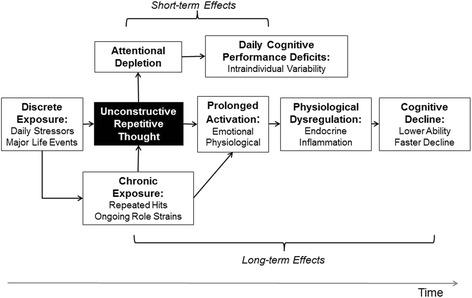
BACKGROUND: Despite evidence that psychological stress is an important risk factor for age-related cognitive loss, little research has directly evaluated psychological and physiological mediators of the relationship between stressful experiences and cognitive function. A key objective of the ESCAPE (Effects of Stress on Cognitive Aging, Physiology, and Emotion) project is to evaluate whether engaging in stress-related unconstructive repetitive thought (URT) is a pathway through which stressful experiences negatively affect cognitive health over the short- and long-term. Over the short-term, we hypothesize that engaging in URT will deplete attentional resources and result in worse cognitive performance in daily life. Over the long-term, we expect that the effects of chronic stress, from repeated exposure to stressors and regular engagement in URT, will be apparent in dysregulated hypothalamic-pituitary-adrenal (HPA) axis function and inflammation. Over time, stress-related physiological dysregulation will result in accelerated cognitive decline. METHODS/DESIGN: This study utilizes a prospective longitudinal measurement-burst design. A systematic probability sample of participants aged 25 to 65 is recruited from residents of the Bronx, NY. Consenting participants complete a baseline assessment and follow-up waves at 9, 18, and 27 months post-baseline. At each wave, participants complete a 14 day measurement burst of brief surveys and cognitive assessments delivered via study smartphones during daily life. Participants provide saliva samples four times each day for five days during the measurement burst and fasting blood samples at the end of each burst from which cortisol and dehydroepiandrosterone sulfate (DHEAS), circulating inflammatory markers, and stimulated inflammatory responses to lipopolysaccharide in whole blood are determined. DISCUSSION: This study takes a multi-pronged approach to assessing stress (i.e., early adversity, chronic strains, major events, daily hassles), psychological mediators (e.g., URT), biological mechanisms (i.e., HPA function, inflammation) and outcomes across different time-scales (i.e., momentary cognitive performance, cognitive decline across years). The systematic probability sample is locally representative and can be compared with national norms on key markers of health and well-being. The findings will improve our understanding of how environmental, psychological, and physiological stress-related influences accumulate to affect cognitive health and identify potential targets (e.g., URT, inflammation) for prevention and intervention promoting cognitive health.
Overview
The claims and statistics of this paper haven’t been checked yet.
Free: it reads the open-access text and checks the first 5 claims that cite a source we can check. Create a free account to check every claim.
Integrity signals
Registry
Cites
Statistics
Figures
Verification
Claims the paper makes
The claims and statistics of this paper haven’t been checked yet.
Free: it reads the open-access text and checks the first 5 claims that cite a source we can check. Create a free account to check every claim.
Claims other papers make about this one
Each is checked against this paper’s own text: does it say what the citing paper says it does?
In the citing paper
“Experiences of acute and chronic stress lead to hypersecretion of stress hormones in the hypothalamic-pituitary-adrenal (HPA) axis, and have adverse consequences for brain health.45,46”
From Why the cognitive ‘fountain of youth’ may be upstream: pathways to dementia risk and resilience through social connectedness (2022) · cites this paper as [46]
In the citing paper
“In humans, stress is associated with memory impairment and faster rates of cognitive decline among those with early stage ADRD.38,46,47”
From Why the cognitive ‘fountain of youth’ may be upstream: pathways to dementia risk and resilience through social connectedness (2022) · cites this paper as [46]
Self-check
Percentages, sums and reported differences re-computed from the paper’s own numbers.
The self-check needs the paper’s full text.
Citations
Cites
A Global Measure of Perceived Stress
Cohen, S., Kamarck, T., & Mermelstein, R. (1983) · Journal of Health and Social Behavior · doi:10.2307/2136404 · Cited by 32,807 · cited 1×
“Subjective Perceived stressfulness of life over last month Perceived Stress Scale [73]”
BackgroundDevelopment and validation of brief measures of positive and negative affect: The PANAS scales.
Watson, D., Clark, L. A., & Tellegen, A. (1988) · Journal of Personality and Social Psychology · doi:10.1037/0022-3514.54.6.1063 · Cited by 32,433
The satisfaction with life scale
Diener, E., Emmons, R. A., Larsen, R. J., & Griffin, S. (1985) · Journal of Personality Assessment · doi:10.1207/s15327752jpa4901_13 · Cited by 31,768 · cited 1×
“Subjective Physical functioning, medical history, medication use, anxiety, depression, mood over last month, life satisfaction PROMIS Physical Function Short Form-A, PROMIS Emotional Distress – Anxiety – Short Form 7-A, PROMIS Depression Short From 8-A, Positive and Negative Affect Schedule, Satisfaction with Life Sca…”
MethodFrom inflammation to sickness and depression: when the immune system subjugates the brain
Dantzer, R., O'Connor, J. C., Freund, G. G., Johnson, R. W., & Kelley, K. W. (2008) · Nature Reviews Neuroscience · doi:10.1038/nrn2297 · Cited by 7,395 · cited 1×
“Daily stress has also been associated with short-term increases in inflammation as well as in negative mood; both inflammation and negative mood are associated with fatigue and may further explain reductions in attentional resources that can occur with acute stress [13].”
BackgroundOptimism, coping, and health: Assessment and implications of generalized outcome expectancies.
Scheier, M. F., & Carver, C. S. (1985) · Health Psychology · doi:10.1037/0278-6133.4.3.219 · Cited by 6,690
Individual differences in working memory and reading
Daneman, M., & Carpenter, P. A. (1980) · Journal of Verbal Learning and Verbal Behavior · doi:10.1016/s0022-5371(80)90312-6 · Cited by 6,336 · cited 1×
“Three standardized tasks were used to measure WM in the lab: counting span, operation span [42, 43], and the backwards letter-span task [44].”
MethodStress, adaptation, and disease. Allostasis and allostatic load
McEWEN, B. S. (1998) · Annals of the New York Academy of Sciences · doi:10.1111/j.1749-6632.1998.tb09546.x · Cited by 5,092
2016 Alzheimer's disease facts and figures
Alzheimer's Association (2016) · Alzheimer's & Dementia · doi:10.1016/j.jalz.2016.03.001 · Cited by 5,069
Racial Differences in Physical and Mental Health: Socio-economic Status, Stress and Discrimination
Williams, D. R., Yu, Y., Jackson, J. S., & Anderson, N. B. (1997) · Journal of Health Psychology · doi:10.1177/135910539700200305 · Cited by 4,786
Stress and emotion: a new synthesis
(1999) · Choice Reviews Online · doi:10.5860/choice.37-1229 · Cited by 3,662
Research works printed but not linked: 2
- Kahneman D Attention & Effort 1973 Englewood Cliffs Prentice-Hall
- Snijders T Bosker R Multilevel Modeling: An Introduction to Basic and Advanced Multilevel Modeling 1999 London Sage
Cited by
Items 101–200 of 226
Factors influencing undergraduate education in an expanding virtual world during COVID-19
Bradaric, B. D., & Tresselt, D. B. (2022) · Education and Information Technologies · doi:10.1007/s10639-022-11104-6 · Cited by 10
“When students are experiencing high levels of stress and anxiety, that may or may not manifest clinically, cognitive functions can decline and may be diverted to deal with the stress or anxious event (Verschelden, 2017; Scott et al., 2015).”
BackgroundChronic Pain and Affective Experiences Associated with Daily Stressors and Uplifts
Kircher, J. A., Charles, S. T., Sin, N. L., & Almeida, D. M. (2023) · International Journal of Applied Positive Psychology · doi:10.1007/s41042-023-00101-w · Cited by 10
“Within-person reliability for negative affect was 0.77 and between-person reliability was 0.97 (Scott et al., 2015).”
BackgroundInfluentialSelf-citationStress Assessment in Daily Life Using the Experience Sampling Method
Vaessen, T., Reininghaus, U., & Myin‐Germeys, I. (2023) · Springer eBooks · doi:10.1007/978-3-031-27349-0_7 · Cited by 11
Occupational class differences in outcomes after ischemic stroke: a prospective observational study
Zhu, Y., Lu, Y., Zhou, M., Huang, P., Zhang, P., Guo, Y., Lv, L., Zhang, Y., Zhong, C., & Xu, T. (2021) · BMC Public Health · doi:10.1186/s12889-021-11624-9 · Cited by 11
Introversion and the frequency and intensity of daily uplifts and hassles
DeMeo, N. N., Smyth, J. M., Scott, S., Almeida, D. M., Sliwinski, M. J., & Graham‐Engeland, J. E. (2022) · Journal of Personality · doi:10.1111/jopy.12731 · Cited by 10
Self-citationPrivacy fit in open-plan offices : its appraisal, associated outcomes & contextual factors
Weber, C. (2019) · Zürcher Hochschule für Angewandte Wissenschaften digital collection (Zurich University of Applied Sciences) · doi:10.15126/thesis.00850409 · Cited by 15
“Expenditure of cognitive resources because of the process of stress appraisal has been suggested (cf. Kahneman, 1973; Lazarus, 1966; Scott et al., 2015).”
BackgroundNiemelä, M., von Bonsdorff, M. B., Äyrämö, S., Kärkkäinen, T., & Wellbeing Services County of Central Finland, F. (2024) · Applied Computing and Intelligence · doi:10.3934/aci.2024004 · Cited by 8
The link between anxiety and Alzheimer’s disease: critical facts
Jain, S., Chauhan, N., Sharma, S. K., Reddy, K. R., Sadhu, V. B., & Kulkarni, R. V. (2020) · Elsevier eBooks · doi:10.1016/b978-0-12-817923-9.00012-2 · Cited by 9
Pai, M., Lu, W., & Xue, B. (2021) · Ageing and Society · doi:10.1017/s0144686x21000775 · Cited by 10
“…to quality health care, education delays the onset of health hassles by shaping social and psychological resources, such as social support, mastery and self-esteem (Ross and Mirowsky, 2003), which are known to reduce stress, which correlates with higher cognition (Sandi, 2013; Scott et al., 2015).”
BackgroundAcculturative Stress Among International Students: A Case of Malaysian Universities
Mui, H. K., Yyadav, S., Ngu, H. J., Rajogoval, N. A. P., Noor, N. N. S. B. M., & Sasitheran, N. A. V. (2022) · Asia Pacific Journal of Management and Education · doi:10.32535/apjme.v5i1.1425 · Cited by 8
Accident patterns in trauma surgery patients with and without self-reported ADHD
Wolff, S., Queiser, K., Wessendorf, L., Meier, A. M., Verdenhalven, M., Grimm, O., Reimertz, C., Nau, C., Klos, M., Reif, A., et al. (2019) · Journal of Neural Transmission · doi:10.1007/s00702-019-02011-1 · Cited by 10
Chronic loneliness and longitudinal changes in cognitive functioning
Kang, J. E., Martire, L. M., Graham‐Engeland, J. E., Almeida, D. E., & Sliwinski, M. J. (2025) · BMC Public Health · doi:10.1186/s12889-025-22313-2 · Cited by 7
“Ethical approval for this study was obtained from the Albert Einstein College of Medicine of Yeshiva University’s review board (for additional details, refer to [59]).”
Self-citationPhysiological Signals based Student Grades Prediction using Machine Learning
Agarwal, V., Ahmad, N., & Hasan, M. G. (2023) · OITS International Conference on Information Technology (OCIT) · doi:10.1109/ocit59427.2023.10430675 · Cited by 7
“It is interesting to note that stress does not have exclusively negative effects on job productivity and performance, even though it is linked to an increased risk of cardiovascular disease [2] and unfavorable mental health outcomes [3].”
BackgroundBrady, B., Zhou, S., Ashworth, D., Zheng, L., Eramudugolla, R., Huque, M. H., & Anstey, K. J. (2023) · JMIR Research Protocols · doi:10.2196/47053 · Cited by 8
“To answer hypotheses 3 and 4, the variability in SPA and gender will be analyzed using multilevel modeling.”
Lee, K. C., Gao, J., Leung, H. K., Wu, B. W. Y., Roberts, A. C., Thach, T., & Sik, H. H. (2024) · Brain Sciences · doi:10.3390/brainsci14010091 · Cited by 7
“Several studies have reported a negative correlation between the power of EEG oscillation in the gamma band and aging, suggesting that the aging process diminishes the brain’s gamma power [15,16].”
BackgroundEsiaka, D. K., Nwakasi, C. C., Nweke, C., Thorpe, R. J., & Luth, E. A. (2025) · Alzheimer s & Dementia Behavior & Socioeconomics of Aging · doi:10.1002/bsa3.70003 · Cited by 7
“36 Further studies are recommended to better understand this finding among Black males.”
Ju, Y. J., Lee, J. E., & Lee, S. Y. (2020) · The journal of nutrition health & aging · doi:10.1007/s12603-020-1521-2 · Cited by 7
“Because stress dysregulation has a longterm adverse effect on brain structure and function, the prevention of repeated exposure to stress plays and important role in maintaining cognitive health in older people (21).”
BackgroundMogle, J. A., Hill, N. L., & Turner, J. R. (2021) · JMIR Research Protocols · doi:10.2196/25233 · Cited by 6
Self-citationKrüger, M., & Lux, V. (2023) · Frontiers in Human Neuroscience · doi:10.3389/fnhum.2023.1083200 · Cited by 7
“Epidemiological data and longitudinal clinical studies also indicate that increased levels of stress, either in form of stressful life events or as perceived stress in general, are associated with earlier onset of cognitive decline and higher risk for neurodegenerative diseases in old age (see, for example, Peavy et a…”
BackgroundCañigueral, R., Barron, K., & Steinbeis, N. (2023) · Developmental Psychology · doi:10.1037/dev0001606 · Cited by 6
“…stressful contexts are cognitively demanding, more cognitive resources will be invested in coping with such demands and therefore attentional resources available for the task at hand will decrease (e.g., during periods of heavy workload, it is often harder to focus on tasks; Scott et al., 2015).”
BackgroundPirrone, F., Piotti, P., Memoli, H., Grader, I., Scarpa, P., Biffi, E., Filipe, J., Albertini, M., & Siracusa, C. (2024) · Applied Animal Behaviour Science · doi:10.1016/j.applanim.2024.106406 · Cited by 6
Haque, U. M., Kabir, E., & Khanam, R. (2025) · Health Information Science and Systems · doi:10.1007/s13755-025-00335-9 · Cited by 6
“As cognitive abilities mature during adolescence and adulthood, individuals may develop more nuanced ways of understanding and coping with challenges [31, 32].”
Sleep-Based Brain Age Is Reduced in Advanced Inner Engineering Meditators
Banks, J. C., Hariri, S., Kveraga, K., Ouyang, A., Gallagher, K., Quadri, S. A., Tesh, R. A., Reed, P. U., THOMAS, R. J., Westover, M. B., et al. (2025) · Mindfulness · doi:10.1007/s12671-025-02583-y · Cited by 8
“Several studies suggest that the Gamma band power is negatively correlated with age (Magalhaes et al., 2018; Scott et al., 2015) while others suggest the opposite correlation (Al Zoubi et al., 2018; Gao et al., 2017), potentially indicating un-accounted various mental and emotional state of the…”
Fernandez, J. R., Ishino, F. A. M., Williams, F., Slopen, N. B., & Forde, A. T. (2022) · Journal of the American Heart Association · doi:10.1161/jaha.121.024594 · Cited by 7
Lougheed, J. P., Keskin, G., & Morgan, S. D. (2023) · Collabra Psychology · doi:10.1525/collabra.73649 · Cited by 7
Hadipour, M., Refahi, S., Jangravi, Z., & Meftahi, G. H. (2023) · 3 Biotech · doi:10.1007/s13205-023-03577-0 · Cited by 6
“Chronic stress causes synaptic loss and neural cell death followed by neuropsychiatric symptoms, such as anxiety and cognitive impairment (Scott et al. 2015; McEwen 2017).”
BackgroundSannes, A., Christensen, J. O., Nielsen, M. B., & Gjerstad, J. (2021) · Current Research in Behavioral Sciences · doi:10.1016/j.crbeha.2021.100021 · Cited by 7
Nautiyal, S., Rayal, S. P., & Bhardwaj, A. K. (2024) · Yoga Mimamsa · doi:10.4103/ym.ym_13_24 · Cited by 6
Mental States and Cognitive Performance Monitoring for User-Centered e-Learning System: A Case Study
Xia, Z., Lee, C. E., Chen, C., Kuo, J.-Y., & Lim, K. Y. H. (2022) · Advances in transdisciplinary engineering · doi:10.3233/atde220697 · Cited by 5
Lee, J. K., Johnson, L. A., Hall, J. R., Bateman, J. R., O’Bryant, S. E., & Mielke, M. M. (2025) · Journal of Alzheimer s Disease · doi:10.1177/13872877251352110 · Cited by 4
“96 Examples include community-based programs that promote the development of supportive social networks and support systems, while fostering social connection, thus helping to prevent social isolation among cognitively aging individuals.”
Alafoo, A., Mohamed, Z. M., Yusuf, A. M., Mubarak, H., Alaradi, S., & Al-Malali, A. (2024) · Cureus · doi:10.7759/cureus.76413 · Cited by 7
“High stress levels impair cognitive function, decision-making capacity, and emotional regulation, resulting in mistakes, close calls, and poor performance [4].”
Murdock, K. W., Stowe, R. P., & Engeland, C. G. (2022) · Psychosomatic Medicine · doi:10.1097/psy.0000000000001080 · Cited by 4
Self-citationAnimal-Assisted Stress/Anxiety Groups: Positive Coping for Men in Prison
(2020) · Journal of Mental Health and Social Behaviour · doi:10.33790/jmhsb1100123 · Cited by 4
“When chronic stress is not managed, short and long-term emotional, cognitive, physiological, and psychological effects often arise [6].”
BackgroundInfluentialAttitudes Towards Dementia Among a Diverse Group of Refugees Resettled in the United States
Kaki, D. A., Bridi, L., Mwendwa, P., Aso, M., Behnam, R., Bencheikh, N., Albahsahli, B., Khan, X., Aljenabi, R., Sideman, A. B., et al. (2024) · Journal of Geriatric Psychiatry and Neurology · doi:10.1177/08919887241280891 · Cited by 4
Ren, Y., Wu, B., Ge, C., Shi, L., Zhang, C., Zhu, M., Zhao, D., & Wang, L. (2025) · Age and Ageing · doi:10.1093/ageing/afaf069 · Cited by 5
“Reducing stress may mitigate the inflammatory response, potentially protecting cognitive health over time [45].”
Behavioral and Functional Adaptation to Chronic Stress in Older Adults
Kuo, W., Hummel, K. P., Brown, R., Mead, K. M., & Liebzeit, D. (2025) · Nursing Research · doi:10.1097/nnr.0000000000000823 · Cited by 4
Fortunatti, C. P., Silva, N. R., Cortes-Maripangue, S., Palmeiro-Silva, Y. K., Rojas-Jara, V., Nilo-Gonzalez, V., Cifuentes-Avendaño, B., Morales-Morales, D., & Garces-Brito, N. (2025) · PLoS ONE · doi:10.1371/journal.pone.0324013 · Cited by 5
“However, chronic exposure to psychological stress is associated with poorer cognitive function and an accelerated cognitive decline [25].”
Daily Memory Lapses and Affect: Mediation Effects on Life Satisfaction
Turner, J. R., Mogle, J. A., Hill, N. L., Bhargava, S., & Rabin, L. A. (2021) · Journal of Happiness Studies · doi:10.1007/s10902-021-00481-3 · Cited by 4
“This study was a secondary data analysis of two daily diary studies: the Effects of Stress on Cognitive Aging, Physiology, and Emotion (ESCAPE; Scott et al., 2015) and the Einstein Aging Study (EAS; Mogle et al.”
MethodSelf-citationMossavar‐Rahmani, Y., Shaw, P. A., Hakun, J. G., Katz, M. J., Wylie‐Rosett, J., & Sliwinski, M. J. (2022) · Contemporary Clinical Trials · doi:10.1016/j.cct.2022.107006 · Cited by 4
Self-citationDEVELOPMENT AND INITIAL VALIDATION OF THE STRESS SYMPTOMS SCALE
Dudkina, A., & Perepjolkina, V. (2021) · SOCIETY INTEGRATION EDUCATION Proceedings of the International Scientific Conference · doi:10.17770/sie2021vol7.6426 · Cited by 3
Mohammadi, H., Afshar, H., Goli, F., Keshteli, A. H., & Abolmaali, K. (2022) · Middle East Journal of Digestive Diseases · doi:10.34172/mejdd.2022.307 · Cited by 3
Stressors and Subjective Cognition in Daily Life: Tests of Physical Activity and Age as Moderators
Stuart, N. S., Wen, J., Klaiber, P., Puterman, E. M., DeLongis, A., & Sin, N. L. (2024) · Psychosomatic Medicine · doi:10.1097/psy.0000000000001338 · Cited by 4
Tunna, T. S., Akter, M. S., Parvin, M., Jilhaz, M., Jahan, S., & Zaidul, I. S. M. (2020) · European Journal of Medical and Health Sciences · doi:10.24018/ejmed.2020.2.3.266 · Cited by 4
“Stress is the culprit behinds diseases such as diabetes, cardiovascular disorders, respiratory issues, memory loss, immune disorders, allergy, asthma, acne, gastric disorders and other myriad of issues [1-4].”
BackgroundCharacterizing older adults’ real world memory function using ecologically valid approaches
Richmond, L. L., & Burnett, L. K. (2022) · The Psychology of learning and motivation/The psychology of learning and motivation · doi:10.1016/bs.plm.2022.07.004 · Cited by 5
Muñoz, E., Hyun, J., Diaz, J. A., Scott, S., & Sliwinski, M. J. (2024) · Social Science & Medicine · doi:10.1016/j.socscimed.2024.116807 · Cited by 4
Self-citationFactors Affecting Stress and Depression in Bangladeshi Students: A Cross-sectional Study
Karim, R., Khan, S. I., Bari, R., Akash, M. A., Chowdhury, A. K., Seum, M. A. A., Yousuf, K. N., & Reza, H. M. (2024) · Asian Journal of Social Health and Behavior · doi:10.4103/shb.shb_11_24 · Cited by 4
Chiron, F., Gulören, B., Erblang, M., Poirier, C., Elbaz, M., Servonnet, A., Gaudin, M., Coz, C. L., Lopes, P., Chennaoui, M., et al. (2025) · The Journal of Strength and Conditioning Research · doi:10.1519/jsc.0000000000005377 · Cited by 2
What happens at night? Differentiating within-day and overnight affective inertia
Lücke, A. J., Scott, S. B., Sliwinski, M. J., Smyth, J. M., Viechtbauer, W., & Neubauer, A. B. (2025) · Cognition & Emotion · doi:10.1080/02699931.2025.2603460 · Cited by 2
“The sample size was determined by the available data in the ESCAPE study which was originally powered to detect small to medium effects of perse-verative cognitions on cognitive performance in the short – and long-term (Scott et al., 2015).”
InfluentialSelf-citationAI-Enhanced Wearable Systems for Proactive Detection of Cognitive Decline in Elderly People
Yu, T., Li, M., Roosli, R., & Dong, D. (2026) · International Journal of Humanoid Robotics · doi:10.1142/s0219843626400086 · Cited by 3
Kezios, K., Zimmerman, S. C., Buto, P. T., Glymour, M. M., & Hazzouri, A. Z. A. (2026) · Epidemiology · doi:10.1097/ede.0000000000001979 · Cited by 2
“Persistent exposure to this stress over time could plausibly contribute to poorer midlife cognitive performance, 19,73 consistent with the associations we observed for baseline memory function (which were stronger for individuals with lower educational attainment in sensitivity analyses).”
Bohang, S. A. M., & Sohaimi, N. (2023) · Malaysian Journal of Medical Sciences · doi:10.21315/mjms2023.30.3.5 · Cited by 7
Bhattacharyya, K. K., & Molinari, V. (2023) · The International Journal of Aging and Human Development · doi:10.1177/00914150231219007 · Cited by 2
“Negative effects of stress on cognitive function are well-documented (Marin et al., 2011; Scott et al., 2015).”
Sharma, P., & Varshney, N. (2022) · Indian Journal of Physical Therapy and Research · doi:10.4103/ijptr.ijptr_20_22 · Cited by 2
Implementation of ungrading in the pharmacy curriculum
Monson, E., Armbrust, S., Hursman, A., Richter, L. M., & Frenzel, J. E. (2024) · Currents in Pharmacy Teaching and Learning · doi:10.1016/j.cptl.2024.102206 · Cited by 2
Turnbull, K., Orr, C., & Cruz, S. (2025) · Journal of Cognitive Psychology · doi:10.1080/20445911.2025.2507017 · Cited by 2
“Hence, maintaining a healthy limit of stress may affect positively EF, whereas chronic and elevated stress levels may have a detrimental impact on cognitive performance (Girotti et al., 2024; Scott et al., 2015).”
Mossavar‐Rahmani, Y., Hyun, N., Hakun, J. G., Katz, M. J., Pavlovic, J. M., Zetterberg, H., Wang, Z., Yang, J. B., Wylie‐Rosett, J., Hébert, J. R., et al. (2025) · American Journal of Clinical Nutrition · doi:10.1016/j.ajcnut.2025.05.011 · Cited by 2
Self-citationEconomic Hardship Among Elderly And Its Consequences Toward Cognitive Status.
Masud, J., & A., H. T. (2017) · Archives of Business Research · doi:10.14738/abr.58.3573 · Cited by 3
Surveying, shoring, strengthening: rebuilding medical morale from its foundations
Yassaee, A., Cheetham, L. J., Cork, N., Akhoon, C., & Gowda, A. (2019) · Clinical Medicine · doi:10.7861/clinmedicine.19-4-282 · Cited by 2
Evaluating study procedure training methods for a remote daily diary study of sexual minority women
Heron, K. E., Braitman, A. L., Dawson, C. A., MacIntyre, R. I., Howard, L. M., & Lewis, R. J. (2021) · mHealth · doi:10.21037/mhealth-20-116 · Cited by 2
“For example, in the Effects of Stress on Cognitive Aging, Physiology and Emotion (ESCAPE) Project, participants completed a 2-day “practice phase” of EMA data collection and only participants who completed at least 80% of all assessments during the practice phase were eligible to continue in the study (22), which can…”
MethodKüçükkaya, B., & Süt, H. K. (2021) · Bezmialem Science · doi:10.14235/bas.galenos.2020.4086 · Cited by 2
“Stress is basically a physiological condition and progresses as a process (10).”
BackgroundLinares, N. F. N., Charron, V., Ouimet, A. J., Labelle, P., & Plamondon, H. (2020) · PsyArXiv (OSF Preprints) · doi:10.31234/osf.io/9wtre · Cited by 2
Kramer, A. C., Neubauer, A. B., Leonhardt, A., Brose, A., Dirk, J., & Schmiedek, F. (2020) · PsyArXiv (OSF Preprints) · doi:10.31234/osf.io/hgy9b · Cited by 2
Psychological Stress Detection in Older Adults with Cognitive Impairment Using Photoplethysmography
Gwak, M., Davis, T. H., Sarrafzadeh, M., & Woo, E. (2021) · IEEE International Conference on Healthcare Informatics (ICHI) · doi:10.1109/ichi52183.2021.00040 · Cited by 1
Subjective sleep may mediate the associations between tomorrow anticipations and next‐day affect
Lee, S. (2024) · Applied Psychology Health and Well-Being · doi:10.1111/aphw.12587 · Cited by 1
Cognitive Challenges at High Altitude: Human Responses and Adaptation Strategies
Pawar, H., Ray, K., & Kishore, K. (2025) · Springer eBooks · doi:10.1007/978-981-96-8642-1_9 · Cited by 1
Loneliness Moderates Emotional Responses to Uplifts in Everyday Life
Kang, J. E., Jones, D. R., Graham‐Engeland, J. E., & Sliwinski, M. J. (2025) · Personality and Individual Differences · doi:10.1016/j.paid.2025.113516 · Cited by 1
Self-citationCastle, J. E., Pasquini, G., Small, B. J., Felt, J. M., Mogle, J. A., Sliwinski, M. J., & Scott, S. (2025) · Communications Psychology · doi:10.1038/s44271-025-00349-9 · Cited by 1
“…cognitive tasks following relatively brief self-report survey questions about psychological constructs relevant to the goals of their respective study teams (e.g., affect, stressors; see Small et al. 27 for details on the survivor sample; see Scott et al. 30 for details on the comparison sample).”
Self-citationSupriyanto, C., Wahyudi, H., Adi Nugraha, T., Ahmad Arief, N., Sidik, M. A., & Ahmadi6, A. (2024) · International Journal of Multicultural and Multireligious Understanding · doi:10.18415/ijmmu.v11i4.5611 · Cited by 2
Dai, C.-L., Song, Y., Chen, Y., Tung, Y. C., Huang, W., Gong, C., & Lovell, J. F. (2025) · Brain Behavior & Immunity - Health · doi:10.1016/j.bbih.2025.101167 · Cited by 4
“First, we performed open field test to investigate whether there are any differences in locomotive activity and anxiety, which could potentially affect the interpretation of cognitive tests (Mah et al., 2016; Scott et al., 2015).”
The Relationship Between Stress and Cognitive Functioning
Jasmin, G. A. (2019) · Cited by 1
Cognotoxemia: endotoxemia and gender predict changes in working memory performance in healthy adults
McDonnell, S., Graham‐Engeland, J. E., Sliwinski, M. J., Engeland, C. G., & Knight, E. L. (2024) · Frontiers in Neuroscience · doi:10.3389/fnins.2024.1453325 · Cited by 1
Self-citationThe Everyday Function Intervention Trial (EFIT) protocol: A randomized clinical trial
Ross, L. A., Fine, C., Stephan, A. T., Chai, H. W., McVey, A., Phillips, C. B., Gamaldo, A. A., Mogle, J. A., Dennis, N. A., Sliwinski, M. J., et al. (2025) · Contemporary Clinical Trials · doi:10.1016/j.cct.2025.107829 · Cited by 2
Self-citationKang, J. E., Jones, D. R., Smyth, J. M., & Sliwinski, M. J. (2025) · Cognition & Emotion · doi:10.1080/02699931.2025.2527854 · Cited by 1
“Study details are provided elsewhere (Scott et al., 2015).”
Self-citationCrook, A. L. (2019) · ERA · Cited by 1
Exploring Epigenetic Age Acceleration and Cognitive Change in Middle AdulthoodPreprint
Zavala, D. V., Kim, S. H., Felt, J. M., Oravecz, Z., Sliwinski, M. J., Graham‐Engeland, J. E., Engeland, C. G., Bernard, K., Veeramah, K. R., & Scott, S. (2025) · PsyArXiv (OSF Preprints) · doi:10.31234/osf.io/s2zqx_v1 · Cited by 1
Self-citationLinares, N. F. N. (2022) · uO Research (University of Ottawa) · doi:10.20381/ruor-27726 · Cited by 1
da Silva, C. A. F. (2016) · RIUnB Institutional Repository (University of Brasília) · doi:10.26512/2016.02.t.20139 · Cited by 2
Arneil, M. (2018) · Queensland University of Technology · doi:10.5204/thesis.eprints.121160
Eisel, S. L. (2018) · Digital Commons - University of South Florida (University of South Florida) · Cited by 1
Smith, K. E. (2019) · ThinkIR: The University of Louisville's Institutional Repository (University of Louisville) · doi:10.18297/etd/3259
“…(Darke, 1988; Dias-Ferreira et al., 2009; Furman et al., 2013; Gohier et al., 2009; Harvey et al., 2004; Marazziti, Consoli, Picchetti, Carlini, & Faravelli, 2010; Nebes et al., 2000; Schulz & Vögele, 2015; Schwabe & Wolf, 2013; Scott et al., 2015; Shackman et al., 2006; Wittmann & Paulus, 2008).”
Daily emotional functioning in social anxiety disorder
Grace, C. (2020) · Research Bank (Australian Catholic University) · doi:10.26199/xxag-x443
Cordella, M., & Poiani, A. (2021) · International perspectives on aging · doi:10.1007/978-3-030-60071-6_5
Counter-Hacking the Subconscious Mind: Antidote for Faulty Human Perceptions From the Media Sphere
Cools, J. (2022) · Advances in media, entertainment and the arts (AMEA) book series · doi:10.4018/978-1-7998-8884-0.ch018
An Innovative Framework for Integrative Rehabilitation in Dementia
Bragin, V., & Bragin, I. (2022) · IntechOpen eBooks · doi:10.5772/intechopen.101863
Fronsman-Cecil, T. (2022) · Springer eBooks · doi:10.1007/978-3-030-95357-7_8
Mechanistic Insight into Chronic Stress-Induced Cerebrovascular Dysfunction
Burrage, E. N. (2022) · The Research Repository @ WVU (West Virginia University) · doi:10.33915/etd.11610
Oktaviani, R., Ismiyati, Y., & Munawwaroh, K. (2021) · JELT Journal of English Language Teaching · doi:10.33087/jelt.v5i2.90
Tamoxifen Effects on Cognition and Language in Women with Breast Cancer
Sharma, S., & Wright, H. H. (2023) · Seminars in Speech and Language · doi:10.1055/s-0043-1768135
Domínguez-Monterroza, A., & Patiño-Vanegas, A. (2023) · IEEE Colombian Caribbean Conference (C3) · doi:10.1109/c358072.2023.10436259
“Some works point out that heightened stress levels have been causally linked to mental health disturbances [1], [2].”
BackgroundImpact of Stress on the Sleep Pattern and Cognitive Performance on Young Adults
Rawal, K. (2024) · International Journal for Research in Applied Science and Engineering Technology · doi:10.22214/ijraset.2024.61712 · Cited by 1
G., M. S. C., & Devaseelan, S. (2024) · International Journal of Health Sciences and Pharmacy · doi:10.47992/ijhsp.2581.6411.0125 · Cited by 1
Lougheed, J. P., Chanut, J., & Truong, A. K. (2025) · Affective Science · doi:10.1007/s42761-025-00306-z
“In Part 2, participants completed the Today’s Events questionnaire (Scott et al., 2015; Sin & Almeida, 2018; Sin et al., 2017), which asked for details regarding stressful experiences each day.”
Vilaça, M., Carvalho, S., Leite, J., Leite, F., & Pereira, M. G. (2025) · Healthcare · doi:10.3390/healthcare13141655
“This study is based on the Cognitive Aging Model [37], which postulates that stress-related unconstructive repetitive thinking may act as a psychological mechanism that extends physiological and emotional responses to chronic stress, negatively affecting cognitive function.”
What happens at night? Differentiating within-day and overnight affective inertiaPreprint
Lücke, A. J., Scott, S., Sliwinski, M. J., Smyth, J. M., Viechtbauer, W., & Neubauer, A. B. (2025) · PsyArXiv (OSF Preprints) · doi:10.31234/osf.io/q7a92_v1
Self-citationKatz, M. J., Johns, T. S., Martin, M. M., Burgess, A., Claris, V., Volda, G. S., Roque, N. A., Shaw, P. A., Hyun, N., Hakun, J. G., et al. (2025) · Alzheimer s & Dementia Translational Research & Clinical Interventions · doi:10.1002/trc2.70174
“28,29 However, given the slower recruitment with the COVID-19 pandemic, the enrollment goal was modified to a more realistic goal of 290 individuals for an expected 250 at 9 months.”
Self-citationLaulan, P., & Rimmele, U. (2025) · Authorea · doi:10.22541/au.176492367.71651719/v1
Engaging in and responding to daily positive events : roles of personality and age
Klaiber, P. (2023) · cIRcle (University of British Columbia) · doi:10.14288/1.0430334
Kircher, J. A. (2024) · eScholarship (California Digital Library) · Cited by 1
Metadata
- Authors
- Scott, S. B., Graham-Engeland, J. E., Engeland, C. G., Smyth, J. M., Almeida, D. M., Katz, M. J., Lipton, R. B., Mogle, J. A., Munoz, E., Ram, N., & Sliwinski, M. J.
- Affiliations
- University of South Florida (US)
- Pennsylvania State University (US)
- Albert Einstein College of Medicine (US)
- Corresponding author
- Sliwinski, Martin J.
- ORCID
- Venue
- BMC Psychiatry
- Published
- 2015-07-03
- Volume
- 15
- Issue
- 1
- Pages
- 146-146
- ISSN
- 1471-244X (ISSN-L)
- PMC
- PMC4490700
- OpenAlex
- W2159289539
- Cited by
- 197
- References
- 97
- Citations by year
- 2026: 11 · 2025: 23 · 2024: 21 · 2023: 19 · 2022: 26 · 2021: 29 · 2020: 23 · 2019: 15 · 2018: 14 · 2017: 8 · 2016: 7 · 2015: 1
- FWCI
- 5.20
- Type
- journal article
- Language
- en
- Open access
- gold
- doi.org
- Locations
- BMC Psychiatry (publishedVersion, cc-by)
- Europe PMC (PubMed Central) (publishedVersion, cc-by)
- PubMed Central (publishedVersion, cc-by)
- PubMed (publishedVersion)
- Funders
- Georgia Clinical and Translational Science Alliance
- National Institutes of Health (UL1TR001425, UL1TR001073, UL1TR000077, AG03949)
- National Institute on Aging (P01AG03949, P01AG003949, R01AG042595, R01AG039409)
- National Center for Advancing Translational Sciences (CTSA 1UL1TR001073)
- Topics
- Life Sciences › Neuroscience › Behavioral Neuroscience › Stress Responses and Cortisol
- Social Sciences › Psychology › Developmental and Educational Psychology › Aging and Gerontology Research
- Health Sciences › Medicine › Psychiatry and Mental health › Dementia and Cognitive Impairment Research
- Keywords
- psychological stress, cognitive aging, chronic stress, hypothalamic-pituitary-adrenal axis, cortisol, dehydroepiandrosterone sulfate, inflammation, lipopolysaccharide response, cognitive decline, attentional resources, daily hassles, childhood adversity, major life events, cognitive health
- MeSH terms
- Cognitive Aging, Cognition, Cognition Disorders, Emotions, Female, Humans, Hydrocortisone, Hypothalamo-Hypophyseal System, Male, Pituitary-Adrenal System, Prospective Studies, Research Design, Stress, Psychological, Outcome Assessment, Health Care
About these checks
Registry, retraction, Cites and statistics results are computed, not judged, with one exception: a printed reference that no index lists is read once by a model before it counts as a citation error. Claims are extracted by a model and kept only when their quote appears verbatim in the text; each cited source is then checked, with a model’s help, for whether it says what the claim relies on. Those verdicts can be wrong — read the claim’s quote and the cited source before relying on one.
Statistics and arithmetic are recomputed, not judged.
Confidence bands are shown only for fields calibrated on our annotated test set. None is calibrated yet, so no band is shown.
What counts as a claim ›How we measure confidence ›How we check this ›
Are you an author, or do you see a problem with this page? Request a review
Data sources
Bibliographic data: Semantic Scholar, OpenAlex, Crossref.
Contains information from the Semantic Scholar Academic Graph Datasets, made available under the ODC Attribution License (ODC-BY 1.0).
Semantic Scholar’s data is described in: Kinney, R., et al. (2023). The Semantic Scholar Open Data Platform. arXiv:2301.10140.
