

The Effects of Stress on Cognitive Aging, Physiology and Emotion (ESCAPE) Project
Open accessThe DOI matches its Crossref record; 93 of the 97 references it cites were found in a registry or an index.
Abstract
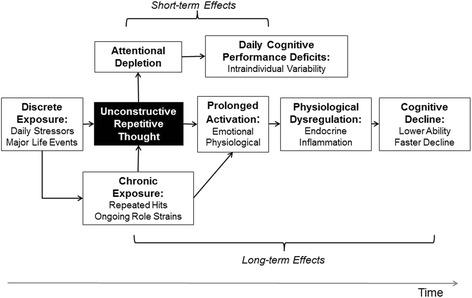
BACKGROUND: Despite evidence that psychological stress is an important risk factor for age-related cognitive loss, little research has directly evaluated psychological and physiological mediators of the relationship between stressful experiences and cognitive function. A key objective of the ESCAPE (Effects of Stress on Cognitive Aging, Physiology, and Emotion) project is to evaluate whether engaging in stress-related unconstructive repetitive thought (URT) is a pathway through which stressful experiences negatively affect cognitive health over the short- and long-term. Over the short-term, we hypothesize that engaging in URT will deplete attentional resources and result in worse cognitive performance in daily life. Over the long-term, we expect that the effects of chronic stress, from repeated exposure to stressors and regular engagement in URT, will be apparent in dysregulated hypothalamic-pituitary-adrenal (HPA) axis function and inflammation. Over time, stress-related physiological dysregulation will result in accelerated cognitive decline. METHODS/DESIGN: This study utilizes a prospective longitudinal measurement-burst design. A systematic probability sample of participants aged 25 to 65 is recruited from residents of the Bronx, NY. Consenting participants complete a baseline assessment and follow-up waves at 9, 18, and 27 months post-baseline. At each wave, participants complete a 14 day measurement burst of brief surveys and cognitive assessments delivered via study smartphones during daily life. Participants provide saliva samples four times each day for five days during the measurement burst and fasting blood samples at the end of each burst from which cortisol and dehydroepiandrosterone sulfate (DHEAS), circulating inflammatory markers, and stimulated inflammatory responses to lipopolysaccharide in whole blood are determined. DISCUSSION: This study takes a multi-pronged approach to assessing stress (i.e., early adversity, chronic strains, major events, daily hassles), psychological mediators (e.g., URT), biological mechanisms (i.e., HPA function, inflammation) and outcomes across different time-scales (i.e., momentary cognitive performance, cognitive decline across years). The systematic probability sample is locally representative and can be compared with national norms on key markers of health and well-being. The findings will improve our understanding of how environmental, psychological, and physiological stress-related influences accumulate to affect cognitive health and identify potential targets (e.g., URT, inflammation) for prevention and intervention promoting cognitive health.
Overview
The claims and statistics of this paper haven’t been checked yet.
Free: it reads the open-access text and checks the first 5 claims that cite a source we can check. Create a free account to check every claim.
Integrity signals
Registry
Cites
Statistics
Figures
Verification
Claims the paper makes
The claims and statistics of this paper haven’t been checked yet.
Free: it reads the open-access text and checks the first 5 claims that cite a source we can check. Create a free account to check every claim.
Claims other papers make about this one
Each is checked against this paper’s own text: does it say what the citing paper says it does?
In the citing paper
“Experiences of acute and chronic stress lead to hypersecretion of stress hormones in the hypothalamic-pituitary-adrenal (HPA) axis, and have adverse consequences for brain health.45,46”
From Why the cognitive ‘fountain of youth’ may be upstream: pathways to dementia risk and resilience through social connectedness (2022) · cites this paper as [46]
In the citing paper
“In humans, stress is associated with memory impairment and faster rates of cognitive decline among those with early stage ADRD.38,46,47”
From Why the cognitive ‘fountain of youth’ may be upstream: pathways to dementia risk and resilience through social connectedness (2022) · cites this paper as [46]
Self-check
Percentages, sums and reported differences re-computed from the paper’s own numbers.
The self-check needs the paper’s full text.
Citations
Cites
A Global Measure of Perceived Stress
Cohen, S., Kamarck, T., & Mermelstein, R. (1983) · Journal of Health and Social Behavior · doi:10.2307/2136404 · Cited by 32,807 · cited 1×
“Subjective Perceived stressfulness of life over last month Perceived Stress Scale [73]”
BackgroundDevelopment and validation of brief measures of positive and negative affect: The PANAS scales.
Watson, D., Clark, L. A., & Tellegen, A. (1988) · Journal of Personality and Social Psychology · doi:10.1037/0022-3514.54.6.1063 · Cited by 32,433
The satisfaction with life scale
Diener, E., Emmons, R. A., Larsen, R. J., & Griffin, S. (1985) · Journal of Personality Assessment · doi:10.1207/s15327752jpa4901_13 · Cited by 31,768 · cited 1×
“Subjective Physical functioning, medical history, medication use, anxiety, depression, mood over last month, life satisfaction PROMIS Physical Function Short Form-A, PROMIS Emotional Distress – Anxiety – Short Form 7-A, PROMIS Depression Short From 8-A, Positive and Negative Affect Schedule, Satisfaction with Life Sca…”
MethodFrom inflammation to sickness and depression: when the immune system subjugates the brain
Dantzer, R., O'Connor, J. C., Freund, G. G., Johnson, R. W., & Kelley, K. W. (2008) · Nature Reviews Neuroscience · doi:10.1038/nrn2297 · Cited by 7,395 · cited 1×
“Daily stress has also been associated with short-term increases in inflammation as well as in negative mood; both inflammation and negative mood are associated with fatigue and may further explain reductions in attentional resources that can occur with acute stress [13].”
BackgroundOptimism, coping, and health: Assessment and implications of generalized outcome expectancies.
Scheier, M. F., & Carver, C. S. (1985) · Health Psychology · doi:10.1037/0278-6133.4.3.219 · Cited by 6,690
Individual differences in working memory and reading
Daneman, M., & Carpenter, P. A. (1980) · Journal of Verbal Learning and Verbal Behavior · doi:10.1016/s0022-5371(80)90312-6 · Cited by 6,336 · cited 1×
“Three standardized tasks were used to measure WM in the lab: counting span, operation span [42, 43], and the backwards letter-span task [44].”
MethodStress, adaptation, and disease. Allostasis and allostatic load
McEWEN, B. S. (1998) · Annals of the New York Academy of Sciences · doi:10.1111/j.1749-6632.1998.tb09546.x · Cited by 5,092
2016 Alzheimer's disease facts and figures
Alzheimer's Association (2016) · Alzheimer's & Dementia · doi:10.1016/j.jalz.2016.03.001 · Cited by 5,069
Racial Differences in Physical and Mental Health: Socio-economic Status, Stress and Discrimination
Williams, D. R., Yu, Y., Jackson, J. S., & Anderson, N. B. (1997) · Journal of Health Psychology · doi:10.1177/135910539700200305 · Cited by 4,786
Stress and emotion: a new synthesis
(1999) · Choice Reviews Online · doi:10.5860/choice.37-1229 · Cited by 3,662
Research works printed but not linked: 2
- Kahneman D Attention & Effort 1973 Englewood Cliffs Prentice-Hall
- Snijders T Bosker R Multilevel Modeling: An Introduction to Basic and Advanced Multilevel Modeling 1999 London Sage
Cited by
Subjective Cognitive Decline in Preclinical Alzheimer's Disease
Rabin, L. A., Smart, C. M., & Amariglio, R. E. (2017) · Annual Review of Clinical Psychology · doi:10.1146/annurev-clinpsy-032816-045136 · Cited by 590
Rabin, L. A., Paolillo, E., & Barr, W. B. (2016) · Archives of Clinical Neuropsychology · doi:10.1093/arclin/acw007 · Cited by 448
Reliability and Validity of Ambulatory Cognitive Assessments
Sliwinski, M. J., Mogle, J. A., Hyun, J., Munoz, E., Smyth, J. M., & Lipton, R. B. (2018) · Assessment · doi:10.1177/1073191116643164 · Cited by 357
“…Effects of Stress on Cognitive Aging, Physiology and Emotion project is a prospective measurement burst study (Nesselroade, 1991; Sliwinski, 2008) that tracks variability and change in daily experiences of stress and cognitive function across four 14-day EMA measurement bursts (Scott et al., 2015).”
BackgroundSelf-citationEvaluation of Pressing Issues in Ecological Momentary Assessment
Stone, A. A., Schneider, S., & Smyth, J. M. (2023) · Annual Review of Clinical Psychology · doi:10.1146/annurev-clinpsy-080921-083128 · Cited by 200
“Additionally, some studies implement formal run-in periods (e.g., Clauw et al. 2008, Scott et al. 2015) wherein participants complete momentary reports for several days and only those participants demonstrating good compliance are retained for ongoing research (a process that results in presumably…”
Self-citationAdrenal Aging and Its Implications on Stress Responsiveness in Humans
Yiallouris, A., Tsioutis, C., Agapidaki, E., Zafeiri, M., Agouridis, A. P., Ntourakis, D., & Johnson, E. O. (2019) · Frontiers in Endocrinology · doi:10.3389/fendo.2019.00054 · Cited by 186
“Stress is a risk factor that affects the physical, mental and social health of individuals through lifespan (95, 96).”
BackgroundNarvaez Linares, N. F., Charron, V., Ouimet, A. J., Labelle, P. R., & Plamondon, H. (2020) · Neurobiology of Stress · doi:10.1016/j.ynstr.2020.100235 · Cited by 147
An introductory guide to conducting the Trier Social Stress Test
Labuschagne, I., Grace, C., Rendell, P., Terrett, G., & Heinrichs, M. (2019) · Neuroscience & Biobehavioral Reviews · doi:10.1016/j.neubiorev.2019.09.032 · Cited by 131
“In the short-term, preoccupation with earlier stressors can lead to reduced ability to allocate attention and memory resources towards tasks at hand, and long-term chronic stress is associated with accelerated cognitive declines (Scott et al., 2015).”
BackgroundFrom Use to Overuse: Digital Inequality in the Age of Communication Abundance
Gui, M., & Büchi, M. (2021) · Social Science Computer Review · doi:10.1177/0894439319851163 · Cited by 130
“However, in other fields of human activity, there is ample literature that demonstrates how perception of stress translates into actual detrimental factors (Kirkcaldy & Martin, 2000; Scott et al., 2015).”
BackgroundKim, W., Kim, N., Lyons, J. B., & Nam, C. S. (2020) · Applied Ergonomics · doi:10.1016/j.apergo.2020.103056 · Cited by 108
Neubauer, A. B., Scott, S. B., Sliwinski, M. J., & Smyth, J. M. (2020) · Journal of Personality and Social Psychology · doi:10.1037/pspp0000248 · Cited by 100
“Only the measures relevant for the present study are reported (see Scott et al., 2015, for a description of the full study protocol).”
Self-citationA coordinated analysis of variance in affect in daily life
Scott, S. B., Sliwinski, M. J., Zawadzki, M., Stawski, R. S., Kim, J., Marcusson-Clavertz, D., Lanza, S. T., Conroy, D. E., Buxton, O., Almeida, D. M., et al. (2020) · Assessment · doi:10.1177/1073191118799460 · Cited by 115
“For additional detail on the sample and study protocol, see Scott et al. (2015).”
BackgroundSelf-citationCerino, E. S., Katz, M. J., Wang, C., Qin, J., Gao, Q., Hyun, J., Hakun, J. G., Roque, N. A., Derby, C. A., Lipton, R. B., et al. (2021) · Frontiers in Digital Health · doi:10.3389/fdgth.2021.758031 · Cited by 112
“In the Effects of Stress on Cognitive Aging, Physiology and Emotion [ESCAPE; (30)] project, participants completed smartphone-based cognitive tests up to 5 times per day for 14 consecutive days.”
BackgroundSelf-citationBakrania, K., Edwardson, C. L., Khunti, K., Bandelow, S., Davies, M. J., & Yates, T. (2018) · American Journal of Epidemiology · doi:10.1093/aje/kwx273 · Cited by 97
“previously showing the links between these factors and cognitive decline (33-35), it is plausible that the observed relationships are enhanced via this pathway.”
Uwajeh, P. C., Iyendo, T. O., & Polay, M. (2019) · EXPLORE · doi:10.1016/j.explore.2019.05.002 · Cited by 119
Cognitive-Based E-Learning Design for Older Adults
Pappas, M. A., Demertzi, E., Papagerasimou, Y., Koukianakis, L., Voukelatos, N., & Drigas, A. S. (2019) · Social Sciences · doi:10.3390/socsci8010006 · Cited by 102
Negative and positive affect as predictors of inflammation: Timing matters
Graham-Engeland, J. E., Sin, N. L., Smyth, J. M., Jones, D. R., Knight, E. L., Sliwinski, M. J., Almeida, D. M., Katz, M. J., Lipton, R. B., & Engeland, C. G. (2018) · Brain, Behavior, and Immunity · doi:10.1016/j.bbi.2018.09.011 · Cited by 77
Self-citationPerry, B. L., McConnell, W. R., Coleman, M. E., Roth, A. R., Peng, S., & Apostolova, L. G. (2022) · Alzheimer's & Dementia · doi:10.1002/alz.12443 · Cited by 77
The Influence of Leisure Engagement on Daily Emotional Well-Being
Chen, S.-T., Hyun, J., Graefe, A. R., Mowen, A. J., Almeida, D. M., & Sliwinski, M. J. (2020) · Leisure Sciences · doi:10.1080/01490400.2020.1757537 · Cited by 80
“Further information on the study protocol can be found in Scott et al. (2015).”
BackgroundSelf-citationChen, R., Weuve, J., Misra, S., Cuevas, A. G., Kubzansky, L. D., & Williams, D. R. (2021) · The Journals of Gerontology Series A · doi:10.1093/gerona/glab099 · Cited by 74
Age differences in negative emotional responses to daily stressors depend on time since event.
Scott, S. B., Ram, N., Smyth, J. M., Almeida, D. M., & Sliwinski, M. J. (2017) · Developmental Psychology · doi:10.1037/dev0000257 · Cited by 60
“Further information on the study protocol is provided in blinded for review Scott et al. (2015).”
Self-citationSprague, B. N., FREED, S. A., Webb, C. E., Phillips, C. B., Hyun, J., & Ross, L. A. (2019) · Ageing Research Reviews · doi:10.1016/j.arr.2019.04.002 · Cited by 72
Zawadzki, M. J., Scott, S., Almeida, D. M., Lanza, S. T., Conroy, D. E., Sliwinski, M. J., Kim, J., Marcusson‐Clavertz, D., Stawski, R. S., Green, P. M., et al. (2019) · Journal of Behavioral Medicine · doi:10.1007/s10865-018-00008-x · Cited by 71
Self-citationAge differences in everyday stressor-related negative affect: A coordinated analysis.
Stawski, R. S., Scott, S., Zawadzki, M. J., Sliwinski, M. J., Marcusson‐Clavertz, D., Kim, J., Lanza, S. T., Green, P. A., Almeida, D. M., & Smyth, J. M. (2019) · Psychology and Aging · doi:10.1037/pag0000309 · Cited by 70
“: Participants (n = 241) were recruited using systematic probability sampling of New York City Registered Voter Lists for the zip code 10475, an area of Bronx, NY (see Scott et al., 2015 for additional details).”
MethodSelf-citationHyun, J., Sliwinski, M. J., & Smyth, J. M. (2018) · The Journals of Gerontology Series B · doi:10.1093/geronb/gby042 · Cited by 76
“One theoretical account to support the link between stress anticipation and WM impairment is attention-depletion hypothesis (Scott et al., 2015; Sliwinski et al., 2006).”
Self-citationDevelopment of an Empathy-Centric Counseling Chatbot System Capable of Sentimental Dialogue Analysis
Trappey, A. J. C., Lin, A. P. C., Hsu, K. Y. K., Trappey, C. V., & Tu, K. L. K. (2022) · Processes · doi:10.3390/pr10050930 · Cited by 49
Garcini, L. M., Cadenas, G. A., Rodríguez, M. M. D., Mercado, A., Campos, L., Abraham, C., Silva, M., & Paris, M. (2022) · Psychological Services · doi:10.1037/ser0000603 · Cited by 58
“From a mental health perspective, chronic stress is known to exacerbate trauma-related symptoms, lead to severe depression, debilitating anxiety, increased substance use, and diminished level of functioning that can contribute to disability, job loss, interpersonal instability, and other severe effects increasing the…”
BackgroundPerceived neighborhood characteristics predict severity and emotional response to daily stressors
Scott, S., Muñoz, E., Mogle, J. A., Gamaldo, A. A., Smyth, J. M., Almeida, D. M., & Sliwinski, M. J. (2017) · Social Science & Medicine · doi:10.1016/j.socscimed.2017.11.010 · Cited by 53
Self-citationZavala, D. V., Dzikowski, N., Gopalan, S., Harrington, K., Pasquini, G., Mogle, J. A., Reid, K., Sliwinski, M. J., Graham‐Engeland, J. E., Engeland, C. G., et al. (2023) · The Journals of Gerontology Series A · doi:10.1093/gerona/glad242 · Cited by 57
“This secondary data analysis draws from the first wave of the Effects of Cognitive Aging, Physiology, and Emotion study (37).”
Self-citationBack to the Future: Examining Age Differences in Processes Before Stressor Exposure
Neupert, S. D., Neubauer, A. B., Scott, S., Hyun, J., & Sliwinski, M. J. (2018) · The Journals of Gerontology Series B · doi:10.1093/geronb/gby074 · Cited by 50
“Hyun, Sliwinski, and Smyth (2018) operationalize stress anticipation by asking the extent to which a person expects to experience stress during the upcoming day.”
BackgroundSelf-citationKang, J. E., Graham‐Engeland, J. E., Scott, S., Smyth, J. M., & Sliwinski, M. J. (2023) · Stress and Health · doi:10.1002/smi.3294 · Cited by 48
Self-citationThe aging mind: A complex challenge for research and practice
Zihl, J., & Reppermund, S. (2022) · Aging Brain · doi:10.1016/j.nbas.2022.100060 · Cited by 46
Majd, M., Graham‐Engeland, J. E., Smyth, J. M., Sliwinski, M. J., Lipton, R. B., Katz, M. J., & Engeland, C. G. (2017) · Physiology & Behavior · doi:10.1016/j.physbeh.2017.11.009 · Cited by 42
Self-citationThe role of neighborhood stressors on cognitive function: A coordinated analysis
Muñoz, E., Scott, S., Corley, R. P., Wadsworth, S. J., Sliwinski, M. J., & Reynolds, C. A. (2020) · Health & Place · doi:10.1016/j.healthplace.2020.102442 · Cited by 39
Self-citationKim, J., & Hwang, S.-S. (2024) · The Journals of Gerontology Series B · doi:10.1093/geronb/gbae082 · Cited by 39
Thibeau, S., McDermott, K. L., McFall, G. P., Rockwood, K. J., & Dixon, R. A. (2019) · Alzheimer s Research & Therapy · doi:10.1186/s13195-019-0509-9 · Cited by 38
Sampedro‐Piquero, P., Castilla‐Ortega, E., Zancada-Menéndez, C., Santín, L. J., & Begega, A. (2016) · Neuroscience · doi:10.1016/j.neuroscience.2016.05.032 · Cited by 38
Sleep health is associated with next-day mindful attention in healthcare workers
Lee, S., Mu, C., Gonzalez, B. D., Vinci, C., & Small, B. J. (2020) · Sleep Health · doi:10.1016/j.sleh.2020.07.005 · Cited by 35
Stenling, A., Sörman, D. E., Lindwall, M., Hansson, P., Ljungberg, J. K., & Machado, L. (2020) · Aging Neuropsychology and Cognition · doi:10.1080/13825585.2020.1779646 · Cited by 39
A Wearable Exam Stress Dataset for Predicting Grades using Physiological Signals
Amin, M. R., Wickramasuriya, D. S., & Faghih, R. T. (2022) · IEEE Healthcare Innovations and Point of Care Technologies Conference (HI-POCT) · doi:10.1109/hi-poct54491.2022.9744065 · Cited by 44
Affect variability and inflammatory markers in midlife adults.
Jones, D. R., Smyth, J. M., Engeland, C. G., Sliwinski, M. J., Russell, M. A., Sin, N. L., Almeida, D. M., & Graham‐Engeland, J. E. (2020) · Health Psychology · doi:10.1037/hea0000868 · Cited by 33
“A priori power analyses for the larger study indicated sufficient power (.80) to detect small effects (see Scott et al., 2015).”
BackgroundMethodInfluentialSelf-citationCollett, G., Craenen, K., Young, W. R., Gilhooly, M., & Anderson, R. M. (2020) · International Journal of Radiation Biology · doi:10.1080/09553002.2020.1793017 · Cited by 35
“It is known that psychological stress (e.g., anxiety) can cause short-term cognitive dysfunction (Scott et al. 2015) perhaps due to cognitive interference depleting attention resources (Stawski et al. 2006; Eysenck et al. 2007).”
BackgroundYang, F., Li, Z., Wang, G., Shi, X., & Fu, C. (2021) · Aging · doi:10.18632/aging.202416 · Cited by 32
“Therefore, non-empty-nest elderly adults may experience stress from caring for their families, and may passively participate in economic activities, thus negatively impacting their cognitive function [38].”
BackgroundAnker, J. J., & Krill, P. R. (2021) · PLoS ONE · doi:10.1371/journal.pone.0250563 · Cited by 31
“Excessive workloads also have the potential to undermine the quality and reliability of the work product delivered in their service since chronic stress has been consistently associated with lower cognitive function [29].”
BackgroundKramer, A. C., Neubauer, A. B., Scott, S., Schmiedek, F., Sliwinski, M. J., & Smyth, J. M. (2022) · Emotion · doi:10.1037/emo0000954 · Cited by 30
Self-citationKnight, E. L., Majd, M., Graham‐Engeland, J. E., Smyth, J. M., Sliwinski, M. J., & Engeland, C. G. (2020) · Brain Behavior & Immunity - Health · doi:10.1016/j.bbih.2019.100013 · Cited by 29
Self-citationBurzynska, A. Z., Ganster, D. C., Fanning, J. T., Salerno, E. A., Gothe, N. P., Voss, M. W., McAuley, E., & Kramer, A. F. (2020) · Frontiers in Human Neuroscience · doi:10.3389/fnhum.2020.00266 · Cited by 32
Affect variability and sleep: Emotional ups and downs are related to a poorer night's rest
Leger, K. A., Charles, S. T., & Fingerman, K. L. (2019) · Journal of Psychosomatic Research · doi:10.1016/j.jpsychores.2019.109758 · Cited by 28
Oshri, A., Cui, Z., Owens, M. M., Carvalho, C., & Sweet, L. H. (2022) · Neuropsychologia · doi:10.1016/j.neuropsychologia.2022.108354 · Cited by 28
Dong, H., Keegan, J., Hong, E. S., Gallardo, C., Montalvo‐Ortiz, J. L., Wang, B., Rice, K. C., & Csernansky, J. G. (2018) · Psychoneuroendocrinology · doi:10.1016/j.psyneuen.2018.02.013 · Cited by 28
“There is widespread evidence that chronic stress can affect both the structure and function of the brain (Oliveira et al., 2016; Prenderville et al., 2015) with important consequences for learning, memory, decision-making and emotional responses (Scott et al., 2015).”
BackgroundAdditive Effects of Forecasted and Reported Stressors on Negative Affect
Scott, S., Kim, J., Smyth, J. M., Almeida, D. M., & Sliwinski, M. J. (2018) · The Journals of Gerontology Series B · doi:10.1093/geronb/gby068 · Cited by 34
“Participants Data were drawn from the first burst of the Effects of Stress on Cognitive Aging, Physiology, and Emotion (ESCAPE; Scott et al., 2015) study.”
Self-citationColombo, B., Piromalli, G., Pins, B., Taylor, C., & Fabio, R. A. (2019) · Aging Clinical and Experimental Research · doi:10.1007/s40520-019-01386-1 · Cited by 27
Sancho‐Balsells, A., Borràs‐Pernas, S., Brito, V., Alberch, J., Girault, J., & Giralt, A. (2023) · International Journal of Molecular Sciences · doi:10.3390/ijms24043833 · Cited by 24
Recalled early life adversity and pain: the role of mood, sleep, optimism, and control
Mathur, A., Graham‐Engeland, J. E., Slavish, D. C., Smyth, J. M., Lipton, R. B., Katz, M. J., & Sliwinski, M. J. (2018) · Journal of Behavioral Medicine · doi:10.1007/s10865-018-9917-8 · Cited by 24
“The data used for the present research were drawn from a baseline survey of a larger ongoing study that used systematic probability sampling to recruit participants from a housing cooperative in the Bronx, New York (for information on the larger study, see Scott et al., 2015).”
MethodSelf-citationPredicting cognitive function of the Malaysian elderly: a structural equation modelling approach
Foong, H. F., Hamid, T. A., Ibrahim, R., Haron, S. A., & Shahar, S. (2016) · Aging & Mental Health · doi:10.1080/13607863.2016.1231172 · Cited by 25
“Scott et al. (2015) reported that unconstructive repetitive thought was the mediator between stress and cognitive function.”
BackgroundTowards a Model of Leader Character Development: Insights From Anatomy and Music Therapy
Crossan, M. M., Ellis, C., & Crossan, C. (2021) · Journal of Leadership & Organizational Studies · doi:10.1177/15480518211005455 · Cited by 23
“In addition to contributing to low cardiac coherence (McCraty et al., 2009), stress has been identified as a primary contributor to lower cognitive performance, such as an impaired working memory and the inability to pay attention (Scott et al., 2015).”
BackgroundInfluentialMeasuring Memory Lapses and Their Impact on Daily Life: Results From Two Daily Diary Studies
Mogle, J. A., Turner, J. R., Rabin, L. A., Sliwinski, M. J., Zhaoyang, R., & Hill, N. L. (2022) · Assessment · doi:10.1177/10731911221077962 · Cited by 23
“ESCAPE = Effects of Stress on Cognitive Aging, Physiology, and Emotion; EAS = Einstein Aging Study. aAge range in ESCAPE was 25 to 65 years.”
MethodSelf-citationInvolvement of Ghrelin Dynamics in Stress-Induced Eating Disorder: Effects of Sex and Aging
Yamada, C. (2021) · International Journal of Molecular Sciences · doi:10.3390/ijms222111695 · Cited by 24
Foong, H. F., Hamid, T. A., Ibrahim, R., & Haron, S. A. (2018) · Psychogeriatrics · doi:10.1111/psyg.12279 · Cited by 22
Romero‐Martínez, Á., Ruiz‐Robledillo, N., Sariñana‐González, P., García, S. D. A., Vitoria-Estruch, S., & Moya‐Albiol, L. (2017) · Psychosocial Intervention · doi:10.1016/j.psi.2017.06.002 · Cited by 21
Bhattacharyya, K. K., Hueluer, G., Meng, H., & Hyer, K. (2021) · Complementary Therapies in Medicine · doi:10.1016/j.ctim.2021.102751 · Cited by 22
Carbone, E., Palumbo, R., Sella, E., Lenti, G., Domenico, A. D., & Borella, E. (2021) · Frontiers in Aging Neuroscience · doi:10.3389/fnagi.2021.712369 · Cited by 21
Mothers’ sleep deficits and cognitive performance: Moderation by stress and age
Deater-Deckard, K. D., Chary, M., McQuillan, M. E., Staples, A. D., & Bates, J. E. (2021) · PLoS ONE · doi:10.1371/journal.pone.0241188 · Cited by 22
Lee, S., Vigoureux, T. F. D., Hyer, K., & Small, B. J. (2020) · Journal of Applied Gerontology · doi:10.1177/0733464820978612 · Cited by 23
“The EMA included four prompts (upon-waking, before-lunch, afternoon, and before-bedtime) per day for 14 days, following best practices of previous EMA studies (Scott et al., 2015).”
MethodHyun, J., Sliwinski, M. J., Almeida, D. M., Smyth, J. M., & Scott, S. (2017) · Aging & Mental Health · doi:10.1080/13607863.2017.1299688 · Cited by 20
“The detailed procedure for the entire study is published elsewhere (Scott et al., 2015).”
MethodSelf-citationUltra-brief Assessment of Working Memory Capacity: Ambulatory Assessment Study Using Smartphones
Hakun, J. G., Roque, N. A., Gerver, C. R., & Cerino, E. S. (2023) · JMIR Formative Research · doi:10.2196/40188 · Cited by 17
Aschwanden, D., Kliegel, M., & Allemand, M. (2018) · Psychology and Aging · doi:10.1037/pag0000246 · Cited by 17
The association between union membership and perceptions of safety climate among US adult workers
Lê, A. B., Wong, S., Lin, H., & Smith, T. D. (2020) · Safety Science · doi:10.1016/j.ssci.2020.105024 · Cited by 18
“Additionally, those who are older and are still in the workforce may compare their current experiences relative to those earlier in life, before the Occupational Safety and Health (OSH) Act of 1970 was passed; this resulted in the creation of the Occupational Safety and Health Administration (OSHA) creating federal re…”
BackgroundKramer, A. C., Neubauer, A. B., Leonhardt, A., Brose, A., Dirk, J., & Schmiedek, F. (2021) · Psychological Assessment · doi:10.1037/pas0001020 · Cited by 17
Bámaca‐Colbert, M. Y., Martinez, G., Schroeder, K. M., Lobo, F. M., & Witherspoon, D. P. (2022) · Journal of Research on Adolescence · doi:10.1111/jora.12750 · Cited by 17
“Discrimination experiences were measured at the end of each day using seven items (e.g., “This afternoon/evening, were you called names or insulted?”) adapted for ecological momentary assessment studies (Scott et al., 2015).”
BackgroundMethodNitric Oxide and Lutein: Function, Performance, and Protection of Neural Tissue
Stringham, J. M., & Stringham, N. T. (2015) · Foods · doi:10.3390/foods4040678 · Cited by 17
“modulate the many negative effects of inflammation associated not only with injury and disease, but also that brought on by psychological stress [50].”
Yamamoto, F. R., Cho, J., Voida, A., & Voida, S. (2023) · ACM Transactions on Computer-Human Interaction · doi:10.1145/3589956 · Cited by 21
“The efects of stress include poor physical health, increased substance use, increased health-impairing behaviors, and even early death [69].”
BackgroundMemory lapses in daily life among breast cancer survivors and women without cancer history
Scott, S., Mogle, J. A., Sliwinski, M. J., Jim, H., & Small, B. J. (2020) · Psycho-Oncology · doi:10.1002/pon.5357 · Cited by 16
“Participants were recruited from registered voter lists in Bronx, NY.(26) Eligibility criteria included: (a) 25-65 years; (b) ambulatory; (c) free of visual impairment that would interfere with operating the study smartphone; and (d) residing in Bronx County, NY.”
MethodSelf-citationArigo, D., Mogle, J. A., Brown, M. M., & Gupta, A. K. (2021) · mHealth · doi:10.21037/mhealth-20-143 · Cited by 16
Self-citationKnight, E. L., Majd, M., Graham‐Engeland, J. E., Smyth, J. M., Sliwinski, M. J., & Engeland, C. G. (2021) · Physiology & Behavior · doi:10.1016/j.physbeh.2021.113656 · Cited by 16
“Cognitive Aging, Physiology and Emotion” project [34].”
Self-citationAschwanden, D., Sutin, A. R., Ledermann, T., Luchetti, M., Stéphan, Y., Sesker, A. A., Zhu, X., & Terracciano, A. (2022) · Journal of Alzheimer s Disease · doi:10.3233/jad-220319 · Cited by 18
Song, Y., Dai, C., Shinohara, M., Tung, Y. C., Zhou, S., Huang, W., Seffouh, A., Luo, Y., Willadsen, M., Jiao, Y., et al. (2024) · Brain Behavior and Immunity · doi:10.1016/j.bbi.2024.08.028 · Cited by 15
Sliwinski, M. J., FREED, S. A., Scott, S., Pasquini, G., & Smyth, J. M. (2020) · The Journals of Gerontology Series B · doi:10.1093/geronb/gbaa174 · Cited by 18
“The entire study protocol (Scott et al., 2015) is described elsewhere and the details relevant for the present study are provided below.”
BackgroundSelf-citationVigoureux, T. F. D., & Lee, S. (2021) · Journal of Behavioral Medicine · doi:10.1007/s10865-021-00207-z · Cited by 15
Adult-Life Occupational Exposures: Enriched Environment or a Stressor for the Aging Brain?
Burzynska, A. Z., Jiao, Y., & Ganster, D. C. (2018) · Work Aging and Retirement · doi:10.1093/workar/way007 · Cited by 15
Daily association of stressors with perceived cognitive performance: Moderating role of age
Joshi, R. S., Vigoureux, T. F. D., & Lee, S. (2022) · Stress and Health · doi:10.1002/smi.3195 · Cited by 16
Khan, S., Noorani, S. H., Frnda, J., Rauf, U., Arsalan, A., & Saeed, S. M. U. (2025) · IEEE Access · doi:10.1109/access.2025.3571437 · Cited by 20
“Moreover, the psychological toll of stress is profound, contributing to anxiety disorders [5], depression [6], and impaired cognitive function [7].”
Stress, Resilience, and Brain Performance
Singha, R. (2024) · Advances in business strategy and competitive advantage book series · doi:10.4018/979-8-3693-1785-3.ch002 · Cited by 18
Lifestyle Stress and Its Impact on Male Reproductive Health
Pressman, A., Hernandez, A., & Sikka, S. C. (2017) · Elsevier eBooks · doi:10.1016/b978-0-12-801299-4.00005-0 · Cited by 23
Stress management and health promotion intervention program for police forces
Liakopoulou, D., Tigani, X., Varvogli, L., Chrousos, G. P., & Darviri, C. (2020) · International Journal of Police Science & Management · doi:10.1177/1461355719898202 · Cited by 15
Thompson, L. I., Vito, A. N. D., Kunicki, Z. J., Emrani, S., Strenger, J. R., Nester, C. O., Harrington, K., Roque, N. A., Manoochehri, M., Salloway, S., et al. (2024) · Journal of the International Neuropsychological Society · doi:10.1017/s1355617724000328 · Cited by 13
“Smartphone-based cognitive assessment platforms have the ability to track environmental, health, and behavioral factors that may impact the validity of cognitive performance (Emert et al., 2023; Scott et al., 2015; Wilks et al., 2021).”
Self-citationGraham‐Engeland, J. E., DeMeo, N. N., Jones, D. R., Mathur, A., Smyth, J. M., Sliwinski, M. J., McGrady, M. E., Lipton, R. B., Katz, M. J., & Engeland, C. G. (2022) · Brain Behavior & Immunity - Health · doi:10.1016/j.bbih.2022.100431 · Cited by 14
Self-citationDuBord, A. Y., Paolillo, E. W., & Staffaroni, A. M. (2023) · Journal of Diabetes Science and Technology · doi:10.1177/19322968231171399 · Cited by 13
Estrada-Araoz, E. G., Quispe-Mamani, Y. A., Ayay-Arista, G., & Pino, E. H. Y. (2024) · Retos · doi:10.47197/retos.v61.109802 · Cited by 19
Cerino, E. S., Schneider, S., Stone, A. A., Sliwinski, M. J., Mogle, J. A., & Smyth, J. M. (2022) · Psychological Assessment · doi:10.1037/pas0001108 · Cited by 12
Self-citationBhattacharyya, K. K., Liu, Y., Gothe, N. P., & Fauth, E. B. (2023) · Gerontology and Geriatric Medicine · doi:10.1177/23337214231185912 · Cited by 12
“Negative effects of stress on cognitive function are well-documented (Marin et al., 2011; Scott et al., 2015).”
BackgroundDavis, K. M., Engeland, C. G., & Murdock, K. W. (2020) · Psychoneuroendocrinology · doi:10.1016/j.psyneuen.2020.104863 · Cited by 13
Self-citationMeasurement Burst Designs to Improve Precision in Peer Research
Persram, R. J., Panarello, B., Castellanos, M., Astrologo, L., & Bukowski, W. M. (2021) · Cambridge University Press eBooks · doi:10.1017/9781108986038 · Cited by 15
Possible application of Akkermansia muciniphila in stress management
Misera, A., Marlicz, W. M., Podkówka, A., Łoniewski, I., & Skonieczna‐Żydecka, K. (2024) · Microbiome Research Reports · doi:10.20517/mrr.2023.81 · Cited by 11
Living condition, weight loss and cognitive decline among people with dementia
Harsányiová, M., & Prokop, P. (2018) · Nursing Open · doi:10.1002/nop2.137 · Cited by 13
“Psychological stress can negatively affect cognitive function both when short- and long- term stressors are considered (Scott et al., 2015; Sliwinski, Smyth, Hofer, & Stawski, 2006; Stawski, Sliwinski, & Smyth, 2006).”
BackgroundSexual Minority Women in Longitudinal Survey Research: Is Attrition a Problem?
Campbell, A., Perales, F., & Baxter, J. (2020) · Archives of Sexual Behavior · doi:10.1007/s10508-020-01669-z · Cited by 11
“Further, disadvantaged individuals are more likely to face chronic and everyday stressors (Baum, Garofalo, & Yali, 1999), which can lead to social withdrawal (Sandi & Haller, 2015), impairment of some cognitive functions (Sandi, 2013; Scott et al., 2015), and poorer physical and mental health (Schneiderman, Ironson, &…”
BackgroundBhattacharyya, K. K., Liu, Y., Gupta, D. D., Molinari, V., & Fauth, E. B. (2023) · Journal of Aging and Health · doi:10.1177/08982643231209482 · Cited by 14
“…cortisol levels (Allen et al., 2017), some research suggests that excessive stress can be detrimental to cognitive functioning (Marin et al., 2011; Scott et al., 2015), but milder stress may enhance cognitive performance, especially immediate memory functions (Jütten et al., 2020; O ’ Sullivan et…”
Jang, H., Hill, N. L., Turner, J. R., Bratlee‐Whitaker, E., Jeong, M., & Mogle, J. A. (2024) · Innovation in Aging · doi:10.1093/geroni/igae038 · Cited by 11
“…impacts (e.g., being preoccupied with a previous argument leads to a reduced ability to pay attention to, keep track of, or remember steps in the task at hand) and long-term impacts (e.g., chronic stress is associated with accelerated cognitive decline) on cognitive function (Scott et al., 2015).”
BackgroundSelf-citationAmbulatory assessment in mental health: expert consensus and recommendations
Löchner, J., Santangelo, P., Ansell, E. B., Bolger, N. P., Ebner‐Priemer, U., Fried, E. I., Gawrilow, C., Hamaker, E. L., Hepp, J., Kaurin, A., et al. (2026) · Nature Mental Health · doi:10.1038/s44220-026-00658-w · Cited by 11
Self-citationKang, J. E., Graham‐Engeland, J. E., Martire, L. M., Almeida, D. M., & Sliwinski, M. J. (2024) · The Journals of Gerontology Series B · doi:10.1093/geronb/gbae134 · Cited by 12
Self-citationChen, S.-T., Hyun, J., Graefe, A. R., Almeida, D. M., Mowen, A. J., & Sliwinski, M. J. (2021) · Journal of Leisure Research · doi:10.1080/00222216.2021.1878002 · Cited by 10
“At the end of the 14days, the participants returned the smartphones to the laboratory and received up to $160 if they had completed the entire protocol (see Scott et al., 2015, for a detailed description of the protocol upon which this study is based).”
MethodSelf-citation
Metadata
- Authors
- Scott, S. B., Graham-Engeland, J. E., Engeland, C. G., Smyth, J. M., Almeida, D. M., Katz, M. J., Lipton, R. B., Mogle, J. A., Munoz, E., Ram, N., & Sliwinski, M. J.
- Affiliations
- University of South Florida (US)
- Pennsylvania State University (US)
- Albert Einstein College of Medicine (US)
- Corresponding author
- Sliwinski, Martin J.
- ORCID
- Venue
- BMC Psychiatry
- Published
- 2015-07-03
- Volume
- 15
- Issue
- 1
- Pages
- 146-146
- ISSN
- 1471-244X (ISSN-L)
- PMC
- PMC4490700
- OpenAlex
- W2159289539
- Semantic Scholar
- d298ed1167f7764efbd461e3550917a8f876d0b8
- Cited by
- 197
- References
- 97
- Citations by year
- 2026: 11 · 2025: 23 · 2024: 21 · 2023: 19 · 2022: 26 · 2021: 29 · 2020: 23 · 2019: 15 · 2018: 14 · 2017: 8 · 2016: 7 · 2015: 1
- FWCI
- 5.20
- Type
- journal article
- Language
- en
- Open access
- gold
- doi.org
- Locations
- BMC Psychiatry (publishedVersion, cc-by)
- Europe PMC (PubMed Central) (publishedVersion, cc-by)
- PubMed Central (publishedVersion, cc-by)
- PubMed (publishedVersion)
- Funders
- Georgia Clinical and Translational Science Alliance
- National Institutes of Health (UL1TR001425, UL1TR001073, UL1TR000077, AG03949)
- National Institute on Aging (P01AG03949, P01AG003949, R01AG042595, R01AG039409)
- National Center for Advancing Translational Sciences (CTSA 1UL1TR001073)
- Topics
- Life Sciences › Neuroscience › Behavioral Neuroscience › Stress Responses and Cortisol
- Social Sciences › Psychology › Developmental and Educational Psychology › Aging and Gerontology Research
- Health Sciences › Medicine › Psychiatry and Mental health › Dementia and Cognitive Impairment Research
- Keywords
- psychological stress, cognitive aging, chronic stress, hypothalamic-pituitary-adrenal axis, cortisol, dehydroepiandrosterone sulfate, inflammation, lipopolysaccharide response, cognitive decline, attentional resources, daily hassles, childhood adversity, major life events, cognitive health
- MeSH terms
- Cognitive Aging, Cognition, Cognition Disorders, Emotions, Female, Humans, Hydrocortisone, Hypothalamo-Hypophyseal System, Male, Pituitary-Adrenal System, Prospective Studies, Research Design, Stress, Psychological, Outcome Assessment, Health Care
About these checks
Registry, retraction, Cites and statistics results are computed, not judged, with one exception: a printed reference that no index lists is read once by a model before it counts as a citation error. Claims are extracted by a model and kept only when their quote appears verbatim in the text; each cited source is then checked, with a model’s help, for whether it says what the claim relies on. Those verdicts can be wrong — read the claim’s quote and the cited source before relying on one.
Statistics and arithmetic are recomputed, not judged.
Confidence bands are shown only for fields calibrated on our annotated test set. None is calibrated yet, so no band is shown.
What counts as a claim ›How we measure confidence ›How we check this ›
Are you an author, or do you see a problem with this page? Request a review
Data sources
Bibliographic data: Semantic Scholar, OpenAlex, Crossref.
Contains information from the Semantic Scholar Academic Graph Datasets, made available under the ODC Attribution License (ODC-BY 1.0).
Semantic Scholar’s data is described in: Kinney, R., et al. (2023). The Semantic Scholar Open Data Platform. arXiv:2301.10140.
