

An evaluation of variation in published estimates of schizophrenia prevalence from 1990–2013: A systematic literature review
Open accessThe DOI matches its Crossref record; 115 of the 115 references it cites were found in a registry or an index.
Abstract
BACKGROUND: There is a lack of consistency in findings across studies on the prevalence of schizophrenia, and no recent systematic review of the literature exists. The purpose of this study is to provide an updated systematic review of population-based prevalence estimates and to understand the factors that could account for this variation in prevalence estimates. METHODS: MEDLINE, Embase, and PsycInfo databases were searched for observational studies describing schizophrenia prevalence in general populations from 2003-2013 and supplemented by studies from a prior review covering 1990-2002. Studies reporting prevalence estimates from specialized populations such as institutionalized, homeless, or incarcerated persons were excluded. Prevalence estimates were compared both across and within studies by factors that might contribute to variability using descriptive statistics. RESULTS: Sixty-five primary studies were included; thirty-one (48 %) were from Europe and 35 (54 %) were conducted in samples of ≥50,000 persons. Among 21 studies reporting 12-month prevalence, the median estimate was 0.33 % with an interquartile range (IQR) of 0.26 %-0.51 %. The median estimate of lifetime prevalence among 29 studies was 0.48 % (IQR: 0.34 %-0.85 %). Prevalence across studies appeared to vary by study design, geographic region, time of assessment, and study quality scores; associations between study sample size and prevalence were not observed. Within studies, age-adjusted estimates were higher than crude estimates by 17 %-138 %, the use of a broader definition of schizophrenia spectrum disorders compared to schizophrenia increased case identification by 18 %-90 %, identification of cases from inpatient-only settings versus any setting decreased prevalence by 60 %, and no consistent trends were noted by differing diagnostic criteria. CONCLUSIONS: This review provides updated information on the epidemiology of schizophrenia in general populations, which is vital information for many stakeholders. Study characteristics appear to play an important role in the variation between estimates. Overall, the evidence is still sparse; for many countries no new studies were identified.
Overview
The claims and statistics of this paper haven’t been checked yet.
Free: it reads the open-access text and checks the first 5 claims that cite a source we can check. Create a free account to check every claim.
Integrity signals
Registry
Cites
Statistics
Figures
Verification
Claims the paper makes
The claims and statistics of this paper haven’t been checked yet.
Free: it reads the open-access text and checks the first 5 claims that cite a source we can check. Create a free account to check every claim.
Claims other papers make about this one
Each is checked against this paper’s own text: does it say what the citing paper says it does?
The source backs part of the claim, not all of it — or backs it for a different population, condition or comparison.
In the citing paper
“Although our search criteria included all DSM-5 schizophrenia-spectrum disorders, all of the SSD studies we located used samples diagnosed with schizophrenia and schizoaffective disorder, the two most common non-substance-related DSM-5 schizophrenia-spectrum disorders (American Psychiatric Association, 2013; Moreno-Küstner et al., 2018; Simeone et al., 2015).”
From Narrative identity in the psychosis spectrum: A systematic review and developmental model (2021) · cites this paper as Simeone et al., 2015
Experimental — accuracy not yet measured
Self-check
Percentages, sums and reported differences re-computed from the paper’s own numbers.
The self-check needs the paper’s full text.
Citations
Cites
Schizophrenia: A Concise Overview of Incidence, Prevalence, and Mortality
McGrath, J., Saha, S., Chant, D., & Welham, J. (2008) · Epidemiologic Reviews · doi:10.1093/epirev/mxn001 · Cited by 2,280 · cited 6×
“2 per 100,000 persons [1] and a pooled lifetime prevalence of 0.”
BackgroundInfluentialSystematic Reviews: Synthesis of Best Evidence for Clinical Decisions
Cook, D. J., Mulrow, C. D., & Haynes, R. B. (1997) · Annals of Internal Medicine · doi:10.7326/0003-4819-126-5-199703010-00006 · Cited by 2,184 · cited 1×
“Methods This systematic review adheres to current best practices for conducting systematic reviews of the literature [12, 13].”
MethodA Systematic Review of the Prevalence of Schizophrenia
Saha, S., Chant, D., Welham, J., & McGrath, J. (2005) · PLoS Medicine · doi:10.1371/journal.pmed.0020141 · Cited by 2,168 · cited 6×
“[2] are less than half the overall estimate reported from the 2003 WHS [56].”
BackgroundMethodInfluentialLifetime Prevalence of Psychotic and Bipolar I Disorders in a General Population
Perälä, J., Suvisaari, J., Saarni, S. I., Kuoppasalmi, K., Isometsä, E., Pirkola, S., Partonen, T., Tuulio-Henriksson, A., Hintikka, J., Kieseppä, T., et al. (2007) · Archives of General Psychiatry · doi:10.1001/archpsyc.64.1.19 · Cited by 1,516 · cited 3×
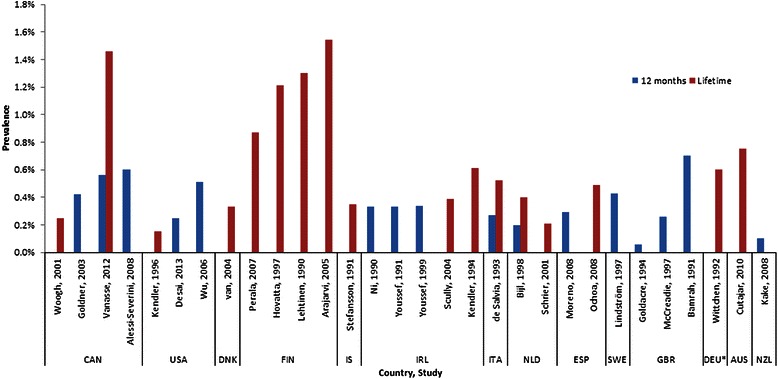
“Some extreme outliers were observed, especially in studies from countries other than Europe and North America; these may reflect true differences in the prevalence of schizophrenia across some North America Woogh, 2001 Canada 140,000 0.25 % Cohort NR Vanasse, 2012 Canada 5,996,925 1.46 % Cohort 18+ Kendler, 1994 US 8,…”
MethodInfluentialBijl, R. V., Ravelli, A., & van Zessen, G. (1998) · Social Psychiatry and Psychiatric Epidemiology · doi:10.1007/s001270050098 · Cited by 1,216 · cited 2×
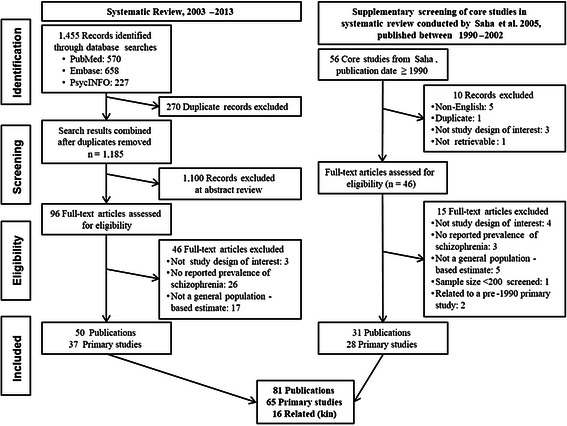
“In total, 65 primary studies [14–78] and 16 related publications [79–94] published from 1990–2013 were identified for inclusion in this review.”
BackgroundMcGrath, J., Saha, S., Welham, J., El Saadi, O., MacCauley, C., & Chant, D. (2004) · BMC Medicine · doi:10.1186/1741-7015-2-13 · Cited by 1,072
Serologic Evidence of Prenatal Influenza in the Etiology of Schizophrenia
Brown, A. S., Begg, M. D., Gravenstein, S., Schaefer, C. A., Wyatt, R. J., Bresnahan, M., Babulas, V. P., & Susser, E. S. (2004) · Archives of General Psychiatry · doi:10.1001/archpsyc.61.8.774 · Cited by 1,053 · cited 3×
“5 %) reported prevalence among diagnosed populations, and the age of patients sampled in each study varied widely, from narrow ranges such as 15–38 years [24] to no age restrictions.”
BackgroundSystematic Review of the Literature: Parental Outcomes After Diagnosis of Fetal Anomaly
Wool, C. (2011) · Advances in Neonatal Care · doi:10.1097/anc.0b013e31821bd92d · Cited by 952
Kendler, K. S. (1996) · Archives of General Psychiatry · doi:10.1001/archpsyc.1996.01830110060007 · Cited by 676 · cited 1×
“In total, 65 primary studies [14–78] and 16 related publications [79–94] published from 1990–2013 were identified for inclusion in this review.”
BackgroundPsychosis Screening Questionnaire
Bebbington, P., & Nayani, T. (2014) · PsycTESTS Dataset · doi:10.1037/t30040-000 · Cited by 541 · cited 1×
“Another possible explanation for the higher prevalence estimates reported by the WHS is its use of lay interviewers, who may classify disease differently than psychiatrists, even after the use of standardized reporting forms [96, 97].”
Background
Research works printed but not linked: 1
- Vuylsteek K Hallen M Epidemiology 1994 Amsterdam, Netherlands Ios Press
Cited by
Circadian rhythm disruption and mental health
Walker, W. H., Walton, J. C., DeVries, A. C., & Nelson, R. J. (2020) · Translational Psychiatry · doi:10.1038/s41398-020-0694-0 · Cited by 1,030
Galletly, C., Castle, D., Dark, F., Humberstone, V., Jablensky, A., Killackey, E., Kulkarni, J., McGorry, P., Nielssen, O., & Tran, N. (2016) · Australian & New Zealand Journal of Psychiatry · doi:10.1177/0004867416641195 · Cited by 877
“Variation in the incidence and prevalence of schizophrenia between populations is greater than was once believed (Simeone et al., 2015).”
BackgroundMoreno-Küstner, B., Martín, C., & Pastor, L. (2018) · PLOS ONE · doi:10.1371/journal.pone.0195687 · Cited by 562
International trends in clozapine use: a study in 17 countries
Bachmann, C. J., Aagaard, L., Bernardo, M., Brandt, L., Cartabia, M., Clavenna, A., Coma Fusté, A., Furu, K., Garuoliené, K., Hoffmann, F., et al. (2017) · Acta Psychiatrica Scandinavica · doi:10.1111/acps.12742 · Cited by 314
“Given the fact that the worldwide prevalence of schizophrenia is about 0.5 – 0.7% (32, 33) and that about one-third of these patients shows treatment resistance (34, 35), an optimal treatment with clozapine of all these cases should result in a clozapine use prevalence of roughly 0.2% (200/100 000)…”
InfluentialInternational trends in antipsychotic use: A study in 16 countries, 2005–2014
Hálfdánarson, Ó., Zoëga, H., Aagaard, L., Bernardo, M., Brandt, L., Fusté, A. C., Furu, K., Garuoliené, K., Hoffmann, F., Huybrechts, K. F., et al. (2017) · European Neuropsychopharmacology · doi:10.1016/j.euroneuro.2017.07.001 · Cited by 282
“…prevalence fi gures of psychiatric disorders which usually require treatment with antipsychotics, e.g. schizophrenia (0.5 – 0.7% (McGrath et al., 2008; Simeone et al., 2015) and bipolar disorder (ca. 1 .0 – 1.6% ( Clemente et al., 2015)), a lower threshold for antipsychotic use prevalence of…”
BackgroundInfluentialDe Berardis, D., Rapini, G., Olivieri, L., Di Nicola, D., Tomasetti, C., Valchera, A., Fornaro, M., Di Fabio, F., Perna, G., Di Nicola, M., et al. (2018) · Therapeutic Advances in Drug Safety · doi:10.1177/2042098618756261 · Cited by 207
Rødgaard, E.-M., Jensen, K., Vergnes, J.-N., Soulières, I., & Mottron, L. (2019) · JAMA Psychiatry · doi:10.1001/jamapsychiatry.2019.1956 · Cited by 185
The schizophrenia syndrome, circa 2024: What we know and how that informs its nature
Tandon, R., Nasrallah, H., Akbarian, S., Carpenter, W. T., DeLisi, L. E., Gaebel, W., Green, M. F., Gur, R. E., Heckers, S., Kane, J. M., et al. (2024) · Schizophrenia Research · doi:10.1016/j.schres.2023.11.015 · Cited by 179
Berdenis van Berlekom, A., Muflihah, C. H., Snijders, G. J. L. J., MacGillavry, H. D., Middeldorp, J., Hol, E. M., Kahn, R. S., & de Witte, L. D. (2019) · Schizophrenia Bulletin · doi:10.1093/schbul/sbz060 · Cited by 149
Chen, L., Zhao, Y., Tang, J., Jin, G., Liu, Y., Zhao, X., Chen, C., & Lu, X. (2019) · BMC Psychiatry · doi:10.1186/s12888-019-2052-4 · Cited by 160
de Filippis, R., Carbone, E. A., Gaetano, R., Bruni, A., Pugliese, V., Segura‐Garcìa, C., & Fazio, P. D. (2019) · Neuropsychiatric Disease and Treatment · doi:10.2147/ndt.s202418 · Cited by 152
“be diagnosed with SCZ at some point during their lifetime, with variations based on the geographic region.(3) Diagnosis is based on the Diagnostic and Statistical Manual of Mental Disorders 5 (DSM-5)(4) or on the ICD(5) and is exclusively clinical, since specific biomarkers that can predict the illness accurately rema…”
Toxoplasma gondii: Biological Parameters of the Connection to Schizophrenia
Xiao, J., Prandovszky, E., Kannan, G., Pletnikov, M. V., Dickerson, F., Severance, E. G., & Yolken, R. H. (2018) · Schizophrenia Bulletin · doi:10.1093/schbul/sby082 · Cited by 116
Schizophrenia: The new etiological synthesis
Rantala, M. J., Luoto, S., Borráz-León, J. I., & Krams, I. A. (2022) · Neuroscience & Biobehavioral Reviews · doi:10.1016/j.neubiorev.2022.104894 · Cited by 127
Steardo, L., Carbone, E. A., de Filippis, R., Pisanu, C., Segura-Garcia, C., Squassina, A., De Fazio, P., & Steardo, L. (2020) · Frontiers in Psychiatry · doi:10.3389/fpsyt.2020.00588 · Cited by 108
“The lifetime prevalence is 0.40% (2), and it has been estimated that approximately 1 in 200 individuals will be diagnosed with SCZ at some point during their lifetime (3).”
BackgroundInfluentialExcess mortality in severe mental disorders: A systematic review and meta-regression
Ali, S., Santomauro, D. F., Ferrari, A. J., & Charlson, F. (2022) · Journal of Psychiatric Research · doi:10.1016/j.jpsychires.2022.02.036 · Cited by 116
Chang, W. C., Wong, C. S. M., Chen, E. Y. H., Lam, L. C. W., Chan, W. C., Ng, R. M. K., Hung, S. F., Cheung, E. F. C., Sham, P. C., Chiu, H. F. K., et al. (2017) · Schizophrenia Bulletin · doi:10.1093/schbul/sbx056 · Cited by 98
Ribeiro, E. L. A., Lima, T. D. M., Vieira, M. E. B., Storpirtis, S., & Aguiar, P. M. (2018) · European Journal of Clinical Pharmacology · doi:10.1007/s00228-018-2498-1 · Cited by 102
Epidemiology of schizophrenia and its management over 8-years period using real-world data in Spain
Orrico‐Sánchez, A., López‐Lacort, M., Muñoz-Quiles, C., Sanfélix‐Gimeno, G., & Díez‐Domingo, J. (2020) · BMC Psychiatry · doi:10.1186/s12888-020-02538-8 · Cited by 100
“In the same line, it has been previously described that the variability in prevalence also depends on the study design, geographic region, case identification methods, study quality, study dates, among others [3, 7].”
BackgroundResultNarrative identity in the psychosis spectrum: A systematic review and developmental model
Cowan, H. R., Mittal, V. A., & McAdams, D. P. (2021) · Clinical Psychology Review · doi:10.1016/j.cpr.2021.102067 · Cited by 82
A meta-analysis of transcranial direct current stimulation for schizophrenia: “Is more better?”
Kim, J., Iwata, Y., Plitman, E., Caravaggio, F., Chung, J. K., Shah, P., Blumberger, D. M., Pollock, B. G., Remington, G. J., Graff‐Guerrero, A., et al. (2018) · Journal of Psychiatric Research · doi:10.1016/j.jpsychires.2018.12.009 · Cited by 81
Vanderplow, A. M., Eagle, A. L., Kermath, B. A., Bjornson, K. J., Robison, A. J., & Cahill, M. E. (2021) · Neuron · doi:10.1016/j.neuron.2021.03.008 · Cited by 78
Espinola, C. W., Gomes, J. C., Pereira, J. M. S., & dos Santos, W. P. (2022) · Research on Biomedical Engineering · doi:10.1007/s42600-022-00222-2 · Cited by 84
“Schizophrenia is a group of severe psychotic disorders with heterogeneous etiologies, clinical presentations and responses to treatment (Sadock et al. 2017), with a world-wide lifetime prevalence of 1.11% (Simeone et al. 2015).”
BackgroundInfluentialMetabolic Versatility of Mycobacterium tuberculosis during Infection and Dormancy
Chang, D. P. S., & Guan, X. L. (2021) · Metabolites · doi:10.3390/metabo11020088 · Cited by 82
McNamara, B. A., Same, A., Rosenwax, L. K., & Kelly, B. J. (2018) · BMC Palliative Care · doi:10.1186/s12904-018-0309-1 · Cited by 71
Genetic Overlap between General Cognitive Function and Schizophrenia: A Review of Cognitive GWASs
Ohi, K., Sumiyoshi, C., Fujino, H., Yasuda, Y., Yamamori, H., Fujimoto, M., Shiino, T., Sumiyoshi, T., & Hashimoto, R. (2018) · International Journal of Molecular Sciences · doi:10.3390/ijms19123822 · Cited by 65
Ohi, K., Shimada, T., Kihara, H., Yasuyama, T., Sawai, K., Matsuda, Y., Oshima, K., Okubo, H., Nitta, Y., Uehara, T., et al. (2017) · Scientific Reports · doi:10.1038/srep44268 · Cited by 62
Saghazadeh, A., Mahmoudi, M., Shahrokhi, S., Mojarrad, M., Dastmardi, M., Mirbeyk, M., & Rezaei, N. (2019) · Nutrition Reviews · doi:10.1093/nutrit/nuz059 · Cited by 63
Wu, Y., Kang, R., Yan, Y., Gao, K., Li, Z., Jiang, J., Chi, X., & Xia, L. (2018) · Journal of International Medical Research · doi:10.1177/0300060518786634 · Cited by 66
“85%.(3) A 2008 study reported a median incidence of schizophrenia of 15.”
BackgroundIncreased Risk of Parkinson's Disease in Patients With Schizophrenia Spectrum Disorders
Kuusimäki, T., Al‐Abdulrasul, H., Kurki, S. H., Hietala, J. A., Hartikainen, S. A., Koponen, M., Tolppanen, A., & Kaasinen, V. (2021) · Movement Disorders · doi:10.1002/mds.28484 · Cited by 63
“3%).(54-57) The same intrinsic differences in the data sets may explain the difference in the mean ages of PD populations between regional and national data, as, for example, patients treated outside the university hospital are usually older and are included only in national data increasing the mean age of the PD popu…”
ResultChan, J. K. N., Wong, C. S. M., Or, P. C. F., Chen, E. Y. H., & Chang, W. C. (2021) · The British Journal of Psychiatry · doi:10.1192/bjp.2020.248 · Cited by 57
Clozapine prescription pattern in patients with schizophrenia in Asia: The REAP survey (2016)
Xu, S.-W., Dong, M., Zhang, Q., Yang, S.-Y., Chen, L., Sim, K., He, Y.-L., Chiu, H. F. K., Sartorius, N., Tan, C., et al. (2019) · Psychiatry Research · doi:10.1016/j.psychres.2019.02.056 · Cited by 54
Ganguly, P., Soliman, A. M., & Moustafa, A. A. (2018) · Frontiers in Public Health · doi:10.3389/fpubh.2018.00166 · Cited by 60
Disrupted circadian rhythms and mental health
Walker, W. H., Walton, J. C., & Nelson, R. J. (2021) · Handbook of clinical neurology · doi:10.1016/b978-0-12-819975-6.00016-9 · Cited by 56
Ohi, K., Sumiyoshi, C., Fujino, H., Yasuda, Y., Yamamori, H., Fujimoto, M., Sumiyoshi, T., & Hashimoto, R. (2017) · Frontiers in Psychiatry · doi:10.3389/fpsyt.2017.00293 · Cited by 51
Rego, T. W. H., Farrand, S., Goh, A., Eratne, D., Kelso, W. M., Mangelsdorf, S., Velakoulis, D., & Walterfang, M. (2019) · CNS Drugs · doi:10.1007/s40263-018-0599-0 · Cited by 51
A systematic review of health economic models and utility estimation methods in schizophrenia
Németh, B., Fasseeh, A. N., Molnár, A., Bitter, I., Horváth, M., Kóczián, K., Götze, Á., & Nagy, B. (2018) · Expert Review of Pharmacoeconomics & Outcomes Research · doi:10.1080/14737167.2018.1430571 · Cited by 48
“31% in Europe [4], though these figures potentially underestimate the real prevalence [5].”
BackgroundOhi, K., Kataoka, Y., Shimada, T., Kuwata, A., Okubo, H., Kimura, K., Yasuyama, T., Uehara, T., & Kawasaki, Y. (2018) · European Archives of Psychiatry and Clinical Neuroscience · doi:10.1007/s00406-018-0903-5 · Cited by 52
Hui, J., Tremblay, S., & Daskalakis, Z. J. (2019) · Clinical Pharmacology & Therapeutics · doi:10.1002/cpt.1541 · Cited by 50
The EEG multiverse of schizophrenia
Gordillo, D., da Cruz, J. N., Chkonia, E. D., Lin, W.-H., Favrod, O., Brand, A., Figueiredo, P., Roinishvili, M., & Herzog, M. H. (2022) · Cerebral Cortex · doi:10.1093/cercor/bhac309 · Cited by 51
“These values are rather stable across cultures (Simeone et al. 2015).”
BackgroundUse of medical administrative data for the surveillance of psychotic disorders in France
Chee, C. C., Chin, F., Ha, C., Beltzer, N., & Bonaldi, C. (2017) · BMC Psychiatry · doi:10.1186/s12888-017-1555-0 · Cited by 44
García‐Portilla, M. P., Llorca, P., Maina, G., Bozikas, V. P., Devrimci-Özgüven, H., Kim, S., Bergmans, P., Usankova, I., & Pungor, K. (2020) · Therapeutic Advances in Psychopharmacology · doi:10.1177/2045125320926347 · Cited by 43
Nationwide health, socio-economic and genetic predictors of COVID-19 vaccination status in Finland
Hartonen, T., Jermy, B. S., Sõnajalg, H., Vartiainen, P., Krebs, K., Vabalas, A., FinnGen, Metspalu, A., Esko, T., Nelis, M., et al. (2023) · Nature Human Behaviour · doi:10.1038/s41562-023-01591-z · Cited by 44
Association between perceived social support and recovery among patients with schizophrenia
El‐Monshed, A. H., & Amr, M. (2020) · International Journal of Africa Nursing Sciences · doi:10.1016/j.ijans.2020.100236 · Cited by 43
Kreyenbuhl, J. A., Record, E. J., Himelhoch, S. S., Charlotte, M., Palmer-Bacon, J., Dixon, L. B., Medoff, D. R., & Li, L. (2016) · Clinical Schizophrenia & Related Psychoses · doi:10.3371/csrp.krre.070816 · Cited by 45
Neuroadaptations to antipsychotic drugs: Insights from pre-clinical and human post-mortem studies
Amato, D., Beasley, C. L., Hahn, M., & Vernon, A. C. (2016) · Neuroscience & Biobehavioral Reviews · doi:10.1016/j.neubiorev.2016.10.004 · Cited by 47
Gutierrez, E., Cecchi, G., Corcoran, C. M., & Corlett, P. R. (2017) · Conference on Empirical Methods in Natural Language Processing (EMNLP) · doi:10.18653/v1/d17-1316 · Cited by 53
“It afflicts over 21 million people worldwide, and is associated with a 100-150 percent increase in early mortality (Goff et al., 2005; World Health Organization, 2016; Simeone et al., 2015).”
BackgroundGumley, A. I., Bradstreet, S., Ainsworth, J. D., Allan, S., Álvarez‐Jiménez, M., Birchwood, M. J., Briggs, A. H., Bucci, S., Cotton, S., Engel, L., et al. (2022) · Health Technology Assessment · doi:10.3310/hlze0479 · Cited by 44
Stelzmann, D., Toth, R., & Schieferdecker, D. (2021) · Journal of Clinical Medicine · doi:10.3390/jcm10132961 · Cited by 41
Schizophrenia spectrum disorders in India: A population-based study
Hegde, P. R., Nirisha, P. L., Basavarajappa, C., Suhas, S., Kumar, C. N., Benegal, V., Rao, G. N., Varghese, M., Gururaj, G., & NMHS National Collaborators Group (2023) · Indian Journal of Psychiatry · doi:10.4103/indianjpsychiatry.indianjpsychiatry_836_23 · Cited by 51
A randomized controlled trial of mindfulness in patients with schizophrenia✰
Lee, K.-H. (2019) · Psychiatry Research · doi:10.1016/j.psychres.2019.02.079 · Cited by 38
Kornetova, E. G., Корнетов, А. Н., Mednova, I. A., Dubrovskaya, V. V., Boiko, A. S., Bokhan, N. A., LOONEN, A. J. M., & Ivanova, S. А. (2019) · Frontiers in Psychiatry · doi:10.3389/fpsyt.2019.00803 · Cited by 42
Lee, S. C., DelPozo‐Baños, M., Lloyd, K. R., Jones, I. R., Walters, J., Owen, M. J., O’Donovan, M. C., & John, A. M. (2020) · Schizophrenia Research · doi:10.1016/j.schres.2020.03.044 · Cited by 41
“Overall prevalences by disorder are also consistent with systematic reviews (Saha et al., 2005; Simeone et al., 2015).”
ResultPerry, B. I., Upthegrove, R., Crawford, O., Jang, S.-H., Lau, E., McGill, I., Carver, E., Jones, P. B., & Khandaker, G. M. (2020) · Acta Psychiatrica Scandinavica · doi:10.1111/acps.13212 · Cited by 38
He, Y., Tanaka, A., Kishi, T., Li, Y., Matsunaga, M., Tanihara, S., Iwata, N., & Ota, A. (2022) · Neuropsychopharmacology Reports · doi:10.1002/npr2.12286 · Cited by 36
Spears, C. A., Jones, D. M., Weaver, S. R., Yang, B. K., Pechacek, T. F., & Eriksen, M. P. (2018) · Addiction · doi:10.1111/add.14464 · Cited by 35
Baba, K., Guo, W., Chen, Y., Nosaka, T., & Kato, T. (2022) · BMC Psychiatry · doi:10.1186/s12888-022-04044-5 · Cited by 34
“48% [1], with an onset in adolescence and young adulthood [2].”
BackgroundViolent offending in schizophrenia spectrum disorders preceding and following diagnosis
Hachtel, H., Harries, C., Luebbers, S., & Ogloff, J. R. P. (2018) · Australian & New Zealand Journal of Psychiatry · doi:10.1177/0004867418763103 · Cited by 34
“Among these, schizophrenia is the most prevalent disorder of the spectrum with average worldwide lifetime prevalence rates reported to be around 0.5% (American Psychiatric Association, 2013; Simeone et al., 2015).”
BackgroundInfluentialJi, Y., Liu, B., Song, J. H., Pan, R., Cheng, J., Su, H., & Wang, H. (2021) · Environmental Science and Pollution Research · doi:10.1007/s11356-021-14816-3 · Cited by 35
Ochi, S., Tagata, H., Hasegawa, N., Yasui‐Furukori, N., Iga, J., Kashiwagi, H., Kodaka, F., Komatsu, H., Tsuboi, T., Tokutani, A., et al. (2022) · The International Journal of Neuropsychopharmacology · doi:10.1093/ijnp/pyac036 · Cited by 33
Second to none: rationale, timing, and clinical management of clozapine use in schizophrenia
Qubad, M., & Bittner, R. A. (2023) · Therapeutic Advances in Psychopharmacology · doi:10.1177/20451253231158152 · Cited by 35
Non-pharmacological interventions for caregivers of patients with schizophrenia: A meta-analysis
Chen, L., Liu, J., Zhang, J., & Lu, X. (2015) · Psychiatry Research · doi:10.1016/j.psychres.2015.11.037 · Cited by 36
“48% (Simeone et al., 2015).”
Goueslard, K., Petit, J., Cottenet, J., Chauvet‐Gélinier, J., Jollant, F., & Quantin, C. (2018) · Diabetes Care · doi:10.2337/dc18-0657 · Cited by 37
Matheson, S. L., Kariuki, M., Green, M. J., Dean, K., Harris, F., Tzoumakis, S., Tarren‐Sweeney, M., Brinkman, S. A., Chilvers, M., Sprague, T., et al. (2016) · Epidemiology and Psychiatric Sciences · doi:10.1017/s204579601600055x · Cited by 33
“…differential effects of maltreatment on social-emotional functioning in young females and males (Godinet et al. 2014), and because vulnerability rates on the AEDC subdomains vary by sex (Brinkman et al. 2012), we provide results of analyses conducted separately by sex in supplementary material.”
BackgroundMethodInfluentialMiksys, S. L., Wadji, F. B., Tolledo, E. C., Remington, G. J., Nóbrega, J. N., & Tyndale, R. F. (2017) · Progress in Neuro-Psychopharmacology and Biological Psychiatry · doi:10.1016/j.pnpbp.2017.04.030 · Cited by 37
Watanabe, Y., Yamada, S., Otsubo, T., & Kikuchi, T. (2020) · Drug Design Development and Therapy · doi:10.2147/dddt.s240859 · Cited by 32
Gaigl, G., Täumer, E., Merz, K., Zöscher, S., Wagner, S., Kösters, M., Falkai, P., Leucht, S., & Hasan, A. (2021) · Schizophrenia Research · doi:10.1016/j.schres.2021.01.010 · Cited by 33
Cross-Disorder Psychiatric Genomics
Docherty, A. R., Moscati, A., & Fanous, A. H. (2016) · Current Behavioral Neuroscience Reports · doi:10.1007/s40473-016-0084-3 · Cited by 32
Heterogeneity thwarts autism explanatory power: A proposal for endophenotypes
Waterhouse, L. (2022) · Frontiers in Psychiatry · doi:10.3389/fpsyt.2022.947653 · Cited by 29
Song, X., Khoury, A. C. E., Brouillette, M. A., Smith, D. M., & Joshi, K. (2019) · Journal of Medical Economics · doi:10.1080/13696998.2019.1615927 · Cited by 32
Differences between delusional disorder and schizophrenia: A mini narrative review
González-Rodríguez, A., & Seeman, M. V. (2022) · World Journal of Psychiatry · doi:10.5498/wjp.v12.i5.683 · Cited by 33
Understanding the association between advanced paternal age and schizophrenia and bipolar disorder
Weiser, M., Fenchel, D., Frenkel, O., Fruchter, E., Burshtein, S., Yehuda, A. B., Yoffe, R., Bergman-Levy, T., Reichenberg, A., Davidson, M., et al. (2019) · Psychological Medicine · doi:10.1017/s0033291719000242 · Cited by 30
Zhao, S., Wang, X., Qiang, X., Wang, H., Jian, H., Shen, M., Zheng, C., & Kang, R. (2020) · The Journal of Sexual Medicine · doi:10.1016/j.jsxm.2020.03.005 · Cited by 32
Couple therapy and systemic interventions for adult‐focused problems: The evidence base
Carr, A. (2025) · Journal of Family Therapy · doi:10.1111/1467-6427.12481 · Cited by 30
Iloperidone in the treatment of schizophrenia: an evidence-based review of its place in therapy
Tonin, F. S., Wiens, A., Fernández-Llimós, F., & Pontarolo, R. (2016) · Core evidence · doi:10.2147/ce.s114094 · Cited by 32
Garcés, L. G., Sánchez‐López, M. I., Cano, S. L., Meliá, Y. C., Marqués-Azcona, D., Biviá-Roig, G., Lisón, J. F., & Peyró-Gregori, L. (2021) · Scientific Reports · doi:10.1038/s41598-021-03761-3 · Cited by 32
“Specifically, the IPAQ-SF questionnaire records activity at four intensity levels: (1) vigorous activity such as aerobics; (2) moderate activity such as leisure cycling; (3) walking; and (4) sitting.”
BackgroundCarlbo, A., Claesson, H. P., & Åström, S. (2018) · Issues in Mental Health Nursing · doi:10.1080/01612840.2018.1429508 · Cited by 26
Suetani, S., Dark, F. L., Every‐Palmer, S., Galletly, C. A., O'Donoghue, B. N., Halstead, S., Keating, D., Korman, N., Lappin, J., Lawn, S., et al. (2026) · Australian & New Zealand Journal of Psychiatry · doi:10.1177/00048674251406058 · Cited by 25
“While these estimates remain relatively stable (Simeone et al., 2015), the raw global prevalence (14.2– 23.6 million) and associated disabilityadjusted life years (9.1–15.1 million) have increased significantly since 1990 (Solmi et al., 2023b).”
InfluentialXu, L., Xu, T., Tan, W. K., Yan, B., Wang, D., Li, H., Lin, Y. Q., Li, K., Wen, H., Qin, X., et al. (2019) · Epidemiology and Psychiatric Sciences · doi:10.1017/s2045796019000775 · Cited by 25
“Introduction Schizophrenia is a chronic debilitating disease affecting 0.5–1% of the general population (Simeone et al., 2015).”
BackgroundInfluentialUtilizing computer vision for facial behavior analysis in schizophrenia studies: A systematic review
Jiang, Z., Luskus, M., Seyedi, S. S., Griner, E. L., Rad, A. B., Clifford, G. D., Boazak, M., & Cotes, R. O. (2022) · PLoS ONE · doi:10.1371/journal.pone.0266828 · Cited by 34
Brenner, L. A., Hoisington, A. J., Stearns‐Yoder, K. A., Stamper, C. E., Heinze, J. D., Postolache, T. T., Hadidi, D. A., Hoffmire, C. A., Stanislawski, M. A., & Lowry, C. A. (2018) · Frontiers in Cellular and Infection Microbiology · doi:10.3389/fcimb.2018.00400 · Cited by 27
Chan, J. K. N., Wong, C. S. M., Or, P. C. F., Chen, E. Y. H., & Chang, W. C. (2021) · European Neuropsychopharmacology · doi:10.1016/j.euroneuro.2021.08.263 · Cited by 26
Development of weCope, a mobile app for illness self-management in schizophrenia
ALMEIDA, R. F. S. D., SOUSA, T. J., COUTO, A. S., MARQUES, A. J., QUEIRÓS, C. M., & MARTINS, C. L. (2019) · Archives of Clinical Psychiatry (São Paulo) · doi:10.1590/0101-60830000000182 · Cited by 22
Üstündağ, M. F., Özcan, H., Gençer, A. G., Yılmaz, E. D., Uğur, K., Oral, E., & Bilici, M. (2020) · Saudi Medical Journal · doi:10.15537/smj.2020.1.24817 · Cited by 22
Reprioritising global mental health: psychoses in sub-Saharan Africa
Omigbodun, O. O., Ryan, G. K., Fasoranti, B., Chibanda, D., Esliker, R., Sefasi, A., Kakuma, R., Shakespeare, T., & Eaton, J. (2023) · International Journal of Mental Health Systems · doi:10.1186/s13033-023-00574-x · Cited by 25
Chen, Z., Wang, J., Carru, C., Sedda, S., Nivoli, A. M., & Li, Z. (2023) · Brain and Behavior · doi:10.1002/brb3.3240 · Cited by 22
“Depression, anxiety, BD, and SCZ are the most prevalent MDs, with lifetime prevalence rates of 4%, 33.7%, 2.4%, and 1.1%, respectively (Bandelow & Michaelis, 2015; GBD 2015 Disease and Injury Incidence and Prevalence Collaborators, 2016; Grande et al., 2016; Simeone et al., 2015).”
BackgroundInfluentialYonezawa, K., Tani, H., Nakajima, S., Nagai, N., Koizumi, T., Miyazaki, T., Mimura, M., Takahashi, T., & Uchida, H. (2022) · Schizophrenia Research · doi:10.1016/j.schres.2022.02.033 · Cited by 23
Torsvik, A., Brattbakk, H.-R., Trentani, A., Holdhus, R., Stansberg, C., Bartz-Johannessen, C. A., Hughes, T., Steen, N. E., Melle, I., Djurovic, S., et al. (2023) · Translational Psychiatry · doi:10.1038/s41398-023-02442-1 · Cited by 21
Global lifetime prevalence of schizophrenia: A systematic review and meta-analysis
Zhang, S., Chen, Y., Zhang, L., Yang, X., Dong, J., Lu, M., Zhou, N., Feng, Y., Zhang, Y., & Zhou, Y. (2026) · Molecular Psychiatry · doi:10.1038/s41380-026-03533-3 · Cited by 26
“Despite these limitations, our fi ndings provide the most comprehensive global estimates of schizophrenia lifetime prevalence to date.”
The genetic basis for the inverse relationship between rheumatoid arthritis and schizophrenia
Zamanpoor, M., Ghaedi, H., & Omrani, M. D. (2020) · Molecular Genetics & Genomic Medicine · doi:10.1002/mgg3.1483 · Cited by 22
Patrón de uso de clozapina en España. Variabilidad e infraprescripción
Sanz-Fuentenebro, F. J., Uriarte, J. J. U., Dalmau, P. B., Molina, V., & Bernardo, M. (2018) · Revista de Psiquiatría y Salud Mental · doi:10.1016/j.rpsm.2018.02.005 · Cited by 22
Unruh, B. T., & Gunderson, J. G. (2016) · Harvard Review of Psychiatry · doi:10.1097/hrp.0000000000000119 · Cited by 23
Michalczyk, A., Tyburski, E. M., Podwalski, P., Waszczuk, K., Rudkowski, K., Kucharska–Mazur, J., Mak, M., Rek-Owodziń, K., Plichta, P., Bielecki, M., et al. (2022) · Progress in Neuro-Psychopharmacology and Biological Psychiatry · doi:10.1016/j.pnpbp.2022.110510 · Cited by 21
Prevalence of mental diseases in Austria: Systematic review of the published evidence
Łaszewska, A., Österle, A., Wancata, J., & Simon, J. (2018) · Wiener klinische Wochenschrift · doi:10.1007/s00508-018-1316-1 · Cited by 21
Shi, J.-Y., Cao, Y.-M., Luo, H.-Y., Liu, S., Yang, F.-M., & Wang, Z.-H. (2023) · Schizophrenia Research · doi:10.1016/j.schres.2023.03.042 · Cited by 19
Severe mental illness diagnosis in English general hospitals 2006-2017: A registry linkage study
Mansour, H., Mueller, C., Davis, K. A. S., Burton, A., Shetty, H., Hotopf, M. H., Osborn, D., Stewart, R. J., & Sommerlad, A. (2020) · PLoS Medicine · doi:10.1371/journal.pmed.1003306 · Cited by 22
“5% and 1% respectively [1, 2], and are associated with several physical comorbidities that increase the risk of general hospital admission [3, 4].”
BackgroundChan, J. K. N., Wong, C. S. M., Yung, N. C. L., Chen, E. Y. H., & Chang, W. C. (2021) · Social Psychiatry and Psychiatric Epidemiology · doi:10.1007/s00127-021-02130-9 · Cited by 19
“Schizophrenia is a severe mental disorder with lifetime prevalence of approximately 1% [1, 2] and constitutes one of the leading causes of disability worldwide [3].”
BackgroundVaquero-Baez, M., Díaz-Ruiz, A., Tristán-López, L. A., Aviña-Cervantes, C. L., Torner, C., Ramírez‐Bermúdez, J., Montes, S., & Ríos, C. (2019) · BMC Psychiatry · doi:10.1186/s12888-019-2286-1 · Cited by 17
Safety profile of clozapine: Analysis using national registry data in Japan
Imazu, S., Hata, T., Toyoda, K., Kubo, Y., Yamauchi, S., Kinoshita, S., Nishihara, M., Inada, K., & Kanazawa, T. (2021) · Journal of Psychiatric Research · doi:10.1016/j.jpsychires.2021.06.041 · Cited by 18
Finnerty, M. T., Khan, A. A., You, K., Wang, R., Gu, G., Layman, D. M., Chen, Q., Elhadad, N., Joshi, S. D., Appelbaum, P. S., et al. (2024) · Schizophrenia · doi:10.1038/s41537-024-00490-0 · Cited by 17
“As proposed by Simeone et al. 2 , examination of prevalence and incidence rates over the lifespan provides a more comprehensive understanding that might otherwise be overlooked in surveillance studies that exclusively focus on young adulthood.”
BackgroundMethodPilon, D., Alcusky, M. J., Xiao, Y., Thompson‐Leduc, P., Lafeuille, M., Lefèbvre, P., & Benson, C. J. (2017) · Journal of Medical Economics · doi:10.1080/13696998.2017.1379413 · Cited by 17
Metadata
- Authors
- Simeone, J. C., Ward, A. J., Rotella, P., Collins, J., & Windisch, R.
- Affiliations
- F. Hoffmann-La Roche AG (CH)
- Corresponding author
- Simeone, Jason C.
- Venue
- BMC Psychiatry
- Published
- 2015-08-12
- Volume
- 15
- Issue
- 1
- Pages
- 193-193
- ISSN
- 1471-244X (ISSN-L)
- PMC
- PMC4533792
- OpenAlex
- W1906444297
- Cited by
- 327
- References
- 115
- Citations by year
- 2026: 16 · 2025: 26 · 2024: 31 · 2023: 37 · 2022: 46 · 2021: 33 · 2020: 40 · 2019: 40 · 2018: 30 · 2017: 14 · 2016: 13 · 2015: 1
- FWCI
- 2.66
- Type
- journal article
- Language
- en
- Open access
- gold
- doi.org
- Licence
- Locations
- BMC Psychiatry (publishedVersion, cc-by)
- Europe PMC (PubMed Central) (publishedVersion, cc-by)
- PubMed Central (publishedVersion, cc-by)
- PubMed (publishedVersion)
- Funders
- F. Hoffmann-La Roche
- Topics
- Health Sciences › Medicine › Psychiatry and Mental health › Schizophrenia research and treatment
- Health Sciences › Medicine › Psychiatry and Mental health › Mental Health Treatment and Access
- Social Sciences › Arts and Humanities › Philosophy › Mental Health and Psychiatry
- Keywords
- schizophrenia, prevalence, 12-month prevalence, lifetime prevalence, research design, regional variation, age adjustment, case finding, diagnostic criteria, schizophrenia spectrum disorders, general population
- MeSH terms
- Europe, Humans, Schizophrenia, Time Factors, Prevalence
About these checks
Registry, retraction, Cites and statistics results are computed, not judged, with one exception: a printed reference that no index lists is read once by a model before it counts as a citation error. Claims are extracted by a model and kept only when their quote appears verbatim in the text; each cited source is then checked, with a model’s help, for whether it says what the claim relies on. Those verdicts can be wrong — read the claim’s quote and the cited source before relying on one.
Statistics and arithmetic are recomputed, not judged.
Confidence bands are shown only for fields calibrated on our annotated test set. None is calibrated yet, so no band is shown.
What counts as a claim ›How we measure confidence ›How we check this ›
Are you an author, or do you see a problem with this page? Request a review
Data sources
Bibliographic data: Semantic Scholar, OpenAlex, Crossref.
Contains information from the Semantic Scholar Academic Graph Datasets, made available under the ODC Attribution License (ODC-BY 1.0).
Semantic Scholar’s data is described in: Kinney, R., et al. (2023). The Semantic Scholar Open Data Platform. arXiv:2301.10140.
