

Serotonin-1A receptor alterations in depression: a meta-analysis of molecular imaging studies
Open accessThe DOI matches its Crossref record; 51 of the 51 references it cites were found in a registry or an index.
Abstract
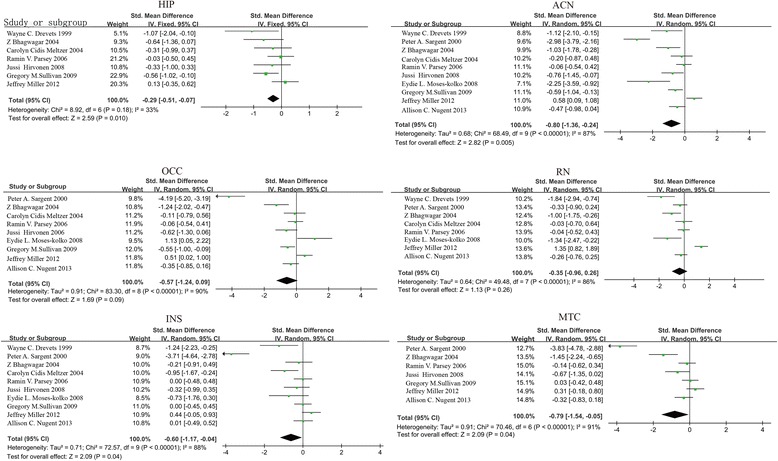
BACKGROUND: Postmortem studies of people who have successfully committed suicide and people with depression have implicated the serotonin-1A (5-HT1A) receptor system in the pathophysiology of depression. Several molecular imaging studies have investigated alterations in 5-HT1A receptors in patients with depression using positron emission tomography and have reported conflicting results. METHODS: We performed a meta-analysis of studies investigating the relationship between depression and 5-HT1A binding. We conducted a comprehensive search of Medline, Embase, ScienceDirect, Scopus and Springer databases for relevant studies published between January 1999 and October 2015. The meta-analysis was conducted in accordance with the Meta-analysis of Observational Studies in Epidemiology guidelines. RESULTS: Ten studies were included, comprising 218 patients with depression and 261 healthy controls. The results of these studies indicated a reduction in 5-HT1A receptors in mesiotemporal cortex, yielding a summary effect estimate of -0.8 (95 % CI -1.36, -0.24). Smaller reductions were reported in 5-HT1A receptor binding in the hippocampus, raphe nuclei, insular, anterior cingulate cortex and occipital cortex of people with depression. No clear effect of depression on 5-HT1A receptors was detected in the amygdala. CONCLUSIONS: Reduced 5-HT1A receptor binding was associated with the pathology of depression and predicted altered serotonergic neurotransmission in various brain regions. These findings increase our understanding of the neurophysiological processes underlying depression.
Overview
The claims and statistics of this paper haven’t been checked yet.
Free: it reads the open-access text and checks the first 5 claims that cite a source we can check. Create a free account to check every claim.
Integrity signals
Registry
Cites
Statistics
Figures
Verification
Claims the paper makes
The claims and statistics of this paper haven’t been checked yet.
Free: it reads the open-access text and checks the first 5 claims that cite a source we can check. Create a free account to check every claim.
Self-check
Percentages, sums and reported differences re-computed from the paper’s own numbers.
The self-check needs the paper’s full text.
Citations
Cites
Measuring inconsistency in meta-analyses
Higgins, J. P. T., Thompson, S. G., Deeks, J. J., & Altman, D. G. (2003) · BMJ · doi:10.1136/bmj.327.7414.557 · Cited by 63,139
Dermyshi, E., Wang, Y., Yan, C., Hong, W., Qiu, G., Gong, X., & Zhang, T. (2017) · Neonatology · doi:10.1159/000454668 · Cited by 24,451
Self-citationMeta-analysis of Observational Studies in Epidemiology<SUBTITLE>A Proposal for Reporting</SUBTITLE>
Stroup, D. F. (2000) · JAMA · doi:10.1001/jama.283.15.2008 · Cited by 20,623
Cochrane Handbook for Systematic Reviews of Interventions Version 5.0.1. The Cochrane Collaboration
Higgins, J. P. T., Green, S. R., & Higgins, J. P. T. (2008) · Cited by 7,259
The molecular neurobiology of depression
Krishnan, V., & Nestler, E. J. (2008) · Nature · doi:10.1038/nature07455 · Cited by 2,889 · cited 1×
“It has a lifetime prevalence of 10 – 15 % [21].”
BackgroundRole of 5-HT in stress, anxiety, and depression
Graeff, F. G., Guimarães, F. S., De Andrade, T. G. C. S., & Deakin, J. F. W. (1996) · Pharmacology Biochemistry and Behavior · doi:10.1016/0091-3057(95)02135-3 · Cited by 984 · cited 1×
“There is increasing evidence that alterations in the brain serotonergic system are involved in the pathophysiology of depression [13, 42].”
BackgroundThe role of the hippocampus in the pathophysiology of major depression
Campbell, S., & MacQueen, G. (2004) · Journal of Psychiatry and Neuroscience · doi:10.1139/jpn.0441 · Cited by 880 · cited 1×
“The HIP has previously been shown to be structurally and functionally altered during depression [8, 29, 30].”
BackgroundLemonde, S., Turecki, G., Bakish, D., Du, L., Hrdina, P. D., Bown, C. D., Sequeira, A., Kushwaha, N., Morris, S. J., Basak, A., et al. (2003) · The Journal of Neuroscience · doi:10.1523/jneurosci.23-25-08788.2003 · Cited by 734 · cited 1×
“This finding is consistent with previous postmortem studies indicating lower 5-HT 1A binding and mRNA expression in MDD and bipolar disorder [24, 26, 27].”
ResultPet imaging of serotonin 1A receptor binding in depression
Drevets, W. C., Frank, E., Price, J. C., Kupfer, D. J., Holt, D., Greer, P. J., Huang, Y., Gautier, C., & Mathis, C. (1999) · Biological Psychiatry · doi:10.1016/s0006-3223(99)00189-4 · Cited by 666 · cited 1×
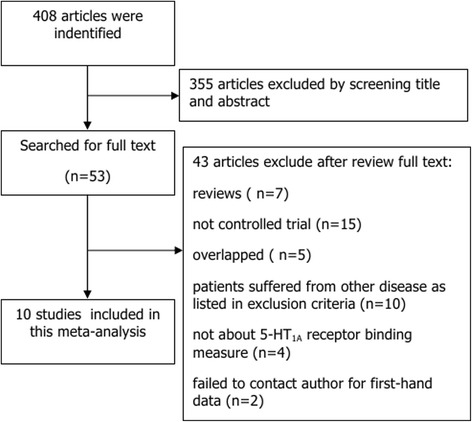
“Finally, ten studies remained for inclusion in the meta-analysis ([4, 11, 18, 28, 32, 33, 35, 39, 43, 48]) (see Fig.”
BackgroundSargent, P. A., Kjaer, K. H., Bench, C. J., Rabiner, E. A., Messa, C., Meyer, J., Gunn, R. N., Grasby, P. M., & Cowen, P. J. (2000) · Archives of General Psychiatry · doi:10.1001/archpsyc.57.2.174 · Cited by 642 · cited 2×
“Finally, ten studies remained for inclusion in the meta-analysis ([4, 11, 18, 28, 32, 33, 35, 39, 43, 48]) (see Fig.”
BackgroundResultSanacora, G., Mason, G. F., Rothman, D. L., Behar, K. L., Hyder, F., Petroff, O. A. C., Berman, R. M., Charney, D. S., & Krystal, J. H. (1999) · Archives of General Psychiatry · doi:10.1001/archpsyc.56.11.1043 · Cited by 627 · cited 1×
“Moreover, several studies have indicated that the OCC is involved in depression, and γ -aminobutyric acid (GABA) concentrations in this region have been shown to be functionally altered in people with depression [5, 44].”
BackgroundQuantitative MRI of the hippocampus and amygdala in severe depression
MERVAALA, E., FÖHR, J., KÖNÖNEN, M., VALKONEN-KORHONEN, M., VAINIO, P., PARTANEN, K., PARTANEN, J., TIIHONEN, J., VIINAMÄKI, H., KARJALAINEN, A.-K., et al. (2000) · Psychological Medicine · doi:10.1017/s0033291799001567 · Cited by 382 · cited 1×
“The HIP has previously been shown to be structurally and functionally altered during depression [8, 29, 30].”
BackgroundParsey, R. V., Oquendo, M. A., Ogden, R. T., Olvet, D. M., Simpson, N., Huang, Y.-Y., Van Heertum, R. L., Arango, V., & Mann, J. J. (2006) · Biological Psychiatry · doi:10.1016/j.biopsych.2005.06.016 · Cited by 352 · cited 1×
“Finally, ten studies remained for inclusion in the meta-analysis ([4, 11, 18, 28, 32, 33, 35, 39, 43, 48]) (see Fig.”
BackgroundThe role of 5-HT1A receptors in learning and memory
Ögren, S. O., Eriksson, T. M., Elvander-Tottie, E., D’Addario, C., Ekström, J. C., Svenningsson, P., Meister, B., Kehr, J., & Stiedl, O. (2008) · Behavioural Brain Research · doi:10.1016/j.bbr.2008.02.023 · Cited by 340
Long-Term Antidepressant Treatments Result in a Tonic Activation of Forebrain 5-HT1AReceptors
Haddjeri, N., Blier, P., & de Montigny, C. (1998) · The Journal of Neuroscience · doi:10.1523/jneurosci.18-23-10150.1998 · Cited by 332 · cited 1×
“Among the 5-HT receptor types (5-HT 1A , 5-HT 1B , 5-HT 2A , and 5-HT 4 ), 5-HT 1A has generated much research interest because of its involvement in recognition, learning memory, and hippocampal neurogenesis, as well as its response to antidepressant treatment [15, 36, 41].”
BackgroundThe neuroendocrinology of depression and chronic stress
Checkley, S. (1996) · British Medical Bulletin · doi:10.1093/oxfordjournals.bmb.a011570 · Cited by 322 · cited 1×
“Extensive rodent and human research suggests that 5-HT 1A dysregulation is highly sensitive to stress, i.e., increased cortisol levels [9, 25].”
BackgroundLower Serotonin Transporter Binding Potential in the Human Brain During Major Depressive Episodes
Parsey, R. V., Hastings, R. S., Oquendo, M. A., Huang, Y.-Y., Simpson, N., Arcement, J., Huang, Y., Ogden, R. T., Van Heertum, R. L., Arango, V., et al. (2006) · American Journal of Psychiatry · doi:10.1176/appi.ajp.163.1.52 · Cited by 309 · cited 1×
“Several such studies have reported decreased 5-HT 1A binding in patients with depression compared with healthy controls [34, 38].”
BackgroundBhagwagar, Z., Wylezinska, M., Jezzard, P., Evans, J., Ashworth, F., Sule, A., Matthews, P. M., & Cowen, P. J. (2007) · Biological Psychiatry · doi:10.1016/j.biopsych.2006.08.048 · Cited by 303 · cited 1×
“Moreover, several studies have indicated that the OCC is involved in depression, and γ -aminobutyric acid (GABA) concentrations in this region have been shown to be functionally altered in people with depression [5, 44].”
BackgroundBhagwagar, Z., Rabiner, E. A., Sargent, P. A., Grasby, P. M., & Cowen, P. J. (2004) · Molecular Psychiatry · doi:10.1038/sj.mp.4001401 · Cited by 254 · cited 1×
“Finally, ten studies remained for inclusion in the meta-analysis ([4, 11, 18, 28, 32, 33, 35, 39, 43, 48]) (see Fig.”
Background5-HT1A receptor antagonist administration decreases cell proliferation in the dentate gyrus
Radley, J. J., & Jacobs, B. L. (2002) · Brain Research · doi:10.1016/s0006-8993(02)03477-7 · Cited by 231 · cited 1×
“Among the 5-HT receptor types (5-HT 1A , 5-HT 1B , 5-HT 2A , and 5-HT 4 ), 5-HT 1A has generated much research interest because of its involvement in recognition, learning memory, and hippocampal neurogenesis, as well as its response to antidepressant treatment [15, 36, 41].”
BackgroundStrobel, A., Gutknecht, L., Rothe, C., Reif, A., M�ssner, R., Zeng, Y., Brocke, B., & Lesch, K.-P. (2003) · Journal of Neural Transmission · doi:10.1007/s00702-003-0072-0 · Cited by 229 · cited 1×
“There is evidence that higher expression of the G allele may increase the risk of developing depression [19, 46, 49].”
BackgroundMeta-analysis of molecular imaging of serotonin transporters in major depression
Gryglewski, G., Lanzenberger, R., Kranz, G. S., & Cumming, P. (2014) · Journal of Cerebral Blood Flow & Metabolism · doi:10.1038/jcbfm.2014.82 · Cited by 227 · cited 1×
“A previous meta-analysis of molecular imaging studies of depression reported a relationship between the disorder and serotonin transporters, which indicated altered serotonergic availability in depression [14].”
Method5-HT1A receptor-regulated signal transduction pathways in brain
Polter, A. M., & Li, X. (2010) · Cellular Signalling · doi:10.1016/j.cellsig.2010.03.019 · Cited by 225 · cited 1×
“We speculate that decreased binding in the MTC of people with depression may impair the integration of 5-HT signaling in cortico-mesiotemporal cortical circuits and disrupt limbic input back to the cortex [2, 40].”
BackgroundThe dorsal raphe nucleus—From silver stainings to a role in depression
Michelsen, K. A., Schmitz, C., & Steinbusch, H. W. M. (2007) · Brain Research Reviews · doi:10.1016/j.brainresrev.2007.01.002 · Cited by 213 · cited 1×
“The HIP has previously been shown to be structurally and functionally altered during depression [8, 29, 30].”
BackgroundSerotonin-1A autoreceptor binding in the dorsal raphe nucleus of depressed suicides
Boldrini, M., Underwood, M. D., Mann, J. J., & Arango, V. (2008) · Journal of Psychiatric Research · doi:10.1016/j.jpsychires.2007.05.004 · Cited by 190 · cited 1×
“Decreased 5-HT 1A autoreceptor binding was also found in the dorsal raphe nucleus of people with depression who successfully committed suicide [7].”
BackgroundHong, C.-J., Chen, T.-J., Yu, Y. W.-Y., & Tsai, S.-J. (2006) · The Pharmacogenomics Journal · doi:10.1038/sj.tpj.6500340 · Cited by 189 · cited 1×
“There is evidence that higher expression of the G allele may increase the risk of developing depression [19, 46, 49].”
BackgroundSerotonin 1A Receptor Binding and Treatment Response in Late-Life Depression
Meltzer, C. C., Price, J. C., Mathis, C. A., Butters, M. A., Ziolko, S. K., Moses-Kolko, E., Mazumdar, S., Mulsant, B. H., Houck, P. R., Lopresti, B. J., et al. (2004) · Neuropsychopharmacology · doi:10.1038/sj.npp.1300556 · Cited by 183 · cited 1×
“Finally, ten studies remained for inclusion in the meta-analysis ([4, 11, 18, 28, 32, 33, 35, 39, 43, 48]) (see Fig.”
BackgroundHirvonen, J., Karlsson, H., Kajander, J., Lepola, A., Markkula, J., Rasi-Hakala, H., Någren, K., Salminen, J. K., & Hietala, J. (2008) · The International Journal of Neuropsychopharmacology · doi:10.1017/s1461145707008140 · Cited by 180 · cited 1×
“Finally, ten studies remained for inclusion in the meta-analysis ([4, 11, 18, 28, 32, 33, 35, 39, 43, 48]) (see Fig.”
BackgroundSerotonin 1A receptor reductions in postpartum depression: a positron emission tomography study
Moses‐Kolko, E. L., Wisner, K. L., Price, J. C., Berga, S. L., Drevets, W. C., Hanusa, B. H., Loucks, T. L., & MELTZER, C. C. (2007) · Fertility and Sterility · doi:10.1016/j.fertnstert.2007.03.059 · Cited by 158 · cited 2×
“Finally, ten studies remained for inclusion in the meta-analysis ([4, 11, 18, 28, 32, 33, 35, 39, 43, 48]) (see Fig.”
BackgroundResultThe Basis for Amine Hypotheses in Affective Disorders: A Critical Evaluation
Baldessarini, R. J. (1975) · Archives of General Psychiatry · doi:10.1001/archpsyc.1975.01760270019001 · Cited by 154 · cited 1×
“The classic biogenic amine hypothesis of depression suggests that the disorder is associated with a deficiency in several neurotransmitters, including serotonin (5-hydroxytryptamine, 5-HT), noradrenaline (NA), and acetylcholine (ACh) [3].”
BackgroundCollin, M., Ovesjö, M., Misane, I., Ögren, S. O., & Meister, B. (2000) · Molecular Brain Research · doi:10.1016/s0169-328x(00)00167-4 · Cited by 147 · cited 1×
“Collin et al. [10] found that the level of expression of 5-HT transporter mRNA was down-regulated in the rodent dorsal raphe nucleus in obese behaviorally depressed ob/ob mice.”
BackgroundSerotonergic measures in suicide brain: 5-HT1A binding sites in frontal cortex of suicide victims
Matsubara, S., Arora, R. C., & Meltzer, H. Y. (1991) · Journal of Neural Transmission · doi:10.1007/bf01244944 · Cited by 145 · cited 1×
“This finding is consistent with previous postmortem studies indicating lower 5-HT 1A binding and mRNA expression in MDD and bipolar disorder [24, 26, 27].”
ResultThe 5-HT1A receptor: Signaling, desensitization, and gene transcription
Albert, P. R., Lembo, P. M. C., STORRING, J., Charest, A., & Saucier, C. (1996) · Neuropsychopharmacology · doi:10.1016/s0893-133x(96)80055-8 · Cited by 131 · cited 1×
“We speculate that decreased binding in the MTC of people with depression may impair the integration of 5-HT signaling in cortico-mesiotemporal cortical circuits and disrupt limbic input back to the cortex [2, 40].”
BackgroundSullivan, G. M., Ogden, R. T., Oquendo, M. A., Kumar, J. S. D., Simpson, N., Huang, Y.-Y., Mann, J. J., & Parsey, R. V. (2009) · Biological Psychiatry · doi:10.1016/j.biopsych.2009.01.028 · Cited by 122 · cited 1×
“Finally, ten studies remained for inclusion in the meta-analysis ([4, 11, 18, 28, 32, 33, 35, 39, 43, 48]) (see Fig.”
BackgroundLanzenberger, R., Baldinger, P., Hahn, A., Ungersboeck, J., Mitterhauser, M., Winkler, D., Micskei, Z., Stein, P., Karanikas, G., Wadsak, W., et al. (2013) · Molecular Psychiatry · doi:10.1038/mp.2012.93 · Cited by 120 · cited 1×
“However, other studies have reported conflicting results or insufficient evidence to confirm any relationship [20, 22, 23, 31].”
Result5-HT1A Receptor binding sites in post-mortem brain samples from depressed suicides and controls
Lowther, S., Paermentier, F. D., Cheetham, S. C., Crompton, M. R., Katona, C., & Horton, R. W. (1997) · Journal of Affective Disorders · doi:10.1016/s0165-0327(96)01413-9 · Cited by 111 · cited 1×
“This finding is consistent with previous postmortem studies indicating lower 5-HT 1A binding and mRNA expression in MDD and bipolar disorder [24, 26, 27].”
ResultLesch, K., Söhnle, K., Poten, B., SCHOELLNHAMMER, G., Rupprecht, R., & Schulte, H. M. (1990) · The Journal of Clinical Endocrinology & Metabolism · doi:10.1210/jcem-70-3-670 · Cited by 101 · cited 1×
“Extensive rodent and human research suggests that 5-HT 1A dysregulation is highly sensitive to stress, i.e., increased cortisol levels [9, 25].”
BackgroundMiller, J. M., Brennan, K. G., Ogden, T. R., Oquendo, M. A., Sullivan, G. M., Mann, J. J., & Parsey, R. V. (2009) · Neuropsychopharmacology · doi:10.1038/npp.2009.54 · Cited by 97 · cited 1×
“However, other studies have reported conflicting results or insufficient evidence to confirm any relationship [20, 22, 23, 31].”
ResultAgren, H., Reibring, L., Hartvig, P., Tedroff, J., Bjurling, P., Hörnfeldt, K., Andersson, Y., Lundqvist, H., & Langström, B. (1991) · Acta Psychiatrica Scandinavica · doi:10.1111/j.1600-0447.1991.tb05574.x · Cited by 96
5-HT1A receptor expression in pyramidal neurons of cortical and limbic brain regions
Palchaudhuri, M. R., & Flügge, G. (2005) · Cell and Tissue Research · doi:10.1007/s00441-005-1112-x · Cited by 94 · cited 2×
“These receptors participate in feedback inhibition of 5-HT neuronal activity and the modulation of cortical circuits [37].”
BackgroundBrain Serotonin 1A Receptor Binding as a Predictor of Treatment Outcome in Major Depressive Disorder
Miller, J. M., Hesselgrave, N., Ogden, R. T., Zanderigo, F., Oquendo, M. A., Mann, J. J., & Parsey, R. V. (2013) · Biological Psychiatry · doi:10.1016/j.biopsych.2013.03.021 · Cited by 91 · cited 2×
“Finally, ten studies remained for inclusion in the meta-analysis ([4, 11, 18, 28, 32, 33, 35, 39, 43, 48]) (see Fig.”
BackgroundResultShrestha, S., Hirvonen, J., Hines, C. S., Henter, I. D., Svenningsson, P., Pike, V. W., & Innis, R. B. (2012) · NeuroImage · doi:10.1016/j.neuroimage.2011.11.029 · Cited by 81 · cited 1×
“Differences in PET scanning protocols were also considered to be potentially important sources of variation between measurements [45].”
BackgroundFarde, L., Ginovart, N., Ito, H., Lundkvist, C., Pike, V. W., McCarron, J. A., & Halldin, C. (1997) · Psychopharmacology · doi:10.1007/s002130050391 · Cited by 72 · cited 1×
“This radioligand binds specifically to 5-HT 1A and is widely used in PET studies to measure 5-HT 1A occupancy and density in psychiatric patients [12].”
MethodKarlsson, H., Hirvonen, J., Salminen, J. K., & Hietala, J. A. (2009) · Molecular Psychiatry · doi:10.1038/mp.2009.126 · Cited by 69 · cited 1×
“However, other studies have reported conflicting results or insufficient evidence to confirm any relationship [20, 22, 23, 31].”
ResultReduced post-synaptic serotonin type 1A receptor binding in bipolar depression
Nugent, A. C., Bain, E., Carlson, P. J., Neumeister, A., Bonne, O. B., Carson, R. E., Eckelman, W. C., Herscovitch, P., Zarate, C. A., Charney, D. S., et al. (2013) · European Neuropsychopharmacology · doi:10.1016/j.euroneuro.2012.11.005 · Cited by 36
Mood stabilizer treatment increases serotonin type 1A receptor binding in bipolar depression
Nugent, A. C., Carlson, P. J., Bain, E., Eckelman, W. C., Herscovitch, P., Manji, H. K., Zarate, C. A., & Drevets, W. C. (2013) · Journal of Psychopharmacology · doi:10.1177/0269881113499204 · Cited by 34 · cited 1×
“Finally, ten studies remained for inclusion in the meta-analysis ([4, 11, 18, 28, 32, 33, 35, 39, 43, 48]) (see Fig.”
BackgroundPET Radiotracers for Molecular Imaging of Serotonin 5-HT1A Receptors
Billard, T., Bars, D. L., & Zimmer, L. (2013) · Current Medicinal Chemistry · doi:10.2174/09298673113209990215 · Cited by 31 · cited 1×
“Alterna-tively, such reductions may reflect receptor down-regulation, inter-activation, or blockage by endogenous ligands (although [11C] WAY-100635 appears to be insensitive to endogenous levels of serotonin; [6]).”
BackgroundLan, M. J., Hesselgrave, N., Ciarleglio, A., Ogden, R. T., Sullivan, G. M., Mann, J. J., & Parsey, R. V. (2013) · Synapse · doi:10.1002/syn.21684 · Cited by 27 · cited 1×
“However, other studies have reported conflicting results or insufficient evidence to confirm any relationship [20, 22, 23, 31].”
ResultWu, Y., Xu, Y., Sun, Y., Wang, Y., Li, X., Lang, X., Wei-ping, W. A. N. G., & Zhang, K. (2008) · Chinese Medical Journal · doi:10.1097/00029330-200805020-00002 · Cited by 20 · cited 1×
“There is evidence that higher expression of the G allele may increase the risk of developing depression [19, 46, 49].”
BackgroundWu, Ying, Y., Xu, Yong, Сун, Yan, Wang, Yanfang, -, L., Xia, et al. (2008) · 中华医学杂志:英文版 · Cited by 13
(2000) · doi:10.1002/1520-6394(2000)12:1+<2::aid-da2>3.0.co;2-4 · cited 1×
“There is increasing evidence that alterations in the brain serotonergic system are involved in the pathophysiology of depression [13, 42].”
Background
Cited by
Turecki, G., Brent, D. A., Gunnell, D., O’Connor, R. C., Oquendo, M. A., Pirkis, J., & Stanley, B. H. (2019) · Nature Reviews Disease Primers · doi:10.1038/s41572-019-0121-0 · Cited by 1,074
The serotonin theory of depression: a systematic umbrella review of the evidence
Moncrieff, J., Cooper, R. E., Stockmann, T., Amendola, S., Hengartner, M. P., & Horowitz, M. A. (2023) · Molecular Psychiatry · doi:10.1038/s41380-022-01661-0 · Cited by 960
“In addition, one analysis was of very low quality [37], including not reporting on the numbers involved in each analysis and using one-sided p-values, and one was strongly influenced by three studies and publication bias was present [38].”
Prognosis and improved outcomes in major depression: a review
Kraus, C., Kadriu, B., Lanzenberger, R., Zarate, C. A., & Kasper, S. (2019) · Translational Psychiatry · doi:10.1038/s41398-019-0460-3 · Cited by 482
Jesulola, E., Micalos, P., & Baguley, I. J. (2018) · Behavioural Brain Research · doi:10.1016/j.bbr.2017.12.025 · Cited by 379
Liu, Y., Zhao, J., & Guo, W. (2018) · Frontiers in Psychology · doi:10.3389/fpsyg.2018.02201 · Cited by 261
“A meta-analysis reported reduced 5-HT1A receptor binding in the insula, raphe nuclei, hippocampus, occipital cortex, and anterior cingulate cortex in patients with MDD (Wang et al., 2016).”
Background
Metadata
- Authors
- Wang, L., Zhou, C., Zhu, D., Wang, X., Fang, L., Zhong, J., Mao, Q., Sun, L., Gong, X., Xia, J., Lian, B., & Xie, P.
- Affiliations
- Chongqing Medical University (CN)
- The Affiliated Yongchuan Hospital of Chongqing Medical University (CN)
- Corresponding author
- Xie, Peng
- Venue
- BMC Psychiatry
- Published
- 2016-09-13
- Volume
- 16
- Issue
- 1
- Pages
- 319-319
- ISSN
- 1471-244X (ISSN-L)
- PMC
- PMC5022168
- OpenAlex
- W2520794700
- Cited by
- 162
- References
- 51
- Citations by year
- 2026: 9 · 2025: 10 · 2024: 77 · 2023: 13 · 2022: 9 · 2021: 12 · 2020: 11 · 2019: 7 · 2018: 9 · 2017: 5
- FWCI
- 0.77
- Type
- journal article
- Language
- en
- Open access
- gold
- doi.org
- Licence
- Locations
- BMC Psychiatry (publishedVersion, cc-by)
- PubMed Central (publishedVersion, cc-by)
- PubMed (publishedVersion)
- Funders
- National Basic Research Program of China (2009CB918300)
- Topics
- Life Sciences › Neuroscience › Cellular and Molecular Neuroscience › Neurotransmitter Receptor Influence on Behavior
- Health Sciences › Medicine › Pharmacology (medical) › Treatment of Major Depression
- Life Sciences › Neuroscience › Biological Psychiatry › Tryptophan and brain disorders
- Keywords
- 5-HT1A receptor, 5-HT1A receptor binding, depression, molecular imaging, positron emission tomography, hippocampus, raphe nuclei, serotonergic neurotransmission
- MeSH terms
- Adult, Amygdala, Cerebral Cortex, Depression, Depressive Disorder, Female, Gyrus Cinguli, Hippocampus, Humans, Male, Piperazines, Pyridines, Raphe Nuclei, Serotonin, Positron-Emission Tomography, Molecular Imaging, Neuroimaging
About these checks
Registry, retraction, Cites and statistics results are computed, not judged, with one exception: a printed reference that no index lists is read once by a model before it counts as a citation error. Claims are extracted by a model and kept only when their quote appears verbatim in the text; each cited source is then checked, with a model’s help, for whether it says what the claim relies on. Those verdicts can be wrong — read the claim’s quote and the cited source before relying on one.
Statistics and arithmetic are recomputed, not judged.
Confidence bands are shown only for fields calibrated on our annotated test set. None is calibrated yet, so no band is shown.
What counts as a claim ›How we measure confidence ›How we check this ›
Are you an author, or do you see a problem with this page? Request a review
Data sources
Bibliographic data: Semantic Scholar, OpenAlex, Crossref.
Contains information from the Semantic Scholar Academic Graph Datasets, made available under the ODC Attribution License (ODC-BY 1.0).
Semantic Scholar’s data is described in: Kinney, R., et al. (2023). The Semantic Scholar Open Data Platform. arXiv:2301.10140.
