

Treatment of trauma-affected refugees with venlafaxine versus sertraline combined with psychotherapy - a randomised study
Open accessThe DOI matches its Crossref record; 40 of the 40 references it cites were found in a registry or an index; 11 of the 39 sources its claims cite were checked for support.
Abstract
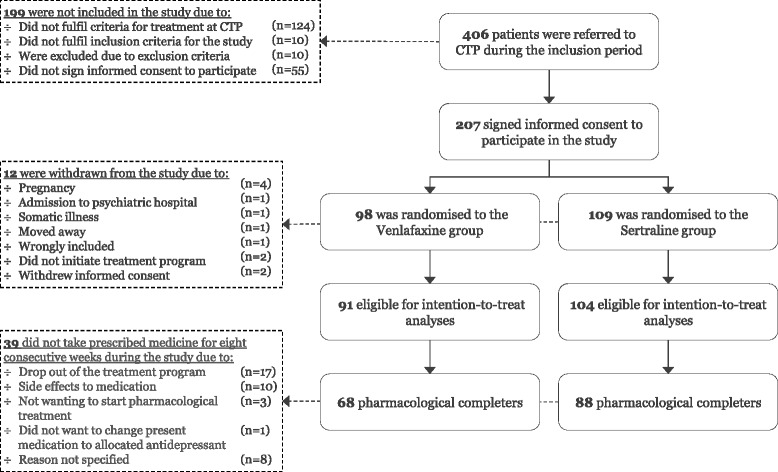
Background: The prevalence of trauma-related psychiatric disorders is high among refugees. Despite this, little is known about the effect of pharmacological treatment for this patient group. The objective of the present study was therefore to examine differences in the effects of venlafaxine and sertraline on Post-Traumatic Stress Disorder (PTSD), depression and functional impairment in trauma-affected refugees. Methods: The study was a randomised pragmatic trial comparing venlafaxine and sertraline in combination with psychotherapy and social counselling. PTSD symptoms were measured on the Harvard Trauma Questionnaire - part IV, which was the primary outcome measure. Other outcome measures included: Hopkins Symptom Check List-25 (depression and anxiety), Social Adjustment Scale - short version (social functioning), WHO-5 Well-being Index (quality of life), Crisis Support Scale (support from social network), Sheehan Disability Scale (disability in three areas of functioning), Hamilton Depression and Anxiety scale, the somatisation items of the Symptoms Checklist-90, Global Assessment of Functioning scales and the summarised score of pain in four body areas rated on visual analogue scales. Results: Two hundred seven adult refugee patients were included in the trial (98 in the venlafaxine and 109 in the sertraline group). Of these, 195 patients were eligible for intention-to-treat analyses. Small but significant pre-treatment to post-treatment differences were found on the Harvard Trauma Questionnaire and a number of other ratings in both groups. On the primary outcome measure, no difference was found in treatment effect between the sertraline and venlafaxine group. A significant group difference was found in favour of sertraline on the Sheehan Disability Scale. Conclusion: Sertraline had a slightly better outcome than venlafaxine on some of the secondary outcome measures, but not on the primary outcome measure. Furthermore, a higher percentage of dropouts was found in the venlafaxine group compared to the sertraline group. Although this could indicate that sertraline was better tolerated, which is supported by other studies, a final conclusion on tolerability cannot be drawn from the current study due to lack of systematic reporting of side effects. Trial Registration: ClinicalTrials.gov NCT01569685. Registration date: 28/2/12. © 2016 The Author(s).
Overview
CoChat Summary
TL;DR
This randomized pragmatic trial in trauma-affected refugees found no difference between venlafaxine and sertraline on the primary PTSD outcome, but sertraline did somewhat better on some secondary measures. The trial also found more dropouts in the venlafaxine group, but did not systematically collect side effects, so tolerability could not be firmly concluded.
Key findings
- 207 adult refugee patients were randomized (98 venlafaxine, 109 sertraline); 195 were eligible for intention-to-treat analyses.
- On the primary outcome, the Harvard Trauma Questionnaire (HTQ), there was no significant treatment difference between venlafaxine and sertraline.
- A significant group difference favoring sertraline was found on the Sheehan Disability Scale (SDS); the WHO-5 difference was borderline significant with p = 0.07.
- Within both groups, there were small but significant pre- to post-treatment improvements on the HTQ and several other ratings; the study reports 75.4% (156 patients) completed at least 8 weeks of pharmacological treatment, with more completers in the sertraline group (88) than venlafaxine (68).
Methods
- Randomized, 2-armed pragmatic trial comparing venlafaxine vs sertraline, both combined with manualized psychotherapy and social counselling.
- Participants were trauma-affected refugees recruited at the Competence Centre for Transcultural Psychiatry in Denmark between 1 April 2012 and 15 September 2013; 406 were screened and 207 enrolled.
- Primary analysis used mixed models and intention-to-treat analyses with Full Information Maximum Likelihood (FIML) in Stata 14; outcomes included self-report and blinded observer ratings.
Limitations
- The paper states that neither patients nor clinical staff were blinded to treatment allocation; only some observer ratings were blinded.
- The study had no waitlist or placebo control group, so it cannot separate drug effects from the overall treatment programme.
- Side effects were not systematically collected; the paper explicitly says this prevents a final conclusion about tolerability. Evidence evident from the text: the trial was pragmatic, so dosages were not always optimal and compliance was measured by pill count, which is less secure than blood tests.
Model-written summary. Check it against the paper before relying on it.
Integrity signals
Registry
Cites
Statistics
Figures
Verification
Claims the paper makes
9 Valid · 2 Not valid · 19 Not checked · 87 Own results and interpretations
The cited sources support only part of this claim — read each source’s verdict below.
In the paper
“Therefore, clinical guidelines for the treatment of PTSD are based on reviews and meta-analyses, which mainly include studies on non-refugee PTSD populations [4–7].”
§ Treatment of trauma-affected refugees with venlafaxine versus sertraline combined with psychotherapy - a randomised study > Background
What the sources say
- Not checked — no full text of the sourcecites [4] Watts BV Schnurr PP Mayo L Young-Xu Y Weeks WB Friedman MJ Meta-analysis of the efficacy of treatments for posttraumatic stress disorder J Clin Psychiatry 2013 74 6 e541 50 10.4088/JCP.12r08225 23842024 source
- Not checked — no full text of the sourcecites [5] Bisson J, Andrew M. Psychological treatment of post-traumatic stress disorder (PTSD). CCochrane Database Syst Rev. 2007;(3). Art. No.: CD003388. doi:10.1002/14651858.CD003388.pub3. 17636720 source
- Partly supportedcites [6] Hetrick SE, Purcell R, Garner B, Parslow R. Combined pharmacotherapy and psychological therapies for post traumatic stress disorder (PTSD). Cochrane Database Syst Rev. 2010;(7). Art. No.: CD007316. doi:10.1002/14651858.CD007316.pub2. PMC12515543 20614457 sourceExperimental — accuracy not yet measured
The Included studies section (page unavailable) lists four trials: one in Cambodia, identified elsewhere in the review as a study of Cambodian refugees, and three in the USA. The review also discusses PTSD treatment recommendations and systematic reviews in Why it is important to do this review (page unavailable), but it does not establish that clinical guidelines are based on reviews and meta-analyses predominantly involving non-refugee populations. (LLM, conf=0.82)
- Partly supportedcites [7] Stein DJ, Ipser JC, Seedat S. Pharmacotherapy for post traumatic stress disorder (PTSD). Cochrane Database Syst Rev. 2006;(1). Art. No.: CD002795. doi:10.1002/14651858.CD002795.pub2. PMC6993948 16437445 sourceExperimental — accuracy not yet measured
This paper is a systematic review of PTSD pharmacotherapy trials. Its Results (Description of studies; page unavailable) describe most trials by veteran and civilian trauma groups, while Characteristics of included studies identifies a trial of Bosnian refugees. That supports the broad point that the reviewed evidence was not focused on refugees, but the paper does not establish that clinical PTSD guidelines were based on reviews and meta-analyses mainly comprising non-refugee populations. (LLM, conf=0.78)
plain- Asserted: passes — The authors put it forward as true.
- Checkable: passes — It can be checked against evidence.
- Load-bearing: passes — The paper’s conclusions depend on it.
- Based: passes — The paper gives a reason why it holds.
The cited sources support only part of this claim — read each source’s verdict below.
In the paper
“The single existent Cochrane review on combined pharmacotherapy and psychological treatment methods in patients with PTSD [6] identified only four studies that could be included in the review.”
§ Treatment of trauma-affected refugees with venlafaxine versus sertraline combined with psychotherapy - a randomised study > Background
What the sources say
- Partly supportedcites [6] Hetrick SE, Purcell R, Garner B, Parslow R. Combined pharmacotherapy and psychological therapies for post traumatic stress disorder (PTSD). Cochrane Database Syst Rev. 2010;(7). Art. No.: CD007316. doi:10.1002/14651858.CD007316.pub2. PMC12515543 20614457 sourceExperimental — accuracy not yet measured
The review’s Main results state that four trials were eligible for inclusion, directly supporting the study count. Our copy identifies this as a Cochrane review of combined treatment for PTSD, but it does not establish that it was the only such Cochrane review in existence. (LLM, conf=0.85)
plain- Asserted: passes — The authors put it forward as true.
- Checkable: passes — It can be checked against evidence.
- Load-bearing: passes — The paper’s conclusions depend on it.
- Based: passes — The paper gives a reason why it holds.
- Partly supported
The cited sources support only part of this claim — read each source’s verdict below.
In the paper
“However, a previous study conducted at CTP found a small but significant effect of sertraline on depression compared to waitlist controls, and it therefore seems likely that at least part of the change is due to the pharmacological treatment in the present study too [14].”
§ Treatment of trauma-affected refugees with venlafaxine versus sertraline combined with psychotherapy - a randomised study > Discussion
What the sources say
- Partly supportedcites [14] Buhmann CB, Nordentoft M, Ekstroem M, Carlsson J, Mortensen EL. The effect of flexible cognitive-behavioural therapy and medical treatment, including antidepressants on post-traumatic stress disorder and depression in traumatised refugees: pragmatic randomised controlled clinical trial. Br J Psychiatry. 2015;5. 26541687 sourceExperimental — accuracy not yet measured
The Outcomes section reports a significant improvement in observer-rated depression with antidepressant treatment and psychoeducation, and the Discussion describes the improvement as small in a trial that included a waiting-list control. But the Discussion explicitly says the effects of sertraline, mianserin and psychoeducation cannot be separated, so the paper does not establish an effect of sertraline alone compared with waitlist controls. (LLM, conf=0.88)
hedgedstates a cause- Asserted: passes — The authors put it forward as true.
- Checkable: passes — It can be checked against evidence.
- Load-bearing: passes — The paper’s conclusions depend on it.
- Based: passes — The paper gives a reason why it holds.
- Partly supported
Every source the paper cites for this claim was checked and supports it.
In the paper
“The most recent meta-analysis on mixed groups of PTSD patients found the evidence for the effect of venlafaxine to be superior to that of sertraline [35].”
§ Treatment of trauma-affected refugees with venlafaxine versus sertraline combined with psychotherapy - a randomised study > Discussion
What the sources say
- Supportedcites [35] Hoskins M Pearce J Bethell A Dankova L Barbui C Tol WA Pharmacotherapy for post-traumatic stress disorder: systematic review and meta-analysis Br J Psychiatry 2015 206 2 93 100 10.1192/bjp.bp.114.148551 25644881 source
The Discussion (page unavailable) reports statistically significant evidence for venlafaxine versus placebo, but not for sertraline, supporting the claim about stronger evidence of an effect. The paper also notes that one direct comparison found the drugs equivalent; it does not establish that venlafaxine itself is more effective than sertraline. (LLM, conf=0.86)
plainstates a cause- Asserted: passes — The authors put it forward as true.
- Checkable: passes — It can be checked against evidence.
- Load-bearing: unclear — It is unclear whether the paper’s conclusions depend on it.
- Based: passes — The paper gives a reason why it holds.
- Supported
Every source the paper cites for this claim was checked and supports it.
In the paper
“Similarly, a meta-analysis from 2012 found a larger effect of venlafaxine on the Clinician-Administered PTSD Scale (CAPS) [36].”
§ Treatment of trauma-affected refugees with venlafaxine versus sertraline combined with psychotherapy - a randomised study > Discussion
What the sources say
- Supportedcites [36] Ipser JC Stein DJ Evidence-based pharmacotherapy of post-traumatic stress disorder (PTSD) Int J Neuropsychopharmacol 2012 15 6 825 40 10.1017/S1461145711001209 21798109 source
Table 3 reports a CAPS effect of −8.11 points for venlafaxine across two studies, larger in magnitude than the pooled SSRI effect of −6.64 points. The claim does not specify a comparator; the table does not show venlafaxine as having the largest effect of all medications. (LLM, conf=0.85)
plainstates a cause- Asserted: passes — The authors put it forward as true.
- Checkable: passes — It can be checked against evidence.
- Load-bearing: unclear — It is unclear whether the paper’s conclusions depend on it.
- Based: passes — The paper gives a reason why it holds.
- Supported
34 more claims · 1 with their cited sources checked
Create a free account to see all 117 claims and to verify the 2 references still open.
- It may state two separate claims as one. 53
- Probably not a substantial claim. 48
Citations
Cites
The WHO-5 well-being index: A systematic review of the literature
Topp, C. W., Østergaard, S. D., Søndergaard, S., & Bech, P. (2015) · Psychotherapy and Psychosomatics · doi:10.1159/000376585 · Cited by 4,708 · cited 8×
“Other outcome measures included: Hopkins Symptom Check List-25 (depression and anxiety), Social Adjustment Scale – short version (social functioning), WHO-5 Well-being Index (quality of life), Crisis Support Scale (support from social network), Sheehan Disability Scale (disability in three areas of functioning), Hamil…”
MethodInfluentialSelf-citationGarnefski, N., Kraaij, V., Schroevers, M. J., & Somsen, G. A. (2008) · Journal of Clinical Psychology in Medical Settings · doi:10.1007/s10880-008-9136-5 · Cited by 2,479
Steel, Z., Chey, T., Silove, D., Marnane, C., Bryant, R. A., & van Ommeren, M. (2009) · JAMA · doi:10.1001/jama.2009.1132 · Cited by 2,246 · cited 1×
“Background The prevalence of trauma-related psychiatric disorders such as Post-Traumatic Stress Disorder (PTSD) and depression is high among refugees [1].”
BackgroundCipriani, A., Furukawa, T. A., Salanti, G., Geddes, J. R., Higgins, J. P., Churchill, R., Watanabe, N., Nakagawa, A., Omori, I. M., McGuire, H., et al. (2009) · The Lancet · doi:10.1016/s0140-6736(09)60046-5 · Cited by 1,654 · cited 1×
“This was also the case in the only other RCT comparing sertraline and venlafaxine in trauma-affected refugees [19], in which the number of drop outs were higher in the venlafaxine group and in line with findings from studies with other psychiatric patient groups [38].”
ResultMollica, R. F., Caspi-Yavin, Y., Bollini, P., Truong, T., Tor, S., & Lavelle, J. (1992) · PubMed · Cited by 1,551
MOLLICA, R. F., CASPI-YAVIN, Y., BOLLINI, P., TRUONG, T., TOR, S., & LAVELLE, J. (1992) · The Journal of Nervous and Mental Disease · doi:10.1097/00005053-199202000-00008 · Cited by 1,489 · cited 1×
“The primary outcome measure was self-reported PTSD symptoms assessed using part IV of the Harvard Trauma Questionnaire (HTQ), which has been developed primarily for trauma-affected refugees and validated in several languages and settings [26, 27].”
MethodMeta-Analysis of the Efficacy of Treatments for Posttraumatic Stress Disorder
Watts, B. V., Schnurr, P. P., Mayo, L., Young-Xu, Y., Weeks, W. B., & Friedman, M. J. (2013) · The Journal of Clinical Psychiatry · doi:10.4088/jcp.12r08225 · Cited by 985 · cited 1×
“It is, however, also a possibility that the true differences between the effectiveness of sertraline and venlafaxine in treating PTSD are rather small as another meta-analysis from 2013 found only little difference in effect sizes [4].”
ResultSheehan, D. V. (1984) · Medical Entomology and Zoology · Cited by 883
(1987) · American Journal of Psychiatry · doi:10.1176/ajp.144.4.497 · Cited by 712 · cited 6×
“(DOCX 23 kb) Abbreviations ACT: Acceptance and commitment therapy; CAPS: Clinician-administered PTSD scale; CBT: Cognitive behavioural therapy; CSS: Crisis support scale; CTP: Competence centre for transcultural psychiatry; GAF: Global assessment of functioning; HAM-A: Hamilton anxiety scale; HAM-D: Hamilton depressio…”
MethodInfluentialPsychological treatment of post-traumatic stress disorder (PTSD)
Bisson, J., & Andrew, M. (2005) · Cochrane Database of Systematic Reviews · doi:10.1002/14651858.cd003388.pub2 · Cited by 654
Bech, P., Kastrup, M., & Rafaelsen, O. J. (1986) · PubMed · Cited by 550
Self-citationPsychological treatment of post-traumatic stress disorder (PTSD)
Bisson, J., & Andrew, M. (2007) · Cochrane Database of Systematic Reviews · doi:10.1002/14651858.cd003388.pub3 · Cited by 545
Pharmacotherapy for post traumatic stress disorder (PTSD)
Stein, D. J., Ipser, J. C., Seedat, S., Sager, C., & Amos, T. (2006) · Cochrane Database of Systematic Reviews · doi:10.1002/14651858.cd002795.pub2 · Cited by 519 · cited 1×
“However, both the MTV report and a Cochrane review on pharmacological treatment concluded that there is a need for more trials on patients with treatment refractory PTSD, such as that of many refugees, because SSRI seems to be inadequate for these patients [7, 16].”
BackgroundPharmacotherapy for post-traumatic stress disorder: Systematic review and meta-analysis
Hoskins, M., Pearce, J., Bethell, A., Dankova, L., Barbui, C., Tol, W. A., van Ommeren, M., de Jong, J., Seedat, S., Chen, H., et al. (2015) · British Journal of Psychiatry · doi:10.1192/bjp.bp.114.148551 · Cited by 418
Crumlish, N., & O'Rourke, K. (2010) · Journal of Nervous & Mental Disease · doi:10.1097/nmd.0b013e3181d61258 · Cited by 264 · cited 1×
“Despite a rapidly increasing amount of studies on the treatment of PTSD in general, only few intervention studies have examined the pharmacological treatment of trauma-affected refugees [2, 3].”
BackgroundKleijn, W. C., Hovens, J. E., & Rodenburg, J. J. (2001) · Psychological Reports · doi:10.2466/pr0.2001.88.2.527 · Cited by 264 · cited 1×
“The primary outcome measure was self-reported PTSD symptoms assessed using part IV of the Harvard Trauma Questionnaire (HTQ), which has been developed primarily for trauma-affected refugees and validated in several languages and settings [26, 27].”
MethodEvidence-based pharmacotherapy of post-traumatic stress disorder (PTSD)
Ipser, J. C., & Stein, D. J. (2012) · The International Journal of Neuropsychopharmacology · doi:10.1017/s1461145711001209 · Cited by 216 · cited 8×
“As stated above, venlafaxine has shown promising results in non-refugee PTSD populations, but has only been compared to SSRIs in one small refugee study of limited quality.”
BackgroundResultInfluentialCombined pharmacotherapy and psychological therapies for post traumatic stress disorder (PTSD)
Hetrick, S. E., Purcell, R., Garner, B., & Parslow, R. (2010) · Cochrane Database of Systematic Reviews · doi:10.1002/14651858.cd007316.pub2 · Cited by 212 · cited 1×
“The single existent Cochrane review on combined pharmacotherapy and psychological treatment methods in patients with PTSD [6] identified only four studies that could be included in the review.”
BackgroundOtto, M. W., Hinton, D., Korbly, N. B., Chea, A., Ba, P., Gershuny, B. S., & Pollack, M. H. (2003) · Behaviour Research and Therapy · doi:10.1016/s0005-7967(03)00032-9 · Cited by 194 · cited 1×
“These studies were all conducted on fairly small patient groups (the largest group had 65 participants for randomisation), and only one very small study (n = 10) included refugees [11].”
BackgroundRedrobe, J. P., Bourin, M., Colombel, M. C., & Baker, G. B. (1998) · Psychopharmacology · doi:10.1007/s002130050638 · Cited by 163 · cited 6×
“As stated above, venlafaxine has shown promising results in non-refugee PTSD populations, but has only been compared to SSRIs in one small refugee study of limited quality.”
BackgroundInfluentialDavidson, J., Rothbaum, B. O., Tucker, P., Asnis, G., Benattia, I., & Musgnung, J. J. (2006) · Journal of Clinical Psychopharmacology · doi:10.1097/01.jcp.0000222514.71390.c1 · Cited by 157 · cited 1×
“Studies of the pharmacological treatment of PTSD on other groups of trauma-affected patients have pointed towards the selective Serotonine-Noradrenaline reuptake inhibitor (SNRI) venlafaxine as an alternative treatment option [17].”
BackgroundA Comparison of Three Scales for Assessing Social Functioning in Primary Care
Weissman, M. M., Olfson, M., Gameroff, M. J., Feder, A., & Fuentes, M. (2001) · American Journal of Psychiatry · doi:10.1176/appi.ajp.158.3.460 · Cited by 130 · cited 1×
“Secondary outcome measures included depression and anxiety symptoms measured on the Hopkins Symptom Check List-25 (HSCL-25) [28] and on the Hamilton Depression and Anxiety Ratings Scales (HAM-D and HAM-A) [29], social functioning measured on the Social Adjustment Scale Self Report (SAS-SR) short version [30], social s…”
MethodBraakman, M. H., Kortmann, F. A. M., & Van Den Brink, W. (2009) · Acta Psychiatrica Scandinavica · doi:10.1111/j.1600-0447.2008.01252.x · Cited by 128 · cited 1×
“Trauma-related psychotic symptoms are relatively common in this patient group and were therefore not among the exclusion criteria [22, 23].”
BackgroundMcFarlane, C. A., & Kaplan, I. (2012) · Transcultural Psychiatry · doi:10.1177/1363461512447608 · Cited by 113 · cited 1×
“While research on other groups of PTSD patients has burgeoned since, intervention studies concerning trauma-affected refugees are still limited in number and quality, and the vast majority are on psychological interventions only [12, 13].”
BackgroundPatel, N., Kellezi, B., & Williams, A. C. D. C. (2014) · Cochrane Database of Systematic Reviews · doi:10.1002/14651858.cd009317.pub2 · Cited by 110 · cited 1×
“While research on other groups of PTSD patients has burgeoned since, intervention studies concerning trauma-affected refugees are still limited in number and quality, and the vast majority are on psychological interventions only [12, 13].”
BackgroundTraumatized refugees: morbidity, treatment and predictors of outcome.
Buhmann, C. (2014) · PubMed · Cited by 98
Buhmann, C. B., Nordentoft, M., Ekstroem, M., Carlsson, J., & Mortensen, E. L. (2016) · British Journal of Psychiatry · doi:10.1192/bjp.bp.114.150961 · Cited by 92
Self-citationSmajkic, A., Weine, S., Djuric‐Bijedic, Z., Boskailo, E., Lewis, J., & Pavkovic, I. (2001) · Journal of Traumatic Stress · doi:10.1023/a:1011177420069 · Cited by 89 · cited 4×
“To the best of our knowledge, only one study has investigated the use of venlafaxine in trauma-affected refugees [19].”
BackgroundMethodResultInfluentialCarlsson, J., Sonne, C., & Silove, D. (2014) · Journal of Nervous & Mental Disease · doi:10.1097/nmd.0000000000000175 · Cited by 71 · cited 1×
“For all patients, the exact number of consultations as well as theme(s) of the session were registered at each consultation using a tick box sheet in accordance with the Treatment and Research Integrated Model (TRIM) used at CTP [24].”
MethodSelf-citationPsychosocial predictors of treatment outcome for trauma-affected refugees
Sonne, C., Carlsson, J., Bech, P., Vindbjerg, E., Mortensen, E. L., & Elklit, A. (2016) · European Journal of Psychotraumatology · doi:10.3402/ejpt.v7.30907 · Cited by 70
Self-citationMeasuring Trauma and Health Status in Refugees: A Critical Review
Hollifield, M., Warner, T. D., Lian, N., Krakow, B., Jenkins, J. H., Kesler, J., Stevenson, J., & Westermeyer, J. (2002) · JAMA · doi:10.1001/jama.288.5.611 · Cited by 60 · cited 2×
“Survivors of civilian trauma have often been exposed to a single traumatic event, while refugees typically have a history of multiple and prolonged traumatisation [9].”
BackgroundPalić, S., & Elklit, A. (2009) · PubMed · Cited by 53
Self-citationBastin, P., Bastard, M., Rossel, L., Melgar, P., Jones, A., & Antierens, A. (2013) · PLoS ONE · doi:10.1371/journal.pone.0054107 · Cited by 33 · cited 6×
“(DOCX 23 kb) Abbreviations ACT: Acceptance and commitment therapy; CAPS: Clinician-administered PTSD scale; CBT: Cognitive behavioural therapy; CSS: Crisis support scale; CTP: Competence centre for transcultural psychiatry; GAF: Global assessment of functioning; HAM-A: Hamilton anxiety scale; HAM-D: Hamilton depressio…”
MethodInfluentialPharmacological treatment of refugees with trauma-related disorders: What do we know today?
Sonne, C., Carlsson, J., Bech, P., & Mortensen, E. L. (2017) · Transcultural Psychiatry · doi:10.1177/1363461516682180 · Cited by 29
Self-citationPsychotic symptoms in refugees diagnosed with PTSD: A series of case reports
Norredam, M., Jensen, M., & Ekstrøm, M. (2011) · Nordic Journal of Psychiatry · doi:10.3109/08039488.2010.533385 · Cited by 28 · cited 1×
“Trauma-related psychotic symptoms are relatively common in this patient group and were therefore not among the exclusion criteria [22, 23].”
BackgroundSonne, C., Carlsson, J., Elklit, A., Mortensen, E., & Ekstrøm, M. (2013) · Trials · doi:10.1186/1745-6215-14-137 · Cited by 14 · cited 1×
“Additionally, a protocol paper has been published previously [20].”
MethodSelf-citationPsychotherapy with traumatised refugees – the design of a randomised clinical trial
Vindbjerg, E., Klimpke, C., & Carlsson, J. (2018) · Torture Journal · doi:10.7146/torture.v24i1.109719 · Cited by 14 · cited 2×
“The manual, developed by the psychologists employed at CTP, was based on the available literature and the experiences with the three previous manuals used during the prior randomised trials at the clinic [14, 15].”
BackgroundMethodSelf-citationInterface: Manualised psychotherapy in a transcultural refugee setting
Sonne, C., & Vindbjerg, E. (2013) · Psychotherapy in Australia · Cited by 1
Self-citation(2012) · PubMed
(2011) · PubMed
Research works printed but not linked: 2
- Region Syddanmarks Center for Kvalitet MTV om behandling og rehabilitering af PTSD – herunder traumatiserede flygtninge 2008
- WHO The ICD-10 Classification of Mental and Behavioural Disorders - Diagnostic criteria for research 1993
Cited by
Coventry, P. A., Meader, N., Melton, H., Temple, M., Dale, H., Wright, K., Cloitre, M., Karatzias, T., Bisson, J., Roberts, N. P., et al. (2020) · PLoS Medicine · doi:10.1371/journal.pmed.1003262 · Cited by 358
“Among RCTs that assessed anxiety in refugees, three studies compared combined psychological and pharmacological interventions, but no meta-analyses were possible [64, 81, 99].”
ResultNordbrandt, M. S., Sonne, C., Mortensen, E. L., & Carlsson, J. (2020) · PLOS ONE · doi:10.1371/journal.pone.0230300 · Cited by 64
“The psychologist manual was developed by the psychologists at CTP using the results and experiences from the recent RCTs at CTP [24,26].”
ResultInfluentialSelf-citationCarlsson, J., Sonne, C., Vindbjerg, E., & Mortensen, E. L. (2018) · Psychiatry Research · doi:10.1016/j.psychres.2018.05.015 · Cited by 53
Self-citationThe Range and Impact of Postmigration Stressors During Treatment of Trauma-Affected Refugees
Bruhn, M., Rees, S. J., Mohsin, M., Silove, D. M., & Carlsson, J. M. (2017) · The Journal of Nervous and Mental Disease · doi:10.1097/nmd.0000000000000774 · Cited by 57
Self-citationHoskins, M. D., Sinnerton, R., Nakamura, A., Underwood, J. F. G., Slater, A., Lewis, C., Roberts, N. P., Bisson, J. I., Lee, M., & Clarke, L. (2021) · European Journal of Psychotraumatology · doi:10.1080/20008198.2020.1853379 · Cited by 51
“Of those eight studies, six (Buhmann et al., 2016; Hien et al., 2015; Popiel et al., 2015; Simon et al., 2008; Sonne et al., 2016) compared an SSRI/SNRI plus therapy approach to therapy plus placebo, with the remaining two employing an SSRI comparator (Otto et al., 2003; Rothbaum et al., 2006).”
BackgroundResult
Metadata
- Authors
- Sonne, C., Carlsson, J., Bech, P., Elklit, A., & Mortensen, E. L.
- Affiliations
- University of Southern Denmark (DK)
- University of Copenhagen (DK)
- Corresponding author
- Sonne, Charlotte
- Venue
- BMC Psychiatry
- Published
- 2016-11-08
- Volume
- 16
- Issue
- 1
- Pages
- 383-383
- ISSN
- 1471-244X (ISSN-L)
- PMC
- PMC5101827
- OpenAlex
- W2552010327
- Cited by
- 56
- References
- 40
- Citations by year
- 2026: 4 · 2025: 2 · 2024: 6 · 2023: 6 · 2022: 9 · 2021: 5 · 2020: 10 · 2019: 5 · 2018: 4 · 2017: 4
- FWCI
- 5.79
- Type
- journal article
- Language
- en
- Open access
- gold
- doi.org
- Licence
- cc-by
- Locations
- BMC Psychiatry (publishedVersion, cc-by)
- PubMed Central (publishedVersion, cc-by)
- PubMed (publishedVersion)
- Research at the University of Copenhagen (University of Copenhagen) (publishedVersion, cc-by)
- University of Southern Denmark Research Portal (University of Southern Denmark) (publishedVersion, cc-by)
- Funders
- Helsefonden (13-B-0091)
- Tryg Fonden
- The Research foundation of the Capital Region of Denmark
- Research foundation for the Mental Health Services - Capital Region of Denmark.
- Topics
- Social Sciences › Psychology › Clinical Psychology › Migration, Health and Trauma
- Social Sciences › Psychology › Clinical Psychology › Posttraumatic Stress Disorder Research
- Health Sciences › Medicine › Public Health, Environmental and Occupational Health › Maternal Mental Health During Pregnancy and Postpartum
- Keywords
- refugees, post-traumatic stress disorder, venlafaxine, sertraline, selective serotonin reuptake inhibitors, depression, psychotherapy, social counseling, functional disability, quality of life, treatment discontinuation, drug tolerability
- MeSH terms
- Venlafaxine Hydrochloride, Adult, Anxiety, Denmark, Depression, Female, Humans, Male, Middle Aged, Psychiatric Status Rating Scales, Quality of Life, Surveys and Questionnaires, Refugees, Research Design, Stress Disorders, Post-Traumatic, Treatment Outcome, Antidepressive Agents, Second-Generation, Sertraline
About these checks
Registry, retraction, Cites and statistics results are computed, not judged, with one exception: a printed reference that no index lists is read once by a model before it counts as a citation error. Claims are extracted by a model and kept only when their quote appears verbatim in the text; each cited source is then checked, with a model’s help, for whether it says what the claim relies on. Those verdicts can be wrong — read the claim’s quote and the cited source before relying on one.
The claim verdicts this report counts are experimental: their accuracy is not yet measured.
A language model drew the claims from the paper on 2026-10-11, under version 3 of the claim definition (model deepseek-v4.1-flash, prompt extract-v3).
A second model labelled each claim on 2026-10-11 (model jev-1.13-20260917, definition revision gold-guideline-v0.2).
Cited sources are checked with a language model’s help (gpt-6-sol).
Statistics and arithmetic are recomputed, not judged.
Confidence bands are shown only for fields calibrated on our annotated test set. None is calibrated yet, so no band is shown.
What counts as a claim ›How we measure confidence ›How we check this ›
Are you an author, or do you see a problem with this page? Request a review
Data sources
Bibliographic data: Semantic Scholar, OpenAlex, Crossref.
Contains information from the Semantic Scholar Academic Graph Datasets, made available under the ODC Attribution License (ODC-BY 1.0).
Semantic Scholar’s data is described in: Kinney, R., et al. (2023). The Semantic Scholar Open Data Platform. arXiv:2301.10140.
