

Bright light therapy in pregnant women with major depressive disorder: study protocol for a randomized, double-blind, controlled clinical trial
Open accessThe DOI matches its Crossref record; 81 of the 81 references it cites were found in a registry or an index.
Abstract
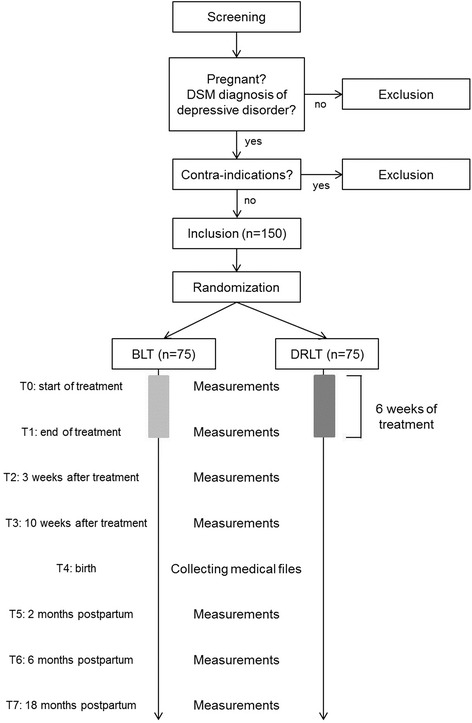
BACKGROUND: Depression during pregnancy is a common and high impact disease. Generally, 5-10 % of pregnant women suffer from depression. Children who have been exposed to maternal depression during pregnancy have a higher risk of adverse birth outcomes and more often show cognitive, emotional and behavioural problems. Therefore, early detection and treatment of antepartum depression is necessary. Both psychotherapy and antidepressant medication, first choice treatments in a non-pregnant population, have limitations in treating depression during pregnancy. Therefore, it is urgent and relevant to investigate alternative treatments for antepartum depression. Bright light therapy (BLT) is a promising treatment for pregnant women with depressive disorder, for it combines direct availability, sufficient efficacy, low costs and high safety, taking the safety for the unborn child into account as well. METHODS: In this study, 150 pregnant women (12-18 weeks pregnant) with a DSM-V diagnosis of depressive disorder will be randomly allocated in a 1:1 ratio to one of the two treatment arms: treatment with BLT (9.000 lux) or treatment with dim red light therapy (100 lux). Both groups will be treated for 6 weeks at home on a daily basis for 30 min, within 30 min of habitual wake-up time. Follow-up will take place after 6 weeks of therapy, 3 and 10 weeks after end of therapy, at birth and 2, 6 and 18 months postpartum. Primary outcome will be the average change in depressive symptoms between the two groups, as measured by the Structured Interview Guide for the Hamilton Depression Scale - Seasonal Affective Disorder version and the Edinburg Postnatal Depression Scale. Changes in rating scale scores of these questionnaires over time will be analysed using generalized linear mixed models. Secondary outcomes will be the changes in maternal cortisol and melatonin levels, in maternal sleep quality and gestational age, birth weight, infant behaviour, infant cortisol exposure and infant cortisol stress response. DISCUSSION: If BLT reduces depressive symptoms in pregnant women, it will provide a safe, cheap, non-pharmacological and efficacious alternative treatment for psychotherapy and antidepressant medication in treating antepartum depression, without any expected adverse reactions for the unborn child. TRIAL REGISTRATION: Netherlands Trial Register NTR5476 . Registered 5 November 2015.
Overview
The claims and statistics of this paper haven’t been checked yet.
Free: it reads the open-access text and checks the first 5 claims that cite a source we can check. Create a free account to check every claim.
Integrity signals
Registry
Cites
Statistics
Figures
Verification
Claims the paper makes
The claims and statistics of this paper haven’t been checked yet.
Free: it reads the open-access text and checks the first 5 claims that cite a source we can check. Create a free account to check every claim.
Claims other papers make about this one
Each is checked against this paper’s own text: does it say what the citing paper says it does?
The cited source says what the claim attributes to it.
In the citing paper
“In the earlier published study protocol,55 we aimed to include women who were 12–18 weeks pregnant. For pragmatic reasons, in particular the fact that a substantial number of women were referred after 18 weeks of pregnancy, we later decided to widen our inclusion criteria to 12–32 weeks pregnancy.”
From Effects of bright light therapy for depression during pregnancy: a randomised, double-blind controlled trial (2020) · cites this paper as [55]
The cited source says what the claim attributes to it.
In the citing paper
“The main limitation of our study was that an unforeseen lack of resources prevented us from including 150 participants, as we aimed to do according to our sample size calculation,55 which enables us to find only large treatment effects.55”
From Effects of bright light therapy for depression during pregnancy: a randomised, double-blind controlled trial (2020) · cites this paper as [55]
Self-check
Percentages, sums and reported differences re-computed from the paper’s own numbers.
The self-check needs the paper’s full text.
Citations
Cites
The Pittsburgh Sleep Quality Index: a new instrument for psychiatric practice and research
Buysse, D. J., Reynolds, C. F., Monk, T. H., Berman, S. R., & Kupfer, D. J. (1989) · Psychiatry Research · doi:10.1016/0165-1781(89)90047-4 · Cited by 35,234 · cited 4×
“The PSQI, a structured 19-item self-questionnaire with 5 additional items reported by bedpartner, assesses sleep quality, including a wide variety of factors, such as sleep duration and latency [69].”
BackgroundInfluentialThe Cochrane Collaboration's tool for assessing risk of bias in randomised trials
Higgins, J. P. T., Altman, D. G., Gotzsche, P. C., Juni, P., Moher, D., Oxman, A. D., Savovic, J., Schulz, K. F., Weeks, L., Sterne, J. A. C., et al. (2011) · BMJ · doi:10.1136/bmj.d5928 · Cited by 33,817
Dermyshi, E., Wang, Y., Yan, C., Hong, W., Qiu, G., Gong, X., & Zhang, T. (2017) · Neonatology · doi:10.1159/000454668 · Cited by 24,451
Detection of Postnatal Depression: Development of the 10-item Edinburgh Postnatal Depression Scale
Cox, J. L., Holden, J. M., & Sagovsky, R. (1987) · British Journal of Psychiatry · doi:10.1192/bjp.150.6.782 · Cited by 14,183 · cited 12×
“Originally, the EPDS was developed for the detection of postnatal depression, but has been validated for screening depression during pregnancy as well [63].”
BackgroundMethodInfluentialManual for the ASEBA preschool forms and profiles
Achenbach, T. M., & Rescorla, L. (2000) · Cited by 4,825
Perinatal Depression: A Systematic Review of Prevalence and Incidence
Gavin, N. I., Gaynes, B. N., Lohr, K. N., Meltzer-Brody, S., Gartlehner, G., & Swinson, T. (2005) · Obstetrics & Gynecology · doi:10.1097/01.aog.0000183597.31630.db · Cited by 3,282 · cited 1×
“Approximately 5–10 % of pregnant women suffers from depression [1], which has been confirmed by a study in Rotterdam, the second largest city in the Netherlands [2].”
ResultThe Role of Actigraphy in the Study of Sleep and Circadian Rhythms
Ancoli-Israel, S., Cole, R., Alessi, C., Chambers, M., Moorcroft, W., & Pollak, C. P. (2003) · Sleep · doi:10.1093/sleep/26.3.342 · Cited by 2,751 · cited 1×
“Actigraphy, the continuous assessment of activity with a watch-sized non-dominant wrist-worn recorder (Actiwatch Spectrum, Philips Respironics, Pittsburgh, USA), is a validated technique to obtain estimates of sleep and rest-activity rhythms [23, 67, 68].”
MethodLife between Clocks: Daily Temporal Patterns of Human Chronotypes
Roenneberg, T., Wirz-Justice, A., & Merrow, M. (2003) · Journal of Biological Rhythms · doi:10.1177/0748730402239679 · Cited by 2,662 · cited 2×
“In this study, this will be assessed with the Munich Chronotype Questionnaire (MCTQ), a structured 19-item self-report measure of an individual’s chronotype, based on sleep times, selfreported light exposure and self-assessed chronotype (extreme, moderate or slight early, normal or slight, moderate or extreme late), t…”
MethodThe HPA axis in major depression: classical theories and new developments
Pariante, C. M., & Lightman, S. L. (2008) · Trends in Neurosciences · doi:10.1016/j.tins.2008.06.006 · Cited by 2,009 · cited 4×
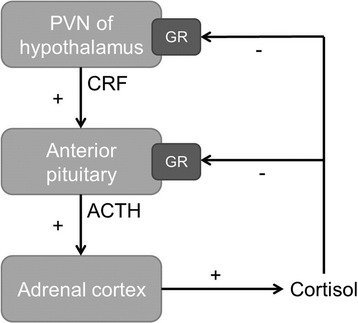
“CRF and ACTH are both inhibited by cortisol through the glucocorticoid receptor (GR) [26, 27].”
BackgroundInfluentialGrote, N. K., Bridge, J. A., Gavin, A. R., Melville, J. L., Iyengar, S., & Katon, W. J. (2010) · Archives of General Psychiatry · doi:10.1001/archgenpsychiatry.2010.111 · Cited by 1,882
Wood, I. K. (1996) · Journal of Child and Family Studies · doi:10.1007/bf02234670 · Cited by 1,518 · cited 5×
“Light inhibits the production of melatonin [26].”
BackgroundInfluentialAntenatal maternal stress and long‐term effects on child neurodevelopment: how and why?
Talge, N. M., Neal, C., Glover, V., & the Early Stress, T. R. A. P. S. N. F. A. N. E. O. C. A. A. M. H. (2007) · Journal of Child Psychology and Psychiatry · doi:10.1111/j.1469-7610.2006.01714.x · Cited by 1,349 · cited 1×
“Increased maternal levels of cortisol, as a cause and/or consequence of maternal depression during pregnancy, might program the intrauterine developing HPA-axis of the child, making it susceptible to increased stress reactivity in future life [3, 4, 48], which has also been confirmed in animal studies [49].”
ResultNeonatal Behavioral Assessment Scale
(2005) · Encyclopedia of Human Development · doi:10.4135/9781412952484.n438 · Cited by 1,313
The Hamilton Depression Rating Scale: Has the Gold Standard Become a Lead Weight?
Bagby, R. M., Ryder, A. G., Schuller, D. R., & Marshall, M. B. (2004) · American Journal of Psychiatry · doi:10.1176/appi.ajp.161.12.2163 · Cited by 1,148
Morgenthaler, T., Alessi, C., Friedman, L., Owens, J., Kapur, V., Boehlecke, B., Brown, T., Chesson, A., Coleman, J., Lee-Chiong, T., et al. (2007) · Sleep · doi:10.1093/sleep/30.4.519 · Cited by 1,142
Neuroscience: Exploring the Brain
Bear, M. F., Connors, B. W., & Paradiso, M. A. (1996) · Cited by 1,050
The basic physiology and pathophysiology of melatonin
Claustrat, B., Brun, J., & Chazot, G. (2005) · Sleep Medicine Reviews · doi:10.1016/j.smrv.2004.08.001 · Cited by 950 · cited 1×
“Different studies showed a change in melatonin secretion in psychiatric diseases, such as a reduction of melatonin secretion in depression [35, 37].”
BackgroundGolden, R. N., Gaynes, B. N., Ekstrom, R. D., Hamer, R. M., Jacobsen, F. M., Suppes, T., Wisner, K. L., & Nemeroff, C. B. (2005) · American Journal of Psychiatry · doi:10.1176/appi.ajp.162.4.656 · Cited by 896 · cited 1×
“The effects of BLT have not only been consistently shown on SAD [16–19], but also on other diseases, such as non-seasonal depression [17], adult attentiondeficit/hyperactivity disorder [20] and bulimia nervosa [21, 22].”
BackgroundOwens, P. C., Smith, R., Brinsmead, M. W., Hall, C., Rowley, M., Hurt, D., Lovelock, M., Chan, E.-C., Cubis, J., & Lewin, T. (1987) · Life Sciences · doi:10.1016/0024-3205(87)90603-5 · Cited by 847
The Diagnosis and Differential Diagnosis of Cushing’s Syndrome and Pseudo-Cushing’s States
Newell-Price, J., Trainer, P., Besser, M., & Grossman, A. (1998) · Endocrine Reviews · doi:10.1210/edrv.19.5.0346 · Cited by 833 · cited 1×
“Urinary free cortisol levels during a 24-h period provide a non-invasive valid estimation of overall daily cortisol production [64].”
BackgroundRiemersma-van der Lek, R. F. (2008) · JAMA · doi:10.1001/jama.299.22.2642 · Cited by 803
Self-citationHair cortisol, stress exposure, and mental health in humans: A systematic review
Staufenbiel, S. M., Penninx, B. W. J. H., Spijker, A. T., Elzinga, B. M., & van Rossum, E. F. C. (2013) · Psychoneuroendocrinology · doi:10.1016/j.psyneuen.2012.11.015 · Cited by 736 · cited 1×
“The maternal hair strands will be collected and processed according to existing methods [65].”
MethodRaadsheer, F. C., Hoogendijk, W. J. G., Stam, F. C., Tilders, F. J. H., & Swaab, D. F. (2008) · Neuroendocrinology · doi:10.1159/000126778 · Cited by 667 · cited 3×
“This is supported by a post-mortem study among depressed patients, which showed hyperactivity of CRF neurons of the hypothalamic PVN [28].”
ResultSelf-citationJarde, A., Morais, M., Kingston, D., Giallo, R., MacQueen, G. M., Giglia, L., Beyene, J., Wang, Y., & McDonald, S. D. (2016) · JAMA Psychiatry · doi:10.1001/jamapsychiatry.2016.0934 · Cited by 616
Validation of the Edinburgh Depression Scale during pregnancy
Bergink, V., Kooistra, L., Lambregtse-van den Berg, M. P., Wijnen, H., Bunevicius, R., van Baar, A., & Pop, V. (2011) · Journal of Psychosomatic Research · doi:10.1016/j.jpsychores.2010.07.008 · Cited by 601
Prenatal depression effects on early development: A review
Field, T. (2011) · Infant Behavior and Development · doi:10.1016/j.infbeh.2010.09.008 · Cited by 592 · cited 1×
“Increased maternal levels of cortisol, as a cause and/or consequence of maternal depression during pregnancy, might program the intrauterine developing HPA-axis of the child, making it susceptible to increased stress reactivity in future life [3, 4, 48], which has also been confirmed in animal studies [49].”
ResultHypothalamic integration of central and peripheral clocks
Buijs, R. M., & Kalsbeek, A. (2001) · Nature Reviews Neuroscience · doi:10.1038/35081582 · Cited by 583
Zavada, A., Gordijn, M. C. M., Beersma, D. G. M., Daan, S., & Roenneberg, T. (2005) · Chronobiology International · doi:10.1081/cbi-200053536 · Cited by 527
Increasing use of antidepressants in pregnancy
Cooper, W. O., Willy, M. E., Pont, S. J., & Ray, W. A. (2007) · American Journal of Obstetrics and Gynecology · doi:10.1016/j.ajog.2007.01.033 · Cited by 458
Impact of Maternal Stress, Depression and Anxiety on Fetal Neurobehavioral Development
KINSELLA, M. T., & MONK, C. (2009) · Clinical Obstetrics & Gynecology · doi:10.1097/grf.0b013e3181b52df1 · Cited by 422 · cited 1×
“Increased maternal levels of cortisol, as a cause and/or consequence of maternal depression during pregnancy, might program the intrauterine developing HPA-axis of the child, making it susceptible to increased stress reactivity in future life [3, 4, 48], which has also been confirmed in animal studies [49].”
ResultGLIMMPSE : Online Power Computation for Linear Models with and without a Baseline Covariate
Kreidler, S. M., Muller, K. E., Grunwald, G. K., Ringham, B. M., Coker-Dukowitz, Z., Sakhadeo, U. R., Baron, A. E., & Glueck, D. H. (2013) · Journal of Statistical Software · doi:10.18637/jss.v054.i10 · Cited by 399
Deuschle, M., Schweiger, U., Weber, B., Gotthardt, U., Körner, A., Schmider, J., Standhardt, H., Lammers, C.-H., & Heuser, I. (1997) · The Journal of Clinical Endocrinology & Metabolism · doi:10.1210/jcem.82.1.3689 · Cited by 344
Bockting, C. L., Hollon, S. D., Jarrett, R. B., Kuyken, W., & Dobson, K. (2015) · Clinical Psychology Review · doi:10.1016/j.cpr.2015.02.003 · Cited by 295 · cited 1×
“This will be dichotomized to 3 or less previous depressive episodes versus 4 or more [53].”
BackgroundMelatonin and pregnancy in the human
Tamura, H., Nakamura, Y., Terron, M. P., Flores, L. J., Manchester, L. C., Tan, D.-X., Sugino, N., & Reiter, R. J. (2008) · Reproductive Toxicology · doi:10.1016/j.reprotox.2008.03.005 · Cited by 293 · cited 1×
“Melatonin concentrations increase during the course of pregnancy [36].”
BackgroundBright-Light Therapy in the Treatment of Mood Disorders
Pail, G., Huf, W., Pjrek, E., Winkler, D., Willeit, M., Praschak-Rieder, N., & Kasper, S. (2011) · Neuropsychobiology · doi:10.1159/000328950 · Cited by 277 · cited 12×
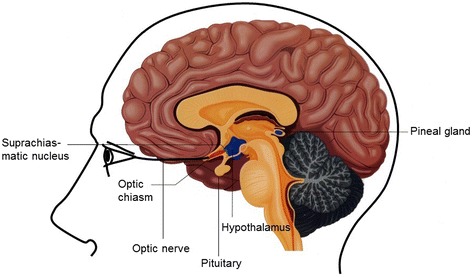
“The SCN is able to maintain circadian rhythms, even in the absence of zeitgebers [15, 30].”
BackgroundInfluentialLight therapy for non-seasonal depression
Tuunainen, A., Kripke, D. F., & Endo, T. (2004) · Cochrane Database of Systematic Reviews · doi:10.1002/14651858.cd004050.pub2 · Cited by 261 · cited 3×
“However, BLT may be effective in as little as 1 week [55].”
BackgroundMethodLieverse, R., Van Someren, E. J. W., Nielen, M. M. A., Uitdehaag, B. M. J., Smit, J. H., & Hoogendijk, W. J. G. (2011) · Archives of General Psychiatry · doi:10.1001/archgenpsychiatry.2010.183 · Cited by 261 · cited 10×
“The active dose was found effective in other studies [23, 41, 42].”
BackgroundMethodResultInfluentialSelf-citationEfficacy of light therapy in nonseasonal depression: A systematic review
Even, C., Schröder, C. M., Friedman, S., & Rouillon, F. (2008) · Journal of Affective Disorders · doi:10.1016/j.jad.2007.09.008 · Cited by 250 · cited 2×
“The Dim Light Melatonin Onset (DLMO; the time point when melatonin secretion rises over a predefined threshold in the evening [66]) will be calculated after measuring the melatonin evening curve.”
BackgroundA Randomized, Double-Blind, Placebo-Controlled Study of Light Therapy for Antepartum Depression
Wirz-Justice, A., Bader, A., Frisch, U., Stieglitz, R.-D., Alder, J., Bitzer, J., Hösli, I., Jazbec, S., Benedetti, F., Terman, M., et al. (2011) · The Journal of Clinical Psychiatry · doi:10.4088/jcp.10m06188blu · Cited by 241 · cited 7×
“The active dose was found effective in other studies [23, 41, 42].”
BackgroundMethodResultInfluentialEvening types are prone to depression
Merikanto, I., Lahti, T., Kronholm, E., Peltonen, M., Laatikainen, T., Vartiainen, E., Salomaa, V., & Partonen, T. (2013) · Chronobiology International · doi:10.3109/07420528.2013.784770 · Cited by 237 · cited 1×
“The participant’s chronotype will be verified at screening, since evening types are found to be more prone to depression than morning types [74, 75].”
BackgroundMelatonin in Psychiatric Disorders: A Review on the Melatonin Involvement in Psychiatry
Pacchierotti, C., Iapichino, S., Bossini, L., Pieraccini, F., & Castrogiovanni, P. (2001) · Frontiers in Neuroendocrinology · doi:10.1006/frne.2000.0202 · Cited by 235 · cited 1×
“Different studies showed a change in melatonin secretion in psychiatric diseases, such as a reduction of melatonin secretion in depression [35, 37].”
BackgroundAssessment of young children using the Achenbach System of Empirically Based Assessment (ASEBA)
Rescorla, L. A. (2005) · Mental Retardation and Developmental Disabilities Research Reviews · doi:10.1002/mrdd.20071 · Cited by 228
Zijlmans, M. A. C., Riksen-Walraven, J. M., & de Weerth, C. (2015) · Neuroscience & Biobehavioral Reviews · doi:10.1016/j.neubiorev.2015.02.015 · Cited by 221
Neuroscience: Exploring the brain, 3rd ed.
Bear, M. F., Connors, B. W., & Paradiso, M. A. (2007) · Cited by 215
An Open Trial of Morning Light Therapy for Treatment of Antepartum Depression
Oren, D. A., Wisner, K. L., Spinelli, M., Epperson, C. N., Peindl, K. S., Terman, J. S., & Terman, M. (2002) · American Journal of Psychiatry · doi:10.1176/appi.ajp.159.4.666 · Cited by 197 · cited 2×
“No adverse effects for the foetus will be expected [42, 56].”
BackgroundMethodSeasonal Affective Disorder: An Overview: REVIEW
Magnusson, A., & Boivin, D. (2003) · Chronobiology International · doi:10.1081/cbi-120019310 · Cited by 196
Cohen, R. A., & Albers, E. H. (1991) · Neurology · doi:10.1212/wnl.41.5.726 · Cited by 190 · cited 1×
“A case report of a patient with hypothalamic damage demonstrated disturbances in the sleep-wake cycle, body temperature and cognitive and behavioural functioning [34].”
BackgroundPathophysiology of seasonal affective disorder: a review.
(2000) · PubMed Central · Cited by 190
Partonen, T., & Lönnqvist, J. (1998) · The Lancet · doi:10.1016/s0140-6736(98)01015-0 · Cited by 184
Circadian preference links to depression in general adult population
Merikanto, I., Kronholm, E., Peltonen, M., Laatikainen, T., Vartiainen, E., & Partonen, T. (2015) · Journal of Affective Disorders · doi:10.1016/j.jad.2015.08.061 · Cited by 174 · cited 1×
“The participant’s chronotype will be verified at screening, since evening types are found to be more prone to depression than morning types [74, 75].”
BackgroundPrevalence and patterns of antidepressant drug use during pregnancy
Ververs, T., Kaasenbrood, H., Visser, G., Schobben, F., de Jong-van den Berg, L., & Egberts, T. (2006) · European Journal of Clinical Pharmacology · doi:10.1007/s00228-006-0177-0 · Cited by 174 · cited 1×
“In the Netherlands, 2–3 % of pregnant women use antidepressant medication [11, 12].”
BackgroundRandomized Clinical Trial of Bright Light Therapy for Antepartum Depression: Preliminary Findings
Epperson, C. N., Terman, M., Terman, J. S., Hanusa, B. H., Oren, D. A., Peindl, K. S., & Wisner, K. L. (2004) · The Journal of Clinical Psychiatry · doi:10.4088/jcp.v65n0319 · Cited by 167 · cited 7×
“The active dose was found effective in other studies [23, 41, 42].”
BackgroundMethodResultInfluentialMaternal psychological distress and fetal growth trajectories: The Generation R Study
Henrichs, J., Schenk, J. J., Roza, S. J., van den Berg, M. P., Schmidt, H. G., Steegers, E. A. P., Hofman, A., Jaddoe, V. W. V., Verhulst, F. C., & Tiemeier, H. (2010) · Psychological Medicine · doi:10.1017/s0033291709990894 · Cited by 165
Hunter, A. L., Minnis, H., & Wilson, P. (2011) · Stress · doi:10.3109/10253890.2011.577848 · Cited by 161 · cited 1×
“Increased maternal levels of cortisol, as a cause and/or consequence of maternal depression during pregnancy, might program the intrauterine developing HPA-axis of the child, making it susceptible to increased stress reactivity in future life [3, 4, 48], which has also been confirmed in animal studies [49].”
ResultBakker, M. K., Kölling, P., Van Den Berg, P. B., De Walle, H. E. K., & De Jong van den Berg, L. T. W. (2008) · British Journal of Clinical Pharmacology · doi:10.1111/j.1365-2125.2007.03048.x · Cited by 158 · cited 1×
“In the Netherlands, 2–3 % of pregnant women use antidepressant medication [11, 12].”
BackgroundBiological Aspects of Postpartum Depression
Skalkidou, A., Hellgren, C., Comasco, E., Sylvén, S., & Poromaa, I. S. (2012) · Women's Health · doi:10.2217/whe.12.55 · Cited by 157 · cited 1×
“Pregnant women typically show disturbed, desynchronised circadian rhythms, resulting in disturbed sleep patterns, which puts them at risk for depression [39].”
BackgroundAn Open Trial of Light Therapy in Adult Attention-Deficit/Hyperactivity Disorder
Rybak, Y. E., McNeely, H. E., Mackenzie, B. E., Jain, U. R., & Levitan, R. D. (2006) · The Journal of Clinical Psychiatry · doi:10.4088/jcp.v67n1006 · Cited by 148 · cited 1×
“The effects of BLT have not only been consistently shown on SAD [16–19], but also on other diseases, such as non-seasonal depression [17], adult attentiondeficit/hyperactivity disorder [20] and bulimia nervosa [21, 22].”
BackgroundHusse, J., Leliavski, A., Tsang, A. H., Oster, H., & Eichele, G. (2014) · The FASEB Journal · doi:10.1096/fj.14-256594 · Cited by 133
Low maternal serum vitamin D during pregnancy and the risk for postpartum depression symptoms
Robinson, M., Whitehouse, A., Newnham, J. P., Gorman, S., Jacoby, P. A., Holt, B. J., Serralha, M., Tearne, J. E., Holt, P. G., Hart, P. H., et al. (2014) · Archives of Women s Mental Health · doi:10.1007/s00737-014-0422-y · Cited by 127 · cited 1×
“Moreover, disturbed sleep and decreased physical condition put pregnant women at risk for decreased activity and less exposure to daylight [40], which might further enhance their risk for depression.”
BackgroundPrenatal stress, the hypothalamic–pituitary–adrenal axis, and fetal and infant neurobehaviour
Austin, M., Leader, L. R., & Reilly, N. M. (2005) · Early Human Development · doi:10.1016/j.earlhumdev.2005.07.005 · Cited by 118
Daw, J. R., Mintzes, B. J., Law, M. R., Hanley, G. E., & Morgan, S. G. (2011) · Clinical Therapeutics · doi:10.1016/j.clinthera.2011.11.025 · Cited by 104 · cited 1×
“In North America, use of antidepressants during pregnancy is reported by 5–13 % of pregnant women [9, 10].”
BackgroundParry, B. L., Meliska, C. J., Sorenson, D. L., Lopez, A. M., Martinez, L. F., Nowakowski, S., Elliott, J. A., Hauger, R. L., & Kripke, D. F. (2008) · American Journal of Psychiatry · doi:10.1176/appi.ajp.2008.08050709 · Cited by 97 · cited 1×
“However, a study showed that nocturnal melatonin levels were lower in depressed pregnant women, compared to healthy controls [38].”
Maternal cortisol and offspring birthweight: results from a large prospective cohort study
Goedhart, G., Vrijkotte, T. G. M., Roseboom, T. J., van der Wal, M. F., Cuijpers, P., & Bonsel, G. J. (2010) · Psychoneuroendocrinology · doi:10.1016/j.psyneuen.2009.10.003 · Cited by 96
Tuccori, M., Testi, A., Antonioli, L., Fornai, M., Montagnani, S., Ghisu, N., Colucci, R., Corona, T., Blandizzi, C., & Tacca, M. D. (2009) · Clinical Therapeutics · doi:10.1016/j.clinthera.2009.07.009 · Cited by 95 · cited 1×
“However, the safety of these medications during pregnancy is controversial [13, 14].”
BackgroundSide Effects of Short-Term 10,000-Lux Light Therapy
Kogan, A. O., & Guilford, P. M. (1998) · American Journal of Psychiatry · doi:10.1176/ajp.155.2.293 · Cited by 94 · cited 2×
“In a study exploring the side effects of short-term 10,000 lux light therapy in 70 patients suffering from SAD, 1 subject experienced hypomania [58].”
BackgroundHastings, M. H. (1997) · Trends in Neurosciences · doi:10.1016/s0166-2236(97)01087-4 · Cited by 90 · cited 2×
“The SCN is able to maintain circadian rhythms, even in the absence of zeitgebers [15, 30].”
BackgroundNeonatal Behavioral Assessment Scale
Allbritten, D. J., & Dimes, M. O. (1986) · AJN American Journal of Nursing · doi:10.2307/3470547 · Cited by 86
A controlled study of light therapy for bulimia nervosa
(1994) · American Journal of Psychiatry · doi:10.1176/ajp.151.5.744 · Cited by 85 · cited 1×
“The effects of BLT have not only been consistently shown on SAD [16–19], but also on other diseases, such as non-seasonal depression [17], adult attentiondeficit/hyperactivity disorder [20] and bulimia nervosa [21, 22].”
BackgroundSeasonal Affective Disorder: A Guide to Diagnosis and Management
Partonen, T., & nnqvist, J. L. (1998) · CNS Drugs · doi:10.2165/00023210-199809030-00004 · Cited by 62
Complex Challenges in Treating Depression During Pregnancy
Chaudron, L. H. (2013) · American Journal of Psychiatry · doi:10.1176/appi.ajp.2012.12040440 · Cited by 60 · cited 1×
“However, the safety of these medications during pregnancy is controversial [13, 14].”
BackgroundMost, E. I., Scheltens, P., & Van Someren, E. J. (2010) · Trials · doi:10.1186/1745-6215-11-19 · Cited by 56
Maternal Psychopathology Influences Infant Heart Rate Variability: Generation R Study
Dierckx, B., Tulen, J. H. M., van den Berg, M. P., Tharner, A., Jaddoe, V. W., Moll, H. A., Hofman, A., Verhulst, F. C., & Tiemeier, H. (2009) · Psychosomatic Medicine · doi:10.1097/psy.0b013e318198a82c · Cited by 48
Light therapy in bulimia nervosa: a double-blind, placebo-controlled study
Blouin, A. G., Blouin, J., Iversen, H., Carter, J., Goldstein, C., Goldfield, G. S., & Pérez, E. L. (1996) · Psychiatry Research · doi:10.1016/0165-1781(95)02532-4 · Cited by 45 · cited 1×
“The effects of BLT have not only been consistently shown on SAD [16–19], but also on other diseases, such as non-seasonal depression [17], adult attentiondeficit/hyperactivity disorder [20] and bulimia nervosa [21, 22].”
BackgroundClark, D. D., Gorman, M. R., Hatori, M., Meadows, J. D., Panda, S., & Mellon, P. L. (2013) · Journal of Biological Rhythms · doi:10.1177/0748730412468084 · Cited by 42 · cited 1×
“Mice studies have shown that ablation of the SCN results in arrhythmicity [32, 33].”
BackgroundDesign and outline of the Healthy Pregnancy 4 All study
Denktaş, S., Poeran, J., van Voorst, S. F., Vos, A. A., de Jong-Potjer, L. C., Waelput, A. J., Birnie, E., Bonsel, G. J., & Steegers, E. A. (2014) · BMC Pregnancy and Childbirth · doi:10.1186/1471-2393-14-253 · Cited by 39 · cited 1×
“It has a high number of deprived neighbourhoods, defined as 10 % of pregnant women having a low socio-economic status (<20 percentile) [51].”
BackgroundQuispel, C., Schneider, T. A. J., Bonsel, G. J., & Lambregtse-van den Berg, M. P. (2012) · Journal of Psychosomatic Obstetrics & Gynecology · doi:10.3109/0167482x.2011.649814 · Cited by 38
Usage patterns of phototherapy in seasonal affective disorder
Oren, D. A., Shannon, N. J., Carpenter, C. J., & Rosenthal, N. E. (1991) · Comprehensive Psychiatry · doi:10.1016/0010-440x(91)90007-y · Cited by 37 · cited 1×
“The adverse effects of BLT, such as headache and nausea, are generally mild and short-lived [58, 59].”
BackgroundSocietal Valorisation of new knowledge to improve perinatal health: time to act
Steegers, E. A. P., Barker, M. E., Steegers‐Theunissen, R. P. M., & Williams, M. A. (2016) · Paediatric and Perinatal Epidemiology · doi:10.1111/ppe.12275 · Cited by 34 · cited 1×
“The perinatal period is a critical period, in which epigenetic programming determines not only the perinatal health, but also that of following generations [7].”
BackgroundCerebral ventricular volume and temperamental difficulties in infancy. The Generation R Study
Roza, S. J., Govaert, P. P., Lequin, M. H., Jaddoe, V. W. V., Moll, H. A., Steegers, E. A. P., Hofman, A., Verhulst, F. C., & Tiemeier, H. W. (2008) · Journal of Psychiatry and Neuroscience · doi:10.1139/jpn.0841 · Cited by 17 · cited 1×
“A higher score on the infant unsettled-irregular behaviour scale correlates to more irregular behaviour, whereas a higher score on the infant alertness-responsiveness scale points to more alert behaviour [71].”
BackgroundWithdrawal from mental and psychosocial care during pregnancy
Quispel, C., den Berg, M. P. L., Kaan, M. A., van den Berg, P. M., Hoogendijk, W. J. G., Steegers, E. A. P., Koudstaal, T., Muis, I., & Bonsel, G. J. (2014) · Journal of Psychosomatic Obstetrics & Gynecology · doi:10.3109/0167482x.2014.952278 · Cited by 9 · cited 1×
“These factors limit the applicability of psychotherapy in a majority of pregnant women with depression, who share a socioeconomic deprived background and often have coexisting problems interfering with compliance [8].”
BackgroundSelf-citation(2000)
Research works printed but not linked: 2
- First MBGM Spitzer RL Williams JBW User’s guide for the SCID-I. Structured clinical interview for DSM-IV TR axis I disorders (research version) 2002 New York New York Psychiatric Institute
- Williams JBWLM Rosenthal NE Amira L Terman M Structured Interview Guide for the Hamilton Depression Rating Scale, Seasonal Affective Disorders version (SIGH-SAD) 1988 New York New York Psychiatric Institute
Cited by
An, K., Zhao, H., Miao, Y., Xu, Q., Li, Y.-F., Ma, Y.-Q., Shi, Y.-M., Shen, J.-W., Meng, J.-J., Yao, Y.-G., et al. (2020) · Nature Neuroscience · doi:10.1038/s41593-020-0640-8 · Cited by 176
Guidelines on treatment of perinatal depression with antidepressants: An international review
Molenaar, N. M., Kamperman, A. M., Boyce, P., & Bergink, V. (2018) · Australian & New Zealand Journal of Psychiatry · doi:10.1177/0004867418762057 · Cited by 156
“Psychotherapy, such as CBT or interpersonal therapy, has a robust treatment effect for depressive disorder during pregnancy (Van Ravesteyn et al., 2017) and research to other treatment options like bright light therapy is still ongoing (Bais et al., 2016).”
BackgroundSelf-citationAntidepressant treatment for postnatal depression
Brown, J. V. E., Wilson, C. A., Ayre, K., Robertson, L., South, E., Molyneaux, E., Trevillion, K., Howard, L. M., & Khalifeh, H. (2021) · Cochrane Database of Systematic Reviews · doi:10.1002/14651858.cd013560.pub2 · Cited by 175
Huang, L., Zhao, Y., Qiang, C., & Fan, B. (2018) · PLOS ONE · doi:10.1371/journal.pone.0205243 · Cited by 113
Treatment of Peripartum Bipolar Disorder
Clark, C. T., & Wisner, K. L. (2018) · Obstetrics and Gynecology Clinics of North America · doi:10.1016/j.ogc.2018.05.002 · Cited by 123
“ated with any reproductive risks and is an acceptable treatment among pregnant women.(79) The mechanism for symptom reduction is unclear and is attributed to the stabilization of the circadian rhythm and to a modulating effect on neurotransmitters such as 5HT that impact depression.”
Background
Metadata
- Authors
- Bais, B., Kamperman, A. M., van der Zwaag, M. D., Dieleman, G. C., Harmsen van der Vliet-Torij, H. W., Bijma, H. H., Lieverse, R., Hoogendijk, W. J. G., & Lambregtse-van den Berg, M. P.
- Affiliations
- Erasmus MC (NL)
- Maastricht University (NL)
- Corresponding author
- Bais, Babette
- ORCID
- Venue
- BMC Psychiatry
- Published
- 2016-11-08
- Volume
- 16
- Issue
- 1
- Pages
- 381-381
- ISSN
- 1471-244X (ISSN-L)
- PMC
- PMC5100252
- OpenAlex
- W2550249772
- Cited by
- 28
- References
- 80
- Citations by year
- 2025: 4 · 2024: 2 · 2023: 2 · 2022: 3 · 2021: 2 · 2020: 6 · 2019: 2 · 2018: 6 · 2017: 1
- FWCI
- 2.98
- Type
- journal article
- Language
- en
- Open access
- gold
- doi.org
- Licence
- Locations
- BMC Psychiatry (publishedVersion, cc-by)
- PubMed Central (publishedVersion, cc-by)
- PubMed (publishedVersion)
- Research Publications (Maastricht University) (publishedVersion, cc-by)
- EUR Research Repository (Erasmus University Rotterdam) (publishedVersion, other-oa)
- EUR Research Repository (Erasmus University Rotterdam) (submittedVersion, other-oa)
- RePub (Erasmus University Rotterdam) (submittedVersion, other-oa)
- RePub (Erasmus University Rotterdam) (submittedVersion)
- Funders
- Nederlandse Organisatie voor Wetenschappelijk Onderzoek (058-14-003)
- Topics
- Health Sciences › Medicine › Public Health, Environmental and Occupational Health › Maternal Mental Health During Pregnancy and Postpartum
- Health Sciences › Medicine › Pharmacology (medical) › Treatment of Major Depression
- Health Sciences › Medicine › Obstetrics and Gynecology › Pregnancy-related medical research
- Keywords
- bright light therapy, antenatal depression, major depressive disorder, pregnancy, non-pharmacological treatment, maternal cortisol, maternal sleep quality, birth weight, postpartum depression, infant behavior
- MeSH terms
- Adult, Circadian Rhythm, Depressive Disorder, Major, Major Depressive Disorder, Double-Blind Method, Female, Humans, Netherlands, Phototherapy, Pregnancy, Pregnancy Complications, Seasonal Affective Disorder, Pregnant Women, Pregnant People
About these checks
Registry, retraction, Cites and statistics results are computed, not judged, with one exception: a printed reference that no index lists is read once by a model before it counts as a citation error. Claims are extracted by a model and kept only when their quote appears verbatim in the text; each cited source is then checked, with a model’s help, for whether it says what the claim relies on. Those verdicts can be wrong — read the claim’s quote and the cited source before relying on one.
Statistics and arithmetic are recomputed, not judged.
Confidence bands are shown only for fields calibrated on our annotated test set. None is calibrated yet, so no band is shown.
What counts as a claim ›How we measure confidence ›How we check this ›
Are you an author, or do you see a problem with this page? Request a review
Data sources
Bibliographic data: Semantic Scholar, OpenAlex, Crossref.
Contains information from the Semantic Scholar Academic Graph Datasets, made available under the ODC Attribution License (ODC-BY 1.0).
Semantic Scholar’s data is described in: Kinney, R., et al. (2023). The Semantic Scholar Open Data Platform. arXiv:2301.10140.
