

Selective serotonin reuptake inhibitors versus placebo in patients with major depressive disorder. A systematic review with meta-analysis and Trial Sequential Analysis
Open accessThe DOI matches its Crossref record; 192 of the 194 references it cites were found in a registry or an index.
Abstract
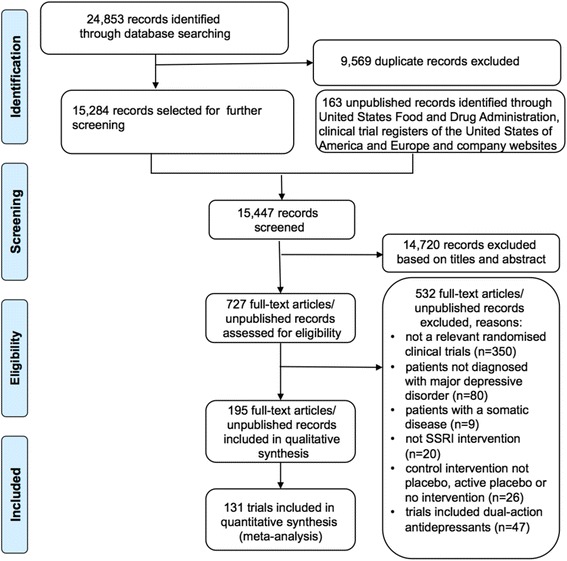
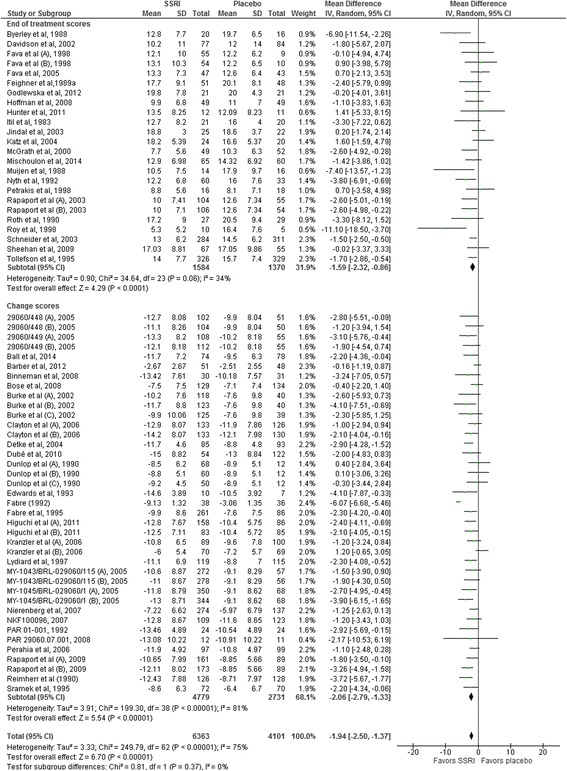
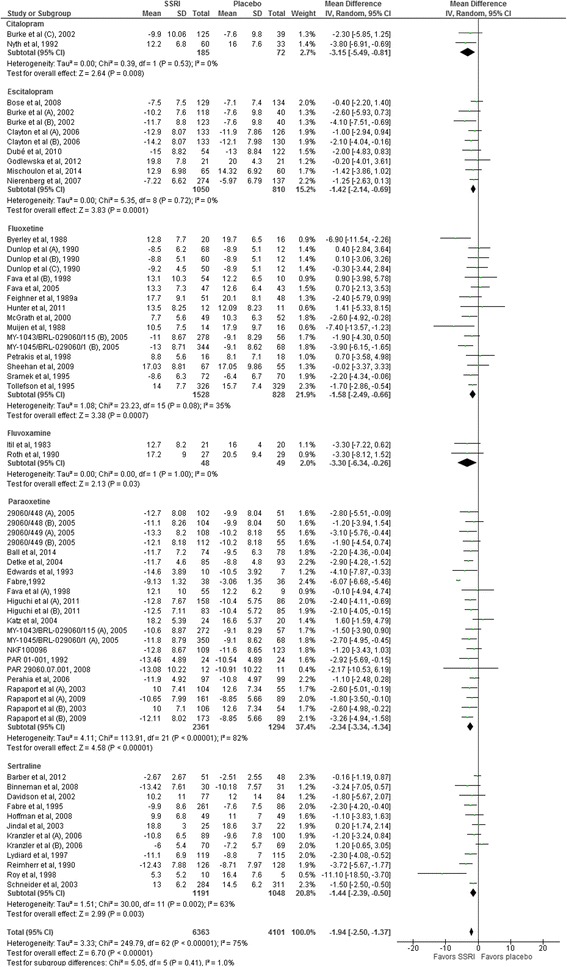
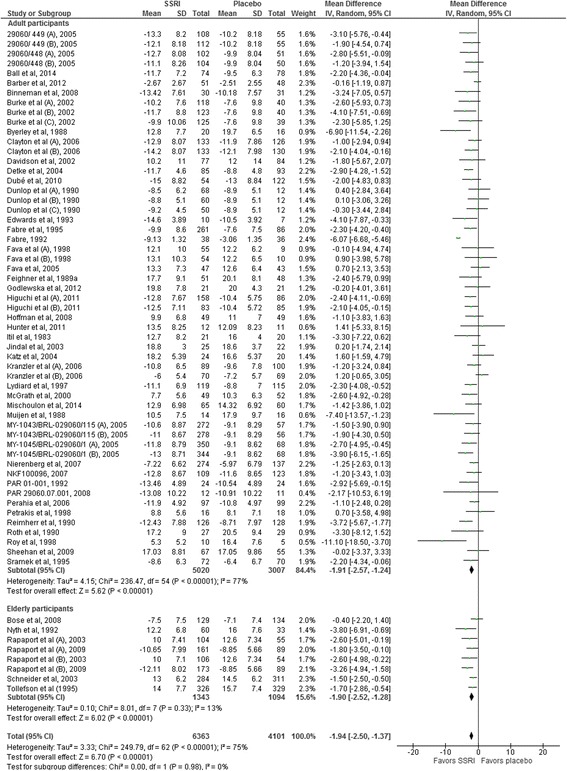
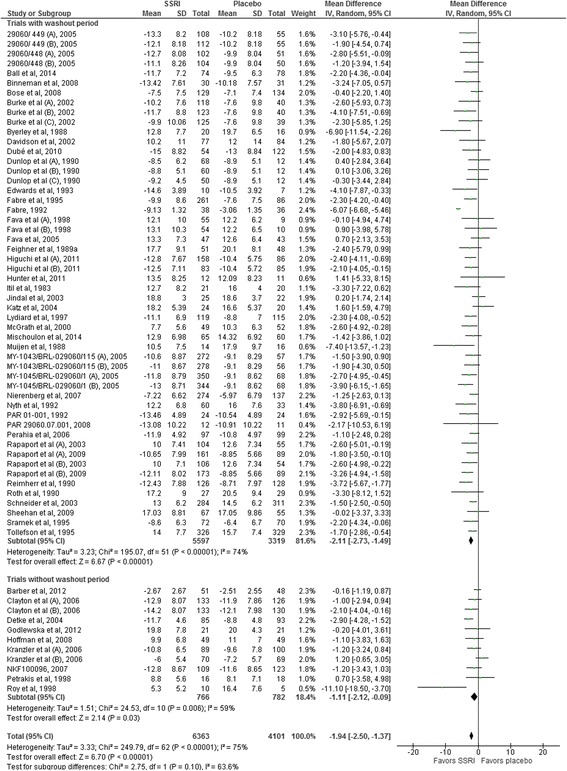
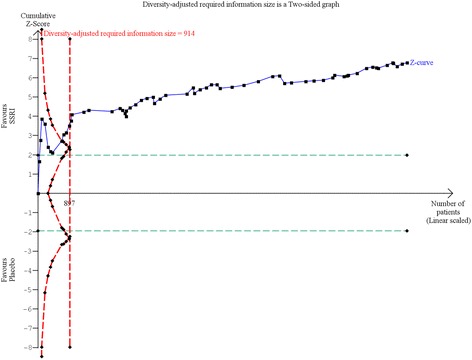
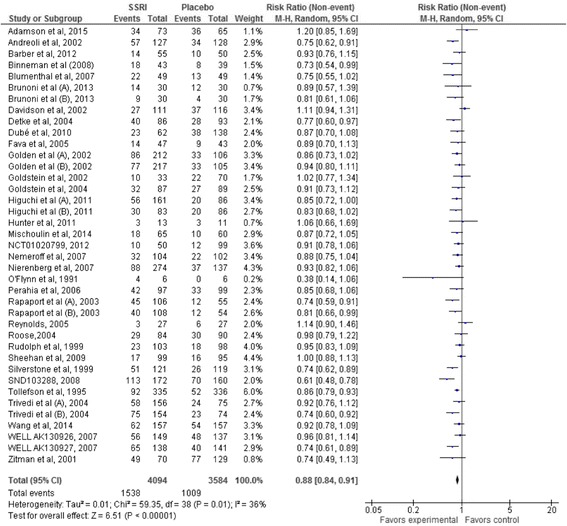
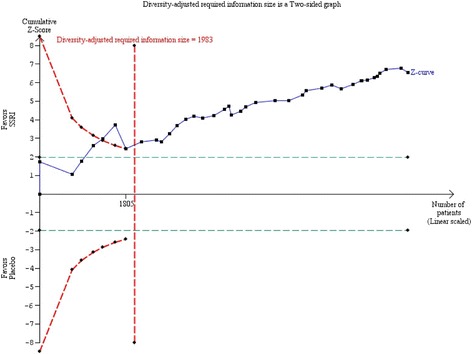
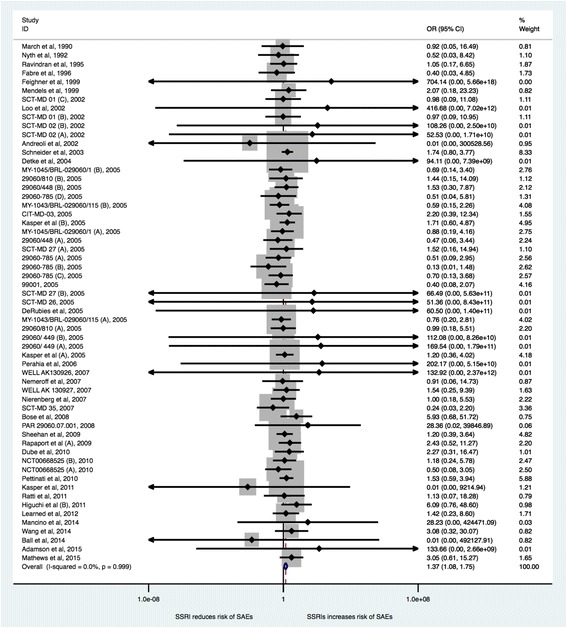
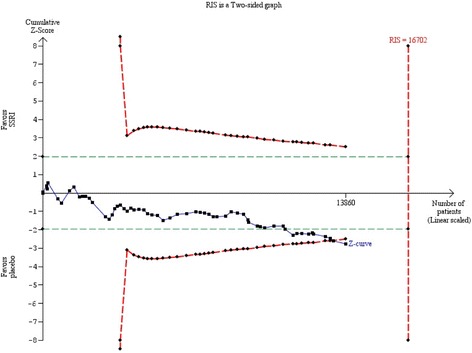
BACKGROUND: The evidence on selective serotonin reuptake inhibitors (SSRIs) for major depressive disorder is unclear. METHODS: Our objective was to conduct a systematic review assessing the effects of SSRIs versus placebo, 'active' placebo, or no intervention in adult participants with major depressive disorder. We searched for eligible randomised clinical trials in The Cochrane Library's CENTRAL, PubMed, EMBASE, PsycLIT, PsycINFO, Science Citation Index Expanded, clinical trial registers of Europe and USA, websites of pharmaceutical companies, the U.S. Food and Drug Administration (FDA), and the European Medicines Agency until January 2016. All data were extracted by at least two independent investigators. We used Cochrane systematic review methodology, Trial Sequential Analysis, and calculation of Bayes factor. An eight-step procedure was followed to assess if thresholds for statistical and clinical significance were crossed. Primary outcomes were reduction of depressive symptoms, remission, and adverse events. Secondary outcomes were suicides, suicide attempts, suicide ideation, and quality of life. RESULTS: ). The effect estimate, however, was below our predefined threshold for clinical significance of 3 HDRS points. SSRIs significantly decreased the risk of no remission (RR 0.88; 95% CI 0.84 to 0.91; P < 0.00001; 34 trials; Trial Sequential Analysis adjusted CI 0.83 to 0.92); Bayes factor (1426.81) did not confirm the effect). SSRIs significantly increased the risks of serious adverse events (OR 1.37; 95% CI 1.08 to 1.75; P = 0.009; 44 trials; Trial Sequential Analysis-adjusted CI 1.03 to 1.89). This corresponds to 31/1000 SSRI participants will experience a serious adverse event compared with 22/1000 control participants. SSRIs also significantly increased the number of non-serious adverse events. There were almost no data on suicidal behaviour, quality of life, and long-term effects. CONCLUSIONS: SSRIs might have statistically significant effects on depressive symptoms, but all trials were at high risk of bias and the clinical significance seems questionable. SSRIs significantly increase the risk of both serious and non-serious adverse events. The potential small beneficial effects seem to be outweighed by harmful effects. SYSTEMATIC REVIEW REGISTRATION: PROSPERO CRD42013004420.
Overview
The claims and statistics of this paper haven’t been checked yet.
Free: it reads the open-access text and checks the first 5 claims that cite a source we can check. Create a free account to check every claim.
Integrity signals
Registry
Cites
Statistics
Figures

Verification
Claims the paper makes
The claims and statistics of this paper haven’t been checked yet.
Free: it reads the open-access text and checks the first 5 claims that cite a source we can check. Create a free account to check every claim.
Claims other papers make about this one
Each is checked against this paper’s own text: does it say what the citing paper says it does?
The source backs part of the claim, not all of it — or backs it for a different population, condition or comparison.
In the citing paper
“there is extensive evidence that targeting and treating mental disorders has little or mixed impact on suicidal risk [10,11,12].”
From One Size Does Not Fit All: A Comprehensive Clinical Approach to Reducing Suicidal Ideation, Attempts, and Deaths (2019) · cites this paper as [12]
Experimental — accuracy not yet measuredThe source backs part of the claim, not all of it — or backs it for a different population, condition or comparison.
In the citing paper
“That review found, as all other previous reviews have shown, that SSRIs compared with placebo had a statistically significant effect on depressive symptoms.”
From Should antidepressants be used for major depressive disorder? (2020) · cites this paper as [28]
Experimental — accuracy not yet measuredThe source backs part of the claim, not all of it — or backs it for a different population, condition or comparison.
In the citing paper
“The few trials assessing long-term effects showed that such effects seemed even smaller than the short-term effects.”
From Should antidepressants be used for major depressive disorder? (2020) · cites this paper as [28]
Experimental — accuracy not yet measuredThe source backs part of the claim, not all of it — or backs it for a different population, condition or comparison.
In the citing paper
“The primary limitation of all the available evidence on the effects of antidepressants is that the majority of previous trials assessing the effects of antidepressants have been at high or unclear risk of bias.”
From Should antidepressants be used for major depressive disorder? (2020) · cites this paper as [28]
Experimental — accuracy not yet measuredThe source backs part of the claim, not all of it — or backs it for a different population, condition or comparison.
In the citing paper
“The above-mentioned systematic review assessing the effects of SSRIs (see ‘How good are antidepressants?’ section) also concluded that the vast majority of the included trials (39 out of 43 trials) with useful data were at high risk of ‘for profit’ bias.”
From Should antidepressants be used for major depressive disorder? (2020) · cites this paper as [28]
Experimental — accuracy not yet measured
14 more claims about this paper
Create a free account to see every claim other papers make about this one.
Self-check
Percentages, sums and reported differences re-computed from the paper’s own numbers.
The self-check needs the paper’s full text.
Citations
Cites
Meta-analysis in clinical trials
DerSimonian, R., & Laird, N. (1986) · Controlled Clinical Trials · doi:10.1016/0197-2456(86)90046-2 · Cited by 39,552
An inventory for measuring depression
BECK, A. T. (1961) · Archives of General Psychiatry · doi:10.1001/archpsyc.1961.01710120031004 · Cited by 38,032
Hamilton, M. (1960) · Journal of Neurology, Neurosurgery & Psychiatry · doi:10.1136/jnnp.23.1.56 · Cited by 32,817
Dermyshi, E., Wang, Y., Yan, C., Hong, W., Qiu, G., Gong, X., & Zhang, T. (2017) · Neonatology · doi:10.1159/000454668 · Cited by 24,451
A new depression scale designed to be sensitive to change
Montgomery, S. A., & Åsberg, M. (1979) · British Journal of Psychiatry · doi:10.1192/bjp.134.4.382 · Cited by 13,962
GRADE guidelines: 1. Introduction—GRADE evidence profiles and summary of findings tables
Guyatt, G., Oxman, A. D., Akl, E. A., Kunz, R., Vist, G., Brozek, J., Norris, S., Falck-Ytter, Y., Glasziou, P., & deBeer, H. (2011) · Journal of Clinical Epidemiology · doi:10.1016/j.jclinepi.2010.04.026 · Cited by 10,681
Hutton, B., Salanti, G., Caldwell, D. M., Chaimani, A., Schmid, C. H., Cameron, C., Ioannidis, J. P. A., Straus, S., Thorlund, K., Jansen, J. P., et al. (2015) · Annals of Internal Medicine · doi:10.7326/m14-2385 · Cited by 8,269
Scoville, W. B. (1949) · Journal of neurosurgery · doi:10.3171/jns.1949.6.1.0065 · Cited by 7,381
SPIRIT 2013 Statement: Defining Standard Protocol Items for Clinical Trials
Chan, A.-W., Tetzlaff, J. M., Altman, D. G., Laupacis, A., Gøtzsche, P. C., Krleža-Jerić, K., Hróbjartsson, A., Mann, H., Dickersin, K., Berlin, J. A., et al. (2013) · Annals of Internal Medicine · doi:10.7326/0003-4819-158-3-201302050-00583 · Cited by 7,363
Cochrane Handbook for Systematic Reviews of Interventions Version 5.0.1. The Cochrane Collaboration
Higgins, J. P. T., Green, S. R., & Higgins, J. P. T. (2008) · Cited by 7,261
Research works printed but not linked: 9
- Beck A Steer RA Brown GK Beck depression inventory—second edition: manual San Antonio: Psychological Corporation 1996 4 561 571
- The Nordic Cochrane Centre (The Cochrane Collaboration): Review Manager (RevMan) [Computer program]. Version 5.3. In.; 2008.
- Thorlund K Engstrøm J Wetterslev J Brok J Imberger G Gluud C User manual for trial sequential analysis (TSA) 2011 Copenhagen Copenhagen Trial Unit, Centre for Clinical Intervention Research 1 115
- Fabre LF Crismon L Efficacy of fluoxetine in outpatients with major depression Curr Ther Res Clin Exp 1985 37 1 1985
- Rickels K Amsterdam JD Avallone MF Fluoxetine in major depression: A controlled study Curr Ther Res Clin Exp 1986 39 4 1986
- MY-1045/BRL-029060/1 (PAR128) (Unpublished Data) GlaxoSmithKline. A Multicenter, Randomized, Double-Blind, Placebo-Controlled Comparison of Paroxetine and Fluoxetine in the Treatment of Major Depressive Disorder. http://www.gsk-clinicalstudyregister.com/files2/2821.pdf 2005, 1:1–5.
- MY-1043/BRL-029060/115 (Unpublished Data) GlaxoSmithKline. A multicenter, randomized, double-blind, placebo-controlled comparison of paroxetine and fluoxetine in the treatment of major depressive disorder. http://www.gsk-clinicalstudyregister.com/files2/2060.pdf 2005, 175:1–5.
- SCT-MD-26 (Unpublished Data) Forest Research Institute. Two-week double-blind placebo controlled study of escitalopram in the treatment of severe major depression. 2005, 135:2–4.
- SCT-MD-27 (Unpublished Data) Forest Research Institute. A double-blind flexible dose comparison of escitalopram sertraline and placebo in the treatment of major depressive disorder. 2005, 91:5–7.
Cited by
Items 101–200 of 366
Farajollahi-Moghadam, M., Sanjari-Moghaddam, H., Hasemi, M. G., Sanatian, Z., Talaeı, A., & Akhondzadeh, S. (2021) · International Clinical Psychopharmacology · doi:10.1097/yic.0000000000000353 · Cited by 21
“Although a vast range of medications (Tollefson et al., 1995; Jakobsen et al., 2017; Huang et al., 2018), including monoamine oxidase inhibitors (MAOIs), tricyclic antidepressants (TCAs), other serotonin-norepinephrine reuptake inhibitors and SSRIs have been introduced for the treatment of MDD, evidence has demonstrat…”
BackgroundAssessment of optimal combinations of therapeutic probiotics for depression, anxiety, and stress
Yang, Y., Yang, L., Wan, M., Pan, D., Sun, G., & Yang, C. (2024) · Psychological Medicine · doi:10.1017/s0033291724000679 · Cited by 23
“…antidepressants and antianxiety medications have a variety of side effects, including altered weight and an increased risk of suicide, which raises questions regarding the effectiveness, safety, and tolerance of these medications (Jakobsen et al., 2017; Khin, Chen, Yang, Yang, & Laughren, 2011).”
Kamp, C. B., Juul, S., Siddiqui, F., Barbateskovic, M., Munkholm, K., Hengartner, M. P., Kirsch, I., Gluud, C. N., & Jakobsen, J. C. (2021) · Systematic Reviews · doi:10.1186/s13643-021-01789-0 · Cited by 21
Self-citationCohen, S. E., Zantvoord, J. B., Storosum, B. W. C., Mattila, T., Daams, J. G., Wezenberg, B. N., de Boer, A., & Denys, D. A. J. P. (2024) · BMJ Mental Health · doi:10.1136/bmjment-2023-300951 · Cited by 23
Lin, J., Zhang, Y., Wang, K., Wang, J., Kou, S., Chen, K., Zheng, W., & Chen, R. (2023) · European Journal of Nutrition · doi:10.1007/s00394-023-03184-y · Cited by 21
“Therefore, although SSRIs improve the function of neuroactive substances, their side effects cannot achieve a better goal of treatment and may aggravate the state of some patients with other diseases.”
BackgroundInfluentialHusain, M. I., Chaudhry, I. B., Khoso, A. B., Husain, M. O., Rahman, R. R., Hamirani, M. M., Hodsoll, J. P., Carvalho, A. F., Husain, N., & Young, A. H. (2019) · BJPsych Open · doi:10.1192/bjo.2018.84 · Cited by 18
Presentation of benefits and harms of antidepressants on websites: A cross-sectional study
Demasi, M., & Gøtzsche, P. C. (2020) · International Journal of Risk & Safety in Medicine · doi:10.3233/jrs-191023 · Cited by 22
“However, none of them explained that the effect in randomised trials is so small that it is below the minimally clinically relevant effect [12–14,19] or might be non-existent because the trials have not been effectively blinded [13,19] or that the benefits could be outweighed by the harmful effects [12,19].”
BackgroundJuul, S., Siddiqui, F., Barbateskovic, M., Kamp, C. B., Hengartner, M. P., Kirsch, I., Gluud, C. N., & Jakobsen, J. C. (2021) · Systematic Reviews · doi:10.1186/s13643-021-01705-6 · Cited by 20
“Moreover, we found almost no data on suicidal behaviour, and SSRIs significantly increased the risk of both serious and non-serious adverse events [29].”
BackgroundInfluentialSelf-citationArtru, E., & Rabeyron, T. (2021) · L Évolution Psychiatrique · doi:10.1016/j.evopsy.2021.03.013 · Cited by 22
Wang, Y., Yao, J., Koszycki, D., Jiang, W., Fang, F., Wang, M., Tao, J., Zhao, W., Liu, Y., Su, S., et al. (2023) · Psychological Medicine · doi:10.1017/s0033291723000788 · Cited by 22
“Additionally, considering the results of two other comparable studies (Fonagy et al., 2020; Jakobsen et al., 2017), the effect size assumed in our study was 0.50 with 80% power and 5% type I error rate.”
ResultInfluentialMadsen, M. T., Zahid, J. A., Hansen, C. H., Grummedal, O., Hansen, J. R., Isbrand, A. B., Andersen, U. O., Andersen, L. J., Taskiran, M., Simonsen, E. H., et al. (2019) · Journal of Psychiatric Research · doi:10.1016/j.jpsychires.2019.09.014 · Cited by 19
Pan, W., Lyu, K., Zhang, H., Li, C., Chen, P., Ying, M., Chen, F., & Tang, J. (2019) · Behavioural Brain Research · doi:10.1016/j.bbr.2019.112387 · Cited by 18
Magnetic seizure therapy for treatment-resistant depression
Jiang, J., Zhang, C., Li, C., Chen, Z., Cao, X., Wang, H., Li, W., & Wang, J. (2021) · Cochrane Database of Systematic Reviews · doi:10.1002/14651858.cd013528.pub2 · Cited by 28
Kim, S. S., Lee, H.-Y., Song, J. S., Bae, M., & Ahn, S. (2021) · Microchemical Journal · doi:10.1016/j.microc.2021.106580 · Cited by 22
Hultgren, J., Hafsteinsson, M. H., & Brulin, J. G. (2025) · General Hospital Psychiatry · doi:10.1016/j.genhosppsych.2025.07.020 · Cited by 17
Ekkekakis, P. (2020) · Kinesiology Review · doi:10.1123/kr.2020-0036 · Cited by 20
Bloch, Y., Belmaker, R. H., Shvartzman, P., Romem, P., Bolotin, A., Bersudsky, Y., & Azab, A. N. (2021) · Scientific Reports · doi:10.1038/s41598-021-98245-9 · Cited by 17
Clinical pharmacological innovation in the treatment of depression
Witkin, J. M., Golani, L. K., & Smith, J. L. (2023) · Expert Review of Clinical Pharmacology · doi:10.1080/17512433.2023.2198703 · Cited by 17
Network meta-analysis of antidepressants
Kirsch, I., & Jakobsen, J. C. (2018) · The Lancet · doi:10.1016/s0140-6736(18)31799-9 · Cited by 16
Self-citationTanaka, T., Mori, M., Sekino, M., Higashijima, U., Takaki, M., Yamashita, Y., Kakiuchi, S., Tashiro, M., Morimoto, K., Tasaki, O., et al. (2021) · Scientific Reports · doi:10.1038/s41598-021-93649-z · Cited by 18
Nilsson, M. K. L., Zachrisson, O., Gottfries, C., Matousek, M., Peilot, B., Forsmark, S., Schuit, R. C., Carlsson, M. L., Kloberg, A., & Carlsson, A. (2017) · Acta Neuropsychiatrica · doi:10.1017/neu.2017.35 · Cited by 16
Determining maximal achievable effect sizes of antidepressant therapies in placebo‐controlled trials
Hieronymus, F., Lisinski, A., Hieronymus, M., Näslund, J., Eriksson, E., & Østergaard, S. D. (2021) · Acta Psychiatrica Scandinavica · doi:10.1111/acps.13340 · Cited by 14
Collins, S. M., O’Connell, C. J., Reeder, E. L., Norman, S. V., Lungani, K., Gopalan, P., Gudelsky, G. A., & Robson, M. J. (2022) · Frontiers in Pharmacology · doi:10.3389/fphar.2022.930346 · Cited by 17
Boussageon, R., Blanchard, C., Charuel, É., Ménini, T., Pereira, B., Naudet, F., Kassaï, B., Gueyffier, F., Cucherat, M., & Vaillant-Roussel, H. (2022) · Therapies · doi:10.1016/j.therap.2022.10.008 · Cited by 21
Antidepressants-related cardiovascular adverse events using the adverse event reporting system
Lee, Y. K., Shin, J. S., Kim, Y., Kim, J. H., Song, Y., Oh, J. M., & Kim, I. (2018) · Psychiatry Research · doi:10.1016/j.psychres.2018.07.044 · Cited by 16
“Additionally, a recent meta-analysis has reported that SSRIs might have statistically significant effects on depressive symptoms, but all trials were at high risk of bias (Jakobsen et al., 2017).”
Aguilar‐Martínez, I. S., Reyes‐Méndez, M. E., Herrera-Zamora, J. M., Osuna‐López, F., Virgen‐Ortiz, A., Mendoza‐Muñoz, N., Góngora-Alfaro, J. L., Moreno-Galindo, E. G., & Alamilla, J. (2020) · Psychopharmacology · doi:10.1007/s00213-020-05528-6 · Cited by 15
Giurgi-Oncu, C., Tudoran, C., ENĂTESCU, V. R., Tudoran, M., Pop, G. N., & Bredicean, C. A. (2020) · Medicina · doi:10.3390/medicina56110590 · Cited by 14
“To date, results of studies concerning the association between HRV and HRT parameters and the response to antidepressant treatment [8,13,16,18,19] are varying, most studies suggesting beneficial effects on the SNS and PNS dysregulation.”
ResultThe Positive and Negative Experiences of 342 Antidepressant Users
Read, J., Grigoriu, M., Gee, A., Diggle, J., & Butler, H. (2020) · Community Mental Health Journal · doi:10.1007/s10597-019-00535-0 · Cited by 14
Long-term harms from previous use of selective serotonin reuptake inhibitors: A systematic review
Danborg, P. B., Valdersdorf, M., & Gøtzsche, P. C. (2019) · International Journal of Risk & Safety in Medicine · doi:10.3233/jrs-180046 · Cited by 14
“Inadequate reporting of harms, even serious harms like deaths, is a general problem for psychiatric drug trials [6, 8, 45, 46], and the discrepancy between data in clinical study reports and in journal publications is disturbing [7, 12, 47, 48].”
BackgroundJuul, S., Faltermeier, P., Petersen, J. J., Olsen, M. H., Andersen, R. K., Kamp, C. B., Siddiqui, F., Simonsen, S., Mbuagbaw, L. C. E., Thabane, L., et al. (2024) · BMC Psychiatry · doi:10.1186/s12888-024-06263-4 · Cited by 16
“Fifth, we only focused on psychological interventions although trials assessing other interventions (for example pharmacological interventions) for mental health patients may have comparable problems with missing outcome data [26, 27].”
Self-citationNetwork meta-analysis of antidepressants
Timimi, S. B., Moncrieff, J., Gøtzche, P. C., Davies, J., Kinderman, P., Byng, R., Montagu, L., & Read, J. (2018) · The Lancet · doi:10.1016/s0140-6736(18)31784-7 · Cited by 17
Lee, D. H., Kim, K. M., Cho, S., Kim, W., Yang, K. I., Yun, C., & Chu, M. K. (2020) · Journal of Affective Disorders · doi:10.1016/j.jad.2020.03.102 · Cited by 16
Fabbri, C., Kasper, S. F., Zohar, J., Souery, D., Montgomery, S., Albani, D., Forloni, G., Ferentinos, P. P., Rujescu, D., Mendlewicz, J., et al. (2020) · Journal of Affective Disorders · doi:10.1016/j.jad.2020.10.049 · Cited by 16
Liu, D., Tang, S., Wu, Z., Yang, J., Liu, Z., Wu, G., Sariah, A., Ouyang, X., & Long, Y. (2022) · Annals of Palliative Medicine · doi:10.21037/apm-21-2723 · Cited by 14
Laursen, D. R. T., Nejstgaard, C. H., Bjørkedal, E., Frost, A. D., Hansen, M., Paludan‐Müller, A. S., Prosenz, J., Werner, C. P., & Hróbjartsson, A. (2023) · Cochrane Database of Systematic Reviews · doi:10.1002/14651858.mr000055.pub2 · Cited by 26
The efficacy of citalopram or escitalopram in patients with asthma and major depressive disorder
Agarwal, C. D., Palka, J. M., Gajewski, A. J., Khan, D. A., & Brown, E. S. (2023) · Annals of Allergy Asthma & Immunology · doi:10.1016/j.anai.2023.11.004 · Cited by 17
Kessing, L. V., Ziersen, S. C., Andersen, F. M., Gerds, T. A., & Budtz–Jørgensen, E. (2024) · Acta Psychiatrica Scandinavica · doi:10.1111/acps.13673 · Cited by 16
“25 The present study was based on “ real world ” naturalistic register-based data of all individuals treated in hospital psychiatry for MDD minimizing selection bias and eliminating recall bias as data are collected automatically in real time.”
MethodExpert recommendations for Germany’s integration of psychedelic-assisted therapy
Rosal, S. P., Torre, J. T. L., Birnkammer, S., Chernoloz, O., Williams, M. T., & Faber, S. C. (2024) · BMC Medical Education · doi:10.1186/s12909-024-06141-3 · Cited by 16
“Recent studies have found the effects of SSRIs & SNRIs only modestly more effective than placebo [50–52].”
BackgroundKhadrawy, Y. A., Sawie, H. G., Hosny, E. N., & Mourad, H. H. (2018) · Bulletin of the National Research Centre/Bulletin of the National Research Center · doi:10.1186/s42269-018-0034-1 · Cited by 15
“Supporting this suggestion, the action of current antidepressants depends mainly on elevating levels of monoamines specially serotonin by selective serotonin reuptake inhibitors (Jakobsen et al. 2017) or monoamine oxidase inhibitors (Youdim et al. 2006).”
BackgroundHengartner, M. P. (2019) · Acta Neuropsychiatrica · doi:10.1017/neu.2019.23 · Cited by 13
“…wonder why Goodwin and Nutt quote the more favourable 16% response rate difference reported by Melander et al . in a relatively small ( n = 7374) meta-analysis from 2008 rather than the 10% difference reported in a much larger ( n = 27 422) and more recent SSRI meta-analysis by Jakobsen et al .”
Ishtiak‐Ahmed, K., Köhler‐Forsberg, O., Mortensen, E. L., Nierenberg, A. A., & Gasse, C. (2023) · Drugs & Aging · doi:10.1007/s40266-023-01018-4 · Cited by 17
“some trials was questionable because of the high risk of bias [5].”
BackgroundZhang, J., Zhang, Z., Zhang, J., Zheng, Z., Yao, Z., Qu, S., & Huang, Y. (2019) · Evidence-based Complementary and Alternative Medicine · doi:10.1155/2019/3424698 · Cited by 14
Jakobsen, J. C., Katakam, K. K., Schou, A., Hellmuth, S. G., Stallknecht, S. E., Leth-Møller, K., Iversen, M., Banke, M. B., Petersen, I. J., Klingenberg, S. L., et al. (2017) · BMC Psychiatry · doi:10.1186/s12888-017-1311-5 · Cited by 14
Self-citationPsychiatric Considerations of Infertility
Hwang, Y. J., Lee, J., Hwang, J., Sim, H.-H., Kim, N., & Kim, T. (2024) · Psychiatry Investigation · doi:10.30773/pi.2024.0239 · Cited by 17
“46 Although SSRIs have various side effects, they are often temporary.”
Jog, M., Norris, V., Pfeiffer, P., Taraku, B., Kozikowski, S. D., Schneider, J., Boucher, M., Iacoboni, M., Woods, R., & Narr, K. L. (2025) · JAMA Network Open · doi:10.1001/jamanetworkopen.2025.31189 · Cited by 16
Effect of Obstructive Sleep Apnea on the Risk of Injuries—A Nationwide Population-Based Cohort Study
Cheng, A.-C., Wu, G., Chung, C., Wu, K.-H., Sun, C., Wang, I.-D., & Chien, W. (2021) · International Journal of Environmental Research and Public Health · doi:10.3390/ijerph182413416 · Cited by 16
“They may be prescribed with anti-depressive and anti-hypertensive agents, which may have caused dizziness [49,50], hyper somnolence [50,51], or cognitive dysfunction [52]; however, we could not confirm the drug effect on the risk of injury.”
BackgroundChen, X., Yang, T., Zhang, C.-E., & Ma, Z. (2022) · BMC Complementary Medicine and Therapies · doi:10.1186/s12906-022-03516-1 · Cited by 13
“The most troubling adverse reactions seem to be gastrointestinal problems, sleep disorders, and sexual dysfunction [3].”
BackgroundFahmy, H. M., Mohamed, E. R., Hussein, A. A., Khadrawy, Y. A., & Ahmed, N. A. (2022) · BMC Pharmacology and Toxicology · doi:10.1186/s40360-022-00579-1 · Cited by 16
Guo, S., Chen, L., Cheng, S., & Xu, H. (2019) · Medicine · doi:10.1097/md.0000000000015786 · Cited by 12
“As the most widely prescribed antidepressants, dispute about the efficacy of SSRIs existed especially in mild to moderate cases, and most concerns were their side effects.([35]) Although CDR was not the most common side effect of SSRIs, the US FDA had given guideline in order to ensure cardiovascular safety when using…”
BackgroundBlanco-Silvente, L., Cervelló, X. C., Garre‐Olmo, J., Franch, J. V., Sáez, M., Barceló, M. A., & Capellà, D. (2019) · European Journal of Clinical Pharmacology · doi:10.1007/s00228-019-02742-w · Cited by 13
Siddiqui, F., Barbateskovic, M., Juul, S., Katakam, K. K., Munkholm, K., Gluud, C. N., & Jakobsen, J. C. (2021) · Systematic Reviews · doi:10.1186/s13643-021-01722-5 · Cited by 12
“Several previous reviews have shown that antidepressants seem to decrease depressive symptoms with a statistically significant effect [23, 24].”
BackgroundSelf-citationFederico, C. A., Heagerty, P. J., Lantos, J., O'Rourke, P., Rahimzadeh, V., Sugarman, J., Weinfurt, K., Wendler, D., Wilfond, B. S., & Magnus, D. (2022) · Contemporary Clinical Trials · doi:10.1016/j.cct.2022.106703 · Cited by 11
Probiotics/prebiotics/synbiotics and human neuropsychiatric outcomes: an umbrella review
Du, Q., Li, Q., Liu, C., Liao, G., Li, J., Yang, J., Zhang, Q., Gong, X., & Li, K. (2017) · Beneficial Microbes · doi:10.1163/18762891-bja00035 · Cited by 21
Katakam, K. K., Sethi, N. J., Jakobsen, J. C., & Gluud, C. N. (2018) · Acta Neuropsychiatrica · doi:10.1017/neu.2017.38 · Cited by 12
“The clinical signi fi cance of our results on ‘ remission ’ and ‘ response ’ should therefore be questioned – especially as all trials were at high risk of bias (1).”
InfluentialSelf-citationPlöderl, M., & Hengartner, M. P. (2019) · BMC Psychiatry · doi:10.1186/s12888-019-2230-4 · Cited by 12
“In the meantime, it has been replicated many times that even though the AD-placebo difference is statistically significant, this effect may not be clinically significant [17, 21, 36].”
BackgroundResultInfluentialSertraline in primary care: comments on the PANDA trial
Hengartner, M. P., Plöderl, M., Braillon, A., Jakobsen, J. C., & Gluud, C. N. (2019) · The Lancet Psychiatry · doi:10.1016/s2215-0366(19)30381-5 · Cited by 11
Self-citationFalse Beliefs in Academic Psychiatry: The Case of Antidepressant Drugs
Hengartner, M. P., & Plöderl, M. (2018) · Ethical Human Psychology and Psychiatry · doi:10.1891/1559-4343.20.1.6 · Cited by 10
“…differences are much larger for adverse events (risk ratio for decreased libido, tremor, and nausea is 3.5, 3.2, and 2.5, respectively) than for efficacy estimates (risk ratio for both response and remission is 1.4) in meta-analyses of randomized controlled trials (Jakobsen et al., 2017).”
BackgroundResultInfluentialHieronymus, F., Lisinski, A., Näslund, J., & Eriksson, E. (2017) · Acta Neuropsychiatrica · doi:10.1017/neu.2017.23 · Cited by 10
“Prompted by the importance of the issue at stake, we have deemed it justi fi ed to cursorily scrutinise the analyses underlying the claims by Jakobsen et al. with particular focus on the one observation in their paper that may be regarded as truly novel, that is, that SSRIs are more likely to cause serious adverse even…”
InfluentialExercise Interventions as the Primary Treatment for Depression: Evidence from a Narrative Review
Zemberi, N. F. N. M., Ismail, M. M., & Abdullah, M. F. I. L. B. (2020) · Malaysian Journal of Medical Sciences · doi:10.21315/mjms2020.27.5.2 · Cited by 12
Adrenal activity and metabolic risk during randomized escitalopram or placebo treatment in PCOS
Glintborg, D., Altinok, M. L., Ravn, P., Stage, K. B., Højlund, K., & Andersen, M. (2018) · Endocrine Connections · doi:10.1530/ec-18-0077 · Cited by 10
“A recent meta-analysis on mental health during SSRI therapy found no placebo-controlled trials in patients with depression (43).”
MethodTouch Research–Quo Vadis? A Plea for High-Quality Clinical Trials
Müller-Oerlinghausen, B., & Eggart, M. (2020) · Brain Sciences · doi:10.3390/brainsci11010025 · Cited by 10
Confounding by Indication in Studies of Selective Serotonin Reuptake Inhibitors
Lee, J., & Chang, S. M. (2022) · Psychiatry Investigation · doi:10.30773/pi.2022.0209 · Cited by 11
Shahmoradi, N., Davarinejad, O., Brühl, A. B., & Brand, S. (2023) · Medicina · doi:10.3390/medicina59091663 · Cited by 10
“Among the antidepressants, selective serotonin reuptake inhibitors (SSRIs) appear to be highly prescribed [22,23].”
Mo, X., Guo, S., He, D., Cheng, Q., Yang, Y., Wang, H., Ren, Y., Liu, L., & Xie, P. (2025) · Gut Pathogens · doi:10.1186/s13099-025-00739-8 · Cited by 10
Spanggård, A., Rohde, C., & Østergaard, S. D. (2023) · Acta Psychiatrica Scandinavica · doi:10.1111/acps.13536 · Cited by 9
Antidepressants; what’s the beef?
Goodwin, G. M., & Nutt, D. J. (2019) · Acta Neuropsychiatrica · doi:10.1017/neu.2019.4 · Cited by 10
Gutlapalli, S. D., Prakash, K., Swarnakari, K. M., Bai, M., Manoharan, M. P., Raja, R., Jamil, A., Csendes, D., Desai, A., Desai, D. M., et al. (2022) · Cureus · doi:10.7759/cureus.28946 · Cited by 16
“Some studies have shown that SSRIs in some patients may increase the overall risk of adverse events; therefore, benefit should outweigh the risk when administering them on an individual case-by-case basis [31].”
BackgroundDrug Safety and Suicidality Risk of Chronic Pain Medications
Syed, O., Jancic, P., Fink, A. B., & Knežević, N. N. (2023) · Pharmaceuticals · doi:10.3390/ph16101497 · Cited by 12
“Randomized controlled trials (RCTs), baring the highest level of evidence, showed contradictory results, ranging from a significantly increased suicide risk while using antidepressants [67–70] to seemingly no change in such risk [71–73].”
Cristea, I. A., & Naudet, F. (2017) · Epidemiology and Psychiatric Sciences · doi:10.1017/s2045796017000750 · Cited by 10
Approaches to therapy for depressions in neurology: prospects for the use of agomelatine
Romanov, D. V., Volel, B. A., & Petelin, D. S. (2018) · Neurology neuropsychiatry Psychosomatics · doi:10.14412/2074-2711-2018-4-101-110 · Cited by 13
What have antidepressants been tested for? A systematic review
Gøtzsche, P. C., & Dinnage, O. (2020) · International Journal of Risk & Safety in Medicine · doi:10.3233/jrs-200006 · Cited by 8
“The effect in biased trials is only about 2 on the Hamilton scale that goes up to 52 [2,11,12], and the minimal effect that can be perceived is 5–6 [13].”
Duan, T., Cao, Z., Wang, X., Min, J., Sun, T., Hong, L., & Xu, C. (2024) · The British Journal of Psychiatry · doi:10.1192/bjp.2024.227 · Cited by 8
Dong, J., Huang, J., Parisi, J. M., Zhou, Z. E., Li, M., Calderon, R., & Li, J. (2025) · Sleep Health · doi:10.1016/j.sleh.2024.12.004 · Cited by 9
Can Psychedelics be the Treatment for the Crisis in Psychopharmacology?Preprint
Oña, G., & Bouso, J. C. (2019) · Preprints.org · doi:10.20944/preprints201901.0249.v1 · Cited by 8
dos Santos, C. A. L., Monteiro, A. A. D. A., de Deus, M. S., Kamdem, J. P., Duarte, A. E., Almutairi, M. M., Ali, A., & Ibrahim, M. (2025) · NeuroToxicology · doi:10.1016/j.neuro.2025.05.009 · Cited by 7
Revisitando Whitaker: psicofármacos e cuidado em Saúde Mental na Atenção Primária à Saúde
Secco, A. C., & Tesser, C. D. (2023) · Saúde em Debate · doi:10.1590/0103-1104202313916 · Cited by 12
Ladha, K. S., Lee, J., Mattina, G. F., Pazmino‐Canizares, J., Wijeysundera, D. N., Nezhad, F. G., Philip, K., Tassone, V. K., Adamsahib, F., Bhat, V., et al. (2024) · PLoS ONE · doi:10.1371/journal.pone.0297330 · Cited by 7
Understanding variability: the role of meta-analysis of variance
Howes, O. D., & Chapman, G. E. (2024) · Psychological Medicine · doi:10.1017/s0033291724001971 · Cited by 11
“…of randomized controlled trials (RCTs) of antidepressants in major depression find around a two-point greater reduction in symptom severity, as per the Hamilton Depression Rating Scale (HDRS), in the drug than placebo group (Hengartner, Jakobsen, Sørensen, & Plöderl, 2020; Jakobsen et al., 2017).”
MethodMadsen, F. A., Andreasen, T. H., Lindschou, J., Gluud, C. N., & Møller, K. (2021) · PLoS ONE · doi:10.1371/journal.pone.0259899 · Cited by 7
“Any results on unfavourable functional clinical outcome at maximal follow up should be interpreted with caution for a number of reasons [80]: 1) the assessments of unfavourable functional clinical outcome is based on single scores and it is questionable whether single scores are indications of unfavourable functional…”
Self-citationMajor depressive disorder: An organic disorder!
Yrondi, A., Sporer, M., Schmitt, L., & Arbus, C. (2018) · La Presse Médicale · doi:10.1016/j.lpm.2017.12.005 · Cited by 8
Drivers of and Solutions for the Overuse of Antidepressant Medication in Pediatric Populations
Cosgrove, L., Morrill, Z., Yusif, M., Vaswani, A., Cathcart, S. C., Troeger, R., & Karter, J. M. (2020) · Frontiers in Psychiatry · doi:10.3389/fpsyt.2020.00017 · Cited by 9
Moore, B. P., DeShazo, S. J., & Somerson, J. S. (2024) · JSES International · doi:10.1016/j.jseint.2024.08.198 · Cited by 6
Mallet, D., Ülgen, D. H., Grosse, J., Zanoletti, O., de Suduiraut, I. G., Monzel, A. S., D'Amico, D. F., Rinsch, C., Picard, M. A., Astori, S., et al. (2025) · Biological Psychiatry · doi:10.1016/j.biopsych.2025.07.020 · Cited by 12
Plöderl, M., Lyus, R., Horowitz, M. A., & Moncrieff, J. (2025) · Journal of Clinical Epidemiology · doi:10.1016/j.jclinepi.2025.112016 · Cited by 10
Challenges in the selection and measurement of outcomes in psychiatric trials
Juul, S., Faltermeier, P., Siddiqui, F., Petersen, J. J., Kamp, C. B., Hermann, R., Thabane, L., Moncrieff, J., Horowitz, M. A., Samaan, Z., et al. (2025) · BMJ Evidence-Based Medicine · doi:10.1136/bmjebm-2024-113171 · Cited by 8
Self-citationWhy people choose to participate in psychotherapy for depression: A qualitative study
Wells, H. L., Crowe, M., & Inder, M. (2020) · Journal of Psychiatric and Mental Health Nursing · doi:10.1111/jpm.12597 · Cited by 7
Teismann, T., Düwel, H., Eidt, L., Brailovskaia, J., & Cwik, J. C. (2022) · Frontiers in Psychiatry · doi:10.3389/fpsyt.2022.873127 · Cited by 8
The computational psychopathology of emotion
Erdman, A., & Eldar, E. (2023) · Psychopharmacology · doi:10.1007/s00213-023-06335-5 · Cited by 7
Organic Cation Transporters in Brain Histamine Clearance: Physiological and Psychiatric Implications
Naganuma, F., & Yoshikawa, T. (2021) · Handbook of experimental pharmacology · doi:10.1007/164_2021_447 · Cited by 6
Long-term use of antipsychotics and antidepressants is not evidence-based
Gøtzsche, P. C. (2019) · International Journal of Risk & Safety in Medicine · doi:10.3233/jrs-195060 · Cited by 6
Ghai, U., Chachra, P., Mendon, S., Janakiraman, B., Fanibunda, S. E., Sarkar, A., Gohil, D., Jayaprasad, A. B., Kukkemane, K., Singh, V. K., et al. (2025) · Biological Psychiatry · doi:10.1016/j.biopsych.2025.04.026 · Cited by 9
N-acetylcysteine Clinical Applications
Yahia, Z., Yahia, A., & Abdelaziz, T. (2024) · Cureus · doi:10.7759/cureus.72252 · Cited by 13
“Modulating neuroinflammation related to cell malfunction and death, encouraging neurogenesis and neuronal injury repair, and normalising glutamate dysregulation such as N-methyl-D-aspartate hypofunction are among these activities [32,33,34,35].”
Backgroundda Fonseca, S. T. O., Alves, C. C., Dias, C. T., & Mendes‐da‐Silva, C. (2024) · Nutrition · doi:10.1016/j.nut.2024.112680 · Cited by 7
What is the threshold for a clinical minimally important drug effect?
Hengartner, M. P. (2018) · BMJ Evidence-Based Medicine · doi:10.1136/bmjebm-2018-111056 · Cited by 5
Guo, S., Yang, Y., Pei, X. J., & Liu, F. Y. (2020) · Medicine · doi:10.1097/md.0000000000019133 · Cited by 5
“Although western countries have carried out the evaluation of efficacy and side effects of these drugs in the elderly population,([19]) the health status of the elderly in China is different from that of their peers in foreign countries and their tolerance to the drugs is also different.([20]) Therefore, it is necessa…”
BackgroundTratamento medicamentoso para depressão e prevenção quaternária
Pereira, M. T. C. G., de Souza, F. A. M., & Cardoso, F. M. (2021) · Revista Brasileira de Medicina de Família e Comunidade · doi:10.5712/rbmfc16(43)2568 · Cited by 16
Hvidberg, M. F. (2023) · Mental Health Science · doi:10.1002/mhs2.14 · Cited by 5
Fountoulakis, K. Ν., & Souliotis, K. N. (2018) · Acta Neuropsychiatrica · doi:10.1017/neu.2018.24 · Cited by 5
“The much older debate on antidepressants teaches that the dispute is continuous, ever-emerging, ideologically driven (17) and does not respect the analyses and the data of those people who argue against medication treatment themselves (18).”
BackgroundRe-evaluation of Significance and the Implications of Placebo Effect in Antidepressant Therapy
Ćurković, M., Košec, A., & Savić, A. (2019) · Frontiers in Psychiatry · doi:10.3389/fpsyt.2019.00143 · Cited by 6
“30) of antidepressants above placebo in short-term treatment of adult depression (6, 7).”
BackgroundTwenty years after ‘Listening to Prozac but hearing placebo’. Do we hear placebo even louder?
Oronowicz-Jaśkowiak, W., & Bąbel, P. (2019) · Health Psychology Report · doi:10.5114/hpr.2019.83383 · Cited by 7
Metadata
- Authors
- Jakobsen, J. C., Katakam, K. K., Schou, A., Hellmuth, S. G., Stallknecht, S. E., Leth-Møller, K., Iversen, M., Banke, M. B., Petersen, I. J., Klingenberg, S. L., Krogh, J., Ebert, S. E., Timm, A., Lindschou, J., & Gluud, C.
- Affiliations
- Copenhagen University Hospital (DK)
- University of Copenhagen (DK)
- Corresponding author
- Jakobsen, Janus Christian
- ORCID
- Venue
- BMC Psychiatry
- Published
- 2017-02-08
- Volume
- 17
- Issue
- 1
- Pages
- 162-162
- ISSN
- 1471-244X (ISSN-L)
- PMC
- PMC5299662
- OpenAlex
- W2586384568
- Cited by
- 366
- References
- 194
- Citations by year
- 2026: 30 · 2025: 38 · 2024: 30 · 2023: 38 · 2022: 32 · 2021: 42 · 2020: 35 · 2019: 52 · 2018: 43 · 2017: 26
- FWCI
- 5.42
- Type
- journal article
- Language
- en
- Update notices
- correction (2017-05-03)
- Open access
- gold
- doi.org
- Licence
- cc-by
- Locations
- BMC Psychiatry (publishedVersion, cc-by)
- PubMed Central (publishedVersion, cc-by)
- PubMed (publishedVersion)
- Research at the University of Copenhagen (University of Copenhagen) (publishedVersion, cc-by)
- Funders
- Rigshospitalet
- Copenhagen Trial Unit, Centre for Clinical Intervention Research
- Topics
- Health Sciences › Medicine › Pharmacology (medical) › Treatment of Major Depression
- Health Sciences › Medicine › Psychiatry and Mental health › Mental Health Treatment and Access
- Social Sciences › Psychology › Experimental and Cognitive Psychology › Anxiety, Depression, Psychometrics, Treatment, Cognitive Processes
- Keywords
- selective serotonin reuptake inhibitors, major depressive disorder, antidepressant efficacy, placebo comparison, remission, adverse drug reactions, suicide risk, quality of life, trial bias, antidepressant safety, trial sequential analysis, Bayes factor, quality of evidence, antidepressant-induced mania, antidepressant-induced hypomania
- MeSH terms
- Adult, Depressive Disorder, Humans, Placebos, Quality of Life, Selective Serotonin Reuptake Inhibitors, Antidepressive Agents, Second-Generation, Suicidal Ideation
About these checks
Registry, retraction, Cites and statistics results are computed, not judged, with one exception: a printed reference that no index lists is read once by a model before it counts as a citation error. Claims are extracted by a model and kept only when their quote appears verbatim in the text; each cited source is then checked, with a model’s help, for whether it says what the claim relies on. Those verdicts can be wrong — read the claim’s quote and the cited source before relying on one.
Statistics and arithmetic are recomputed, not judged.
Confidence bands are shown only for fields calibrated on our annotated test set. None is calibrated yet, so no band is shown.
What counts as a claim ›How we measure confidence ›How we check this ›
Are you an author, or do you see a problem with this page? Request a review
Data sources
Bibliographic data: Semantic Scholar, OpenAlex, Crossref.
Contains information from the Semantic Scholar Academic Graph Datasets, made available under the ODC Attribution License (ODC-BY 1.0).
Semantic Scholar’s data is described in: Kinney, R., et al. (2023). The Semantic Scholar Open Data Platform. arXiv:2301.10140.
