

Selective serotonin reuptake inhibitors versus placebo in patients with major depressive disorder. A systematic review with meta-analysis and Trial Sequential Analysis
Open accessThe DOI matches its Crossref record; 192 of the 194 references it cites were found in a registry or an index.
Abstract
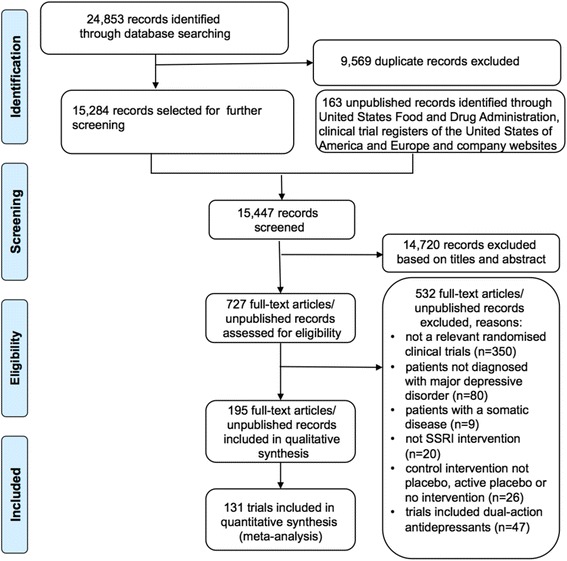
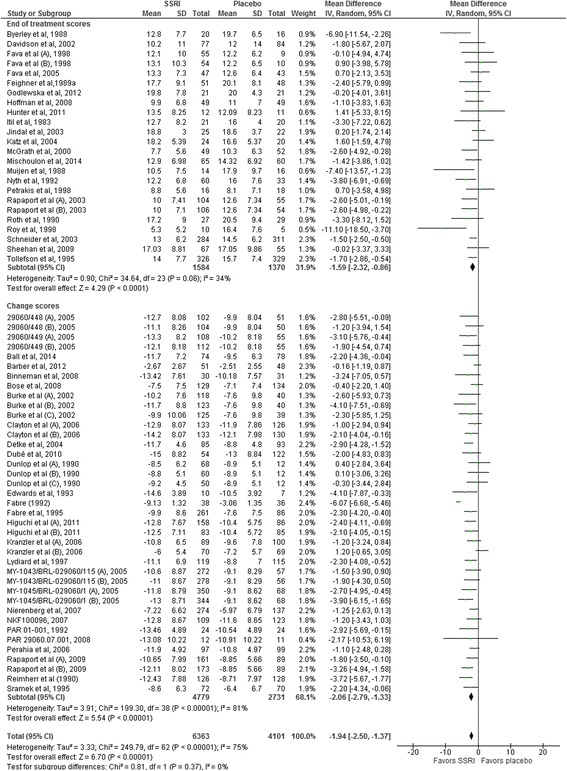
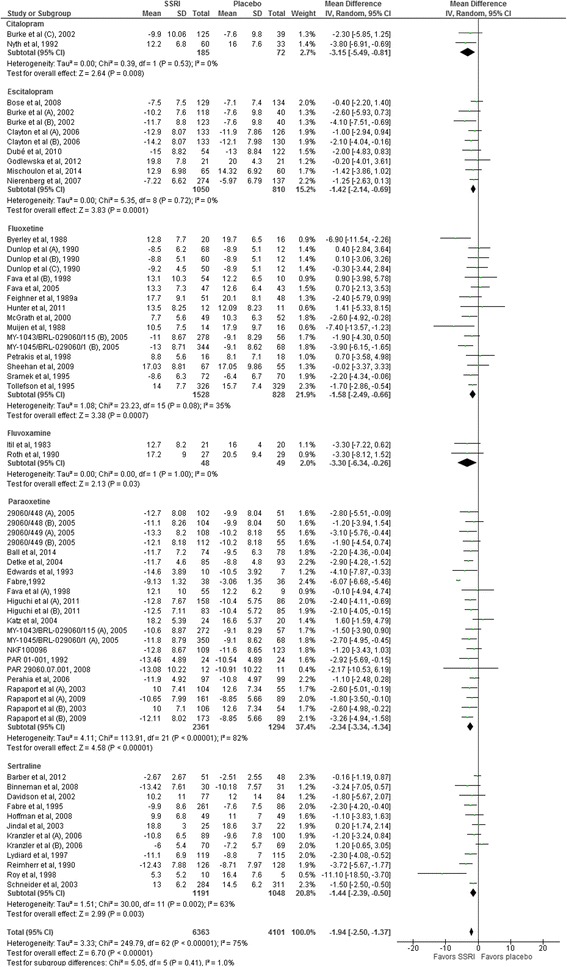
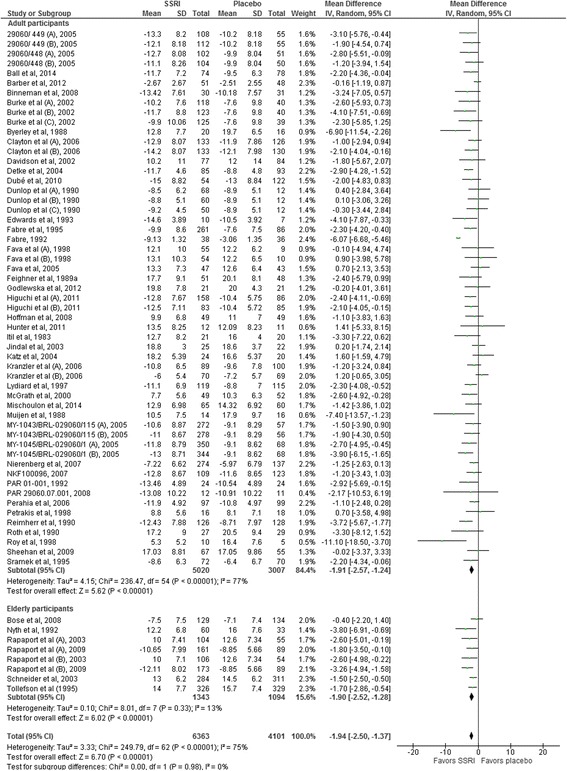
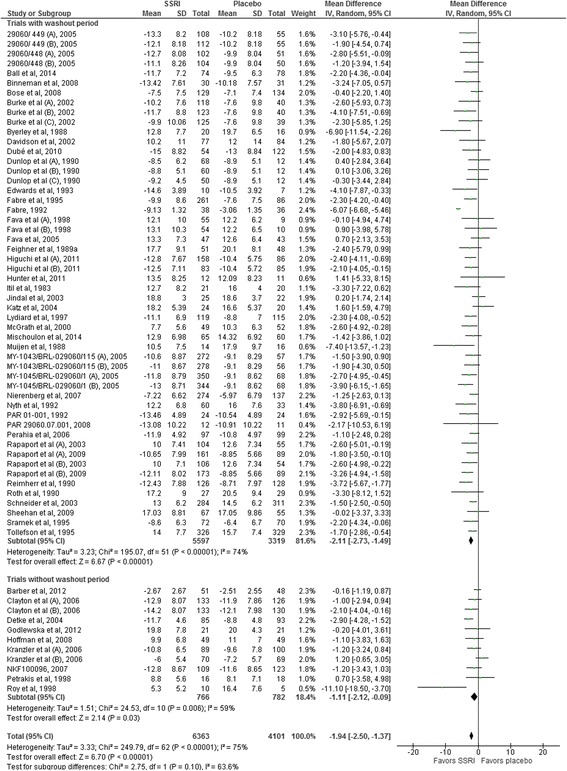
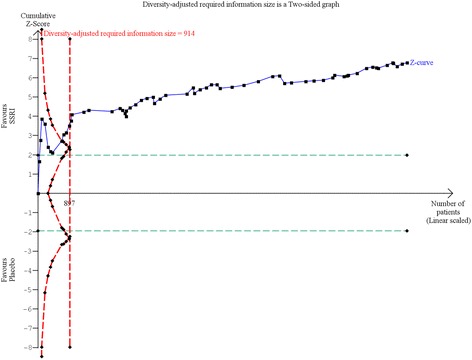
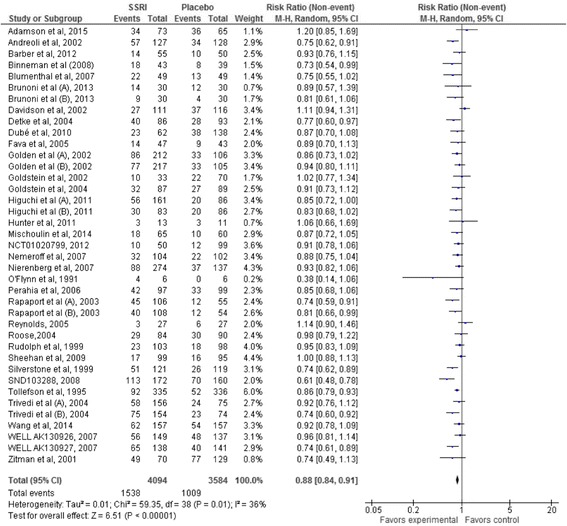
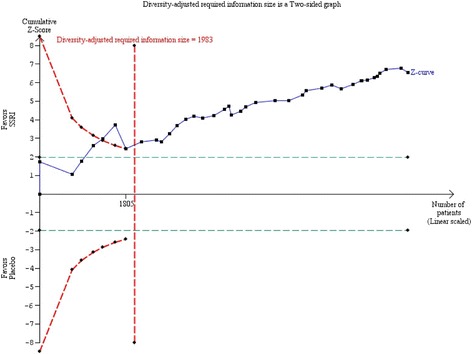
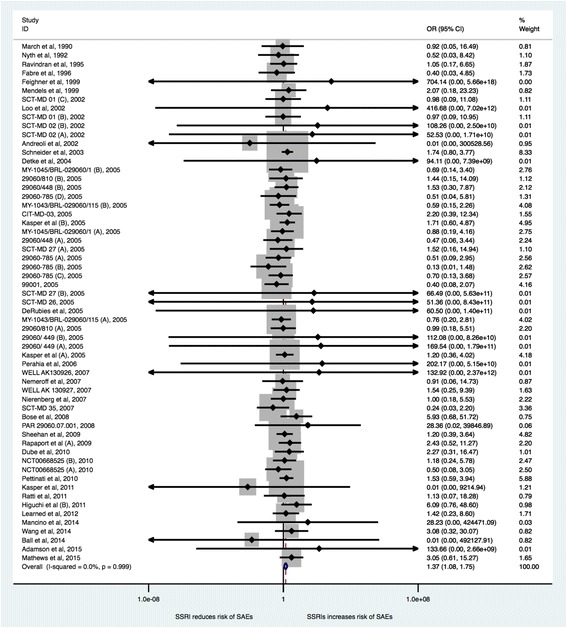
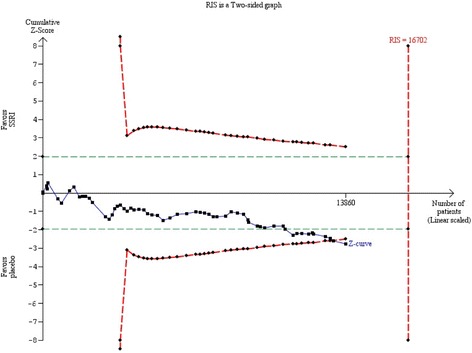
BACKGROUND: The evidence on selective serotonin reuptake inhibitors (SSRIs) for major depressive disorder is unclear. METHODS: Our objective was to conduct a systematic review assessing the effects of SSRIs versus placebo, 'active' placebo, or no intervention in adult participants with major depressive disorder. We searched for eligible randomised clinical trials in The Cochrane Library's CENTRAL, PubMed, EMBASE, PsycLIT, PsycINFO, Science Citation Index Expanded, clinical trial registers of Europe and USA, websites of pharmaceutical companies, the U.S. Food and Drug Administration (FDA), and the European Medicines Agency until January 2016. All data were extracted by at least two independent investigators. We used Cochrane systematic review methodology, Trial Sequential Analysis, and calculation of Bayes factor. An eight-step procedure was followed to assess if thresholds for statistical and clinical significance were crossed. Primary outcomes were reduction of depressive symptoms, remission, and adverse events. Secondary outcomes were suicides, suicide attempts, suicide ideation, and quality of life. RESULTS: ). The effect estimate, however, was below our predefined threshold for clinical significance of 3 HDRS points. SSRIs significantly decreased the risk of no remission (RR 0.88; 95% CI 0.84 to 0.91; P < 0.00001; 34 trials; Trial Sequential Analysis adjusted CI 0.83 to 0.92); Bayes factor (1426.81) did not confirm the effect). SSRIs significantly increased the risks of serious adverse events (OR 1.37; 95% CI 1.08 to 1.75; P = 0.009; 44 trials; Trial Sequential Analysis-adjusted CI 1.03 to 1.89). This corresponds to 31/1000 SSRI participants will experience a serious adverse event compared with 22/1000 control participants. SSRIs also significantly increased the number of non-serious adverse events. There were almost no data on suicidal behaviour, quality of life, and long-term effects. CONCLUSIONS: SSRIs might have statistically significant effects on depressive symptoms, but all trials were at high risk of bias and the clinical significance seems questionable. SSRIs significantly increase the risk of both serious and non-serious adverse events. The potential small beneficial effects seem to be outweighed by harmful effects. SYSTEMATIC REVIEW REGISTRATION: PROSPERO CRD42013004420.
Overview
The claims and statistics of this paper haven’t been checked yet.
Free: it reads the open-access text and checks the first 5 claims that cite a source we can check. Create a free account to check every claim.
Integrity signals
Registry
Cites
Statistics
Figures

Verification
Claims the paper makes
The claims and statistics of this paper haven’t been checked yet.
Free: it reads the open-access text and checks the first 5 claims that cite a source we can check. Create a free account to check every claim.
Claims other papers make about this one
Each is checked against this paper’s own text: does it say what the citing paper says it does?
The source backs part of the claim, not all of it — or backs it for a different population, condition or comparison.
In the citing paper
“there is extensive evidence that targeting and treating mental disorders has little or mixed impact on suicidal risk [10,11,12].”
From One Size Does Not Fit All: A Comprehensive Clinical Approach to Reducing Suicidal Ideation, Attempts, and Deaths (2019) · cites this paper as [12]
Experimental — accuracy not yet measuredThe source backs part of the claim, not all of it — or backs it for a different population, condition or comparison.
In the citing paper
“That review found, as all other previous reviews have shown, that SSRIs compared with placebo had a statistically significant effect on depressive symptoms.”
From Should antidepressants be used for major depressive disorder? (2020) · cites this paper as [28]
Experimental — accuracy not yet measuredThe source backs part of the claim, not all of it — or backs it for a different population, condition or comparison.
In the citing paper
“The few trials assessing long-term effects showed that such effects seemed even smaller than the short-term effects.”
From Should antidepressants be used for major depressive disorder? (2020) · cites this paper as [28]
Experimental — accuracy not yet measuredThe source backs part of the claim, not all of it — or backs it for a different population, condition or comparison.
In the citing paper
“The primary limitation of all the available evidence on the effects of antidepressants is that the majority of previous trials assessing the effects of antidepressants have been at high or unclear risk of bias.”
From Should antidepressants be used for major depressive disorder? (2020) · cites this paper as [28]
Experimental — accuracy not yet measuredThe source backs part of the claim, not all of it — or backs it for a different population, condition or comparison.
In the citing paper
“The above-mentioned systematic review assessing the effects of SSRIs (see ‘How good are antidepressants?’ section) also concluded that the vast majority of the included trials (39 out of 43 trials) with useful data were at high risk of ‘for profit’ bias.”
From Should antidepressants be used for major depressive disorder? (2020) · cites this paper as [28]
Experimental — accuracy not yet measured
14 more claims about this paper
Create a free account to see every claim other papers make about this one.
Self-check
Percentages, sums and reported differences re-computed from the paper’s own numbers.
The self-check needs the paper’s full text.
Citations
Cites
Meta-analysis in clinical trials
DerSimonian, R., & Laird, N. (1986) · Controlled Clinical Trials · doi:10.1016/0197-2456(86)90046-2 · Cited by 39,552
An inventory for measuring depression
BECK, A. T. (1961) · Archives of General Psychiatry · doi:10.1001/archpsyc.1961.01710120031004 · Cited by 38,032
Hamilton, M. (1960) · Journal of Neurology, Neurosurgery & Psychiatry · doi:10.1136/jnnp.23.1.56 · Cited by 32,817
Dermyshi, E., Wang, Y., Yan, C., Hong, W., Qiu, G., Gong, X., & Zhang, T. (2017) · Neonatology · doi:10.1159/000454668 · Cited by 24,451
A new depression scale designed to be sensitive to change
Montgomery, S. A., & Åsberg, M. (1979) · British Journal of Psychiatry · doi:10.1192/bjp.134.4.382 · Cited by 13,962
GRADE guidelines: 1. Introduction—GRADE evidence profiles and summary of findings tables
Guyatt, G., Oxman, A. D., Akl, E. A., Kunz, R., Vist, G., Brozek, J., Norris, S., Falck-Ytter, Y., Glasziou, P., & deBeer, H. (2011) · Journal of Clinical Epidemiology · doi:10.1016/j.jclinepi.2010.04.026 · Cited by 10,681
Hutton, B., Salanti, G., Caldwell, D. M., Chaimani, A., Schmid, C. H., Cameron, C., Ioannidis, J. P. A., Straus, S., Thorlund, K., Jansen, J. P., et al. (2015) · Annals of Internal Medicine · doi:10.7326/m14-2385 · Cited by 8,269
Scoville, W. B. (1949) · Journal of neurosurgery · doi:10.3171/jns.1949.6.1.0065 · Cited by 7,381
SPIRIT 2013 Statement: Defining Standard Protocol Items for Clinical Trials
Chan, A.-W., Tetzlaff, J. M., Altman, D. G., Laupacis, A., Gøtzsche, P. C., Krleža-Jerić, K., Hróbjartsson, A., Mann, H., Dickersin, K., Berlin, J. A., et al. (2013) · Annals of Internal Medicine · doi:10.7326/0003-4819-158-3-201302050-00583 · Cited by 7,363
Cochrane Handbook for Systematic Reviews of Interventions Version 5.0.1. The Cochrane Collaboration
Higgins, J. P. T., Green, S. R., & Higgins, J. P. T. (2008) · Cited by 7,261
Research works printed but not linked: 9
- Beck A Steer RA Brown GK Beck depression inventory—second edition: manual San Antonio: Psychological Corporation 1996 4 561 571
- The Nordic Cochrane Centre (The Cochrane Collaboration): Review Manager (RevMan) [Computer program]. Version 5.3. In.; 2008.
- Thorlund K Engstrøm J Wetterslev J Brok J Imberger G Gluud C User manual for trial sequential analysis (TSA) 2011 Copenhagen Copenhagen Trial Unit, Centre for Clinical Intervention Research 1 115
- Fabre LF Crismon L Efficacy of fluoxetine in outpatients with major depression Curr Ther Res Clin Exp 1985 37 1 1985
- Rickels K Amsterdam JD Avallone MF Fluoxetine in major depression: A controlled study Curr Ther Res Clin Exp 1986 39 4 1986
- MY-1045/BRL-029060/1 (PAR128) (Unpublished Data) GlaxoSmithKline. A Multicenter, Randomized, Double-Blind, Placebo-Controlled Comparison of Paroxetine and Fluoxetine in the Treatment of Major Depressive Disorder. http://www.gsk-clinicalstudyregister.com/files2/2821.pdf 2005, 1:1–5.
- MY-1043/BRL-029060/115 (Unpublished Data) GlaxoSmithKline. A multicenter, randomized, double-blind, placebo-controlled comparison of paroxetine and fluoxetine in the treatment of major depressive disorder. http://www.gsk-clinicalstudyregister.com/files2/2060.pdf 2005, 175:1–5.
- SCT-MD-26 (Unpublished Data) Forest Research Institute. Two-week double-blind placebo controlled study of escitalopram in the treatment of severe major depression. 2005, 135:2–4.
- SCT-MD-27 (Unpublished Data) Forest Research Institute. A double-blind flexible dose comparison of escitalopram sertraline and placebo in the treatment of major depressive disorder. 2005, 91:5–7.
Cited by
Leichsenring, F., Steinert, C., Rabung, S., & Ioannidis, J. P. A. (2022) · World Psychiatry · doi:10.1002/wps.20941 · Cited by 485
Heissel, A., Heinen, D., Brokmeier, L. L., Skarabis, N., Kangas, M., Vancampfort, D., Stubbs, B., Firth, J., Ward, P. B., Rosenbaum, S., et al. (2023) · British Journal of Sports Medicine · doi:10.1136/bjsports-2022-106282 · Cited by 449
Vaccarino, V., Badimon, L., Bremner, J. D., Cenko, E., Cubedo, J., Dorobantu, M., Duncker, D. J., Koller, A., Manfrini, O., Milicic, D., et al. (2020) · European Heart Journal · doi:10.1093/eurheartj/ehy913 · Cited by 404
Catalá-López, F., Hutton, B., Núñez-Beltrán, A., Page, M. J., Ridao, M., Macías Saint-Gerons, D., Catalá, M. A., Tabarés-Seisdedos, R., & Moher, D. (2017) · PLOS ONE · doi:10.1371/journal.pone.0180355 · Cited by 396
A meta-analysis of the use of probiotics to alleviate depressive symptoms
Ng, Q. X., Peters, C., Ho, C. Y. X., Lim, D. Y., & Yeo, W.-S. (2018) · Journal of Affective Disorders · doi:10.1016/j.jad.2017.11.063 · Cited by 357
Placebo effect in the treatment of depression and anxiety
Kirsch, I. (2019) · Frontiers in Psychiatry · doi:10.3389/fpsyt.2019.00407 · Cited by 205
Zou, L., Yeung, A., Li, C., Wei, G.-X., Chen, K. W., Kinser, P. A., Chan, J. S. M., & Ren, Z. (2018) · Journal of Clinical Medicine · doi:10.3390/jcm7080195 · Cited by 188
The anti-inflammatory mechanism of antidepressants – SSRIs, SNRIs
Gałecki, P., Mossakowska-Wójcik, J., & Talarowska, M. (2018) · Progress in Neuro-Psychopharmacology and Biological Psychiatry · doi:10.1016/j.pnpbp.2017.03.016 · Cited by 180
“Moreover, the drugs are tolerated well by patients because the number of side effects is limited (Wade et al., 2014; Castellano et al., 2016; Jakobsen et al., 2017; James et al., 2017).”
BackgroundRead, J., & Williams, J. (2018) · Current Drug Safety · doi:10.2174/1574886313666180605095130 · Cited by 175
“Another recent, more rigorous, meta-analysis [9], of 131”
BackgroundInfluentialWas Eysenck right after all? A reassessment of the effects of psychotherapy for adult depression
Cuijpers, P., Karyotaki, E., Reijnders, M., & Ebert, D. D. (2019) · Epidemiology and Psychiatric Sciences · doi:10.1017/s2045796018000057 · Cited by 173
Personalized prediction of antidepressant v. placebo response: evidence from the EMBARC study
Webb, C. A., Trivedi, M. H., Cohen, Z. D., Dillon, D. G., Fournier, J. C., Goer, F., Fava, M., McGrath, P. J., Weissman, M., Parsey, R., et al. (2019) · Psychological Medicine · doi:10.1017/s0033291718001708 · Cited by 171
“…individuals with higher baseline severity of depressive symptoms (Khan et al ., 2002; Kirsch et al ., 2008; Fournier et al ., 2010), higher neuroticism (Tang et al ., 2009), and who were employed (Fournier et al ., 2009; Jakubovski and Bloch, 2014) had better outcomes to SSRI than placebo.”
BackgroundMethodAnsari, F., Pourjafar, H., Tabrizi, A., & Homayouni, A. (2020) · Current Pharmaceutical Biotechnology · doi:10.2174/1389201021666200107113812 · Cited by 170
Krogh, J., Hjorthøj, C., Speyer, H., Gluud, C., & Nordentoft, M. (2017) · BMJ Open · doi:10.1136/bmjopen-2016-014820 · Cited by 162
Self-citationShould antidepressants be used for major depressive disorder?
Jakobsen, J. C., Gluud, C., & Kirsch, I. (2020) · BMJ Evidence-Based Medicine · doi:10.1136/bmjebm-2019-111238 · Cited by 162
“28 The effect size of SSRIs (1.94 HDRS points, 95% CI −2.50 to −1.37; or −0.23 SMD, 95% CI −0.31 to −0.14) was, however, below the predefined threshold for clinical significance (the above-mentioned NICE criteria) and far from ‘minimal improvement’ (eg, seven-point change on the HDRS or an SMD of…”
InfluentialSelf-citationMunkholm, K., Paludan-Müller, A. S., & Boesen, K. (2019) · BMJ Open · doi:10.1136/bmjopen-2018-024886 · Cited by 151
Braund, T. A., Tillman, G., Palmer, D. M., Gordon, E., Rush, A. J., & Harris, A. W. F. (2021) · Translational Psychiatry · doi:10.1038/s41398-021-01533-1 · Cited by 135
Allopregnanolone in postpartum depression: Role in pathophysiology and treatment
Meltzer-Brody, S., & Kanes, S. J. (2020) · Neurobiology of Stress · doi:10.1016/j.ynstr.2020.100212 · Cited by 133
“Existing antidepressants are associated with significant adverse effects, and their overall effectiveness in the treatment of PPD may therefore be limited by tolerability and acceptability (Cipriani et al., 2018; Jakobsen et al., 2017).”
Hu, P., Lü, Y., Pan, B., & Zhang, W. (2022) · International Journal of Molecular Sciences · doi:10.3390/ijms231911076 · Cited by 152
“However, the most severe problem of monoamine-related therapy is that the therapeutic effect is limited since it usually takes several weeks or months to reach beneficial effects and up to 30% of patients do not respond to typical antidepressant medications [6,7], suggesting that the monoamine hypothesis may not fully…”
BackgroundStone, M. B., Yaseen, Z. S., Miller, B. J., Richardville, K., Kalaria, S. N., & Kirsch, I. (2022) · BMJ · doi:10.1136/bmj-2021-067606 · Cited by 156
Microdosing psychedelics: Motivations, subjective effects and harm reduction
Lea, T., Amada, N., Jungaberle, H., Schecke, H., & Klein, M. (2020) · International Journal of Drug Policy · doi:10.1016/j.drugpo.2019.11.008 · Cited by 121
Cost-effectiveness of psychological treatments for post-traumatic stress disorder in adults
Mavranezouli, I., Megnin-Viggars, O., Grey, N., Bhutani, G., Leach, J., Daly, C., Dias, S., Welton, N. J., Katona, C., El-Leithy, S., et al. (2020) · PLOS ONE · doi:10.1371/journal.pone.0232245 · Cited by 115
“Serious side effects from SSRIs (such as death, attempted suicide or self-harm, falls, fractures, stroke, epilepsy/seizures) were not considered; however, their omission is not expected to have had a significant impact on the economic results, due to their low incidence in the study population [14, 15].”
BackgroundHengartner, M. P., & Plöderl, M. (2022) · BMJ Evidence-Based Medicine · doi:10.1136/bmjebm-2020-111600 · Cited by 114
Coupland, C. A. C., Hill, T., Morriss, R. K., Moore, M. V., Arthur, A. J., & Hippisley‐Cox, J. (2018) · BMC Medicine · doi:10.1186/s12916-018-1022-x · Cited by 124
Hormonal Agents for the Treatment of Depression Associated with the Menopause
Herson, M., & Kulkarni, J. (2022) · Drugs & Aging · doi:10.1007/s40266-022-00962-x · Cited by 123
“Symptoms are reversed with agents that increase dopaminergic and serotonergic transmission [46, 47], indicating that depression is associated with a decline in serotonin and dopamine.”
BackgroundN-Acetylcysteine for the Treatment of Psychiatric Disorders: A Review of Current Evidence
Ooi, S. L., Green, R., & Pak, S. C. (2018) · BioMed Research International · doi:10.1155/2018/2469486 · Cited by 98
Van Leeuwen, E., van Driel, M. L., Horowitz, M. A., Kendrick, T., Donald, M., De Sutter, A. I., Robertson, L., & Christiaens, T. (2021) · Cochrane Database of Systematic Reviews · doi:10.1002/14651858.cd013495.pub2 · Cited by 90
Gut microbiota variations in patients diagnosed with major depressive disorder—A systematic review
Knudsen, J. K., Bundgaard‐Nielsen, C., Hjerrild, S., Nielsen, R. E., Leutscher, P., & Sørensen, S. (2021) · Brain and Behavior · doi:10.1002/brb3.2177 · Cited by 97
O’Connor, E., Perdue, L. A., Coppola, E. L., Henninger, M. L., Thomas, R. G., & Gaynes, B. N. (2023) · JAMA · doi:10.1001/jama.2023.7787 · Cited by 128
Hengartner, M. P., & Plöderl, M. (2018) · Frontiers in Psychiatry · doi:10.3389/fpsyt.2018.00517 · Cited by 93
“5 (corresponding to <4 HAMD-17 points) are considered clinically irrelevant (14, 15).”
BackgroundResultInfluentialKetamine and the Future of Rapid-Acting Antidepressants
Riggs, L. M., & Gould, T. D. (2021) · Annual Review of Clinical Psychology · doi:10.1146/annurev-clinpsy-072120-014126 · Cited by 87
der Salm, S. M. A. V., Rutz, J., van den Akker, M., Blaheta, R. A., & Bachmeier, B. E. (2023) · Frontiers in Pharmacology · doi:10.3389/fphar.2023.1234701 · Cited by 136
“…well tolerated and in the majority of the studies at least equal to conventional medication like tricyclic anti-depressants and selective serotonin reuptake inhibitors, which exhibit in part notable adverse events impacting patients ’ quality of life of (Voican et al., 2014; Jakobsen et al., 2017).”
Musazadeh, V., Keramati, M., Ghalichi, F., Kavyani, Z., Ghoreishi, Z., Alras, K. A., Albadawi, N., Salem, A., Albadawi, M. I., Salem, R. H., et al. (2022) · Pharmacological Research · doi:10.1016/j.phrs.2022.106605 · Cited by 119
Cognitive behavioural therapy halves the risk of repeated suicide attempts: systematic review.
Gøtzsche, P. C., & Gøtzsche, P. K. (2017) · Journal of the Royal Society of Medicine · doi:10.1177/0141076817731904 · Cited by 79
American psychiatry in the new millennium: a critical appraisal
Scull, A. T. (2021) · Psychological Medicine · doi:10.1017/s0033291721001975 · Cited by 101
Treating depression With Tai Chi: state of the art and future perspectives
Kong, J., Wilson, G., Park, J., Pereira, K., Walpole, C., & Yeung, A. (2019) · Frontiers in Psychiatry · doi:10.3389/fpsyt.2019.00237 · Cited by 75
Antisuicidal Effects in Mood Disorders: Are They Unique to Lithium?
Tondo, L., & Baldessarini, R. (2018) · Pharmacopsychiatry · doi:10.1055/a-0596-7853 · Cited by 69
“Evidence for short- and long-term efficacy of antidepressant treatment in unipolar MDD is substantial [13, 19, 87–93] but not universally accepted [93].”
BackgroundHengartner, M. P., Jakobsen, J. C., Sørensen, A., & Plöderl, M. (2020) · PLOS ONE · doi:10.1371/journal.pone.0229381 · Cited by 66
Self-citationMallery, L. H., MacLeod, T., Allen, M., McLean-Veysey, P., Rodney-Cail, N., Bezanson, E., Steeves, B., LeBlanc, C. H., & Moorhouse, P. A. (2019) · BMC Geriatrics · doi:10.1186/s12877-019-1327-4 · Cited by 81
“risk of bias in antidepressant trials [63, 64].”
Eggart, M., Todd, J., & Valdés‐Stauber, J. (2021) · PLoS ONE · doi:10.1371/journal.pone.0253913 · Cited by 85
Riggs, L. M., Aracava, Y., Zanos, P., Fischell, J., Albuquerque, E. X., Pereira, E. F. R., Thompson, S. M., & Gould, T. D. (2020) · Neuropsychopharmacology · doi:10.1038/s41386-019-0443-3 · Cited by 66
“Monoamine-based antidepressant treatments have prevailed for almost 70 years, despite their slow therapeutic onset and failure to provide complete or permanent remission to most patients [2].”
BackgroundRoberts, C., Sahakian, B. J., & Robbins, T. W. (2020) · Neuroscience & Biobehavioral Reviews · doi:10.1016/j.neubiorev.2020.09.001 · Cited by 67
Musazadeh, V., Zarezadeh, M., Faghfouri, A. H., Keramati, M., Jamilian, P., Jamilian, P., Mohagheghi, A., & Farnam, A. (2022) · Critical Reviews in Food Science and Nutrition · doi:10.1080/10408398.2022.2051164 · Cited by 68
“But several studies have questioned their effectiveness (Kirsch et al. 2008, Khin et al. 2011, Jakobsen et al. 2017).”
BackgroundVaghef‐Mehrabany, E., Ranjbar, F., Jafarabadi, M. A., Hosseinpour-Arjmand, S., & Ebrahimi‐Mameghani, M. (2019) · Nutritional Neuroscience · doi:10.1080/1028415x.2019.1630985 · Cited by 60
“proportion of the patients, and are accompanied by many side effects, new strategies are being attempted to battle depression [11].”
BackgroundChen, T., Cheng, L., Ma, J., Yuan, J., Pi, C., Xiong, L., Chen, J., Liu, H., Tang, J., Zhong, Y., et al. (2023) · Pharmacological Research · doi:10.1016/j.phrs.2023.106837 · Cited by 52
Hengartner, M. P., Amendola, S., Kaminski, J. A., Kindler, S., Bschor, T., & Plöderl, M. (2021) · Journal of Epidemiology & Community Health · doi:10.1136/jech-2020-214611 · Cited by 72
Jobes, D. A., & Chalker, S. A. (2019) · International Journal of Environmental Research and Public Health · doi:10.3390/ijerph16193606 · Cited by 52
Hengartner, M. P. (2017) · Frontiers in Psychiatry · doi:10.3389/fpsyt.2017.00275 · Cited by 52
Clonazepam: Indications, Side Effects, and Potential for Nonmedical Use
Dokkedal‐Silva, V., Berro, L. F., Galduróz, J. C. F., Tufik, S. B., & Andersen, M. L. (2019) · Harvard Review of Psychiatry · doi:10.1097/hrp.0000000000000227 · Cited by 65
Using genetic drug-target networks to develop new drug hypotheses for major depressive disorder
Gaspar, H. A., Gerring, Z. F., Hübel, C., Middeldorp, C. M., Derks, E. M., & Breen, G. D. (2019) · Translational Psychiatry · doi:10.1038/s41398-019-0451-4 · Cited by 54
Plöderl, M., & Hengartner, M. P. (2019) · BMJ Open · doi:10.1136/bmjopen-2019-034816 · Cited by 51
Staying on, and coming off, antidepressants: The experiences of 752 UK adults
Read, J., Gee, A., Diggle, J., & Butler, H. (2019) · Addictive Behaviors · doi:10.1016/j.addbeh.2018.08.021 · Cited by 48
Hengartner, M. P. (2019) · BMJ Evidence-Based Medicine · doi:10.1136/bmjebm-2019-111161 · Cited by 51
Rooney, W., Schuklenk, U., & van de Vathorst, S. (2018) · Health Care Analysis · doi:10.1007/s10728-017-0344-8 · Cited by 44
Read, J., Gee, A., Diggle, J., & Butler, H. (2017) · Psychiatry Research · doi:10.1016/j.psychres.2017.07.003 · Cited by 44
Read, J., Renton, J., Harrop, C., Geekie, J., & Dowrick, C. (2020) · Therapeutic Advances in Psychopharmacology · doi:10.1177/2045125320950124 · Cited by 43
“10 14–17 In this context, attempts to understand the per-petually increasing prescription rates began to focus on increases in repeat prescriptions.”
Vaghef‐Mehrabany, E., Harouni, R., Behrooz, M., Ranjbar, F., Jafarabadi, M. A., & Ebrahimi‐Mameghani, M. (2022) · British Journal Of Nutrition · doi:10.1017/s000711452200232x · Cited by 50
“Because, the current medications for themanagement of depression have shown insufficient effectiveness(12) and have many side effects.”
BackgroundEffectiveness of antidepressants
McCormack, J., & Korownyk, C. (2018) · BMJ · doi:10.1136/bmj.k1073 · Cited by 43
Kingslake, J., Dias, R., Dawson, G. R., Simon, J., Goodwin, G. M., Harmer, C. J., Morriss, R., Brown, S., Guo, B., Dourish, C. T., et al. (2017) · Trials · doi:10.1186/s13063-017-2247-2 · Cited by 42
“Conceivably, the ability to personalise treatment may also enhance the risk/benefit assessment of antidepressant use which has been questioned in a recent study which pooled data from clinical trials of the nonpersonalised use of antidepressants [25].”
BackgroundPöhlmann, M. L., Häusl, A. S., Harbich, D., Balsevich, G., Engelhardt, C., Feng, X., Breitsamer, M., Hausch, F., Winter, G., & Schmidt, M. V. (2018) · Frontiers in Behavioral Neuroscience · doi:10.3389/fnbeh.2018.00262 · Cited by 41
The impact of sex as a biological variable in the search for novel antidepressants
Williams, A. V., & Trainor, B. C. (2018) · Frontiers in Neuroendocrinology · doi:10.1016/j.yfrne.2018.05.003 · Cited by 40
“apeutics can have important adverse effects (Jakobsen et al., 2017).”
Selective Serotonin Re-uptake Inhibitors: An overview.
Joshi, A. (2018) · PubMed · Cited by 49
Näslund, J., Hieronymus, F., Lisinski, A., Nilsson, S., & Eriksson, E. (2018) · The British Journal of Psychiatry · doi:10.1192/bjp.2017.24 · Cited by 39
“8,9,11 Another strategy to assess the possible suicide-provoking effect displayed by SSRIs in placebo-controlled trials, which could be regarded as complementary to the investigation of actual suicides or suicide-related adverse events, is to analyse the effect of treat-ment on…”
Cheng, Q., Huang, J., Xu, L., Li, Y., Li, H., Shen, Y., Zheng, Q., & Li, L. (2020) · International Journal of Neuropsychopharmacology · doi:10.1093/ijnp/pyz062 · Cited by 38
The Economics of Treatment for Depression
Stecher, C. D., Cloonan, S., & Domino, M. E. (2023) · Annual Review of Public Health · doi:10.1146/annurev-publhealth-061022-040533 · Cited by 51
Adverse effects and treatment satisfaction among online users of four antidepressants
Hughes, S., Lacasse, J. R., Fuller, R. R., & Spaulding‐Givens, J. (2017) · Psychiatry Research · doi:10.1016/j.psychres.2017.05.021 · Cited by 42
“…brands exist on the market and new multi-modal antidepressants have more recently been released, clinical trial research demonstrates generally comparable efficacy and adverse effect (AE) profiles across most of these drugs (Gartlehner et al., 2011; Jakobsen et al., 2017; Richelson, 2013).”
BackgroundRead, J. (2020) · Addictive Behaviors · doi:10.1016/j.addbeh.2019.106157 · Cited by 37
“Findings that the majority of improved cases are the result of placebo effects (Jakobsen et al., 2017; Kirsch et al. 2008) cannot detract from the reality that most people in the sample felt better and believed this was a result of the drugs.”
BackgroundBarbato, A., & D’Avanzo, B. (2020) · Family Process · doi:10.1111/famp.12540 · Cited by 44
Veloso, I. C., Delanogare, E., Machado, A. E., Braga, S. P., Rosa, G. K., Bem, A. F. D., Rafique, J., Saba, S., da Trindade, R. N., Galetto, F. Z., et al. (2021) · Journal of Pharmacy and Pharmacology · doi:10.1093/jpp/rgaa070 · Cited by 40
How many of 1829 antidepressant users report withdrawal effects or addiction?
Read, J., Cartwright, C., & Gibson, K. (2018) · International Journal of Mental Health Nursing · doi:10.1111/inm.12488 · Cited by 36
Sarris, J., Murphy, J., Stough, C., Mischoulon, D., Bousman, C., MacDonald, P., Adams, L., Nazareth, S., Oliver, G., Cribb, L., et al. (2020) · Psychopharmacology · doi:10.1007/s00213-019-05358-1 · Cited by 35
Hieronymus, F., Lisinski, A., Eriksson, E., & Østergaard, S. D. (2021) · Translational Psychiatry · doi:10.1038/s41398-021-01364-0 · Cited by 42
Neurodualism: People Assume that the Brain Affects the Mind more than the Mind Affects the Brain
Valtonen, J., Ahn, W., & Cimpian, A. (2021) · Cognitive Science · doi:10.1111/cogs.13034 · Cited by 38
“Arguably, neither the enthusiasm nor the scale at which this approach has been implemented is easy to explain from a purely evidence-based perspective (Deacon, 2013; Whitaker & Cosgrove, 2015; UN Human Rights Council, 2017; Lacasse & Leo, 2005; Healy, 2015; Moncrieff & Cohen, 2006), and its success has been controvers…”
BackgroundTreating major depression and comorbid disorders with transcranial magnetic stimulation
Thompson, L. (2020) · Journal of Affective Disorders · doi:10.1016/j.jad.2020.07.025 · Cited by 35
“adults aged 18 years or older found that while benefits of medication may be statistically significant compared to placebo, the clinical significance is more questionable, and SSRI usage is more likely to result in adverse effects (Jakobsen et al., 2017).”
BackgroundHein, M., Lanquart, J., Loas, G., Hubain, P., & Linkowski, P. (2017) · Journal of Psychosomatic Research · doi:10.1016/j.jpsychores.2017.10.004 · Cited by 34
Hieronymus, F., Jauhar, S., Østergaard, S. D., & Young, A. H. (2020) · Journal of Psychopharmacology · doi:10.1177/0269881120922950 · Cited by 33
“As illustrated, for example, in a 2017 meta-analysis (Jakobsen et al., 2017) most placebo groups have endpoint scores below 14 HDRS points.”
BackgroundMethodInfluentialHorowitz, M., & Wilcock, M. (2022) · Drug and Therapeutics Bulletin · doi:10.1136/dtb.2020.000080 · Cited by 33
Metabolite-related antidepressant action of diterpene ginkgolides in the prefrontal cortex
Hu, Q., Shen, P., Bai, S., Dong, M.-X., Liang, Z., Chen, Z., Wang, W., Wang, H., Gui, S., Li, P., et al. (2018) · Neuropsychiatric Disease and Treatment · doi:10.2147/ndt.s161351 · Cited by 33
“5 Research has indicated that traditional Chinese medicines have great potential for treating these diseases.”
Use of Complementary Alternative Medicine and the Associated Factors among Patients with Depression
Ashraf, H., Salehi, A., Sousani, M., & Sharifi, M. H. (2021) · Evidence-based Complementary and Alternative Medicine · doi:10.1155/2021/6626394 · Cited by 44
Kabra, A., Garg, R., Brimson, J. M., Živković, J., Almawash, S., Ayaz, M., Nawaz, A., Hassan, S. S. U., & BUNGAU, S. G. (2022) · Frontiers in Pharmacology · doi:10.3389/fphar.2022.1046599 · Cited by 41
Mind the Psychedelic Hype: Characterizing the Risks and Benefits of Psychedelics for Depression
Meling, D., Ehrenkranz, R. C., Nayak, S. M., Aicher, H., Funk, X., van Elk, M., Graziosi, M., Bauer, P. R., Scheidegger, M., & Yaden, D. B. (2024) · Psychoactives · doi:10.3390/psychoactives3020014 · Cited by 35
“A systematic review and meta-analysis determined that all 131 randomized placebo-controlled trials evaluated had a high risk of bias, and none of the trials used either an active placebo or an intervention as a control [70].”
BackgroundWarren, J. B. (2020) · BMJ · doi:10.1136/bmj.m3200 · Cited by 30
Former suicidal inpatients’ experiences of treatment and care in psychiatric wards in Norway
Hagen, J., Knizek, B. L., & Hjelmeland, H. (2018) · International Journal of Qualitative Studies on Health and Well-Being · doi:10.1080/17482631.2018.1461514 · Cited by 63
“In a recent systematic review, Jakobsen et al. (2017) concluded that the potentially limited beneficial effects of antidepressants (SSRIs) appear to be outweighed by harmful effects.”
BackgroundNyer, M., Gerbarg, P. L., Silveri, M. M., Johnston, J., Scott, T. M., Nauphal, M., Owen, L., Nielsen, G. H., Mischoulon, D., Brown, R. P., et al. (2018) · Complementary Therapies in Medicine · doi:10.1016/j.ctim.2018.02.006 · Cited by 37
“The lack of compelling evidence that RCTs of SSRIs decrease suicide ideation is in contrast to the findings of this study.”
BackgroundInfluentialA meta-analysis of cranial electrotherapy stimulation in the treatment of depression
Price, L. R., Briley, J., Haltiwanger, S., & Hitching, R. (2020) · Journal of Psychiatric Research · doi:10.1016/j.jpsychires.2020.12.043 · Cited by 31
Krzyżek, P., Franiczek, R., Krzyżanowska, B., Łaczmański, Ł., Migdał, P., & Gościniak, G. (2019) · Pathogens · doi:10.3390/pathogens8040228 · Cited by 27
“Classically, these substances are used as the first line therapy for people suffering from depression, which is associated with the ability of SSRIs to affect the level of neurotransmitters in the brain, with particular emphasis on serotonin [13].”
BackgroundLiu, Y., Zhao, G., Guo, J., Qu, H., Kong, L., & Yue, W. (2024) · Journal of Affective Disorders · doi:10.1016/j.jad.2024.09.074 · Cited by 37
Sheng, L., Wei, Y., Pi, C., Ju, C., Su, Z., Wang, Y. Y., Chen, T., Wen, J., Wei, Y., Ma, J., et al. (2023) · International Journal of Nanomedicine · doi:10.2147/ijn.s430769 · Cited by 28
Dada, R., Tolahunase, M., & Sagar, R. (2018) · Indian Journal of Psychiatry · doi:10.4103/psychiatry.indianjpsychiatry_398_17 · Cited by 30
Boesen, K., Gøtzsche, P. C., & Ioannidis, J. P. A. (2021) · Epidemiology and Psychiatric Sciences · doi:10.1017/s2045796021000147 · Cited by 26
Clinical Role of Aspirin in Mood Disorders: A Systematic Review
Ng, Q. X., Ramamoorthy, K., Loke, W., Lee, M. W. L., Yeo, W. S., Lim, D. Y., & Sivalingam, V. (2019) · Brain Sciences · doi:10.3390/brainsci9110296 · Cited by 26
“Several large-scale meta-analyses have raised questions about the efficacy of selective serotonin reuptake inhibitor (SSRI) antidepressants, which are first-line drugs frequently used to treat depression [5,6].”
BackgroundDo not blame the SSRIs: blame the Hamilton Depression Rating Scale
Østergaard, S. D. (2017) · Acta Neuropsychiatrica · doi:10.1017/neu.2017.6 · Cited by 26
“It should be mentioned that RCTs using either the Montgomery – Asberg Depression Rating Scale (MADRS) (25) or the Beck Depression Inventory (BDI) (26) as outcome measures were also included in the meta-analysis by Jakobsen et al. (1).”
InfluentialMathai, D. S., Hull, T. D., Vando, L., & Malgaroli, M. (2024) · Journal of Affective Disorders · doi:10.1016/j.jad.2024.05.131 · Cited by 28
“With the exception of drug cravings, these events were consistent with established risks for commonly prescribed antidepressant medications (Gosmann et al., 2023; Jakobsen et al., 2017; Patel et al., 2015; Preda et al., 2001).”
BackgroundYang, L., Shergis, J. L., Di, Y. M., Zhang, A. L., Lu, C., Guo, X., Fang, Z., Xue, C. C., & Li, Y. (2019) · The Journal of Alternative and Complementary Medicine · doi:10.1089/acm.2019.0105 · Cited by 27
Liu, T., Zhou, N., Xu, R., Cao, Y.-G., Zhang, Y., Liu, Z., Zheng, X., & Feng, W. (2020) · Artificial Cells Nanomedicine and Biotechnology · doi:10.1080/21691401.2020.1774597 · Cited by 27
“Many synthetic anti-depressants, such as tricyclic anti-depressants (TcAs), tetracyclic anti-depressants (TeCAs), and selective serotonin reuptake inhibitors (SSRIs), have been introduced to control the development of depression in the clinic [2,3].”
BackgroundThe antidepressant standoff: Why it continues and how to resolve it
Ormel, J., Spinhoven, P., de Vries, Y. A., Cramer, A. O. J., Siegle, G. J., Bockting, C. L. H., & Hollon, S. D. (2020) · Psychological Medicine · doi:10.1017/s0033291719003295 · Cited by 22
“Third, the modest SMD, corresponding to a few HAMD points, has been argued to be of limited clinical significance (Jakobsen et al., 2017; Kirsch, 2014; Moncrieff & Kirsch, 2015; Turner et al., 2008).”
Jensen, M. P., Ziff, O. J., Banerjee, G., Ambler, G., & Werring, D. J. (2019) · European Stroke Journal · doi:10.1177/2396987319827211 · Cited by 24
Individual response to antidepressants for depression in adults-a meta-analysis and simulation study
Munkholm, K., Homan, S., & Homan, P. (2020) · PLoS ONE · doi:10.1371/journal.pone.0237950 · Cited by 24
Husain, M. I., Chaudhry, I. B., Khoso, A. B., Kiran, T., Khan, N., Ahmad, F., Hodsoll, J. P., Husain, M. O., Naqvi, H., Nizami, A. T., et al. (2023) · JAMA Network Open · doi:10.1001/jamanetworkopen.2023.0147 · Cited by 31
“A total of 150 participants were randomized to simvastatin (n = 77; median [IQR] age, 40 [30-45] years; 43 [56%] female and 34 [44%] male) or placebo (n = 73; median [IQR] age, 35 [31-41] years; 40 [55%] female and 33 [45%] male).”
Munkboel, C. H., Larsen, L. W., Weisser, J. J., Kristensen, D. M., & Styrishave, B. (2018) · Toxicological Sciences · doi:10.1093/toxsci/kfy059 · Cited by 24
Sharma, T., Guski, L. S., Freund, N., Meng, D. M., & Gøtzsche, P. C. (2019) · International Journal of Risk & Safety in Medicine · doi:10.3233/jrs-195041 · Cited by 24
“Our review adds to the growing concern that SSRIs and SNRIs might not have the desired effect and might do more harm than good [23, 30–32].”
Influential
Metadata
- Authors
- Jakobsen, J. C., Katakam, K. K., Schou, A., Hellmuth, S. G., Stallknecht, S. E., Leth-Møller, K., Iversen, M., Banke, M. B., Petersen, I. J., Klingenberg, S. L., Krogh, J., Ebert, S. E., Timm, A., Lindschou, J., & Gluud, C.
- Affiliations
- Copenhagen University Hospital (DK)
- University of Copenhagen (DK)
- Corresponding author
- Jakobsen, Janus Christian
- ORCID
- Venue
- BMC Psychiatry
- Published
- 2017-02-08
- Volume
- 17
- Issue
- 1
- Pages
- 162-162
- ISSN
- 1471-244X (ISSN-L)
- PMC
- PMC5299662
- OpenAlex
- W2586384568
- Cited by
- 366
- References
- 194
- Citations by year
- 2026: 30 · 2025: 38 · 2024: 30 · 2023: 38 · 2022: 32 · 2021: 42 · 2020: 35 · 2019: 52 · 2018: 43 · 2017: 26
- FWCI
- 5.42
- Type
- journal article
- Language
- en
- Update notices
- correction (2017-05-03)
- Open access
- gold
- doi.org
- Licence
- cc-by
- Locations
- BMC Psychiatry (publishedVersion, cc-by)
- PubMed Central (publishedVersion, cc-by)
- PubMed (publishedVersion)
- Research at the University of Copenhagen (University of Copenhagen) (publishedVersion, cc-by)
- Funders
- Rigshospitalet
- Copenhagen Trial Unit, Centre for Clinical Intervention Research
- Topics
- Health Sciences › Medicine › Pharmacology (medical) › Treatment of Major Depression
- Health Sciences › Medicine › Psychiatry and Mental health › Mental Health Treatment and Access
- Social Sciences › Psychology › Experimental and Cognitive Psychology › Anxiety, Depression, Psychometrics, Treatment, Cognitive Processes
- Keywords
- selective serotonin reuptake inhibitors, major depressive disorder, antidepressant efficacy, placebo comparison, remission, adverse drug reactions, suicide risk, quality of life, trial bias, antidepressant safety, trial sequential analysis, Bayes factor, quality of evidence, antidepressant-induced mania, antidepressant-induced hypomania
- MeSH terms
- Adult, Depressive Disorder, Humans, Placebos, Quality of Life, Selective Serotonin Reuptake Inhibitors, Antidepressive Agents, Second-Generation, Suicidal Ideation
About these checks
Registry, retraction, Cites and statistics results are computed, not judged, with one exception: a printed reference that no index lists is read once by a model before it counts as a citation error. Claims are extracted by a model and kept only when their quote appears verbatim in the text; each cited source is then checked, with a model’s help, for whether it says what the claim relies on. Those verdicts can be wrong — read the claim’s quote and the cited source before relying on one.
Statistics and arithmetic are recomputed, not judged.
Confidence bands are shown only for fields calibrated on our annotated test set. None is calibrated yet, so no band is shown.
What counts as a claim ›How we measure confidence ›How we check this ›
Are you an author, or do you see a problem with this page? Request a review
Data sources
Bibliographic data: Semantic Scholar, OpenAlex, Crossref.
Contains information from the Semantic Scholar Academic Graph Datasets, made available under the ODC Attribution License (ODC-BY 1.0).
Semantic Scholar’s data is described in: Kinney, R., et al. (2023). The Semantic Scholar Open Data Platform. arXiv:2301.10140.
