

Selective serotonin reuptake inhibitors versus placebo in patients with major depressive disorder. A systematic review with meta-analysis and Trial Sequential Analysis
Open accessThe DOI matches its Crossref record; 192 of the 194 references it cites were found in a registry or an index.
Abstract
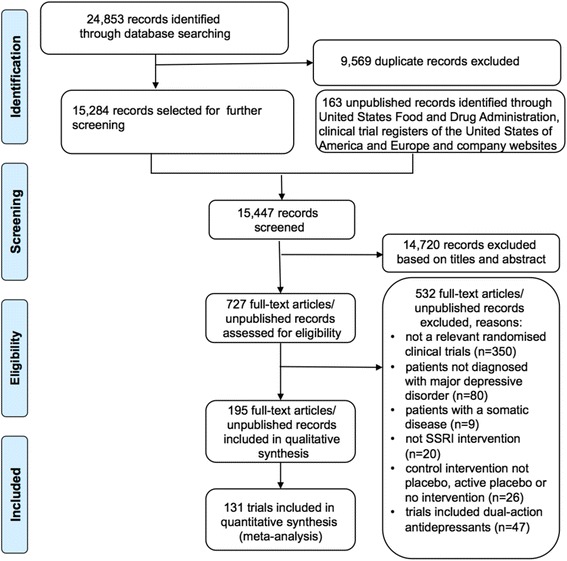
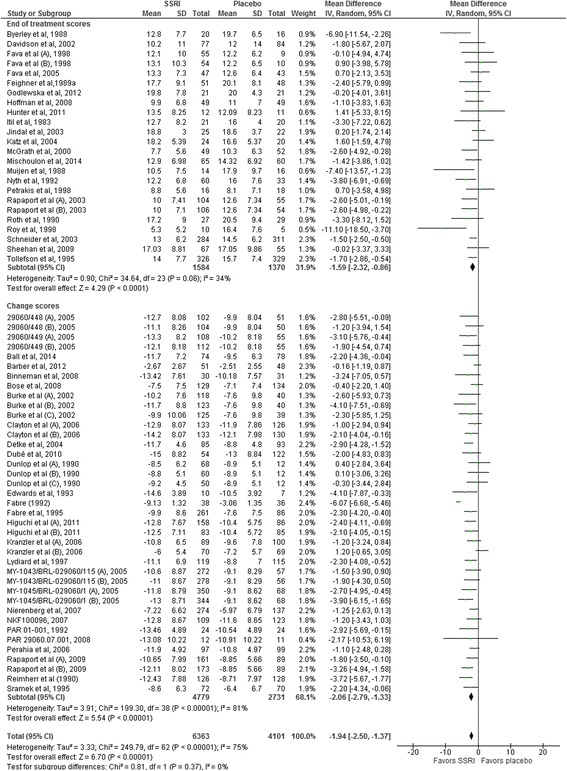
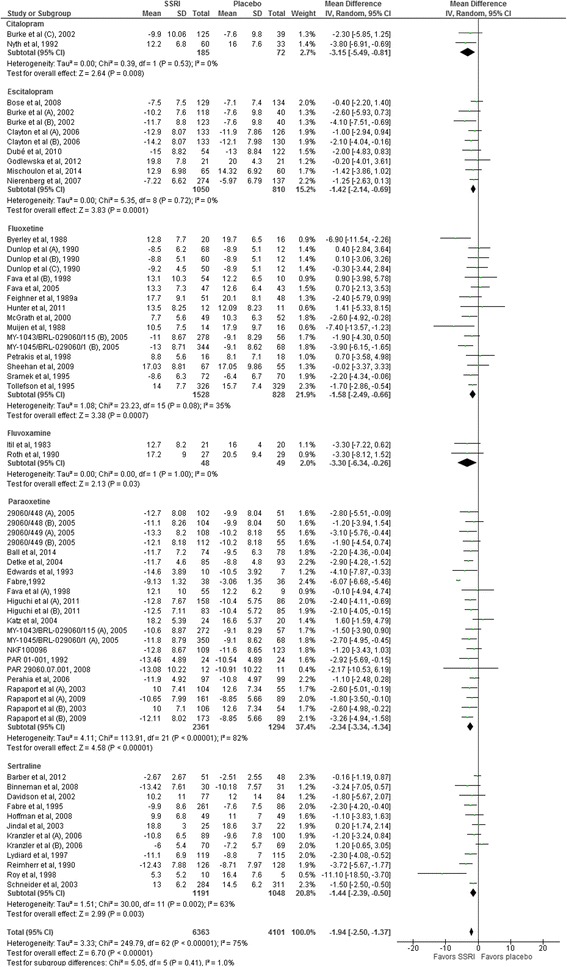
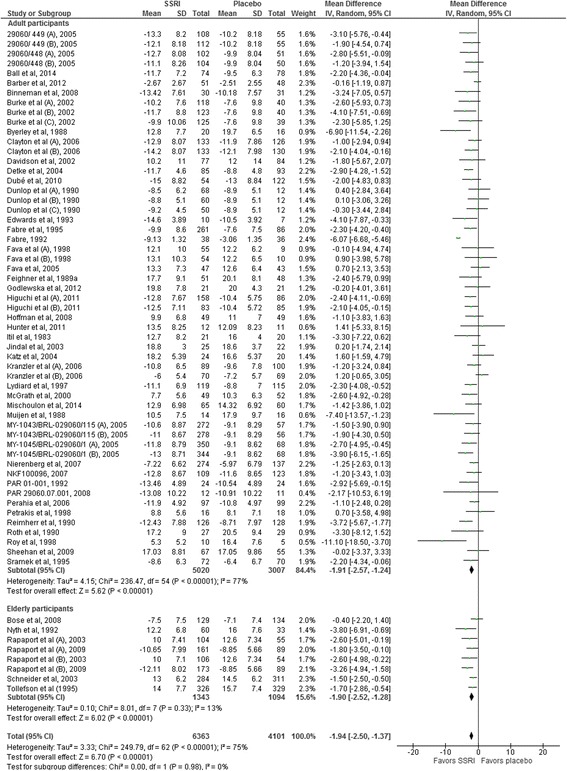
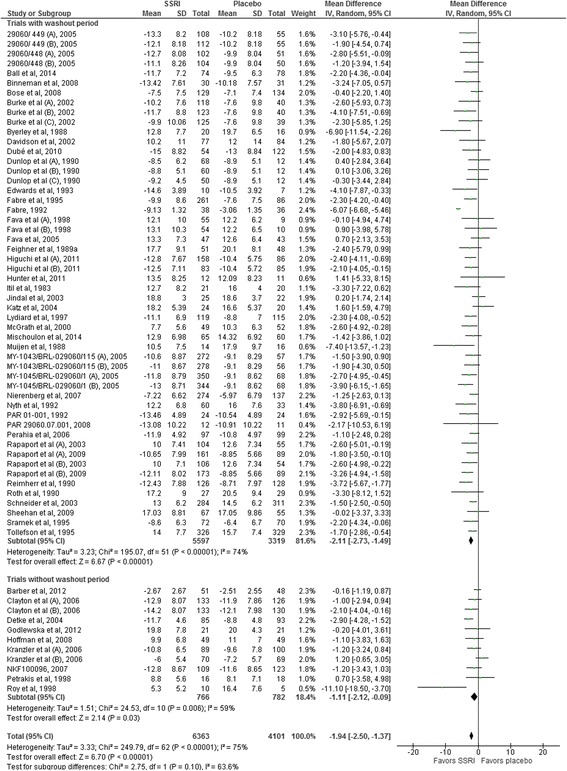
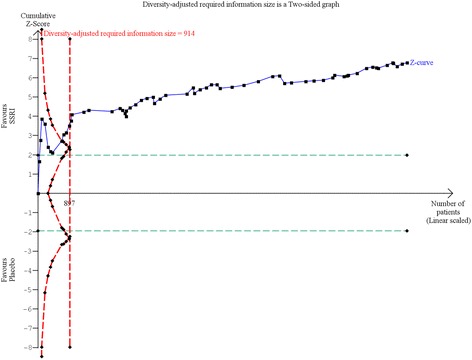
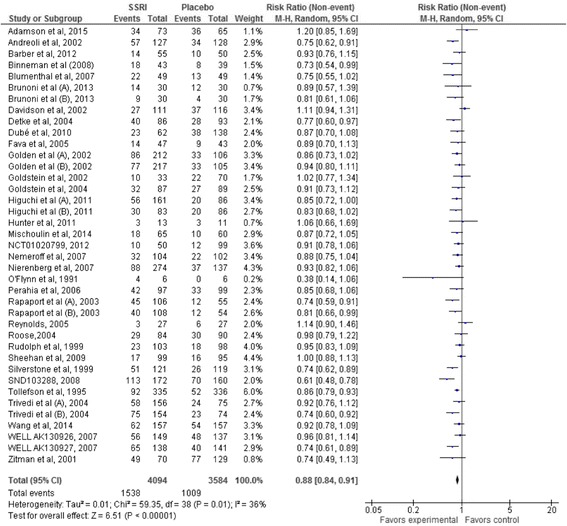
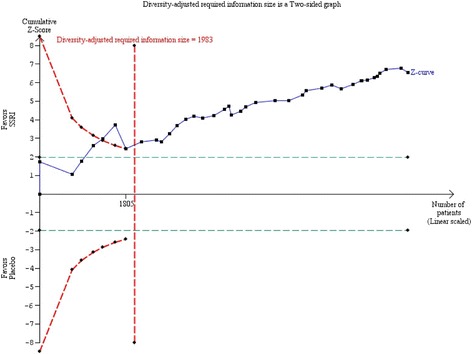
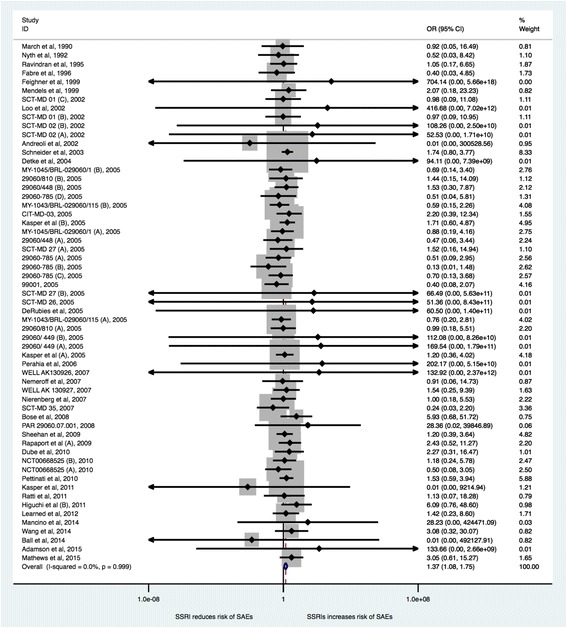
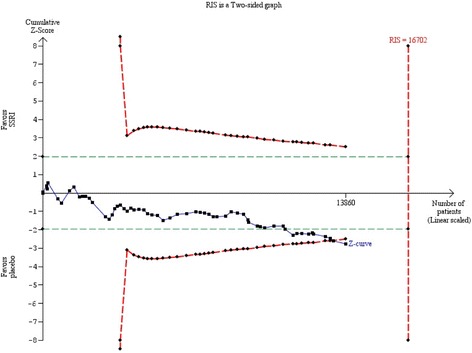
BACKGROUND: The evidence on selective serotonin reuptake inhibitors (SSRIs) for major depressive disorder is unclear. METHODS: Our objective was to conduct a systematic review assessing the effects of SSRIs versus placebo, 'active' placebo, or no intervention in adult participants with major depressive disorder. We searched for eligible randomised clinical trials in The Cochrane Library's CENTRAL, PubMed, EMBASE, PsycLIT, PsycINFO, Science Citation Index Expanded, clinical trial registers of Europe and USA, websites of pharmaceutical companies, the U.S. Food and Drug Administration (FDA), and the European Medicines Agency until January 2016. All data were extracted by at least two independent investigators. We used Cochrane systematic review methodology, Trial Sequential Analysis, and calculation of Bayes factor. An eight-step procedure was followed to assess if thresholds for statistical and clinical significance were crossed. Primary outcomes were reduction of depressive symptoms, remission, and adverse events. Secondary outcomes were suicides, suicide attempts, suicide ideation, and quality of life. RESULTS: ). The effect estimate, however, was below our predefined threshold for clinical significance of 3 HDRS points. SSRIs significantly decreased the risk of no remission (RR 0.88; 95% CI 0.84 to 0.91; P < 0.00001; 34 trials; Trial Sequential Analysis adjusted CI 0.83 to 0.92); Bayes factor (1426.81) did not confirm the effect). SSRIs significantly increased the risks of serious adverse events (OR 1.37; 95% CI 1.08 to 1.75; P = 0.009; 44 trials; Trial Sequential Analysis-adjusted CI 1.03 to 1.89). This corresponds to 31/1000 SSRI participants will experience a serious adverse event compared with 22/1000 control participants. SSRIs also significantly increased the number of non-serious adverse events. There were almost no data on suicidal behaviour, quality of life, and long-term effects. CONCLUSIONS: SSRIs might have statistically significant effects on depressive symptoms, but all trials were at high risk of bias and the clinical significance seems questionable. SSRIs significantly increase the risk of both serious and non-serious adverse events. The potential small beneficial effects seem to be outweighed by harmful effects. SYSTEMATIC REVIEW REGISTRATION: PROSPERO CRD42013004420.
Overview
The claims and statistics of this paper haven’t been checked yet.
Free: it reads the open-access text and checks the first 5 claims that cite a source we can check. Create a free account to check every claim.
Integrity signals
Registry
Cites
Statistics
Figures

Verification
Claims the paper makes
The claims and statistics of this paper haven’t been checked yet.
Free: it reads the open-access text and checks the first 5 claims that cite a source we can check. Create a free account to check every claim.
Claims other papers make about this one
Each is checked against this paper’s own text: does it say what the citing paper says it does?
The source backs part of the claim, not all of it — or backs it for a different population, condition or comparison.
In the citing paper
“there is extensive evidence that targeting and treating mental disorders has little or mixed impact on suicidal risk [10,11,12].”
From One Size Does Not Fit All: A Comprehensive Clinical Approach to Reducing Suicidal Ideation, Attempts, and Deaths (2019) · cites this paper as [12]
Experimental — accuracy not yet measuredThe source backs part of the claim, not all of it — or backs it for a different population, condition or comparison.
In the citing paper
“That review found, as all other previous reviews have shown, that SSRIs compared with placebo had a statistically significant effect on depressive symptoms.”
From Should antidepressants be used for major depressive disorder? (2020) · cites this paper as [28]
Experimental — accuracy not yet measuredThe source backs part of the claim, not all of it — or backs it for a different population, condition or comparison.
In the citing paper
“The few trials assessing long-term effects showed that such effects seemed even smaller than the short-term effects.”
From Should antidepressants be used for major depressive disorder? (2020) · cites this paper as [28]
Experimental — accuracy not yet measuredThe source backs part of the claim, not all of it — or backs it for a different population, condition or comparison.
In the citing paper
“The primary limitation of all the available evidence on the effects of antidepressants is that the majority of previous trials assessing the effects of antidepressants have been at high or unclear risk of bias.”
From Should antidepressants be used for major depressive disorder? (2020) · cites this paper as [28]
Experimental — accuracy not yet measuredThe source backs part of the claim, not all of it — or backs it for a different population, condition or comparison.
In the citing paper
“The above-mentioned systematic review assessing the effects of SSRIs (see ‘How good are antidepressants?’ section) also concluded that the vast majority of the included trials (39 out of 43 trials) with useful data were at high risk of ‘for profit’ bias.”
From Should antidepressants be used for major depressive disorder? (2020) · cites this paper as [28]
Experimental — accuracy not yet measured
14 more claims about this paper
Create a free account to see every claim other papers make about this one.
Self-check
Percentages, sums and reported differences re-computed from the paper’s own numbers.
The self-check needs the paper’s full text.
Citations
Cites
Meta-analysis in clinical trials
DerSimonian, R., & Laird, N. (1986) · Controlled Clinical Trials · doi:10.1016/0197-2456(86)90046-2 · Cited by 39,552
An inventory for measuring depression
BECK, A. T. (1961) · Archives of General Psychiatry · doi:10.1001/archpsyc.1961.01710120031004 · Cited by 38,032
Hamilton, M. (1960) · Journal of Neurology, Neurosurgery & Psychiatry · doi:10.1136/jnnp.23.1.56 · Cited by 32,817
Dermyshi, E., Wang, Y., Yan, C., Hong, W., Qiu, G., Gong, X., & Zhang, T. (2017) · Neonatology · doi:10.1159/000454668 · Cited by 24,451
A new depression scale designed to be sensitive to change
Montgomery, S. A., & Åsberg, M. (1979) · British Journal of Psychiatry · doi:10.1192/bjp.134.4.382 · Cited by 13,962
GRADE guidelines: 1. Introduction—GRADE evidence profiles and summary of findings tables
Guyatt, G., Oxman, A. D., Akl, E. A., Kunz, R., Vist, G., Brozek, J., Norris, S., Falck-Ytter, Y., Glasziou, P., & deBeer, H. (2011) · Journal of Clinical Epidemiology · doi:10.1016/j.jclinepi.2010.04.026 · Cited by 10,681
Hutton, B., Salanti, G., Caldwell, D. M., Chaimani, A., Schmid, C. H., Cameron, C., Ioannidis, J. P. A., Straus, S., Thorlund, K., Jansen, J. P., et al. (2015) · Annals of Internal Medicine · doi:10.7326/m14-2385 · Cited by 8,269
Scoville, W. B. (1949) · Journal of neurosurgery · doi:10.3171/jns.1949.6.1.0065 · Cited by 7,381
SPIRIT 2013 Statement: Defining Standard Protocol Items for Clinical Trials
Chan, A.-W., Tetzlaff, J. M., Altman, D. G., Laupacis, A., Gøtzsche, P. C., Krleža-Jerić, K., Hróbjartsson, A., Mann, H., Dickersin, K., Berlin, J. A., et al. (2013) · Annals of Internal Medicine · doi:10.7326/0003-4819-158-3-201302050-00583 · Cited by 7,363
Cochrane Handbook for Systematic Reviews of Interventions Version 5.0.1. The Cochrane Collaboration
Higgins, J. P. T., Green, S. R., & Higgins, J. P. T. (2008) · Cited by 7,261
Schulz (1995) · doi:10.1001/jama.1995.03520290060030 · Cited by 5,634
Relaxing the Rule of Ten Events per Variable in Logistic and Cox Regression
Vittinghoff, E., & McCulloch, C. E. (2007) · American Journal of Epidemiology · doi:10.1093/aje/kwk052 · Cited by 4,359
The National Institute for Clinical Excellence
(2001) · Nursing Management · doi:10.7748/nm.8.2.39.s15 · Cited by 3,876
Norderyd, O. M., Koch, G., Papias, A., Köhler, A. A., Helkimo, A. N., Brahm, C., Lindmark, U., Lindfors, N., Mattsson, A., Rolander, B., et al. (2015) · PubMed · Cited by 3,584
The cost of dichotomising continuous variables
Altman, D. G., & Royston, P. (2006) · BMJ · doi:10.1136/bmj.332.7549.1080 · Cited by 2,688
Kirsch, I., Deacon, B. J., Huedo-Medina, T. B., Scoboria, A., Moore, T. J., & Johnson, B. T. (2008) · PLoS Medicine · doi:10.1371/journal.pmed.0050045 · Cited by 2,442 · cited 4×
“Others have also shown that trials randomising participants with a higher baseline HDRS mean average seem to show larger effects of antidepressants [7, 8].”
MethodResultInfluentialSelective publication of antidepressant trials and its influence on apparent efficacy
Turner, E. H., Matthews, A. M., Linardatos, E., Tell, R. A., & Rosenthal, R. (2008) · New England Journal of Medicine · doi:10.1056/nejmsa065779 · Cited by 2,435 · cited 1×
“Others have also shown that trials randomising participants with a higher baseline HDRS mean average seem to show larger effects of antidepressants [7, 8].”
ResultAntidepressant Drug Effects and Depression Severity: A Patient-Level Meta-analysis
Fournier, J. C., DeRubeis, R. J., Hollon, S. D., Dimidjian, S., Amsterdam, J. D., Shelton, R. C., & Fawcett, J. (2010) · JAMA · doi:10.1001/jama.2009.1943 · Cited by 2,009
Trial sequential analysis may establish when firm evidence is reached in cumulative meta-analysis
Wetterslev, J., Thorlund, K., Brok, J., & Gluud, C. (2008) · Journal of Clinical Epidemiology · doi:10.1016/j.jclinepi.2007.03.013 · Cited by 1,881 · cited 18×
“The required information size is based upon the event proportion in the control group; the assumption of a plausible relative risk (RR) reduction; and the assumed heterogeneity or diversity of the meta-analysis [25, 29].”
BackgroundMethodInfluentialSelf-citationCooney, G. M., Dwan, K., Greig, C. A., Lawlor, D. A., Rimer, J., Waugh, F. R., McMurdo, M., & Mead, G. E. (2013) · Cochrane Database of Systematic Reviews · doi:10.1002/14651858.cd004366.pub6 · Cited by 1,834
What to add to nothing? Use and avoidance of continuity corrections in meta‐analysis of sparse data
J. Sweeting, M., J. Sutton, A., & C. Lambert, P. (2004) · Statistics in Medicine · doi:10.1002/sim.1761 · Cited by 1,734 · cited 1×
“ratio method with reciprocal zero cell correction (zero is replaced by the reciprocal of the size of the opposite treatment arm) [177].”
MethodIndustry sponsorship and research outcome
Lundh, A., Lexchin, J., Mintzes, B., Schroll, J. B., & Bero, L. (2017) · Cochrane Database of Systematic Reviews · doi:10.1002/14651858.mr000033.pub3 · Cited by 1,697
Cipriani, A., Furukawa, T. A., Salanti, G., Geddes, J. R., Higgins, J. P., Churchill, R., Watanabe, N., Nakagawa, A., Omori, I. M., McGuire, H., et al. (2009) · The Lancet · doi:10.1016/s0140-6736(09)60046-5 · Cited by 1,654
Empirical assessment of effect of publication bias on meta-analyses
Sutton, A. J. (2000) · BMJ · doi:10.1136/bmj.320.7249.1574 · Cited by 1,398
Brok, J., Thorlund, K., Gluud, C., & Wetterslev, J. (2008) · Journal of Clinical Epidemiology · doi:10.1016/j.jclinepi.2007.10.007 · Cited by 1,113
Self-citationSavović, J., Jones, H. E., Altman, D. G., Harris, R. J., Jüni, P., Pildal, J., Als-Nielsen, B., Balk, E. M., Gluud, C., Gluud, L. L., et al. (2012) · Annals of Internal Medicine · doi:10.7326/0003-4819-157-6-201209180-00537 · Cited by 1,049
Self-citationExercise and Pharmacotherapy in the Treatment of Major Depressive Disorder
Blumenthal, J. A., Babyak, M. A., Doraiswamy, P. M., Watkins, L., Hoffman, B. M., Barbour, K. A., Herman, S., Craighead, W. E., Brosse, A. L., Waugh, R., et al. (2007) · Psychosomatic Medicine · doi:10.1097/psy.0b013e318148c19a · Cited by 1,019
Cognitive Therapy vs Medications in the Treatment of Moderate to Severe Depression
DeRubeis, R. J., Hollon, S. D., Amsterdam, J. D., Shelton, R. C., Young, P. R., Salomon, R. M., O’Reardon, J. P., Lovett, M. L., Gladis, M. M., Brown, L. L., et al. (2005) · Archives of General Psychiatry · doi:10.1001/archpsyc.62.4.409 · Cited by 989 · cited 2×
“…1 out of 85 No serious adverse event 0 out of 93 Mancino et al., 2014 Sertraline 1 hospitalization 1 out of 23 No serious adverse event 0 out of 27 DeRubeis et al., 2005 Paroxetine 1 suicide 1 out of 120 No serious adverse event 0 out of 60 29060-785 (A), 2005 Paroxetine CR 25 mg 3 abnormal…”
BackgroundEstimating required information size by quantifying diversity in random-effects model meta-analyses
Wetterslev, J., Thorlund, K., Brok, J., & Gluud, C. (2009) · BMC Medical Research Methodology · doi:10.1186/1471-2288-9-86 · Cited by 938
Self-citationBrok, J., Thorlund, K., Wetterslev, J., & Gluud, C. (2009) · International Journal of Epidemiology · doi:10.1093/ije/dyn188 · Cited by 917
Self-citationCooney, G. M., Dwan, K., Greig, C. A., Lawlor, D. A., Rimer, J., Waugh, F. R., McMurdo, M., & Mead, G. E. (2014) · Advances in Psychiatric Treatment · doi:10.1192/apt.20.1.2 · Cited by 895
Can trial sequential monitoring boundaries reduce spurious inferences from meta-analyses?
Thorlund, K., Devereaux, P. J., Wetterslev, J., Guyatt, G., Ioannidis, J. P. A., Thabane, L., Gluud, L.-L., Als-Nielsen, B., & Gluud, C. (2009) · International Journal of Epidemiology · doi:10.1093/ije/dyn179 · Cited by 833
Self-citationPlacebo interventions for all clinical conditions
Hróbjartsson, A., & Gøtzsche, P. C. (2010) · Cochrane Database of Systematic Reviews · doi:10.1002/14651858.cd003974.pub3 · Cited by 777
The Functional Neuroanatomy of the Placebo Effect
Mayberg, H. S., Silva, J. A., Brannan, S. K., Tekell, J. L., Mahurin, R. K., McGinnis, S., & Jerabek, P. A. (2002) · American Journal of Psychiatry · doi:10.1176/appi.ajp.159.5.728 · Cited by 720
Jakobsen, J. C., Wetterslev, J., Winkel, P., Lange, T., & Gluud, C. (2014) · BMC Medical Research Methodology · doi:10.1186/1471-2288-14-120 · Cited by 704 · cited 9×
“Statistical heterogeneity was assessed by visual inspection of forest plots and by the heterogeneity (I(2) or D(2)) [13, 16, 24, 25].”
BackgroundMethodInfluentialSelf-citationSavović, J., Jones, H., Altman, D., Harris, R., Jűni, P., Pildal, J., Als-Nielsen, B., Balk, E., Gluud, C., Gluud, L., et al. (2012) · Health Technology Assessment · doi:10.3310/hta16350 · Cited by 668 · cited 1×
“The high risks of bias question the validity of our meta-analysis results as high risk of bias trials tend to overestimate benefits and underestimate harms [194, 205].”
BackgroundSelf-citationIndustry sponsorship and research outcome
Lundh, A., Sismondo, S., Lexchin, J., Busuioc, O. A., & Bero, L. (2012) · Cochrane Database of Systematic Reviews · doi:10.1002/14651858.mr000033.pub2 · Cited by 605
Brunoni, A. R., Valiengo, L., Baccaro, A., Zanão, T. A., de Oliveira, J. F., Goulart, A., Boggio, P. S., Lotufo, P. A., Benseñor, I. M., & Fregni, F. (2013) · JAMA Psychiatry · doi:10.1001/2013.jamapsychiatry.32 · Cited by 601
Hróbjartsson, A., Thomsen, A. S. S., Emanuelsson, F., Tendal, B., Hilden, J., Boutron, I., Ravaud, P., & Brorson, S. (2013) · Canadian Medical Association Journal · doi:10.1503/cmaj.120744 · Cited by 527
Hrobjartsson, A., Thomsen, A. S. S., Emanuelsson, F., Tendal, B., Hilden, J., Boutron, I., Ravaud, P., & Brorson, S. (2012) · BMJ · doi:10.1136/bmj.e1119 · Cited by 483
Hypericum Depression Trial Study Group (2002) · JAMA · doi:10.1001/jama.287.14.1807 · Cited by 480
Hróbjartsson, A., Emanuelsson, F., Skou Thomsen, A. S., Hilden, J., & Brorson, S. (2014) · International Journal of Epidemiology · doi:10.1093/ije/dyu115 · Cited by 462
Khan, A., Leventhal, R. M., Khan, S. R., & Brown, W. A. (2002) · Journal of Clinical Psychopharmacology · doi:10.1097/00004714-200202000-00007 · Cited by 456
Leucht, S., Hierl, S., Kissling, W., Dold, M., & Davis, J. M. (2012) · British Journal of Psychiatry · doi:10.1192/bjp.bp.111.096594 · Cited by 451 · cited 4×
“also suggested that a lack of difference between antidepressants and placebo is caused by an increasing ‘placebo’ effect (spontaneous recovery) [203].”
BackgroundInfluentialFluoxetine in Depressed Alcoholics: A Double-blind, Placebo-Controlled Trial
Cornelius, J. R. (1997) · Archives of General Psychiatry · doi:10.1001/archpsyc.1997.01830200024004 · Cited by 357
Antidepressants versus placebo for depression in primary care
Arroll, B., Elley, C. R., Fishman, T., Goodyear-Smith, F. A., Kenealy, T., Blashki, G., Kerse, N., & MacGillivray, S. (2009) · Cochrane Database of Systematic Reviews · doi:10.1002/14651858.cd007954 · Cited by 352
Fixed-Dose Trial of the Single Isomer SSRI Escitalopram in Depressed Outpatients
Burke, W. J., Gergel, I., & Bose, A. (2002) · The Journal of Clinical Psychiatry · doi:10.4088/jcp.v63n0410 · Cited by 350
Active placebos versus antidepressants for depression
Moncrieff, J., Wessely, S., & Hardy, R. (2004) · Cochrane Database of Systematic Reviews · doi:10.1002/14651858.cd003012.pub2 · Cited by 342 · cited 1×
“We included all randomised clinical trials comparing the effects of SSRIs (citalopram; escitalopram; sertraline; fluoxetine; paroxetine; or fluvoxamine) versus placebo, ‘active placebo’ (any active substance employed to mimic the adverse effects of taking a SSRI) [15], or no intervention.”
MethodDuloxetine in the Treatment of Major Depressive Disorder: A Double-Blind Clinical Trial
Goldstein, D. J., Mallinckrodt, C., Lu, Y., & Demitrack, M. A. (2002) · The Journal of Clinical Psychiatry · doi:10.4088/jcp.v63n0309 · Cited by 334
Rimer, J., Dwan, K., Lawlor, D. A., Greig, C. A., McMurdo, M., Morley, W., & Mead, G. E. (2012) · Cochrane Database of Systematic Reviews · doi:10.1002/14651858.cd004366.pub5 · Cited by 330
Thorlund, K., Imberger, G., Walsh, M., Chu, R., Gluud, C., Wetterslev, J., Guyatt, G., Devereaux, P. J., & Thabane, L. (2011) · PLoS ONE · doi:10.1371/journal.pone.0025491 · Cited by 319
Self-citationThe QLDS: A scale for the measurement of quality of life in depression
Hunt, S. M., & McKenna, S. P. (1992) · Health Policy · doi:10.1016/0168-8510(92)90004-u · Cited by 314
Goldstein, D. J., Lu, Y., Detke, M. J., Wiltse, C., Mallinckrodt, C., & Demitrack, M. A. (2004) · Journal of Clinical Psychopharmacology · doi:10.1097/01.jcp.0000132448.65972.d9 · Cited by 314
Detke, M. J., Wiltse, C. G., Mallinckrodt, C. H., McNamara, R. K., Demitrack, M. A., & Bitter, I. (2004) · European Neuropsychopharmacology · doi:10.1016/j.euroneuro.2004.01.002 · Cited by 282
Ragland, D. R. (1992) · Epidemiology · doi:10.1097/00001648-199209000-00009 · Cited by 280
Gibbons, R. D., Hur, K., Brown, C. H., Davis, J. M., & Mann, J. J. (2012) · Archives of General Psychiatry · doi:10.1001/archgenpsychiatry.2011.2044 · Cited by 271 · cited 3×
“Our results confirm the findings from other studies questioning the effects of SSRIs [8, 207], but are in contrast to the results of other reviews concluding that SSRIs are effective interventions for depression [3, 6, 10, 208].”
BackgroundMethodResultUndurraga, J., & Baldessarini, R. J. (2012) · Neuropsychopharmacology · doi:10.1038/npp.2011.306 · Cited by 269
Pettinati, H. M., Oslin, D. W., Kampman, K. M., Dundon, W. D., Xie, H., Gallis, T. L., Dackis, C. A., & O'Brien, C. P. (2010) · American Journal of Psychiatry · doi:10.1176/appi.ajp.2009.08060852 · Cited by 267
Reimherr, F. W., Chouinard, G., Cohn, C. K., Cole, J. O., Itil, T. M., LaPierre, Y. D., Masco, H. L., & MENDELS, J. (1990) · PubMed · Cited by 263
Nyth, A. L., Gottfries, C. G., Lyby, K., Smedegaard‐Andersen, L., Gylding‐Sabroe, J., Kristensen, M., Refsum, H. ‐., Öfsti, E., Eriksson, S., & Syversen, S. (1992) · Acta Psychiatrica Scandinavica · doi:10.1111/j.1600-0447.1992.tb03242.x · Cited by 258 · cited 2×
“Twelve of the included trials specifically randomised elderly (most often participants >65 years) depressed participants [45, 48, 54, 63, 82, 110, 111, 113, 122, 144, 162, 166], five trials randomised depressed alcohol dependant participants [47, 61, 116, 120, 156], and three trials randomised depressed opioid and coc…”
BackgroundInfluentialBinneman, B., Feltner, D., Kolluri, S., Shi, Y., Qiu, R., & Stiger, T. (2008) · American Journal of Psychiatry · doi:10.1176/appi.ajp.2008.07071199 · Cited by 254
Lepola, U. M., Loft, H., & Reines, E. H. (2003) · International Clinical Psychopharmacology · doi:10.1097/01.yic.0000074988.54339.7c · Cited by 254
Katz, M. M., Tekell, J. L., Bowden, C. L., Brannan, S., Houston, J. P., Berman, N., & Frazer, A. (2004) · Neuropsychopharmacology · doi:10.1038/sj.npp.1300341 · Cited by 252
Silverstone, P. H., Ravindran, A., & the Venlafaxine XR 360 Study Group (1999) · The Journal of Clinical Psychiatry · doi:10.4088/jcp.v60n0105 · Cited by 246
Short-term SSRI treatment normalises amygdala hyperactivity in depressed patients.
Godlewska, B. R., Norbury, R., Selvaraj, S., Cowen, P. J., & Harmer, C. J. (2012) · Psychological Medicine · doi:10.1017/s0033291712000591 · Cited by 244
Croft, H., Settle, E., Houser, T., Batey, S. R., Donahue, R. M. J., & Ascher, J. A. (1999) · Clinical Therapeutics · doi:10.1016/s0149-2918(00)88317-4 · Cited by 242
Wade, A., Michael Lemming, O., & Bang Hedegaard, K. (2002) · International Clinical Psychopharmacology · doi:10.1097/00004850-200205000-00001 · Cited by 231
Cortisol Secretion Rate in Depressive Illness
GIBBONS, J. L. (1964) · Archives of General Psychiatry · doi:10.1001/archpsyc.1964.01720240026004 · Cited by 228
Furukawa, T. A., Cipriani, A., Atkinson, L. Z., Leucht, S., Ogawa, Y., Takeshima, N., Hayasaka, Y., Chaimani, A., & Salanti, G. (2016) · The Lancet Psychiatry · doi:10.1016/s2215-0366(16)30307-8 · Cited by 219 · cited 3×
“However, it is unlikely that depressed patient have a significant placebo effect [189] and it has recently been shown that the placebo response has been stable for 25 years [188].”
BackgroundLeucht, S., Fennema, H., Engel, R., Kaspers–Janssen, M., Lepping, P., & Szegedi, A. (2013) · Journal of Affective Disorders · doi:10.1016/j.jad.2012.12.001 · Cited by 211 · cited 1×
“One study has shown that a SSRI-placebo mean difference of up to three points on the HDRS corresponds to ‘no clinical change’ [186].”
BackgroundJakobsen, J. C., Gluud, C., Winkel, P., Lange, T., & Wetterslev, J. (2014) · BMC Medical Research Methodology · doi:10.1186/1471-2288-14-34 · Cited by 203
Self-citationRoose, S. P., Sackeim, H. A., Krishnan, K. R. R., Pollock, B. G., Alexopoulos, G., Lavretsky, H., Katz, I. R., Hakkarainen, H., & Old-Old Depression Study Group (2004) · American Journal of Psychiatry · doi:10.1176/appi.ajp.161.11.2050 · Cited by 191
Fabre, L. F., Abuzzahab, F. S., Amin, M., Claghorn, J. L., Mendels, J., Petrie, W. M., Dubé, S., & Small, J. G. (1995) · Biological Psychiatry · doi:10.1016/0006-3223(95)00178-8 · Cited by 184
Antidepressants versus placebo for the depressed elderly
Wilson, K., Mottram, P. G., Sivananthan, A., & Nightingale, A. (2001) · Cochrane Database of Systematic Reviews · doi:10.1002/14651858.cd000561 · Cited by 179
Coleman, C. (2001) · Clinical Therapeutics · doi:10.1016/s0149-2918(01)80090-4 · Cited by 179
Dichotomizing Continuous Variables in Statistical Analysis: A Practice to Avoid
Dawson, N. V., & Weiss, R. (2012) · Medical Decision Making · doi:10.1177/0272989x12437605 · Cited by 176
A Comparison of Paroxetine, Imipramine and Placebo in Depressed Out-patients
Dunbar, G. C., Cohn, J. B., Fabre, L. F., Feighner, J. P., Fieve, R. R., Mendels, J., & Shrivastava, R. K. (1991) · British Journal of Psychiatry · doi:10.1192/bjp.159.3.394 · Cited by 175
Multicenter, Placebo-Controlled, Fixed-Dose Study of Citalopram in Moderate-to-Severe Depression
Feighner, J. P., & Overø, K. (1999) · The Journal of Clinical Psychiatry · doi:10.4088/jcp.v60n1204 · Cited by 168
Schneider, L. S., Nelson, J. C., Clary, C. M., Newhouse, P., Krishnan, K. R. R., Shiovitz, T., Weihs, K., & the Sertraline Elderly Depression Study Group (2003) · American Journal of Psychiatry · doi:10.1176/appi.ajp.160.7.1277 · Cited by 166
Rudolph, R. L., & Feiger, A. D. (1999) · Journal of Affective Disorders · doi:10.1016/s0165-0327(99)00067-1 · Cited by 158
Schatzberg, A. F., & Roose, S. P. (2006) · American Journal of Geriatric Psychiatry · doi:10.1097/01.jgp.0000194645.70869.3b · Cited by 158
Barber, J. P., Barrett, M. S., Gallop, R., Rynn, M. A., & Rickels, K. (2012) · The Journal of Clinical Psychiatry · doi:10.4088/jcp.11m06831 · Cited by 157 · cited 2×
“Only six trials assessed quality of life [48, 51, 63, 100, 101, 112] out of which four trials reported results on the quality of life enjoyment and satisfaction questionnaire (Q-LES-Q) [48, 51, 100, 101].”
BackgroundInfluentialMischoulon, D., Price, L. H., Carpenter, L. L., Tyrka, A. R., Papakostas, G. I., Baer, L., Dording, C. M., Clain, A. J., Durham, K., Walker, R., et al. (2014) · The Journal of Clinical Psychiatry · doi:10.4088/jcp.13m08591 · Cited by 144
Moncrieff, J., & Kirsch, I. (2015) · Contemporary Clinical Trials · doi:10.1016/j.cct.2015.05.005 · Cited by 142
Tollefson, G. D., Bosomworth, J. C., Heiligenstein, J. H., Potvin, J. H., & Holman, S. (1995) · International Psychogeriatrics · doi:10.1017/s1041610295001888 · Cited by 142
Fava, M., Alpert, J., Nierenberg, A. A., Mischoulon, D., Otto, M. W., Zajecka, J., Murck, H., & Rosenbaum, J. F. (2005) · Journal of Clinical Psychopharmacology · doi:10.1097/01.jcp.0000178416.60426.29 · Cited by 142
Escitalopram in the Treatment of Depressed Elderly Patients
Kasper, S. F., de Swart, H., & Andersen, H. F. (2005) · American Journal of Geriatric Psychiatry · doi:10.1176/appi.ajgp.13.10.884 · Cited by 140
Picot, J., Hartwell, D., Harris, P., Mendes, D., Clegg, A., & Takeda, A. (2012) · Health Technology Assessment · doi:10.3310/hta16190 · Cited by 138
Stahl, S. M. (2000) · Biological Psychiatry · doi:10.1016/s0006-3223(00)00957-4 · Cited by 134
A comparison of fluoxetine, imipramine, and placebo in patients with major depressive disorder.
Jb, C., & Wilcox, C. M. (1985) · PubMed · Cited by 133
Nierenberg, A. A., Greist, J. H., Mallinckrodt, C. H., Prakash, A., Sambunaris, A., Tollefson, G. D., & Wohlreich, M. M. (2007) · Current Medical Research and Opinion · doi:10.1185/030079906x167453 · Cited by 131
Deadly Medicines and Organised Crime: How Big Pharma Has Corrupted Healthcare
Gøtzsche, P. C. (2013) · Cited by 131
Coleman, C. C., Cunningham, L. A., Foster, V. J., Batey, S. R., Donahue, R. M. J., Houser, T. L., & Ascher, J. A. (1999) · Annals of Clinical Psychiatry · doi:10.1023/a:1022309428886 · Cited by 130
Fluoxetine treatment of cocaine-dependent patients with major depressive disorder
Schmitz, J. M., Averill, P. M., Stotts, A. L., Moeller, F. G., Rhoades, H. M., & Grabowski, J. (2001) · Drug and Alcohol Dependence · doi:10.1016/s0376-8716(00)00208-8 · Cited by 130
Kaddurah-Daouk, R., Boyle, S. H., Matson, W., Sharma, S., Matson, S., Zhu, H., Bogdanov, M. B., Churchill, E., Krishnan, R. R., Rush, A. J., et al. (2011) · Translational Psychiatry · doi:10.1038/tp.2011.22 · Cited by 129
Duloxetine in the treatment of major depressive disorder: a placebo- and paroxetine-controlled trial
Perahia, D. G. S., Wang, F., Mallinckrodt, C. H., Walker, D. J., & Detke, M. J. (2006) · European Psychiatry · doi:10.1016/j.eurpsy.2006.03.004 · Cited by 128
Clayton, A. H., Croft, H. A., Horrigan, J. P., Wightman, D. S., Krishen, A., Richard, N. E., & Modell, J. G. (2006) · The Journal of Clinical Psychiatry · doi:10.4088/jcp.v67n0507 · Cited by 126
Lydiard, R. B., Stahl, S. M., Hertzman, M., & Harrison, W. M. (1997) · The Journal of Clinical Psychiatry · doi:10.4088/jcp.v58n1104 · Cited by 126
Active placebos versus antidepressants for depression (Review)
Moncrieff, J., Wessely, S. C., & Hardy, R. (2004) · UCL Discovery (University College London) · Cited by 125
Primum Non Nocere: An Evolutionary Analysis of Whether Antidepressants Do More Harm than Good
Andrews, P. W., Thomson, J. A., Amstadter, A., & Neale, M. C. (2012) · Frontiers in Psychology · doi:10.3389/fpsyg.2012.00117 · Cited by 120
McGrath, P. J., Stewart, J. W., Janal, M. N., Petkova, E., Quitkin, F. M., & Klein, D. F. (2000) · American Journal of Psychiatry · doi:10.1176/appi.ajp.157.3.344 · Cited by 114
Mao, J. J., Xie, S. X., Zee, J., Soeller, I., Li, Q. S., Rockwell, K., & Amsterdam, J. D. (2015) · Phytomedicine · doi:10.1016/j.phymed.2015.01.010 · Cited by 111
A comparative clinical trial of fluoxetine, mianserin and placebo in depressed outpatients
Muijen, M., Roy, D., Silverstone, T., Mehmet, A., & Christie, M. (1988) · Acta Psychiatrica Scandinavica · doi:10.1111/j.1600-0447.1988.tb06353.x · Cited by 110
Exercise Fails to Improve Neurocognition in Depressed Middle-Aged and Older Adults
HOFFMAN, B. M., BLUMENTHAL, J. A., BABYAK, M. A., SMITH, P. J., ROGERS, S. D., DORAISWAMY, P. M., & SHERWOOD, A. (2008) · Medicine & Science in Sports & Exercise · doi:10.1249/mss.0b013e31816b877c · Cited by 110
Efficacy of Controlled-Release Paroxetine in the Treatment of Late-Life Depression
Rapaport, M. H., Schneider, L. S., Dunner, D. L., Davies, J. T., & Pitts, C. D. (2003) · The Journal of Clinical Psychiatry · doi:10.4088/jcp.v64n0912 · Cited by 109
Escitalopram in the Acute Treatment of Depressed Patients Aged 60 Years or Older
Bose, A., Li, D., & Gandhi, C. C. (2007) · American Journal of Geriatric Psychiatry · doi:10.1097/jgp.0b013e3181591c09 · Cited by 108
Garattini, S., Jakobsen, J. C., Wetterslev, J., Bertelé, V., Banzi, R., Rath, A., Neugebauer, E. A. M., Laville, M., Masson, Y., Hivert, V., et al. (2016) · European Journal of Internal Medicine · doi:10.1016/j.ejim.2016.03.020 · Cited by 108
Self-citationGolden, R. N., Nemeroff, C. B., McSorley, P., Pitts, C. D., & Dube, E. M. (2002) · The Journal of Clinical Psychiatry · doi:10.4088/jcp.v63n0707 · Cited by 100
Sertraline Treatment of Co-occurring Alcohol Dependence and Major Depression
Kranzler, H. R., Mueller, T., Cornelius, J., Pettinati, H. M., Moak, D., Martin, P. R., Anthenelli, R., Brower, K. J., O'Malley, S., Mason, B. J., et al. (2006) · Journal of Clinical Psychopharmacology · doi:10.1097/01.jcp.0000194620.61868.35 · Cited by 99
Zitman, F. G., & Couvée, J. E. (2001) · British Journal of Psychiatry · doi:10.1192/bjp.178.4.317 · Cited by 90
Dubini, A., Bosc, M., & Polin, V. (1997) · PubMed · Cited by 88
Placebo-controlled study of sertraline in depressed recently abstinent alcoholics
Roy, A. (1998) · Biological Psychiatry · doi:10.1016/s0006-3223(97)00509-x · Cited by 86
Effects of Sertraline on Sleep Architecture in Patients With Depression
Jindal, R. D., Friedman, E. S., Berman, S. R., Fasiczka, A. L., Howland, R. H., & Thase, M. E. (2003) · Journal of Clinical Psychopharmacology · doi:10.1097/01.jcp.0000095345.32154.9a · Cited by 86
The Necessity of Randomized Clinical Trials
Jakobsen, J. (2013) · British Journal of Medicine and Medical Research · doi:10.9734/bjmmr/2013/3208 · Cited by 84
Self-citationFluoxetine treatment of depressive disorders in methadone-maintained opioid addicts
Petrakis, I., M. Carroll, K., Nich, C., Gordon, L., Kosten, T., & Rounsaville, B. (1998) · Drug and Alcohol Dependence · doi:10.1016/s0376-8716(98)00032-5 · Cited by 81
A Double-Blind Study of Paroxetine, Fluoxetine, and Placebo in Outpatients with Major Depression
Fava, M., Amsterdam, J. D., Deltito, J. A., Salzman, C., Schwaller, M., & Dünner, D. L. (1998) · Annals of Clinical Psychiatry · doi:10.1023/a:1022337927842 · Cited by 81
Griebel, G., Beeské, S., & Stahl, S. M. (2012) · The Journal of Clinical Psychiatry · doi:10.4088/jcp.12m07804 · Cited by 81
Tollefson, G. D., & Holman, S. L. (1993) · International Clinical Psychopharmacology · doi:10.1097/00004850-199300840-00008 · Cited by 80
BYERLEY, W. F., REIMHERR, F. W., WOOD, D. R., & GROSSER, B. I. (1988) · Journal of Clinical Psychopharmacology · doi:10.1097/00004714-198804000-00005 · Cited by 80
Clinical trials and the response rate illusion
Kirsch, I., & Moncrieff, J. (2007) · Contemporary Clinical Trials · doi:10.1016/j.cct.2006.10.012 · Cited by 80
Itil, T., Shrivastava, R., Mukherjee, S., Coleman, B., & Michael, S. (1983) · British Journal of Clinical Pharmacology · doi:10.1111/j.1365-2125.1983.tb02134.x · Cited by 80
A placebo-controlled trial of paroxetine in the treatment of major depression.
Smith, W. T., & Glaudin, V. (1992) · PubMed · Cited by 80
A Placebo-controlled Inpatient Comparison of Fluvoxamine Maleate and Imipramine in Major Depression
FEIGHNER, J. P., BOYER, W. F., MEREDITH, C. H., & HENDRICKSON, G. G. (1989) · International Clinical Psychopharmacology · doi:10.1097/00004850-198907000-00006 · Cited by 79
Mathews, M., Gommoll, C., Chen, D., Nunez, R., & Khan, A. (2015) · International Clinical Psychopharmacology · doi:10.1097/yic.0000000000000057 · Cited by 77
Nemeroff, C. B., & Thase, M. E. (2005) · Journal of Psychiatric Research · doi:10.1016/j.jpsychires.2005.07.009 · Cited by 76
Fluvoxamine in the Treatment of the Older Depressed Patient; Double-blind, Placebo-controlled Data
WAKELIN, J. S. (1986) · International Clinical Psychopharmacology · doi:10.1097/00004850-198607000-00005 · Cited by 69
Paroxetine in the treatment of depression: a comparison with imipramine and placebo
Feighner, J. P., & Boyer, W. F. (1989) · Acta Psychiatrica Scandinavica · doi:10.1111/j.1600-0447.1989.tb07190.x · Cited by 68
A double-blind placebo-controlled study of fluvoxamine and imipramine in depression.
Dominguez, R. A., Goldstein, B. J., Jacobson, A. F., & Steinbook, R. M. (1985) · PubMed · Cited by 65
Paroxetine in major depression: a double-blind trial with imipramine and placebo.
Schatzberg, A. F., & Rothschild, A. J. (1992) · PubMed · Cited by 64
Ratti, E., Bellew, K., Bettica, P., Bryson, H., Zamuner, S., Archer, G., Squassante, L., Bye, A., Trist, D., Krishnan, K. R., et al. (2011) · Journal of Clinical Psychopharmacology · doi:10.1097/jcp.0b013e31823608ca · Cited by 64
Doogan, D. P., & Langdon, C. J. (1994) · International Clinical Psychopharmacology · doi:10.1097/00004850-199400920-00005 · Cited by 60
Pattern analysis shows beneficial effect of fluoxetine treatment in mild depression.
Dunlop, S. R., Dornseif, B. E., Wernicke, J., & Potvin, J. H. (1990) · PubMed · Cited by 59
A Double-Blind Comparison of Fluoxetine, Imipramine and Placebo in Outpatients with Major Depression
FEIGHNER, J. P., BOYER, W. F., MERIDETH, C. H., & HENDRICKSON, G. G. (1989) · International Clinical Psychopharmacology · doi:10.1097/00004850-198904000-00004 · Cited by 58
Trivedi, M. H., Pigott, T. A., Perera, P., Dillingham, K. E., Carfagno, M. L., & Pitts, C. D. (2004) · The Journal of Clinical Psychiatry · doi:10.4088/jcp.v65n1010 · Cited by 57
Andreoli, V., Caillard, V., Deo, R. S., Rybakowski, J. K., & Versiani, M. (2002) · Journal of Clinical Psychopharmacology · doi:10.1097/00004714-200208000-00010 · Cited by 56
Claghorn, J. L., Earl, C. Q., Walczak, D. D., Stoner, K. A., Wong, L. F., Kanter, D., & Houser, V. P. (1996) · Journal of Clinical Psychopharmacology · doi:10.1097/00004714-199604000-00003 · Cited by 54
Kennedy, S. H. (2010) · The Journal of Sexual Medicine · doi:10.1111/j.1743-6109.2010.01938.x · Cited by 54
Leuchter, A. F., Morgan, M. L., Cook, I. A., Dunkin, J. J., Abrams, M., & Witte, E. A. (2004) · Psychopharmacology · doi:10.1007/s00213-004-1919-2 · Cited by 53
Committee for Medicinal Products for Human Use (CHMP) assessment on efficacy of antidepressants
Broich, K. (2009) · European Neuropsychopharmacology · doi:10.1016/j.euroneuro.2009.01.012 · Cited by 53
Adamson, S. J., Sellman, J. D., Foulds, J. A., Frampton, C. M. A., Deering, D., Dunn, A., Berks, J., Nixon, L., & Cape, G. (2015) · Journal of Clinical Psychopharmacology · doi:10.1097/jcp.0000000000000287 · Cited by 51
A double-blind comparison of fluvoxamine, imipramine and placebo in depressed patients
Norton, K., Sireling, L., Bhat, A., Rao, B., & Paykel, E. S. (1984) · Journal of Affective Disorders · doi:10.1016/0165-0327(84)90051-x · Cited by 51
A fixed-dose clinical trial of fluoxetine in outpatients with major depression.
Fabre, L. F., & Putman, H. P. (1987) · PubMed · Cited by 50
Hunter, A. M., Leuchter, A. F., Cook, I. A., & Abrams, M. (2010) · Acta Psychiatrica Scandinavica · doi:10.1111/j.1600-0447.2010.01560.x · Cited by 48
Walczak, D., Apter, J., Halikas, J., Borison, R., Carman, J., Post, G., Patrick, R., Cohn, J., Cunningham, L., Rittberg, B., et al. (1996) · Annals of Clinical Psychiatry · doi:10.3109/10401239609147751 · Cited by 47
MONTGOMERY, S. A., RASMUSSEN, J. G. C., LYBY, K., CONNOR, P., & TANGHOSJ, P. (1992) · International Clinical Psychopharmacology · doi:10.1097/00004850-199206005-00007 · Cited by 46
Consumption of Antidepressants in Italy: Recent Trends and Their Significance for Public Health
Gualano, M. R., Bert, F., Mannocci, A., La Torre, G., Zeppegno, P., & Siliquini, R. (2014) · Psychiatric Services · doi:10.1176/appi.ps.201300510 · Cited by 46
Lydiard, R. B., Laird, L. K., Morton, W. A., Steele, T. E., Kellner, C. H., Mt, L., & Jc, B. (1989) · PubMed · Cited by 46
Paroxetine in the treatment of depression: a comparison with imipramine and placebo.
Feighner, J. P., & Boyer, W. F. (1992) · PubMed · Cited by 44
Dubé, S., Dellva, M. A., Jones, M., Kielbasa, W., Padich, R. A., Saha, A., & Rao, P. G. (2009) · Journal of Psychiatric Research · doi:10.1016/j.jpsychires.2009.09.013 · Cited by 44
March, J. S., Kobak, K. A., Jefferson, J. W., Mazza, J., & Greist, J. H. (1990) · PubMed · Cited by 44
A double-blind comparison of fluvoxamine, desipramine and placebo in outpatients with depression
Roth, D. A., Mattes, J. A., Sheehan, K. H., & Sheehan, D. V. (1990) · Progress in Neuro-Psychopharmacology and Biological Psychiatry · doi:10.1016/0278-5846(90)90078-u · Cited by 43
Double-blind comparison of citalopram and placebo in depressed outpatients with melancholia
Mendels, J., Kiev, A., & Fabre, L. F. (1999) · Depression and Anxiety · doi:10.1002/(sici)1520-6394(1999)9:2<54::aid-da2>3.0.co;2-t · Cited by 41
A 6-week, double-blind trial of paroxetine, imipramine, and placebo in depressed outpatients.
Fabre, L. F. (1992) · PubMed · Cited by 39
A placebo- and imipramine-controlled study of paroxetine.
Cohn, J. B., Crowder, J. E., Wilcox, C. S., & Ryan, P. J. (1990) · PubMed · Cited by 39
Mancino, M. J., McGaugh, J., Chopra, M. P., Guise, J. B., Cargile, C., Williams, D. K., Thostenson, J., Kosten, T. R., Sanders, N., & Oliveto, A. (2014) · Journal of Clinical Psychopharmacology · doi:10.1097/jcp.0000000000000062 · Cited by 39
A double-blind, placebo-controlled study of paroxetine in depressed outpatients.
Kiev, A. (1992) · PubMed · Cited by 38
Reynolds, C. F., Smith, G. S., Dew, M. A., Mulsant, B. H., Miller, M. D., Schlernitzauer, M., STACK, J. A., Houck, P. R., & Pollock, B. G. (2005) · American Journal of Geriatric Psychiatry · doi:10.1097/00019442-200505000-00003 · Cited by 37
Fluvoxamine versus imipramine and placebo: a double-blind comparison in depressed patients
Fabre, L., Birkhimer, L. J., Zaborny, B. A., Wong, L. F., & Kapik, B. M. (1996) · International Clinical Psychopharmacology · doi:10.1097/00004850-199606000-00006 · Cited by 36
A double-blind comparison of paroxetine, imipramine, and placebo in major depression.
Shrivastava, R. K., Shrivastava, S. H., Overweg, N. I. A., & Blumhardt, C. L. (1992) · PubMed · Cited by 34
The Dexamethasone Suppression Test and Response to Placebo
Peselow, E. D., Lautin, A., Wolkin, A., ROHRS, C., NOVATT, A., Siekierski, J., & Rotrosen, J. (1986) · Journal of Clinical Psychopharmacology · doi:10.1097/00004714-198610000-00005 · Cited by 34
Hunter, A. M., Cook, I. A., Greenwald, S. D., Tran, M. L., Miyamoto, K. N., & Leuchter, A. F. (2011) · Journal of Clinical Neurophysiology · doi:10.1097/wnp.0b013e318230da8a · Cited by 33
Learned, S. M., Graff, O. X., Roychowdhury, S. M., Moate, R., Krishnan, K., Archer, G. E., Modell, J. G., Alexander, R., Zamuner, S., Lavergne, A., et al. (2011) · Journal of Psychopharmacology · doi:10.1177/0269881111424931 · Cited by 33
Wang, G., McIntyre, A., Earley, Raines, S. R., & Eriksson, H. (2014) · Neuropsychiatric Disease and Treatment · doi:10.2147/ndt.s50248 · Cited by 32
Claghorn, J. L. (1992) · PubMed · Cited by 32
The impact of sertraline, desipramine, and placebo on psychomotor functioning in depression
Ravindran, A. V., Teehan, M. D., Bakish, D., Yatham, L., O'Reilly, R., Fernando, M. L., Manchanda, R., Charbonneau, Y., & Buttars, J. (1995) · Human Psychopharmacology: Clinical and Experimental · doi:10.1002/hup.470100404 · Cited by 31
Rapaport, M. H., Lydiard, R. B., Pitts, C. D., Schaefer, D., Bartolic, E. I., Iyengar, M., Carfagno, M., & Lipschitz, A. (2009) · The Journal of Clinical Psychiatry · doi:10.4088/jcp.06m02996 · Cited by 30
Sheehan, D. V., Nemeroff, C. B., Thase, M. E., & Entsuah, R. (2009) · International Clinical Psychopharmacology · doi:10.1097/yic.0b013e32831980f2 · Cited by 27
Olié, J. P., Gunn, K. P., & Katz, E. (1997) · European Psychiatry · doi:10.1016/s0924-9338(97)86377-8 · Cited by 26
Clinical efficacy of paroxetine in resistant depression
Tyrer, P. J., Marsden, C. A., Casey, P. E., & Seivewright, N. (1987) · Journal of Psychopharmacology · doi:10.1177/026988118700100406 · Cited by 25
[ICH-GCP Guideline: quality assurance of clinical trials. Status and perspectives].
Englev, E., & Petersen, K. P. (2003) · PubMed · Cited by 25
The efficacy and safety of paroxetine compared with placebo in outpatients with major depression.
Rickels, K., Amsterdam, J. D., Clary, C. M., Fox, I., Schweizer, E. E., & Weise, C. (1992) · PubMed · Cited by 24
Higuchi, T., Hong, J. P., Jung, H., Watanabe, Y., Kunitomi, T., & Kamijima, K. (2011) · Psychiatry and Clinical Neurosciences · doi:10.1111/j.1440-1819.2011.02243.x · Cited by 23
Clinical Features and Efficacy of Escitalopram Treatment for Geriatric Depression
Chen, Y.-M., Huang, X.-M., Thompson, R., & Zhao, Y.-B. (2011) · Journal of International Medical Research · doi:10.1177/147323001103900540 · Cited by 23
The Effect of Gepirone-ER in the Treatment of Sexual Dysfunction in Depressed Men
Fabre, L. F., Clayton, A. H., Smith, L. C., Goldstein, I., & Derogatis, L. R. (2012) · The Journal of Sexual Medicine · doi:10.1111/j.1743-6109.2011.02624.x · Cited by 20
Duloxetine in the Treatment of Depression: An Overview
Monteleone, F., Caputo, M., Tecce, M. F., & Capasso, A. (2011) · Central Nervous System Agents in Medicinal Chemistry · doi:10.2174/187152411798047807 · Cited by 20
Gb, C., Conti, L., Massimetti, G., Mengali, F., Js, W., & Levine, J. (1986) · PubMed · Cited by 20
Kasper, S. F., Ebert, B., Larsen, K. G., & Tonnoir, B. (2011) · The International Journal of Neuropsychopharmacology · doi:10.1017/s146114571100112x · Cited by 18
O’Flynn, K., O’Keane, V., Lucey, J. V., & Dinan, T. G. (1991) · Biological Psychiatry · doi:10.1016/0006-3223(91)90294-v · Cited by 18
Ball, W. A., Snavely, D. B., Hargreaves, R. J., Szegedi, A., Lines, C., & Reines, S. A. (2014) · Human Psychopharmacology Clinical and Experimental · doi:10.1002/hup.2444 · Cited by 18
Miller, S. M., Naylor, G. J., Murtagh, M., & Winslow, G. S. (1989) · Acta Psychiatrica Scandinavica · doi:10.1111/j.1600-0447.1989.tb07197.x · Cited by 17
The Predictive Value of the Dexamethasone Suppression Test
Peselow, E. D., Stanley, M., Filippi, A.-M., Barouche, F., Goodnick, P. J., & Fieve, R. R. (1989) · The British Journal of Psychiatry · doi:10.1192/bjp.155.5.667 · Cited by 14
Placebo‐Controlled trial of paroxetine in depressive illness
Edwards, J. G., & Goldie, A. (1993) · Human Psychopharmacology: Clinical and Experimental · doi:10.1002/hup.470080306 · Cited by 14
Placebo‐controlled study of ABT‐200 versus fluoxetine in the treatment of major depressive disorder
Sramek, J. J., Kashkin, K. B., Jasinsky, O., Kardatzke, D. R., Kennedy, S., & Cutler, N. R. (1995) · Depression · doi:10.1002/depr.3050030407 · Cited by 13
Higgins, J. (2012) · Cochrane Database of Systematic Reviews · doi:10.1002/14651858.ed000049 · Cited by 13
The Effect of Paroxetine and Dothiepin on Subjective Sleep in Depressed Patients
Kerr, J. S., Fairweather, D. B., & Hindmarch, I. (1997) · Human Psychopharmacology Clinical and Experimental · doi:10.1002/(sici)1099-1077(199701/02)12:1<5::aid-hup831>3.0.co;2-4 · Cited by 10
Krogh, J., Hjorthøj, C. R., Jakobsen, J. C., Lindschou, J., Kessing, L. V., Nordentoft, M., & Gluud, C. N. (2015) · Journal of Affective Disorders · doi:10.1016/j.jad.2015.03.042 · Cited by 9
Self-citationReynolds, C. F. (2005) · American Journal of Geriatric Psychiatry · doi:10.1176/appi.ajgp.13.5.353 · Cited by 9
Porro, V., Fiorenzioni, S., Menga, C., Cristofaro, A. D., & Bertolino, A. (1988) · Current Therapeutic Research · Cited by 8
GPs in England prescribed 2.7 million extra antidepressants during 2012 recession
Wise, J. (2014) · BMJ · doi:10.1136/bmj.g3607 · Cited by 6
Kasper, S. F., Ebert, B., Larsen, K., & Tonnoir, B. (2011) · European Neuropsychopharmacology · doi:10.1016/s0924-977x(11)70658-7 · Cited by 2
Ravindran, A. V., Teehan, M. D., Bakish, D., Yatham, L. N., O’Reilly, R., Fernando, M. L. D., Manchanda, R., Charbonneau, Y., & Buttars, J. A. (1997) · Human Psychopharmacology Clinical and Experimental · Cited by 2
Comparison of pramipexole, fluoxetine, and placebo in patients with major depression
(2000) · doi:10.1002/(sici)1520-6394(2000)11:2<58::aid-da2>3.0.co;2-h
Research works printed but not linked: 9
- Beck A Steer RA Brown GK Beck depression inventory—second edition: manual San Antonio: Psychological Corporation 1996 4 561 571
- The Nordic Cochrane Centre (The Cochrane Collaboration): Review Manager (RevMan) [Computer program]. Version 5.3. In.; 2008.
- Thorlund K Engstrøm J Wetterslev J Brok J Imberger G Gluud C User manual for trial sequential analysis (TSA) 2011 Copenhagen Copenhagen Trial Unit, Centre for Clinical Intervention Research 1 115
- Fabre LF Crismon L Efficacy of fluoxetine in outpatients with major depression Curr Ther Res Clin Exp 1985 37 1 1985
- Rickels K Amsterdam JD Avallone MF Fluoxetine in major depression: A controlled study Curr Ther Res Clin Exp 1986 39 4 1986
- MY-1045/BRL-029060/1 (PAR128) (Unpublished Data) GlaxoSmithKline. A Multicenter, Randomized, Double-Blind, Placebo-Controlled Comparison of Paroxetine and Fluoxetine in the Treatment of Major Depressive Disorder. http://www.gsk-clinicalstudyregister.com/files2/2821.pdf 2005, 1:1–5.
- MY-1043/BRL-029060/115 (Unpublished Data) GlaxoSmithKline. A multicenter, randomized, double-blind, placebo-controlled comparison of paroxetine and fluoxetine in the treatment of major depressive disorder. http://www.gsk-clinicalstudyregister.com/files2/2060.pdf 2005, 175:1–5.
- SCT-MD-26 (Unpublished Data) Forest Research Institute. Two-week double-blind placebo controlled study of escitalopram in the treatment of severe major depression. 2005, 135:2–4.
- SCT-MD-27 (Unpublished Data) Forest Research Institute. A double-blind flexible dose comparison of escitalopram sertraline and placebo in the treatment of major depressive disorder. 2005, 91:5–7.
Cited by
Leichsenring, F., Steinert, C., Rabung, S., & Ioannidis, J. P. A. (2022) · World Psychiatry · doi:10.1002/wps.20941 · Cited by 485
Heissel, A., Heinen, D., Brokmeier, L. L., Skarabis, N., Kangas, M., Vancampfort, D., Stubbs, B., Firth, J., Ward, P. B., Rosenbaum, S., et al. (2023) · British Journal of Sports Medicine · doi:10.1136/bjsports-2022-106282 · Cited by 449
Vaccarino, V., Badimon, L., Bremner, J. D., Cenko, E., Cubedo, J., Dorobantu, M., Duncker, D. J., Koller, A., Manfrini, O., Milicic, D., et al. (2020) · European Heart Journal · doi:10.1093/eurheartj/ehy913 · Cited by 404
Catalá-López, F., Hutton, B., Núñez-Beltrán, A., Page, M. J., Ridao, M., Macías Saint-Gerons, D., Catalá, M. A., Tabarés-Seisdedos, R., & Moher, D. (2017) · PLOS ONE · doi:10.1371/journal.pone.0180355 · Cited by 396
A meta-analysis of the use of probiotics to alleviate depressive symptoms
Ng, Q. X., Peters, C., Ho, C. Y. X., Lim, D. Y., & Yeo, W.-S. (2018) · Journal of Affective Disorders · doi:10.1016/j.jad.2017.11.063 · Cited by 357
Metadata
- Authors
- Jakobsen, J. C., Katakam, K. K., Schou, A., Hellmuth, S. G., Stallknecht, S. E., Leth-Møller, K., Iversen, M., Banke, M. B., Petersen, I. J., Klingenberg, S. L., Krogh, J., Ebert, S. E., Timm, A., Lindschou, J., & Gluud, C.
- Affiliations
- Copenhagen University Hospital (DK)
- University of Copenhagen (DK)
- Corresponding author
- Jakobsen, Janus Christian
- ORCID
- Venue
- BMC Psychiatry
- Published
- 2017-02-08
- Volume
- 17
- Issue
- 1
- Pages
- 162-162
- ISSN
- 1471-244X (ISSN-L)
- PMC
- PMC5299662
- OpenAlex
- W2586384568
- Cited by
- 366
- References
- 194
- Citations by year
- 2026: 30 · 2025: 38 · 2024: 30 · 2023: 38 · 2022: 32 · 2021: 42 · 2020: 35 · 2019: 52 · 2018: 43 · 2017: 26
- FWCI
- 5.42
- Type
- journal article
- Language
- en
- Update notices
- correction (2017-05-03)
- Open access
- gold
- doi.org
- Licence
- cc-by
- Locations
- BMC Psychiatry (publishedVersion, cc-by)
- PubMed Central (publishedVersion, cc-by)
- PubMed (publishedVersion)
- Research at the University of Copenhagen (University of Copenhagen) (publishedVersion, cc-by)
- Funders
- Rigshospitalet
- Copenhagen Trial Unit, Centre for Clinical Intervention Research
- Topics
- Health Sciences › Medicine › Pharmacology (medical) › Treatment of Major Depression
- Health Sciences › Medicine › Psychiatry and Mental health › Mental Health Treatment and Access
- Social Sciences › Psychology › Experimental and Cognitive Psychology › Anxiety, Depression, Psychometrics, Treatment, Cognitive Processes
- Keywords
- selective serotonin reuptake inhibitors, major depressive disorder, antidepressant efficacy, placebo comparison, remission, adverse drug reactions, suicide risk, quality of life, trial bias, antidepressant safety, trial sequential analysis, Bayes factor, quality of evidence, antidepressant-induced mania, antidepressant-induced hypomania
- MeSH terms
- Adult, Depressive Disorder, Humans, Placebos, Quality of Life, Selective Serotonin Reuptake Inhibitors, Antidepressive Agents, Second-Generation, Suicidal Ideation
About these checks
Registry, retraction, Cites and statistics results are computed, not judged, with one exception: a printed reference that no index lists is read once by a model before it counts as a citation error. Claims are extracted by a model and kept only when their quote appears verbatim in the text; each cited source is then checked, with a model’s help, for whether it says what the claim relies on. Those verdicts can be wrong — read the claim’s quote and the cited source before relying on one.
Statistics and arithmetic are recomputed, not judged.
Confidence bands are shown only for fields calibrated on our annotated test set. None is calibrated yet, so no band is shown.
What counts as a claim ›How we measure confidence ›How we check this ›
Are you an author, or do you see a problem with this page? Request a review
Data sources
Bibliographic data: Semantic Scholar, OpenAlex, Crossref.
Contains information from the Semantic Scholar Academic Graph Datasets, made available under the ODC Attribution License (ODC-BY 1.0).
Semantic Scholar’s data is described in: Kinney, R., et al. (2023). The Semantic Scholar Open Data Platform. arXiv:2301.10140.
