

A qualitative exploration of service user views about using digital health interventions for self-management in severe mental health problems
Open accessThe DOI matches its Crossref record; 59 of the 59 references it cites were found in a registry or an index.
Abstract
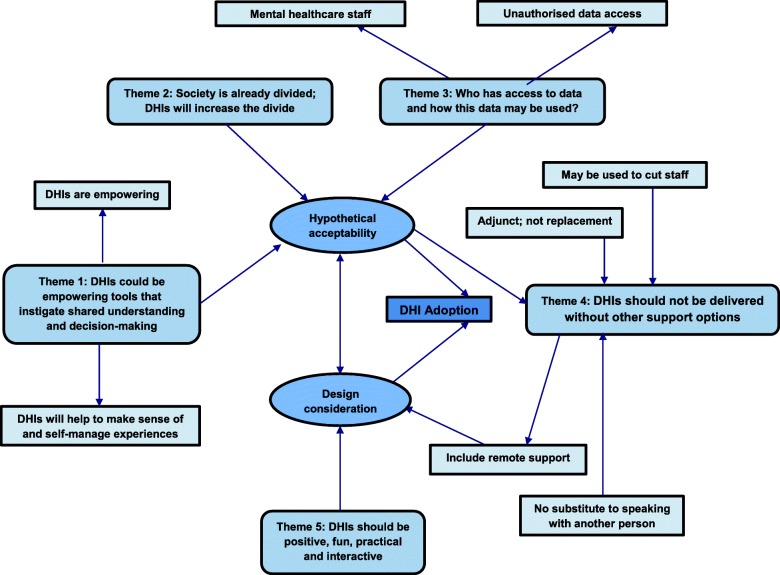
BACKGROUND: The development of digital health interventions (DHIs) for severe mental health problems is fast-paced. Researchers are beginning to consult service users to inform DHIs; however, much of this involvement has been limited to feedback on specific interventions post-DHI development. This study had two aims: 1. explore service user views towards DHIs for severe mental health problems; and 2. make recommendations for specific content within DHIs based on service user needs and suggestions. METHODS: Qualitative interviews with eighteen people with severe mental health problems focussed on two domains: 1) views about DHIs for severe mental health problems; and 2) ideas for future DHI content and design features. Data were analysed thematically. RESULTS: Participants responses were captured in five key themes: 1) DHIs could be empowering tools that instigate reflection and change; 2) society is already divided; DHIs will further increase this divide; 3) considerations must be made about who has access to DHI data and how this data may be used; 4) DHIs should not be delivered without other support options; and 5) DHIs should provide a positive, fun, practical and interactive method for self-management. CONCLUSIONS: Participants found DHIs acceptable due to the empowering nature of self-management and ability to take ownership of their own healthcare needs. However, concerns included the potential for digital exclusion, privacy and confidentiality and fears about DHIs being used to replace other mental health services. Service users want tools to help them self-manage their mental health, but also provide positive and recovery-focussed content that can be used in conjunction with other support options.
Overview
The claims and statistics of this paper haven’t been checked yet.
Free: it reads the open-access text and checks the first 5 claims that cite a source we can check. Create a free account to check every claim.
Integrity signals
Registry
Cites
Statistics
Figures
Verification
Claims the paper makes
The claims and statistics of this paper haven’t been checked yet.
Free: it reads the open-access text and checks the first 5 claims that cite a source we can check. Create a free account to check every claim.
Claims other papers make about this one
Each is checked against this paper’s own text: does it say what the citing paper says it does?
The source backs part of the claim, not all of it — or backs it for a different population, condition or comparison.
In the citing paper
“However, even if people acknowledged a perceived need for help and were willing to seek help, engagement with a particular intervention was then affected by a person’s preconceived belief about whether a digital intervention would be effective [79,104,110-112].”
From Barriers to and facilitators of user engagement with digital mental health interventions: Systematic review (2021) · cites this paper as [104]
Experimental — accuracy not yet measuredThe source backs part of the claim, not all of it — or backs it for a different population, condition or comparison.
In the citing paper
“Depending on the type and severity of a person’s mental health symptoms, studies that involved health care providers supporting digital intervention use reported that there was sometimes a need for face-to-face contact, as issues could be difficult to address remotely via a digital platform [102-104].”
From Barriers to and facilitators of user engagement with digital mental health interventions: Systematic review (2021) · cites this paper as [104]
Experimental — accuracy not yet measuredThe source backs part of the claim, not all of it — or backs it for a different population, condition or comparison.
In the citing paper
“Participants’ mental health literacy [123], digital literacy [88,103,104,122,124-127], and digital health literacy [103,127] influenced the extent to which they were able to adapt and engage with DMHIs: for each type of literacy; higher literacy was associated with higher engagement.”
From Barriers to and facilitators of user engagement with digital mental health interventions: Systematic review (2021) · cites this paper as [104]
Experimental — accuracy not yet measuredThe source backs part of the claim, not all of it — or backs it for a different population, condition or comparison.
In the citing paper
“In 6 studies, a noted barrier among both users and service providers was a concern about social avoidance, that is, a concern that people might use self-guided interventions in lieu of coming into a clinic in person and engaging in therapy or group sessions [78,104,122,133,138,195].”
From Barriers to and facilitators of user engagement with digital mental health interventions: Systematic review (2021) · cites this paper as [104]
Experimental — accuracy not yet measuredThe source backs part of the claim, not all of it — or backs it for a different population, condition or comparison.
In the citing paper
“Two other studies found that participants engaged more with an intervention if they were just starting treatment [104,178].”
From Barriers to and facilitators of user engagement with digital mental health interventions: Systematic review (2021) · cites this paper as [104]
Experimental — accuracy not yet measured
9 more claims about this paper
Create a free account to see every claim other papers make about this one.
Self-check
Percentages, sums and reported differences re-computed from the paper’s own numbers.
The self-check needs the paper’s full text.
Citations
Cites
Using thematic analysis in psychology
Braun, V., & Clarke, V. (2006) · Qualitative Research in Psychology · doi:10.1191/1478088706qp063oa · Cited by 194,414 · cited 1×
“Interviews were audio-recorded, transcribed verbatim by the lead author and subject to thematic analysis, as described by Braun and Clarke (2006) [41].”
MethodChecklists for improving rigour in qualitative research: a case of the tail wagging the dog?
Barbour, R. S. (2001) · BMJ · doi:10.1136/bmj.322.7294.1115 · Cited by 2,613
Semi-Structured Interviewing and Qualitative Analysis
Smith, J. A. (1995) · Rethinking Methods in Psychology · doi:10.4135/9781446221792.n2 · Cited by 1,346 · cited 1×
“Interviews were administered using a topic guide (Appendix A) developed for the study based on review of the literature and informed by Smith’s (1995) guidelines [40] and questioning was focused on participant perceptions of self-guided interventions delivered via websites and smartphone apps.”
MethodSerious Games and Gamification for Mental Health: Current Status and Promising Directions
Fleming, T. M., Bavin, L., Stasiak, K., Hermansson-Webb, E., Merry, S. N., Cheek, C., Lucassen, M., Lau, H. M., Pollmuller, B., & Hetrick, S. (2017) · Frontiers in Psychiatry · doi:10.3389/fpsyt.2016.00215 · Cited by 582 · cited 1×
“For example, some participants suggested gamification strategies, which have previously shown some promise in improving engagement with DHIs [59, 60].”
BackgroundLloyd-Evans, B., Mayo-Wilson, E., Harrison, B., Istead, H., Brown, E., Pilling, S., Johnson, S., & Kendall, T. (2014) · BMC Psychiatry · doi:10.1186/1471-244x-14-39 · Cited by 558 · cited 1×
“Peer support can provide hope for recovery and empowerment [56] and is recommended by NICE [1, 2].”
BackgroundMember Checking With Older Women: A Framework for Negotiating Meaning
Doyle, S. (2007) · Health Care for Women International · doi:10.1080/07399330701615325 · Cited by 449 · cited 1×
“interpretation, analyses and drafts [62].”
Relapse prediction in schizophrenia through digital phenotyping: a pilot study
Barnett, I., Torous, J., Staples, P., Sandoval, L., Keshavan, M., & Onnela, J.-P. (2018) · Neuropsychopharmacology · doi:10.1038/s41386-018-0030-z · Cited by 422 · cited 1×
“Additionally, researchers are beginning to explore how relapse can be predicted via passively collected smartphone data (digital phenotyping) [61].”
BackgroundTechnological innovations in mental healthcare: harnessing the digital revolution
Hollis, C., Morriss, R., Martin, J., Amani, S., Cotton, R., Denis, M., & Lewis, S. (2015) · British Journal of Psychiatry · doi:10.1192/bjp.bp.113.142612 · Cited by 375 · cited 1×
“support options due to their widespread availability, reduced reliance of direct input from clinicians and potential to empower individuals with treatment choice and control [14].”
BackgroundFirth, J., Cotter, J., Torous, J., Bucci, S., Firth, J. A., & Yung, A. R. (2016) · Schizophrenia Bulletin · doi:10.1093/schbul/sbv132 · Cited by 351 · cited 1×
“A meta-analysis of mobile phone ownership rates in people experiencing psychosis reported a narrowing gap in ownership in comparison with the general population [46].”
BackgroundSelf-citationEmerging mHealth and eHealth interventions for serious mental illness: a review of the literature
Naslund, J. A., Marsch, L. A., McHugo, G. J., & Bartels, S. J. (2015) · Journal of Mental Health · doi:10.3109/09638237.2015.1019054 · Cited by 327
Research works printed but not linked: 1
- National Institute for Health and Care Excellence (NICE). Psychosis and schizophrenia in adults: prevention and management. 2014. https://www.nice.org.uk/guidance/cg178/chapter/1-Recommendations. Accessed 3 Oct 2017. 32207892
Cited by
Borghouts, J., Eikey, E., Mark, G., De Leon, C., Schueller, S. M., Schneider, M., Stadnick, N., Zheng, K., Mukamel, D., & Sorkin, D. H. (2021) · Journal of Medical Internet Research · doi:10.2196/24387 · Cited by 1,069
“For example, being able to connect to peers or have regular contact with a personal therapist through DMHIs facilitated engagement in 18 studies [14,32,33,104,114,122,125, 133,156,184-194].”
BackgroundInfluentialKaihlanen, A.-M., Virtanen, L., Buchert, U., Safarov, N., Valkonen, P., Hietapakka, L., Hörhammer, I., Kujala, S., Kouvonen, A., & Heponiemi, T. (2022) · BMC Health Services Research · doi:10.1186/s12913-022-07584-4 · Cited by 298
“Previous research has found similar kind of results showing that lack of interaction poses challenges to digitalization especially in mental health services, where patient-profes-sional dialogue and interaction play a key role [53–55].”
Tremain, H., McEnery, C., Fletcher, K., & Murray, G. (2020) · JMIR Mental Health · doi:10.2196/17204 · Cited by 193
“Indeed, personal preference may mean that self-guided interventions are ideal for some [15].”
BackgroundBarriers to older adults’ uptake of mobile-based mental health interventions
Pywell, J., Vijaykumar, S., Dodd, A., & Coventry, L. (2020) · DIGITAL HEALTH · doi:10.1177/2055207620905422 · Cited by 152
“Qualitative literature in this area has consistently found concerns with privacy and confidentiality of information to be a potential barrier digital intervention use for people with mental health problems.(53,57) Given that privacy concerns have been identified as a reason for discontinuation of an intervention(58) f…”
BackgroundGilbey, D., Morgan, H., Lin, A., & Perry, Y. (2020) · Journal of Medical Internet Research · doi:10.2196/20158 · Cited by 112
“Self-guided digital health interventions are also cost- and resource-effective to access and disseminate, requiring less direct input from clinicians [34], giving consumers greater control and empowerment regarding their own health needs [35].”
BackgroundHOFFMAN, L., WISNIEWSKI, H., HAYS, R., HENSON, P., VAIDYAM, A., HENDEL, V., KESHAVAN, M., & TOROUS, J. (2020) · Journal of Psychiatric Practice · doi:10.1097/pra.0000000000000450 · Cited by 97
“10,11 Although some participants had experience using their smartphones to increase their physical activity or to self-manage anxiety, most had not explored the ways in which digital technology could support their health.”
BackgroundLin, H., Ling, Y., Lin, J., & Liang, Z.-F. (2021) · International Journal of Environmental Research and Public Health · doi:10.3390/ijerph18052731 · Cited by 96
“Although qualitative research can only represent the suggestions of a small number of people, with the answers provided by representative people, deeper and subtle insights can be obtained [64].”
BackgroundLin, H., Hsu, I.-C., Lin, T., Tung, L.-M., & Ling, Y. (2022) · Sustainability · doi:10.3390/su14073762 · Cited by 81
“Although the research and development of related theories was quite mature, through the design of mixed research methods, quantitative research was used first to investigate [79,80], qualitative research was used to confirm [81], and finally, th multi-check me hod was used to obtain more in-depth answers [36–38,64,77–…”
MethodDevelopments in Privacy and Data Ownership in Mobile Health Technologies, 2016-2019
Galvin, H. K., & DeMuro, P. R. (2020) · Yearbook of Medical Informatics · doi:10.1055/s-0040-1701987 · Cited by 78
Eisner, E., Faulkner, S., Allan, S., Ball, H., Basilio, D. D., Nicholas, J., Priyam, A., Wilson, P. M., Zhang, X., & Bucci, S. (2025) · JMIR Mental Health · doi:10.2196/65246 · Cited by 77
“Staff [33,83,84] and patients [34,41,52,55,63,64,68,71,85] across 12 studies highlighted a DMHI’s anonymity can be a substantial advantage.”
InfluentialSelf-citationRogan, J., Bucci, S., & Firth, J. (2024) · JMIR Mental Health · doi:10.2196/49577 · Cited by 63
“As clinicians’ perceptions and attitudes pose a potential barrier to implementation [17], it is important that they are invited into the dialog around digitally supported AI in mental health care, to embrace any benefits there might be, as well as share their concerns and explore the limitations…”
BackgroundSelf-citationUnderstanding Mental Health App Use Among Community College Students: Web-Based Survey Study
Borghouts, J. W., Eikey, E. V., Mark, G. J., Leon, C. D., Schueller, S. M., Schneider, M. L., Stadnick, N. A., Zheng, K., Mukamel, D. B., & Sorkin, D. H. (2021) · Journal of Medical Internet Research · doi:10.2196/27745 · Cited by 70
“A positive experience with these services can increase the likelihood that people will be open to trying a digital intervention [26-28].”
Digital tools to support mental health: a survey study in psychosis
Eisner, E., Berry, N., & Bucci, S. (2023) · BMC Psychiatry · doi:10.1186/s12888-023-05114-y · Cited by 66
“We reviewed and included survey items from other studies [16, 27– 32] and included our own items informed by qualitative study findings [33–36].”
MethodSelf-citationTetri, B., & Juujärvi, S. (2022) · Psychology Research and Behavior Management · doi:10.2147/prbm.s340867 · Cited by 75
“3,4,51 However, regarding the mode of service, most respondents (59.8”
BackgroundInfluentialValentine, L., McEnery, C., Bell, I., O'Sullivan, S., Pryor, I., Gleeson, J., Bendall, S., & Alvarez-Jimenez, M. (2020) · JMIR Mental Health · doi:10.2196/18990 · Cited by 45
“This has been reported in other studies [29,30], reflecting the importance of considering the role of, and response to, personal clinical information collected in daily life from users of clinical services.”
BackgroundAllan, S., Bradstreet, S., Mcleod, H., Farhall, J., Lambrou, M., Gleeson, J., Clark, A., EMPOWER Group, & Gumley, A. (2019) · Journal of Medical Internet Research · doi:10.2196/14366 · Cited by 44
“Previous qualitative research conducted with service users exploring potential [29,41,45] and actual [46] acceptability of digital self-management interventions for psychosis has reported that having access to personal data may have positive impacts such as enhancing self-management.”
BackgroundSteare, T., O’Hanlon, P., Eskinazi, M., Osborn, D., Lloyd-Evans, B., Jones, R., Rostill, H., Amani, S., & Johnson, S. (2020) · BMJ Open · doi:10.1136/bmjopen-2019-034927 · Cited by 42
van Olmen, J. (2022) · International Journal of Environmental Research and Public Health · doi:10.3390/ijerph19031360 · Cited by 44
“People using specific apps report that their usage led to increased feelings of ownership [38].”
BackgroundInfluentialKoly, K. N., Saba, J., Muzaffar, R., Modasser, R. B., Tasdik Hasan, M., Colón-Cabrera, D., & Warren, N. (2022) · Internet Interventions · doi:10.1016/j.invent.2022.100544 · Cited by 50
“Technology skills training of community people may be an acceptable solution to avoid digital exclusion (Berry et al., 2019).”
BackgroundMethodInfluentialBrief, Web-Based Interventions to Motivate Smokers With Schizophrenia: Randomized Trial
Brunette, M. F., Ferron, J. C., McGurk, S. R., Williams, J. M., Harrington, A., Devitt, T., & Xie, H. (2020) · JMIR Mental Health · doi:10.2196/16524 · Cited by 42
“People with schizophrenia and other severe mental illnesses are increasingly using digital technology and are interested in receiving health and mental health interventions via their devices [8-10].”
Dweik, R. A., Ajaj, R., Kotb, R. E., Halabi, D. E., Sadier, N. S., Sarsour, H. H. H., & Elhadi, Y. A. M. (2024) · BMC Public Health · doi:10.1186/s12889-024-19980-y · Cited by 44
“Despite the overall acceptability of digital mental health interventions due to their empowering nature for self-management, concerns including the potential for digital exclusion, privacy, and confidentiality were identified especially among older people [103, 127].”
BackgroundSteare, T., Giorgalli, M., Free, K., Harju‐Seppänen, J., Akther, S. F., Eskinazi, M., O’Hanlon, P., Rostill, H., Amani, S., Lloyd‐Evans, B., et al. (2021) · BMC Psychiatry · doi:10.1186/s12888-021-03317-9 · Cited by 43
“Recent qualitative literature suggests that this a common concern for individuals with psychosis [4, 27], with clearer privacy policies and greater reassurance of users’ data security two possible measures to allay concerns and increase acceptability.”
BackgroundInfluentialLin, H., Lin, T., Ling, Y., & Lo, C. (2021) · International Journal of Environmental Research and Public Health · doi:10.3390/ijerph182211767 · Cited by 40
“01 in Bartlett’s test indicate that the scale is suitable for continuous factor analysis [81].”
MethodBerry, N., Machin, M., Ainsworth, J. D., Berry, K., Edge, D., Haddock, G., Lewis, S. W., Morris, R., & Bucci, S. (2020) · Frontiers in Psychiatry · doi:10.3389/fpsyt.2020.602861 · Cited by 39
Self-citationLin, H., Chang, K.-H., Tseng, C.-H., Lee, Y.-S., & Hung, C.-H. (2021) · International Journal of Environmental Research and Public Health · doi:10.3390/ijerph182211989 · Cited by 43
“Therefore, mixed research methods were used, quantitative research methods were first used to supplement the research breadth [67,68], then qualitative research was used to increase the depth of research [69], and multivariate verification methods were used to discuss [70–72], which could make up for research developm…”
MethodStorm, M., Fjellså, H. M. H., Skjærpe, J. N., Myers, A. L., Bartels, S. J., & Fortuna, K. L. (2021) · International Journal of Environmental Research and Public Health · doi:10.3390/ijerph18168667 · Cited by 38
“Usability is a factor in the adoption of mobile health apps when people who need to use them may have problems interacting with an app due to their health conditions [2,7].”
BackgroundMethodInfluentialConnected Mental Health: Systematic Mapping Study
(2020) · doi:10.2196/19950 · Cited by 33
Middle, R., & Welch, L. (2022) · Frontiers in Digital Health · doi:10.3389/fdgth.2022.1004547 · Cited by 38
“When discussing factors that may increase engagement with digital tools, participants echoed the need to consider factors identified in previous research such as cognitive difficulties associated with their mental health condition, financial barriers and the complexity of the digital tool (10, 11, 19).”
BackgroundMethodIs the Travel Bubble under COVID-19 a Feasible Idea or Not?
Yu, J., Lin, H., Lo, Y.-C., Tseng, K.-C., & Hsu, C.-H. (2021) · International Journal of Environmental Research and Public Health · doi:10.3390/ijerph18115717 · Cited by 34
“This study, therefore, adopted a complex approach, complementing the breadth of the study with quantitative research [77,78] and adding depth to the study with qualitative research [79], in order to compensate for methodological or theoretical shortcomings [80].”
ResultHatta, M. H., Sidi, H., Sharip, S., Das, S., & Saini, S. M. (2022) · International Journal of Environmental Research and Public Health · doi:10.3390/ijerph19042390 · Cited by 30
“In a study by Berry et al., 2019 [65], the participants found digital health interventions acceptable due to the empowering nature of the program, which is tailored for a self-managing capability to take ownership of their own psychological needs.”
BackgroundInfluentialRantanen, T., Gluschkoff, K., Silvennoinen, P., & Heponiemi, T. (2021) · Journal of Medical Internet Research · doi:10.2196/28066 · Cited by 35
“RenderX been shown to be concerned about the confidentiality of digital services, having doubts about issues of data protection and handling [17].”
InfluentialYu, J., Lin, H., Lo, Y.-C., Tseng, K.-C., & Hsu, C.-H. (2021) · Water · doi:10.3390/w13131799 · Cited by 38
“The consolidation of the conservation mindset helps to build the pre-conscious behavior of the public and promote the generation of issue-specific spontaneous actions [65].”
BackgroundResultCheung, L., Thomas, P. C., Brvar, E., & Rowe, S. L. (2024) · JMIR Mental Health · doi:10.2196/57795 · Cited by 28
“Another study on digital interventions for severe mental health problems (including bipolar and schizophrenia) suggested users found that digital interventions aided reflection and change, and preferred highly interactive interventions [76], consistent with our findings.”
Sawyer, C. S., Hassan, L., Sainsbury, J., Carney, R., Bucci, S., Burgess, H., Lovell, K., Torous, J. B., & Firth, J. (2023) · Early Intervention in Psychiatry · doi:10.1111/eip.13441 · Cited by 27
“A recent study found YPMI perceived digital interventions for self-management of mental healthcare as empowering and acceptable, though there were some concerns around access to digital interventions (Berry et al., 2019).”
BackgroundSelf-citationEngdahl, P., Svedberg, P., Lexén, A., & Bejerholm, U. (2020) · JMIR Formative Research · doi:10.2196/15625 · Cited by 26
“Rather than replacing face-to-face interventions in health care services, Berry et al [46] reported that a digital solution can enhance existing support.”
InfluentialTaylor, K. M., Bradley, J., & Cella, M. (2022) · Psychology and Psychotherapy Theory Research and Practice · doi:10.1111/papt.12395 · Cited by 27
“However, research indicates rates are on the rise (Firth et al., 2016) and views on digital interventions are positive amongst individuals with psychosis (Berry et al., 2019; Gay et al., 2016).”
BackgroundGreenwood, K., Gurnani, M., Ward, T., Vogel, E., Vella, C., McGourty, A., Robertson, S., Sacadura, C., Hardy, A., Rus‐Calafell, M., et al. (2022) · Psychology and Psychotherapy Theory Research and Practice · doi:10.1111/papt.12393 · Cited by 25
“…is brief, so has the potential to support access to therapy for a larger number of service users than current provisions, and is designed in line with recommendations for improving implementation of digital therapies for psychosis (Allan et al., 2019; Berry et al., 2019; Sarkar et al., 2016).”
Tartaglia, J., Jaghab, B. I., Ismail, M., Hänsel, K., Meter, A. V., Kirschenbaum, M., Sobolev, M., Kane, J. M., & Tang, S. X. (2024) · JMIR Mental Health · doi:10.2196/63034 · Cited by 22
Lin, H., Chen, I.-Y., Tseng, C.-H., Lee, Y.-S., & Lin, J. (2022) · International Journal of Environmental Research and Public Health · doi:10.3390/ijerph19073958 · Cited by 21
Doukani, A., Pashoja, A. C., Fanaj, N., Qirjako, G., Meksi, A., Mustafa, S., Vis, C., & Hug, J. (2021) · JMIR Formative Research · doi:10.2196/29280 · Cited by 20
“Nevertheless, participants also reported that they would still be willing to engage in digital mental health interventions if they felt fully informed and reassured about the use of their data [27].”
BackgroundLal, S., Abdel‐Baki, A., & Lee, H. (2022) · Early Intervention in Psychiatry · doi:10.1111/eip.13332 · Cited by 23
“Research has shown that patients with severe mental health problems have concerns regarding the accessibility of digital health interventions such as not having access to technology or not having basic digital literacy skills (Berry et al., 2019).”
BackgroundA systematic review of the literature on telepsychiatry for bipolar disorder
Farrell, A., George, N., Amado, S., & Wozniak, J. (2022) · Brain and Behavior · doi:10.1002/brb3.2743 · Cited by 19
Miller, I., Peake, E., Strauss, G., Vierra, E., Koepsell, X., Shalchi, B., Padmanabhan, A., & Lake, J. (2023) · JMIR Formative Research · doi:10.2196/43260 · Cited by 19
“Finally, patients report digital health interventions to be acceptable and empowering tools that can facilitate self-understanding and personal change [23-25].”
BackgroundAllan, S., McLeod, H. J., Bradstreet, S., Morton, E., Imogen, B., Wilson-Kay, A., Whitehill, H., Clark, A., Matrunola, C., Farhall, J., et al. (2021) · JMIR Human Factors · doi:10.2196/24055 · Cited by 21
“Future research understanding barriers and facilitators to recruitment from the point of view of service users within clinical trials of digital interventions for psychosis, building upon previous work exploring what service users think about digital interventions for psychosis in general [70-72] and their feelings ab…”
BackgroundDigital agency of vulnerable people as experienced by rehabilitation professionals
Silvennoinen, P., & Rantanen, T. (2022) · Technology in Society · doi:10.1016/j.techsoc.2022.102173 · Cited by 23
Factors affecting the acceptance of tele-psychiatry: a scoping study
Izadi, R., Bahrami, M. A., Khosravi, M., & Delavari, S. (2023) · Archives of Public Health · doi:10.1186/s13690-023-01146-8 · Cited by 21
Dimitropoulos, G., Bassi, E. M., Bright, K. S., Gondziola, J., Bradley, J., Fersovitch, M., Stamp, L., LaMonica, H. M., Iorfino, F., Gaskell, T., et al. (2024) · JMIR Mental Health · doi:10.2196/49099 · Cited by 20
“Many studies have addressed the importance of eMH tools as empowering their users by affording more control, choice [71], and shared decision-making [72].”
BackgroundBurchert, S., Alkneme, M. S., Alsaod, A., Cuijpers, P., Heim, E., Hessling, J., Hosny, N., Sijbrandij, M., van’t Hof, E., Ventevogel, P., et al. (2024) · PLoS Medicine · doi:10.1371/journal.pmed.1004460 · Cited by 18
Shen, C., Tseng, Y.-H., Shen, M.-C. S., & Lin, H. (2021) · International Journal of Environmental Research and Public Health · doi:10.3390/ijerph18095013 · Cited by 18
Mair, J. L., Castro, Ó., Salamanca-Sanabria, A., Frese, B. F., von Wangenheim, F., Tai, E. S., Kowatsch, T., & Müller‐Riemenschneider, F. (2023) · BMC Public Health · doi:10.1186/s12889-023-15598-8 · Cited by 18
Allan, S., McLeod, H. J., Bradstreet, S., Beedie, S. A., Moir, B., Gleeson, J., Farhall, J., Morton, E. E., & Gumley, A. I. (2019) · JMIR Research Protocols · doi:10.2196/15634 · Cited by 19
“Such an understanding has broader implications for the management of psychosis and can inform the development of digital interventions for people with similar mental health problems, building on learning from previous qualitative work [75-80].”
Naji, G. M. A., Yuan, F., Azzura, N., Danish, F. M., Ateeq, A. A., Ibrahim, S. B., Hakimi, H., Abdollah, A. B., & Iskandar, Y. H. P. (2025) · Frontiers in Digital Health · doi:10.3389/fdgth.2025.1606273 · Cited by 19
“North America currently holds the largest market share, attributed to a high prevalence of mental health disorders and a strong focus on digital health solutions (17, 18).”
A qualitative study exploring the digital therapeutic alliance with fully automated smartphone apps
Brotherdale, R., Berry, K., & Bucci, S. (2024) · Digital Health · doi:10.1177/20552076241277712 · Cited by 16
Self-citationLin, H., Lin, T., Hsu, C.-W., Chen, C., Li, Q., & Wu, P. (2022) · International Journal of Environmental Research and Public Health · doi:10.3390/ijerph192114419 · Cited by 22
“quantitative study could improve or the breadth [73], followed by a qualitative study to”
BackgroundMethodInfluentialTaher, R., Stahl, D. R., Shergill, S. S., & Yiend, J. (2025) · JMIR Human Factors · doi:10.2196/62974 · Cited by 16
“A few studies have sought service users’views on digital interventions more generally [16-18], but no work to our knowledge has investigated user/patient perspectives specifically about the safety of these technologies [19,20].”
Can Electric Bicycles Enhance Leisure and Tourism Activities and City Happiness?
Lin, H., Shen, C., Hsu, I.-C., & Wu, P.-Y. (2021) · Energies · doi:10.3390/en14238144 · Cited by 15
Häfner, J., Schönfeld, S., Tokgöz, P., Choroschun, K., Schlubach, A., & Dockweiler, C. (2022) · Healthcare · doi:10.3390/healthcare10102019 · Cited by 16
“It is further confirmed that the use to improve self-management skills is supported by the majority [6,14,16,19,22].”
BackgroundUsing EMPOWER in daily life: a qualitative investigation of implementation experiences
Allan, S., Beedie, S. A., McLeod, H. J., Farhall, J., Gleeson, J., Bradstreet, S., Morton, E. E., Bell, I., Wilson-Kay, A., Whitehill, H., et al. (2023) · BMC Psychiatry · doi:10.1186/s12888-023-05096-x · Cited by 14
“Human contact is important for active engagement in digital interventions for psychosis [15].”
BackgroundAustin, S. F., Frøsig, A. J., Buus, N., Lincoln, T. M., von Malachowski, A., Schlier, B., Frost, M. M., & Simonsen, E. H. (2021) · Qualitative Health Research · doi:10.1177/1049732320986556 · Cited by 15
“…to adequately utilize smartphones; challenges maintaining user engagement; the personalization of mHealth interventions, and whether these technological interventions will replace face-to-face treatment as a means of cost cutting in mental health services (Berry et al., 2019; Bucci et al., 2018).”
BackgroundResultInfluentialLearnings from user feedback of a novel digital mental health assessment
Funnell, E. L., Spadaro, B., Benáček, J., Martin-Key, N. A., Metcalfe, T., Olmert, T., Barton‐Owen, G., & Bahn, S. (2022) · Frontiers in Psychiatry · doi:10.3389/fpsyt.2022.1018095 · Cited by 14
Funnell, E. L., Spadaro, B., Martin-Key, N. A., Benáček, J., & Bahn, S. (2024) · JMIR Formative Research · doi:10.2196/48881 · Cited by 13
“In addition, some questions in the interview guide were adapted from previous relevant literature investigating attitudes toward digital interventions for mental health [31,32].”
MethodWu, C., Lin, H., Lai, S.-Y., Tseng, K.-C., & Hsu, C.-H. (2021) · Healthcare · doi:10.3390/healthcare9060713 · Cited by 19
“Then, on-the-job health care workers or scholars in the fields of health care, public health, or human resource management were interviewed to provide insights based on the analysis results, and, finally, the information was compiled, organized, and analyzed in order to construct the report [78].”
MethodXue, B.-W., Lin, H., Chen, C.-C., Lee, P.-Y., & Hsu, C.-H. (2022) · Environmental Science and Pollution Research · doi:10.1007/s11356-022-21262-2 · Cited by 14
Lin, H., Shen, C., Ling, Y., & Lin, C. (2023) · Biotechnology and Genetic Engineering Reviews · doi:10.1080/02648725.2023.2186495 · Cited by 13
“The mixed-methods (Berry et al., 2019; Cypress, 2018; Gursoy et al., 2002; Nunnally & Bernstein, 1994; Ochieng, 2009) approach was adopted, and the participants’ body compositions, sports performance, and physical and mental health status were evaluated before the experiment.”
Koly, K. N., Saba, J., Rao, M., Rasheed, S., Reidpath, D. D., Armstrong, S., & Gnani, S. (2024) · Cambridge Prisms Global Mental Health · doi:10.1017/gmh.2024.30 · Cited by 15
“Digital media and technologies could increase access to mental health services by increasing awareness, offering treatment, and reducing the cost burden (Acharibasam and Wynn, 2018; Berry et al., 2019; Koly et al., 2022b).”
BackgroundArnautovska, U., Milton, A. C., Trott, M., Soole, R., & Siskind, D. J. (2024) · Current Opinion in Psychiatry · doi:10.1097/yco.0000000000000957 · Cited by 12
Koly, K. N., Saba, J., Christopher, E., Hossain, A. N. N., Akter, T., Rahman, Z., Ahmed, H. U., & Eaton, J. (2024) · BMC Health Services Research · doi:10.1186/s12913-024-10742-5 · Cited by 13
“Integrating digital technology into training delivery and MH-care provision can increase the effective use of human resources and reduce costs [66, 91–93].”
BackgroundZhang, X., Lewis, S. W., Xu, C., Zhou, J., Wang, X., & Bucci, S. (2024) · BMC Psychiatry · doi:10.1186/s12888-024-05687-2 · Cited by 12
“Unlike previous qualitative studies [58–60], we found participants were not overly concerned about privacy and data security despite the intense collection of data by the app.”
ResultSelf-citationGuracho, Y. D., Thomas, S. J., Almutairi, N., & Win, K. T. (2025) · Behaviour and Information Technology · doi:10.1080/0144929x.2025.2481639 · Cited by 12
“Standalone digital mental health intervention empowers patients’ self-care behaviour (Berry, Lobban, and Bucci 2019).”
Koly, K. N., Saba, J., Mallick, T., Rashid, F., Watson, J., & Neves, B. B. (2025) · PLOS Global Public Health · doi:10.1371/journal.pgph.0004568 · Cited by 11
“Incorporating mobile phone and social media-based messages may reach vulnerable women who rely on informal networks [63,108–110].”
Shkel, J., Green, G., Le, S., Kaveladze, B., Marcotte, V., Rushton, K., Nguyen, T., & Schueller, S. M. (2023) · JMIR Formative Research · doi:10.2196/46062 · Cited by 10
“Qualitative methods have also been used to gain insight into medical students’ preferences for tailored DMHIs [28] and people’s general concerns and acceptability about using DMHIs for self-management of severe mental health problems [29].”
MethodChristensen, M. J., Rydborg, M. P., Jørgensen, R., Nielsen, C. D., Mainz, J., Bell, I., Thomas, N., Smith, L. C., Mariegaard, L. S., Ward, T., et al. (2025) · JMIR Serious Games · doi:10.2196/77920 · Cited by 13
Herpertz, J., Richter, M., Barkhau, C., Storck, M., Blitz, R., Steinmann, L. A., Goltermann, J., Dannlowski, U., Baune, B. T., Varghese, J., et al. (2022) · Psychiatry Research · doi:10.1016/j.psychres.2022.114773 · Cited by 10
Goodyear, T., Richardson, C. G., Aziz, B., Slemon, A., Gadermann, A., Daly, Z., McAuliffe, C., Pumarino, J., Thomson, K., & Jenkins, E. (2023) · Digital Health · doi:10.1177/20552076231173528 · Cited by 11
Alan, H. (2024) · Behaviour and Information Technology · doi:10.1080/0144929x.2024.2303626 · Cited by 12
“Berry, Lobban, and Bucci (2019) in their research titled ‘ a qualitative exploration of service user views about using digital health interventions for self-management in severe mental health problems ’ , they have been discussed the feedbacks of the applications.”
Kerner, B., Crisanti, A. S., DeShaw, J. L., Ho, J.-M. G., Jordan, K., Krall, R. L., Kuntz, M., Mazurie, A., Nestsiarovich, A., Perkins, D. J., et al. (2019) · JMIR Mental Health · doi:10.2196/12848 · Cited by 11
“Based on this finding, further studies should explore how patients and patient advocates could be involved in the design of digital health interventions and the development of Web-based information sources [56].”
BackgroundLightfoot, C. J., Wilkinson, T. J., Billany, R. E., Sohansoha, G. K., Vadaszy, N., Ford, E. C., Davies, M. J., Yates, T. E., Smith, A. C., & Graham-Brown, M. P. M. (2025) · doi:10.2196/preprints.75845 · Cited by 12
Orsolini, L., Longo, G., & Volpe, U. (2025) · Actas Españolas de Psiquiatría · doi:10.62641/aep.v53i2.1851 · Cited by 10
Borghouts, J. W., Eikey, E. V., Leon, C. D., Schueller, S. M., Schneider, M. L., Stadnick, N. A., Zheng, K., Mukamel, D. B., & Sorkin, D. H. (2025) · JMIR Formative Research · doi:10.2196/73457 · Cited by 10
Lawrence‐Sidebottom, D., Huffman, L. G., Beam, A. B., McAlister, K. L., Guerra, R., Parikh, A., Roots, M., & Huberty, J. (2024) · JMIR Formative Research · doi:10.2196/54816 · Cited by 10
“Indeed, qualitative studies have been crucial to expanding and improving digital mental health services in the past [85].”
BackgroundEnhancing Employee Assistance Programs for Stress Management in Thailand: Employees’ Perspectives
Hengboriboon, L., & Yukongdi, V. (2024) · SAGE Open · doi:10.1177/21582440241274582 · Cited by 10
“Alternatively, N. Berry et al. (2019) mentioned concerns regarding the use of digital health interventions as replacements for current mental health treatments,”
Valentine, L., Arnold, C., Nicholas, J., Castagnini, E., Malouf, J., Álvarez‐Jiménez, M., & Bell, I. (2024) · Journal of Medical Internet Research · doi:10.2196/63732 · Cited by 9
“Qualitative research by Berry et al [46] with mental health service users emphasized the importance of interventions being perceived as “positive, fun, practical and interactive,” underscoring the necessity for prioritizing engaging and user-centered design in digital mental health interventions to…”
Lü, Z., Tseng, C.-H., Lin, H., Perng, Y., & Tseng, Y.-H. (2022) · Frontiers in Public Health · doi:10.3389/fpubh.2022.919049 · Cited by 10
Connected Mental Health Solutions: Global Attitudes, Preferences, and Concerns
Drissi, N., Ouhbi, S., Serhani, M. A., Marques, G., & Díez, I. D. L. T. (2023) · Telemedicine Journal and e-Health · doi:10.1089/tmj.2022.0036 · Cited by 9
Baee, S., Eberle, J. W., Baglione, A. N., Spears, T., Lewis, E., Wang, H., Funk, D., Teachman, B. A., & Barnes, L. E. (2024) · JMIR Mental Health · doi:10.2196/51567 · Cited by 9
Dave, S., Rathore, M., Campbell, P., Edgar, D. F., Crabb, D. P., Callaghan, T., & Jones, P. R. (2024) · BMJ Open · doi:10.1136/bmjopen-2023-080619 · Cited by 8
“33 34 In this respect, it is interesting to note that even among our sample of reasonably ‘tech savvy’ participants, while a majority owned a computer or smartphone, almost one-third expressed a regular need for assistance to use their devices (typically from friends or family members).”
BackgroundCatalan, C., Gega, L., & Hook, J. (2024) · Proceedings of the ACM on Human-Computer Interaction · doi:10.1145/3677104 · Cited by 7
“is novel promotion of game world discovery and freedom, potentially offers design opportunities to naturally foster a sense of autonomy that may be beneficial for mental health interventions [83].”
Livermon, S., Michel, A., Zhang, Y., Petz, K. D., Toner, E. R., Rucker, M., Boukhechba, M., Barnes, L. E., & Teachman, B. A. (2025) · PLOS Digital Health · doi:10.1371/journal.pdig.0000601 · Cited by 7
Early psychosis service user views on digital remote monitoring: a qualitative study
Trelfa, S., Berry, N., Zhang, X., Lewis, S. W., Ainsworth, J. D., Berry, K., Edge, D., Haddock, G., Morris, R., & Bucci, S. (2025) · BMC Psychiatry · doi:10.1186/s12888-025-06859-4 · Cited by 7
“Berry et al. [38] echo these findings, where service users reported they would only feel comfortable answering questions if the app was from a trusted source, such as a university or the NHS. Whilst previous studies have found that service users expressed concerns about sharing data from a DHT with…”
Self-citationLin, H., Ling, Y., Lin, J., & Liang, Z.-F. (2021) · Vide Leaf, Hyderabad eBooks · doi:10.37247/paenvr2ed.2.2021.6 · Cited by 7
Setting national research priorities for difficult-to-treat depression in the UK between 2021-2026
Chapman, N., Browning, M. D., Baghurst, D., Hotopf, M. H., Willis, D., Haylock, S., Zakaria, S., Speechley, J., Withey, J. R., Brooks, E., et al. (2022) · Journal of Global Health · doi:10.7189/jogh.12.09004 · Cited by 8
Faulkner, S., Drake, R., Ogden, M., Gardani, M., & Bee, P. (2022) · PLoS ONE · doi:10.1371/journal.pone.0269453 · Cited by 7
Gilbert, K., Muchamore, I., Katterl, S., Purdon, H., Allen, A., Ozols, I., & Gooding, P. (2024) · Australian Journal of Social Issues · doi:10.1002/ajs4.355 · Cited by 6
Puah, S., Pua, C. Y., Shi, J. C., & Lim, S. M. (2024) · Journal of Medical Internet Research · doi:10.2196/49505 · Cited by 6
“When participants could emotionally connect with peers by openly sharing problems or relating to others’ experiences, their motivation to continue using mental health apps increased [40,41].”
Thompson, A., Naidoo, D., Becker, E., Trentino, K. M., Rooprai, D., & Lee, K. (2024) · Healthcare · doi:10.3390/healthcare12202084 · Cited by 6
“Healthcare that is solely reliant on short, infrequent and sometimes difficult-to-access, face-to-face appointments limits the availability and access that patients have to their own health information [42].”
BackgroundBuitenweg, D. C., van de Mheen, D., Grund, J., van Oers, H., & van Nieuwenhuizen, C. (2020) · JMIR Mental Health · doi:10.2196/19593 · Cited by 6
“This finding was in accordance with those of Morton and colleagues [26] and Berry and colleagues [44].”
Operationalising a Recovery-Oriented Support and Information Programme Online: The EOLAS Programme
O’Sullivan, K., Downes, C., Monahan, M., Morrissey, J., Byrne, G., Farrell, G., Gibbons, P., & Higgins, A. (2023) · International Journal of Environmental Research and Public Health · doi:10.3390/ijerph20054417 · Cited by 6
Knyahnytskyi, O., Eadie, J., Asadpour, K., Stephenson, C., Yang, M., Reshetukha, T., Moi, C., Barrett, T., Hicks, M., Gutiérrez, G., et al. (2025) · Digital Health · doi:10.1177/20552076251384835 · Cited by 5
“19 A strong alliance in digital interventions has been associated with higher engagement, lower dropout rates, and improved treatment outcomes.”
Gao, L., Keller, F. M., Becker, P., Dahmen, A., & Lippke, S. (2023) · Journal of Medical Internet Research · doi:10.2196/43584 · Cited by 5
“This finding can be explained by the theoretical model of the health action process approach, which explains how psychological factors predict behavior, and is in line with previous studies [16,59-61].”
Patterns of Internet Use in People Diagnosed With Severe Mental Illness: Qualitative Interview Study
Wadman, R., Walker, L. E., Taylor, O., Heron, P., Newbronner, E., Spanakis, P., Crosland, S., & Peckham, E. J. (2025) · Journal of Medical Internet Research · doi:10.2196/55072 · Cited by 6
“A qualitative study investigating how service users feel about digital health interventions for people experiencing SMI found that participants reported feelings of empowerment and being liberated because of an increase in choice, tools, and control [11].”
Metadata
- Authors
- Berry, N., Lobban, F., & Bucci, S.
- Affiliations
- Manchester Academic Health Science Centre (GB)
- Lancaster University (GB)
- Greater Manchester Mental Health NHS Foundation Trust (GB)
- Corresponding author
- Berry, Natalie
- Venue
- BMC Psychiatry
- Published
- 2019-01-21
- Volume
- 19
- Issue
- 1
- Pages
- 35-35
- ISSN
- 1471-244X (ISSN-L)
- PMC
- PMC6341527
- OpenAlex
- W2912381274
- Semantic Scholar
- 141f0374f20f765d83d07ce12daaf8e201c93bde
- Cited by
- 170
- References
- 58
- Citations by year
- 2026: 10 · 2025: 28 · 2024: 38 · 2023: 28 · 2022: 26 · 2021: 21 · 2020: 13 · 2019: 6
- FWCI
- 18.64
- Type
- journal article
- Language
- en
- Open access
- gold
- doi.org
- Licence
- cc-by
- creativecommons.org/licenses/by/4.0/ (tdm)
- Locations
- BMC Psychiatry (publishedVersion, cc-by)
- Europe PMC (PubMed Central) (publishedVersion, other-oa)
- PubMed Central (publishedVersion, cc-by)
- PubMed (publishedVersion)
- Research Explorer (The University of Manchester) (publishedVersion, cc-by)
- DOAJ (DOAJ: Directory of Open Access Journals) (submittedVersion, cc-by-sa)
- Lancaster EPrints (Lancaster University) (submittedVersion)
- Funders
- Medical Research Council (MR/KD06665/1)
- Topics
- Social Sciences › Psychology › Applied Psychology › Digital Mental Health Interventions
- Health Sciences › Health Professions › General Health Professions › Mobile Health and mHealth Applications
- Health Sciences › Health Professions › General Health Professions › Mental Health and Patient Involvement
- Keywords
- digital health interventions, severe mental illness, self-management, service user perspectives, digital divide, data privacy and confidentiality, mental health integration
- MeSH terms
- Self-Management, Adult, Mental Disorders, Female, Humans, Male, Mental Health, Mental Health Services, Middle Aged, Referral and Consultation, Telemedicine, Qualitative Research
About these checks
Registry, retraction, Cites and statistics results are computed, not judged, with one exception: a printed reference that no index lists is read once by a model before it counts as a citation error. Claims are extracted by a model and kept only when their quote appears verbatim in the text; each cited source is then checked, with a model’s help, for whether it says what the claim relies on. Those verdicts can be wrong — read the claim’s quote and the cited source before relying on one.
Statistics and arithmetic are recomputed, not judged.
Confidence bands are shown only for fields calibrated on our annotated test set. None is calibrated yet, so no band is shown.
What counts as a claim ›How we measure confidence ›How we check this ›
Are you an author, or do you see a problem with this page? Request a review
Data sources
Bibliographic data: Semantic Scholar, OpenAlex, Crossref.
Contains information from the Semantic Scholar Academic Graph Datasets, made available under the ODC Attribution License (ODC-BY 1.0).
Semantic Scholar’s data is described in: Kinney, R., et al. (2023). The Semantic Scholar Open Data Platform. arXiv:2301.10140.
