

The DOI matches its Crossref record; 108 of the 112 references it cites were found in a registry or an index; 35 of the 86 sources its claims cite were checked for support.
Protocol for a randomized controlled dismantling study of an internet-based intervention for depressive symptoms: exploring the contribution of behavioral activation and positive psychotherapy strategies
Open accessAbstract
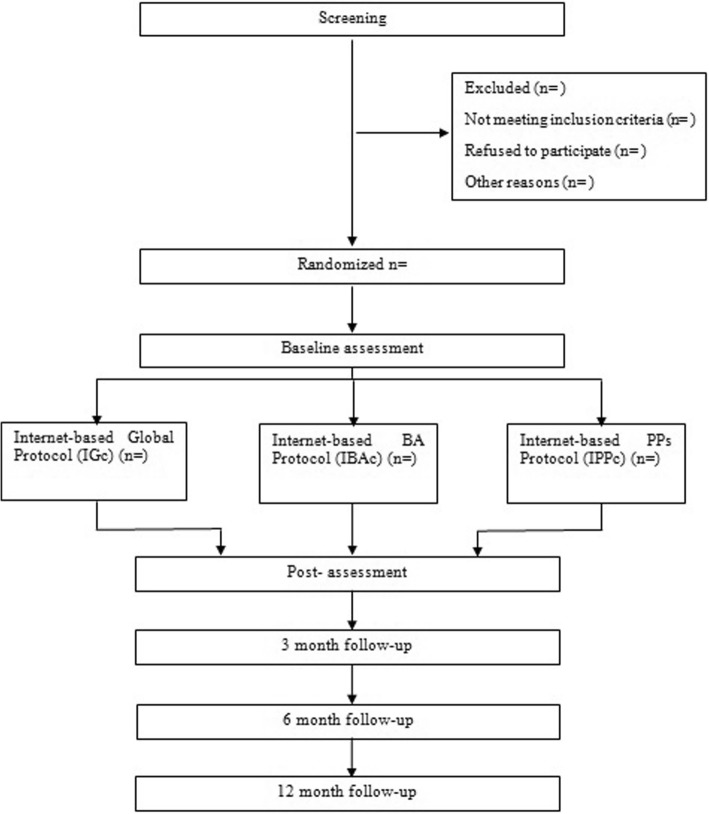
Background: There are evidence-based interventions for depression that include different components. However, the efficacy of their therapeutic components is unknown. Another important issue related to depression interventions is that, up to now, their therapeutic components have only focused on reducing negative symptoms rather than on improving positive affect and well-being. Because the low levels of positive affect are more strongly linked to depression than to other emotional disorders, it is important to include this variable as an important treatment target. Positive psychotherapeutic strategies (PPs) could help in this issue. The results obtained so far are consistent and promising, showing that Internet-based interventions are effective in treating depression. However, most of them are also multi-component, and it is important to make progress in investigating what each component contributes to the intervention. Methods: The current study will be a three-armed, simple-blinded, randomized controlled clinical trial with a dismantling design. 192 participants will be randomly assigned to: a) an Internet-based Global Protocol condition, which includes traditional therapeutic components of evidence-based treatments for depression (Motivation for change, Psychoeducation, Cognitive Therapy, Behavioral Activation (BA), Relapse Prevention) and PPs component, offering strategies to enhance positive mood and promote psychological strengths; b) an Internet-based BA Protocol condition (without the PPs component), and c) an Internet-based PPs Protocol condition (without the BA component). Primary outcome measures will be the BDI-II and PANAS. Secondary outcomes will include other variables such as depression, anxiety and stress, quality of life, resilience, and wellbeing related measures. Treatment acceptance and usability will also be measured. Participants will be assessed at pre-, post-treatment, 3-, 6- and 12- month follow- ups. The data will be analyzed based on the Intention-to-treat principle. Per protocol analyses will also be performed. Discussion: To the best of our knowledge, this is the first randomized dismantling intervention study for depression with the aim of exploring the contribution of a PPs component and the BA component in an Internet-based intervention. The three protocols are online interventions, helping to reach many people who need psychological treatments and otherwise would not have access to them. Trial registration: Clinicalstrials.gov as NCT03159715. Registered 19 May 2017. © 2019 The Author(s).
Overview
CoChat Summary
## TL;DR
This paper is a protocol for a three-arm randomized controlled dismantling trial of an Internet-based intervention for mild to moderate depressive symptoms, designed to test the added contribution of behavioral activation (BA) and positive psychotherapy strategies (PPs). The study will compare a full protocol, a BA-only protocol, and a PPs-only protocol in 192 participants, with outcomes assessed from pre-treatment to 12-month follow-up.
## Key findings
- The study is designed as a three-armed, simple-blinded randomized controlled clinical trial with 192 participants allocated to 64 per group.
- The intervention contains 8 modules in all three conditions; the paper reports similar total word counts for the protocols: IGc 35,123, IBAc 35,492, and IPPc 39,002 words.
- Primary outcomes are BDI-II and PANAS; secondary outcomes include depression, anxiety, stress, quality of life, resilience, wellbeing, acceptance, and usability.
- The paper states the a priori sample size was 147 participants (49 per group) for the main effect assumptions, and then increased by 30% to reach 192 participants.
## Methods
- Design: Three-armed, simple-blinded, randomized controlled clinical trial with a dismantling design comparing a global Internet-based protocol, a BA-only protocol, and a PPs-only protocol.
- Sample/data: Adult volunteers aged 18 to 65 with mild to moderate depressive symptoms defined as BDI-II 14 to 28; target sample size 192.
- Analysis: The protocol specifies intention-to-treat and per-protocol analyses, baseline group comparisons with ANOVA/chi-square, rm-ANOVA for treatment effects, and MANOVA, regression, and mediation analyses; missing data will be handled with maximum likelihood via EM and sensitivity analyses.
## Limitations
- The authors state that the number of BA and PPs modules in IBAc and IPPc is higher than in IGc, although they try to control this by keeping the same total number of modules (8) and similar word counts.
- The authors expect dropout to be high, around 30%, which they identify as a limitation and plan to address with ICT and human support.
- The paper notes possible difficulties in the recruitment phase.
- Evident from the protocol text: because this is a protocol, it reports planned analyses and not results; no outcome data are available yet.
Model-written summary. Check it against the paper before relying on it.
Integrity signals
Registry
Cites
Statistics
Figures
Verification
Claims the paper makes
19 Valid · 3 Not valid · 32 Not checked · 24 Own results and interpretations
Every source the paper cites for this claim was checked and supports it.
In the paper
“It has been established in the literature that depressive symptoms are related to lack of meaning in life and low levels of positive emotions, and that depression is more associated with low levels of positive affect than other emotional disorders [38].”
§ Protocol for a randomized controlled dismantling study of an internet-based intervention for depressive symptoms: exploring the contribution of behavioral activation and positive psychotherapy strategies > Background Major depression is projected to become the largest contributor to the disease burden in high income nations by 2030 [1, 2]. Hundreds of controlled and comparative studies have examined the efficacy of psychological treatments for depression [3, 4]. Thus, we have evidence-based interventions for depression, including cognitive behavior therapy (CBT) [5, 6] and behavioral activation (BA) [7, 8], as well as interpersonal [3, 9] or problem-solving therapy [10]. Of all of them, CBT has been extensively researched as an intervention for patients with depression. Studies have shown robust evidence of its efficacy [3, 11–13]. Furthermore, the effect sizes found for CBT have been large compared to waiting list, placebo, or no-treatment conditions [14]. It usually consists of applied cognitive techniques to change thought patterns and behavioral techniques to activate behaviors [13]. However, the efficacy of its therapeutic components is unknown [15]. The literature shows that BA is an essential component of CBT treatments for depression [16–18]. Meta-analyses show that the effects of BA treatment on depressive symptoms are maintained or even improve at 6- and 12-month follow-ups, compared to control conditions and other treatments [7]. Nevertheless, less is known about how depression therapies work and the mechanisms that are responsible for their effects [19, 20]. The US Institute of Medicine indicated that a key step in being able to offer evidence-based interventions in clinical settings is the identification of the core elements of psychological interventions [21]. It has been pointed out that component studies are the best design to examine these core elements [15]. Another important issue related to depression interventions is that, until recently, their therapeutic components focused solely on improving negative symptoms (depressive symptoms, anxiety, etc.), and not on the promotion of positive affect, well-being, and character strengths [22]. Positive psychotherapeutic strategies (PPs) work to help in this issue by promoting positive functioning [22]. The main PPs are Well-being Therapy [23–26], which improves well-being dimensions based on Ryff’s model of eudaimonic well-being [27]; Quality of Life therapy [28, 29], which is more focused on promoting hedonic well-being and life satisfaction in various significant life domains; and Positive Psychotherapy [30, 31], focused on alleviating suffering and systematically enhance happiness by building positive emotions, strengths, and meaning in patients’ lives; and Strengths based Counseling [32, 33]. These interventions have been tested in clinical populations, particularly in depressed patients [34, 35]. They are effective in the improvement of depression and well-being [36, 37]. It has been established in the literature that depressive symptoms are related to lack of meaning in life and low levels of positive emotions, and that depression is more associated with low levels of positive affect than other emotional disorders [38]. Most of the positive interventions promote positive affect, gratitude, resilience, and positive functioning [22], and different studies have pointed out the importance of taking these variables into account as important depression intervention targets [39, 40]. Because depression is a prevalent mental disorder, one of the principal challenges nowadays is to develop new ways to deliver psychological interventions in order to maximize their efficiency and dissemination [41, 42]. Several internationally well-known research groups have launched Internet-based programs in an attempt to address this issue. Results obtained so far show that these online programs are effective in treating depression [3, 43–47]. However, as in the case of face-to-face interventions, most of the Internet-based intervention programs for depression are also multi-component, and it is important to make progress in investigating what each component brings to the intervention.
What the sources say
- Supportedcites [38] Watson D, Naragon-Gainey K. On the specificity of positive emotional dysfunction in psychopathology: evidence from the mood and anxiety disorders and schizophrenia/schizotypy. Clin Psychol Rev. 2010;30(7):839–48. https://doi.org/10.1016/j.cpr.2009.11.002 . source
The Abstract states that low positive affect is linked to social anxiety and schizophrenia/schizotypy but more strongly linked to depression. The Conclusion likewise describes a stronger, though relative rather than exclusive, association with depression. (LLM, conf=0.93)
boostedstates an association- Asserted: passes — The authors put it forward as true.
- Checkable: passes — It can be checked against evidence.
- Load-bearing: passes — The paper’s conclusions depend on it.
- Based: passes — The paper gives a reason why it holds.
- Supported
The cited sources support only part of this claim — read each source’s verdict below.
In the paper
“The results obtained so far are consistent and promising, showing that Internet-based interventions are effective in treating depression.”
- Also stated in: § Background Major depression is projected to become the largest contributor to the disease burden in high income nations by 2030 [1, 2]. Hundreds of controlled and comparative studies have examined the efficacy of psychological treatments for depression [3, 4]. Thus, we have evidence-based interventions for depression, including cognitive behavior therapy (CBT) [5, 6] and behavioral activation (BA) [7, 8], as well as interpersonal [3, 9] or problem-solving therapy [10]. Of all of them, CBT has been extensively researched as an intervention for patients with depression. Studies have shown robust evidence of its efficacy [3, 11–13]. Furthermore, the effect sizes found for CBT have been large compared to waiting list, placebo, or no-treatment conditions [14]. It usually consists of applied cognitive techniques to change thought patterns and behavioral techniques to activate behaviors [13]. However, the efficacy of its therapeutic components is unknown [15]. The literature shows that BA is an essential component of CBT treatments for depression [16–18]. Meta-analyses show that the effects of BA treatment on depressive symptoms are maintained or even improve at 6- and 12-month follow-ups, compared to control conditions and other treatments [7]. Nevertheless, less is known about how depression therapies work and the mechanisms that are responsible for their effects [19, 20]. The US Institute of Medicine indicated that a key step in being able to offer evidence-based interventions in clinical settings is the identification of the core elements of psychological interventions [21]. It has been pointed out that component studies are the best design to examine these core elements [15]. Another important issue related to depression interventions is that, until recently, their therapeutic components focused solely on improving negative symptoms (depressive symptoms, anxiety, etc.), and not on the promotion of positive affect, well-being, and character strengths [22]. Positive psychotherapeutic strategies (PPs) work to help in this issue by promoting positive functioning [22]. The main PPs are Well-being Therapy [23–26], which improves well-being dimensions based on Ryff’s model of eudaimonic well-being [27]; Quality of Life therapy [28, 29], which is more focused on promoting hedonic well-being and life satisfaction in various significant life domains; and Positive Psychotherapy [30, 31], focused on alleviating suffering and systematically enhance happiness by building positive emotions, strengths, and meaning in patients’ lives; and Strengths based Counseling [32, 33]. These interventions have been tested in clinical populations, particularly in depressed patients [34, 35]. They are effective in the improvement of depression and well-being [36, 37]. It has been established in the literature that depressive symptoms are related to lack of meaning in life and low levels of positive emotions, and that depression is more associated with low levels of positive affect than other emotional disorders [38]. Most of the positive interventions promote positive affect, gratitude, resilience, and positive functioning [22], and different studies have pointed out the importance of taking these variables into account as important depression intervention targets [39, 40]. Because depression is a prevalent mental disorder, one of the principal challenges nowadays is to develop new ways to deliver psychological interventions in order to maximize their efficiency and dissemination [41, 42]. Several internationally well-known research groups have launched Internet-based programs in an attempt to address this issue. Results obtained so far show that these online programs are effective in treating depression [3, 43–47]. However, as in the case of face-to-face interventions, most of the Internet-based intervention programs for depression are also multi-component, and it is important to make progress in investigating what each component brings to the intervention. · plain
“Results obtained so far show that these online programs are effective in treating depression [3, 43–47].”
§ Protocol for a randomized controlled dismantling study of an internet-based intervention for depressive symptoms: exploring the contribution of behavioral activation and positive psychotherapy strategies > Abstract > Background
What the sources say
- Not checked — no full text of the sourcecites [3] Cuijpers P, Andersson G, Donker T, van Straten A. Psychological treatment of depression: results of a series of meta-analyses. Nord J Psychiatry. 2011;65(6):354–64. https://doi.org/10.3109/08039488.2011.596570 . source
- Not checked — no full text of the sourcecites [43] Andersson G, Cuijpers P. Internet-based and other computerized psychological treatments for adult depression: a meta-analysis. Cogn Behav Ther. 2009;38(4):196–205. https://doi.org/10.1080/16506070903318960 . source
- Supportedcites [44] Andrews G, Cuijpers P, Craske MG, McEvoy P, Titov N. Computer Therapy for the Anxiety and Depressive Disorders Is Effective, Acceptable and Practical Health Care: A Meta-Analysis. Baune BT, editor. PLoS One. 2010;5(10):e13196. source
The Results (page unavailable) report that computerized CBT was more effective than control conditions for major depression (g = 0.78). The Discussion (page unavailable) concludes that computerized CBT, including internet-delivered treatment, is effective for anxiety and depression. (LLM, conf=0.94)
- Supportedcites [45] Johansson R, Andersson G. Internet-based psychological treatments for depression. Expert Rev Neurother. 2012;12(7):861–70. source
The section “The overall effect of ICBT for depression” reports positive effects for internet-based treatments across the meta-analyses it reviews, including an overall effect size of d = 0.41 for depression. It also notes that guided treatments had larger effects than unguided ones. Page numbers were not available in our copy. (LLM, conf=0.93)
- Partly supportedcites [46] Karyotaki E, Riper H, Twisk J, Hoogendoorn A, Kleiboer A, Mira A, et al. Efficacy of self-guided internet-based cognitive behavioral therapy in the treatment of depressive symptoms a meta-analysis of individual participant data. JAMA Psychiatry. 2017;74(4):351–9. sourceExperimental — accuracy not yet measured
The Results and Conclusions report that self-guided internet-based cognitive behavioral therapy is effective for depressive symptoms. The citing sentence broadens this finding to internet-based interventions generally and to treating depression, which the reported analysis does not establish. (LLM, conf=0.84)
- Partly supportedcites [47] Karyotaki E, Kemmeren L, Riper H, Twisk J, Hoogendoorn A, Kleiboer A, et al. Is self-guided internet-based cognitive behavioural therapy (iCBT) harmful? An individual participant data meta-analysis. Psychol Med. 2018;48:1–11. sourceExperimental — accuracy not yet measured
The Discussion (page unavailable) says that a previous analysis found self-guided internet-based CBT effective for depressive symptoms. That supports the claim for one type of internet-based intervention, but the cited paper does not establish effectiveness for internet-based interventions generally. (LLM, conf=0.82)
plainstates a cause- Asserted: passes — The authors put it forward as true.
- Checkable: passes — It can be checked against evidence.
- Load-bearing: passes — The paper’s conclusions depend on it.
- Based: passes — The paper gives a reason why it holds.
- Also stated in: § Background Major depression is projected to become the largest contributor to the disease burden in high income nations by 2030 [1, 2]. Hundreds of controlled and comparative studies have examined the efficacy of psychological treatments for depression [3, 4]. Thus, we have evidence-based interventions for depression, including cognitive behavior therapy (CBT) [5, 6] and behavioral activation (BA) [7, 8], as well as interpersonal [3, 9] or problem-solving therapy [10]. Of all of them, CBT has been extensively researched as an intervention for patients with depression. Studies have shown robust evidence of its efficacy [3, 11–13]. Furthermore, the effect sizes found for CBT have been large compared to waiting list, placebo, or no-treatment conditions [14]. It usually consists of applied cognitive techniques to change thought patterns and behavioral techniques to activate behaviors [13]. However, the efficacy of its therapeutic components is unknown [15]. The literature shows that BA is an essential component of CBT treatments for depression [16–18]. Meta-analyses show that the effects of BA treatment on depressive symptoms are maintained or even improve at 6- and 12-month follow-ups, compared to control conditions and other treatments [7]. Nevertheless, less is known about how depression therapies work and the mechanisms that are responsible for their effects [19, 20]. The US Institute of Medicine indicated that a key step in being able to offer evidence-based interventions in clinical settings is the identification of the core elements of psychological interventions [21]. It has been pointed out that component studies are the best design to examine these core elements [15]. Another important issue related to depression interventions is that, until recently, their therapeutic components focused solely on improving negative symptoms (depressive symptoms, anxiety, etc.), and not on the promotion of positive affect, well-being, and character strengths [22]. Positive psychotherapeutic strategies (PPs) work to help in this issue by promoting positive functioning [22]. The main PPs are Well-being Therapy [23–26], which improves well-being dimensions based on Ryff’s model of eudaimonic well-being [27]; Quality of Life therapy [28, 29], which is more focused on promoting hedonic well-being and life satisfaction in various significant life domains; and Positive Psychotherapy [30, 31], focused on alleviating suffering and systematically enhance happiness by building positive emotions, strengths, and meaning in patients’ lives; and Strengths based Counseling [32, 33]. These interventions have been tested in clinical populations, particularly in depressed patients [34, 35]. They are effective in the improvement of depression and well-being [36, 37]. It has been established in the literature that depressive symptoms are related to lack of meaning in life and low levels of positive emotions, and that depression is more associated with low levels of positive affect than other emotional disorders [38]. Most of the positive interventions promote positive affect, gratitude, resilience, and positive functioning [22], and different studies have pointed out the importance of taking these variables into account as important depression intervention targets [39, 40]. Because depression is a prevalent mental disorder, one of the principal challenges nowadays is to develop new ways to deliver psychological interventions in order to maximize their efficiency and dissemination [41, 42]. Several internationally well-known research groups have launched Internet-based programs in an attempt to address this issue. Results obtained so far show that these online programs are effective in treating depression [3, 43–47]. However, as in the case of face-to-face interventions, most of the Internet-based intervention programs for depression are also multi-component, and it is important to make progress in investigating what each component brings to the intervention. · plain
The cited sources support only part of this claim — read each source’s verdict below.
In the paper
“There are few studies with a dismantling design in interventions for depression [50].”
§ Protocol for a randomized controlled dismantling study of an internet-based intervention for depressive symptoms: exploring the contribution of behavioral activation and positive psychotherapy strategies > Background Major depression is projected to become the largest contributor to the disease burden in high income nations by 2030 [1, 2]. Hundreds of controlled and comparative studies have examined the efficacy of psychological treatments for depression [3, 4]. Thus, we have evidence-based interventions for depression, including cognitive behavior therapy (CBT) [5, 6] and behavioral activation (BA) [7, 8], as well as interpersonal [3, 9] or problem-solving therapy [10]. Of all of them, CBT has been extensively researched as an intervention for patients with depression. Studies have shown robust evidence of its efficacy [3, 11–13]. Furthermore, the effect sizes found for CBT have been large compared to waiting list, placebo, or no-treatment conditions [14]. It usually consists of applied cognitive techniques to change thought patterns and behavioral techniques to activate behaviors [13]. However, the efficacy of its therapeutic components is unknown [15]. The literature shows that BA is an essential component of CBT treatments for depression [16–18]. Meta-analyses show that the effects of BA treatment on depressive symptoms are maintained or even improve at 6- and 12-month follow-ups, compared to control conditions and other treatments [7]. Nevertheless, less is known about how depression therapies work and the mechanisms that are responsible for their effects [19, 20]. The US Institute of Medicine indicated that a key step in being able to offer evidence-based interventions in clinical settings is the identification of the core elements of psychological interventions [21]. It has been pointed out that component studies are the best design to examine these core elements [15]. Another important issue related to depression interventions is that, until recently, their therapeutic components focused solely on improving negative symptoms (depressive symptoms, anxiety, etc.), and not on the promotion of positive affect, well-being, and character strengths [22]. Positive psychotherapeutic strategies (PPs) work to help in this issue by promoting positive functioning [22]. The main PPs are Well-being Therapy [23–26], which improves well-being dimensions based on Ryff’s model of eudaimonic well-being [27]; Quality of Life therapy [28, 29], which is more focused on promoting hedonic well-being and life satisfaction in various significant life domains; and Positive Psychotherapy [30, 31], focused on alleviating suffering and systematically enhance happiness by building positive emotions, strengths, and meaning in patients’ lives; and Strengths based Counseling [32, 33]. These interventions have been tested in clinical populations, particularly in depressed patients [34, 35]. They are effective in the improvement of depression and well-being [36, 37]. It has been established in the literature that depressive symptoms are related to lack of meaning in life and low levels of positive emotions, and that depression is more associated with low levels of positive affect than other emotional disorders [38]. Most of the positive interventions promote positive affect, gratitude, resilience, and positive functioning [22], and different studies have pointed out the importance of taking these variables into account as important depression intervention targets [39, 40]. Because depression is a prevalent mental disorder, one of the principal challenges nowadays is to develop new ways to deliver psychological interventions in order to maximize their efficiency and dissemination [41, 42]. Several internationally well-known research groups have launched Internet-based programs in an attempt to address this issue. Results obtained so far show that these online programs are effective in treating depression [3, 43–47]. However, as in the case of face-to-face interventions, most of the Internet-based intervention programs for depression are also multi-component, and it is important to make progress in investigating what each component brings to the intervention.
What the sources say
- Partly supportedcites [50] Vazquez FL, Torres A, Di-az O, Otero P, Blanco V, Hermida E. Protocol for a randomized controlled dismantling study of a brief telephonic psychological intervention applied to nonprofessional caregivers with symptoms of depression. BMC Psychiatry. 2015;15(1):1–9. https://doi.org/10.1186/s12888-015-0682-8 . sourceExperimental — accuracy not yet measured
The Discussion (page unavailable) says no study aimed at caregivers had conducted this kind of dismantling analysis. That supports a research gap for caregivers, but not the broader claim that few depression interventions have used a dismantling design; the paper also cites prior clinical depression studies. (LLM, conf=0.84)
plain- Asserted: passes — The authors put it forward as true.
- Checkable: passes — It can be checked against evidence.
- Load-bearing: passes — The paper’s conclusions depend on it.
- Based: passes — The paper gives a reason why it holds.
- Partly supported
Every source the paper cites for this claim was checked and supports it.
In the paper
“It has shown its efficacy in different RCTs [51–53].”
§ Protocol for a randomized controlled dismantling study of an internet-based intervention for depressive symptoms: exploring the contribution of behavioral activation and positive psychotherapy strategies > Background Major depression is projected to become the largest contributor to the disease burden in high income nations by 2030 [1, 2]. Hundreds of controlled and comparative studies have examined the efficacy of psychological treatments for depression [3, 4]. Thus, we have evidence-based interventions for depression, including cognitive behavior therapy (CBT) [5, 6] and behavioral activation (BA) [7, 8], as well as interpersonal [3, 9] or problem-solving therapy [10]. Of all of them, CBT has been extensively researched as an intervention for patients with depression. Studies have shown robust evidence of its efficacy [3, 11–13]. Furthermore, the effect sizes found for CBT have been large compared to waiting list, placebo, or no-treatment conditions [14]. It usually consists of applied cognitive techniques to change thought patterns and behavioral techniques to activate behaviors [13]. However, the efficacy of its therapeutic components is unknown [15]. The literature shows that BA is an essential component of CBT treatments for depression [16–18]. Meta-analyses show that the effects of BA treatment on depressive symptoms are maintained or even improve at 6- and 12-month follow-ups, compared to control conditions and other treatments [7]. Nevertheless, less is known about how depression therapies work and the mechanisms that are responsible for their effects [19, 20]. The US Institute of Medicine indicated that a key step in being able to offer evidence-based interventions in clinical settings is the identification of the core elements of psychological interventions [21]. It has been pointed out that component studies are the best design to examine these core elements [15]. Another important issue related to depression interventions is that, until recently, their therapeutic components focused solely on improving negative symptoms (depressive symptoms, anxiety, etc.), and not on the promotion of positive affect, well-being, and character strengths [22]. Positive psychotherapeutic strategies (PPs) work to help in this issue by promoting positive functioning [22]. The main PPs are Well-being Therapy [23–26], which improves well-being dimensions based on Ryff’s model of eudaimonic well-being [27]; Quality of Life therapy [28, 29], which is more focused on promoting hedonic well-being and life satisfaction in various significant life domains; and Positive Psychotherapy [30, 31], focused on alleviating suffering and systematically enhance happiness by building positive emotions, strengths, and meaning in patients’ lives; and Strengths based Counseling [32, 33]. These interventions have been tested in clinical populations, particularly in depressed patients [34, 35]. They are effective in the improvement of depression and well-being [36, 37]. It has been established in the literature that depressive symptoms are related to lack of meaning in life and low levels of positive emotions, and that depression is more associated with low levels of positive affect than other emotional disorders [38]. Most of the positive interventions promote positive affect, gratitude, resilience, and positive functioning [22], and different studies have pointed out the importance of taking these variables into account as important depression intervention targets [39, 40]. Because depression is a prevalent mental disorder, one of the principal challenges nowadays is to develop new ways to deliver psychological interventions in order to maximize their efficiency and dissemination [41, 42]. Several internationally well-known research groups have launched Internet-based programs in an attempt to address this issue. Results obtained so far show that these online programs are effective in treating depression [3, 43–47]. However, as in the case of face-to-face interventions, most of the Internet-based intervention programs for depression are also multi-component, and it is important to make progress in investigating what each component brings to the intervention.
What the sources say
- Supportedcites [51] Botella C, Mira A, Moragrega I, García-Palacios A, Bretón-López J, Castilla D, et al. An internet-based program for depression using activity and physiological sensors: efficacy, expectations, satisfaction, and ease of use. Neuropsychiatr Dis Treat. 2016;12:393. source
The Research design section describes a randomized controlled trial comparing the Internet-based intervention, with and without sensors, against a control group. The Discussion reports that both intervention groups improved more than the control group on clinical variables. This paper supports the efficacy claim as one of the RCTs cited; it need not itself contain multiple trials. (LLM, conf=0.90)
- Supportedcites [52] Mira A, Bretón-López J, García-Palacios A, Quero S, Baños RM, Botella C. An internet-based program for depressive symptoms using human and automated support: a randomized controlled trial. Neuropsychiatr Dis Treat. 2017;13:987–1006. source
The Research design section identifies this study as an RCT of the Internet-based intervention. The Results report significant improvements in both intervention groups that were not found in the waiting-list control group, supporting its citation as one of the RCTs showing efficacy. (LLM, conf=0.91)
- Supportedcites [53] Montero-Marín J, Araya R, Pérez-Yus MC, Mayoral F, Gili M, Botella C, et al. An Internet-Based Intervention for Depression in Primary Care in Spain: A Randomized Controlled Trial. J Med Internet Res. 2016;18(8):e231 [cited 2018 Oct 20]. source
The Results (Primary Analyses) report that both versions of the intervention performed better than usual care at 6 and 15 months, though not at 3 months. This paper is one of the RCTs cited for the collective statement; it need not itself report multiple RCTs. (LLM, conf=0.91)
plainstates a cause- Asserted: passes — The authors put it forward as true.
- Checkable: passes — It can be checked against evidence.
- Load-bearing: passes — The paper’s conclusions depend on it.
- Based: passes — The paper gives a reason why it holds.
- Supported
The sources with a verdict support this claim; the rest weren’t checked yet, have no full text we could read, or their verdicts aren’t rated yet.
In the paper
“Nevertheless, less is known about how depression therapies work and the mechanisms that are responsible for their effects [19, 20].”
§ Protocol for a randomized controlled dismantling study of an internet-based intervention for depressive symptoms: exploring the contribution of behavioral activation and positive psychotherapy strategies > Background Major depression is projected to become the largest contributor to the disease burden in high income nations by 2030 [1, 2]. Hundreds of controlled and comparative studies have examined the efficacy of psychological treatments for depression [3, 4]. Thus, we have evidence-based interventions for depression, including cognitive behavior therapy (CBT) [5, 6] and behavioral activation (BA) [7, 8], as well as interpersonal [3, 9] or problem-solving therapy [10]. Of all of them, CBT has been extensively researched as an intervention for patients with depression. Studies have shown robust evidence of its efficacy [3, 11–13]. Furthermore, the effect sizes found for CBT have been large compared to waiting list, placebo, or no-treatment conditions [14]. It usually consists of applied cognitive techniques to change thought patterns and behavioral techniques to activate behaviors [13]. However, the efficacy of its therapeutic components is unknown [15]. The literature shows that BA is an essential component of CBT treatments for depression [16–18]. Meta-analyses show that the effects of BA treatment on depressive symptoms are maintained or even improve at 6- and 12-month follow-ups, compared to control conditions and other treatments [7]. Nevertheless, less is known about how depression therapies work and the mechanisms that are responsible for their effects [19, 20]. The US Institute of Medicine indicated that a key step in being able to offer evidence-based interventions in clinical settings is the identification of the core elements of psychological interventions [21]. It has been pointed out that component studies are the best design to examine these core elements [15]. Another important issue related to depression interventions is that, until recently, their therapeutic components focused solely on improving negative symptoms (depressive symptoms, anxiety, etc.), and not on the promotion of positive affect, well-being, and character strengths [22]. Positive psychotherapeutic strategies (PPs) work to help in this issue by promoting positive functioning [22]. The main PPs are Well-being Therapy [23–26], which improves well-being dimensions based on Ryff’s model of eudaimonic well-being [27]; Quality of Life therapy [28, 29], which is more focused on promoting hedonic well-being and life satisfaction in various significant life domains; and Positive Psychotherapy [30, 31], focused on alleviating suffering and systematically enhance happiness by building positive emotions, strengths, and meaning in patients’ lives; and Strengths based Counseling [32, 33]. These interventions have been tested in clinical populations, particularly in depressed patients [34, 35]. They are effective in the improvement of depression and well-being [36, 37]. It has been established in the literature that depressive symptoms are related to lack of meaning in life and low levels of positive emotions, and that depression is more associated with low levels of positive affect than other emotional disorders [38]. Most of the positive interventions promote positive affect, gratitude, resilience, and positive functioning [22], and different studies have pointed out the importance of taking these variables into account as important depression intervention targets [39, 40]. Because depression is a prevalent mental disorder, one of the principal challenges nowadays is to develop new ways to deliver psychological interventions in order to maximize their efficiency and dissemination [41, 42]. Several internationally well-known research groups have launched Internet-based programs in an attempt to address this issue. Results obtained so far show that these online programs are effective in treating depression [3, 43–47]. However, as in the case of face-to-face interventions, most of the Internet-based intervention programs for depression are also multi-component, and it is important to make progress in investigating what each component brings to the intervention.
What the sources say
- Supportedcites [19] Kazdin AE. Mediators and mechanisms of change in psychotherapy research. Annu Rev Clin Psychol. 2007;3(1):1–27. https://doi.org/10.1146/annurev.clinpsy.3.022806.091432 . source
The discussion of cognitive therapy for depression (p. 7) says that, despite strong evidence for its effectiveness, little can be stated about why it works or through which mechanisms. The paper also describes limited understanding of psychotherapy mechanisms more generally (Overview of Methods, p. 8), supporting the citing sentence’s broad point. (LLM, conf=0.92)
- Not checked — no full text of the sourcecites [20] Kazdin AE. Understanding how and why psychotherapy leads to change. Psychother Res 2009;19(4–5):418–428. Available from: doi. https://doi.org/10.1080/10503300802448899 source
plain- Asserted: passes — The authors put it forward as true.
- Checkable: passes — It can be checked against evidence.
- Load-bearing: passes — The paper’s conclusions depend on it.
- Based: passes — The paper gives a reason why it holds.
- Supported
20 more claims · 6 with their cited sources checked
Create a free account to see all 78 claims and to verify the 3 references still open.
- Probably not a substantial claim. 44
- It may state two separate claims as one. 23
Citations
Cites
Faul, F., Erdfelder, E., Lang, A.-G., & Buchner, A. (2007) · Behavior Research Methods · doi:10.3758/bf03193146 · Cited by 65,971
A Global Measure of Perceived Stress
Cohen, S., Kamarck, T., & Mermelstein, R. (1983) · Journal of Health and Social Behavior · doi:10.2307/2136404 · Cited by 32,807
(1998) · The Journal of Clinical Psychiatry · Cited by 19,139
Fredrickson, B. L. (2001) · American Psychologist · doi:10.1037//0003-066x.56.3.218 · Cited by 18,025
Statistical Analysis With Missing Data
Lahiff, M., Little, R. J. A., & Rubin, D. B. (1989) · Journal of the American Statistical Association · doi:10.2307/2289883 · Cited by 17,265
CONSORT 2010 Statement: updated guidelines for reporting parallel group randomised trials
the CONSORT Group, Schulz, K. F., Altman, D. G., & Moher, D. (2010) · BMC Medicine · doi:10.1186/1741-7015-8-18 · Cited by 13,371
Development of a new resilience scale: The Connor-Davidson Resilience Scale (CD-RISC)
Connor, K. M., & Davidson, J. R. T. (2003) · Depression and Anxiety · doi:10.1002/da.10113 · Cited by 11,793
Zhang, Q., Wang, C., Zheng, M., Li, Y., Li, J., Zhang, L., Shang, X., & Yan, C. (2015) · Cerebrovascular Diseases · doi:10.1159/000369778 · Cited by 11,533
Projections of Global Mortality and Burden of Disease from 2002 to 2030
Mathers, C. D., & Loncar, D. (2006) · PLoS Medicine · doi:10.1371/journal.pmed.0030442 · Cited by 11,386
(1998) · PubMed · Cited by 10,216
Research works printed but not linked: 2
- Hervás G, Vázquez C. Enjoying every little thing: orientation to daily gratifications as a mediator between extraversion and well-being. Braga: Comunicación presentada en la III European Conference on Positive Psychology; 2006.
- Botella J, Sánchez Meca J. Meta-análisis en ciencias de sociales y de la salud. Síntesis; 2015.
Cited by
Wagner, C., Grob, C., & Hediger, K. (2022) · Frontiers in Psychology · doi:10.3389/fpsyg.2022.931347 · Cited by 37
“Their study designs can decompose multicomponent treatments by comparing the complete intervention with an intervention in which one component is left out (dismantling studies) or with an intervention with an additional component (additive studies) (Bell et al., 2013; Mira et al., 2019).”
BackgroundDiaz-Sanahuja, L., Campos, D., Mira, A., Castilla, D., García-Palacios, A., & Bretón-López, J. M. (2021) · Internet Interventions · doi:10.1016/j.invent.2021.100466 · Cited by 10
Self-citationMoran, M. J., Aichele, S., Shomaker, L. B., Lucas‐Thompson, R. G., Heberlein, E., Chandrasekhar, J. L., Bowen, A. E., & Kaar, J. L. (2023) · Child & Youth Care Forum · doi:10.1007/s10566-023-09764-7 · Cited by 11
“For example, dismantling studies allow for the comparison of discrete components of an intervention with their combination (Papa & Follette, 2014) and are helpful in identifying the active ingredi-ents of multicomponent interventions (e.g., Mira et al., 2019).”
Díaz-Sanahuja, L., Suso‐Ribera, C., Lucas, I., Jiménez‐Múrcia, S., Tur, C., Gual-Montolio, P., Paredes-Mealla, M., García‐Palacios, A., & Bretón-López, J. M. (2024) · Journal of Gambling Studies · doi:10.1007/s10899-024-10318-2 · Cited by 5
“The Spanish adaptation of the Treatment Expectations questionnaire has been used in previous research (Botella et al., 2016; Mira et al., 2019a, b, c; Tortella-Feliu et al., 2011). c) Usability and acceptability of the technology.”
BackgroundMethodSelf-citationMacLellan, A., Fairchild, G. F., & Button, K. S. (2026) · JMIR Mental Health · doi:10.2196/91564 · Cited by 3
“Positive outcomes, such as well-being, are equally important outcomes of interest, both as predictors of future depressive episodes [28] and as intervention targets [29].”
Metadata
- Authors
- Mira, A., Díaz-García, A., Castilla, D., Campos, D., Romero, S., Bretón-López, J., García-Palacios, A., Baños, R., & Botella, C.
- Affiliations
- Universitat Jaume I (ES)
- Universidad de Zaragoza (ES)
- Universitat de València (ES)
- Corresponding author
- Mira, Adriana
- Venue
- BMC Psychiatry
- Published
- 2019-05-03
- Volume
- 19
- Issue
- 1
- Pages
- 133-133
- ISSN
- 1471-244X (ISSN-L)
- PMC
- PMC6500058
- OpenAlex
- W2942539580
- Cited by
- 9
- References
- 112
- Citations by year
- 2026: 2 · 2025: 1 · 2024: 1 · 2023: 1 · 2022: 3 · 2021: 1
- FWCI
- 1.13
- Type
- journal article
- Language
- en
- Open access
- gold
- doi.org
- Licence
- cc-by
- creativecommons.org/licenses/by/4.0/ (tdm)
- Locations
- BMC Psychiatry (publishedVersion, cc-by)
- PubMed Central (publishedVersion, cc-by)
- PubMed (publishedVersion)
- Repositori UJI (Universitat Jaume I) (publishedVersion, cc-by-sa)
- LA Referencia (Red Federada de Repositorios Institucionales de Publicaciones Científicas) (submittedVersion, cc-by-sa)
- DOAJ (DOAJ: Directory of Open Access Journals) (submittedVersion, cc-by-sa)
- Zaguan (Universidad de Zaragoza) (submittedVersion, cc-by)
- Funders
- CIBER Fisiopatología de la Obesidad y Nutrición-ISCIII (CB06/03/0052)
- Ministerio de Economía y Competitividad (PSI2014-60980-JIN)
- Topics
- Social Sciences › Psychology › Applied Psychology › Digital Mental Health Interventions
- Social Sciences › Psychology › Experimental and Cognitive Psychology › Anxiety, Depression, Psychometrics, Treatment, Cognitive Processes
- Social Sciences › Psychology › Experimental and Cognitive Psychology › Mental Health Research Topics
- Keywords
- online intervention, depression, behavioral activation, positive psychotherapy, positive affect, well-being, cognitive therapy, relapse prevention, psychoeducation, motivation for change
- MeSH terms
- Internet-Based Intervention, Adolescent, Adult, Aged, Depressive Disorder, Female, Humans, Male, Middle Aged, Psychotherapy, Quality of Life, Research Design, Randomized Controlled Trials as Topic, Treatment Outcome, Young Adult
About these checks
Registry, retraction, Cites and statistics results are computed, not judged, with one exception: a printed reference that no index lists is read once by a model before it counts as a citation error. Claims are extracted by a model and kept only when their quote appears verbatim in the text; each cited source is then checked, with a model’s help, for whether it says what the claim relies on. Those verdicts can be wrong — read the claim’s quote and the cited source before relying on one.
The claim verdicts this report counts are experimental: their accuracy is not yet measured.
A language model drew the claims from the paper on 2026-10-11, under version 3 of the claim definition (model deepseek-v4.1-flash, prompt extract-v3).
A second model labelled each claim on 2026-10-11 (model jev-1.13-20260917, definition revision gold-guideline-v0.2).
Cited sources are checked with a language model’s help (gpt-6-sol).
Statistics and arithmetic are recomputed, not judged.
Confidence bands are shown only for fields calibrated on our annotated test set. None is calibrated yet, so no band is shown.
What counts as a claim ›How we measure confidence ›How we check this ›
Are you an author, or do you see a problem with this page? Request a review
How to cite
Cite CoChat for the checks on this page, and the paper for its own findings.
- This page
- CoChat. (2026). Citation check: Protocol for a randomized controlled dismantling study of an internet-based intervention for depressive symptoms: exploring the contribution of behavioral activation and positive psychotherapy strategies. https://app.cochat.ai/papers/10.1186/s12888-019-2099-2
- The paper
- Mira, A., Díaz-García, A., Castilla, D., Campos, D., Romero, S., Bretón-López, J., García-Palacios, A., Baños, R., & Botella, C. (2019). Protocol for a randomized controlled dismantling study of an internet-based intervention for depressive symptoms: exploring the contribution of behavioral activation and positive psychotherapy strategies. BMC Psychiatry. https://doi.org/10.1186/s12888-019-2099-2
Data sources
Bibliographic data: Semantic Scholar, OpenAlex, Crossref.
Contains information from the Semantic Scholar Academic Graph Datasets, made available under the ODC Attribution License (ODC-BY 1.0).
Semantic Scholar’s data is described in: Kinney, R., et al. (2023). The Semantic Scholar Open Data Platform. arXiv:2301.10140.
