

Abnormal resting-state functional connectivity of hippocampal subfields in patients with major depressive disorder
Open accessThe DOI matches its Crossref record; 80 of the 80 references it cites were found in a registry or an index.
Abstract
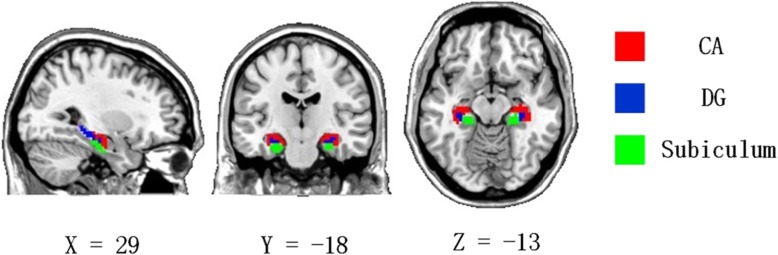
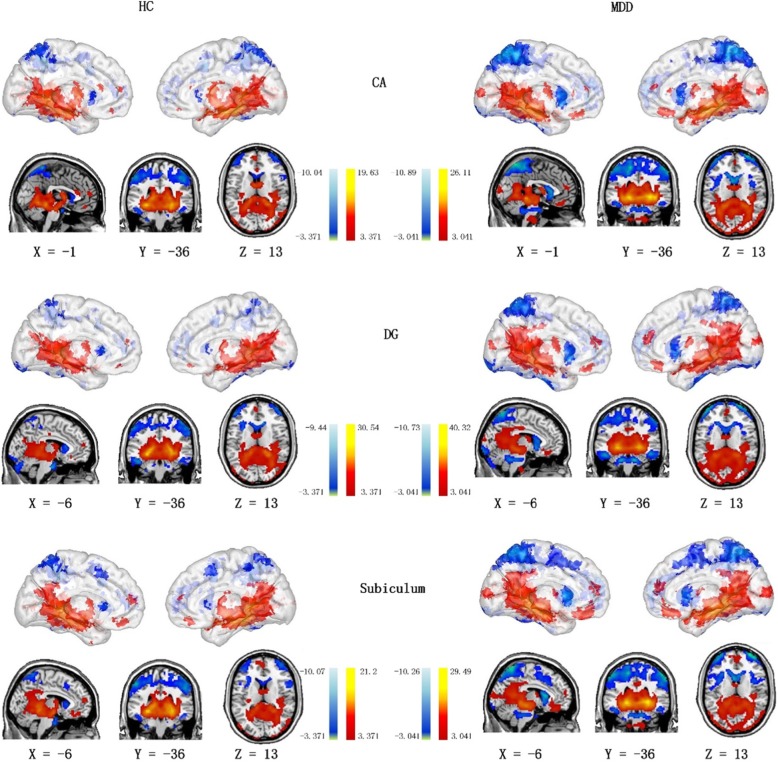
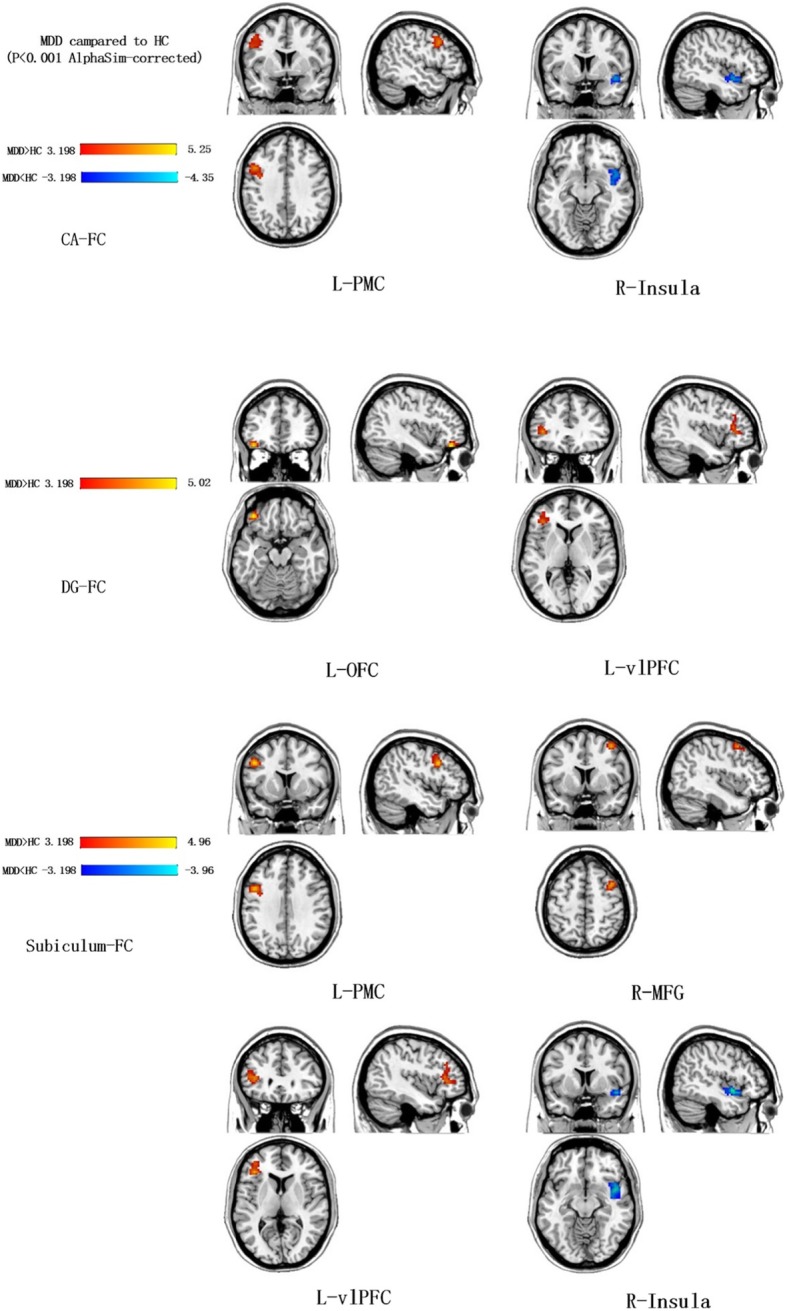
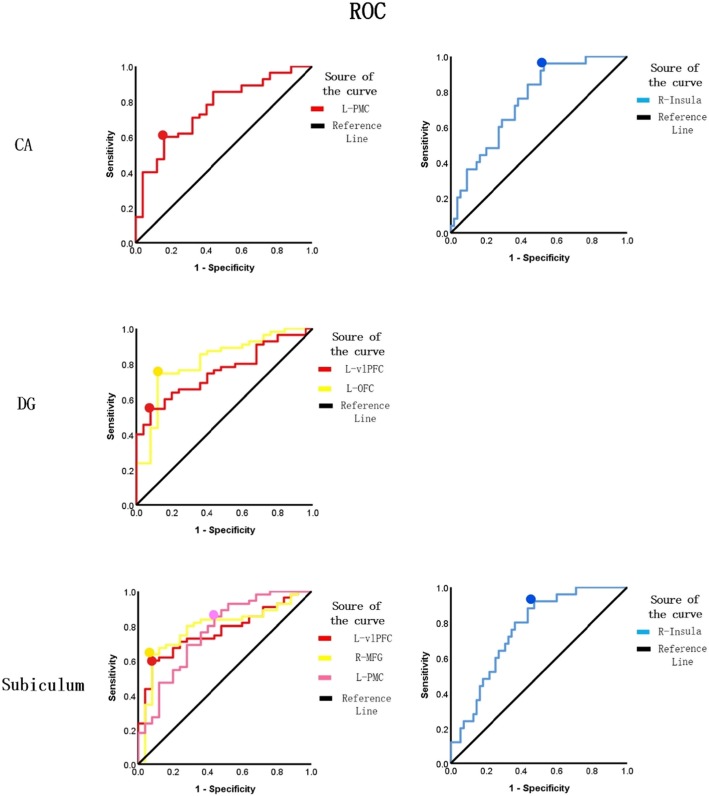
Background: Many studies have found that the hippocampus plays a very important role in major depressive disorder (MDD). The hippocampus can be divided into three subfields: the cornu ammonis (CA), dentate gyrus (DG) and subiculum. Each subfield of the hippocampus has a unique function and are differentially associated with the pathological mechanisms of MDD. However, no research exists to describe the resting state functional connectivity of each hippocampal subfield in MDD. Methods: Fifty-five patients with MDD and 25 healthy controls (HCs) matched for gender, age and years of education were obtained. A seed-based method that imposed a template on the whole brain was used to assess the resting-state functional connectivity (rsFC) of each hippocampal subfield. Results: Patients with MDD demonstrated increased connectivity in the left premotor cortex (PMC) and reduced connectivity in the right insula with the CA seed region. Increased connectivity was reported in the left orbitofrontal cortex (OFC) and left ventrolateral prefrontal cortex (vlPFC) with the DG seed region. The subiculum seed region revealed increased connectivity with the left premotor cortex (PMC), the right middle frontal gyrus (MFG), the left ventrolateral prefrontal cortex (vlPFC) and reduced connectivity with the right insula. ROC curves confirmed that the differences between groups were statistically significant. Conclusion: The results suggest that the CA, DG and subiculum have significant involvement with MDD. Specifically, the abnormal functional connectivity of the CA may be related to bias of coding and integration of information in patients with MDD. The abnormal functional connectivity of the DG may be related to the impairment of working memory in patients with MDD, and the abnormal functional connectivity of the subiculum may be related to cognitive impairment and negative emotions in patients with MDD.
Overview
The claims and statistics of this paper haven’t been checked yet.
Free: it reads the open-access text and checks the first 5 claims that cite a source we can check. Create a free account to check every claim.
Integrity signals
Registry
Cites
Statistics
Figures
Verification
Claims the paper makes
The claims and statistics of this paper haven’t been checked yet.
Free: it reads the open-access text and checks the first 5 claims that cite a source we can check. Create a free account to check every claim.
Claims other papers make about this one
Each is checked against this paper’s own text: does it say what the citing paper says it does?
The source backs part of the claim, not all of it — or backs it for a different population, condition or comparison.
In the citing paper
“Increased connectivity between hippocampal dentate gyrus (DG) (responsible for spatial encoding and memory) and ventrolateral PFC (responsible for regulation of emotions, impulsivity, and memories of anticipated rewards for each action or choice)35, may contribute to strong negative emotional memories in MDD.”
From Dysregulation of adult hippocampal neuroplasticity in major depression: Pathogenesis and therapeutic implications (2022) · cites this paper as [35]
Experimental — accuracy not yet measuredThe cited source says what the claim attributes to it.
In the citing paper
“The pathogenesis of cognitive and affective deficits in untreated MDD is not fully elucidated but likely involves abnormalities across multiple brain regions33-35, and includes but is not limited to changes in functional and/or structural connectivity.”
From Dysregulation of adult hippocampal neuroplasticity in major depression: Pathogenesis and therapeutic implications (2022) · cites this paper as [35]
Self-check
Percentages, sums and reported differences re-computed from the paper’s own numbers.
The self-check needs the paper’s full text.
Citations
Cites
Hamilton, M. (1960) · Journal of Neurology, Neurosurgery & Psychiatry · doi:10.1136/jnnp.23.1.56 · Cited by 32,817
Ng, M., Fleming, T., Robinson, M., Thomson, B., Graetz, N., Margono, C., Mullany, E. C., Biryukov, S., Abbafati, C., Abera, S. F., et al. (2014) · The Lancet · doi:10.1016/s0140-6736(14)60460-8 · Cited by 11,952
N-back working memory paradigm: a meta-analysis of normative functional neuroimaging studies.
Owen, A. M., McMillan, K. M., Laird, A. R., & Bullmore, E. (2005) · Human Brain Mapping · doi:10.1002/hbm.20131 · Cited by 3,560
Ongur, D. (2000) · Cerebral Cortex · doi:10.1093/cercor/10.3.206 · Cited by 2,627 · cited 1×
“Both of these findings are consistent with previous research [4, 21, 45, 49, 68, 70, 75].”
ResultKaiser, R. H., Andrews-Hanna, J. R., Wager, T. D., & Pizzagalli, D. A. (2015) · JAMA Psychiatry · doi:10.1001/jamapsychiatry.2015.0071 · Cited by 2,281
The role of the posterior cingulate cortex in cognition and disease
Leech, R., & Sharp, D. J. (2014) · Brain · doi:10.1093/brain/awt162 · Cited by 2,247
Belmaker, R. H., & Agam, G. (2008) · New England Journal of Medicine · doi:10.1056/nejmra073096 · Cited by 2,166
Andrews‐Hanna, J. R., Smallwood, J., & Spreng, R. N. (2014) · Annals of the New York Academy of Sciences · doi:10.1111/nyas.12360 · Cited by 2,102
REST: A Toolkit for Resting-State Functional Magnetic Resonance Imaging Data Processing
Song, X.-W., Dong, Z.-Y., Long, X.-Y., Li, S.-F., Zuo, X.-N., Zhu, C.-Z., He, Y., Yan, C.-G., & Zang, Y.-F. (2011) · PLoS ONE · doi:10.1371/journal.pone.0025031 · Cited by 1,872 · cited 1×
“After processing, individual- subject level voxel-wise analyses were built in the REST toolbox (Song et al., 2011) by using Fisher’s r-to-Z transform to convert the data to Z-scores.”
MethodNeurobiology of emotion perception II: implications for major psychiatric disorders
Phillips, M. L., Drevets, W. C., Rauch, S. L., & Lane, R. (2003) · Biological Psychiatry · doi:10.1016/s0006-3223(03)00171-9 · Cited by 1,736
Cited by
Tartt, A. N., Mariani, M. B., Hen, R., Mann, J. J., & Boldrini, M. (2022) · Molecular Psychiatry · doi:10.1038/s41380-022-01520-y · Cited by 408
“Increased connectivity between hippocampal dentate gyrus (DG) (responsible for spatial encoding and memory) and ventrolateral PFC (responsible for regulation of emotions, impulsivity, and memories of anticipated rewards for each action or choice) [35], may contribute to strong negative emotional memories in MDD.”
BackgroundCattaneo, A., Suderman, M. J., Cattane, N., Mazzelli, M., Begni, V., Maj, C., D'Aprile, I., Pariante, C. M., Luoni, A., Berry, A., et al. (2020) · Neurobiology of Stress · doi:10.1016/j.ynstr.2020.100271 · Cited by 42
“Indeed, a reduction of BDNF expression was found in brain specimen from depressed and schizophrenic subjects (Dwivedi, 2013; Hashimoto et al., 2005), an evidence supported by a number of preclinical studies that have demonstrated a strong link between BDNF and psychiatric disorders (Begni et al.,…”
BackgroundShunkai, L., Su, T., Zhong, S., Chen, G., Zhang, Y., Zhao, H., Chen, P., Tang, G., Qi, Z., He, J., et al. (2021) · Psychological Medicine · doi:10.1017/s0033291721004906 · Cited by 40
“A recent study also found the abnormal resting-state FC of hippocampal subfields may be related to the impairment of working memory in MDD patients (Hao et al., 2020).”
BackgroundDickerson, M. R., Murphy, S. F., Urban, M. J., White, Z., & VandeVord, P. J. (2021) · Frontiers in Behavioral Neuroscience · doi:10.3389/fnbeh.2021.787475 · Cited by 40
Xie, X., Xu, S., Yao, L., Chen, M., Zhang, H., Wang, C., Nagy, C., & Liu, Z. (2023) · Brain stimulation · doi:10.1016/j.brs.2023.12.006 · Cited by 36
“According to this hypothesis, a decrease in the generation of new neurons in the hippocampus — an area of the brain associated with learning, memory, and emotion regulation — may contribute to or be the consequence of being in a state of depression [7 – 9].”
BackgroundSelf-citationDai, P., Lu, D., Shi, Y. Q., Zhou, Y. S., Xiong, T., Zhou, X., Chen, Z., Zou, B., Tang, H., Huang, Z., et al. (2023) · Journal of Affective Disorders · doi:10.1016/j.jad.2023.07.077 · Cited by 33
Kampaite, A., Gustafsson, R., York, E. N., Foley, P., MacDougall, N., Bastin, M. E., Chandran, S., Waldman, A. D., & Meijboom, R. (2024) · PLoS ONE · doi:10.1371/journal.pone.0299634 · Cited by 33
The Imbalance of Astrocytic Mitochondrial Dynamics Following Blast-Induced Traumatic Brain Injury
Correa, F. G., Pickrell, A. M., & VandeVord, P. J. (2023) · Biomedicines · doi:10.3390/biomedicines11020329 · Cited by 30
Reyes-Lizaola, S., Luna-Zarate, U., Tendilla‐Beltrán, H., Morales‐Medina, J. C., & Flores, G. (2023) · Progress in Neuro-Psychopharmacology and Biological Psychiatry · doi:10.1016/j.pnpbp.2023.110876 · Cited by 28
Xiao, S., Yang, Z., Yan, H., Chen, G., Zhong, S., Chen, P., Zhong, H., Yang, H., Jia, Y., Yin, Z., et al. (2024) · Translational Psychiatry · doi:10.1038/s41398-024-03012-9 · Cited by 23
Krug, S., Müller, T., Kayali, Ö., Leichter, E., Peschel, S. K. V., Jahn, N., Winter, L., Krüger, T. H. C., Kahl, K. G., Sinke, C., et al. (2022) · Journal of Psychiatric Research · doi:10.1016/j.jpsychires.2022.07.040 · Cited by 27
Zhang, F., Wang, C., Lan, X., Li, W., Ye, Y., Liu, H., Hu, Z., You, Z., Zhou, Y., & Ning, Y. (2023) · Journal of Affective Disorders · doi:10.1016/j.jad.2023.01.003 · Cited by 21
Self-citationFeng, R., Bao, W., Zhuo, L., Gao, Y., Yao, H., Yang, L., Liang, L., Liang, K., Zhou, M., Zhang, L., et al. (2022) · Frontiers in Psychiatry · doi:10.3389/fpsyt.2021.797898 · Cited by 22
Lin, H., Xiang, X., Huang, J., Xiong, S., Ren, H., & Gao, Y. (2022) · Frontiers in Psychiatry · doi:10.3389/fpsyt.2022.960294 · Cited by 19
“also found that different subareas of the hippocampus (including the subiculum and dentate gyrus) were substantially related to MDD (32).”
BackgroundA lateralized model of the pain-depression dyad
Maallo, A. M. S., Moulton, E. A., Sieberg, C. B., Giddon, D. B., Borsook, D., & Holmes, S. A. (2021) · Neuroscience & Biobehavioral Reviews · doi:10.1016/j.neubiorev.2021.06.003 · Cited by 20
Shengli, C., Yingli, Z., Zheng, G., Lin, S., Xu, Z., Han, F., Qiu, Y., & Gangqiang, H. (2022) · Journal of Affective Disorders · doi:10.1016/j.jad.2022.01.087 · Cited by 18
Wu, Y., Zheng, Y., Li, J., Liu, Y., Liang, X., Chen, Y., Zhang, H., Wang, N., Weng, X., Qiu, S., et al. (2022) · Journal of Affective Disorders · doi:10.1016/j.jad.2022.02.052 · Cited by 18
Self-citationZhang, T., Zhao, L., Chen, C., Yang, C. C., Zhang, H., Su, W., Cao, J., Shi, Q., & Tian, L. (2024) · The Journal of Clinical Endocrinology & Metabolism · doi:10.1210/clinem/dgae070 · Cited by 19
Correia, R. D. C., Tumas, V., dos Santos, A. C., & Salmón, C. E. G. (2023) · Psychoradiology · doi:10.1093/psyrad/kkad008 · Cited by 15
“The lingual gyrus natur all y has a high positive FC with the hippocampus (Hao et al. , 2020 ), but in the DMCI group, w e observed hyper connectivity of these connections since the CN group did not have a higher FC in the same places compared to the AD group (Fig.”
ResultThe Role of Social Reward and Corticostriatal Connectivity in Substance Use
Sazhin, D., Frazier, A. M., Haynes, C. R., Johnston, C. R., Chat, I. K.-Y., Dennison, J. B., Bart, C. P., McCloskey, M., Chein, J. M., Fareri, D. S., et al. (2020) · Journal of Psychiatry and Brain Science · doi:10.20900/jpbs.20200024 · Cited by 16
“Substance Dependent Individuals (SDI) had higher BAS fun seeking scores, lower decision making performance, and elevated left OFC activity, indicating this region may play a role in reward-related decision making in SUD [45].”
BackgroundInfluentialHe, M., Li, Y., Zhou, L., Li, Y., Lei, T., Yan, W., Song, J., & Chen, L. (2022) · Frontiers in Aging Neuroscience · doi:10.3389/fnagi.2022.823535 · Cited by 15
Aberrant resting-state regional activity in patients with postpartum depression
Zhang, S., Li, B., Li, S., Hou, X.-M., & Zhang, P. (2023) · Frontiers in Human Neuroscience · doi:10.3389/fnhum.2022.925543 · Cited by 15
“Patients with MDD have been shown to have reduced ReHo in the right insula (Liu et al., 2010), which correlated with anxiety and hopelessness (Yao et al., 2009).”
BackgroundInfluentialJiao, C., Yuan, L., Yu, S., Gu, B., Luo, Q., Wang, X., Zhao, Y., Gai, C., Li, T., Li, T., et al. (2024) · Behavioural Brain Research · doi:10.1016/j.bbr.2024.115028 · Cited by 14
Faustino, B. (2021) · Applied Neuropsychology Adult · doi:10.1080/23279095.2021.1883615 · Cited by 14
Sun, H., Xu, D., Sun, Q., Bai, T., Wang, K., Wang, J., Zhang, J., & Tian, Y. (2024) · Psychoradiology · doi:10.1093/psyrad/kkae030 · Cited by 13
Zhou, Z., Gao, Y., Feng, R., Zhuo, L., Bao, W., Liang, K., Qiu, H., Cao, L., Tang, M., Li, H., et al. (2022) · European Child & Adolescent Psychiatry · doi:10.1007/s00787-022-02086-4 · Cited by 13
Neural circuits mediating chronic stress: Implications for major depressive disorder
Guo, H., Ali, T., & Li, S. (2025) · Progress in Neuro-Psychopharmacology and Biological Psychiatry · doi:10.1016/j.pnpbp.2025.111280 · Cited by 12
Gálber, M., Nagy, S. A., Orsi, G., Perlaki, G., Simon, M., & Czéh, B. (2024) · NeuroImage Clinical · doi:10.1016/j.nicl.2024.103632 · Cited by 13
“More recent investigations of MDD patients document abnormal (cid:0) mainly increased (cid:0) , resting state FC for all hippocampal subfields (Hao et al., 2020), while another study found higher connectivity between the hippocampus and the anterior cingulate cortex (Krug et al., 2022).”
Song, Y., Yang, J., Chang, M., Wei, Y., Yin, Z., Zhu, Y., Zhou, Y., Zhou, Y., Jiang, X., Wu, F., et al. (2022) · Frontiers in Psychiatry · doi:10.3389/fpsyt.2022.993356 · Cited by 11
Dehdar, K., Salimi, M., Tabasi, F., Dehghan, S., Sumiyoshi, A., Garousi, M., Jamaati, H., Javan, M., & Raoufy, M. R. (2023) · Neuroscience · doi:10.1016/j.neuroscience.2023.05.034 · Cited by 9
Grace, A., & Uliana, D. L. (2026) · Molecular Psychiatry · doi:10.1038/s41380-026-03513-7 · Cited by 8
“Because the ventral/anterior hippocampus is strongly interconnected with the PFC and amygdala, this circuit likely mediates emotional memory retrieval and self-referential processing [121 – 123].”
Chavarría-Elizondo, P., Maturana‐Quijada, P., Martínez‐Zalacaín, I., del Cerro, I., Juaneda‐Seguí, A., Guinea-Izquierdo, A., Gascón‐Bayarri, J., Reñé‐Ramírez, R., Urretavizcaya, M., Ferrer, I., et al. (2025) · International Journal of Clinical and Health Psychology · doi:10.1016/j.ijchp.2025.100588 · Cited by 6
“…Zhu et al., 2021) Moreover, altered connectivity in these regions may promote self-referential thinking and rumination, hallmark features of MDD that intensify depressive symptoms by reinforcing negative thought patterns and reducing engagement with the external environment (Hao et al., 2020).”
Sex Differences in the Ventral Subiculum's Microcircuitry and Function
Miller, C. N., & Aoto, J. N. (2025) · Hippocampus · doi:10.1002/hipo.70054 · Cited by 6
Müller, T., Krug, S., Kayali, Ö., Leichter, E., Jahn, N., Winter, L., Krüger, T. H. C., Kahl, K. G., Sinke, C., & Heitland, I. (2025) · Frontiers in Psychiatry · doi:10.3389/fpsyt.2025.1479283 · Cited by 7
TOB is an effector of the hippocampus-mediated acute stress response
Youssef, M., Hamada, H. T., Lai, S., Kiyama, Y., El‐Tabbal, M., Kiyonari, H., Nakano, K., Kühn, B., & Yamamoto, T. S. (2022) · Translational Psychiatry · doi:10.1038/s41398-022-02078-7 · Cited by 8
Du, C., Zhao, S., & Luo, Q. (2025) · Journal of Affective Disorders · doi:10.1016/j.jad.2025.120493 · Cited by 3
Enhancing depression diagnosis with augmented brain signal driven decorrelated graph neural networks
Barman, J., Yusuf, M., Kumar, S., & Gandhi, T. K. (2026) · Communications Medicine · doi:10.1038/s43856-026-01395-y · Cited by 3
“…postural balance, and coordination (vermis, cerebellum), and its interactions with regions involved in language comprehension, working memory, executive functions, learning, and movement coordination (middle frontal gyrus, hippocampus, and cerebellum)etc.,consistentwithprior fi ndings 81,82 .”
de Cates, A. N., Gillespie, A. L., Scaife, J. C., Martens, M., Carson, J., Godlewska, B. R., Howard, W., Guru, A., Cowen, P. J., Harmer, C. J., et al. (2026) · Translational Psychiatry · doi:10.1038/s41398-026-04141-z · Cited by 3
MSARAE: Multiscale adversarial regularized autoencoders for cortical network classification
Zhu, Y., Zhou, Y., Zhang, X., Li, Y., Yuan, Y., & Kong, Y. (2025) · Medical Image Analysis · doi:10.1016/j.media.2025.103775 · Cited by 2
Pro-cognitive effects of 5-HT4 receptor agonism in individuals with remitted depression
de Cates, A. N., Hamilton, S., Guru, A., Blandhol, M., Colwell, M., Cowen, P. J., Simmons, M., Jones, B., Harmer, C. J., & Murphy, S. E. (2026) · Psychological Medicine · doi:10.1017/s0033291726104450 · Cited by 2
Esmaeilian, Y., Samimi, A., Mousavi, S., Kiani, I., Cattarinussi, G., & Moghaddam, H. S. (2026) · Psychiatry and Clinical Neurosciences · doi:10.1111/pcn.70053 · Cited by 2
Neural signatures of major depression across the episodic memory circuitry
Ramponi, C., Gyger, L., Swierkosz-Lenart, K., Latypova, A., Bracht, T., Domenicantonio, G. D., Colla, M., Mall, J., von Gunten, A., Lutti, A., et al. (2026) · Journal of Affective Disorders · doi:10.1016/j.jad.2026.121820 · Cited by 2
Involvement of a BH3-only apoptosis sensitizer gene Blm-s in hippocampus-mediated mood control
Huang, P., Yang, T., Yeh, C., Huang, S., Chang, H., Hung, Y.-F., Chu, W.-C., Cho, K., Lu, T., Kuo, P., et al. (2022) · Translational Psychiatry · doi:10.1038/s41398-022-02184-6 · Cited by 4
“related to declined neurocognitive functions [15] and major depressive disorder [16, 17] in humans.”
BackgroundDendritic arbor dynamics and stability in health and disease
Mlostek, M., Zeng, J., Urbańska, M., & Jaworski, J. (2023) · Acta Neurobiologiae Experimentalis · doi:10.55782/ane-2023-2456 · Cited by 1
Relationship of Melatonin with the Hippocampus
Kılıç, K. D., Turgut, A. Ç., & Özyazıcı, A. T. (2025) · Springer eBooks · doi:10.1007/978-3-031-88907-3_20 · Cited by 1
Chen, X., Tang, H., Liu, J., Chen, H., Liu, P., Lu, F., & Zhou, J. (2026) · BMC Psychiatry · doi:10.1186/s12888-026-07881-w · Cited by 1
Shift to the core: Abnormal core-periphery global topography in unipolar and bipolar depression
Scalabrini, A., Palladini, M., Poletti, S., Vai, B., Calesella, F., Paolini, M., Gulino, G. R., Masoumi, S., Zanardi, R., Colombo, C., et al. (2026) · Journal of Affective Disorders · doi:10.1016/j.jad.2026.121550 · Cited by 2
Chen, X., Xu, P., Ye, S., Zhao, H., Li, Y., Ye, X., Zhang, S., Gui, Y., Wu, R., Jiang, C., et al. (2026) · Journal of Psychiatric Research · doi:10.1016/j.jpsychires.2026.03.015 · Cited by 1
Predicting apathy using connectome-based models derived from static and dynamic brain connectivity
Lin, Y., Wang, Y., Xu, P., Luo, Y., & Han, S. (2026) · Social Cognitive and Affective Neuroscience · doi:10.1093/scan/nsag016 · Cited by 1
“In contrast, core features of depression, such as persistent low mood and pervasive negative affect (American Psychiatric Association 2022), are often associated with subcortical network, including regions, such as the amygdala and hippocampus (Tang et al. 2018, Hao et al. 2020, Kang et al. 2026).”
Hippocampal prediction errors and claustral control at the perception–memory crossroads
Medina, C., Fernández, R. S., Krawczcyk, M. C., & Boccia, M. M. (2026) · Philosophical Transactions of the Royal Society B Biological Sciences · doi:10.1098/rstb.2025.0253 · Cited by 3
Correia, R. D. C. (2021) · Digital Library of Theses and Dissertations (Universidade de São Paulo) · doi:10.11606/t.17.2021.tde-28012022-110238 · Cited by 2
Belov, V. (2023) · eDiss (Georg-August-Universität Göttingen) · doi:10.53846/goediss-9834 · Cited by 1
Correa, F. G. (2023) · VTechWorks (Virginia Tech)
Memory Deficits in PTSD: Links Between Hippocampal Function and Depression
Vincent, M. (2026) · University of Michigan Undergraduate Research Journal · doi:10.3998/umurj.9819
Severance, T. (2026) · Digital Commons at National Lewis University (National Lewis University)
KREO Prevents CUMS ‐Induced Depressive‐Like Behavior via Modulation of the BDNF Signaling Pathway
Wang, Y., Yue, Z., Xu, M., Xu, W., Zhang, W., Li, X., Liu, Q., Guan, K., Zhang, Z., Li, Y., et al. (2026) · Food Science & Nutrition · doi:10.1002/fsn3.71912
“The hippocampus plays a central role in the investigation of the underlying mechanisms of depression, as it is interconnected with various brain regions involved in mood regulation and contributes to emotional processing (Cullen et al. 2014; Hao et al. 2020).”
A hippocampal neuroimaging signature of neurovascular insulin signalling links metabolism to moodPreprint
Cherix, A., Godlewska, B. R., Lazari, A., Zhao, S., Dugan, G., Tachrount, M., Greco, M. T., Smart, S., Clarke, W. T., Bannerman, D. M., et al. (2026) · bioRxiv (Cold Spring Harbor Laboratory) · doi:10.64898/2026.06.17.732833
Autonomic and limbic system functioning, early life stress, and depressive symptoms in adolescence
Giampetruzzi, E., Antonacci, C., Bahk, J. R., Buthmann, J. L., Lee, Y. J., Kircanski, K., & Gotlib, I. H. (2026) · Neurobiology of Stress · doi:10.1016/j.ynstr.2026.100847
“…to contextual memory, regulation of the hypothalamic-pituitary-adrenal (HPA) axis, and affective regulation (Cole et al., 2022); in fact, reduced hippocampal volume (Breslin et al., 2024) and altered hippocampal connectivity (Hao et al., 2020) are well-documented neural correlates of depression.”
Liu, Y., Chen, Y., Kong, M., Xu, Z., & Jiang, W. (2026) · Journal of Affective Disorders · doi:10.1016/j.jad.2026.122669
Fan, R., Xiao, Y., Su, G., Tan, Y., Assad, N., Deng, Y., Li, T., Lu, Y., Kim, D., Rosoklija, G. B., et al. (2026) · Research Square · doi:10.21203/rs.3.rs-10632086/v1
Zhang, F., Li, X., Zhang, L., Zhou, Y., Zhou, J., Feng, Y., Wang, G., Yu, A., & Wang, Y. (2026) · Frontiers in Psychiatry · doi:10.3389/fpsyt.2026.1946797
“Hao et al. (13) showed that the cornu ammonis (CA), dentate gyrus, and subiculum exhibited distinct whole-brain functional connectivity abnormalities involving the premotor cortex, insula, orbitofrontal cortex, and ventrolateral prefrontal cortex.”
Lam, C. S. T., Kuhn, M., Borchers, L. R., Ren, B., Woronko, S. E., Li, M., Zhang, E. M., Brennan, B. P., Vitaliano, G. D., Lees, T., et al. (2026) · bioRxiv (Cold Spring Harbor Laboratory) · doi:10.64898/2026.10.29.762937
Metadata
- Authors
- Hao, Z. Y., Zhong, Y., Ma, Z. J., Xu, H. Z., Kong, J. Y., Wu, Z., Wu, Y., Li, J., Lu, X., Zhang, N., & Wang, C.
- Affiliations
- Nanjing Normal University (CN)
- Nanjing Brain Hospital (CN)
- Corresponding author
- Wang, Chun
- Venue
- BMC Psychiatry
- Published
- 2020-02-17
- Volume
- 20
- Issue
- 1
- Pages
- 71-71
- ISSN
- 1471-244X (ISSN-L)
- PMC
- PMC7026985
- OpenAlex
- W3010180375
- Cited by
- 54
- References
- 80
- Citations by year
- 2026: 13 · 2025: 7 · 2024: 6 · 2023: 10 · 2022: 11 · 2021: 5 · 2020: 2
- FWCI
- 3.76
- Type
- journal article
- Language
- en
- Open access
- gold
- doi.org
- Licence
- cc-by
- creativecommons.org/licenses/by/4.0/ (tdm)
- creativecommons.org/licenses/by/4.0/ (vor)
- Locations
- BMC Psychiatry (publishedVersion, cc-by)
- PubMed Central (publishedVersion, cc-by)
- PubMed (publishedVersion)
- Institutional Repository of Institute of Psychology, Chinese Academy of Sciences (Institute of Psychology, Chinese Academy of Sciences) (submittedVersion)
- DOAJ (DOAJ: Directory of Open Access Journals) (submittedVersion, cc-by-sa)
- Funders
- National Natural Science Foundation of China (81571344, 81871344,81201064)
- Natural Science Foundation of the Higher Education Institutions of Jiangsu Province, China (18KJB190003)
- key research and development program (Social Development) project of Jiangsu province (BE20156092015)
- Natural Science Foundation of Jiangsu Province (BK20161109)
- Topics
- Life Sciences › Neuroscience › Cognitive Neuroscience › Functional Brain Connectivity Studies
- Health Sciences › Medicine › Pharmacology (medical) › Treatment of Major Depression
- Life Sciences › Neuroscience › Cognitive Neuroscience › Neural and Behavioral Psychology Studies
- Keywords
- major depressive disorder, hippocampal subfields, resting-state functional connectivity, cornu ammonis, dentate gyrus, subiculum, premotor cortex, insula, orbitofrontal cortex, ventrolateral prefrontal cortex, working memory, cognitive impairment, negative emotions
- MeSH terms
- Adult, Cerebral Cortex, Depressive Disorder, Major, Major Depressive Disorder, Female, Hippocampus, Humans, Male, Neural Pathways, Rest
About these checks
Registry, retraction, Cites and statistics results are computed, not judged, with one exception: a printed reference that no index lists is read once by a model before it counts as a citation error. Claims are extracted by a model and kept only when their quote appears verbatim in the text; each cited source is then checked, with a model’s help, for whether it says what the claim relies on. Those verdicts can be wrong — read the claim’s quote and the cited source before relying on one.
Statistics and arithmetic are recomputed, not judged.
Confidence bands are shown only for fields calibrated on our annotated test set. None is calibrated yet, so no band is shown.
What counts as a claim ›How we measure confidence ›How we check this ›
Are you an author, or do you see a problem with this page? Request a review
Data sources
Bibliographic data: Semantic Scholar, OpenAlex, Crossref.
Contains information from the Semantic Scholar Academic Graph Datasets, made available under the ODC Attribution License (ODC-BY 1.0).
Semantic Scholar’s data is described in: Kinney, R., et al. (2023). The Semantic Scholar Open Data Platform. arXiv:2301.10140.
