

Abnormal resting-state functional connectivity of hippocampal subfields in patients with major depressive disorder
Open accessThe DOI matches its Crossref record; 80 of the 80 references it cites were found in a registry or an index.
Abstract
Background: Many studies have found that the hippocampus plays a very important role in major depressive disorder (MDD). The hippocampus can be divided into three subfields: the cornu ammonis (CA), dentate gyrus (DG) and subiculum. Each subfield of the hippocampus has a unique function and are differentially associated with the pathological mechanisms of MDD. However, no research exists to describe the resting state functional connectivity of each hippocampal subfield in MDD. Methods: Fifty-five patients with MDD and 25 healthy controls (HCs) matched for gender, age and years of education were obtained. A seed-based method that imposed a template on the whole brain was used to assess the resting-state functional connectivity (rsFC) of each hippocampal subfield. Results: Patients with MDD demonstrated increased connectivity in the left premotor cortex (PMC) and reduced connectivity in the right insula with the CA seed region. Increased connectivity was reported in the left orbitofrontal cortex (OFC) and left ventrolateral prefrontal cortex (vlPFC) with the DG seed region. The subiculum seed region revealed increased connectivity with the left premotor cortex (PMC), the right middle frontal gyrus (MFG), the left ventrolateral prefrontal cortex (vlPFC) and reduced connectivity with the right insula. ROC curves confirmed that the differences between groups were statistically significant. Conclusion: The results suggest that the CA, DG and subiculum have significant involvement with MDD. Specifically, the abnormal functional connectivity of the CA may be related to bias of coding and integration of information in patients with MDD. The abnormal functional connectivity of the DG may be related to the impairment of working memory in patients with MDD, and the abnormal functional connectivity of the subiculum may be related to cognitive impairment and negative emotions in patients with MDD.
Overview
The claims and statistics of this paper haven’t been checked yet.
Free: it reads the open-access text and checks the first 5 claims that cite a source we can check. Create a free account to check every claim.
Integrity signals
Registry
Cites
Statistics
Figures
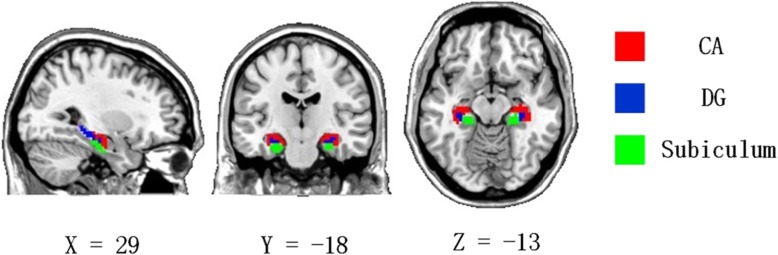
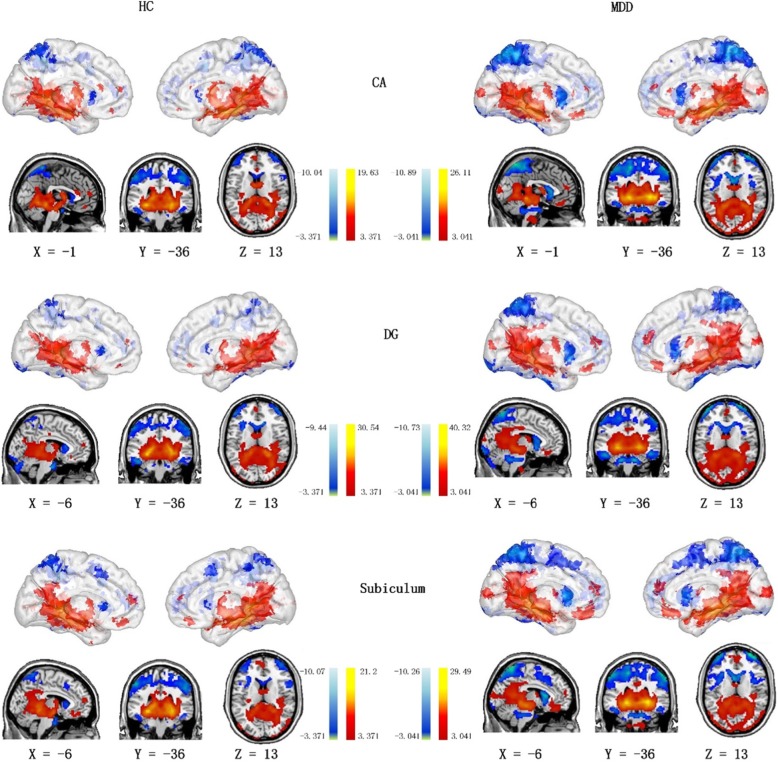
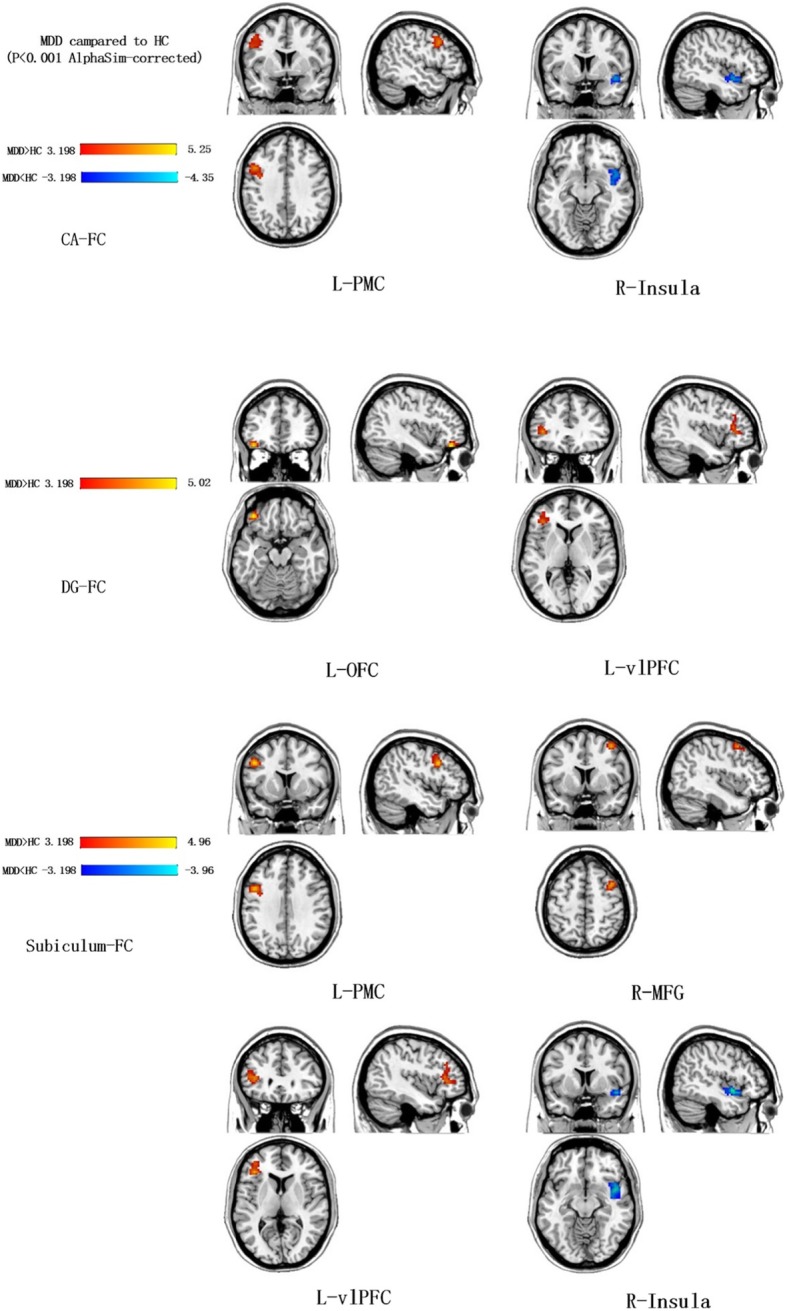
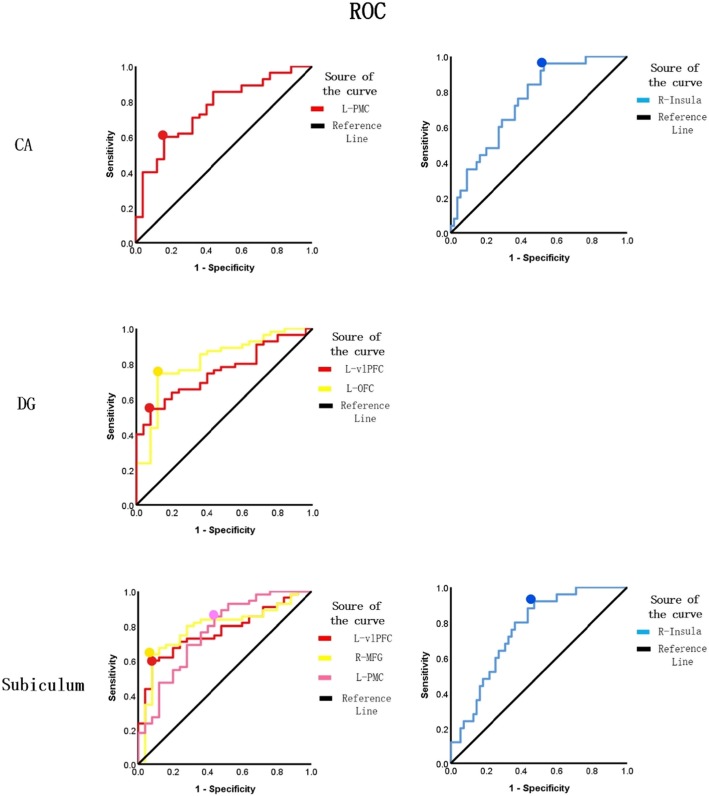
Verification
Claims the paper makes
The claims and statistics of this paper haven’t been checked yet.
Free: it reads the open-access text and checks the first 5 claims that cite a source we can check. Create a free account to check every claim.
Claims other papers make about this one
Each is checked against this paper’s own text: does it say what the citing paper says it does?
The source backs part of the claim, not all of it — or backs it for a different population, condition or comparison.
In the citing paper
“Increased connectivity between hippocampal dentate gyrus (DG) (responsible for spatial encoding and memory) and ventrolateral PFC (responsible for regulation of emotions, impulsivity, and memories of anticipated rewards for each action or choice)35, may contribute to strong negative emotional memories in MDD.”
From Dysregulation of adult hippocampal neuroplasticity in major depression: Pathogenesis and therapeutic implications (2022) · cites this paper as [35]
Experimental — accuracy not yet measuredThe cited source says what the claim attributes to it.
In the citing paper
“The pathogenesis of cognitive and affective deficits in untreated MDD is not fully elucidated but likely involves abnormalities across multiple brain regions33-35, and includes but is not limited to changes in functional and/or structural connectivity.”
From Dysregulation of adult hippocampal neuroplasticity in major depression: Pathogenesis and therapeutic implications (2022) · cites this paper as [35]
Self-check
Percentages, sums and reported differences re-computed from the paper’s own numbers.
The self-check needs the paper’s full text.
Citations
Cites
Hamilton, M. (1960) · Journal of Neurology, Neurosurgery & Psychiatry · doi:10.1136/jnnp.23.1.56 · Cited by 32,817
Ng, M., Fleming, T., Robinson, M., Thomson, B., Graetz, N., Margono, C., Mullany, E. C., Biryukov, S., Abbafati, C., Abera, S. F., et al. (2014) · The Lancet · doi:10.1016/s0140-6736(14)60460-8 · Cited by 11,952
N-back working memory paradigm: a meta-analysis of normative functional neuroimaging studies.
Owen, A. M., McMillan, K. M., Laird, A. R., & Bullmore, E. (2005) · Human Brain Mapping · doi:10.1002/hbm.20131 · Cited by 3,560
Ongur, D. (2000) · Cerebral Cortex · doi:10.1093/cercor/10.3.206 · Cited by 2,627 · cited 1×
“Both of these findings are consistent with previous research [4, 21, 45, 49, 68, 70, 75].”
ResultKaiser, R. H., Andrews-Hanna, J. R., Wager, T. D., & Pizzagalli, D. A. (2015) · JAMA Psychiatry · doi:10.1001/jamapsychiatry.2015.0071 · Cited by 2,281
The role of the posterior cingulate cortex in cognition and disease
Leech, R., & Sharp, D. J. (2014) · Brain · doi:10.1093/brain/awt162 · Cited by 2,247
Belmaker, R. H., & Agam, G. (2008) · New England Journal of Medicine · doi:10.1056/nejmra073096 · Cited by 2,166
Andrews‐Hanna, J. R., Smallwood, J., & Spreng, R. N. (2014) · Annals of the New York Academy of Sciences · doi:10.1111/nyas.12360 · Cited by 2,102
REST: A Toolkit for Resting-State Functional Magnetic Resonance Imaging Data Processing
Song, X.-W., Dong, Z.-Y., Long, X.-Y., Li, S.-F., Zuo, X.-N., Zhu, C.-Z., He, Y., Yan, C.-G., & Zang, Y.-F. (2011) · PLoS ONE · doi:10.1371/journal.pone.0025031 · Cited by 1,872 · cited 1×
“After processing, individual- subject level voxel-wise analyses were built in the REST toolbox (Song et al., 2011) by using Fisher’s r-to-Z transform to convert the data to Z-scores.”
MethodNeurobiology of emotion perception II: implications for major psychiatric disorders
Phillips, M. L., Drevets, W. C., Rauch, S. L., & Lane, R. (2003) · Biological Psychiatry · doi:10.1016/s0006-3223(03)00171-9 · Cited by 1,736
Limbic-cortical dysregulation: a proposed model of depression
(1997) · The Journal of Neuropsychiatry and Clinical Neurosciences · doi:10.1176/jnp.9.3.471 · Cited by 1,585
Ridderinkhof, K. R., van den Wildenberg, W. P. M., Segalowitz, S. J., & Carter, C. S. (2004) · Brain and Cognition · doi:10.1016/j.bandc.2004.09.016 · Cited by 1,407
Amunts, K., Kedo, O., Kindler, M., Pieperhoff, P., Mohlberg, H., Shah, N. J., Habel, U., Schneider, F., & Zilles, K. (2005) · Anatomy and Embryology · doi:10.1007/s00429-005-0025-5 · Cited by 1,264
Neural ensembles in CA3 transiently encode paths forward of the animal at a decision point
Johnson, A., & Redish, A. D. (2007) · The Journal of Neuroscience · doi:10.1523/jneurosci.3761-07.2007 · Cited by 1,003
PITKÄNEN, A., PIKKARAINEN, M., NURMINEN, N., & YLINEN, A. (2000) · Annals of the New York Academy of Sciences · doi:10.1111/j.1749-6632.2000.tb06738.x · Cited by 962 · cited 1×
“In MDD patients and HCs, our findings of positive functional connectivity between hippocampal subfields and the hippocampus, lingual gyrus, inferior temporal gyrus, amygdala, middle occipital gyrus, OFC and mPFC are consistent with previous studies [6, 13, 35, 52, 53, 74].”
ResultResting-state functional connectivity in major depressive disorder: A review
Mulders, P. C., van Eijndhoven, P. F., Schene, A. H., Beckmann, C. F., & Tendolkar, I. (2015) · Neuroscience & Biobehavioral Reviews · doi:10.1016/j.neubiorev.2015.07.014 · Cited by 884
Kessler, R. C. (2012) · Psychiatric Clinics of North America · doi:10.1016/j.psc.2011.11.005 · Cited by 871
The Human Hippocampus: Functional Anatomy, Vascularization and Serial Sections with MRI
Duvernoy, H. M., Cattin, F., & Risold, P.-Y. (2013) · Springer eBooks · doi:10.1007/978-3-642-33603-4 · Cited by 561
Arnone, D., McIntosh, A. M., Ebmeier, K. P., Munafò, M. R., & Anderson, I. M. (2012) · European Neuropsychopharmacology · doi:10.1016/j.euroneuro.2011.05.003 · Cited by 495
A role of right middle frontal gyrus in reorienting of attention: a case study
Japee, S., Holiday, K., Satyshur, M. D., Mukai, I., & Ungerleider, L. G. (2015) · Frontiers in Systems Neuroscience · doi:10.3389/fnsys.2015.00023 · Cited by 479
Merikangas, K. R., Ames, M., Cui, L., Stang, P. E., Ustun, T. B., Von Korff, M., & Kessler, R. C. (2007) · Archives of General Psychiatry · doi:10.1001/archpsyc.64.10.1180 · Cited by 464
Avery, J. A., Drevets, W. C., Moseman, S. E., Bodurka, J., Barcalow, J. C., & Simmons, W. K. (2014) · Biological Psychiatry · doi:10.1016/j.biopsych.2013.11.027 · Cited by 442
A Behavioral Assessment of Hippocampal Function Based on a Subregional Analysis
Kesner, R. P., Lee, I., & Gilbert, P. (2004) · Reviews in the Neurosciences · doi:10.1515/revneuro.2004.15.5.333 · Cited by 438
The Role of the Hippocampus in Prediction and Imagination
Buckner, R. L. (2010) · Annual Review of Psychology · doi:10.1146/annurev.psych.60.110707.163508 · Cited by 419
Rudebeck, P. H., & Murray, E. A. (2014) · Neuron · doi:10.1016/j.neuron.2014.10.049 · Cited by 405
Simmons, W. K., Avery, J. A., Barcalow, J. C., Bodurka, J., Drevets, W. C., & Bellgowan, P. (2013) · Human Brain Mapping · doi:10.1002/hbm.22113 · Cited by 401
Over the river, through the woods: cognitive maps in the hippocampus and orbitofrontal cortex
Wikenheiser, A. M., & Schoenbaum, G. (2016) · Nature Reviews Neuroscience · doi:10.1038/nrn.2016.56 · Cited by 359
The Human Hippocampus: Functional Anatomy, Vascularization and Serial Sections with MRI
Duvernoy, H. M. (2005) · doi:10.1007/b138576 · Cited by 350
A systematic review of resting-state functional-MRI studies in major depression
Wang, L., Hermens, D. F., Hickie, I. B., & Lagopoulos, J. (2012) · Journal of Affective Disorders · doi:10.1016/j.jad.2012.04.013 · Cited by 335
Maintenance versus manipulation in verbal working memory revisited: an fMRI study
Veltman, D. J., Rombouts, S. A. R. B., & Dolan, R. J. (2003) · NeuroImage · doi:10.1016/s1053-8119(02)00049-6 · Cited by 320
Association of neural and physiological responses during voluntary emotion suppression
Ohira, H., Nomura, M., Ichikawa, N., Isowa, T., Iidaka, T., Sato, A., Fukuyama, S., Nakajima, T., & Yamada, J. (2006) · NeuroImage · doi:10.1016/j.neuroimage.2005.08.047 · Cited by 310
The subiculum: a review of form, physiology and function
O'Mara, S. M., Commins, S., Anderson, M., & Gigg, J. (2001) · Progress in Neurobiology · doi:10.1016/s0301-0082(00)00054-x · Cited by 298
Large-Scale Meta-Analysis of Human Medial Frontal Cortex Reveals Tripartite Functional Organization
de la Vega, A., Chang, L. J., Banich, M. T., Wager, T. D., & Yarkoni, T. (2016) · The Journal of Neuroscience · doi:10.1523/jneurosci.4402-15.2016 · Cited by 288 · cited 1×
“The MFC is a region involved in action and motor generation [14].”
BackgroundThe cognitive neuroscience of prehension: recent developments
Grafton, S. T. (2010) · Experimental Brain Research · doi:10.1007/s00221-010-2315-2 · Cited by 275
Depression uncouples brain hate circuit
Tao, H., Guo, S., Ge, T., Kendrick, K. M., Xue, Z., Liu, Z., & Feng, J. (2013) · Molecular Psychiatry · doi:10.1038/mp.2011.127 · Cited by 254
Voxelwise meta-analysis of gray matter reduction in major depressive disorder
Du, M.-Y., Wu, Q.-Z., Yue, Q., Li, J., Liao, Y., Kuang, W.-H., Huang, X.-Q., Chan, R. C. K., Mechelli, A., & Gong, Q.-Y. (2012) · Progress in Neuro-Psychopharmacology and Biological Psychiatry · doi:10.1016/j.pnpbp.2011.09.014 · Cited by 237
Self-citationVeer, I. M., Oei, N. Y. L., Spinhoven, P., van Buchem, M. A., Elzinga, B. M., & Rombouts, S. A. R. B. (2011) · NeuroImage · doi:10.1016/j.neuroimage.2011.05.074 · Cited by 198 · cited 2×
“The PCC belongs to the posterior DMN, which mainly participates in the process of consciousness and memory through its relationship with the hippocampus [2, 38].”
BackgroundLiang, P., Wang, Z., Yang, Y., Jia, X., & Li, K. (2011) · PLoS ONE · doi:10.1371/journal.pone.0022153 · Cited by 184 · cited 1×
“The vlPFC is part of the central executive network (CEN), which plays a vital role in cognitive tasks with a variety of attentional requirements [39].”
BackgroundUnsupervised classification of major depression using functional connectivity MRI
Zeng, L., Shen, H., Liu, L., & Hu, D. (2014) · Human Brain Mapping · doi:10.1002/hbm.22278 · Cited by 182
Huang, Y., Coupland, N. J., Lebel, R. M., Carter, R., Seres, P., Wilman, A. H., & Malykhin, N. V. (2013) · Biological Psychiatry · doi:10.1016/j.biopsych.2013.01.005 · Cited by 179
Zhang, H., Li, L., Wu, M. C., Chen, Z., Hu, X., Chen, Y., Zhu, H., Jia, Z., & Gong, Q. (2015) · Neuroscience & Biobehavioral Reviews · doi:10.1016/j.neubiorev.2015.10.011 · Cited by 178
Hippocampal neuroplasticity in major depressive disorder
Malykhin, N. V., & Coupland, N. J. (2015) · Neuroscience · doi:10.1016/j.neuroscience.2015.04.047 · Cited by 177
Hippocampal subfield volumes in mood disorders
Cao, B., Passos, I. C., Mwangi, B., Amaral-Silva, H., Tannous, J., Wu, M.-J., Zunta-Soares, G. B., & Soares, J. C. (2017) · Molecular Psychiatry · doi:10.1038/mp.2016.262 · Cited by 165
Sheline, Y. I., Liston, C. M., & McEwen, B. S. (2019) · Biological Psychiatry · doi:10.1016/j.biopsych.2019.01.011 · Cited by 160
Contingency awareness in human aversive conditioning involves the middle frontal gyrus
Carter, R. M., O’Doherty, J. P., Seymour, B., Koch, C., & Dolan, R. J. (2005) · NeuroImage · doi:10.1016/j.neuroimage.2005.09.011 · Cited by 160
Depression and the hippocampus: cause or effect?
Sheline, Y. I. (2011) · Biological Psychiatry · doi:10.1016/j.biopsych.2011.06.006 · Cited by 159
Jeltsch‐David, H., Bertrand, F., Lazarus, C., & Cassel, J. (2001) · Neurobiology of Learning and Memory · doi:10.1006/nlme.2000.3986 · Cited by 155
Kishi, T., Tsumori, T., Yokota, S., & Yasui, Y. (2006) · Journal of Comparative Neurology · doi:10.1002/cne.20919 · Cited by 150
Drabant, E. M., Kuo, J. R., Ramel, W., Blechert, J., Edge, M. D., Cooper, J. R., Goldin, P. R., Hariri, A. R., & Gross, J. J. (2011) · NeuroImage · doi:10.1016/j.neuroimage.2010.11.040 · Cited by 145 · cited 1×
“Moreover, the PMC can also generate avoidance motivation according to expected danger [15], which may be related to the avoidance behavior displayed by patients with MDD.”
BackgroundSampath, D., Sathyanesan, M., & Newton, S. (2017) · Neuropsychiatric Disease and Treatment · doi:10.2147/ndt.s136122 · Cited by 136 · cited 1×
“Finally, with the subiculum seed region, increased functional connectivity with the right MFG was found and this finding is consistent with previous research [56].”
ResultCao, X., Liu, Z., Xu, C., Li, J., Gao, Q., Sun, N., Xu, Y., Ren, Y., Yang, C., & Zhang, K. (2012) · Journal of Affective Disorders · doi:10.1016/j.jad.2012.03.002 · Cited by 118
Self-citationCao, B., Luo, Q., Fu, Y., Du, L., Qiu, T., Yang, X., Chen, X., Chen, Q., Soares, J. C., Cho, R. Y., et al. (2018) · Scientific Reports · doi:10.1038/s41598-018-23685-9 · Cited by 114
Kitada, R., Johnsrude, I. S., Kochiyama, T., & Lederman, S. J. (2010) · NeuroImage · doi:10.1016/j.neuroimage.2009.09.014 · Cited by 113
Karl, J. M., & Whishaw, I. Q. (2013) · Frontiers in Neurology · doi:10.3389/fneur.2013.00208 · Cited by 113
Topographic Cortico-cerebellar Networks Revealed by Visual Attention and Working Memory
Brissenden, J. A., Tobyne, S. M., Osher, D. E., Levin, E. J., Halko, M. A., & Somers, D. C. (2018) · Current Biology · doi:10.1016/j.cub.2018.08.059 · Cited by 111
Milne, A. M. B., MacQueen, G. M., & Hall, G. B. C. (2012) · Journal of Psychiatry and Neuroscience · doi:10.1503/jpn.110004 · Cited by 107
Trimper, J. B., Galloway, C. R., Jones, A. C., Mandi, K., & Manns, J. R. (2017) · Cell Reports · doi:10.1016/j.celrep.2017.10.123 · Cited by 105
Investigating the functions of subregions within anterior hippocampus
Zeidman, P., Lutti, A., & Maguire, E. A. (2015) · Cortex · doi:10.1016/j.cortex.2015.09.002 · Cited by 102
Insula Functional Connectivity in Schizophrenia: Subregions, Gradients, and Symptoms
Tian, Y., Zalesky, A., Bousman, C., Everall, I., & Pantelis, C. (2018) · Biological Psychiatry Cognitive Neuroscience and Neuroimaging · doi:10.1016/j.bpsc.2018.12.003 · Cited by 94
Takamura, T., & Hanakawa, T. (2017) · Journal of Neural Transmission · doi:10.1007/s00702-017-1710-2 · Cited by 84
Wang, C., Wu, H., Chen, F., Xu, J., Li, H., Li, H., & Wang, J. (2017) · Journal of Affective Disorders · doi:10.1016/j.jad.2017.12.033 · Cited by 78
Self-citationDecreased insular connectivity in drug-naive major depressive disorder at rest
Guo, W., Liu, F., Xiao, C., Zhang, Z., Liu, J., Yu, M., Zhang, J., & Zhao, J. (2015) · Journal of Affective Disorders · doi:10.1016/j.jad.2015.03.028 · Cited by 76
Geng, H., Wu, F., Kong, L., Tang, Y., Zhou, Q., Chang, M., Zhou, Y., Jiang, X., Li, S., & Wang, F. (2016) · PLOS ONE · doi:10.1371/journal.pone.0148345 · Cited by 75 · cited 1×
“Both of these findings are consistent with previous research [4, 21, 45, 49, 68, 70, 75].”
ResultQin, S., Duan, X., Supekar, K., Chen, H., Chen, T., & Menon, V. (2016) · Brain Structure and Function · doi:10.1007/s00429-015-1098-4 · Cited by 71
Hippocampal subfield analysis in medication-naïve female patients with major depressive disorder
Han, K.-M., Won, E., Sim, Y., & Tae, W.-S. (2016) · Journal of Affective Disorders · doi:10.1016/j.jad.2016.01.019 · Cited by 63
Fateh, A. A., Long, Z., Duan, X., Cui, Q., Pang, Y., Farooq, M. U., Nan, X., Chen, Y., Sheng, W., Tang, Q., et al. (2019) · Psychiatry Research Neuroimaging · doi:10.1016/j.pscychresns.2019.01.004 · Cited by 63
Gallucci, A., Riva, P., Lauro, L. J. R., & Bushman, B. J. (2019) · Brain stimulation · doi:10.1016/j.brs.2019.10.015 · Cited by 56 · cited 1×
“abnormal emotional assessment and excessive self inhibition in patients with depression [20].”
BackgroundAnatomy of the temporal pole region
Chabardès, S., Kahane, P., Minotti, L., Hoffmann, D., & Benabid, A. (2002) · Epileptic Disorders · doi:10.1684/j.1950-6945.2002.tb00512.x · Cited by 53 · cited 2×
“Moreover, the temporal gyrus can be combined with the occipital gyrus, OFC and insula to act together on mood regulation and emotional processes [13, 19].”
BackgroundResultWang, Z., Yuan, Y., Bai, F., Shu, H., You, J., Li, L., & Zhang, Z. (2015) · Neuroscience Bulletin · doi:10.1007/s12264-014-1489-1 · Cited by 50
Wisse, L. E. M., Biessels, G. J., Stegenga, B. T., Kooistra, M., van der Veen, P. H., Zwanenburg, J. J. M., van der Graaf, Y., & Geerlings, M. I. (2015) · Journal of Affective Disorders · doi:10.1016/j.jad.2014.12.052 · Cited by 48
Desynchronization and Plasticity of Striato-frontal Connectivity in Major Depressive Disorder
Leaver, A. M., Espinoza, R., Joshi, S. H., Vasavada, M., Njau, S., Woods, R. P., & Narr, K. L. (2016) · Cerebral Cortex · doi:10.1093/cercor/bhv207 · Cited by 48
Functional connectivity of the posterior hippocampus is more dominant as we age
Blum, S., Habeck, C. G., Steffener, J., Razlighi, Q. R., & Stern, Y. (2014) · Cognitive Neuroscience · doi:10.1080/17588928.2014.975680 · Cited by 47
Shahnazian, D., & Holroyd, C. B. (2017) · Psychonomic Bulletin & Review · doi:10.3758/s13423-017-1280-1 · Cited by 46
Altered cortical and subcortical local coherence in PTSD: evidence from resting-state fMRI
Zhong, Y., Zhang, R., Li, K., Qi, R., Zhang, Z., Huang, Q., & Lu, G. (2015) · Acta Radiologica · doi:10.1177/0284185114537927 · Cited by 42
Self-citationInjecting Instructions into Premotor Cortex
Mazurek, K. A., & Schieber, M. H. (2017) · Neuron · doi:10.1016/j.neuron.2017.11.006 · Cited by 42
Hippocampus: Remembering the Choices
Eichenbaum, H. (2013) · Neuron · doi:10.1016/j.neuron.2013.02.034 · Cited by 38
Altered brain function underlying verbal memory encoding and retrieval in psychotic major depression
Kelley, R., Garrett, A., Cohen, J., Gomez, R., Lembke, A., Keller, J., Reiss, A. L., & Schatzberg, A. (2013) · Psychiatry Research: Neuroimaging · doi:10.1016/j.pscychresns.2012.06.008 · Cited by 37
Zuo, Z., Ran, S., Wang, Y., Li, C., Han, Q., Tang, Q., Qu, W., & Li, H. (2018) · Frontiers in Psychiatry · doi:10.3389/fpsyt.2018.00323 · Cited by 24
(2006) · Springer eBooks · doi:10.1007/978-3-540-29805-2_3189 · Cited by 19
Prevalence of mental disorders in China
Zhang, H., & Jian-lin, J. (2019) · The Lancet Psychiatry · doi:10.1016/s2215-0366(19)30034-3 · Cited by 11 · cited 9×
“5Cognitive Behavioral Therapy Institute of Nanjing Medical University, Nanjing 210029, Jiangsu, China.”
BackgroundInfluential
Cited by
Tartt, A. N., Mariani, M. B., Hen, R., Mann, J. J., & Boldrini, M. (2022) · Molecular Psychiatry · doi:10.1038/s41380-022-01520-y · Cited by 408
“Increased connectivity between hippocampal dentate gyrus (DG) (responsible for spatial encoding and memory) and ventrolateral PFC (responsible for regulation of emotions, impulsivity, and memories of anticipated rewards for each action or choice) [35], may contribute to strong negative emotional memories in MDD.”
BackgroundCattaneo, A., Suderman, M. J., Cattane, N., Mazzelli, M., Begni, V., Maj, C., D'Aprile, I., Pariante, C. M., Luoni, A., Berry, A., et al. (2020) · Neurobiology of Stress · doi:10.1016/j.ynstr.2020.100271 · Cited by 42
“Indeed, a reduction of BDNF expression was found in brain specimen from depressed and schizophrenic subjects (Dwivedi, 2013; Hashimoto et al., 2005), an evidence supported by a number of preclinical studies that have demonstrated a strong link between BDNF and psychiatric disorders (Begni et al.,…”
BackgroundShunkai, L., Su, T., Zhong, S., Chen, G., Zhang, Y., Zhao, H., Chen, P., Tang, G., Qi, Z., He, J., et al. (2021) · Psychological Medicine · doi:10.1017/s0033291721004906 · Cited by 40
“A recent study also found the abnormal resting-state FC of hippocampal subfields may be related to the impairment of working memory in MDD patients (Hao et al., 2020).”
BackgroundDickerson, M. R., Murphy, S. F., Urban, M. J., White, Z., & VandeVord, P. J. (2021) · Frontiers in Behavioral Neuroscience · doi:10.3389/fnbeh.2021.787475 · Cited by 40
Xie, X., Xu, S., Yao, L., Chen, M., Zhang, H., Wang, C., Nagy, C., & Liu, Z. (2023) · Brain stimulation · doi:10.1016/j.brs.2023.12.006 · Cited by 36
“According to this hypothesis, a decrease in the generation of new neurons in the hippocampus — an area of the brain associated with learning, memory, and emotion regulation — may contribute to or be the consequence of being in a state of depression [7 – 9].”
BackgroundSelf-citation
Metadata
- Authors
- Hao, Z. Y., Zhong, Y., Ma, Z. J., Xu, H. Z., Kong, J. Y., Wu, Z., Wu, Y., Li, J., Lu, X., Zhang, N., & Wang, C.
- Affiliations
- Nanjing Normal University (CN)
- Nanjing Brain Hospital (CN)
- Corresponding author
- Wang, Chun
- Venue
- BMC Psychiatry
- Published
- 2020-02-17
- Volume
- 20
- Issue
- 1
- Pages
- 71-71
- ISSN
- 1471-244X (ISSN-L)
- PMC
- PMC7026985
- OpenAlex
- W3010180375
- Cited by
- 54
- References
- 80
- Citations by year
- 2026: 13 · 2025: 7 · 2024: 6 · 2023: 10 · 2022: 11 · 2021: 5 · 2020: 2
- FWCI
- 3.76
- Type
- journal article
- Language
- en
- Open access
- gold
- doi.org
- Licence
- cc-by
- creativecommons.org/licenses/by/4.0/ (tdm)
- creativecommons.org/licenses/by/4.0/ (vor)
- Locations
- BMC Psychiatry (publishedVersion, cc-by)
- PubMed Central (publishedVersion, cc-by)
- PubMed (publishedVersion)
- Institutional Repository of Institute of Psychology, Chinese Academy of Sciences (Institute of Psychology, Chinese Academy of Sciences) (submittedVersion)
- DOAJ (DOAJ: Directory of Open Access Journals) (submittedVersion, cc-by-sa)
- Funders
- National Natural Science Foundation of China (81571344, 81871344,81201064)
- Natural Science Foundation of the Higher Education Institutions of Jiangsu Province, China (18KJB190003)
- key research and development program (Social Development) project of Jiangsu province (BE20156092015)
- Natural Science Foundation of Jiangsu Province (BK20161109)
- Topics
- Life Sciences › Neuroscience › Cognitive Neuroscience › Functional Brain Connectivity Studies
- Health Sciences › Medicine › Pharmacology (medical) › Treatment of Major Depression
- Life Sciences › Neuroscience › Cognitive Neuroscience › Neural and Behavioral Psychology Studies
- Keywords
- major depressive disorder, hippocampal subfields, resting-state functional connectivity, cornu ammonis, dentate gyrus, subiculum, premotor cortex, insula, orbitofrontal cortex, ventrolateral prefrontal cortex, working memory, cognitive impairment, negative emotions
- MeSH terms
- Adult, Cerebral Cortex, Depressive Disorder, Major, Major Depressive Disorder, Female, Hippocampus, Humans, Male, Neural Pathways, Rest
About these checks
Registry, retraction, Cites and statistics results are computed, not judged, with one exception: a printed reference that no index lists is read once by a model before it counts as a citation error. Claims are extracted by a model and kept only when their quote appears verbatim in the text; each cited source is then checked, with a model’s help, for whether it says what the claim relies on. Those verdicts can be wrong — read the claim’s quote and the cited source before relying on one.
Statistics and arithmetic are recomputed, not judged.
Confidence bands are shown only for fields calibrated on our annotated test set. None is calibrated yet, so no band is shown.
What counts as a claim ›How we measure confidence ›How we check this ›
Are you an author, or do you see a problem with this page? Request a review
Data sources
Bibliographic data: Semantic Scholar, OpenAlex, Crossref.
Contains information from the Semantic Scholar Academic Graph Datasets, made available under the ODC Attribution License (ODC-BY 1.0).
Semantic Scholar’s data is described in: Kinney, R., et al. (2023). The Semantic Scholar Open Data Platform. arXiv:2301.10140.
