

What are the barriers, facilitators and interventions targeting help-seeking behaviours for common mental health problems in adolescents? A systematic review
Open accessPublished version of a preprint
The DOI matches its Crossref record; 128 of the 128 references it cites were found in a registry or an index; 49 of the 141 sources its claims cite were checked for support.
Abstract
BACKGROUND: Increasing rates of mental health problems among adolescents are of concern. Teens who are most in need of mental health attention are reluctant to seek help. A better understanding of the help-seeking in this population is needed to overcome this gap. METHODS: Five databases were searched to identify the principal barriers, facilitators and interventions targeting help-seeking for common mental health problems in adolescents aged 10-19 years. The search was performed in June 2018 and updated in April 2019. Two independent screening processes were made using the eligibility criteria. Quality assessment of each study was performed, and findings summarised using a narrative synthesis. RESULTS: Ninety studies meet the inclusion criteria for this review for barrier and facilitators (n = 54) and interventions (n = 36). Stigma and negative beliefs towards mental health services and professionals were the most cited barriers. Facilitators included previous positive experience with health services and mental health literacy. Most interventions were based on psychoeducation, which focused on general mental health knowledge, suicide and self-harm, stigma and depression. Other types of interventions included the use of multimedia and online tools, peer training and outreach initiatives. Overall, the quality of studies was low to medium and there was no general agreement regarding help-seeking definition and measurements. CONCLUSION: Most of the interventions took place in an educational setting however, it is important to consider adolescents outside the educational system. Encouraging help-seeking should come with the increased availability of mental health support for all adolescents in need, but this is still a major challenge for Child and Adolescent Mental Health Services. There is also a need to develop shared definitions, theoretical frameworks and higher methodological standards in research regarding help-seeking behaviours in adolescents. This will allow more consistency and generalisability of findings, improving the development of help-seeking interventions and ensuring timely access to mental health treatments.
Overview
CoChat Summary
TL;DR
This systematic review synthesizes 90 studies on help-seeking for common mental health problems in adolescents aged 10–19, identifying stigma and negative beliefs about mental health services as the main barriers and prior positive service experience and mental health literacy as the main facilitators. It also reviews 36 help-seeking interventions, mostly school-based psychoeducation, but notes low-to-medium study quality and inconsistent help-seeking definitions and measures.
Key findings
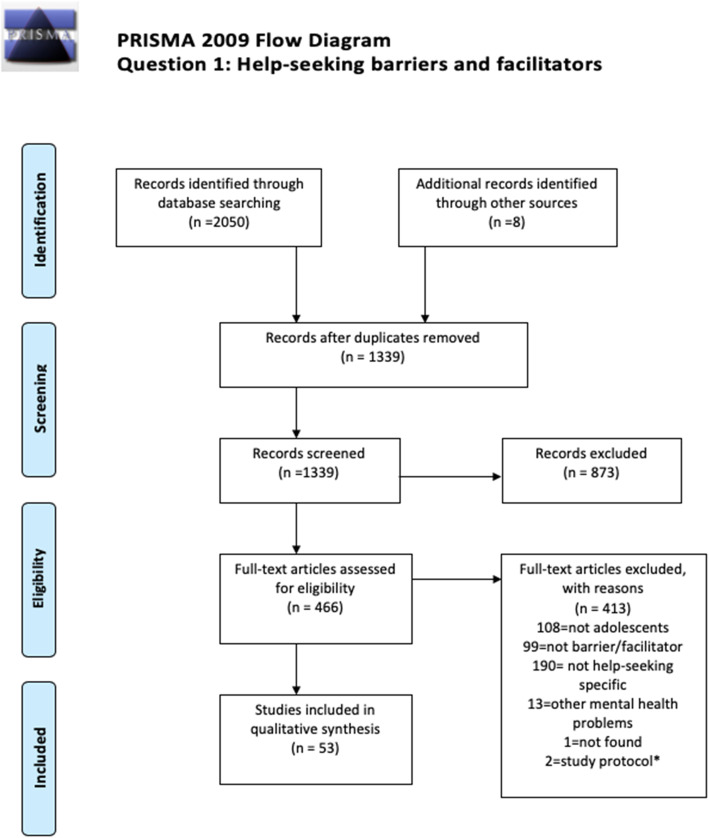
- Ninety studies were included: 54 on barriers/facilitators (56,821 participants) and 36 on interventions (28,608 participants). Stigma was the most cited barrier; more than half of included studies (n = 30) referenced stigma or other negative attitudes, and 25 named stigma as the primary obstacle. Negative beliefs about mental health services and professionals were the second most prominent barrier.
- Mental health literacy and prior mental health care were the most cited facilitators (n = 10); trusted relationships with gatekeepers such as parents, teachers, and counsellors also facilitated help-seeking.
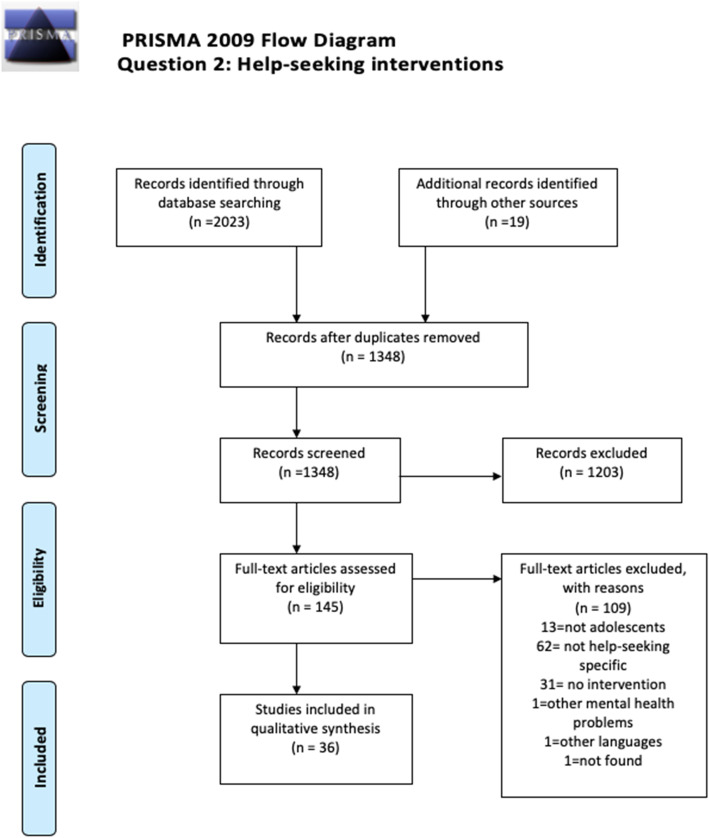
- Most interventions (n = 23) used psychoeducation/classroom-based approaches; others used outreach, multimedia/online tools, or peer training. Some depression psychoeducation interventions increased help-seeking (e.g., Robinson et al. adjusted OR = 3.48, 95% CI 1.93–6.29, p < 0.0001; King et al. t = 4.634, p < .001 maintained at 3 months; Strunk et al. p < 0.0005 but not sustained at follow-up, p = 0.014), and all outreach studies found significant effects on help-seeking intentions.
- Overall study quality was low to medium with moderate to high risk of bias; there was no general agreement on help-seeking definitions or measurements, and most studies measured help-seeking intentions rather than actual behaviours.
Methods
- Systematic review prospectively registered on PROSPERO and reported per PRISMA. Five databases/search sources were searched (abstract); methods specify MEDLINE, Embase, PsycINFO, Web of Science, Google Scholar, plus Open Grey. Searches were run in June 2018 and updated April 2019; studies in English, Spanish, or French were included.
- Inclusion criteria covered adolescents aged 10–19 and common mental health problems (depression, anxiety, suicidal ideation, emotional distress, general symptoms). Two-stage screening was used; 90 studies met criteria. Findings were summarised using narrative synthesis because of heterogeneity; no meta-analysis was conducted.
- Quality was assessed with Joanna Briggs Institute Critical Appraisal Checklists and the Mixed Methods Appraisal Tool. Intervention studies included quasi-experimental designs (n = 21) and randomised controlled trials (n = 15); all were conducted in educational settings (high school n = 35, college n = 1).
Limitations
- Paper-stated: only one author performed data extraction and critical appraisal, risking subjectivity; the 10–19 age definition may be a limitation and led to exclusion of 104 papers; psychiatric conditions such as anorexia, schizophrenia, and substance misuse were excluded; and over-inclusion of low-quality studies may affect interpretation.
- Paper-stated/evident: most studies used non-clinical samples and hypothetical help-seeking scenarios, so conclusions were often based on intentions rather than actual behaviours; few studies focused on facilitators.
- Evident from the text: all interventions were conducted in educational settings, limiting reach to adolescents outside school; few studies had follow-up, and those that did had high attrition and short follow-up periods (up to 6 months); most used self-report measures, and many did not use validated help-seeking instruments.
Model-written summary. Check it against the paper before relying on it.
Integrity signals
Registry
Cites
Statistics
Figures
Verification
Claims the paper makes
23 Valid · 5 Not valid · 40 Not checked · 121 Own results and interpretations
Some cited sources support this claim and some don’t — read each source’s verdict below.
In the paper
“This is in line with previous studies suggesting that teens who are most in need are less likely to seek help [1, 11, 15].”
§ What are the barriers, facilitators and interventions targeting help-seeking behaviours for common mental health problems in adolescents? A systematic review > Discussion > Question 1: barriers and facilitators
What the sources say
- Disputedcites [1] Gulliver A Griffiths K Christensen H Perceived barriers and facilitators to mental health help-seeking in young people: a systematic review BMC Psychiatry 2010 12 81 PMC3022639 21192795 sourceExperimental — accuracy not yet measured
The Discussion (page unavailable) makes the contrary point: it expects people with symptoms and a perceived need for help to be more likely to seek help. The review does not report that teens with the greatest need are less likely to do so. (LLM, conf=0.82)
Checked by a reasoning model — may be wrong.
- Partly supportedcites [11] Divin N Harper P Curran E Corry D Leavey G Help-seeking measures and their use in adolescents: a systematic review Adolesc Res Rev 2018 3 1 113 122 10.1007/s40894-017-0078-8 sourceExperimental — accuracy not yet measured
The Introduction reports that only one-third of adolescents meeting diagnostic criteria seek professional help and that adolescents with serious, debilitating difficulties may still avoid or delay seeking help. It does not establish that teens with the greatest need are less likely to seek help than other teens. (LLM, conf=0.84)
- Not checked — no full text of the sourcecites [15] Rickwood D Deane F Wilson C Ciarrochi J Young people’s help-seeking for mental health problems Aust J Adv Ment Health 2005 4 3 218 251 source
hedgedstates an association- Asserted: passes — The authors put it forward as true.
- Checkable: passes — It can be checked against evidence.
- Load-bearing: unclear — It is unclear whether the paper’s conclusions depend on it.
- Based: passes — The paper gives a reason why it holds.
- Disputed
The cited sources support only part of this claim — read each source’s verdict below.
In the paper
“Teens who are most in need of mental health attention are reluctant to seek help.”
- Also stated in: § Background · plain
“However, adolescents most in need of psychological help are those least likely to look for it [1–13].”
§ What are the barriers, facilitators and interventions targeting help-seeking behaviours for common mental health problems in adolescents? A systematic review > Abstract > Background
What the sources say
- Partly supportedcites [1] Gulliver A Griffiths K Christensen H Perceived barriers and facilitators to mental health help-seeking in young people: a systematic review BMC Psychiatry 2010 12 81 PMC3022639 21192795 sourceExperimental — accuracy not yet measured
The Background’s help-seeking theory section discusses why young people do not seek help, supporting the general point that teens may be reluctant. It does not establish that adolescents with the greatest need are the least likely to seek help; the Discussion instead says help-seeking would be expected to be more likely among symptomatic people. No page numbers are provided in our copy. (LLM, conf=0.82)
- Not matchedcites [2] WHO: Adolescence Mental Health. Mapping actions of nongovernmental associations and other international development organisations. [Online]. Geneva: World Health Organisation; 2012. Available from: http://apps.who.int/iris/bitstream/handle/10665/44875/9789241503648_eng.pdf;jsessionid=B09D1D46A7AA36AA5757E9E191B3F023?sequence=1. Accessed 11 Sept 2019.
We searched by its title and found no matching paper.
- Not matchedcites [3] WHO. Mental health: strengthening our response. Geneva: World Health Organisation. Available from: https://www.who.int/news-room/fact-sheets/detail/mental-health-strengthening-our-response.
Its entry has no title and year that we can search by.
- Not matchedcites [4] WHO Adolescents: health risks and solutions 2018 Geneva World Health Organisation
We searched by its title and found no matching paper.
- Not matchedcites [5] Murphy, M. & Fonagy, P. Our children deserve better, prevention pays: annual report of the Chief Medical Officer. London: Department of Health. 2013. Chapter 10: Mental health problems in children and young people.
We searched by its title and found no matching paper.
- Partly supportedcites [6] Michaud P Fombonne E The ABC of adolescence: common mental health problems BMJ. 2005 330 7495 835 838 10.1136/bmj.330.7495.835 15817553 PMC556080 sourceExperimental — accuracy not yet measured
The paragraph on identifying and treating mental health problems says young people are often very reluctant to seek help. It does not say that adolescents most in need of attention are particularly unlikely to seek it; the comparative qualifier is unsupported. (LLM, conf=0.83)
- Could not verifycites [7] Oksanen A Laimi K Bjorklund K Löyttyniemi E Kunttu K A 12-year trend of psychological distress: national study of Finnish University students Cent Eur J Public Health 2017 25 2 113 119 10.21101/cejph.a4438 28662321 sourceExperimental — accuracy not yet measured
The Discussion (page unavailable) reports trends in psychological symptoms among Finnish university students, but does not compare need for care with willingness to seek help. Searches for help-seeking, reluctance, and those most in need found no passage addressing that relationship in teens. (LLM, conf=0.76)
- Could not verifycites [8] Kowadenko N Culjak G Workforce planning for children and young people’s mental health care Lancet Public Health 2018 3 266 267 29884430 sourceExperimental — accuracy not yet measured
The 'Workforce planning for children and young people's mental health care' section discusses increased need in late adolescence, scarce services, and unmet need, but does not say that teens with the greatest need are reluctant to seek help. Searches for help-seeking reluctance and barriers among youth with the greatest mental health needs found no passage addressing that comparison; page numbers were not provided. (LLM, conf=0.75)
- Not matchedcites [9] Children Comissioners Lighting review: access to child and adolescent mental health services 2016 United Kingdom Children Comissioners
We searched by its title and found no matching paper.
- Not checked — no full text of the sourcecites [10] Rowe S French R Henderson C Ougrin D Slade M Moran P Help-seeking behaviour and adolescent self-harm: a systematic review Aust N Z J Psychiatry 2014 48 12 1083 1095 25335872 source
plainstates an association- Asserted: passes — The authors put it forward as true.
- Checkable: passes — It can be checked against evidence.
- Load-bearing: passes — The paper’s conclusions depend on it.
- Based: passes — The paper gives a reason why it holds.
- Also stated in: § Background · plain
The cited sources support only part of this claim — read each source’s verdict below.
In the paper
“Seven studies did not find significant differences between genders [28, 39, 40, 42, 46, 51, 69].”
§ What are the barriers, facilitators and interventions targeting help-seeking behaviours for common mental health problems in adolescents? A systematic review > Results > Secondary outcomes
What the sources say
- Not checked — no full text of the sourcecites [28] Wilson CJ Deane F Help-negation and suicidal ideation: the role of depression, anxiety and hopelessness J Youth Adolesc 2010 39 3 291 305 10.1007/s10964-009-9487-8 19957103 source
- Partly supportedcites [39] Pisani AR Schmeelk-Cone K Gunzler D Petrova M Goldston DB Tu X Wyman PA Associations between suicidal high school Students’ help-seeking and their attitudes and perceptions of social environment J Youth Adolesc 2012 41 10 1312 1324 10.1007/s10964-012-9766-7 22562217 PMC3534737 sourceExperimental — accuracy not yet measured
In Results > Characteristics of Help-Seeking Students with SI (page unavailable), the paper reports minimal evidence that sex moderated the links between attitudes, social resources, and help-seeking. It also reports a significant exception: coping resources were more strongly associated with help-seeking for boys than girls. Results > Help-Seeking Behavior Among Suicidal Students further reports a significant sex difference in disclosure to friends, so the unqualified claim of no gender differences overstates this study. (LLM, conf=0.87)
- Not checked — no full text of the sourcecites [40] Wilson CJ Deane FP Brief report: need for autonomy and other perceived barriers relating to adolescents' intentions to seek professional mental health care J Adolesc 2012 35 1 233 237 20650512 source
- Not checked — no full text of the sourcecites [42] Thomas SJ Caputi P Wilson CJ Specific attitudes which predict psychology Students' intentions to seek help for psychological distress J Clin Psychol 2013 70 3 273 282 23818259 source
- Not checked — no full text of the sourcecites [46] Watsford C Rickwood D Young people’s expectations, preferences, and experiences of therapy: effects on clinical outcome, service use, and help-seeking intentions Clin Psychol 2014 18 1 43 51 10.1111/cp.12034 source
- Not checked — no full text of the sourcecites [51] Zhao WF Young RE Breslow L Michel NM Flett GL Goldberg JO Attachment style, relationship factors, and mental health stigma among adolescents Can J Behav Sci 2015 47 4 263 271 10.1037/cbs0000018 source
- Partly supportedcites [69] McLean A Hunt K Sweeting H Symptoms of mental health problems: children’s and adolescents’ understandings and implications for gender differences in help seeking Child Soc 2013 13 161 173 PMC4540163 26300586 sourceExperimental — accuracy not yet measured
The Discussion (page unavailable) says boys’ and girls’ understandings were largely consistent and that differences in their accounts of help seeking were subtle. It also describes a stronger concern among boys about their identity being questioned. Because this was a qualitative focus-group study, it does not establish that gender differences were statistically nonsignificant. (LLM, conf=0.84)
plain- Asserted: passes — The authors put it forward as true.
- Checkable: passes — It can be checked against evidence.
- Load-bearing: unclear — It is unclear whether the paper’s conclusions depend on it.
- Based: passes — The paper gives a reason why it holds.
The cited sources support only part of this claim — read each source’s verdict below.
In the paper
“Two studies [101, 104] found a significant reduction in self-stigma surrounding seeking help after the intervention (p < 0.05)”
§ What are the barriers, facilitators and interventions targeting help-seeking behaviours for common mental health problems in adolescents? A systematic review > Results > Effectiveness
What the sources say
- Partly supportedcites [101] Saporito, J. M. Reducing stigma toward seeking mental health treatment. Dissertation Abstracts International: Section B: The Sciences and Engineering; 2009;70(6-B):3794. sourceExperimental — accuracy not yet measured
The ‘Group Differences in Mental Health Stigma’ section reports significantly more positive attitudes toward seeking treatment in the intervention group (ATSPPH, p=.001). But ‘Measures of Stigma’ defines that scale as measuring general attitudes toward professional help, not self-stigma; the cited study therefore supports a significant change in help-seeking attitudes, not specifically a reduction in self-stigma. (LLM, conf=0.86)
- Not checked — no full text of the sourcecites [104] Young R, Hartman LI, Michel NM, Winter A, Flett GL, Goldberg JO. Reducing self-stigma toward help-seeking in high school youth: effects of classroom psycho-education about schizophrenia and mental illness. Schizophr Bull. 2013. source
plainstates a cause- Asserted: passes — The authors put it forward as true.
- Checkable: passes — It can be checked against evidence.
- Load-bearing: unclear — It is unclear whether the paper’s conclusions depend on it.
- Based: passes — The paper gives a reason why it holds.
- Partly supported
The cited sources that could be checked couldn’t confirm or dispute this claim.
In the paper
“Previous systematic reviews on interventions targeting help-seeking reveal some promising results in regard to enhancing mental health literacy [16]”
§ What are the barriers, facilitators and interventions targeting help-seeking behaviours for common mental health problems in adolescents? A systematic review > Background
What the sources say
- Could not verifycites [16] Gulliver A Griffiths KM Christensen H Brewer JL A systematic review of help-seeking interventions for depression, anxiety and general psychological distress BMC Psychiatry 2012 12 12 81 22799879 PMC3464688 sourceExperimental — accuracy not yet measured
The Background section (Bibliotherapy for depression; page not provided) describes encouraging results from reviews of self-help treatments for depression. It does not report that reviews of help-seeking interventions found improvements in mental health literacy. Searches for mental health literacy and help-seeking interventions found no passage addressing that claim. (LLM, conf=0.76)
hedgedstates a possible cause- Asserted: passes — The authors put it forward as true.
- Checkable: passes — It can be checked against evidence.
- Load-bearing: passes — The paper’s conclusions depend on it.
- Based: passes — The paper gives a reason why it holds.
- Could not verify
100 more claims · 11 with their cited sources checked
Create a free account to see all 189 claims and to verify the 11 references still open.
- Probably not a substantial claim. 44
- It may state two separate claims as one. 49
Claims other papers make about this one
Each is checked against this paper’s own text: does it say what the citing paper says it does?
The cited source says what the claim attributes to it.
In the citing paper
“Barriers to help-seeking in adolescence include a lack of confidence in mental health professionals, a preference for self-reliance, difficulties with physical and financial access to care, and feelings of embarrassment and stigma [34–37].”
From Efficacy of a transdiagnostic Internet prevention approach in adolescents (EMPATIA study): study protocol of a randomized controlled trial (2024) · cites this paper as [34]
The cited source says what the claim attributes to it.
In the citing paper
“Across contexts, research indicated that barriers to seeking help for mental health include not recognizing the need for support, doubting that others can help, and fearing stigma [6, 113, 139].”
From Understanding Teen Overreliance on AI Companion Chatbots Through Self-Reported Reddit Narratives (2026) · cites this paper as [6]
In the citing paper
“Aguirre Velasco and colleagues 230 summarised largely school-based interventions for adolescents, and found some improvements in help-seeking intentions, stigma related to help-seeking, or both, although study quality was low.”
From The Lancet Commission on ending stigma and discrimination in mental health (2022) · cites this paper as [230]
Statistics recomputed
Every reported test result, recomputed from its test statistic and degrees of freedom. A result shows as not adding up only once an independent check has confirmed it.
- ConsistentF(1, 146) = 6.64reported p = .01 · recomputed p = .011
“F(1, 146) =6.64, p = .01”
- ConsistentF(4, 417) = 6.428reported p < .001 · recomputed p < .001
“F (4,417) = 6.428, p < .001”
Self-check
Percentages, sums and reported differences re-computed from the paper’s own numbers.
Each contradiction between two passages listed here was confirmed by an independent check.
Rated minor: it would not touch a result — a value no result rests on, a p-value that stays on the same side of the significance level, or a conflict that is clerical, resolved elsewhere in the paper, or outside its own findings.
In the paper
§ What are the barriers, facilitators and interventions targeting help-seeking behaviours for common mental health problems in adolescents? A systematic review > Results > Question 2: help-seeking interventions
“The age of participants ranged from 11 to 19 years old, although one study that included participants under 29 years old was incorporated as more than half of the sample were adolescents.”
§ What are the barriers, facilitators and interventions targeting help-seeking behaviours for common mental health problems in adolescents? A systematic review > Results > Question 2: help-seeking interventions
“Schimidt, 2015, United States | 5949 | High school students (aged 10–18)”
Rated minor: it would not touch a result — a value no result rests on, a p-value that stays on the same side of the significance level, or a conflict that is clerical, resolved elsewhere in the paper, or outside its own findings.
In the paper
“The majority of the studies were cross sectional (n = 36) [26–61], thirteen studies were qualitative [62–74] and six used a mixed-method design [75–80].”
§ What are the barriers, facilitators and interventions targeting help-seeking behaviours for common mental health problems in adolescents? A systematic review > Results > Question 1: help-seeking barriers and facilitators
Reported 54 · recomputed 55
Rated minor: it would not touch a result — a value no result rests on, a p-value that stays on the same side of the significance level, or a conflict that is clerical, resolved elsewhere in the paper, or outside its own findings.
In the paper
§ What are the barriers, facilitators and interventions targeting help-seeking behaviours for common mental health problems in adolescents? A systematic review > Results > Help-seeking facilitators
“Of the 56 included studies, 19 also referred to facilitators of help-seeking behaviours.”
§ What are the barriers, facilitators and interventions targeting help-seeking behaviours for common mental health problems in adolescents? A systematic review > Results > Question 1: help-seeking barriers and facilitators
“Fifty-four studies that reported barriers and/or facilitators including a total of 56,821 participants were considered in the narrative synthesis (Table 2).”
Citations
Cites
Sawyer, S. M., Azzopardi, P. S., Wickremarathne, D., & Patton, G. C. (2018) · The Lancet Child & Adolescent Health · doi:10.1016/s2352-4642(18)30022-1 · Cited by 3,666
Gulliver, A., Griffiths, K. M., & Christensen, H. (2010) · BMC Psychiatry · doi:10.1186/1471-244x-10-113 · Cited by 3,292 · cited 6×
“This is in line with previous studies suggesting that teens who are most in need are less likely to seek help [1, 11, 15].”
InfluentialBramer, W. M., Rethlefsen, M. L., Kleijnen, J., & Franco, O. H. (2017) · Systematic Reviews · doi:10.1186/s13643-017-0644-y · Cited by 2,114 · cited 1×
“Four databases were selected including MEDLINE®, Embase, PsycINFO, and Web of Science, as well as the search engine Google scholar, identified as an optimal database combination [20].”
Young People’s Help-Seeking for Mental Health Problems
Rickwood, D., Deane, F. P., Wilson, C. J., & Ciarrochi, J. (2005) · Australian e-Journal for the Advancement of Mental Health · doi:10.5172/jamh.4.3.218 · Cited by 1,619 · cited 3×
“Conversely, emotional competence, previous positive experiences with health professionals and mental health literacy, were the main facilitators [15].”
Munn, Z., Moola, S., Riitano, D., & Lisy, K. (2014) · International Journal of Health Policy and Management · doi:10.15171/ijhpm.2014.71 · Cited by 1,479 · cited 1×
“For the quality assessment, we used the Joanna Briggs Institute Critical Appraisal Checklist [21] and the Mixed Methods Appraisal Tool (MMAT) [22], which were appropriate due to the variety of study designs included in this review; both have been previously validated [23, 24].”
Journal of Autism and Developmental Disorders
(2013) · Journal of Autism and Developmental Disorders · doi:10.1007/10803.1573-3432 · Cited by 1,361
When and how do young people seek professional help for mental health problems?
Rickwood, D. J., Deane, F. P., & Wilson, C. J. (2007) · Medical Journal of Australia · doi:10.5694/j.1326-5377.2007.tb01334.x · Cited by 1,195
Mokdad, A. H., Forouzanfar, M. H., Daoud, F., Mokdad, A. A., El Bcheraoui, C., Moradi-Lakeh, M., Kyu, H. H., Barber, R. M., Wagner, J., Cercy, K., et al. (2016) · The Lancet · doi:10.1016/s0140-6736(16)00648-6 · Cited by 984
Mental Health Literacy: Past, Present, and Future
Kutcher, S., Wei, Y., & Coniglio, C. (2016) · The Canadian Journal of Psychiatry · doi:10.1177/0706743715616609 · Cited by 918 · cited 1×
“Mental health literacy Mental health literacy refers to the ability to use mental health information to recognise, manage and prevent mental health disorders and make informed decisions about help-seeking and professional support [82].”
Kazdin, A. E., & Nock, M. K. (2003) · Journal of Child Psychology and Psychiatry · doi:10.1111/1469-7610.00195 · Cited by 774 · cited 1×
“The relevance of studying underlying mechanisms and practical requirements related to the functionality of interventions has been previously discussed [123], and most of the interventions included in this review did not refer to these processes.”
Research works printed but not linked: 9
- WHO Adolescents: health risks and solutions 2018 Geneva World Health Organisation
- Murphy, M. & Fonagy, P. Our children deserve better, prevention pays: annual report of the Chief Medical Officer. London: Department of Health. 2013. Chapter 10: Mental health problems in children and young people.
- Children Comissioners Lighting review: access to child and adolescent mental health services 2016 United Kingdom Children Comissioners
- The PRISMA Group. PRISMA statement. Oxford: University of Oxford; 2009. Available from: http://prisma-statement.org/prismastatement/FlowDiagram.aspx. Accessed 30 May 2018.
- Hong Q Pluye P Fabruegues S Bartlett G Boardman F Cargo M Dagenais P Gagnon MP Griffiths F Nicolau B O’Cathain A Rousseau MC Vedel I Mixed methods appraisal tool (MMAT) 2018 Montreal McGill University Department of Family Medicine
- Cramer, K. Mental health help seeking in schools: the impact of mental health literacy, stigma, and barriers to care. Dissertation abstracts international section A: humanities and social sciences; 2017;78(3-A(E)), No Pagination Specified.
- Samuel, I. A. Disparities in mental health service use among African American adolescent males released from juvenile detention facilities. Dissertation abstracts international section A: humanities and social sciences; 2014; 75(5-A(E)), No Pagination Specified.
- Sawyer MG Borojevic N Ettridge KA Spence SH Sheffield J Lynch J Do help-seeking intentions during early adolescence vary for adolescents experiencing different levels of depressive symptoms? J Adolesc Health 2012 50 3 236 242 22325128 · DOI · Paper page
- UNESCO Fact sheet N. 48. One in five children, adolescents and youth is out of school 2018 Montreal and Paris United Nation Educational, Scientific and Cultural Organization
Cited by
Items 301–400 of 717
Valerius, K., von Eitzen, L., Göbel, M., Ohlbrecht, H., van den Berg, N., Völzke, H., Grabe, H. J., Schomerus, G., & Speerforck, S. (2024) · BMC Psychiatry · doi:10.1186/s12888-024-05521-9 · Cited by 7
Stelzmann, D., Çelik, F., & Gerhold, L. (2024) · Kindheit und Entwicklung · doi:10.1026/0942-5403/a000463 · Cited by 5
Barreras que perciben estudiantes con y sin riesgo suicida para solicitar ayuda profesional
Páramo, D., & Orozco, A. H. (2022) · Revista Estudios Psicológicos · doi:10.35622/j.rep.2022.01.006 · Cited by 7
An m-Health app that goes beyond screen time applications
Patel, S., Sasidhar, K., Vaghela, M., Katrodiya, P., & Wagani, R. (2022) · IEEE Region Humanitarian Technology Conference · doi:10.1109/r10-htc54060.2022.9929866 · Cited by 5
“include social stigma, fear of confidentiality breaches, negative reactions from others, fear of interacting with therapists, and mainly lack awareness about mental health issues [17].”
BackgroundEffects of remote learning on mental health and socialisation. Literature Review
Dabrowski, A., & Mitchell, P. (2022) · ACEReSearch Repository (Australian Council for Educational Research) · doi:10.37517/978-1-74286-682-6 · Cited by 6
“…who have low levels of awareness or understanding of mental health and its impacts, or do not have positive attitudes towards help-seeking, are less likely to be able to engage with programs and practices in the home, and to model appropriate behaviours to their children (Velasco et al., 2020).”
Mental Health Literacy, Beliefs and Demand for Mental Health SupportPreprint
Acampora, M., Capozza, F., & Moghani, V. (2022) · SSRN Electronic Journal · doi:10.2139/ssrn.4261487 · Cited by 4
The Effect of Gender on Identification and Interpretation of Non-Suicidal Self-Injury
Curtis, C., & Terry, M. (2023) · Psychopathology · doi:10.1159/000531551 · Cited by 5
“Evidence suggests that outward acts of aggression are interpreted differently in men and women [25, 33, 39, 41, 42].”
BackgroundBetween Problem and Request: Are Students Ready to Accept Psychological Help
Nekhorosheva, E., & Kasatkina, D. A. (2024) · Высшее образование в России · doi:10.31992/0869-3617-2024-33-6-124-142 · Cited by 6
Ehl, L., Scheiner, C., Wasserscheid, A., Hein, G., Gamer, M., & Bürger, A. (2025) · Heliyon · doi:10.1016/j.heliyon.2025.e42290 · Cited by 3
“Drawing from the broader literature, it has been identified that factors such as stigma and negative beliefs about mental health services act as barriers, whereas positive past experiences and mental health literacy act as facilitators [18,19].”
Smith, L. M., Barrett, B. M., Barnes, S., Oltean, B., Ige, L., Day, C., & Tranah, T. (2025) · British Journal of Clinical Psychology · doi:10.1111/bjc.12528 · Cited by 4
Peñacoba, C., Rodríguez‐Rojo, I. C., González, R. L., González-Alegre, P., Cuesta‐Lozano, D., Esteve, Á. L. A., Blázquez‐González, P., & García-Sastre, M. (2025) · Social Sciences · doi:10.3390/socsci14080461 · Cited by 8
Haywood, S., Diedrichs, P. C., & Paraskeva, N. (2025) · Digital Health · doi:10.1177/20552076251361340 · Cited by 5
Payors, Caregivers, and Teens: Aligning Priorities for Effective Digital Mental Health Tools
Huberty, J., Yourell, J., Baez, L. M., & Salhi, L. (2025) · Journal of Medical Internet Research · doi:10.2196/72587 · Cited by 3
“Differences in age, cultural background, gender identity, and mental health history can significantly influence how teens understand mental health, what types of support they consider acceptable or trustworthy, and how they engage with digital interventions [25,26].”
Beket, E. S., Hoogsteder, M. H. H., Popma, A., Creemers, D. H. M., & Rasing, S. P. A. (2025) · BMC Public Health · doi:10.1186/s12889-025-23638-8 · Cited by 8
“Reviews including adolescents’ perspectives has primarily focused on wellbeing [21, 27] or help-seeking behavior in relation to mental health [8].”
Predictors of help-seeking intention among young people: a Common-Sense Model based study
Nguyen, H., Conway, M.-L., Murphy, D., Brady, A., & Hennessy, E. (2025) · Children and Youth Services Review · doi:10.1016/j.childyouth.2025.108549 · Cited by 5
Albadi, M. S., Aamri, S. A., Dhuhli, K. S. A., Ghafri, A. R. A., & Abd‐Ellatif, E. E. (2025) · Journal of the Oman Medical Association · doi:10.3390/joma2020015 · Cited by 4
Ahmed, A. M., Uddin, R., Ross, A. G., Edmed, S. L., Anyasodor, A. E., Thapa, S., Ahmed, K. Y., Keniry, C., Astawesegn, F. H., Shakeel, M., et al. (2026) · Child and Adolescent Psychiatry and Mental Health · doi:10.1186/s13034-026-01022-7 · Cited by 3
Wang, Y., Li, Q., Su, J., & Yang, X. (2026) · International Journal of Mental Health and Addiction · doi:10.1007/s11469-026-01644-0 · Cited by 7
Asseffa, N. A., Astawesegn, F. H., Giri, S., Ross, N., Ahmed, K. Y., Bore, M. G., Mahmood, S., & Thapa, S. (2026) · Child Abuse & Neglect · doi:10.1016/j.chiabu.2026.108005 · Cited by 4
Demissie, M., Birhane, R., Hanlon, C., Eshetu, T., Medhin, G., Minaye, A., Habtamu, K., Cleare, A. J., Milkias, B., Prince, M. J., et al. (2024) · BJPsych Open · doi:10.1192/bjo.2024.1 · Cited by 3
DiGiovanni, M. J., Jankowski, S. E., Dixon, L. B., Martin, A., & Amsalem, D. (2024) · Frontiers in Child and Adolescent Psychiatry · doi:10.3389/frcha.2024.1386284 · Cited by 3
Rogers, M. L., Richards, J. A., Peterkin, D., Park, J. Y., Astudillo‐García, C. I., Barzilay, S., Blum, Y., Chistopolskaya, K. A., Dudeck, M., Enikolopov, S. N., et al. (2024) · Suicide and Life-Threatening Behavior · doi:10.1111/sltb.13083 · Cited by 4
Hardi, N., Natália, N., & Theresia, F. (2024) · Cermin Dunia Kedokteran · doi:10.55175/cdk.v51i12.1260 · Cited by 5
Ibrahim, R. H., Yaas, M. H., Hamarash, M. Q., Mukhtar, S. H. A., Abdulghani, M. F., & Almushhadany, O. I. (2025) · JMIR Pediatrics and Parenting · doi:10.2196/67137 · Cited by 6
A Trauma Support App for Young People: Co-design and Usability Study
Thell, M., Edvardsson, K., Aljeshy, R., Ibrahim, K., & Warner, G. (2025) · JMIR Formative Research · doi:10.2196/57789 · Cited by 4
“This includes perceived stigma, fear of stigma, societal stigma, and self-stigma [2], and may result in many young people experiencing PTSD symptoms not receiving the help and support they need.”
Hale, G. E., Lancastle, D., Lewis, N., & Tyson, P. J. (2025) · Perspectives in Public Health · doi:10.1177/17579139251335284 · Cited by 4
Muda, N., & Raphaie, F. K. A. (2025) · Scientific Reports · doi:10.1038/s41598-025-15834-8 · Cited by 11
Skripkauskaitė, S., Geulayov, G., the OxWell Study Team, Fazel, M. S., & Borschmann, R. (2025) · JCPP Advances · doi:10.1002/jcv2.70050 · Cited by 4
“Stigma around mental health in the UK remains a significant barrier for child and adolescent formal help - seeking (Aguirre Velasco et al., 2020; Radez et al., 2021).”
Opie, J. E., Vuong, A. T., McIntosh, J., & Kuntsche, S. (2025) · Mental Health and Digital Technologies · doi:10.1108/mhdt-07-2025-0050 · Cited by 3
No Assistance Necessary: Arab Men’s Attitudes towards Health Issues and Help-Seeking
Hall, R. (2021) · Open Journal of Social Sciences · doi:10.4236/jss.2021.911002 · Cited by 6
“The use of community engagement as well as in-group actors, such as friends and teachers has been shown to be effective in improving attitudes of adolescents (Velasco et al., 2020), and it is hoped that these attitudes will persist into adulthood.”
Seyi-Oderinde, D. R. (2021) · Interdisciplinary Journal of Rural and Community Studies · doi:10.51986/ijrcs-2021.vol3.02.05 · Cited by 4
Confidencialidad y conducta de búsqueda de ayuda para problema de salud mental en adolescente
Olivari, C., Méndez-Bustos, P., & Núñez, R. (2022) · Acta bioethica · doi:10.4067/s1726-569x2022000100059 · Cited by 3
“de autonomía en los adolescentes, como una barrera para la conducta de búsqueda de ayuda en un 22% de los estudios(20).”
BackgroundMori, N., Arimoto, A., & Tadaka, E. (2022) · International Journal of Environmental Research and Public Health · doi:10.3390/ijerph192416820 · Cited by 5
“, teachers and parents) and previous positive help-seeking experience facilitated help-seeking behaviors [49].”
BackgroundZiaian, T., Puvimanasinghe, T. S., Miller, E., Augoustinos, M., Esterman, A., Baddeley, M. C., Arthur, N. M., de Anstiss, H., Tsoulis, E., Stewart-Jones, T., et al. (2023) · PLoS ONE · doi:10.1371/journal.pone.0285023 · Cited by 3
“Adolescents have been shown to experience common barriers to seeking help for mental health issues, however, a majority of programs of support are facilitated through education settings [10] and may not provide culturally informed and responsive practices that work for young people from culturally and linguistically d…”
BackgroundSwisher, V. S., Ricketts, E. J., & Rogers, S. A. (2023) · The Journal of Nervous and Mental Disease · doi:10.1097/nmd.0000000000001683 · Cited by 4
NSSI in Adolescence and Emerging Adulthood
Kiekens, G., Hasking, P. A., & Claes, L. (2023) · Oxford University Press eBooks · doi:10.1093/oxfordhb/9780197611272.013.26 · Cited by 4
Mikhaylova, O. R., Anastasia, B., Osipova, P., Popov, D., Chepeleva, M., & Rybakova, E. (2023) · Frontiers in Psychology · doi:10.3389/fpsyg.2023.1243400 · Cited by 5
Liu, J. (2023) · Lecture Notes in Education Psychology and Public Media · doi:10.54254/2753-7048/11/20230736 · Cited by 3
Dwan-O'Reilly, M., Walsh, L., Booth, A., Heary, C., & Hennessy, E. (2023) · School Mental Health · doi:10.1007/s12310-023-09616-8 · Cited by 5
SOCIAL SUPPORT IN ACCESSING ADOLESCENTS MENTAL HEALTH SERVICES
Isni, K., Nurfatona, W. Y., & Qomariyah, N. U. (2023) · The Indonesian Journal of Public Health · doi:10.20473/ijph.v18i3.2023.493-504 · Cited by 4
Zhao, X., Schueller, S. M., Kim, J., Stadnick, N. A., Eikey, E. V., Schneider, M. L., Zheng, K., Mukamel, D. B., & Sorkin, D. H. (2023) · Journal of Pediatric Psychology · doi:10.1093/jpepsy/jsad082 · Cited by 3
An Efficient KNN Algorithm for the Mental Health Performance Assessment Using K-means Clustering
Chahar, R., Dubey, A. K., & Narang, S. K. (2024) · Lecture notes in electrical engineering · doi:10.1007/978-981-99-7633-1_42 · Cited by 4
Ahmad, N. F., Kamarudin, E. M. E., Mahmud, M. I., -, A., Mohd Noor, A., & Mohd Alam, A. P. (2024) · Asian Journal of University Education · doi:10.24191/ajue.v20i1.25743 · Cited by 6
Yekkalam, N., Novo, M., Tyrberg, M. J., & Sipilä, K. (2024) · Journal of Oral Rehabilitation · doi:10.1111/joor.13706 · Cited by 3
“49 However, the knowledge about psychiatric and psychological aspects of health among hEDS/HSD have been increased in a few decades.”
Help Seeking Among Male Farmers and their Female Partners: A Qualitative Exploration
Carswell, E., McLaughlin, M., & Cassidy, T. (2024) · Journal of Behavioral Health and Psychology · doi:10.33425/2832-4579/24066 · Cited by 4
“This reflects the literature on male reluctance to openly admit to mental health problems seen as a sign of weakness and to present an outward face of masculine hardiness [17,20,23 24].”
BackgroundWang, J., Han, M., Xi, Y., He, X., Feng, Y., & Chen, R. (2024) · Suicide and Life-Threatening Behavior · doi:10.1111/sltb.13109 · Cited by 3
Gilbert, W., Stack, D. M., Barker, E. T., Dubeau, A., Serbin, L. A., & Véronneau, M. (2024) · Journal of Adult and Continuing Education · doi:10.1177/14779714241265463 · Cited by 6
“…resources (e.g. money, time, transportation, and familiarity with the help-seeking process), lack of professional availability (e.g. mental health professionals and school staff), negative attitudes towards health professionals, and isolation (Aguirre Velasco et al., 2020; Rickwood et al., 2005).”
Tembo, C. P., Portsmouth, L., & Burns, S. K. (2024) · BMC Health Services Research · doi:10.1186/s12913-024-11469-z · Cited by 8
“Considering the broad implications of adolescent motherhood on the well-being of the mother and their child’s development, early identification and effective treatment are essential for preventing the escalation of mental health problems [11].”
BackgroundIncreasing Follow-up for Adolescents With Depressive Symptoms
Burkhardt, M. C., Krantz, L. B., Herbst, R. B., Hardie, J., Eggers, S., Huentelman, T., Reyner, A., White, C., & Brinkman, W. B. (2024) · PEDIATRICS · doi:10.1542/peds.2024-066495 · Cited by 5
Hämäläinen, T., Kaipainen, K., Keinonen, K., Lappalainen, P., Puolakanaho, A., Lappalainen, R., & Kiuru, N. H. (2022) · Journal of Cognitive Psychotherapy · doi:10.1891/jcp-2021-0038 · Cited by 7
O’Leary, C., Roberts, A., Teixeira, L., & Coren, E. (2022) · Campbell Systematic Reviews · doi:10.1002/cl2.1289 · Cited by 3
“Several studies examine psychosocial interventions to address mental health issues (e.g., Velasco et al., 2020; Raphael et al., 2021, including one in relation to dementia [Rapaport et al., 2017]).”
BackgroundFigueiredo, D. V., Salvador, M. D. C., Rijo, D., & Vagos, P. (2025) · European Child & Adolescent Psychiatry · doi:10.1007/s00787-024-02608-2 · Cited by 2
Hirsig, A., Häfeli, X. A., & Schmidt, S. J. (2024) · Trials · doi:10.1186/s13063-024-08241-3 · Cited by 2
“Barriers to help-seeking in adolescence include a lack of confidence in mental health professionals, a preference for self-reliance, difficulties with physical and financial access to care, and feelings of embarrassment and stigma [34–37].”
BackgroundLeece, S., Wilson, H., & Andriopoulou, P. (2023) · Counselling Psychology Quarterly · doi:10.1080/09515070.2023.2252770 · Cited by 3
Krug, C., Vaterlaus, J. M., & Routh, B. (2023) · Family Transitions · doi:10.1080/10502556.2023.2295060 · Cited by 5
Moussavi, Y., Haugland, B. S. M., Wergeland, G. J., Lehmann, S., & Mæland, S. (2024) · Child & Family Social Work · doi:10.1111/cfs.13172 · Cited by 3
Ivanova, M. Y., Hall, A., Weinberger, S., Buckingham, S. L., Copeland, W., Crockett, P., Dainer‐Best, J., D’Alberto, C., Dewey, L. M., Foret, D., et al. (2024) · Child Psychiatry & Human Development · doi:10.1007/s10578-024-01707-0 · Cited by 5
“Despite considerable advances that have been made in prevention and treatment of emotional and behavioral health problems, several comprehensive literature reviews have concluded that poor family engagement with prevention and treatment efforts remains a serious problem [1–4].”
Resilience to Depression Among Emerging Adults in South Africa: Insights From Digital Diaries
Levine, D. T., Theron, L. C., Haffejee, S., & Ungar, M. T. (2024) · Emerging Adulthood · doi:10.1177/21676968241273319 · Cited by 2
“The compound nature of these risks - that is the multiple layers of risk imposed by exposure to multiple stressors - faced by emerging adults living in these contexts intersects powerfully with both mental health risks and protective factors (Aguirre Velasco et al., 2020).”
A systematic review of the barriers associated with help-seeking among students at risk of suicide
Cameron, G. C., Hunter, S. C., McCartney, R. C., & McKain, L. (2024) · Educational Research and Evaluation · doi:10.1080/13803611.2024.2422626 · Cited by 8
“…investigating barriers towards help-seeking in psychologically distressed populations do already exist (Gulliver et al., 2010; Lui et al., 2022; Shi et al., 2020; Velasco et al., 2020) though only two investigate these barriers in a suicidal population (Han et al., 2018; Jones et al., 2019).”
Wei, Y., McWeeny, R., Shinkaruk, C., Baxter, A., Greenshaw, A. J., & Kutcher, S. (2024) · American Journal of Health Education · doi:10.1080/19325037.2024.2422075 · Cited by 7
“A recent systematic review further identified mental health literacy approaches and stigma reduction strategies as the most effective facilitators to promote help-seeking behaviors, especially among adolescents with mental health problems (Aguirre Velasco et al., 2020).”
After the buzzer sounds: Adults unveil the consequences of concussions sustained during adolescence
Shepherd, H. A., Critchley, M. L., Emery, C. A., & Caron, J. G. (2024) · Neuropsychological Rehabilitation · doi:10.1080/09602011.2024.2439332 · Cited by 4
“However, stigma is a common barrier to help-seeking behaviours among adolescents (Aguirre Velasco et al., 2020), and a commonly identified barrier in this population is seeking support and disclosing a concussion (Cranmer & LaBelle, 2018; Pennock et al., 2024; Shepherd et al., 2023a).”
Kasparik, B., Farani, M., Pfeiffer, E., Sachser, C., & Rosner, R. (2025) · Child and Adolescent Psychiatry and Mental Health · doi:10.1186/s13034-025-00862-z · Cited by 2
“Adolescents may be deterred from utilizing MHC due to concerns about stigmatization, heightened symptomatology, and negative perceptions of both MHC and the professionals who provide them [40].”
Liddelow‐Hunt, S., Lin, A. P., Perry, Y., Hill, B., & Uink, B. N. (2025) · Qualitative Health Research · doi:10.1177/10497323251329765 · Cited by 2
“I ’ m also only able to access this because the therapist that I go to is a free organization … These issues, while common among many young people (Aguirre Velasco et al., 2020; Platell et al., 2021; Radez et al., 2021), may be further exacerbated among Aboriginal LGBTQA+ young people, as they are…”
Aisiku, O. A., & Imarenezor, E. P. K. (2025) · African Journal of Medicine Surgery and Public Health Research · doi:10.58578/ajmsphr.v2i2.5256 · Cited by 2
Adam, S., Ahmad, K. B., Khan, Y., & Rowland, D. L. (2025) · Sexes · doi:10.3390/sexes6020025 · Cited by 2
Davis, A., Landers, S. E., Sun, Y., Nguyen, V. O., Bolger, N. P., Lewis, R. A., & Rosenthal, S. L. (2025) · Clinical Pediatrics · doi:10.1177/00099228251371903 · Cited by 6
“17 In the absence of sufficient child mental health professionals, mHealth interventions may be a feasible, accessible, and scalable method that pediatricians can use to provide greater access to mental health support for adolescents.”
Psychoeducation in School-Based Mental Health: Youth and Caregiver Insights for a Digital App
González, J. C., Garcia, S., Ijadi‐Maghsoodi, R., Spillane, J. A., Cruz, S. A. D. L., Lee, K., Lee, D. I., Kataoka, S., Porche, M. V. M., & Fortuna, L. R. (2025) · Child Psychiatry & Human Development · doi:10.1007/s10578-025-01918-z · Cited by 5
Lyu, N., Xue, Q.-Y., Li, X., Yan, S. W., Chen, M., Hou, H. B., Luo, D., Qian, C., Zhang, P., Zhou, Y., et al. (2025) · Child and Adolescent Psychiatry and Mental Health · doi:10.1186/s13034-025-00986-2 · Cited by 11
Kika, N., Lambert, J. D., Higson‐Sweeney, N., Wallace, V., Bhatt, H., Perry, G., Reynolds, S. A., & Loades, M. E. (2026) · BMC Psychology · doi:10.1186/s40359-025-03923-2 · Cited by 6
Yun, Y., Yang, H., Caizhi, W. U., Chen, Y., Li, J., Zong, Z., & Chen, N. (2026) · BMC Psychiatry · doi:10.1186/s12888-025-07771-7 · Cited by 3
“Informal social support from family and friends is a protective factor against suicide risk and a critical source for seeking help [24, 25].”
Isiogugu, O. N., Anosike, C., Nwobodo, C. J., Alshargi, O., Anosike, J. C., & Nwaogidi, C. S. (2026) · Discover Public Health · doi:10.1186/s12982-026-01634-6 · Cited by 2
Liang, L., Lu, X., Jiao, D., Xiao, B., Fang, S. H. A. N., Zhang, R., Zhao, C., & Song, J. (2026) · BMC Psychiatry · doi:10.1186/s12888-026-08190-y · Cited by 7
Colleran, A., O’Connor, A., Hogan, M., Harney, O., Durand, H., & Hanlon, M. L. D. (2021) · HRB Open Research · doi:10.12688/hrbopenres.13328.1 · Cited by 1
Baker, D. G., Rice, S., & Purcell, R. (2022) · Criminal Behaviour and Mental Health · doi:10.1002/cbm.2262 · Cited by 2
Snowdon, N., Allan, J., Shakeshaft, A. P., & Courtney, R. J. (2023) · Journal of Substance Use and Addiction Treatment · doi:10.1016/j.josat.2023.208959 · Cited by 4
Analysis of Adolescent Barriers in Seeking Help for Mental Health Issues
Bhagavathi, P., & Vitone, T. (2022) · Journal of Student Research · doi:10.47611/jsrhs.v11i3.2670 · Cited by 4
“…found that adolescents refer to family and friends rather than seeking professional help (Rickwood, et al., 2007) And when the family beliefs were negative towards mental health issues, this created a negative barrier towards seeking help for mental health among adolescents (Velasco et al., 2020).”
BackgroundInfluentialHypnotic and direct suggestions affect attitudes toward seeking professional psychological help
Hu, R., Dai, X., Xi, J., & Zhang, Y. (2023) · American Journal of Clinical Hypnosis · doi:10.1080/00029157.2023.2230253 · Cited by 2
Furman, D. J., Hall, S. A., Avina, C., Kulikov, V. N., Lake, J. I., & Padmanabhan, A. (2023) · JMIR Research Protocols · doi:10.2196/48740 · Cited by 2
“Despite the high rate of depression among adolescents, levels of treatment seeking and adherence are low for both psychotherapy and pharmaceutical treatment [15-17], likely due in part to concerns over privacy or stigma [18,19] and side effects [20,21], respectively.”
Lo, B., Teferi, B., Wong, H. W., Abi-Jaoudé, A., Chopra, J., Charow, R., Zhang, M., Shi, J., Johnson, A., LEVINSON, A. J., et al. (2023) · International Journal of Medical Informatics · doi:10.1016/j.ijmedinf.2023.105299 · Cited by 4
Parental Experiences of Supporting the Mental Health of Their LGBTQA+ Child
Gilbert, J. M., Strauss, P., Drake, D. G., Stain, H. J., Perry, Y., Cook, A. G., Lin, A. P., & Morgan, H. (2024) · LGBTQ+ Family An Interdisciplinary Journal · doi:10.1080/27703371.2024.2344595 · Cited by 5
Oladeji, O., Simmons, J., & Baitwabusa, A. E. (2024) · Journal of Advances in Medicine and Medical Research · doi:10.9734/jammr/2024/v36i65457 · Cited by 2
Yang, Y., Law, M. A., & Vaghri, Z. (2024) · PLoS ONE · doi:10.1371/journal.pone.0301008 · Cited by 4
“Conversely, targeted services are delivered by school counsellors and teachers trained with listening skills and mental health first aid to provide one-on-one assistance to distressed youth [134, 138, 142, 143].”
BackgroundAoun, J., Spodenkiewicz, M., & Marimoutou, C. (2024) · Frontiers in Child and Adolescent Psychiatry · doi:10.3389/frcha.2024.1367075 · Cited by 4
Worrell, C., Pollard, R., Weetman, T., Sadiq, Z., Pieptan, M., Brooks, G., Broome, M. R., Campbell, N., Gardner, N., Harding, S., et al. (2024) · BMJ Open · doi:10.1136/bmjopen-2023-081360 · Cited by 4
Perez, A. R., Yusay, C. T. C., & Hechanova, M. R. M. (2024) · Drugs Education Prevention and Policy · doi:10.1080/09687637.2024.2373073 · Cited by 2
“Studies suggest that stigma is a consistent barrier for help-seeking, entering and completing treatment and maintaining recovery (Aguirre Velasco et al., 2020; Crumb et al., 2019; Long & Jepsen, 2023).”
Gomez, D., Jeter, K. M., Edwards, D. S., Carter, J. C., Blucker, R. T., & Cherry, A. S. (2024) · Evidence-Based Practice in Child and Adolescent Mental Health · doi:10.1080/23794925.2024.2378401 · Cited by 2
“Although the need is high, Americans face significant barriers to receiving mental health services (Aguirre Velasco et al., 2020; Cyr et al., 2019; J. G. Green et al., 2020; Radez et al., 2021).”
Sabri, S., & Rashid, N. (2024) · Applied Psychology Research · doi:10.59400/apr.v3i2.1433 · Cited by 2
“Those with higher severity levels face additional difficulties in obtaining therapy (Goetter et al., 2020; Velasco et al., 2020).”
BackgroundCho, M., Park, D., Choo, M., Kim, J., & Han, D. H. (2024) · JMIR Formative Research · doi:10.2196/59623 · Cited by 4
Choi, N. G., Longley, M., Smith, K. A., Goldstein, L., Corum, A., Poonawala, R., & Fingerman, K. L. (2023) · Children and Youth Services Review · doi:10.1016/j.childyouth.2024.107940 · Cited by 3
O'Donnell, J., Sumner, A. L., Smith, S., Eilenberg, J., Duncan, C., & Cooper, M. (2024) · Counselling and Psychotherapy Research · doi:10.1002/capr.12845 · Cited by 5
Psychological difficulties and the needs for psychological services for high school students
Cong, L. M., Huynh, V.-S., Nguyen, V. H. A., Le, V. T., Luu-Thi, H.-T., & Tran-Chi, V.-L. (2024) · Discover Mental Health · doi:10.1007/s44192-024-00101-5 · Cited by 5
Internet chat based intervention as a mode for therapy and counselling
Gopinath, J. K., Rodrigues, M., & Manuja, P. (2025) · Cambridge Prisms Global Mental Health · doi:10.1017/gmh.2024.151 · Cited by 5
Dondé, C., Jambon, L., Wilhelm, M., & Bortolon, C. (2025) · Early Intervention in Psychiatry · doi:10.1111/eip.70007 · Cited by 2
The effect of a universal mobile application on adolescents' mental health and well-being
Høgsdal, H., Kaiser, S., Mabille, G., Martinussen, M., Jakobsen, R., & Kyrrestad, H. (2025) · Internet Interventions · doi:10.1016/j.invent.2025.100814 · Cited by 6
HUBUNGAN LITERASI KESEHATAN MENTAL DAN STIGMA DIRI DENGAN INTENSI MENCARI BANTUAN PADA REMAJA
Pakerti, M. I., & Ariana, A. D. (2024) · Jurnal Ilmu Psikologi dan Kesehatan (SIKONTAN) · doi:10.47353/sikontan.v2i4.758 · Cited by 9
Conigrave, J. H., Dobbins, T., Buckley, N. A., Lee, K. S., Morley, K. C., Doyle, M., Al‐Ansari, B., Wilson, S., Loggins, S., & Conigrave, K. M. (2025) · Drug and Alcohol Review · doi:10.1111/dar.14069 · Cited by 2
“Many youth value self-reliance and may not want help from people they do not trust [38].”
Ritter, C., McLachlan, K., Baig, M. F., McMurtry, M., & Lumley, M. N. (2025) · Psychiatry Psychology and Law · doi:10.1080/13218719.2025.2470621 · Cited by 2
“This conventional medical approach can exacerbate struggles and lead to individuals failing to access support (Aguirre Velasco et al., 2020; Choate & Badry, 2019; Dunbar Winsor, 2021; Green et al., 2009; Mattson et al., 2019).”
Li, J., Zhang, T. G., Cheung, J. P. Y., Meng, N., Wu, Z., Ma, D. C. F., Chan, E. A., Yu, L., Cao, Y., & Li, M. (2025) · BMJ Open · doi:10.1136/bmjopen-2025-098734 · Cited by 5
“32 Chatbots have emerged as a potential solution to bridge this gap by delivering evidence-based psychological interventions with greater accessibility.”
Lemmer, D., Moessner, M., Arnaud, N., Baumeister, H., Mutter, A., Klemm, S.-L., König, E., Plener, P. L., Rummel‐Kluge, C., Thomasius, R., et al. (2025) · Scientific Reports · doi:10.1038/s41598-025-11315-0 · Cited by 4
“As peer-led MH interventions have been shown effective in the promotion of adolescents’ help-seeking intentions 12 and MH literacy was positively associated with peer-recommendations for formal help in previous research 59, a deeper understanding of attitudes towards informal help-seeking for…”
Stephens, M. A., Spratling, R. G., & Holiday, D. (2023) · Journal of Pediatric Health Care · doi:10.1016/j.pedhc.2023.03.006 · Cited by 2
Metadata
- Authors
- Aguirre Velasco, A., Cruz, I. S. S., Billings, J., Jimenez, M., & Rowe, S.
- Affiliations
- University of Chile (CL)
- University College London (GB)
- Camden and Islington NHS Foundation Trust (GB)
- Corresponding author
- Rowe, Sarah
- Venue
- BMC Psychiatry
- Published
- 2020-06-11
- Volume
- 20
- Issue
- 1
- Pages
- 293-293
- ISSN
- 1471-244X (ISSN-L)
- PMC
- PMC7291482
- OpenAlex
- W3035590377
- Semantic Scholar
- 4c9e158cdba83d40c8f46d05c07b86e775369fa5
- Cited by
- 736
- References
- 128
- Citations by year
- 2026: 116 · 2025: 169 · 2024: 186 · 2023: 129 · 2022: 87 · 2021: 48 · 2020: 1
- FWCI
- 10.62
- Type
- journal article
- Language
- en
- Open access
- gold
- doi.org
- Licence
- cc-by
- creativecommons.org/licenses/by/4.0 (tdm)
- creativecommons.org/licenses/by/4.0 (vor)
- Locations
- BMC Psychiatry (publishedVersion, cc-by)
- Research Square (acceptedVersion, cc-by)
- PubMed Central (publishedVersion, cc-by)
- PubMed (publishedVersion)
- DOAJ (DOAJ: Directory of Open Access Journals) (submittedVersion, cc-by-sa)
- UCL Discovery (University College London) (submittedVersion)
- UCL Discovery (University College London) (submittedVersion, cc-by)
- Universidad de Chile (submittedVersion, cc-by-nc-nd)
- Funders
- Comisión Nacional de Investigación Científica y Tecnológica
- Topics
- Health Sciences › Medicine › Psychiatry and Mental health › Mental Health Treatment and Access
- Social Sciences › Psychology › Clinical Psychology › Suicide and Self-Harm Studies
- Social Sciences › Psychology › Clinical Psychology › Child and Adolescent Psychosocial and Emotional Development
- Keywords
- help-seeking, adolescents, common mental disorders, help-seeking barriers, help-seeking facilitators, help-seeking interventions, mental health stigma, mental health literacy, psychoeducation, suicide prevention, self-harm, peer outreach, child and adolescent mental health services
- MeSH terms
- Help-Seeking Behavior, Adolescent, Mental Disorders, Female, Health Services Accessibility, Humans, Male, Mental Health, Mental Health Services, Patient Acceptance of Health Care, Social Stigma
About these checks
Registry, retraction, Cites and statistics results are computed, not judged, with one exception: a printed reference that no index lists is read once by a model before it counts as a citation error. Claims are extracted by a model and kept only when their quote appears verbatim in the text; each cited source is then checked, with a model’s help, for whether it says what the claim relies on. Those verdicts can be wrong — read the claim’s quote and the cited source before relying on one.
The claim verdicts this report counts are experimental: their accuracy is not yet measured.
A language model drew the claims from the paper on 2026-10-10, under version 3 of the claim definition (model deepseek-v4.1-flash, prompt extract-v3).
A second model labelled each claim on 2026-10-10 (model jev-1.13-20260917, definition revision gold-guideline-v0.2).
Cited sources are checked with a language model’s help (gpt-6-sol).
Statistics and arithmetic are recomputed, not judged.
Confidence bands are shown only for fields calibrated on our annotated test set. None is calibrated yet, so no band is shown.
What counts as a claim ›How we measure confidence ›How we check this ›
Are you an author, or do you see a problem with this page? Request a review
Data sources
Bibliographic data: Semantic Scholar, OpenAlex, Crossref.
Contains information from the Semantic Scholar Academic Graph Datasets, made available under the ODC Attribution License (ODC-BY 1.0).
Semantic Scholar’s data is described in: Kinney, R., et al. (2023). The Semantic Scholar Open Data Platform. arXiv:2301.10140.
