

What are the barriers, facilitators and interventions targeting help-seeking behaviours for common mental health problems in adolescents? A systematic review
Open accessPublished version of a preprint
The DOI matches its Crossref record; 128 of the 128 references it cites were found in a registry or an index; 49 of the 141 sources its claims cite were checked for support.
Abstract
BACKGROUND: Increasing rates of mental health problems among adolescents are of concern. Teens who are most in need of mental health attention are reluctant to seek help. A better understanding of the help-seeking in this population is needed to overcome this gap. METHODS: Five databases were searched to identify the principal barriers, facilitators and interventions targeting help-seeking for common mental health problems in adolescents aged 10-19 years. The search was performed in June 2018 and updated in April 2019. Two independent screening processes were made using the eligibility criteria. Quality assessment of each study was performed, and findings summarised using a narrative synthesis. RESULTS: Ninety studies meet the inclusion criteria for this review for barrier and facilitators (n = 54) and interventions (n = 36). Stigma and negative beliefs towards mental health services and professionals were the most cited barriers. Facilitators included previous positive experience with health services and mental health literacy. Most interventions were based on psychoeducation, which focused on general mental health knowledge, suicide and self-harm, stigma and depression. Other types of interventions included the use of multimedia and online tools, peer training and outreach initiatives. Overall, the quality of studies was low to medium and there was no general agreement regarding help-seeking definition and measurements. CONCLUSION: Most of the interventions took place in an educational setting however, it is important to consider adolescents outside the educational system. Encouraging help-seeking should come with the increased availability of mental health support for all adolescents in need, but this is still a major challenge for Child and Adolescent Mental Health Services. There is also a need to develop shared definitions, theoretical frameworks and higher methodological standards in research regarding help-seeking behaviours in adolescents. This will allow more consistency and generalisability of findings, improving the development of help-seeking interventions and ensuring timely access to mental health treatments.
Overview
CoChat Summary
TL;DR
This systematic review synthesizes 90 studies on help-seeking for common mental health problems in adolescents aged 10–19, identifying stigma and negative beliefs about mental health services as the main barriers and prior positive service experience and mental health literacy as the main facilitators. It also reviews 36 help-seeking interventions, mostly school-based psychoeducation, but notes low-to-medium study quality and inconsistent help-seeking definitions and measures.
Key findings
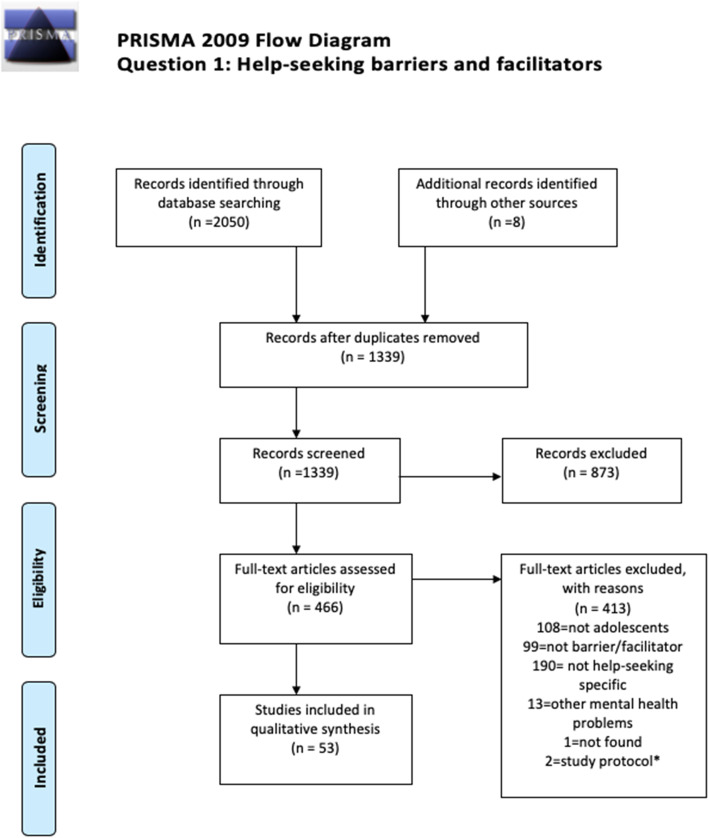
- Ninety studies were included: 54 on barriers/facilitators (56,821 participants) and 36 on interventions (28,608 participants). Stigma was the most cited barrier; more than half of included studies (n = 30) referenced stigma or other negative attitudes, and 25 named stigma as the primary obstacle. Negative beliefs about mental health services and professionals were the second most prominent barrier.
- Mental health literacy and prior mental health care were the most cited facilitators (n = 10); trusted relationships with gatekeepers such as parents, teachers, and counsellors also facilitated help-seeking.
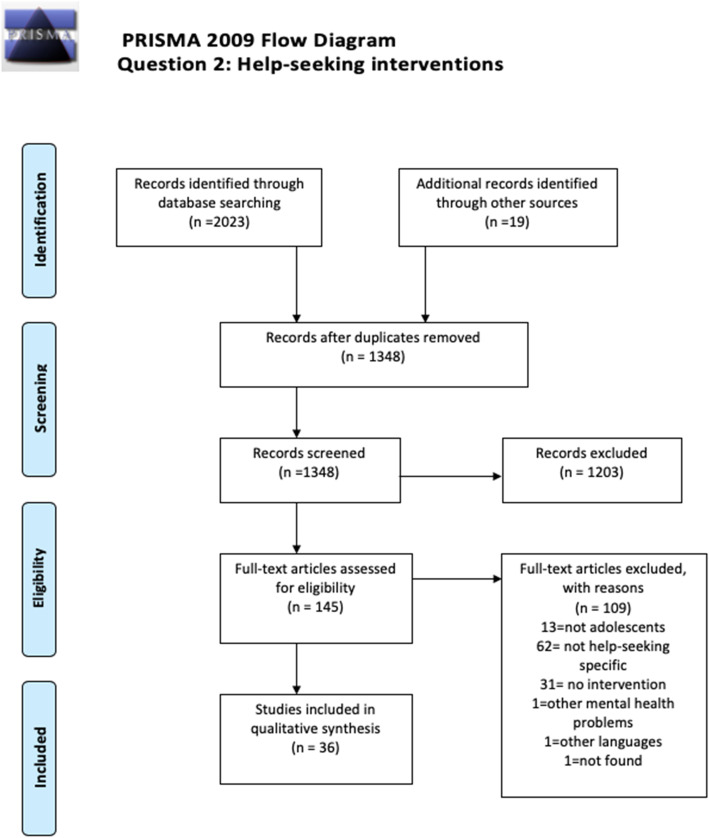
- Most interventions (n = 23) used psychoeducation/classroom-based approaches; others used outreach, multimedia/online tools, or peer training. Some depression psychoeducation interventions increased help-seeking (e.g., Robinson et al. adjusted OR = 3.48, 95% CI 1.93–6.29, p < 0.0001; King et al. t = 4.634, p < .001 maintained at 3 months; Strunk et al. p < 0.0005 but not sustained at follow-up, p = 0.014), and all outreach studies found significant effects on help-seeking intentions.
- Overall study quality was low to medium with moderate to high risk of bias; there was no general agreement on help-seeking definitions or measurements, and most studies measured help-seeking intentions rather than actual behaviours.
Methods
- Systematic review prospectively registered on PROSPERO and reported per PRISMA. Five databases/search sources were searched (abstract); methods specify MEDLINE, Embase, PsycINFO, Web of Science, Google Scholar, plus Open Grey. Searches were run in June 2018 and updated April 2019; studies in English, Spanish, or French were included.
- Inclusion criteria covered adolescents aged 10–19 and common mental health problems (depression, anxiety, suicidal ideation, emotional distress, general symptoms). Two-stage screening was used; 90 studies met criteria. Findings were summarised using narrative synthesis because of heterogeneity; no meta-analysis was conducted.
- Quality was assessed with Joanna Briggs Institute Critical Appraisal Checklists and the Mixed Methods Appraisal Tool. Intervention studies included quasi-experimental designs (n = 21) and randomised controlled trials (n = 15); all were conducted in educational settings (high school n = 35, college n = 1).
Limitations
- Paper-stated: only one author performed data extraction and critical appraisal, risking subjectivity; the 10–19 age definition may be a limitation and led to exclusion of 104 papers; psychiatric conditions such as anorexia, schizophrenia, and substance misuse were excluded; and over-inclusion of low-quality studies may affect interpretation.
- Paper-stated/evident: most studies used non-clinical samples and hypothetical help-seeking scenarios, so conclusions were often based on intentions rather than actual behaviours; few studies focused on facilitators.
- Evident from the text: all interventions were conducted in educational settings, limiting reach to adolescents outside school; few studies had follow-up, and those that did had high attrition and short follow-up periods (up to 6 months); most used self-report measures, and many did not use validated help-seeking instruments.
Model-written summary. Check it against the paper before relying on it.
Integrity signals
Registry
Cites
Statistics
Figures
Verification
Claims the paper makes
23 Valid · 5 Not valid · 40 Not checked · 121 Own results and interpretations
Some cited sources support this claim and some don’t — read each source’s verdict below.
In the paper
“This is in line with previous studies suggesting that teens who are most in need are less likely to seek help [1, 11, 15].”
§ What are the barriers, facilitators and interventions targeting help-seeking behaviours for common mental health problems in adolescents? A systematic review > Discussion > Question 1: barriers and facilitators
What the sources say
- Disputedcites [1] Gulliver A Griffiths K Christensen H Perceived barriers and facilitators to mental health help-seeking in young people: a systematic review BMC Psychiatry 2010 12 81 PMC3022639 21192795 sourceExperimental — accuracy not yet measured
The Discussion (page unavailable) makes the contrary point: it expects people with symptoms and a perceived need for help to be more likely to seek help. The review does not report that teens with the greatest need are less likely to do so. (LLM, conf=0.82)
Checked by a reasoning model — may be wrong.
- Partly supportedcites [11] Divin N Harper P Curran E Corry D Leavey G Help-seeking measures and their use in adolescents: a systematic review Adolesc Res Rev 2018 3 1 113 122 10.1007/s40894-017-0078-8 sourceExperimental — accuracy not yet measured
The Introduction reports that only one-third of adolescents meeting diagnostic criteria seek professional help and that adolescents with serious, debilitating difficulties may still avoid or delay seeking help. It does not establish that teens with the greatest need are less likely to seek help than other teens. (LLM, conf=0.84)
- Not checked — no full text of the sourcecites [15] Rickwood D Deane F Wilson C Ciarrochi J Young people’s help-seeking for mental health problems Aust J Adv Ment Health 2005 4 3 218 251 source
hedgedstates an association- Asserted: passes — The authors put it forward as true.
- Checkable: passes — It can be checked against evidence.
- Load-bearing: unclear — It is unclear whether the paper’s conclusions depend on it.
- Based: passes — The paper gives a reason why it holds.
- Disputed
The cited sources support only part of this claim — read each source’s verdict below.
In the paper
“Teens who are most in need of mental health attention are reluctant to seek help.”
- Also stated in: § Background · plain
“However, adolescents most in need of psychological help are those least likely to look for it [1–13].”
§ What are the barriers, facilitators and interventions targeting help-seeking behaviours for common mental health problems in adolescents? A systematic review > Abstract > Background
What the sources say
- Partly supportedcites [1] Gulliver A Griffiths K Christensen H Perceived barriers and facilitators to mental health help-seeking in young people: a systematic review BMC Psychiatry 2010 12 81 PMC3022639 21192795 sourceExperimental — accuracy not yet measured
The Background’s help-seeking theory section discusses why young people do not seek help, supporting the general point that teens may be reluctant. It does not establish that adolescents with the greatest need are the least likely to seek help; the Discussion instead says help-seeking would be expected to be more likely among symptomatic people. No page numbers are provided in our copy. (LLM, conf=0.82)
- Not matchedcites [2] WHO: Adolescence Mental Health. Mapping actions of nongovernmental associations and other international development organisations. [Online]. Geneva: World Health Organisation; 2012. Available from: http://apps.who.int/iris/bitstream/handle/10665/44875/9789241503648_eng.pdf;jsessionid=B09D1D46A7AA36AA5757E9E191B3F023?sequence=1. Accessed 11 Sept 2019.
We searched by its title and found no matching paper.
- Not matchedcites [3] WHO. Mental health: strengthening our response. Geneva: World Health Organisation. Available from: https://www.who.int/news-room/fact-sheets/detail/mental-health-strengthening-our-response.
Its entry has no title and year that we can search by.
- Not matchedcites [4] WHO Adolescents: health risks and solutions 2018 Geneva World Health Organisation
We searched by its title and found no matching paper.
- Not matchedcites [5] Murphy, M. & Fonagy, P. Our children deserve better, prevention pays: annual report of the Chief Medical Officer. London: Department of Health. 2013. Chapter 10: Mental health problems in children and young people.
We searched by its title and found no matching paper.
- Partly supportedcites [6] Michaud P Fombonne E The ABC of adolescence: common mental health problems BMJ. 2005 330 7495 835 838 10.1136/bmj.330.7495.835 15817553 PMC556080 sourceExperimental — accuracy not yet measured
The paragraph on identifying and treating mental health problems says young people are often very reluctant to seek help. It does not say that adolescents most in need of attention are particularly unlikely to seek it; the comparative qualifier is unsupported. (LLM, conf=0.83)
- Could not verifycites [7] Oksanen A Laimi K Bjorklund K Löyttyniemi E Kunttu K A 12-year trend of psychological distress: national study of Finnish University students Cent Eur J Public Health 2017 25 2 113 119 10.21101/cejph.a4438 28662321 sourceExperimental — accuracy not yet measured
The Discussion (page unavailable) reports trends in psychological symptoms among Finnish university students, but does not compare need for care with willingness to seek help. Searches for help-seeking, reluctance, and those most in need found no passage addressing that relationship in teens. (LLM, conf=0.76)
- Could not verifycites [8] Kowadenko N Culjak G Workforce planning for children and young people’s mental health care Lancet Public Health 2018 3 266 267 29884430 sourceExperimental — accuracy not yet measured
The 'Workforce planning for children and young people's mental health care' section discusses increased need in late adolescence, scarce services, and unmet need, but does not say that teens with the greatest need are reluctant to seek help. Searches for help-seeking reluctance and barriers among youth with the greatest mental health needs found no passage addressing that comparison; page numbers were not provided. (LLM, conf=0.75)
- Not matchedcites [9] Children Comissioners Lighting review: access to child and adolescent mental health services 2016 United Kingdom Children Comissioners
We searched by its title and found no matching paper.
- Not checked — no full text of the sourcecites [10] Rowe S French R Henderson C Ougrin D Slade M Moran P Help-seeking behaviour and adolescent self-harm: a systematic review Aust N Z J Psychiatry 2014 48 12 1083 1095 25335872 source
plainstates an association- Asserted: passes — The authors put it forward as true.
- Checkable: passes — It can be checked against evidence.
- Load-bearing: passes — The paper’s conclusions depend on it.
- Based: passes — The paper gives a reason why it holds.
- Also stated in: § Background · plain
The cited sources support only part of this claim — read each source’s verdict below.
In the paper
“Seven studies did not find significant differences between genders [28, 39, 40, 42, 46, 51, 69].”
§ What are the barriers, facilitators and interventions targeting help-seeking behaviours for common mental health problems in adolescents? A systematic review > Results > Secondary outcomes
What the sources say
- Not checked — no full text of the sourcecites [28] Wilson CJ Deane F Help-negation and suicidal ideation: the role of depression, anxiety and hopelessness J Youth Adolesc 2010 39 3 291 305 10.1007/s10964-009-9487-8 19957103 source
- Partly supportedcites [39] Pisani AR Schmeelk-Cone K Gunzler D Petrova M Goldston DB Tu X Wyman PA Associations between suicidal high school Students’ help-seeking and their attitudes and perceptions of social environment J Youth Adolesc 2012 41 10 1312 1324 10.1007/s10964-012-9766-7 22562217 PMC3534737 sourceExperimental — accuracy not yet measured
In Results > Characteristics of Help-Seeking Students with SI (page unavailable), the paper reports minimal evidence that sex moderated the links between attitudes, social resources, and help-seeking. It also reports a significant exception: coping resources were more strongly associated with help-seeking for boys than girls. Results > Help-Seeking Behavior Among Suicidal Students further reports a significant sex difference in disclosure to friends, so the unqualified claim of no gender differences overstates this study. (LLM, conf=0.87)
- Not checked — no full text of the sourcecites [40] Wilson CJ Deane FP Brief report: need for autonomy and other perceived barriers relating to adolescents' intentions to seek professional mental health care J Adolesc 2012 35 1 233 237 20650512 source
- Not checked — no full text of the sourcecites [42] Thomas SJ Caputi P Wilson CJ Specific attitudes which predict psychology Students' intentions to seek help for psychological distress J Clin Psychol 2013 70 3 273 282 23818259 source
- Not checked — no full text of the sourcecites [46] Watsford C Rickwood D Young people’s expectations, preferences, and experiences of therapy: effects on clinical outcome, service use, and help-seeking intentions Clin Psychol 2014 18 1 43 51 10.1111/cp.12034 source
- Not checked — no full text of the sourcecites [51] Zhao WF Young RE Breslow L Michel NM Flett GL Goldberg JO Attachment style, relationship factors, and mental health stigma among adolescents Can J Behav Sci 2015 47 4 263 271 10.1037/cbs0000018 source
- Partly supportedcites [69] McLean A Hunt K Sweeting H Symptoms of mental health problems: children’s and adolescents’ understandings and implications for gender differences in help seeking Child Soc 2013 13 161 173 PMC4540163 26300586 sourceExperimental — accuracy not yet measured
The Discussion (page unavailable) says boys’ and girls’ understandings were largely consistent and that differences in their accounts of help seeking were subtle. It also describes a stronger concern among boys about their identity being questioned. Because this was a qualitative focus-group study, it does not establish that gender differences were statistically nonsignificant. (LLM, conf=0.84)
plain- Asserted: passes — The authors put it forward as true.
- Checkable: passes — It can be checked against evidence.
- Load-bearing: unclear — It is unclear whether the paper’s conclusions depend on it.
- Based: passes — The paper gives a reason why it holds.
The cited sources support only part of this claim — read each source’s verdict below.
In the paper
“Two studies [101, 104] found a significant reduction in self-stigma surrounding seeking help after the intervention (p < 0.05)”
§ What are the barriers, facilitators and interventions targeting help-seeking behaviours for common mental health problems in adolescents? A systematic review > Results > Effectiveness
What the sources say
- Partly supportedcites [101] Saporito, J. M. Reducing stigma toward seeking mental health treatment. Dissertation Abstracts International: Section B: The Sciences and Engineering; 2009;70(6-B):3794. sourceExperimental — accuracy not yet measured
The ‘Group Differences in Mental Health Stigma’ section reports significantly more positive attitudes toward seeking treatment in the intervention group (ATSPPH, p=.001). But ‘Measures of Stigma’ defines that scale as measuring general attitudes toward professional help, not self-stigma; the cited study therefore supports a significant change in help-seeking attitudes, not specifically a reduction in self-stigma. (LLM, conf=0.86)
- Not checked — no full text of the sourcecites [104] Young R, Hartman LI, Michel NM, Winter A, Flett GL, Goldberg JO. Reducing self-stigma toward help-seeking in high school youth: effects of classroom psycho-education about schizophrenia and mental illness. Schizophr Bull. 2013. source
plainstates a cause- Asserted: passes — The authors put it forward as true.
- Checkable: passes — It can be checked against evidence.
- Load-bearing: unclear — It is unclear whether the paper’s conclusions depend on it.
- Based: passes — The paper gives a reason why it holds.
- Partly supported
The cited sources that could be checked couldn’t confirm or dispute this claim.
In the paper
“Previous systematic reviews on interventions targeting help-seeking reveal some promising results in regard to enhancing mental health literacy [16]”
§ What are the barriers, facilitators and interventions targeting help-seeking behaviours for common mental health problems in adolescents? A systematic review > Background
What the sources say
- Could not verifycites [16] Gulliver A Griffiths KM Christensen H Brewer JL A systematic review of help-seeking interventions for depression, anxiety and general psychological distress BMC Psychiatry 2012 12 12 81 22799879 PMC3464688 sourceExperimental — accuracy not yet measured
The Background section (Bibliotherapy for depression; page not provided) describes encouraging results from reviews of self-help treatments for depression. It does not report that reviews of help-seeking interventions found improvements in mental health literacy. Searches for mental health literacy and help-seeking interventions found no passage addressing that claim. (LLM, conf=0.76)
hedgedstates a possible cause- Asserted: passes — The authors put it forward as true.
- Checkable: passes — It can be checked against evidence.
- Load-bearing: passes — The paper’s conclusions depend on it.
- Based: passes — The paper gives a reason why it holds.
- Could not verify
100 more claims · 11 with their cited sources checked
Create a free account to see all 189 claims and to verify the 11 references still open.
- Probably not a substantial claim. 44
- It may state two separate claims as one. 49
Claims other papers make about this one
Each is checked against this paper’s own text: does it say what the citing paper says it does?
The cited source says what the claim attributes to it.
In the citing paper
“Barriers to help-seeking in adolescence include a lack of confidence in mental health professionals, a preference for self-reliance, difficulties with physical and financial access to care, and feelings of embarrassment and stigma [34–37].”
From Efficacy of a transdiagnostic Internet prevention approach in adolescents (EMPATIA study): study protocol of a randomized controlled trial (2024) · cites this paper as [34]
The cited source says what the claim attributes to it.
In the citing paper
“Across contexts, research indicated that barriers to seeking help for mental health include not recognizing the need for support, doubting that others can help, and fearing stigma [6, 113, 139].”
From Understanding Teen Overreliance on AI Companion Chatbots Through Self-Reported Reddit Narratives (2026) · cites this paper as [6]
In the citing paper
“Aguirre Velasco and colleagues 230 summarised largely school-based interventions for adolescents, and found some improvements in help-seeking intentions, stigma related to help-seeking, or both, although study quality was low.”
From The Lancet Commission on ending stigma and discrimination in mental health (2022) · cites this paper as [230]
Statistics recomputed
Every reported test result, recomputed from its test statistic and degrees of freedom. A result shows as not adding up only once an independent check has confirmed it.
- ConsistentF(1, 146) = 6.64reported p = .01 · recomputed p = .011
“F(1, 146) =6.64, p = .01”
- ConsistentF(4, 417) = 6.428reported p < .001 · recomputed p < .001
“F (4,417) = 6.428, p < .001”
Self-check
Percentages, sums and reported differences re-computed from the paper’s own numbers.
Each contradiction between two passages listed here was confirmed by an independent check.
Rated minor: it would not touch a result — a value no result rests on, a p-value that stays on the same side of the significance level, or a conflict that is clerical, resolved elsewhere in the paper, or outside its own findings.
In the paper
§ What are the barriers, facilitators and interventions targeting help-seeking behaviours for common mental health problems in adolescents? A systematic review > Results > Question 2: help-seeking interventions
“The age of participants ranged from 11 to 19 years old, although one study that included participants under 29 years old was incorporated as more than half of the sample were adolescents.”
§ What are the barriers, facilitators and interventions targeting help-seeking behaviours for common mental health problems in adolescents? A systematic review > Results > Question 2: help-seeking interventions
“Schimidt, 2015, United States | 5949 | High school students (aged 10–18)”
Rated minor: it would not touch a result — a value no result rests on, a p-value that stays on the same side of the significance level, or a conflict that is clerical, resolved elsewhere in the paper, or outside its own findings.
In the paper
“The majority of the studies were cross sectional (n = 36) [26–61], thirteen studies were qualitative [62–74] and six used a mixed-method design [75–80].”
§ What are the barriers, facilitators and interventions targeting help-seeking behaviours for common mental health problems in adolescents? A systematic review > Results > Question 1: help-seeking barriers and facilitators
Reported 54 · recomputed 55
Rated minor: it would not touch a result — a value no result rests on, a p-value that stays on the same side of the significance level, or a conflict that is clerical, resolved elsewhere in the paper, or outside its own findings.
In the paper
§ What are the barriers, facilitators and interventions targeting help-seeking behaviours for common mental health problems in adolescents? A systematic review > Results > Help-seeking facilitators
“Of the 56 included studies, 19 also referred to facilitators of help-seeking behaviours.”
§ What are the barriers, facilitators and interventions targeting help-seeking behaviours for common mental health problems in adolescents? A systematic review > Results > Question 1: help-seeking barriers and facilitators
“Fifty-four studies that reported barriers and/or facilitators including a total of 56,821 participants were considered in the narrative synthesis (Table 2).”
Citations
Cites
Sawyer, S. M., Azzopardi, P. S., Wickremarathne, D., & Patton, G. C. (2018) · The Lancet Child & Adolescent Health · doi:10.1016/s2352-4642(18)30022-1 · Cited by 3,666
Gulliver, A., Griffiths, K. M., & Christensen, H. (2010) · BMC Psychiatry · doi:10.1186/1471-244x-10-113 · Cited by 3,292 · cited 6×
“This is in line with previous studies suggesting that teens who are most in need are less likely to seek help [1, 11, 15].”
InfluentialBramer, W. M., Rethlefsen, M. L., Kleijnen, J., & Franco, O. H. (2017) · Systematic Reviews · doi:10.1186/s13643-017-0644-y · Cited by 2,114 · cited 1×
“Four databases were selected including MEDLINE®, Embase, PsycINFO, and Web of Science, as well as the search engine Google scholar, identified as an optimal database combination [20].”
Young People’s Help-Seeking for Mental Health Problems
Rickwood, D., Deane, F. P., Wilson, C. J., & Ciarrochi, J. (2005) · Australian e-Journal for the Advancement of Mental Health · doi:10.5172/jamh.4.3.218 · Cited by 1,619 · cited 3×
“Conversely, emotional competence, previous positive experiences with health professionals and mental health literacy, were the main facilitators [15].”
Munn, Z., Moola, S., Riitano, D., & Lisy, K. (2014) · International Journal of Health Policy and Management · doi:10.15171/ijhpm.2014.71 · Cited by 1,479 · cited 1×
“For the quality assessment, we used the Joanna Briggs Institute Critical Appraisal Checklist [21] and the Mixed Methods Appraisal Tool (MMAT) [22], which were appropriate due to the variety of study designs included in this review; both have been previously validated [23, 24].”
Journal of Autism and Developmental Disorders
(2013) · Journal of Autism and Developmental Disorders · doi:10.1007/10803.1573-3432 · Cited by 1,361
When and how do young people seek professional help for mental health problems?
Rickwood, D. J., Deane, F. P., & Wilson, C. J. (2007) · Medical Journal of Australia · doi:10.5694/j.1326-5377.2007.tb01334.x · Cited by 1,195
Mokdad, A. H., Forouzanfar, M. H., Daoud, F., Mokdad, A. A., El Bcheraoui, C., Moradi-Lakeh, M., Kyu, H. H., Barber, R. M., Wagner, J., Cercy, K., et al. (2016) · The Lancet · doi:10.1016/s0140-6736(16)00648-6 · Cited by 984
Mental Health Literacy: Past, Present, and Future
Kutcher, S., Wei, Y., & Coniglio, C. (2016) · The Canadian Journal of Psychiatry · doi:10.1177/0706743715616609 · Cited by 918 · cited 1×
“Mental health literacy Mental health literacy refers to the ability to use mental health information to recognise, manage and prevent mental health disorders and make informed decisions about help-seeking and professional support [82].”
Kazdin, A. E., & Nock, M. K. (2003) · Journal of Child Psychology and Psychiatry · doi:10.1111/1469-7610.00195 · Cited by 774 · cited 1×
“The relevance of studying underlying mechanisms and practical requirements related to the functionality of interventions has been previously discussed [123], and most of the interventions included in this review did not refer to these processes.”
Research works printed but not linked: 9
- WHO Adolescents: health risks and solutions 2018 Geneva World Health Organisation
- Murphy, M. & Fonagy, P. Our children deserve better, prevention pays: annual report of the Chief Medical Officer. London: Department of Health. 2013. Chapter 10: Mental health problems in children and young people.
- Children Comissioners Lighting review: access to child and adolescent mental health services 2016 United Kingdom Children Comissioners
- The PRISMA Group. PRISMA statement. Oxford: University of Oxford; 2009. Available from: http://prisma-statement.org/prismastatement/FlowDiagram.aspx. Accessed 30 May 2018.
- Hong Q Pluye P Fabruegues S Bartlett G Boardman F Cargo M Dagenais P Gagnon MP Griffiths F Nicolau B O’Cathain A Rousseau MC Vedel I Mixed methods appraisal tool (MMAT) 2018 Montreal McGill University Department of Family Medicine
- Cramer, K. Mental health help seeking in schools: the impact of mental health literacy, stigma, and barriers to care. Dissertation abstracts international section A: humanities and social sciences; 2017;78(3-A(E)), No Pagination Specified.
- Samuel, I. A. Disparities in mental health service use among African American adolescent males released from juvenile detention facilities. Dissertation abstracts international section A: humanities and social sciences; 2014; 75(5-A(E)), No Pagination Specified.
- Sawyer MG Borojevic N Ettridge KA Spence SH Sheffield J Lynch J Do help-seeking intentions during early adolescence vary for adolescents experiencing different levels of depressive symptoms? J Adolesc Health 2012 50 3 236 242 22325128 · DOI · Paper page
- UNESCO Fact sheet N. 48. One in five children, adolescents and youth is out of school 2018 Montreal and Paris United Nation Educational, Scientific and Cultural Organization
Cited by
The Lancet Commission on ending stigma and discrimination in mental health
Thornicroft, G., Sunkel, C., Alikhon Aliev, A., Baker, S., Brohan, E., el Chammay, R., Davies, K., Demissie, M., Duncan, J., Fekadu, W., et al. (2022) · The Lancet · doi:10.1016/s0140-6736(22)01470-2 · Cited by 748
An overview of and recommendations for more accessible digital mental health services
Lattie, E. G., Stiles-Shields, C., & Graham, A. K. (2022) · Nature Reviews Psychology · doi:10.1038/s44159-021-00003-1 · Cited by 446
Lu, W., Todhunter-Reid, A., Mitsdarffer, M. L., Muñoz-Laboy, M., Yoon, A. S., & Xu, L. (2021) · Frontiers in Public Health · doi:10.3389/fpubh.2021.641605 · Cited by 218
Using Peer Support to Strengthen Mental Health During the COVID-19 Pandemic: A Review
Suresh, R., Alam, A., & Karkossa, Z. (2021) · Frontiers in Psychiatry · doi:10.3389/fpsyt.2021.714181 · Cited by 183
Elshaikh, U. A. M., Sheik, R., Saeed, R. K. M., Chivese, T., & Hassan, D. A. (2023) · BMC Geriatrics · doi:10.1186/s12877-023-04229-x · Cited by 194
Khare, S. K., March, S., Barua, P. D., Gadre, V. M., & Acharya, U. R. (2023) · Information Fusion · doi:10.1016/j.inffus.2023.101898 · Cited by 129
Mental Health Problems among Young People—A Scoping Review of Help-Seeking
Westberg, K. H., Nyholm, M., Nygren, J. M., & Svedberg, P. (2022) · International Journal of Environmental Research and Public Health · doi:10.3390/ijerph19031430 · Cited by 108
Renwick, L., Pedley, R., Johnston, I., Bell, V., Lovell, K., Bee, P., & Brooks, H. L. (2022) · European Child & Adolescent Psychiatry · doi:10.1007/s00787-022-01997-6 · Cited by 153
“Evidence from multiple systematic reviews shows that attitudes and perceptions are particularly important in determining whether adolescents propose to seek professional help for a mental health problem [15, 16, 88].”
BackgroundLeech, T., Dorstyn, D., Taylor, A., & Li, W. (2021) · Children and Youth Services Review · doi:10.1016/j.childyouth.2021.106073 · Cited by 100
Doll, C. M., Michel, C., Rosen, M., Osman, N., Schimmelmann, B. G., & Schultze-Lutter, F. (2021) · BMC Psychiatry · doi:10.1186/s12888-021-03435-4 · Cited by 99
“This might reflect an effect of familiarity and previous positive experience with mental health services that counteracts negative beliefs towards mental health services and professionals, which were found to be the most cited barriers to help-seeking in a recent review focussing on adolescents [10].”
BackgroundResultLui, J. C., Sagar-Ouriaghli, I., & Brown, J. S. L. (2024) · Journal of American College Health · doi:10.1080/07448481.2022.2119859 · Cited by 102
“31,32 Aim and rationale This is the first systematic review that aims to identify the barriers and facilitators to help-seeking among university students with common mental disorders, using both quantitative and qualitative studies conducted across all countries.”
Eigenhuis, E., Waumans, R. C., Muntingh, A. D. T., Westerman, M. J., van Meijel, M., Batelaan, N. M., & van Balkom, A. J. L. M. (2021) · PLOS ONE · doi:10.1371/journal.pone.0247516 · Cited by 90
“A recent systematic review including 54 studies on barriers and facilitators in help-seeking behaviours for common mental health problems in adolescents found that the two most cited barriers were stigma and negative beliefs towards mental health services and professionals [23].”
Background(2023) · doi:10.1186/s12888-023-04827-4 · Cited by 89
Mende, M., Scott, M. L., Ubal, V. O., Hassler, C. M. K., Harmeling, C. M., & Palmatier, R. W. (2023) · Journal of Service Research · doi:10.1177/10946705231188676 · Cited by 101
Chen, T.-J., Dong, B., Dong, Y., Li, J., Ma, Y., Liu, D., Zhang, Y., Xing, Y., Zheng, Y., Luo, X., et al. (2024) · The Lancet · doi:10.1016/s0140-6736(23)02894-5 · Cited by 82
Use of automated conversational agents in improving young population mental health: a scoping review
Balan, R., Dobrean, A., & Poetar, C. R. (2024) · npj Digital Medicine · doi:10.1038/s41746-024-01072-1 · Cited by 56
“Despite high prevalence and long-term negative consequences of mental health problems, most children and youths do not participate in preventive or intervention actions because of attitudinal or logistic barriers 3 .”
Barrow, E., & Thomas, G. (2022) · Educational Psychology in Practice · doi:10.1080/02667363.2022.2051441 · Cited by 96
“The studies within this SLR were screened to ensure they met the following inclusionary parameters: ● Studies written in the English language, in a peer-reviewed journal; ● Studies published between 2010 and 2020; ● Research that is empirical and is derived from primary data sources (that is, not SLRs or meta-analyses…”
BackgroundInfluentialLi, J., Li, Y., Hu, Y., Ma, C. F., Mei, X., Chan, E. A., & Yorke, J. (2025) · Worldviews on Evidence-Based Nursing · doi:10.1111/wvn.70059 · Cited by 87
Psychosocial Correlates of Insomnia Among College Students
Mbous, Y. P. V., Nili, M., Mohamed, R., & Dwibedi, N. (2022) · Preventing Chronic Disease · doi:10.5888/pcd19.220060 · Cited by 78
Ademosu, T., Ebuenyi, I. D., Hoekstra, R. A., Prince, M. J., & Salisbury, T. T. (2021) · The Lancet Psychiatry · doi:10.1016/s2215-0366(21)00207-8 · Cited by 60
Lafortune, D., Girard, M., Dussault, É., Philibert, M. D., Hébert, M., Boislard, M.-A., Goyette, M., & Godbout, N. (2023) · PLoS ONE · doi:10.1371/journal.pone.0282618 · Cited by 53
“Further, by examining demographic characteristics linked to help-seeking for SD as well as barriers to professional services, the current study contributes to the existing literature on help-seeking and treatment access, which has primarily focused on non-sexual mental health disorders [50, 53, 55].”
BackgroundShidhaye, R. R. (2023) · Current Opinion in Psychology · doi:10.1016/j.copsyc.2023.101661 · Cited by 69
Lahey, B. B., Tiemeier, H. W., & Krueger, R. F. (2022) · JCPP Advances · doi:10.1002/jcv2.12108 · Cited by 78
“need of services often have the greatest barriers to obtaining them (Kazdin, 2019; Velasco et al., 2020).”
BackgroundO’Dea, B., Subotic-Kerry, M., KING, C. A., Mackinnon, A. J., Achilles, M. R., Anderson, M., Parker, B., Werner‐Seidler, A., Torok, M. H., Cockayne, N. L., et al. (2021) · The Lancet Regional Health - Western Pacific · doi:10.1016/j.lanwpc.2021.100178 · Cited by 57
Ferrari, M., Sabetti, J., McIlwaine, S. V., Fazeli, S., Sadati, S. M. H., Shah, J. L., Archie, S., Boydell, K., Lal, S., Henderson, J. L., et al. (2022) · Frontiers in Digital Health · doi:10.3389/fdgth.2022.814248 · Cited by 65
“They include difficulties recognizing symptoms (12), negative perceptions of mental health services and professionals (13), and concerns about the stigma of mental illness (14–16).”
BackgroundMixed-Methods Examination of Adolescent-Reported Barriers to Accessing Mental Health ServicesPreprint
Ringle, V. A. M., Sung, J. Y., Roulston, C. A., & Schleider, J. L. (2023) · PsyArXiv (OSF Preprints) · doi:10.1016/j.jadohealth.2023.08.034 · Cited by 60
Hermann, V., Durbeej, N., Karlsson, A., & Sarkadi, A. (2022) · Children and Youth Services Review · doi:10.1016/j.childyouth.2022.106660 · Cited by 62
Health behavioural change – the influence of social-ecological factors and health identity
Eriksson, M., Sundberg, L. R., Santosa, A., Lindgren, H., Ng, N., & Lindvall, K. (2025) · International Journal of Qualitative Studies on Health and Well-Being · doi:10.1080/17482631.2025.2458309 · Cited by 79
“Likewise, people with the least severe mental health problems are more eager to seek help than those with more serious mental health problems (Velasco et al., 2020).”
Bulbena‐Cabré, A., Baeza‐Velasco, C., Rosado‐Figuerola, S., & Bulbena, A. (2021) · American Journal of Medical Genetics Part C: Seminars in Medical Genetics · doi:10.1002/ajmg.c.31955 · Cited by 41
The Impact of Community Mental Health Programs for Australian Youth: A Systematic Review
Savaglio, M., O’Donnell, R., Hatzikiriakidis, K., Vicary, D., & Skouteris, H. (2022) · Clinical Child and Family Psychology Review · doi:10.1007/s10567-022-00384-6 · Cited by 48
“Several, ‘personal-level’ barriers among youth, such as perceived stigma, negative beliefs toward mental health services, cultural dissonance, and poor mental health literacy may contribute to this treatment gap (Radez et al., 2021; Velasco et al., 2020).”
BackgroundLi, S. H., Achilles, M. R., Spanos, S., Habak, S., Werner-Seidler, A., & O’Dea, B. (2022) · The Cognitive Behaviour Therapist · doi:10.1017/s1754470x22000095 · Cited by 39
“Barriers related to accessibility, stigma, negative beliefs about treatment and a preference for autonomy significantly impact young people’s abilities to seek help for their mental health (Aguirre Velasco et al., 2020; Gulliver et al., 2010; Radez et al., 2021).”
BackgroundOrosz, G., Faragó, L., Paskuj, B., & Krekó, P. (2024) · Computers in Human Behavior · doi:10.1016/j.chb.2024.108338 · Cited by 38
Ho, T. Q. A., Le, L. K.-D., Engel, L., Le, N., Melvin, G., Le, H. N. D., & Mihalopoulos, C. (2025) · European Child & Adolescent Psychiatry · doi:10.1007/s00787-024-02386-x · Cited by 38
“However, several barriers impede YP in accessing professional mental health support, including financial costs, social stigma, negative beliefs about mental health services, and low mental health literacy [6, 7].”
Harfield, S. G., Purcell, T., Schioldann, E., Ward, J. S., Pearson, O. R., & Azzopardi, P. S. (2024) · BMC Health Services Research · doi:10.1186/s12913-024-10796-5 · Cited by 50
Calear, A. L., McCallum, S. M., Christensen, H. M., Mackinnon, A. J., Nicolopoulos, A., Brewer, J. L., Werner‐Seidler, A., Morse, A. R., Kazan, D., Farrer, L. M., et al. (2021) · Journal of Affective Disorders · doi:10.1016/j.jad.2021.12.043 · Cited by 56
Seif, N. A., Bastien, R. J., Wang, B., Davies, J., Isaken, M., Ball, E., Pitman, A., & Rowe, S. L. (2022) · BJPsych Open · doi:10.1192/bjo.2021.1081 · Cited by 60
Self-citationBarriers to Seeking Psychotherapy for Mental Health Problems in Adolescents: a mixed method study
Pfeiffer, S., & In‐Albon, T. (2022) · Journal of Child and Family Studies · doi:10.1007/s10826-022-02364-4 · Cited by 51
“…of having enough resources to cope with mental health problems without professional help, and the fear of being confronted with their own emotions were the main cited barriers to seeking psychotherapy, which is consistent with other findings (Aguirre-Velasco et al., 2020; Gulliver et al., 2010).”
BackgroundResultSimes, D., Shochet, I. M., Murray, K. E., & Sands, I. G. (2021) · Adolescent Research Review · doi:10.1007/s40894-021-00164-3 · Cited by 53
Evans-Lacko, S., Hahn, J. S., Peter, L.-J., & Schomerus, G. (2022) · Current Opinion in Psychiatry · doi:10.1097/yco.0000000000000788 · Cited by 32
“Limited understanding of mechanisms has also been noted in previous reviews of face-toface help-seeking interventions [9].”
BackgroundMethodHaghish, E. F., Nes, R. B., Obaidi, M., Qin, P., Stänicke, L. I., Bekkhus, M., Laeng, B., & Czajkowski, N. O. (2023) · Journal of Youth and Adolescence · doi:10.1007/s10964-023-01892-6 · Cited by 45
“In the developmental process of increasing autonomy, youth turn to their friends and peers to share experiences and to learn coping strategies, but self-blame and a feeling of burdensomeness may hinder them from reaching out for help (Aguirre Velasco et al., 2020).”
BackgroundAhuvia, I. L., Schleider, J. L., Kneeland, E. T., Moser, J. S., & Schroder, H. S. (2024) · Journal of Affective Disorders · doi:10.1016/j.jad.2024.01.229 · Cited by 44
Evaluating quality in adolescent mental health services: a systematic review
Quinlan-Davidson, M., Roberts, K. J. S., Devakumar, D., Sawyer, S. M., Cortez, R. A., & Kiss, L. (2021) · BMJ Open · doi:10.1136/bmjopen-2020-044929 · Cited by 45
Lockwood, J., Williams, L., Martin, J. L., Rathee, M., & Hill, C. (2022) · JMIR Mental Health · doi:10.2196/29008 · Cited by 35
“Barriers include overstretched mental health services with lengthy waitlists, as well as attitudinal issues around stigma, negative beliefs or lack of awareness about mental health services, and preferences for self-help over clinical support [14-16].”
BackgroundAndary, S., Bassani, J., Burrell, G., Cole, E., Evans, R., Redman, E., & Kumar, S. (2023) · Asia-Pacific Psychiatry · doi:10.1111/appy.12549 · Cited by 47
Eckert, M., Efe, Z., Guenthner, L., Baldofski, S., Kühne, K., Wundrack, R., Thomas, J., Saee, S., Kohls, E., & Rummel‐Kluge, C. (2022) · Internet Interventions · doi:10.1016/j.invent.2022.100508 · Cited by 42
Midgley, N., Guerrero-Tates, B., Mortimer, R., Edbrooke-Childs, J. H., Mechler, J., Lindqvist, K., Hajkowski, S. J., Leibovich, L., Martin, P., Andersson, G., et al. (2021) · International Journal of Environmental Research and Public Health · doi:10.3390/ijerph182412993 · Cited by 33
“However, research suggests that in general, young men are less likely to access mental health support than young women [44] and young males may be more likely than females to have negative attitudes”
BackgroundYao, Z.-Y., Wang, T., Yu, Y.-K., Li, R., Sang, X., Yi-na, F., Gong, X.-J., Sun, W., Liu, J. J. W., Wong, J. P., et al. (2023) · Journal of Affective Disorders · doi:10.1016/j.jad.2023.07.050 · Cited by 47
Dedryver, C. C., & Knai, C. (2021) · International Journal of Environmental Research and Public Health · doi:10.3390/ijerph182211777 · Cited by 38
“It is suggested that future qualitative studies undertake methodologically robust research into the barriers to help-seeking amongst young people, notably for those hard-to-reach [52].”
BackgroundEncouraging help-seeking and engagement in a mental health app: What young people want
Garrido, S., Oliver, E., Chmiel, A., Doran, B., & Boydell, K. (2022) · Frontiers in Digital Health · doi:10.3389/fdgth.2022.1045765 · Cited by 35
“There are multiple reasons for these low rates of professional help-seeking, with stigma and discrimination, embarrassment, and negative perceptions of mental health services being paramount (6).”
BackgroundKulikov, V. N., Crosthwaite, P. C., Hall, S. A., Flannery, J., Strauss, G., Vierra, E., Koepsell, X., Lake, J. I., & Padmanabhan, A. (2023) · Frontiers in Digital Health · doi:10.3389/fdgth.2023.1062471 · Cited by 35
“school and after-school activities, or other responsibilities (18).”
BackgroundThe Effects of COVID-19 on the Mental Health of Children and Adolescents: A Review
Sayed, A. A., El-Gendy, A. A., Aljohani, A. K., Haddad, R. A., Taher, O. H., Senan, A. M., Qashqari, A. M., & Alqelaiti, B. A. (2024) · Cureus · doi:10.7759/cureus.56473 · Cited by 41
“On the other hand, the key facilitators were emotional competence, past good contacts with health practitioners, and mental health literacy [17,18].”
BackgroundSoman, G., Judy, M. V., & Abou, A. M. (2025) · Cognitive Systems Research · doi:10.1016/j.cogsys.2025.101337 · Cited by 45
Osman, N., Michel, C., SCHIMMELMANN, B. G., Schilbach, L., Meisenzahl, E. M., & Schultze‐Lutter, F. (2022) · European Archives of Psychiatry and Clinical Neuroscience · doi:10.1007/s00406-022-01483-9 · Cited by 43
Abdelmonaem, Y. M. M., Osman, M. A., & Karim, N. A. H. A. (2024) · BMC Nursing · doi:10.1186/s12912-024-01910-3 · Cited by 28
“…and interventions targeting help-seeking behaviors for common mental health problems in adolescents, problems related to service and personnel availability, as well as other structural factors like cost, transportation, and waiting times, were identified as obstacles to help-seeking [17].”
BackgroundCox, J. A., Mills, L., Hermens, D. F., Read, G. J. M., & Salmon, P. M. (2024) · Adolescent Research Review · doi:10.1007/s40894-024-00241-3 · Cited by 43
“…and barriers to help-seeking for self-harm in young people (Michelmore & Hindley, 2012; Rowe et al., 2014) and other reviews on help-seeking for mental health problems in young people more generally (Aguirre Velasco et al., 2020; Barrow & Thomas, 2022; Gulliver et al., 2010; Radez et al., 2021).”
Waitlist management in child and adolescent mental health care: A scoping review
Eichstedt, J. A., Turcotte, K., Golden, G. M., Arbuthnott, A. E., Chen, S., Collins, K., Mowat, S., & Reid, G. J. (2024) · Children and Youth Services Review · doi:10.1016/j.childyouth.2024.107529 · Cited by 33
Short-term music therapy treatment for adolescents with depression – A pilot study
Geipel, J., Koenig, J., Hillecke, T. K., & Resch, F. (2021) · The Arts in Psychotherapy · doi:10.1016/j.aip.2021.101874 · Cited by 32
Meldahl, L. G., Krijger, L., Andvik, M. M., Cardenas, N. E., Cuddeford, O., Duerto, S., Game, J. R., Ibenfeldt, M., Mustafa, M., Tong, M., et al. (2022) · Health Expectations · doi:10.1111/hex.13600 · Cited by 28
“However, up to 75% of adolescents with mental health problems do not seek help at an early stage or at all.(4) Furthermore, 30%–75% of adolescents drop out of treatment.”
BackgroundRevisiting Social Stigma in Non-suicidal Self-injury: A Narrative Review
Banerjee, D., & Meheli, S. (2022) · Consortium Psychiatricum · doi:10.17816/cp196 · Cited by 34
Exploring Adolescents’ Attitudes Toward Mental Health Apps: Concurrent Mixed Methods Study
Høgsdal, H., Kyrrestad, H., Rye, M., & Kaiser, S. (2024) · JMIR Formative Research · doi:10.2196/50222 · Cited by 27
Mental Health and Positive Development Prevention Interventions: Overview of Systematic Reviews
Harrison, L., Sharma, N., Irfan, O., Zaman, M., Vaivada, T., & Bhutta, Z. A. (2022) · PEDIATRICS · doi:10.1542/peds.2021-053852g · Cited by 32
Casañas, R., Castellví, P., Gil, J.-J., Torres-Torres, M., Barón, J., Teixidó, M., Sampietro, H. M., López, M. D., Fernández, R., de Oraa, R. S. M., et al. (2022) · BMC Public Health · doi:10.1186/s12889-022-14558-y · Cited by 31
Understanding Teen Overreliance on AI Companion Chatbots Through Self-Reported Reddit Narratives
Namvarpour, M. (., Brofsky, B., Medina, J. Y., Akter, M., & Razi, A. (2026) · Proceedings of the 2026 CHI Conference on Human Factors in Computing Systems · doi:10.1145/3772318.3790597 · Cited by 24
Baldofski, S., Kohls, E., Efe, Z., Eckert, M., Saee, S., Thomas, J., Wundrack, R., & Rummel‐Kluge, C. (2023) · JMIR Mental Health · doi:10.2196/43780 · Cited by 33
“…the fear of stigma, family reactions or negative family beliefs toward mental health services, a lack of mental health literacy, the need for self-reliance and autonomy, concerns about confidentiality, and other barriers such as structural factors like access, time, transport, or cost [13,19].”
BackgroundResultInfluentialMental health promotion in youth sporting clubs: predictors of stakeholder participation
Petersen, J. M., Drummond, M., Crossman, S., Elliott, S., Drummond, C., & Prichard, I. J. (2023) · BMC Public Health · doi:10.1186/s12889-023-15377-5 · Cited by 26
“Existing research suggests that among young people, there are several barriers to engagement with mental health supports including perceived stigma, negative perceptions towards support services, and limited mental health literacy [30, 31].”
BackgroundCarbonell, Á., Georgieva, S., Pérez, J. J. N., & Prades-Caballero, V. (2023) · Adolescent Research Review · doi:10.1007/s40894-023-00227-7 · Cited by 32
“…groups (Holt, 2022), specific mental disorders (Maurice et al., 2022), providers' perspectives (O'Brien et al., 2016), help-seeking behaviors (Aguirre, 2020), systemic or professional factors (Banwell et al., 2021), or have methodological limitations (Hendrickx et al., 2020), without…”
Students’ reasons for being reluctant to seek help for mental health concerns in secondary schools
Patte, K. A., Battista, K., Goddard, J. A., Ferro, J., & Leatherdale, S. T. (2024) · Cogent Mental Health · doi:10.1080/28324765.2023.2298918 · Cited by 31
Allouche, S. F., Munson, J. A. G., & Long, A. C. J. (2021) · School Mental Health · doi:10.1007/s12310-021-09426-w · Cited by 30
Pfeiffer, S., & In‐Albon, T. (2022) · Stigma and Health · doi:10.1037/sah0000366 · Cited by 31
Dadaczynski, K., Krah, V., Frank, D., Zügel-Hintz, E., & Pöhlmann, F. (2021) · Frontiers in Public Health · doi:10.3389/fpubh.2021.752183 · Cited by 31
Klinner, C., Glozier, N., Yeung, M., Conn, K., & Milton, A. C. (2023) · BMC Psychiatry · doi:10.1186/s12888-023-05209-6 · Cited by 30
“In a recent systematic review on the barriers, facilitators and interventions for mental health help-seeking behaviours in adolescents, only 19 of 56 studies identified help-seeking facilitators [6].”
BackgroundHelp-seeking processes related to targeted school-based mental health services: systematic review
McPhail, L., Thornicroft, G., & Gronholm, P. C. (2024) · BMC Public Health · doi:10.1186/s12889-024-18714-4 · Cited by 49
Huff, N. R., Dunderdale, L., Kellogg, A. J., & Isbell, L. M. (2024) · Clinical Psychology Review · doi:10.1016/j.cpr.2024.102504 · Cited by 36
Lu, H. J., Yu, Y., Wang, D. B., Wu, A. M. S., Chen, J. H., Zhang, G., Wu, Y., & Lau, J. T. F. (2024) · BMC Psychiatry · doi:10.1186/s12888-024-06271-4 · Cited by 23
Severe Social Anxiety Among Adolescents During COVID-19 Lockdown
Itani, M. H., Eltannir, E., Tinawi, H., Daher, D., El-Tannir, A., & Moukarzel, A. A. (2021) · Journal of Patient Experience · doi:10.1177/23743735211038386 · Cited by 31
“1–3 Up to 20% of adolescents experience mental health disorders during this period, 75% of which appear before the age of 18 years.(4,5) Social interactions in the right environment and psychological assistance are crucial for the development of healthy physical, social, and mental skills during this sensitive period.”
BackgroundLi, S., Achilles, M. R., Werner‐Seidler, A., Beames, J. R., Subotic-Kerry, M., & O’Dea, B. (2022) · JMIR Mental Health · doi:10.2196/37640 · Cited by 25
“In young people, this is due in part to the affordability and availability of trained practitioners, perceived stigma, poor mental health literacy, and a preference for self-reliance [16-18].”
BackgroundBennett, V., Gill, C., Miller, P., Lewis, P., NeurOX, Y. P. A. G., Hamilton-Giachritsis, C. E., & Lavi, I. (2022) · Health Expectations · doi:10.1111/hex.13621 · Cited by 23
“These informal, anonymous and confidential environments may facilitate help‐seeking and disclosure by removing some barriers associated with environmental and psychosocial fears.8,20,23 These CYP may confide in their peers, rather than authorities and adults.24 Online services provide a potential opportunity to offer…”
BackgroundInfluentialLongitudinal Relationships Between Help-Seeking Intentions and Depressive Symptoms in Adolescents
Yamaguchi, S., Ando, S., Miyashita, M., Usami, S., Yamasaki, S., Endo, K., DeVylder, J., Stanyon, D., Baba, K., Nakajima, N., et al. (2023) · Journal of Adolescent Health · doi:10.1016/j.jadohealth.2023.06.033 · Cited by 31
Rastogi, R., Woolverton, G. A., Stevens, C., Chen, J. A., & Liu, C. H. (2024) · Psychiatry Research · doi:10.1016/j.psychres.2024.115825 · Cited by 21
He, X., Huang, P. C., Xu, X., Yu, Q., Huang, H., Yang, P., & Yang, B. (2025) · Frontiers in Psychiatry · doi:10.3389/fpsyt.2025.1586922 · Cited by 35
“In contrast, in Western countries, especially those with well-established mental health service systems, adolescents are usually able to identify problems earlier and seek help, which may effectively reduce the relationship between impulsivity and NSSI (67, 68).”
Tibbs, M., O’Reilly, A., Dwan-O'Reilly, M., & Fitzgerald, A. (2022) · BMJ Open · doi:10.1136/bmjopen-2022-061084 · Cited by 24
Wainipitapong, S., & Chiddaycha, M. (2022) · BMC Medical Education · doi:10.1186/s12909-022-03527-z · Cited by 24
Kirk, S. A., Fraser, C., Evans, N., Lane, R., Crooks, J., Naughton, G., & Pryjmachuk, S. (2023) · BMC Health Services Research · doi:10.1186/s12913-023-09300-2 · Cited by 27
Özaslan, A., Yıldırım, M., Güney, E., ILHAN, M. N., & Vostanis, P. (2023) · Psychological Medicine · doi:10.1017/s0033291723002416 · Cited by 28
“It was emphasized that adolescents with higher symptom severity may be more vulnerable due to fear of stigma in the process of seeking help (Aguirre Velasco, Cruz, Billings, Jimenez, & Rowe, 2020).”
Purebl, G., Schnitzspahn, K. M., & Zsák, É. (2023) · Frontiers in Psychiatry · doi:10.3389/fpsyt.2023.1268194 · Cited by 30
Gryglewicz, K., Orr, V. L., McNeil, M. J., Taliaferro, L. A., Hines, S., Duffy, T. L., & Wiśniewski, P. (2024) · JMIR Mental Health · doi:10.2196/52763 · Cited by 26
Scholz, D., Taylor, A. M., & Strelan, P. (2022) · Adolescent Research Review · doi:10.1007/s40894-022-00193-6 · Cited by 31
“…· Prevention · Program · Schools 1 3 Adolescent Research Review (2023) 8:117–136 Whilst mental health issues such as depression and anxiety might be prevalent in the adolescent population, help seeking behaviors in this demographic are low (Aguirre Velasco et al., 2020; Singh et al., 2019).”
BackgroundBennett, V., Gill, C., Miller, P., Wood, A., Bennett, C., NeurOX, Y. P. A. G., & Singh, I. (2022) · Health Expectations · doi:10.1111/hex.13622 · Cited by 19
Lee, G. Y., McKenna, S., Song, Y. J. C., Hutcheon, A., Hockey, S. J., Laidler, R., Occhipinti, J., Perry, C., Lindsay‐Smith, T., Ramsay, A., et al. (2023) · Health Expectations · doi:10.1111/hex.13777 · Cited by 18
Marinucci, A., Grové, C., Allen, K., & Riebschleger, J. (2021) · Mental Health & Prevention · doi:10.1016/j.mhp.2021.200216 · Cited by 25
Zemestani, M., Hosseini, M., Petersen, J. M., & Twohig, M. P. (2022) · Journal of Contextual Behavioral Science · doi:10.1016/j.jcbs.2022.08.001 · Cited by 17
Nguyen-Thi, H.-P., Truong, N.-A., Le, V. T., Nguyen, X. T. K., & Tran-Chi, V.-L. (2024) · Journal of Curriculum and Teaching · doi:10.5430/jct.v13n1p83 · Cited by 34
Loades, M. E., Higson‐Sweeney, N., Teague, B., Leas, J., Payne-Cook, C., Slastikova, A., Peel, H., Chamberlain, G., Ferguson, L., Janes, K., et al. (2024) · Psychology and Psychotherapy Theory Research and Practice · doi:10.1111/papt.12550 · Cited by 21
“Yet, many who need evidence-based help struggle to access it due to limited service capacity and help-seeking barriers (Pimenta et al., 2021; Radez et al., 2020; Valentine et al., 2024), like lack of knowledge (Thapar et al., 2012, 2016) and stigma (Aguirre Velasco et al., 2020; Patil et al., 2018).”
Mental health of children and young people in the WHO Europe region
Tarasenko, A., Josy, G., Minnis, H., Hall, J., Danese, A., Lau, J. Y. F., Cortese, S., Stringaris, A. K., Redlich, C., & Ougrin, D. (2025) · The Lancet Regional Health - Europe · doi:10.1016/j.lanepe.2025.101459 · Cited by 46
Badrasawi, M., Anabtawi, O., & Al-Zain, Y. (2021) · BMC Nutrition · doi:10.1186/s40795-021-00451-1 · Cited by 17
“Addressing their risk factors necessitates understanding the causes and people’s perceptions of health behaviours which interventions seek to promote [13].”
BackgroundBurke, L., John, M., & Hanna, P. (2022) · Children and Youth Services Review · doi:10.1016/j.childyouth.2022.106440 · Cited by 27
Ehrlich, C., Hennelly, S. E., Wilde, N., Lennon, O., Beck, A., Messenger, H., Sergiou, K., & Davies, E. (2023) · International Journal of Applied Positive Psychology · doi:10.1007/s41042-023-00133-2 · Cited by 21
“A further challenge is that fear of stigma about mental health may reduce help-seeking among students (Aguirre Velasco et al., 2020 ; Gulliver et al., 2010 ).”
Lee, Y. J., Kweon, Y., Kang, Y. H., Yoon, K. H., Lee, M., Bhang, S., & Hong, H. J. (2024) · Child and Adolescent Psychiatry and Mental Health · doi:10.1186/s13034-024-00731-1 · Cited by 24
Vilović, T., Božić, J., Furlan, S. Ž., Vilović, M., Kumrić, M., Martinović, D., Rušić, D., Rađa, M., & Tomičić, M. (2022) · Journal of Clinical Medicine · doi:10.3390/jcm11020438 · Cited by 21
Davies, G., P. Deane, F., Williams, V., & Giles, C. (2022) · Early Intervention in Psychiatry · doi:10.1111/eip.13194 · Cited by 16
Metadata
- Authors
- Aguirre Velasco, A., Cruz, I. S. S., Billings, J., Jimenez, M., & Rowe, S.
- Affiliations
- University of Chile (CL)
- University College London (GB)
- Camden and Islington NHS Foundation Trust (GB)
- Corresponding author
- Rowe, Sarah
- Venue
- BMC Psychiatry
- Published
- 2020-06-11
- Volume
- 20
- Issue
- 1
- Pages
- 293-293
- ISSN
- 1471-244X (ISSN-L)
- PMC
- PMC7291482
- OpenAlex
- W3035590377
- Semantic Scholar
- 4c9e158cdba83d40c8f46d05c07b86e775369fa5
- Cited by
- 736
- References
- 128
- Citations by year
- 2026: 116 · 2025: 169 · 2024: 186 · 2023: 129 · 2022: 87 · 2021: 48 · 2020: 1
- FWCI
- 10.62
- Type
- journal article
- Language
- en
- Open access
- gold
- doi.org
- Licence
- cc-by
- creativecommons.org/licenses/by/4.0 (tdm)
- creativecommons.org/licenses/by/4.0 (vor)
- Locations
- BMC Psychiatry (publishedVersion, cc-by)
- Research Square (acceptedVersion, cc-by)
- PubMed Central (publishedVersion, cc-by)
- PubMed (publishedVersion)
- DOAJ (DOAJ: Directory of Open Access Journals) (submittedVersion, cc-by-sa)
- UCL Discovery (University College London) (submittedVersion)
- UCL Discovery (University College London) (submittedVersion, cc-by)
- Universidad de Chile (submittedVersion, cc-by-nc-nd)
- Funders
- Comisión Nacional de Investigación Científica y Tecnológica
- Topics
- Health Sciences › Medicine › Psychiatry and Mental health › Mental Health Treatment and Access
- Social Sciences › Psychology › Clinical Psychology › Suicide and Self-Harm Studies
- Social Sciences › Psychology › Clinical Psychology › Child and Adolescent Psychosocial and Emotional Development
- Keywords
- help-seeking, adolescents, common mental disorders, help-seeking barriers, help-seeking facilitators, help-seeking interventions, mental health stigma, mental health literacy, psychoeducation, suicide prevention, self-harm, peer outreach, child and adolescent mental health services
- MeSH terms
- Help-Seeking Behavior, Adolescent, Mental Disorders, Female, Health Services Accessibility, Humans, Male, Mental Health, Mental Health Services, Patient Acceptance of Health Care, Social Stigma
About these checks
Registry, retraction, Cites and statistics results are computed, not judged, with one exception: a printed reference that no index lists is read once by a model before it counts as a citation error. Claims are extracted by a model and kept only when their quote appears verbatim in the text; each cited source is then checked, with a model’s help, for whether it says what the claim relies on. Those verdicts can be wrong — read the claim’s quote and the cited source before relying on one.
The claim verdicts this report counts are experimental: their accuracy is not yet measured.
A language model drew the claims from the paper on 2026-10-10, under version 3 of the claim definition (model deepseek-v4.1-flash, prompt extract-v3).
A second model labelled each claim on 2026-10-10 (model jev-1.13-20260917, definition revision gold-guideline-v0.2).
Cited sources are checked with a language model’s help (gpt-6-sol).
Statistics and arithmetic are recomputed, not judged.
Confidence bands are shown only for fields calibrated on our annotated test set. None is calibrated yet, so no band is shown.
What counts as a claim ›How we measure confidence ›How we check this ›
Are you an author, or do you see a problem with this page? Request a review
Data sources
Bibliographic data: Semantic Scholar, OpenAlex, Crossref.
Contains information from the Semantic Scholar Academic Graph Datasets, made available under the ODC Attribution License (ODC-BY 1.0).
Semantic Scholar’s data is described in: Kinney, R., et al. (2023). The Semantic Scholar Open Data Platform. arXiv:2301.10140.
