

What are the barriers, facilitators and interventions targeting help-seeking behaviours for common mental health problems in adolescents? A systematic review
Open accessPublished version of a preprint
The DOI matches its Crossref record; 128 of the 128 references it cites were found in a registry or an index; 49 of the 141 sources its claims cite were checked for support.
Abstract
BACKGROUND: Increasing rates of mental health problems among adolescents are of concern. Teens who are most in need of mental health attention are reluctant to seek help. A better understanding of the help-seeking in this population is needed to overcome this gap. METHODS: Five databases were searched to identify the principal barriers, facilitators and interventions targeting help-seeking for common mental health problems in adolescents aged 10-19 years. The search was performed in June 2018 and updated in April 2019. Two independent screening processes were made using the eligibility criteria. Quality assessment of each study was performed, and findings summarised using a narrative synthesis. RESULTS: Ninety studies meet the inclusion criteria for this review for barrier and facilitators (n = 54) and interventions (n = 36). Stigma and negative beliefs towards mental health services and professionals were the most cited barriers. Facilitators included previous positive experience with health services and mental health literacy. Most interventions were based on psychoeducation, which focused on general mental health knowledge, suicide and self-harm, stigma and depression. Other types of interventions included the use of multimedia and online tools, peer training and outreach initiatives. Overall, the quality of studies was low to medium and there was no general agreement regarding help-seeking definition and measurements. CONCLUSION: Most of the interventions took place in an educational setting however, it is important to consider adolescents outside the educational system. Encouraging help-seeking should come with the increased availability of mental health support for all adolescents in need, but this is still a major challenge for Child and Adolescent Mental Health Services. There is also a need to develop shared definitions, theoretical frameworks and higher methodological standards in research regarding help-seeking behaviours in adolescents. This will allow more consistency and generalisability of findings, improving the development of help-seeking interventions and ensuring timely access to mental health treatments.
Overview
CoChat Summary
TL;DR
This systematic review synthesizes 90 studies on help-seeking for common mental health problems in adolescents aged 10–19, identifying stigma and negative beliefs about mental health services as the main barriers and prior positive service experience and mental health literacy as the main facilitators. It also reviews 36 help-seeking interventions, mostly school-based psychoeducation, but notes low-to-medium study quality and inconsistent help-seeking definitions and measures.
Key findings
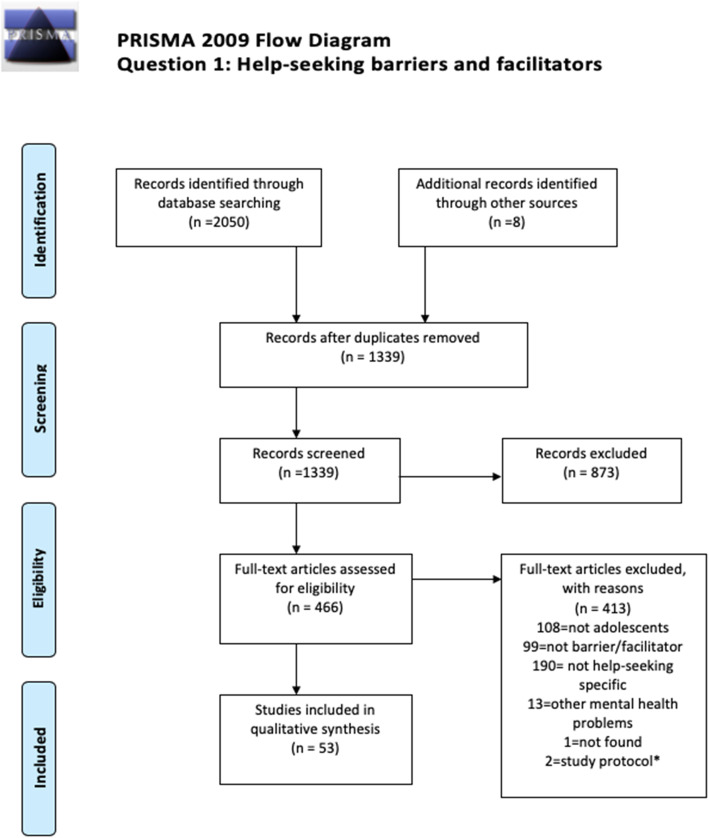
- Ninety studies were included: 54 on barriers/facilitators (56,821 participants) and 36 on interventions (28,608 participants). Stigma was the most cited barrier; more than half of included studies (n = 30) referenced stigma or other negative attitudes, and 25 named stigma as the primary obstacle. Negative beliefs about mental health services and professionals were the second most prominent barrier.
- Mental health literacy and prior mental health care were the most cited facilitators (n = 10); trusted relationships with gatekeepers such as parents, teachers, and counsellors also facilitated help-seeking.
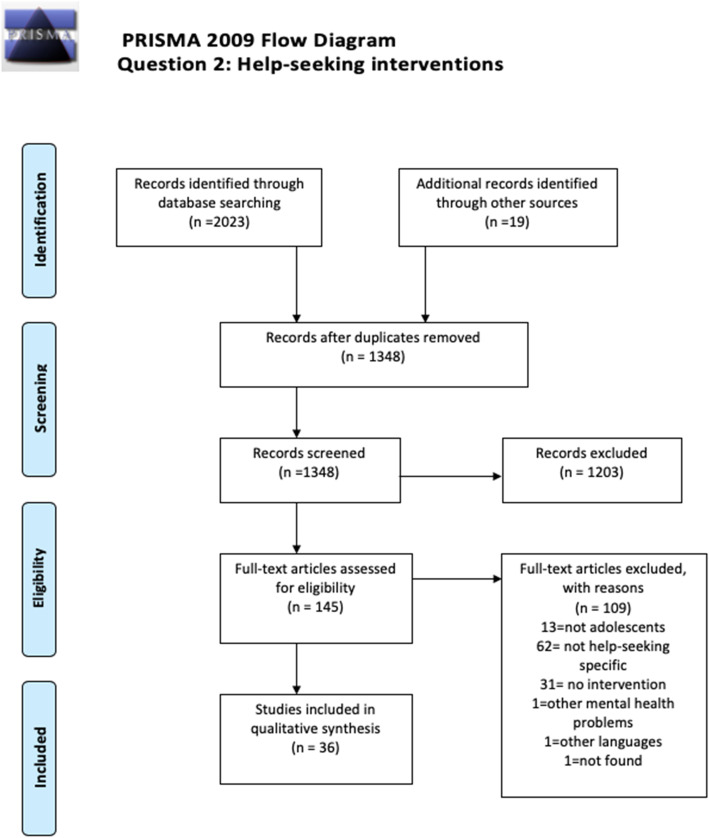
- Most interventions (n = 23) used psychoeducation/classroom-based approaches; others used outreach, multimedia/online tools, or peer training. Some depression psychoeducation interventions increased help-seeking (e.g., Robinson et al. adjusted OR = 3.48, 95% CI 1.93–6.29, p < 0.0001; King et al. t = 4.634, p < .001 maintained at 3 months; Strunk et al. p < 0.0005 but not sustained at follow-up, p = 0.014), and all outreach studies found significant effects on help-seeking intentions.
- Overall study quality was low to medium with moderate to high risk of bias; there was no general agreement on help-seeking definitions or measurements, and most studies measured help-seeking intentions rather than actual behaviours.
Methods
- Systematic review prospectively registered on PROSPERO and reported per PRISMA. Five databases/search sources were searched (abstract); methods specify MEDLINE, Embase, PsycINFO, Web of Science, Google Scholar, plus Open Grey. Searches were run in June 2018 and updated April 2019; studies in English, Spanish, or French were included.
- Inclusion criteria covered adolescents aged 10–19 and common mental health problems (depression, anxiety, suicidal ideation, emotional distress, general symptoms). Two-stage screening was used; 90 studies met criteria. Findings were summarised using narrative synthesis because of heterogeneity; no meta-analysis was conducted.
- Quality was assessed with Joanna Briggs Institute Critical Appraisal Checklists and the Mixed Methods Appraisal Tool. Intervention studies included quasi-experimental designs (n = 21) and randomised controlled trials (n = 15); all were conducted in educational settings (high school n = 35, college n = 1).
Limitations
- Paper-stated: only one author performed data extraction and critical appraisal, risking subjectivity; the 10–19 age definition may be a limitation and led to exclusion of 104 papers; psychiatric conditions such as anorexia, schizophrenia, and substance misuse were excluded; and over-inclusion of low-quality studies may affect interpretation.
- Paper-stated/evident: most studies used non-clinical samples and hypothetical help-seeking scenarios, so conclusions were often based on intentions rather than actual behaviours; few studies focused on facilitators.
- Evident from the text: all interventions were conducted in educational settings, limiting reach to adolescents outside school; few studies had follow-up, and those that did had high attrition and short follow-up periods (up to 6 months); most used self-report measures, and many did not use validated help-seeking instruments.
Model-written summary. Check it against the paper before relying on it.
Integrity signals
Registry
Cites
Statistics
Figures
Verification
Claims the paper makes
23 Valid · 5 Not valid · 40 Not checked · 121 Own results and interpretations
Some cited sources support this claim and some don’t — read each source’s verdict below.
In the paper
“This is in line with previous studies suggesting that teens who are most in need are less likely to seek help [1, 11, 15].”
§ What are the barriers, facilitators and interventions targeting help-seeking behaviours for common mental health problems in adolescents? A systematic review > Discussion > Question 1: barriers and facilitators
What the sources say
- Disputedcites [1] Gulliver A Griffiths K Christensen H Perceived barriers and facilitators to mental health help-seeking in young people: a systematic review BMC Psychiatry 2010 12 81 PMC3022639 21192795 sourceExperimental — accuracy not yet measured
The Discussion (page unavailable) makes the contrary point: it expects people with symptoms and a perceived need for help to be more likely to seek help. The review does not report that teens with the greatest need are less likely to do so. (LLM, conf=0.82)
Checked by a reasoning model — may be wrong.
- Partly supportedcites [11] Divin N Harper P Curran E Corry D Leavey G Help-seeking measures and their use in adolescents: a systematic review Adolesc Res Rev 2018 3 1 113 122 10.1007/s40894-017-0078-8 sourceExperimental — accuracy not yet measured
The Introduction reports that only one-third of adolescents meeting diagnostic criteria seek professional help and that adolescents with serious, debilitating difficulties may still avoid or delay seeking help. It does not establish that teens with the greatest need are less likely to seek help than other teens. (LLM, conf=0.84)
- Not checked — no full text of the sourcecites [15] Rickwood D Deane F Wilson C Ciarrochi J Young people’s help-seeking for mental health problems Aust J Adv Ment Health 2005 4 3 218 251 source
hedgedstates an association- Asserted: passes — The authors put it forward as true.
- Checkable: passes — It can be checked against evidence.
- Load-bearing: unclear — It is unclear whether the paper’s conclusions depend on it.
- Based: passes — The paper gives a reason why it holds.
- Disputed
The cited sources support only part of this claim — read each source’s verdict below.
In the paper
“Teens who are most in need of mental health attention are reluctant to seek help.”
- Also stated in: § Background · plain
“However, adolescents most in need of psychological help are those least likely to look for it [1–13].”
§ What are the barriers, facilitators and interventions targeting help-seeking behaviours for common mental health problems in adolescents? A systematic review > Abstract > Background
What the sources say
- Partly supportedcites [1] Gulliver A Griffiths K Christensen H Perceived barriers and facilitators to mental health help-seeking in young people: a systematic review BMC Psychiatry 2010 12 81 PMC3022639 21192795 sourceExperimental — accuracy not yet measured
The Background’s help-seeking theory section discusses why young people do not seek help, supporting the general point that teens may be reluctant. It does not establish that adolescents with the greatest need are the least likely to seek help; the Discussion instead says help-seeking would be expected to be more likely among symptomatic people. No page numbers are provided in our copy. (LLM, conf=0.82)
- Not matchedcites [2] WHO: Adolescence Mental Health. Mapping actions of nongovernmental associations and other international development organisations. [Online]. Geneva: World Health Organisation; 2012. Available from: http://apps.who.int/iris/bitstream/handle/10665/44875/9789241503648_eng.pdf;jsessionid=B09D1D46A7AA36AA5757E9E191B3F023?sequence=1. Accessed 11 Sept 2019.
We searched by its title and found no matching paper.
- Not matchedcites [3] WHO. Mental health: strengthening our response. Geneva: World Health Organisation. Available from: https://www.who.int/news-room/fact-sheets/detail/mental-health-strengthening-our-response.
Its entry has no title and year that we can search by.
- Not matchedcites [4] WHO Adolescents: health risks and solutions 2018 Geneva World Health Organisation
We searched by its title and found no matching paper.
- Not matchedcites [5] Murphy, M. & Fonagy, P. Our children deserve better, prevention pays: annual report of the Chief Medical Officer. London: Department of Health. 2013. Chapter 10: Mental health problems in children and young people.
We searched by its title and found no matching paper.
- Partly supportedcites [6] Michaud P Fombonne E The ABC of adolescence: common mental health problems BMJ. 2005 330 7495 835 838 10.1136/bmj.330.7495.835 15817553 PMC556080 sourceExperimental — accuracy not yet measured
The paragraph on identifying and treating mental health problems says young people are often very reluctant to seek help. It does not say that adolescents most in need of attention are particularly unlikely to seek it; the comparative qualifier is unsupported. (LLM, conf=0.83)
- Could not verifycites [7] Oksanen A Laimi K Bjorklund K Löyttyniemi E Kunttu K A 12-year trend of psychological distress: national study of Finnish University students Cent Eur J Public Health 2017 25 2 113 119 10.21101/cejph.a4438 28662321 sourceExperimental — accuracy not yet measured
The Discussion (page unavailable) reports trends in psychological symptoms among Finnish university students, but does not compare need for care with willingness to seek help. Searches for help-seeking, reluctance, and those most in need found no passage addressing that relationship in teens. (LLM, conf=0.76)
- Could not verifycites [8] Kowadenko N Culjak G Workforce planning for children and young people’s mental health care Lancet Public Health 2018 3 266 267 29884430 sourceExperimental — accuracy not yet measured
The 'Workforce planning for children and young people's mental health care' section discusses increased need in late adolescence, scarce services, and unmet need, but does not say that teens with the greatest need are reluctant to seek help. Searches for help-seeking reluctance and barriers among youth with the greatest mental health needs found no passage addressing that comparison; page numbers were not provided. (LLM, conf=0.75)
- Not matchedcites [9] Children Comissioners Lighting review: access to child and adolescent mental health services 2016 United Kingdom Children Comissioners
We searched by its title and found no matching paper.
- Not checked — no full text of the sourcecites [10] Rowe S French R Henderson C Ougrin D Slade M Moran P Help-seeking behaviour and adolescent self-harm: a systematic review Aust N Z J Psychiatry 2014 48 12 1083 1095 25335872 source
plainstates an association- Asserted: passes — The authors put it forward as true.
- Checkable: passes — It can be checked against evidence.
- Load-bearing: passes — The paper’s conclusions depend on it.
- Based: passes — The paper gives a reason why it holds.
- Also stated in: § Background · plain
The cited sources support only part of this claim — read each source’s verdict below.
In the paper
“Seven studies did not find significant differences between genders [28, 39, 40, 42, 46, 51, 69].”
§ What are the barriers, facilitators and interventions targeting help-seeking behaviours for common mental health problems in adolescents? A systematic review > Results > Secondary outcomes
What the sources say
- Not checked — no full text of the sourcecites [28] Wilson CJ Deane F Help-negation and suicidal ideation: the role of depression, anxiety and hopelessness J Youth Adolesc 2010 39 3 291 305 10.1007/s10964-009-9487-8 19957103 source
- Partly supportedcites [39] Pisani AR Schmeelk-Cone K Gunzler D Petrova M Goldston DB Tu X Wyman PA Associations between suicidal high school Students’ help-seeking and their attitudes and perceptions of social environment J Youth Adolesc 2012 41 10 1312 1324 10.1007/s10964-012-9766-7 22562217 PMC3534737 sourceExperimental — accuracy not yet measured
In Results > Characteristics of Help-Seeking Students with SI (page unavailable), the paper reports minimal evidence that sex moderated the links between attitudes, social resources, and help-seeking. It also reports a significant exception: coping resources were more strongly associated with help-seeking for boys than girls. Results > Help-Seeking Behavior Among Suicidal Students further reports a significant sex difference in disclosure to friends, so the unqualified claim of no gender differences overstates this study. (LLM, conf=0.87)
- Not checked — no full text of the sourcecites [40] Wilson CJ Deane FP Brief report: need for autonomy and other perceived barriers relating to adolescents' intentions to seek professional mental health care J Adolesc 2012 35 1 233 237 20650512 source
- Not checked — no full text of the sourcecites [42] Thomas SJ Caputi P Wilson CJ Specific attitudes which predict psychology Students' intentions to seek help for psychological distress J Clin Psychol 2013 70 3 273 282 23818259 source
- Not checked — no full text of the sourcecites [46] Watsford C Rickwood D Young people’s expectations, preferences, and experiences of therapy: effects on clinical outcome, service use, and help-seeking intentions Clin Psychol 2014 18 1 43 51 10.1111/cp.12034 source
- Not checked — no full text of the sourcecites [51] Zhao WF Young RE Breslow L Michel NM Flett GL Goldberg JO Attachment style, relationship factors, and mental health stigma among adolescents Can J Behav Sci 2015 47 4 263 271 10.1037/cbs0000018 source
- Partly supportedcites [69] McLean A Hunt K Sweeting H Symptoms of mental health problems: children’s and adolescents’ understandings and implications for gender differences in help seeking Child Soc 2013 13 161 173 PMC4540163 26300586 sourceExperimental — accuracy not yet measured
The Discussion (page unavailable) says boys’ and girls’ understandings were largely consistent and that differences in their accounts of help seeking were subtle. It also describes a stronger concern among boys about their identity being questioned. Because this was a qualitative focus-group study, it does not establish that gender differences were statistically nonsignificant. (LLM, conf=0.84)
plain- Asserted: passes — The authors put it forward as true.
- Checkable: passes — It can be checked against evidence.
- Load-bearing: unclear — It is unclear whether the paper’s conclusions depend on it.
- Based: passes — The paper gives a reason why it holds.
The cited sources support only part of this claim — read each source’s verdict below.
In the paper
“Two studies [101, 104] found a significant reduction in self-stigma surrounding seeking help after the intervention (p < 0.05)”
§ What are the barriers, facilitators and interventions targeting help-seeking behaviours for common mental health problems in adolescents? A systematic review > Results > Effectiveness
What the sources say
- Partly supportedcites [101] Saporito, J. M. Reducing stigma toward seeking mental health treatment. Dissertation Abstracts International: Section B: The Sciences and Engineering; 2009;70(6-B):3794. sourceExperimental — accuracy not yet measured
The ‘Group Differences in Mental Health Stigma’ section reports significantly more positive attitudes toward seeking treatment in the intervention group (ATSPPH, p=.001). But ‘Measures of Stigma’ defines that scale as measuring general attitudes toward professional help, not self-stigma; the cited study therefore supports a significant change in help-seeking attitudes, not specifically a reduction in self-stigma. (LLM, conf=0.86)
- Not checked — no full text of the sourcecites [104] Young R, Hartman LI, Michel NM, Winter A, Flett GL, Goldberg JO. Reducing self-stigma toward help-seeking in high school youth: effects of classroom psycho-education about schizophrenia and mental illness. Schizophr Bull. 2013. source
plainstates a cause- Asserted: passes — The authors put it forward as true.
- Checkable: passes — It can be checked against evidence.
- Load-bearing: unclear — It is unclear whether the paper’s conclusions depend on it.
- Based: passes — The paper gives a reason why it holds.
- Partly supported
The cited sources that could be checked couldn’t confirm or dispute this claim.
In the paper
“Previous systematic reviews on interventions targeting help-seeking reveal some promising results in regard to enhancing mental health literacy [16]”
§ What are the barriers, facilitators and interventions targeting help-seeking behaviours for common mental health problems in adolescents? A systematic review > Background
What the sources say
- Could not verifycites [16] Gulliver A Griffiths KM Christensen H Brewer JL A systematic review of help-seeking interventions for depression, anxiety and general psychological distress BMC Psychiatry 2012 12 12 81 22799879 PMC3464688 sourceExperimental — accuracy not yet measured
The Background section (Bibliotherapy for depression; page not provided) describes encouraging results from reviews of self-help treatments for depression. It does not report that reviews of help-seeking interventions found improvements in mental health literacy. Searches for mental health literacy and help-seeking interventions found no passage addressing that claim. (LLM, conf=0.76)
hedgedstates a possible cause- Asserted: passes — The authors put it forward as true.
- Checkable: passes — It can be checked against evidence.
- Load-bearing: passes — The paper’s conclusions depend on it.
- Based: passes — The paper gives a reason why it holds.
- Could not verify
100 more claims · 11 with their cited sources checked
Create a free account to see all 189 claims and to verify the 11 references still open.
- Probably not a substantial claim. 44
- It may state two separate claims as one. 49
Claims other papers make about this one
Each is checked against this paper’s own text: does it say what the citing paper says it does?
The cited source says what the claim attributes to it.
In the citing paper
“Barriers to help-seeking in adolescence include a lack of confidence in mental health professionals, a preference for self-reliance, difficulties with physical and financial access to care, and feelings of embarrassment and stigma [34–37].”
From Efficacy of a transdiagnostic Internet prevention approach in adolescents (EMPATIA study): study protocol of a randomized controlled trial (2024) · cites this paper as [34]
The cited source says what the claim attributes to it.
In the citing paper
“Across contexts, research indicated that barriers to seeking help for mental health include not recognizing the need for support, doubting that others can help, and fearing stigma [6, 113, 139].”
From Understanding Teen Overreliance on AI Companion Chatbots Through Self-Reported Reddit Narratives (2026) · cites this paper as [6]
In the citing paper
“Aguirre Velasco and colleagues 230 summarised largely school-based interventions for adolescents, and found some improvements in help-seeking intentions, stigma related to help-seeking, or both, although study quality was low.”
From The Lancet Commission on ending stigma and discrimination in mental health (2022) · cites this paper as [230]
Statistics recomputed
Every reported test result, recomputed from its test statistic and degrees of freedom. A result shows as not adding up only once an independent check has confirmed it.
- ConsistentF(1, 146) = 6.64reported p = .01 · recomputed p = .011
“F(1, 146) =6.64, p = .01”
- ConsistentF(4, 417) = 6.428reported p < .001 · recomputed p < .001
“F (4,417) = 6.428, p < .001”
Self-check
Percentages, sums and reported differences re-computed from the paper’s own numbers.
Each contradiction between two passages listed here was confirmed by an independent check.
Rated minor: it would not touch a result — a value no result rests on, a p-value that stays on the same side of the significance level, or a conflict that is clerical, resolved elsewhere in the paper, or outside its own findings.
In the paper
§ What are the barriers, facilitators and interventions targeting help-seeking behaviours for common mental health problems in adolescents? A systematic review > Results > Question 2: help-seeking interventions
“The age of participants ranged from 11 to 19 years old, although one study that included participants under 29 years old was incorporated as more than half of the sample were adolescents.”
§ What are the barriers, facilitators and interventions targeting help-seeking behaviours for common mental health problems in adolescents? A systematic review > Results > Question 2: help-seeking interventions
“Schimidt, 2015, United States | 5949 | High school students (aged 10–18)”
Rated minor: it would not touch a result — a value no result rests on, a p-value that stays on the same side of the significance level, or a conflict that is clerical, resolved elsewhere in the paper, or outside its own findings.
In the paper
“The majority of the studies were cross sectional (n = 36) [26–61], thirteen studies were qualitative [62–74] and six used a mixed-method design [75–80].”
§ What are the barriers, facilitators and interventions targeting help-seeking behaviours for common mental health problems in adolescents? A systematic review > Results > Question 1: help-seeking barriers and facilitators
Reported 54 · recomputed 55
Rated minor: it would not touch a result — a value no result rests on, a p-value that stays on the same side of the significance level, or a conflict that is clerical, resolved elsewhere in the paper, or outside its own findings.
In the paper
§ What are the barriers, facilitators and interventions targeting help-seeking behaviours for common mental health problems in adolescents? A systematic review > Results > Help-seeking facilitators
“Of the 56 included studies, 19 also referred to facilitators of help-seeking behaviours.”
§ What are the barriers, facilitators and interventions targeting help-seeking behaviours for common mental health problems in adolescents? A systematic review > Results > Question 1: help-seeking barriers and facilitators
“Fifty-four studies that reported barriers and/or facilitators including a total of 56,821 participants were considered in the narrative synthesis (Table 2).”
Citations
Cites
Sawyer, S. M., Azzopardi, P. S., Wickremarathne, D., & Patton, G. C. (2018) · The Lancet Child & Adolescent Health · doi:10.1016/s2352-4642(18)30022-1 · Cited by 3,666
Gulliver, A., Griffiths, K. M., & Christensen, H. (2010) · BMC Psychiatry · doi:10.1186/1471-244x-10-113 · Cited by 3,292 · cited 6×
“This is in line with previous studies suggesting that teens who are most in need are less likely to seek help [1, 11, 15].”
InfluentialBramer, W. M., Rethlefsen, M. L., Kleijnen, J., & Franco, O. H. (2017) · Systematic Reviews · doi:10.1186/s13643-017-0644-y · Cited by 2,114 · cited 1×
“Four databases were selected including MEDLINE®, Embase, PsycINFO, and Web of Science, as well as the search engine Google scholar, identified as an optimal database combination [20].”
Young People’s Help-Seeking for Mental Health Problems
Rickwood, D., Deane, F. P., Wilson, C. J., & Ciarrochi, J. (2005) · Australian e-Journal for the Advancement of Mental Health · doi:10.5172/jamh.4.3.218 · Cited by 1,619 · cited 3×
“Conversely, emotional competence, previous positive experiences with health professionals and mental health literacy, were the main facilitators [15].”
Munn, Z., Moola, S., Riitano, D., & Lisy, K. (2014) · International Journal of Health Policy and Management · doi:10.15171/ijhpm.2014.71 · Cited by 1,479 · cited 1×
“For the quality assessment, we used the Joanna Briggs Institute Critical Appraisal Checklist [21] and the Mixed Methods Appraisal Tool (MMAT) [22], which were appropriate due to the variety of study designs included in this review; both have been previously validated [23, 24].”
Journal of Autism and Developmental Disorders
(2013) · Journal of Autism and Developmental Disorders · doi:10.1007/10803.1573-3432 · Cited by 1,361
When and how do young people seek professional help for mental health problems?
Rickwood, D. J., Deane, F. P., & Wilson, C. J. (2007) · Medical Journal of Australia · doi:10.5694/j.1326-5377.2007.tb01334.x · Cited by 1,195
Mokdad, A. H., Forouzanfar, M. H., Daoud, F., Mokdad, A. A., El Bcheraoui, C., Moradi-Lakeh, M., Kyu, H. H., Barber, R. M., Wagner, J., Cercy, K., et al. (2016) · The Lancet · doi:10.1016/s0140-6736(16)00648-6 · Cited by 984
Mental Health Literacy: Past, Present, and Future
Kutcher, S., Wei, Y., & Coniglio, C. (2016) · The Canadian Journal of Psychiatry · doi:10.1177/0706743715616609 · Cited by 918 · cited 1×
“Mental health literacy Mental health literacy refers to the ability to use mental health information to recognise, manage and prevent mental health disorders and make informed decisions about help-seeking and professional support [82].”
Kazdin, A. E., & Nock, M. K. (2003) · Journal of Child Psychology and Psychiatry · doi:10.1111/1469-7610.00195 · Cited by 774 · cited 1×
“The relevance of studying underlying mechanisms and practical requirements related to the functionality of interventions has been previously discussed [123], and most of the interventions included in this review did not refer to these processes.”
Research works printed but not linked: 9
- WHO Adolescents: health risks and solutions 2018 Geneva World Health Organisation
- Murphy, M. & Fonagy, P. Our children deserve better, prevention pays: annual report of the Chief Medical Officer. London: Department of Health. 2013. Chapter 10: Mental health problems in children and young people.
- Children Comissioners Lighting review: access to child and adolescent mental health services 2016 United Kingdom Children Comissioners
- The PRISMA Group. PRISMA statement. Oxford: University of Oxford; 2009. Available from: http://prisma-statement.org/prismastatement/FlowDiagram.aspx. Accessed 30 May 2018.
- Hong Q Pluye P Fabruegues S Bartlett G Boardman F Cargo M Dagenais P Gagnon MP Griffiths F Nicolau B O’Cathain A Rousseau MC Vedel I Mixed methods appraisal tool (MMAT) 2018 Montreal McGill University Department of Family Medicine
- Cramer, K. Mental health help seeking in schools: the impact of mental health literacy, stigma, and barriers to care. Dissertation abstracts international section A: humanities and social sciences; 2017;78(3-A(E)), No Pagination Specified.
- Samuel, I. A. Disparities in mental health service use among African American adolescent males released from juvenile detention facilities. Dissertation abstracts international section A: humanities and social sciences; 2014; 75(5-A(E)), No Pagination Specified.
- Sawyer MG Borojevic N Ettridge KA Spence SH Sheffield J Lynch J Do help-seeking intentions during early adolescence vary for adolescents experiencing different levels of depressive symptoms? J Adolesc Health 2012 50 3 236 242 22325128 · DOI · Paper page
- UNESCO Fact sheet N. 48. One in five children, adolescents and youth is out of school 2018 Montreal and Paris United Nation Educational, Scientific and Cultural Organization
Cited by
Items 401–500 of 717
Núñez, D., Martínez, P., Borghero, F., Campos, S., & Martínez, V. (2021) · BMJ Open · doi:10.1136/bmjopen-2020-045726 · Cited by 4
McGuffog, R., Fitzgeraldson, E., Lyford, B., Triandafilidis, Z., Fitzpatrick, S., & Hazel, G. (2021) · Australasian Journal of Early Childhood · doi:10.1177/18369391211063663 · Cited by 4
Allan, J., & Thompson, A. E. (2023) · International Journal of Environmental Research and Public Health · doi:10.3390/ijerph20031774 · Cited by 4
Shinde, F., Wagani, R., & Sasidhar, K. (2023) · Perspectives on Global Development and Technology · doi:10.1163/15691497-12341631 · Cited by 2
The effects of stigma and discrimination on help‐seeking behaviour and the role of police contact
Randone, J., & Thomas, S. D. M. (2023) · Australian Journal of Social Issues · doi:10.1002/ajs4.285 · Cited by 3
Mixed-methods Examination of Adolescent-reported Barriers to Accessing Mental Health ServicesPreprint
Ringle, V. A. M., Sung, J. Y., Roulston, C. A., et al. (2023) · doi:10.31234/osf.io/a9mcr · Cited by 2
Conceptualization and validation of the Adolescent Barriers to Accessing Psychotherapy QuestionnairePreprint
Pfeiffer, S. (2023) · doi:10.31234/osf.io/e7kdy · Cited by 2
Ramluggun, P., Riyami, N. A., & Alshemeili, A. (2023) · Qeios · doi:10.32388/u30gj7.5 · Cited by 1
Baldofski, S., Scheider, J., Kohls, E., Klemm, S.-L., Koenig, J., Bauer, S., Moessner, M., Kaess, M., Eschenbeck, H., Lehner, L., et al. (2024) · Research Square · doi:10.21203/rs.3.rs-4003280/v1 · Cited by 2
Soltani, E., Bazrafshanb, A., Bahreini, F., & Zaremohazabiyeh, S. (2024) · Research Square · doi:10.21203/rs.3.rs-4583884/v1 · Cited by 3
Stetsenko, A., Kilby, K. A., Dana, Z., & Nagra, H. (2025) · doi:10.2196/preprints.74439 · Cited by 2
Li, M., Patel, J., Ibrahim, S., & Katapally, T. R. (2025) · doi:10.1101/2025.08.20.25334071 · Cited by 2
Hu, G., & Chen, X. (2022) · Humanities and Social Science Research · doi:10.30560/hssr.v5n3p1 · Cited by 1
Novel Application of Dot Survey Methodology at a Youth Health Clinic: A Pilot Study
DiGiovanni, L., Lim, A. C., Kosyluk, K. A., Loecher, N., Lewald, D. L., Rodriguez, C. A., & Sanders, L. J. (2022) · Journal of Adolescent Health · doi:10.1016/j.jadohealth.2022.10.029 · Cited by 1
Hausam, J., Querengässer, J., Sauter, J., Vogel, J., & Dahle, K.-P. (2023) · Diagnostica · doi:10.1026/0012-1924/a000316 · Cited by 4
Gender specificity of psychological help-seeking among Russian adolescents
Plutov, L. E. (2023) · Социодинамика · doi:10.25136/2409-7144.2023.10.68771 · Cited by 1
Onay, Z., Sidis, A., Robinson, L., & Deane, F. P. (2024) · Early Intervention in Psychiatry · doi:10.1111/eip.13507 · Cited by 2
Lavigne, R., Martin‐Storey, A., Lemelin, J., Temcheff, C. E., & Déry, M. (2024) · Journal of Child and Family Studies · doi:10.1007/s10826-024-02900-4 · Cited by 1
“…health service use brings new perspectives on how to help youth and focuses on samples of youth with a wide variety of emotional or mental health problems (Aguirre Velasco et al., 2020; Barrow & Thomas, 2022; Chan & Quinn, 2012; DeFossett et al., 2017; Gulliver et al., 2010; Radez et al., 2021).”
Sohrabi, F., Akbari, M., & Karimi, Q. (2024) · Journal of Health and Hygiene · doi:10.61186/j.health.15.1.93 · Cited by 1
Nahas, A. R. F., Omar, N., Osman, A. M. Y., & Taufek, N. H. M. (2024) · Journal of Pharmacy And Bioallied Sciences · doi:10.4103/jpbs.jpbs_802_24 · Cited by 1
Translation, Validity, and Reliability of Depression Literacy Questionnaire in Iranian Young Adults
Raiisi, F., Ebrahimi, M., Ghahvehchi-Hosseini, F., Jafari, K., & Rahmati-Najarkolaei, F. (2024) · International Journal of Preventive Medicine · doi:10.4103/ijpvm.ijpvm_311_23 · Cited by 1
Why Teens Don’t Talk: Understanding the Role of Stigma Within Barriers to Help Seeking
Modi, K., Mullen, M. G., Tolode, K., Erickson‐Schroth, L., Hurley, K., & MacPhee, J. (2025) · FOCUS The Journal of Lifelong Learning in Psychiatry · doi:10.1176/appi.focus.20240029 · Cited by 1
Perceived Anxiety Disorder Stigma: A Predictive Analysis
Nabors, S., Cicchetti, R. J., Szirony, G. M., Blum, C. R., & Banerjee, S. K. (2024) · Journal of Social Behavioral and Health Sciences · doi:10.5590/jsbhs.2024.18.1.20 · Cited by 1
“Several reasons have been proposed to explain why adolescents and adults in the general population do not seek professional help for common mental disorders (Gulliver et al., 2010; Aguirre Velasco et al., 2020).”
BackgroundBrowne, J. W., Paradis, K. F., Kirby, K., & Arnold, R. (2025) · The Sport Psychologist · doi:10.1123/tsp.2024-0007 · Cited by 2
How does stigma impact acts of compassion among people with borderline personality disorder
Street-Mattox, C., Broome, M. R., Ng, F., Griffiths, L., & Jordan, G. (2025) · Irish Journal of Psychological Medicine · doi:10.1017/ipm.2024.72 · Cited by 2
Activation differentiates illness trajectories among youth seeking mental health care
Tonini, E., Crouse, J. J., Shin, M., Scott, J. L., Carpenter, J. S., Nichles, A., Zmicerevska, N., Iorfino, F., Capon, W., Wood, S. J., et al. (2025) · Journal of Affective Disorders · doi:10.1016/j.jad.2025.03.084 · Cited by 1
Zhou, T., Zhang, Q., Zhao, N., Xie, W., & Wang, H. (2025) · Journal of Evidence-Based Medicine · doi:10.1111/jebm.70010 · Cited by 1
He, S., Zhang, Y., Zhang, J., Shang, C., Zhang, H., & Yan, F. (2025) · Journal of Psychosocial Nursing and Mental Health Services · doi:10.3928/02793695-20250320-02 · Cited by 1
Zare, E., Karimi, M., Kaveh, M. H., Ghahremani, L., Sharma, M., & Kanekar, A. S. (2025) · International Journal of Adolescence and Youth · doi:10.1080/02673843.2025.2487443 · Cited by 2
“…2023; Edwards & Crisp, 2017; Knickman et al., 2016; Vidourek et al., 2014), including negative attitudes towards professional psychological help (Aguirre Velasco et al., 2020; Jagdeo et al., 2009). fear of stigma and labelling (Clement et al., 2015; Schnyder et al., 2017), concerns about…”
Bozkurt, G., & Alemdar, D. K. (2025) · Children and Youth Services Review · doi:10.1016/j.childyouth.2025.108344 · Cited by 3
Crombach, C. M. W., Janssen, S., Daemen, M., Klaassen, R. M. C., van Amelsvoort, T., & Leijdesdorff, S. M. J. (2025) · Child Psychiatry & Human Development · doi:10.1007/s10578-025-01861-z · Cited by 3
Patte, K. A., Riazi, N. A., Goddard, J. A., & Michaelson, V. E. (2025) · Cogent Mental Health · doi:10.1080/28324765.2025.2515429 · Cited by 3
“…with the results of systematic reviews which identified stigma, negative family beliefs regarding mental health services and professionals, and fears of confidentiality breaches to be among the most common barriers of help-seeking in adolescents (Aguirre Velasco et al., 2020; Radez et al., 2021).”
InfluentialHSN—helping in mental distress: a new emotion focused psychological first aid program
Scheele, M., Appel, S., Rausch, I., Schecklmann, M., Klein, J., Staudinger, S., Schmidt, R., Kreuzer, P. M., & Langguth, B. (2025) · Frontiers in Public Health · doi:10.3389/fpubh.2025.1589608 · Cited by 5
Hoffmann, S. H., Kusier, A. O., Mairey, I. P., Folker, A. P., & Thygesen, L. C. (2025) · JMIR Research Protocols · doi:10.2196/73736 · Cited by 1
“Barriers to seeking help include concerns about stigma, confidentiality, difficulties navigating mental health services, and a preference for informal help [5-7].”
Zecchinato, F., Kreppner, J., Bullard, P., Kumar, M., Painter, S., & Lawrence, P. J. (2025) · Mental Health & Prevention · doi:10.1016/j.mhp.2025.200439 · Cited by 1
Velez, C. V., Campez, M., Canovas, J. M., Pedronzo, P. M., Ahn, Y. A., Dale, C. F., Dale, S. K., Gwynn, L. A., Jensen‐Doss, A., Pulgarón, E. R., et al. (2025) · JMIR Research Protocols · doi:10.2196/74080 · Cited by 1
“Barriers to use of EBTs may be practical (eg, financial barriers and transportation) [14,15] and attitudinal (eg, stigma) [16] in nature.”
Cavanagh, D., Hart, L., Basden, S. L., & Reavley, N. J. (2025) · Social Psychiatry and Psychiatric Epidemiology · doi:10.1007/s00127-025-02971-8 · Cited by 1
Khoziasheva, A. (2025) · Social Sciences & Humanities Open · doi:10.1016/j.ssaho.2025.101921 · Cited by 2
Wilde, N., Foster, J., Jones, V., Kossivas, A.-H., Çakmak, J., Knight, O. C., Grzywacz, M., Foxcroft, D., & Davies, E. (2025) · Health Expectations · doi:10.1111/hex.70400 · Cited by 3
Ghelbash, Z., Alavi, M., Noroozi, M., et al. (2025) · Culture Medicine and Psychiatry · doi:10.1007/s11013-025-09942-3 · Cited by 1
“Aguirre Velasco, in his study, noted that encouraging requests for help ought to be feasible along with increasing access to mental health support for all teenagers in need (Aguirre Velasco et al., 2020).”
Crying in the algorithm: modeling academic stress via multilayer topic construction and ERA effect
Ding, L., Zhang, H., & Zhou, J. (2025) · Frontiers in Psychology · doi:10.3389/fpsyg.2025.1673559 · Cited by 7
Taherpour, M., Sadatmahalleh, S. J., & Alimoradi, Z. (2025) · BMC Health Services Research · doi:10.1186/s12913-025-13528-5 · Cited by 1
“Reports of physicians’ neglect of sexual issues align with Velasco et al.’s work on social stigma in mental health help-seeking, where dismissal by providers impedes care-seeking [18].”
Eastham, R., McDermott, E., McNulty, F., Hughes, E. A., Johnson, K., Davis, S., Pryjmachuk, S., Mateus, C., & Jenzen, O. (2025) · Feminism & Psychology · doi:10.1177/09593535251372600 · Cited by 2
Davies, E., Wilde, N., Lennon, O., Beck, A., Messenger, H., Sergiou, K., Hennelly, S. E., & Ehrlich, C. (2025) · Psychological Studies · doi:10.1007/s12646-025-00865-y · Cited by 3
“In a study by Eisenberg et al (2007), 84% of students currently experiencing anxiety and/or depression had not sought help, possibly because mental health problems are stigmatised (Aguirre Velasco et al., 2020; Gulliver et al., 2010).”
Yao, X., Tang, J., & Yu, G. (2025) · Acta Psychologica · doi:10.1016/j.actpsy.2025.106051 · Cited by 1
Wright, B., Padilla-Frausto, D. I., Hindmarch, G., & Eisenberg, D. (2025) · Journal of Adolescent Health · doi:10.1016/j.jadohealth.2025.10.014 · Cited by 2
Orakci, H., & Ardiç, A. (2025) · Journal of Pediatric Nursing · doi:10.1016/j.pedn.2025.12.006 · Cited by 1
Farley, J. M., Gleason, E., Walther, J., & Saunders, D. (2025) · School Mental Health · doi:10.1007/s12310-025-09831-5 · Cited by 2
Why do people resist consulting a psychologist? A theory-based analysis of motives
Mullet-Muñoz, C., Crespo, M. M., & Encinas, F. J. L. (2025) · European Review of Applied Psychology · doi:10.1016/j.erap.2025.101083 · Cited by 1
Transdiagnostic stage-based monitoring of public mental health
Buchweitz, C., Viduani, A. C., Herrman, H., Kohrt, B. A., McGorry, P. D., Salum, G. A., Sartor, C., Saxena, S., & Kieling, C. (2026) · Nature Reviews Psychology · doi:10.1038/s44159-025-00527-w · Cited by 5
“Accounting for the fact that people with mental distress might not seek or have access to the health-care system 73 , active tracking of sentinel events that might be accompanied by signs of distress of nonspecific symptoms can be a useful intervention at this stage if referral is included in the…”
Saelens, L., Bracke, P., Ceuterick, M., & D’hondt, F. (2026) · Journal of Youth and Adolescence · doi:10.1007/s10964-026-02322-z · Cited by 1
“Higher levels of engagement with the community, con - nectedness and positive social relations with relevant adults have all been linked to increased help-seeking among adolescents (Aguirre Velasco et al., 2020 ; Barrow & Thomas, 2022 ).”
InfluentialRaviv, T., Snider, M. D. H., Elahi, S., Smith, M. L., Ilyumzhinova, R., Calderon, K., DeClemente, T., Ramirez‐Mercado, K., Sontag, A., & Cicchetti, C. (2026) · Administration and Policy in Mental Health and Mental Health Services Research · doi:10.1007/s10488-025-01486-3 · Cited by 1
Hussin, N. M., Jaafar, N. R. N., Idris, I. B., & Nawi, A. M. (2026) · PLoS ONE · doi:10.1371/journal.pone.0342002 · Cited by 1
Stern, C., Valenzuela, C., Whitehorn, A., Pollock, D., Minooee, S., Gohil, D. A., Zhu, Z., Kirkpatrick, P., Loureiro, R. L., Davies, E., et al. (2026) · JBI Evidence Synthesis · doi:10.11124/jbies-25-00265 · Cited by 6
Psychiatric comorbidities in patients with drug-resistant epilepsy
Alkhotani, A., & Abualela, H. (2026) · The Egyptian Journal of Neurology Psychiatry and Neurosurgery · doi:10.1186/s41983-026-01086-4 · Cited by 3
Wheeler, S., & King, T. R. (2026) · Advances in Mental Health · doi:10.1080/18387357.2026.2619693 · Cited by 1
Faris, M. E., Abdelrahim, D. N., Atwat, M., Abdelhamid, R., Samhi, I., Ahmad, A., Ahmed, S., Hardan, N., Sabri, S., Hoteit, M., et al. (2026) · BMC Complementary Medicine and Therapies · doi:10.1186/s12906-026-05275-9 · Cited by 1
Karami, S., Ventura, C., Pinnow, E. E., Ibrahim, I. T., Chang, D., Asonye, A., McCulley, L. V., Meyer, T. E., Pan, G. J. D., & Zhou, E. H. (2026) · Clinical Toxicology · doi:10.1080/15563650.2026.2621059 · Cited by 1
Cleofas, J. V. (2026) · Journal of the American Psychiatric Nurses Association · doi:10.1177/10783903261421540 · Cited by 1
“…Korea), which may suggest low search of public crisis hotline services due to reasons other than connectivity, such as persistent mental health stigma or preference for self-reliance or informal support networks over professional services (Aguirre Velasco et al., 2020; Pretorius et al., 2019).”
Wahyuni, S., & Triyanto, E. (2026) · Al-Rafidain Journal of Medical Sciences · doi:10.54133/ajms.v10i1.2678 · Cited by 2
Crisis Text Service Use Among Young Adults With Suicidal Ideation: Findings From a Survey Study.
LaForge, K., Szlyk, H., Goldman, M. L., & Teo, A. R. (2026) · Journal of Adolescent Health · doi:10.1016/j.jadohealth.2026.01.002 · Cited by 1
Zhang, P., Jin, T., Chen, J., Yu, R., Wu, S., Yang, P., Zhou, W., Xu, M., Tan, T., You, C., et al. (2026) · Psychology Research and Behavior Management · doi:10.2147/prbm.s593384 · Cited by 1
Perowne, R., Rowe, S. L., Lajevardi, A., & Gutman, L. M. (2026) · Research Involvement and Engagement · doi:10.1186/s40900-026-00882-9 · Cited by 2
“However, increasing demand on Children and Adolescent Mental Health Services (CAMHS), which are often seen as over-stretched, fragmented and inaccessible [3, 4], combined with a reluctance among some young people to seek help [5], leaves many young people unsupported.”
Self-citationBarriers and facilitators for adolescents seeking mental health care in India: a systematic review
Kallakuri, S., Kaistha, P., Maulik, P. K., & Hackett, M. L. (2026) · SSM - Mental Health · doi:10.1016/j.ssmmh.2026.100652 · Cited by 2
Weng, W., Hammer, J. H., Sadek, S. M., Aspiranti, K. B., Miller, M. E., & Stanley, A. A. (2026) · Social Science & Medicine · doi:10.1016/j.socscimed.2026.119427 · Cited by 3
Well-being and quality of life among youths with a mental health issue
Ahorsu, D. K., Isabel, S. V. D., & Lin, C. Y. (2026) · Elsevier eBooks · doi:10.1016/b978-0-443-28842-5.00021-1 · Cited by 1
Weng, W., Hammer, J. H., Kim, N., McDermott, R. C., Li, M., Wang, F., & Shi, X. (2026) · The Counseling Psychologist · doi:10.1177/00110000261458370 · Cited by 3
“Systematic reviews indicate that people’s self-reported degree of distress has a complex relationship with mental health help-seeking (Aguirre Velasco et al., 2020; Gulliver et al., 2010), as distress can both increase the perceived need to obtain relief (Sareen et al., 2005), yet simultaneously…”
Davies, G., Deane, F. P., Williams, V., & Giles, C. (2022) · Child & Family Social Work · doi:10.1111/cfs.12909 · Cited by 2
Building a high school violence prevention app to educate and protect students
Potter, S. J., Moschella, E. A., & Lynch, M. A. (2022) · Journal of Research on Technology in Education · doi:10.1080/15391523.2022.2110336 · Cited by 4
“Additionally, concerns about confidentiality present barriers for adolescents seeking help (Aguirre Velasco et al., 2020; Bundock et al., 2020; Gulliver et al., 2010; Rickwood et al., 2007).”
BackgroundLoades, M. E., & Ching, B. C. F. (2022) · Clinical Psychology Forum · doi:10.53841/bpscpf.2022.1.360.59 · Cited by 1
Responding Early to Support the Mental Health and Wellbeing of Young People
Rickwood, D. (2023) · Springer eBooks · doi:10.1007/978-981-4451-96-3_12-3 · Cited by 1
Treatment and Outcomes Among North Carolina Medicaid-Insured Youth With Depression
Davis, N. O., Jones, K. A., French, A., Greiner, M. A., Lea, C., McMickens, C. L., Heilbron, N., & Maslow, G. (2023) · JAACAP Open · doi:10.1016/j.jaacop.2023.06.002 · Cited by 1
Mental Health Problems of Chinese International College Students in the United States
Chen, Y. (2023) · Lecture Notes in Education Psychology and Public Media · doi:10.54254/2753-7048/18/20231312 · Cited by 1
Shekera, O., & Стовбан, І. В. (2023) · Health of Society · doi:10.22141/2306-2436.12.1.2023.301 · Cited by 1
Studer, S., Kleinstäuber, M., von Lersner, U., & Weise, C. (2024) · Trials · doi:10.1186/s13063-023-07878-w · Cited by 4
The Online Help-Seeking Behaviors of Middle Adolescent Students with Migrant Mothers
Poserio, K. N. Z., & Avila, R. J. A. (2024) · Philippine Social Science Journal · doi:10.52006/main.v6i3.757 · Cited by 1
Exploring the Potential of Augmented Reality in Schools for the Health and Safety of Teenagers
Komalasari, R. (2024) · Advances in medical education, research, and ethics (AMERE) book series · doi:10.4018/979-8-3693-5493-3.ch010 · Cited by 1
To Determine the Quality of Sleep among Elderly Population at Selected Community in Chennai
StellaMary., I., Satchi, N. S., & Vijayalakshmi, K. (2024) · International Journal of Innovative Science and Research Technology (IJISRT) · doi:10.38124/ijisrt/ijisrt24may908 · Cited by 1
Tran, V., McCall, C., Secules, S., Kali, M. B., & Dyke, G. V. (2024) · ASEE Annual Conference & Exposition · doi:10.18260/1-2--47482 · Cited by 1
Graves, J. M., Abshire, D. A., Mackelprang, J. L., Klein, T., González, C., Parrott, K., Eti, D. U., Ferris, J. G., Chacon, C. M., & Beck, A. D. (2024) · The Journal of Rural Health · doi:10.1111/jrh.12866 · Cited by 3
Responding Early to Support the Mental Health and Wellbeing of Young People
Rickwood, D. (2024) · Springer eBooks · doi:10.1007/978-981-99-8606-4_12 · Cited by 1
The Implementation of Universal Mental Health Screening in an Early College High School Program
Bendit, A., & Mariani, M. (2024) · Professional School Counseling · doi:10.1177/2156759x241283768 · Cited by 3
Inanspruchnahme psychosozialer Hilfen bei jungen Erwachsenen mit suizidalem Erleben und Verhalten
Weiss, M., Hildebrand, A., & Stemmler, M. (2024) · PPmP. Psychotherapie, Psychosomatik, medizinische Psychologie · doi:10.1055/a-2398-6074 · Cited by 2
Prevalência de fatores de risco entre adolescentes que tentaram suicídio: estudo transversal
de Souza, D. M., Treichel, C. A. D. S., Ribeiro, L. G. M., Ferrer, A. P. S., & Rossato, L. M. (2024) · Revista da Escola de Enfermagem da USP · doi:10.1590/1980-220x-reeusp-2024-0197pt · Cited by 2
Teaching religion in secondary schools: does it still make sense?
Oviedo, L., Torralba, J., Ruiz, J., & Seryczyńska, B. (2024) · British Journal of Religious Education · doi:10.1080/01416200.2024.2439900 · Cited by 2
“Indeed, the current situation urgently demands for resources to cope with ongoing crises and worrisome mental and emotional issues that burden more children and teenagers (Aguirre Velasco et al. 2020; Blakemore 2019; Bor et al. 2014; Radez et al. 2021).”
Dalloz, J. (2024) · Discover Psychology · doi:10.1007/s44202-024-00307-2 · Cited by 1
“Database selection followed a review of databases used in papers published within this field [19, 28, 29, 29–33], as well as identifying the other core databases pertinent to this topic [34, 35].”
Racial and Ethnic Disparities in Adolescent Utilization of School Based Mental Health Services
Grunin, L., Pagán, J. A., Yu, G., Squires, A. P., & Cohen, S. S. (2025) · Child & Youth Care Forum · doi:10.1007/s10566-025-09858-4 · Cited by 6
“The relationship between students’ mental health needs and SBMHS use is also affected by stigma, socioeconomic considerations, internal motivation, and mental health literacy (Aguirre Velasco et al., 2020 ; Langer et al., 2015).”
Obuobi-Donkor, G., Shalaby, R., Agyapong, B., Nkrumah, S. O., Adu, M. K., Eboreime, E., Wozney, L., & Agyapong, V. I. O. (2025) · Digital Health · doi:10.1177/20552076251361236 · Cited by 3
Ishay, G. H., Mashiach‐Eizenberg, M., & Roe, D. (2025) · Early Intervention in Psychiatry · doi:10.1111/eip.70081 · Cited by 1
Iglhaut, L., Saffenreuther, A.-K., Kaubisch, S., Primbs, R., Feldmann, L., Schulte‐Körne, G., & Greimel, E. (2025) · Zeitschrift für Entwicklungspsychologie und Pädagogische Psychologie · doi:10.1026/0049-8637/a000317 · Cited by 1
InspirAção: barreiras e facilitadores da comunicação segura sobre o suicídio
Pereira, C. C. M., & Vedana, K. G. G. (2021) · Research Society and Development · doi:10.33448/rsd-v10i2.12648 · Cited by 8
Структурно-содержательные характеристики социальных представлений студентов о психологической помощи
Nesterovа, A. A., & Алексеевич, Е. М. (2021) · Российский психологический журнал · doi:10.21702/rpj.2021.3.8 · Cited by 2
Lebby, S. R., Myers, A., Bohm, A. R., & Fortuna, K. L. (2022) · Psychiatric Quarterly · doi:10.1007/s11126-022-10009-4 · Cited by 1
Saha, I., Majumder, J., Bagepally, B. S., Ray, S., Saha, A., & Chakrabarti, A. (2022) · International Journal of Noncommunicable Diseases · doi:10.4103/jncd.jncd_75_21 · Cited by 1
Continuity of care and use of youth mental health services: A rapid literature review
McManus, A., & McManus, J. (2023) · The Journal of Health Design · doi:10.21853/jhd.2023.186 · Cited by 2
Hausam, J., Querengässer, J., Sauter, J., et al. (2022) · doi:10.31234/osf.io/m2b7u · Cited by 1
Pine, R. (2022) · Open Access Victoria University of Wellington | Te Herenga Waka (Figshare) · doi:10.26686/wgtn.20104103 · Cited by 1
Bennett, V., Gill, C., Miller, P., Wood, A., Bennett, C., members, C. S. A. N. Y., & Singh, I. (2022) · doi:10.31234/osf.io/9cv8f · Cited by 1
Barriers to development of health literacy in iran's health system: A Qualitative StudyPreprint
Ziapour, A., Darabi, F., Mohammadkhah, F., Yıldırım, M., & NeJhaddadgar, N. (2024) · Research Square · doi:10.21203/rs.3.rs-4820921/v1 · Cited by 1
Qin, P., Du, Z., Zhang, L., Zhai, S., Lei, Z., Zhou, Y., Yu, D., Yan, C. C., Yuan, X., Ji, J., et al. (2025) · Research Square · doi:10.21203/rs.3.rs-5731226/v1 · Cited by 1
Metadata
- Authors
- Aguirre Velasco, A., Cruz, I. S. S., Billings, J., Jimenez, M., & Rowe, S.
- Affiliations
- University of Chile (CL)
- University College London (GB)
- Camden and Islington NHS Foundation Trust (GB)
- Corresponding author
- Rowe, Sarah
- Venue
- BMC Psychiatry
- Published
- 2020-06-11
- Volume
- 20
- Issue
- 1
- Pages
- 293-293
- ISSN
- 1471-244X (ISSN-L)
- PMC
- PMC7291482
- OpenAlex
- W3035590377
- Semantic Scholar
- 4c9e158cdba83d40c8f46d05c07b86e775369fa5
- Cited by
- 736
- References
- 128
- Citations by year
- 2026: 116 · 2025: 169 · 2024: 186 · 2023: 129 · 2022: 87 · 2021: 48 · 2020: 1
- FWCI
- 10.62
- Type
- journal article
- Language
- en
- Open access
- gold
- doi.org
- Licence
- cc-by
- creativecommons.org/licenses/by/4.0 (tdm)
- creativecommons.org/licenses/by/4.0 (vor)
- Locations
- BMC Psychiatry (publishedVersion, cc-by)
- Research Square (acceptedVersion, cc-by)
- PubMed Central (publishedVersion, cc-by)
- PubMed (publishedVersion)
- DOAJ (DOAJ: Directory of Open Access Journals) (submittedVersion, cc-by-sa)
- UCL Discovery (University College London) (submittedVersion)
- UCL Discovery (University College London) (submittedVersion, cc-by)
- Universidad de Chile (submittedVersion, cc-by-nc-nd)
- Funders
- Comisión Nacional de Investigación Científica y Tecnológica
- Topics
- Health Sciences › Medicine › Psychiatry and Mental health › Mental Health Treatment and Access
- Social Sciences › Psychology › Clinical Psychology › Suicide and Self-Harm Studies
- Social Sciences › Psychology › Clinical Psychology › Child and Adolescent Psychosocial and Emotional Development
- Keywords
- help-seeking, adolescents, common mental disorders, help-seeking barriers, help-seeking facilitators, help-seeking interventions, mental health stigma, mental health literacy, psychoeducation, suicide prevention, self-harm, peer outreach, child and adolescent mental health services
- MeSH terms
- Help-Seeking Behavior, Adolescent, Mental Disorders, Female, Health Services Accessibility, Humans, Male, Mental Health, Mental Health Services, Patient Acceptance of Health Care, Social Stigma
About these checks
Registry, retraction, Cites and statistics results are computed, not judged, with one exception: a printed reference that no index lists is read once by a model before it counts as a citation error. Claims are extracted by a model and kept only when their quote appears verbatim in the text; each cited source is then checked, with a model’s help, for whether it says what the claim relies on. Those verdicts can be wrong — read the claim’s quote and the cited source before relying on one.
The claim verdicts this report counts are experimental: their accuracy is not yet measured.
A language model drew the claims from the paper on 2026-10-10, under version 3 of the claim definition (model deepseek-v4.1-flash, prompt extract-v3).
A second model labelled each claim on 2026-10-10 (model jev-1.13-20260917, definition revision gold-guideline-v0.2).
Cited sources are checked with a language model’s help (gpt-6-sol).
Statistics and arithmetic are recomputed, not judged.
Confidence bands are shown only for fields calibrated on our annotated test set. None is calibrated yet, so no band is shown.
What counts as a claim ›How we measure confidence ›How we check this ›
Are you an author, or do you see a problem with this page? Request a review
Data sources
Bibliographic data: Semantic Scholar, OpenAlex, Crossref.
Contains information from the Semantic Scholar Academic Graph Datasets, made available under the ODC Attribution License (ODC-BY 1.0).
Semantic Scholar’s data is described in: Kinney, R., et al. (2023). The Semantic Scholar Open Data Platform. arXiv:2301.10140.
