

ADHD subtype-specific cognitive correlates and association with self-esteem: a quantitative difference
Open accessPublished version of a preprint
The DOI matches its Crossref record; 65 of the 66 references it cites were found in a registry or an index; 17 of the 40 sources its claims cite were checked for support.
Abstract
BACKGROUND: Attention-deficit hyperactivity disorder (ADHD) is a major neurodevelopmental disorder with heterogeneous symptoms, subtypes, and cognitive deficits. Cognitive deficits are central to ADHD pathophysiology and one potential source of heterogeneity in ADHD. Subtype-specific cognitive correlates are not, however, well-studied. We explored cognitive correlates of ADHD subtypes based on the Wechsler Intelligence Scale for Children (WISC-IV) scores. We also assessed subtype-specific self-esteem rating in ADHD subtypes and explored its association with cognitive correlates. METHODS: One hundred thirty-nine children with ADHD (80.6% boy, 19.4% girl) were categorized into the predominantly "hyperactive (ADHD-H)", "inattentive (ADHD-I)" and "combined (ADHD-C)" subtype based on their symptoms and scores on the Kiddie Schedule for Affective Disorders and Schizophrenia (K-SADS-PL) and Conners Parent-Rating Scale (CPRS-RS). They were then individually administrated the WISC-IV and completed a self-esteem inventory. Group differences in the WISC-IV indices and their predictability in discriminating ADHD subtypes were analyzed. RESULTS: We found a quantitative differentiation of cognitive abilities among ADHD subtypes with "working memory" as the most compromised cognitive domain. ADHD-I had the poorest cognitive profile while ADHD-H scored highest in all cognitive domains. Importantly, cognitive abilities were negatively correlated with inattention and positively correlated with hyperactive symptoms. Moreover, self-esteem ratings were positively correlated with the cognitive domains and were rated differently based on the subtypes. ADHD-H, with the highest cognitive strength, reported the highest level of self-esteem among all subtypes. CONCLUSIONS: ADHD subtype-specific symptoms, cognitive deficits, and self-esteem problems should be considered for precise diagnosis and effective and personalized treatment in ADHD in light of further supporting evidence and assessments. Cognitive interventions might be more compatible with and effective in inattentive and combined subtypes of ADHD. Working memory improving-based interventions can benefit all ADHD subtypes. A supportive educational system in school and providing adjunct supportive interventions should be considered for children with ADHD as well.
Overview
CoChat Summary
## TL;DR
This study compared cognitive profiles and self-esteem across ADHD subtypes in 139 children and found a quantitative subtype gradient, with ADHD-I showing the poorest performance and ADHD-H the best. Working memory was the most impaired WISC-IV domain overall, and higher cognitive scores were associated with higher self-esteem.
## Key findings
- In 139 children with ADHD, ANOVA showed significant subtype differences in FSIQ and all WISC-IV indices: VCI, PRI, WMI, PSI.
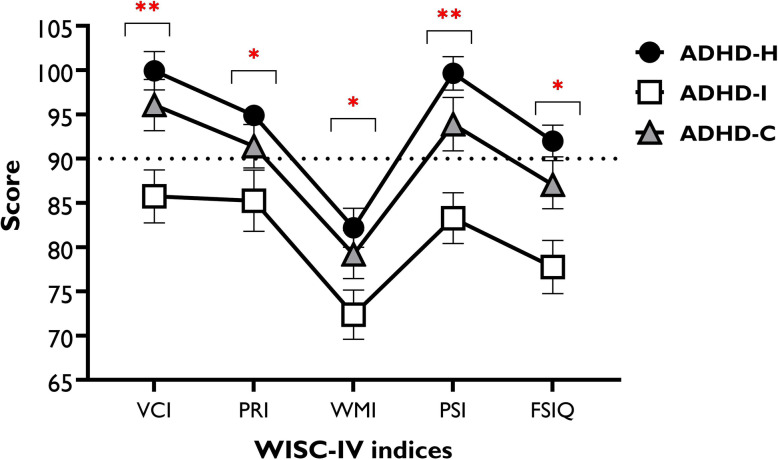
- ADHD-I scored lower than ADHD-H on FSIQ (t = 4.21, p < 0.001) and on VCI (t = 4.20, p < 0.001), PRI (t = 2.85, p = 0.013), WMI (t = 2.90, p = 0.011), and PSI (t = 4.84, p < 0.001); ADHD-I was also lower than ADHD-C on VCI (t = 2.59, p = 0.028) and PSI (t = 2.67, p = 0.023).
- Working memory was the weakest cognitive domain overall, while VCI was the strongest; the paper states FSIQ was 3 points lower than 90.
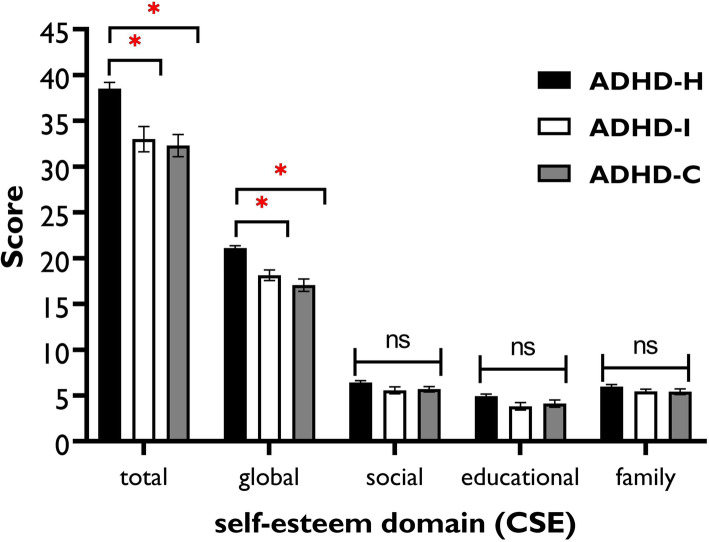
- Self-esteem differed by subtype: ADHD-H had higher total self-esteem than ADHD-I (t = 7.39, p < 0.001) and ADHD-C (t = 8.16, p < 0.001), and higher global self-esteem than ADHD-I (t = 3.97, p < 0.001) and ADHD-C (t = 5.32, p < 0.001).
- Cognitive indices were positively correlated with self-esteem and negatively correlated with inattention, while they were positively correlated with hyperactivity/impulsivity; the discriminant analysis classified 68.3% of individuals correctly, with subtype-specific correct classification of 57.1% (ADHD-I), 84.5% (ADHD-H), and 45.5% (ADHD-C).
## Methods
- Design: Cross-sectional comparison of ADHD subtypes with group differences, discriminant analysis, and Pearson correlations.
- Sample/data: 139 children with ADHD (80.6% boys, 19.4% girls; mean age 8.20 ± 2.50), recruited consecutively from Fatemi Hospital at Ardabil University of Medical Sciences from mid-2017 to end-2019; participants were 6–15 years old and medication was stopped 24 h before testing.
- Measures/analysis: ADHD subtype classification used K-SADS-PL and CPRS-RS; cognitive ability was measured with WISC-IV; self-esteem with the Coopersmith Self-Esteem inventory. Analyses used one-way ANOVA, Bonferroni-corrected t-tests, discriminant analysis, and Pearson correlation.
## Limitations
- The paper states there was no control group of typically developing children.
- The paper states the number of girls was small, so gender differences were not examined adequately.
- The paper states the WISC-IV indices may not capture specific aspects of cognition in ADHD and that more specific executive-function measures would be needed.
- Evident from the text: the sample was drawn from a clinical setting and the subtype distinction is described as controversial/possibly unstable across the life span, which limits generalizability and interpretation.
Model-written summary. Check it against the paper before relying on it.
Integrity signals
Registry
Cites
Statistics
Figures
Verification
Claims the paper makes
15 Valid · 1 Not valid · 3 Not checked · 37 Own results and interpretations
The cited sources support only part of this claim — read each source’s verdict below.
In the paper
“however, little is known about neuro-functional and cognitive differentiation of ADHD subtypes [11].”
§ ADHD subtype-specific cognitive correlates and association with self-esteem: a quantitative difference > Background
What the sources say
- Partly supportedcites [11] Rubia K Cognitive neuroscience of attention deficit hyperactivity disorder (ADHD) and its clinical translation Front Hum Neurosci 2018 12 100 1 10.3389/fnhum.2018.00100 29651240 PMC5884954 sourceExperimental — accuracy not yet measured
The ADHD Subtypes section explicitly says little is known about neuro-functional differentiation among ADHD subtypes. The Cognitive Neuroscience of ADHD section describes heterogeneity in cognitive impairments, but does not establish that little is known about cognitive differentiation between the subtypes. No page numbers were provided in our copy. (LLM, conf=0.85)
plain- Asserted: passes — The authors put it forward as true.
- Checkable: passes — It can be checked against evidence.
- Load-bearing: passes — The paper’s conclusions depend on it.
- Based: passes — The paper gives a reason why it holds.
- Partly supported
The sources with a verdict support this claim; the rest weren’t checked yet, have no full text we could read, or their verdicts aren’t rated yet.
In the paper
“One aspect of heterogeneity in ADHD symptoms and cognitive deficits is its subtypes [8, 9] which includes a predominantly hyperactive (ADHD-H), inattentive (ADHD-I), and combined (ADHD-C) subtype.”
§ ADHD subtype-specific cognitive correlates and association with self-esteem: a quantitative difference > Background
What the sources say
- Not checked — no full text of the sourcecites [8] Wåhlstedt C Thorell LB Bohlin G Heterogeneity in ADHD: neuropsychological pathways, comorbidity and symptom domains J Abnorm Child Psychol 2009 37 4 551 564 10.1007/s10802-008-9286-9 19016322 source
- Supportedcites [9] Feczko E Miranda-Dominguez O Marr M Graham AM Nigg JT Fair DA The heterogeneity problem: approaches to identify psychiatric subtypes Trends Cogn Sci 2019 23 7 584 601 10.1016/j.tics.2019.03.009 31153774 PMC6821457 source
In “Evidence suggests that major psychiatric conditions are heterogeneous” (page unavailable), the paper discusses using behavioral and fMRI data to identify ADHD subgroups. That supports the cited clause that subtypes are an aspect of ADHD heterogeneity; the three subtype labels appear after the citation and are not part of the claim assessed here. (LLM, conf=0.88)
plain- Asserted: passes — The authors put it forward as true.
- Checkable: passes — It can be checked against evidence.
- Load-bearing: passes — The paper’s conclusions depend on it.
- Based: passes — The paper gives a reason why it holds.
The sources with a verdict support this claim; the rest weren’t checked yet, have no full text we could read, or their verdicts aren’t rated yet.
In the paper
“Participants with the ADHD-H subtype constitute the majority of our sample (51.1%) while in other studies, the ratio of ADHD-I and ADHD-C has been relatively reported higher [55, 56].”
§ ADHD subtype-specific cognitive correlates and association with self-esteem: a quantitative difference > Discussion
What the sources say
- Not checked — no full text of the sourcecites [55] Gaub M Carlson CL Behavioral characteristics of DSM-IV ADHD subtypes in a school-based population J Abnorm Child Psychol 1997 25 2 103 111 10.1023/A:1025775311259 9109027 source
- Supportedcites [56] Huang Y Zheng S Xu C Lin K Wu K Zheng M Attention-deficit hyperactivity disorder in elementary school students in Shantou, China: prevalence, subtypes, and influencing factors Neuropsychiatr Dis Treat 2017 13 785 792 10.2147/NDT.S126100 28352178 PMC5359117 source
The citation supports the comparison with other studies, not the citing authors’ statement that ADHD-H made up 51.1% of their own sample. In the source paper’s Results (‘The subtypes of ADHD’), ADHD-I and ADHD-C accounted for 67.43% and 24.57% of ADHD students, respectively, while ADHD-H accounted for 8.00%. (LLM, conf=0.92)
plain- Asserted: passes — The authors put it forward as true.
- Checkable: passes — It can be checked against evidence.
- Load-bearing: unclear — It is unclear whether the paper’s conclusions depend on it.
- Based: passes — The paper gives a reason why it holds.
- Rests on an assumption not shown here.
A result the paper reports from its own data — it cites no other source for it, so there is none to check. The quote shows it is in the paper.
In the paper
“cognitive abilities were negatively correlated with inattention and positively correlated with hyperactive symptoms.”
- Also stated in: § Correlational analyses · plain
“Cognitive deficits were negatively correlated with attentional symptoms which means that more attentional deficits were associated with poor performance on the WICS-IV indices.”
§ ADHD subtype-specific cognitive correlates and association with self-esteem: a quantitative difference > Abstract > Results
plainstates an association- Asserted: passes — The authors put it forward as true.
- Checkable: passes — It can be checked against evidence.
- Load-bearing: passes — The paper’s conclusions depend on it.
- Based: passes — The paper gives a reason why it holds.
- Also stated in: § Correlational analyses · plain
A result the paper reports from its own data — it cites no other source for it, so there is none to check. The quote shows it is in the paper.
In the paper
“ADHD-H, with the highest cognitive strength, reported the highest level of self-esteem among all subtypes.”
- Also stated in: § Self-esteem rating · plain
“ADHD-H had a significantly higher total self-esteem compared with ADHD-I (t = 7.39, p < 0.001) and ADHD-C (t = 8.16, p < 0.001).”
§ ADHD subtype-specific cognitive correlates and association with self-esteem: a quantitative difference > Abstract > Results
plainstates an association- Asserted: passes — The authors put it forward as true.
- Checkable: passes — It can be checked against evidence.
- Load-bearing: passes — The paper’s conclusions depend on it.
- Based: passes — The paper gives a reason why it holds.
- Rests on an assumption not shown here.
- Also stated in: § Self-esteem rating · plain
20 more claims
Create a free account to see all 56 claims and every source verdict.
- Probably not a substantial claim. 19
- It may state two separate claims as one. 16
- The quote only partly states this claim. 1
Citations
Cites
Diagnostic and Statistical Manual of Mental Disorders
American Psychiatric Association (2013) · doi:10.1176/appi.books.9780890425596 · Cited by 116,369
The Proceedings of the National Academy of Sciences
Richards, J. W. (1915) · Science · doi:10.1126/science.42.1074.161 · Cited by 13,983
Willcutt, E. G., Doyle, A. E., Nigg, J. T., Faraone, S. V., & Pennington, B. F. (2005) · Biological Psychiatry · doi:10.1016/j.biopsych.2005.02.006 · Cited by 3,568 · cited 1×
“Cognitive deficits, especially executive dysfunctions, are central to ADHD psychopathology [3] and among the primary treatment targets by pharmacological [4] and novel treatment approaches [5, 6].”
BackgroundConners, C. K., Sitarenios, G., Parker, J. D. A., & Epstein, J. N. (1998) · Journal of Abnormal Child Psychology · doi:10.1023/a:1022602400621 · Cited by 1,772 · cited 1×
“Psychometric properties of the CPRSRS are reported adequate as demonstrated by good internal reliability coefficients, high test-retest reliability and effective discriminative power [33].”
MethodIntelligent testing with the WISC-R
Kaufman, A. S. (1979) · Medical Entomology and Zoology · Cited by 1,518
Journal of the American Academy of Child & Adolescent Psychiatry
ScienceDirect (1987) · Cited by 1,339
Encyclopedia of Personality and Individual Differences
(2018) · Springer eBooks · doi:10.1007/978-3-319-28099-8 · Cited by 985
Validity of DSM-IV attention deficit/hyperactivity disorder symptom dimensions and subtypes.
Willcutt, E. G., Nigg, J. T., Pennington, B. F., Solanto, M. V., Rohde, L. A., Tannock, R., Loo, S. K., Carlson, C. L., McBurnett, K., & Lahey, B. B. (2012) · Journal of Abnormal Psychology · doi:10.1037/a0027347 · Cited by 887 · cited 1×
“Some studies have shown an instability or shift in subtypes over years in children with ADHD [61, 62].”
BackgroundEncyclopedia of Personality and Individual Differences
(2020) · Springer eBooks · doi:10.1007/978-3-319-24612-3 · Cited by 604
Instability of the DSM-IV Subtypes of ADHD From Preschool Through Elementary School
Lahey, B. B., Pelham, W. E., Loney, J., Lee, S. S., & Willcutt, E. (2005) · Archives of General Psychiatry · doi:10.1001/archpsyc.62.8.896 · Cited by 528 · cited 1×
“Some studies have shown an instability or shift in subtypes over years in children with ADHD [61, 62].”
Background
Research works printed but not linked: 5
- Schwean VL McCrimmon A Attention-deficit/hyperactivity disorder: using the WISC-IV to inform intervention planning WISC-IV Clin Assess intervent 2008 2 193 215
- Conners C Technical manual for the Conners’ rating scales-revised 1997 North Tonawanda Multi-Health Systems
- Wechsler D WISC-IV: administration and scoring manual: psychological corporation 2003
- Adair FL Coopersmith self-esteem inventories Test Critiques 1984 1 226 232
- Hassanzadeh S Amraei K Samadzadeh S A meta-analysis of attention deficit/hyperactivity disorder prevalence in Iran 2019
Cited by
Hot and cold executive functions in the brain: A prefrontal-cingular network
Salehinejad, M. A., Ghanavati, E., Rashid, M. H. A., & Nitsche, M. A. (2021) · Brain and Neuroscience Advances · doi:10.1177/23982128211007769 · Cited by 340
Self-citationSalehinejad, M. A., Ghanavati, E., Glinski, B., Hallajian, A., & Azarkolah, A. (2022) · Brain and Behavior · doi:10.1002/brb3.2724 · Cited by 113
“Considering ADHD subtypes (Molavi et al., 2020) whose symptoms differ in the cognition–emotion spectrum, it might be interesting to study the role of this region with regard to subtype-specific profiles in future tDCS studies of ADHD.”
BackgroundSelf-citationBodalski, E. A., Flory, K., Canu, W. H., Willcutt, E. G., & Hartung, C. M. (2022) · Journal of Psychopathology and Behavioral Assessment · doi:10.1007/s10862-022-09996-2 · Cited by 48
“, 2016), and this could be rooted in underlying deficits in executive functioning (Molavi et al., 2020).”
BackgroundSalvat, H., Mohammadi, M. N., Molavi, P., Mostafavi, S., Rostami, R., & Salehinejad, M. A. (2022) · BMC Pediatrics · doi:10.1186/s12887-022-03123-6 · Cited by 45
Self-citationSalehinejad, M. A., Vosough, Y., & Nejati, V. (2022) · Brain Sciences · doi:10.3390/brainsci12081098 · Cited by 38
Self-citationKorchia, T., Boyer, L., Deneuville, M., Etchecopar-Etchart, D., Lancon, C., & Fond, G. (2022) · European Archives of Psychiatry and Clinical Neuroscience · doi:10.1007/s00406-022-01421-9 · Cited by 22
“Hypersexuality could be a way to compensate for low self-esteem and ADHD is associated with lower self-esteem [20].”
BackgroundLuo, Y., Chen, Q., Li, F., Liang, Y., Xu, P., & Zhang, Y. (2025) · Neural Networks · doi:10.1016/j.neunet.2025.107450 · Cited by 22
Dehghani-Arani, F., Kazemi, R., Hallajian, A., Sima, S., Boutimaz, S., Hedayati, S., Koushamoghadam, S., Safarifard, R., & Salehinejad, M. A. (2024) · Journal of Clinical Medicine · doi:10.3390/jcm13185358 · Cited by 29
Self-citationFeng, A., Zhi, D., Feng, Y., Jiang, R., Fu, Z., Ming, X., Zhao, M., Yu, S. P., Stevens, M. C. G., Sun, L., et al. (2024) · EClinicalMedicine · doi:10.1016/j.eclinm.2024.102876 · Cited by 23
“8,9 For example, children with ADHD-C were found to have hyper-connectivity in the pre-default mode network and lower network modularity compared to health controls, 11 whereas no such differences were found in the ADHD-I subtype.”
Estaji, R., Hosseinzadeh, M., Arabgol, F., & Nejati, V. (2024) · Scientific Reports · doi:10.1038/s41598-024-64886-9 · Cited by 25
Lau-Jensen, S. H., Asschenfeldt, B., Evald, L., & Hjortdal, V. E. (2021) · Frontiers in Pediatrics · doi:10.3389/fped.2021.786638 · Cited by 19
“Another study found that ADHD— hyperactivity had the best cognitive functioning and the best self-rated self-esteem of the subtypes (27).”
BackgroundFrançois-Sévigny, J., Pilon, M., & Gauthier, L.-A. (2022) · Brain Sciences · doi:10.3390/brainsci12111571 · Cited by 32
Seppä, S., Halt, A., Nordström, T., & Hurtig, T. M. (2023) · Child Psychiatry & Human Development · doi:10.1007/s10578-023-01598-7 · Cited by 20
“Academic problems have been explained by cognitive problems such as working memory, which is the most seriously compromised cognitive domain [13].”
Ren, Y., Fang, X., Fang, H., Pang, G., Cai, J., Wang, S., & Ke, X. (2021) · Frontiers in Pediatrics · doi:10.3389/fped.2021.634633 · Cited by 19
Assessment of ADHD Subtypes Using Motion Tracking Recognition Based on Stroop Color–Word Tests
Li, C., Delgado‐Gómez, D., Sújar, A., Wang, P., Martín-Moratinos, M., Bella-Fernández, M., Masó-Besga, A. E., Peñuelas‐Calvo, I., Ardoy‐Cuadros, J., Hernández-Liebo, P. A., et al. (2024) · Sensors · doi:10.3390/s24020323 · Cited by 14
“ADHD shares etiology and pathophysiology with other psychiatric conditions, affecting individual sensitivity to pharmacotherapy and psychotherapy [13,14].”
(2022) · doi:10.31234/osf.io/7ckqp · Cited by 10
Self-citationDinçer, M., Gökçe, F. S., Gül, H., Torun, Y. T., Bodur, Ş., & Cöngöloğlu, M. A. (2022) · Journal of Attention Disorders · doi:10.1177/10870547221099963 · Cited by 11
“While some of the studies reported that processing speed was impaired mainly in ADHD-I without hyperactivity, other studies reported that processing speed was impaired mainly in hyperactivity/impulsivity symptoms (Brydges et al., 2017; Cook et al., 2018; Ghanavati et al., 2019; Goth-Owens et al., 2010; Kim et al., 202…”
BackgroundResultKorfmacher, A.-K., Hirsch, O., Chavanon, M., Albrecht, B., & Christiansen, H. (2022) · Frontiers in Psychiatry · doi:10.3389/fpsyt.2022.969351 · Cited by 13
“, (26–30)] and, thirdly, the deterioration of self-concept in children with ADHD depends on the ADHD subtype and global cognitive performance (31).”
Background(2022) · doi:10.31234/osf.io/6cgur · Cited by 8
Self-citationBasharpoor, S., Zakibakhsh Mohammadi, N., Heidari, F., Azarkolah, A., Vicario, C. M., & Salehinejad, M. A. (2022) · Journal of Affective Disorders · doi:10.1016/j.jad.2022.09.089 · Cited by 7
Self-citationHot and cold executive functions in the brain: A prefrontal-cingular network
(2021) · doi:10.31219/osf.io/5sghe · Cited by 6
Self-citationPeyvandi, A., Bondi, E., Cirella, L., Bressi, C., & Delvecchio, G. (2025) · Journal of Affective Disorders · doi:10.1016/j.jad.2025.04.101 · Cited by 7
Fu, B., Zhou, X., Zhou, X., Li, X., Chen, Z., Zhang, Y., & Du, Q. (2025) · Brain and Behavior · doi:10.1002/brb3.70246 · Cited by 8
Neurodevelopmental Disorders: Attention-Deficit/Hyperactivity Disorder
Newcorn, J. H., Krone, B., Coghill, D., & Halperin, J. M. (2023) · Springer eBooks · doi:10.1007/978-3-030-42825-9_64-1 · Cited by 7
Aiello, S., Vagni, D., Cerasa, A., Leonardi, E., Carrozza, C., Famà, F. I., Campisi, A., Marino, F., Siracusano, R., Alquino, A., et al. (2021) · Frontiers in Neuroscience · doi:10.3389/fnins.2021.734177 · Cited by 7
“The emotional and behavioral profile in ADHD children results in both internalizing and externalizing problems such as mood and anxiety disorders, aggressive and/or oppositional behaviors, with consequent difficult peer relationships (Nijmeijer et al., 2008; Harkins et al., 2021).”
BackgroundDaily activities and self-esteem among university students with and without ADHD
Turner, E. H., & Harty, S. C. (2025) · Frontiers in Psychiatry · doi:10.3389/fpsyt.2025.1622354 · Cited by 8
“…neuropsychological mechanisms supporting the association between ADHD and self-esteem are underexamined, a recent study found that across subtypes, working memory, which has repeatedly been associated with ADHD diagnosis and symptom severity (26), was negatively correlated with self-esteem (28).”
Zhu, L., Jia, F., Cao, A., Hao, Y., Li, F., Liu, R., Li, H., Yu, X., Zhao, J., Li, F., et al. (2024) · Neuropsychiatric Disease and Treatment · doi:10.2147/ndt.s489365 · Cited by 3
“14 17 A number of these studies had been performed on English-speaking subjects.”
Cho, Y., Son, H. M., Chung, T., & Kim, J. (2024) · Psychology in the Schools · doi:10.1002/pits.23179 · Cited by 4
Sui, J., Feng, A., Feng, Y., Zhi, D., Jiang, R., Fu, Z., Xu, M., Zhao, M., Yu, S., Stevens, M., et al. (2023) · Research Square · doi:10.21203/rs.3.rs-3272441/v1 · Cited by 3
Liao, W., Keser, E., Allegrini, A. G., Rimfeld, K., Plomin, R. J., & Malanchini, M. (2025) · Biological Psychiatry Global Open Science · doi:10.1016/j.bpsgos.2025.100680 · Cited by 3
Kılıç, B. K., Bumın, G., Öğütlü, H., & Türkçapar, M. H. (2025) · American Journal of Occupational Therapy · doi:10.5014/ajot.2025.051083 · Cited by 4
“C) with the most intense ADHD symptoms (Molavi et al., 2020; Schwenck et al., 2009).”
Neurodevelopmental Disorders: Attention Deficit Hyperactivity Disorder (ADHD)
Newcorn, J. H., Krone, B., Coghill, D., & Halperin, J. M. (2024) · Springer eBooks · doi:10.1007/978-3-030-51366-5_64 · Cited by 4
Gatica-Ferrero, S. A., Milla-Cano, C., Ardiles-González, E., & Rosas-Molina, V. (2023) · Avances en Psicología Latinoamericana · doi:10.12804/revistas.urosario.edu.co/apl/a.11364 · Cited by 4
Özaslan, A., & Yıldırım, M. (2022) · Selçuk Tıp Dergisi · doi:10.30733/std.2022.01564 · Cited by 2
“(27).”
BackgroundTherapeutic hypnosis in a child with a written language disorder
Hery-Niaussat, C., Ossart, V., Penigault, P., Robert, P. H., Manera, V., & Gros, A. (2022) · American Journal of Clinical Hypnosis · doi:10.1080/00029157.2022.2108746 · Cited by 2
“skills and performance (Molavi et al., 2020), potentially including written language.”
BackgroundInfluentialScoping review of precision child and youth mental health research: dwelling in possibility
Lyeo, J. S., Blais, A. Z., Cloutier, P., Boafo, A., Dargél, A., Helleman, A., Tanya, T., Kashala-Abotnes, E., Honeywell, C. R., & PAJER, K. A. (2026) · Frontiers in Psychiatry · doi:10.3389/fpsyt.2025.1691548 · Cited by 2
Yao, X., Chen, R., Zhu, J., Hou, R., Xiang, S., Jia, T., Gu, Y., Wang, Z., Hu, H., Chen, H., et al. (2025) · Molecular Psychiatry · doi:10.1038/s41380-025-03399-x · Cited by 1
Research Trends in Self-esteem among Individuals with ADHD
OTSUKI, M., Ogawa, S., & Kojima, M. (2025) · Asian Journal of Human Services · doi:10.14391/ajhs.28.378 · Cited by 1
Prat, R., Puig-Ribera, A. M., Pagerols, M., Español‐Martín, G., Rivas, C., Autet, A., Tàpies, P., Martín, A. C., Casas, M., & Bosch, R. (2024) · Journal of Attention Disorders · doi:10.1177/10870547241246688 · Cited by 4
“These impairments impact in their academic performance and daily functioning (Chen et al., 2022; Daley & Birchwood, 2010; Engelhardt et al., 2008; Gilden & Marusich, 2009; Habsan Al-Saad et al., 2021; Marzocchi et al., 2008; Miller et al., 2012; Molavi et al., 2020; Zeeuw et al., 2012).”
BackgroundGenç, H. A., Markaroğlu, R., Muradoğlu, S., Necef, I., & Mutluer, T. (2023) · Journal of Clinical Psychiatry · doi:10.5505/kpd.2023.92255 · Cited by 2
Lavigne-Cerván, R., Collado-Valero, J. A., Martínez-González, A. E., & Navarro-Soria, I. N.-S. (2026) · Revista de Psicología Clínica Con Niños y Adolescentes · doi:10.21134/rpcna.2026.13.1.2 · Cited by 1
Rico-Juan, J. R., Sória, I. N., Lavigne-Cerván, R., Rosales-Gómez, M., & Collado-Valero, J. A. (2026) · Applied Sciences · doi:10.3390/app16189184
“Boredom Backs You into a Corner”: A Case Study of Two Twice-Exceptional Students with ADHD
Lenvik, A. (2026) · Education Sciences · doi:10.3390/educsci16091489
Early maladaptive schemas and attention-deficit/hyperactivity disorder: a scoping review
Cook, M., & Allen, A. (2026) · Clinical Psychologist · doi:10.1080/13284207.2026.2713449
O O papel do diagnóstico sobre a percepção da autoestima em indivíduos com TEA e/ou TDAH
Zanini, C. A., Nogueira, L. F. M., Lodi, S. R. Z., Scalvi, G. F., Caprara, L. M. F., Biazim, M. D. A., & Domeniconi, C. (2026) · Interação em Psicologia · doi:10.5380/riep.v30i1.99436
Existential hypnotherapy for ADHD: A novel approach to authenticity-based treatment
Podhorodecki, J. A. (2026) · American Journal of Clinical Hypnosis · doi:10.1080/00029157.2026.2630334
“Molavi et al. (2020) found that cognitive correlates such as working memory and self-esteem varied significantly across ADHD subtypes – supporting the rationale for presentation-specific modifications.”
Chen, X., Xiao, Y., Huang, W.-Y., Guo, Y., Zhu, R., & Wu, J. (2025) · Psychological Reports · doi:10.1177/00332941251387544 · Cited by 2
Liao, W., Keser, E., Allegrini, A. G., et al. (2025) · medRxiv · doi:10.1101/2025.06.06.25329135
Akhmetova, Z. A. (2024) · Bulletin of Science and Practice · doi:10.33619/2414-2948/105/47
Naumenko, N. O., & Antonova-Rafi, Y. V. (2024) · Habitus · doi:10.32782/2663-5208.2024.58.45
Князєв, В. М. (2023) · Scientific notes of Taurida National V I Vernadsky University series Psychology · doi:10.32782/2709-3093/2023.3/06 · Cited by 5
Salvat, H., Mohammadi, M. N., Molavi, P., Mostafavi, S., Rostami, R., & Salehinejad, M. A. (2021) · Research Square · doi:10.21203/rs.3.rs-348588/v2
Self-citationSalvat, H., Mohammadi, M. N., Molavi, P., Mostafavi, S., Rostami, R., & Salehinejad, M. A. (2021) · Research Square · doi:10.21203/rs.3.rs-348588/v1
Self-citationAdversity, Neurodevelopment, and Cognition in Attention Deficit Hyperactivity Disorder
Papadopoulos, A. (2021) · Scholarship@Western (Western University)
Adıgüzel Akman, Ö., & Bıyıklı, C. (2026) · International Journal of Developmental Neuroscience · doi:10.1002/jdn.70151
Metadata
- Authors
- Molavi, P., Nadermohammadi, M., Salvat Ghojehbeiglou, H., Vicario, C. M., Nitsche, M. A., & Salehinejad, M. A.
- Affiliations
- Ardabil University of Medical Sciences (IR)
- University of Messina (IT)
- Leibniz Research Centre for Working Environment and Human Factors (DE)
- Corresponding author
- Nadermohammadi, Mehriar
- Salehinejad, Mohammad Ali
- ORCID
- Venue
- BMC Psychiatry
- Published
- 2020-10-12
- Volume
- 20
- Issue
- 1
- Pages
- 502-502
- ISSN
- 1471-244X (ISSN-L)
- PMC
- PMC7549239
- OpenAlex
- W3092314667
- Cited by
- 51
- References
- 63
- Citations by year
- 2026: 6 · 2025: 11 · 2024: 10 · 2023: 6 · 2022: 11 · 2021: 7
- FWCI
- 4.37
- Type
- journal article
- Language
- en
- Open access
- gold
- doi.org
- Licence
- cc-by
- creativecommons.org/licenses/by/4.0 (tdm)
- creativecommons.org/licenses/by/4.0 (vor)
- Locations
- BMC Psychiatry (publishedVersion, cc-by)
- Research Square (acceptedVersion, cc-by)
- PubMed Central (publishedVersion, cc-by)
- PubMed (publishedVersion)
- Informationszentrum Lebenswissenschaften (ZB MED) (submittedVersion, cc-by)
- DOAJ (DOAJ: Directory of Open Access Journals) (submittedVersion, cc-by-sa)
- Topics
- Health Sciences › Medicine › Psychiatry and Mental health › Attention Deficit Hyperactivity Disorder
- Social Sciences › Psychology › Neuropsychology and Physiological Psychology › Developmental and Educational Neuropsychology
- Social Sciences › Psychology › Clinical Psychology › Child and Adolescent Psychosocial and Emotional Development
- Keywords
- attention deficit hyperactivity disorder, ADHD subtypes, inattentive subtype, combined subtype, self-esteem, cognitive impairment, working memory, WISC-IV, children, cognitive intervention, inattention, hyperactivity
- MeSH terms
- Attention, Attention Deficit Disorder with Hyperactivity, Child, Cognition, Female, Humans, Male, Psychiatric Status Rating Scales, Self Concept
About these checks
Registry, retraction, Cites and statistics results are computed, not judged, with one exception: a printed reference that no index lists is read once by a model before it counts as a citation error. Claims are extracted by a model and kept only when their quote appears verbatim in the text; each cited source is then checked, with a model’s help, for whether it says what the claim relies on. Those verdicts can be wrong — read the claim’s quote and the cited source before relying on one.
The claim verdicts this report counts are experimental: their accuracy is not yet measured.
A language model drew the claims from the paper on 2026-09-29, under version 3 of the claim definition (model deepseek-v4.1-flash, prompt extract-v3).
A second model labelled each claim on 2026-09-29 (model jev-1.13-20260917, definition revision gold-guideline-v0.2).
Cited sources are checked with a language model’s help (gpt-6-sol).
Statistics and arithmetic are recomputed, not judged.
Confidence bands are shown only for fields calibrated on our annotated test set. None is calibrated yet, so no band is shown.
What counts as a claim ›How we measure confidence ›How we check this ›
Are you an author, or do you see a problem with this page? Request a review
Data sources
Bibliographic data: Semantic Scholar, OpenAlex, Crossref.
Contains information from the Semantic Scholar Academic Graph Datasets, made available under the ODC Attribution License (ODC-BY 1.0).
Semantic Scholar’s data is described in: Kinney, R., et al. (2023). The Semantic Scholar Open Data Platform. arXiv:2301.10140.
