

ADHD subtype-specific cognitive correlates and association with self-esteem: a quantitative difference
Open accessPublished version of a preprint
The DOI matches its Crossref record; 65 of the 66 references it cites were found in a registry or an index; 17 of the 40 sources its claims cite were checked for support.
Abstract
BACKGROUND: Attention-deficit hyperactivity disorder (ADHD) is a major neurodevelopmental disorder with heterogeneous symptoms, subtypes, and cognitive deficits. Cognitive deficits are central to ADHD pathophysiology and one potential source of heterogeneity in ADHD. Subtype-specific cognitive correlates are not, however, well-studied. We explored cognitive correlates of ADHD subtypes based on the Wechsler Intelligence Scale for Children (WISC-IV) scores. We also assessed subtype-specific self-esteem rating in ADHD subtypes and explored its association with cognitive correlates. METHODS: One hundred thirty-nine children with ADHD (80.6% boy, 19.4% girl) were categorized into the predominantly "hyperactive (ADHD-H)", "inattentive (ADHD-I)" and "combined (ADHD-C)" subtype based on their symptoms and scores on the Kiddie Schedule for Affective Disorders and Schizophrenia (K-SADS-PL) and Conners Parent-Rating Scale (CPRS-RS). They were then individually administrated the WISC-IV and completed a self-esteem inventory. Group differences in the WISC-IV indices and their predictability in discriminating ADHD subtypes were analyzed. RESULTS: We found a quantitative differentiation of cognitive abilities among ADHD subtypes with "working memory" as the most compromised cognitive domain. ADHD-I had the poorest cognitive profile while ADHD-H scored highest in all cognitive domains. Importantly, cognitive abilities were negatively correlated with inattention and positively correlated with hyperactive symptoms. Moreover, self-esteem ratings were positively correlated with the cognitive domains and were rated differently based on the subtypes. ADHD-H, with the highest cognitive strength, reported the highest level of self-esteem among all subtypes. CONCLUSIONS: ADHD subtype-specific symptoms, cognitive deficits, and self-esteem problems should be considered for precise diagnosis and effective and personalized treatment in ADHD in light of further supporting evidence and assessments. Cognitive interventions might be more compatible with and effective in inattentive and combined subtypes of ADHD. Working memory improving-based interventions can benefit all ADHD subtypes. A supportive educational system in school and providing adjunct supportive interventions should be considered for children with ADHD as well.
Overview
CoChat Summary
## TL;DR
This study compared cognitive profiles and self-esteem across ADHD subtypes in 139 children and found a quantitative subtype gradient, with ADHD-I showing the poorest performance and ADHD-H the best. Working memory was the most impaired WISC-IV domain overall, and higher cognitive scores were associated with higher self-esteem.
## Key findings
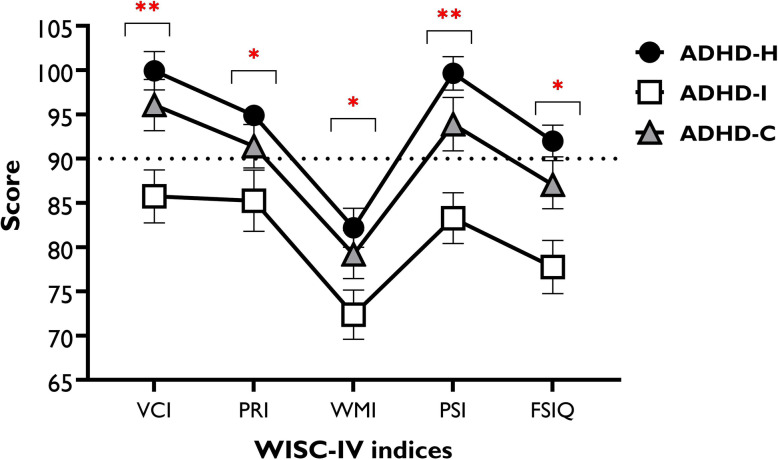
- In 139 children with ADHD, ANOVA showed significant subtype differences in FSIQ and all WISC-IV indices: VCI, PRI, WMI, PSI.
- ADHD-I scored lower than ADHD-H on FSIQ (t = 4.21, p < 0.001) and on VCI (t = 4.20, p < 0.001), PRI (t = 2.85, p = 0.013), WMI (t = 2.90, p = 0.011), and PSI (t = 4.84, p < 0.001); ADHD-I was also lower than ADHD-C on VCI (t = 2.59, p = 0.028) and PSI (t = 2.67, p = 0.023).
- Working memory was the weakest cognitive domain overall, while VCI was the strongest; the paper states FSIQ was 3 points lower than 90.
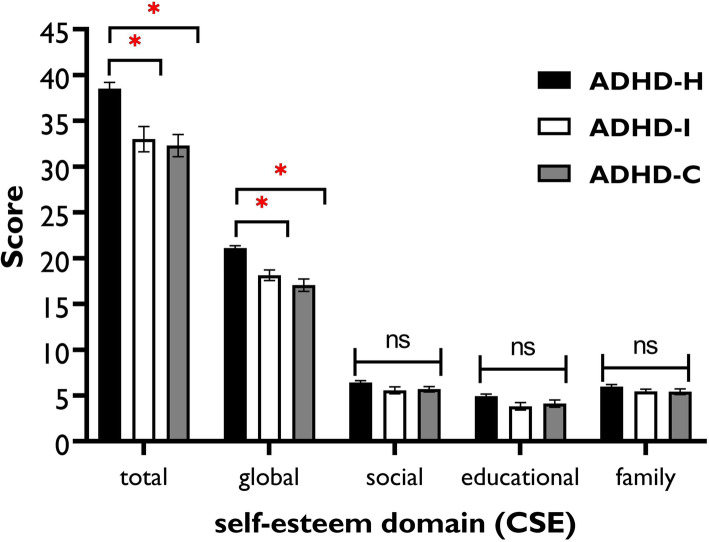
- Self-esteem differed by subtype: ADHD-H had higher total self-esteem than ADHD-I (t = 7.39, p < 0.001) and ADHD-C (t = 8.16, p < 0.001), and higher global self-esteem than ADHD-I (t = 3.97, p < 0.001) and ADHD-C (t = 5.32, p < 0.001).
- Cognitive indices were positively correlated with self-esteem and negatively correlated with inattention, while they were positively correlated with hyperactivity/impulsivity; the discriminant analysis classified 68.3% of individuals correctly, with subtype-specific correct classification of 57.1% (ADHD-I), 84.5% (ADHD-H), and 45.5% (ADHD-C).
## Methods
- Design: Cross-sectional comparison of ADHD subtypes with group differences, discriminant analysis, and Pearson correlations.
- Sample/data: 139 children with ADHD (80.6% boys, 19.4% girls; mean age 8.20 ± 2.50), recruited consecutively from Fatemi Hospital at Ardabil University of Medical Sciences from mid-2017 to end-2019; participants were 6–15 years old and medication was stopped 24 h before testing.
- Measures/analysis: ADHD subtype classification used K-SADS-PL and CPRS-RS; cognitive ability was measured with WISC-IV; self-esteem with the Coopersmith Self-Esteem inventory. Analyses used one-way ANOVA, Bonferroni-corrected t-tests, discriminant analysis, and Pearson correlation.
## Limitations
- The paper states there was no control group of typically developing children.
- The paper states the number of girls was small, so gender differences were not examined adequately.
- The paper states the WISC-IV indices may not capture specific aspects of cognition in ADHD and that more specific executive-function measures would be needed.
- Evident from the text: the sample was drawn from a clinical setting and the subtype distinction is described as controversial/possibly unstable across the life span, which limits generalizability and interpretation.
Model-written summary. Check it against the paper before relying on it.
Integrity signals
Registry
Cites
Statistics
Figures
Verification
Claims the paper makes
15 Valid · 1 Not valid · 3 Not checked · 37 Own results and interpretations
The cited sources support only part of this claim — read each source’s verdict below.
In the paper
“however, little is known about neuro-functional and cognitive differentiation of ADHD subtypes [11].”
§ ADHD subtype-specific cognitive correlates and association with self-esteem: a quantitative difference > Background
What the sources say
- Partly supportedcites [11] Rubia K Cognitive neuroscience of attention deficit hyperactivity disorder (ADHD) and its clinical translation Front Hum Neurosci 2018 12 100 1 10.3389/fnhum.2018.00100 29651240 PMC5884954 sourceExperimental — accuracy not yet measured
The ADHD Subtypes section explicitly says little is known about neuro-functional differentiation among ADHD subtypes. The Cognitive Neuroscience of ADHD section describes heterogeneity in cognitive impairments, but does not establish that little is known about cognitive differentiation between the subtypes. No page numbers were provided in our copy. (LLM, conf=0.85)
plain- Asserted: passes — The authors put it forward as true.
- Checkable: passes — It can be checked against evidence.
- Load-bearing: passes — The paper’s conclusions depend on it.
- Based: passes — The paper gives a reason why it holds.
- Partly supported
The sources with a verdict support this claim; the rest weren’t checked yet, have no full text we could read, or their verdicts aren’t rated yet.
In the paper
“One aspect of heterogeneity in ADHD symptoms and cognitive deficits is its subtypes [8, 9] which includes a predominantly hyperactive (ADHD-H), inattentive (ADHD-I), and combined (ADHD-C) subtype.”
§ ADHD subtype-specific cognitive correlates and association with self-esteem: a quantitative difference > Background
What the sources say
- Not checked — no full text of the sourcecites [8] Wåhlstedt C Thorell LB Bohlin G Heterogeneity in ADHD: neuropsychological pathways, comorbidity and symptom domains J Abnorm Child Psychol 2009 37 4 551 564 10.1007/s10802-008-9286-9 19016322 source
- Supportedcites [9] Feczko E Miranda-Dominguez O Marr M Graham AM Nigg JT Fair DA The heterogeneity problem: approaches to identify psychiatric subtypes Trends Cogn Sci 2019 23 7 584 601 10.1016/j.tics.2019.03.009 31153774 PMC6821457 source
In “Evidence suggests that major psychiatric conditions are heterogeneous” (page unavailable), the paper discusses using behavioral and fMRI data to identify ADHD subgroups. That supports the cited clause that subtypes are an aspect of ADHD heterogeneity; the three subtype labels appear after the citation and are not part of the claim assessed here. (LLM, conf=0.88)
plain- Asserted: passes — The authors put it forward as true.
- Checkable: passes — It can be checked against evidence.
- Load-bearing: passes — The paper’s conclusions depend on it.
- Based: passes — The paper gives a reason why it holds.
The sources with a verdict support this claim; the rest weren’t checked yet, have no full text we could read, or their verdicts aren’t rated yet.
In the paper
“Participants with the ADHD-H subtype constitute the majority of our sample (51.1%) while in other studies, the ratio of ADHD-I and ADHD-C has been relatively reported higher [55, 56].”
§ ADHD subtype-specific cognitive correlates and association with self-esteem: a quantitative difference > Discussion
What the sources say
- Not checked — no full text of the sourcecites [55] Gaub M Carlson CL Behavioral characteristics of DSM-IV ADHD subtypes in a school-based population J Abnorm Child Psychol 1997 25 2 103 111 10.1023/A:1025775311259 9109027 source
- Supportedcites [56] Huang Y Zheng S Xu C Lin K Wu K Zheng M Attention-deficit hyperactivity disorder in elementary school students in Shantou, China: prevalence, subtypes, and influencing factors Neuropsychiatr Dis Treat 2017 13 785 792 10.2147/NDT.S126100 28352178 PMC5359117 source
The citation supports the comparison with other studies, not the citing authors’ statement that ADHD-H made up 51.1% of their own sample. In the source paper’s Results (‘The subtypes of ADHD’), ADHD-I and ADHD-C accounted for 67.43% and 24.57% of ADHD students, respectively, while ADHD-H accounted for 8.00%. (LLM, conf=0.92)
plain- Asserted: passes — The authors put it forward as true.
- Checkable: passes — It can be checked against evidence.
- Load-bearing: unclear — It is unclear whether the paper’s conclusions depend on it.
- Based: passes — The paper gives a reason why it holds.
- Rests on an assumption not shown here.
A result the paper reports from its own data — it cites no other source for it, so there is none to check. The quote shows it is in the paper.
In the paper
“cognitive abilities were negatively correlated with inattention and positively correlated with hyperactive symptoms.”
- Also stated in: § Correlational analyses · plain
“Cognitive deficits were negatively correlated with attentional symptoms which means that more attentional deficits were associated with poor performance on the WICS-IV indices.”
§ ADHD subtype-specific cognitive correlates and association with self-esteem: a quantitative difference > Abstract > Results
plainstates an association- Asserted: passes — The authors put it forward as true.
- Checkable: passes — It can be checked against evidence.
- Load-bearing: passes — The paper’s conclusions depend on it.
- Based: passes — The paper gives a reason why it holds.
- Also stated in: § Correlational analyses · plain
A result the paper reports from its own data — it cites no other source for it, so there is none to check. The quote shows it is in the paper.
In the paper
“ADHD-H, with the highest cognitive strength, reported the highest level of self-esteem among all subtypes.”
- Also stated in: § Self-esteem rating · plain
“ADHD-H had a significantly higher total self-esteem compared with ADHD-I (t = 7.39, p < 0.001) and ADHD-C (t = 8.16, p < 0.001).”
§ ADHD subtype-specific cognitive correlates and association with self-esteem: a quantitative difference > Abstract > Results
plainstates an association- Asserted: passes — The authors put it forward as true.
- Checkable: passes — It can be checked against evidence.
- Load-bearing: passes — The paper’s conclusions depend on it.
- Based: passes — The paper gives a reason why it holds.
- Rests on an assumption not shown here.
- Also stated in: § Self-esteem rating · plain
20 more claims
Create a free account to see all 56 claims and every source verdict.
- Probably not a substantial claim. 19
- It may state two separate claims as one. 16
- The quote only partly states this claim. 1
Citations
Cites
Diagnostic and Statistical Manual of Mental Disorders
American Psychiatric Association (2013) · doi:10.1176/appi.books.9780890425596 · Cited by 116,369
The Proceedings of the National Academy of Sciences
Richards, J. W. (1915) · Science · doi:10.1126/science.42.1074.161 · Cited by 13,983
Willcutt, E. G., Doyle, A. E., Nigg, J. T., Faraone, S. V., & Pennington, B. F. (2005) · Biological Psychiatry · doi:10.1016/j.biopsych.2005.02.006 · Cited by 3,568 · cited 1×
“Cognitive deficits, especially executive dysfunctions, are central to ADHD psychopathology [3] and among the primary treatment targets by pharmacological [4] and novel treatment approaches [5, 6].”
BackgroundConners, C. K., Sitarenios, G., Parker, J. D. A., & Epstein, J. N. (1998) · Journal of Abnormal Child Psychology · doi:10.1023/a:1022602400621 · Cited by 1,772 · cited 1×
“Psychometric properties of the CPRSRS are reported adequate as demonstrated by good internal reliability coefficients, high test-retest reliability and effective discriminative power [33].”
MethodIntelligent testing with the WISC-R
Kaufman, A. S. (1979) · Medical Entomology and Zoology · Cited by 1,518
Journal of the American Academy of Child & Adolescent Psychiatry
ScienceDirect (1987) · Cited by 1,339
Encyclopedia of Personality and Individual Differences
(2018) · Springer eBooks · doi:10.1007/978-3-319-28099-8 · Cited by 985
Validity of DSM-IV attention deficit/hyperactivity disorder symptom dimensions and subtypes.
Willcutt, E. G., Nigg, J. T., Pennington, B. F., Solanto, M. V., Rohde, L. A., Tannock, R., Loo, S. K., Carlson, C. L., McBurnett, K., & Lahey, B. B. (2012) · Journal of Abnormal Psychology · doi:10.1037/a0027347 · Cited by 887 · cited 1×
“Some studies have shown an instability or shift in subtypes over years in children with ADHD [61, 62].”
BackgroundEncyclopedia of Personality and Individual Differences
(2020) · Springer eBooks · doi:10.1007/978-3-319-24612-3 · Cited by 604
Instability of the DSM-IV Subtypes of ADHD From Preschool Through Elementary School
Lahey, B. B., Pelham, W. E., Loney, J., Lee, S. S., & Willcutt, E. (2005) · Archives of General Psychiatry · doi:10.1001/archpsyc.62.8.896 · Cited by 528 · cited 1×
“Some studies have shown an instability or shift in subtypes over years in children with ADHD [61, 62].”
BackgroundNigg, J. T. (2005) · Biological Psychiatry · doi:10.1016/j.biopsych.2004.11.011 · Cited by 513 · cited 1×
“A precise description of the pathophysiology underlying ADHD is difficult due to its neuropsychological heterogeneity [1] and substantial overlap between ADHD and typically developing children [2].”
BackgroundNeuropsychological Executive Functions and DSM-IV ADHD Subtypes
NIGG, J. T., BLASKEY, L. G., HUANG-POLLOCK, C. L., & RAPPLEY, M. D. (2002) · Journal of the American Academy of Child & Adolescent Psychiatry · doi:10.1097/00004583-200201000-00012 · Cited by 496 · cited 1×
“However, the cognitive strengths and weaknesses of ADHD subtypes are not adequately explored in the previous studies in ADHD while several neuropsychological distinctions in ADHD subtypes (especially ADHD-I vs ADHD-C) have been identified [25].”
BackgroundFair, D. A., Bathula, D., Nikolas, M. A., & Nigg, J. T. (2012) · Proceedings of the National Academy of Sciences · doi:10.1073/pnas.1115365109 · Cited by 464 · cited 1×
“A precise description of the pathophysiology underlying ADHD is difficult due to its neuropsychological heterogeneity [1] and substantial overlap between ADHD and typically developing children [2].”
BackgroundThe Heterogeneity Problem: Approaches to Identify Psychiatric Subtypes
Feczko, E., Miranda-Dominguez, O., Marr, M., Graham, A. M., Nigg, J. T., & Fair, D. A. (2019) · Trends in Cognitive Sciences · doi:10.1016/j.tics.2019.03.009 · Cited by 443 · cited 1×
“One aspect of heterogeneity in ADHD symptoms and cognitive deficits is its subtypes [8, 9] which includes a predominantly hyperactive (ADHDH), inattentive (ADHD-I), and combined (ADHD-C) subtype.”
BackgroundRubia, K. (2018) · Frontiers in Human Neuroscience · doi:10.3389/fnhum.2018.00100 · Cited by 384 · cited 2×
“These subtypes are discerned from each other by the presence of specific symptoms [10], however, little is known about neuro-functional and cognitive differentiation of ADHD subtypes [11].”
BackgroundLong-Term Outcomes of ADHD: A Systematic Review of Self-Esteem and Social Function
Harpin, V., Mazzone, L., Raynaud, J. P., Kahle, J., & Hodgkins, P. (2016) · Journal of Attention Disorders · doi:10.1177/1087054713486516 · Cited by 370 · cited 1×
“These studies also showed that the treatment of ADHD symptoms was associated with the improvement of self-esteem scores [27] suggesting that self-esteem and ADHD symptoms (including cognitive deficits) are relevant for treatment efficacy.”
ResultBehavioral Characteristics of DSM-IV ADHD Subtypes in a School-Based Population
Gaub, M., & Carlson, C. L. (1997) · Journal of Abnormal Child Psychology · doi:10.1023/a:1025775311259 · Cited by 363 · cited 1×
“1%) while in other studies, the ratio of ADHD-I and ADHD-C has been relatively reported higher [55, 56].”
BackgroundThe measurement of self-esteem: Refining our methods.
Demo, D. H. (1985) · Journal of Personality and Social Psychology · doi:10.1037//0022-3514.48.6.1490 · Cited by 334 · cited 1×
“The CSE has reliability and validity [41] and the Cronbach’s α coefficient and split-half reliability are reported to be 0.”
MethodA method for determining types of self-esteem.
Coopersmith, S. (1959) · The Journal of Abnormal and Social Psychology · doi:10.1037/h0048001 · Cited by 332 · cited 1×
“88 and validity [39] was used to measure the level of self-esteem in participants.”
MethodBora, E., & Pantelis, C. (2016) · Psychological Medicine · doi:10.1017/s0033291715002573 · Cited by 319 · cited 1×
“Previous studies documented social impairment in ADHD and emphasized on the need for further investigation of subtypespecific social deficits in ADHD [52].”
BackgroundExecutive Functioning Heterogeneity in Pediatric ADHD
Kofler, M. J., Irwin, L. N., Soto, E. F., Groves, N. B., Harmon, S. L., & Sarver, D. E. (2019) · Journal of Abnormal Child Psychology · doi:10.1007/s10802-018-0438-2 · Cited by 288 · cited 2×
“Taken together, the results of the present study show that there is subtype-specific cognitive profile, measured by WISC-IV, in ADHD confirming a cognitive heterogeneity in ADHD in line with recent evidence [48].”
BackgroundResultWeak but Critical Links between Primary Somatosensory Centers and Motor Cortex during Movement
Wei, P., Bao, R., Lv, Z., & Jing, B. (2018) · Frontiers in Human Neuroscience · doi:10.3389/fnhum.2018.00001 · Cited by 264
Gender Differences in ADHD Subtype Comorbidity
LEVY, F., HAY, D. A., BENNETT, K. S., & MCSTEPHEN, M. (2005) · Journal of the American Academy of Child & Adolescent Psychiatry · doi:10.1097/01.chi.0000153232.64968.c1 · Cited by 251
Heterogeneity in ADHD: Neuropsychological Pathways, Comorbidity and Symptom Domains
Wåhlstedt, C., Thorell, L. B., & Bohlin, G. (2009) · Journal of Abnormal Child Psychology · doi:10.1007/s10802-008-9286-9 · Cited by 237 · cited 1×
“One aspect of heterogeneity in ADHD symptoms and cognitive deficits is its subtypes [8, 9] which includes a predominantly hyperactive (ADHDH), inattentive (ADHD-I), and combined (ADHD-C) subtype.”
BackgroundWISC-IV and WISC-III Profiles in Children With ADHD
Mayes, S. D., & Calhoun, S. L. (2006) · Journal of Attention Disorders · doi:10.1177/1087054705283616 · Cited by 223 · cited 1×
“Previous studies using the Wechsler Intelligence Scale in both children and adults with ADHD, regardless of subtype, showed that working memory and processing speed are usually among the most impaired domains in ADHD patients compared to healthy controls [15, 21, 29, 47].”
MethodGender Differences Among Children With DSM-IV ADHD in Australia
GRAETZ, B. W., SAWYER, M. G., & Baghurst, P. (2005) · Journal of the American Academy of Child & Adolescent Psychiatry · doi:10.1097/00004583-200502000-00008 · Cited by 172
Behavioral and Cognitive Subtypes of ADHD
AUGUST, G. J., & GARFINKEL, B. D. (1989) · Journal of the American Academy of Child & Adolescent Psychiatry · doi:10.1097/00004583-198909000-00016 · Cited by 168 · cited 1×
“This finding is in line with a previous study based on a sample size of 1038 children with ADHD that found those with cognitive subtype (close to ADHD-I in our sample) exhibit information processing deficits (PSI index in our sample) compared to subtypes with more predominately behavioral problems (ADHD-H in our sampl…”
ResultTest Review: Wechsler Intelligence Scale for Children, Fourth Edition (WISC-IV)
Kaufman, A. S., Flanagan, D. P., Alfonso, V. C., & Mascolo, J. T. (2006) · Journal of Psychoeducational Assessment · doi:10.1177/0734282906288389 · Cited by 164
Nejati, V., Salehinejad, M. A., Nitsche, M. A., Najian, A., & Javadi, A.-H. (2020) · Journal of Attention Disorders · doi:10.1177/1087054717730611 · Cited by 163
Self-citationMcCarthy, H., Skokauskas, N., & Frodl, T. (2014) · Psychological Medicine · doi:10.1017/s0033291713001037 · Cited by 156 · cited 2×
“Nevertheless, finding from neuroimaging studies that partially supports a subtypespecific involvement of brain region in ADHD [13, 14] is needed in the future studies along with other neuropsychological measures to validate subtype-specific diagnose in children with ADHD.”
ResultSalehinejad, M. A., Wischnewski, M., Nejati, V., Vicario, C. M., & Nitsche, M. A. (2019) · PLOS ONE · doi:10.1371/journal.pone.0215095 · Cited by 126
Self-citationA meta-analysis on verbal working memory in children and adolescents with ADHD
Ramos, A. A., Hamdan, A. C., & Machado, L. (2020) · The Clinical Neuropsychologist · doi:10.1080/13854046.2019.1604998 · Cited by 125 · cited 1×
“Application of WISC in ADHD also confirms that it reliably differentiates between ADHD patients and healthy controls [15, 16].”
BackgroundSalehinejad, M. A., Nejati, V., Mosayebi-Samani, M., Mohammadi, A., Wischnewski, M., Kuo, M.-F., Avenanti, A., Vicario, C. M., & Nitsche, M. A. (2020) · Neuroscience Bulletin · doi:10.1007/s12264-020-00501-x · Cited by 118 · cited 3×
“Recent reviews of non-invasive brain stimulation studies in ADHD also suggests that the efficacy of the treatment could be different in ADHD subtypes [5, 6].”
BackgroundSelf-citationAre There Executive Dysfunction Subtypes Within ADHD?
Roberts, B. A., Martel, M. M., & Nigg, J. T. (2017) · Journal of Attention Disorders · doi:10.1177/1087054713510349 · Cited by 116 · cited 4×
“This is in line with the results of Roberts et al. (2017) that found group difference in executive dysfunction of ADHD subtypes based on gradations of EF impairments.”
BackgroundResultInfluentialGhanavati, E., Salehinejad, M. A., Nejati, V., & Nitsche, M. A. (2019) · Scientific Reports · doi:10.1038/s41598-019-40273-7 · Cited by 98 · cited 1×
“The quantitative pattern observed in cognitive profiles of ADHD subtypes might also suggest that WM is the underlying basic executive function [49] that affects performance on other cognitive domains [50].”
BackgroundSelf-citation(1993) · Cited by 95
Nigg, J. T., Gustafsson, H. C., Karalunas, S. L., Ryabinin, P., McWeeney, S. K., Faraone, S. V., Mooney, M. A., Fair, D. A., & Wilmot, B. (2018) · Journal of the American Academy of Child & Adolescent Psychiatry · doi:10.1016/j.jaac.2017.12.013 · Cited by 93 · cited 1×
“with a recently introduced model of ADHD psychopathology, which proposes WM deficits as a major risk factor in ADHD [51] and implies that WM is probably one of the core cognitive deficits in the pathophysiology of all ADHD subtypes, and could be a reasonable target for ADHD treatment.”
MethodBUSSING, R., ZIMA, B. T., & PERWIEN, A. R. (2000) · Journal of the American Academy of Child & Adolescent Psychiatry · doi:10.1097/00004583-200010000-00013 · Cited by 82
Solanto, M. V., Schulz, K. P., Fan, J., Tang, C. Y., & Newcorn, J. H. (2009) · Journal of Neuroimaging · doi:10.1111/j.1552-6569.2008.00289.x · Cited by 80 · cited 2×
“Nevertheless, finding from neuroimaging studies that partially supports a subtypespecific involvement of brain region in ADHD [13, 14] is needed in the future studies along with other neuropsychological measures to validate subtype-specific diagnose in children with ADHD.”
ResultInternal Consistency of the Coopersmith Self-Esteem Inventory
Spatz, K. C., & Johnston, J. O. (1973) · Educational and Psychological Measurement · doi:10.1177/001316447303300413 · Cited by 80
Neurocognitive stability in Asperger syndrome, ADHD, and reading and writing disorder: a pilot study
Nydén, A., Billstedt, E., Hjelmquist, E., & Gillberg, C. (2001) · Developmental Medicine & Child Neurology · doi:10.1111/j.1469-8749.2001.tb00182.x · Cited by 78
(2006) · Cited by 77
Ghanizadeh, A. (2009) · Journal of Child Neurology · doi:10.1177/0883073808331086 · Cited by 72 · cited 1×
“Furthermore, the distribution of ADHD subtype in the Iranian sample does not follow those of western countries [60] and this could be another reason for such a subtype-specific ratio in our sample.”
BackgroundNeuropsychological Profiles on the WAIS-IV of Adults With ADHD
Theiling, J., & Petermann, F. (2016) · Journal of Attention Disorders · doi:10.1177/1087054713518241 · Cited by 67 · cited 2×
“Application of WISC in ADHD also confirms that it reliably differentiates between ADHD patients and healthy controls [15, 16].”
BackgroundMethodShahrivar, Z., Kousha, M., Moallemi, S., Tehrani‐Doost, M., & Alaghband‐Rad, J. (2010) · Child and Adolescent Mental Health · doi:10.1111/j.1475-3588.2008.00518.x · Cited by 66 · cited 1×
“A native-language version of the scale used in this study with good-to-excellent concurrent validity in diagnosing current major disorders [31].”
MethodAdvanced Clinical Interpretation of WISC-IV Index Scores
Weiss, L. G., Schwartz, D. M., Prifitera, A., Courville, T., & Saklofske, D. H. (2006) · WISC-IV Advanced Clinical Interpretation · doi:10.1016/b978-012088763-7/50005-x · Cited by 66
Nejati, V., Salehinejad, M. A., & Sabayee, A. (2018) · Cognitive Processing · doi:10.1007/s10339-017-0837-2 · Cited by 63 · cited 1×
“The quantitative pattern observed in cognitive profiles of ADHD subtypes might also suggest that WM is the underlying basic executive function [49] that affects performance on other cognitive domains [50].”
BackgroundSelf-citationSelf-Esteem Evaluation in Children and Adolescents Suffering from ADHD
Mazzone, L., Postorino, V., Reale, L., Guarnera, M., Mannino, V., Armando, M., Fatta, L., De Peppo, L., & Vicari, S. (2013) · Clinical Practice & Epidemiology in Mental Health · doi:10.2174/1745017901309010096 · Cited by 62
Moura, O., Pereira, M., Alfaiate, C., Fernandes, E., Fernandes, B., Nogueira, S., Moreno, J., & Simões, M. R. (2017) · Journal of Clinical and Experimental Neuropsychology · doi:10.1080/13803395.2016.1225007 · Cited by 59 · cited 1×
“All participants were on medication treatment when recruited for the experiment however, there were prevented from the medication 24 h before testing to ensure that WISC-IV performance was not affected by medication as suggested by previous studies [21, 29, 30].”
ResultTobia, V., Riva, P., & Caprin, C. (2016) · Research on Child and Adolescent Psychopathology · doi:10.1007/s10802-016-0191-3 · Cited by 57 · cited 1×
“The association of subtypespecific cognitive correlates and self-esteem rating is novel and not well-studies by previous works but is in line with studies showing an association between selfesteem and cognitive performance [53, 54].”
ResultWalg, M., Hapfelmeier, G., El-Wahsch, D., & Prior, H. (2017) · European Child & Adolescent Psychiatry · doi:10.1007/s00787-017-0971-5 · Cited by 49 · cited 1×
“Analyzing WISC-IV profiles are suggested as useful differential diagnosis tools, particularly in distinguishing between “real ADHD” and pseudo-ADHD [37, 38].”
MethodDevena, S. E., & Watkins, M. W. (2012) · Journal of Applied School Psychology · doi:10.1080/15377903.2012.669743 · Cited by 47
McKay, S. E., & Golden, C. J. (1979) · NSUWorks (Nova Southeastern University) · Cited by 45
Neuropsychological Performance Patterns of Adult ADHD Subtypes
LeRoy, A., Jacova, C., & Young, C. (2019) · Journal of Attention Disorders · doi:10.1177/1087054718773927 · Cited by 45 · cited 1×
“With regard to subtype-specific cognitive correlates, we found a quantitative differentiation of cognitive profiles among ADHD subtypes regardless of WISC-IV domains in line with previous works [7, 44, 45].”
ResultIntellectual Profiles in Children with ADHD and Comorbid Learning and Motor Disorders
Parke, E. M., Thaler, N. S., Etcoff, L. M., & Allen, D. N. (2020) · Journal of Attention Disorders · doi:10.1177/1087054715576343 · Cited by 37 · cited 1×
“Analyzing WISC-IV profiles are suggested as useful differential diagnosis tools, particularly in distinguishing between “real ADHD” and pseudo-ADHD [37, 38].”
MethodADHD subtypes and neuropsychological performance in an adult sample
Dobson-Patterson, R., O’Gorman, J. G., Chan, R. C. K., & Shum, D. (2016) · Research in Developmental Disabilities · doi:10.1016/j.ridd.2016.03.013 · Cited by 35 · cited 1×
“With regard to subtype-specific cognitive correlates, we found a quantitative differentiation of cognitive profiles among ADHD subtypes regardless of WISC-IV domains in line with previous works [7, 44, 45].”
ResultHuang, Y., Zheng, S., Xu, C., Lin, K., Wu, K., Zheng, M., Zhang, J., & Xu, H. (2017) · Neuropsychiatric Disease and Treatment · doi:10.2147/ndt.s126100 · Cited by 34 · cited 1×
“1%) while in other studies, the ratio of ADHD-I and ADHD-C has been relatively reported higher [55, 56].”
BackgroundMoura, O., Costa, P., & Simões, M. R. (2019) · The Journal of General Psychology · doi:10.1080/00221309.2018.1561410 · Cited by 33 · cited 2×
“All participants were on medication treatment when recruited for the experiment however, there were prevented from the medication 24 h before testing to ensure that WISC-IV performance was not affected by medication as suggested by previous studies [21, 29, 30].”
MethodResultTheory-Driven Approaches to Cognitive Enhancement
Colzato, L. S. (2017) · Springer eBooks · doi:10.1007/978-3-319-57505-6 · Cited by 33 · cited 1×
“Cognitive deficits, especially executive dysfunctions, are central to ADHD psychopathology [3] and among the primary treatment targets by pharmacological [4] and novel treatment approaches [5, 6].”
BackgroundSalehinejad, M. A., Nejati, V., & Nitsche, M. A. (2019) · Neuroscience Research · doi:10.1016/j.neures.2019.12.008 · Cited by 30 · cited 1×
“The association of subtypespecific cognitive correlates and self-esteem rating is novel and not well-studies by previous works but is in line with studies showing an association between selfesteem and cognitive performance [53, 54].”
ResultSelf-citationThaler, N. S., Barchard, K. A., Parke, E., Jones, W. P., Etcoff, L. M., & Allen, D. N. (2015) · Journal of Attention Disorders · doi:10.1177/1087054712459952 · Cited by 29
Bluschke, A., Schreiter, M. L., Friedrich, J., Adelhöfer, N., Roessner, V., & Beste, C. (2020) · Developmental Science · doi:10.1111/desc.12956 · Cited by 22 · cited 1×
“For example, a recent study suggests that the effectiveness of neurofeedback treatment on the executive functioning of children with ADHD is subtypespecific [12].”
BackgroundZarrabi, M., Shahrivar, Z., Doost, M. T., Khademi, M., & Zargarinejad, G. (2015) · Iranian Journal of Psychiatry and Behavioral Sciences · doi:10.17795/ijpbs213 · Cited by 21 · cited 1×
“reported good and reliable and demonstrated to be useful in discriminating children with ADHD from typically developing individuals [34].”
BackgroundWorking Memory in ADHD: A Comparison of British and South African Children
Alloway, T. P., & Cockcroft, K. (2014) · Journal of Attention Disorders · doi:10.1177/1087054711417397 · Cited by 16 · cited 2×
“All participants were on medication treatment when recruited for the experiment however, there were prevented from the medication 24 h before testing to ensure that WISC-IV performance was not affected by medication as suggested by previous studies [21, 29, 30].”
MethodResultColzato, L. S., & Arntz, F. E. (2017) · Theory-Driven Approaches to Cognitive Enhancement · doi:10.1007/978-3-319-57505-6_6 · Cited by 2
Măroiu, C., & Maricutoiu, L. P. (2017) · Springer eBooks · doi:10.1007/978-3-319-28099-8_1435-1 · Cited by 1
Research works printed but not linked: 5
- Schwean VL McCrimmon A Attention-deficit/hyperactivity disorder: using the WISC-IV to inform intervention planning WISC-IV Clin Assess intervent 2008 2 193 215
- Conners C Technical manual for the Conners’ rating scales-revised 1997 North Tonawanda Multi-Health Systems
- Wechsler D WISC-IV: administration and scoring manual: psychological corporation 2003
- Adair FL Coopersmith self-esteem inventories Test Critiques 1984 1 226 232
- Hassanzadeh S Amraei K Samadzadeh S A meta-analysis of attention deficit/hyperactivity disorder prevalence in Iran 2019
Cited by
Hot and cold executive functions in the brain: A prefrontal-cingular network
Salehinejad, M. A., Ghanavati, E., Rashid, M. H. A., & Nitsche, M. A. (2021) · Brain and Neuroscience Advances · doi:10.1177/23982128211007769 · Cited by 340
Self-citationSalehinejad, M. A., Ghanavati, E., Glinski, B., Hallajian, A., & Azarkolah, A. (2022) · Brain and Behavior · doi:10.1002/brb3.2724 · Cited by 113
“Considering ADHD subtypes (Molavi et al., 2020) whose symptoms differ in the cognition–emotion spectrum, it might be interesting to study the role of this region with regard to subtype-specific profiles in future tDCS studies of ADHD.”
BackgroundSelf-citationBodalski, E. A., Flory, K., Canu, W. H., Willcutt, E. G., & Hartung, C. M. (2022) · Journal of Psychopathology and Behavioral Assessment · doi:10.1007/s10862-022-09996-2 · Cited by 48
“, 2016), and this could be rooted in underlying deficits in executive functioning (Molavi et al., 2020).”
BackgroundSalvat, H., Mohammadi, M. N., Molavi, P., Mostafavi, S., Rostami, R., & Salehinejad, M. A. (2022) · BMC Pediatrics · doi:10.1186/s12887-022-03123-6 · Cited by 45
Self-citationSalehinejad, M. A., Vosough, Y., & Nejati, V. (2022) · Brain Sciences · doi:10.3390/brainsci12081098 · Cited by 38
Self-citation
Metadata
- Authors
- Molavi, P., Nadermohammadi, M., Salvat Ghojehbeiglou, H., Vicario, C. M., Nitsche, M. A., & Salehinejad, M. A.
- Affiliations
- Ardabil University of Medical Sciences (IR)
- University of Messina (IT)
- Leibniz Research Centre for Working Environment and Human Factors (DE)
- Corresponding author
- Nadermohammadi, Mehriar
- Salehinejad, Mohammad Ali
- ORCID
- Venue
- BMC Psychiatry
- Published
- 2020-10-12
- Volume
- 20
- Issue
- 1
- Pages
- 502-502
- ISSN
- 1471-244X (ISSN-L)
- PMC
- PMC7549239
- OpenAlex
- W3092314667
- Cited by
- 51
- References
- 63
- Citations by year
- 2026: 6 · 2025: 11 · 2024: 10 · 2023: 6 · 2022: 11 · 2021: 7
- FWCI
- 4.37
- Type
- journal article
- Language
- en
- Open access
- gold
- doi.org
- Licence
- cc-by
- creativecommons.org/licenses/by/4.0 (tdm)
- creativecommons.org/licenses/by/4.0 (vor)
- Locations
- BMC Psychiatry (publishedVersion, cc-by)
- Research Square (acceptedVersion, cc-by)
- PubMed Central (publishedVersion, cc-by)
- PubMed (publishedVersion)
- Informationszentrum Lebenswissenschaften (ZB MED) (submittedVersion, cc-by)
- DOAJ (DOAJ: Directory of Open Access Journals) (submittedVersion, cc-by-sa)
- Topics
- Health Sciences › Medicine › Psychiatry and Mental health › Attention Deficit Hyperactivity Disorder
- Social Sciences › Psychology › Neuropsychology and Physiological Psychology › Developmental and Educational Neuropsychology
- Social Sciences › Psychology › Clinical Psychology › Child and Adolescent Psychosocial and Emotional Development
- Keywords
- attention deficit hyperactivity disorder, ADHD subtypes, inattentive subtype, combined subtype, self-esteem, cognitive impairment, working memory, WISC-IV, children, cognitive intervention, inattention, hyperactivity
- MeSH terms
- Attention, Attention Deficit Disorder with Hyperactivity, Child, Cognition, Female, Humans, Male, Psychiatric Status Rating Scales, Self Concept
About these checks
Registry, retraction, Cites and statistics results are computed, not judged, with one exception: a printed reference that no index lists is read once by a model before it counts as a citation error. Claims are extracted by a model and kept only when their quote appears verbatim in the text; each cited source is then checked, with a model’s help, for whether it says what the claim relies on. Those verdicts can be wrong — read the claim’s quote and the cited source before relying on one.
The claim verdicts this report counts are experimental: their accuracy is not yet measured.
A language model drew the claims from the paper on 2026-09-29, under version 3 of the claim definition (model deepseek-v4.1-flash, prompt extract-v3).
A second model labelled each claim on 2026-09-29 (model jev-1.13-20260917, definition revision gold-guideline-v0.2).
Cited sources are checked with a language model’s help (gpt-6-sol).
Statistics and arithmetic are recomputed, not judged.
Confidence bands are shown only for fields calibrated on our annotated test set. None is calibrated yet, so no band is shown.
What counts as a claim ›How we measure confidence ›How we check this ›
Are you an author, or do you see a problem with this page? Request a review
Data sources
Bibliographic data: Semantic Scholar, OpenAlex, Crossref.
Contains information from the Semantic Scholar Academic Graph Datasets, made available under the ODC Attribution License (ODC-BY 1.0).
Semantic Scholar’s data is described in: Kinney, R., et al. (2023). The Semantic Scholar Open Data Platform. arXiv:2301.10140.
