

The DOI matches its Crossref record; 45 of the 46 references it cites were found in a registry or an index.
The validity and reliability of the PHQ-9 on screening of depression in neurology: a cross sectional study
Open accessAbstract
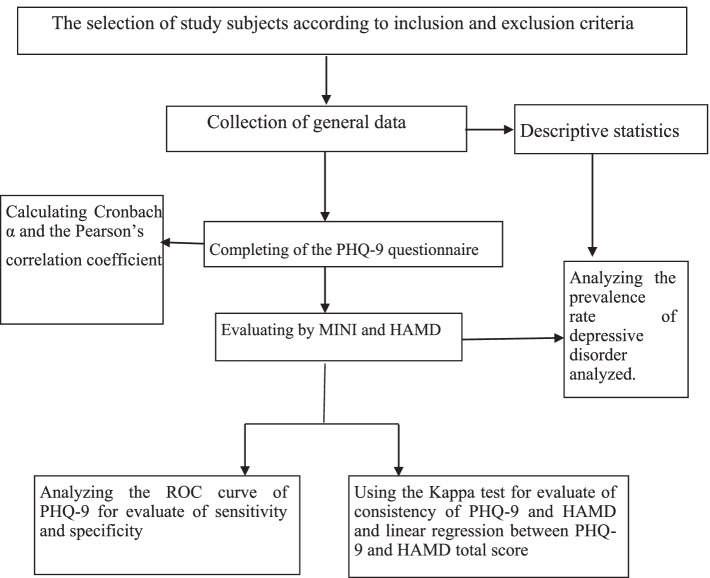
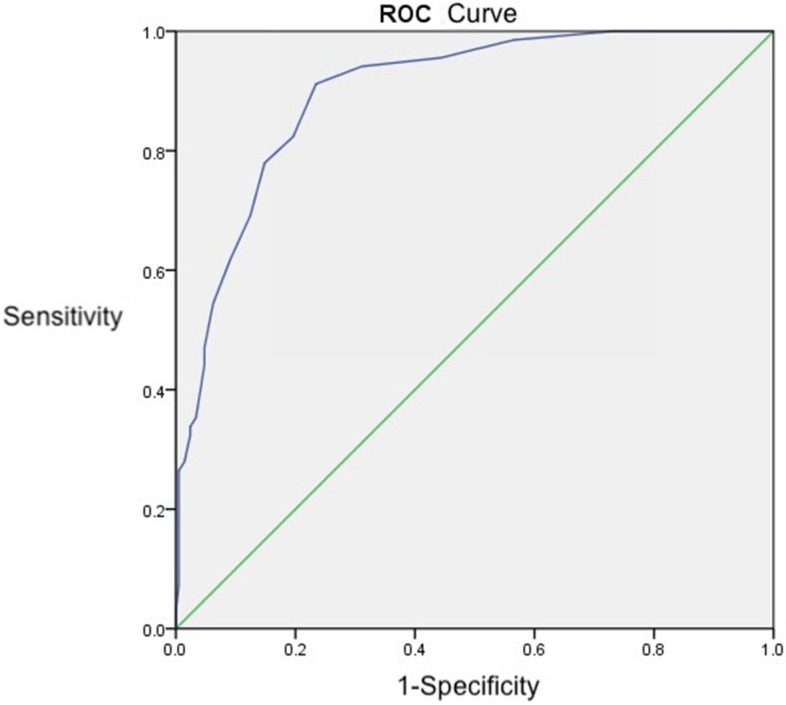
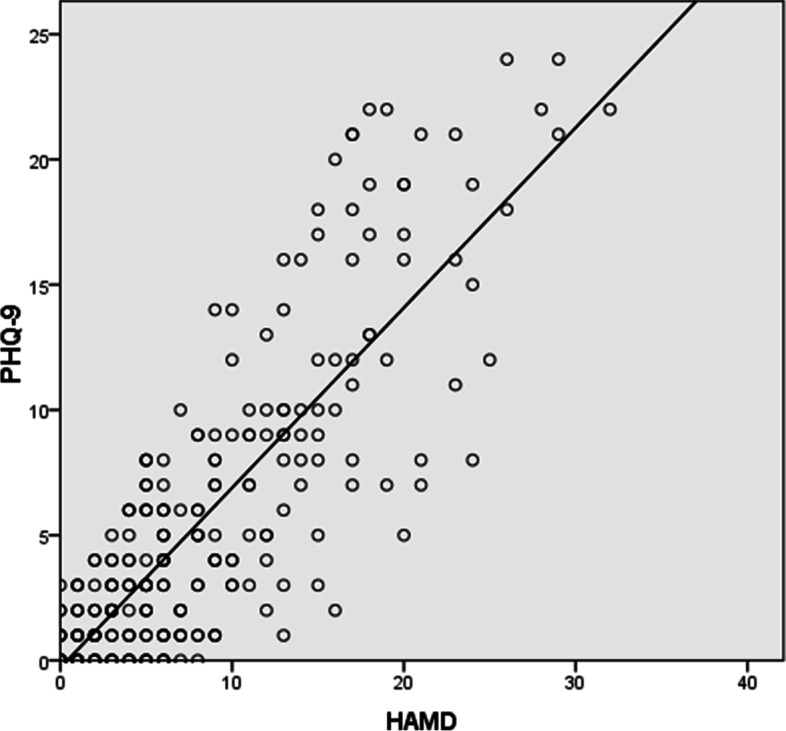
BACKGROUND: This study aimed to explore the validity and reliability of the Patient Health Questionnaire-9 (PHQ-9) on screening of depression among patients with neurological disorders, and to explore factors influencing such patients. METHODS: In this study, 277 subjects who were admitted to the department of neurology of our hospital due to different neurological disorders completed the PHQ-9 questionnaire. The Mini-International Neuropsychiatric Interview (MINI) and Hamilton Rating Scale for Depression (HAMD) were employed to evaluate the depressive symptoms of patients who completed the PHQ-9 questionnaire. The internal consistency, criterion validity, structural validity, and optimal cut-off values of PHQ-9 were evaluated, and the consistency assessment was conducted between the depression severity as assessed by PHQ-9, HAMD and MINI. Logistic regression analysis was used to calculate the risk factors of depression. RESULTS: The Cronbach's α coefficient of the PHQ-9 was 0.839. The Pearson's correlation coefficient among the 9 items of the PHQ-9 scale was 0.160 ~ 0.578 (P < 0.01), and the Pearson's correlation coefficient between each item and the total score was at the range of 0.608 ~ 0.773. Taking the results of MINI as the gold standard, the area under the receiver operating characteristic (ROC) curve of the PHQ-9 results for all the subjects (n = 277) was 0.898 (95% confidence interval (CI): 0.859 ~ 0.937, P < 0.01). When the cut-off score was equal to 5, the values of sensitivity, specificity, and the Youden's index were 91.2, 76.6%, and 0.678, respectively. Multivariate logistic regression analysis showed that the influence of unemployment on the occurrence of depression was statistically significant (P = 0.027, OR = 3.080, 95%CI: 1.133 ~ 8.374). CONCLUSIONS: The application of PHQ-9 for screening of depression among Chinese patients with neurological disorders showed a good reliability and validity.
Overview
The claims and statistics of this paper haven’t been checked yet.
Run the check — free, no account needed. It reads the open-access text and checks the sources it cites.
Integrity signals
Registry
Cites
Statistics
Figures
Verification
Claims the paper makes
The claims and statistics of this paper haven’t been checked yet.
Run the check — free, no account needed. It reads the open-access text and checks the sources it cites.
Claims other papers make about this one
Each is checked against this paper’s own text: does it say what the citing paper says it does?
The source backs part of the claim, not all of it — or backs it for a different population, condition or comparison.
In the citing paper
“The PHQ-9 has demonstrated high internal consistency, with a Cronbach α of .89, and excellent test-retest reliability, with a correlation coefficient of 0.84 [28].”
From Predictors and Correlates of Depression and Anxiety Symptom Trajectories in a Large Digital Mental Health Provider: Retrospective Analysis of Data From Rula Health (2025) · cites this paper as [28]
Experimental — accuracy not yet measured
Self-check
Percentages, sums and reported differences re-computed from the paper’s own numbers.
The self-check needs the paper’s full text.
Citations
Cites
The PHQ-9: Validity of a brief depression severity measure
Kroenke, K., Spitzer, R. L., & Williams, J. B. W. (2001) · Journal of General Internal Medicine · doi:10.1046/j.1525-1497.2001.016009606.x · Cited by 44,910
(1998) · PubMed · Cited by 10,216
A self-rating depression scale
ZUNG, W. W. K. (1965) · Archives of General Psychiatry · doi:10.1001/archpsyc.1965.01720310065008 · Cited by 9,813
Spitzer, R. L. (1999) · JAMA · doi:10.1001/jama.282.18.1737 · Cited by 9,802
Development of a Rating Scale for Primary Depressive Illness
Hamilton, M. (1967) · British Journal of Social and Clinical Psychology · doi:10.1111/j.2044-8260.1967.tb00530.x · Cited by 8,410
The PHQ-9: A New Depression Diagnostic and Severity Measure
Kroenke, K., & Spitzer, R. L. (2002) · Psychiatric Annals · doi:10.3928/0048-5713-20020901-06 · Cited by 5,898 · cited 1×
“The original researchers of PHQ-9 used 5, 10, 15, 20 as the demarcation values for mild depression, moderate depression, severe depression, and very severe depression [25].”
MethodMalhi, G. S., & Mann, J. J. (2018) · The Lancet · doi:10.1016/s0140-6736(18)31948-2 · Cited by 4,099
Kroenke, K., Spitzer, R. L., Williams, J. B. W., & Löwe, B. (2010) · General Hospital Psychiatry · doi:10.1016/j.genhosppsych.2010.03.006 · Cited by 4,057 · cited 1×
“showed that the sensitivity was 77 - 88% and the specificity was 88 - 94% with 10 points as the cut-off value [39].”
BackgroundManea, L., Gilbody, S., & McMillan, D. (2012) · Canadian Medical Association Journal · doi:10.1503/cmaj.110829 · Cited by 1,966
Gilbody, S., Richards, D., Brealey, S., & Hewitt, C. (2007) · Journal of General Internal Medicine · doi:10.1007/s11606-007-0333-y · Cited by 1,290
Multimorbidity and depression: A systematic review and meta-analysis
Read, J. R., Sharpe, L., Modini, M., & Dear, B. F. (2017) · Journal of Affective Disorders · doi:10.1016/j.jad.2017.06.009 · Cited by 869
Comorbidities of epilepsy: current concepts and future perspectives
Keezer, M. R., Sisodiya, S. M., & Sander, J. W. (2016) · The Lancet Neurology · doi:10.1016/s1474-4422(15)00225-2 · Cited by 778
Clark, L. A., Cuthbert, B., Lewis-Fernández, R., Narrow, W. E., & Reed, G. M. (2017) · Psychological Science in the Public Interest · doi:10.1177/1529100617727266 · Cited by 688
Psychometric comparison of PHQ-9 and HADS for measuring depression severity in primary care
Cameron, I. M., Crawford, J. R., Lawton, K., & Reid, I. C. (2008) · British Journal of General Practice · doi:10.3399/bjgp08x263794 · Cited by 590
The link between multiple sclerosis and depression
Feinstein, A., Magalhaes, S., Richard, J., Audet, B., & Moore, C. S. (2014) · Nature Reviews Neurology · doi:10.1038/nrneurol.2014.139 · Cited by 550
Wang, J., Wu, X., Lai, W., Long, E., Zhang, X., Li, W., Zhu, Y., Chen, C., Zhong, X., Liu, Z., et al. (2017) · BMJ Open · doi:10.1136/bmjopen-2017-017173 · Cited by 486
Adewuya, A. O., Ola, B. A., & Afolabi, O. O. (2006) · Journal of Affective Disorders · doi:10.1016/j.jad.2006.05.021 · Cited by 474
Monahan, P. O., Shacham, E., Reece, M., Kroenke, K., Ong’or, W. O., Omollo, O., Yebei, V. N., & Ojwang, C. (2008) · Journal of General Internal Medicine · doi:10.1007/s11606-008-0846-z · Cited by 470
Depression and Parkinson’s Disease: Current Knowledge
Marsh, L. (2013) · Current Neurology and Neuroscience Reports · doi:10.1007/s11910-013-0409-5 · Cited by 434
Sun, Y., Fu, Z., Bo, Q., Mao, Z., Ma, X., & Wang, C. (2020) · BMC Psychiatry · doi:10.1186/s12888-020-02885-6 · Cited by 343
Titov, N., Dear, B. F., McMillan, D., Anderson, T., Zou, J., & Sunderland, M. (2011) · Cognitive Behaviour Therapy · doi:10.1080/16506073.2010.550059 · Cited by 342
Risk factors for non-motor symptoms in Parkinson's disease.
Marinus, J., Zhu, K., Marras, C., Aarsland, D., & van Hilten, J. V. (2018) · Lancet Neurology · doi:10.1016/s1474-4422(18)30127-3 · Cited by 302
Arrieta, J., Aguerrebere, M., Raviola, G. J., Flores, H., Elliott, P. F., Espinosa, A., Reyes, A., Ortiz‐Panozo, E., Rodriguez-Gutierrez, E. G., Mukherjee, J. S., et al. (2017) · Journal of Clinical Psychology · doi:10.1002/jclp.22390 · Cited by 261
Editorial (Thematic Selection: A Systematic Review of Depression)
Cui, R. (2015) · Current Neuropharmacology · doi:10.2174/1570159x1304150831123535 · Cited by 213
A study of the diagnostic accuracy of the PHQ-9 in primary care elderly
Phelan, E. A., WILLIAMS, B. J., Meeker, K., Bonn, K., Frederick, J. T., LoGerfo, J. P., & Snowden, M. B. (2010) · BMC Family Practice · doi:10.1186/1471-2296-11-63 · Cited by 209
Liu, S.-I., Yeh, Z.-T., Huang, H.-C., Sun, F.-J., Tjung, J.-J., Hwang, L.-C., Shih, Y.-H., & Yeh, A. W.-C. (2011) · Comprehensive Psychiatry · doi:10.1016/j.comppsych.2010.04.013 · Cited by 192
Validity of brief screening questionnaires to detect depression in primary care in Ethiopia
Hanlon, C., Medhin, G., Selamu, M., Breuer, E., Dubale, B. W., Hailemariam, M., Lund, C., Prince, M. J., & Fekadu, A. (2015) · Journal of Affective Disorders · doi:10.1016/j.jad.2015.07.015 · Cited by 191
Woldetensay, Y. K., Belachew, T., Tesfaye, M., Spielman, K. L., Biesalski, H. K., Kantelhardt, E. J., & Scherbaum, V. (2018) · PLoS ONE · doi:10.1371/journal.pone.0191782 · Cited by 137
Omoro, S. A. O., Fann, J. R., Weymuller, E. A., Macharia, I. M., & Yueh, B. (2006) · The International Journal of Psychiatry in Medicine · doi:10.2190/8w7y-0tpm-jvgv-qw6m · Cited by 133
Rathore, J., Jehi, L. E., Fan, Y., Patel, S., Foldvary‐Schaefer, N., Ramirez, M. J., Busch, R. M., Obuchowski, N. A., & Tesar, G. E. (2014) · Epilepsy & Behavior · doi:10.1016/j.yebeh.2014.06.030 · Cited by 117
Prevalence and correlates of DSM-5 major depressive and related disorders in the community
Vandeleur, C. L., Fassassi, S., Castelao, E., Glaus, J., Strippoli, M.-P. F., Lasserre, A. M., Rudaz, D., Gebreab, S., Pistis, G., Aubry, J.-M., et al. (2017) · Psychiatry Research · doi:10.1016/j.psychres.2017.01.060 · Cited by 116
Udedi, M., Muula, A. S., Stewart, R. C., & Pence, B. W. (2019) · BMC Psychiatry · doi:10.1186/s12888-019-2062-2 · Cited by 113
The factor structure of the PHQ-9 in palliative care
Chilcot, J., Rayner, L., Lee, W. E., Price, A. C., Goodwin, L., Monroe, B., Sykes, N. P., Hansford, P., & Hotopf, M. H. (2013) · Journal of Psychosomatic Research · doi:10.1016/j.jpsychores.2012.12.012 · Cited by 111
The validity and reliability of the PHQ-9 in screening for post-stroke depression
Dajpratham, P., Pukrittayakamee, P., Atsariyasing, W., Wannarit, K., Boonhong, J., & Pongpirul, K. (2020) · BMC Psychiatry · doi:10.1186/s12888-020-02699-6 · Cited by 97
Ye, X., Shu, H., Feng, X., Xia, D., Wang, Z.-Q., Mi, W., Yu, B., Zhang, X., & Li, C. (2020) · BMJ Open · doi:10.1136/bmjopen-2019-033211 · Cited by 75
Finney, G. R., Minagar, A., & Heilman, K. M. (2015) · Neurologic Clinics · doi:10.1016/j.ncl.2015.08.001 · Cited by 72
Malpass, A., Dowrick, C. F., Gilbody, S. M., Robinson, J. E., Wiles, N., Duffy, L., & Lewis, G. (2016) · British Journal of General Practice · doi:10.3399/bjgp16x683473 · Cited by 58
Kasthurirathne, S. N., Biondich, P., Grannis, S. J., Purkayastha, S., Vest, J. R., & Jones, J. (2019) · Journal of Medical Internet Research · doi:10.2196/13809 · Cited by 34
Azah, M., Shah, M., Juwita, S., Bahri, I., Mahmud, W. M. R. W., & Jamil, Y. (2005) · IMJ/International medical journal · Cited by 31
Mehdizadeh, M., Fereshtehnejad, S., Goudarzi, S., Moshtagh, A., Nasrabadi, F. D., Habibi, S. A. H., & Taghizadeh, G. (2020) · Parkinson s Disease · doi:10.1155/2020/2793945 · Cited by 22
Taghizadeh, G., Joghataei, M. T., Goudarzi, S., Bakhsheshi, M., Habibi, S. A. H., & Mehdizadeh, M. (2021) · Neuroscience Letters · doi:10.1016/j.neulet.2020.135620 · Cited by 22
Costs and cost-drivers of a diagnosis of depression among adults with epilepsy in the United States
Lekoubou, A., Bishu, K. G., & Ovbiagele, B. I. (2019) · Epilepsy & Behavior · doi:10.1016/j.yebeh.2019.04.047 · Cited by 19
Analysis of risk factors for depression in Alzheimer’s disease patients
Yang, H., Hong, W., Chen, L., Tao, Y. K., Peng, Z., & Zhou, H. (2020) · International Journal of Neuroscience · doi:10.1080/00207454.2020.1730369 · Cited by 18
Jemaa, S. B., Marzouki, Y., Fredj, M., Gall, D. L., & Bellaj, T. (2019) · Journal of Alzheimer s Disease · doi:10.3233/jad-180448 · Cited by 7
[A multiple center study on depression and anxiety state in the department of neurology].
Zhang, J., Wei, J., Shi, L., Li, S.-W., Wang, Y., Chen, J., Xu, J., Gui, B., Liu, L., Wu, Z., et al. (2007) · PubMed · Cited by 6
Research works printed but not linked: 7
- WHO. The global burden of disease: 2004 update. Geneva: World Health Organization; 2008.
- Zhang J, Wei J, Shi LL, et al. Zhonghua Yi Xue Za Zhi. 2007;87:889–93.
- First MB, Spitzer RL, Gibbon M, Williams J. Structured clinical interview for DSM-V-TR Axis I disorders-non-patient ed. (SCII/ NP-2/2001 Revision). New York: Biometrics Research Department; 2001.
- Wittchen H-U, Semler G. Composite international diagnostic interview. CIDI Interviewerheft (deutsche Bearbeitung) (World Health Organization, Ed.). Weinheim: Beltz Test; 1991.
- Hamilton M. Development of a rating scale for primary depressive illness. Br J Soc Clin Psychol. 1976;6:278–96. · DOI
- Haihong Y. Value of 9 items patients' health questionnaire depression scale in screening of post-stroke depression. J Clin Med Pract. 2016;8:28–30.
- Cleary P, Guy W. Factor analysis of the Hamilton depression scale. Drugs Exp Clin Res. 1977;1:115–20.
Cited by
Sorted by citations
Zeng, Y., Hu, C., Li, Y.-Z., Zhou, J., Wang, S., Liu, M.-D., Qiu, Z., Deng, C., Ma, F., Xia, C.-F., et al. (2024) · Nature Medicine · doi:10.1038/s41591-024-02929-4 · Cited by 167
Self-citationVillarreal-Zegarra, D., Barrera-Begazo, J., Otazú-Alfaro, S., Mayo-Puchoc, N., Bazo-Alvarez, J. C., & Huarcaya-Victoria, J. (2023) · BMJ Open · doi:10.1136/bmjopen-2023-076193 · Cited by 93
Zhou, Y., Han, W., Yao, X., Xue, J., Li, Z., & Li, Y. (2023) · International Journal of Nursing Studies · doi:10.1016/j.ijnurstu.2023.104562 · Cited by 69
Choudhary, S., Thomas, N., Ellenberger, J., Srinivasan, G., & Cohen, R. (2022) · JMIR Formative Research · doi:10.2196/37736 · Cited by 39
The relationship between BMI and depression: a cross-sectional study
Cui, H., Xiong, Y., Wang, C., Ye, J., & Zhao, W. (2024) · Frontiers in Psychiatry · doi:10.3389/fpsyt.2024.1410782 · Cited by 28
Metadata
- Authors
- Sun, Y., Kong, Z., Song, Y., Liu, J., & Wang, X.
- Affiliations
- Peking University (CN)
- Corresponding author
- Song, Yuqing
- Liu, Jing
- Wang, Xilin
- Venue
- BMC Psychiatry
- Published
- 2022-02-09
- Volume
- 22
- Issue
- 1
- Pages
- 98-98
- ISSN
- 1471-244X (ISSN-L)
- PMC
- PMC8827244
- OpenAlex
- W4210925784
- Cited by
- 131
- References
- 46
- Citations by year
- 2026: 32 · 2025: 51 · 2024: 26 · 2023: 19 · 2022: 3
- FWCI
- 22.76
- Type
- journal article
- Language
- en
- Open access
- gold
- doi.org
- Locations
- BMC Psychiatry (publishedVersion, cc-by)
- PubMed Central (publishedVersion, cc-by)
- PubMed (publishedVersion)
- DOAJ (DOAJ: Directory of Open Access Journals) (submittedVersion, cc-by-sa)
- Greater South Information System
- Topics
- Social Sciences › Psychology › Experimental and Cognitive Psychology › Anxiety, Depression, Psychometrics, Treatment, Cognitive Processes
- Health Sciences › Medicine › Pharmacology (medical) › Treatment of Major Depression
- Health Sciences › Nursing › Research and Theory › Health Education and Validation
- Keywords
- PHQ-9, depression screening, neurological disorders, psychometric validation, internal consistency, cut-off values, unemployment, risk factors for depression, Chinese patients
- MeSH terms
- Patient Health Questionnaire, Cross-Sectional Studies, Depression, Humans, Nervous System Diseases, Neurology, Surveys and Questionnaires, Reproducibility of Results
About these checks
Registry, retraction, Cites and statistics results are computed, not judged, with one exception: a printed reference that no index lists is read once by a model before it counts as a citation error. Claims are extracted by a model and kept only when their quote appears verbatim in the text; each cited source is then checked, with a model’s help, for whether it says what the claim relies on. Those verdicts can be wrong — read the claim’s quote and the cited source before relying on one.
Statistics and arithmetic are recomputed, not judged.
Confidence bands are shown only for fields calibrated on our annotated test set. None is calibrated yet, so no band is shown.
What counts as a claim ›How we measure confidence ›How we check this ›
Are you an author, or do you see a problem with this page? Request a review
