

Effect of acceptance and commitment therapy on mood, sleep quality and quality of life in menopausal women: a randomized controlled trial
Open accessThe DOI matches its Crossref record; 57 of the 58 references it cites were found in a registry or an index, and 1 are not checked yet; 6 of the 18 sources its claims cite were checked for support.
Abstract
Background: One of the most critical periods in a woman’s life is menopause. During menopause, depression and anxiety are among the most common mood changes. Sleep disorders also increase during menopause, which leads to quality of life disorders. Different methods such as medication, psychotherapy, or a combination of them are used to treat these disorders. Acceptance and commitment-based therapy is one of the newest methods in psychotherapy that recently has been used a lot. Therefore, this study was conducted to determine the effect of acceptance and commitment therapy (ACT) on mood (primary outcome), sleep quality, and quality of life (secondary outcomes) of menopausal women. Methods: This randomized controlled trial was performed on 86 menopausal women in Tabriz, Iran in 2021. Using the blocking method, participants were randomly assigned into the intervention and control groups. The intervention group received counseling based on ACT approach in 8 sessions of 60 to 90 min. The control group received only routine health care. Depression, Anxiety, Stress Scale-21 (DASS 21), Menopause Quality of Life (MENQOL), and Pittsburgh Sleep Quality Index (PSQI) questionnaires were completed before intervention and immediately after the intervention. Independent t-test and Mann-Whitney U test were used to compare the outcomes between the two groups. Results: In terms of sociodemographic characteristics and baseline values of the studied variables, there was no statistically significant difference between the study groups before the intervention. At the end of the intervention, the mean (SD: standard deviation) scores of anxiety, stress, and depression in the counseling group were 2.66 (1.28), 2.91 (1.62), and 1.98 (1.59) and in the control group were 4.19 (1.85), 5.61 (1.49) and 3.59 (1.91). In the intervention group, the mean score of all three variables was significantly lower than the control group (P < 0.001). After the intervention, the mean (SD) of the total sleep quality score was 4.04 (2.52) in the counseling group and 4.13 (2.63) in the control group. In addition, the mean (SD) of the total quality of life score was 23.47 (20.13) in the counseling group and 23.14 (17.76) in the control group. Between the study groups, there were no statistically significant differences in the mean of the overall score of sleep quality (P = 0.867) and the overall score of quality of life (P = 0.759). Conclusion: Using ACT-based counseling can improve the mood of menopausal women. However, further randomized clinical trials are needed before making a definitive conclusions. Trial registration: Iranian Registry of Clinical Trials (IRCT): IRCT20120718010324N65. Date of registration: 2/19/2021. Date of first registration: 2/19/2021. URL: https://en.irct.ir/user/trial/53544/view; Date of recruitment start date: 2/22/2021. © 2022, The Author(s).
Verifying this paper
8 of 9 steps done · this page updates itself — you can leave and come back
- Registry recordVerified
- Full textRead the full text
- Reference list58 references found
- Reference checkChecking each cited work — 57 of 58
- StatisticsRecomputed
- Claims30 claims anchored to a quote
- Cited sourcesChecked
- Self-checkChecked
- VerificationFindings verified
Overview
CoChat Summary
## TL;DR
This randomized controlled trial in 86 postmenopausal women found that 8 sessions of ACT-based counseling improved mood outcomes (anxiety, stress, and depression) versus routine care. It did not show significant effects on sleep quality or quality of life.
## Key findings
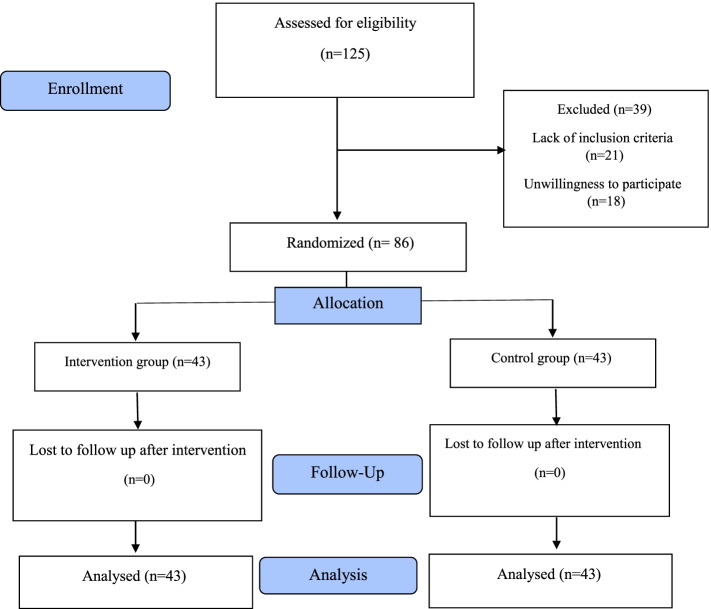
- The trial included 86 menopausal women in Tabriz, Iran; 43 were allocated to the counseling group and 43 to control, with no dropouts.
- After the intervention, mean scores in the counseling vs control groups were anxiety 2.66 (1.28) vs 4.19 (1.85), stress 2.91 (1.62) vs 5.61 (1.49), and depression 1.98 (1.59) vs 3.59 (1.91); all three were significantly lower in the counseling group (P < 0.001).
- Sleep quality did not differ significantly between groups after the intervention: 4.04 (2.52) vs 4.13 (2.63), P = 0.867.
- Quality of life also did not differ significantly after the intervention: 23.47 (20.13) vs 23.14 (17.76), P = 0.759.
## Methods
- Design: Two-arm randomized controlled trial with parallel groups; allocation used random blocking with 1:1 assignment and allocation concealment with sealed envelopes.
- Sample/data: 86 postmenopausal women aged 45–60 years recruited from health centers in Tabriz, Iran from March to August 2021; participants had mild-to-moderate anxiety, depression, and stress by DASS-21 criteria.
- Analysis: Outcomes were measured before and immediately after intervention using DASS-21, MENQOL, and PSQI; between-group comparisons used independent t-test or Mann-Whitney U test, with intention-to-treat and P < 0.05 as significant.
## Limitations
- The paper states that the study coincided with the coronavirus pandemic, with social distancing, quarantine, and restrictions affecting counseling sessions.
- The paper states that participants and data assessor could not be blinded because of the nature of the intervention.
- The paper states the sample size was relatively small and the follow-up period was short; it also notes as an evident limitation that outcomes were assessed immediately after intervention only, with no longer-term follow-up.
Model-written summary. Check it against the paper before relying on it.
Integrity signals
Registry
Cites
Statistics
Figures
Verification
Claims the paper makes
2 Valid · 2 Not valid · 5 Not checked · 21 Own results and interpretations
A result the paper reports from its own data — it cites no other source for it, so there is none to check. The quote shows it is in the paper.
In the paper
“There was no statistically significant difference between the groups in terms of sleep quality subdomains (P > 0.05) (Table 3).”
§ Effect of acceptance and commitment therapy on mood, sleep quality and quality of life in menopausal women: a randomized controlled trial > Results
plain- Asserted: passes — The authors put it forward as true.
- Checkable: passes — It can be checked against evidence.
- Load-bearing: passes — The paper’s conclusions depend on it.
- Based: passes — The paper gives a reason why it holds.
A result the paper reports from its own data — it cites no other source for it, so there is none to check. The quote shows it is in the paper.
In the paper
“Between the study groups, there were no statistically significant differences in the mean of the overall score of sleep quality (P = 0.867) and the overall score of quality of life (P = 0.759).”
- Also stated in: § Results · plain
“According to the Mann-Whitney U test, there was no statistically significant difference between the two groups before (P = 0.548) and after the intervention (P = 0.867).”
§ Effect of acceptance and commitment therapy on mood, sleep quality and quality of life in menopausal women: a randomized controlled trial > Abstract > Results
plain- Asserted: passes — The authors put it forward as true.
- Checkable: passes — It can be checked against evidence.
- Load-bearing: unclear — It is unclear whether the paper’s conclusions depend on it.
- Based: passes — The paper gives a reason why it holds.
- Also stated in: § Results · plain
A result the paper reports from its own data — it cites no other source for it, so there is none to check. The quote shows it is in the paper.
In the paper
“However, after the intervention, the mean score of anxiety, stress and depression was significantly lower in the counseling group than the control group (P < 0.001) (Table 2).”
- Also stated in: § Discussion · plain
“In the present study, at the end of the intervention, the mean scores of stress, anxiety, and depression in the group receiving counseling based on ACT were significantly lower than the control group.”
§ Effect of acceptance and commitment therapy on mood, sleep quality and quality of life in menopausal women: a randomized controlled trial > Results
plainstates a causen = 86 ·- Asserted: passes — The authors put it forward as true.
- Checkable: passes — It can be checked against evidence.
- Load-bearing: passes — The paper’s conclusions depend on it.
- Based: passes — The paper gives a reason why it holds.
- Also stated in: § Discussion · plain
A result the paper reports from its own data — it cites no other source for it, so there is none to check. The quote shows it is in the paper.
In the paper
“There was no statistically significant difference between the groups in terms of quality of life subdomains (P > 0.05) (Table 4).”
§ Effect of acceptance and commitment therapy on mood, sleep quality and quality of life in menopausal women: a randomized controlled trial > Results
plain- Asserted: passes — The authors put it forward as true.
- Checkable: passes — It can be checked against evidence.
- Load-bearing: passes — The paper’s conclusions depend on it.
- Based: passes — The paper gives a reason why it holds.
A result the paper reports from its own data — it cites no other source for it, so there is none to check. The quote shows it is in the paper.
In the paper
“However, after the intervention, the mean score of anxiety, stress and depression was significantly lower in the counseling group than the control group (P < 0.001) (Table 2).”
- Also stated in: § Discussion · plain
“In the present study, at the end of the intervention, the mean scores of stress, anxiety, and depression in the group receiving counseling based on ACT were significantly lower than the control group.”
§ Effect of acceptance and commitment therapy on mood, sleep quality and quality of life in menopausal women: a randomized controlled trial > Results
plainstates a causen = 86 ·- Asserted: passes — The authors put it forward as true.
- Checkable: passes — It can be checked against evidence.
- Load-bearing: passes — The paper’s conclusions depend on it.
- Based: passes — The paper gives a reason why it holds.
- Also stated in: § Discussion · plain
10 more claims
Create a free account to see all 30 claims and to verify the 2 references still open.
- Probably not a substantial claim. 9
- It may state two separate claims as one. 8
Claims other papers make about this one
Each is checked against this paper’s own text: does it say what the citing paper says it does?
The cited source says what the claim attributes to it.
In the citing paper
“No signficant effect on quality of life.”
From The effectiveness of psychosocial interventions on non-physiological symptoms of menopause: A systematic review and meta-analysis (2024) · cites this paper as Monfaredi et al. (2022)
The cited source says what the claim attributes to it.
In the citing paper
“Acceptance and Commitment Therapy led to significantly more reduction in depression, anxiety, and stress than control.”
From The effectiveness of psychosocial interventions on non-physiological symptoms of menopause: A systematic review and meta-analysis (2024) · cites this paper as Monfaredi et al. (2022)
Citations
Cites
Acceptance and commitment therapy: model, processes and outcomes
Hayes, S. C., Luoma, J. B., Bond, F. W., Masuda, A., & Lillis, J. (2006) · Behaviour Research and Therapy · doi:10.1016/j.brat.2005.06.006 · Cited by 6,587 · cited 1×
“These six processes include acceptance, diffusion, self as context, communication with the present, values, and committed action [24].”
BackgroundHenry, J. D., & Crawford, J. R. (2005) · British Journal of Clinical Psychology · doi:10.1348/014466505x29657 · Cited by 5,801 · cited 1×
“For each subscale, the minimum score is zero and the maximum is 21 and a higher score indicates a worse situation [50].”
BackgroundGPOWER: A general power analysis program
Erdfelder, E., Faul, F., & Buchner, A. (1996) · Behavior Research Methods, Instruments, & Computers · doi:10.3758/bf03203630 · Cited by 4,864 · cited 1×
“[41], the sample size was calculated 39 people by using the G-power software [42] for stress variable with considering the M1 = 7.”
MethodHayes, S. C., Levin, M. E., Plumb-Vilardaga, J., Villatte, J. L., & Pistorello, J. (2013) · Behavior Therapy · doi:10.1016/j.beth.2009.08.002 · Cited by 1,120
Oral oestrogen and combined oestrogen/progestogen therapy versus placebo for hot flushes
MacLennan, A. H., Broadbent, J. L., Lester, S., & Moore, V. (2004) · Cochrane Database of Systematic Reviews · doi:10.1002/14651858.cd002978.pub2 · Cited by 543 · cited 1×
“Hormone therapy (HRT) is the most effective treatment for vasomotor symptoms of menopause among the pharmacologic therapies so that it treats 80 to 90% of the symptoms [21].”
BackgroundChanges in sleep pattern and sleep quality during COVID-19 lockdown
Krishnan, V., Gupta, R., Grover, S., Basu, A., Tripathi, A., Subramanyam, A., Nischal, A., Hussain, A., Mehra, A., Ambekar, A., et al. (2020) · Indian Journal of Psychiatry · doi:10.4103/psychiatry.indianjpsychiatry_523_20 · Cited by 357 · cited 1×
“COVID-19 pandemic and quarantine have caused changes in the program, quality, and quantity of sleep such as going to bed late at night, waking up late in the morning, and reducing the quality of sleep and daily naps according to recent studies [66].”
A meta-analysis of the effect of hormone replacement therapy upon depressed mood
Zweifel, J. E., & O'Brien, W. H. (1997) · Psychoneuroendocrinology · doi:10.1016/s0306-4530(96)00034-0 · Cited by 330
Quality of life under the COVID-19 quarantine
Ferreira, L. N., Pereira, L. N., da Fé Brás, M., & Ilchuk, K. (2021) · Quality of Life Research · doi:10.1007/s11136-020-02724-x · Cited by 318
The Depression Anxiety Stress Scale (DASS)
Parkitny, L., & McAuley, J. (2010) · Journal of Physiotherapy · doi:10.1016/s1836-9553(10)70030-8 · Cited by 314 · cited 1×
“For each of the three subscales, 7 questions are considered [48, 49].”
BackgroundBenefits of psychosocial oncology care: improved quality of life and medical cost offset.
Carlson, L. E., & Bultz, B. D. (2003) · Health and Quality of Life Outcomes · doi:10.1186/1477-7525-1-8 · Cited by 285 · cited 1×
“In addition to effectiveness, counseling in this field will reduce overall health costs [39, 40].”
BackgroundCarlson, L. E., & Bultz, B. D. (2004) · Psycho-Oncology · doi:10.1002/pon.832 · Cited by 276 · cited 1×
“In addition to effectiveness, counseling in this field will reduce overall health costs [39, 40].”
BackgroundWhen does estrogen replacement therapy improve sleep quality?
Polo-Kantola, P., Erkkola, R., Helenius, H., Irjala, K., & Polo, O. (1998) · American Journal of Obstetrics and Gynecology · doi:10.1016/s0002-9378(98)70539-3 · Cited by 242
Harvey, A. G., & Gumport, N. B. (2015) · Behaviour Research and Therapy · doi:10.1016/j.brat.2015.02.004 · Cited by 221 · cited 1×
“Due to the side effects of long-term use of drug treatments, alternative psychological therapies can be used [38].”
BackgroundThe Pittsburgh Sleep Quality Index (PSQI)
Smyth, C. (1999) · Journal of Gerontological Nursing · doi:10.3928/0098-9134-19991201-10 · Cited by 214 · cited 1×
“A score higher than 5 indicates poor sleep quality [46].”
BackgroundBauld, R., & Brown, R. F. (2009) · Maturitas · doi:10.1016/j.maturitas.2008.12.004 · Cited by 160 · cited 1×
“These factors are the adverse effect of vasomotor symptoms on mood (domino theory), bad events in social life such as illness, previous history of depression, retirement, death of a spouse, care of elderly parents, empty nest syndrome, how women feel about menopause, prolonged menopause, chronic pain and disability, c…”
BackgroundMetacognitive therapy in treatment-resistant depression: A platform trial
Wells, A., Fisher, P., Myers, S., Wheatley, J., Patel, T., & Brewin, C. R. (2012) · Behaviour Research and Therapy · doi:10.1016/j.brat.2012.02.004 · Cited by 145 · cited 1×
“To help people gain control of their inner experiences, therapists use an acceptance and commitment-based approach with many metaphors and strategies [54].”
BackgroundModulation of the sleep electroencephalogram by estrogen replacement in postmenopausal women
Antonijevic, I. A., Stalla, G. K., & Steiger, A. (2000) · American Journal of Obstetrics and Gynecology · doi:10.1016/s0002-9378(00)70211-0 · Cited by 139
Complementary and Alternative Medicine for Sleep Disturbances in Older Adults
Gooneratne, N. S. (2008) · Clinics in Geriatric Medicine · doi:10.1016/j.cger.2007.08.002 · Cited by 133
Cognitive behavioral therapy for menopausal symptoms
Hunter, M. S. (2020) · Climacteric · doi:10.1080/13697137.2020.1777965 · Cited by 104
Symptom reports from a cohort of African American and white women in the late reproductive years
Freeman, E. W., Grisso, J. A., Berlin, J., Sammel, M., Garcia-Espana, B., & Hollander, L. (2001) · Menopause · doi:10.1097/00042192-200101000-00007 · Cited by 101
Buchanan, D. T., Vitiello, M. V., Barsness, S. M., Elmer, G. W., Anderson, G. D., & Landis, C. A. (2008) · Sleep Medicine · doi:10.1016/j.sleep.2008.02.001 · Cited by 101 · cited 2×
“In different people, these symptoms can appear as minor discomfort to severe and debilitating symptoms [1].”
BackgroundDiagnosis and management of mood disorders during the menopausal transition
Cohen, L. S., Soares, C. N., & Joffe, H. (2005) · The American Journal of Medicine · doi:10.1016/j.amjmed.2005.09.042 · Cited by 99 · cited 1×
“Hormonal changes during menopause may affect mood during this period, for example, depressive and anxiety symptoms have been described among postmenopausal women [11].”
BackgroundAge at natural menopause in Iran
Mohammad, K., Hashemi, S. M. S., & Farahani, F. K. A. (2004) · Maturitas · doi:10.1016/j.maturitas.2004.02.006 · Cited by 95
Zakiei, A., Khazaie, H., Rostampour, M., Lemola, S., Esmaeili, M., Dürsteler, K., Brühl, A., Sadeghi-Bahmani, D., & Brand, S. (2021) · Life · doi:10.3390/life11020133 · Cited by 84 · cited 1×
“It showed that this intervention improves sleep quality, experimental avoidance, and emotion regulation [56].”
BackgroundTaavoni, S., Ekbatani, N., Kashaniyan, M., & Haghani, H. (2011) · Menopause · doi:10.1097/gme.0b013e31820e9acf · Cited by 84
Risk Factors Associated With Snoring in Women With Special Emphasis on Body Mass Index
Svensson, M., Lindberg, E., Naessen, T., & Janson, C. (2006) · Chest · doi:10.1378/chest.129.4.933 · Cited by 82
The effect of acceptance and commitment therapy on insomnia and sleep quality: A systematic review
Salari, N., Khazaie, H., Hosseinian-Far, A., Khaledi-Paveh, B., Ghasemi, H., Mohammadi, M., & Shohaimi, S. (2020) · BMC Neurology · doi:10.1186/s12883-020-01883-1 · Cited by 78 · cited 1×
“This study results also showed that ACT counseling improves sleep quality and insomnia [57].”
ResultSleep and Its Disorders in Older Adults
Cooke, J. R., & Ancoli‐Israel, S. (2006) · Psychiatric Clinics of North America · doi:10.1016/j.psc.2006.08.003 · Cited by 75 · cited 1×
“It also decreases the ability to perform physical, mental, and social daily activities and affects mood changes in women [18].”
BackgroundToral, M. V., Godoy‐Izquierdo, D., García, A. P., Moreno, R. L., de Guevara, N. M. L., Ballesteros, A. S., Galván, C. D. T., & García, J. F. G. (2013) · Maturitas · doi:10.1016/j.maturitas.2013.10.020 · Cited by 72
Psychosocial interventions in people with multiple sclerosis: A review
Malcomson, K. S., Dunwoody, L., & Lowe-Strong, A. (2007) · Journal of Neurology · doi:10.1007/s00415-006-0349-y · Cited by 65 · cited 1×
“interventions are used to help individuals to manage the social, emotional, and psychological challenges [23].”
MethodNatural History of Menopause Symptoms in Primary Care Patients: A MetroNet Study
Xu, J., Bartoces, M., Neale, A. V., Dailey, R. K., Northrup, J., & Schwartz, K. L. (2005) · The Journal of the American Board of Family Medicine · doi:10.3122/jabfm.18.5.374 · Cited by 65 · cited 1×
“The average age of menopause varies by race, genetics, nutrition, physical activity, and sexual behavior [5, 6].”
BackgroundSilva, F. R. D., Guerreiro, R. D. C., Andrade, H. D. A., Stieler, E., Silva, A., & de Mello, M. T. (2020) · Chronobiology International · doi:10.1080/07420528.2020.1756841 · Cited by 63
Diet, Physical Activity, and Daylight Exposure Patterns in Night-Shift Workers and Day Workers
van de Langenberg, D., Vlaanderen, J. J., Dollé, M. E. T., Rookus, M. A., van Kerkhof, L. W. M., & Vermeulen, R. C. H. (2018) · Annals of Work Exposures and Health · doi:10.1093/annweh/wxy097 · Cited by 47
Better prepare for the next one. Lifestyle lessons from the COVID-19 pandemic
Galli, F., Reglero, G., Bartolini, D., & Visioli, F. (2020) · PharmaNutrition · doi:10.1016/j.phanu.2020.100193 · Cited by 47 · cited 1×
“Quarantine in the COVID-19 epidemic has caused many changes in the lifestyle of most people [63].”
BackgroundPsychometric Properties of the Persian Translation of Pittsburgh Sleep Quality Index
Nazifi, M., Mokarami, H., Akbaritabar, A., Kalte, H. O., & Rahi, A. (2014) · Health Scope · doi:10.17795/jhealthscope-15547 · Cited by 46
Pizarro, J. L. N., González-Luna, A., Mezones‐Holguín, E., Blümel, J. E., Barón, G., Bencosme, A., Benítez, Z., Bravo, L. M., Calle, A., Flores, D., et al. (2017) · Menopause The Journal of The North American Menopause Society · doi:10.1097/gme.0000000000000813 · Cited by 46
Therapeutic decisions for menopause: results of the DAMES project in central Massachusetts
Obermeyer, C. M., Reynolds, R. F., Price, K., & Abraham, A. (2004) · Menopause The Journal of The North American Menopause Society · doi:10.1097/01.gme.0000109318.11228.da · Cited by 45 · cited 1×
“Over 75% of women search for strategies and treatments to reduce menopausal symptoms [19].”
BackgroundAbedzadeh‐Kalahroudi, M., Taebi, M., Sadat, Z., Saberi, F., & Karimian, Z. (2012) · Nursing and Midwifery Studies · doi:10.5812/nms.8358 · Cited by 43 · cited 1×
“Menopause happens approximately at the age of 50 [4].”
BackgroundHeydari, M., Masafi, S., Jafari, M., Saadat, S. H., & Shahyad, S. (2018) · Open Access Macedonian Journal of Medical Sciences · doi:10.3889/oamjms.2018.064 · Cited by 41
Effect of group counseling on quality of life among postmenopausal women in Hamadan, Iran
Parsa, P., Tabesh, R. A., Soltani, F., & Karami, M. (2017) · Journal of Menopausal Medicine · doi:10.6118/jmm.2017.23.1.49 · Cited by 38 · cited 1×
“No intervention was applied to the control group and they received only routine care included: control of blood pressure and weight gain, control hot flushes and other menopausal symptoms, breast exam, pelvic exam, prescription to undergoing mammography and Papsmear test [44].”
MethodFluctuating ovarian function in a perimenopausal women.
Metcalf, M. G., & Donald, R. A. (1979) · PubMed · Cited by 34
Physical activity and cardiovascular risk factors at menopause: The Nord-Trøndelag health study
Guðmundsdóttir, S. L., Flanders, W. D., & Augestad, L. B. (2013) · Climacteric · doi:10.3109/13697137.2013.768231 · Cited by 32 · cited 1×
“These symptoms include flushing, menstrual irregularities, feeling of urgency in urination, bladder inflammation, predisposition to urinary tract infections, breast tenderness, vaginal dryness and atrophy, sleep disorders, sexual dysfunction, night sweats, osteoporosis, and other disorders such as depression, anxiety,…”
BackgroundAnxiety disorders. How to recognize and treat the medical symptoms of emotional illness.
Aj, L., & Mb, S. (2001) · PubMed · Cited by 29
Wise, F. M., Harris, D. W., & Olver, J. (2017) · PubMed · Cited by 28
Experimental induction of reduced ovarian reserve in a nonhuman primate model (Macaca fascicularis).
Appt, S. E., Clarkson, T. B., Hoyer, P. B., Kock, N. D., Goode, A. K., May, M. C., Persyn, J. T., Vail, N. K., Ethun, K. F., Chen, H., et al. (2010) · PubMed Central · Cited by 27
(2012) · DOAJ (DOAJ: Directory of Open Access Journals) · Cited by 26
THE EFFECT OF STRUCTURED EDUCATIONAL PROGRAM BY SUPPORT GROUP ON MENOPAUSE WOMEN’S QUALITY OF LIFE
Yazdkhasti, M., Keshavarz, M., Alsadat, M. K. E., & Fatemeh, H. A. (2012) · DOAJ (DOAJ: Directory of Open Access Journals) · Cited by 26
Cognitive-behavioral therapy for depression among menopausal woman: A randomized controlled trial
Reddy, N. V., & Omkarappa, D. B. (2019) · Journal of Family Medicine and Primary Care · doi:10.4103/jfmpc.jfmpc_396_18 · Cited by 24 · cited 1×
“Even though, some studies showed the positive effect of other similar methods used in psychology such as cognitive therapy in improving depression, anxiety, insomnia and quality of life among menopausal woman [33, 34].”
ResultVakilian, K., Zarei, F., & Majidi, A. (2019) · Iranian Red Crescent Medical Journal · doi:10.5812/ircmj.89489 · Cited by 22 · cited 2×
“Research to date has supported the effectiveness of ACT for the improvement of depression [28, 29], anxiety [28, 30], stress [29, 30], general mental health [30], insomnia and sleep quality [31], and quality of life [27, 31] among different populations such as unemployed individuals, women with multiple sclerosis, mot…”
BackgroundHiratzka, J. R., Rastegar, F., Contag, A. G., Norvell, D. C., Anderson, P. A., & Hart, R. A. (2015) · Global Spine Journal · doi:10.1055/s-0035-1567835 · Cited by 21
Gharashi, K., Moheb, N., & Abdi, R. (2019) · Auditory and Vestibular Research · doi:10.18502/avr.v28i2.866 · Cited by 13
The effect of acceptance and commitment therapy on sexual function in postmenopausal women
Rostamkhani, F., Department of Counseling, A. B., Ghamari, M., Department of Counseling, A. B., Babakhani, V, Department of Counseling, A. B., M. K., & Iranian National Center of Addiction Studies, I. O. R. B. R. (2020) · Journal of Health and Care · doi:10.52547/jhc.22.2.102 · Cited by 9 · cited 1×
“Only a research have assessed the effect of ACT on sexual function in menopausal women [32] and no study focused on the effect of ACT on mood, sleep quality and quality of life in menopausal women.”
BackgroundInstructor, D. O. M., Shariat Moghani, S., Ebrahimzadeh, M., Midwifery (MSc), S. O. N. A. M., Safari, A., Nursing (MSN), A. T. H., Jamali, J., & Assistant Professor, D. O. B. A. E. (2021) · Journal of Holistic Nursing And Midwifery · doi:10.32598/jhnm.31.3.2070 · Cited by 5
Nonhormonal Therapies for Menopausal Hot Flashes: Systematic Review and Meta-analysis
Nelson, H. D., Vesco, K. K., Haney, E., Fu, R., Nedrow, A., Miller, J., Nicolaidis, C., Walker, M., & Humphrey, L. (2006) · JAMA · doi:10.1001/jama.295.17.2057 · Cited by 4
Rezaei, S., Khalatbari, J., Golkar, M. K., & Tajeri, B. (2020) · Journal of Health and Care · doi:10.52547/jhc.22.3.245 · Cited by 4 · cited 1×
“Findings indicated that both acceptance and commitment-based therapy and compassion-focused therapy had a positive effect on psychological well-being and quality of life in patients with immunodeficiency virus [58].”
BackgroundGhatreh Samani, M., Najafi, M., & Rahimian Bouger, I. (2019) · Journal of Shahrekord University of Medical Sciences · doi:10.34172/jsums.2019.47 · Cited by 3
Miri, M., Department of Psychology, B. B., Vaziri, S., Department of Psychology, R. B., Ahi, Q., Department of Internal Medicine, S. O. M., Shahabizadeh, F., Department of Psychology, B. B., Mahmoudirad, A., & Department of Internal Medicine, S. O. M. (2021) · Qom Univ Med Sci J · doi:10.52547/qums.15.1.66 · Cited by 3 · cited 2×
“In this study, the results showed that this intervention reduces stress and anxiety in hypertensive patients [30].”
BackgroundEmotion regulation in acceptance and commitment therapy
Blackledge, J. T., & Hayes, S. C. (2001) · Journal of Clinical Psychology · doi:10.1002/1097-4679(200102)57:2<243::aid-jclp9>3.0.co;2-x · cited 1×
“It allows clients to accept unpleasant inner experiences without trying to control them [53].”
Background
Research works printed but not linked: 9
- Askari F Basiri MK Basiri MM Torabi S Gholamfarkhani S Mohareri M Age of natural menopause and the comparison of incidence of its early complications in menopause transition stages in women from Gonabad city Horiz Med Sci 2012 17 4 42 48
- Youngkin E, Davis M, Schadewald D, Juve C. Women's health: A primary care clinical guide. 4th edition. New Jersey: Pearson Higher Education; 2012.
- Eftekhar T Menopause early to late 2005 Tehran Noavar 109 112
- Rajabi S Yazdkhasti F The effectiveness of acceptance and commitment group therapy on anxiety and depression in women with MS who were referred to the MS association J Clin Psychol 2014 6 1 29 38
- Moghani SS Simbar M Dolatian M Nasiri M The relationship between perceived social support and women experiences in menopause Adv Nurs Midwifery 2016 25 90 55 64
- Habibi M Hanasabzadeh M The effectiveness of mindfulness based art therapy on depression, anxiety, stress and quality of life among postmenopausal women Iran J Ageing 2014 9 1 22 31
- Tarvardi M Shabani A Assessment of psychological problems in menopause women and relationship's between individual and social characteristic and menopausal symptoms in referred to Tabriz educational hospitalS in 2005-2006 J Urmia Nurs Midwifery Fac 2007 5 1 37 45
- Sahebi A Asghari MJ Salari RS Validation of depression anxiety and stress scale (DASS-21) for an Iranian population J Dev Psychol 2005 1 4 36 54
- Rasouli A Effectiveness of acceptance and commitment psychotherapy in improving depression and quality of sleep in women with postpartum depression Iran J Nurs Res 2019 14 1 21 28
Cited by
Xu, H., Liu, J., Li, P.-S., & Liang, Y. (2024) · Menopause · doi:10.1097/gme.0000000000002336 · Cited by 55
Spector, A., Li, Z., He, L., Badawy, Y., & Desai, R. (2024) · Journal of Affective Disorders · doi:10.1016/j.jad.2024.02.048 · Cited by 56
Menopause as a biological and psychological transition
Thurston, R. C., Thomas, H. N., Castle, A. J., & Gibson, C. J. (2025) · Nature Reviews Psychology · doi:10.1038/s44159-025-00463-9 · Cited by 64
“These include acceptance and commitment therapy, which is a ‘third wave’ cognitive behavioural psychotherapy focused on changing one’s relationships to thoughts and feelings (rather than changing thoughts and feelings themselves), mindfulness, and action-oriented commitment to values 210 .”
Liu, H., Cai, K., Wang, J., & Zhang, H. (2023) · Frontiers in Public Health · doi:10.3389/fpubh.2022.1045642 · Cited by 54
Ruan, J., Chen, S., Liang, J., Mak, Y. W., Yee Ho, F. Y., Chung, K. F., Kwun Tong, A. K., Zhang, X. L., & Yeung, W. F. (2022) · Journal of Contextual Behavioral Science · doi:10.1016/j.jcbs.2022.09.002 · Cited by 20
Metadata
- Authors
- Monfaredi, Z., Malakouti, J., Farvareshi, M., & Mirghafourvand, M.
- Affiliations
- Tabriz University of Medical Sciences (IR)
- ORCID
- Malakouti, Jamileh
- Venue
- BMC Psychiatry
- Published
- 2022-02-11
- Volume
- 22
- Issue
- 1
- Pages
- 108-108
- ISSN
- 1471-244X (ISSN-L)
- PMC
- PMC8840609
- OpenAlex
- W4211199165
- Cited by
- 36
- References
- 57
- Citations by year
- 2026: 10 · 2025: 8 · 2024: 9 · 2023: 6 · 2022: 3
- FWCI
- 5.93
- Type
- journal article
- Language
- en
- Open access
- gold
- doi.org
- Licence
- cc-by
- creativecommons.org/licenses/by/4.0 (tdm)
- creativecommons.org/licenses/by/4.0 (vor)
- Locations
- BMC Psychiatry (publishedVersion, cc-by)
- PubMed Central (publishedVersion, cc-by)
- PubMed (publishedVersion)
- DOAJ (DOAJ: Directory of Open Access Journals) (submittedVersion, cc-by-sa)
- Funders
- Tabriz University of Medical Sciences
- University of Tabriz
- Topics
- Social Sciences › Psychology › Clinical Psychology › Mindfulness and Compassion Interventions
- Health Sciences › Medicine › Endocrinology, Diabetes and Metabolism › Menopause: Health Impacts and Treatments
- Health Sciences › Medicine › Oncology › Cancer survivorship and care
- Keywords
- acceptance and commitment therapy, menopause, menopausal women, depression, anxiety, stress, sleep quality, quality of life, psychotherapy, mood disorders, sleep disorders, DASS-21, MENQOL, Pittsburgh Sleep Quality Index, cognitive behavioral therapy, mindfulness-based interventions, relaxation training, cognitive restructuring, psychoeducation, behavioral activation
- MeSH terms
- Sleep Quality, Female, Humans, Iran, Menopause, Quality of Life, Acceptance and Commitment Therapy
About these checks
Registry, retraction, Cites and statistics results are computed, not judged, with one exception: a printed reference that no index lists is read once by a model before it counts as a citation error. Claims are extracted by a model and kept only when their quote appears verbatim in the text; each cited source is then checked, with a model’s help, for whether it says what the claim relies on. Those verdicts can be wrong — read the claim’s quote and the cited source before relying on one.
The claim verdicts this report counts are experimental: their accuracy is not yet measured.
A language model drew the claims from the paper on 2026-10-11, under version 3 of the claim definition (model deepseek-v4.1-flash, prompt extract-v3).
A second model labelled each claim on 2026-10-11 (model jev-1.13-20260917, definition revision gold-guideline-v0.2).
Statistics and arithmetic are recomputed, not judged.
Confidence bands are shown only for fields calibrated on our annotated test set. None is calibrated yet, so no band is shown.
What counts as a claim ›How we measure confidence ›How we check this ›
Are you an author, or do you see a problem with this page? Request a review
Data sources
Bibliographic data: Semantic Scholar, OpenAlex, Crossref.
Contains information from the Semantic Scholar Academic Graph Datasets, made available under the ODC Attribution License (ODC-BY 1.0).
Semantic Scholar’s data is described in: Kinney, R., et al. (2023). The Semantic Scholar Open Data Platform. arXiv:2301.10140.
